Intricate Lace Borders and Textiles

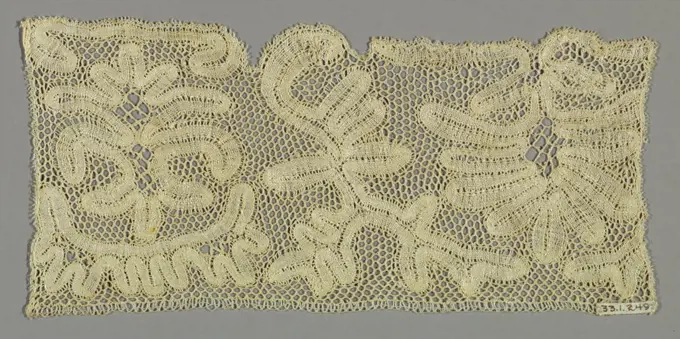
A collection of vintage lace borders and fabrics, showcasing floral and geometric patterns in elegant needle and bobbin lace techniques from the 17th to 18th centuries.


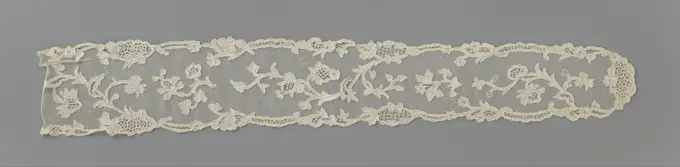
Lappet, Medium: linen Technique: bobbin lace, Mechlin style, Northern Europe, 18th century, lace, Lappet
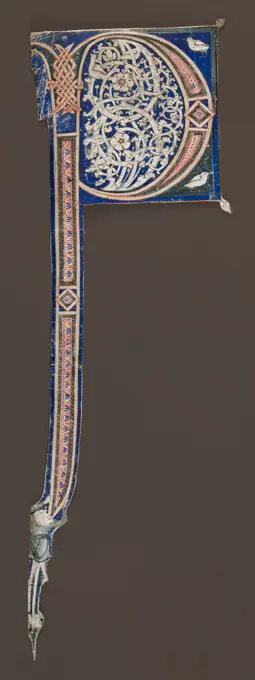
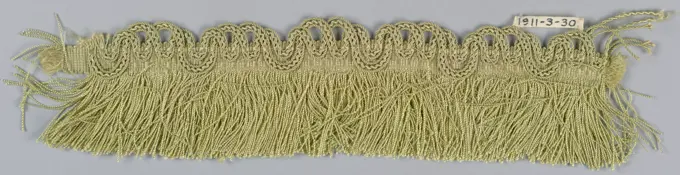
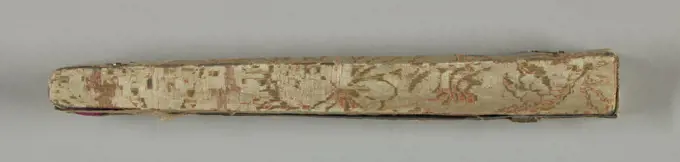
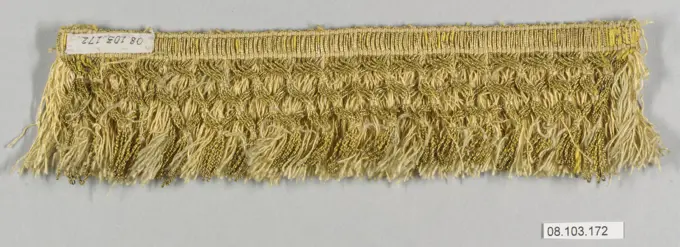
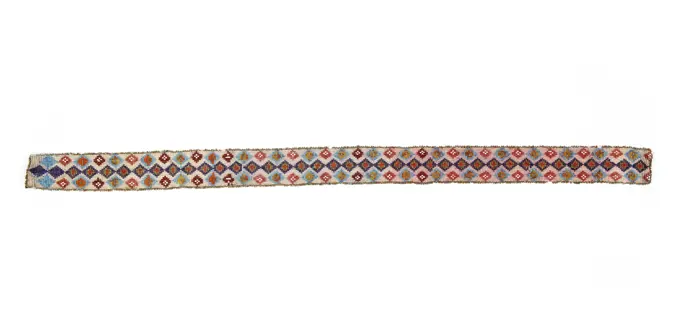
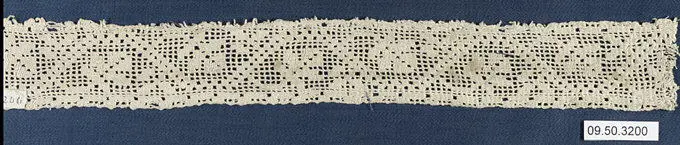
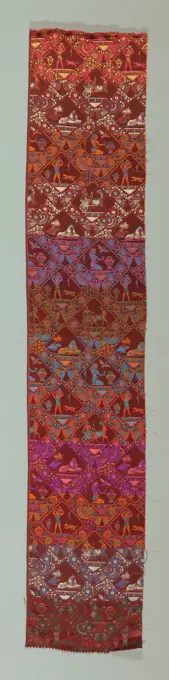
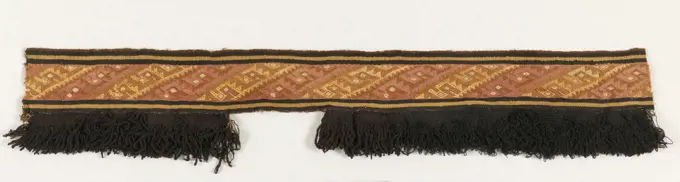
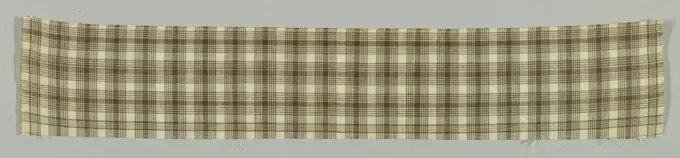
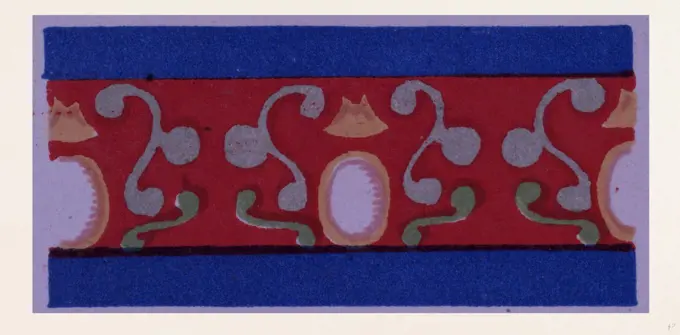
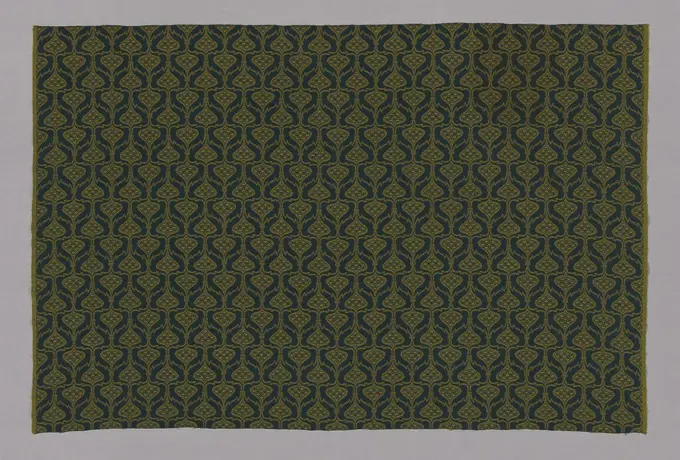
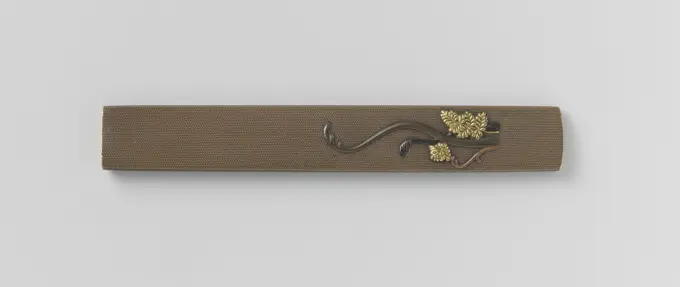
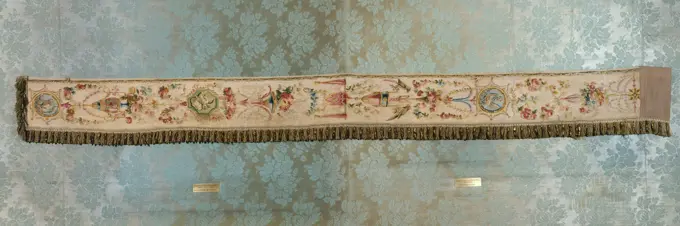
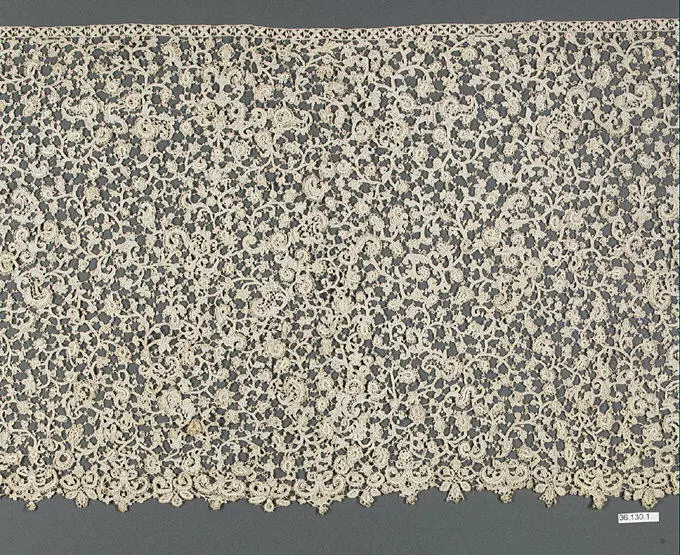
Border, Medium: linen Technique: bobbin lace (Valenciennes ground), Border showing freely spaced floral garlands forming continuous intertwining serpentine shape., Belgium, mid-18th century, lace, BorderNeedlepoint (Burano Point) Lace Collar, late 18th century. Italy, Burano, late 18th century. Lace, needlepoint: linen; average: 5.7 x 40 cm (2 1/4 x 15 3/4 in.).Border, Technique: bobbin lace, Bobbin lace border, floral borders; late 18th century Point de Lille, late 18th century, lace, BorderDecorated Initial (P) (Excised from a Bible), c. 1150-1160. Italy, Tuscany, 12th century. Tempera on parchment; sheet: 40.8 x 12.6 cm (16 1/16 x 4 15/16 in.).Fragment, Medium: silk, metallic Technique: supplementary pile warp (velvet), Deep red velvet with offset rows of gold metallic thread disks., possibly 13th century, woven textiles, FragmentTrimming, Medium: silk Technique: supplementary warp pile (velvet), Red trimming fragment in a design of single wide blocks separated by two narrower blocks., France, 18th century, trimmings, TrimmingGalloon 17th-18th century French. Galloon 213846Strip 17th-18th century Flemish. Strip 218216Galloon 17th-18th century Unknown. Galloon 213842Fringe (USA); silkBorder (France); linenMantle Border Fragment with Oculate Being, 200 BC-AD 200. Peru, South Coast, Paracas (Cavernas) style (700 BC-AD 1). Camelid fiber, embroidery over foundation cloth; overall: 116.2 x 16.5 cm (45 3/4 x 6 1/2 in.); mounted: 127 x 25.4 cm (50 x 10 in.).Piece 18th century Japan. Piece. Japan. 18th century. Silk / Compound weave. Edo period (1615-1868). Textiles-WovenGalloon 18th century French. Galloon 213825Band, Medium: linen Technique: supplementary warp floats in a plain weave foundation, Narrow band patterned by an alternating geometric blossom and geometric leafy branch or vine in blue and ivory., Italy, early 16th century, woven textiles, BandTwo double -sided gallows;  19th century (1801-00-00-1900-00-00);Border (England); block-printed and flocked paper; 85 x 12 cm (33 7/16 x 4 3/4 in.)Sampler 19th century German. Sampler. German. 19th century. Cotton, knitted lace. Textiles-LacesPleated fan and case, Painted parchment leaf, carved, pierced, painted and gilt ivory sticks, Pleated fan with a painted parchment leaf with three cartouches: the center shows an interior with a man and two women playing music and dancing; the two side cartouches show butterflies and shells. Scattered insects on the reverse, with a floral border. Twenty-four ivory sticks which are carved, pierced, painted and gilt, with amorini, fruit and flower chains, and with red foil inserted in the guard sticks. Embroidered case with red lining, removable lid., France, England, 1730-60, costume & accessories, Pleated fan and caseNecklace -Band, Technique: bobbin lace, Edge of bobbin lace, scalloped edge; late 18th century Buckinghamshire., late 18th century, lace, BandGourd with Seals, 1790 - 1832 Object with 57 stamps in box. Japan paper damask Object with 57 stamps in box. Japan paper damaskTrimming (France); silkFragment 18th century Italian. Fragment 230385Border, Medium: linen Technique: bobbin lace, Mechlin style, Design of floral and foliated sprays interspersed by bow-knots, birds, and medallions., Northern Europe, mid-18th century, lace, BorderFragment, Medium: linen Technique: bobbin made continuous tape with net added, Scrolling tape forming leaf motifs. Similar to Eastern European work., 19th century, lace, FragmentFragments, Medium: silk Technique: supplementary warp forming pile (velvet), Chevron pattern in green cut pile velvet., 17th century, woven textiles, FragmentsFragment Made 1775-1800 France. Silk, warp-float 5 1 faced satin weave with supplementary pile warps forming cut and uncut voided velvet .Band, Medium: cotton Technique: bobbin lace (late Valenciennes ground), cu study group, Curving stem with leaves and flowers., 19th century, lace, BandBand late 15th century Spanish. Band 466308Double fringe European 19th centurySkirt, early 20th century, 45 x 12 3/8 in. (114.3 x 31.43 cm), Palm raffia cloth; oblique interlacing; resist tie-dye, Côte d'Ivoire, 20th century, Raffia cloth is a very labor-intensive textile to produce, because of the lengthy process to prepare the fibers from raffia palm leaves. Dida garments are exceptional for their technique, which requires the interlacing of three sets of raffia threads. The threads are kept in tension by a loop of fiber held by the weaver's foot - no loom is used. This technique produces a tube-shaped cloth, which is adorned using a tie and dye technique.Fragment striped silk tissue, anonymous, 1700 - 1799 Fragment striped silk tissue in orange and white. Europe silk. cotton (textile) Fragment striped silk tissue in orange and white. Europe silk. cotton (textile)Strip of mechanical side with a chain of circles and rush -hour trips along the underside, anonymous, c. 1900 - c. 1914 Strip of natural-colored machine side: machine valenciennes side. The repeating pattern exists along the underside of the narrow strip from a row of alternately a circle with an open -up center and a rush -in style containing a row of five small square cut -outs. At the top, the circles and ovals are connected by a machine Valenciennes ground. The silly edge of the scaffold along the underside of the strip is finished with picots: three picots under each circle, six picots under each oval. The top of the strip is straight finished. Calais (possibly) cotton (textile) Strip of natural-colored machine side: machine valenciennes side. The repeating pattern exists along the underside of the narrow strip from a row of alternately a circle with an open -up center and a rush -in style containing a row of five small square cut -outs. At the top, the circles and ovals are conneBand, Medium: linen Technique: bobbin lace (Valenciennes ground), Valenciennes, France, ca. 1810, lace, BandBelt -Border, Borders with polished paper. Row of pointed arches, beading., France, 1860-1900, Wallcoverings, BorderPiece 17th century Japan. Piece 71833Fragment, frame, wood, painted and gilded, Portion of a carved Venetian moulding, painted cream, green, and red. Flowers and fruit with running foliage. Scrolled edge., ca. 1750, architecture, Decorative Arts, Fragment, frameStrip 17th century German. Strip 217791Fringe (Italy); silkPanel Made 1801-1900 Greece. Linen, plain weave; embroidered with cotton in cross stitches .RulerTrimming (France); silkFragments (Mexico); silk, goldGalloon 17th-18th century Unknown. Galloon 213808Border, Medium: linen Technique: bobbin lace, Binche style with Binche grounds, Border of Binche-style lace with an asymmetric, running floral pattern., Belgium, mid-18th century, lace, BorderDouble volute of leaf vines, sprouting from a leaf in the middle, 1500 - 1600 print One of 5 magazines. Germany (possibly) paper engravingBraid Made 1650-1675 England. Silk and silk-wrapped linen cords, bobbin straight lace .Trimming (France); 1909-2-173Choose box of thick paper covered with sit paper. .Fringe (Italy); silkBorder (England); block-printed and flocked; 84 x 9 cm (33 1/16 x 3 9/16 in.)Trimming, Medium: silk Technique: woven, Woven upholstery trimming in design of interlacing circles bordered with semi-circles in pink, green and ivory silk., USA, 19th century, trimmings, TrimmingWoman's Wedding Sari. India, Gujarat, Patan, 19th century. Costumes; principal attire (entire body). Silk plain weave with warp-resist dye (patola) and metallic-thread supplementary weftPiece French 19th centuryRevers of needle side with crosses and C-monograms, anonymous, c. 1690 - c. 1699 Revers of natural needle side, venise flat. Pattern with two crosses and two C-monograms in a curly tendril pattern of simple flowers. Above the monograms a flowerpot with three flowers. Ground with hexagonal picoted bars. The top is trimmed with a border bobbin. The bottom is finished with a picot edge with arcs. Europe linen (material) flat Venetian (needle point) Revers of natural needle side, venise flat. Pattern with two crosses and two C-monograms in a curly tendril pattern of simple flowers. Above the monograms a flowerpot with three flowers. Ground with hexagonal picoted bars. The top is trimmed with a border bobbin. The bottom is finished with a picot edge with arcs. Europe linen (material) flat Venetian (needle point)Cap streamers, Medium: linen Technique: needle lace with ground of loop & twist with twist retun, Alencon style lace designed with little flowers and flowing ribbons., France, 1850-1900, lace, Cap streamersSample (France); silk; Anonymous bequest in memory of Albert and Rebecca Elsberg; 1938-82-165-bRibbon early 19th century possibly French. Ribbon 220660Border, Block-printed on paper, Ornamental border cut in scallops, following contours of simulated drapery valance of pink material with border in green, blue and black, enriched across face with sprays of mistletoe in green, black and yellow. Printed on blue ground., France, 1820-30, Wallcoverings, BorderBorder (France); block-printed on handmade paper; Overall: 52.5 x 7.7 cm (20 11/16 x 3 1/16 in.)Fringe European 19th centuryPiece Japan 18th-19th centuryStrip of needle side with double diagonal lines and leaf branches, anonymous, c. 1600 - c. 1799 Strip of natural needle side, Argentan side. Pattern with over the full width an alternation of diagonal lines with hanging leaf branches on a fine ground with hexagonal meshes that are closed with feston stitches. The rhythm of the pattern is as follows: a double diagonal line of triple circles; a branch with three -fitting leaves; a diagonal line of a dozen rosette flowers; A branch with pear -shaped leaves. The pattern along the underside consists of a double, slightly wavy slender with heart -shaped leaves on either side. These tenders are interrupted by the diagonal lines. An even finer Maas soil between the tenders. Fullwork with minimal recesses in all leaves. Schulpenrand on the underside due to a succession of small heart -shaped and oval leaves, partly arising from the tendet pattern. The top is trimmed with a border bobbin. Southern Netherlands linen (material) Argentan Lace StripTurban, 53 x 3 in. (134.62 x 7.62 cm), Cotton, ChinaLaces, 17th century. Bobbin lace hem, end 1600's.Fringe early 19th century Italian. Fringe 224864Galloon 17th-18th century Unknown. Galloon 213796Lace lacePiece 16th or 17th century Japan. Piece 71755Sampler, Medium: cotton Technique: knitting (interlooping) with overcasting stitches, Long narrow sampler of fifteen knitted patterns with a border of knitted lace. Initials B.H. at lower edge., Germany, 19th century, knotted, knitted and crocheted textiles, SamplerBorder (France); linenBorder 17th century Italian or Greek. Border 213096Galloon 18th century French. Galloon. French. 18th century. Metal thread. Textiles-TrimmingsTextile (India); silk, silver gilt tinsel on silk coreGold diadem. Culture: Cypriot. Dimensions: Other: 6 15/16 in. (17.6 cm). Date: 4th century B.C..The diadem was made for funerary use. Museum: Metropolitan Museum of Art, New York, USA.Capslip of needle side with hanging flowers, anonymous, c. 1760 - c. 1790 Capslip of natural-colored needle side: Alençon side. The elongated sculptures of a wavy ribbon, interspersed by medallions with gridwork, form the outer edges of a soil, on which it turns a wavy branch with hanging flowers and pomegranates and a short flower branch. In the strip, the pattern is symmetrical to a standing middle branch. France linen (material) Alençon Lace Capslip of natural-colored needle side: Alençon side. The elongated sculptures of a wavy ribbon, interspersed by medallions with gridwork, form the outer edges of a soil, on which it turns a wavy branch with hanging flowers and pomegranates and a short flower branch. In the strip, the pattern is symmetrical to a standing middle branch. France linen (material) Alençon LaceRibbon 18th century probably European. Ribbon 213066Shawl, 21st century, 50 7/8 x 17 in. (129.22 x 43.18 cm) (without fringe), Cotton, wool, Myanmar (Burma), 21st centuryFragment (Spain); silk; Warp x Weft: 111 x 26.5 cm (43 11/16 x 10 7/16 in.); 1953-162-71Fragment, Medium: wool Technique: polychrome printed, Pattern circles printed in polychrome (principally blue and yellow) in geometric patterns on white ground., USA, 19th century, printed, dyed & painted textiles, FragmentCloth. Cloth with geometric motifs.Fringe early 18th century probably European. Fringe 213725Border, Medium: linen Technique: bobbin lace (late Valenciennes ground), Scalloped border with floral forms and circles., 19th century, lace, BorderBand (France); linen; 1933-1-130Cap 19th century Irish. Cap 102527Border, Medium: cotton, wool Technique (2 sections): 1. complementary wefts; one continuous and one discontinuous; weft floats to pattern 2a. weft-faced plain weave, warp single; 2b. weft-faced plain weave, warp double Sides: one intact Ends: warp loops at both ends; weft-looped fringe attached, Horizontal band probably used originally as lower border of a poncho. Black wool looped fringe sewed on lower edge. Band of conventionalized bird design, running in diagonals in rose, yellow, brown wools and white cotton wefts. Warps of brown cotton. Wefts used several at a time and floated out on back of fabric for width of diagonal. One section on fringe missing., Peru, 1100-1400, woven textiles, BorderTextile, Medium: cotton Technique: plain weave, Fragment of gingham in black and white., USA, 1850-1900, woven textiles, TextileIndian ornamentPanel. Designed by Arthur Heygate Mackmurdo (English, 1851-1942); England, London. Date: 1876-1896. Dimensions: 85 x 129.4 cm (33 1/2 x 50 7/8 in.)Repeat: 7.6 x 8 cm (3 x 3 1/8 in.). Wool and cotton, plain weave with supplementary patterning wefts bound by secondary binding warps. Origin: London. Museum: The Chicago Art Institute, USA.Sword knife hilt with fern sprays, anonymous, c. 1400 - c. 1950 Decoration with plants, including a golden varent branch, against a brown behind soil; A golden edge at the ends. Japan copper (metal). gold (metal) Decoration with plants, including a golden varent branch, against a brown behind soil; A golden edge at the ends. Japan copper (metal). gold (metal)Galloon early 19th century French. Galloon 213950Fringe, Medium: silk Technique: woven, Yellow fringe with a plain-woven heading and a skirt of looped threads graduated to form scallops., Italy or Spain, 17th century, trimmings, FringeFragment Of Decorative Insertion; linen; 1897-8-323Beauvais Manufacture, tapestry decorated with candelabras, birds and medallions (a set of four tapestries decorated with candelabras, birds and medallions), Louis XVI. Narrow vertical tapestry: tapestry; Linen canvas and decay (dubbing); Velcro (editing). Decor: candelabra, birds and medallions with figures. Paris, Cognacq-Jay museum. 35078-11 Bandeau, chandeliers, decor, beauvais manufacture, verticalBias Cut Fragments, 19th century, 15 3/4 x 5 1/2 in. (40.01 x 13.97 cm), Wool; woven fabric, Iran, 19th centuryFlounce 17th century Italian. Flounce 226021Shoulder Cloth (Selendang) 18th-19th century Javanese. Shoulder Cloth (Selendang) 308009Border (France); block-printed and flocked on machine-made paper; 57 x 25 cm (22 7/16 x 9 13/16 in.)