Intricate Lace Borders and Textiles

A collection of vintage lace borders and fabrics, showcasing floral and geometric patterns in elegant needle and bobbin lace techniques from the 17th to 18th centuries.

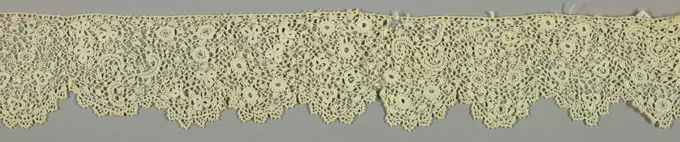
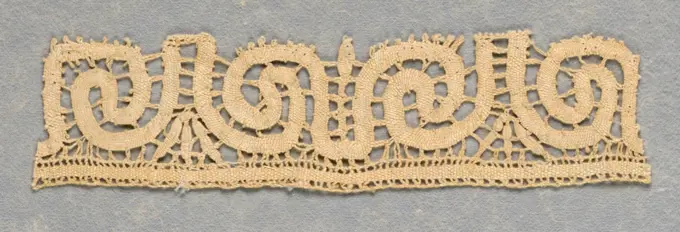
Lappet, Medium: linen Technique: bobbin lace, Mechlin style, Northern Europe, 18th century, lace, Lappet
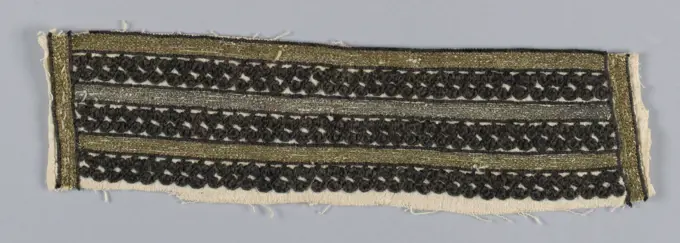
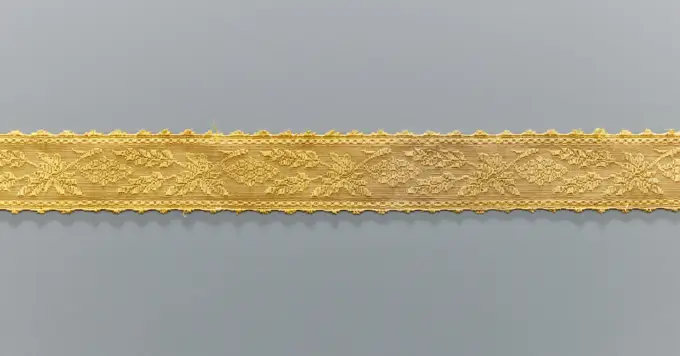
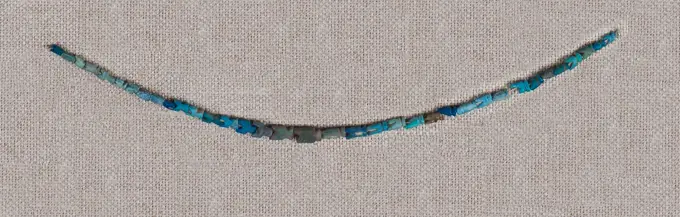
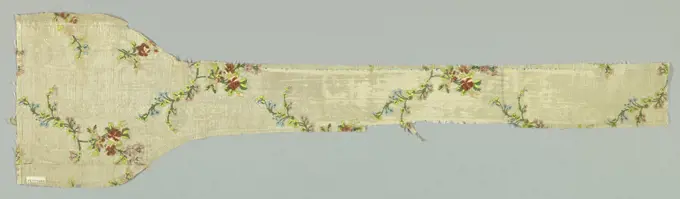
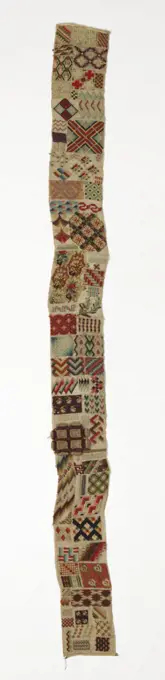
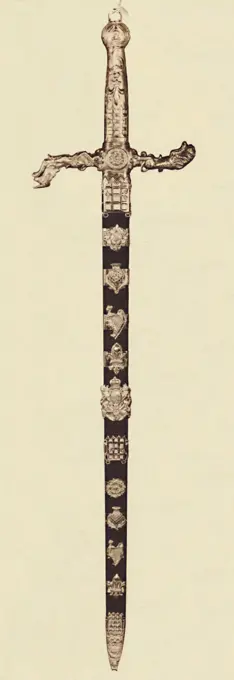
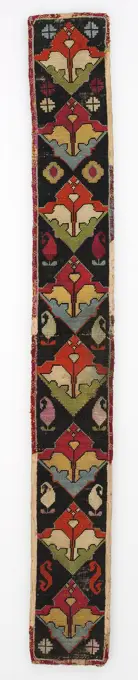
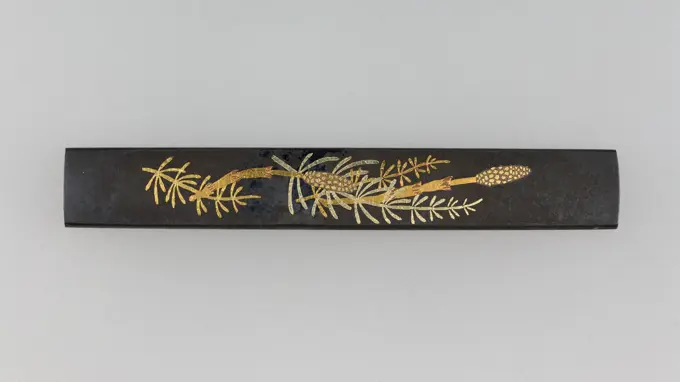
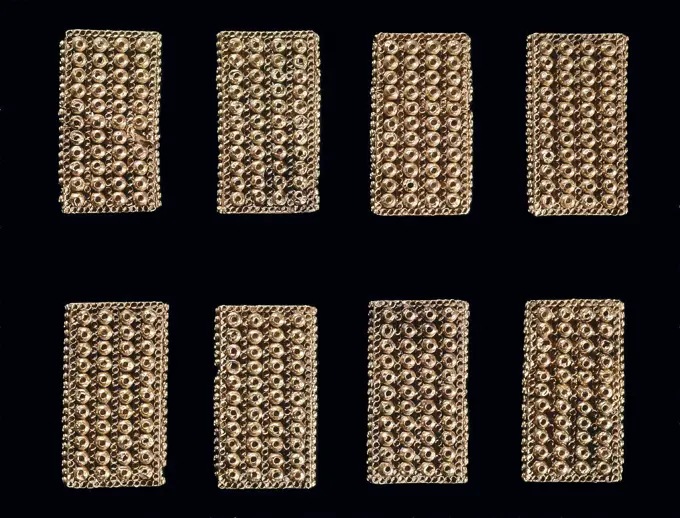
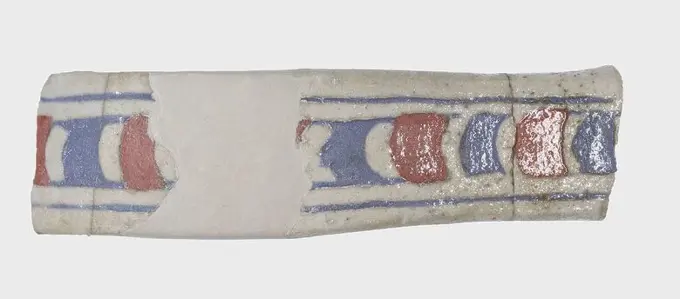
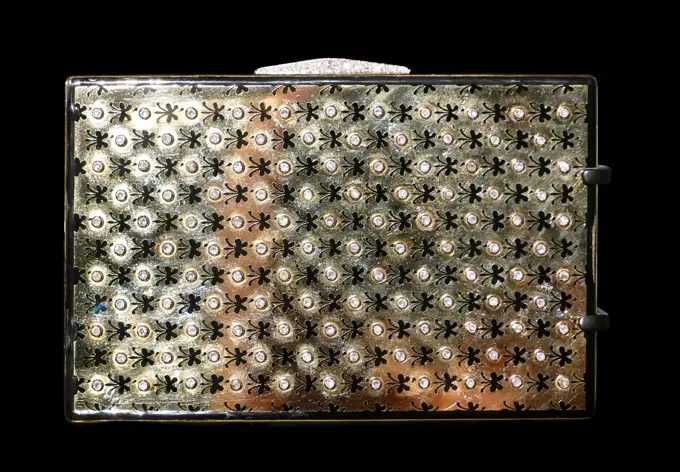
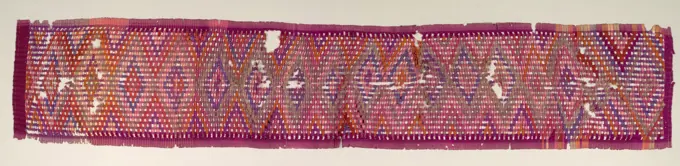
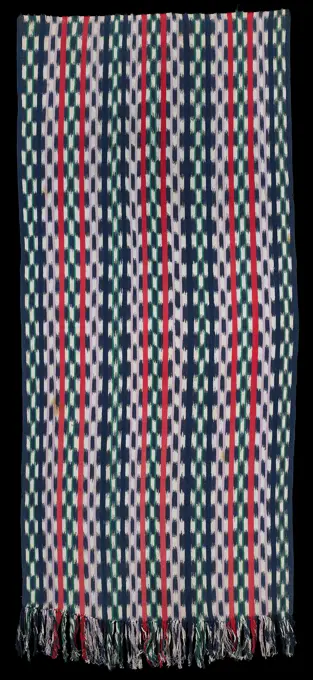
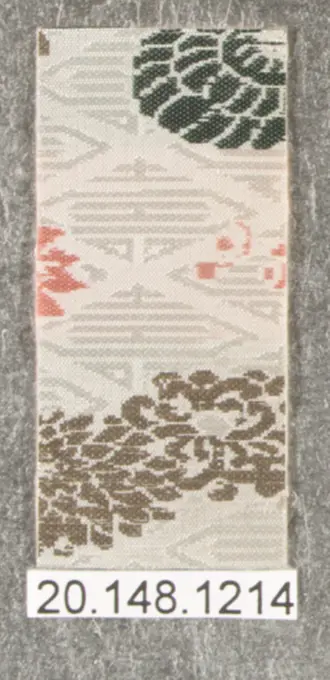
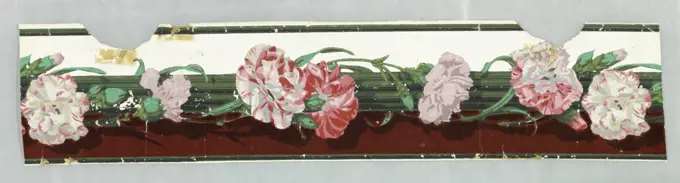
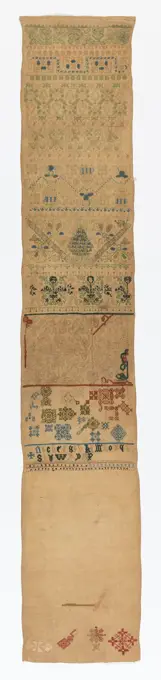
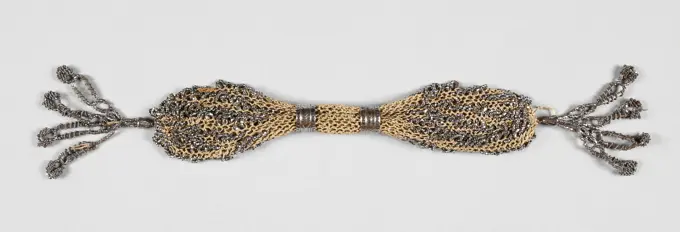
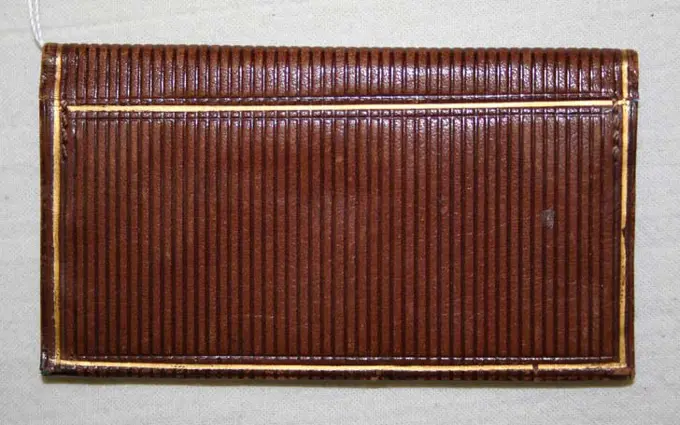
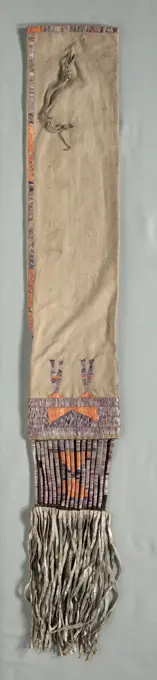
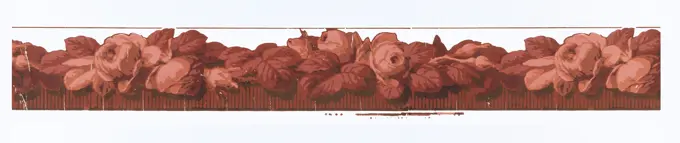
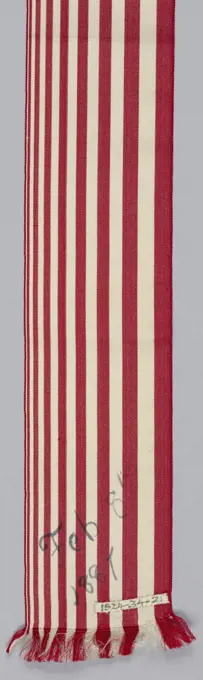
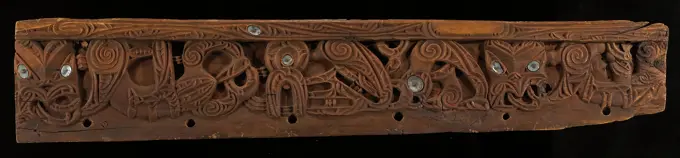
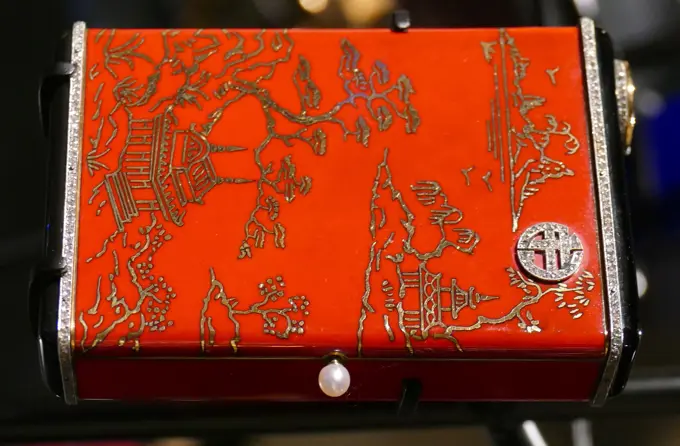
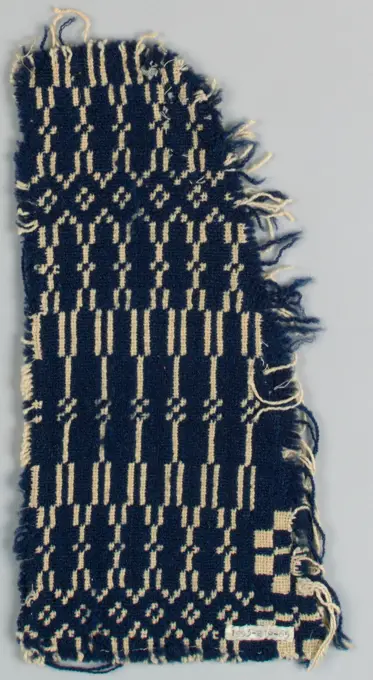
Coverlet Fragment (USA); wool, cottonSleeve Fragment; cotton, metalGallon;  19th century (1801-00-00-1900-00-00);Textile Swatches Onondaga Silk Company, Inc. (1925-1981). Textile Swatches, 1948-1959. 72 silk; 28 metal, (a) - (c): 11 x 4 in. (27.9 x 10.2 cm).    1948-1959Rand decoration with pattern of braided ornaments, Reinier Willem Petrus de Vries (1874-1953), 1884 - 1952 print   paper  interlace ~ ornamentNecklace of amulets ca. 1981-1295 B.C. Middle Kingdom-Early New Kingdom. Necklace of amulets. ca. 1981-1295 B.C.. Blue faience. Middle Kingdom-Early New Kingdom. From Egypt, Memphite Region, Lisht North, Cemetery, debris, MMA excavations. Dynasty 12-18Fragment of a maniple or stole, Medium: silk Technique: woven, Design of scattered flowers on a patterned white ground., France, late 18th century, woven textiles, Fragment of a maniple or stoleTrimming, Medium: silk Technique: woven, Yellow trimming fragment in a design of ornamental motifs within lozenge shapes; picot edges., France, 19th century, trimmings, TrimmingSampler, Medium: wool and straw embroidery on cotton foundation Technique: embroidered in cross, half cross, satin, roumanian, back, rococo, fishbone, knot, and running stitches on plain weave foundation, Eighty patterns arranged on a narrow width. One pattern is in raised work., Germany, 19th century, embroidery & stitching, SamplerFringe European 19th centuryBand, Medium: linen, silk Technique: plain weave and tapestry, Twining bands making circles holding roundels., 10th-12th century, woven textiles, BandSari, 19th century, 97 1/2 x 49 1/2 in. (247.65 x 125.7 cm), Silk, metal thread, India, 19th century'The Sword of State', 1937. Artist: Unknown.Kamarband, late 19th century, 32 1/2 x 4 in. (82.55 x 10.16 cm), Silk, cotton; cross-stitch, Uzbekistan, 19th centuryGalloon 18th century French or Italian. Galloon 214055Sample (USA); Manufactured by Orinoka Mills (United States); 1989-80-60Knife Handle (Kozuka) early 19th century Japanese A kozuka is a handle of a by-knife that is part of a sword mounting. It is kept in a slot on the reverse of a katana scabbard, often with a matching kōgai (hairdressing tool).. Knife Handle (Kozuka) 29925Band, Medium: cotton, linen Technique: satin stitch on plain weave, Band of tangents squares filled geometrical and linear designs in black, yellow, red, light blue and white. Saw tooth guard border on one side with the same colors., 19th century, embroidery & stitching, BandBorder (France); block-printed, handmade paper; 64 x 12.5 cm (25 3/16 x 4 15/16 in.)Fragment, Medium: linen Technique: bobbin lace, Fragment of Lille-type lace showing small flowering branches and floral spray., France, late 18th century, lace, FragmentTrimming (France); 1909-2-210TESORO DEL CARAMBOLO-PIEZAS DE CINTURON EN ORO S VI/VII AC-ARTE TARTESICO. Location: MUSEO ARQUEOLOGICO-COLECCION. Sevilla. Seville. SPAIN.Piece 18th century Japan. Piece 71373Piece 18th century possibly French. Piece 225083Part of Vase Handle. Dimensions: l. 8.5 cm (3 3/8 in). Dynasty: Dynasty 18. Reign: reign of Amenhotep III. Date: ca. 1390-1353 B.C.. Museum: Metropolitan Museum of Art, New York, USA.Fragments (France); silkPiece 18th-19th century Japan. Piece 66968Textile Swatches Onondaga Silk Company, Inc. (1925-1981). Textile Swatches, 1948-1959. 42 polyamide; 31 Rayon; 19 acetate; 8 metal, (a) - (e): 9 x 5 in. (22.9 x 12.7 cm).    1948-1959Trimming, Medium: silk Technique: woven, Trimming fragment with a central wavy blue band between yellow leaf borders on a tan ground., France, 19th century, trimmings, TrimmingFragment of a bed garnish of yellow waved wool with green passion and hanging bobbins, c. 1795 - c. 1815 Fragment of a bed garnish of yellow waved wool, omboard with a green passion with a yellow motif and with a green and yellow border with hanging spools that are wound with yellow and green side. Northern Netherlands wool Fragment of a bed garnish of yellow waved wool, omboard with a green passion with a yellow motif and with a green and yellow border with hanging spools that are wound with yellow and green side. Northern Netherlands woolBorder, Technique: bobbin lace, Bobbin lace border, symmetrical floral; late 18th century Valenciennes, late 18th century, lace, BorderVanity Case (Compaq), French, made in Paris, 1927 by Cartier. Gold, platinum, enamel and diamondsFragment, Medium: linen Technique: bobbin lace (Mechlin style with Point de Paris ground), Small flowering branches and floral sprays., France, late 18th century, lace, FragmentPrinting Block (possibly England); woodFragment; Overall: 7 x 63.7 cm (2 3/4 x 25 1/16 in.)Shawl third quarter 19th century French. Shawl 102677Rank Badge (China); silk, metallicTextile, 1900s. Indonesia, Bali, 20th century. Tabby weave with discontinuous wefts and weft floats; cotton; overall: 169.6 x 33 cm (66 3/4 x 13 in.).Rebozo, c. 1950, 61 3/4 x 30 1/2 in. (156.85 x 77.47 cm) (without fringe), Cotton; ikat, Guatemala, 20th centuryPiece 19th century Japan. Piece 72200Collar early 18th century Italian. Collar 226100Belt hook 4th-2nd century B.C. China. Belt hook 49509Nobleman's waist wrap lungi. Date/Period: From 1783 until 1843. Textile,silk, cotton. Height: 4,860 mm (15.94 ft); Width: 480 mm (18.89 in). Author: Talpur Mir dynasty.Sash; wool; 16.5 x 214 cm (6 1/2 x 84 1/4 in. ); 1963-67-1Ridderkruis 4th class of the Military William Order for courage, policy and loyalty, on gold buckle, Anonymous, in or after 1815 - in or before 1831  Silver carrying pin with gilding and email, on gold buckle with ribbon.  Penning: Silver (Metal). Buckle: Gold (Metal). Cross: Gilding (Material). Lint: Textile Materials. crotch: gildingRibbon fourth quarter 19th century European. Ribbon 157002Kesa Made 1775-1825 Japan. .Textile, Medium: cotton, wool Technique: complementary warps, resist-dye (tie dye); FABRIC NO. 1: openly woven plain weave, cotton; FABRIC NO. 2: tape (5 cm wide): warp faced plain weave patterned by extra warp floats, cotton; FABRIC NO. 3: tape (3 cm wide): warp faced plain weave patterned by warp stripes, cotton; FABRIC NO. 4: tape-fringe (3.5 cm wide): weft faced plain weave with cut loops of non-woven weft for fringe 2.5 cm long, wool; FABRIC NO. 5: tape (1 cm wide): warp faced plain weave patterned by extra weft floats, cotton, Section of mantle; Made from 5 separately woven fabrics: No. 1) field or body of mantle with tie and dye pattern of diagonal 'wave scrolls' in two shades of brown on ivory cotton. Nos. 2,3,4) and border - No. 2) toother 'herringbone' pattern in shades of brown and tan. No. 3) strips in tan, light brown, pink and olive-green. No. 4: yellow fringe. No. 5: narrow tape on edge with small hooked pattern in shades of tan and brown., Peru, 1000-1470, woven textileBottle early 15th century. Bottle. early 15th century. Earthenware; incised and glazed. Attributed to Iran. CeramicsBorder, Block-printed and flocked, Slightly more than one repeat of a design of clustered carnations entwined about a beaded rod. Field above is white, red flock below. Printed in red flock, greens and pinks on white glazed ground., France, 1850-60, Wallcoverings, BorderParasol with a deck of light blue silk on which an edge of ecrinkeurid side, on a bamboo stick, on which a handle of a wooden nodest, anonymous, c. 1910 - c. 1915 Parasol with knotty wooden button with gilded tires and light blue sides with Á-Jour-Ting white-gloss zoom. Light -colored wooden stick with a grip of a branch with scattered knots at the top, which ends in a bending button full of knots. Decorated with white gauze rough at the button. Beals of brass, running in the buttons. Is held together with a blue plug. Brussels (possibly) deck: Silk. Rand: Silk. Baleinen: copper (metal). Stok: Bamboo. Handle: Wood (plant material). Syste: Cotton (textile). Point: Copper (Metal) casting / cutting Parasol with knotty wooden button with gilded tires and light blue sides with Á-Jour-Ting white-gloss zoom. Light -colored wooden stick with a grip of a branch with scattered knots at the top, which ends in a bending button full of knots. Decorated with white gauze rough at the button. Beals ofSampler (England); silk embroidery on linen foundationCollar and pair of cuffs, Medium: linen Technique: crocheted lace, Pair of cuffs and collar, rose pattern., Ireland, 19th century, knotted, knitted and crocheted textiles, Collar and pair of cuffsMolding fragment 18th century French. Molding fragment. French. 18th century. Wood, gilt. WoodworkFragment late 16th century Italian. Fragment 230304Belt -Knife Handle (Kozuka) ca. 1615-1868 Japanese A kozuka is a handle of a by-knife that is part of a sword mounting. It is kept in a slot on the reverse of a katana scabbard, often with a matching kōgai (hairdressing tool).. Knife Handle (Kozuka) 34537Kamarband, late 19th century, 47 x 3 3/4 in. (119.38 x 9.53 cm), Silk, cotton; cross-stitch, Uzbekistan, 19th centuryCap Streamers (Belgium); linen; 1945-9-13-a,bBorder, Block printed and flocked paper, Band of blue and white morning glories with orange flock leaves. Bordered above and below in orange flock of three shades., France, 1820-30, Wallcoverings, BorderTongbao of Emperor Huizong fromUnknown . Ruler: Song Huizong, Emperor of China, Chinese, 1082-1135, ruled 1100-1126Passementerie 1830 Italian. Passementerie. Italian. 1830. Metal thread. Textiles-TrimmingsCap Streamer; linen; 1945-9-15Sample of printed IInen Unknown, Wiener WerkstättePatterned ribbon. unknown, authorBand; linenFrance, Armorial trophies, Armorial trophy, The trophy consists of spears, arrows and a helmet decorated with a griffin. The background is hatched. Lower left: IIII., print, ornament print, prints, ornament prints, height 64 mm, width 254 mm, print maker, printmaker, 1600 - 1699, 17th century, 17e eeuw, paper, papier, etching, etchings, Work conception, after a design van, Publication (Event), Publication, publisherBand (Italy); linenRibbon early 19th century Czech. Ribbon 156399Fragment, Medium: linen Technique: bobbin lace (discontinuous tape, a technique called leaded), Lace border fragment with a symmetrical design of scrolls., Italy, 17th century, lace, FragmentSidewall (possibly France); machine-printed; 198 x 49 cm (77 15/16 x 19 5/16 in.)Fragment (Italy); linenKnife Handle (Kozuka) with Family of Chickens, c. 1615-1868. Japan, possibly Edo period (1615-1868). Copper-gold alloy (shakudō), gold; overall: 9 cm (3 9/16 in.).Borders (France); machine-printed paper; 100 x 25 cm (39 3/8 x 9 13/16 in.)Legs., Anonymous, c. 1400 - c. 1950 Legs with ribs running in snake lines.  bone (material) Legs with ribs running in snake lines.  bone (material)Fringe (Spain); silkRibbon, silk, USA, 19th century, woven textiles, RibbonBourse. GAL1960.64.19Card case 1886 American or European. Card case 118726Boy's sash (Faja), late 20th century, 57 1/2 x 2 1/4 in. (146.05 x 5.72 cm) (includes fringe), Cotton; plain weave, Guatemala, 20th centuryPipe Bag, c. 1870-1890. Plains, Lakota (Sioux), 19th century. Canvas and quill work; overall: 91.8 x 14 cm (36 1/8 x 5 1/2 in.).Fringe (France); silkBorder (France); block-printed on handmade paper; a) 87.5 x 13 cm (34 7/16 x 5 1/8 in.)Velvet Fragment, 1440-1460. Italy, mid 15th century. Velvet (cut and voided); silk; overall: 41.9 x 17.8 cm (16 1/2 x 7 in.).Collection of various empty wooden sign isolated white background. Set of wood plank isolated. Texture background with peeling old paint. Empty wooden sign set isolatedPiece German 19th centuryTextile Fragment 3rd-4th century. Textile Fragment 443524Sampler 19th century German. Sampler 228624Border (possibly France); block-printed; 84 x 10 cm (33 1/16 x 3 15/16 in.)Ribbon, USA, 1887, woven textiles, RibbonSpine. 1906 - 1897. Broglie, Albert de (1821-1901). bindings (gathered matter components), Book covers. Spencer Collection. BookbindingFringe (Italy); silk, metallic thread (gold strips on silk core)Textile Swatches Onondaga Silk Company, Inc. (1925-1981). , 1948-1959. Silk, a: 41 x 25 in. (104.1 x 63.5 cm).    1948-1959Canoe Strake, 19th century, 10 1/4 x 57 3/16 x 2 1/2 in. (26.04 x 145.26 x 6.35 cm), Wood, shell, nails, Aotearoa (New Zealand), 19th century, Strakes were carved side panels lashed to the frame of Maori war canoes. These vessels were spiritually important because they were associated with warfare, which is a tapu, or sacred, activity. The Maori believe this kind of boat symbolizes an ancestor's body. Upon entering a canoe, warriors become connected with ancestral power, a vital source of strength and protection. Individual vessels were composed of a set of detachable parts and were fully ornamented with chiseled motifs as well as feathers. The deeply hewn designs made with stone tools, used before they adopted metal, illustrate the piece's age. The artist adorned the panel with two intricately sculpted human and bird manaia, which are guardian spirits. Meaningful, dense carving makes this a commanding piece, demonstrating the connections between the Maori spiritual and physical world.Border. Date/Period: 1805-30. Border. Block-printed on handmade paper. Height: 875 mm (34.44 in); Width: 130 mm (5.11 in). Author: UNKNOWN.Ribbon. unknown, author"Navajo Style" Belt/ Sash, c. 1900-1930. America, Native North American, Southwest, Navajo, Post-Contact, Early Period. Warp face plain weave: cotton and wool (Germantown); overall: 333.6 x 17.5 cm (131 5/16 x 6 7/8 in.).Beautiful red African Masai blanketVanity Case (Compaq), French, made in Paris, 1925 by Lacloche Frères. Gold, platinum, enamel, pearl and diamonds'MacDougall', c1935. Artist: Unknown.