Intricate Lace Designs

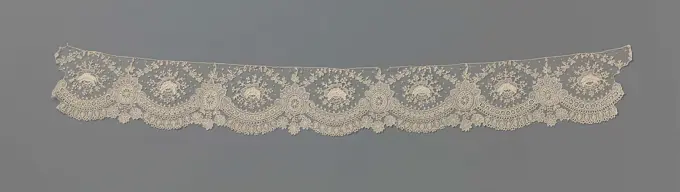
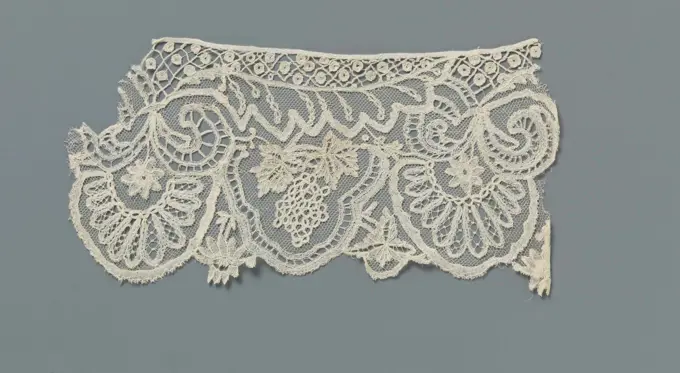
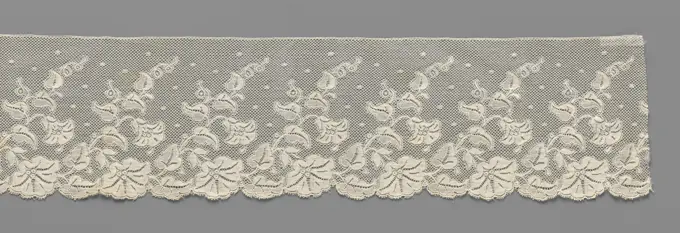
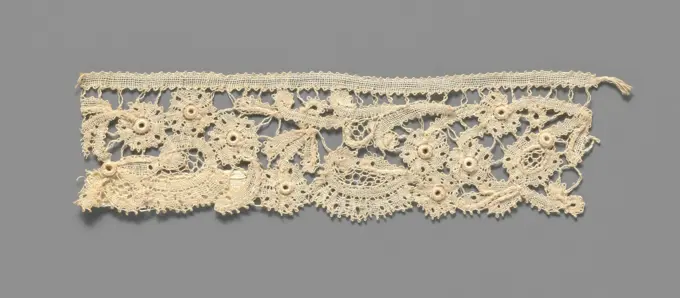
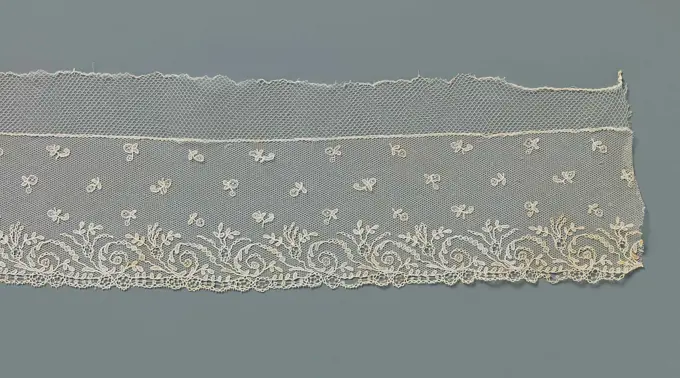
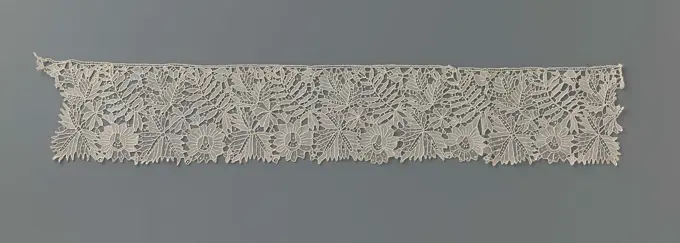
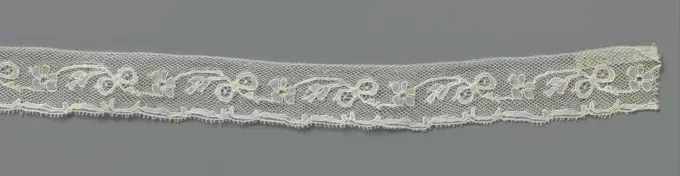
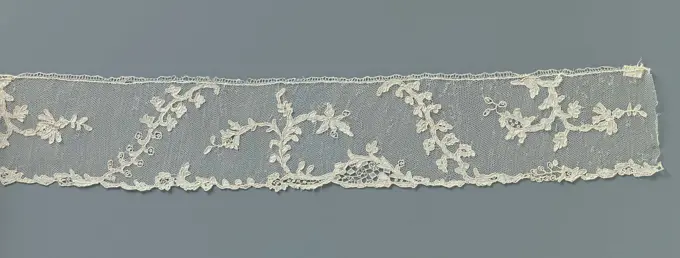
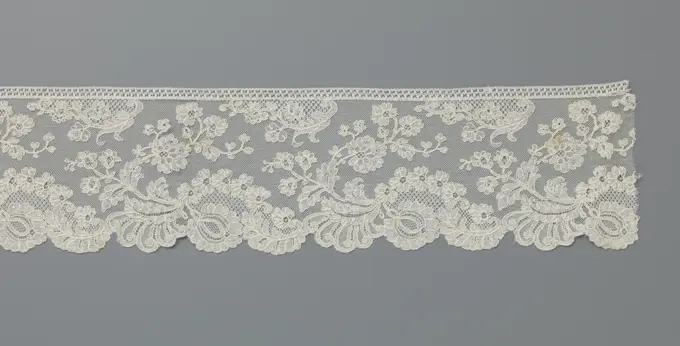
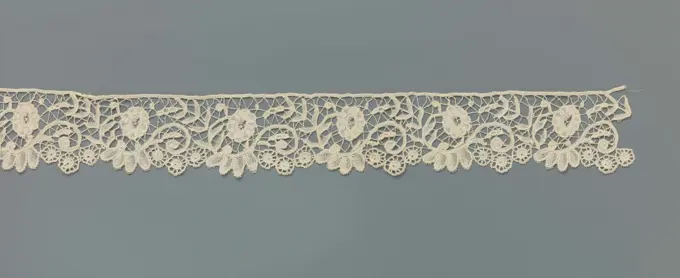
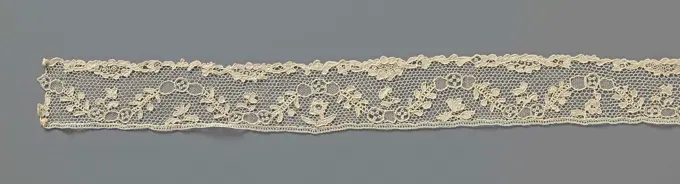
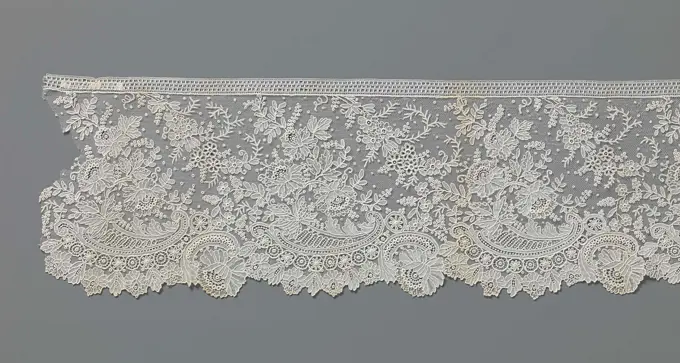
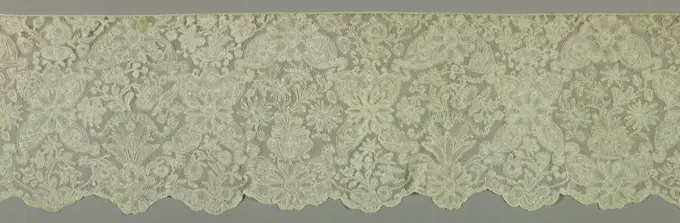
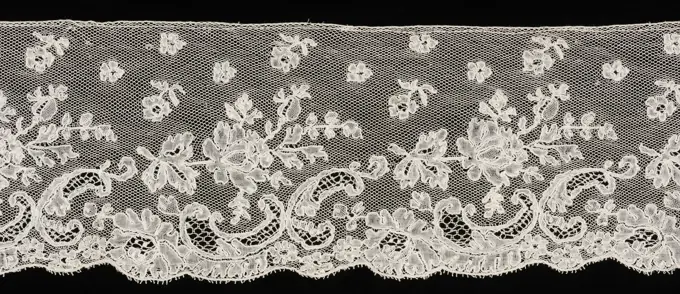
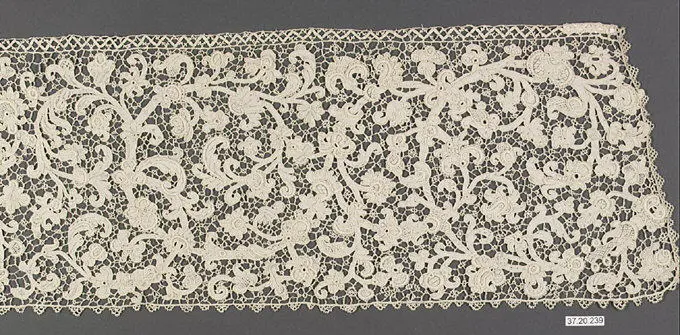
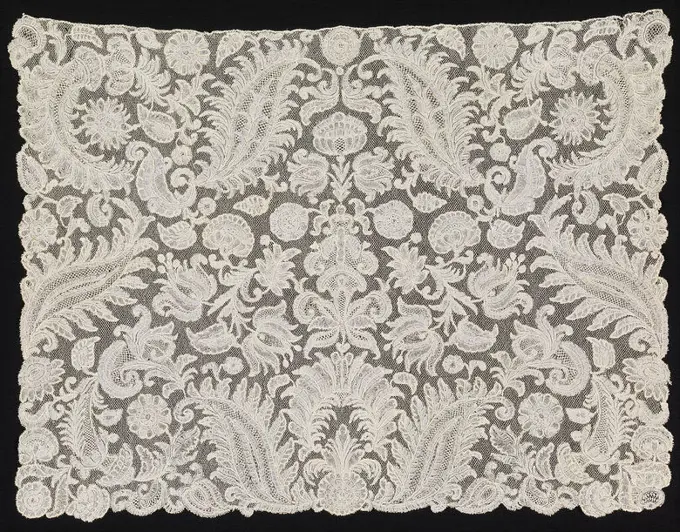
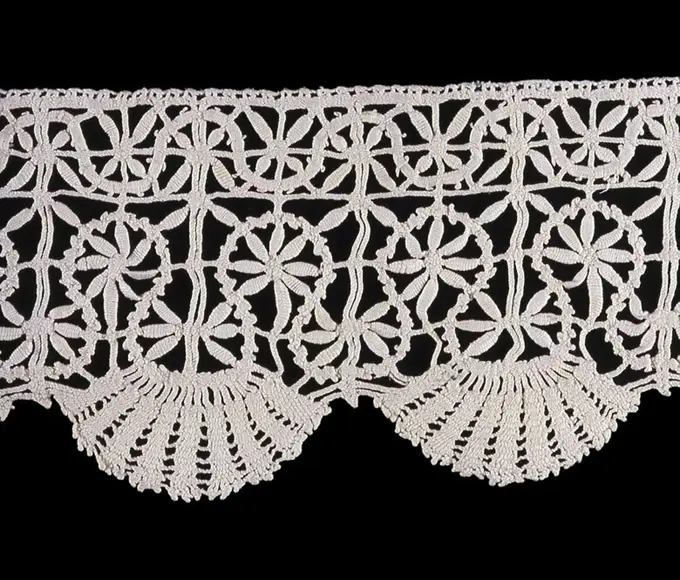
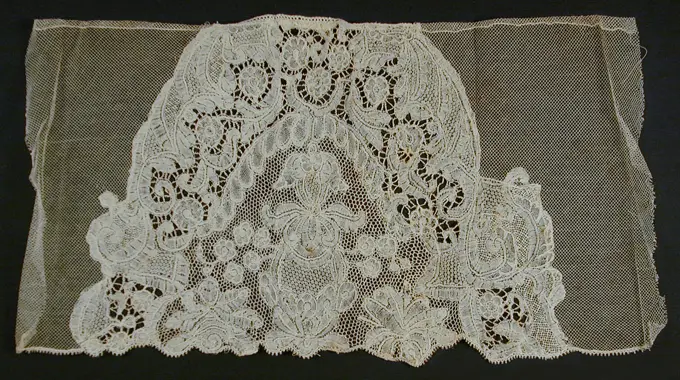
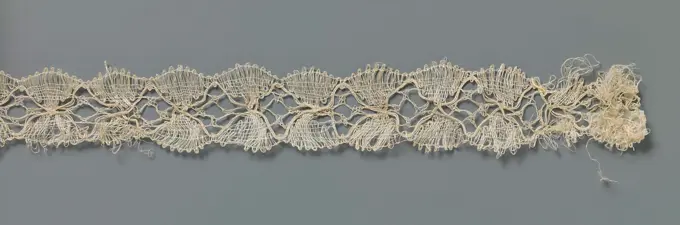
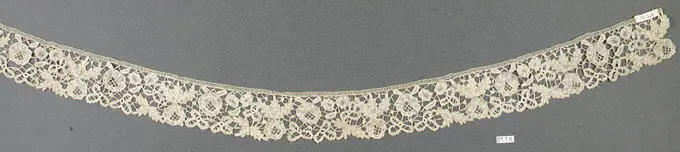
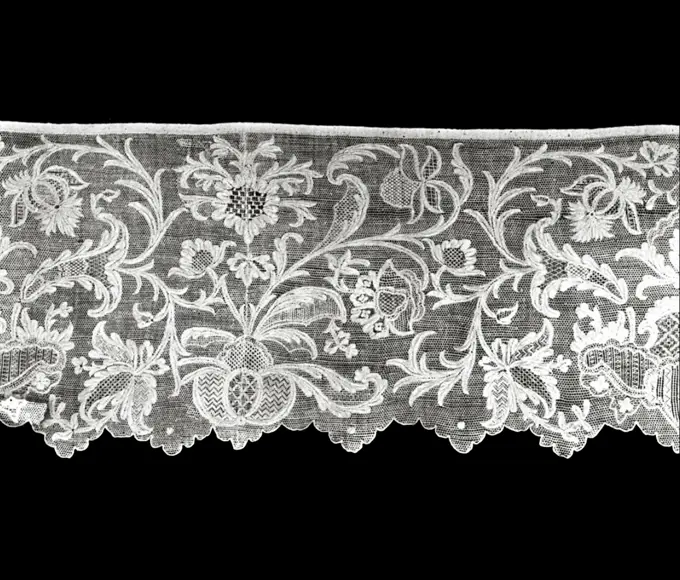
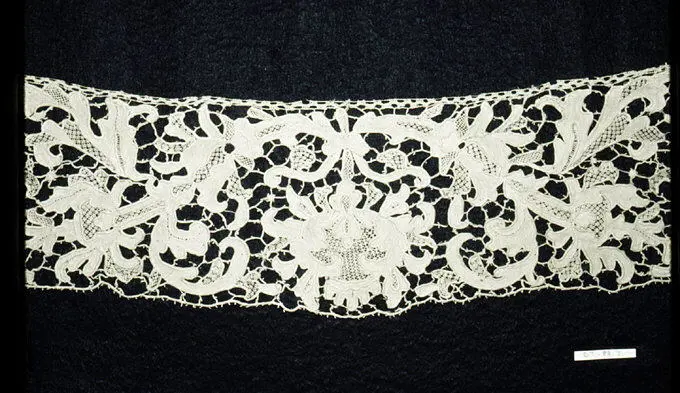
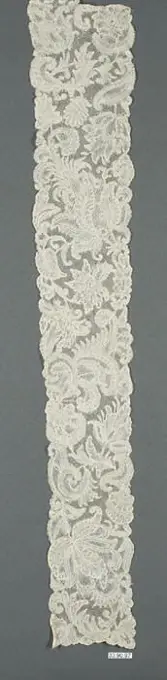
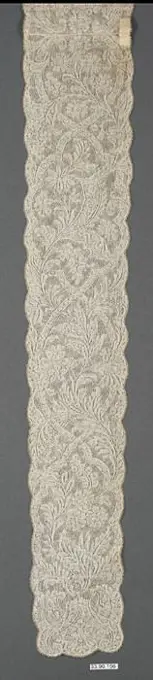
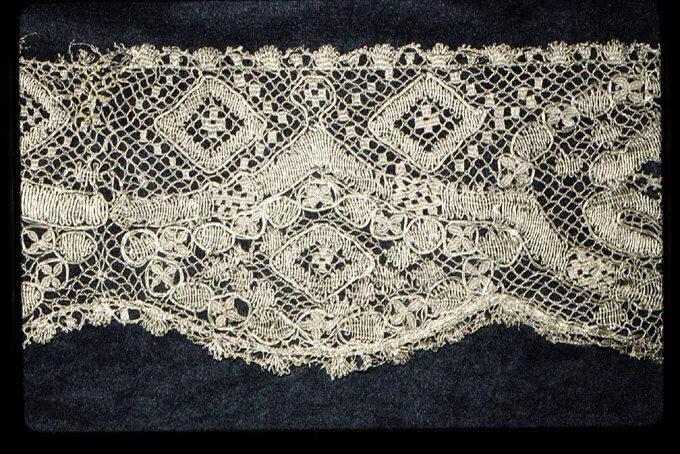
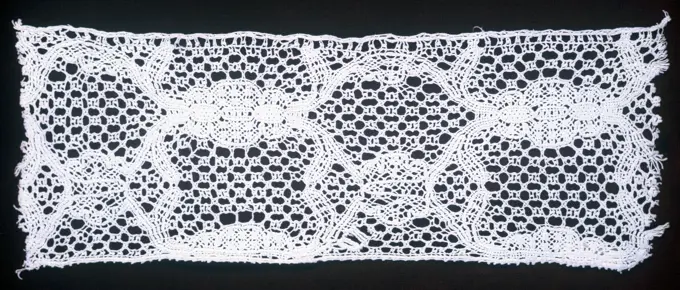
Beautiful examples of historical lace, featuring intricate patterns with floral and leaf motifs. Various styles and techniques from different time periods.

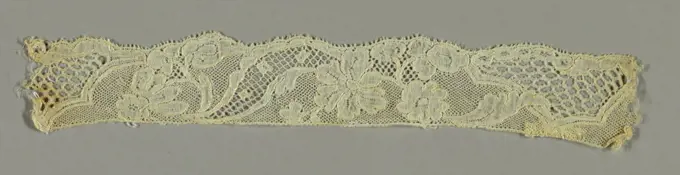
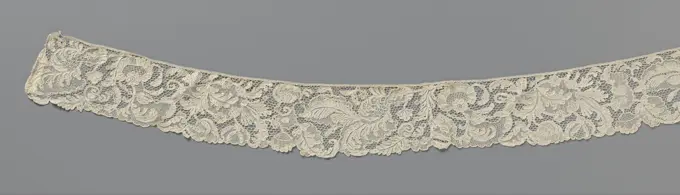
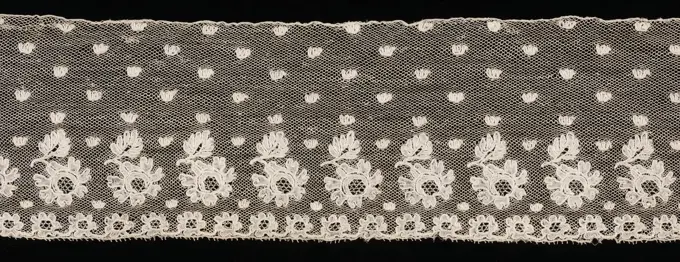
Strip of needle side with incised leaves, anonymous, c. 1900 Walking pattern of incised leaves above a rose and a three -leaf, which together form the sharply toothed outside line. Cross-shaped bars with button (soil of long X-shaped bars with a spider). The Remplis consists of buttonholes and a long distance gazé. German side: 'Carlsbader Points'. Karlsbad (Germany) (possibly) linen (material) Walking pattern of incised leaves above a rose and a three -leaf, which together form the sharply toothed outside line. Cross-shaped bars with button (soil of long X-shaped bars with a spider). The Remplis consists of buttonholes and a long distance gazé. German side: 'Carlsbader Points'. Karlsbad (Germany) (possibly) linen (material)
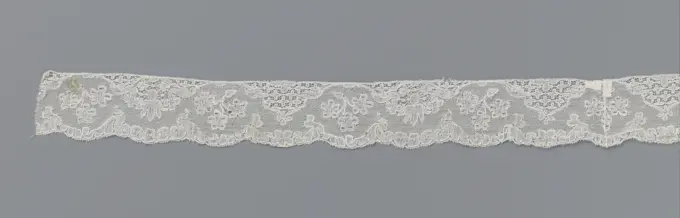
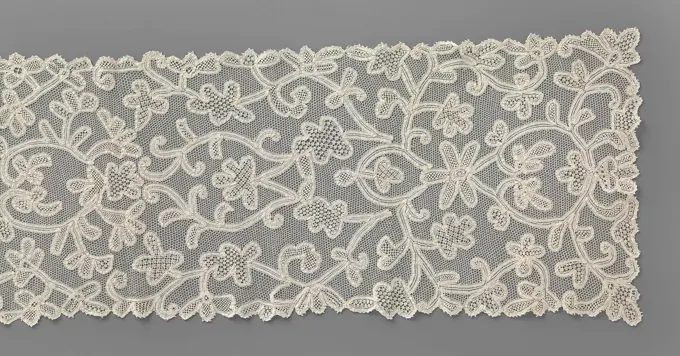
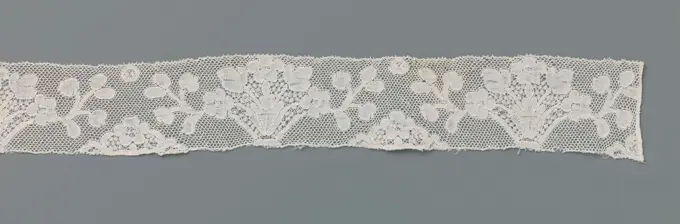
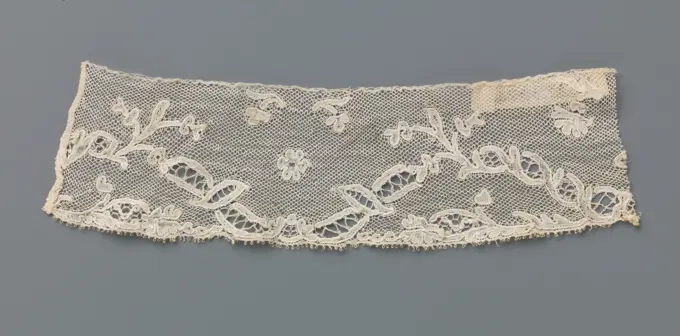
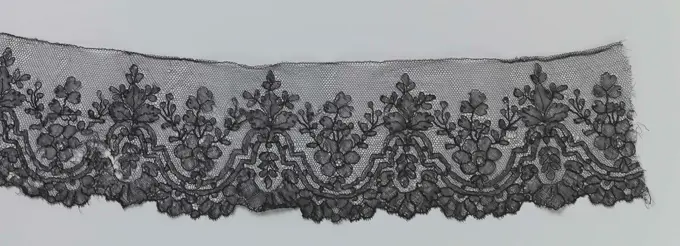
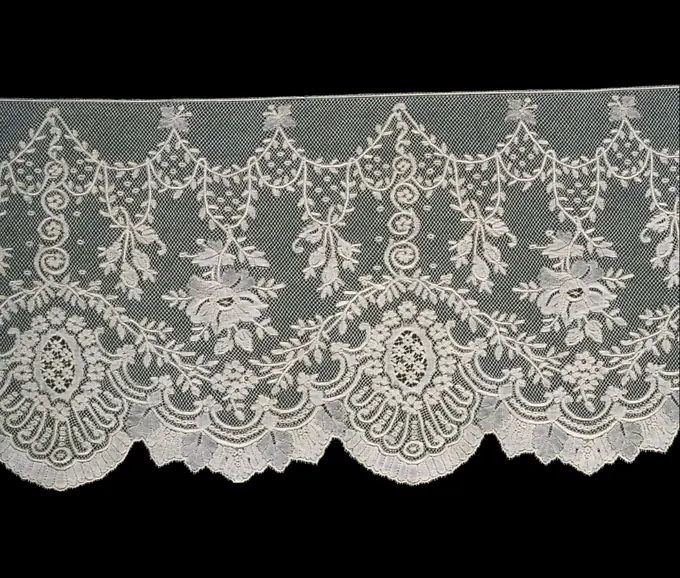
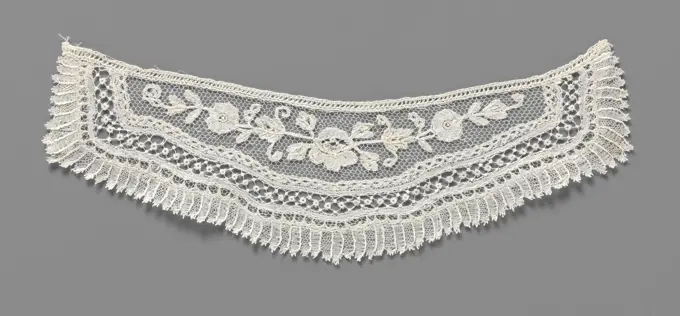
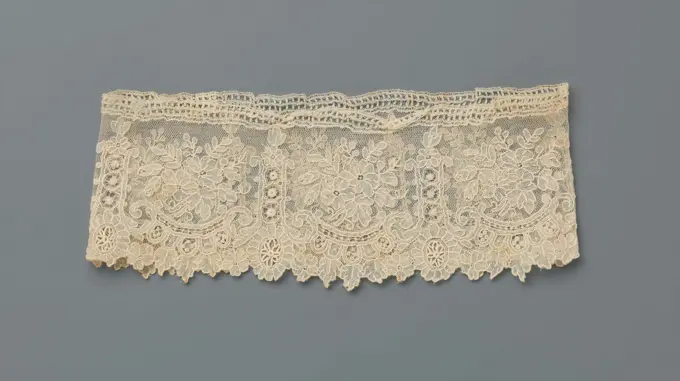
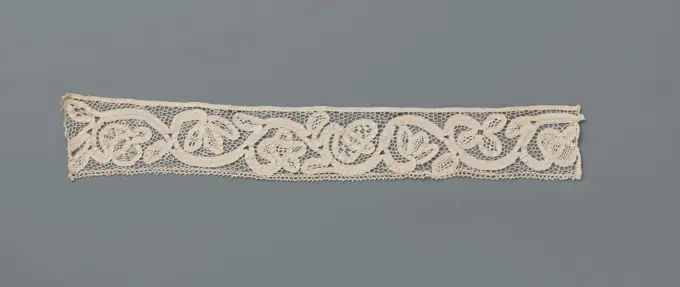
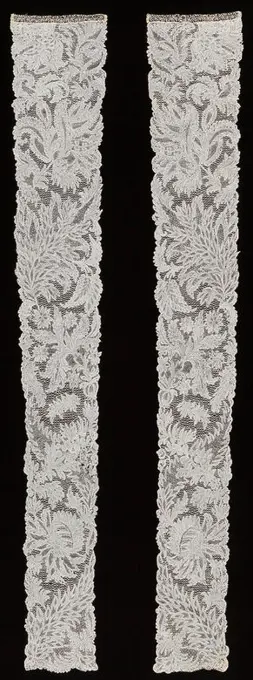
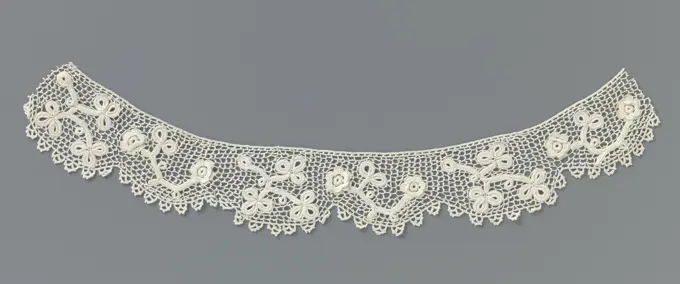
Cuff from crocheted side with brushed leaves, anonymous, c. 1890 - c. 1909 Cuff made of natural Irish crocheted side. Pattern of flower stalks with brush -like leaves, put together with picoted bars. Raised circular flower hearts and a layered edge along the stem where the leaves spring. Finished on all sides with a border shells in the form of double arches. Ireland cotton (textile) Cuff made of natural Irish crocheted side. Pattern of flower stalks with brush -like leaves, put together with picoted bars. Raised circular flower hearts and a layered edge along the stem where the leaves spring. Finished on all sides with a border shells in the form of double arches. Ireland cotton (textile)Strip of bobbin with wavy flower vessel, anonymous, c. 1600 - c. 1699 Strip of natural -colored bobbin, Old Flemish side. The pattern consists of a wavy slender with flowers and leaves. Halfway through you can see a break in the pattern because two strips are sewn together, with the pattern mirrored. There is hardly any soil, the motifs here and there are connected with wide short braids and here and there with rows of thinner braids. In the flower hearts and in a few leaves, decorative grounds have been used, with square meshes and round meshes. The motifs are made in linen battle with openwork edges. The top and bottom of the strip are straight finished, with picots on one side. Flanders linen (material) bobbin lace / old Flemish lace Strip of natural -colored bobbin, Old Flemish side. The pattern consists of a wavy slender with flowers and leaves. Halfway through you can see a break in the pattern because two strips are sewn together, with the pattern mirrored. There is hardly any sStrip of needle side with incised leaves, anonymous, c. 1900 Walking pattern of incised leaves above a rose and a three -leaf, which together form the sharply toothed outside line. Cross-shaped bars with button (soil of long X-shaped bars with a spider). The Remplis consists of buttonholes and a long distance gazé. German side: 'Carlsbader Points'. Karlsbad (Germany) (possibly) linen (material) Walking pattern of incised leaves above a rose and a three -leaf, which together form the sharply toothed outside line. Cross-shaped bars with button (soil of long X-shaped bars with a spider). The Remplis consists of buttonholes and a long distance gazé. German side: 'Carlsbader Points'. Karlsbad (Germany) (possibly) linen (material)Fragment, Medium: linen Technique: bobbin lace, Mechlin style, N. Europe, 18th century, lace, FragmentStrip bobbin with mountain and valley line, anonymous, c. 1740 On a fine grid, a Mechelen soil (also known as ice soil), is a symmetrical pattern. Within a stretched scallop of lobed leaves and florets, triple flower branches are on weather sofa from a leaf rosette under a 'mountain and valley' line. This limits two halved diamond -shaped medallions with a grid filling of crucifixes. Part of a strip that consists of two parts sewn together. Mechelen side. Southern Netherlands linen (material) bobbin lace / Mechlin (lace) On a fine grid, a Mechelen soil (also known as ice soil), is a symmetrical pattern. Within a stretched scallop of lobed leaves and florets, triple flower branches are on weather sofa from a leaf rosette under a 'mountain and valley' line. This limits two halved diamond -shaped medallions with a grid filling of crucifixes. Part of a strip that consists of two parts sewn together. Mechelen side. Southern Netherlands linen (material) bobbin lace / Mechlin (lace)Knotted Lace Collar, 17th century. Italy, 17th century. Lace, knotting; average: 5.7 x 77.5 cm (2 1/4 x 30 1/2 in.).Echarpe made of mixed side with symmetrical branches, anonymous, before 1914 Echarpe of natural -colored mixed side: Milanese ribbon side. Symmetrical, hanging rectangles, exhibit a coarse mesh soil (needle side), on which stiff double branches grow, which form different medallions over the length axis. The very stiff flowers are five or three-lobes. The four scalloped sides are formed by part of the indoor pattern. Belgium (possibly) linen (material) mixed lace / tape lace (mixed lace) / Milanese tape lace (mixed lace) Echarpe of natural -colored mixed side: Milanese ribbon side. Symmetrical, hanging rectangles, exhibit a coarse mesh soil (needle side), on which stiff double branches grow, which form different medallions over the length axis. The very stiff flowers are five or three-lobes. The four scalloped sides are formed by part of the indoor pattern. Belgium (possibly) linen (material) mixed lace / tape lace (mixed lace) / Milanese tape lace (mixed lace)Manchet van gehaakte kant met bloemenmand en strik.Cuff of natural colored Irish crochet side. The cuff is rectangular and runs out in a point in the middle. In the point a vase with a large flower. Next to the flower a branch with leaves. Along the top edge a horizontal rank with oval-shaped leaves and berries. In the middle the rank has laid in a knot with large loops. The ends hang up above the vase. Above the rank an irregular bars soil with picots. Under the rank a finer diamond-shaped mesh soil with picots. Finished on all sides with a border with triple arcs and picots.Strip bobbin with wheels and five -lobe sculptes, anonymous, c. 1620 - c. 1630 Strip of natural -colored bobbin: Old Flemish side. In the semicircular scallops there is a repeating and symmetrical motif of two wheels placed one above each other, surrounded by five lobes along the bottom. The pattern is made up of a winding strap in linen and braids. Southern Netherlands (possibly) linen (material) bobbin lace / tape lace (bobbin lace) / old Flemish lace Strip of natural -colored bobbin: Old Flemish side. In the semicircular scallops there is a repeating and symmetrical motif of two wheels placed one above each other, surrounded by five lobes along the bottom. The pattern is made up of a winding strap in linen and braids. Southern Netherlands (possibly) linen (material) bobbin lace / tape lace (bobbin lace) / old Flemish laceEdging 18th century Italian. Edging. Italian. 18th century. Needle lace. Textiles-LacesStrip of bobbin with decorative tires and S-shaped slens with oval buttons, anonymous, c. 1700 - c. 1715  Strip of natural -colored bobbin, Old Flemish side. The apparently confused pattern consists of a succession of very narrow S-shaped tendrils with small oval buttons on it. Ornamental tires, partly spirals, walking around the tibs in turns. The motifs are connected by a braid ground. The very sparingly applied fullwork is made in netslag and linen battle, where the openwork edges are approximately as wide as the fullwork with which the tifles are made. One type of decorative soil has been used in the spirals and in the decorative tires there are rows of leaves made in shape. The top of the strip is straight finished with a separate strap. The bottom is straight finished with picots. Flanders linen (material) bobbin lace / old Flemish laceStrip of needle side with ivy leaves, anonymous, c. 1850 Large vine leaves of a standing straight twig are interspersed with ditto twig, three of which hang down. Point the Gaze de Bruxelles. Brussels linen (material) Large vine leaves of a standing straight twig are interspersed with ditto twig, three of which hang down. Point the Gaze de Bruxelles. Brussels linen (material)Strip bobbin with five -leaf, anonymous, c. 1890 Strip of natural -colored bobbin, fine bridge flower arrangements. On an open bars stock there are concentric U-shapes with a running pattern of branches, on which an anemone, a five-leaf and a bunch of three almond-shaped fruits or leaves. Bruges (possibly) linen (material) bobbin lace Strip of natural -colored bobbin, fine bridge flower arrangements. On an open bars stock there are concentric U-shapes with a running pattern of branches, on which an anemone, a five-leaf and a bunch of three almond-shaped fruits or leaves. Bruges (possibly) linen (material) bobbin laceStrip of needle side with rows of mushes and flower branch with three flowers, anonymous, c. 1830 - c. 1840 Strip of natural-colored needle side: Alençon side. Pattern with seven rows of mushes on a fine hexagonal mesh ground. At the bottom a repetitive motif of a lying flower branch with three flowers. One rosette -shaped flour is directed upwards, a plume -shaped and a fan -shaped flour are directed downwards. The flowers are filled with different decorative lands. The underside is finished with a potented outskirts of scales that arise the two oriented flowers. The top is trimmed with a border bobbin. unknown linen (material) Alençon Lace Strip of natural-colored needle side: Alençon side. Pattern with seven rows of mushes on a fine hexagonal mesh ground. At the bottom a repetitive motif of a lying flower branch with three flowers. One rosette -shaped flour is directed upwards, a plume -shaped and a fan -shaped flour are directed downwards. The flowers are filled with different decoEcharpe van gemengde kant met symmetrische takken.Echarpe of natural-colored mixed side: Milanese ribbon side. Symmetrical, dependent rectangles, display a coarse mesh soil (needle side), on which stiff double branches are growing, which form different medallions over the length axis. The very stiff flowers are five- or triple. The four scalloped sides are formed by part of the interior pattern.Strip bobbin with a branch that forms two openwork ovals, anonymous, c. 1850 Strip of natural -colored bobbin: Lille side. The repeating pattern consists of a flower branch, which forms two open worked ovals. One along the underside of the strip and right above the other on the center line between the leaves. On one side a branch with three rosette flowers originates from it. Under an arc of six square mushes, a fourth rosette flower hangs on a handle down to the bottom of the strip. There are two rows of twigs above the branches. The motifs are connected by a fine grid, a tuler land. They are made in linen battle with some large recesses and with thicker, shiny contour threads. In the ovals along the underside, a rose soil has been used as a decorative soil and a snowflake soil in the ovals on the center line. The square mosies are made in shape. The top of the strip is straight finished. The faintly scalloped underside is finished with picots. Lille cotton (textile) bobbin lace / LilFragment, Medium: linen Technique: bobbin made continuous tape with net added, 19th century, lace, FragmentStrook kloskant met waaiervormige bloempotten en rozetbloemen.Strip natural colosside, Antwerp Pottekant. The repetitive and symmetrical pattern consists of a fan-shaped flower pot, which is left and right by a loose circle along the top and right underneath the down edge by a rosette flour crossed oval cartouche. The motifs are connected by a diamond-shaped maas soil. The motifs are made in linen stroke with few recesses and with thicker contour wires. As ornamental ground, a snowflakes soil has been used between the flowers in the pot, in the circle and in the cartouche. Upper and bottom are directly finished, wherein the bottom is provided with picots. The short sides are finished with a soil.Strook naaldkant met hangende hartjes.Strip natural-colored coniferous lace: Brussels mesh side. The repeating pattern consists of large semicircular shelters formed by each other lying c-volutes. Above every whole is one loose rose with a radius of short twigs with berries. The switching points between the volutes are formed by oval medallions, which are decorated with a leaf wreath. From the leaf crown a fine pendulum that runs over the rose with an arc to the next medallion. The sloping edge is formed by hanging heart-shaped leaves under the volutes interspersed by three dependent daisies under the medallions. The motifs are made up of feston stitches and equipped with relief contours. The roses have relief leaves. The motifs are connected by a fine Maas soil, a mesh side floor, on which some mashes are applied. Decorative stitches are applied in the roses and medallions. The top of the strip is straight finished.Strook applicatiekant met druiventrossen en gehalveerde bladeren.Strip natural colored application side, climbing side applicated on machine tulle. A narrow part, along the inside, exhibits a running pattern of halved, lobed leaves, which accompanies an equally halved medallion with a raster filling. On a wide part with a substrate of tulle, symmetrical, deep slot, which are in turn are filled with a grinding tray and a fan plant.Fragment; linen; 1897-8-159Strip Machinal side with Wareflowers 'Pispotjes', Anonymous, c. 1900 - c. 1914 Strip of natural-colored machine side: machine valenciennes side. The repeating pattern consists of a slanted up -oriented stem with two extractor or 'piss pots' and leaves. The flowers bend down. The largest flower hangs at the bottom and touches the underside of the strip where it forms a shell. The motifs are connected by a mechanical square Valenciennes ground. The top of the strip is straight finished. The scrap edge along the bottom is finished with picots. Calais cotton (textile) Strip of natural-colored machine side: machine valenciennes side. The repeating pattern consists of a slanted up -oriented stem with two extractor or 'piss pots' and leaves. The flowers bend down. The largest flower hangs at the bottom and touches the underside of the strip where it forms a shell. The motifs are connected by a mechanical square Valenciennes ground. The top of the strip is straight finished. The scrap edge aloEdging early 18th century Italian. Edging 222766Strook gehaakte kant met drievoudige waaierbloem tussen verschillende rozetbloemen.Natural crocheted strip: Irish crochet side. Pattern with triple impeller flower between different rosette flowers. The top of the strip is straight finished. The flat sloping edge consists of a row of coiled rosette flowers.Strip bobbin so -called Pottekant, Anonymous, c. 1890 - c. 1910 On a rough grid (a Mechelen soil or ice soil) is a symmetrical pattern of two, hanging tifles, which, in pairs, are now once above a low flowerpot, then touch the straight outdoor edge and include a grid media media there. There are two types of halved crucifixes on the inside. Both the tiflets and the cross flowers surrounded any parties filled with gridwork. Mechelen side. Antwerp linen (material) bobbin lace / pot lace On a rough grid (a Mechelen soil or ice soil) is a symmetrical pattern of two, hanging tifles, which, in pairs, are now once above a low flowerpot, then touch the straight outdoor edge and include a grid media media there. There are two types of halved crucifixes on the inside. Both the tiflets and the cross flowers surrounded any parties filled with gridwork. Mechelen side. Antwerp linen (material) bobbin lace / pot laceStrip mixed side with cracked flowers and 'gems' made like flower hearts made with festonated needle side rings, anonymous, c. 1925 - c. 1932  Strip of natural -colored bobbin: paved rosaline. The repeating pattern consists of rosette flowers, a few branches and leaves and some slightly larger flowers and leaf voltuits. The motifs are fiddled in linen battle with recesses a partly provided with burst relief contours. The flower hearts are equipped with 'gems': founded needle side rings. A burst of decorative land has been used in the leaf voltuten, a closed pin stroke ground. The top is straight finished with a straight strap. The very silly outskirts of scales stems from the pattern and is finished with picots. Belgium linen (material) bobbin lace / pearled rosalineStrook applicatiekant met een aaneenschakeling van ijle omkrullende takken.Strip natural one application side: needle side applicated on slighten ground. Under a scattering pattern of three rows of flowers, it consists of a repeating pattern along the underside of the strip from a concatenation of one-sided slanted thin branches, which curls strongly. Between each curl, an oval flower sticks out, crowned by four blades. The curls and blades are varied narrow leaves and pearl marks. Under the curls a narrow openwork edge with decorative stitches, always with two rosettes under each curl, interspersed with a narrow rectangle. Ornamental stitches are also used in the scattering pattern and in the pearl lists of the curling branches. The top of the strip is straight finished and a narrow strip of machining tulle is sewn. The openwork edge with decorative stitches along the bottom of the strip is finished with picots.Strook naaldkant met ingesneden blad.Running pattern of incised leaves above a rose and a three-leaf, which together form the sharply toothed outside line. Cross-shaped bars with button (soil of long X-shaped bars with a spider). The REMPLIS consists of buttonhole stitches and a Fond Gazé. German side: 'Carlsbead points'.Strip bobbin with bow and rosette flower in wavy slender, anonymous, c. 1900 - c. 1914 Strip of natural -colored bobbin, Lille side. The repeating and continuous pattern consists of a wavy slender with a bow halfway through each wave and a rosette flower on the other side. Along the underside of the strip are connected elongated motifs with slightly bending ends. The motifs are connected by a fine Maas soil, a tuler land. The motifs are made in linen and mains, with thicker and shiny contour threads. The top of the strip is straight finished. The very faintly scalloped underside is finished with picots. Belgium cotton (textile) bobbin lace / Lille lace Strip of natural -colored bobbin, Lille side. The repeating and continuous pattern consists of a wavy slender with a bow halfway through each wave and a rosette flower on the other side. Along the underside of the strip are connected elongated motifs with slightly bending ends. The motifs are connected by a fine Maas soil, a tuler land. Strook naaldkant met schuine takjes.SCHUING-oriented branches, with sized buttons and berries, limit a field in male, in which turns a raising and a hanging double flower branch. An almost flat edge shows shifts from leaves and flowers and has a medialon with very open grid work over large distances. Alençon side.Needlepoint Lace (Point de France) Edging, c. 1700. France, late 17th-early 18th Century. Lace, needlepoint; average: 9.3 x 29.6 cm (3 11/16 x 11 5/8 in.).Strip of machine side with a large flower under a flower arch with a bending flower branch, anonymous, c. 1885 Strip of natural-colored machine side: machine alençon side. The repeating pattern consists of an arc of connected flowers, starting and ending with a bent and feathered leaf. A row of five C-shaped curls hangs under one of these leaves. In the field under the arch one large round flower with heart -shaped petals around an oval flower heart. A flower branch originates from the side of the flower arch, which bends back towards the arch where it bends halfway over. On the branch one large and several smaller flowers, which reach almost at the top of the strip. Along the top is the flower branch contained between half pear -shaped cartouches, which are formed by a curly leaf with three flowers. The motifs are provided with contour threads and are connected by a fine mesh land. A mechanical decorative land has been used under the flower arch and in the cartouches and machine stitcManchet van kloskant met margrietjes.A coarse mesh stock (square mesh) with marbriefs above beads of pearls. Valenciennes side.Strook kloskant met s-ranken.Natural collate strip: Duchesse-Side. There is an ongoing pattern on a braid soil. S-tanks with three daisies and an edge of Campanes form the slot and end in a simple rose.Strip of needle side with berry branches of spreading motif, anonymous, c. 1775 - c. 1799 Strip of natural-colored needle side: Alençon side. Spread motif of berry branches on a fine hexagonal mesh ground. The top is trimmed with a border bobbin. The pattern at the bottom consists of circles, which are filled with an even finer Maas soil. The circles partly overlap each other. The oval shapes that are created as a result with alternately a decorative grounds and one Raderpicot filled. Picoted bow edge at the bottom. unknown linen (material) Alençon Lace Strip of natural-colored needle side: Alençon side. Spread motif of berry branches on a fine hexagonal mesh ground. The top is trimmed with a border bobbin. The pattern at the bottom consists of circles, which are filled with an even finer Maas soil. The circles partly overlap each other. The oval shapes that are created as a result with alternately a decorative grounds and one Raderpicot filled. Picoted bow edge at the bottom. unknown Strip bobbin with exotic flower and papaverbol, anonymous, c. 1735 - c. 1765 Strip of natural -colored bobbin: Mechelse side. The repeating pattern consists of two compositions with hanging flower branches. One composition consists of an arc in the shape of the Greek capital Omega, surrounded by volute leaves and filled with a hanging branch with three different flowers or seed boxes, including a Papaverbol. The other composition consists of a flower branch hanging from the top edge with four different flowers, including an exotic -looking flower with a long pestle. The motifs are connected by a fine Maas soil, the Mechelen soil. The motifs are made in linen battle with recesses, and equipped with thicker and shiny contour threads. Different decorative lands have been applied, including a snowflake land. The scalloped underside stems from the pattern and is finished with picots. The top is straight. Southern Netherlands linen (material) bobbin lace / Mechlin (lace) Strip of natural -coPiece 18th century Flemish, Brabant. Piece 214493Strook naaldkant met ovalen op toppen en in dalen van golvende bladerentak.Strip natural needle side: Argentan side. The strip was part of an engagant. The largely repeating pattern consists of a regular wavy leaves, with three ovals at the highest and lowest point of each wave. From the top of the strip a flower branch hangs down in each golf valley. The flowers differ. The motifs are made up of feston stitches with recesses such as decoration and equipped with relief contours. The wavy branch has a ladder pattern. The motifs are interconnected by a hexagonal ground of scented meshes, an Argentan ground. In the ovals, a finer Maas soil and a grid with radar picots are used as ornamental soils. The flat sloping edge is formed by a flower garland, which forms point oval cartouches on regular distance in which various ornamental grounds are applied. The top of the strip is straight finished with a splitting strap.Band with Diverse Roses, anonymous, c. 1685 - c. 1699 Strip of natural -colored needle side: Venetian rose side. This refined form is also called 'point the neige'. Irregular pattern with thin tifles, richly branched and ending in multifaceted flowers. Here and there you can see some larger flowers in the pattern. Soil with picoted bars. The top is trimmed with a cracked edge. Schulpenrand on the bottom. Venice linen (material) Venetian rose point Strip of natural -colored needle side: Venetian rose side. This refined form is also called 'point the neige'. Irregular pattern with thin tifles, richly branched and ending in multifaceted flowers. Here and there you can see some larger flowers in the pattern. Soil with picoted bars. The top is trimmed with a cracked edge. Schulpenrand on the bottom. Venice linen (material) Venetian rose pointStrip application side with a spray pattern and rosettes in ovals along the bottom, anonymous, c. 1790 - c. 1799  Strip of natural -colored Brussels Application side: Needle side Applicated on Drochelgrond. The repeating pattern consists of a stray pattern of twigs and various rosette flowers with or without a stalk and along the underside of the strip from ovals formed by a strongly curled branch with a rosette at the end. The motifs are mainly made of widely founded wire bundles. A coarse hexagonal Maas soil has been used in the ovals in the ovals. The top is finished with a separate strap. The very faintly scalloped underside is finished with very fine picots. Brussels linen (material) Brussels AppliedStrook naaldkant met voluten en pioenrozen.Strip natural-colored coniferous lace: Brussels mesh side. The repeating pattern consists of obliquely placed flower branches and asymmetrical C volutes on a fine soil with single-turned meshes: a mesh edge soil, strewn with moes. A flower branch with a few large flowers alternates with a flower branch with many small roses and berries. Along the underside, the pattern under each branch with the large flowers consists of an elongated lying C-voltage, with a decorative table of connected circles with different rosettes in decorative stitches at the bottom. Full work made with feston stitches with nuances where the denser filling is made with dust stitches (a feston stitch variant). Relief contours of widespread wire bundles (Cordonnets). Many scented rings decorate the side. The slump edge is formed by connected flowers under every lying C-voltage and smaller tilted C-Voting between which is always one large peony. The top edge is trimmed with Strip bobbin with wavy double leaf garland and loose rosette flower, anonymous, c. 1740 - c. 1760 Strip of natural -colored bobbin: Mechelse side. The pattern consists of a double and regularly wavy leaf garland, which ends at the top in a branch with three small flowers. Above the pendulum a few stripped flower branches and a loose rosette flower. Along the bottom edge under the wave top one flower stem with elongated leaves, which form a small cartouche. The motifs are connected by a Maas soil. I am made in linen battle with some recesses and thicker and shiny contour threads. A few different ornamental land have been used sparingly between the double pendulum and in the small cartouches. Up and bottom edge of the strip are straight finished, with picots along the bottom. One short side is finished with a zoompje. Flanders linen (material) bobbin lace / Mechlin (lace) Strip of natural -colored bobbin: Mechelse side. The pattern consists of a double and regularly wavy leaf garland, whStrook van kloskant met holle en bolle dubbele lijsten.Strip of black climbing side: Chantilly side. A ground ground shows an empty top and a downwardly severely symmetrical design. Hollow and convex double tables, cascading, follow the slot, which exist for turns from half rosettes and a bow of leaves.Strip bobbin so -called Pottekant, Anonymous, c. 1890 - c. 1910 On a rough grid (a Mechelen soil or ice soil) is a symmetrical pattern of two, hanging tifles, which, in pairs, are now once above a low flowerpot, then touch the straight outdoor edge and include a grid media media there. There are two types of halved crucifixes on the inside. Both the tiflets and the cross flowers surrounded any parties filled with gridwork. Mechelen side. Antwerp linen (material) bobbin lace / pot lace On a rough grid (a Mechelen soil or ice soil) is a symmetrical pattern of two, hanging tifles, which, in pairs, are now once above a low flowerpot, then touch the straight outdoor edge and include a grid media media there. There are two types of halved crucifixes on the inside. Both the tiflets and the cross flowers surrounded any parties filled with gridwork. Mechelen side. Antwerp linen (material) bobbin lace / pot laceFlounce Made 1875-1900 Belgium. Cotton, bobbin straight lace of a type known as Valenciennes with a square Valenciennes mesh ground .Manchet van applicatiekant met een bloementak en sierlijst.Cuff of natural brussels application side: mixed side - climbing side with a coniferous side ornamental ground - applicated on machine tulle. Strip-shaped model with a widening in the middle. Symmetrical pattern of a closted branch with flowers and leaves and a rose in the middle, appliqued on machining tulle. The motifs are made in linbroof with sparingly applied recesses and with thin, shiny contour wires. Thread bundles ensure relief contours with which petals and leaf veins are accentuated. Along the short side and underside this pattern is framed by a wide piece of decorative. From the inside to the outside, this list consists of a slightly wavy chain of jointed ovals, applicated on the machine tulle. Then a double clooted frame between which a diamond-shaped ornamental land of needle side, with dots and rover picots at the intersections. The outer, clost, list consists of connected half rings with the elongated oval, whicStrip of needle side with curled spring -shaped leaves, anonymous, c. 1740 - c. 1760 Strip of natural needle side: Argentan side. Repetitive motif with mainly curled spring -shaped leaves and some fan -shaped flowers and small rosette flowers. Ground with meshes that are closed with buttonholes. Volwerk decorated with recesses and various fine decorative grounds. There is no separate pattern for the lower edge, the very finely potented outskirts of scales forms from the motif of flowers and leaves. The top is trimmed with a border bobbin. The strip is faintly roaming than for a Berthe. France linen (material) Argentan Lace Strip of natural needle side: Argentan side. Repetitive motif with mainly curled spring -shaped leaves and some fan -shaped flowers and small rosette flowers. Ground with meshes that are closed with buttonholes. Volwerk decorated with recesses and various fine decorative grounds. There is no separate pattern for the lower edge, the very finely potented outskirts of sStrip bobbin with a row of square mosies and a zigzag line along the bottom, anonymous, c. 1800 - c. 1899 Strip of natural-colored bobbin, Buckingham side. The pattern consists of a row of square mouses and a zigzag line along the underside of the strip. The motifs are connected by a Maas soil, a tuler land. The zigzag line is made in linen battle with a thick and shiny contour wire along the top. The top of the strip is straight finished. The Zigzag line forms the sculpy edge along the underside. Buckingham cotton (textile) bobbin lace / Bucks point (lace) Strip of natural-colored bobbin, Buckingham side. The pattern consists of a row of square mouses and a zigzag line along the underside of the strip. The motifs are connected by a Maas soil, a tuler land. The zigzag line is made in linen battle with a thick and shiny contour wire along the top. The top of the strip is straight finished. The Zigzag line forms the sculpy edge along the underside. Buckingham cotton (textile) bobbin laceStrip bobbin with windows and rush -hour and a border with triangles, anonymous, c. 1800 - c. 1899 Strip of natural -colored bobbin, Swedish side. The strip is attached to a light blue cardboard with pins, with seven other strips. At the top of the cardboard is "Laces from Skåne. Sweden." Written and under the strip is "from Testup". Testerup is a castle in Skåne that lies in the south of Sweden. The repeating pattern consists of a window interspersed by a rush -in. Along the underside, connected triangles form a decorative band. The motives are made in linen battle with recesses. The top of the strip is straight finished. The straight underside is finished with alternately a series of eight and a series of three picots with a small break in between. Skåne linen (material) bobbin lace / Swedish lace Strip of natural -colored bobbin, Swedish side. The strip is attached to a light blue cardboard with pins, with seven other strips. At the top of the cardboard is "Laces from Skåne. Sweden.Strip bobbin with rounded triangular scales, anonymous, c. 1800 - c. 1815 Strip of natural -colored bobbin, blonde. The strip is slightly bent in shape. The repeating pattern starts consists of a slanted branch that curls at the bottom. On the branch there is a round flower on either side with six rectangular petals. Under the branch, three different, rounded triangles hang down like scallops. After every third shell, a vaulted pillar always rises straight up from the underside of the strip and thus forms a separation between the successive branches. Above the pattern, the strip consists of a fine Maas soil, a tuler land. A decorative land has been used under the branches and in the pillars, a rose ground. The motifs are made in linen battle with a recess in the flower hearts and in each triangular shell. A particularly thick contour wire is used to accentuate the pillars and the triangular sculptes in a continuous line. The branches are not provided with a contour wire. The top of theStrook naaldkant met strikjes.Strip natural needle side: Venetian relief side. On a very open bars soil there are irregular voluntaries with leaf volutes and multi-part flowers. Ter left is a small part old venetian needle side with fleshy leaf volutes and iris-shaped large flower with three thick relief, identical, returns twice in BK-B-J-340-A. Extremely left has turned on a 19th-century copy, in which large openings in leaves and flowers indicate the 19th century, as well as the very many lobes along the contours. Incidentally, a wide running rank has widened with a narrower. Straight list of triangles.Manchet van naaldkant met bloemtak in u-vormig cartouche.Cuff from natural needle side: Brussels gauze side. The repeating pattern consists of a U-shaped cartouche with a flower branch with two rosette flowers and two chali flowers. The 'legs' of the you are formed by two straight pillars, awarded by a rosette flower and triple leaf. Under every pillar, an oval medallion hangs with a rosette flower in the center. Between the pillars and consecutive medallions, a triple frame with five lobes hangs and there a garland of three leaves between two rosette flowers. The medallions together with this pendulum for the sloping edge along the bottom of the strip. The motifs are equipped with contour wires, the three circles in the pillars and the rosette flower in each medallion have thicker relief contours. The motifs are connected by a fine Maas soil, a mesh side ground. The top of the cuff is finished with a separate clamp. The ends of the cuff are apparently invisible to each other.Strip mixed side with lying rectangles between hanging roses, anonymous, c. 1865 - c. 1880 Strip of natural -colored mixed side: Point d'Angleterre. The repeating pattern consists of lying rectangles. Above the rectangles, a succession of arcs runs in a straight line. Between the rectangles, a larger arc with a hanging rose hangs underneath, which reaches to the bottom of the strip and forms a shell there. The scrap edge is supplemented by the three leaves that always hang down under each rectangle. Some of the motifs, such as the hanging roses and the leaves under the rectangles, are made in linen battle with openwork edges and shiny contour threads. Various motives are accentuated by relief contours. Another part, such as the rectangles and small motifs on the arches are made in the needle side. The motifs are connected to each other by a fine mesh ground, a mesh side. The top of the strip is straight finished with a separate wide strap. The scrap edge is finished with picots. BrusseCardigan with torped rank, anonymous, c. 1800 - c. 1899 Cardice of natural -colored needle side: Venetian relief side. On a bar soil there are irregular tendrils with medium -sized flowers and leaf volits. Large triangles form the finish along a part of the circumference with a straight list. In one of the parts you can find a narrow strip of a nicer brush game, in which a rank has been tested three times. Bayeux (possibly) linen (material) Venetian raised work Cardice of natural -colored needle side: Venetian relief side. On a bar soil there are irregular tendrils with medium -sized flowers and leaf volits. Large triangles form the finish along a part of the circumference with a straight list. In one of the parts you can find a narrow strip of a nicer brush game, in which a rank has been tested three times. Bayeux (possibly) linen (material) Venetian raised workStrip of dumplings with varied ribbon that forms U-shaped scallops with six lobes. Strip natural colosside, Russian side. The repeating pattern is formed by a ribbon that is already swinging a U-shaped glule with six lobes on the bottom. The ribbon is made in three interconnecting variations to strokes, all with openwork edges: slot stroke, closed linen and linen stroke with a cut-away center in which crossing pairs of cubes with diagonal lines form. The top is just finished.Batist handkerchief with a wide edge application side with the weapon of the Pommeret family, Anonymous, c. 1850 - c. 1870 Natural -colored batist handkerchief finished all around with a wide edge of natural -colored application side: bobbin applicated on mechanical tulle. Square model with rounded corners and an eight -lobe midfield of Batist. In one corner there is an application of needle side with a double weapon, between two climbing dogs with averted heads as shield holders. One of the weapons concerns the arms of the Pommeret family (France). The other weapon has not yet been identified, there are three cattle heads on it. They are against each other, with a loose crown above it. Brussels cotton (textile). batiste. Natural -colored batist handkerchief finished all around with a wide edge of natural -colored application side: bobbin applicated on mechanical tulle. Square model with rounded corners and an eight -lobe midfield of Batist. In one corner there is an application of neeStrip bobbin with coarse three -leaf, anonymous, c. 1875 - c. 1899 Strip of natural-colored bobbin: Duchesse side. On a very open braiding soil there are one-sided, targeted serpentine branches with an anemone and a large Drieblad, which alternately form the unequal sculpts. Netherlands cotton (textile) bobbin lace Strip of natural-colored bobbin: Duchesse side. On a very open braiding soil there are one-sided, targeted serpentine branches with an anemone and a large Drieblad, which alternately form the unequal sculpts. Netherlands cotton (textile) bobbin laceBorder (Belgium); linenBorder, Medium: linen Technique: needle lace, Border with a very fine floral scroll and raised details., France, late 17th-early 18th century, lace, BorderFragment 18th century Dalmatian. Fragment 215291Strook gemengde kant met lopende bloemrank van dubbel lint.Strip natural-colored mixed side: Venetian ribbon side. Pattern with a running rank over the full width of the strip, on a hexagonal mesh soil. On the rank palm with leaves. The contours of the pattern are formed by a woven ribbon. The ribbon is used double, back and forth along all edges of the pattern. Within the contours, between the double ribbon, a few different ornamental grounds, with meshes and with feston stitches. The top is trimmed with a woven edge. The underside is trimmed with a border in the climbing side.Cap streamers. Date/Period: Early 18th century. Cap streamers. Medium: linen. Technique: needle lace. Author: UNKNOWN.Strip bobbin with a spray pattern of moesjes and connected ovals along the lower edge, anonymous, c. 1799 - c. 1800 Strip of natural -colored bobbin, Lille side. The repeating pattern consists of a spreading pattern of mushes and connected ovals along the lower edge, causing shells to be formed. There is a smaller oval in the center of each oval. The motifs are connected by a fine Maas soil, a tuler land. The Mosjes are made in form. The ovals are made with a decorative soil, around which a double contour line runs, made with a thicker and shiny wire. The top is straight. The shells along the bottom are finished with picots. Southern Netherlands linen (material) bobbin lace / Lille lace Strip of natural -colored bobbin, Lille side. The repeating pattern consists of a spreading pattern of mushes and connected ovals along the lower edge, causing shells to be formed. There is a smaller oval in the center of each oval. The motifs are connected by a fine Maas soil, a tuler land. The Mosjes Flounce, Medium: linen Technique: bobbin lace, Brussels style, Band worked with a design of floral urns framed by ornamental bands with an eight-pointed star motif at points of intersection., Belgium, 18th century, lace, FlounceBorder; linenBorder 17th century Italian, Venice. Border 226102Band, Technique: bobbin lace, Edge of bobbin lace, symmetrical plant forms; late 18th century Buckinghamshire., late 18th century, lace, BandBand. Date/Period: Late 17th century. Band. Medium: linen. Technique: needle lace. Author: UNKNOWN.Collar of crocheted side with loose stems with a layered rosette flower, anonymous, c. 1890 - c. 1909 Collar of natural Irish crocheted side. Pattern with a loose stem with three -part leaves interspersed by a loose stem with a layered rosette flower on either side. The soil with square meshes is reminiscent of the knotted network side network. The top is finished with a straight edge. The regular semicircular scallops on the underside are trimmed with picoted arches. Ierland (possibly) cotton (textile) Collar of natural Irish crocheted side. Pattern with a loose stem with three -part leaves interspersed by a loose stem with a layered rosette flower on either side. The soil with square meshes is reminiscent of the knotted network side network. The top is finished with a straight edge. The regular semicircular scallops on the underside are trimmed with picoted arches. Ierland (possibly) cotton (textile)Cravat end. Date/Period: 1740-1755. Cravat end. Medium: linen. Technique: bobbin lace. Author: UNKNOWN.Cuff from crocheted side with four passes and square godronschulpen, anonymous, c. 1890 - c. 1900 Cuff made of natural Irish crocheted side. Rectangular model with rounded corners. The midfield consists of a diamond -shaped network with three rows of moesjes. The collar is finished on three sides with a succession of open four passes (rosettes with four petals). There is a circle in the center of every four pass. And under every four pass a square shell, filled with Godrons. The top of the cuff is straight. Ireland cotton (textile) Cuff made of natural Irish crocheted side. Rectangular model with rounded corners. The midfield consists of a diamond -shaped network with three rows of moesjes. The collar is finished on three sides with a succession of open four passes (rosettes with four petals). There is a circle in the center of every four pass. And under every four pass a square shell, filled with Godrons. The top of the cuff is straight. Ireland cotton (textile)Dressing or tablier of needle side with standing stripes, anonymous, c. 1790 - c. 1800 Vertical wide and narrow stripes with wider intermediate strips stand on a border, consisting of large medallions with flower vase, a cross -strip and deep sculptures. A pendulum with rosettes runs behind one vertical stripe, while from the other small branches with nodding flowers sprout. Alençon side. France linen (material) Alençon Lace Vertical wide and narrow stripes with wider intermediate strips stand on a border, consisting of large medallions with flower vase, a cross -strip and deep sculptures. A pendulum with rosettes runs behind one vertical stripe, while from the other small branches with nodding flowers sprout. Alençon side. France linen (material) Alençon LaceFragment (Border). Italy, probably Genoa. Date: 1601-1650. Dimensions: 10 x 31.8 cm (4 x 12 1/2 in.)Weft repeat: 7.5 cm (3 in.). Linen, bobbin straight lace. Origin: Italy. Museum: The Chicago Art Institute, Chicago, USA.Edging 17th century Italian, Liguria. Edging 221012Fragments of Lace. Belgium, Brussels, 1725-1750. Textiles; fragments. Linen bobbin laceFragment (England); silkStrook kloskant met ruitvormig veld tussen gespiegelde waaiers.Strip natural colosside, blonde. The repeating pattern consists of a impeller mirrored over the length axis, which form slots on the top and bottom of the strip. A cut-away diamond field is formed between the mirrored impellers in which an ornamental ground is applied. The windows are equipped with continuous contour wires, which cross each other on the length axis.Pair of cuffs 18th century Danish. Pair of cuffs 221204Border; linenFragment British, Honiton 19th centuryStrip bobbin with chalice flower in semicircular sculptes, anonymous, c. 1630 - c. 1640 Strip of natural -colored bobbin, Old Flemish side. Pattern with semi -circular scallops, with a symmetrical and easily designed chalice flower with two leaves in each shell, which hangs down from the upper edge. Around the shell and the flower, decorative edges are made with braids. The motives are connected by an irregular Maas soil. The motives are made in linen battle. A separate sewn edge with fine picots runs along the scums. A separate stretched strap is sewn along the straight top. Flanders linen (material) bobbin lace / old Flemish lace Strip of natural -colored bobbin, Old Flemish side. Pattern with semi -circular scallops, with a symmetrical and easily designed chalice flower with two leaves in each shell, which hangs down from the upper edge. Around the shell and the flower, decorative edges are made with braids. The motives are connected by an irregular Maas soil. The motives are made iBlack climbing scarf with a central medallion of C-Volutes and a border with round medallions with hexagonal heart. Scarf from black climbing side. Triangular model. The central motif concerns a standing oval medallion of C-Votting with three roses in it. The medallion is crowned by a largely stated bouquet with ferns, lilacs, forget-me-stapling and exotic flowers. Left and right next to the medallion is on the edge of the scarf a slightly smaller hexagonal list containing three leaves and berries. A circular outdoor list is realized around the hexagonal list. This round motif with hexagonal heart repeats itself once on the edge, towards the points at the top of the scarf. Left and right In addition to medallion in midfield, two oval medallions are placed from C-Votting with three roses in each. Other motifs are wide decorative moldings, curling feathered leaves, bouquets and leaf garlands. The motifs are made in the battery and are equipped with contour wires. The motifs are connectedEdging 17th century Italian, Venice. Edging 221019Fragment, Medium: linen Technique: bobbin lace, Binche-style fragment with delicate floral design with many rectangular dots forming geometric ornaments. 'Cinq trous' ground., Belgium, late 17th-early 18th century, lace, FragmentFragment of the lace;  after. 19th century (1840-00-00-1860-00-00);Fragment of Lace. Belgium, Flanders, 19th century. Textiles; fragments. Cotton Lille-type bobbin laceFlounce Made 1801-1900 Germany. Linen, plain weave; embroidered with linen yarns; pulled threadwork, embroidered in buttonhole, cross, crossed back, four-sided, herringbone, interlocking lace, overcast, punch, satin, single faggot, and wave filling stitches .Edging 18th century Italian, Abruzzi. Edging 221134Collar ca. 1890 Irish. Collar 180664Fragment, Medium: linen Technique: needle lace, Alençon-style fragment with brides tortillées and minute powdered floral motifs and circles. Lower border design of circles and floral motifs., France, late 18th century, lace, FragmentStrip bobbin with three times a double leaf on branch in U-shaped shell, anonymous, c. 1800 - c. 1899 Strip of natural -colored bobbin: tie. The repeating pattern is formed by a continuous wide ribbon worked in netslag, which forms U-shaped sculptes. In each shell a stylized branch hangs straight down, with three -placed leaves placed on either side, six in total, made in form. The top is straight. Along the underside of the ribbon in Overslag is an open network of braids, which finish the sculptures with triangles. Brazil linen (material) Bobbi lace / lace cloth Strip of natural -colored bobbin: tie. The repeating pattern is formed by a continuous wide ribbon worked in netslag, which forms U-shaped sculptes. In each shell a stylized branch hangs straight down, with three -placed leaves placed on either side, six in total, made in form. The top is straight. Along the underside of the ribbon in Overslag is an open network of braids, which finish the sculptures with triangles. Brazil linStrip late 17th century Italian. Strip 222104Fragment, Medium: linen Technique: bobbin lace (Lille style with heavy outlining thread), Fragment of Lille style bobbin lace but with two different grounds., 18th century, lace, FragmentBobbin Lace (Needlepoint Design) Insertion, 17th century. Italy, Genoa, 17th century. Lace, bobbin; average: 4.5 x 11.5 cm (1 3/4 x 4 1/2 in.).Lappets and cap edging early 18th century Flemish, Brussels. Lappets and cap edging 222786Lappets mid-18th century French. Lappets 222843Collar with split ranks, anonymous, c. 1800 - c. 1899 Collar of natural -colored needle side: Venetian relief side. Circular model with close -fitting neckline. Large and various palm flowers grow on branched and split spiral ranks. Open bars soil. Finished with a straight list of arcs that are formed as zeros. Burano (possibly) linen (material) Venetian raised work Collar of natural -colored needle side: Venetian relief side. Circular model with close -fitting neckline. Large and various palm flowers grow on branched and split spiral ranks. Open bars soil. Finished with a straight list of arcs that are formed as zeros. Burano (possibly) linen (material) Venetian raised workCuff for a rochet 18th century French. Cuff for a rochet 213359Border; linen; 1946-42-29Strook machinale kant met schuingeplaatste en diep ingesneden zevenlobbige bloemen.Strip natural-colored machining. The repeating pattern exists, slightly below the middle line, from the contours of a shouted flower with seven deeply incised lobes such as petals. The flower is sitting on a crooked stalk with two small leaves, and rises to the straight decorative edge along the bottom of the strip. This edge consists of six narrow lines with a different pattern. The contours of the flowers and the flowers are interconnected by a machining 'braid soil'. Above the center line, the machine tulet is decorated with four rows of groups of four oval recesses placed in diamond form. Above these four rows are two rows with single oval recesses. The top of the strip has the pattern of a decorative edge with a row of snowflakes. The short sides of the strip are finished with a soil.