Intricate Lace Designs

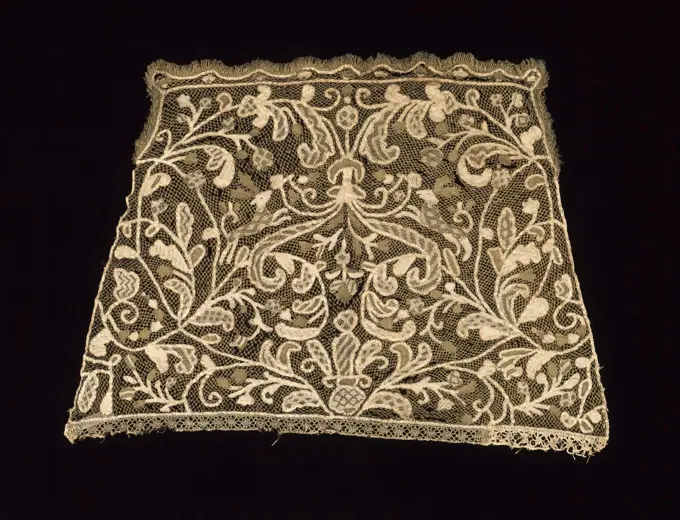
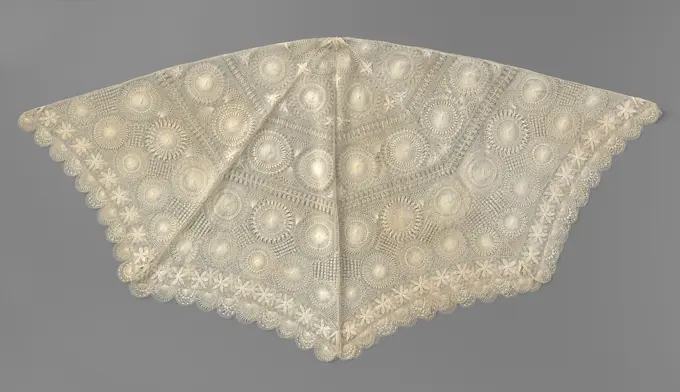
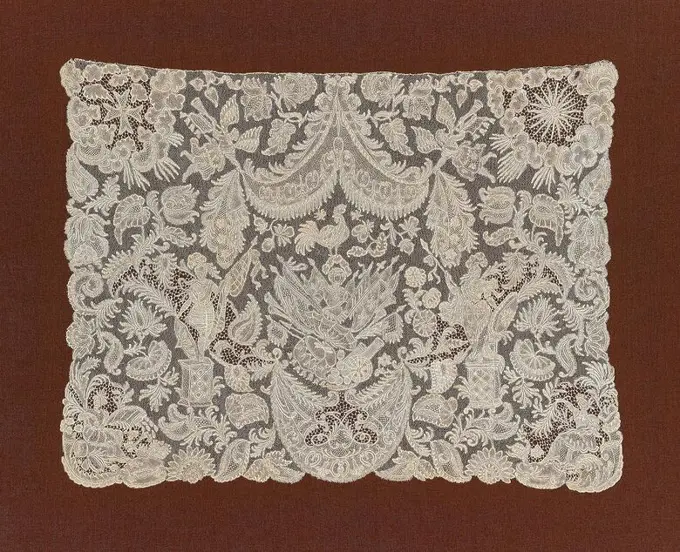
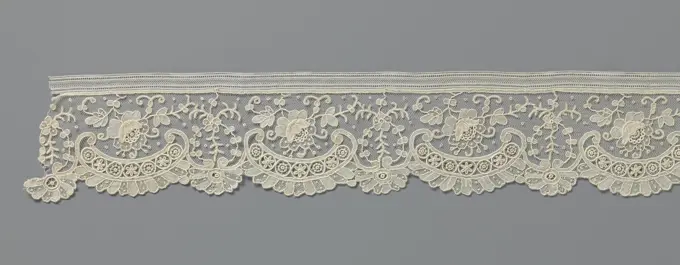
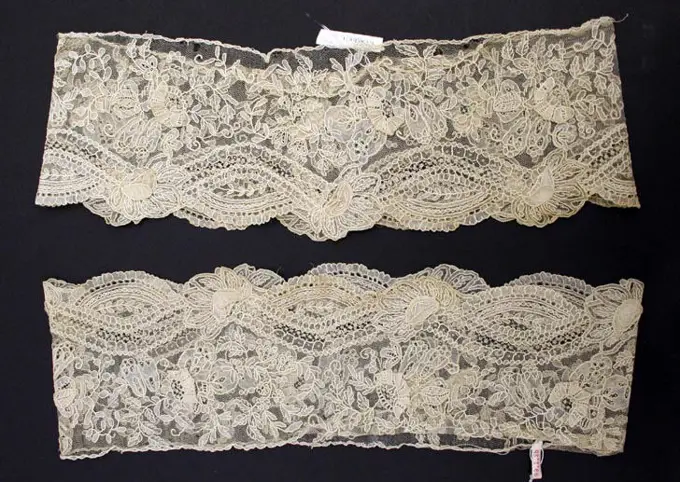
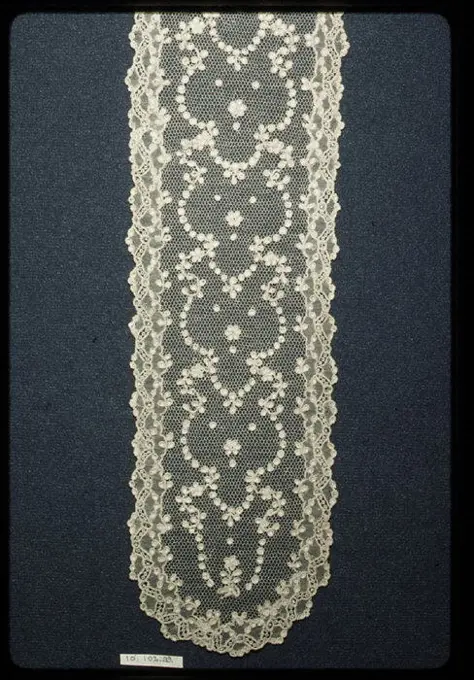
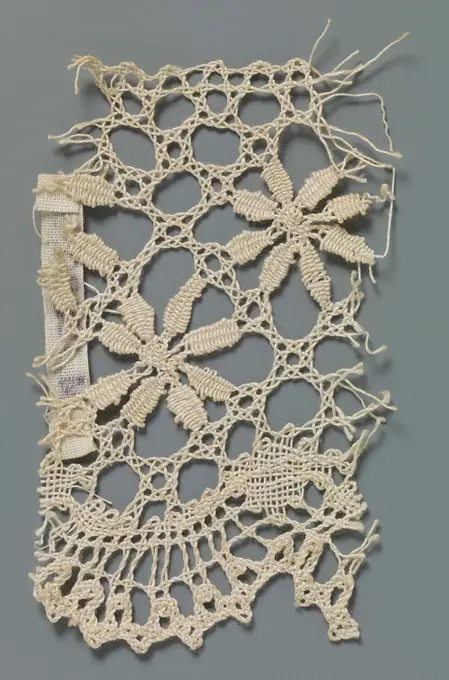
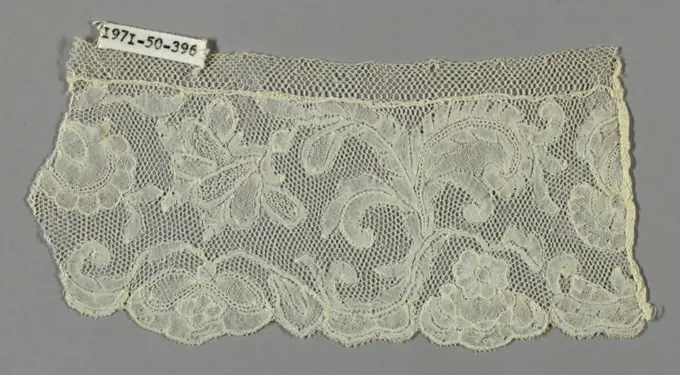
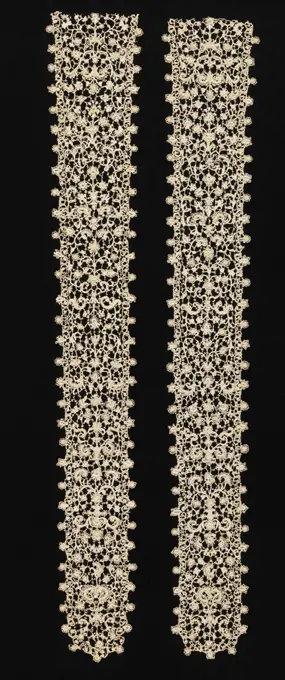
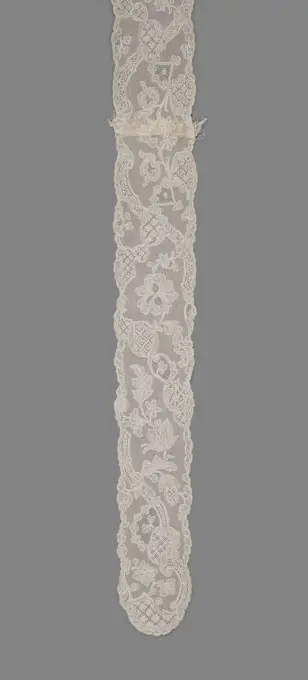
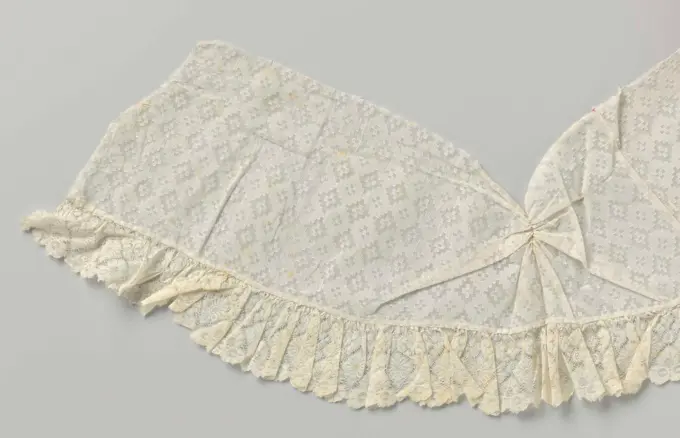
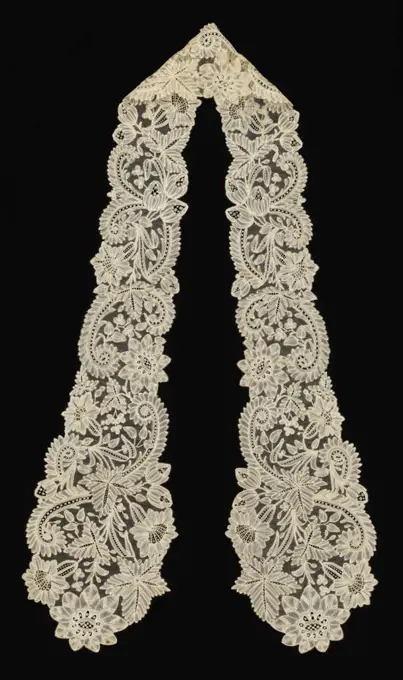
Beautiful examples of historical lace, featuring intricate patterns with floral and leaf motifs. Various styles and techniques from different time periods.

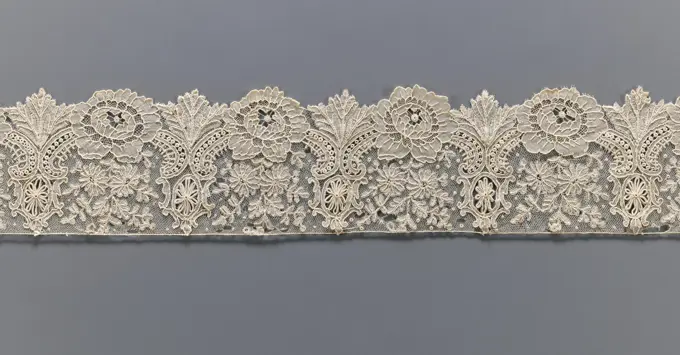
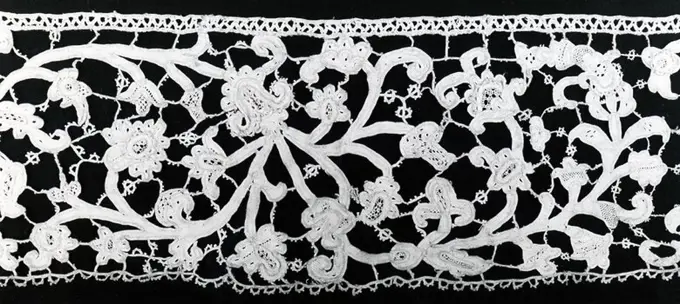
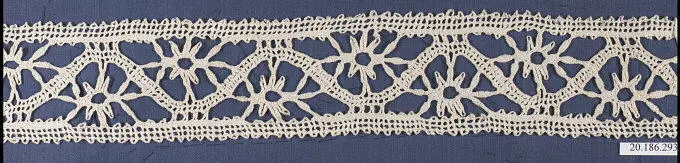
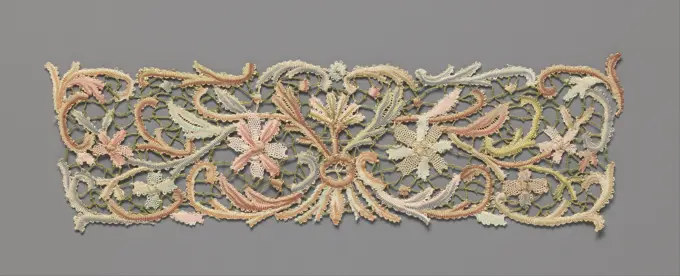
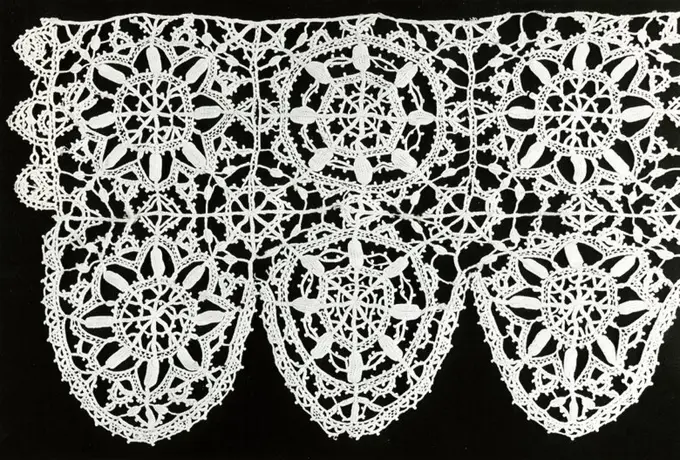
Strip of needle side with incised leaves, anonymous, c. 1900 Walking pattern of incised leaves above a rose and a three -leaf, which together form the sharply toothed outside line. Cross-shaped bars with button (soil of long X-shaped bars with a spider). The Remplis consists of buttonholes and a long distance gazé. German side: 'Carlsbader Points'. Karlsbad (Germany) (possibly) linen (material) Walking pattern of incised leaves above a rose and a three -leaf, which together form the sharply toothed outside line. Cross-shaped bars with button (soil of long X-shaped bars with a spider). The Remplis consists of buttonholes and a long distance gazé. German side: 'Carlsbader Points'. Karlsbad (Germany) (possibly) linen (material)
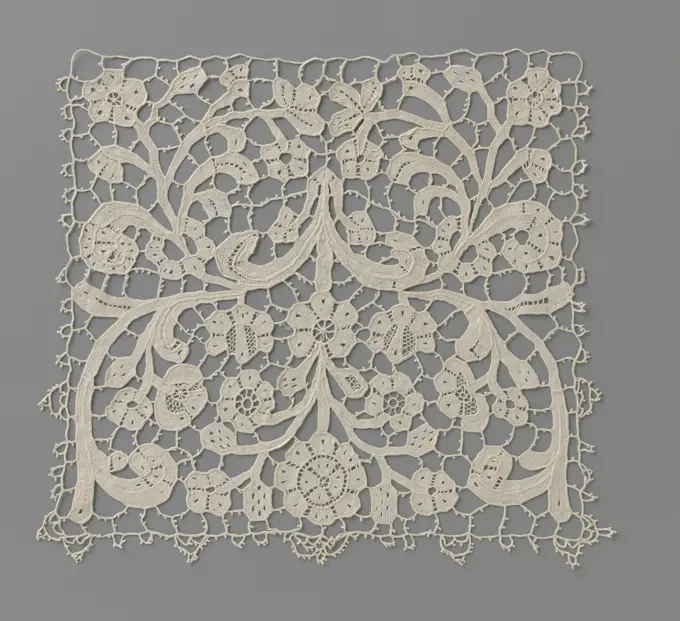
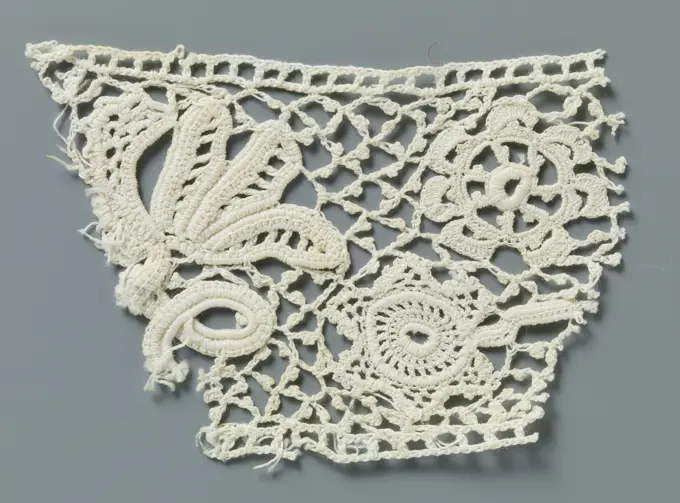
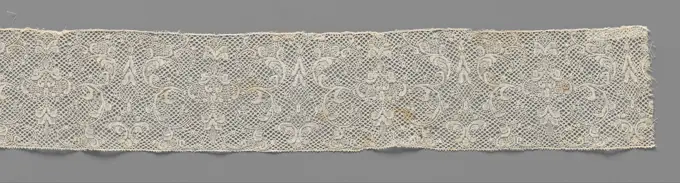
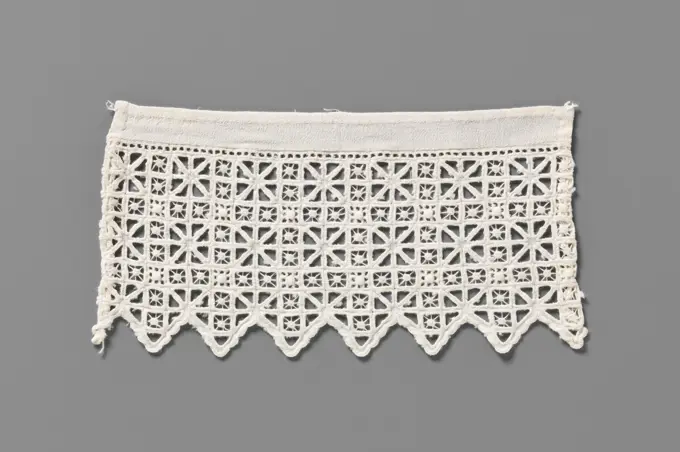
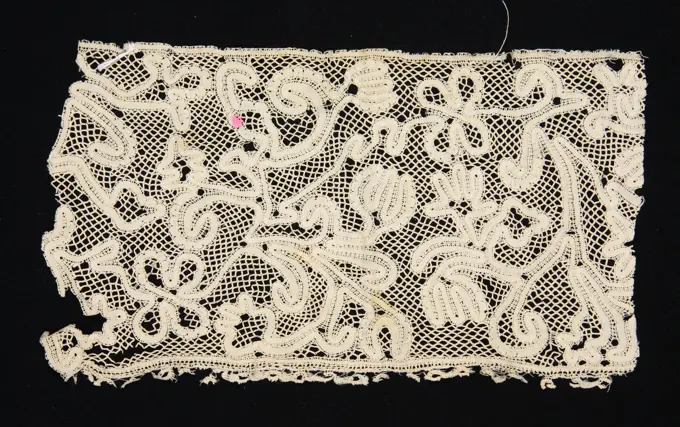
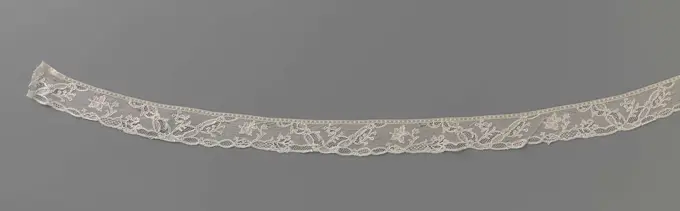
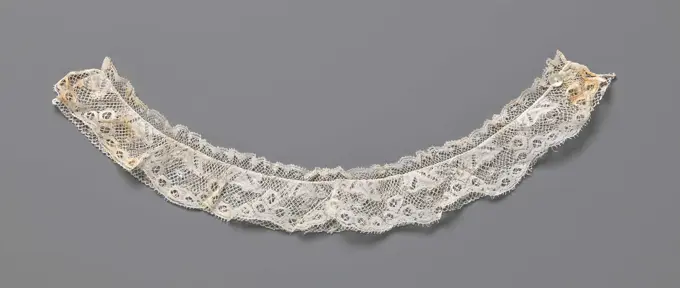
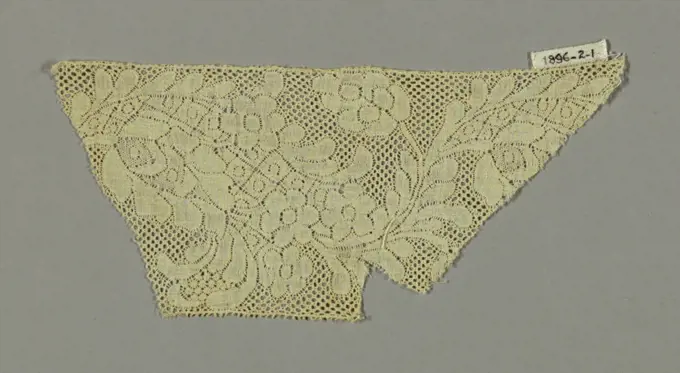
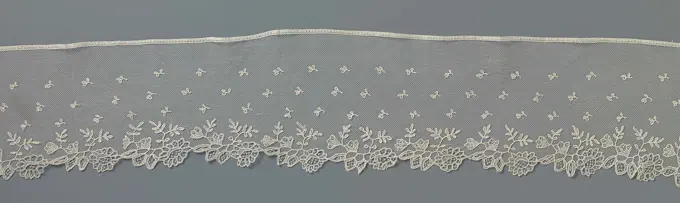
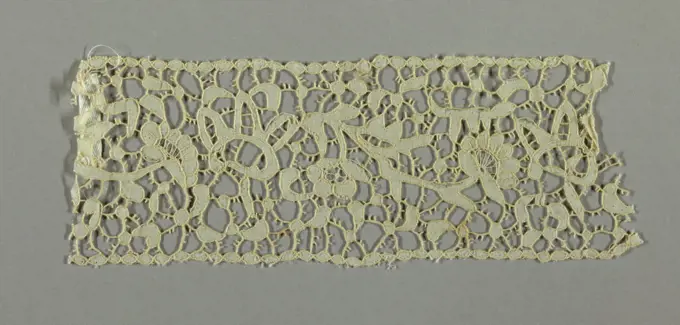
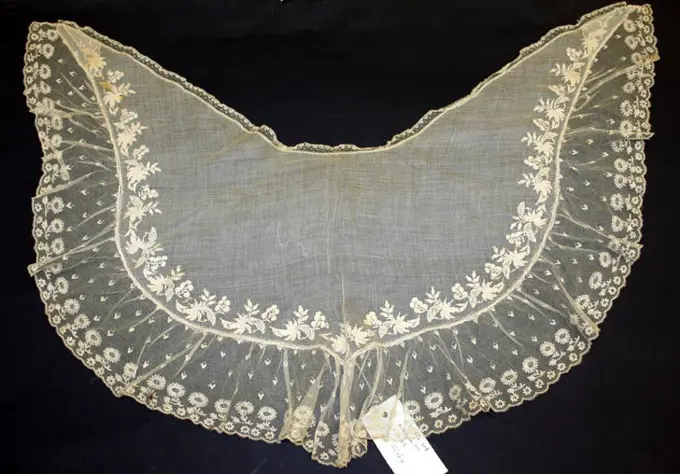
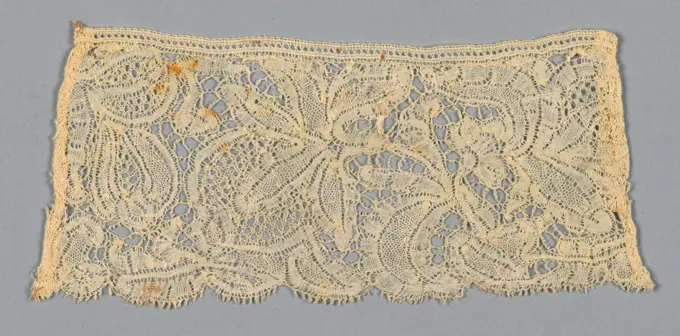
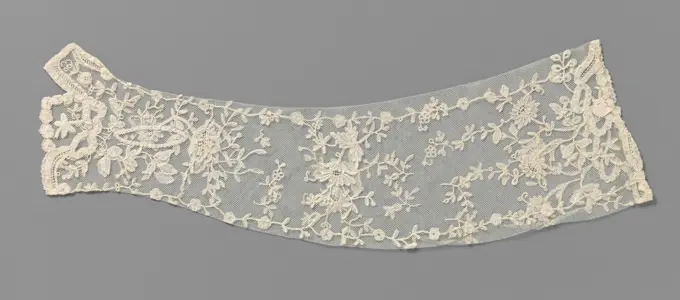
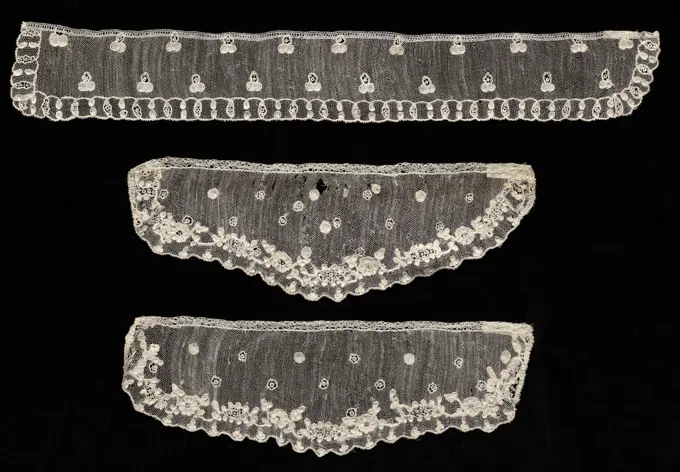
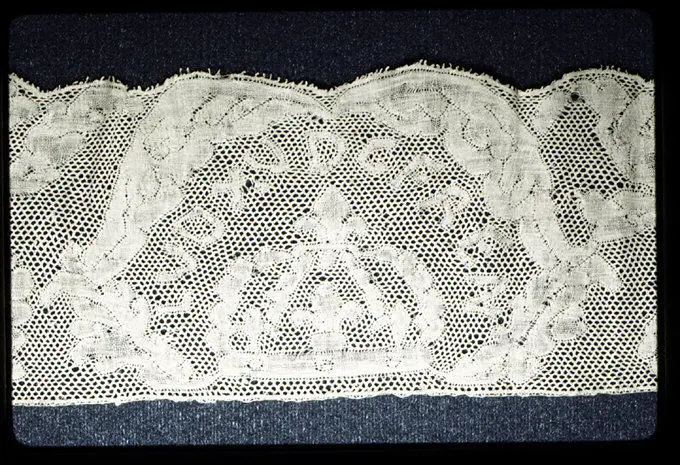
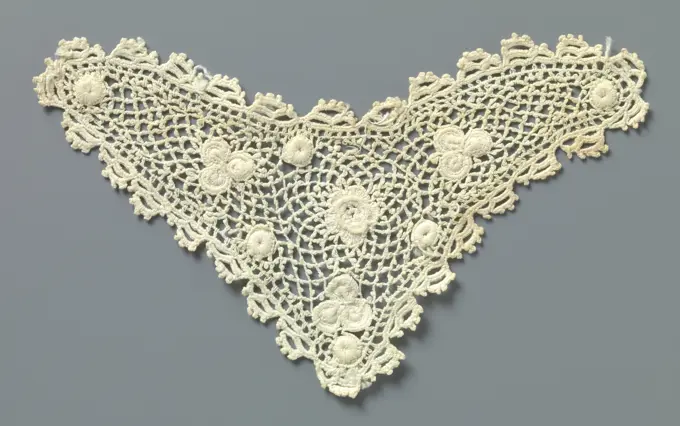
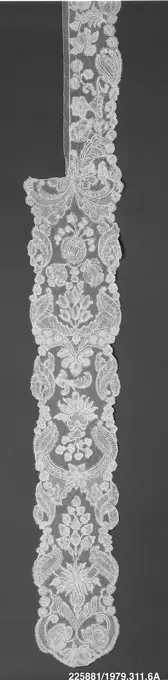
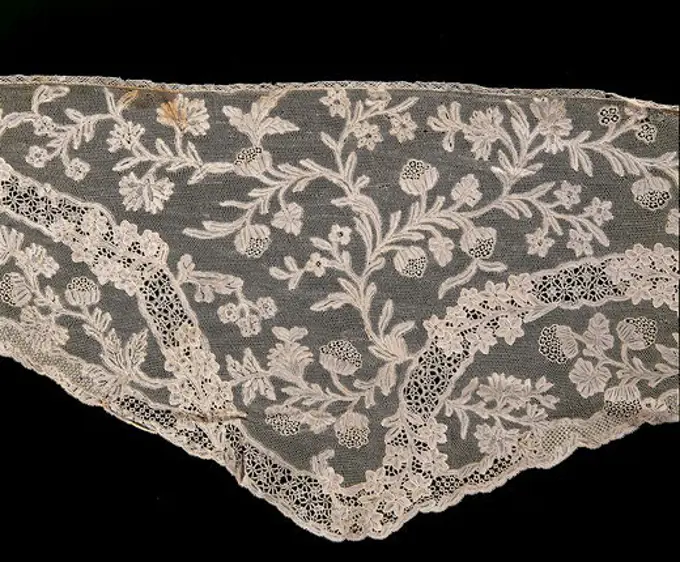
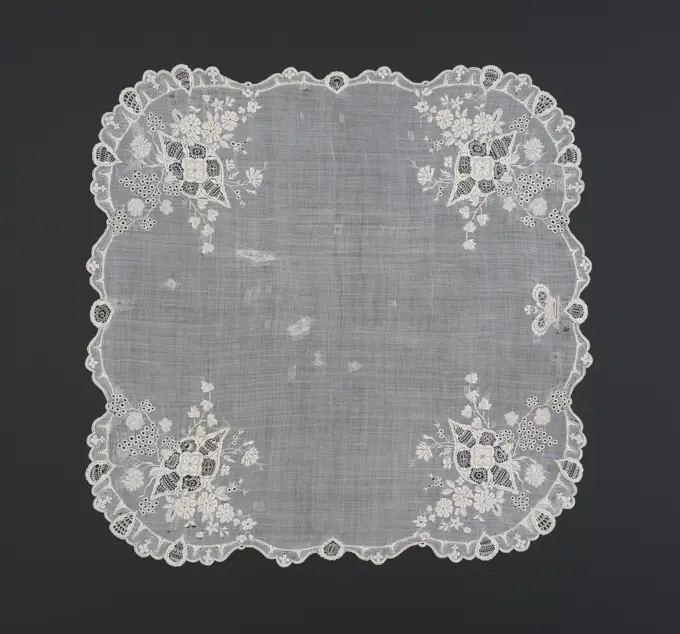
Collar of Rijsselse side with double strip, anonymous, c. 1870 Collar of Rijsselse side with double strip, cone -shaped model. The tulle is decorated with moesjes. At the bottom of scoops with a flower on a stem. The board is applied with flowers of whitework. West-Europa . Lille lace Collar of Rijsselse side with double strip, cone -shaped model. The tulle is decorated with moesjes. At the bottom of scoops with a flower on a stem. The board is applied with flowers of whitework. West-Europa . Lille laceInvestment piece with rose bouquet, anonymous, c. 1900 - c. 1949 A symmetrical leaf volume encloses a bouquet of roses. An arc list along three sides. Venise flat. Burano (possibly) linen (material) flat Venetian (needle point) A symmetrical leaf volume encloses a bouquet of roses. An arc list along three sides. Venise flat. Burano (possibly) linen (material) flat Venetian (needle point)Fragment 17th century Italian. Fragment 212426Fragment made of crocheted side with a towered twig and star -shaped flower, anonymous, c. 1890 - c. 1909 Fragment natural -colored Irish crocheted side. Pattern in which a flower branch with a rosette flower and several elongated leaves is interspersed with a hanging star -shaped flour on a short stem without leaves. Crochet diamond -shaped Maas soil with picots. The top is finished with a straight edge. The wavy lower edge is trimmed with potentially three -part arches. Ireland cotton (textile) Fragment natural -colored Irish crocheted side. Pattern in which a flower branch with a rosette flower and several elongated leaves is interspersed with a hanging star -shaped flour on a short stem without leaves. Crochet diamond -shaped Maas soil with picots. The top is finished with a straight edge. The wavy lower edge is trimmed with potentially three -part arches. Ireland cotton (textile)Strip bobbin with Kandelaber motifs between C-Voluten, Anonymous, c. 1700 - c. 1720 Strip of natural-colored bobbin: binche side. The repeating and symmetrical pattern consists of two different Kandelaber motifs flanked by two C-Voluten, which stacked on top of each other the shape of the number 3 forms, alternately and not mirrored. The motifs are made in netslag and linen battle with openwork edges. The motifs are connected by a grid, a five -part ground. In addition to a few loose cutting flakes, small surfaces are filled here and there with decorative grounds, mainly snowflake grounds in different varieties. The top and bottom of the strip are straight finished, with the bottom with picots. One short side is finished with a zoompje. Southern Netherlands linen (material) Bobbi Lace / Binche Lace Strip of natural-colored bobbin: binche side. The repeating and symmetrical pattern consists of two different Kandelaber motifs flanked by two C-Voluten, which stacked on top of each other tFragment, Medium: linen Technique: bobbin lace (Lille-style with heavy outlining thread), Lille-style fragment with a conventionalized pattern of large curving leaves and small flowers. Narrow edging sewed to either end of the fragment., England, 18th century, lace, FragmentBobbin Lace (Rose Lace) Edging with Bell Points, 18th century. Italy, Genoa, 18th century. Lace, bobbin; average: 7.1 x 24.8 cm (2 13/16 x 9 3/4 in.).Ladies' Das from Linnenbatist with Duchesse Kant, Anonymous, c. 1880 - c. 1900 Ladies' Das from Linnenbatist with Duchesse Kant. The tie has a V-shaped intermediate power at both ends, with a pattern of flowers and leaves. The picoted and irregularly scalloped ends have a pattern of C-shaped volutes, flowers and leaves. Belgium linen (material). mixed lace Ladies' Das from Linnenbatist with Duchesse Kant. The tie has a V-shaped intermediate power at both ends, with a pattern of flowers and leaves. The picoted and irregularly scalloped ends have a pattern of C-shaped volutes, flowers and leaves. Belgium linen (material). mixed laceMachine cuff with a square grid and pointed sculptures, anonymous, c. 1910 Cuff from a strip of crepe with a wide edge of machine side: machine -cut work. Rectangular model with pointed sculptures. The pattern consists of a grid of larger squares with a cross through diagonal and straight lines, framed by smaller squares with a circle in each between spanning threads, like suns. Belgium (possibly) cotton (textile). crepe (textile) Cuff from a strip of crepe with a wide edge of machine side: machine -cut work. Rectangular model with pointed sculptures. The pattern consists of a grid of larger squares with a cross through diagonal and straight lines, framed by smaller squares with a circle in each between spanning threads, like suns. Belgium (possibly) cotton (textile). crepe (textile)Piece ca. 1750 French. Piece 219650Cuffs 1700-1710 probably European This is a very unusual piece because of the incorporation of gold metallic thread and linen and the use of a pre-made tape at such an early date. The naive drawing style of the design indicates that it was not made for an important personage, giving it a personal charm.. Cuffs 156394Uphaset cloth made of climbing side with birds and radiant suns.Parasoldek of naturallar-colored sunny side (needle side): Nanduti work. Eight sectors show rows of radiant suns, several times interrupted by a crossbane. One of the suns, on the height line of every sector, exhibits nozzles roughly rimmed. The geometric fillings of the other suns are always varied. The switches are filled with rosettes, impellers and grid work. The outer transverse bean is composed of squares with rosette filling. The deep slippers are filled with half suns.Kloskant cuff with straight orbit, Sophia Gerardine Cenijn-Smit, c. 1914 Cuff made of natural -colored bobbin. Narrow rectangular model. The pattern consists of a horizontal straight lane cloated in netslag, around which a frame runs that has been held in linen battle. In the list, cut -outs are made above and under a row of cut -outs, always three holes among each other where the middle one is the largest and that repeats itself at a regular distance. The cuff is finished along two short and one long side with an open arched edge, cloated in linen stroke with openwork edges and on the outside with a thicker and shiny contour thread and finished with picots. A block of shape in each bow. Amsterdam cotton (textile) bobbin lace Cuff made of natural -colored bobbin. Narrow rectangular model. The pattern consists of a horizontal straight lane cloated in netslag, around which a frame runs that has been held in linen battle. In the list, cut -outs are made above and under a row of cut -outs,Fragment (Italy); linenFragments, Technique: machine embroidery, Transparent substrate embroidered with white thread with alternating rows of single flowers with stems. Scalloped border with small rosettes surrounded by curlicues., France, late 19th century, embroidery & stitching, FragmentsCravat End. Belgium, Flanders, Brussels. Date: 1700-1740. Dimensions: 32.1 x 41.7 cm (12 5/8 x 16 3/8 in.). Linen, bobbin part-lace of a type known as "Brussels" with a Droschel mesh ground. Origin: Flanders. Museum: The Chicago Art Institute, Chicago, USA.Strip of needle side with lying C-volutes with a rose, anonymous, c. 1875 - c. 1899 Strip of natural needle side, point the gaze de bruxelles. Repetitive motive of a horizontal C-Volut above which a rose interspersed with a leaf wreath crowned with a rosette flower. Fine soil with single twisted meshes, strewn with mushes. Fullwork with different decorative lands, with nuances in density where the denser filling is made with dust mark. Relief of wire bundles (cordonnets) wide apart. Schulpen along the lower edge. The upper edge is trimmed with a messing strap. Brussels linen (material) Strip of natural needle side, point the gaze de bruxelles. Repetitive motive of a horizontal C-Volut above which a rose interspersed with a leaf wreath crowned with a rosette flower. Fine soil with single twisted meshes, strewn with mushes. Fullwork with different decorative lands, with nuances in density where the denser filling is made with dust mark. Relief of wire bundles (cordonnets) wide apart. SchManchet van kloskant met margrietjes.A coarse mesh stock (square mesh) with marbriefs above beads of pearls. Valenciennes side.Cooper Union Museum Lace Study Card, Medium: linen Technique: bobbin lace, Lace fragment in a border design of a vine with blossoms and leaves turning off alternately to the left or right. Tiny palmette design along edge. Fragment is mounted on a fabric-covered board and framed behind glass. Frame is natural wood., Belgium, late 18th century, lace, Fragment, FragmentFragment of the lace;  2. PO. 19th century (1851-00-00-1900-00-00);Fragment of the lace;  18th century (1701-00-00-1800-00-00);Lace, bobbin, Mid 19th Century, Italy, maker unknown. Gift of Yvonne Riddiford, 2007.Lace laceStrook kloskant met anjer tussen v-vormige velden.Strip natural colosside: Mechelen side. The pattern consists of a double narrow pendulum, which forms a succession of spindle-shaped cartouches along the underside and also forms a regular distance with sloping lines to the top of the strip V-shaped fields. A large carnation at a curved stem releases from the pendulum along the bottom edge and is always in the space between two consecutive V-shaped fields. The motifs are connected by a fine Maas soil. The motifs are made in linen stroke with very thick contour wires. Different ornamental grounds have been applied in the cartouches and in residual areas. The bland scalloped underside stems from the pattern with the double garland and is finished with picots. The top is finished with a separate splitting straight band.Insertion 17th century Spanish or Italian. Insertion 227657Fragment 17th century Flemish, Bruges. Fragment 214471Band; linenKraag van kloskant met klimopblad.Collar of natural climbing side, Valenciennes side. The collar is made of a double-folded strip side, a narrower, wrinkled strip side is sewn on the folding line. A pearl knot is attached to one side. The double-folded strip has a repetitive motif of ivy leaves on a square mesh soil, with a row with something staggered above. The top of the strip is not finished. Slightly slightly shuts that are formed by concealed cogs.Fragment, Medium: linen Technique: bobbin lace, Brussels style, Belgium, late 17th century, lace, FragmentStrip bobbin with three long lobes under hanging fans, anonymous, c. 1850 - c. 1899  Strip black bobbin: Le Puy side. The repeating pattern consists of connected hanging fans. The space above the points where the fans touch each other is filled by a window. There are three half -shaped lobes under each fan, where the two outer ones are shared with the previous or subsequent fan. At the top of the strip the motifs are connected by a coarse decorative land. In the lobes right under the fans, a decorative land has been applied, decorated with motifs made in shape. The top of the strip is straight finished. The scrap edge along the underside of the strip stems from the half -shaped lobes and is finished with picots. Le Puy (possibly) silk bobbin laceFragment Swedish, Skane 19th centuryKloskant's intermediate base with two different types of flowers on a splitting stem, anonymous, c. 1750 - c. 1799 Strip of natural -colored bobbin, Old Flemish side. The repeating pattern consists of a flower stalk with two different flowers, which split off in the opposite direction along the underside. From the lobed flower that bends back in the direction of the stem, some stretched leaves spring. These leaves partly bend with a bend to the end of the stem and partly the other way, where it touches the upper tulip -like flower in the subsequent pattern. The motifs are connected by a grid, a five -part ground. The fullwork is largely made in linen battle with openwork edges and in the flower hearts of the lobed flower. A snowflake land has always been used as a decorative soil in the space between the two flowers and some snowflakes are used elsewhere as a decorative element. Up and bottom of the strip are straight finished, with a linen strap running along the top edge and where thBand, Medium: linen Technique: bobbin made continuous tape with bars added, Design of upright flowers set between scrolling leaves. One ornamental border., Italy, 19th century, lace, BandNeedlepoint (Point Alençon) Lace Edging, mid 18th century. France, Alençon, mid 18th century. Lace, needlepoint; average: 5.8 x 36.9 cm (2 5/16 x 14 1/2 in.).Fragment of lace 18th century French. Fragment of lace 218223Albesto smoke from the needle side with pomegranates and feathers and centrally a Sint-Jacobs shell, Anonymous, c. 1720 - c. 1725 Albound smoke of natural-colored needle side: sedan side. Pattern with large and richly decorated motifs in the form of pomegranates and feathers with a hexagonal picoted Maas soil. The pattern is symmetrical compared to the Sint-Jacobs shell in the middle of the Albe. The rich decorations in the motifs are made with all kinds of different patterns through recesses in the fullwork. Here and there, reliefcontour lines fested. The top edge is trimmed with a border bobbin and reinforced with a woven strap. The scrap edge on the underside stems from the pattern. Also sculpts along the left side, the right side is cut with a wavy line. Sedan linen (material) Albound smoke of natural-colored needle side: sedan side. Pattern with large and richly decorated motifs in the form of pomegranates and feathers with a hexagonal picoted Maas soil. The pattern is symmetricalStrook kloskant met parelsnoer in samengestelde rank.Strip natural colored Brussels climbing side. The pattern consists of a wavy rank, composed of all kinds of leaves, a heart-shaped flour, a bunch of oval flowers, a pearl necklace and a carnation from the end from which clavers four. The rank is partly called the pattern along the underside of the strip, which consists of, among other things, a branch forget-me-staples, an oval cartouche and connected leaves and roset flowers. The motifs are connected by a fine Maas soil, a slighten ground. The full work is largely made in linen battle with openwork edges and a few recesses. Some flower hearts and petals and the like are made in scroll. Most motifs are equipped with closted relief contours. As ornamental ground, a snowflaking soil has been applied in the center of the oval cartouche and braided between the bunches of bunches. The top is finished with a separate splitting strap, to which fragments are stuck from a hexagonal maas soil.Border. Europe. Date: 1775-1800. Dimensions: 9.8 × 63.6 cm (3 7/8 × 25 in.)Heading height: .8 cm (1/4 in.)Lower edge height: .5 cm (1/4 in.). Linen, needle lace with woven tapes. Origin: Europe. Museum: The Chicago Art Institute, Chicago, USA.Fragment, Medium: linen Technique: bobbin lace (Binche style with Binche ground), Border fragment with a straight picot edge. Serpentine pattern of flowers and foliage. Five hole mesh (cinq trous ground)., Europe, 1730-60, lace, FragmentHalf Shawl. France, Bayeux. Date: 1860-1865. Dimensions: 136.7 × 283.6 cm (53 3/4 × 111 5/8 in.). Silk, bobbin straight lace (made in vertical strips). Origin: France. Museum: The Chicago Art Institute, Chicago, USA.Strook applicatiekant met à-jour bloem- en bladtak.Strip natural-colored application side: needle side applicated on machine tulle. This type of side is also known as the name: Point d'Angleterre. A three-row leaves sprinkled in the inside portion is sealed by uneven pieces that are formed by connected thin branches with a jour (open) floral and three leaves.Border, Medium: linen Technique: bobbin lace, Mechlin style, N. Europe, 18th century, lace, BorderFragments (Flounce) Made 1701-1750 Italy. Linen, bobbin part lace (continuous clothwork tapes) .Border; 1974-52-38Band, Medium: linen Technique: embroidered with cutwork, Fragment of a band in a loose floral vine pattern with cut areas of woven linen connected by embroidery., Europe, 18th century, embroidery & stitching, BandCuffs first quarter 19th century Belgian. Cuffs 78927Barbe last quarter 18th century French. Barbe. French. last quarter 18th century. Needle lace, point dAlençon. Textiles-LacesFragment of a Border with Floral Motif, 18th century. Spain, 18th century. Needle lace, filet/lacis (knotted ground and darned in one and two directions); bleached linen (est.); overall: 30.1 x 37.6 cm (11 7/8 x 14 13/16 in.). The scalloped bottom edge of this lace fragment indicates that it was originally meant as the border for a larger work of lace or other textile.Children's hat of batist decorated with embroidered bouquets, anonymous, c. 1840 - c. 1860  A children's hat of Batist decorated with embroidered bouquets along the edges. The scalloped edge is trimmed with a feston stitch. Netherlands batiste embroideringStrip of a climbing side with flowers. Strip natural colosside, cluny side. The strip is very short and the pattern cannot be seen completely. Two obliquely placed flowers are shown, each with eight petals made in shape stroke. They are connected by a cross bands with recesses. The top of the strip is straight finished. Along the bottom edge, a part of a semicircular shell can be seen with, at the point where the next shell starts an oval motif in linen. The scallop is finished with a winding and looping braid.Strip bobbin with a window in a diamond -shaped field formed by triangles, anonymous, c. 1900 - c. 1924  Strip of natural -colored bobbin: tie. The repeating pattern consists of a window in a diamond -shaped field that is formed by a triangle hanging at the top with right underneath a triangle that lies along the underside of the strip. The points of the triangles almost touch each other in the middle of the strip. The motifs are connected by a reinforced closed pin stroke ground. Top and bottom of the strip are straight. 's Gravenmoer cotton (textile) Bobbi lace / lace clothBand, Medium: linen Technique: bobbin lace, discontinuous tape, Border with seven deep rounded points of cream colored bobbin lace. Points frame a double-heading eagle surmounted by a domed crown, and set among flower sprays. Points edged with small scallops with a stylized flower in the center. A horizontal border with a symmetrical arrangement of stylized floral sprays and paired birds is above., Europe, 1600-1650, lace, BandFragment, Medium: linen Technique: bobbin lace (Valenciennes ground with Brussels lace), Band of scrolling leaves and blossoms., Belgium, mid-18th century, lace, FragmentCollar ca. 1860 American. Collar 168869Fragment (USA); Manufactured by A .G. Jennings & Sons; silkStrip 17th century Italian, Venice. Strip 212456Fragment, Medium: linen Technique: bobbin lace, continuous braid-like, One tab with stylized blossoms., Italy or Belgium, late 16th century, lace, FragmentCollar 1840s probably American. Collar 110126Cuffs, Medium: linen Technique: crochet, Two pair of crocheted lace cuffs in white linen., a,b with roses and shamrocks on a picotee ground, c,d in an overall lozenge design, Ireland, 19th century, knotted, knitted and crocheted textiles, CuffsLampshade covers, Medium: Technique: machine lace, Tubular shape made of machine-made lace patterned with a symmetrical repeat of a tree, man on horseback, and a man holding a pike. Knotted net with fringe sewn to bottom edge. Machine-made edging along top., USA, 1900-1915, lace, Lampshade coversMachine Lace (Embroidered Net) Kerchief, 19th century. Ireland, Limerick, 19th century. Cotton embroidery in tambour stitch on white machine-made net; average: 53.4 x 182.9 cm (21 x 72 in.).Fragment, Medium: linen Technique: bobbin lace (Brussels-style), Fragment with a delicate smallscale conventionalized floral design and scalloped edge. Some decorative filling stitches as well as small holes in the clothwork areas of the design; picoted bars connect the different elements., Belgium, mid-18th century, lace, FragmentFragment; linenJapon strip of application side with forced gate archs, anonymous, c. 1850 Japon strip of natural -colored Brussels Application side: Kloskant Applicated on machine tulle. Symmetrical arcs, made up of thin C-volutes, welven above a rush-hour field, filled with a hanging flower branch. Wide edge of symmetrical, alternately alleged and alternated spirals, which follow the scallops that are filled with a hanging flower on the outside with godrons. Brussels linen (material). Brussels Applied Japon strip of natural -colored Brussels Application side: Kloskant Applicated on machine tulle. Symmetrical arcs, made up of thin C-volutes, welven above a rush-hour field, filled with a hanging flower branch. Wide edge of symmetrical, alternately alleged and alternated spirals, which follow the scallops that are filled with a hanging flower on the outside with godrons. Brussels linen (material). Brussels AppliedFragment, Medium: linen Technique: bobbin lace (Lille-style with heavy outlining thread), Fragment of Lille style bobbin lace., 18th century, lace, FragmentFragment of fabric unknownFragment of lace 17th century Italian, Genoa. Fragment of lace. Italian, Genoa. 17th century. Textiles-LacesHandkerchief. Belgium, Brussels, second half of the 19th century. Costumes; Accessories. Linen plain weave and linen bobbin lace appliqué on netFragment Swedish, Vadstena 19th centuryJabot, laced unknownMitaine van applicatiekant met rozen en margrieten en strikken.Mitaine of natural brussels application side: dick edge with needle lace standards appliqued on machine tulle. The model is like rounded sleeves, cave inside and sphere from outside. The pattern is equal to both sides and has brought together daisies and other flowers with a bow. In the middle it has a loose bouquet of flowers and scattered rose buds, framed by a thin garland with roses. The motifs are made in a cut-off and linselag with openwork edges and accented by relief contour lines in different places. Conifiers standards are applied in flower hearts and ribbons.Strip bobbin with lying heart pattern, anonymous, c. 1850 - c. 1899 Strip of natural -colored bobbin. We worked with thick threads. The one -sided pattern consists of lying, loose hearts. The hearts are connected to each other by a grid, a round Valenciennes ground. Four next hearts are made in Ovenlag. Left and right of this is a heart whose edge is made in linen stroke and which is filled with a decorative soil, a five -part ground. On the short sides you can see half hearts on both sides, because the strip has been cut here. Along the upper and bottom of the strip a narrow decorative band has been made: in the upper edge a straight strap in linen battle with large recesses above and in the bottom edge a straight strap in linen stroke with a row-rectangular cubes in linen stroke with recesses in between. Germany (possibly) linen (material) bobbin lace Strip of natural -colored bobbin. We worked with thick threads. The one -sided pattern consists of lying, loose hearts. The hearts areMixed side cuff in polychrome side, Jesurum, 1896 Cuff of polychrome mixed side - bobbin in combination with needle side - inspired by Brussels Duchesse. Against an open braiding soil in moss green are large C-volutes in gray-blue, with leaf palm with turquoise as the final piece. Four final pieces are in the middle of the cuff. In the volutes are rose and blue composite flowers or a palm leaf. In the middle of the collar are two C-Voluten, which enclose a leaf palm with couples of leaves in Rose, Bleu and Beige. Furthermore, small C-Voluten, Ranken, Akanthus leaves and smaller star flower. Many of the stems and petals are nuanced from Moesgroen/Geel/White, Brown/Beige, Vieuw-Rose/Rose/White, Light turkey/white and gray blue/beige. Deep and whimsical by the motifs of the inner decor. Venice silk mixed lace / mixed Brussels Cuff of polychrome mixed side - bobbin in combination with needle side - inspired by Brussels Duchesse. Against an open braiding soil in moss green are large C-volutBorder. Italy. Date: 1625-1650. Dimensions: 19.3 x 66.8 cm (7 5/8 x 26 1/4 in.)Width repeat: 17.9 cm (7 in.). Linen, needle lace worked on laid and plaited thread grid, Reticello pattern. Origin: Italy. Museum: The Chicago Art Institute, Chicago, USA.Border; linenNeedlepoint (Burano Point) Lace Collar and Cuffs, late 18th century. Italy, Burano, late 18th century. Lace, needlepoint: linen; average: 5.7 x 40 cm (2 1/4 x 15 3/4 in.).Strip bobbin with kink and symmetrical pattern with hanging S-shaped bouquet with tulips and peony, anonymous, c. 1720 - c. 1749 Strip of natural-colored bobbin, binche side. The strip makes a kink halfway and widened slightly on this point, where an almost invisible seam runs in the middle. The repeating pattern consists of a hanging S-shaped bouquet with, among other things, a peony and smaller tulips and rosette flowers. The pattern with the bouquet flows into a pattern with acanthus leaves and a decorative band that runs slanted and then moves up again with two arches around the bouquet. Because the pattern is mirrored at the seam, the decorative band forms around the widened centerpiece into a kind of U-shaped cartouche. The motifs are connected to each other by a mesh ground, the lace-hole stroke-grid and largely through decorative land, including snowflake land and mains fillings with a spreading pattern of hearts. The motifs are made in linen battle with openwork edges, recesseKloskant's handkerchief drop shapes in the center and roses in the corners, congregation of the sisters of Onze-Lieve-Vrouw-Visitation, 1852-1867 Natural-colored bobbin handkerchief: Ghent Valenciennes side. Square model with rounded corners, wavy scallops edges. The pattern consists of a closed flower in the center, which is made up of four drop shapes between which four elongated heart shapes, each crowned by a small drop -shaped motif. From each large drop shape a big rose springs to a short stalk with two leaves. The rose is crowned by branches with forget-me-nots and flanked on both sides by a smaller branch with a rose in the button. A decorative band forms a three-lobe list of zigzag line and dots, which is decorated along the outside with a succession of leaves and ovals. The motifs are largely made in very densely worked linen battle with openwork edges and fine cut -outs such as leaf grant. A few petals of the rose are made in mains. The motifs are connected by a square ValenSleeve ruffle (Engageante) 18th century French. Sleeve ruffle (Engageante) 226097Flounce, early 1800s. France, early 19th century. Embroidery; cotton; overall: 43.2 x 326.4 cm (17 x 128 1/2 in.).Trimming (possibly Spain); silver metallic foil and silver metallic foil wound onto white silk; Repeat: 8 inchesVolant Van Kloskant with bonding S-Voluten, Anonymous, c. 1850 Volant van Zwarte Kloskant: Chantilly side. On a mesh stock there is an almost symmetrical pattern of large S-s-s-es, which are cut by black flower guirles. The scallops are half circular and alternately filled with the aforementioned garland and with a leaf edge. Above the tops of the s-sen is a loose branch with anemone, tulip and daffodils. Above the second shell is a flower wreath. The inside and one of the sides are decorated with a row of hearts and blossoms. France (possibly) silk bobbin lace Volant van Zwarte Kloskant: Chantilly side. On a mesh stock there is an almost symmetrical pattern of large S-s-s-es, which are cut by black flower guirles. The scallops are half circular and alternately filled with the aforementioned garland and with a leaf edge. Above the tops of the s-sen is a loose branch with anemone, tulip and daffodils. Above the second shell is a flower wreath. The inside and one of the sides are decoratCrocheted side with rose and clover leaves, anonymous, c. 1890 - c. 1909 Triangular support piece of natural -colored Irish crocheted side. Central to the triangle a layered rose with a spray pattern around it with a cloverleaf and dots. Crocheted soil with potente diamond -shaped meshes. Finished along all sides with picoted three -part arches. Ierland (possibly) cotton (textile) Triangular support piece of natural -colored Irish crocheted side. Central to the triangle a layered rose with a spray pattern around it with a cloverleaf and dots. Crocheted soil with potente diamond -shaped meshes. Finished along all sides with picoted three -part arches. Ierland (possibly) cotton (textile)Pair of lappets and papillon mid-18th century Flemish The Metropolitan Museum's great lace collection was started when the Museum became the first among American museums to organize a permanent collection of lace with the acceptance of the McCallum Collection in 1879 and the bequests of Mrs. John Jacob Astor, Mrs. Robert L. Stuart, Mrs. Augustus Cleveland, and Mrs. A. W. Winters shortly thereafter. In 1893 a loan collection of antique laces shown at the World's Columbian Exposition in Chicago was assembled by a committee of New York women headed by Catharine Augusta Newbold. About 1900 Miss Newbold arranged and labeled an exhibition of laces and linenworks lent to the Metropolitan Museum by Mrs. James Boorman Johnstone and the Misses Johnstone. "Her scholarly knowledge of lace technique enabled the Museum for the first time to offer a comprehensive display of lace illustrating its historical development," wrote Miss Frances Morris, then curator of the textile department. Miss Newbold'sCollar 18th century French. Collar 222458Strip of a climbing side with four peakovals in the corners of a window. Strip natural colosside, sling. Due to the limited length of the strip, the entire pattern is not visible. The visible pattern consists of a band in the battery, which forms the contours of a window. There is a spindle in the window in every corner. The spinders are connected to each other with crossing pairs and at the circumference of the window. On the outside of the window, two peakovals are connected per side, which are completely or partially in tact. They are partly connected by a grille, a fat gland barrier. The top of the strip is straight finished. Along the bottom, a slight tube edge runs, which is formed by a decorative belt from arches in linen stroke that are coupled to each other with a fat-mounted bar.Doily, Medium: linen Technique: knitted, Circular cover knitted in a design of diamond-shapes and other lace-inspired forms. Sawtooth edge., USA, mid- 19th century, knotted, knitted and crocheted textiles, DoilyLaces, 17th-18th century. Burano stitch (Punto Burano) needle lace fichu with ribbon-shaped, interlaced in flowers-shoots motif, 1750. Detail.Shawl ca. 1860 Belgian, Brussels. Shawl 219875Handkerchief mid-19th century French. Handkerchief 221509Cable handkerchief;  k. 19th century (1890-00-00-1920-00-00);Irish crochet, c. 1900, 28 x 40 in. (71.12 x 101.6 cm), Lace, Ireland, 19th centuryCollar van Tulle, round button model with slips, anonymous, c. 1895 - c. 1900 Collar of tulle, round button model with slips. The decoration consists of applicated sprinkling flowers. Around the neck three overlapping wrinkled strips of mechanical scalloped and potented Buckinghamshire side. The outer edge is also equipped with a strip of Buckinghamshire side. West-Europa . Bucks point (lace) Collar of tulle, round button model with slips. The decoration consists of applicated sprinkling flowers. Around the neck three overlapping wrinkled strips of mechanical scalloped and potented Buckinghamshire side. The outer edge is also equipped with a strip of Buckinghamshire side. West-Europa . Bucks point (lace)Strip bobbin with old pink and moss green, painted flowers and leaves, anonymous, c. 1740 - c. 1760 Strip of natural-colored bobbin, binche side, where the pattern of old pink is painted, with moss-green contour lines and dots. The pattern consists of feathered leaves, bent and curled, with a plume flower and a flower in the shape of a pine cone. The motifs are connected by a decorative land, a snowflake ground. The fullwork is largely made in linen battle with openwork edges. A mains filling has been used between some leaves and in the flowers. The underside of the strip is straight. The top is finished with a separate strap. Southern Netherlands linen (material) Bobbi Lace / Binche Lace Strip of natural-colored bobbin, binche side, where the pattern of old pink is painted, with moss-green contour lines and dots. The pattern consists of feathered leaves, bent and curled, with a plume flower and a flower in the shape of a pine cone. The motifs are connected by a decorative land, a snowCap streamers, Medium: linen Technique: needle lace, 'Candlestick' pattern of floral and foliated forms in high relief. Straight outer edge interrupted at intervals by clusters of blossoms., France, 1690s, lace, Cap streamersKanunnikskraag van kloskant met symmetrisch patroon.Kanunnikkelin of natural colosside. Symmetrical pattern with palmets, volutes and floral motifs with raised contours. The motifs are made in scroll and linen stroke with relief contours. They are connected by different ornamental grounds. The sloping edge around the collar stems from the pattern. Not scalloped but smooth is the edge that closes the neck. The 18th-century collar believed in the 19th century to Monsignor Simon, chaplain of Marie-Henriëtte, Gemalin of King Leopold II of Belgium.Border, Medium: Technique: needle lace, Needle lace; mid-17th century Point Plat de Venise, mid-17th century, lace, BorderCutslip from Mechelse side, Anonymous, c. 1750 Hapslip van Kloskant, which consists of two hat slips sewn together. The pattern consists of flowers, leaves and fruits, and fillings of gridwork. The scalloped edge is trimmed with picots. Belgium linen (material). Mechlin (lace) Hapslip van Kloskant, which consists of two hat slips sewn together. The pattern consists of flowers, leaves and fruits, and fillings of gridwork. The scalloped edge is trimmed with picots. Belgium linen (material). Mechlin (lace)Fall of Batist for a dressing table. Batisten fall for a dilk table in a boudoir, extended with tulle with the machine side.Cap streamers, Medium: linen Technique: bobbin lace with needle ground, Cap streamers in a design of large-scale floral motifs and swirling scrolls., Belgium, 1850-1900, lace, Cap streamers