Intricate Lace Designs

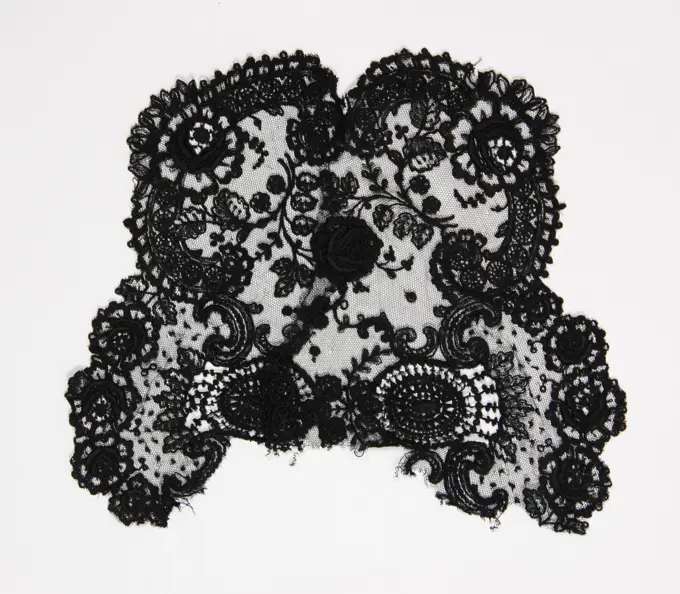
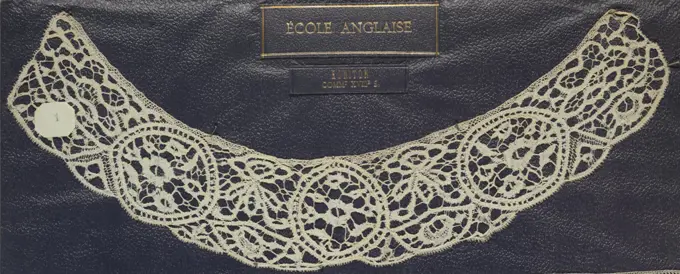
Delicate lace trims and appliqués with floral and intricate patterns, highlighting craftsmanship from various periods, suitable for fashion or decor.

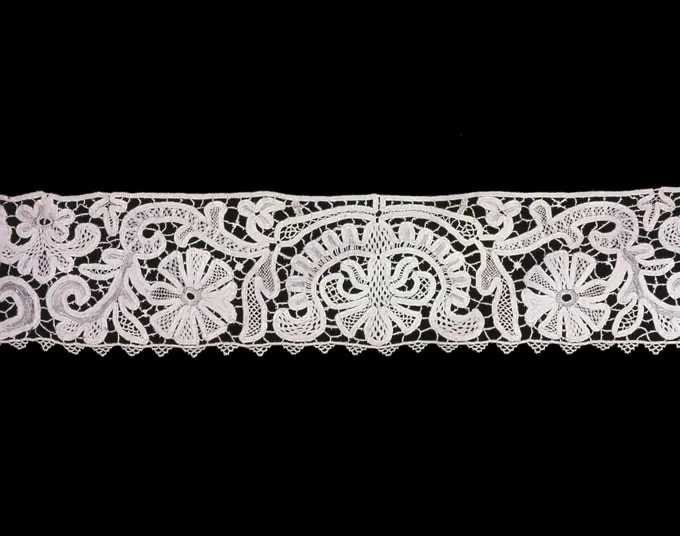
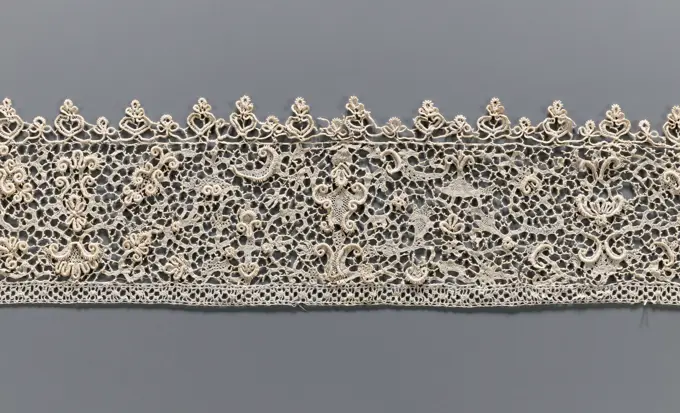
Strip lace with V-shaped motif above clamped shell, anonymous, c. 1700 - c. 1899 Strip of natural-colored needle side: Burano side. The symmetrical pattern consists of a V-shaped motif above an open shell that lies along the bottom of the strip. The V is formed by a row diagonally stacked leaves, with a larger drop -shaped and curlinged leaf at the top. A stem with three rosette flowers bends down from this leaf. The stem ends with a leaf that lies along the underside of the strip and whose top touches the shell. In the V-shaped field there is an as-symmetrical motif at the top with a rosette flower between three more or less oval flowers or shapes. The motifs are connected by a Maas soil, a Burano ground. Different decorative grounds have been used. Among other things between rosette flowers and in the decorative tires along the underside of the strip. The top of the strip is straight finished. The silly outskirts of scales along the underside of the strip stems from the pattern. BURA
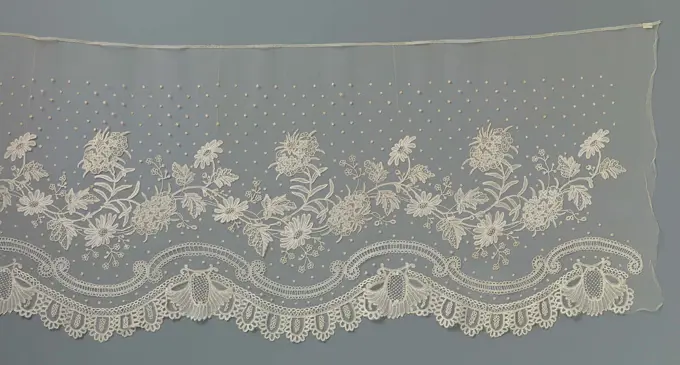
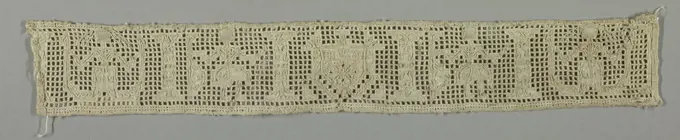
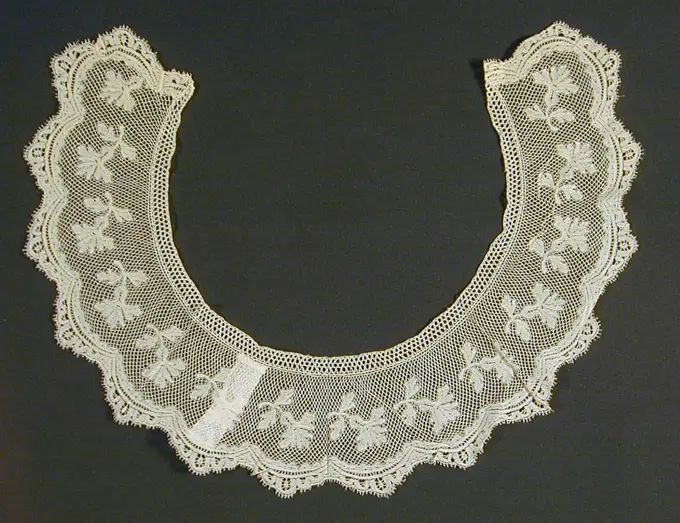
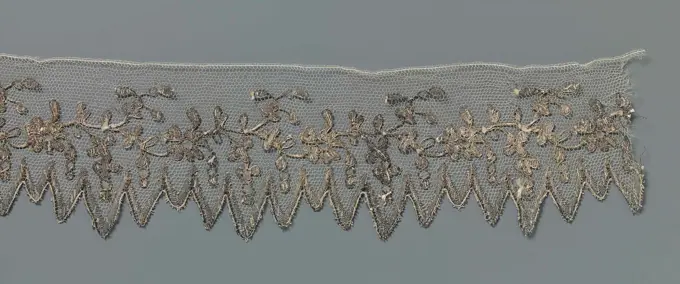
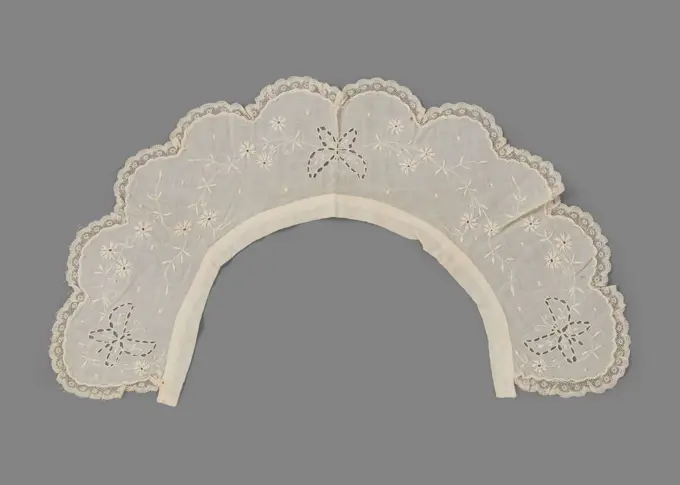
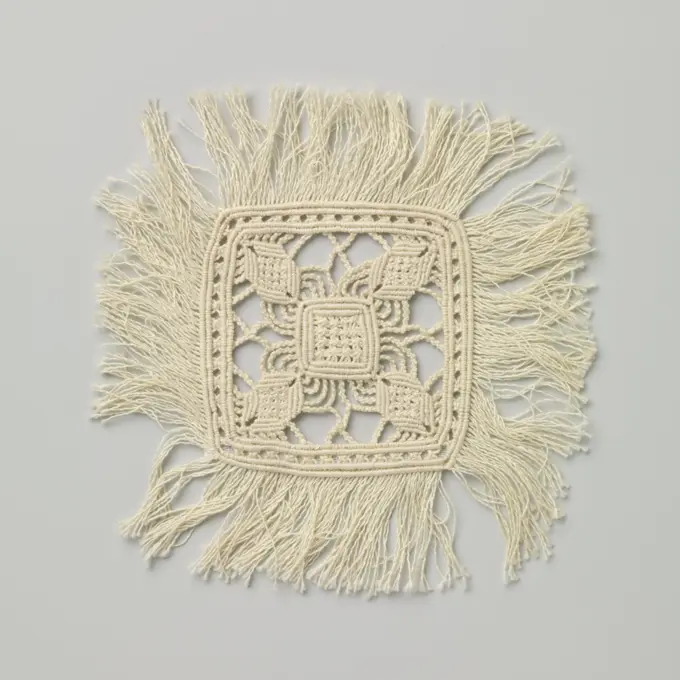
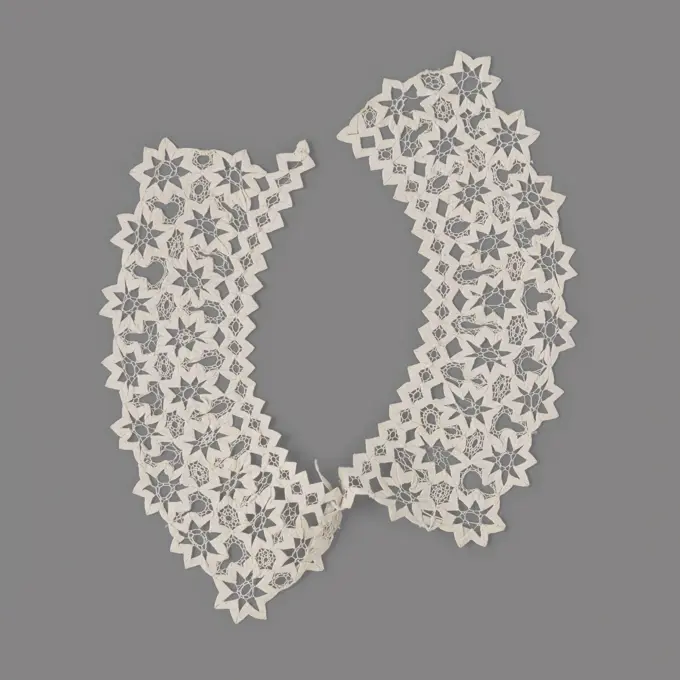
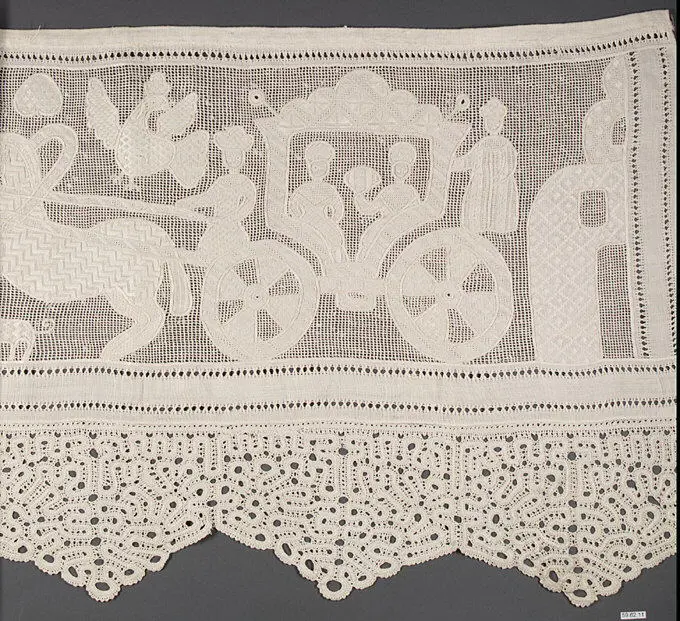
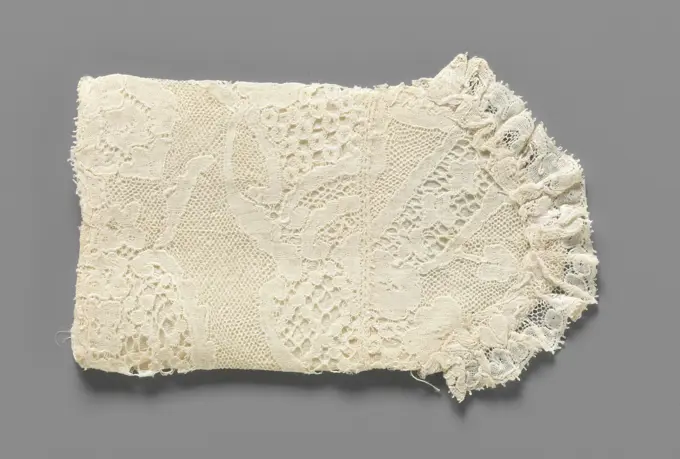
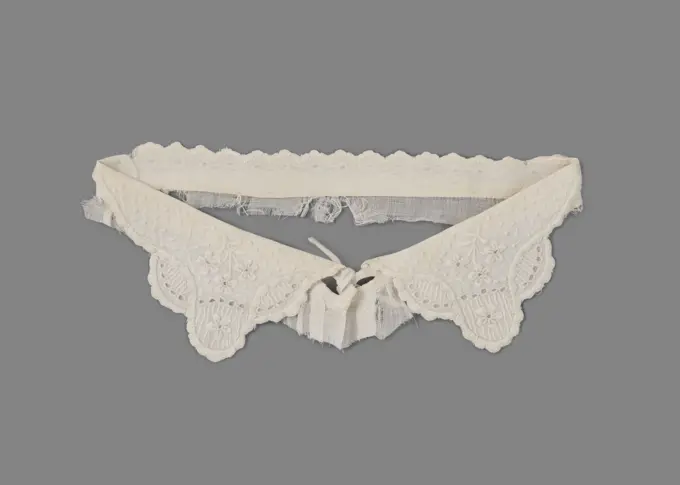
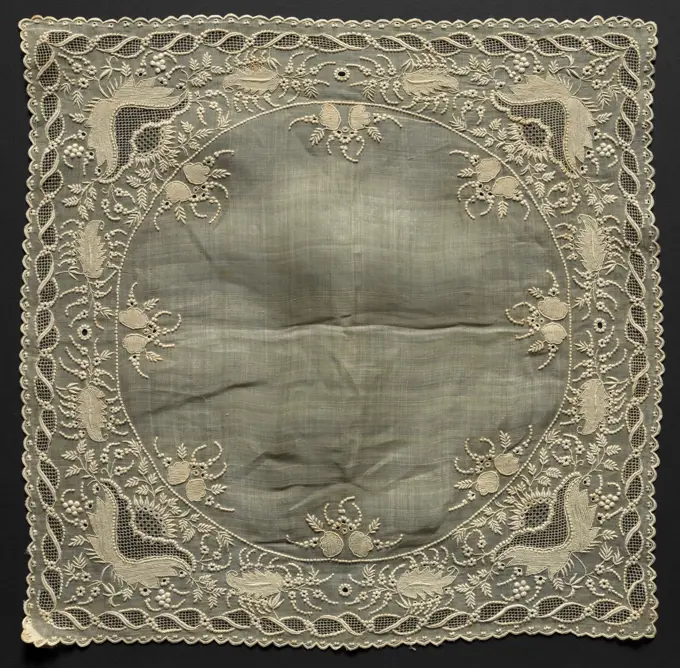
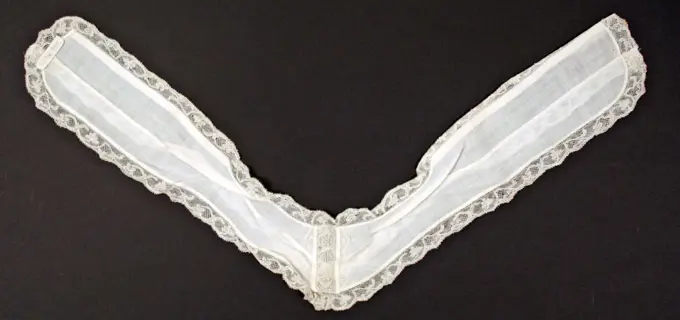
Strip bobbin with two zigzag lanes and fan shells, anonymous, c. 1900  Strip of natural -colored bobbin: sling. The repeating pattern consists of two parallel zigzag lanes with a center line of connected fine checks made in form. A fan-shaped motif hangs on the underside of the strip under each zigzag top. The connected fans form the scrap edge. A tanning strip has been applied to the top of the strip and a twisted cross-stroke is used between the Zigzag lanes. Spitsovaaltjes are in the grounds. The top of the strip is straight finished. Russia (possibly) linen (material) Bobbi lace / lace clothJaponstrook applicatiekant met sneeuwbal.Japon strip of natural colored application side climbing side and some details in needle side applicated on machine tulle. Wavy branches move from left to right against a sequins stewed background. Round flower clusters grow as snowballs, interspersed with single chrysanthemums. Twice the wave line is repeated, once through contiguous C volutes (needle side) and furthermore by a godridge edge, which forms the slot and that is every cross-cut by an oval medallion in a shell-shaped sheet.Strook kloskant met ster en halve maan.Strip of black climbing side, Cluny side. Symmetrical design with deep slippers and braid soil. Each scallop is filled with an eight-pointed star that is covered by a horizontal half moon. The slot edge is finished with arcs and fine dots of picoted braids. The top of the strip is straight finished.Bobbin Lace (Needlepoint Design) Edging with Bell Points, 17th century. Italy, Genoa, 17th century. Lace, bobbin; average: 3.5 x 36.6 cm (1 3/8 x 14 7/16 in.).Fichu made of cotton cheese cloth, triangular, decorated with floral edge tamaged with white cotton, anonymous, c. 1800 - Before 1850 Fichu made of cotton cheese cloth, triangular, decorated with a floral edge tamaged with white cotton. Model: triangular. A side with a self -sided, the other two with roll soaps. Processed diagonally on the wire. Decoration: in the point in the middle leaf with tamered edge and heart of the needle side, flanked by tamered stems and flowers with ditto leaf with speckled heart of button stitch. In the tip also a branch with fruits (grapes), Leaves and a flower with a heart of the needle side. One side of the forku unadorned. Netherlands whole: Cotton (textile). Decoration: Cotton (textile) Fichu made of cotton cheese cloth, triangular, decorated with a floral edge tamaged with white cotton. Model: triangular. A side with a self -sided, the other two with roll soaps. Processed diagonally on the wire. Decoration: in the point in the middle leaf with tameredBand, Medium: linen Technique: plain weave embroidered with deflected element work, Woven linen band fragment with design showing a heraldic shield at center, crude mermaids, standing figures holding lutes, and columns., possibly Italy, Possibly Spain, 17th century, embroidery & stitching, BandBobbin Lace Fragment of Flounce, 18th century. Belgium, Brabant , 18th century. Lace, bobbin: linen; average: 54.6 x 122 cm (21 1/2 x 48 1/16 in.).Cutslip from Mechelse side, Anonymous, c. 1750 Cap from Mechelse side. The pattern consists of springy leaves and windows, with linen mesh and spinning ground. The scalloped edge is trimmed with picots. Mechelen linen (material). Mechlin (lace) Cap from Mechelse side. The pattern consists of springy leaves and windows, with linen mesh and spinning ground. The scalloped edge is trimmed with picots. Mechelen linen (material). Mechlin (lace)CollarWhite machinery intermediate edge with pattern of flowers and circles, on cardboard, c. 1925 White machining side with pattern of flowers and circles, on cardboard. Nijmegen cardboard White machining side with pattern of flowers and circles, on cardboard. Nijmegen cardboardWoman's Collar. Belgium, Western Flanders, 19th century. Costumes; Accessories. Cotton Valenciennes d'ypres bobbin laceStrip bobbin with windows Padang Not Sadiah, Anonymous, c. 1917 Strip of natural -colored bobbin, straw side. Along the underside of the strip, the pattern consists of a row of windows in netslag. Above it, a row of windows with a grid, a five -part ground, runs between large spiders. On the strip is a label sewn with the text: Padang Not Sadiah.  linen (material) Bobbi lace / lace cloth Strip of natural -colored bobbin, straw side. Along the underside of the strip, the pattern consists of a row of windows in netslag. Above it, a row of windows with a grid, a five -part ground, runs between large spiders. On the strip is a label sewn with the text: Padang Not Sadiah.  linen (material) Bobbi lace / lace clothEcharpe van kloskant met bliksemschichten.Echarpe of natural colosside, Russian or osteuropean side. Rectangular model with rounded corners. The coarse pattern stands on a fine braid soil and shows long, curved edges and spirals, which, one or double-sided, accompanied by a lightning border edge.Border Made 1625-1675 Northern Europe. Linen, needle lace with woven tapes .Collar. Culture: American. Date: 1860s. Museum: Metropolitan Museum of Art, New York, USA.Barbe 18th century Flemish. Barbe 218817Band 17th century Northern Italian. Band 212344Band (Spain); metal strips and metal thread; Warp x Weft: 12.4 x 50 cm (4 7/8 x 19 11/16 in.); 1950-82-1Cap Streamers (Belgium); linenFragment 17th century Italian. Fragment 212554Collar, Medium: linen Technique: bobbin lace appliqué on machine-made net, Collar with bobbin lace appliqué for the border and conventionalized bell flowers motifs., Belgium, 19th century, lace, CollarTextile; cottonFragment of a dress skirt mid-19th century French. Fragment of a dress skirt 229872Fragment, Medium: linen Technique: bobbin lace (Lille style with heavy outlining thread), Border fragment of Lille-style lace in a highly conventionalized floral design. Small square dots above., France, 19th century, lace, FragmentCollar 1850s probably American. Collar 110193Collar 19th century Italian. Collar. Italian. 19th century. silk, cottonCollar 1855 Belgian. Collar 118997BOOK;  19th century (1801-00-00-1900-00-00);Cap streamers, Medium: linen Technique: bobbin lace, Brussels style, Pair of Brussels-style cap streamers with a vertical zig-zag pattern enclosing floral forms., France, 1725-35, lace, Cap streamersPiece of cloth, by Ligurian Work, 18th Century - 19th Century, lampasso fabric. Italy, Liguria, Genoa, Palazzo Spinola National Gallery. Detail. Light blue: azure satin pearls small birds volutes putti: cherubs cornucopias roses garlands.Barbe Belgian 19th centuryCurtain of tulle with tendrils. Curtain with embroidered tubes for a boudoir.Bertha late 16th-early 17th century Italian Punto in arialiterally, "stitches in the air"is one of the earliest styles of needle lace, which is itself developed from cutwork of primarily geometric design. When lacemakers transitioned to using a foundation of threads laid out according to a pattern drawn on parchment, they were able to incorporate more fluid lines and curves into their designs.. Bertha 227363Piece 1760-70 French. Piece 223344Bobbin Lace Edging, 18th century. Italy, Abruzzi, 18th century. Lace, bobbin: cotton; average: 5.5 x 61 cm (2 3/16 x 24 in.).Collar third quarter 19th century American. Collar 170433Detail knitted sweatshirtFragment; linen; 1933-1-113Hat of tulle with tambooering, anonymous, c. 1925 Hat van Tulle with tambooering. With a strip of mesh to which a piece of machine side is wrinkled. The hat closes at the bottom with a band. Netherlands . Hat van Tulle with tambooering. With a strip of mesh to which a piece of machine side is wrinkled. The hat closes at the bottom with a band. Netherlands .Square 18th century Italian, Burano. Square 221800Fragment of lace. unknown, authorPair of bracelets, Johann Conrad Geiss, c. 1815 - c. 1835 A few bracelets from 'Fer de Berlin'. Symmetrical double links flanks ferry with a standing middle section that is covered with a flower rosette. Ajour work. Berlin iron (metal) sawing / casting A few bracelets from 'Fer de Berlin'. Symmetrical double links flanks ferry with a standing middle section that is covered with a flower rosette. Ajour work. Berlin iron (metal) sawing / castingStrook kloskant en zilverkant met bloemenrank en afhangende bessen.Skirt strip, silver side, blonde. On a maas soil, a teland of silk, a silver thread is a repeat and continuous pattern splitting from a floral drink with depending berries. The flower rank runs over the center line of the strip and the berries hang with two or three among each other to legends in the unevenly zigzagging schulps along the bottom of the strip. For the full work, thinner filégares are used than for the thick film yarn that emphasizes the contours of the motives and slot. The top of the strip is straight finished, but partly damaged. The Zigzag slip are finished with picots from silver wire.Sculpted collar of lobbing of linen, anonymous, c. 1628 - c. 1645 Scalloped collar from Kloskant. Belgium whole: Linen (Material). bobbin lace Scalloped collar from Kloskant. Belgium whole: Linen (Material). bobbin laceFragment early 19th century Irish. Fragment 212914Fragment (Spain); silkTablecloths and napkins, decorated with embroidery and lace. In the shop window of the beautiful tablecloths and napkins of flax, decorated with beautiful lace and embroidery. Copyright: xZoonar.com/GalinaxTolochkox 9456486Collar; linen; Bequest of Marian Hague; 1971-50-269Cover 18th century Spanish. Cover 215134Woman's Collar and Cuffs. Canada, 1880. Costumes; ensembles. Cotton crochet, cotton machine braidStrook kloskant met boogjesrand waarin afwisselend een bladertakje en een rondje tussen spaken staan.Strip of black climbing side, Cluny side. The repeating pattern consists of a bow border, where the bow bitches form the slot. A branch with five leaves and a round of spokes alternately stands in each arc. The straps that form the arcs are made in linen stroke. The laps in it are made in slurbase and the leaves on the twigs are made in shape stroke. The motifs are connected by a braid ground. Along the bottom hanging three lobes, made with braids and finished with a few picots. The top of the strip is straight finished.Border, Medium: Technique: needle lace, Needle lace; mid-17th century Point Plat de Venise, mid-17th century, lace, BorderEdging 17th century Italian, Venice. Edging 220992Kloskant motif in the form of a four-pass, Sophia Gerardine Cenijn-Smit, c. 1914 Motif in the form of a four-punch of natural-colored bobbin: Cluny side. The contour of the Vierpas is made in linen battle with an openwork edge. In one of the four lobes there is a cross or four -leaf flower made with double leaves in shape. In the center of the Vierpas, braids form a star with four points and with a few picots. Amsterdam linen (material) bobbin lace / Cluny lace Motif in the form of a four-punch of natural-colored bobbin: Cluny side. The contour of the Vierpas is made in linen battle with an openwork edge. In one of the four lobes there is a cross or four -leaf flower made with double leaves in shape. In the center of the Vierpas, braids form a star with four points and with a few picots. Amsterdam linen (material) bobbin lace / Cluny laceBulgaria, Nessebur (aka Nessebar or Nesebar). Traditional Bulgarian lace.Collar and Two Cuffs Made 1850-1875 England. Cotton and linen, bobbin part lace of a type known as Honiton with clothwork tape and plaited bar ground .Napkin;  20th century (1901-00-00-1940-00-00);Fragment, Medium: silk Technique: bobbin lace, Black Spanish-style blonde lace with pattern of large and small flowers and leaves and hexagonal reseau., Le Puy, France, ca. 1850, lace, FragmentCollar 1700-1939 American. Collar 119125Fragment of Lace. Italy, 1600-1625. Textiles; fragments. Linen tape laceCollar 1840-60 French Lace in the eighteenth century was an expensive item that was only affordable for the upper classes. It was therefore highly valued and kept. As fashions changed in the 19th century, it was common practice to reconfigure the lace from its original form to one that expressed the current mode. This collar is such an example. The lack of symmetry in the design as well as the collar shape which did not exist in the eighteenth century are evidence of this practice.. Collar 156391Ornament 17th century Italian. Ornament 214885Kousinzet van kloskant met pauw.Kousin set of natural colosside: Valenciennes side. Spiral ostinal. In the middle is a peacock, his tail hangs down and goes over in three jointed wreaths. A long flower branch runs behind the peacock up, up to the tip of the stocking insert. The motifs are made in linen battle with recesses and open editors. An ornamental soil has been applied in the tail feathers and the flower hearts. The motifs are connected by a grille, a diamond-shaped valenciennes ground, strewn with moes. The sides are immediately finished.Fichu French 19th century View more. Fichu. French. 19th century. Bobbin lace, silk. Textiles-LacesFlounce, Medium: linen Technique: bobbin lace, Brussels style, Flounce worked in a design of floral urns framed in foliated bands. with œuil de perdrix (Partridge's eye) and point d'espirt., Belgium, 18th century, lace, FlounceFragment, Medium: linen Technique: bobbin lace (continuous braid-like with continous tape), Fragment of rounded points on a curved edge showing a wavy, ribbon-like design., Italy, 17th century, lace, FragmentSewing Instruction Book Samples (USA); 1945-20-13-a/eFragment Swedish 19th centuryCollar, scalloped, of embroidered batist with edge valenciennes side, anonymous, c. 1930 Collar, scalloped, of embroidered batist with edge of Valenciennes side, round and lying model. The edge consists of ten scales that are also sculpted. The pattern consists of three open worked butterflies, between which one branches with cornflowers. Netherlands linen (material) Valenciennes lace / embroidering Collar, scalloped, of embroidered batist with edge of Valenciennes side, round and lying model. The edge consists of ten scales that are also sculpted. The pattern consists of three open worked butterflies, between which one branches with cornflowers. Netherlands linen (material) Valenciennes lace / embroideringTowel End (USA); cottonCollar Italian late 17th and late 19th century elements Small-scale Venetian needle laces of the late seventeenth century, called point de neige, were well suited to fashions of the period, which required that lace be gatherable at the neck and sleeves. The name point de neige refers to the resemblance of the delicate buttonholed loops and projecting picots to snowflakes (neige being the French word for snow). The later nineteenth century witnessed an extensive industry in both the copying and remodeling of seventeenth- and eighteenthcentury laces. This piece reflects that trend, as it incorporates older elements into a nineteenth-century collar.Border, Medium: Technique: bobbin lace, Bobbin lace sample, floral vine; early 18th century Binche, early 18th century, lace, BorderWhite Handwork in Macramé, Aagje Tiket, c. 1900 Handwork in the form of a square in macramé with frills, white. Belonging to series of eight white and ten colored crafts, made by Aagje Tiket for achieving the deed of beautiful and/or useful handicrafts at the industrial school, BK-1974-105-A to R. Amsterdam Handwork in the form of a square in macramé with frills, white. Belonging to series of eight white and ten colored crafts, made by Aagje Tiket for achieving the deed of beautiful and/or useful handicrafts at the industrial school, BK-1974-105-A to R. AmsterdamCollar ca. 1890 Italian. Collar 168706Cuff from ribbon side, c. 1800 - c. 1899  Cuff from ribbon side. West-Europa linen (material) mixed lace / tape lace (mixed lace)Europe, Belgium, Brugge (aka Brug or Bruge). Historic Brugge, UNESCO World Heritige Site. World famous Belgium lace.Batist handkerchief with a border embroidery with fern leaves that cut a zigzagging ribbon and finished all around with a border bobbin, anonymous, c. 1850 - c. 1860 Batist handkerchief with a border embroidery - whitework - and finished all with a strip of bobbin: Valenciennes side. Square model with highly rounded corners. Embroidery: A zigzagging ribbon runs along the edge of the batist with a symmetrical settlement of fern leaves, two to each other to each other along each side and one in midfield in each corner. The ribbon is decorated with forget-me-nots between zigzag bands and with circles. Applied stitches include: satin stitch and sand stitch. Lace: The strip is slightly wrinkled on the batist and has a repeating pattern of a hanging rosette flower on a stalk with one leaf, between the successive flowers there is always a circle. The scrap edge consists of highly rounded triangular scales, with three circles in each shell. The scales are finished with a triple edge in linen bFlounce Russian 19th centuryFour straw trivets on a red background on displayTrimming (Italy); silk dyed blue, silver metallic foil wound onto white silkKinderpolsmof van kloskant gevoerd met cremekleurige zijde.Children's pools of natural colosside - Mechelen side - with a creme-colored silk lining. Rectangular model with rounded end along which a wrinkled strip of mashing side is sewn.Kloskant motif with rosette flower between Groot Drieblad and drop -shaped leaf, Royal lace working school 'Queen Sophie of the Netherlands', c. 1921 - c. 1935  Motif of natural -colored bobbin: Sluise Duchesse. The pattern has a flower with two small sheets and a large three -leaf. The stem of the Drieblad crosses the stem of a single leaf. The motif is made in linen battle and mains with openwork edges and relief contours, some of which are bursts of relief contours. In the flower and the Drieblad, cubes made in shape. The motif is a label on the side work school with the text 'Kon. Kantewerkschool Queen Sophie of the Netherlands - Sluis - '. Lock linen (material) bobbin lacebridesmaid dress hanging on a hanger in front of the window, backlightDrawing, Design for diadem; Italy; 1940-86-224Sample early 19th century French. Sample 224674Strook kloskant met parel- en rozetlijst.On the ground soil, a mechelen soil (also known as ice soil), with some sprinkled four-pastor moes is a running pattern. Along the inside are small hanging rosette branches, a dune rose in the middle of a dune rose to larger voluntaries, which shown at the same flour that forms the closing piece of pure circle arc shut. The tubes consist of a pearl and rosette list, which enclose a center barrier with grid work. Mechelen side.Cotton collar with standing collar with two scalloped sales points with whitework, anonymous, c. 1875 - c. 1900 Cotton collar with a standing board with two festunned scalloped and modified turning points. The whitework on the covers consists of moes and violins. The rear of the board is also sculpted and provided with mosjes between openwork circles. West-Europa cotton (textile) Cotton collar with a standing board with two festunned scalloped and modified turning points. The whitework on the covers consists of moes and violins. The rear of the board is also sculpted and provided with mosjes between openwork circles. West-Europa cotton (textile)Big lace and cup Big lace and cup at corner Copyright: xZoonar.com/AndreyxGuryanovx 2102501Retro place mat on wooden deck table.Cream -colored side with a machine side with volute clouds, anonymous, c. 1920 - c. 1940 Cream -colored silk with natural -colored machine side: Etskant. Pattern with C-Voluten that are linked to a cloud pattern. Here one there a single raderpicot along the inner edge of some volutes. The outer edge of the side pattern is deposited with delicate picots. unknown silk Cream -colored silk with natural -colored machine side: Etskant. Pattern with C-Voluten that are linked to a cloud pattern. Here one there a single raderpicot along the inner edge of some volutes. The outer edge of the side pattern is deposited with delicate picots. unknown silkHandkerchief, 1800s. Madeira, 19th century. Plain weave cotton with cotton embroidery; average: 34.9 x 34.9 cm (13 3/4 x 13 3/4 in.).Collar ca. 1868 American. Collar 119109Trimmimg; metallic, white silk, green silk; Bequest of Marian Hague; 1971-50-330Pattern With Uncompleted Piece Of Lace; parchment, linen thread; 1939-19-4-a,bBib 18th century British. Bib 98181Lace laceLace, bobbin bobbin lace, laceBorder, Technique: bobbin lace, Edge of bobbin lace with free-standing floral scallop border, late 18th century Buckinghamshire., late 18th century, lace, BorderCollar, Technique: bobbin lace, Collar of bobbin lace, floral medallions; middle-18th century Honiton style., mid-19th century, lace, Collar