Intricate Lace Designs

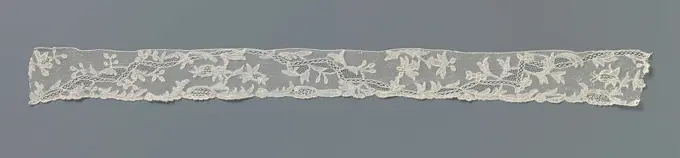
Various historical lace pieces including bobbin lace and needlepoint, showcasing delicate patterns and craftsmanship, presented on contrasting backgrounds.
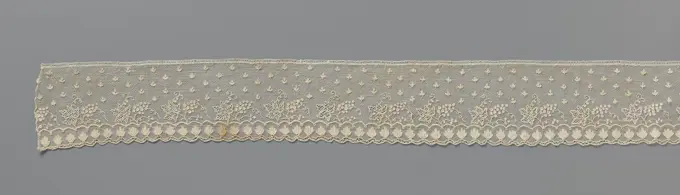
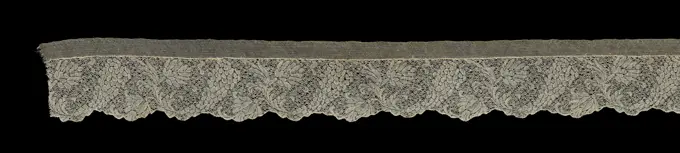
Strip of needle side with wine leaves and grape bunches, anonymous, c. 1800 - c. 1820 Strip of natural-colored needle side: men's-Aalençon. Repetitive motif of a grape vock with wine leaf on a fine hexagonal mesh ground with walled bars. Above it a spreading motif of small twigs with round flower and two oval leaves. The grapes and the leaf spring up from a horizontal spiral rank and bend in the opposite direction, but always in the same direction. Under the Spiralrank a very fine ground of a few, strongly twisted meshes, with a repetitive motif of a narrow five -fingery leaf. Fullwork without recesses in these five -fingered leaves and in the oval leaves and the grapes. One kind of decorative land in the wine leaves. Schulpenrand with regular arcs along the lower edge. The top is trimmed with a border bobbin. Alençon linen (material) Alençon Lace Strip of natural-colored needle side: men's-Aalençon. Repetitive motif of a grape vock with wine leaf on a fine hexagonal mesh ground with w
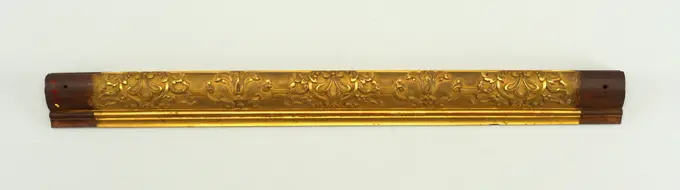
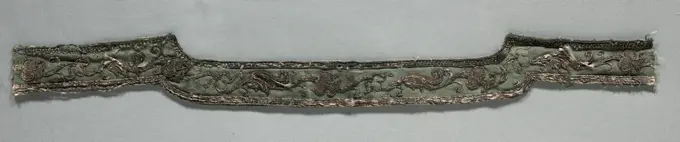
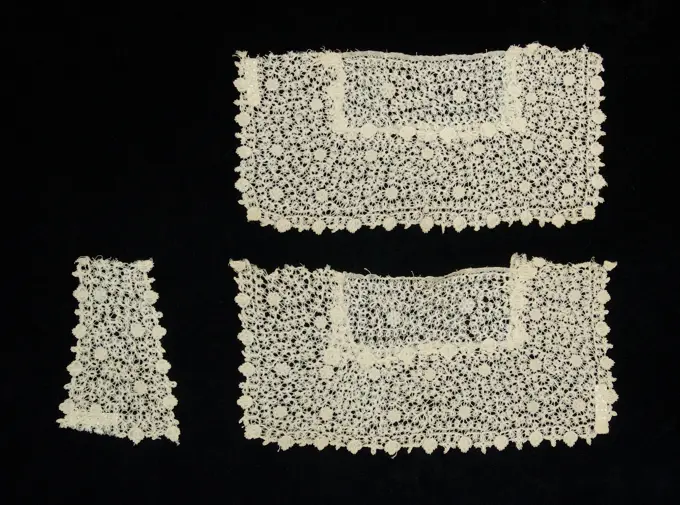
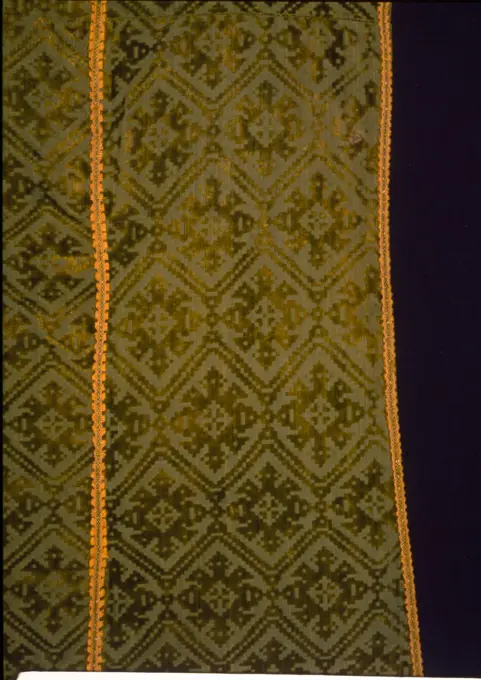
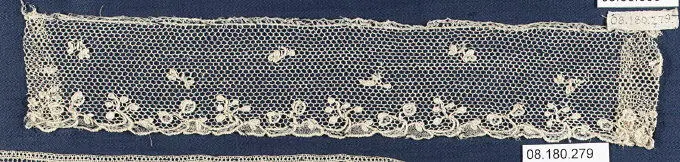
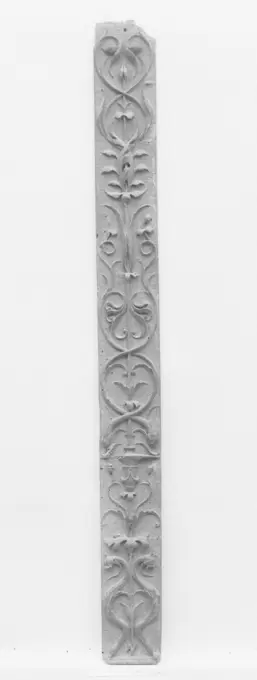
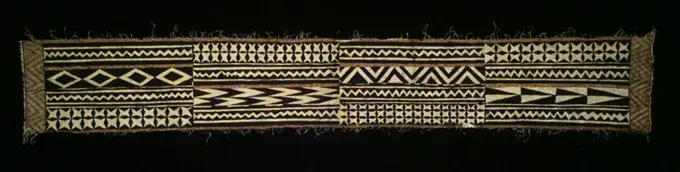
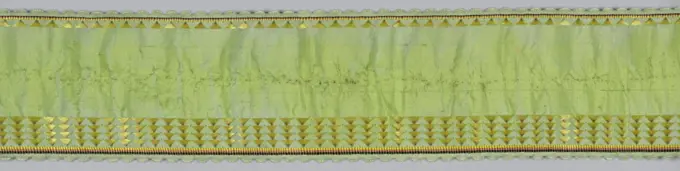
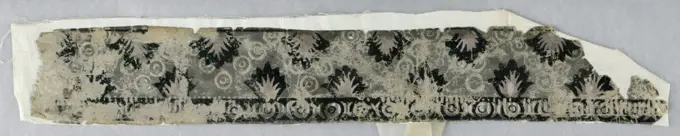
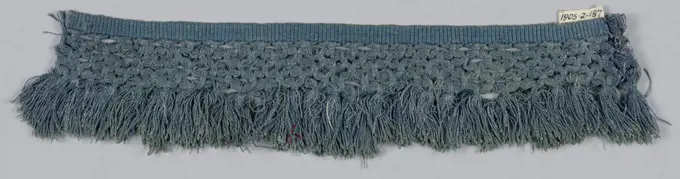
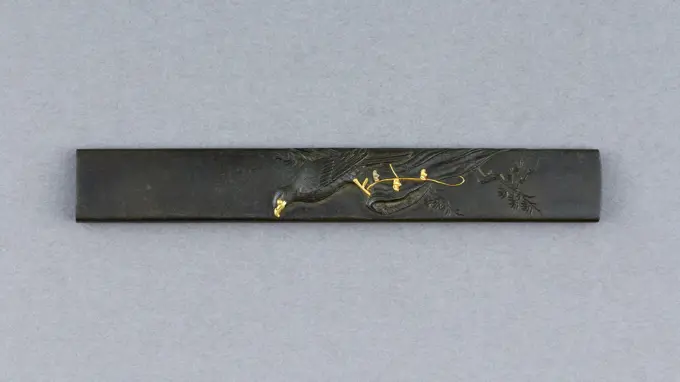
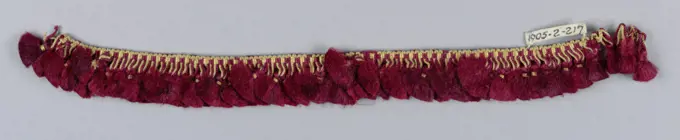
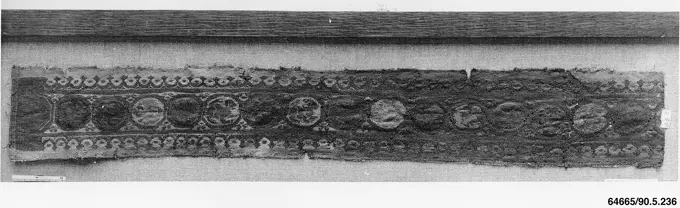
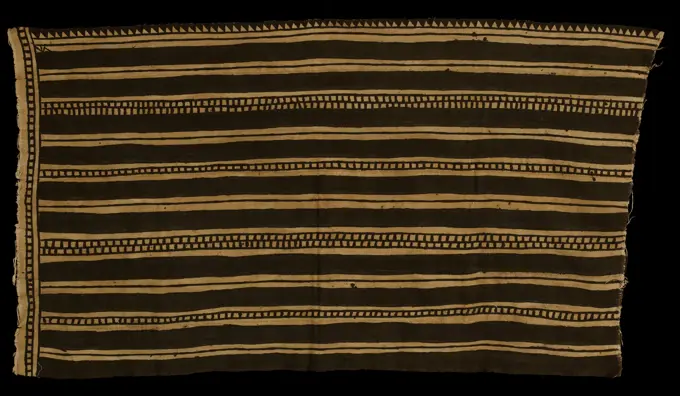
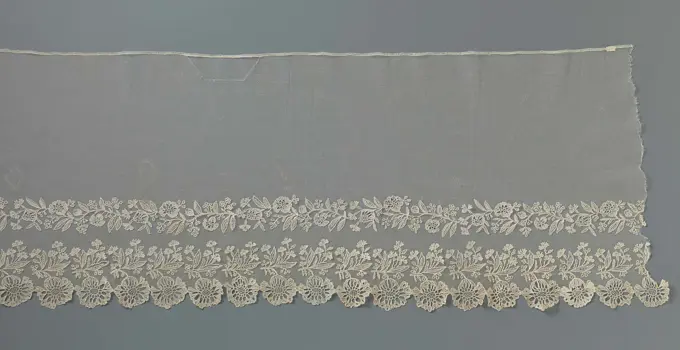
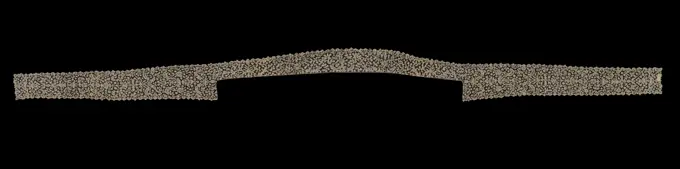
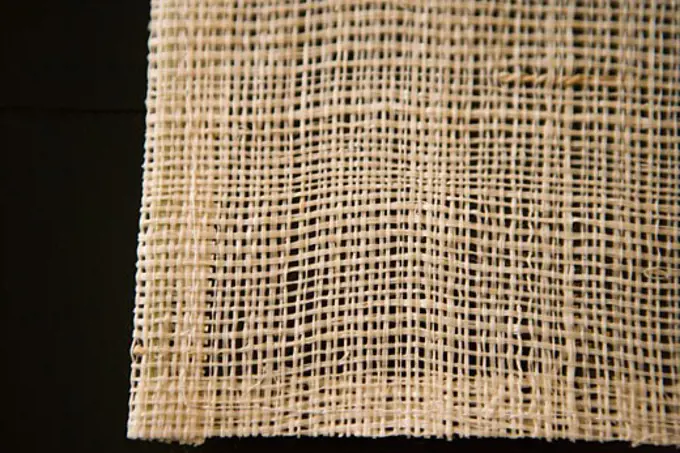
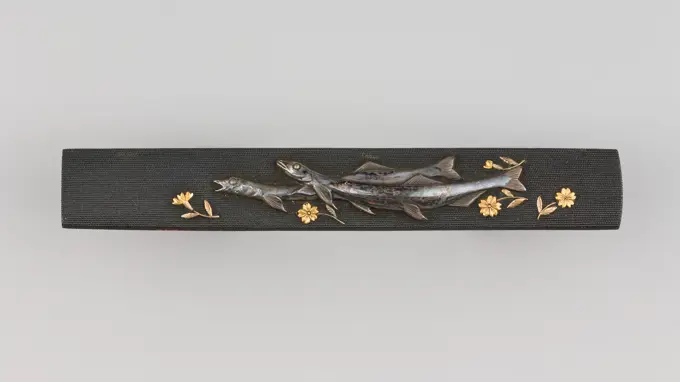
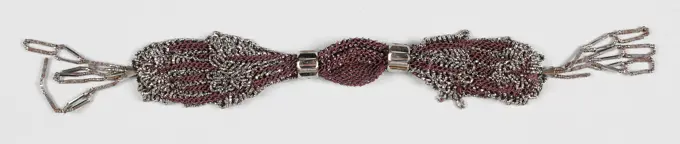
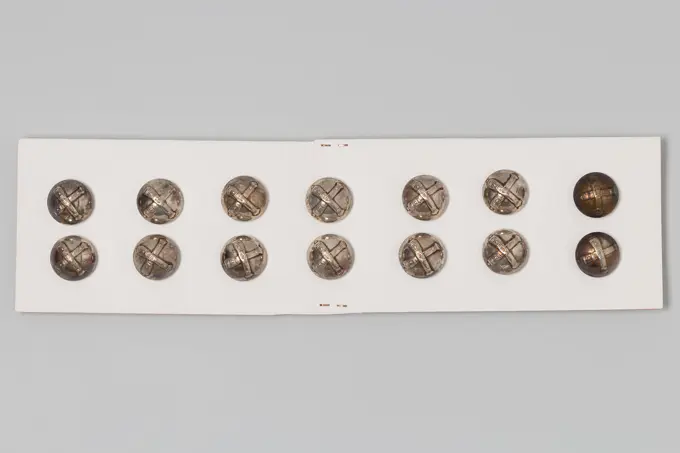
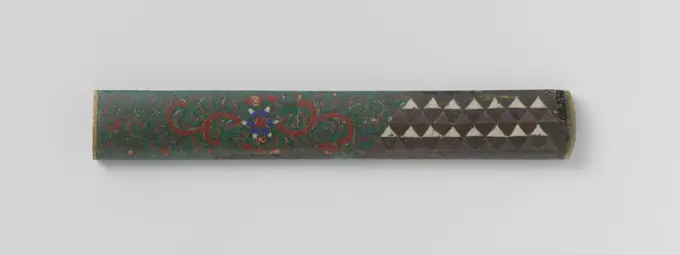
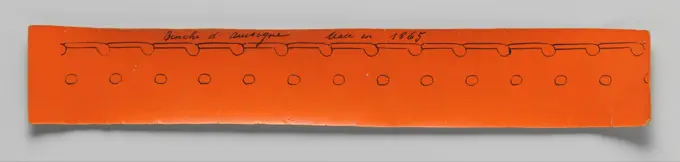
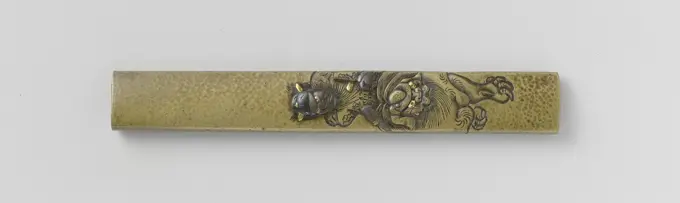
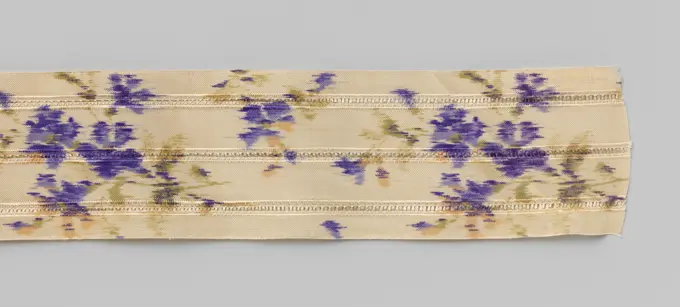
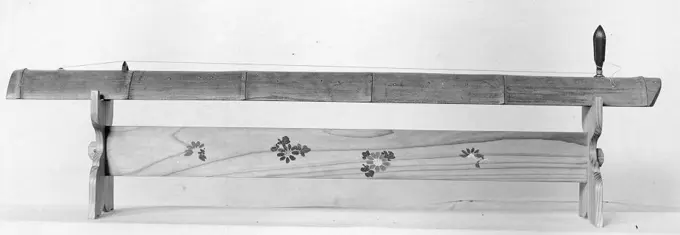
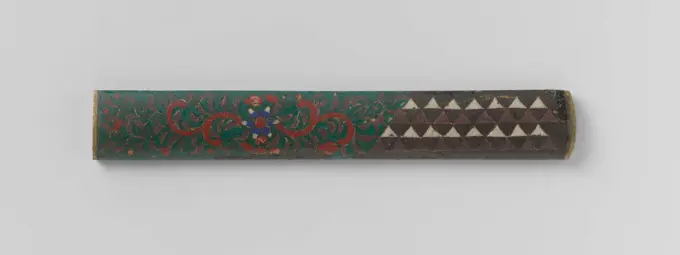
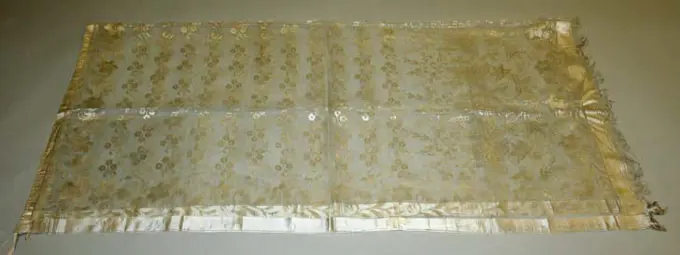
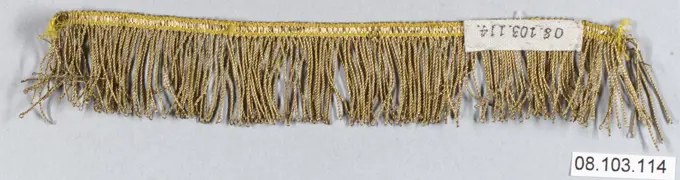
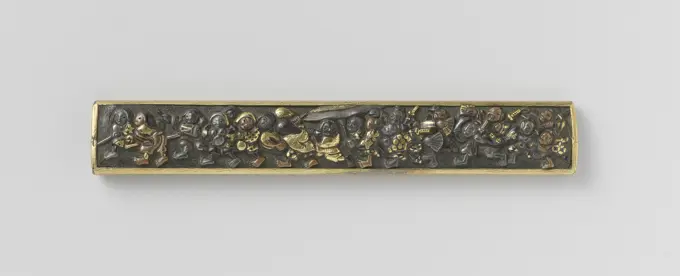
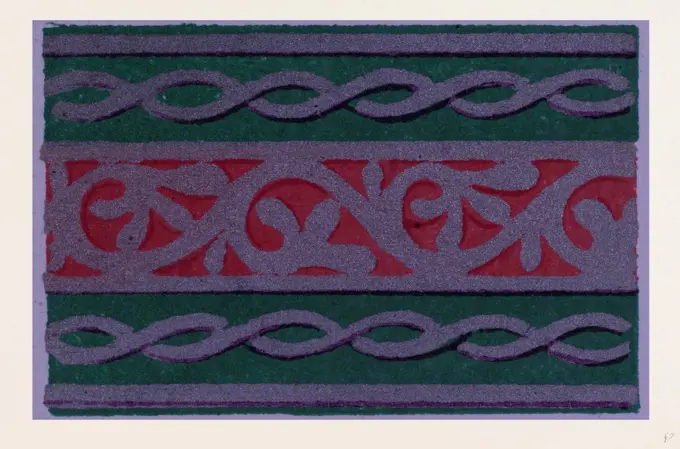
Lappet 18th century Flemish. Lappet 222432Textile Fragment 3rd-4th centuryGalloon early 19th century Italian. Galloon 213397Band Fragment (Egypt); warp; s-spun linen. wefts: s-spun wool. s-spun linenNeedlepoint (Point Alençon) Lace Edging, late 18th century. France, Alençon, late 18th century. Lace, needlepoint; average: 8.6 x 186.1 cm (3 3/8 x 73 1/4 in.).Lace, 1800s, Spain, maker unknown. Gift of Mrs G. Acland Allen, 1955.Trimming (France); 1909-2-163Strikdas, rectangular, of linen batist with smooth-set sculpted and potented strip of Valenciennes side, c. 1880 - c. 1890 Strikdas, rectangular, of linen batist with smooth-set sculpted and potented strip of Valenciennes side. Netherlands linen (material) Valenciennes lace Strikdas, rectangular, of linen batist with smooth-set sculpted and potented strip of Valenciennes side. Netherlands linen (material) Valenciennes laceFringe late 18th century French. Fringe. French. late 18th century. Silk. Textiles-TrimmingsFringe, Medium: silk Technique: woven, Yellow fringe with a woven heading in a chain design. Skirt threads are looped., Italy, 16th century, trimmings, FringeFringe (Italy); cotton, linenPriest's Robe early 19th century Japan. Priest's Robe 69037Galloon 17th-18th century Unknown. Galloon 213779Bobbin Lace Edging, 18th century. Belgium, Binche, 18th century. Lace, bobbin: linen; average: 8.6 x 229.9 cm (3 3/8 x 90 1/2 in.).Ôhi (Stole) Made 1800-1868 Japan. Heri, jÙ silk, warp-float faced 2 1 ëZí twill weave with supplementary patterning wefts; shiten Silk and gold-leaf-over-lacquered-paper-strip, warp-float faced 2 1 ëZí twill weave with weft-float faced 1 2 ëZí twill interlacings of secondary binding warps and supplementary patterning wefts; lining silk, predominant warp, weft ribbed, plain weave .Vestment; silk and metal; Overall: 235 x 11.5 cm (7 ft. 8 1/2 in. x 4 1/2 in.)Chasuble late 16th or early 17th century Italian This chasuble (a liturgical garment worn during the celebration of the Mass) is fashioned of yellow-green velvet patterned in an allover repeat of a small-scale diamond shape with eight protruding points in a stepped configuration framed by double zigzag lines. Cut and voided velvets in symmetrical stylized floral designs like this were produced in Italy in the late sixteenth and early seventeenth centuries. The orphery areas are delineated with very narrow tape which matches that outlining the edges and neck opening.. Chasuble 460925Fragment, Medium: silk, metallic thread Technique: plain compound weave, Blue silk ground with illegible design of closely-spaced, small-scale flowers in gold metallic weft. Right selvedge present. Triangular in shape., Iran, 18th century, woven textiles, FragmentBorder (England), ca. 1860; block-printed and flocked on paper; 75 x 8 cm (29 1/2 x 3 1/8 in.)Tafellaken met "Banquet op tafel".Tablecloth of Linnendamast with "banquet on the table", midfield: twice 24 plates in length side by side with knife and fork, and five plates in the width next to each other and repeated several dishes on which different dishes (repeat of the dishes per group of four plates ). Does the plates spreader flowers. This center piece is surrounded by a narrow watered flower edge, while on the longitudinal sides a wide fries are woven with different representations to land living, the so-called "farmer's". As a background of these scenes, tall trees are interspersed by rows of houses or a castle. On the short sides a vase with flowers in a large niche, resting on canceled columns; In the corners a vase high foot, a parrot, butterflies and dragonflies. Standing and lying edges: stylized flowers. Signed PL.Furniture, Anonymous, 1747 Oak coat rack with four buds and decorated with low -relief curls and the year 1747. Northern Netherlands (possibly)Netherlands (possibly) wood (plant material). oak (wood) Oak coat rack with four buds and decorated with low -relief curls and the year 1747. Northern Netherlands (possibly)Netherlands (possibly) wood (plant material). oak (wood)Belt, c. 1900s. Guatemala. Cotton, tapestry weave; overall: 185.4 x 7 cm (73 x 2 3/4 in.).Fragment (possibly France); cottonFragment 18th century French. Fragment 214633Pilaster 16th century Italian. Pilaster. Italian. 16th century. Carved walnut with traces of gilding. WoodworkFragment of lace 18th century French. Fragment of lace 218246Masi (tapa cloth) textilesRibbon, Medium: silk Technique:, Green ribbon with narrow and wide borders of triangular forms in gold silk. Scalloped picot edge., USA, mid-19th century, woven textiles, RibbonBorder (England), ca. 1860; block-printed on paper; 85 x 6 cm (33 7/16 x 2 3/8 in.)Pendant in the Shape of an Arc. Culture: China. Dimensions: H. 1 3/8 in. (3.5 cm); W. 7 in. (17.8 cm). Museum: Metropolitan Museum of Art, New York, USA.Sidewall - fragment, Block-printed on handmade paper, Irregular fragments of paper with ground originally pink, printed with large-scale vine pattern in black, blue-grey and white. Portion of geometric border attached to fragment., England, ca. 1765, Wallcoverings, Sidewall - fragmentFringe, Medium: silk Technique: plain weave, Blue fringe with a plain weave heading. Trellis band above slightly scalloped skirt threads., Greece, 18th century, trimmings, FringeTrimming, Medium: silk Technique: woven, Design of saw tooth borders with broken diagonal lines between. In yellow and metallic thread., Spain, 17th century, trimmings, TrimmingFringe (Spain); silkGalloon 17th-18th century Unknown. Galloon 213850Knife Handle (Kozuka) ca. 1615-1868 Japanese A kozuka is a handle of a by-knife that is part of a sword mounting. It is kept in a slot on the reverse of a katana scabbard, often with a matching kōgai (hairdressing tool).. Knife Handle (Kozuka) 34693Molding; wood, gildedApparel from a Dalmatic, early 1500s. Italy, early 16th century. Embroidery; silk and metallic threads; overall: 5.7 x 48.7 cm (2 1/4 x 19 3/16 in.).Upper inner proper left valence. Bruce HutchisonFringe, Medium: silk Technique: plain weave, Red and yellow fringe with a heading and looped skirt threads; each four loops supporting a tuft of red floss., Spain, 18th century, trimmings, FringeTextile Fragment 4th-5th century. Textile Fragment 443722Band; linen; Bequest of Marian Hague; 1971-50-232Mud cloth skirt, 1900-1999, 30 1/8 x 54 in. (76.52 x 137.16 cm), Cotton, Mali, 20th centuryBobbin Lace with design known as "Crown Derby", 19th century. England, Bedfordshire, 19th century. Lace, bobbin; overall: 33 x 6.4 cm (13 x 2 1/2 in.).Japonstrook van applicatiekant met hangende bloemen.Japon strip of natural-colored application side, needle side applicated on machine tulle. An edge of round shelters is formed by a rigged row of large flowers that depend on the right, from small flower branches. Loose up there is a narrow edge of a wavy branch with smaller similar flowers. The upper part consists of a part of an unmarmed tulle. Two narrower strips have the same, and a reduced pattern.Trimming (Spain); silkDecorative band for clothing, late 19th century, 46 1/2 x 3 in. (118.11 x 7.62 cm), Silk, cotton; cross-stitch, Uzbekistan, 19th centuryBand, Medium: Technique: complementary warps, Narrow woolen tape with simplified 'S' repeats, sometimes turning into scrolls, sometimes with single curve; replaced 1/3 way through with strip of five diamonds with dot in center of each. Red on blue, one side; blue on red, others. At each end, strands loosely plaited for 0M450, then separated into two thinner plaits. '0M075' one end, '0M205' on other., Peru, 1000-1200, woven textiles, BandBobbin Lace Lappets and Edging for Cap, early 18th century. Flanders, early 18th century. Lace, bobbin: linen; overall: 191.2 x 15 cm (75 1/4 x 5 7/8 in.).Ribbon, Medium: silk Technique: gauze weave, Yellow gauze ribbon with ornamental stripes in red and yellow with picot selvage. Two pieces sewn together., USA, mid-19th century, woven textiles, RibbonGarment hook, 4th-3rd century BCE, 13 3/8 × 1 9/16 × 1 3/4 in., 1.1 lb. (33.97 × 3.97 × 4.45 cm, 0.5 kg), Gilded bronze inlaid with turquoise, China, 4th-3rd century BCEWeft Wandering Astray. Sheila Hicks (American, born 1934); France, Paris. Date: 1985. Dimensions: 230.1 x 44.5 cm (90 5/8 x 17 1/2 in.). Linen and silk, bands of plain weave open work with discontinuous wefts and supplementary brocading weft, warp-float faced twill weave, and plain weave self-patterned with main warp floats; main warp fringe. Origin: Paris. Museum: The Chicago Art Institute, Chicago, USA.Woven place mat on a black tableKnife Handle (Kozuka) 18th century Kyokuryuken Tadayuki Japanese A kozuka is a handle of a by-knife that is part of a sword mounting. It is kept in a slot on the reverse of a katana scabbard, often with a matching kgai (hairdressing tool).. Knife Handle (Kozuka). Japanese. 18th century. Copper-gold alloy (shakud), silver, gold, copper-silver alloy (shibuichi). Sword Furniture-KozukaCylindrical Container. UnknownFringe probably European 19th centuryEdgingEnd;  beginning of the 18th century (1701-00-00-1710-00-00);Hanging China. Hanging. China. Streamers-silk, metallic thread; top guard-silk, on silk; center guard-silk, metallic thread, on silk. Qing dynasty (1644-1911), Qianlong period (1736-95). Textiles-TapestriesTextile (Japan); cottonPiece 18th century possibly French. Piece 225144Uncut Samples For Sample Book (Japan); silkShoulder Cloth (Selendang) or LoinClothBand made of red silk wire decorated with chain stitches in blue silk and gold thread, anonymous, c. 1400 - c. 1950 Red strap, laid in Zagzagpatronen, Zijddraad, which is decorated with chain stitches in the blue silk and gold thread. West-Europa whole: Silk. Decoration: Red strap, laid in Zagzagpatronen, Zijddraad, which is decorated with chain stitches in the blue silk and gold thread. West-Europa whole: Silk. Decoration:Biceps muscle, vintage engraved illustration.Fringe ca. 1880 probably European. Fringe 213638Sotck exchange. Mid -19th. GAL1964.96.23Knife Handle (Kozuka) ca. 1615-1868 Japanese A kozuka is a handle of a by-knife that is part of a sword mounting. It is kept in a slot on the reverse of a katana scabbard, often with a matching kōgai (hairdressing tool).. Knife Handle (Kozuka) 34634Shoulder Band Fragment 5th century. Shoulder Band Fragment 445922Textile, Medium: silk Technique: tied resist patterning in warp (ikat) on plain weave, Vertically and horizontally symmetrical ikat in red, green, yellow and blue with floral towards bottom. Blue vertical line running down the center with circular/bulbous areas that meet diagonal lines with curved/hooked ends in red and green., 19th century, printed, dyed & painted textiles, TextileBelt -Spherical knot of silver plated copper, on which two crossed guns are relieved; Part of a militia uniform. Signature as a peripheral: "P. Mansvelt & Z. 'S Hage". Salvaged in a box at a sash; Note in box: "W. Six 1859-1928 / 14 Knoops Schutterij Uniform / 1885".Spherical knot of silver plated copper, on which two crossed guns are relieved; Part of a militia uniform. Signature as a peripheral: "P. Mansvelt & Z. 'S Hage". Salvaged in a box at a sash; Note in box: "W. Six 1859-1928 / 14 Knoops Schutterij Uniform / 1885".Sword knife hilt, anonymous, 1500 - 1900 Decoration in Cloisononné: Just over one third part is taken in Beslag by a geometric pattern of white and brown triangles; The rest through floral motifs in, among other things, red, dark green and blue. Japan iron (metal) Decoration in Cloisononné: Just over one third part is taken in Beslag by a geometric pattern of white and brown triangles; The rest through floral motifs in, among other things, red, dark green and blue. Japan iron (metal)Textile Fragment ca. 945-52. Textile Fragment 448646Fan Holder 18th-19th century China. Fan Holder. China. 18th-19th century. Silk, metallic thread. Qing dynasty (1644-1911). Textiles-EmbroideredPattern for a strip of bobbin binche d'Auvergne, anonymous, c. 1865  Pattern for a strip of bobbin on orange colored cardboard. On the pattern is the handwritten text: "Binche d'Auvergne; .... and 1865". France (possibly) cardboard drawingFringe (Italy); silkPiece 18th century possibly French. Piece 225046Sword knife hilt, masasur, 1500 - Presentation of Shoki and a Lion; Signed Masayasu. Japan . Presentation of Shoki and a Lion; Signed Masayasu. Japan .Embrasse of red -white checkered silk, anonymous, 1776 - 1800 Embrasse of red-white checkered silk, lined with white linen and with two set metal hooks and eyes. Northern Netherlands silk. linen (material) Embrasse of red-white checkered silk, lined with white linen and with two set metal hooks and eyes. Northern Netherlands silk. linen (material)Roll Chiné ribbon () With three jobs Ajour work and printed flower pattern in blue and green on cardboard, Gustav Schnitzler, c. 1875 - c. 1900 Roll Chiné ribbon () With three jobs Ajour work and printed flower pattern in blue and green on cardboard. Nijmegenfrance silk. cardboard. paper printing Roll Chiné ribbon () With three jobs Ajour work and printed flower pattern in blue and green on cardboard. Nijmegenfrance silk. cardboard. paper printingFringe ca. 1750 Italian. Fringe. Italian. ca. 1750. Metal thread. Textiles-TrimmingsIchigen-kin (絃琴) 19th century Japanese. Ichigen-kin (絃琴) 502117Decoration in cloisonné: slightly more than one third part is taken in beslag by a geometric pattern of white and brown triangles; The rest through floral motifs in O.A. red, dark green and blue.Wedding veil mid-19th century American. Wedding veil 109329Flounce Fragment (Belgium); linenFringe early 19th century probably European. Fringe 213610Sidewall - Fragment (USA); machine-printed and worm eaten; 50 x 7 cm (19 11/16 x 2 3/4 in.)Piece 18th century French. Piece 223308Hanging China. Hanging 69908Sword knife hilt with procession, anonymous, c. 1800 - c. 1900 Presentation of a row of music -making people in relief; To the show a golden edge. Japan gold (metal) Presentation of a row of music -making people in relief; To the show a golden edge. Japan gold (metal)Border, Machine-printed paper, Buff and brown beaded cartouches, contain bouquet of magenta roses and yellow flowers. Eight-point buff and brown stars are suspended between the cartouches. Black ground., England, 1850, Wallcoverings, BorderIndian ornamentBobbin Braid and Needlepoint Lace Edging, 19th century. Unassigned, 19th century. Lace of bobbin braid, needlepoint stitches, needlepoint brides picotée and needlepoint edge: linen; average: 106.7 x 4.8 cm (42 x 1 7/8 in.).Piece 17th century China. Piece 71063Cuffs first quarter 19th century probably Flemish. Cuffs 168333Wallet third quarter 19th century possibly British. Wallet 169471Mutsenstrook van kloskant met zigzag-rivière.Strip natural colored Brussels climbing side. A river in zigzag line is crossed by spiral raft, enclosing impeller-shaped medallions. The motifs are connected by a draft ground. A coarse hexagonal soil has been applied in the Rivieres. On the fields that are bounded by the Rivier are twigs, to which flowers in the form of pomegranates, pears or winged insects. The strip is probably used or made for a hat.Blood band with the weapon of Amsterdam, Anonymous, 1595 on both ends Blood band of red and black velvet on which the Amsterdam weapon is attached to both ends, enamelled black and red and with gold -plated silver crown and ditto lions. Under these weapons silver, partially gilded cartouches, in which the year 1595. On the tire, twenty -six times three crosses and one cross of silver are installed once. Netherlands silver (metal). velvet (fabric weave)   Amsterdam Blood band of red and black velvet on which the Amsterdam weapon is attached to both ends, enamelled black and red and with gold -plated silver crown and ditto lions. Under these weapons silver, partially gilded cartouches, in which the year 1595. On the tire, twenty -six times three crosses and one cross of silver are installed once. Netherlands silver (metal). velvet (fabric weave)   Amsterdam