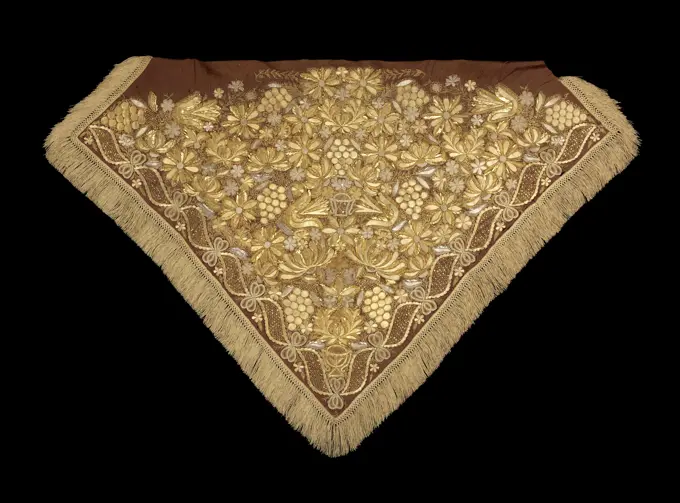
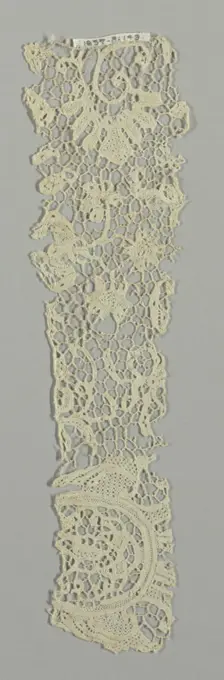
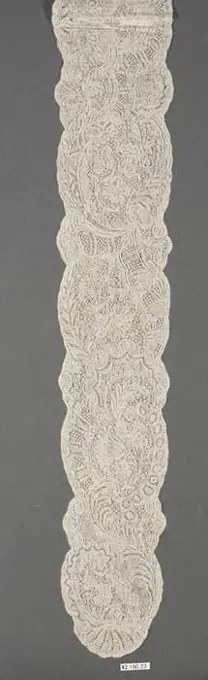
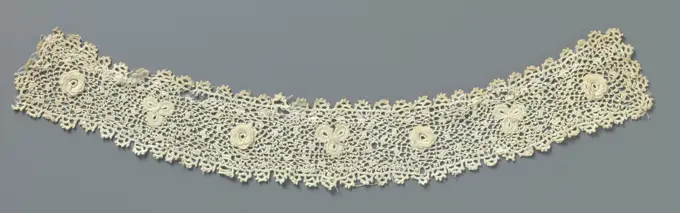
Intricate Lace Designs

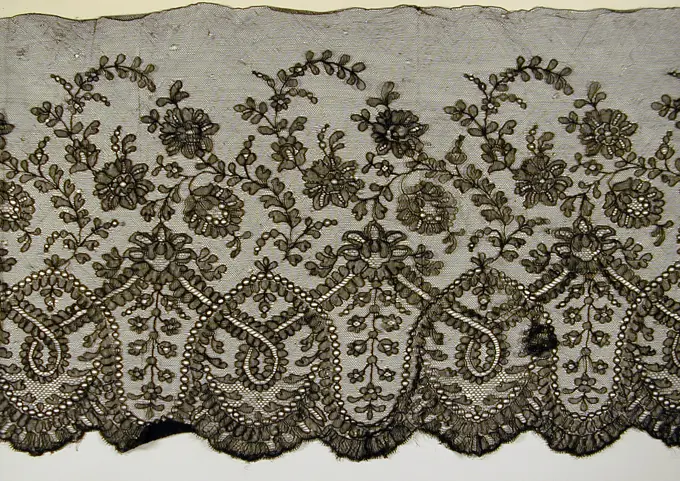
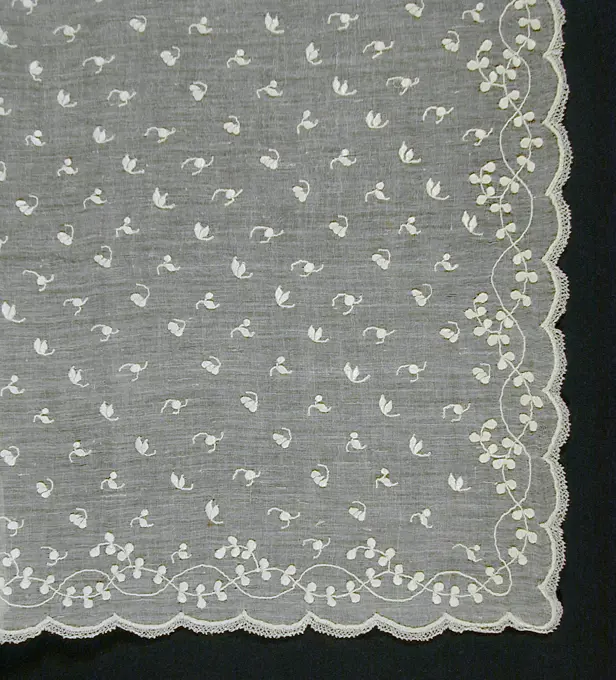
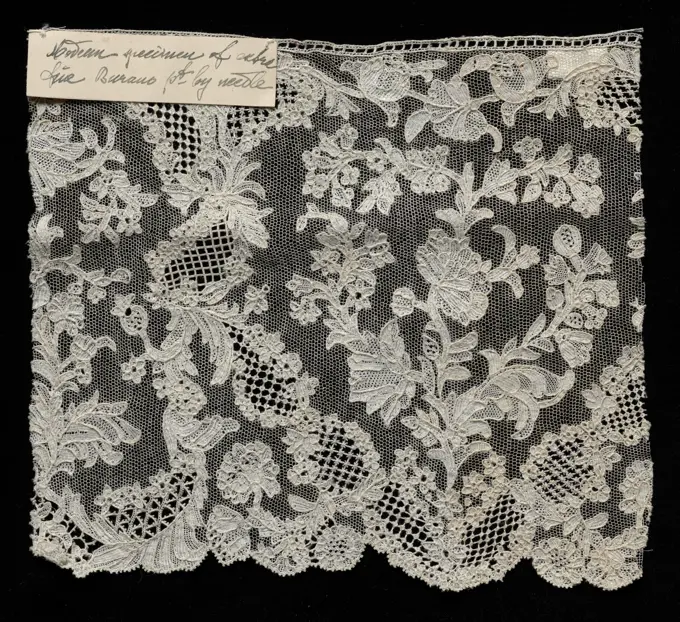
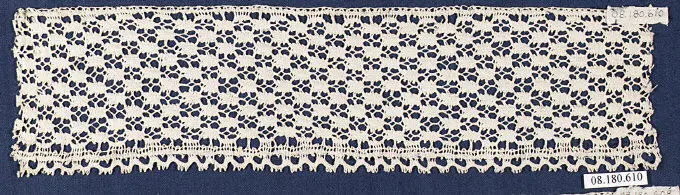
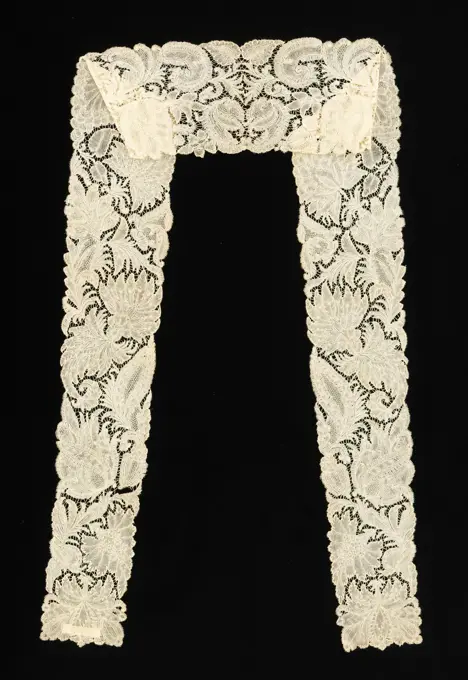
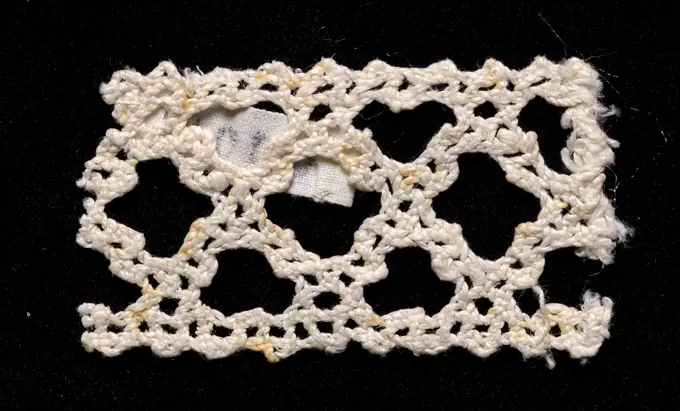
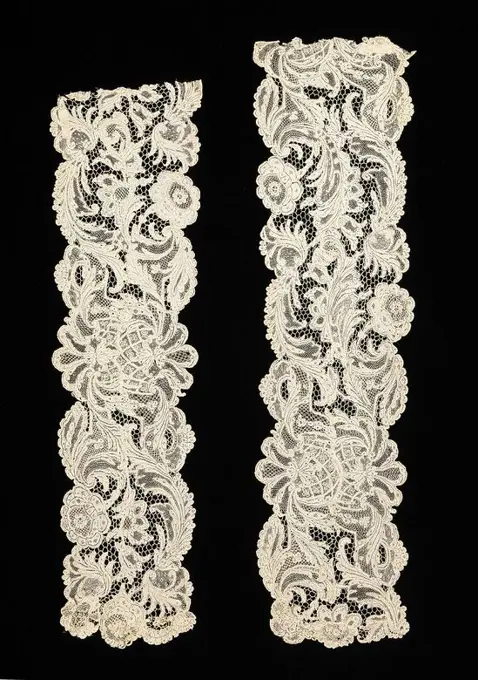
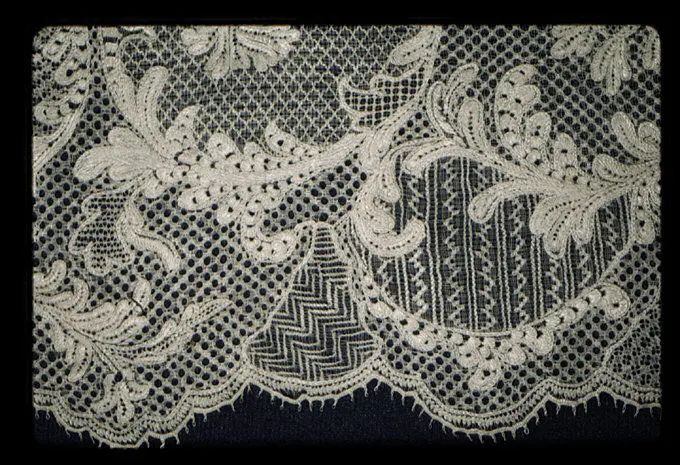
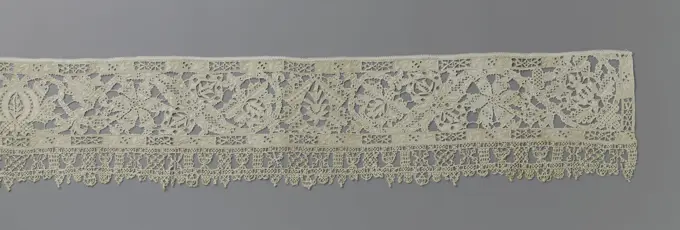
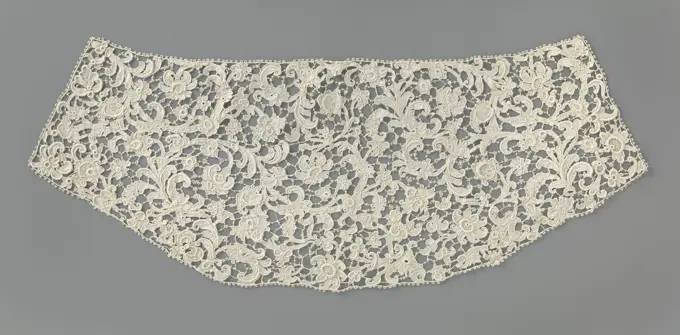
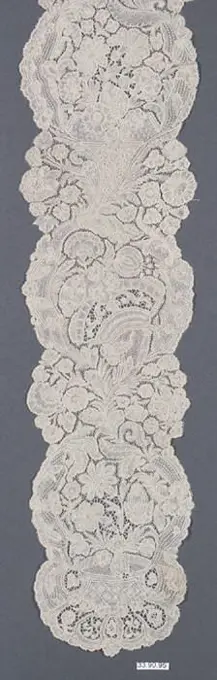
Elegant lace strips showcasing floral and geometric designs, crafted from natural-colored threads, highlighting traditional textile artistry.

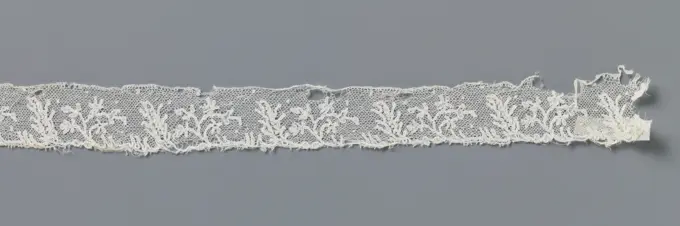
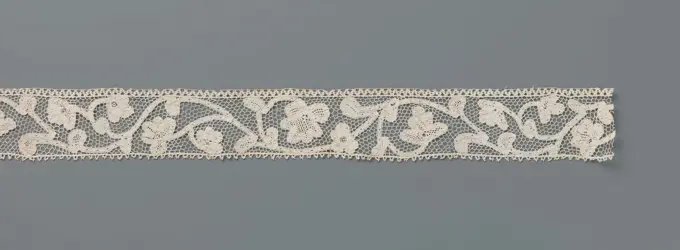
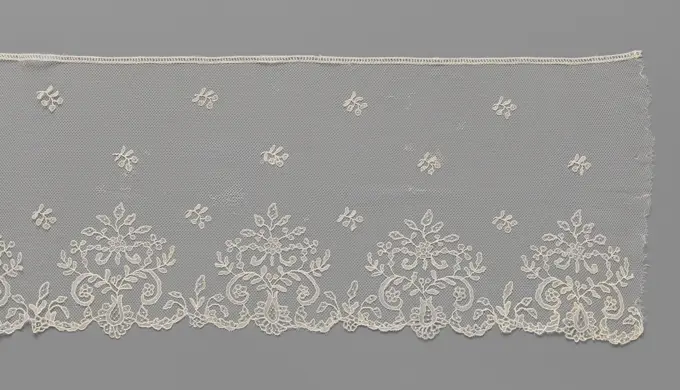
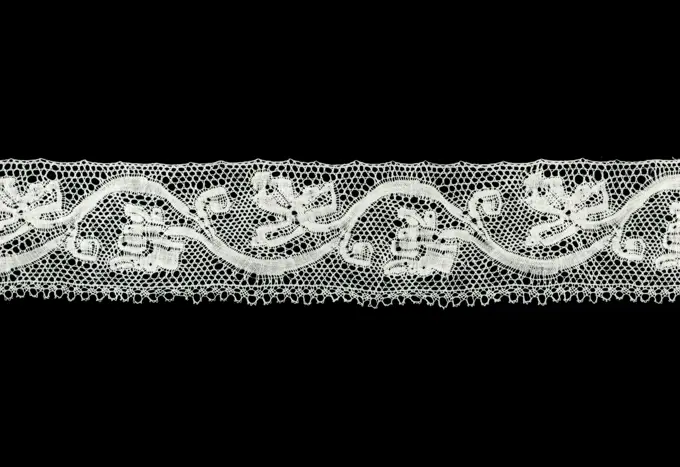
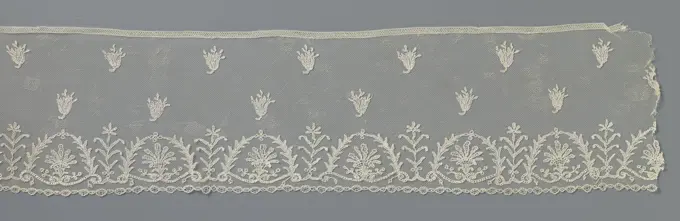
Strip Machine with wavy slender with two different flowers and berries, anonymous, c. 1900 - c. 1924  Strip of natural-colored machine side: machine valenciennes side. The repeating pattern consists of a continuous wavy slender, which is formed by two different flowers of bent stalks. From each, constantly curling flour, two short stalks with three berries stick to it. There are two loose berries next to the always bending flower. The motifs are equipped with openwork edges and small recesses and are connected by a machine Valenciennes ground with square Maas. A mechanical snowflake has been used in the Bloemharten. Along the underside of the strip, a regular sculpe edge with lying arches is formed, with the Maas soil turning into a narrow strap. The top of the strip is straight finished. The silly scrap edge along the bottom is finished with picots. Europe cotton (textile)
Strip Machine with wavy slender with two different flowers and berries, anonymous, c. 1900 - c. 1924 Strip of natural-colored machine side: machine valenciennes side. The repeating pattern consists of a continuous wavy slender, which is formed by two different flowers of bent stalks. From each, constantly curling flour, two short stalks with three berries stick to it. There are two loose berries next to the always bending flower. The motifs are equipped with openwork edges and small recesses and are connected by a machine Valenciennes ground with square Maas. A mechanical snowflake has been used in the Bloemharten. Along the underside of the strip, a regular sculpe edge with lying arches is formed, with the Maas soil turning into a narrow strap. The top of the strip is straight finished. The silly scrap edge along the bottom is finished with picots. Europe cotton (textile)
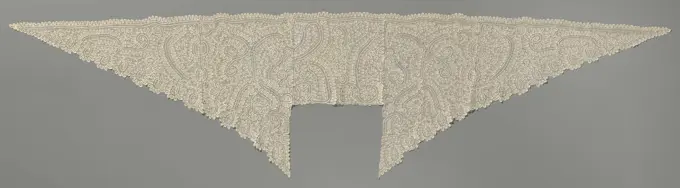
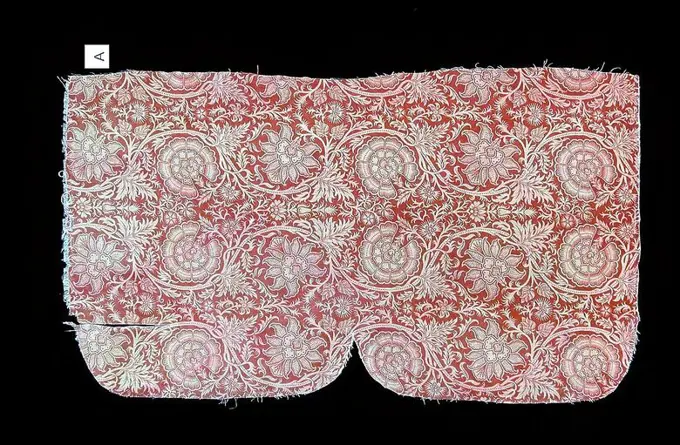
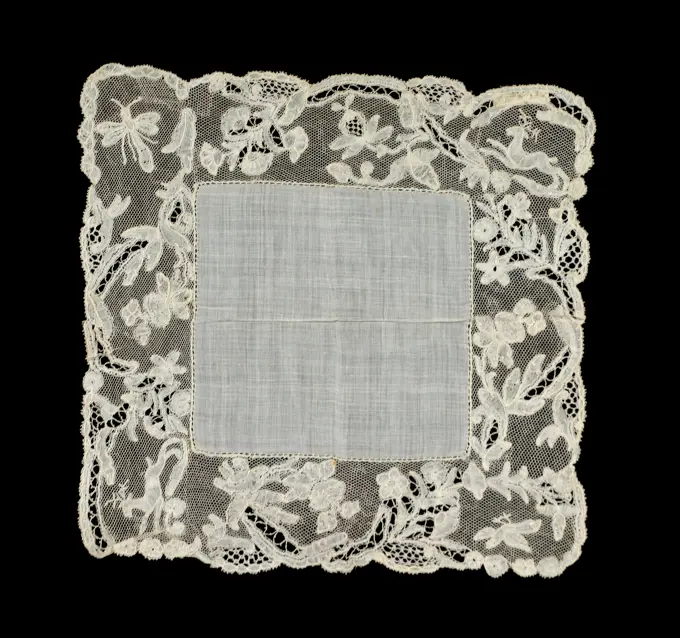
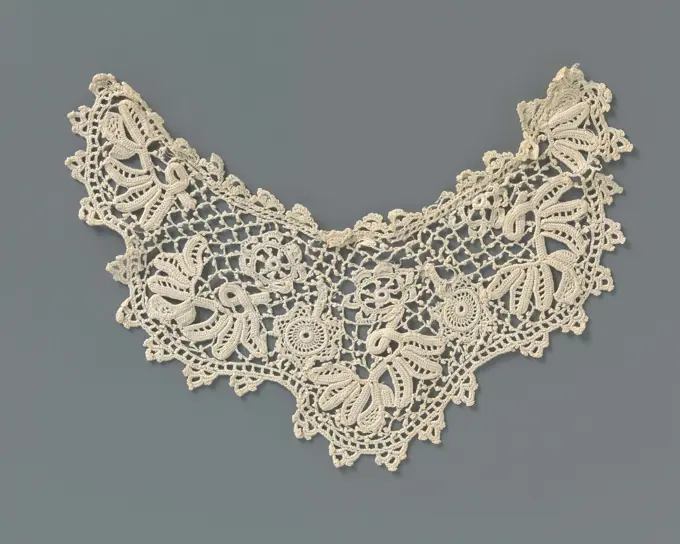
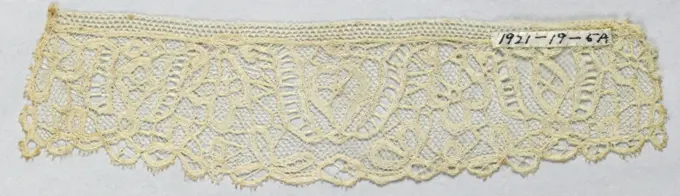
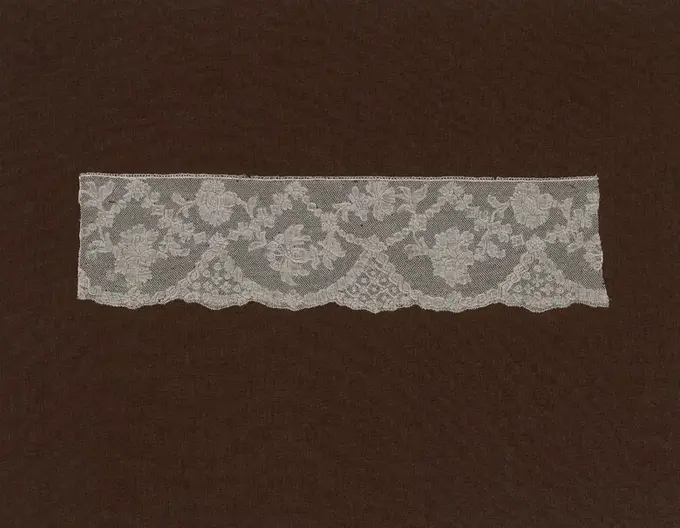
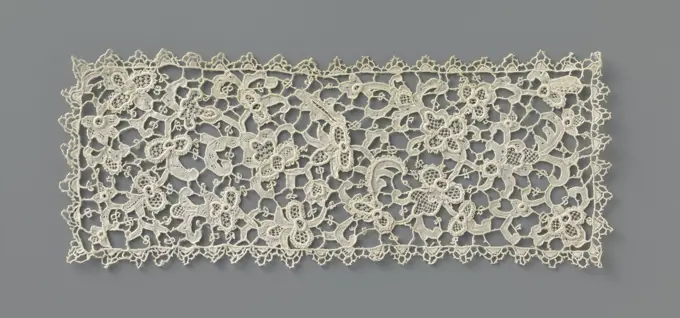
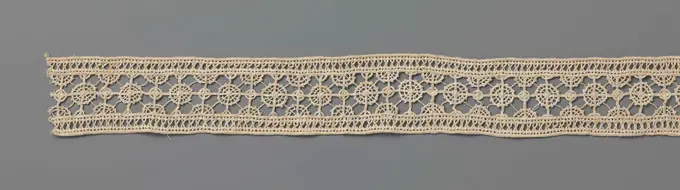
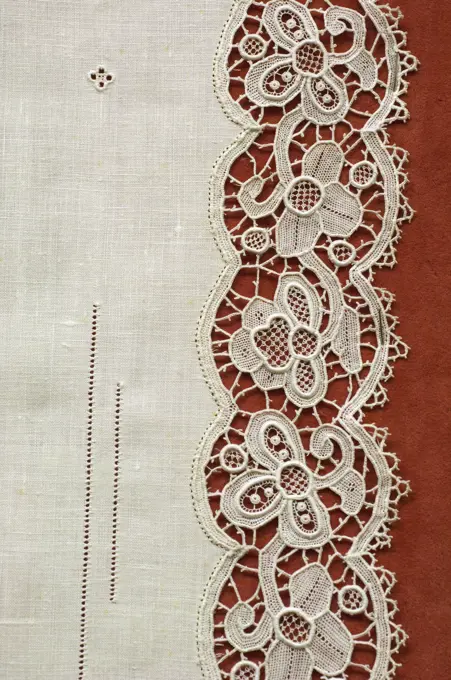
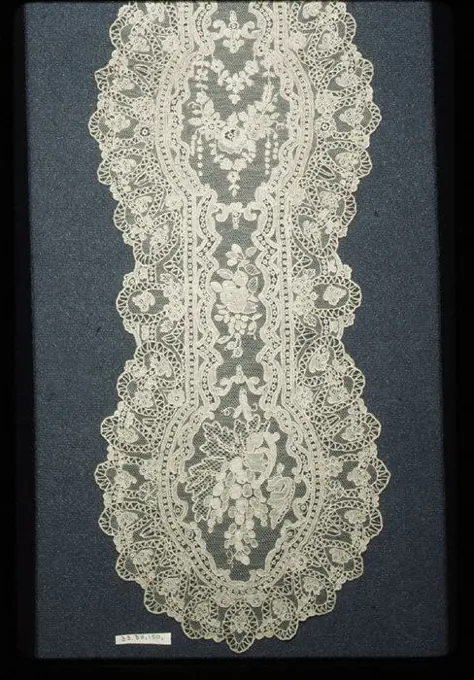
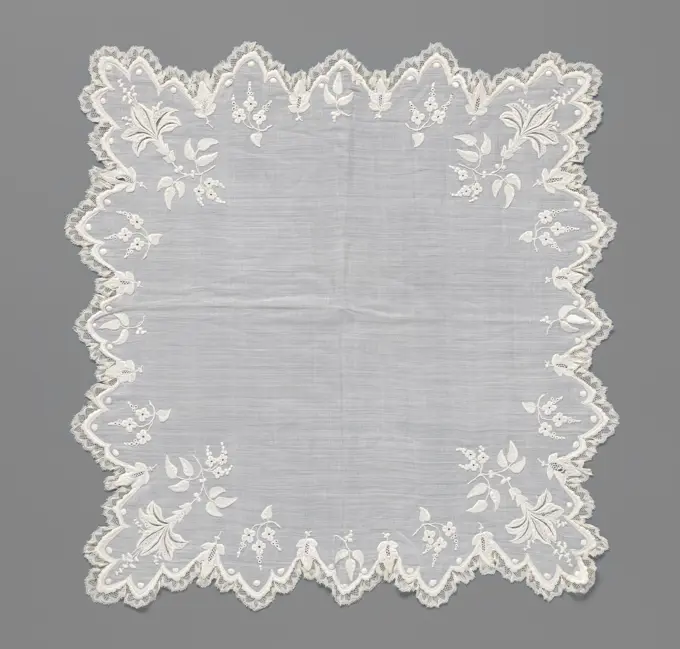
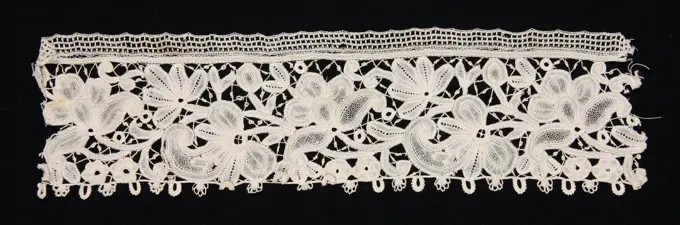
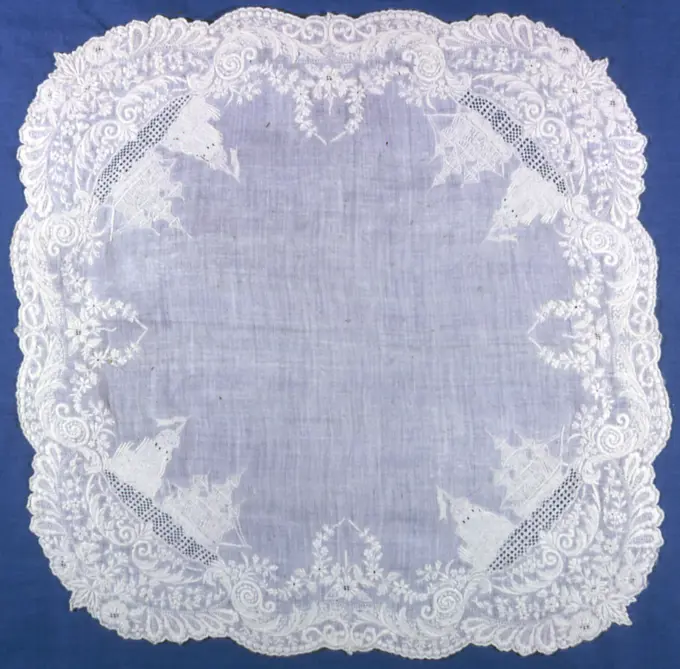
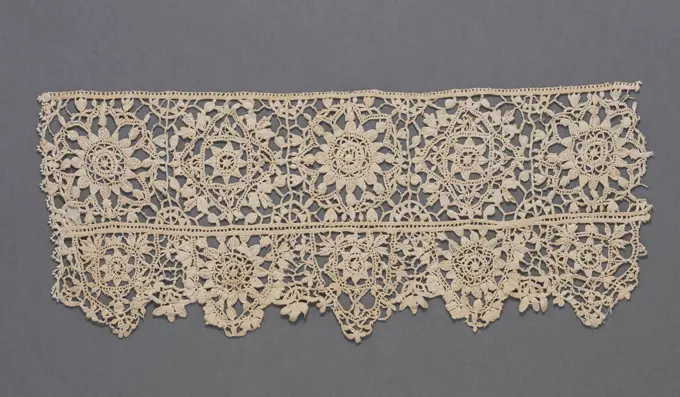
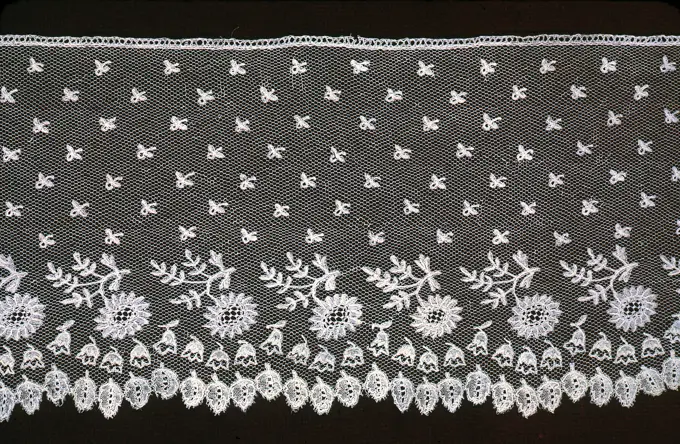
Chevron early 18th century Flemish, Brussels. Chevron. Flemish, Brussels. early 18th century. Bobbin lace, point d'Angleterre. Textiles-LacesBorder. Date/Period: 1850-1900. Border. Medium: linen. Technique: needle lace with ground of loop & twist with loop & twist return. Author: UNKNOWN.Collar or Cuff (Fragment) Made 1860-1869 Brussels. Cotton, needle lace of a type known as Point de Gaze .Fichu from dick edge with lightning bolts. Fichu of natural colosside, Russian or osteuropean side. Triangular model with a narrow straight spacer. The coarse pattern stands on a fine braid soil and shows long, curved edges and spirals, which, one or double-sided, accompanied by a lightning border edge.Border Made 1675-1700 Antwerp. Linen, bobbin straight lace .Strip mixed side with S-Voluten, Anonymous, c. 1875 - c. 1899 Strip of natural -colored mixed side: Brussels bobbin side in combination with a needle -seal, a fine mesh side. This type of lace is also known under the name: Point d'Angleterre. The running pattern is thinning of drawing and consists of suitable C and S-Voluten. Large roses, and face and and profil, form deep scumples with a leaf and a C-Volute. Fine leaf branches have turned to the inside. Brussels linen (material) mixed lace / Brussels bobbin lace Strip of natural -colored mixed side: Brussels bobbin side in combination with a needle -seal, a fine mesh side. This type of lace is also known under the name: Point d'Angleterre. The running pattern is thinning of drawing and consists of suitable C and S-Voluten. Large roses, and face and and profil, form deep scumples with a leaf and a C-Volute. Fine leaf branches have turned to the inside. Brussels linen (material) mixed lace / Brussels bobbin laceChair Seat. Designed by Thomas Wardle (English, 1831-1909); Printed at Hencroft Dye Works; England, Staffordshire, Leek. Date: 1878-1898. Dimensions: 66.0 × 113.3 cm (26 × 44 1/4 in.). Cotton, twill weave weave with supplementary pile wefts forming cut solid (velveteen); block printed; fringe: cotton, silk and wool; woven. Origin: England. Museum: The Chicago Art Institute, Chicago, USA.Crocheted side with rose and clover leaves, anonymous, c. 1890 - c. 1909 Triangular support piece of natural -colored Irish crocheted side. Central to the triangle a layered rose with a spray pattern around it with a cloverleaf and dots. Crocheted soil with potente diamond -shaped meshes. Finished along all sides with picoted three -part arches. Ierland (possibly) cotton (textile) Triangular support piece of natural -colored Irish crocheted side. Central to the triangle a layered rose with a spray pattern around it with a cloverleaf and dots. Crocheted soil with potente diamond -shaped meshes. Finished along all sides with picoted three -part arches. Ierland (possibly) cotton (textile)Fragment, Medium: linen Technique: bobbin lace, continuous braid like, Pattern of lattice and floral like forms., 16th century, lace, FragmentCuff from crocheted side with round spiral sculptures, anonymous, c. 1930 - c. 1935 Cuff made of natural Irish crocheted side. Rectangular model with rounded corners. Four Mosjes, slightly curved rectangles, in two rows in a diamond -shaped network with picots. Finished on three sides with a sculpy edge of connected round spiral sculptures, which are formed by a laid and hooked wire bundle. The top is straight. Amsterdam cotton (textile) Cuff made of natural Irish crocheted side. Rectangular model with rounded corners. Four Mosjes, slightly curved rectangles, in two rows in a diamond -shaped network with picots. Finished on three sides with a sculpy edge of connected round spiral sculptures, which are formed by a laid and hooked wire bundle. The top is straight. Amsterdam cotton (textile)Handkerchief fourth quarter 19th century probably Belgian. Handkerchief 169678Place piece of crocheted side with twisted stems and rosettes. Curved semicircular design of natural-colored crochet Irish side. Pattern with three rosette flowers with large composite leaves with twisted stems. On either side of the middle rosette flower a circle. Crochet soil with irregular diamond-shaped meshes and picots. Along the entire, flammed circumference of the support a border with three-piece arcs.Sample end of lappet, Medium: linen Technique: bobbin lace, Mechlin style, N. Europe, 19th century, lace, Sample end of lappetFragment, Medium: linen Technique: bobbin lace, Binche style with Binche ground, Curving vine with pomegranates and leaves., Belgium, 18th century, lace, FragmentKloskant strip with hollow and convex double frames, anonymous, c. 1850 - c. 1860 Black bobbin strip: Chantilly side. A grid -founded shows an empty top and a very heavier symmetrical design. Holle and Bolle Double Lists, step -by -step together, follow the sculptures, which in turns consist of half rosettes and an arc of leaves. Belgium silk bobbin lace Black bobbin strip: Chantilly side. A grid -founded shows an empty top and a very heavier symmetrical design. Holle and Bolle Double Lists, step -by -step together, follow the sculptures, which in turns consist of half rosettes and an arc of leaves. Belgium silk bobbin laceFragment 16th century Italian. Fragment 215404Cuff (one of a pair) 16th century Italian. Cuff (one of a pair). Italian. 16th century. Bobbin and needle lace. Textiles-LacesLace, 1800s, maker unknown. Gift of Mrs Alison Williamson, 1984.Needlepoint (Drawnwork) Lace Insertion with Bobbin Lace Edging of Points, 17th century. Italy, 17th century. Lace, needlepoint, and bobbin; average: 7.1 x 25.8 cm (2 13/16 x 10 3/16 in.).Cuffs, Medium: linen Technique: appliqué of bobbin lace on machine-made net, Cuffs made of bobbin lace applied to machine-made net in a pattern of flowers and leaves., Honiton, England, 1800-1850, embroidery & stitching, CuffsBobbin Lace (Rose Lace) Edging of Points, 17th century. Italy, Genoa, 17th century. Lace, bobbin; average: 4.8 x 21.6 cm (1 7/8 x 8 1/2 in.).Border 17th century Italian, Naples Punto in arialiterally, "stitches in the air"is one of the earliest styles of needle lace, which is itself developed from cutwork of primarily geometric design. When lacemakers transitioned to using a foundation of threads laid out according to a pattern drawn on parchment, they were able to incorporate more fluid lines and curves into their designs.. Border 215034Border, 18th century, Linen; needle lace, Italy, 18th centuryFragment (Border). France, Valenciennes. Date: 1765-1775. Dimensions: 9.0 x 34.5 cm (3 1/2 x 13 5/8 in.)Width repeat: 20.8 cm (8 1/4 in.)Heading: .3 cm (1/8 in.). Linen, bobbin straight lace of a type known as "Valenciennes" with a round Valenciennes mesh ground. Origin: Valenciennes. Museum: The Chicago Art Institute, Chicago, USA.Strip bobbin with slanted four -double cartouche and berry branch, anonymous, c. 1800 - c. 1849 Strip of natural -colored bobbin, Lille side. The repeating pattern consists of a slanted oval cartouche, a smaller triangular cartouche and a curved branch with berries. These motifs all spring on the underside of the strip. In the slanted cartouche is a smaller oval cartouche and it is crowned by a more or less triangular cartouche and a smaller oval cartouche. Two different loose berries are diagonally above the berry branch. The motifs are connected by a fine Maas soil, a tuler land. The motifs are made in linen battle with thicker and shiny contour threads. Different decorative lands have been used in the cartouches and berries, including a rose soil and a decorative soil with ladders in form in the largest oval. The top of the strip is straight finished. The very faintly scalloped underside is finished with picots. Tondon cotton (textile) bobbin lace / Lille lace Strip of natural -coloStrip bobbin with a sprig with star flower and thick twig with side branches, anonymous, c. 1840 - c. 1850 Strip of natural -colored bobbin: Lille side. Between stripped Mosjes, the repeating pattern consists of two different thin branches, which spring on the underside of the strip. There are a few star -shaped flowers on one branch, the other branch has a thick base with thin short branches on either side. The motifs are connected by a fine grid, a tuler land. The very sparse fullwork is made in linen battle, with the thicker and shiny contour threads dominating. The thicker branch is filled with stacked cubes made in shape. Top and bottom of the strip are straight finished, with the bottom with picots. Lille linen (material) bobbin lace / Lille lace Strip of natural -colored bobbin: Lille side. Between stripped Mosjes, the repeating pattern consists of two different thin branches, which spring on the underside of the strip. There are a few star -shaped flowers on one branch, the othStrook kantborduurwerk op machinale tule met grashalmen.Strip natural-colored edge embroidery on machine tulle, tulle embroidery. Repetitive motif of a hanging bunch with seven grass shifts and one curved branch with leaves, on a fine hexagonal maas soil. The bushes hang above a scalloped edge of tape work with hanging leaves. The top is cut and not finished. The short sides of the strip are sewn together.Needle's fashion sty with clover leaves, anonymous, c. 1900 Modesty of natural -colored needle side: Venetian rose side. An asymmetrical flower and tifle pattern. Open bars soil. Continuous triangles form the finish on four sides. BURANO linen (material) Venetian rose point Modesty of natural -colored needle side: Venetian rose side. An asymmetrical flower and tifle pattern. Open bars soil. Continuous triangles form the finish on four sides. BURANO linen (material) Venetian rose pointBorder (Italy); linenHandkerchief Made 1875-1900 France. Linen, plain weave; embroidered with cotton in back, eyelet, padded overcast, and padded satin stitches; buttonhole wheels; insertion and edging of cotton, bobbin straight lace of a type known as Valenciennes .Berthe van kloskant met guirlandes en strikken.Berthe of black climbing side: Chantilly side. There is a pattern of garlands and bows on a coarse mesh fence.Fragment, Medium: linen Technique: bobbin lace (Valenciennes ground), Fragment of a band with flowers., 18th century, lace, FragmentStrook naaldkant met kleine dichte en grote open cirkels.Strip natural-colored coniferous lace - Reticella - Between edges open sewing: work with pulled out wires. The repeating and symmetrical pattern consists of one row of squares, which are made up of four small squares. Each large square has crossed, at every intersection around and a small closed and a large openwork circle. Along the edges half circles. The top and bottom of the strip are straight finished with open diamonds (work with pulled out wires).Strip of needle side with circular petals and symmetrical tergpaton, anonymous, c. 1650 - c. 1699 Strip of natural needle side: venise flat. Symmetrical pattern of curly tendrils with multifaceted flowers and leaves. Different flowers with circular petals stand out. Irregular open bar with picots. The top is finished with a straight edge. The underside is finished with a straight edge with rader picots. Italy linen (material) flat Venetian (needle point) Strip of natural needle side: venise flat. Symmetrical pattern of curly tendrils with multifaceted flowers and leaves. Different flowers with circular petals stand out. Irregular open bar with picots. The top is finished with a straight edge. The underside is finished with a straight edge with rader picots. Italy linen (material) flat Venetian (needle point)Handkerchief with rose edge of bastard, anonymous, c. 1900 - c. 1910 Around a lobed batist center, a side of lace runs with a stock of square meshes. There are large hanging roses along the outside, which also form the sculpts. A wavy branch with rose buttons runs along the inside. Valenciennes side. Yolder linen (material). batiste Bobbi Lace / Valenciennes Lace Around a lobed batist center, a side of lace runs with a stock of square meshes. There are large hanging roses along the outside, which also form the sculpts. A wavy branch with rose buttons runs along the inside. Valenciennes side. Yolder linen (material). batiste Bobbi Lace / Valenciennes LaceLappet. Belgium, Brussels, 1700-1725. Costumes. Linen bobbin laceStrook gemengde kant met palmetbloemen aan lopende rank.Strip natural-colored mixed side: Venetian ribbon side. Pattern over the full width of the strip with a running rank to which different palmet flowers on a square mesh soil (needle side). The contours of the pattern are formed by a woven ribbon with holes. Some different ornamental grounds within the contours. The top is trimmed with a border clamping side. The underside is finished with a straight picro edge with arcs.Shawl or stole, Medium: linen Technique: bobbin lace (Brussels or Honiton style), Shawl or stole of Honiton bobbin lace in a dense floral pattern., England, 19th century, lace, Shawl or stoleNeedle -lane of the needle side with standing oval medallions in a rich pattern of flowers, anonymous, c. 1860 - c. 1870 Japon strip of natural-colored needle side: Alençon side. The repeating pattern consists of standing oval medallions in a rich pattern of flower ringers. There is always one medallion under each wave top of the pendulum along the top of the strip, with fine leaves and orangebloemsem. Lush streamers with roses, anemones and forget-me-nots hang over this pendulum, apparently put through the medallions, cut the edges and partly form the pattern of the underside of the strip. The flowers take down in size. The scrap edge is further supplemented by a pendulum of roses. The motifs are made with feston stitches with recesses and decorative stitches. The motives are provided with relief contours. The motifs are connected by a hexagonal Maas soil where the sides of the meshes are turned. Many decorative stitches in Bloemharten and the decorative frames of the medallions, mainStrip of bobbins intended or used as furniture covering with chalice flower in hanging flowerpot, anonymous, c. 1960  Strip of light brown colored bobbin side: Abruzzan side. The strip was intended or used as (part) of furniture covering. The repeating and symmetrical pattern consists of an ongoing ribbon that forms a hanging flowerpot with one chalice flower in it. The continuous ribbon forms a rosette flower between the successive flower pots. The ribbon is held in linen battle with openwork edges. Rosette flowers of leaves are in shape in the center of the Kelkbloem, the vase and the rosette flower. Two leaves are incorporated in shape in each double -lobbish leaf on either side of the chalice. The top of the strip is straight finished. The scrap edge is formed by the pattern with the cell flowers in the hanging flower pots. The side was made in a monastery in Naples. Naples linen (material) bobbin lace / tape lace (bobbin lace) / Abruzze laceFragment 18th century French. Fragment 218765Strip knotted side with three circles under a narrow straight track, Anonymous, 1900 - 1922 Strip of natural knotted side: chebka. Three circles under a narrow straight track. Palestine linen (material) Strip of natural knotted side: chebka. Three circles under a narrow straight track. Palestine linen (material)Belgium, Brugge (aka Brug or Bruge). UNESCO World Heritige Site. World famous Belgium lace, antique Renaissance Lace.Lace Flounce. Probably France or Spain, late 19th century. Costumes. Silk machine-made laceStrip of bobbin with stylized flour between two vertical lines and ovals on a triangular fragment linen batist, anonymous, c. 1600 - c. 1635 Strip of natural -colored bobbin, Old Flemish side or Dutch bobbin side. The strip is attached to a triangular fragment linen batist. The side has a pattern that consists of vertical straight lines, between which a stylized flower stands. On the center line, the flower is flanked on the left and right by a lying rush -hour, which always cuts the vertical line. The motives are made in linen battle with recesses, there is hardly any soil, the motives are connected by very short braids. Up and bottom of the strip are finished with a straight edge. Southern Netherlands (possibly) linen (material) bobbin lace / old Flemish lace Strip of natural -colored bobbin, Old Flemish side or Dutch bobbin side. The strip is attached to a triangular fragment linen batist. The side has a pattern that consists of vertical straight lines, between which a stylized flowHalf Shawl Made 1860-1865 France. Silk, bobbin straight lace (made in vertical strips) .Strip Machinal side with oval fields and green ribbon along the top, anonymous, c. 1880 - c. 1899 Strip of natural -colored machine side: Machine Parisian side. The repeating pattern consists of more or less oval fields along the underside of the strip that are at some distance apart. From each oval, a branch originates on one side, which goes to the next oval with an arc and thus forms a closed field. Above this edge with fields there is a row of loose leaf branches in the Machinale Parisian soil, always with a glove next to it. In the fields, finer decorative lands have been used than the Paris soil at the top of the strip. A green ribbon is sewn along the top, where the strip is slightly wrinkled. A piece of the green ribbon is missing in two places. The very silly edge of the scaffold along the underside of the strip is finished with picots. The short sides are put together. Europe cotton (textile) Strip of natural -colored machine side: Machine Parisian side. The repeating patternFichu (rectangular). England, circa 1780-1785. Costumes; Accessories. White cotton padded satin and stem stitch embroidery on white cotton mull; narrow bobbin lace edgingLaces, 16th century. Needle and reticella lace hem, decorated with rosettes and edging with big and small, rounded points, approximately 1590-99.Needlepoint (Burano Point) Lace Edging, 20th century. Italy, Burano, 20th century. Lace, needlepoint: linen; average: 15.3 x 17.2 cm (6 x 6 3/4 in.).Border, Medium: linen Technique: needle lace with ground of loop & twist with loop & twist return, Commonly called Point d'Gaze in a design of foliated forms and medallions in symmetric patterned surmounted by repeat design of oval wreaths terminating in floral sprays., Belgium or France, 1850-1900, lace, BorderStrip bobbin with triangular scales, anonymous, c. 1925 - c. 1936  Strip of natural -colored bobbin. The repeating and symmetrical pattern consists of an openwork band with a horseshoe -shaped motif between two schuinge -plateed lines. Under the tire hang open worked triangular scales, always one shell under one horseshoe with sloping lines. It concerns 20th-century side made to a 16th-century pattern. Pescocostanzo cotton (textile) bobbin laceCollar of needle side with a chain of ovals, anonymous, c. 1870 - c. 1890 A narrow circle arch shows widened corners in which a round medallion. These are connected by a switch chain of large and small rings. There are alternating clock flowers and rosettes in the edge. In the corners a rose with imposed leaf relief. Point the Gaze de Bruxelles. Brussels linen (material) A narrow circle arch shows widened corners in which a round medallion. These are connected by a switch chain of large and small rings. There are alternating clock flowers and rosettes in the edge. In the corners a rose with imposed leaf relief. Point the Gaze de Bruxelles. Brussels linen (material)Fragment 18th century Italian, Abruzzi. Fragment 214960Pair of Lappets (Joined) Made 1775-1785 Valenciennes. Linen, bobbin straight lace of a type known as Valenciennes with a square Valenciennes mesh ground .Headdress 1830-70 Russian This object is from the collection of Natalia de Shabelsky (1841-1905), a Russian noblewoman compelled to preserve what she perceived as the vanishing folk art traditions of her native country. Traveling extensively throughout Great Russia, she collected many fine examples of textile art of the wealthy peasant class. From the 1870s until moving to France in 1902, Shabelsky amassed a large collection of intricately embroidered hand-woven household textiles and opulent festival garments with rich decoration and elaborate motifs. The Brooklyn Museum holdings include many fine examples including the majority of the garments. Portions of Shabelsky's collection are also housed at the Museum of Fine Arts, Boston, the Cleveland Art Museum, and the Russian Museum of Ethnography in St. Petersburg.Married women in Russia were required to cover their hair entirely lest they be considered immodest; they wore a fata, usually a white muslin veil woven with silk floral designFragment; linen; 1897-8-149Lappets early 18th century Flemish. Lappets 226947Cushion deck of application side, anonymous, c. 1850 - c. 1870 Cushion deck of application side: bobbin side with a single needle stitch Applicated on machine tulle. In the corners, the pattern has a flower branch above two C-volutes, with a filling pattern below, flowers and leaves. In the middle of the sides, the pattern C-Voluten has with flowers and leaves. The soil is littered with large and small moes. Brussels cotton (textile). Brussels Applied Cushion deck of application side: bobbin side with a single needle stitch Applicated on machine tulle. In the corners, the pattern has a flower branch above two C-volutes, with a filling pattern below, flowers and leaves. In the middle of the sides, the pattern C-Voluten has with flowers and leaves. The soil is littered with large and small moes. Brussels cotton (textile). Brussels AppliedStrip bobbin with connected circles with a rosette flower, anonymous, c. 1800 - c. 1899 Strip of natural-colored bobbin, Buckingham side. The repeating pattern consists of connected circles with a rosette flower in the center. A narrow lane is made above the circles with a mesh soil, a tuler floor. The circles are made entirely with a rose ground, where the round meshes along the edge are accentuated with thick and shiny contour threads. The rosette flowers are made in linen battle, with a small recess in the middle and along the outside with a contour wire. Each circle forms a semicircular shell on the underside of the strip and is finished with picots. The top of the strip is straight finished. Buckingham cotton (textile) bobbin lace / Bucks point (lace) Strip of natural-colored bobbin, Buckingham side. The repeating pattern consists of connected circles with a rosette flower in the center. A narrow lane is made above the circles with a mesh soil, a tuler floor. The circles are made Cuff (one of a pair) early 17th century Italian, Venice. Cuff (one of a pair) 218075Border, Medium: cotton, metal foil wrapped around silk Technique: bobbin lace, metallic, Abstract floral pattern outlined in metallic covered thread., France or Belgium, late 18th-early 19th century, lace, BorderStrip crocheted side with rose and cloverleaf, anonymous, c. 1890 - c. 1909 Strip of natural -colored Irish crocheted side. A repeating pattern from alternately a layered rose and a three -part cloverleaf and a spray pattern of small lightly bent rectangles. Crocheted soil with irregular meshes with picots. The strip is finished on all sides with picoted three -part arches. Ierland (possibly) cotton (textile) Strip of natural -colored Irish crocheted side. A repeating pattern from alternately a layered rose and a three -part cloverleaf and a spray pattern of small lightly bent rectangles. Crocheted soil with irregular meshes with picots. The strip is finished on all sides with picoted three -part arches. Ierland (possibly) cotton (textile)Lappet ca. 1860 French. Lappet 222837Needlepoint (Reticella and Drawnwork) Lace Panel, 16th century. Italy, 16th century. Lace, needlepoint: linen; average: 9.6 x 11.8 cm (3 3/4 x 4 5/8 in.).. Linen, needle lace .Handkerchief with embroidery and triangular scales with flowering lilies in the corners and finished all around with a border of bobbin, anonymous, anonymous, c. 1895 - c. 1899 Batist handkerchief with embroidery - Whitework - along the edges and finished all around with a narrow strip of natural -colored bobbin side: Valenciennes side. Square model with rounded triangular scallops, three along each side and slightly larger in the corners. Each triangle has three lobes and five lobes in the corners. Embroidery: A curved twig 'hangs' in each shell with three leaves or three rosette flowers. A larger branch in every corner, with a flowering lily. Used stitches its sandstick, satin stitch, steel stitch, feston stitch and cordon stitch and in leaves and flower hearts, open sewing - work with pulled out or pulled threads - has been applied. Side: Under an unadorned edge of grid, square Valenciennes-Grond, a sculpe edge of semicircular shells runs, accentuated by a continuous arch line in liStrip Application side with rosette flowers in symmetrical leaf branches, anonymous, c. 1840 - c. 1850 Strip natural -colored application side: needle side applicated on mechanical tulle. Strooi pattern of four rows of leaf branches on a fine hexagonal mesh ground. Along the bottom edge a repetitive motif of a symmetrical leaf branch with one rosette flower in the center and one rosette flower in each of the two volutes underneath. The branch originates from a hanging flower with a drop -shaped heart, the petals of which are part of the scrap edge along the bottom. Different decorative grounds in the motifs and relief contours of wire bundles. The top is trimmed with a border bobbin. Brussels linen (material) Strip natural -colored application side: needle side applicated on mechanical tulle. Strooi pattern of four rows of leaf branches on a fine hexagonal mesh ground. Along the bottom edge a repetitive motif of a symmetrical leaf branch with one rosette flower in the center and one roLace, 1800s , maker unknown. Gift of Mrs CJ Lindsay, 1953.Fragment 16th century Italian. Fragment 214951Fragment of lace. unknown, authorLappet 1730-39 Flemish. Lappet 156489Bobbin Lace Insertion, mid 16th century. Italy, Venice, mid 16th century. Lace, bobbin; average: 2.9 x 5.1 cm (1 1/8 x 2 in.).Laces, 17th century. Venice stitch (Punto Venezia) lace hem with vegetable and floral motifs, cm 19 x 40.Japon strip Application side with snowball, anonymous, c. 1830 - c. 1839 Jelly strip of natural -colored Application side Kloskant and some details in the needle side Applicated on Machine Tulle. Wavy branches move from left to right against a background littered with sequins. Round flower clusters grow like snowballs, interspersed with single chrysanthemums. Twice the wave line is repeated, once by continuous C-Voluten (needle side) and furthermore by a godron edge, which forms the scallops and that is always cut over by an oval medallion on a shell-shaped leaf. Belgium (possibly) linen (material) Jelly strip of natural -colored Application side Kloskant and some details in the needle side Applicated on Machine Tulle. Wavy branches move from left to right against a background littered with sequins. Round flower clusters grow like snowballs, interspersed with single chrysanthemums. Twice the wave line is repeated, once by continuous C-Voluten (needle side) and furthermore by a godron eLappet Made 1740-1749 France. Linen, bobbin straight lace of a type known as Valenciennes with a five hole mesh ground .Lappet. Culture: French. Date: 1730-1739.Fine pieces of lace were often reconfigured from their original forms as they passed from one generation to another. These lappets were made by cutting from a single length. The variety of fillings and the compelling movement and dynamism of the design mark it as a high quality piece. Museum: Metropolitan Museum of Art, New York, USA.Strip Application side with an edge of oval flowers under a stray pattern of leaves, anonymous, c. 1800 Strip of natural -colored Brussels Application side: Kloskant Applicated on Drochelgrond. Under a wide spreading pattern of fine leaves, one -sided flower branches are placed close together along the underside of the strip. One oval flower hangs on the curved twigs with three small leaves. The motifs are made in linen and mains, with burst relief contours. In the oval flowers, a diamond -shaped decorative land has been used with staging motifs. The top is finished with a separate strap. The oval flowers form the regular shells along the underside of the strip, which are finished with picots. Brussels linen (material) Brussels Applied Strip of natural -colored Brussels Application side: Kloskant Applicated on Drochelgrond. Under a wide spreading pattern of fine leaves, one -sided flower branches are placed close together along the underside of the strip. One oval flower hangs on the cBorder 18th century Danish or French. Border 215251Band 17th century Southern German. Band 217803Dress of lace pledger with rising suns along diamond shape, anonymous, c. 1900 - c. 1949 Square rug of natural -colored lace bobbins, cut work. Pattern with a square that is made up of four small squares. Each small square is divided by a diagonal line, with a 'rising sun' on the outside and a triangle on the inside. Together this provides a diamond shape with a four -pointed star in the middle in the large square. Around the large square on all sides, a border with rectangles, filled with bundles of wires or with a dense grid with openwork diamonds. A finished edge in linen battle on all sides. unknown cotton (textile) Square rug of natural -colored lace bobbins, cut work. Pattern with a square that is made up of four small squares. Each small square is divided by a diagonal line, with a 'rising sun' on the outside and a triangle on the inside. Together this provides a diamond shape with a four -pointed star in the middle in the large square. Around the large square on all sides, a boBorder Made 1750-1825 Italy. Linen, bobbin straight lace .Handkerchief Made 1825-1875 France. Linen, plain weave; embroidered with linen .Cuff of English embroidery with pointed wrinkled sculpten strip, c. 1700 - c. 1850  Cuff of English embroidery with pointed wrinkled sculpten strip. Netherlands linen (material). knoop: mother of pearlBorder (five points) ca. 1600 Netherlandish Punto in arialiterally, "stitches in the air"is one of the earliest styles of needle lace, which is itself developed from cutwork of primarily geometric design. When lacemakers transitioned to using a foundation of threads laid out according to a pattern drawn on parchment, they were able to incorporate more fluid lines and curves into their designs.. Border (five points) 217977Lace Border. Italy, late 17th or early 18th century. Textiles; borders. Linen needle laceCollar of Rijsselse side with a faintly scalloped edge, anonymous, c. 1830 - c. 1850 Collar of Rijsselse side with a faintly scalloped and potented edge, with a floral motif and round -lying model. Southern Netherlands linen (material) Lille lace Collar of Rijsselse side with a faintly scalloped and potented edge, with a floral motif and round -lying model. Southern Netherlands linen (material) Lille laceCollar of dosery symmetrical pattern with incised leaves at the tips and multi-feet flowers including rosette flowers in medallions. Collar of natural colosside: fine bridges flower work. Wide V-shaped model with rounded bottom. Symmetrical pattern with large incised leaves. Final other at the ends and multi-part flowers including rosette flowers in medallions. The motifs are mainly clamped in linbroof with recesses and thicker contour wires on one or two sides. The motifs are partly accentuated by thread bundles and clost relief contours. Some heart-shaped leaves have a power stuff. The motifs are connected by a braid groundBatist handkerchief all around with bobbin with rosette flowers on a short handle and flowers with three oval petals, c. 1890 Natural -colored batist handkerchief finished with natural -colored bobbin: fine brugs flower arrangements. The side has a repeating pattern of rosette flowers on a short handle with a leaf alternating on either side by a flower with three elongated oval petals, on a short handle with two leaves. The rosette flowers have an open worked flower heart. In each corner there are four rosette flowers together without a handle. The motifs are made in linen battle with thick contour lines. The veins of the elongated oval petals are depicted with recesses. The flowers are connected by a braid ground. The scrap edge along the outside comes from the pattern is finished with picots. Used cotton (textile). batiste bobbin lace Natural -colored batist handkerchief finished with natural -colored bobbin: fine brugs flower arrangements. The side has a repeating pattern of rosetteInsertion Made 1575-1600 Italy. Linen, needle lace worked on a laid and plaited thread grid .Alb Cuff. France, Tulle, 1750-1800. Costumes; ecclesiastical. Linen embroidery (chain stitch) on linen filet netBorder (Belgium); linenBorder of Cut-Work Embroidery Edged with Macramé, anonymous, c. 1600 Strip of natural -colored lace, sliced work. Pattern with flowers surrounded by volutes and cartouches, including large rosettes. Cut edges finished with feston stitches. Embroidery in flat stitch, steel stitch and with trensjes. Also numerous fillings with needle side. The top is trimmed with a woven edge. The strip is trimmed at the bottom with a border macramé. This edge with hanging points shows symmetrically grouped tracks, formed from trenzen and buttons, which are cross -wise, in net shape or in rows. Italy linen (material) embroidering Strip of natural -colored lace, sliced work. Pattern with flowers surrounded by volutes and cartouches, including large rosettes. Cut edges finished with feston stitches. Embroidery in flat stitch, steel stitch and with trensjes. Also numerous fillings with needle side. The top is trimmed with a woven edge. The strip is trimmed at the bottom with a border macramé. This edge withJapon strip of application side with pointed arches and bells, anonymous, c. 1800 - c. 1809 Japon strip Natural -colored Brussels Application side: Needle side Applicated on Machine Tulle. This type of lace is also known under the name: Point d'Angleterre. The outer, ornamental edge consists of palms, under pointed arches, interspersed with a standing twig. The outside is right by an eye list. A spray pattern of hanging bell flowers fills the stock above the edges. Brussels linen (material) Brussels Applied Japon strip Natural -colored Brussels Application side: Needle side Applicated on Machine Tulle. This type of lace is also known under the name: Point d'Angleterre. The outer, ornamental edge consists of palms, under pointed arches, interspersed with a standing twig. The outside is right by an eye list. A spray pattern of hanging bell flowers fills the stock above the edges. Brussels linen (material) Brussels AppliedDress of edge embroidery with emerging suns along diamond shape. Square dress of natural-colored edge embroidery, carved work. Pattern with a square made up of four small squares. Each small square is divided by a diagonal line, with a 'rising sun' on the outside and a triangle on the inside. Together this ensures a diamond shape in the large square with a four-pointed star in the middle. To the large square on all sides a border with rectangles, filled with bundles of wires or with a dense grid work with opened diamonds. A finished edge in linen stroke on all sides.Jabot of needle side with running tiflines with small flowers, anonymous, c. 1875 - c. 1909 Jabot of natural -colored needle side: Venetian relief side. Cut in fan -shaped model. Composed of three narrow strips, the bottom of which is rounded. Wide -spread branched acanthus drinks with volutes and small flowers are on an open bar soil. Venice linen (material) Venetian raised work Jabot of natural -colored needle side: Venetian relief side. Cut in fan -shaped model. Composed of three narrow strips, the bottom of which is rounded. Wide -spread branched acanthus drinks with volutes and small flowers are on an open bar soil. Venice linen (material) Venetian raised workBobbin Lace Insertion, 16th-17th century. Italy, Venice, 16th-17th century. Lace, bobbin; average: 3.9 x 19.8 cm (1 9/16 x 7 13/16 in.).Edging and Points, 16th century. Italy, 16th century. Knotted lace ; average: 5.1 x 26.1 cm (2 x 10 1/4 in.).Cap Streamers (France); linenHandkerchief (France); linen; 1931-52-1