Intricate Lace Patterns

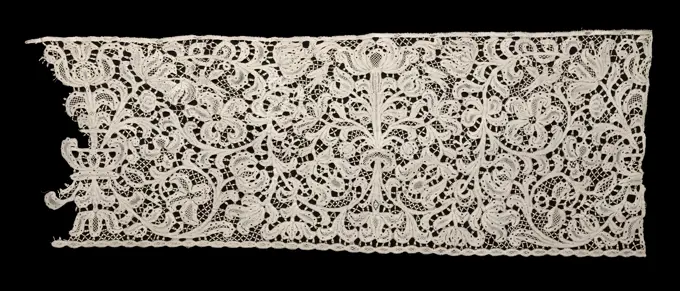
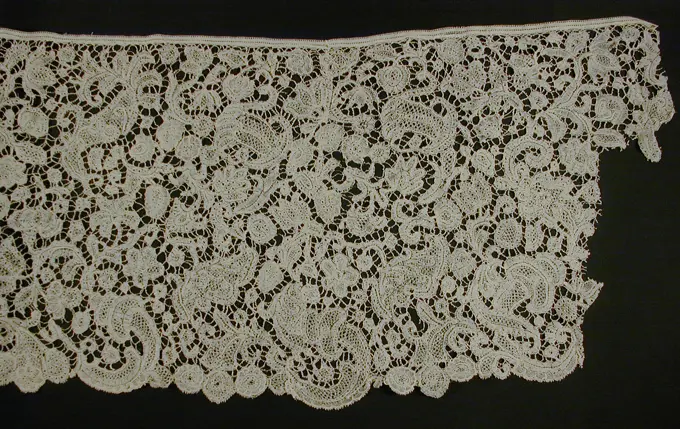
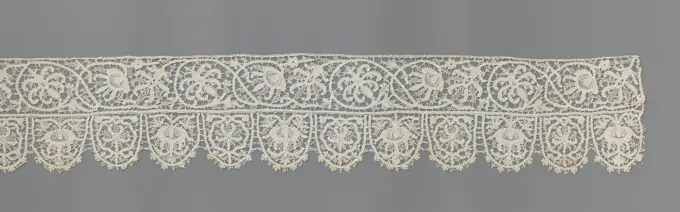
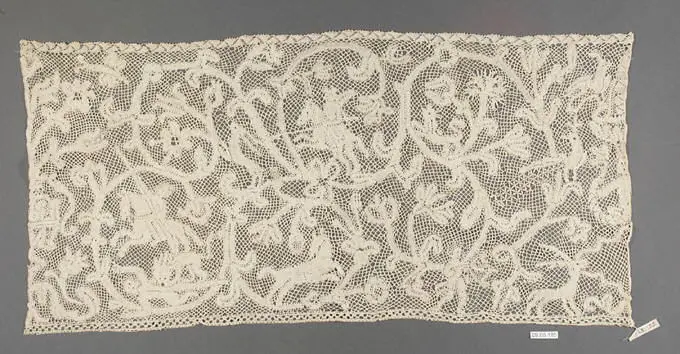
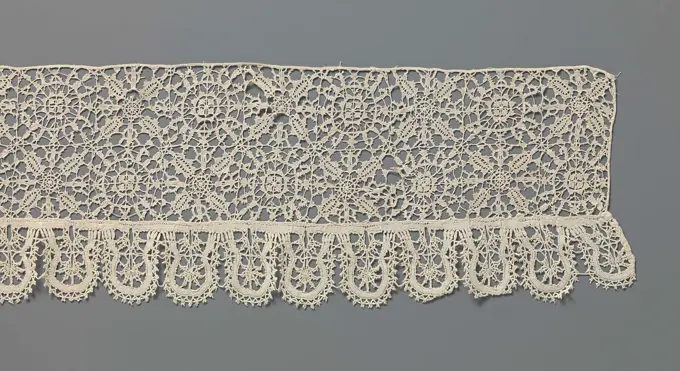
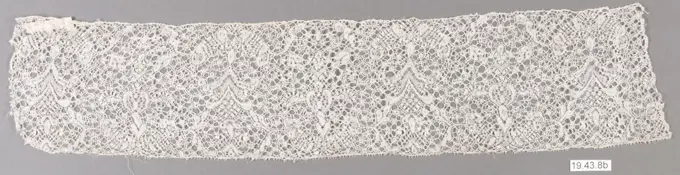
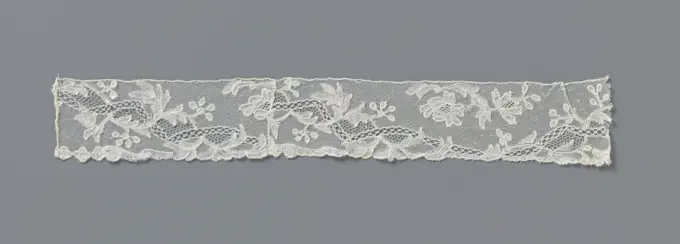
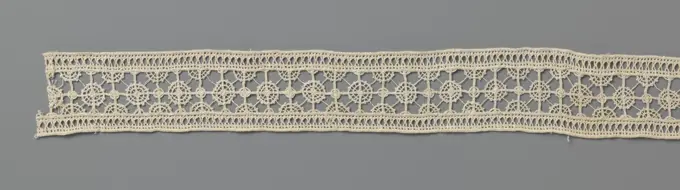
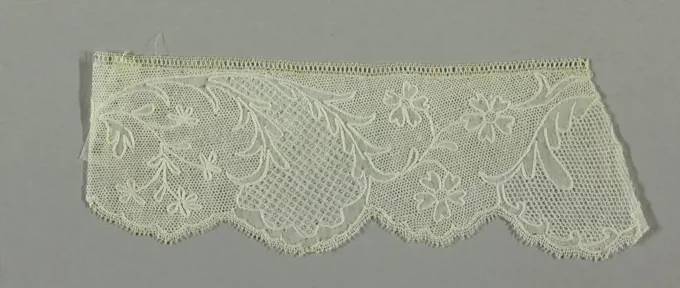
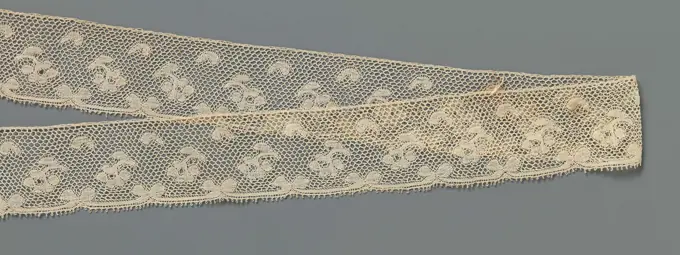
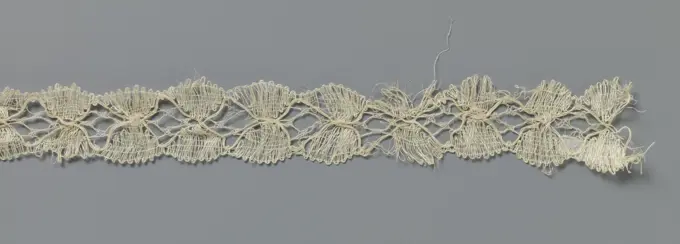
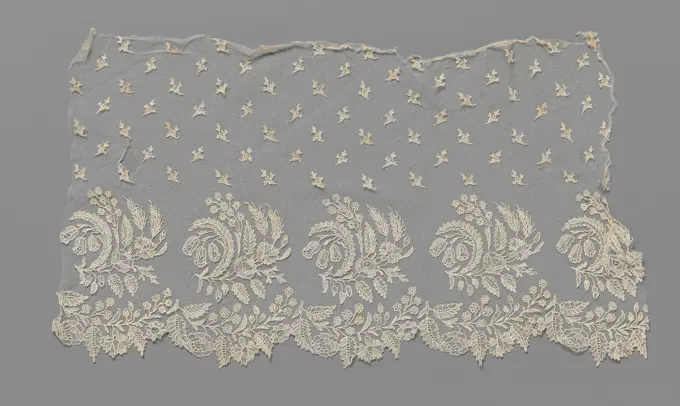
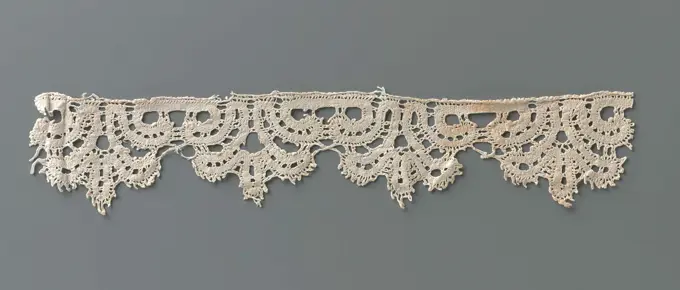
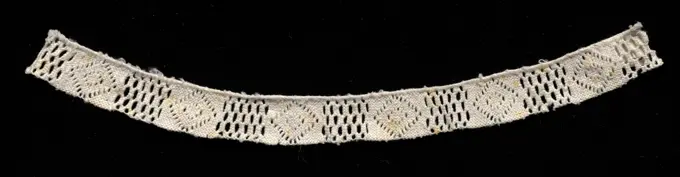
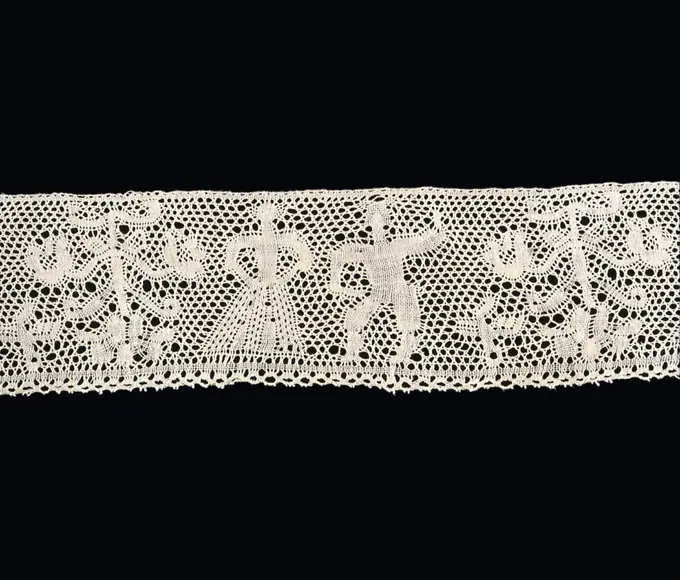
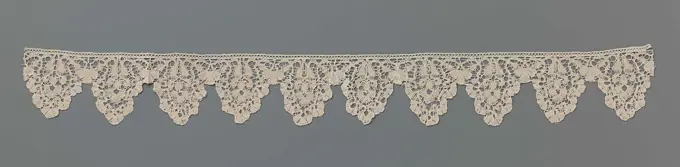
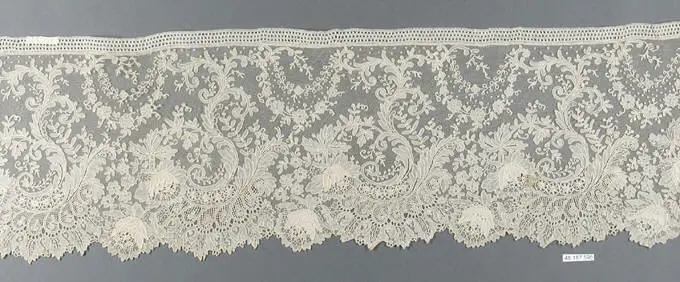
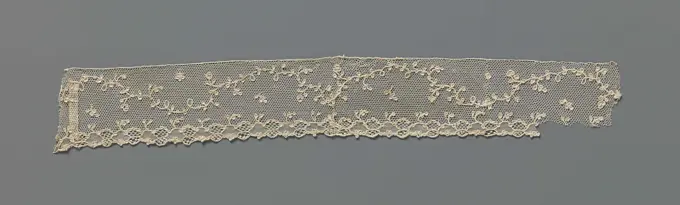
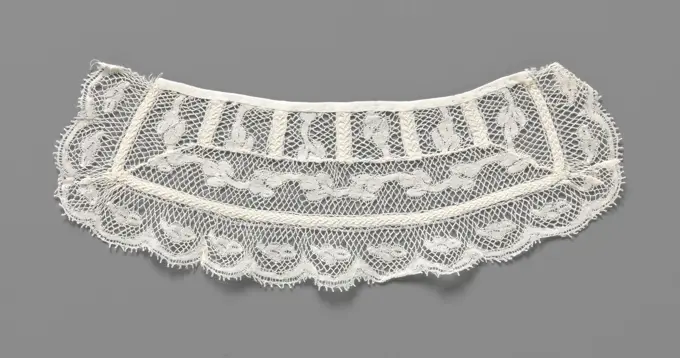
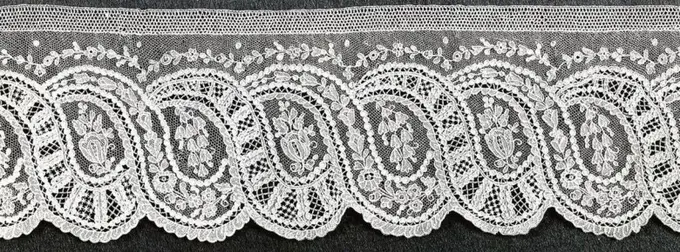
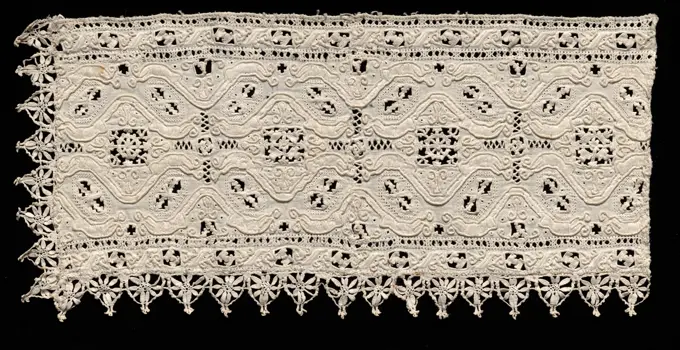
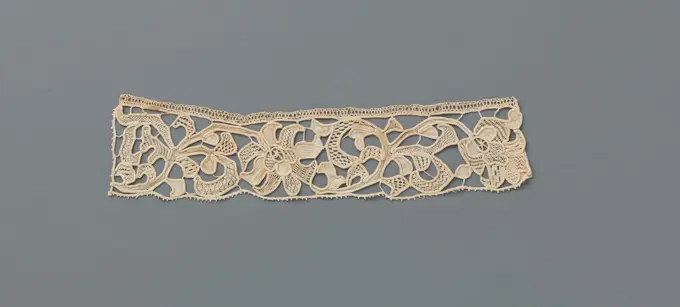
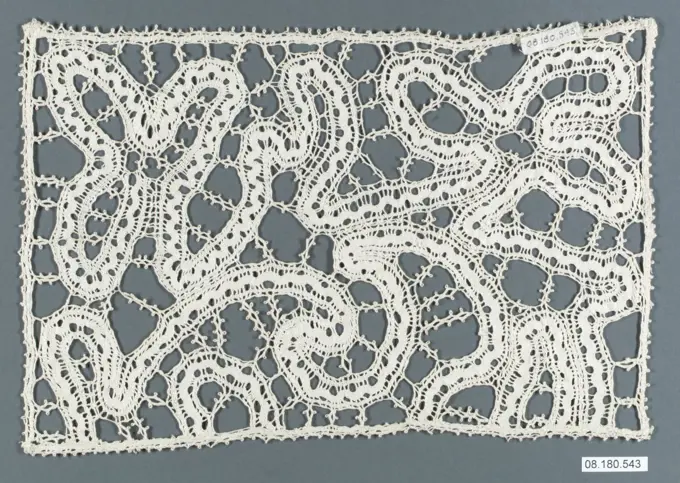
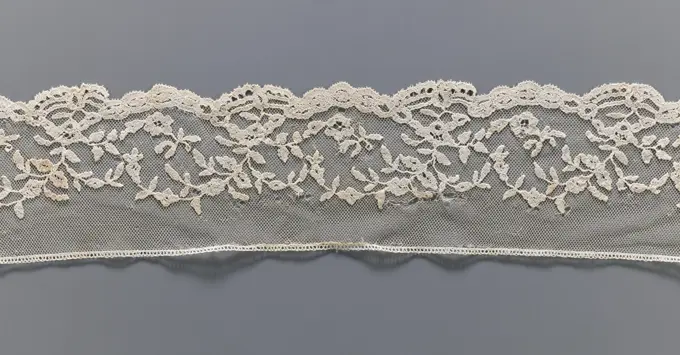
Beautiful strips of lace featuring floral designs and complex patterns, showcasing delicate craftsmanship from various historical periods.

Strip crocheted side with flowers and grape vouchers, anonymous, c. 1890 - c. 1909 Pointed strip of natural -colored Irish crocheted side. Pattern with flowers and grape bunches and a crocheted irregular mesh soil with picots. The long sides are straight finished and trimmed on one side with picoted arches. Ierland (possibly) cotton (textile) Pointed strip of natural -colored Irish crocheted side. Pattern with flowers and grape bunches and a crocheted irregular mesh soil with picots. The long sides are straight finished and trimmed on one side with picoted arches. Ierland (possibly) cotton (textile)
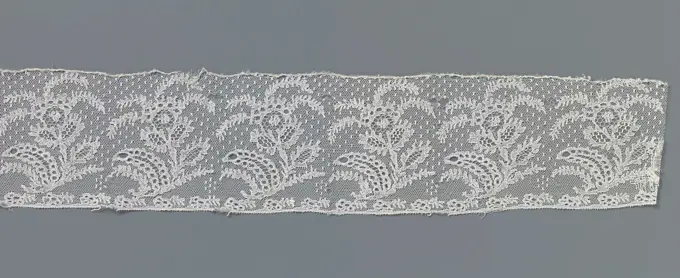
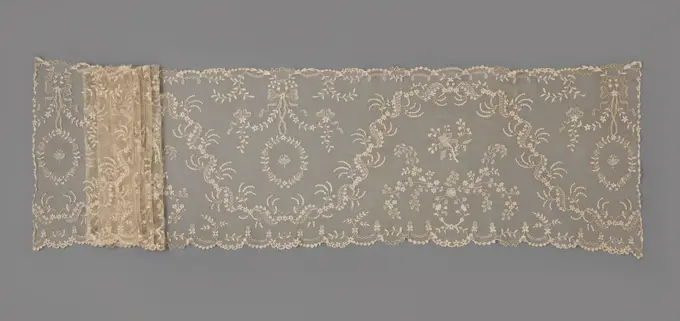
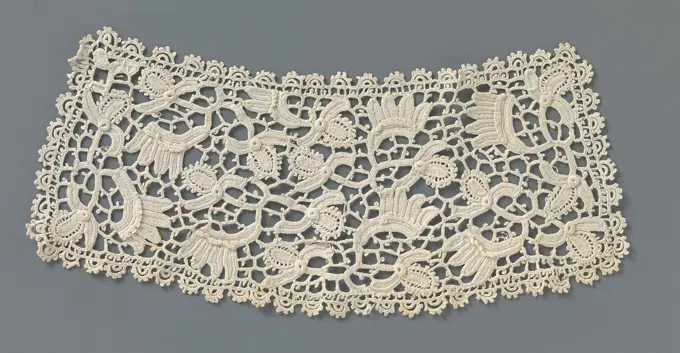
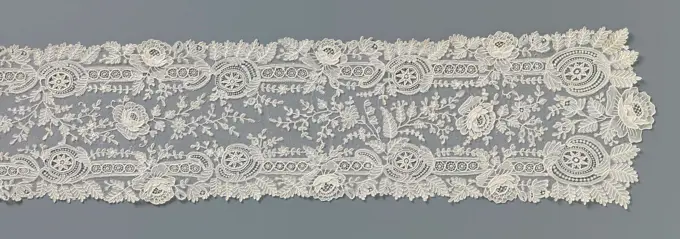
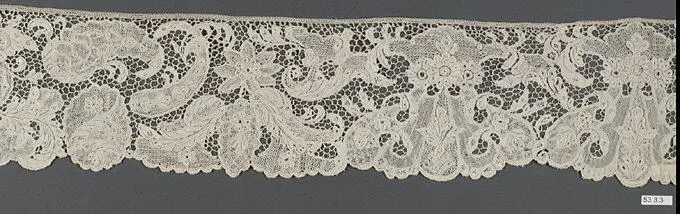
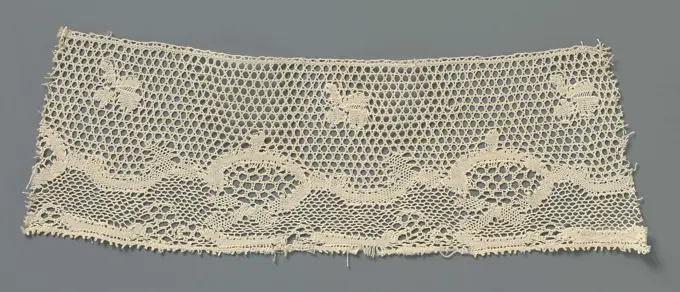
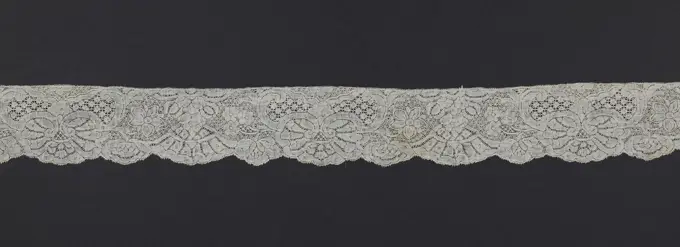
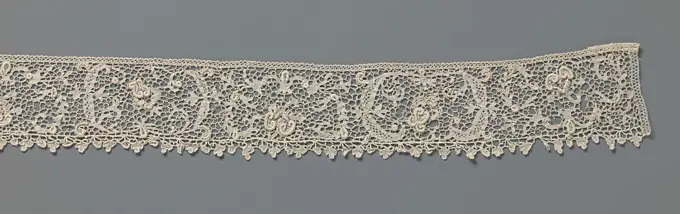
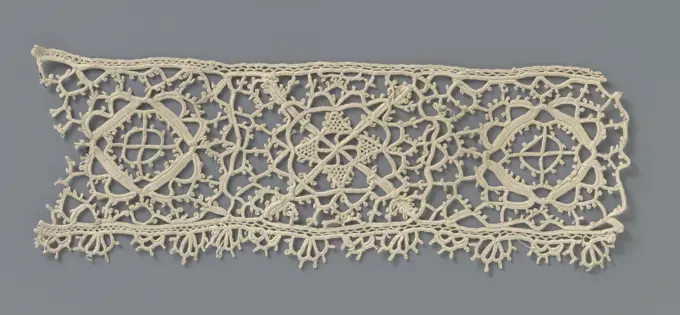
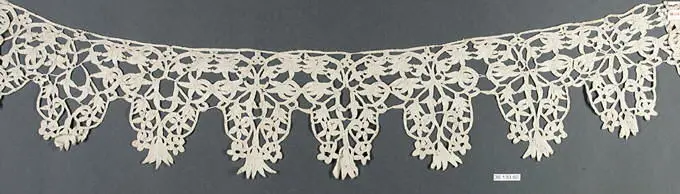
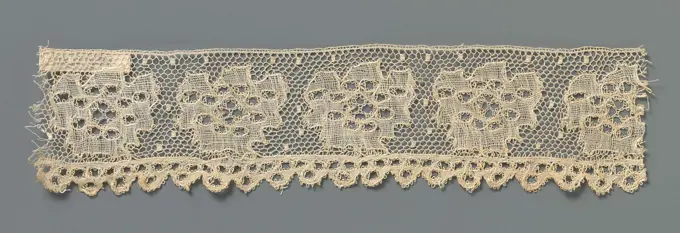
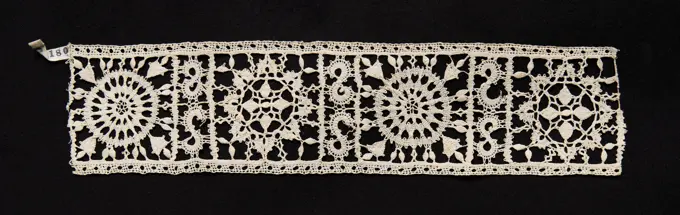
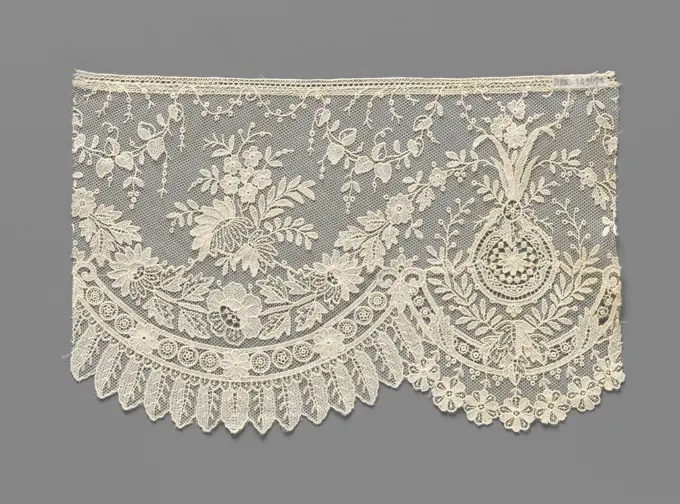
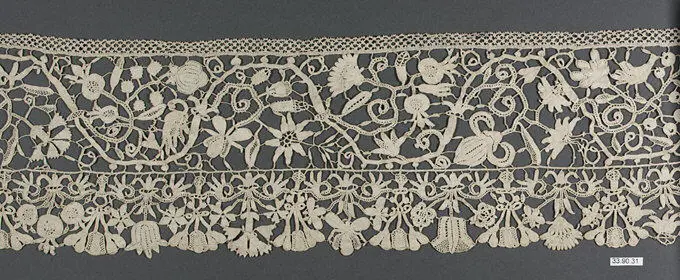
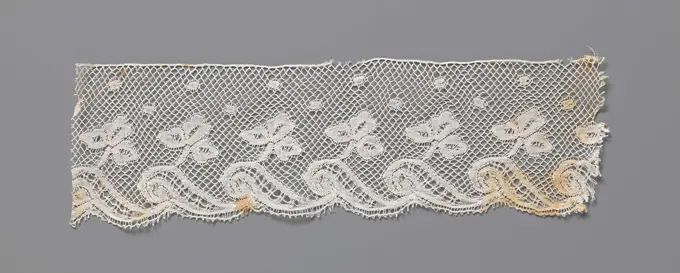
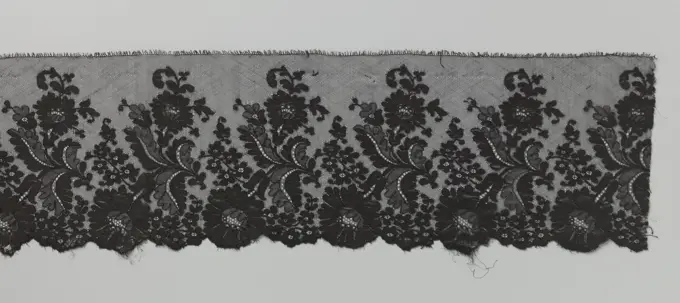
Strip crocheted side with flowers and grape vouchers, anonymous, c. 1890 - c. 1909 Pointed strip of natural -colored Irish crocheted side. Pattern with flowers and grape bunches and a crocheted irregular mesh soil with picots. The long sides are straight finished and trimmed on one side with picoted arches. Ierland (possibly) cotton (textile) Pointed strip of natural -colored Irish crocheted side. Pattern with flowers and grape bunches and a crocheted irregular mesh soil with picots. The long sides are straight finished and trimmed on one side with picoted arches. Ierland (possibly) cotton (textile)Strip bobbin with flower chalice from which four narrow feathered plumes spring, anonymous, c. 1800 - c. 1849 Strip of natural -colored bobbin: Lille side. The repeating pattern consists of a curved stem with leaves and one flower from which four narrow feather plumes spring. Under the successive flowers, there are always three one -sided rosette flowers along the underside of the strip, each with a feathered leaf. The motifs are connected by a fine grid, a tuler floor, which is littered with square mosies. The motifs are made in linen battle with mostly large recesses and thicker and shiny contour threads. Decorative lands have been used in the flowers and the largest leaves. The Mosjes are made in form. The top of the strip is straight finished. The shrewd strap along the bottom is finished with picots. Lille linen (material) bobbin lace / Lille lace Strip of natural -colored bobbin: Lille side. The repeating pattern consists of a curved stem with leaves and one flower from which fouStrook kloskant met bloemkelk waaruit vier smalle gevederde pluimen ontspringen.Strip natural colosside: Lille side. The repeating pattern consists of a curved stem with leaves and one flower from which four narrow feathers escaped. Under the consecutive flowers, there are always three unilaterally directed rosette flowers along the underside of the strip, each with a feathered leaf. The motifs are connected by a nice ground ground, a tulet, which is strewn with square mates. The motifs are made in linselag with mostly large recesses and thicker and shiny contour wires. Ornamental grounds are applied in the flowers and the largest leaves. The Moeses are made in shape stroke. The top of the strip is straight finished. The clusted strap along the underside is finished with picots.Strip of bobbin with a palm -shaped flour on a long curved stem with volute leaf, anonymous, c. 1740 - c. 1760 Strip of natural -colored bobbin: Mechelse side. The repeating and continuous pattern consists of a palm -shaped flour on a long curved stem with a volute leaf curly to the underside. The motifs are connected by a fine grid, a five -hole ground. The motifs are made in linen and mains in which figures are made with snowflakes. Slightly thicker and shiny contour threads have been installed around the motifs. A decorative land has also been installed in a residual room with snowflakes. The faintly scalloped underside stems from the pattern and is finished with picots. The top is straight. Mechelen linen (material) bobbin lace / Mechlin (lace) Strip of natural -colored bobbin: Mechelse side. The repeating and continuous pattern consists of a palm -shaped flour on a long curved stem with a volute leaf curly to the underside. The motifs are connected by a fine grid, a five -hole groVeil van Argtankant, Anonymous, c. 1800 - c. 1850 Needle veil. A flower garland distributes the veil into fields that are filled with a flower branch or wreath with bows. The scums on the edge consist of alternating hearts, flowers and wheels. Belgium (possibly) . Argentan Lace Needle veil. A flower garland distributes the veil into fields that are filled with a flower branch or wreath with bows. The scums on the edge consist of alternating hearts, flowers and wheels. Belgium (possibly) . Argentan LaceNeedle -lane of the needle side with daisies and flowers with circular petals around a circular flower heart, anonymous, c. 1890 - c. 1899 Japon strip of natural -colored needle side: Brussels mesh side. The repeating pattern consists of three C-volutes along the underside of the strip, which form the list of a slanted medallion. The medallion is crowned by a Margriet from which a drop-shaped motif comes, which lies along the underside of the strip and is also made up of C-Voluten. Between the successive medallions with drops are two large daisies along the underside of the strip. From this a flower branch with long narrow branches that turn to the left and right bend and where there are different types of flowers, including two large flowers that are made up of circles around a circular flower heart. Flowerlingers with fine flowers hang from the top of the strip down between the flower branches. The motifs are made with feston stitches and equipped with thicker and thinner relief contEdging, 1600s, Italy, maker unknown. Gift of Mrs G. Acland Allen, 1955.Manchet van gehaakte kant met borstelachtige bladeren.Cuff of natural colored Irish crochet side. Pattern of flower stems with brushy leaves, put together with picoted bars. Raised circular flower hearts and a layered edge along the stem where the leaves steal. Finished on all sides with a border shines in the form of double bowes.Mutsenslip van gemengde kant met medaillons in bladvoluut.Hatslip of natural-colored mixed side: Brussels climbing side in combination with coniferous lace including a needle lace ground and various motifs in needle side. This type of side is also called Point d'Angleterre. Rectangular with something wider flared straight ends. A wheels edge (coniferous side) is both interrupted by large ovals (coniferous side), if large outwardly placed roses (needle side). The roses form the slopper edge with leaves. In midfield are fine twigs (dump edge) with a large rose (coniferous side), with embossed embossed.Border first half 18th century French. Border 227607Strook kloskant met aaneengeschakelde c-vormige motieven en strikken.Strip natural colosside. Above the center line of the strip is a row of butterflies or leaves. The pattern below consists of a concatenation of lying C-shaped motifs, which alternately focused up and down with the open side. Under the C-shaped motifs with the opening down, a kind of bow hangs, creating an oval space. The motifs are connected by a two different Maas grounds: above Cs with a Paris soil and below it through a round Valenciennes ground. The motifs are made in linen stroke and leather, partly equipped with thicker and shiny contour wires. A rose soil has been applied as ornamental ground. The top and bottom of the strip are straight finished, the underside with picots.Piece late 18th century Flemish. Piece. Flemish. late 18th century. Bobbin lace. Textiles-LacesManchet van naaldkant met golvende zigzag-sierlijst en rozentak.Cuff from natural needle side: Brussels gauze side. The repeating pattern consists of a regularly wavy decorative frame, with a rose roof in every valley. On the rosary is one large rose in the center, including a smaller rose, on the thin branch that goes to the top two open-worked rosette flowers. Under each wave top hangs a semi-circle flower on a thin handle with two heart-shaped leaves. The flower consists of a lying c-volute with seven lobes such as petals. The wavy decorative frame consists of two contour wires placed together that form a narrow line and, including a strong winding contour wire, which ensures an open zigzag line. Under the open zigzag a concatenation of circles. The wavy decorative frame forms the sloping edge, along with the hanging circular flower. The connected circles and seven petals ensure the lobes on the slip edge. The motifs are equipped with thick contour wires and are interconnected by a Volant van kloskant met zonnebloemen.Volant of natural colosside, Russian or Eastern European side. Ground of short, irregular braids. Symmetrical pattern. A row of sunflowers, faced between V-shaped branches, is above a ribbon sculpture of folded 'ribbons', in which fan-shaped and straight ranking alternate.Strip of needle side with incised leaves, anonymous, c. 1900 Walking pattern of incised leaves above a rose and a three -leaf, which together form the sharply toothed outside line. Cross-shaped bars with button (soil of long X-shaped bars with a spider). The Remplis consists of buttonholes and a long distance gazé. German side: 'Carlsbader Points'. Karlsbad (Germany) (possibly) linen (material) Walking pattern of incised leaves above a rose and a three -leaf, which together form the sharply toothed outside line. Cross-shaped bars with button (soil of long X-shaped bars with a spider). The Remplis consists of buttonholes and a long distance gazé. German side: 'Carlsbader Points'. Karlsbad (Germany) (possibly) linen (material)Strip bobbin with symmetrical compositions with heart -shaped vase and triangular architectural motif, anonymous, c. 1840 - c. 1849  Strip of natural -colored bobbin: Lille side. The repeating pattern consists of two merging symmetrical compositions. In the center of one composition is a heart-shaped vase formed by S-Voluten. There is a triangular architectural motif in the center of the other composition. Along the lower edge, different volutes form a flat sculpting edge. The motifs are largely made in linen battle and equipped with thicker and shiny contour threads. Some motifs or fillings are made in mains. The motifs are connected by a fine grid, a tuler land. Curle ornamental lands have been used in the motives. The top is straight finished with a separate strap. The flat scrap edge is finished with picots. Belgium linen (material) bobbin lace / Lille laceFragment of bobbin lace unknownVolant Van Kloskant with sunflowers, anonymous, c. 1875 - c. 1899 Volant of natural -colored bobbin, Russian or Eastern European side. Ground of short, irregular braids. Symmetrical pattern. A row of sunflowers, set between V-shaped branches, stands above a sculpin of folded 'ribbons', in which fan-shaped and straight ranking alternate. Eastern Europe linen (material) bobbin lace / Russian lace / East European lace Volant of natural -colored bobbin, Russian or Eastern European side. Ground of short, irregular braids. Symmetrical pattern. A row of sunflowers, set between V-shaped branches, stands above a sculpin of folded 'ribbons', in which fan-shaped and straight ranking alternate. Eastern Europe linen (material) bobbin lace / Russian lace / East European laceStrook naaldkant met kroon in ovaal cartouche.Strip natural needle side, point de france. Pattern without report, but with recurring and partly mirrored motifs, including an oval cartouche with a crown in it. Hexagonal soil with picoted bars. Full work with recesses and largely without relief, on some smaller motifs with cordons. At the straight edge on the bottom, small palmets and ovals are suspended and partially picoted bars. The top and sides are trimmed with a border clamping side.Strip crocheted side with reticella motifs, anonymous, c. 1890 - c. 1909 Strip of natural Irish crocheted side, imitation reticella. The top is finished with a straight edge. The underside is finished with a picoted bow edge. Ireland cotton (textile) Strip of natural Irish crocheted side, imitation reticella. The top is finished with a straight edge. The underside is finished with a picoted bow edge. Ireland cotton (textile)Strip bobbin with fan -shaped arch with clovers four, anonymous, c. 1700 - c. 1799 Strip of natural -colored bobbin: Mechelse side. The repeating and continuous pattern consists of a regularly wavy pendulum of connected circles or wheels. A fan -shaped double arch filled with clovers four runs over each golf valley. Under each wave top stands along the lower edge a horizontal flower between two elongated leaves. The motifs are made in linen battle with few recesses and thicker and shiny contour threads. The motifs are connected to each other by a decorative land, a fine snowflake ground, along the top of the wavy pattern and with a coarser strel under the fan -shaped arches and the pendulum with wheels. The faintly scalloped underside is finished with picots. The top is finished with a separate strap. Mechelen linen (material) bobbin lace / Mechlin (lace) / snowflake filling Strip of natural -colored bobbin: Mechelse side. The repeating and continuous pattern consists of a regularly waBorder ca. 1700 Italian. Border 226080Strook kloskant met grillig gevormde bloemen.Strip natural colosside, Lille side. The repeating pattern consists of a largely shaped flour without stem, which almost takes the total width of the strip. Along the underside are two rows of opened circles, the lower row of forming the scallops with which the bottom of the strip is finished. The flowers are connected by a Maas soil, a tuland, which is strewn with square moes. The motifs are made in linseed with large recesses and with thicker and shiny contour wires. A rose soil has been applied as ornamental ground. The Moeses are made in shape stroke. The top of the strip is straight finished. The scivels along the underside are equipped with picots.Bobbin Lace (Needlepoint Design) Insertion, second half of 16th century. Italy, Genoa, second half of 16th century. Lace, bobbin; average: 6.4 x 28 cm (2 1/2 x 11 in.).Fragment of Bobbin Lace (Bride Ground) Flounce, 17th century. Italy, Milan  or Genoa, 17th century. Lace, bobbin; average: 42.6 x 114.3 cm (16 3/4 x 45 in.).Fragment of an Alb Flounce. Belgium, Brabant, 1700-1750. Costumes. Linen bobbin laceBelegstuk van kloskant met voluten.Insignment of natural colosside, possibly Flemish guipure. Symmetrical pattern with volutes to which three, four and five-leaf flowers spring. Around the motifs a braided barrier ground with picots. Within the motifs a honeycomb ground. Finish on all sides with triangles built from arcs.Strook naaldkant met moesjesmotieven.The strip shows clover leaves above arcs from Moesjes. It has a border of small medallions. AlençonStrip of needle side decorated with a slender with flowers, 1625 - 1645 Strip of needle side, consisting of a smooth and a scalloped edge. The straight strip is decorated with a wavy slender with flowers. Type Kant: Punto in Aria. Italy . Strip of needle side, consisting of a smooth and a scalloped edge. The straight strip is decorated with a wavy slender with flowers. Type Kant: Punto in Aria. Italy .Lace border 18th century Flemish, Antwerp. Lace border 219674Strip -needle side with floral motifs, anonymous, c. 1690 - c. 1699 Strip of natural needle side, venise flat. Pattern with highly curved sities and simple flower and leaf shapes. The strip consists of two strips that are sewn together. Irregular bar with picots. The finish with a picot edge on the top is different from the finish with a picot edge on the bottom of the strip. unknown linen (material) flat Venetian (needle point) Strip of natural needle side, venise flat. Pattern with highly curved sities and simple flower and leaf shapes. The strip consists of two strips that are sewn together. Irregular bar with picots. The finish with a picot edge on the top is different from the finish with a picot edge on the bottom of the strip. unknown linen (material) flat Venetian (needle point)Strip bobbin with circles curled terres with peonies, anonymous, c. 1650 - c. 1699 Strip of natural -colored Dutch bobbin. The pattern consists of two to circles curling of tendrils, each with a peony in the center. The two connected circles are flanked on the left and right by a larger peony. Only a part of one of the larger peonies can be seen because the strip has been cut here. The pattern is also broken along the upper edge where the motif with the curling tenders seems to be repeating. The motifs are connected by a very sparingly used fine Maas soil, with mesh of different size. The motifs are made in linen battle with openwork edges. At the top and bottom are straight finished, with picots at the bottom. Antwerp linen (material) bobbin lace Strip of natural -colored Dutch bobbin. The pattern consists of two to circles curling of tendrils, each with a peony in the center. The two connected circles are flanked on the left and right by a larger peony. Only a part of one of the largPiece early 18th century Italian or Belgian. Piece 218128Strip crocheted side with flowers and grape vouchers, anonymous, c. 1890 - c. 1909 Pointed strip of natural -colored Irish crocheted side. Pattern with flowers and grape bunches and a crocheted irregular mesh soil with picots. The long sides are straight finished and trimmed on one side with picoted arches. Ierland (possibly) cotton (textile) Pointed strip of natural -colored Irish crocheted side. Pattern with flowers and grape bunches and a crocheted irregular mesh soil with picots. The long sides are straight finished and trimmed on one side with picoted arches. Ierland (possibly) cotton (textile)Length of Lace. Probably Italy, 1550-1600. Textiles; textile lengths. Linen bobbin laceStrook naaldkant met cirkel en kruis waaraan een strook kloskant is genaaid.Strip natural needle side: Reticella. The top of the pattern consists of two rows of squares, which are made up of four small squares. In the squares alternating a circle with a ray wreath and a cross of stylized flowers made with six triangles. Under the strip of coniferous lace is a strip of clamping sewn with a pattern of squeezed semi-relieving deep slip, formed by a ribbon. There are zigzag lines and picots around the ribbon.Piece (one of three) 18th century Flemish. Piece (one of three) 220047Hats strip Van Kloskant with Zigzag Rivière, Anonymous, c. 1750 - c. 1760 Strip of natural -colored Brussels bobbin. A rivière in Zigzaglijn is crossed by spiral ranks, which enclose fan -shaped medallions. The motives are connected by a drachel soil. A coarser hexagonal soil has been used in the Rivières. On the fields that are bordered by the Rivière, there are twigs on which flowers in the form of pomegranates, pears or winged insects. The strip was probably used or made for a hat. Brussels linen (material) bobbin lace / Brussels bobbin lace Strip of natural -colored Brussels bobbin. A rivière in Zigzaglijn is crossed by spiral ranks, which enclose fan -shaped medallions. The motives are connected by a drachel soil. A coarser hexagonal soil has been used in the Rivières. On the fields that are bordered by the Rivière, there are twigs on which flowers in the form of pomegranates, pears or winged insects. The strip was probably used or made for a hat. Brussels linen (material) bobbin Strip of needle side with small dense and large open circles, anonymous, c. 1900 - c. 1949 Strip of natural needle side - reticella - between edges open sewing: work with pulled out threads. The repeating and symmetrical pattern consists of one row of squares, which are made up of four small squares. Each large square has been crossed, at every intersection alternating a small closed and a large openwork circle. Demizes along the edges. The top and bottom of the strip are straight finished with open diamonds (work with threads pulled out). unknown cotton (textile) Strip of natural needle side - reticella - between edges open sewing: work with pulled out threads. The repeating and symmetrical pattern consists of one row of squares, which are made up of four small squares. Each large square has been crossed, at every intersection alternating a small closed and a large openwork circle. Demizes along the edges. The top and bottom of the strip are straight finished with open diamonds (work Strip of needle side with curly tendrils and multifaceted flowers, anonymous, c. 1700 Strip of natural needle side, venise flat. Pattern with richly branched curly tendrils with small multifaceted flowers on an irregular open ground with one -sided potented bars. Volwerk with twisted feston stitches with various motifs in it through recesses. The top is trimmed with a border bobbin. The underside is finished with a straight picot edge with arcs. Venice (possibly) linen (material) flat Venetian (needle point) Strip of natural needle side, venise flat. Pattern with richly branched curly tendrils with small multifaceted flowers on an irregular open ground with one -sided potented bars. Volwerk with twisted feston stitches with various motifs in it through recesses. The top is trimmed with a border bobbin. The underside is finished with a straight picot edge with arcs. Venice (possibly) linen (material) flat Venetian (needle point)Fragment, Medium: linen Technique: plain weave embroidered with deflected element work, Fragment of woven linen with a scalloped border, and showing a flower and vine pattern., possibly France, possibly Italy, 18th-19th century, embroidery & stitching, FragmentFragment, Medium: linen Technique: bobbin lace (discontinuous tape), Fragment has a loosely-worked meandering ribbon-like design., Belgium, 17th century, lace, FragmentFragment, Medium: linen Technique: bobbin lace (pre-made continuous tape with Valenciennes round mesh), Fragment made of continuous pre-made tape with ribbon like design and scalloped border., 18th century, lace, FragmentStrook kloskant met rozentakjes.Natural collate strip, Valenciennes side. The repeating pattern consists on the center line of the strip from a rosette flower that hangs down to a curved twig. Above the row of rosary branches that creates thus a row of thick C-shaped leaves. Along the bottom of the strip lies a succession of elongated volutes that form a very silly slip edge. The motifs are connected by a Maas soil, a round valenciennes ground. The motifs are made in linen stroke with openwork edges and a recess in the flower heart. The top of the strip is straight finished. The slight shelters along the underside are finished with picots. The short sides are sewn together.Strip bobbin with diamond -shaped field between mirrored fans, anonymous, c. 1840 - c. 1860 Strip of natural -colored bobbin, blonde. The repeating pattern consists of a fan mirrored over the length axis, which forms on the upper and bottom of the strip. In between the mirrored fans, an open -shaped field is formed in which a decorative land is used. The windows are equipped with continuous contour threads that cross each other on the length axis. unknown silk bobbin lace / blonde (lace) Strip of natural -colored bobbin, blonde. The repeating pattern consists of a fan mirrored over the length axis, which forms on the upper and bottom of the strip. In between the mirrored fans, an open -shaped field is formed in which a decorative land is used. The windows are equipped with continuous contour threads that cross each other on the length axis. unknown silk bobbin lace / blonde (lace)Needlepoint (Drawnwork) Lace Insertion, 16th century. Italy, 16th century. Lace, needlepoint: linen; average: 4.8 x 28.3 cm (1 7/8 x 11 1/8 in.).Strip mixed side with rose in medallion, anonymous, c. 1900 - c. 1915 Strip of natural -colored mixed side: Brussels Duchesse. Partly symmetrical pattern with different sizes of rosette flowers, leaves and some feathered leaves. In the center there is a rose more or less around the medallion of C-Voluten, a rose within the frame. With the exception of the filling of the medallion, all the motifs are cloned in linen battle with fine recesses, openwork edges, contour threads and partly burst relief contours. The showered motifs are connected by braids. The filling in the medallion is from a needle side, with a rose on a mesh side. The top of the strip is straight finished. The scrap edge stems from the pattern with the rosette flowers and leaves and is finished with picots. Belgium linen (material) mixed lace / mixed Brussels Strip of natural -colored mixed side: Brussels Duchesse. Partly symmetrical pattern with different sizes of rosette flowers, leaves and some feathered leaves. In thStrip of needle side with plumed tendrils, anonymous, c. 1875 - c. 1895 Strip of natural -colored needle side: Venetian rose side. On a bar of land with six -sided meshes, rich branches, to the left and right, are swiveling and right -wing, sometimes dwelling, sometimes walking. There are multifaceted, carefully detailed button -shaped flowers. Here and there the top of a slender has grown through an opening in the branch. Straight finish of alternately an eye and a triangle. BURANO linen (material) Venetian rose point Strip of natural -colored needle side: Venetian rose side. On a bar of land with six -sided meshes, rich branches, to the left and right, are swiveling and right -wing, sometimes dwelling, sometimes walking. There are multifaceted, carefully detailed button -shaped flowers. Here and there the top of a slender has grown through an opening in the branch. Straight finish of alternately an eye and a triangle. BURANO linen (material) Venetian rose pointBobbin Lace (Needlepoint Design) Insertion, second half of 16th century. Italy, Genoa, second half of 16th century. Lace, bobbin; average: 6.7 x 27.1 cm (2 5/8 x 10 11/16 in.).Border (Italy); linenStrook applicatiekant met strooipatroon en eenzijdig gebogen bloemtakken.Strip natural colored Brussels application side: needle side applicated on slighten ground. Sprinkle pattern with a repetitive motif of a one-sided bent composite flower branch with, among other skylights, a rose, small rosette flowers, a cornflower or carnation, corners and feather-shaped leaves. The scalloped edge along the bottom is formed by curved flower branches with similar flowers and leaves. The top edge is finished with a soil.Strip bobbin with two daisies and a cloudy flower next to hanging flour with nine lobes, anonymous, c. 1850 - c. 1899 Strip of natural -colored bobbin: fine bridge flower arrangements. The repeating pattern consists of a flower with nine elongated lobes and a small oval flower heart, which hangs down on a curved stem from top to bottom of the strip. Between the successive hanging flowers, two daisies are diagonally under each other and a bunch of flower with circular flowers. The motifs are connected by a potented braid ground. They are made in separate linen battle with recesses and are largely equipped with thin and thicker contour threads. In a part of the openwork petals or flower hearts, cubes are made in shape. The top of the strip is finished with a separate strap. The scrap edge stems from the pattern and is finished with picots. Belgium cotton (textile) bobbin lace Strip of natural -colored bobbin: fine bridge flower arrangements. The repeating pattern consists of a flower witStrook kloskant gemaakt naar Italiaanse voorbeeld uit de 17e eeuw.Natural collate strip: ribbon side. Made to Italian example from the 17th century. The repetitive and symmetrical pattern consists of snuby range-shaped leaves shot shaped by a throughling ribbon. The ribbon is split into linen battle with openwork edges on one side, which is also equipped with picots. The top of the strip is straight finished.Needlepoint (Punto Avorio or Ivory Stitch) Lace Insertion, 17th century. Italy, 17th century. Lace, needlepoint; average: 1.3 x 15.9 cm (1/2 x 6 1/4 in.).Strip of bobbin with diamond pattern and scrap edge, anonymous, c. 1925 - c. 1935 Strip of natural -colored bobbin: tie. The repeating pattern consists of two zigzag tires placed one above the other, which form a succession of windows. The windows are alternately filled with a rush -hour and a decorative land: a contemporary five -hour ground. The zigzag tires are made in netslag, the lower tire with rounded corners at the bottom provides a regular wavy edge of the wavy scallop along the bottom of the strip. Above the zigzag tires, the strip consists of a wastage ground: a litter. The top of the strip is straight finished. One short side is finished by placing buttons in the threads. No buttons have been made in the threads on the other short side, they hang loose. Netherlands linen (material) Bobbi lace / lace cloth Strip of natural -colored bobbin: tie. The repeating pattern consists of two zigzag tires placed one above the other, which form a succession of windows. The windows are aBorder Made 1850-1900 Italy. Cotton, bobbin straight lace .Strip of needle side with tulip and rose branch in medallions, anonymous, c. 1850 - c. 1860 Strip of natural-colored needle side: Alençon side. Pattern with a repetitive motif of medallions on a fine hexagonal Maas soil, which is littered at the top with moes. In the medallions alternately a tulip and a rose branch. The outer edge of the medallions consists of multifaceted flowers and leaves that are getting larger downwards. On either side of the largest flower at the bottom of an acanthus leaf. Different decorative grounds in the diamond -shaped spaces between the Acanthus leaves and in a single flower. Along the lower edge flowers, leaves that form scallops. The top is trimmed with a border bobbin. Alençon linen (material) Alençon Lace Strip of natural-colored needle side: Alençon side. Pattern with a repetitive motif of medallions on a fine hexagonal Maas soil, which is littered at the top with moes. In the medallions alternately a tulip and a rose branch. The outer edge of the medStrook kloskant met bloem in driehoekige schulpen met lobben.Strip natural colosside: Old cravings. In triangular shelters there is a symmetrical pattern that consists of a hanging vase with a squuby rosette flower. The flower is surrounded by impeller-shaped flowers that form the lobed bellpipe edge. The motifs are made in linselag with open edges and are connected to each other with a sparingly braiding ground. The top of the strip is finished with a separate splitting strap. The slip edge along the underside is finished with picots.Border Belgian, Brussels 19th centuryMachinal side with a zigzagging model, anonymous, c. 1890 - c. 1914 Piles of natural -colored machine side: Machinal Mechelen side. The strip has a faint zigzagging model. The repeating pattern consists of a flower along one long side and a flower along the other long side that is connected to each other with leaves. One leaf stem forms a more or less round list, filled with a grid of crosses, made with machine form strokes. The motifs are closed with some recesses and with contour threads. They are connected by various mechanical tralions, including with a mechanical Mechelen soil. The long sides are finished with picots. Nottingham (possibly) cotton (textile) Piles of natural -colored machine side: Machinal Mechelen side. The strip has a faint zigzagging model. The repeating pattern consists of a flower along one long side and a flower along the other long side that is connected to each other with leaves. One leaf stem forms a more or less round list, filled with a grid of crosses, mBorder Made 1720-1740 Flanders. Linen, bobbin part lace .Strook naaldkant met slingerende tak.Strip natural-colored coniferous lace: Alençon side. Pattern with a swinging, ongoing branch with small oval and round flowers on a fine hexagonal maas land with a few scatter flowers. The bottom of the pattern consists of two impeller-shaped figures with a flower or oval at the bottom. The range and ovals are filled with various decorative stitches. The top is finished with a straight edge. The underside is finished with a sloping edge that comes from the pattern.Strip Application side with à-Jour flower and leaf branch, anonymous, c. 1840 - c. 1850 Strip of natural -colored application side: needle side applicated on mechanical tulle. This type of lace is also known under the name: Point d'Angleterre. A three-row small leaves sprinkled in the inner section is closed by uneven scums, formed by connected thin branches with à jour (open) worked flowers and three leaves. Brussels (possibly) linen (material) Strip of natural -colored application side: needle side applicated on mechanical tulle. This type of lace is also known under the name: Point d'Angleterre. A three-row small leaves sprinkled in the inner section is closed by uneven scums, formed by connected thin branches with à jour (open) worked flowers and three leaves. Brussels (possibly) linen (material)Border, Medium: cotton thread, linen foundation cloth Technique: knotting with a shuttle called tatting, Border of tatting in wheel design sewn to linen cloth., England, ca. 1880, knotted, knitted and crocheted textiles, BorderBorder, Medium: linen Technique: grid of withdrawn element work with needle lace, reticella style, Border fragment with diamond-shaped areas filled in with needle lace. Tiny openwork squares are grouped in between diamond-shaped areas. Pointed lace border., Italy, 16th century, lace, BorderManchet van kloskant samengesteld uit verschillende strookjes en smalle tussenzetsels van katoen.Cuff of natural colosside: Valenciennes side. Slightly curved rectangular model with sloping edge along three sides. The cuff consists of four short strips that are intertwined vertically with narrow cotton intermedics. Along sides and bottom, a double frame is made of two strips, which are also connected to each other by a narrow cotton intermediate site. The inner strip is an intermediate site, the outer strip has a slip edge and is pleated around the two lower corners. Motifiers consist of loose or linked oval flowers with simple leaves of stalks. The motifs are connected by a grille, a square valenciennes ground. The sloping edge is finished with picots.Border; linenFragment, Medium: linen Technique: bobbin lace, Binche style with Binche ground, Design of curving stem with flowers and leaves., Belgium, 18th century, lace, FragmentFragment of lace unknownBorder. France. Date: 1860-1869. Dimensions: 10.1 × 105 cm (4 × 41 3/8 in.)Weft repeat: 9 cm (3 1/2 in.). Linen and horsehair, needle lace of a type known as "Point d'Alençon"; heading of cotton, bobbin lace. Origin: France. Museum: The Chicago Art Institute, Chicago, USA.Strip bobbin with semi -circular field and trapezoidal cartouche, anonymous, c. 1730 - c. 1740 Strip of natural-colored bobbin: Valenciennes side with Mechelen soil. The repeating pattern consists of a richly decorated semi -circular field followed by a more or less trapezoidal field. The semi-circular field is formed by a decorative band that runs from top to bottom with the curve down. A curling stem with a peony and a plume -shaped flower hangs in the field. The trapezium -shaped field is formed by two slanted carnations, with a trapezium -shaped cartouche with drawn sides. The motifs are made in linen battle with openwork edges and recesses. Netslag has been applied as a decorative land in one flower heart. A grilles have been applied to realize coarser openwork contour lines around the slanting carnations. The top of the strip is straight finished. The scrap edge follows the pattern and is finished with picots. Valenciennes linen (material) Bobbi Lace / Valenciennes Lace Strip of Strook kloskant met ruitvormige rozetbloemen aan golvende rank.Strip natural colosside. The repeating pattern consists of a wavy rank, which is interrupted on the tops and in the valleys through a diamond-shaped rosette flower with open-worked flower heart. Halfway through each wave sits a curved leaf on either side of the rank. The slight sloping edge along the underside of the strip is formed by a concatenation of smaller rosette flowers with a cut-away flower heart. The motifs are connected to each other by a diamond-shaped mesh soil, a fat mat of grille. The motifs are made in linen stroke, with thicker contour wires. The top of the strip is straight finished.Fragment (France); linenStrip Machinal side with bouquets and flowers, anonymous, c. 1890 - c. 1899  Strip of natural -colored machine side: machine embroidery on machine tulle. The side imitates Brussels Duchesse. Along the two wide scoops along the underside of the strip, decorative tires with circles, flower garlands and connected oval leaves. In the left shell is a medallion with a rosette flower in the middle and a decorative frame with circles. The medallion is awarded by a bouquet. In the right shell is a bouquet with forget-me-nots. Along the top of the strip hang garlands with heart -shaped leaves and berries. The top of the strip is straight finished with a separately made strap made of mechanical side. Plauen cotton (textile)Strip application side with rocailles, anonymous, c. 1840 - c. 1850 Strip of natural application side, needle side applicated on mechanical tulle, point d'Angleterre. The interior part is wide littered with bead flower branches. The edge with running design shows a thin and whimsically winding twig with pointed leaves. Below is a rocaille with gridwork. Flat shells of links, campanes and leaves. Brussels (possibly) linen (material) Strip of natural application side, needle side applicated on mechanical tulle, point d'Angleterre. The interior part is wide littered with bead flower branches. The edge with running design shows a thin and whimsically winding twig with pointed leaves. Below is a rocaille with gridwork. Flat shells of links, campanes and leaves. Brussels (possibly) linen (material)Band (possibly France); cottonJaponstrook van gemengde kant met gelobde medaillons.Japon strip of mixed side - climbing side in combination with needle lace - Brussels Duchesse. Standing lobby oval medallions with fine maasing soil and, among other things, treurwilgen leaves (coniferous lace) are connected by lying c-volutes, of which a daisy depends. The remaining land is an irregular braiding ground and is filled with five and three-lawy leaves and 'daisies' (docking side).Border. Date/Period: 1640-1660. Border. Medium: linen. Technique: bobbin lace, discontinuous tape. Author: UNKNOWN.Needlepoint (Cutwork) and Bobbin Lace Edging, 16th century. Italy, 16th century. Lace, needlepoint and bobbin: linen; average: 17.6 x 37.5 cm (6 15/16 x 14 3/4 in.).Strook kloskant met een rij vierkante moesjes en een zigzag-lijn langs de onderzijde.Strip natural colosside, Buckingham side. The pattern consists of a row of square meadows and a zigzag line along the bottom of the strip. The motifs are connected by a Maas soil, a tulet. The zigzag line is made in linen stroke with a thick and shiny contour wire along the top. The top of the strip is straight finished. The zigzag line forms the slot edge along the bottom.Strip application side with rosette flowers in symmetrical leaf branches. Strip natural applicators: needle side applicated on machine tulle. Scattering pattern of four rows of leaf packs on a fine hexagonal maas soil. Along the bottom edge a repetitive motif of a symmetrical leafy branch with one rosette flower in the center and one rosette flower in each of the two volutes below. The branch originates from a hanging flower with drip-shaped heart, the petals of which are part of the sloping edge along the bottom. Different ornamental grounds in the motifs and relief contours of thread bundles. The top is trimmed with a border clamping side.BorderStrook naaldkant met lopende rank waaraan twee grillige bloemen.Strip natural needle side. Pattern of a running rank to which two whimsical flowers and a few leaves. The pattern parts are connected to each other in a single place by a bar. The contours of the pattern are formed by a round splinted lace. Within the contours and also within the individual flowers, different ornamental grounds by recesses in the full. Full work with twisted festabres. The top is trimmed with a border clamping side. The bottom and left side are finished with a straight picro edge.Fragment 17th century Italian. Fragment 214893Strip bobbin with alternating a hanging flower and an S-Volute, Anonymous, c. 1740 - c. 1760 Strip of natural -colored bobbin: old Brabant side. The repeating pattern consists alternately of a hanging flower on a curved stem and a C-volute or a slight S-Volut. The flower shapes are alternating pear -shaped, three -lobe and oval -shaped. The motifs are placed close to each other and connected by a fine grid, the Mechelen soil. The motifs are made in linen and mains, with burst relief contours. Snow flake grounds are used as a decorative soil and, very limited, potented braids. The top is finished with a separate strap. The irregular scallops along the underside are alternately formed by a hanging flower and a volute and are finished with picots. The short sides are cut diagonally. Southern Netherlands linen (material) bobbin lace / old Brabant lace Strip of natural -colored bobbin: old Brabant side. The repeating pattern consists alternately of a hanging flower on a curved stem and a C-Strip mixed side for a superplie with wide spiral rank, anonymous, c. 1690 - c. 1699 Strip of natural -colored mixed side: mezzo punto. On a mesh ground (needle side) is a wide, running slender with left and right spirals, with many branches with volutes and very large palm flowers at the tops. A messing bow edge serves as a finish along the straight outside. The strip is used or intended for a superplie. Italy (possibly) linen (material) mixed lace / tape lace (mixed lace) Strip of natural -colored mixed side: mezzo punto. On a mesh ground (needle side) is a wide, running slender with left and right spirals, with many branches with volutes and very large palm flowers at the tops. A messing bow edge serves as a finish along the straight outside. The strip is used or intended for a superplie. Italy (possibly) linen (material) mixed lace / tape lace (mixed lace)Edging 18th century Italian, Abruzzi (Pescocostanzo). Edging 221139End;  19th century (1801-00-00-1900-00-00);Flounce early 17th century Italian Punto in arialiterally, "stitches in the air"is one of the earliest styles of needle lace, which is itself developed from cutwork of primarily geometric design. When lacemakers transitioned to using a foundation of threads laid out according to a pattern drawn on parchment, they were able to incorporate more fluid lines and curves into their designs.. Flounce 222722Lace, 1800s, Brussels, maker unknown. Gift of Mrs G. Acland Allen, 1955.Band (France); linenBand; natural linenStrook kloskant met drieblad op golf.Strip natural colosside: Valenciennes-side. On a ground ground, a square valenciennes-soil, a square Valenciennes, is a running pattern of a three-leaf, outstanding from the top of a wave. A smooth list fills the stretched slot.Cuff unknownPiece 18th century German, Saxony. Piece 214726Bobbin Lace (Rose Lace) Edging with Bell Points, 17th century. Italy, Genoa, 17th century. Lace, bobbin; average: 6.4 x 21 cm (2 1/2 x 8 1/4 in.).Towel border 1790-1820 Russian. Towel border 173383Strip of machine side with large hanging flower, anonymous, c. 1900 - c. 1924 Strip of black machine side: Machinal Chantilly side. Walking pattern of poured flower branches, which split in two and stand dark against a mesh stock. On set up stems is a small, hanging stems, a large flower that forms the sculptes with a side branch of blossoms. France (possibly) rayon Strip of black machine side: Machinal Chantilly side. Walking pattern of poured flower branches, which split in two and stand dark against a mesh stock. On set up stems is a small, hanging stems, a large flower that forms the sculptes with a side branch of blossoms. France (possibly) rayonFragment, Medium: silk Technique:, Flowering sprays placed alternately upward and downward and joined by a serpentine stem with leaves., England, mid-19th century, lace, FragmentStrip of needle side with connected flowers, anonymous, c. 1750 - c. 1774 Strip of natural-colored needle side: Alençon side. Repetitive motive with a split rank. The slender is created from the lower edge and splits to the right with a winding series of connected flowers (branches) and to the left with a shorter flower branch. The top is trimmed with a border bobbin. The scalloped underside is partly formed by the split rank. unknown linen (material) Alençon Lace Strip of natural-colored needle side: Alençon side. Repetitive motive with a split rank. The slender is created from the lower edge and splits to the right with a winding series of connected flowers (branches) and to the left with a shorter flower branch. The top is trimmed with a border bobbin. The scalloped underside is partly formed by the split rank. unknown linen (material) Alençon Lace