Intricate Lace Patterns

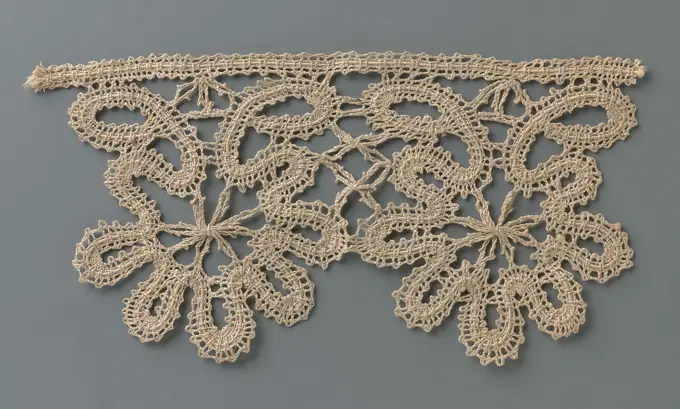
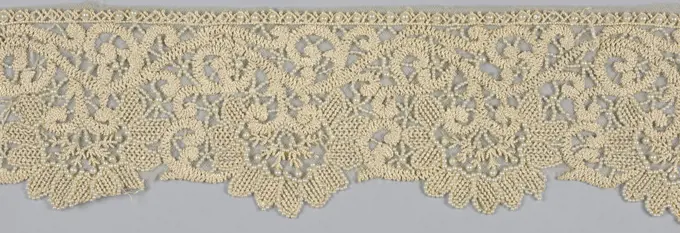
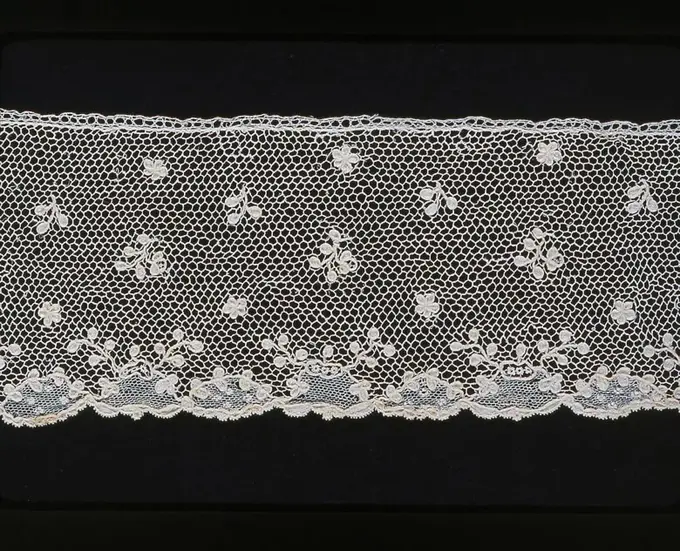
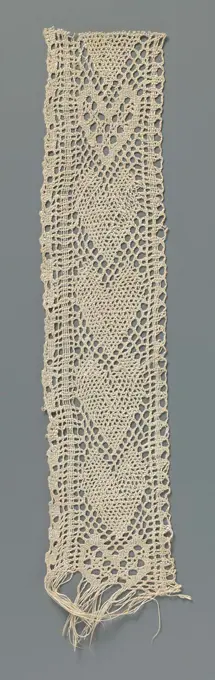
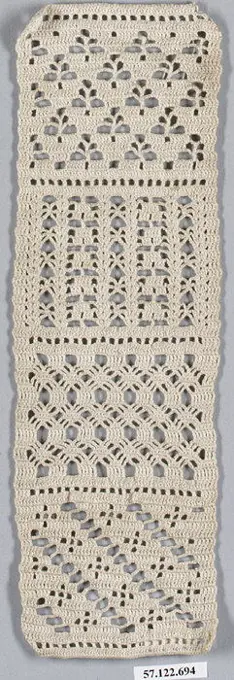
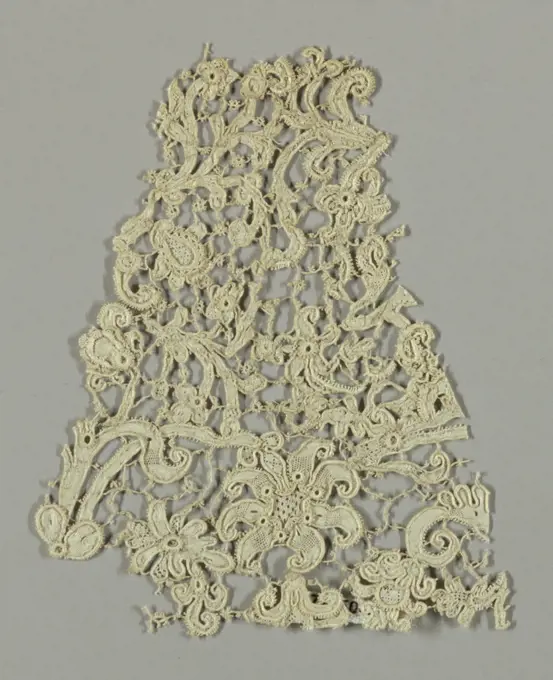
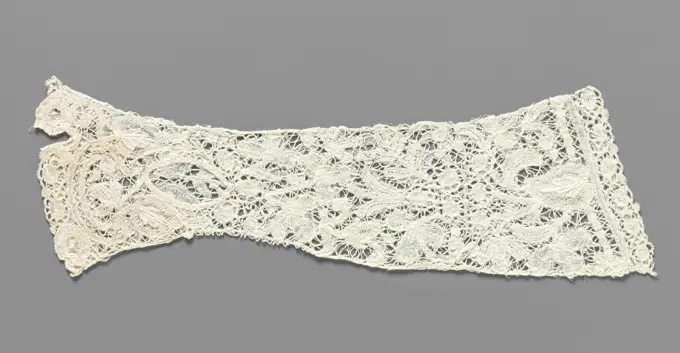
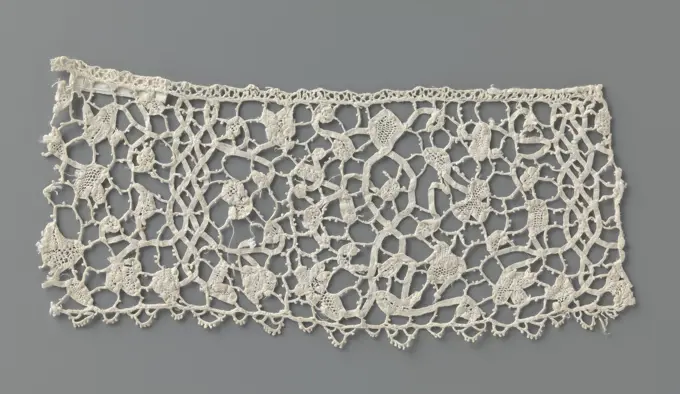
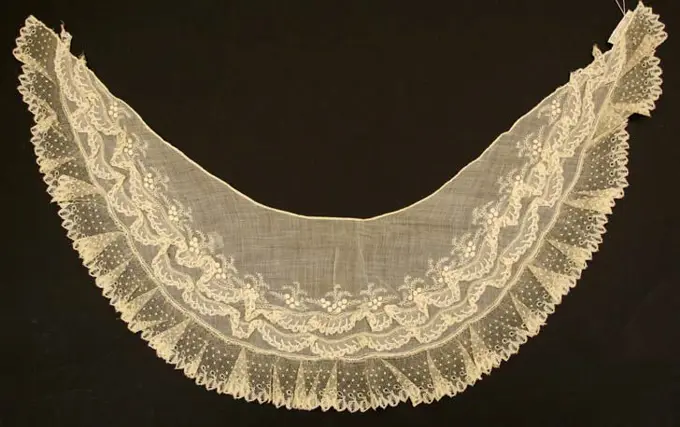
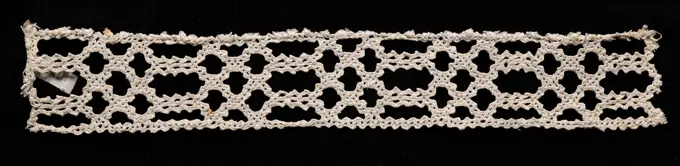
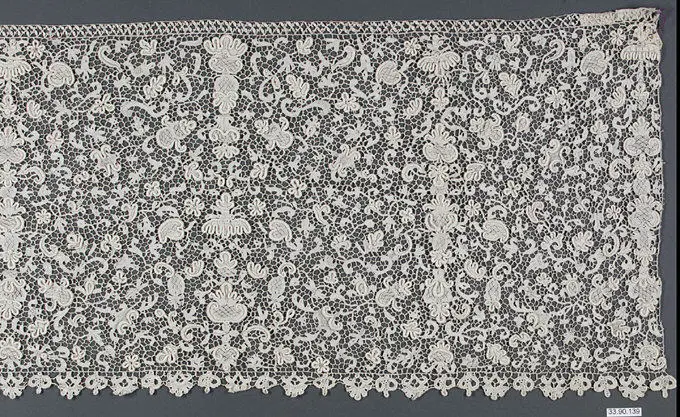
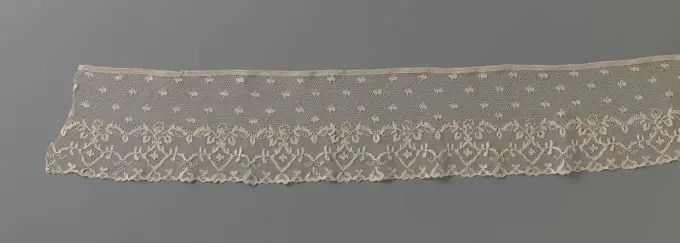
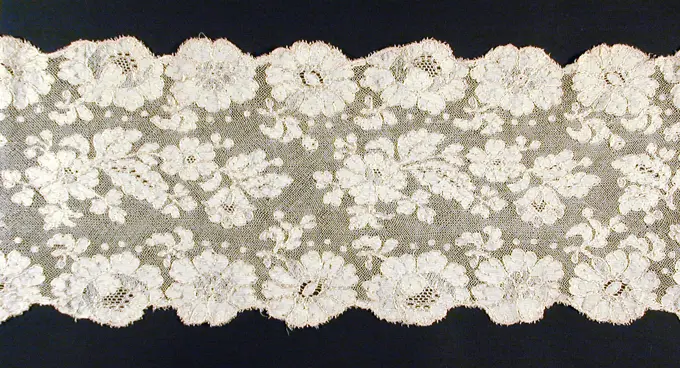
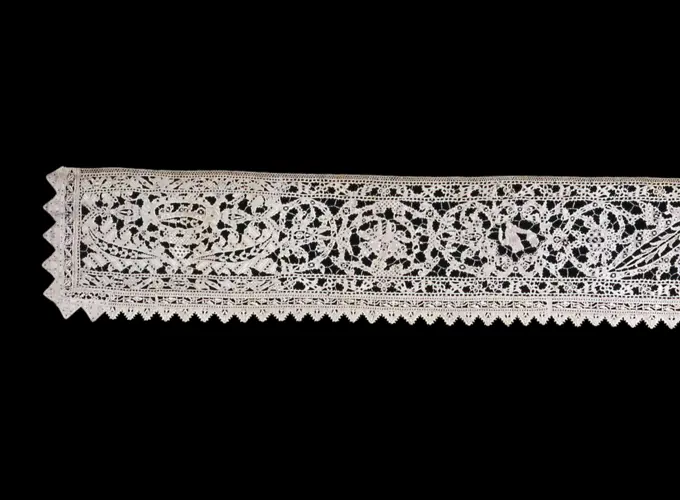
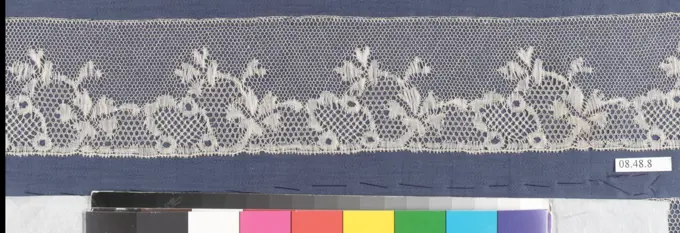
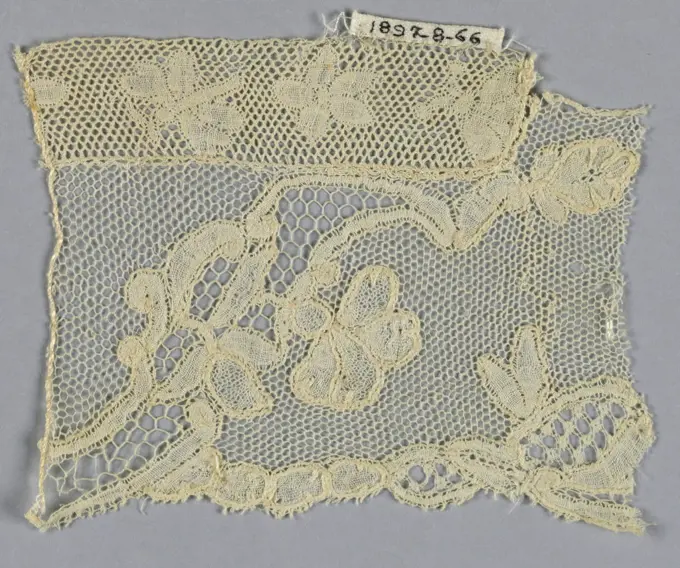
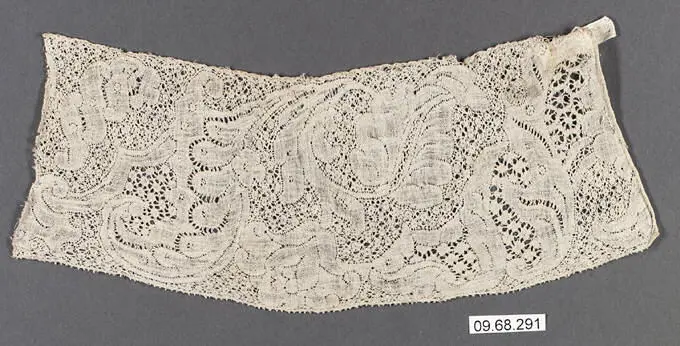
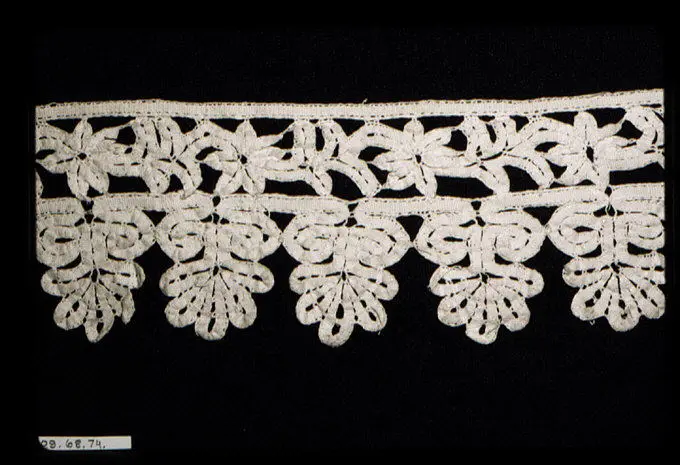
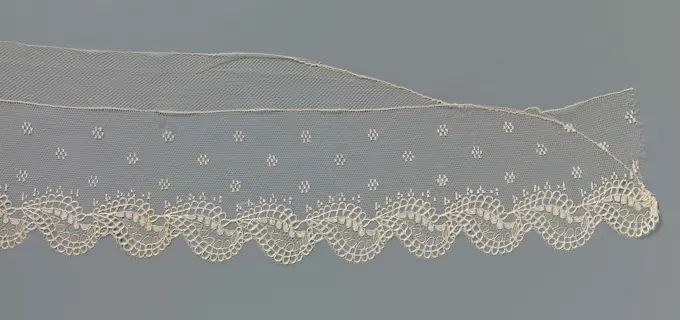
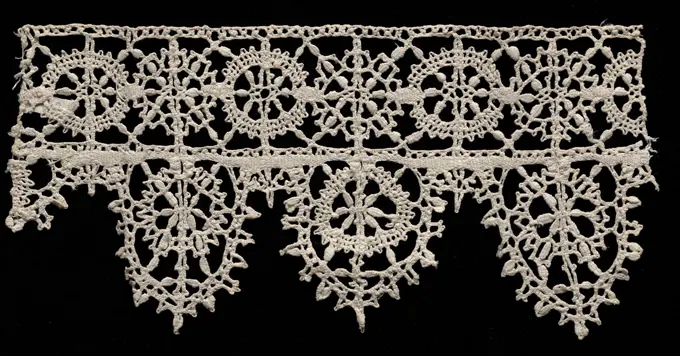
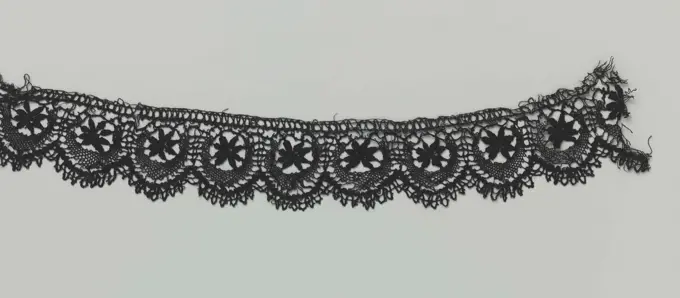
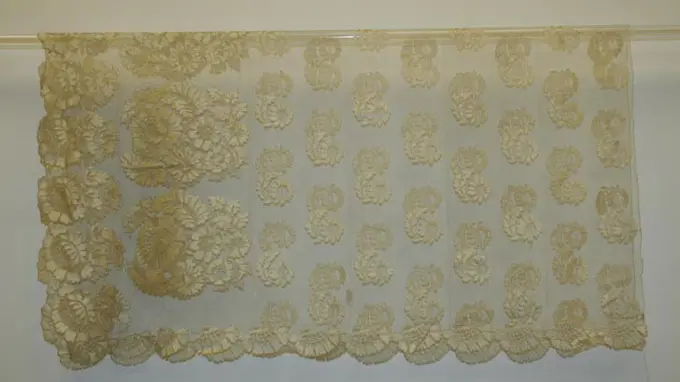
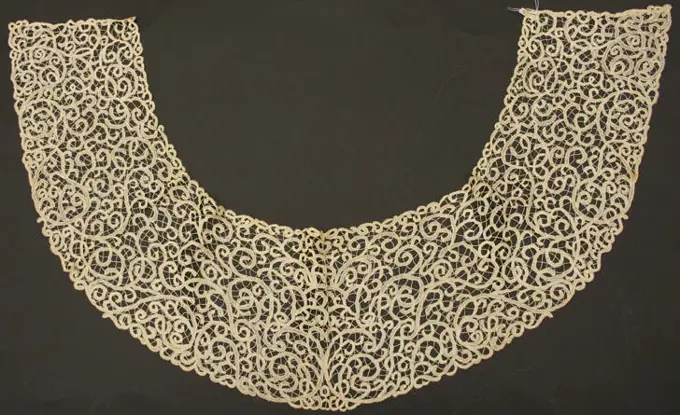
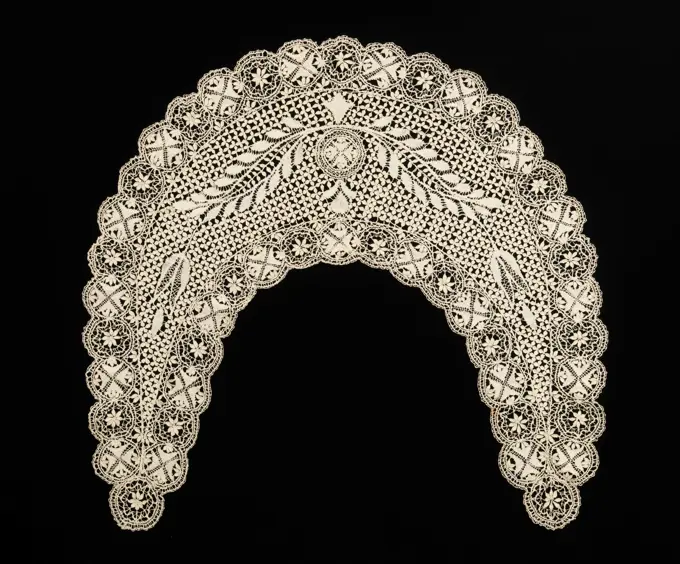
Beautiful strips of lace featuring floral designs and complex patterns, showcasing delicate craftsmanship from various historical periods.

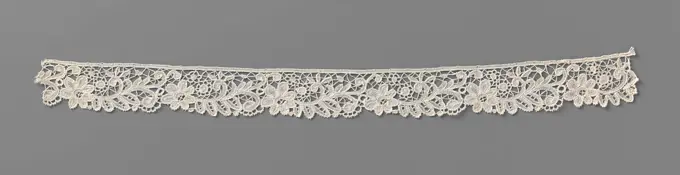
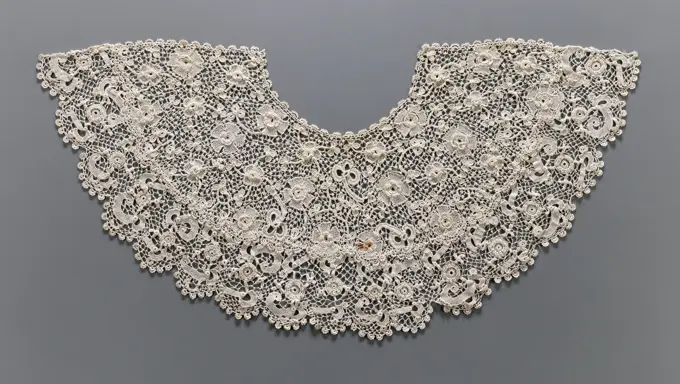
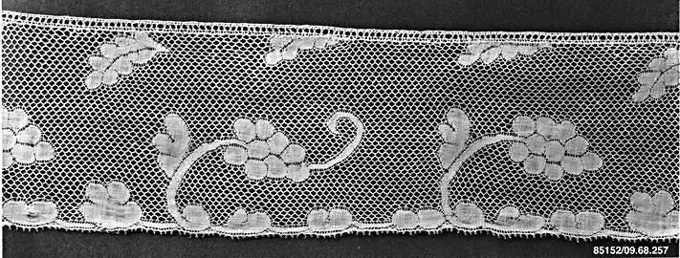
Strip crocheted side with flowers and grape vouchers, anonymous, c. 1890 - c. 1909 Pointed strip of natural -colored Irish crocheted side. Pattern with flowers and grape bunches and a crocheted irregular mesh soil with picots. The long sides are straight finished and trimmed on one side with picoted arches. Ierland (possibly) cotton (textile) Pointed strip of natural -colored Irish crocheted side. Pattern with flowers and grape bunches and a crocheted irregular mesh soil with picots. The long sides are straight finished and trimmed on one side with picoted arches. Ierland (possibly) cotton (textile)
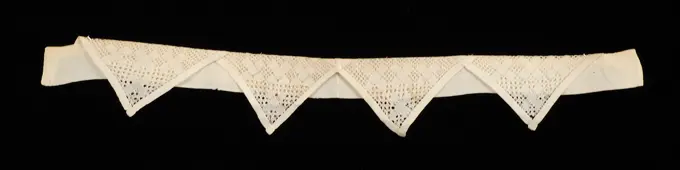
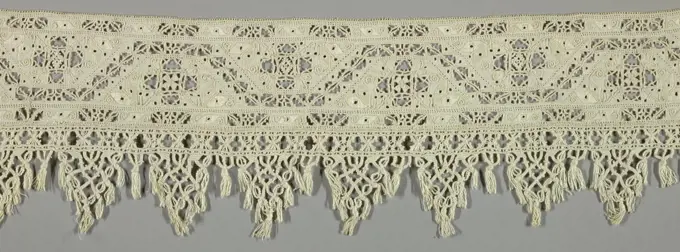
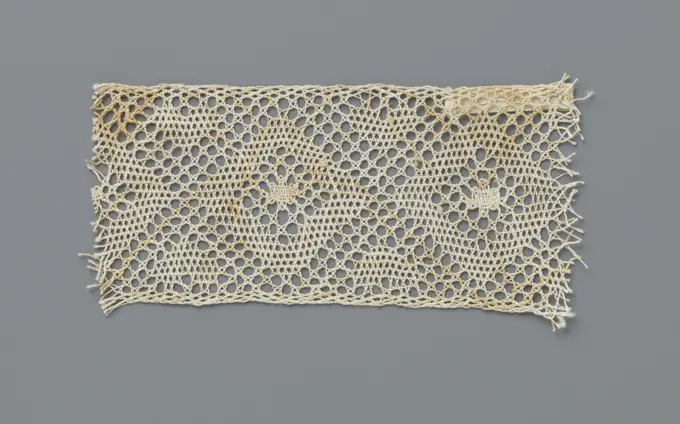
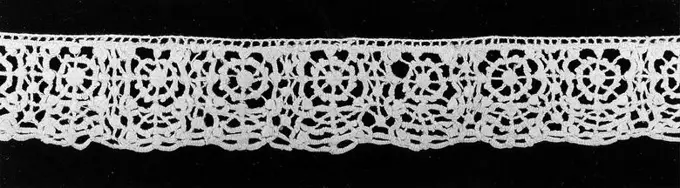
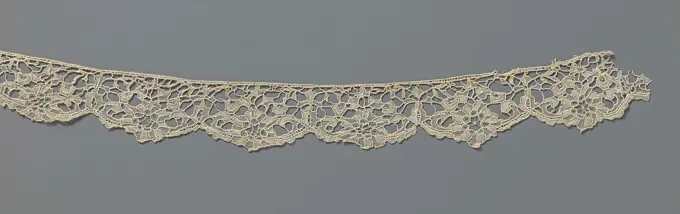
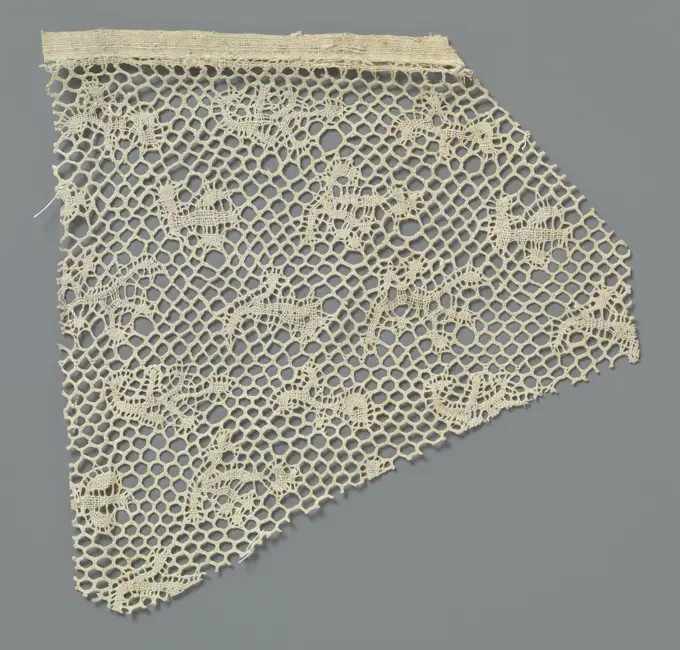
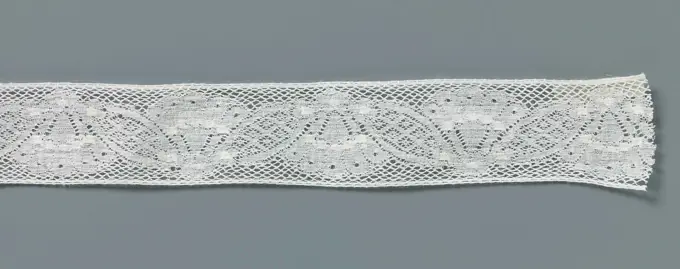
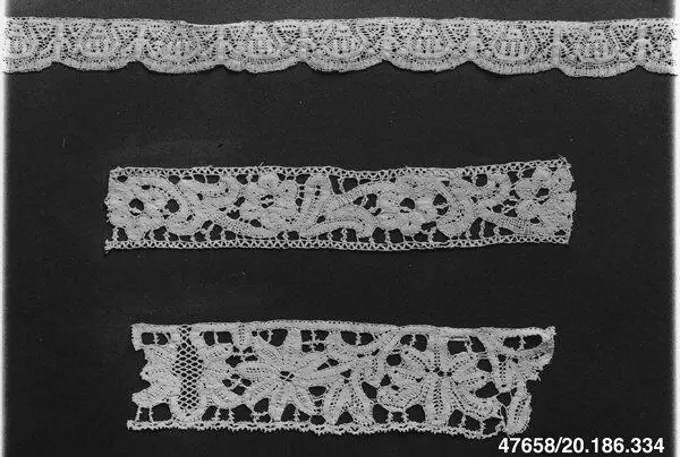
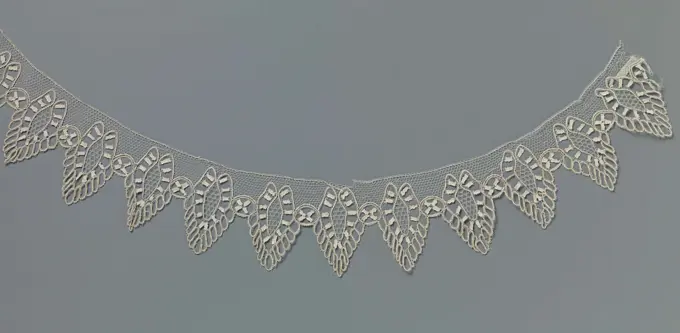
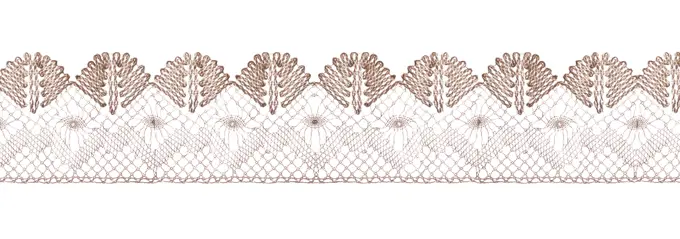
Strip bobbin with three stacked round shapes in deep shell, anonymous, c. 1925 - c. 1936  Strip of natural -colored Genoese bobbin. The pattern is made to seventeenth-century example. The repeating pattern consists of a border along the top with a row of diamonds made with braids, including similar triangles made in linen battle. Between the consecutive triangles are openwork half oval -shaped sculptes. Nine lobes were made along each shell with potented braids. Three round shapes have been realized with a continuous open strap. The shapes are piled up from the bottom to top, run into each other and increase in large. In addition to braids, connections are also made with leaves in form. The top of the strip is straight finished. Pescocostanzo linen (material) bobbin lace / Genoese pillow laceBobbin Lace Insertion, mid 16th century. Italy, Venice, mid 16th century. Lace, bobbin; average: 3.5 x 18.2 cm (1 3/8 x 7 3/16 in.).Fragment of LaceFragment of the lace - Wolant;  after. 19th century (1840-00-00-1860-00-00);Strook naaldkant met veermotief.Strip natural needle side: Venetian relief side. On an open bars soil, they are branches with a variety of flowers, including flowers with a spring motif. It is a continuous pattern with report. The top edge is straight finished with equal triangles. The bottom edge is finished with arcs and picots.Strook kloskant met twee schulpen elk gevormd door een zevenlobbige bloem tussen twee ovale bladeren gemaakt met een geklost lint.Strip natural colosside: Oosteuropean side. Part of a longer strip that is intended or used as a furniture decoration. The repetitive and symmetrical pattern consists of a hanging seven-lubricated flower between two oval leaves. The strip consists of two of these flowers that also form deep slots. The ribbon is everywhere equal to width and is made in linen stroke with openwork edges. In the center of the ribbon a thick smooth contour wire ensures relief. The contour wire is tightly wounded with fine yarn and shines a bit. In the center of every flower and between the flowers in his connecting with double braids with picots. The top of the strip is straight finished with a splitting ribbon in which a relief wire has also been worked.Border, Medium: silk embroidery with artificial pearls on cotton net Technique: embroidered on net, Fragment of a border or flounce of ivory cotton net heavily embroidered with ivory silk floss and imitation pearls. Design of scrolls and modified rinceau with deep scallops repeated along lower edge., USA, ca. 1890, embroidery & stitching, BorderStrip of needle side with wavy curly slender with different flowers, anonymous, c. 1675 - c. 1699 Strip of natural -colored needle side: Venetian rose side. The pattern consists of a wavy slender with curling flower stems and leaves. There are many larger and smaller flowers on the slank. The motifs are made with feston stitches. By applying twisting in the feston stitches, fine recesses create that line patterns and diamond patterns form in, among other things, the petals and leaves. Relief contours run along all the motifs and around the flower hearts and edges of the curling leaves have been realized with cordons, which are decorated with Raderpicots. The motifs are connected by picoted bars. The top of the strip is straight finished. The bottom is finished with an arc edge. Venice linen (material) Venetian rose point Strip of natural -colored needle side: Venetian rose side. The pattern consists of a wavy slender with curling flower stems and leaves. There are many larger and smallVeil ca. 1840 American. Veil. American. ca. 1840. SilkSleeve Ruffle (Engageante). France. Date: 1775-1800. Dimensions: 12.1 × 110.5 cm (4 3/4 × 43 1/2 in.)Width repeat: 5.7 cm (2 1/4 in.). Linen, needle lace of a type known as "Point d'Argentan" with bottonholed mesh ground. Origin: France. Museum: The Chicago Art Institute, Chicago, USA.Strook kloskant met liggend hartenpatroon.Strip natural colosside. Work has been done with thick wires. The one-sided directed pattern consists of lying, loose hearts. The hearts are connected by a grille, a round valenciennes ground. Four adjacent hearts are made in scroll. Left and right of this is a heart whose edge is made in linen stroke and which is filled with an ornamental ground, a five-grade ground. On the short sides, half hearts can be seen on both sides, because the strip has been cut here. Along the top and bottom of the strip, a narrow decorative belt is made: in the upper edge a right band in linen battle with large recesses above and in the bottom edge a straight band in linse stroke with a row rectangular cubes in linen stroke with recesses in between.Strip bobbin with a symmetrical pattern with a three -lobe cartouche and golf valley with half margriet and oblique lines, anonymous, c. 1730 Strip of natural -colored bobbin: Mechelse side. The repeating pattern consists of two merging symmetrical compositions. One composition consists of a three -lobe cartouche containing a rosette and two halved rosette flowers along the top edge. The other composition consists of a golf valley with half a Margriet along the top, from which two pairs of sloping lines come that fill the golf valley and two thickly away -turned volute leaves along the bottom. The motifs are connected by decorative land, including the snowflake land. The motifs are made in linen battle with few recesses and with thicker contour threads. The faintly scalloped underside stems from the pattern and is finished with picots. The top of the strip is straight finished. The short sides are sewn together. Southern Netherlands linen (material) bobbin lace / Mechlin (lace) Strip oCollar ca. 1895 American. Collar. American. ca. 1895. LinenShawl 1860-70 French. Shawl 168377Border, Medium: linen Technique: knotting (macramé), withdrawn element work, needle-made filling, embroidery, Border with openwork and macramé edging., 16th-17th century, knotted, knitted and crocheted textiles, BorderFashion with strip of climbing side with feathered leaves. Modestie with a strip of natural colosside: binche-side. A rectangular piece of natural linen (new), partly with an open edge decoration, has been dropped off with a strip of clamping. On a ringed snowflakes ground there is a long, running S-rank with three flowers, cross-cut by an S-shaped and feeded leaf. The motifs are made in linen stroke and cut-off with open editors. As ornamental ground, a different snowflaking soil has been applied in one of the flowers. The top of the strip is straight finished. The slip edge along the underside is finished with picots. The short sides are finished with a soil. The linen is finished on three sides with a soil. One short side concerns the self-side of the textile, on this side may also have a bridge, because it runs slightly longer through the strip side.Collar of application side with chain of miniature rosettes, anonymous, c. 1880 - c. 1909 Collar of natural -colored application side, bobbin side - Duchesse side - Applicated on mechanical tulle. Narrow, rectangular. Symmetrical design of a stiff edge of connected miniature roses and arches with palms. A speckled stock is only decorated in the pointed collar ends with a loose flower branch. Belgium Collar of natural -colored application side, bobbin side - Duchesse side - Applicated on mechanical tulle. Narrow, rectangular. Symmetrical design of a stiff edge of connected miniature roses and arches with palms. A speckled stock is only decorated in the pointed collar ends with a loose flower branch. BelgiumFragment 16th-17th century Southern German. Fragment 217947Strip bobbin with ribbons that form a symmetrical pattern from above, anonymous, c. 1875 - c. 1899  Strip of natural -colored bobbin, Russian side. The strip shows a part of a symmetrical pattern, a piece of the pattern along the bottom is missing. The pattern is formed by two ribbons that run together along the top of the strip. At the point where the two ribbons meet, they make a large S-shaped bend in the opposite direction, and then swing together again along the bottom. The ribbon is made in closed linen battle, with openwork edges and the S-shaped bend is made in Netslag. Relief contours are formed by a braid. In the part of the ribbon made in Linnenlag, this braid runs over the middle. In the part of the ribbon that is made in Overslag, the braid splits and runs along the outer edges of the ribbon. The pattern is kept in shape by a decorative soil of four -pointed stars and by a diamond -shaped Maas soil. In the center is a flower with eight petals made in form. The top is straiStrip bobbin with flower pots between S-shaped flower branches, anonymous, c. 1750 Strip bobbin: pot side. The repeating and symmetrical pattern consists of hanging flower pots between S-shaped flower branches. Two types of flower pots alternate. There are five rosette flowers in one flowerpot. And in the subsequent smaller pot there is one flower branch with a three -lobe flower between two plume flowers. The motifs are made in linen battle with openwork edges and are connected by a five -part ground. A decorative land has been used sparingly between the flowers and leaves, a snowflake land. The top and bottom of the strip are straight finished, with the bottom with picots. Antwerp (possibly) linen (material) bobbin lace / pot lace Strip bobbin: pot side. The repeating and symmetrical pattern consists of hanging flower pots between S-shaped flower branches. Two types of flower pots alternate. There are five rosette flowers in one flowerpot. And in the subsequent smaller pot there is oStrip of mechanical side with black soil and natural motifs, anonymous, c. 1910 - c. 1915 Strip of multi -colored machine side: machine blonde. Black soil and natural motifs. The strip is probably intended or used for a dress. The repeating pattern consists of a curved branch with two openwork flowers with a wreath of half -moon -shaped petals. The branch originates with a bend on the underside of the strip and bends back with a large arch where it ends with one of the flowers. The other flower rises halfway on the branch and is a tilted up. A large open -up leaf or reserve is located under the branch along the underside of the strip where it forms the sculpy edge. The motifs are connected to each other above the flowers by a hexagonal machining strain and under the flowers through a diamond -shaped mechanical grid. In the motives, decorative lands have been used, including a mechanical rose land and a coarse irregular grid. The top of the strip is straight finished. The scrap edge aloStrip bobbin with a row of diamond -shaped fields between which hearts, anonymous, c. 1915  Strip of natural -colored bobbin: tie. The repeating and symmetrical pattern consists of a row of connected diamond -shaped fields. The fields each consist of a list in mains stroke containing a sparingly applied litter around with a more or less diamond -shaped motif in Linnenlag in the center. The triangular fields top and below the windows are filled with a tough grid with one heart in the center, made in netslag. Top and bottom of the strip are straight. 's Gravenmoer linen (material) Bobbi lace / lace clothStrip of needle side with roses and peonies, anonymous, c. 1725 - c. 1749 Strip of natural -colored needle side with a repetitive motif of flowers and leaves. A splitting slender with two large peonies, which is covered with the full width of the strip, as well as the roses of tendrils with relatively large leaves. Hexagonal Maas soil and a variety of decorative land. The top is trimmed with a border bobbin. There is no separate pattern for the lower edge, the scrap edge forms from the motif of flowers and leaves. Alençon side. France linen (material) Alençon Lace Strip of natural -colored needle side with a repetitive motif of flowers and leaves. A splitting slender with two large peonies, which is covered with the full width of the strip, as well as the roses of tendrils with relatively large leaves. Hexagonal Maas soil and a variety of decorative land. The top is trimmed with a border bobbin. There is no separate pattern for the lower edge, the scrap edge forms from the motif of floBorder first quarter 19th century Flemish. Border 227328Edging. Date: 1601-1650. Dimensions: 3 x 56.7 cm (1 1/4 x 22 3/8 in.)Width repeat: 3.0 cm (1 1/4 in.). Linen, needle lace on a laid thread grid. Origin: Unknown. Museum: The Chicago Art Institute, Chicago, USA.Bobbin Lace Insertion without Selvage, mid 16th century. Italy, Venice, mid 16th century. Lace, bobbin; average: 3.2 x 22.9 cm (1 1/4 x 9 in.).BorderStrook kloskant met voluutranken en rozetjes.Natural collate strip: Duchesse-Side. On a braid soil there is an ongoing pattern of branched voluntaries with incised leaves and rosettes, which form the slot.Border 17th-18th century Italian. Border. Italian. 17th-18th century. Needle lace, Milanese lace. Textiles-LacesBobbin Lace Edging, 18th century. Italy, Abruzzi, Pescocostanzo, 18th century. Lace, bobbin: linen; average: 14 x 17.8 cm (5 1/2 x 7 in.).Cap streamers, Medium: linen Technique: bobbin lace, Brussels style, Pair of bobbin lace lappets. Floral pattern, Belgium, 1750-65, lace, Cap streamersBOOK;  19th century (1801-00-00-1900-00-00);Sampler 19th century German. Sampler 228617Fragment, Medium: linen Technique: needle lace, Fragment with a fine blossom and vine pattern and slightly raised three-dimensional details. Pattern areas connected by brides with wheels and picots., Italy, 17th century, lace, FragmentMitaine van kloskant met c-voluten met zigzag-lijnen en hartvormige bladeren met een dubbel hart.Mitaine of natural colosside: fine bridges flower work. The pattern consists of the edge at the part where the hand sticks from the mitaine on the front and back from a C volute from which two heart-shaped leaves spring. The heart of these leaves is double-layered, made with an application of clamping side. In every volute a zigzag line and pearl edge. This zigzag with pearl edge comes back along the edge at the bottom. The remaining pattern includes tendrils with triple leaves and flowers with a poetic oval flower heart and openwork oval petals. With these flowers, top and bottom edge of the mitaine are finished. The motifs are made in linen stroke and slicer with thick contour wires and relief contours. The motifs are connected by a braid ground. In a single rosette flower, a block is tense in the flower heart, made in shape stroke.Strip mixed side with flowers between vertically tired tires, anonymous, c. 1700 - c. 1799 Strip of natural -colored mixed side: Venetian ribbon side. Pattern of vertical around each other winding ribbons on which shoots with flowers and leaves. Irregular, open soil with picoted bars of needle. The contours of flowers and leaves are formed by the swinging, woven ribbons. Different ornamental lands from the needle side within the contours. The top is trimmed with a border bobbin. The underside is finished with a straight picot edge with arcs. Italy linen (material) mixed lace / Venetian tape lace (mixed lace) Strip of natural -colored mixed side: Venetian ribbon side. Pattern of vertical around each other winding ribbons on which shoots with flowers and leaves. Irregular, open soil with picoted bars of needle. The contours of flowers and leaves are formed by the swinging, woven ribbons. Different ornamental lands from the needle side within the contours. The top is trimmed with a borderCollar 19th century American. Collar 98090Strip crocheted side with rod wreath, anonymous, c. 1890 - c. 1909 Strip of natural -colored Irish crocheted side. A repeating pattern of a wreath with six rosette flowers interspersed by two directly placed loose rosette flowers. Crochet irregular mesh soil with picots. In the wreath a coarser hexagonal Maas soil. Along the top and bottom finished with three-part arches with a few picots. Ireland cotton (textile) Strip of natural -colored Irish crocheted side. A repeating pattern of a wreath with six rosette flowers interspersed by two directly placed loose rosette flowers. Crochet irregular mesh soil with picots. In the wreath a coarser hexagonal Maas soil. Along the top and bottom finished with three-part arches with a few picots. Ireland cotton (textile)Bobbin Lace Insertion, mid 16th century. Italy, Venice, mid 16th century. Lace, bobbin; average: 4.2 x 22.9 cm (1 5/8 x 9 in.).Lace border early 17th century Italian. Lace border 212820Strook kloskant met druppelvormig motief in schulpenrand.Strip natural colosside. The repetitive and symmetrical pattern consists of triple tubs with a continuous winding ribbon in it that makes a drop shape in the center of each scallop. The middle of the three lobes on the glule is also dropped. The motifs are formed by ribbons worked in linse. The top is just finished.Flounce early 18th century French. Flounce 222826Fragment (France); linen on silkFragment needle side with tilted squares. Fragment natural needle side, carved work. Pattern with cut out, tilted squares.Volant van kloskant met ruitvormige medaillons.Volant of natural colosside: Parisian side. The ground has been shared in two in a paris soil with clover leaves at the top and a tulet below. In the last one is a symmetrical pattern of diamond-shaped openwork medallions with sidewalks crowned by a flower between two leaves. The leaves, the side drinks and a series of flowers and ranks in the sculpture are released in three closed garlands. The motifs are made in linen stroke and equipped with contour wires. A rose soil has been applied as ornamental ground. The top of the strip is finished with a separate splitting strap.Strip 18th century French. Strip 212321Scarf. France, 1850-1870. Costumes; Accessories. Silk hand-outlined machine Blonde laceEdging ca. 1600 Italian, Genoa. Edging. Italian, Genoa. ca. 1600. Bobbin lace. Textiles-LacesStrip of needle side with incised leaves, anonymous, c. 1900 Walking pattern of incised leaves above a rose and a three -leaf, which together form the sharply toothed outside line. Cross-shaped bars with button (soil of long X-shaped bars with a spider). The Remplis consists of buttonholes and a long distance gazé. German side: 'Carlsbader Points'. Karlsbad (Germany) (possibly) linen (material) Walking pattern of incised leaves above a rose and a three -leaf, which together form the sharply toothed outside line. Cross-shaped bars with button (soil of long X-shaped bars with a spider). The Remplis consists of buttonholes and a long distance gazé. German side: 'Carlsbader Points'. Karlsbad (Germany) (possibly) linen (material)Band, Medium: silk Technique: bobbin lace, Fragment of a band with an ogee vine., Spain, 19th century, lace, BandBorder Made 1601-1625 Italy. Linen, plain weave; drawn work in bullion, buttonhole, double faggot, eyelet, hem, detached overcast, double overcast, overcast, satin, and stem stitches; cut work in buttonhole and interlocking lace stitches; buttonhole, double buttonhole, and overcast bars decorated with bullion, plaited and buttonhole collar picots (needle lace fillings); glass beads; heading (later in date) cotton, bobbin straight lace .Bonnet veil, Medium: Technique: machine made, Bonnet veil with flowering sprays along the bottom border. The area above is sprinkled with conventionalized flowers. Three sides are scalloped and the fourth is fitted with a drawstring., USA, 1850-1900, lace, Bonnet veilStrook naaldkant met grillige rozetbloem.Strip natural needle side. Repetitive motif with a whimsical shaped rosette flower, irregular bars soil. Full work with a few different ornamental grounds, with nuances in density where the denser filling is made with dust stitches. Upstairs finished with a double straight edge, connected by vertical bars. Slip edge on the underside, arising from the pattern.Fragment bobbin with a stray pattern of fantasy motifs, anonymous, c. 1850 - c. 1899 fragment Fragment natural -colored bobbin. Rectangular model, possibly a wide strip of which the underside and one side are cut diagonally. The pattern consists of a kind of stripped fantasy motifs, curved lines with short blunt protrusions. The motifs are connected by a Maas soil, a diamond-shaped Valenciennes ground. The motifs are made in linen battle with openwork edges. A straight tire runs in linen battle along the top. The rough thread that has been hurt was spun from the Abruzzo by mountain residents. Abruzzi linen (material) bobbin laceFragment of the lace;  18th century (1701-00-00-1800-00-00);Tussenzetsel van machinale kant met kelkbloem tussen twee spitsovale bladeren.Interesting of natural-colored machining. The repeating and connected pattern consists of a chalis flour between two pointed leaves. The flower has five lovers at the top and is alternately directed up or down, whereby the leaves are shared with each other. The motifs seem to be made in linen stroke with openwork edges and with a few recesses. A list of block-shaped thickenings in the flour has been arranged. The motifs are connected by a machine square valenciennes ground. In the leaves, a diamond-shaped grid is a machined snowflakes soil as ornamental soil. Upper and bottom of the strip are straight finished.Edging 18th century Italian, Abruzzi. Edging. Italian, Abruzzi. 18th century. Bobbin lace. Textiles-LacesBand (Belgium); linen; Bequest of Marian Hague; 1971-50-385Edging French, possibly La Chaise-Dieu 19th centuryFragment, Medium: linen Technique: bobbin lace (Brussels-style with attached Valenciennes border), Fragment of Brussels lace with a scroll and connected ovals has decorative and clothwork fillings. Flower sprigs form part of the scrolling form. Vrai droschel ground and a small border a Valenciennes-style fragment to top., Belgium, 1750-1800, lace, FragmentPiece ca. 1850 Irish. Piece. Irish. ca. 1850. Bobbin lace. Textiles-LacesFragment of lace 17th-18th century French. Fragment of lace 218231Border 16th century Flemish or Italian. Border. Flemish or Italian. 16th century. Bobbin lace. Textiles-LacesPiece third quarter 19th century Belgian, Brussels. Piece 227277Strip Application side with à-Jour flower and leaf branch, anonymous, c. 1840 - c. 1850 Strip of natural -colored application side: needle side applicated on mechanical tulle. This type of lace is also known under the name: Point d'Angleterre. A three-row small leaves sprinkled in the inner section is closed by uneven scums, which are formed by connected thin branches with à jour (open) worked flowers and three leaves. Brussels (possibly) linen (material) Strip of natural -colored application side: needle side applicated on mechanical tulle. This type of lace is also known under the name: Point d'Angleterre. A three-row small leaves sprinkled in the inner section is closed by uneven scums, which are formed by connected thin branches with à jour (open) worked flowers and three leaves. Brussels (possibly) linen (material)Collar; cotton; 1898-23-5Fragment, Medium: linen Technique: needle lace, Fragment with a large blossom. Inner petals in a diamond diaper pattern. Outer petal deeply and irregularly scalloped., Venice, Italy, 17th century, lace, FragmentBorder. Date/Period: 18th century. Border. Medium: linen. Technique: needle lace. Author: UNKNOWN.Strook kloskant met zevenvoudige moesjes en een schulpenrand van gevederde bladerenparen.Strip natural colosside, blonde. A stroke pattern of sevenfold moes are shaped semicircular slot by an increasingly placed bent sparkling leaves above each other. The successive leaf pairs are connected to the bottom edge of the strip. The motifs are connected by a fine Maas soil, a tulet. The sparse fullwork is made in linen stroke and scroll with thick shiny contour wires. The motifs are largely made in a rose ground, where the thick shiny contour wires dominate the image. The rose soil is also used as ornamental ground between the leaves pairs. The square moes are made in shape stroke. Along the top of the strip, with an interruption in the middle, two strips of lace sewn with a fine mesh soil and without motifs. These strips are obliquely finished on both short sides. The scalloped underside is finished with very fine picots.Bobbin Lace Edging, 18th century. France, Valenciennes or Flanders, 18th century. Lace, bobbin: linen; average: 5.1 x 10.2 cm (2 x 4 in.).Bobbin Lace (Rose Lace) Insertion and Edging of Points, 17th century. Italy, Genoa, 17th century. Lace, bobbin; average: 10.5 x 22.9 cm (4 1/8 x 9 in.).Strip bobbin with hanging flour and star -shaped flowers, anonymous, c. 1830 Strip of natural -colored bobbin: Lille side. Under a narrow lane with a spray pattern of square patterns, the repeating pattern consists of a hanging flower, on a curved stalk with a plume -shaped leaf and a few smaller star flower. The flowers are placed against each other, with a continuous connection between two petals, and form the scoops along the underside of the strip. The motifs are connected by a fine grid, a tuler land. The motifs are made in linen battle with recesses and thicker, shiny contour threads. A decorative land has been used in the flower hearts of the hanging flowers and a decoration has been realized in the leaves and petals. The Mosjes are made in form. The top of the strip is straight finished. The shells along the bottom are finished with picots. Belgium cotton (textile) bobbin lace / Lille lace Strip of natural -colored bobbin: Lille side. Under a narrow lane with a spray pattern ofBobbin Lace (Rose Lace) Edging of Bell Points, 17th-18th century. Italy, Genoa, 17th-18th century. Lace, bobbin; average: 3.2 x 39.1 cm (1 1/4 x 15 3/8 in.).Bobbin Lace Edging with Points, 16th-17th century. Italy, Venice, 16th-17th century. Lace, bobbin; average: 8.3 x 23.5 cm (3 1/4 x 9 1/4 in.).Strook kloskant met ster en halve maan.Strip of black climbing side, Cluny side. Symmetrical design with deep slippers and braid soil. Each scallop is filled with an eight-pointed star that is covered by a horizontal half moon. The slot edge is finished with arcs and fine dots of picoted braids. The top of the strip is straight finished.Piece 18th century Greek. Piece 214730Slip of mechanical ribbon side with tire work, anonymous, c. 1920 Slip of natural -colored machine side: machine ribbon side. Belonging to an Echarpe. The slip has a lobed end and an unfinished start. An open, symmetical pattern of thin spiral vines, with widely spread leaves and florets, is framed by a flat scalley, formed by a smooth list and star flower. Belgium linen (material). cotton (textile) Slip of natural -colored machine side: machine ribbon side. Belonging to an Echarpe. The slip has a lobed end and an unfinished start. An open, symmetical pattern of thin spiral vines, with widely spread leaves and florets, is framed by a flat scalley, formed by a smooth list and star flower. Belgium linen (material). cotton (textile)Lace (Appliqué on Bobbin Net) Scarf, second half of 18th century. Belgium, Brussels, second half of 18th century. Lace. ; average: 62.9 x 288.3 cm (24 3/4 x 113 1/2 in.).Batist handkerchief with a triple border of bobbin and embroidery, anonymous, c. 1800 - c. 1899 Batist handkerchief with a triple border of bobbin and embroidery. The inner edge is an intermediate creature from Kloskant, followed by an intermediate creature of embroidery - Whitework - and then finished all around with a wide border bobbin: Mechelse Kant. The embroidery has rosettes and stripes. The bobbin side has flowers and tifles. Mechelen batiste. embroidering / bobbin lace / Mechlin (lace) Batist handkerchief with a triple border of bobbin and embroidery. The inner edge is an intermediate creature from Kloskant, followed by an intermediate creature of embroidery - Whitework - and then finished all around with a wide border bobbin: Mechelse Kant. The embroidery has rosettes and stripes. The bobbin side has flowers and tifles. Mechelen batiste. embroidering / bobbin lace / Mechlin (lace)Bobbin Lace Insertion with Edging of Points, 17th century. Italy, 17th century. Lace, bobbin; average: 10.8 x 18.8 cm (4 1/4 x 7 3/8 in.).Fragment of lace. unknown, authorVeil 1830s American. Veil 117584Fragment And Hexagon (Italy); linen, metallic thread; Bequest of Marian Hague; 1971-50-342-a,bBorder late 18th century French or Flemish. Border 218199Strook vaagblauw kloskant met ovalen die diepe puntige schulpen vormen.Strip natural colosside: blonde. The color tends vague to blue. The repeating pattern consists of an oval with one pointed point, which depends down and forms a deep glule. The successive shelters are connected to each other by a cut-away circle, in which an X-shaped motif is made in shape stroke. The ovals are formed by an ornamental ground, a rose ground, where a wide openwork runway runs from contour wires between which cubes are made in shape stroke. An additional decorative tire is still running around the lower part of the ovals, which is formed by a concatenation of opened ovals with fine picots. The contour wires consist of a combination of a bundle of floss wires and a twisted wire. At the top, the motifs are connected by a grille, a toel. The top is just finished.Fragment late 17th century Italian. Fragment 212432Collar, 1900-1916, 32 1/8 x 4 in. (81.6 x 10.2 cm), Bobbin lace, United States, 20th centurydetail knitted sweatshirtPastel color lace ribbons isolated view Delicate pastel lace ribbons isolated view ,model released, Symbolfoto Copyright: xZoonar.com/AndreyxGuryanovx 14350136 ,model released, Symbolfoto ,property releasedBatist's handkerchief around finished with a climbing side with a pine cone-shaped cartouche in every corner with rosette flower. Natural batist handkerchief around finished with natural colosside: fine brugs flower work. Symmetrical pattern with a pine cone-shaped cartouche in every corner with a rosette flower on a long straight stem with two pairs of oval flower leaves. Along each side four connected c-volutes with a zigzag line in it. In the middle of each side, the two-c-voluten tune point is awarded by a flower with three oval flower leaves. The flower is flanked by two round flowers with many openwork petals, bowjes, all around. Seven of these round flowers with bow leaves form the slip edge around every corner around the cartouches. The motifs are made in linen stroke with openwork edges and are equipped with thick contour lines. The veins of leaves are made with recesses in which crossing pairs can be seen. The sloping edge is finished with picots.Fragment of the lace;  2. PO. 19th century (1851-00-00-1900-00-00);CORPORAL DE SANTA TERESA EN ENCAJE - SIGLO XVI. Location: CONVENTO DE SAN JOSE. Toledo. SPANIEN.Fichu 19th century British. Fichu 102581Bobbin Lace 3, Medium: linen Technique: bobbin lace, Scrolling foliage and flowers. Straight edge., 17th century, lace, Fragment, FragmentBorder Made 1601-1625 Italy. Gold-gilt-silver-strip-wrapped silk, bobbin straight lace .Border Made 1601-1625 Italy. Linen, needle lace worked on a laid and plaited thread grid with detached points (with inserts of later date) Reticello pattern .Insertion 16th century Italian. Insertion 220856Piece French 19th century View more. Piece. French. 19th century. Textiles-WovenShawl collar of needle side with switch chain, anonymous, c. 1870 - c. 1880 A pointed widened back piece connects two long, narrow slips with widened ends. A pendulum band of connected wheels has been placed in a loop five times, within which a rose branch each time. The florets show imposed relief of crescent -shaped petals. The bouquet in the back piece consists of three hanging rose branches. The three or fifty leaves are all divided by the Middle Need in a densely closed half and an open half with speckles. Point the Gaze de Bruxelles. Brussels linen (material) A pointed widened back piece connects two long, narrow slips with widened ends. A pendulum band of connected wheels has been placed in a loop five times, within which a rose branch each time. The florets show imposed relief of crescent -shaped petals. The bouquet in the back piece consists of three hanging rose branches. The three or fifty leaves are all divided by the Middle Need in a densely closed half and an open half wiCollar third quarter 19th century Maltese A good example of Maltese lace, the leaf and tulip pattern emerging from intricate Maltese cross ground in this piece is effective and visually appealing.. Collar 158824