Intricate Lace Patterns

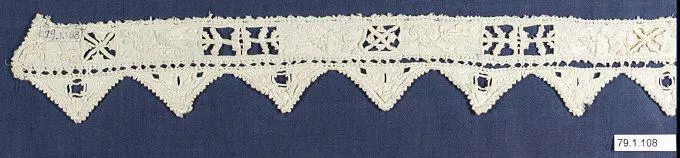
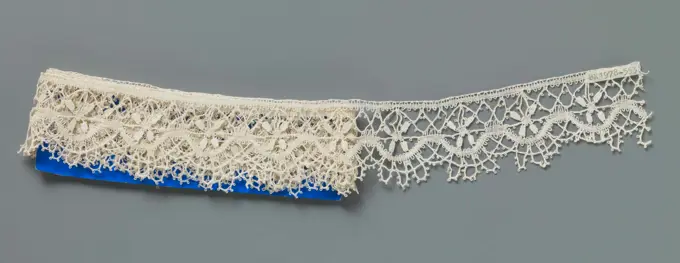
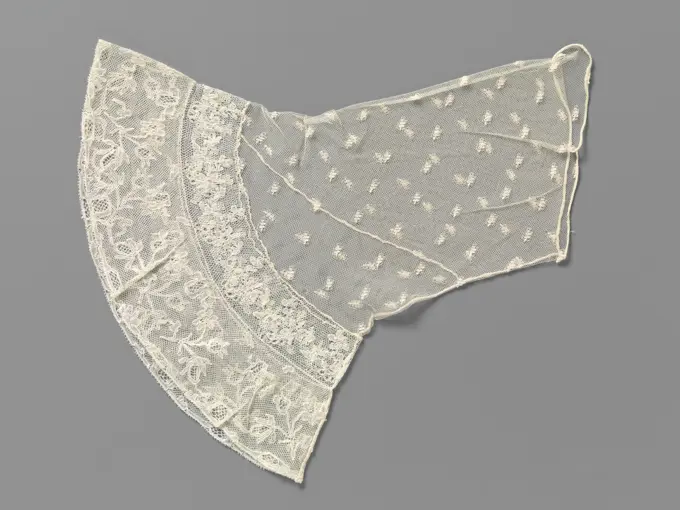
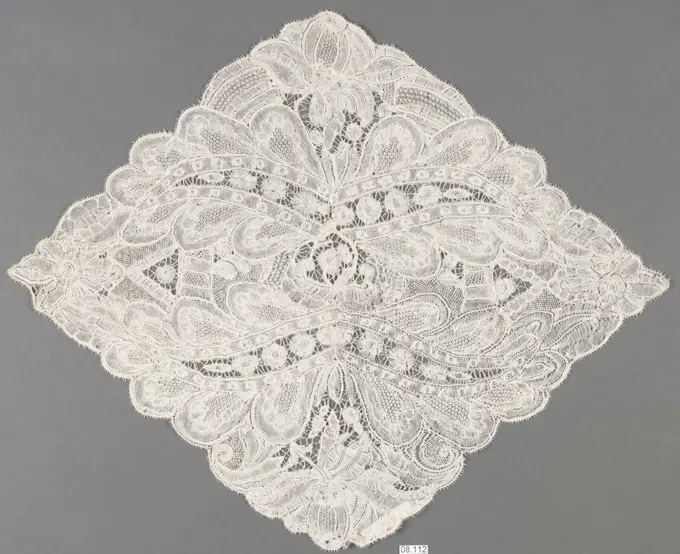
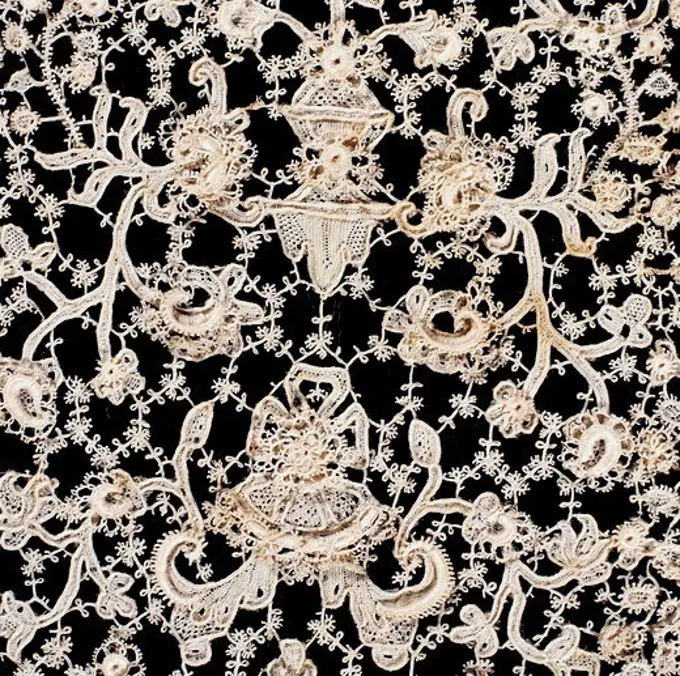
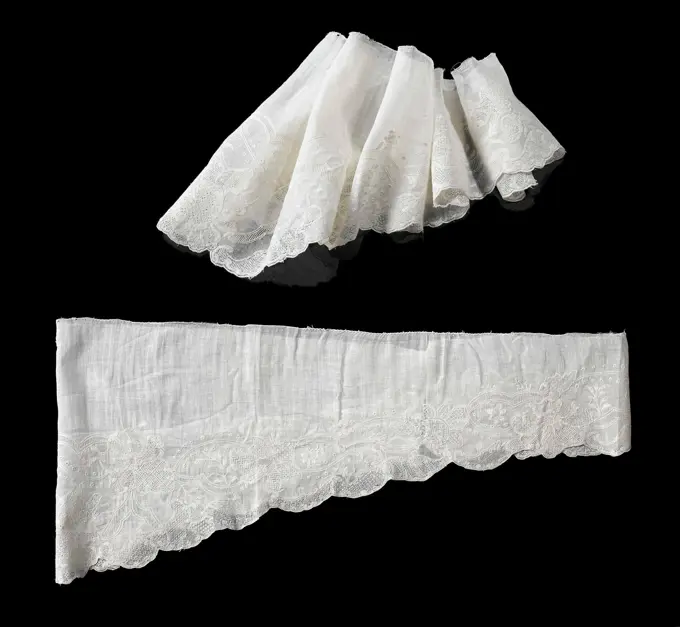
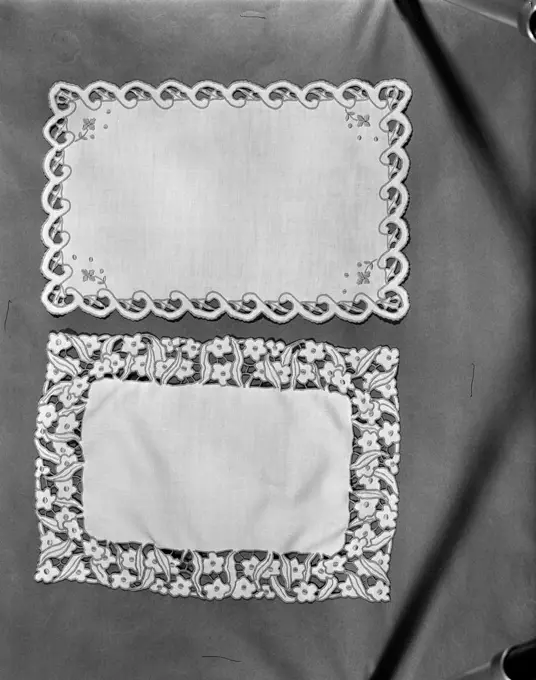
Beautiful strips of lace featuring floral designs and complex patterns, showcasing delicate craftsmanship from various historical periods.

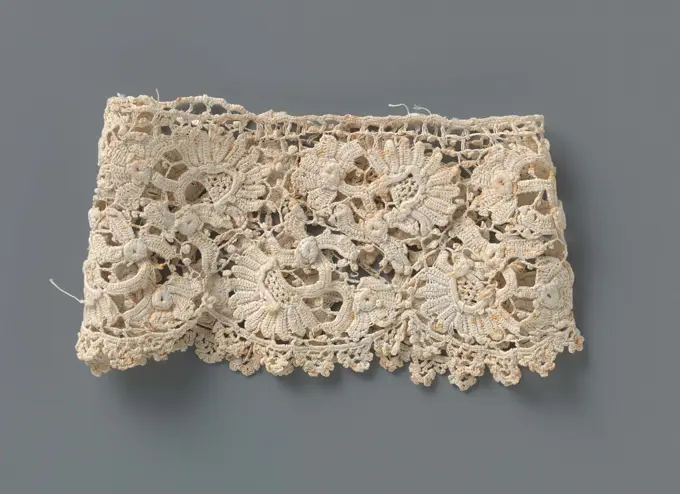
Strip crocheted side with flowers and grape vouchers, anonymous, c. 1890 - c. 1909 Pointed strip of natural -colored Irish crocheted side. Pattern with flowers and grape bunches and a crocheted irregular mesh soil with picots. The long sides are straight finished and trimmed on one side with picoted arches. Ierland (possibly) cotton (textile) Pointed strip of natural -colored Irish crocheted side. Pattern with flowers and grape bunches and a crocheted irregular mesh soil with picots. The long sides are straight finished and trimmed on one side with picoted arches. Ierland (possibly) cotton (textile)
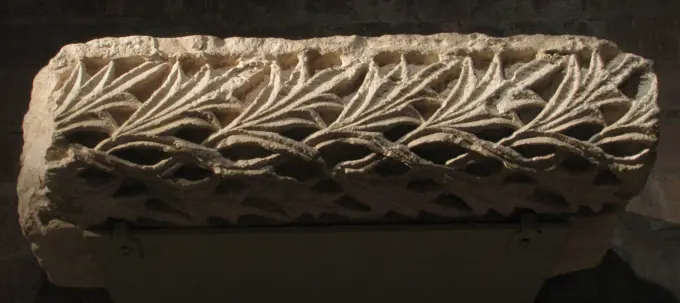
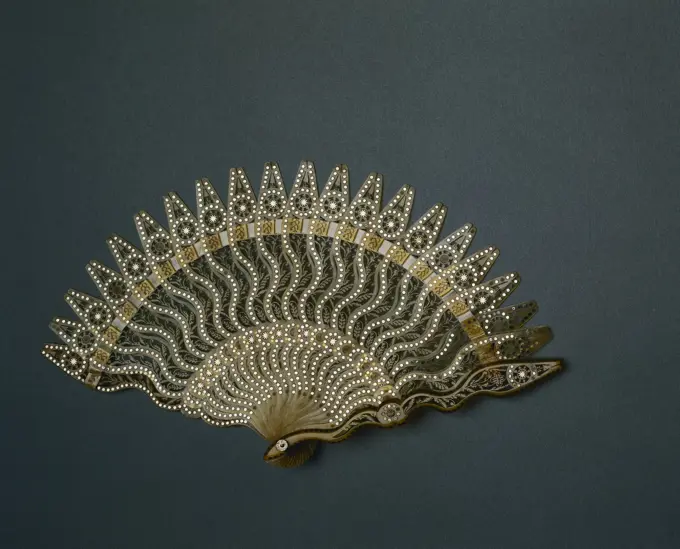
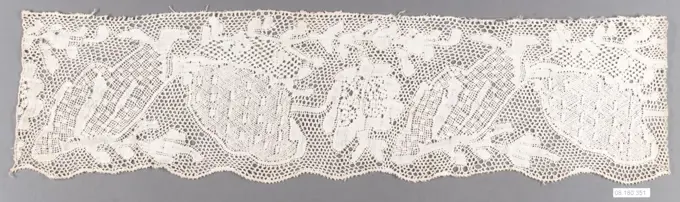
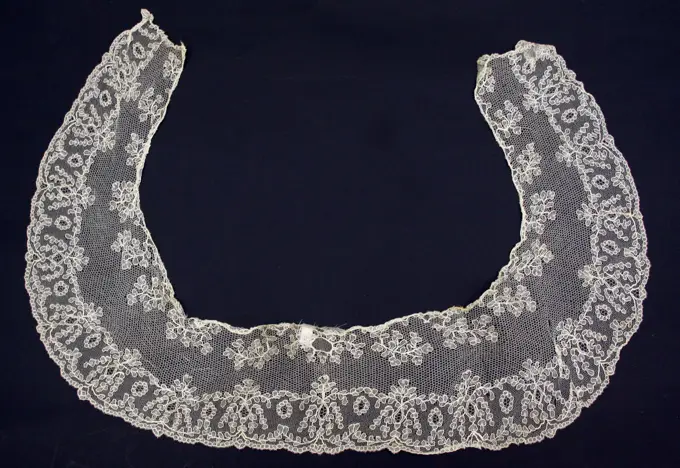
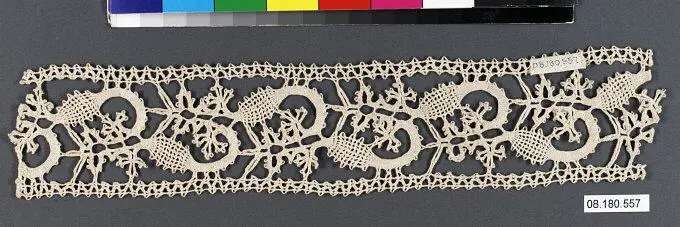
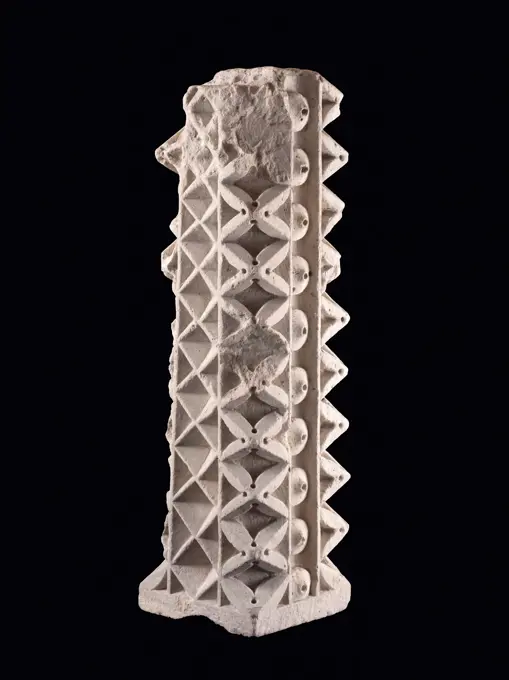
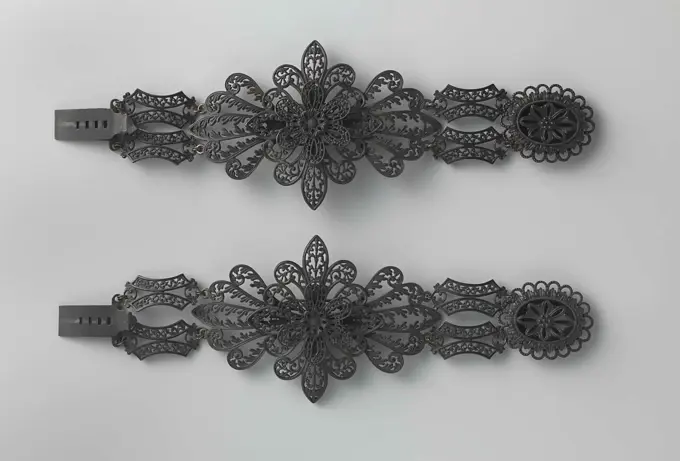
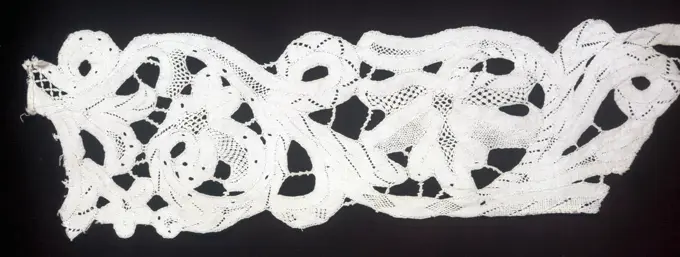
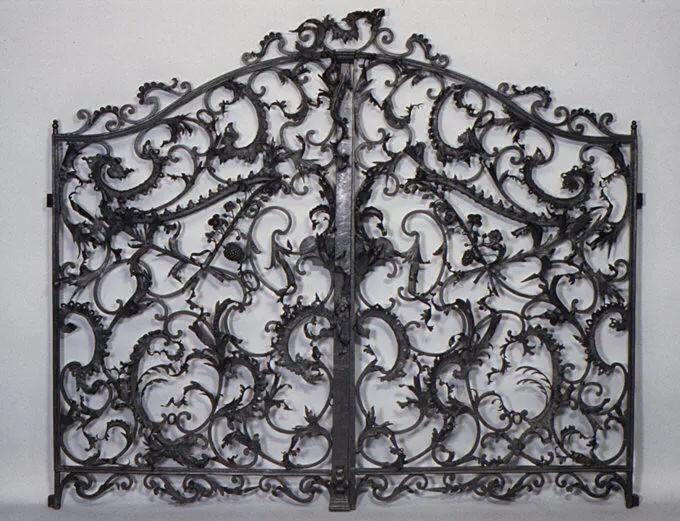
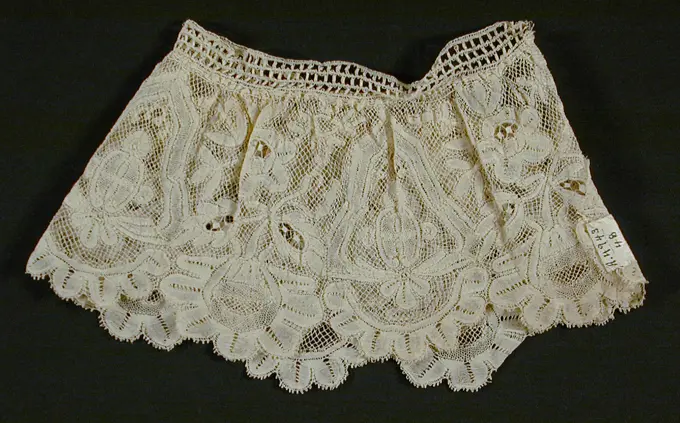
Fragment; linen; Bequest of Marian Hague; 1971-50-333Cuff of crocheted side with fan shaped flowers. Cuff of natural colored Irish crochet side, imitation coarse Venetian side. Pattern with impeller-shaped flowers with stems and a crocheted irregular maase ground with picots. The top is finished with a straight edge. The semi-circular shelter on the lower edge are deposited with picoted arcs.Fringe 18th century British. Fringe 225107Fragment from a Molding with Intertwined Vines and Acanthus Leaves 6th-7th century In the 500s Apa (Father) Jeremias founded a Coptic monastery at Saqqara, the ancient Egyptian necropolis (cemetery) of the city of Memphis, near the oldest pyramids. He and the earliest monks lived in tombs at the site. As the monastery grew, several grand churches with lavish decoration were built, as well as many chapels, public buildings, and complexes of cells (rooms) for each monk. The monastery continued to grow after the Arab conquest with materials from early Byzantine tomb structures being reused for additional monastic structures. Inscriptions record prayers to numerous holy figures. Sculptural elements from Saqqara are often carved with deeply undercut patterns to intensify the play of light and shadow and to mask the solidity of the architecture. This sculptural style was popular throughout the Byzantine world in the 500s.. Fragment from a Molding with Intertwined Vines and Acanthus Leaves. 6End;  2. PO. 19th century (1850-00-00-1900-00-00);Rostocka from Berson, Julia (1863-) - collection, gift (provenance), charcoon lace, flower ornamentsHandkerchief with a climbing side and crowned W. To a batters center piece, two lace edges, a narrow entre-deux and a wide scalloped strip. In a corner there is an embroidered w, above which a royal wreath. The fabric parts are overcurred by flushes of three roses. The Entre-Deux has a row of inner and outwardly targeted French lilies on a mesh sofond (square mesh). The strip has semicircular slot, stuffed with a French lily in circle and rose. In the upper edge moes. Valenciennes side.Batist jabot with machine white embroidery and an edge machine side, anonymous, c. 1900 - c. 1949 Batist jabot with machine white embroidery and a border machine side, imitation valenciennes side. In the middle an elongated oval insert on which an thin rank is embroidered with a daisy and an open wheel alternately. A half -circular piece of batist is sewn on both sides, with a thin branch with one daisy and one open wheel from the insert. A wrinkled strip of mechanical bobbin has been sewn along the entire circumference of the Jabot, with a hexagonal Maas soil. Along the bottom and top of the otherwise unadorned strip runs an edge in a linen battle. unknown batiste. cotton (textile) Valenciennes lace Batist jabot with machine white embroidery and a border machine side, imitation valenciennes side. In the middle an elongated oval insert on which an thin rank is embroidered with a daisy and an open wheel alternately. A half -circular piece of batist is sewn on both sides, with a thin braBrisé Fan, c. 1825. France (), 19th century. Horn, silver-colored metal inlay, silk ribbon; radius: 15.9 cm (6 1/4 in.); spread: 29.2 cm (11 1/2 in.).Piece early 18th century Flemish, Mechlin. Piece 214503Kloskant collar with geometric pattern of double zigzag with bow edge, anonymous, c. 1900 - c. 1930 Collar of natural-colored bobbin: Cluny side. Lying round model with a narrow middle and long points at the ends. The collar is not symmetrical because one of the points makes a kink out and not the other point. The pattern has a double zigzag line with oval on the nodes, through which length and transverse lines. The motifs have been hit in linen battle with decorations in form. The motifs are connected by a braid ground. Schulpenrand with flat similar scallops with loops running back and forth. Le Puy-en-Velay (Possible) cotton (textile) bobbin lace / Cluny lace Collar of natural-colored bobbin: Cluny side. Lying round model with a narrow middle and long points at the ends. The collar is not symmetrical because one of the points makes a kink out and not the other point. The pattern has a double zigzag line with oval on the nodes, through which length and transverse lines. The motifs haEdging ca. 1600 Italian Punto in arialiterally, "stitches in the air"is one of the earliest styles of needle lace, which is itself developed from cutwork of primarily geometric design. When lacemakers transitioned to using a foundation of threads laid out according to a pattern drawn on parchment, they were able to incorporate more fluid lines and curves into their designs.. Edging 217994Band (probably Italy); linen; Bequest of Marian Hague; 1971-50-483Piece 18th century German. Piece 214704Bertha mid-19th century Spanish. Bertha 119002Fragment 17th century Italian. Fragment 214907Collar of needle side with floral drinks and pointed slot. Collar of natural needle side: Reticella and Venetian rosary. The collar consists of two strips sewn together and is finished with a splitting edge. The outer strip (Reticella) consists of ten U-shaped slopes that are pointedly finished with picoted arcs. The inner strip (Venetian rosary) has a floral drink pattern. The strips differ strongly in color.Notre-Dame Rose Ray. Anonymous (France), Pierre, 1160-1200. Paris, Carnavalet museum. Notre-Dame, Pierre, Ray, Rose, Medieval sculpturePair of bracelets. New refining methods made it possible to create an iron mixture that could be cast in intricate shapes. An example of this are the lacy links from which these armbands are assembled. This kind of jewellery was not reserved for special occasions, but was part of general fashion. An 1827 fashion magazine recommended combining steel’ jewellery with white satin clothing.Collar, Cuffs, And Vestee (Italy); silkStrip possibly Spanish 16th centuryTwo Border Fragments Made 1880-1899 Belgium. Cotton, bobbin part lace of a type known as Duchesse de Bruges .Strook kloskant met kruisjes van vier blokjes gemaakt met vormslagen.Strip natural colosside, cluny side. A regularly wavy band in linen stroke runs under the horizontal and open network of picoted braids under the horizontal center line of the strip. Above every golf valley, a cross is made in shape stroke, with four blocks from a round in linen stroke. Above every cross shape braids the contours of a triangle. Meats the contours of two windows form the contours of two windows. Under the wavy strap, semicircular tubes are formed, with braids decorating any achargy with three arcs. The braids that form the tubular edge are decorated with picots. Along the right spotted top of the strip is a narrow strap in linen stroke. The strip is wrapped around a blue store paper, which stands: 3 1/2 m a f3.- F10.50.Bobbin Lace (Needlepoint Design) Insertion with Fringe, second half of 16th century. Italy, Genoa, second half of 16th century. Lace, bobbin; average: 7.1 x 20.4 cm (2 13/16 x 8 1/16 in.).Strip of mechanical side with wavy leaf vines, anonymous, c. 1900 - c. 1949 Strip of natural -colored machine side. Spread motif with dots on a fine hexagonal grid. A wavy band runs above the middle that consists of two thin tifles with small and larger leaves between which a dotted line. This band repeats itself under the middle, where it joins the pattern of the scalloped underside. This pattern consists of hanging rosette flowers that are connected to each other with dotted arches with three circles. The top is cut and not finished. The short sides of the strip are sewn together. Calais (possibly) silk Strip of natural -colored machine side. Spread motif with dots on a fine hexagonal grid. A wavy band runs above the middle that consists of two thin tifles with small and larger leaves between which a dotted line. This band repeats itself under the middle, where it joins the pattern of the scalloped underside. This pattern consists of hanging rosette flowers that are connected to eachCollar 1700-1945 American or European. Collar 119259Pelerine 1775-1825 British. Pelerine 120964Snacking of lace pledger with a cuff consisting of two types of bobbin, anonymous, c. 1900 Snack of lace -ups - Tuledoor stop work on machine tulle - and a cuff of two strips of bobbin: Lille and Mechelen side. The strip of Lillese side is sewn on the lower sleeve and the strip Mechelse side at the bottom of the strip of Lillese side. Pago model. A spray pattern of berry branches is embroidered on the machine tulle. The repeating pattern of the Lille side consists of a horizontal branch with a rosette flower, three berries and a few whimsically shaped leaves. The repeating and symmetrical pattern of the Mechelen side consists of a horseshoe -shaped arch formed by two flower branches with a few different flowers. Along the very flat edge of the scoop, oval fields are formed by leaves or twigs, interspersed with a hand -shaped leaf right under the arch. The edge is finished with picots. Belgium whole: Linen (Material). Bobbi Lace / Lille Lace / Mechlin (Lace) Snack of lace -ups - TuledooStrip of batist with lace border bodies along the edges with a row of flowers and a scum of the leaves under these flowers, anonymous, c. 1750 Strip of natural -colored batist with lace -ups: Point de Dinant (Dresdener Kant made in Dinant in the Southern Netherlands). A narrow unadorned track in the middle of the strip widened to the ends in half an oval field of unadorned batist. Decorated all around with shade border and open sewing with fillings that imitate the needle side. The small pattern parts are caused by the contracting of a few threads or of thread groups in the fine tissue. The pattern is symmetrical and consists of a few different flowers in one row of a more or less triangular composition in the middle, on the two long sides of the strip. The scrap edge stems from the succession of volute leaves under the row of flowers. Dinner linen (material). batiste embroidering Strip of natural -colored batist with lace -ups: Point de Dinant (Dresdener Kant made in Dinant in the SouSquare early 18th century probably Flemish or British, Devonshire. Square 214323Fragment (Italy); linen; Bequest of Marian Hague; 1971-50-379Cuff with intermediate brush with abstracted floral pattern placed between eight openwork circles, c. 1850 - c. 1920  Cuff with intermediate sling with abstracted floral pattern placed between eight openwork circles. West-Europa Linen (Material). press stud: MetalEdging 1750-1800 Flemish. Edging 222817Gate mid-18th century probably Southern German. Gate 187158Thin lace ribbons isolated view Thin pastel color lace ribbons isolated view ,model released, Symbolfoto Copyright: xZoonar.com/AndreyxGuryanovx 14345912 ,model released, Symbolfoto ,property releasedRound collar of Mechelse side, Anonymous, c. 1850 - c. 1870 Round collar of Mechelse side, which may have been worn with one or two other. Decorated with a angular mountain and descending above which a small flower is repeated in running pattern. On the seam an agrement with a rosette and forget-me-nots is sewn. Mechelen . Mechlin (lace) Round collar of Mechelse side, which may have been worn with one or two other. Decorated with a angular mountain and descending above which a small flower is repeated in running pattern. On the seam an agrement with a rosette and forget-me-nots is sewn. Mechelen . Mechlin (lace)Woman's Handkerchief. Belgium, Ghent, 1850-1875. Costumes; Accessories. Linen plain weave with cotton laceStrip 18th century Flemish. Strip 212855Anonymous / 'Rock crystal salver with pierced rim and four'. Ca. 1615. Rock crystal / Hyaline quartz, Silver-gilt. Museum: Museo del Prado, Madrid, España.Kloskant cuff with sickle-shaped leaf and flower branches, anonymous, c. 1830 - c. 1865 Cuff made of natural tulle with a border bobbin underneath: Mechelen side. The tulle is unadorned and slightly darker than the Mechelen side that is sewn on the tulle. Trapezium -shaped clocking model. The repeating pattern of the Mechelen side consists of semicircular scallops, formed by fine leaves on the outside of a curved rocaille motif. Long leaves feathered on the inside and a group of six rosette flowers or forget-me-nots. On the field above it blossoms. The motifs are made in linen battle and are accentuated by thicker shiny contour threads. The motifs are connected by a Mechelen soil. In the leaves there is a decoration with dots made in shape. The side is made in Belgium, the cuffs are made in the Netherlands. With this cuff, part of the top of the Mechelse side is missing, which has been replaced by a strip of mechanical tulle. AmsterdamBelgium Unprocessed tulle: Silk. Unprocessed tulle:bracelet isolated on white backgroundOrnament (Italy); linenBorder (France); silkPair of Woman's Cuffs. Belgium, Ghent, 1880. Costumes; ensembles. Cotton Valenciennes de gand bobbin laceKlingholz Fritz (1861-1921), Floral ornament (without date): View. Pencil on paper, 21.3 x 13 cm (including scan edges) Klingholz Fritz  (1861-1921): Florales OrnamentFragment 18th century German. Fragment 217754Laces, 17th century. Point de neige (Punto Neve) needle lace barbola work, cm 98 x 34. Detail.Fragment, Cooper Union Museum Lace Study Card; Made for Cooper Union Museum; Belgium; linenLappet mid-19th century French. Lappet 120879Example of lace stitch Irish 19th-20th centuryCollar Made 1885-1900 Brussels. Cotton, mixed lace bobbin lace of a type known as Duchesse with insets of needle lace of a type known as Point de Gaze .Sri Lanka. Kandy region. Crafts. Batik, a technique for printing fabrics practiced in Sri Lanka.Cravat End Made 1740-1749 Brussels. Linen, bobbin part lace of a type known as Brussels with snowflake type mesh groundFragment; 1897-8-330. Engagante of thin cotton (mul), along the scalloped edge with floral motif in embroidery, shadow work and needle side. Decoration: Fils Tirés and shadow work. The pattern consists of palm with a river.White House furniture and furnishings. White House furnishings. Antique napkins. White House, Washington, D.C.Fragment, Medium: linen Technique: bobbin lace of discontinuous tape, Small fragment in a vine pattern., Italy, 17th century, lace, FragmentJeweled detailing in BaliBobbin Lace Collar, 18th century. Belgium, Mechelen, 18th century. Lace, bobbin: linen; average: 5.1 x 47 cm (2 x 18 1/2 in.).Trim, fringe, 18th-19th century, 5 x 16 in. (12.7 x 40.64 cm), Silk; passementerie, 18th-19th centuryTurkish needle work embroidery Ornamental with lace patterns, details, flowersFragment, Medium: linen Technique: bobbin lace (continuous tape with connections), Triangular fragment with cut sides of continuous tape., Belgium, 17th century, lace, FragmentMedallion A. Our new hotel pattern enameled.. Medallion A. Our new hotel pattern enameled.