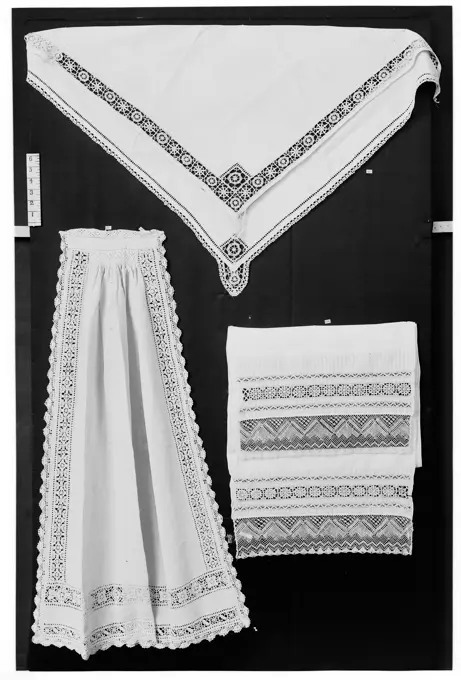
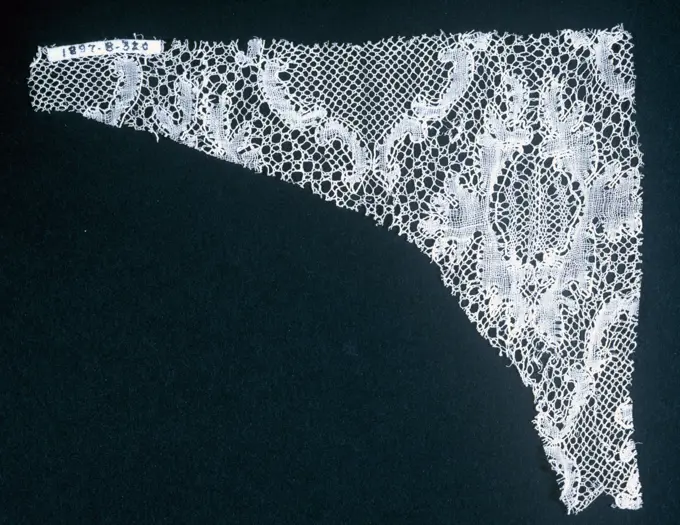
Intricate Lace Patterns

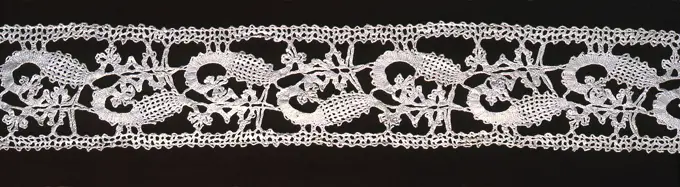
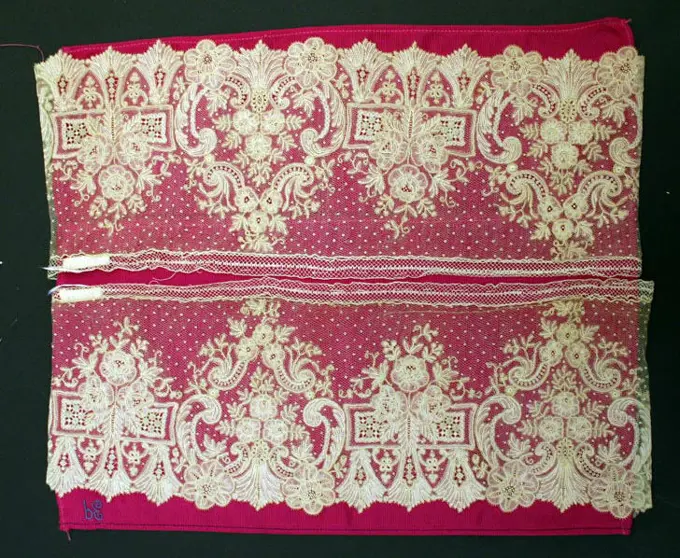
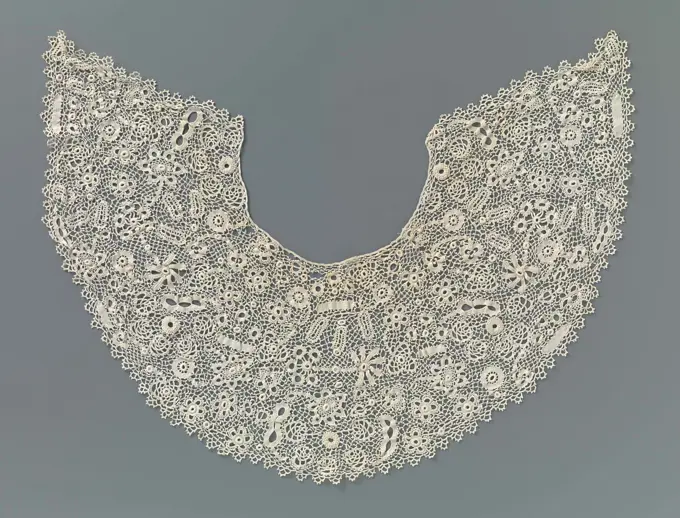
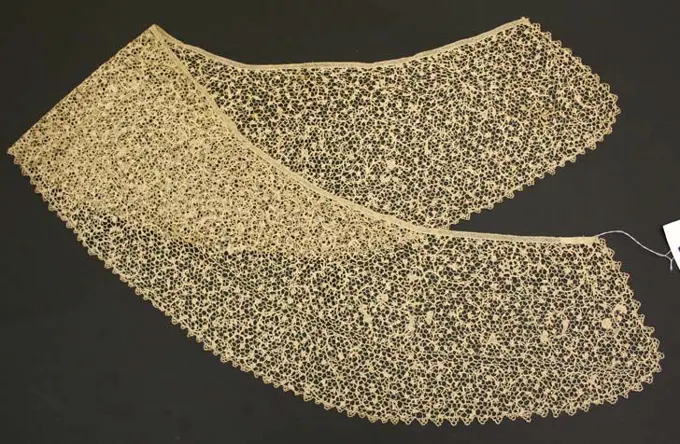
Detailed historical lace trims featuring floral motifs, wavy borders, and fine craftsmanship in various colors and styles from different time periods.
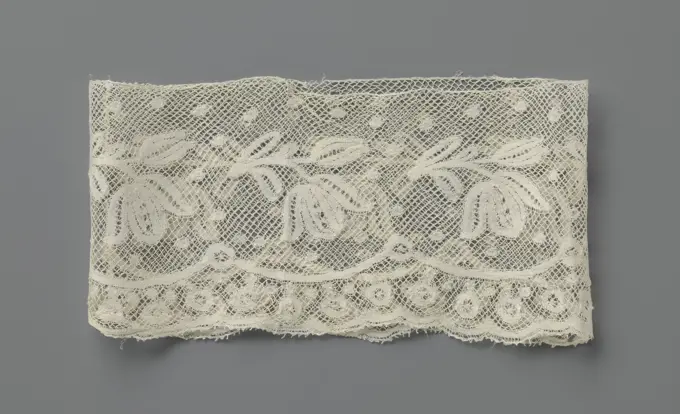
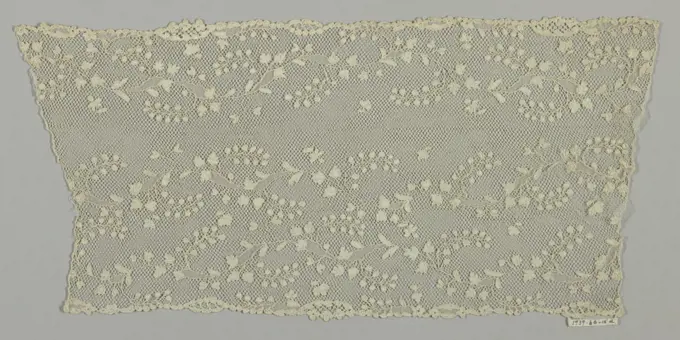
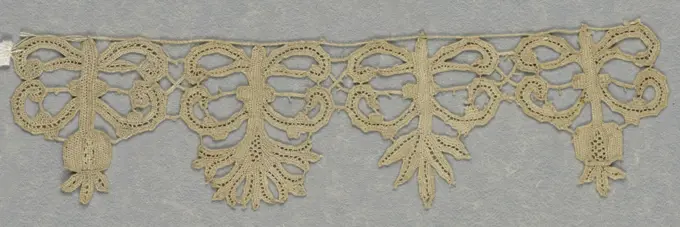
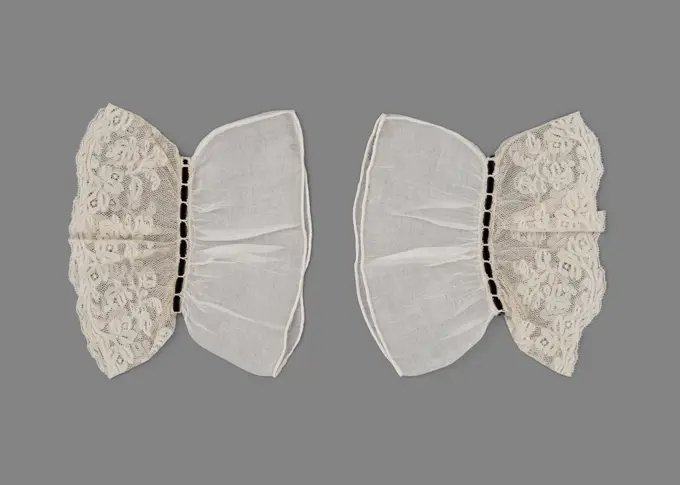
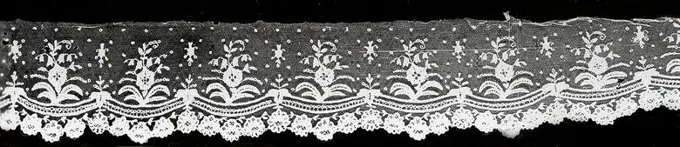
Kloskant cuff with hanging tulip, anonymous, c. 1900 - c. 1909 Cuff made of natural-colored bobbin: Valenciennes side. There is a running pattern on a gross traly soil (square grater), which is littered with 'sequins'. Unilaterally targeted hanging tulips are loose above stretched scales of a garland with hanging berries. Netherlands (possibly) linen (material) Bobbi Lace / Valenciennes Lace Cuff made of natural-colored bobbin: Valenciennes side. There is a running pattern on a gross traly soil (square grater), which is littered with 'sequins'. Unilaterally targeted hanging tulips are loose above stretched scales of a garland with hanging berries. Netherlands (possibly) linen (material) Bobbi Lace / Valenciennes Lace
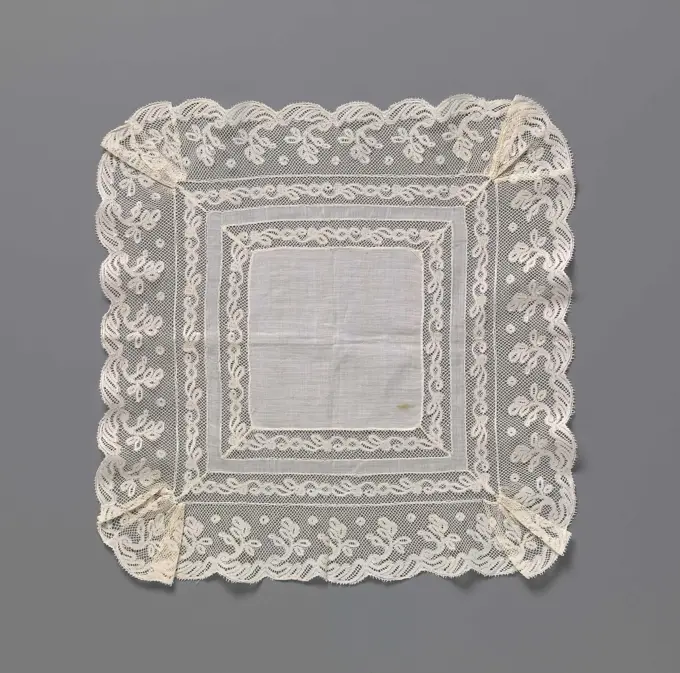
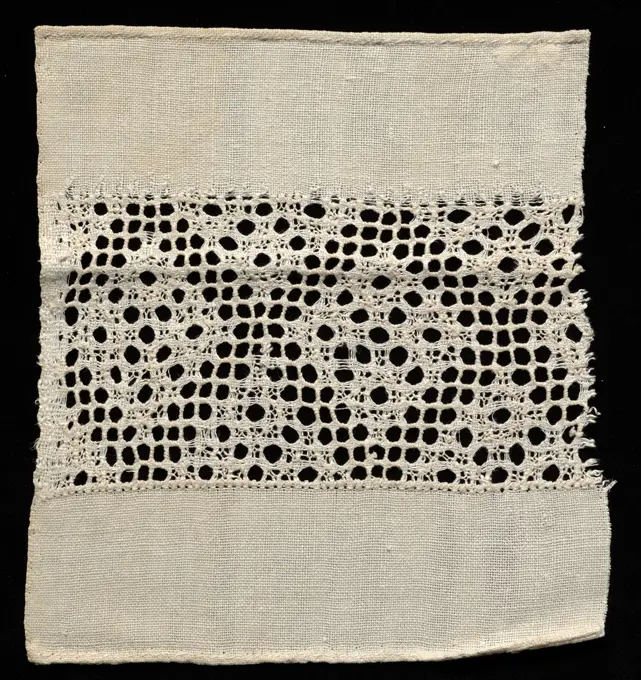
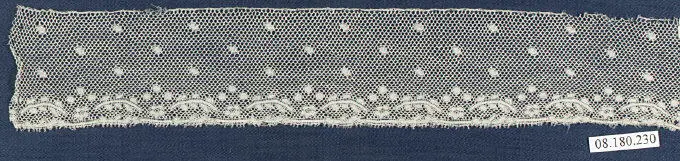
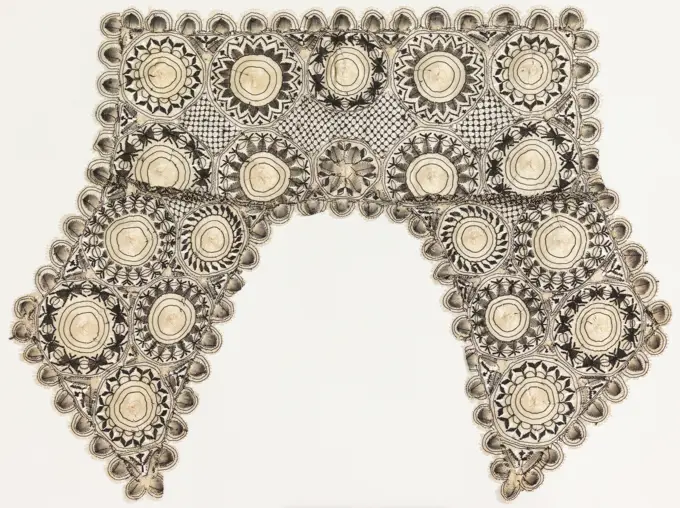
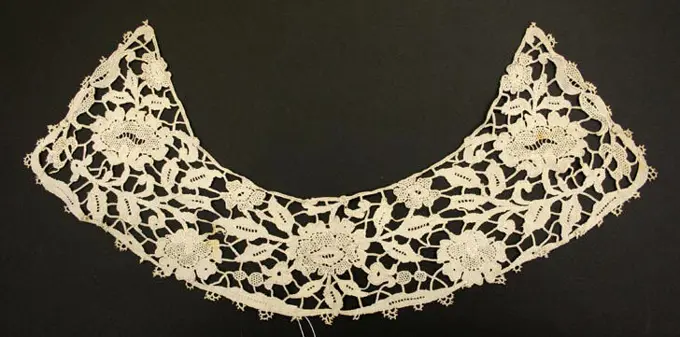
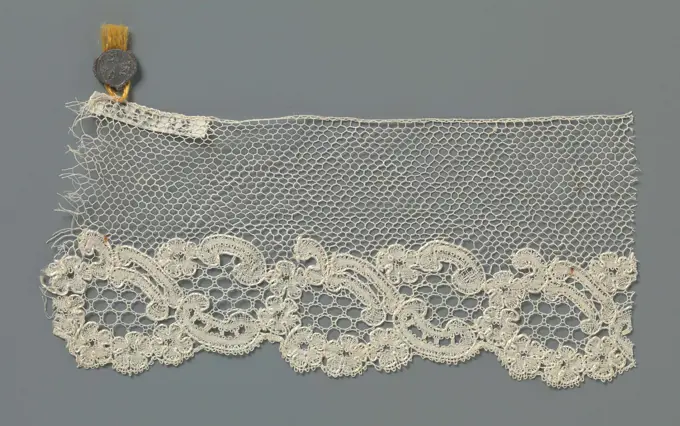
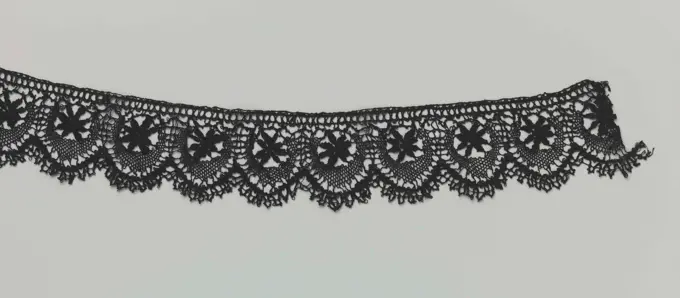
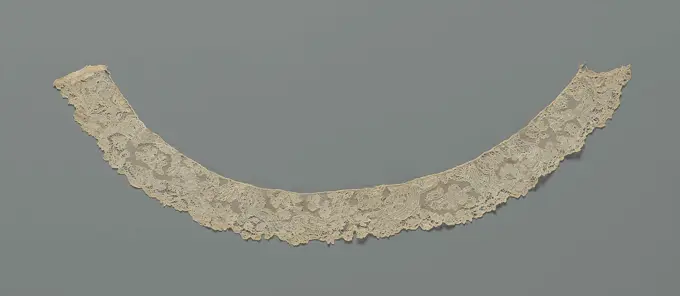
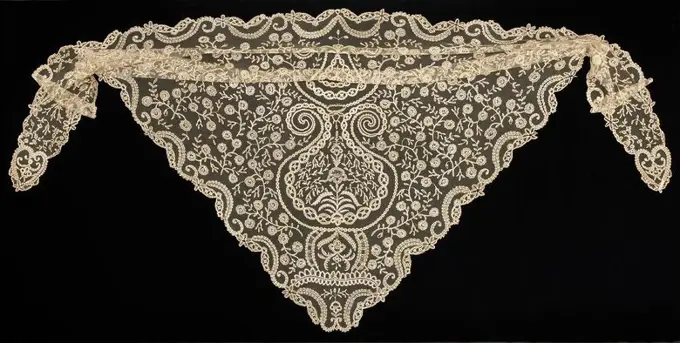
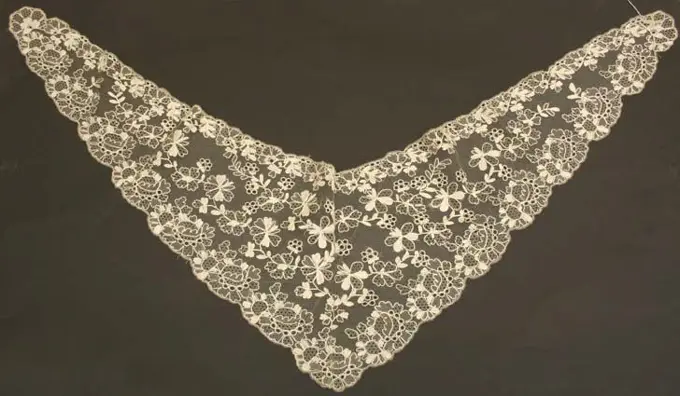
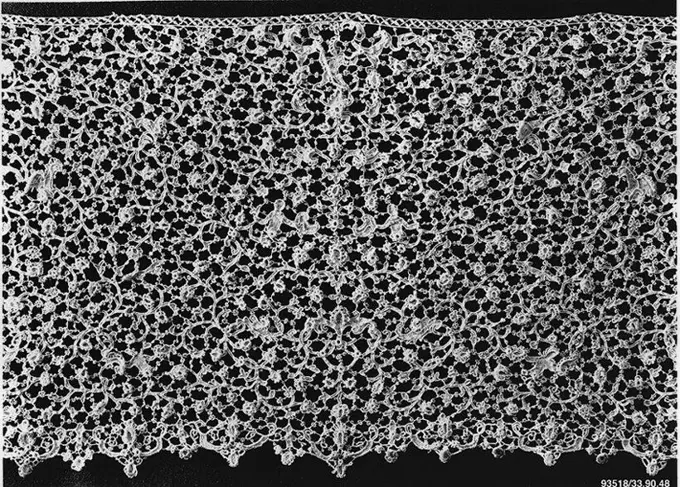
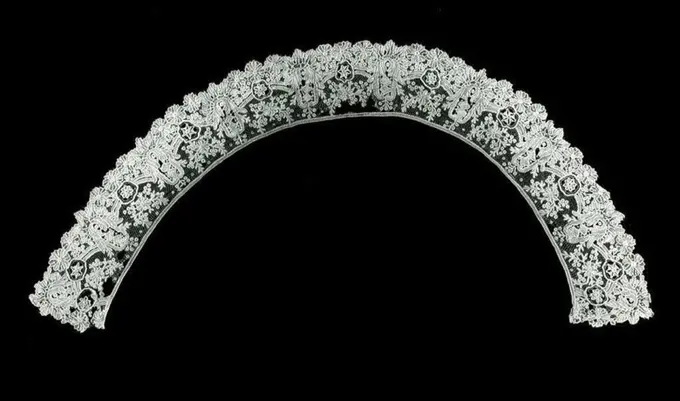
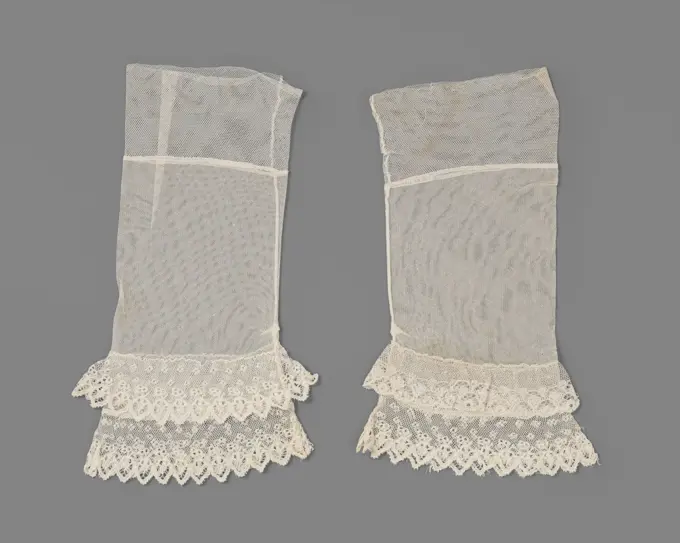
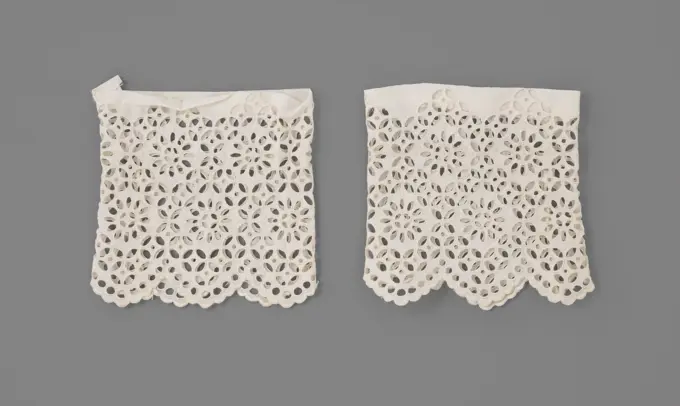
Batist cuff decorated with English embroidery, c. 1875 - c. 1925 Batist cuff decorated with English embroidery. The cuff is trimmed with a founded Schulprand. West-Europa whole: Batiste Batist cuff decorated with English embroidery. The cuff is trimmed with a founded Schulprand. West-Europa whole: BatisteFragments of Lace. Belgium, Brussels, late 19th century. Textiles; fragments. Cotton bobbin and point de gaze needle laceVintage decorative elements.Circular pattern of traditional motifs and ancient oriental ornaments. Hand drawn background.. Mandala. Round ornament.Fragment 18th century Italian. Fragment 230285Triangular scarf of black machining with rose bouquets. Scarf of machining black lace, coarse imitation of chantilly side. Triangular model. The pattern has large rose bouquets and garlands that are caught in a pointed rising formation of C-Volutes. The sloping edges are formed by godrews and the tulet is dotted with mashes.Towel End (USA); linen, cottonFragment, Medium: linen Technique: bobbin lace (Brussels-style), Scalloped border fragment has a small-scale design of floral sprays; vrai droschel ground., Belgium, 1750-1800, lace, FragmentFragment 17th century German. Fragment 218589Woman's Collar. Italy, lace made 1650-1700; constructed 19th century. Costumes; Accessories. Linen and cotton tape and Venetian needle lacesHandkerchief of dick edge with C-shaped twigs. To a square batist cloth, two Entre-deux are sewn and a scalloped lace edge with a fond of square meshes. In the corners, the sculpture has been wrinkled. The running pattern shows equally targeted C-shaped twigs. Valenciennes side.Cravat 18th century French. Cravat 222435Needlepoint (Drawnwork) Lace Band, 18th-early 19th century. Spain, 18th-early 19th century. Lace, needlepoint: linen; average: 20.4 x 19.1 cm (8 1/16 x 7 1/2 in.).Fragment late 18th century French. Fragment 214584Woman's Collar. Probably Belgium, Brussels, mid-19th century. Costumes; Accessories. Cotton point de gaze needle laceFragment, Bobbin Lace 3; Made for Cooper Union Museum; Italy; linenBatist handkerchief with a decorative band with C-volutes and diamond shapes of embroidery and a strip of machine with snowflakes, anonymous, c. 1860 Natural Batist handkerchief with white embroidery and finished all around with a strip of machine side. Square model with straight sides and rounded corners because the strip side on the corners is wrinkled on the handkerchief. The embroidery pattern consists of a decorative band of C-volutes, volute vines, diamond shapes and cartouches on which fine spiral vines with rosette flowers and pine tree branches are located over it. Along the edges of the batist, a line pattern has been realized by work with extended threads. The strip of mechanical valenciennes side is attached to this openwork edge. The lace pattern consists of two rows of ringed snowflakes and on the bottom of thin -curved twigs with a few round buttons or leaves on it. The motifs are connected by a hexagonal mechanical grid. The straight underside of the lace strip is finisPlate;  19th/20th century (1890-00-00-1910-00-00);Band early 17th century Spanish Punto in arialiterally, "stitches in the air"is one of the earliest styles of needle lace, which is itself developed from cutwork of primarily geometric design. When lacemakers transitioned to using a foundation of threads laid out according to a pattern drawn on parchment, they were able to incorporate more fluid lines and curves into their designs.. Band 212438Photo of a sides collar or impeller with four butterflies. Photo of a sides collar or impeller with four butterflies. The photo belongs to five other photos from side with inventory numbers: BK-1979-33-B-1 to B-6. The photo described here is stuck together on a black cardboard, BK-1979-33-B-2 is stuck on the back. It concerns lace objects made by L.W. Van Der Meulen-Nulle and J.H. PLITING FABER. They worked as a lace teacher at the national academy of craftsmanship.Trimming, Medium: linen Technique: needle lace, six-sided reworked ground, Serpentine floral pattern., France, 18th century, lace, TrimmingCircular cover, Medium: linen Technique: Brussels style bobbin lace, Brussels technique, but Honiton style. All over pattern of flowers and leaves., England, 19th century, lace, Circular coverLength of Lace. Belgium, 1825-1850. Textiles; textile lengths. Silk Chantilly bobbin laceBorder, Medium: linen Technique: Early narrow bobbin made tape with fillings of needle made lace., England, early-mid-17th century, lace, BorderFragment, Medium: linen Technique: needle lace, Fragment of Argentan lace cut away from its ground. Horizontal stripes are crossed by one diagonal line., France, 18th century, lace, FragmentCollar. Culture: American. Date: ca. 1860. Museum: Metropolitan Museum of Art, New York, USA.Edging ca. 1600 Greek. Edging. Greek. ca. 1600. Bobbin lace. Textiles-LacesAccessories (possibly Canary Islands); cottonFragment of the lace;  XVII/18th century (1601-00-00-1900-00-00);Collar 1700-1939 American. Collar 119127Sleeve Ruffle Made 1725-1775 France. The lace decorations that ornamented womenís dresses were separate from the dresses themselves. They required many yards of lace and, since fine lace was expensive, people sought substitutes that mimicked the light, translucent nature of the fabric. Here, the sleeve ruffles are made of a woven linen that has been skillfully embroidered to look like lace.. Linen plain weave foundation; embroidered in linen with shadow, chain, and buttonhole stitches, and drawnwork with various fillings .Strook kloskant "Gripsholms Lace" met cartouches van rozetbloempjes en c-voluten.Strip natural colosside, Lille side. The strip is mounted with pins on a light blue cardboard, with four other strips. At the top of the cardboard is "Wadstena. Sweden." Written and under the strip is "Gripsholms Lace. (GIS Spets.)". The repeating pattern along the bottom edge of the jointed cartouches with rosette flowers and C volutes. The motifs are connected by a fine Maas soil, a tulet. The motifs are made in linen stroke with openwork edges, recesses and with thicker and shiny contour wires. In the cartouches, a rose soil has been applied as ornamental ground. Square moes are made in the recesses in the lower c-voltages. The top of the strip is straight finished. The lied slot on the underside are finished with picots. A yellow thread hangs on the strip with a lead on which "W K S" is.Handkerchief, early 1800s. France, early 19th century. Embroidery: linen; overall: 48.2 x 48.2 cm (19 x 19 in.).Handkerchief, Medium: linen Technique: embroidered with lace border, Linen center with monogram J.M.N. and border of Mechlin lace in design of pendant flowers., France, 18th century, lace, HandkerchiefWoman's Collar. England, Buckinghamshire, circa 1850. Costumes; Accessories. Cotton plain weave, cotton bobbin Lille-type lace, cotton embroideryBorder, Medium: linen Technique: punto in aria needle lace, Fragment of a border with tabs in the form of plants., Italy, 17th century, lace, BorderLace, bobbin, Mid 19th Century, Italy, maker unknown. Gift of Yvonne Riddiford, 2007.Pattern With Uncompleted Piece Of Lace; parchment, linen thread; 1939-19-5-a,bHood 1760s or 1770s French. Hood 460775Fichu late 18th century French. Fichu 226174Strook kloskant met ster en halve maan.Strip of black climbing side, Cluny side. Symmetrical design with deep slippers and braid soil. Each scallop is filled with an eight-pointed star that is covered by a horizontal half moon. The slot edge is finished with arcs and fine dots of picoted braids. The top of the strip is straight finished.Fragment, Medium: linen Technique: bobbin lace, continuous tape with bars added, Scroll design held with brides., early 18th century, lace, FragmentFrontage (Italy); linenUnderemen of glass batist with black ribbon velvet, anonymous, c. 1885 - c. 1900 Sub -sleek of glass batist, lace and ribbon black velvet. Short coup; Instructed at the wrist, where a black ribbon has been raised. The side has a pattern with wide, flat scoops with a one -sided volute of a leafy branch with flowers in each shell. Netherlands (possibly) .. velvet (fabric weave) Valenciennes lace Sub -sleek of glass batist, lace and ribbon black velvet. Short coup; Instructed at the wrist, where a black ribbon has been raised. The side has a pattern with wide, flat scoops with a one -sided volute of a leafy branch with flowers in each shell. Netherlands (possibly) .. velvet (fabric weave) Valenciennes laceCollar. Unknown, 19th century. Costumes; Accessories. EmbroideredCollar 18th century Spanish. Collar 212922Flounce. Belgium, Brussels. Date: 1860-1869. Dimensions: 17.9 × 239 cm (7 1/8 × 94 in.)Width repeat: 12.7 cm (5 in.). Cotton, needle lace of a type known as "Point de Gaze" applied to machine made net. Origin: Brussels. Museum: The Chicago Art Institute, Chicago, USA.Fragment late 17th-early 18th century Flemish. Fragment 219913Fragment of Knitted Lace Flounce, 18th century. Spain, Seville or Huelva, 18th century. Cotton and linen; average: 26.7 x 20.4 cm (10 1/2 x 8 1/16 in.).Collar, Medium: horsehair, linen Technique: needle lace with ground of loop & twist with loop & twist return, Round collar of natural colored linen lace. Design of flowers, some with several layers and scrollong leaves., Belgium, 19th century, lace, CollarBand (Italy); linenValance ca. 1775 American. Valance. American. ca. 1775. Linen embroidered with wool. Made in New England, United StatesCuffs mid-19th century Belgian. Cuffs. Belgian. mid-19th century. no medium availableMachine Lace Handkerchief, early 19th century. Flanders, early 19th century. Embroidered linen center, edging of Flemish bobbin lace applied to machine net; overall: 57.5 x 56.5 cm (22 5/8 x 22 1/4 in.).Fragment, A .G. Jennings & Sons, American, Medium: cotton Technique: machine made lace, Alençon-type with scattered flowers and a floral border on net., USA, ca. 1884, lace, Fragment. Cotton, plain weave; embroidered with cotton in buttonhole, chain stitches, and drawn work .Berthe of crocheted side with spreamotief. Berthe of natural colored Irish crochet side. Spreading dot with varied flowers and shapes including roses, daisies, circles and ovals. Crochet land with irregular and picoted meshes. Straight finish along the neckline. The remaining edges are finished with picoted three-piece arcs.Bertha 1675-1725 Italian. Bertha 119312Collar lace ca. 1850 French. Collar lace 212576Kraag van gemengde kant met boeketten en insecten.Collar of natural mixed side: coniferous lace - Brussels gauze side - in combination with a closted drachel soil. The pattern has loose bouquets with insects and winding openwork tires on a scrolled ground. The band motif is partly in moes of needle lace and spiders of dick edge. Motifs with contour wires.Collar ca. 1840 American. Collar 110529Shawl. Culture: Belgian. Date: 1850-70. Museum: Metropolitan Museum of Art, New York, USA.Sweat protector (koyori ase-hajiki). Date/Period: 1850-1860. Sweat protector (koyori ase-hajiki). Medium: paper. Technique: 4-strand plaiting with 2-strand twists. Author: UNKNOWN.Cotton collar, close -fitting around the neck, decorated with floral English embroidery and Rijssel side, anonymous, c. 1875 - c. 1900 Cotton collar, close -fitting around the neck, decorated with floral English embroidery and Rijsselse side. Netherlands whole: Cotton (textile) Lille lace Cotton collar, close -fitting around the neck, decorated with floral English embroidery and Rijsselse side. Netherlands whole: Cotton (textile) Lille laceDoily of Batist with wavy edge of dumplings. Doily, a round dress, from Batist with a border of the climbing side. The repeating pattern consists of one row of spiders, with braids attached to a simple inner edge and the sloping edge on the outside, which is formed with a narrow wavy path in a cut-off.Fichu 19th century Spanish. Fichu 102577Fragment; cottonKloskant collar with daisies, anonymous, c. 1900 - c. 1924 A coarse mesh stock (square Maas) with daisies above scoops of pearls. Valenciennes side. Sluis (Possible) linen (material) Bobbi Lace / Valenciennes Lace A coarse mesh stock (square Maas) with daisies above scoops of pearls. Valenciennes side. Sluis (Possible) linen (material) Bobbi Lace / Valenciennes LaceFlounce 17th century Italian, Venice. Flounce 222738Fragment 16th century Italian. Fragment 212352Fragment 18th century German, Saxony. Fragment 215237Scarf 18th century Flemish. Scarf 102651Bobbin and Embroidery Lace Handkerchief, late 19th century. France or Flanders, late 19th century. Linen center and insertion, and border of Valenciennes lace, embroidered linen strip between insertion and border; average: 24.2 x 22.9 cm (9 1/2 x 9 in.).Collar 1850-59 European. Collar 156389Fichu van Application side with wrinkled strip, anonymous, c. 1890 - c. 1909 Fichu of natural -colored application side, bobbin and some needle side applied on mechanical tulle. A slippery shoulder piece has a wide center and gradually tasting ends, where the wrinkled strip is turned beyond the points. In the middle is a symmetrically suitable bouquet, including with a chalice and a carnation. Free flat sculptures of grid work medallions run high as golf trees to midfield. Both the strip and the inside of the fichu show these edge and flower branches in reduced shape. Brussels (possibly) linen (material) Fichu of natural -colored application side, bobbin and some needle side applied on mechanical tulle. A slippery shoulder piece has a wide center and gradually tasting ends, where the wrinkled strip is turned beyond the points. In the middle is a symmetrically suitable bouquet, including with a chalice and a carnation. Free flat sculptures of grid work medallions run high as golf trees Collar 1840s probably American. Collar 110209Turkish needle work embroidery Ornamental with lace patterns, details, flowersLace collar Paraguayan 19th centuryLace-trimmed wedding dress train fanned out over hardwood floorBobbin Lace Insertion with Fringe, mid 16th century. Italy, Venice, mid 16th century. Lace, bobbin; average: 7.7 x 25.4 cm (3 1/16 x 10 in.).Fragment; linenCollar fourth quarter 19th century Belgian. Collar 156503White lace doily, plain background, cut-outEngageante of thin cotton (mul), along the scalloped edge with a floral motif in embroidery, shadow work and needle side, anonymous, c. 1750 Engageante of thin cotton (mul), along the scalloped edge with a floral motif in embroidery, shadow work and needle side. Decoration: fils tirés and shadow work. The pattern consists of palm flowers and a rivière. Netherlands whole: Cotton (textile). Decoration: Cotton (textile) embroidering Engageante of thin cotton (mul), along the scalloped edge with a floral motif in embroidery, shadow work and needle side. Decoration: fils tirés and shadow work. The pattern consists of palm flowers and a rivière. Netherlands whole: Cotton (textile). Decoration: Cotton (textile) embroideringCollar. Belgium. Date: 1855-1865. Dimensions: 15.8 × 28.2 cm (6 1/4 × 11 1/8 in.)Width repeat: 8.6 cm (3 1/2 in.). Cotton, needle lace of a type known as "Point de Gaze". Origin: Belgium. Museum: The Chicago Art Institute, Chicago, USA.Christmas Market GermanyTule with cuff consisting of two strips sewn one above the other, c. 1875 - c. 1890 Underemen of tulle, straight model. The cuff consists of two bobbin strips with a pointed edge. Netherlands . bobbin lace Underemen of tulle, straight model. The cuff consists of two bobbin strips with a pointed edge. Netherlands . bobbin laceNeedlepoint (Burano Point) Lace Edging, 18th century. Italy, Burano, 18th century. Lace, needlepoint: linen; average: 8.3 x 61 cm (3 1/4 x 24 in.).Fan mid-19th century possibly French. Fan 209688Kerchief Austrian or Dalmatian 19th century View more. Kerchief. Austrian or Dalmatian. 19th century. Bobbin lace. Textiles-LacesBobbin Lace (Rose Lace) Edging with Points, 17th century. Italy, Genoa , 17th century. Lace, bobbin; average: 6.7 x 19.1 cm (2 5/8 x 7 1/2 in.).Fragment; linen; 1897-8-320Salt. Maker, probably by: Boston and Sandwich Glass Works, American, 1826-88Cap Streamer