Intricate Metalwork Artifacts

A collection of historical metalwork items including Japanese tsubas and European plates, featuring intricate designs and rich cultural significance.

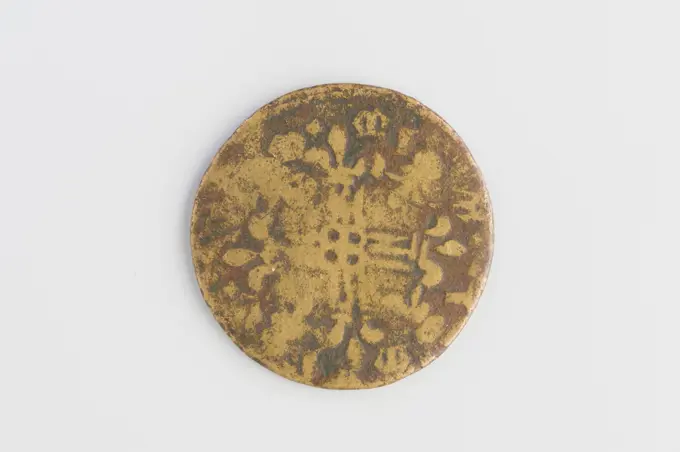
ECU to the weapons of France, 1791 Anonymous. ECU to the weapons of France, 1791. Brass.
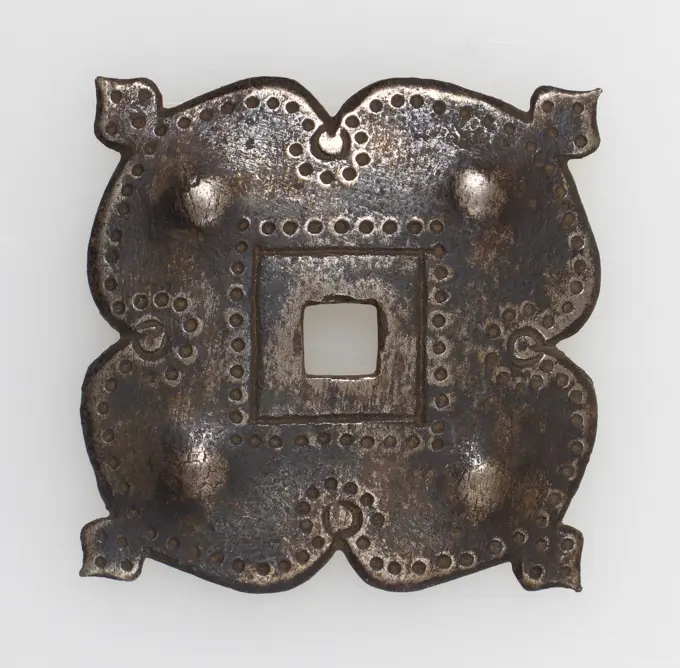
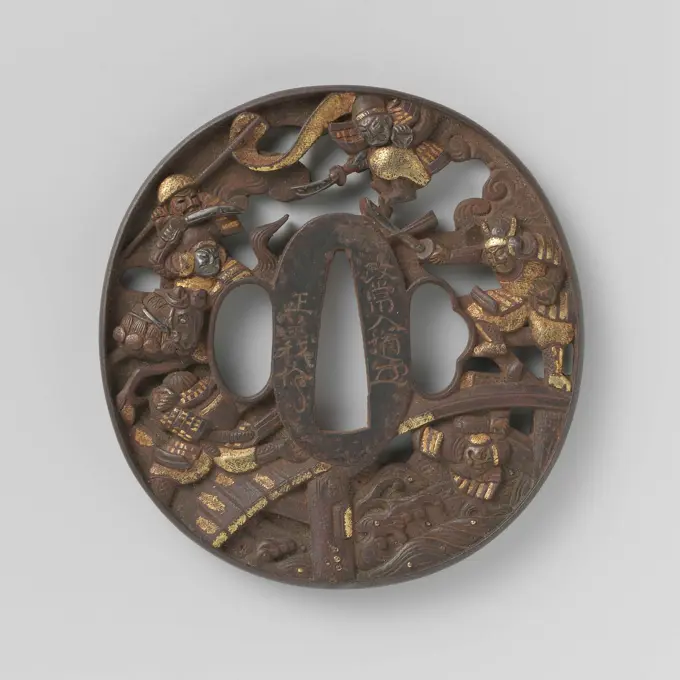
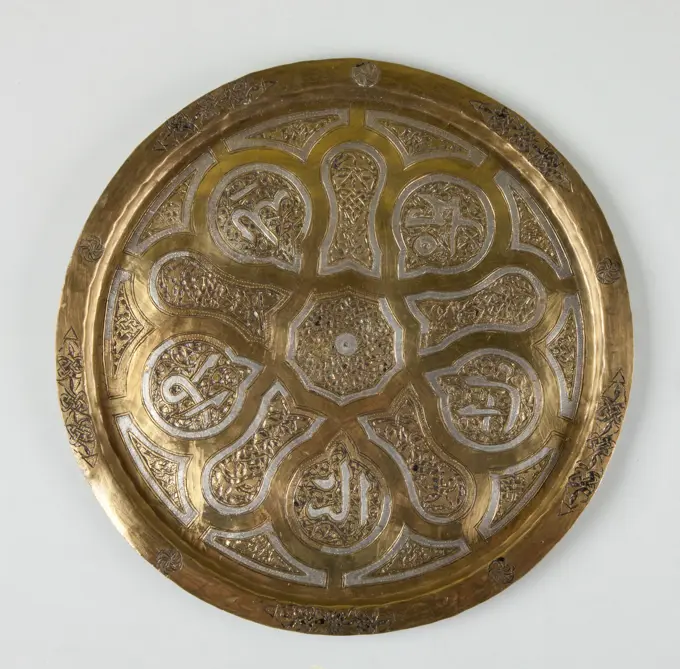
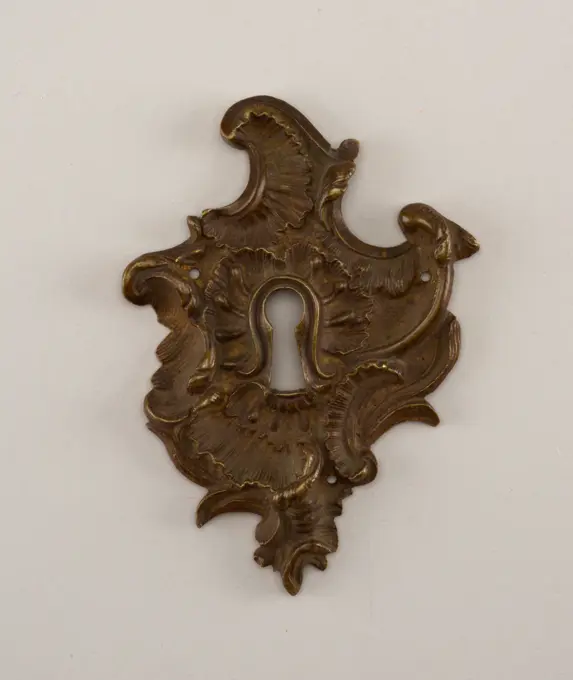
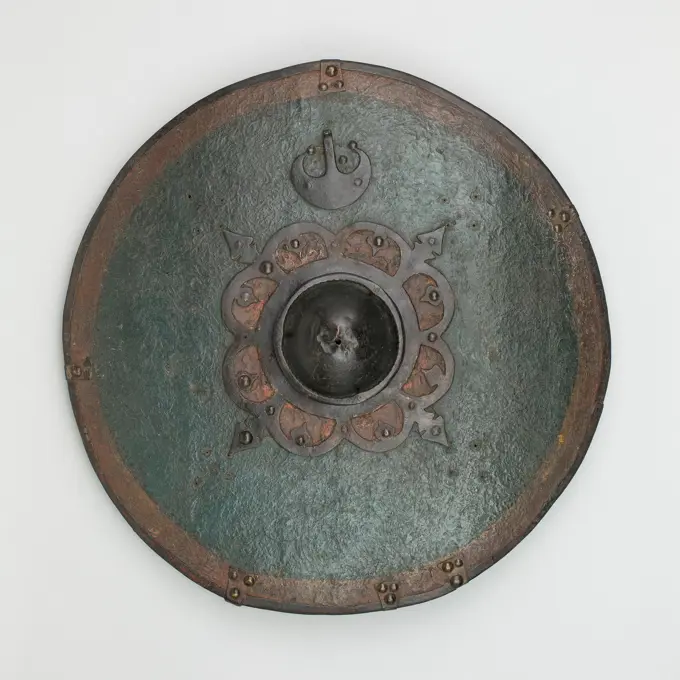
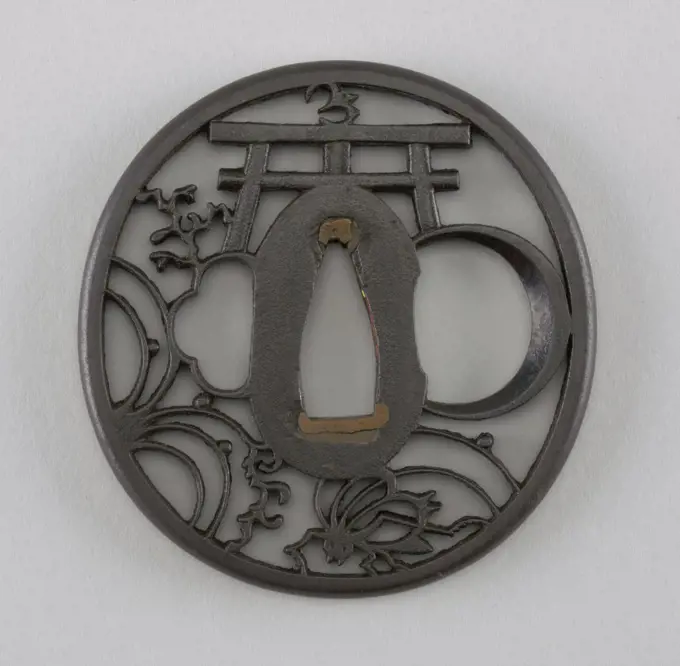
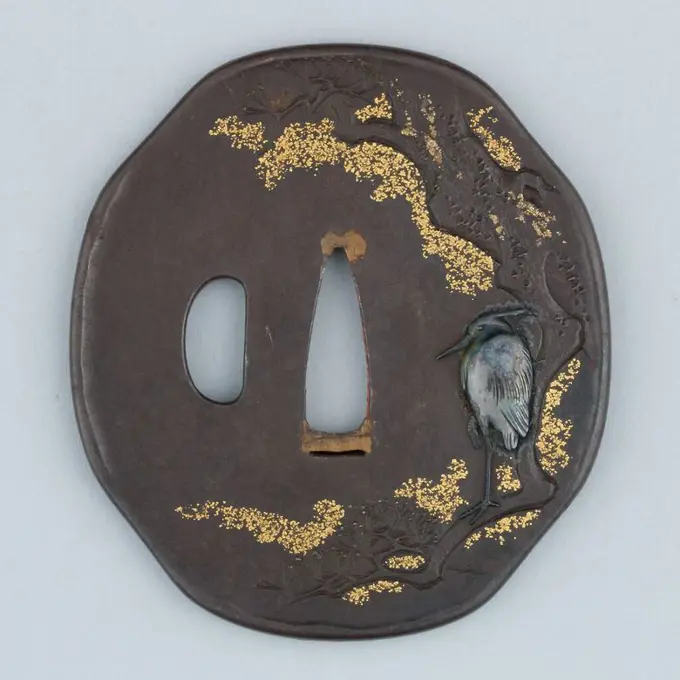
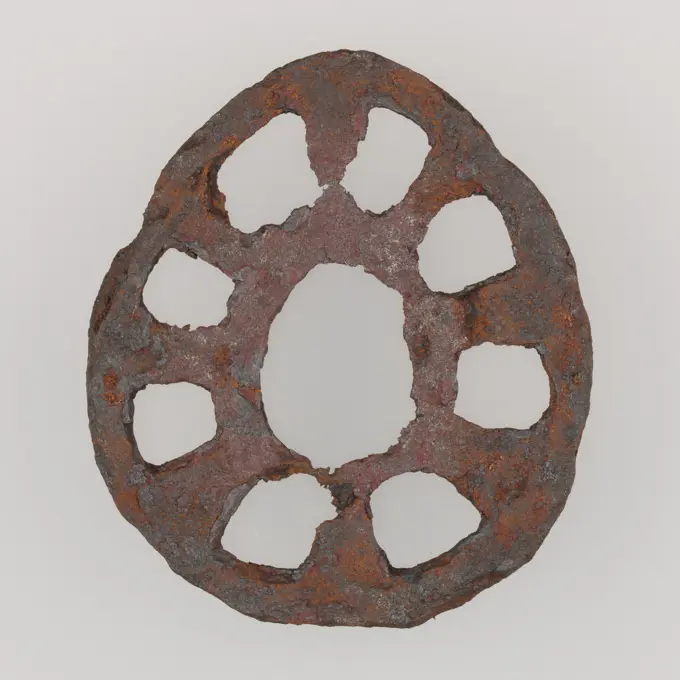
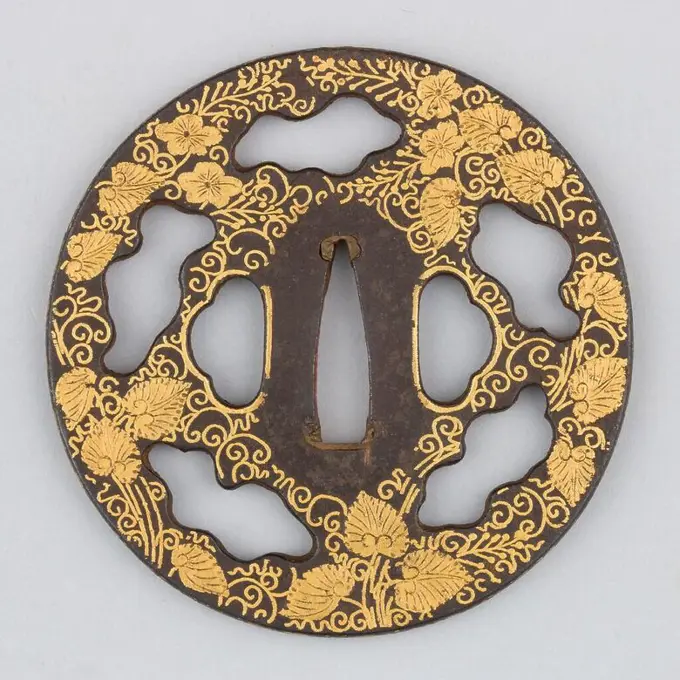
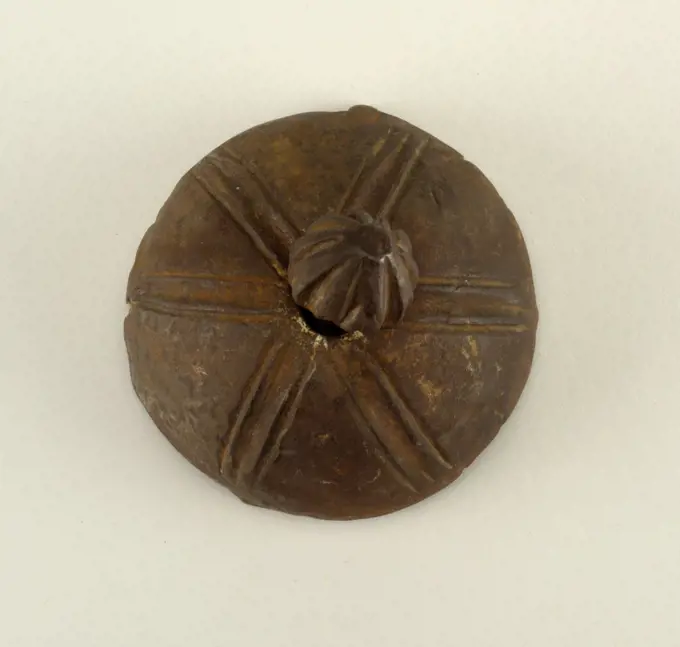
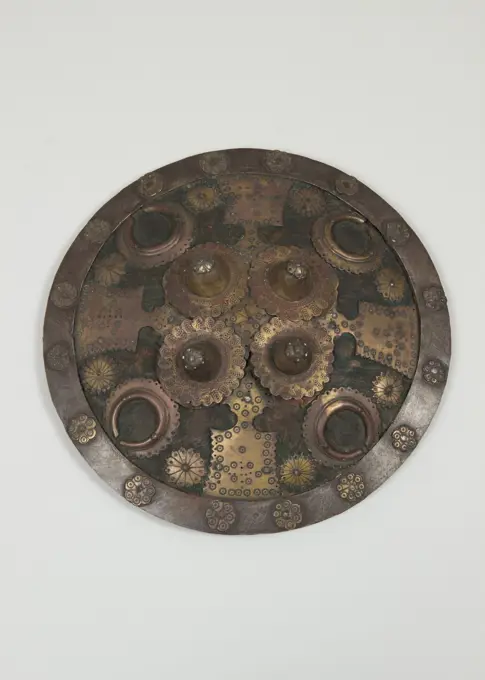
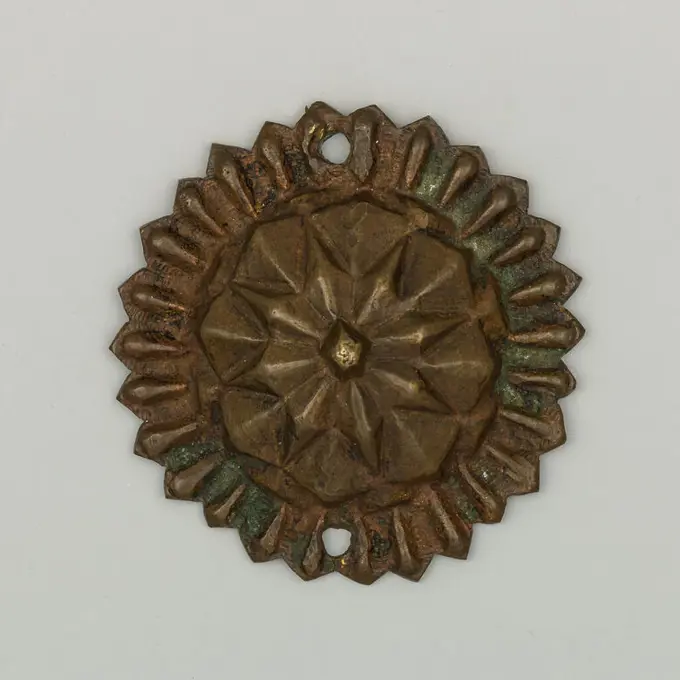
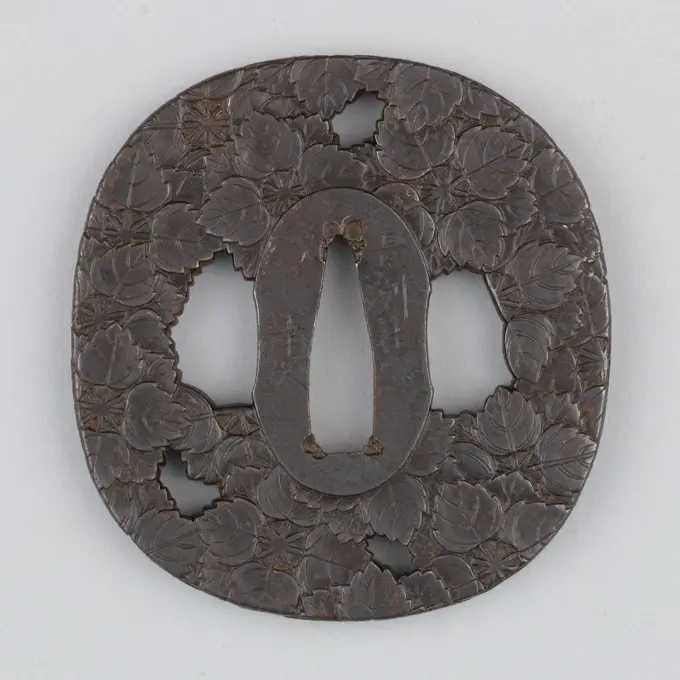
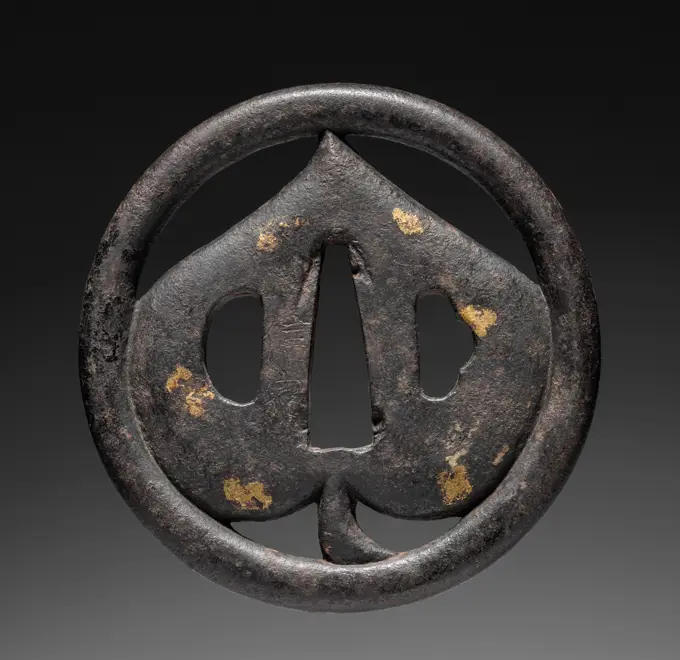
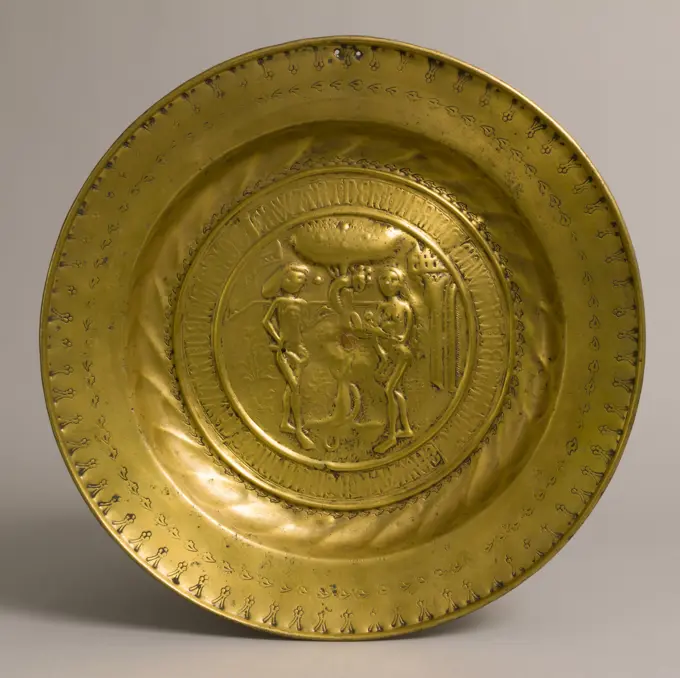
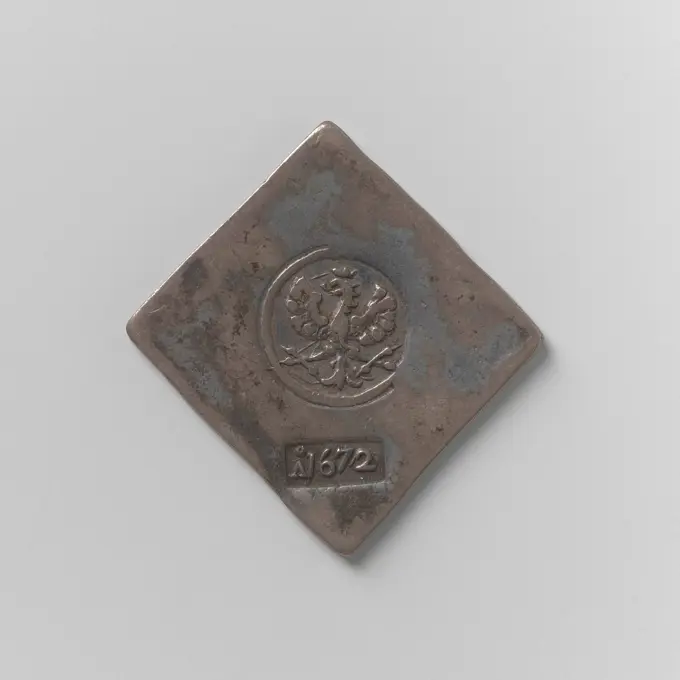
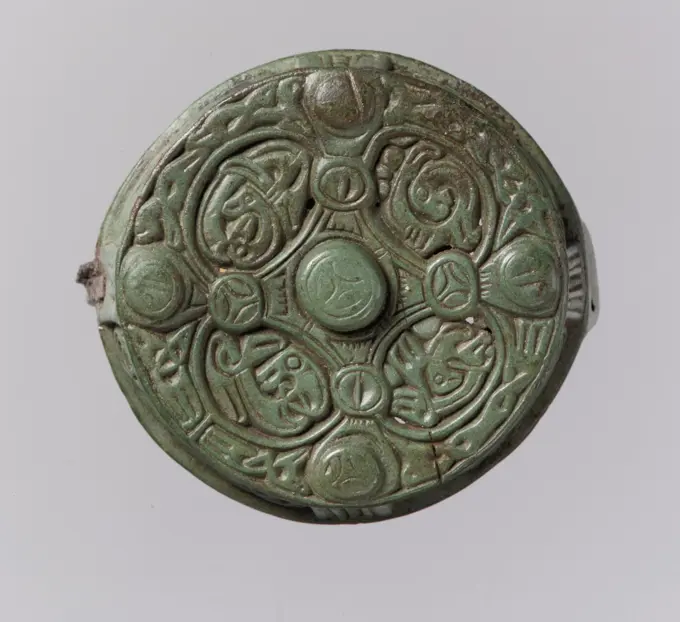
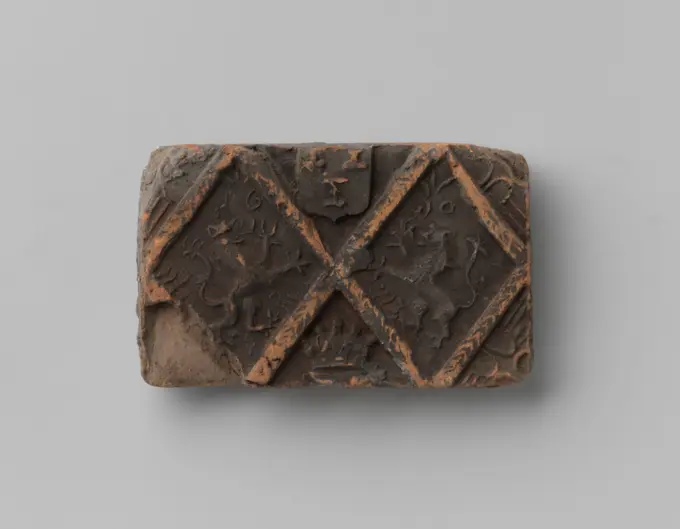
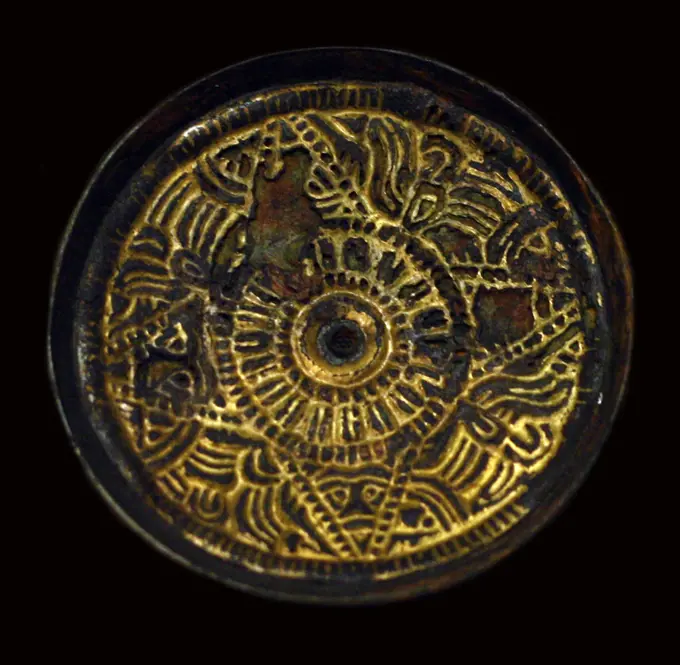
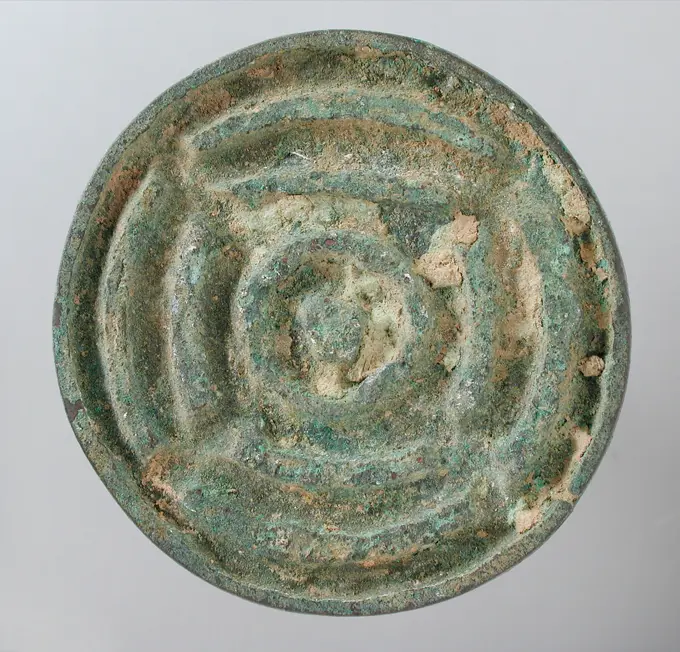
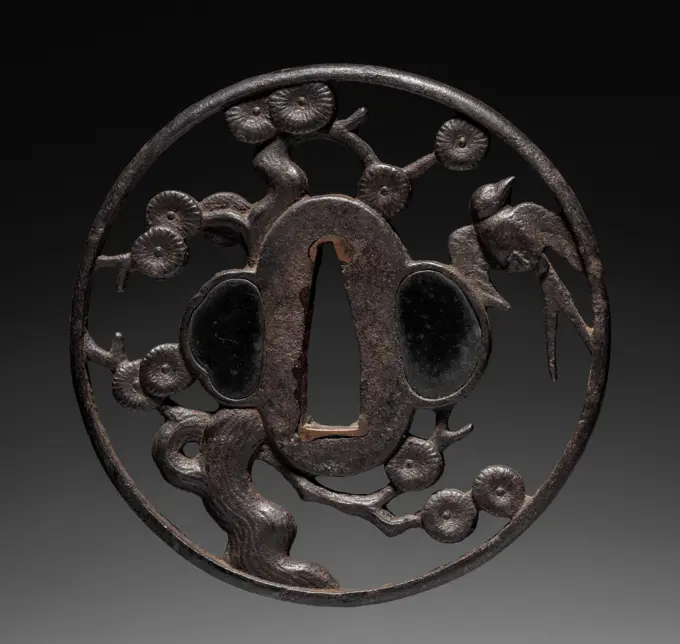
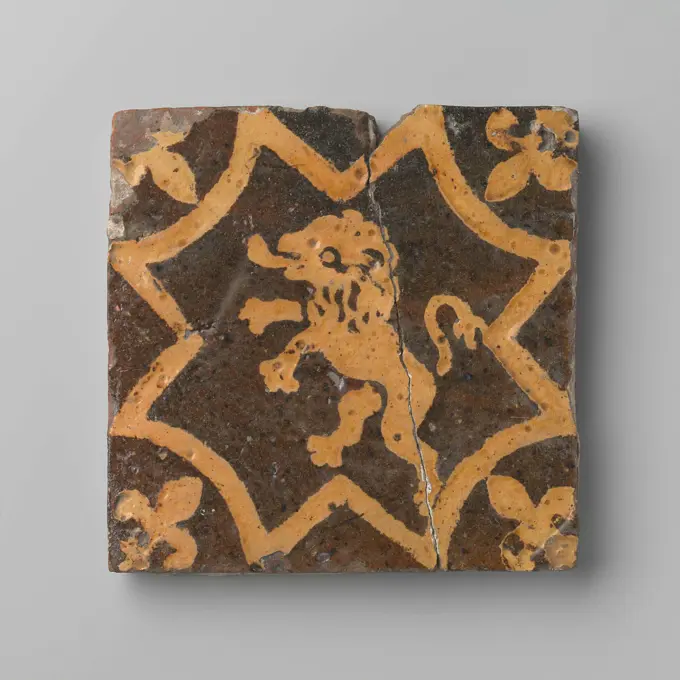
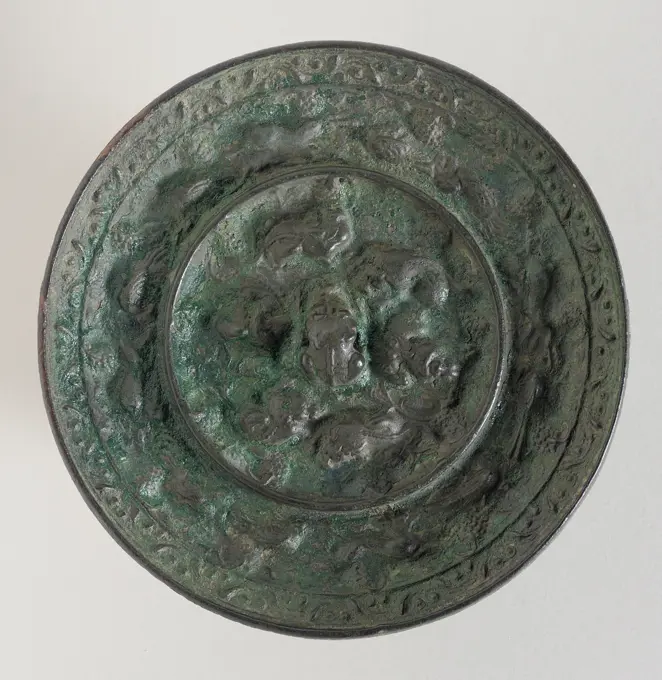
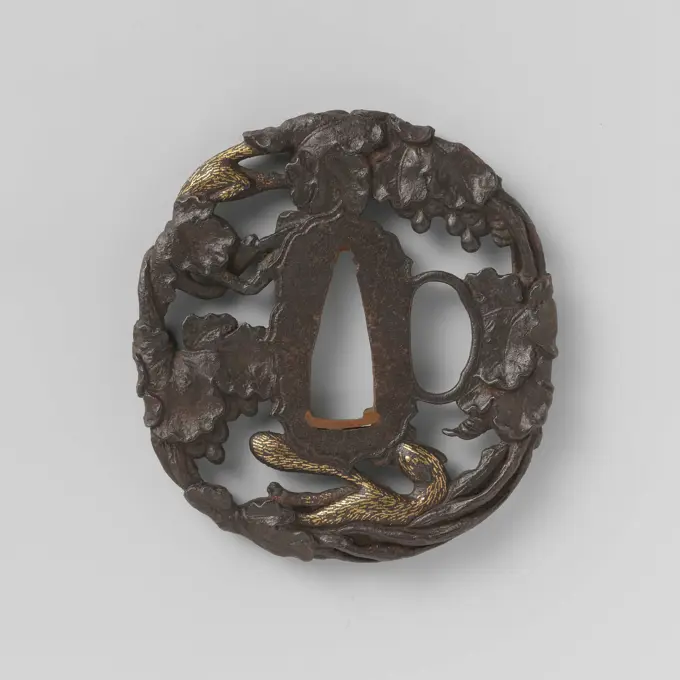
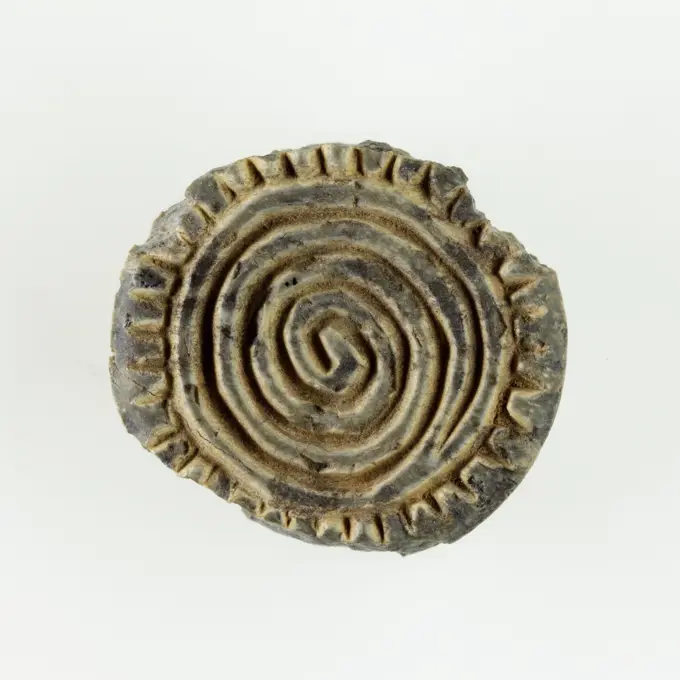
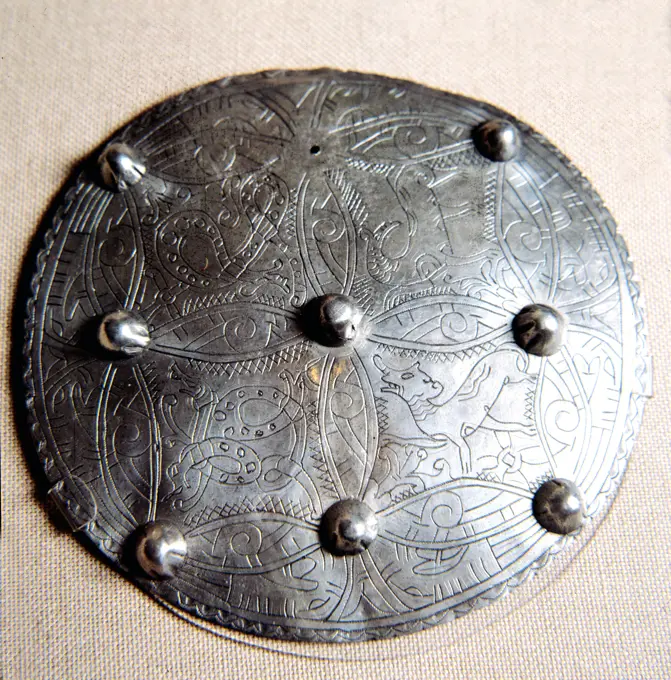
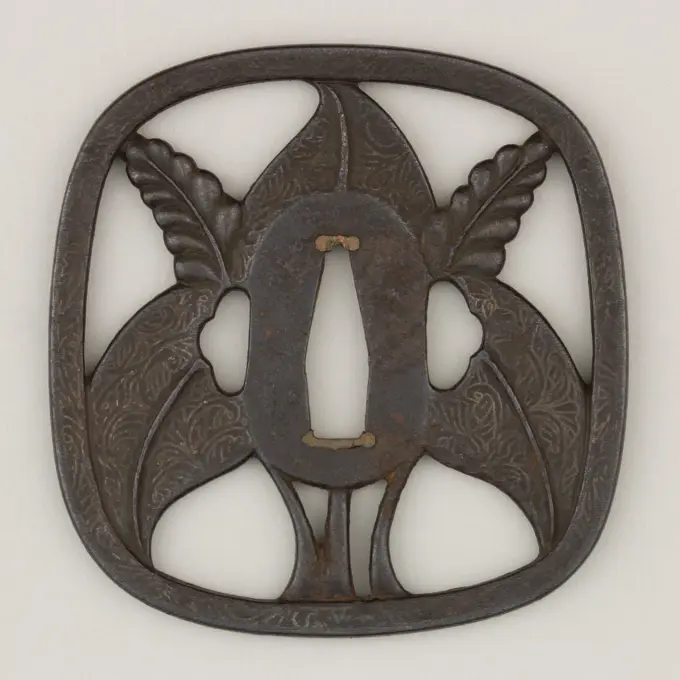
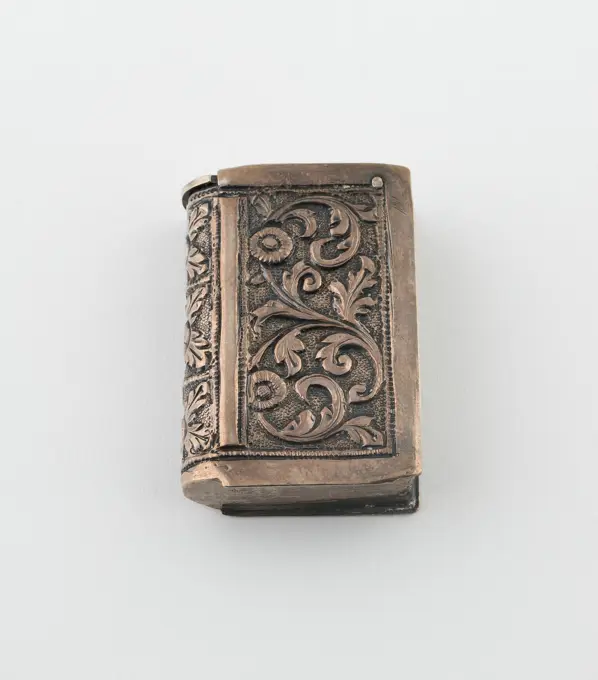
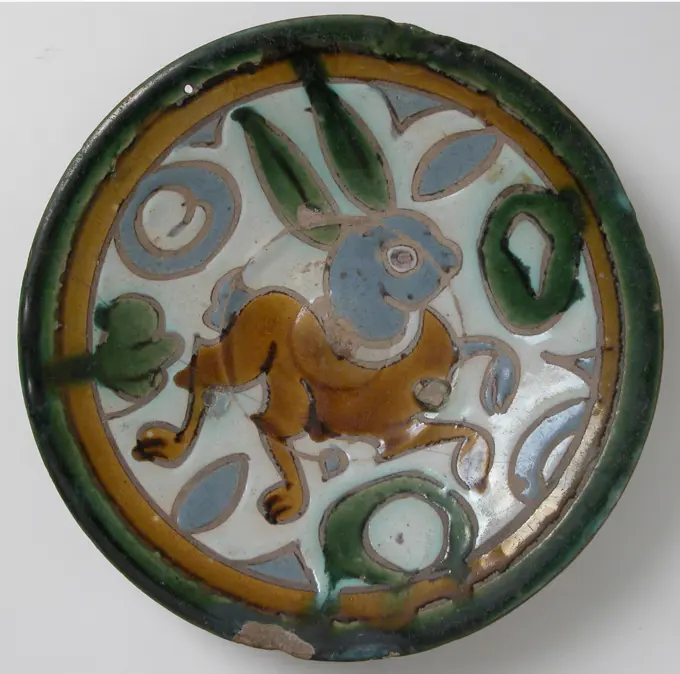
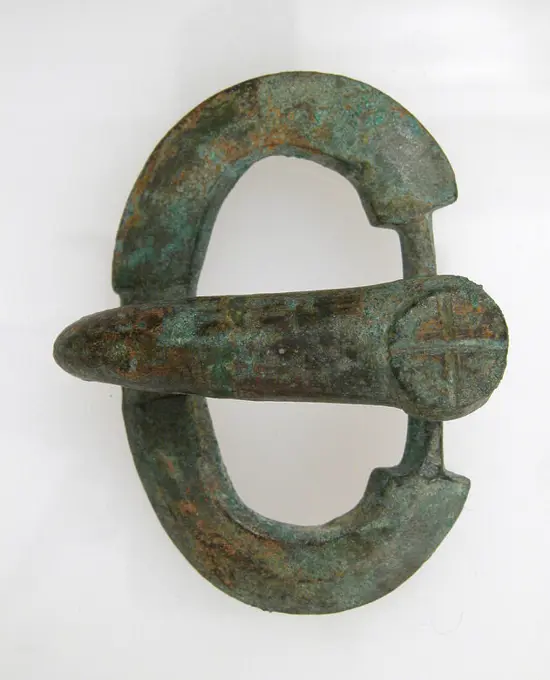
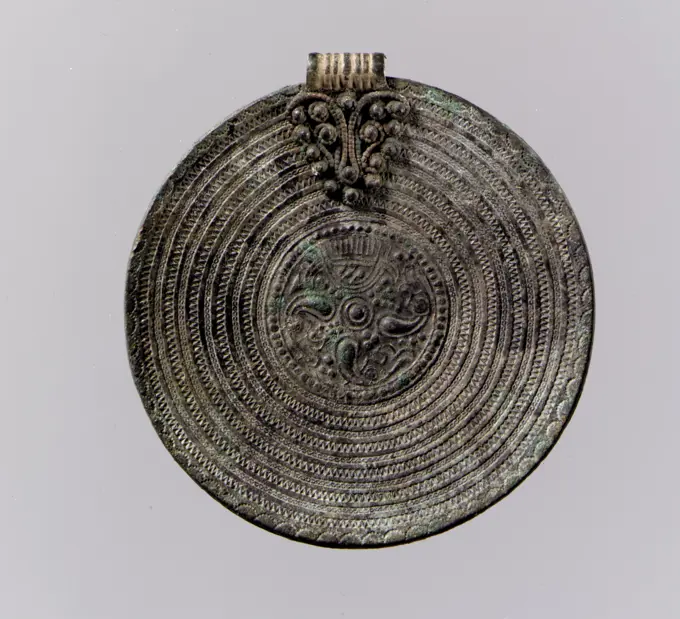
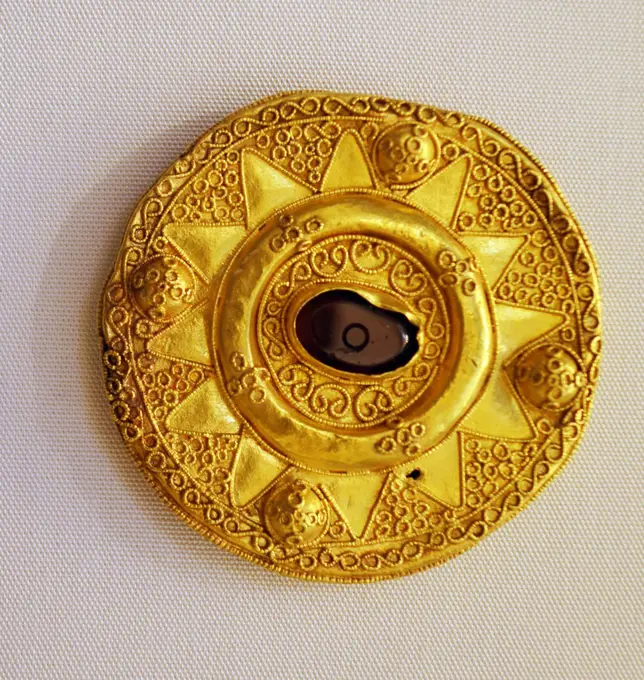
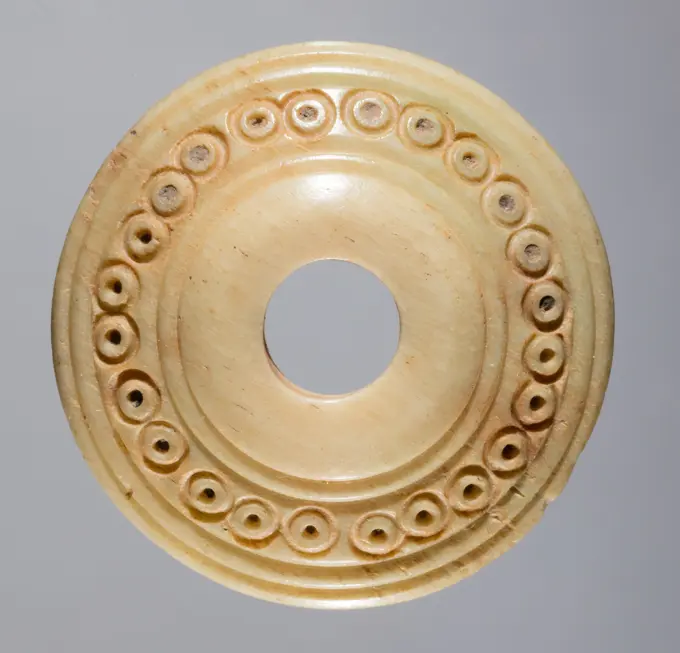
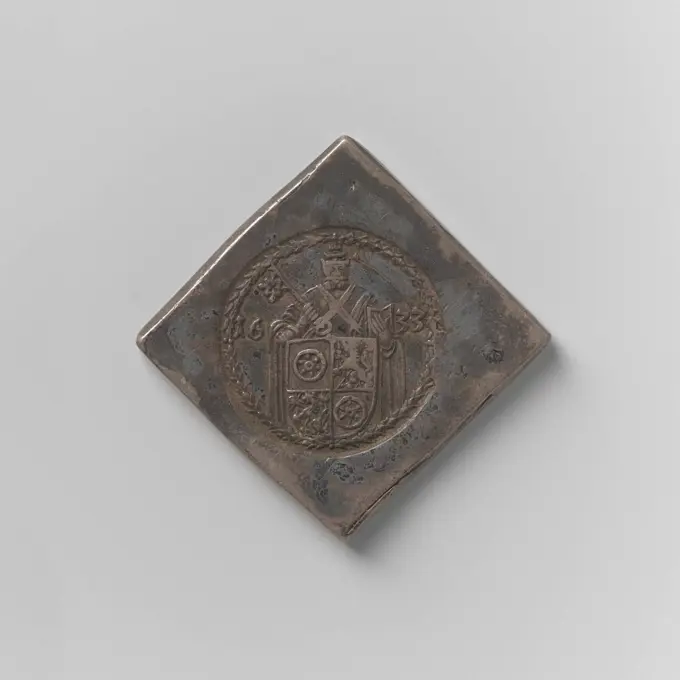
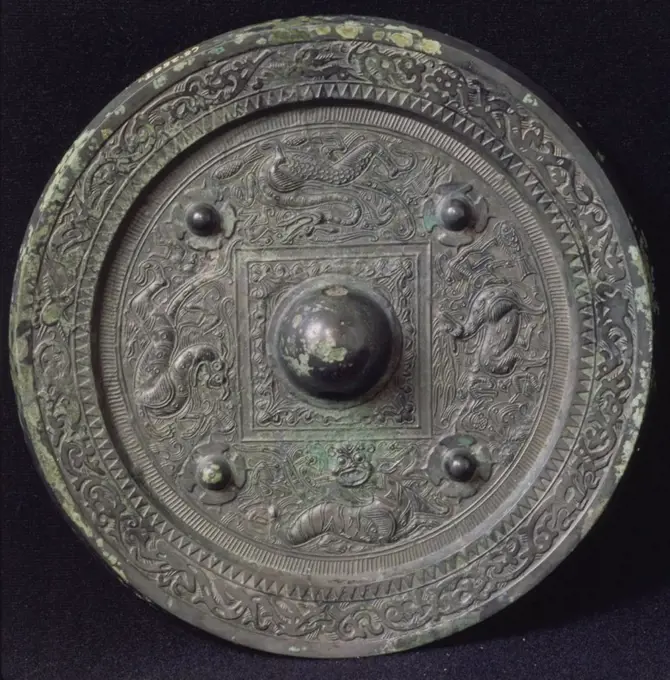
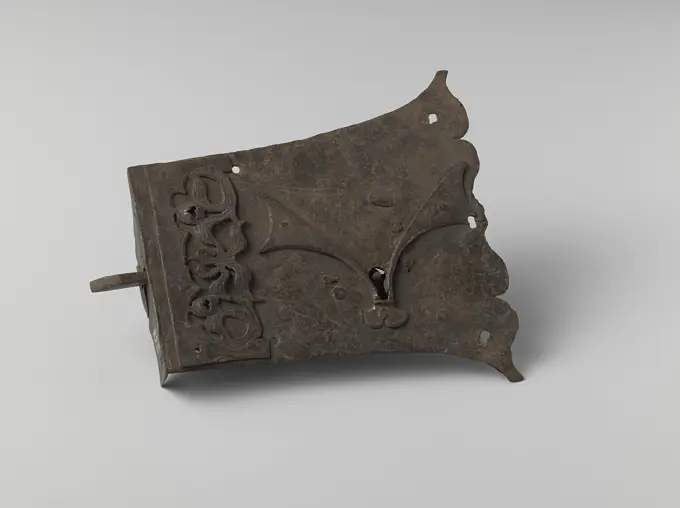
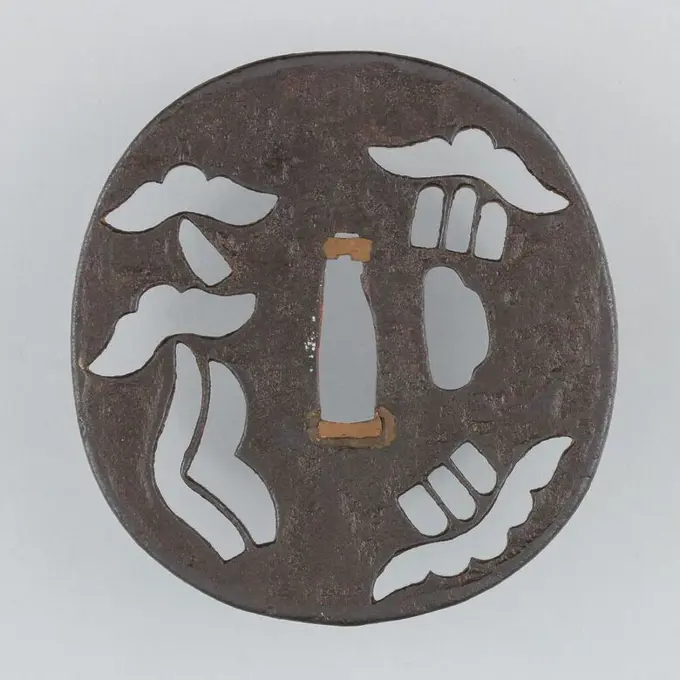
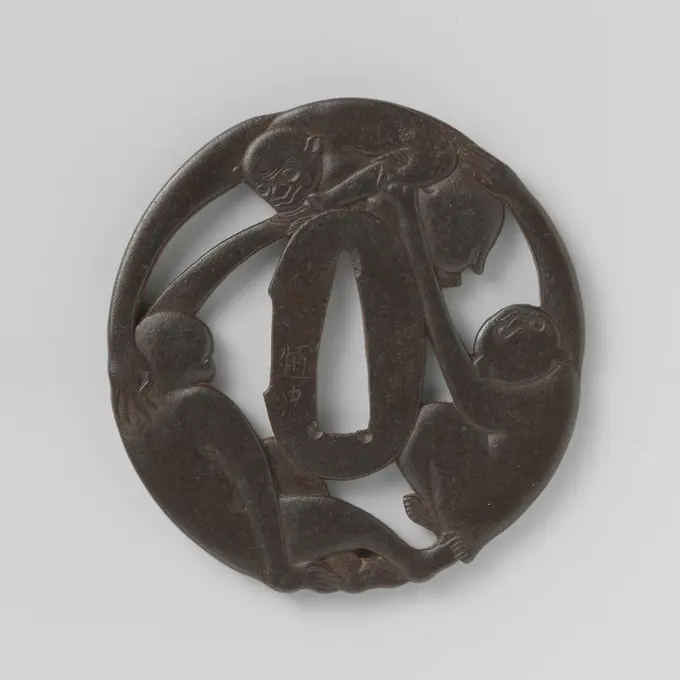
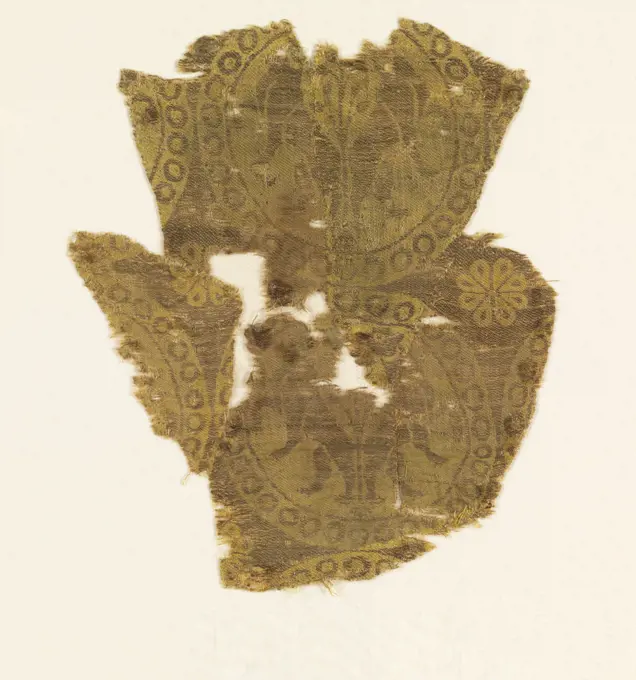
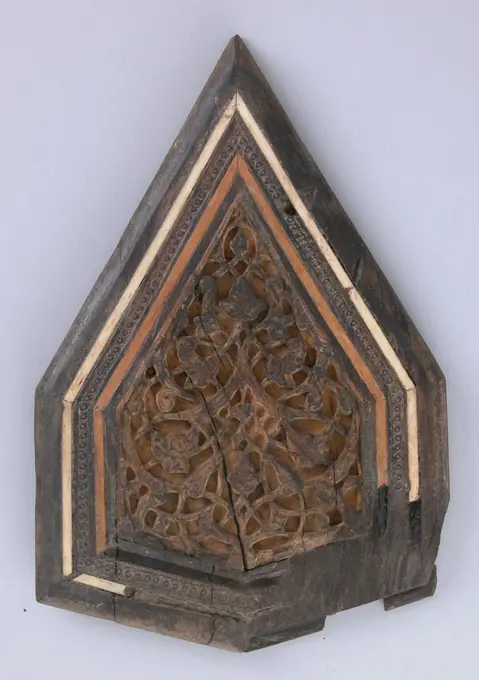
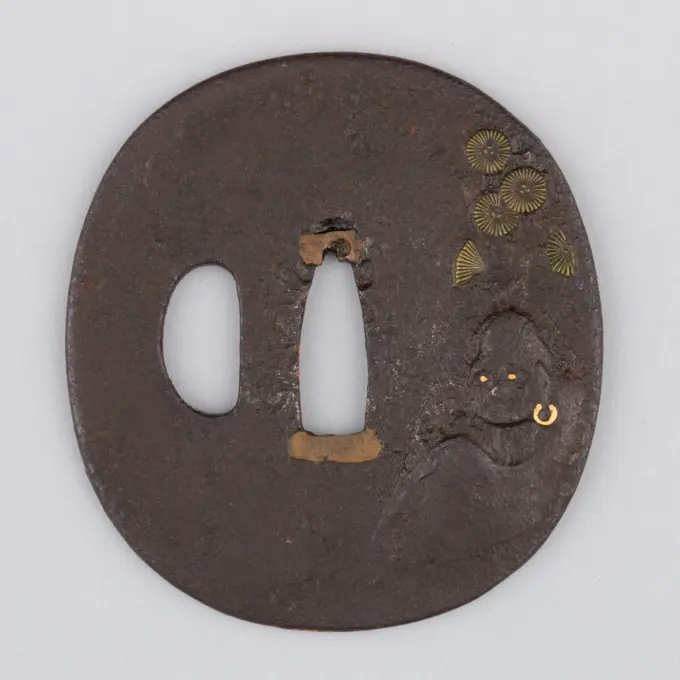
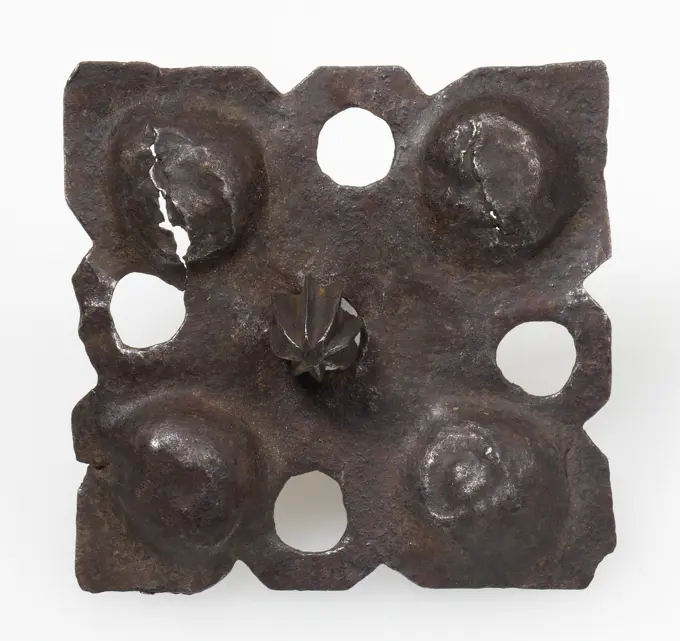
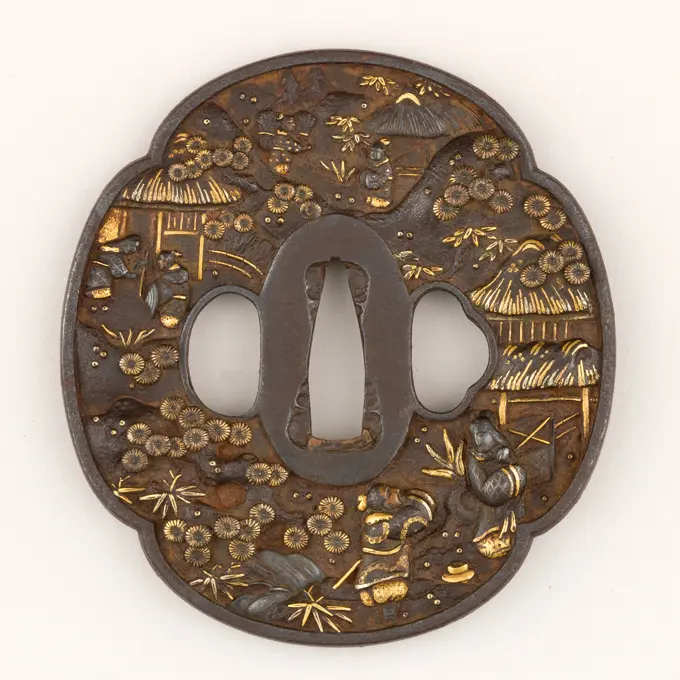
Sword Guard (Tsuba) Depicting Guo Jù (巨図鐔) ca. 1700-1850 Japanese Both sides of this Sōten School (宗典) tsuba show in high relief various stations of Guo Jù (Japanese: Kakukyo), one of The Twenty-four Paragons of Filial Piety. Figures, huts, and pine trees are highlighted in gold, silver, and copper. Guo Jù from the Eastern Han Dynasty (25-220 AD) lived with his mother, wife and son. He was known for being very filial to his mother. However, his family was poor and Guo became worried when he realised that his family's food supply was unable to feed four people. After discussing with his wife, they made a painful decision to bury their son alive, so that they would have one less mouth to feed. He also felt that he and his wife could have another child again, but he could not have his mother back if he lost her. While Guo was digging, he discovered a pot of gold and a note which said that the gold was a gift to him from Heaven. With the gold, Guo was able to provide for his whole family.Carnavalet museum, tokens collectionPlate 15th-16th century European. Plate. European. 15th-16th century. Iron. Metalwork-IronECU to the weapons of France, 1791 Anonymous. ECU to the weapons of France, 1791. Brass.Sword Guard (Tsuba) mid-19th century Inscribed by Yoshitane Japanese This sword guard features a high relief design of children performing the lion dance.. Sword Guard (Tsuba). Japanese. mid-19th century. Iron, copper. Sword Furniture-Tsuba. Oval Tsuba with embossed (Marubori) the struggle between the Taira and the Minamoto at the Uji bridge in 1180; Details in gold Nunome-Zogan, silver and copper; Signed "Masatenune Nyudo" and "Masayoshi".Fragment of a Bowl 14th-15th century. Fragment of a Bowl 446301Sword Guard (Tsuba) late 16th-early 17th century Japanese A tsuba is a sword guard and part of a sword mounting. It is mounted between the swords blade and grip to protect the users hands.. Sword Guard (Tsuba) 30012Carnavalet Museum, Medals CollectionRound trayCarnavalet Museum, Medals CollectionEscutcheonFencing Buckler 1800-1900 Italy. Wood, leather, paint, iron, and brass .Tsuba, Iron, shakudo (a soft copper and gold alloy), Probably Akaska school of Edo. This iron tsuba is naga maru gata (round) in shape, and is crafted in the ji sukashi openwork style, with a positive design showing mika tsuki, korogi, ran and torii (crescent moon, cricket, orchid and shrine gate), possibly making an allusion to a poem. At the center is a wide nakago-ana, an opening through which the sword passes, with sekigane (plugs added to fit the tsuba to a sword) made of shakudo (a soft copper and gold alloy). Surrounding this is the seppadai, a flat oval area that has a migaki ji (smooth) surface finish. On either side are ryo-hitsu, openings for the kozuka (utility knife) and the kogai (skewer tool). At right is sashi ura, the side which faces the blade, whose opening takes the negative form of a moon. Opposite is the sashi omote side, which faces the sword hilt. Its tri-lobed opening is of the suhama type, and symbolically represents the coastline of Horai, the holy island of Sword Guard (Tsuba). Culture: Japanese. Dimensions: H. 2 7/8 in. (7.3 cm); W. 2 1/2 in. (6.4 cm); thickness 3/16 in. (0.5 cm); Wt. 3.7 oz. (104.9 g). Date: ca. 1615-1868. Museum: Metropolitan Museum of Art, New York, USA.Sword Guard (Tsuba) ca. 3rd century-538 Japanese A tsuba is a sword guard and part of a sword mounting. It is mounted between the swords blade and grip to protect the users hands.. Sword Guard (Tsuba) 25815Slit Ring (jue) 800 BCE-600 BCE China. Jade .HAND GUARD, THIS KAKAKATA, 1700 - 1800 Oval tsuba with a part of a bamboo plant in a positive silhouette and relief; Details in gold nunome-zogan; Signed "bushu ju masakata". Japan iron (metal). gold (metal) Oval tsuba with a part of a bamboo plant in a positive silhouette and relief; Details in gold nunome-zogan; Signed "bushu ju masakata". Japan iron (metal). gold (metal)Cymbal 30 B.C.-A.D. 364 Roman Period. Cymbal 551058Mirror (Jing) with Supernatural Animals. China, Six Dynasties period, 317-581. Furnishings; Accessories. Cast bronzeSword Guard (Tsuba). Culture: Japanese. Dimensions: Diam. 3 3/16 in. (8.1 cm); thickness 3/16 in. (0.5 cm); Wt. 4.8 oz. (136.1 g). Date: 17th century. Museum: Metropolitan Museum of Art, New York, USA.Carnavalet Museum, Medals CollectionDish early 16th century German. Dish. German. early 16th century. Brass. Metalwork-BrassScarab Title and Personal Name ( ) 747 BCE-525 BCE Egypt. Steatite . Ancient EgyptianShell-Shaped Vessel. UnknownHalf of Dam disk with portrait: Emperor Otto ,, 1525 - 1575 Otto. Secvndvs. Emperor. AVG (Otto 2 (955-983), Duits Keizer) Nuremberg boxwood Otto. Secvndvs. Emperor. AVG (Otto 2 (955-983), Duits Keizer) Nuremberg boxwoodFalse Coin, Władysław Jagiełło (1386 1434), Kwartalnik Mały (Ternar); 1399/1400 unknownMirror. Bronze, China, Han dynasty (206 BC AP.J.-C.). Paris, Cernuschi museum. Asian art, Chinese art, beauty, bronze, han dynasty, mirror, daily lifeTray. Iran, late 13th-early 14th century. Metal. Brass, engraved and inlaid with silver and goldDecorative Door Boss And Nail; wrought iron; a) H x diam.: 4.2 × 9.4 cm (1 5/8 × 3 11/16 in.) b) H x diam.: 7.3 × 2.5 cm (2 7/8 in. × 1 in.)Decorative door boss and nail, Wrought iron, Hemispherical boss divided into six triangular sections by paired lines bounding narrow wrought channels. Nail has gadrooned mushroom-shaped head on a square shank., Spain, 15th century, metalwork, Decorative Arts, Decorative door boss and nailShield (Dhàl) 19th century Indian, Balochistan (modern-day Pakistan). Shield (Dhàl). Indian, Balochistan (modern-day Pakistan). 19th century. Leather, copper alloy, iron, hide. Balochistan. ShieldsPair of Bit Bosses. Culture: probably Netherlandish. Dimensions: 42.50.191; Diam. 2 15/16 in. (7.5 cm); Wt. 3.6 oz. (103 g); 42.50.192; Diam. 2 7/8 in. (7.3 cm); Wt. 3.3 oz. (93 g). Date: first half 17th century.Bit bosses were ornamental elements decorating both sides of a horse bit. These circular bit bosses are adorned with a domed faceted center and a serrated rim. This object belongs to a large group of bosses featuring a series of rims and centers combined in different ways. The exact center of production of these bosses is still unclear. If the motifs used are Italian, the scale of the production and the process of combining a series of rims and center recalls contemporary German practices. Some of them, however, are identical or very similar to bosses seen in several early 17th-century Netherlandish paintings, a likely origin for the manufacture of these objects. Museum: Metropolitan Museum of Art, New York, USA.The Duke of Chartres / Installation of the first stone of the Portal of Saint-Eustache Jean Duvivier (1687-1761). The Duke of Chartres / Installation of the first stone of the Saint-Eustache Portal. Medal, 1753.Sword Guard (Tsuba) 18th century Japanese A tsuba is a sword guard and part of a sword mounting. It is mounted between the swords blade and grip to protect the users hands.. Sword Guard (Tsuba) 29974Sword Guard, c. 1615-1868. Japan, possibly Edo period (1615-1868). Iron; diameter: 8.4 cm (3 5/16 in.).Box;  XIX-PO. 20th century (1801-00-00-1950-00-00);Toeplitz-Mrozowska, Jadwiga (1880-1966)-collection, gift (provenance)Dish early 16th century German. Dish. German. early 16th century. Brass. Metalwork-BrassTissue fragment with orbiculus. Natural linen tissue fragment with woven orbiculus. Inside a red circle with a corrugated edge are located on a blue ground naked figures between which a line in yellow and green winds. Centrally a circle with red ground on which eight blue surfaces with white cross or dot pattern.Emergency period of quarter of Daalder of Deventer's siege, emergency cooperated from the council silver to payment of the war costs. diamond. Front: two stamps: large, round stamp: crowned eagle; Below: Rectangular stamp with year. Downside: sitting figure in wagon without horses holds a branch in left hand against the body and in her right hand raised an opened book with the left pages representation of radiant sun and on the right-hand pages. above her head suspicious star; Links inscription "MarcvrrvsRound Box Brooch 700-900 Viking A menagerie of tiny animals inhabits the interlace patterns on this round brooch. The four oval compartments on the top show beasts with round eyes, open jaws, claw feet, and intricately entwined bodies. Known as a box brooch because it was used as a container for small objects, it would have been worn by a Viking woman on the island of Gotland to secure her shawl at the collar.. Round Box Brooch 466247Brooch -Kuchenplatte with Pyramus and Thisbe and scenes from the life of the lost son, Anonymous, After c. 1525 - Before c. 1575 Tin round plaque, a so -called 'coughplatte'. In a circle, a performance of Pyramus and Thisbe is engraved in a fountain. This scene is related to a print by Heinrich Aldegrever from 1553. Around four scenes from the life of the lost son, with the clock from the top left: the son says goodbye to his father, the son partying at the table, the son as a pig farmer And the son returns to his father on his knees. The scenes are related to the series by Hans Sebald Beham from 1540. The scenes are mutually separated by a Caratide. Frankfurt am Main tin (metal) casting / engraving Tin round plaque, a so -called 'coughplatte'. In a circle, a performance of Pyramus and Thisbe is engraved in a fountain. This scene is related to a print by Heinrich Aldegrever from 1553. Around four scenes from the life of the lost son, with the clock from the top left: the son says goodbye to hiStater from ChannelIslandsPlanets-manager. Cornalet Collection Sites 2013-2016. Numismatic.Hearing stone with representation of two climbing lions and a coat of arms, 1610 Hearing stone with representation of two climbing lions and the year 1610, placed in profiled window. The half windows at the top and bottom are filled with a weapon, a crown and star motif. Southern Netherlands earthenware Hearing stone with representation of two climbing lions and the year 1610, placed in profiled window. The half windows at the top and bottom are filled with a weapon, a crown and star motif. Southern Netherlands earthenwareRosette for Wig Decoration , 1980-1801 BC. Egypt, Middle Kingdom, Dynasty 12. Silver; diameter: 1.2 cm (1/2 in.).Bernard Palissy enamel dish, 16th century. The Arts of the Middle Ages and at the Period of the Renaissance by Paul Lacroix, 1874Gilded bronze brooch, Anglo Saxon 8th century ADIvory disk with rosette. Culture: Cypriot. Dimensions: Diameter 1 7/8 in. (4.8 cm). Date: ca. 1600-1050 B.C..Ivory was imported to Cyprus from the Near East or Egypt. The rosette was a popular decorative motif originally inspired by designs on Syrian and Phoenician minor arts and textiles. Museum: Metropolitan Museum of Art, New York, USA.Slot, anonymousStamp Seal. Iran, circa 1350-1000 B.C. or earlier. Tools and Equipment; seals. Bronze, castSword Guard (Tsuba) with Swallow in Pine, c. 1615-1868. Japan, possibly Edo period (1615-1868). Iron; diameter: 8 cm (3 1/8 in.).Floor tile. Floor tile with a climbing lion to the left within an eight-pointed star. In the corners, a lily.Grahal-Manzara. Carnavalet 2013-2016 collection sites. Numismatics.Sword Guard (Tsuba) with Chrysanthemums, c. 1615-1868. Japan, possibly Edo period (1615-1868). Iron; diameter: 6.7 cm (2 5/8 in.).Mirror (Jing) with Lions and Grapes. China, Tang dynasty, 618-906. Furnishings; Accessories. Cast bronzeDoor knocker. An iron door knocker, driven and engraved.. Oval tsuba with an irregularly shaped edge in the form of two squirrels amidst vine; The squirrel coat is shown in gold Nunome-Zogan.Inauguration of the Museum of Versailles, June 10, 1837 Armand-Auguste caked (1793-1881). Inauguration of the Museum of Versailles, June 10, 1837. Bronze.Scarab ca. 1981-1550 B.C. Middle Kingdom-Second Intermediate Period. Scarab 557070Dish, zhang Cheng, C. 1300 -C. 1325 Lacquer scale, cut black -lacquer, decorated with two flying mandarin ducks between lotus flowers and other aquatic plants. China wood (plant material). lacquer (coating) Lacquer scale, cut black -lacquer, decorated with two flying mandarin ducks between lotus flowers and other aquatic plants. China wood (plant material). lacquer (coating)Lithuanian Trojak; Zygmunt II August (Polish king; 1544-1572); 1562 (1562-00-00-1562-00-00);Viking silver disc brooch.Sword Guard (Tsuba) 18th century Japanese A tsuba is a sword guard and part of a sword mounting. It is mounted between the swords blade and grip to protect the users hands.. Sword Guard (Tsuba) 26404Mirror Korea. Mirror 57484Sword Guard (Tsuba) 17th-18th century Japanese A tsuba is a sword guard and part of a sword mounting. It is mounted between the swords blade and grip to protect the users hands.. Sword Guard (Tsuba) 34943Decorative door boss and nail, Wrought iron, Square type, pierced and embossed with wrought lines. Quadrant leaf design based on old examples. Each leaf with a high, raised boss. Round nail head on a square shank., Spain, 16th-17th century, metalwork, Decorative Arts, Decorative door boss and nailButton; brass, steel, colored enamel; 1931-59-848-aBowl 10th century. Bowl 449799Plate and Nail 15th-16th century European. Plate and Nail. European. 15th-16th century. Iron. Metalwork-IronSword Guard (Tsuba) late 17th century Japanese A tsuba is a sword guard and part of a sword mounting. It is mounted between the swords blade and grip to protect the users hands.. Sword Guard (Tsuba) 34944Book-Shaped Match Safe 1875-1885 England. Silver .Inlay Piece. Egypt, 14th century. Wood. Wood with ivory inlayPlate late 1400s or early 1500s Spanish Ceramic artists working in Seville in the late 1400s and early 1500s revived the laborious process of cuerda seca, which had been common in Spain centuries earlier. In this technique, outlines of a design are painted onto the clay using a mixture of manganese and oil. The painted lines dry into a resist barrier that keeps differently colored glazes apart. Objects made via cuerda seca were often expensive export items shipped to Africa, northern Europe, and the Americas.. Plate. Spanish. late 1400s or early 1500s. Tin-glazed earthenware (cuerda seca technique). Made in Seville, Spain. CeramicsSword Guard (Tsuba) ca. 1615-1868 Japanese A tsuba is a sword guard and part of a sword mounting. It is mounted between the swords blade and grip to protect the users hands.. Sword Guard (Tsuba). Japanese. ca. 1615-1868. Copper-gold alloy (shakud?), gold, copper. Sword Furniture-TsubaGrahal-Manzara. Carnavalet 2013-2016 collection sites. Numismatics.Belt Tongue and Oval Loop from a Buckle. Culture: Frankish. Dimensions: Overall: 2 1/16 x 1 5/8 x 11/16 in. (5.3 x 4.2 x 1.7 cm). Date: 7th Century. Museum: Metropolitan Museum of Art, New York, USA.Bracteate Pendant 700-800 Vendel Pendants such as these with stamped designs were the most popular kind of jewelry from the 600s through the 900s. Often made from gold, they usually show animals or a mythological scene in the center of an elaborate border. A stylized human head and three open-jawed animal heads are represented here.. Bracteate Pendant 466116Gold Pendant with Sun Decoration 630 A.D.Phalera with Relief of Lion Attacking a Stag. UnknownSpindle Whorl, 700s - 900s. Iran, early Islamic period, 8th - 10th century. Bone, incised; overall: 0.5 x 2.7 x 2.7 cm (3/16 x 1 1/16 x 1 1/16 in.).. Almost round tsuba in the form of a pumpkin with leaf; On one side of the tsuba, the veins are inlaid with gold (Nunome-Zogan).Siege from Osnabruck by the Swedes. Unilateral, diamond-shaped emergency. Front: in round stamp: Crowned Peter with key in the right and book in a left hand standing in front of coat of arms between year within a bran wreath. Downside: blankFigure, Han Dynasty (206 BC  AD 9).Sword Guard (Tsuba) 18th century Japanese A tsuba is a sword guard and part of a sword mounting. It is mounted between the swords blade and grip to protect the users hands.. Sword Guard (Tsuba) 26261Key lock. A lock. Gothic.Helmut Hiatt, Plate  Washington and Lafayette, c 1936 Plate - Washington and LafayetteSword Guard (Tsuba). Culture: Japanese. Dimensions: H. 3 5/16 in. (8.4 cm); W. 3 3/16 in. (8.1 cm); thickness 1/8 in. (0.3 cm); Wt. 3 oz. (85 g). Date: late 16th-early 17th century. Museum: Metropolitan Museum of Art, New York, USA.Copper plate from a buckle. Copper plate from a buckle at which the shape of a bird has been saved.. Almost round tsuba in the form of three monkeys; Signed "tsunetada".Fragment, Medium: silk Technique: compound weft twill (samite), Ground divided into pearl roundels containing addorsed lions with tree in center. Rosettes in the interspaces. In yellow and brown., possibly Sicily, 13th century, woven textiles, FragmentEscutcheon; brass; L x W: 4.3 × 2.9 cm (1 11/16 × 1 1/8 in.); 1931-34-6Disk Brooch ca. 500-600 Frankish. Disk Brooch 465347 Frankish, Disk Brooch, ca. 500600, Silver, glass paste, remnant of iron pin, metal foil, Overall: 5/8 x 5/16 in. (1.6 x 0.8 cm). The Metropolitan Museum of Art, New York. Gift of J. Pierpont Morgan, 1917 (17.192.40)Thread Waxing Tool, 19th-20th century, 3 x 2 9/16 x 1/2 in. (7.62 x 6.51 x 1.27 cm), Wood, lacquer, Taiwan, 19th-20th centuryPanel from a Minbar 13th-14th century Although the pattern of this group of panels appeared as early as the late twelfth century in Azerbaijan and is recorded as late as 1480-81, it enjoyed a particular vogue in Cairo between 1330 and 1350. A number of minbars in Cairo with this pattern and from this period bear very close resemblance to these pieces.. Panel from a Minbar 445031Lobed Mirror with Paired Phoenixes and Floral Displays, 700s. China, Tang dynasty (618-907). Bronze; diameter: 15.6 cm (6 1/8 in.); overall: 0.9 cm (3/8 in.); rim: 0.6 cm (1/4 in.).Sword Guard (Tsuba) ca. 1615-1868 Japanese A tsuba is a sword guard and part of a sword mounting. It is mounted between the swords blade and grip to protect the users hands.. Sword Guard (Tsuba). Japanese. ca. 1615-1868. Iron, copper. Sword Furniture-TsubaPlate and Nail 15th-16th century European. Plate and Nail. European. 15th-16th century. Iron. Metalwork-IronPlatter, Brass, Circular with raised boss at center. Decorated with repoussé gadrooning surrounded by a field with inscription. Allover punched designs in three concentric circles., France, ca. 1740, metalwork, Decorative Arts, Platter