Intricate Metalwork Artifacts

A collection of historical metalwork items including Japanese tsubas and European plates, featuring intricate designs and rich cultural significance.

ECU to the weapons of France, 1791 Anonymous. ECU to the weapons of France, 1791. Brass.
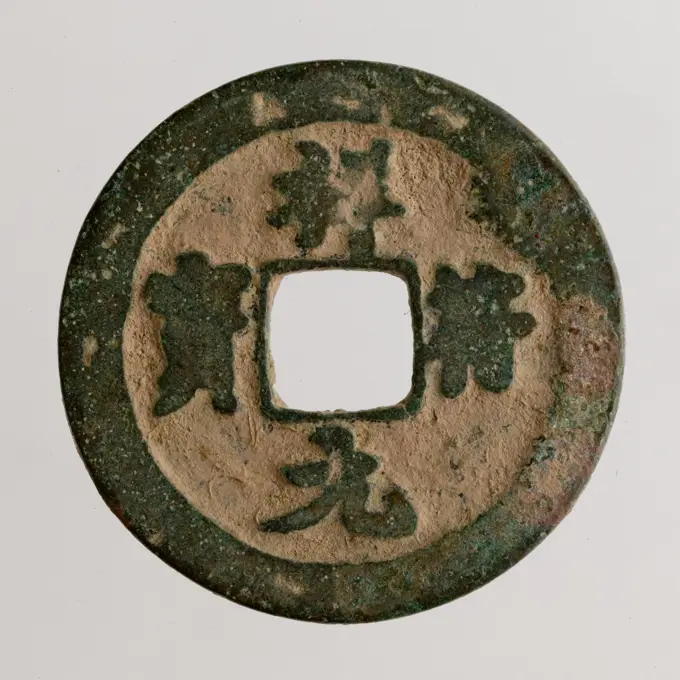
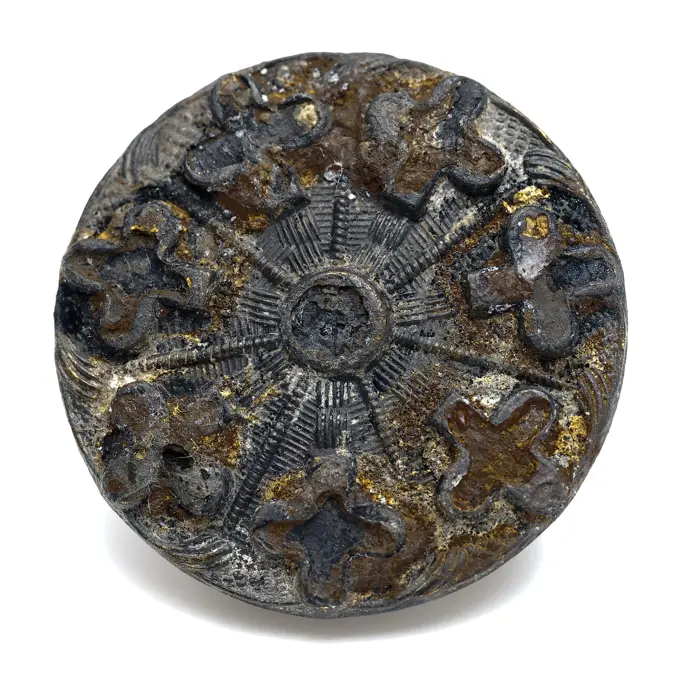
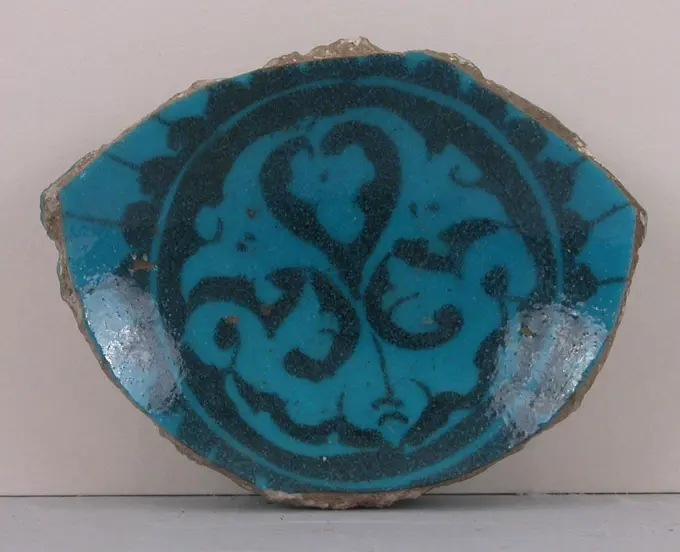
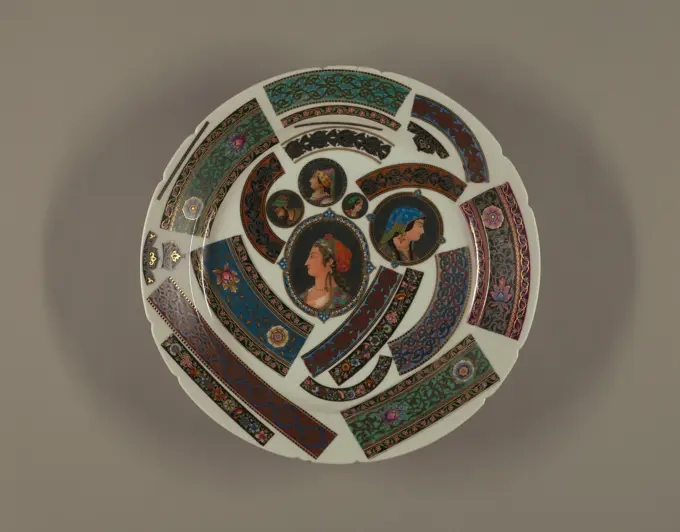
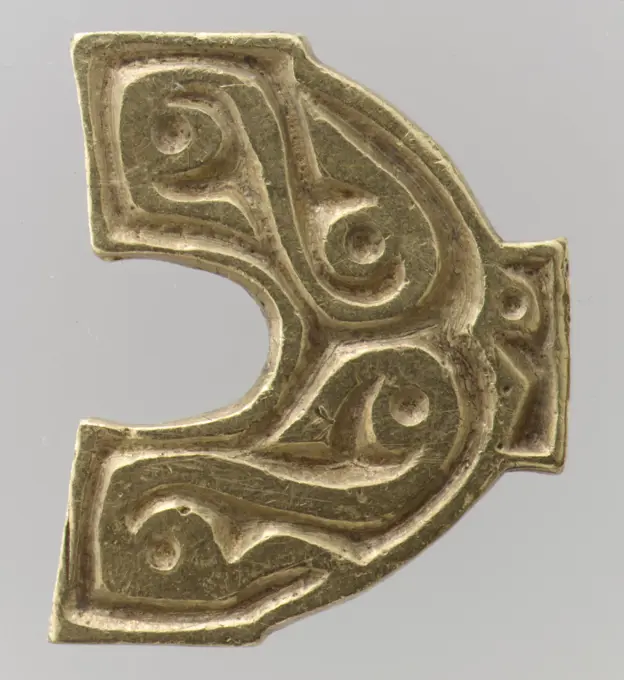
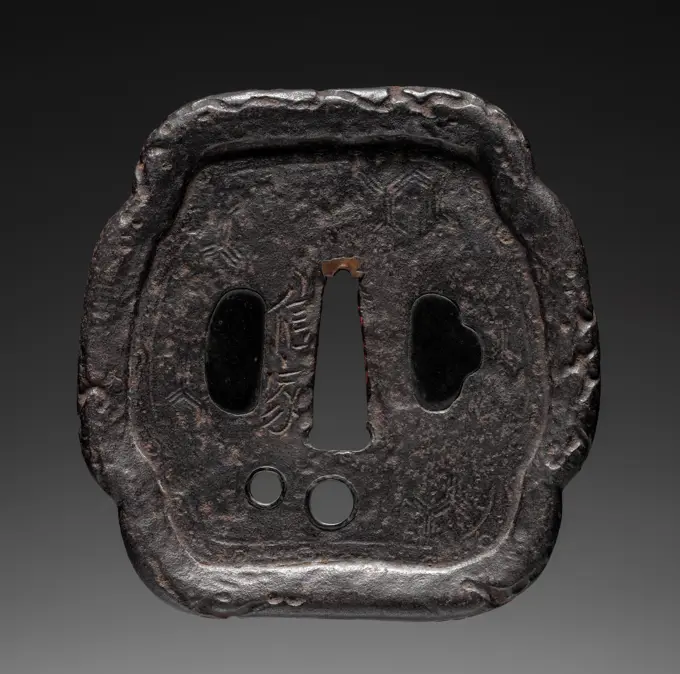
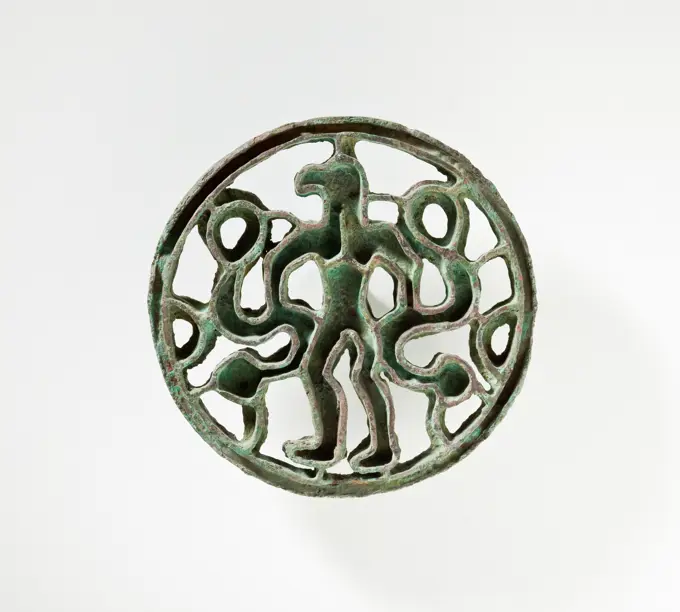
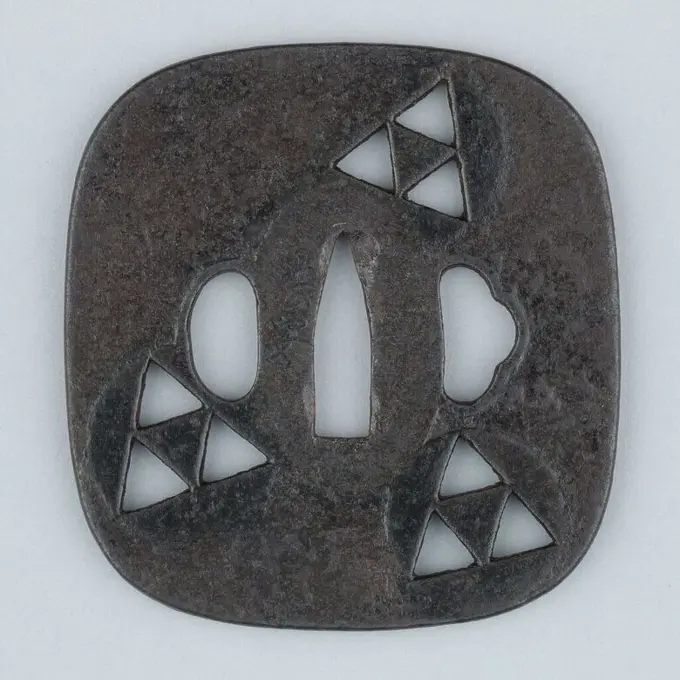
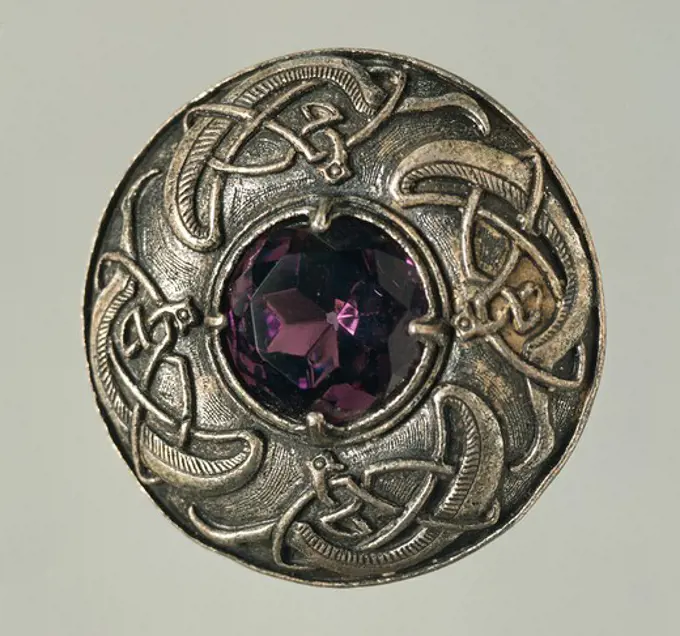
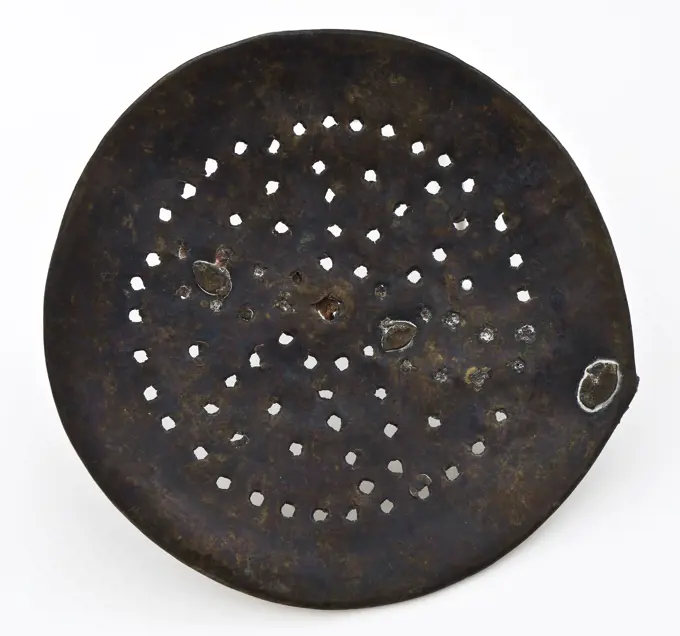
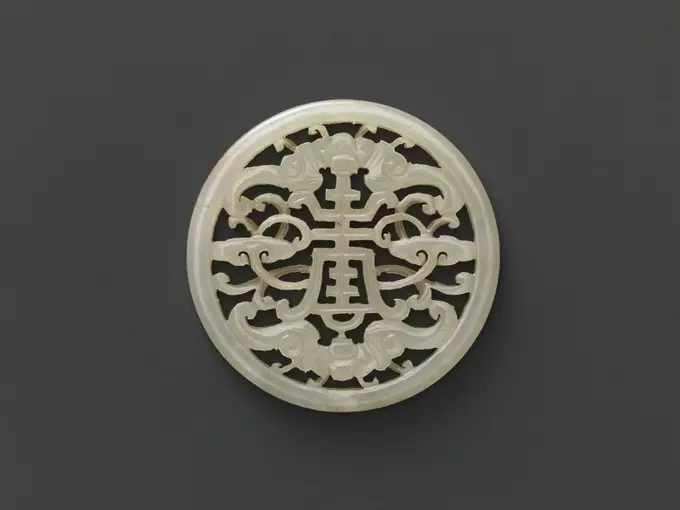
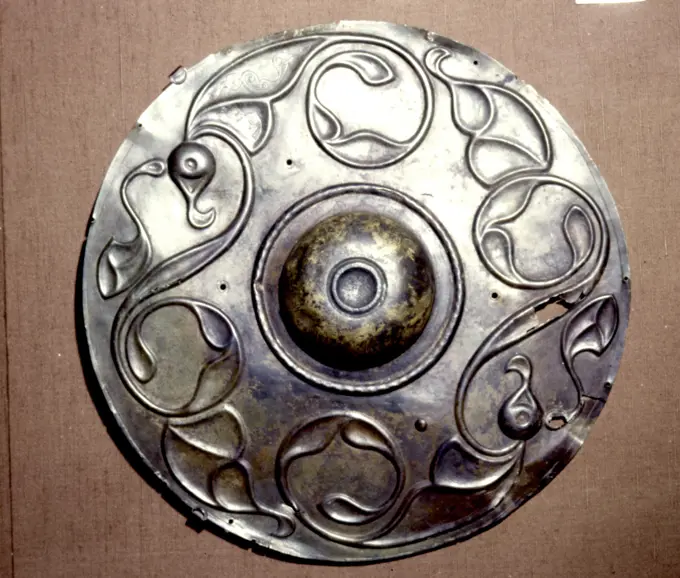
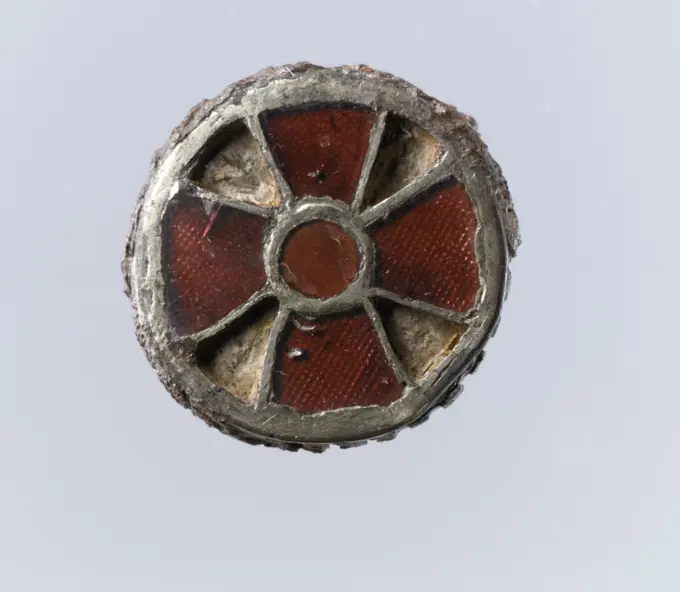
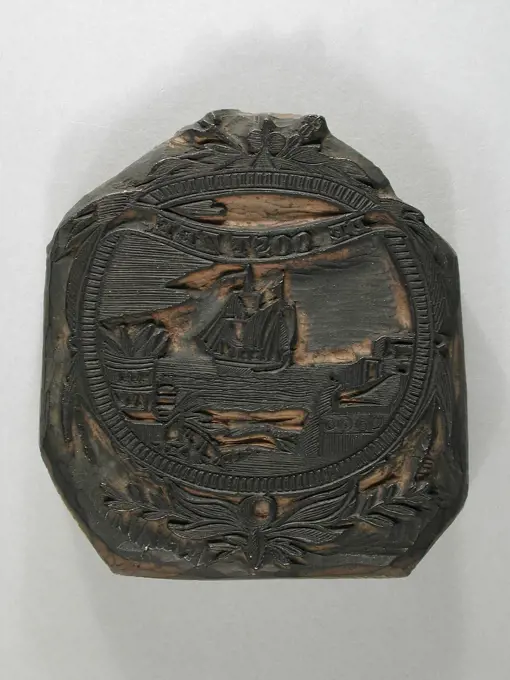
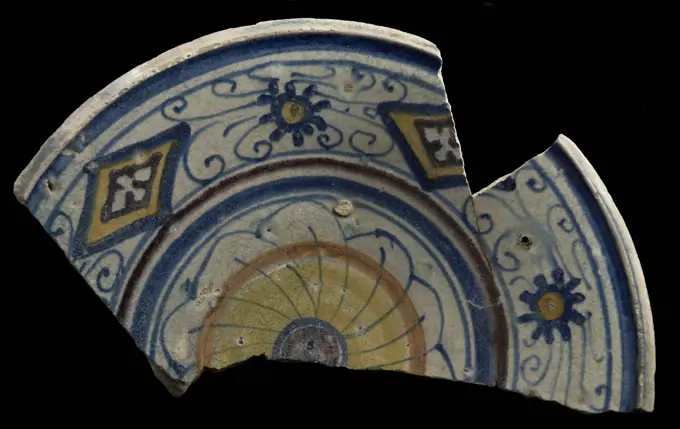
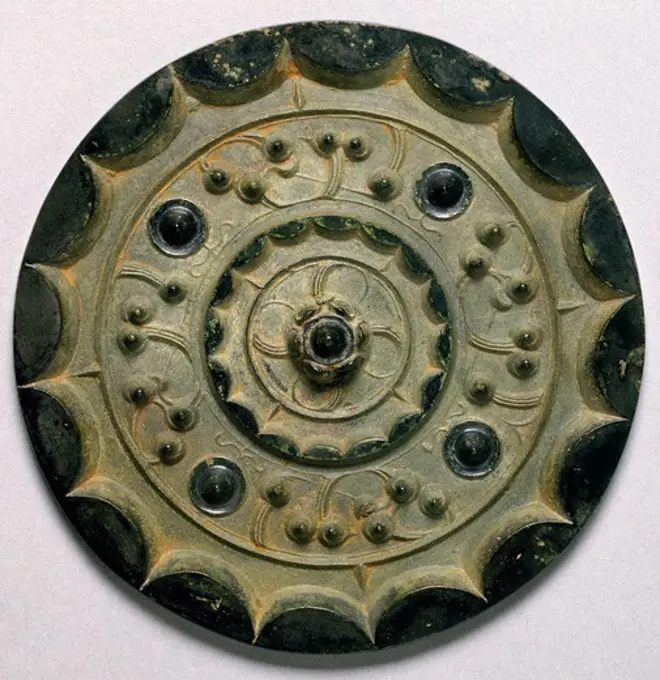
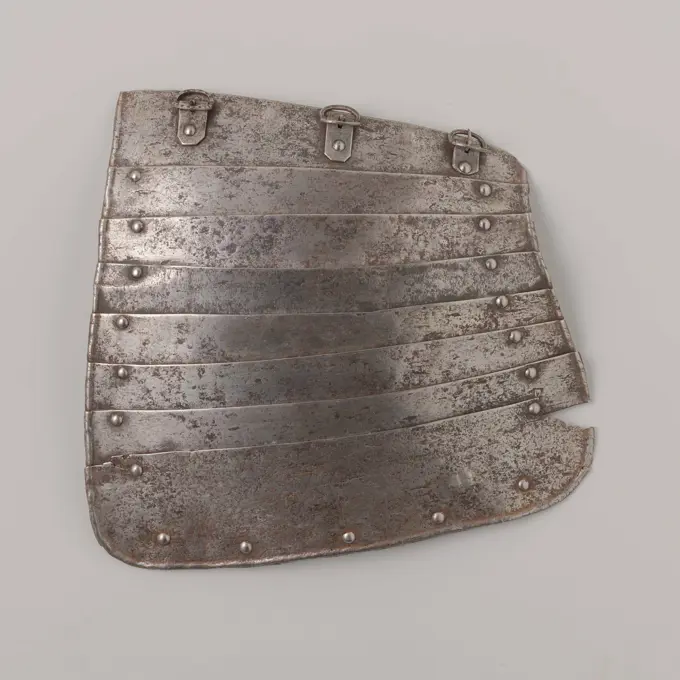
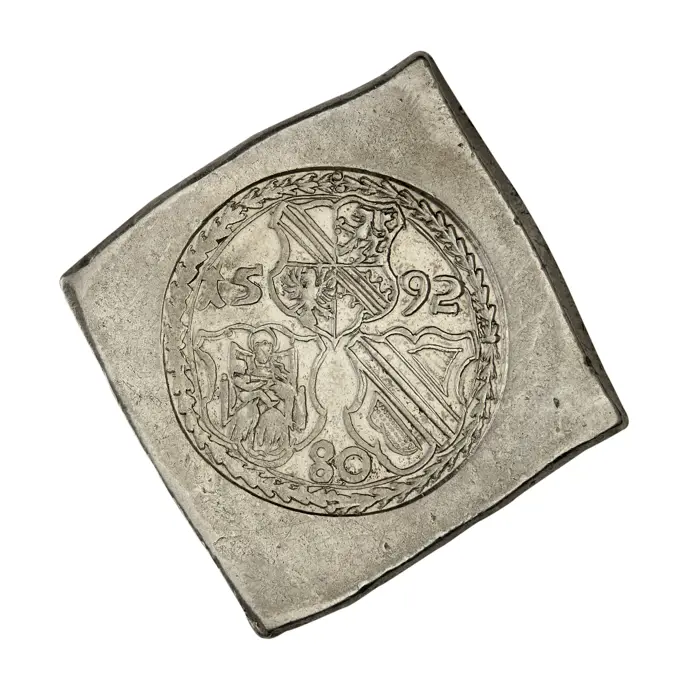
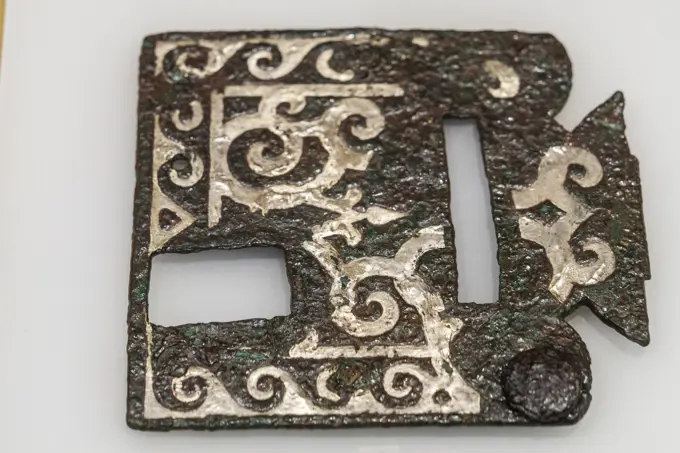
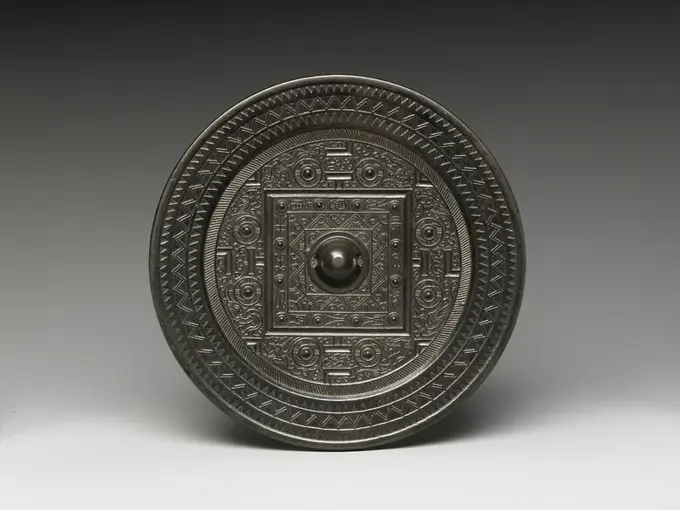
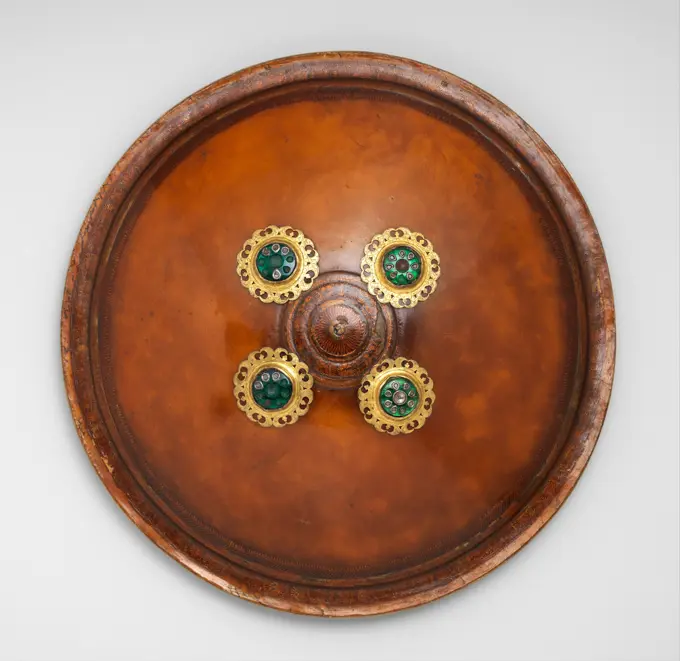
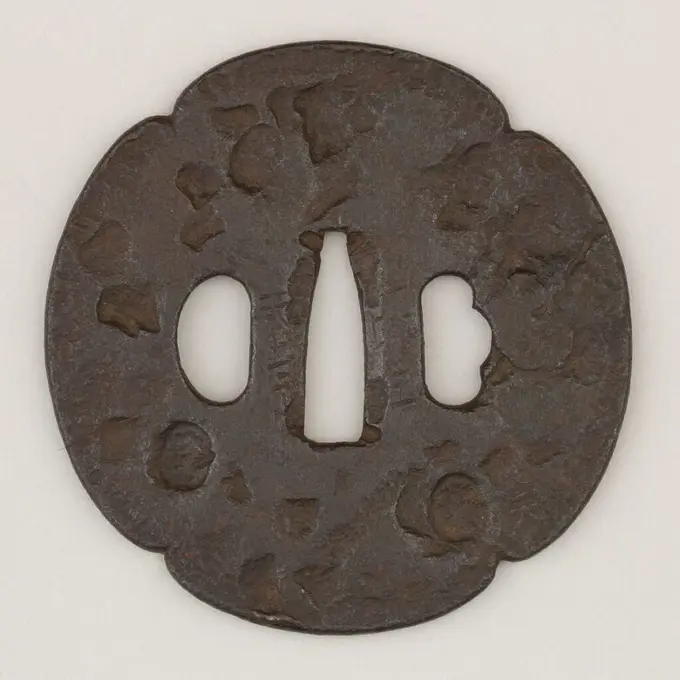
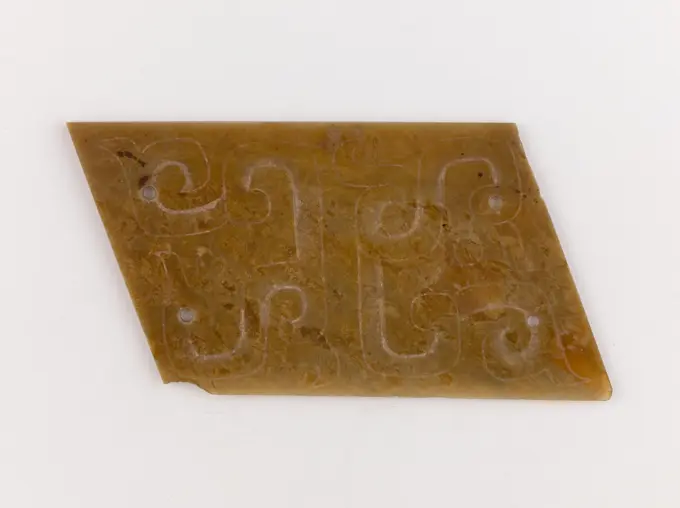
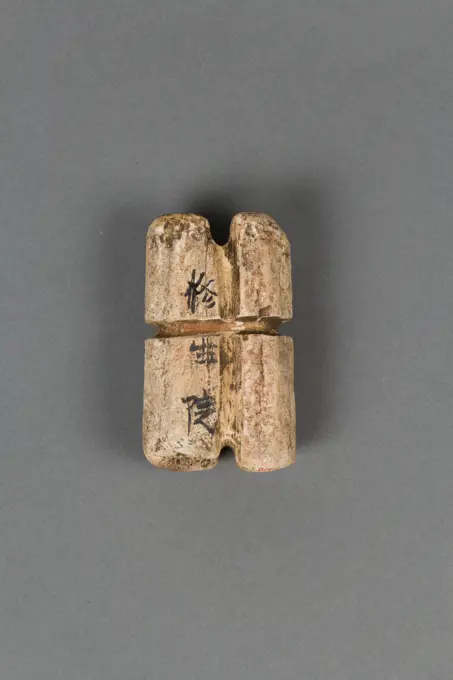
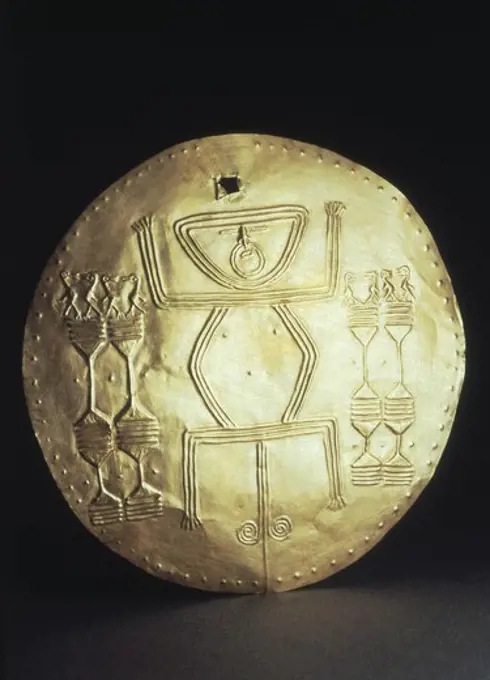
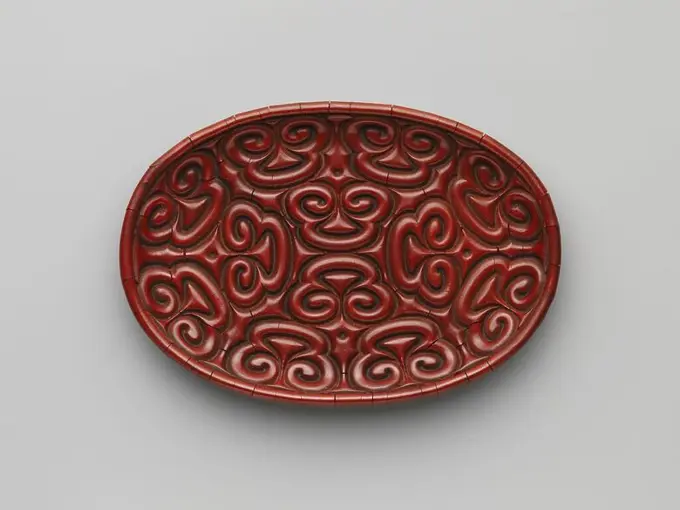
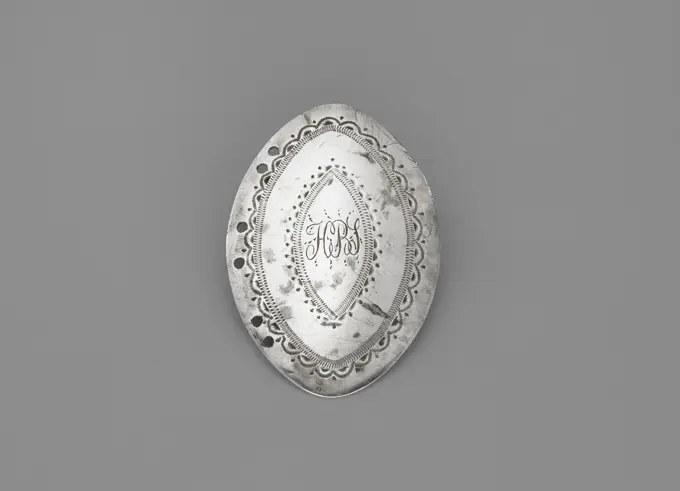
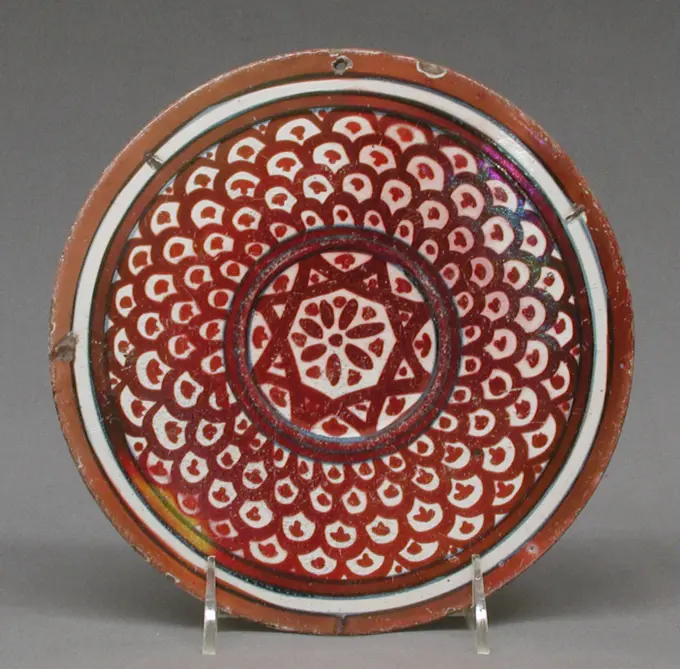
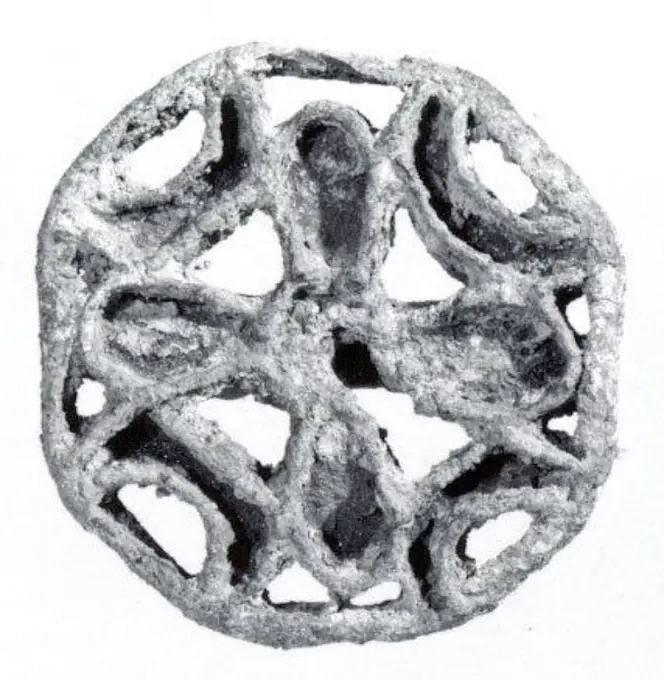
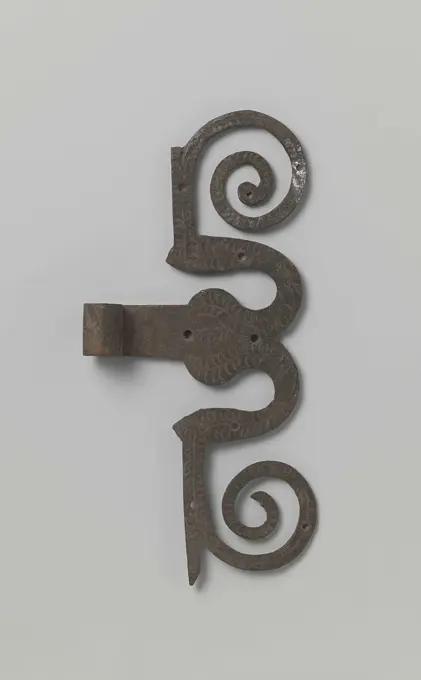
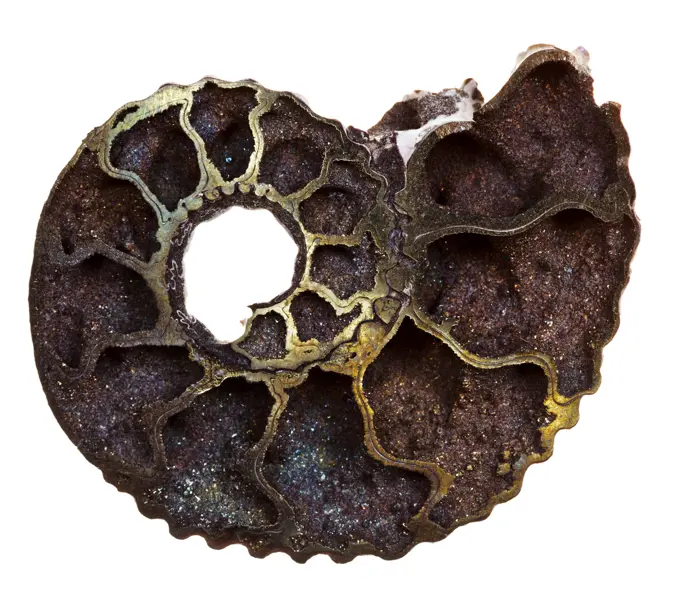
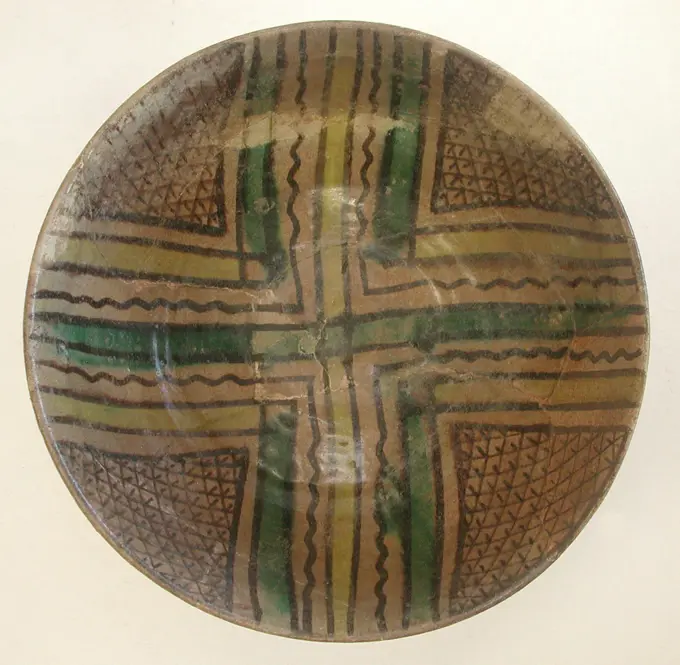
Two-Colored Tile mid-14th century British. Two-Colored Tile. British. mid-14th century. Fired earthenware with slip decoration and lead glaze.. Ceramics-TilesSaucer with griffins and floral scrolls, anonymous, c. 1800  Porcelain dish with straight wall, painted on the glaze in blue, red, green, black and gold. On the flat a gold medallion with a pot and branches engraved. Around it a golden band and a band with flower vines. The wall is covered with gold with a hexagonal compartment with a griffin  Three times. The courses are connected with blue flower molds. Golden Rand. France porcelain. glaze. gold (metal) painting / gilding / vitrificationTray;  19th/20th century (1890-00-00-1910-00-00);Door of a cupboard, c. 1500   wood (plant material)   wood (plant material)Sword Guard (Tsuba) dated 1762 Japanese A tsuba is a sword guard and part of a sword mounting. It is mounted between the swords blade and grip to protect the users hands.. Sword Guard (Tsuba) 34421Cash. Copper alloy, China, Song dynasty. Paris, Cernuschi museum. Amulet, Asian art, Chinese art, circle, Asian civilization, Chinese civilization, belief, disc, Song dynasty, currencyNan Rio Gin from the Empire Japan by Emperor Gomomo Zono with the government name An -jei ,, 1772 - 1780 coin Silver rectangular mint. Front: Inside rectangle three -placed characters. Above rectangle decoration. Reverse: smooth.  silver (metal) striking (metalworking)Door handle 15th century German. Door handle. German. 15th century. Iron. Metalwork-IronSilver handle from a serving dish. Culture: Roman. Dimensions: length (preserved) 22.71 cm. Date: early 3rd century A.D..The handle depicts the triumphal return of Dionysus from India, an important aspect of the mystery cult, symbolizing triumph over death. The scene occurs frequently on contemporary Roman sarcophagi, but here the procession is shown in the context of Roman trophies, captives, and weapons. Museum: Metropolitan Museum of Art, New York, USA.Flat knot with radial pattern, enamelled , knot clothing accessory clothing soil finding brass enamel metal, Round flat knot on the backside drilled rod archeology Rotterdam rail tunnel confirm adorn the dress close Soil discovery: trajectory rail tunnel Rotterdam.Dressingier, Anonymous, -206 - 220 Applique, A-Jour edited and decorated in granulation technique. China gold (metal). turquoise (mineral) Applique, A-Jour edited and decorated in granulation technique. China gold (metal). turquoise (mineral)Rice/Betel Dish. Sri Lanka, circa 18th century. Furnishings; Serviceware. Copper alloy with high silver contentFragment of a Bowl 12th-13th century. Fragment of a Bowl 447282Sample Plate Plate; France; hard paste porcelain, vitreous enamel, goldSword Guard (Tsuba). Culture: Japanese. Dimensions: H. 2 7/8 in. (7.3 cm); W. 2 3/4 in. (7 cm); thickness 3/8 in. (1 cm); Wt. 6 oz. (170.1 g). Date: ca. 1830. Museum: Metropolitan Museum of Art, New York, USA.Gold Belt-Hole Guard 700s Avar The treasure contains an array of belt fittings, some elaborately decorated, some unfinished or defectively cast. Some show no signs of use, while others are quite worn.The AvarsThe Avars were a nomadic tribe of mounted warriors from the Eurasian steppe. The Byzantine emperor Justinian negotiated with them in the sixth century to protect the Empires northern border along the Black Sea. Emboldened by their subjugation of numerous tribes, they unsuccessfully attempted to seize the Empires capital, Constantinople. They remained a scourge of both Byzantium and the Western kingdoms until Charlemagne defeated them through a series of campaigns in the 790s and early 800s.All the money and treasure that the Avars had been years amassing was seized, and no war in which the Franks have ever engaged.. brought them such riches and such booty. Up to that time the Avars had passed for a poor people, but so much gold and silver was found.. that one may well think thatSword Guard, 1500s. Japan, Muromachi period (1392-1573) to Momoyama period (1573-1615). Iron (Myochin type); average: 8.3 x 8.3 cm (3 1/4 x 3 1/4 in.).Compartmented Seal with Bird-Headed Man with Snakes. Northern Afghanistan, 2000-1500 B.C.. Tools and Equipment; seals. BronzeSword Guard (Tsuba) 18th century Japanese A tsuba is a sword guard and part of a sword mounting. It is mounted between the swords blade and grip to protect the users hands.. Sword Guard (Tsuba) 34936Sword Guard (Tsuba). Culture: Japanese. Dimensions: H. 3 1/8 in. (7.9 cm); W. 2 15/16 in. (7.5 cm); thickness 3/16 in. (0.5 cm); Wt. 5.4 oz. (153.1 g). Date: first quarter 17th century. Museum: Metropolitan Museum of Art, New York, USA.Silversmith's art, Great Britain, 20th century. Silver shield brooch with central amethyst, 1950s.Skimmer with an iron handle, skimmer kitchenware soil find brass iron metal, archeology Rotterdam rail tunnel cake food prepare beer wewing creaming kitchen kitchen Soil discovery Railway tunnel.Ornament. Culture: China. Dimensions: H. 3/16 in. (0.5 cm); Diam. 2 3/8 in. (6.1 cm). Date: 18th-19th century. Museum: Metropolitan Museum of Art, New York, USA.Disc Brooch. Anglo Saxon. 9th cent.Disk Brooch 6th century Frankish Garnets, worked in the cloisonné technique, featured prominently in the luxury jewelry of the Franks. Jewelers would solder small compartments arranged in geometric patterns onto the surface of a metal disk. In those cells, or cloisons, they would place a textured piece of gold foil, which would show through the thin translucent garnet that would then be set on top.. Disk Brooch 464809 Frankish, Disk Brooch, 6th century, Silver-gilt on iron core, metal foil, inlaid garnet or paste, Overall: 7/8 x 1/4 in. (2.3 x 0.7 cm). The Metropolitan Museum of Art, New York. Gift of J. Pierpont Morgan, 1917 (17.191.12)Lobed Mirror with Acrobats on Lotus Blossoms, early 600s-early 900s. China, Tang dynasty (618-907). Bronze; diameter: 14.1 cm (5 9/16 in.); overall: 0.8 cm (5/16 in.); rim: 0.6 cm (1/4 in.).Temple Eave Tile with Lotus Design Japan. Temple Eave Tile with Lotus Design. Japan. Earthenware. Nara period (710-794). CeramicsE. de Bont, Wooden cliché for printing tobacco pouch with image sailing ship, cliché printer's equipment wood, cutting Wooden cliché for the depiction of ship at sea with crates and bales in the foreground where tobacco leaves stick with ribbon above with text; the whole is in hatched circle surrounded by leaf decorations; it was used for printing tobacco pouches on the ribbon: THE EAST SEA Rotterdam tobacco ship sailing Oostvaarder mother legion Sont trade packaging shipping seafaring Baltic SeaFragment majolica dish, polychrome, rosette in the middle, diamond pattern in the edge, dish plate crockery holder soil find ceramic earthenware glaze, pt 3.5 baked underside covered with clear lead glaze Polychrome. Distorted edge during drying. Coarse-leaf rosette in the mirror diamond figures in the edge alternated with small blue wheel with an orange core Yellow shard some shredded pottery archeology Rotterdam food decorate archaeological find in the soil Rotterdam 1941.Seal China. Seal 41028August III SAS (1733-1763), Szeląg Gdański, Klipa, Gdańsk; 1761 Mint Gdańsk, August III Sas (Polish king; 1696 1763)Sword Guard (Tsuba) mid-19th century Japanese A tsuba is a sword guard and part of a sword mounting. It is mounted between the swords blade and grip to protect the users hands.. Sword Guard (Tsuba) 29973Bronze mirror, China. Chinese Civilisation, Han Dynasty, 3rd century BC-3rd century AD.Ink Tablet with Tang Mirror Design. Culture: China. Dimensions: Diam. 4 3/8 in. (11.1 cm). Date: late 19th-early 20th century.Woodblock illustrations were an important source of decorative designs during the late Ming and Qing dynasties. The eight-lobed, foliated Tang mirror decorating this octagonal ink cake was borrowed from an illustration in the Xinqing gujian (Catalogue of Xiqing Antiques), a compilation of the antiques collected in the Qing palace. A fictitious mark of Fang Yulu was added to this ink cake to increase its value. Museum: Metropolitan Museum of Art, New York, USA.Sword Guard (Tsuba) ca. 1615-1868 Japanese A tsuba is a sword guard and part of a sword mounting. It is mounted between the swords blade and grip to protect the users hands.. Sword Guard (Tsuba). Japanese. ca. 1615-1868. Copper-silver alloy (shibuichi), gold. Sword Furniture-TsubaLeft Left. Dice piece, iron, blank, articulated, consists of a top to which three iron buckles are riveted. The edges of the buckles are taberted. Six horizontal articulated strips under the top of which the lower over the upper strip is going. The underside is wider than the other strips. The rivets are white. The edges are folded and taabeld. The inside of the frame is brown-colored with a white painted letter A. rivets with square bolts are stuck.Sword Guard (Tsuba). Culture: Japanese. Dimensions: H. 2 3/8 in. (6 cm); W. 2 15/16 in. (7.5 cm); thickness 3/16 in. (0.5 cm); Wt. 3.4 oz. (96.4 g). Date: ca. 1615-1868. Museum: Metropolitan Museum of Art, New York, USA.Harness element. Hand -hanged handle disc by ring. Perse, Hurvin. IXEM-VIII century BC. Paris, Cernuschi museum. 35179-10 Ring, bronze, disc, element, harness, sleeveAalmoezeniersweeshuis in Amsterdam, Anonymous, 1806  One -sided, rectangular lead with hole in it. Front: coat of arms, surrounded by leaf branches between inscription AW above the year. Reverse: Blanco Amsterdam tin (metal) striking (metalworking)  AmsterdamBliżej Kultury Ziemski, St.Tkacki Arek;  Unknown (0-00-00-0-00-00);Antical art collection, weightPendant 17th century French. Pendant. French. 17th century. Bronze, patina. Miscellaneous-Buckles & OrnamentGrahal-Manzara. Carnavalet 2013-2016 collection sites. Numismatics.Souvenir Patera of Swiss shooting competitionsDecorative Door Boss And Nail; wrought iron; L x W x D: 1.6 × 13.3 × 13 cm (5/8 × 5 1/4 × 5 1/8 in.) H x diam.: 4 × 1.5 cm (1 9/16 × 9/16 in.) H x diam.: 7.8 × 3.5 cm (3 1/16 × 1 3/8 in.)Loop . 2 openwork ribbons, 2 large stones and knots at the top and bottom, 2 small rosettes on the sides.Panel late 15th centuryBacile. Italy, Florence, 15th century. Tools and Equipment; basins. Tin-glazed earthware (majolica)Clip of the 80-karowa bishopric of Strassburg; Johann Georg von Brandenburg (1592-1604); 1592 (1592-00-00-1592-00-00);municipal coats, one -sided coins, siege coins, wreathsModel for a chatelaine decoration element. The plate-driven model for a mold is equipped with a medallion surrounded by Rococo ornament and flowers with a putto with a grape droos and chalice. Along the edges six eyes to confirm links.Goldweight Shield, 19th-20th century, 11/16 x 1 3/16 x 1 7/16 in. (1.75 x 3.02 x 3.65 cm), Brass, Ghana, 19th-20th centurySword Guard (Tsuba), c. 1615-1868. Japan, possibly Edo period (1615-1868). Iron; average: 8.3 x 8.3 cm (3 1/4 x 3 1/4 in.).Door ring of Vertind iron with spiral -shaped nodi and a grooved tires, anonymous, 1600 - 1699 Door ring of Vertind iron with pointed bar. On either side of the rod is a cord-shaped band with halfway through a diamond-shaped nodus and on the top and bottom ending in a spiral-shaped nodus. There is an oval nodus between the two lower nodes, which connects both halves. A volute rises from the four spiral nodes. Germany iron (metal). tin (metal) forging / engraving Door ring of Vertind iron with pointed bar. On either side of the rod is a cord-shaped band with halfway through a diamond-shaped nodus and on the top and bottom ending in a spiral-shaped nodus. There is an oval nodus between the two lower nodes, which connects both halves. A volute rises from the four spiral nodes. Germany iron (metal). tin (metal) forging / engravingScarab Finger Ring ca. 1786-1482 B.C. Second Intermediate Period-Early New Kingdom. Scarab Finger Ring 552429belt brooch plate decorated with silver damascening belt brooch plate decorated with silver damascening, 3rd century BC, Cerro Maquiz, Mengibar, Iberian culture, Iberian Museum of Jaén, Andalusia, Spain Copyright: xZoonar.com/BartomeuxBalaguerxRotgerx 21704912Mirror with Game Board Design. Culture: China. Dimensions: Diam. 6 5/8 in. (16.8 cm).The diagrammatic decoration on the back of this mirror points to a new cosmology. The square world--aligned with the four cardinal directions and inscribed with the "twelve earthly branches" used to compute the calendar--is surrounded by the circular heavens ringed in turn by the waves of the cosmic ocean. Sharing the heavenly realm with the animals of the four directions are T-, L-, and V-shaped markings that recall the same design on the liubo game board, suggesting that a game of chance also plays a part in the workings of the universe. Museum: Metropolitan Museum of Art, New York, USA.Shield (Dhàl) early 19th century North Indian Shields of this type were very popular across the Indian subcontinent. They were commonly made from steel or, as seen here, of animal hide. Light-weight and translucent, this shield is also strong and durable. The shield always accompanied hunters, particularly those armed with a hunting sword. The four bosses on the front support and secure the grip on the back.. Shield (Dhàl) 34132Mirror, 618-907. China, Tang dynasty (618-907). Bronze with silver inlay in lacquer; diameter: 11.8 cm (4 5/8 in.).Sword Guard (Tsuba). Culture: Japanese. Dimensions: H. 3 1/2 in. (8.9 cm); W. 3 7/16 in. (8.7 cm); thickness 3/16 in. (0.5 cm); Wt. 5.4 oz. (153.1 g). Date: 18th century. Museum: Metropolitan Museum of Art, New York, USA.Shne brochure. Jade, China, Han dynasty (206 BC AP.J.-C.). Paris, Cernuschi museum. Asian art, Chinese art, Han dynasty, jade, shroud, death, brochure, funeral rite, funeral ritualFishnet sinker Japan The Jmon period is the earliest period in Japanese history, lasting from roughly 14,000 to 300 BCE. The Jmon people were primarily hunter-gatherers, hunting land animals and gathering vegetables and nuts on the land as well as hunting and fishing at sea. Fish net sinkers, which would have been used to weigh down nets when catching fish, testify to the importance of seafood in the diets of some Jmon communities, especially those close to the sea. Fish bones found at Jmon archaeological sites indicate that the Jmon hunted fish not only close to the shore but also farther out in the open sea, where larger fish could be caught. There is even evidence that the Jmon ate pufferfish, a poisonous fish considered a delicacy in modern Japan.. Fishnet sinker. Japan. Bone. Final Jmon period (ca. 1000-300 B.C.). BoneSword Guard (Tsuba) 18th century Japanese A tsuba is a sword guard and part of a sword mounting. It is mounted between the swords blade and grip to protect the users hands.. Sword Guard (Tsuba) 26340Decorative Door Boss And Nail; steel-plated wrought ironRaymond, E.G., Store and Flats: Rosette Fragment from Facade. Treat & Foltz; American, fl. 19th-20th century. Date: 1884. Dimensions: 32 × 32 × 18 cm (13 × 13 × 7 in.). Unglazed Terra-cotta. Origin: Chicago. Museum: The Chicago Art Institute, Chicago, USA.Household effects, anonymous, c. 1590 - c. 1596 plate (dishes) Wooden plate, painted red and with raised edge. On the board you can clearly see the turning tracks and in the center the plane, on both sides, is finished with a chisel. There are traces of a painting (weapon with French lily) on the board, there are no cutting marks on the user side. Food sign to cut fixed food, especially meat. The wooden food sign was used in the Netherlands at least around 1500 to 1640 (Weyns). From Great Britain, Germany and the Southern Netherlands, copies of painted (seasons) are known with performances. The wooden Teljoor was an important part of the household, especially in the sixteenth century, the individual use of the board came into vogue. The non-painted side of the board was used to eat from.  wood (plant material). beech (wood) painting  Nova Zembla. Saving HuysSword Guard (Tsuba) ca. 1615-1868 Japanese A tsuba is a sword guard and part of a sword mounting. It is mounted between the swords blade and grip to protect the users hands.. Sword Guard (Tsuba) 34431Gold breastplate with schematic figure of a man and birds. It comes from Montenegro (Quindo). Quimbaya art. Jewelry. COLOMBIA. CUNDINAMARCA. Bogot‡. Gold Museum.Dish early 16th century German. Dish. German. early 16th century. Brass. Metalwork-BrassTsuba. Copper Nanako - JI (granulated surface) - Taka -zôgan (relief inlays). Cernuschi Museum, Asia Museum of Asia in the city of Paris.Shield 16th-19th century Sumatran. Shield. Sumatran. 16th-19th century. Wood, brass. Sumatra. ShieldsTray with pommel scrolls. Culture: China. Dimensions: H. 1 3/8 in. (3.5 cm); W. 6 1/2 (16.6 cm); L 9 1/2 in. (24.1 cm). Date: 14th century.Layers of black lacquer applied between the red ones enhance this tray's surface appearance and contribute to the vivacity of the scroll design. Museum: Metropolitan Museum of Art, New York, USA.Beltbuckle. Maker, attributed to: John David, Jr., American, active ca. 1785-1811LoopPlaque (Mugiuolo) ca. 1520-35 Italian, Caffaggiolo or Gubbio. Plaque (Mugiuolo). Italian, Caffaggiolo or Gubbio. ca. 1520-35. Earthenware, lustered. Ceramics-PotteryCompartmented stamp seal ca. late 3rd-early 2nd millennium B.C. Bactria-Margiana Archaeological Complex. Compartmented stamp seal 326698Fragment (Italy); linenDoor brace ..Fan with satirical representations of French figures, 1790 - 1811 print Fan leaf with satirical performances, including clothing.  paper engraving ball, formal dance. fashion plates. bride and groom in wedding-dress. fanSword Guard (Tsuba). Culture: Japanese. Dimensions: H. 2 5/8 in. (6.7 cm); W. 2 1/4 in. (5.7 cm); thickness 3/16 in. (0.5 cm); Wt. 3.2 oz. (90.7 g). Date: 19th century. Museum: Metropolitan Museum of Art, New York, USA.Parade Shield of Henry II, King of France (reigned 1547-1559), copy of. Simoni of Geneva; Switzerland, Geneva, active c. 1910. Date: 1547-1559. Dimensions: Diam. 55.9 cm (22 in.)Wt. 4 lb. 2 oz. Iron, traces of gilding. Origin: Geneva. Museum: The Chicago Art Institute, Chicago, USA.Panel 14th-15th century. Panel 445130Militaria, Italy, 20th century. Bearskin of the 5th Artillery Regiment with a cloth.Six Emaillen signs, prepared during the exhibition Rétrospective of 1873 in Tours, France, Gabriel Blaise, 1873 photomechanical print  Tours paper  dish, plate, saucer. enamelling ~ applied arts. temporary exhibition, 'Salon' Tourscutoff of fossil ammonite shell cutoff of fossil ammonite shell isolated on white background Copyright: xZoonar.com/VVxVoennyyx 5057737Plate for cakes Jute Josephine (Huta Josephina)Twelve emergency coins from Dutch cities, anonymous, 1576 coin. siege coin Unilateral, diamond -shaped emergency coin of the siege of Zierikzee, with rounded corners. Front: three stamps above each other; From bottom to top: state weapon: coat of arms within oval edge of the pearl; city coat of arms: coat of arms in Cartouche in pearl edge; year in cartouche. Reverse: Blanco Netherlands silver (metal) striking (metalworking)  ZierikzeeVase. Bronze. Chine. Par musée musée malée. Chinese art, bronze, flower shape, petal, vase, view aboveAttic Red-Figure Calyx Krater Fragment. UnknownIron Pyrite "Dollar" from Sparta, Illinois, USA, North AmericaHand Guard, Hata Nobuyoshi, 1800-1900 Round tsuba with a giant with wasabyo in his hand at the front in Iroe Takazogan; At the rear in Hira-Zogan and Sumi-Zogan a landscape with Fuji; Signed "Shuno Hogen Nobuyoshi". Japan .. copper (metal). gold (metal). silver (metal) Round tsuba with a giant with wasabyo in his hand at the front in Iroe Takazogan; At the rear in Hira-Zogan and Sumi-Zogan a landscape with Fuji; Signed "Shuno Hogen Nobuyoshi". Japan .. copper (metal). gold (metal). silver (metal)Lozenge-Shaped Applique. UnknownOrnament 18th-19th century China. Ornament 43929Fragment of a Bowl or Cup 13th-16th century. Fragment of a Bowl or Cup 452465Tripod pottery plate, Aztec, Mexico AD 1300-1521. Black-on-orange wares are among the most striking examples of Aztec pottery.Stamp 5th-6th century Atlantic Watershed. Stamp. Atlantic Watershed. 5th-6th century. Ceramic. Costa Rica. Ceramics-ImplementsSword Guard (Tsuba). Culture: Japanese. Dimensions: H. 3 1/4 in. (8.3 cm); W. 3 in. (7.6 cm); thickness 5/16 in. (0.8 cm); Wt. 5.2 oz. (147.4 g). Date: ca. 1615-1868. Museum: Metropolitan Museum of Art, New York, USA.Tile, Glass, Burgundy glass, abstract design., New York, New York, USA, 1880-90, glasswares, Decorative Arts, TileBowl 8th-9th century Buff ware pieces with radial divisions, especially of four equal parts, were very common in the excavators' finds. The hatched ground of the interstitial areas is also typical, although here it is handled with more than the usual precision.. Bowl 449727Votive Tablet China. Votive Tablet 61608False coin, crown shilIIng, 1666, John II Casimir (1649 1668)