Japanese Sword Guards

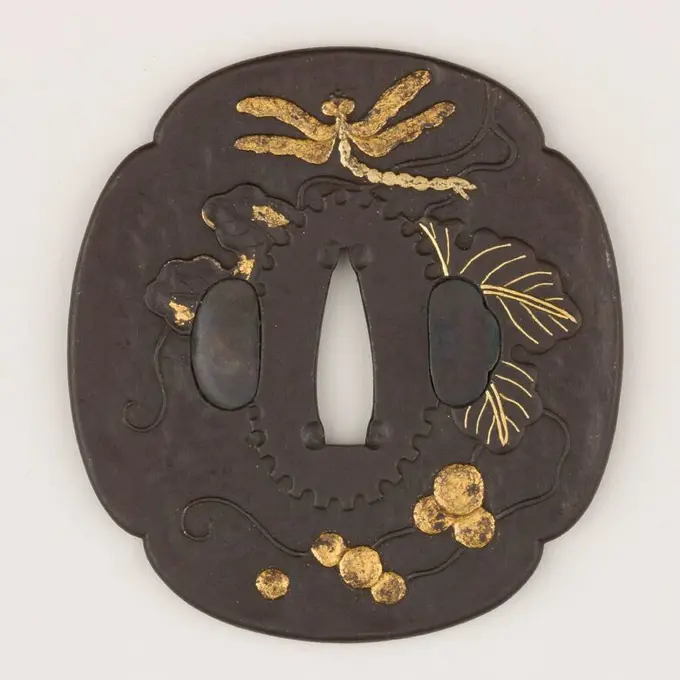
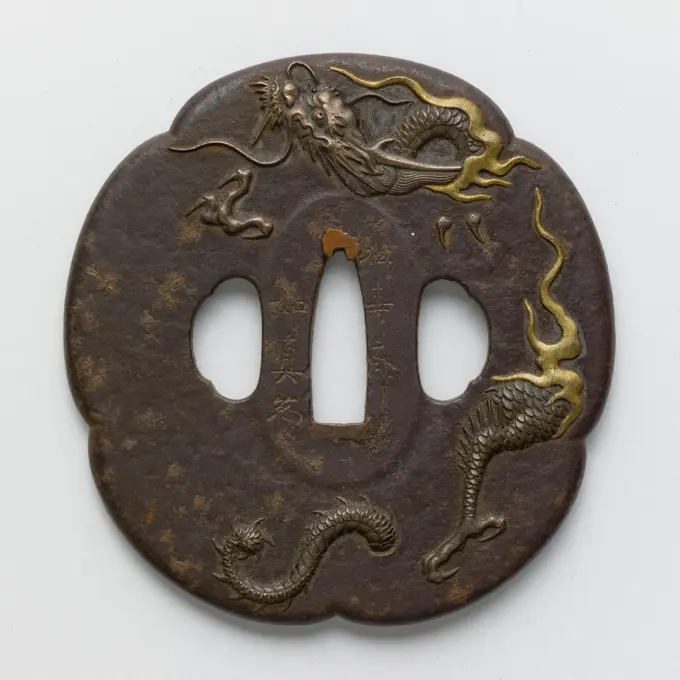
Detailed images of decorative tsuba, the traditional Japanese sword guards, featuring intricate designs and historical significance.

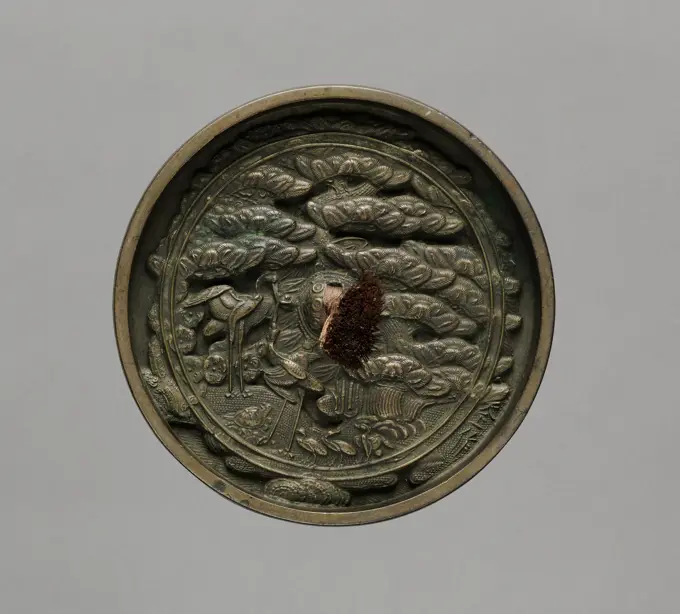
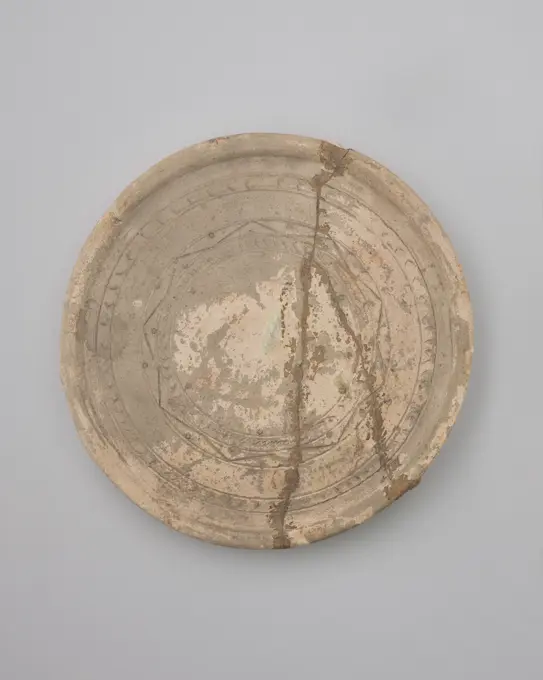
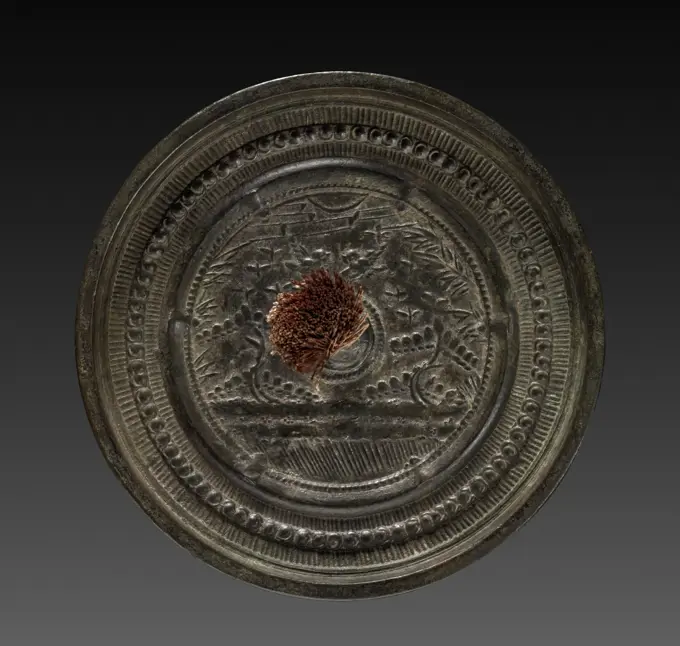
Mirror;  19th century (1801-00-00-1900-00-00);
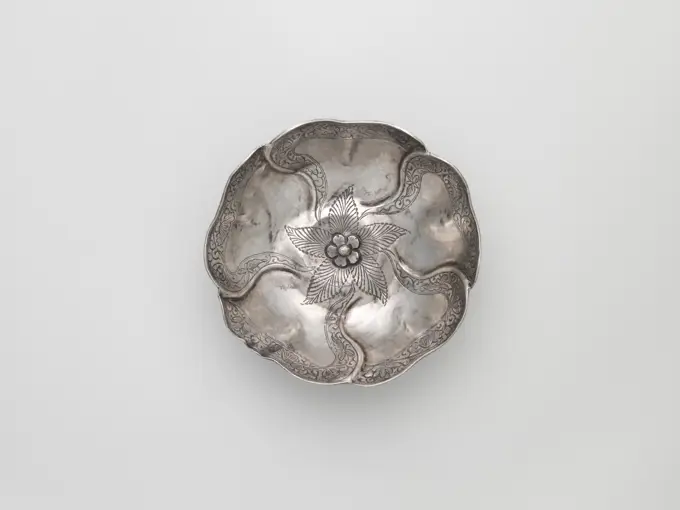
Mirror; 19th century (1801-00-00-1900-00-00);
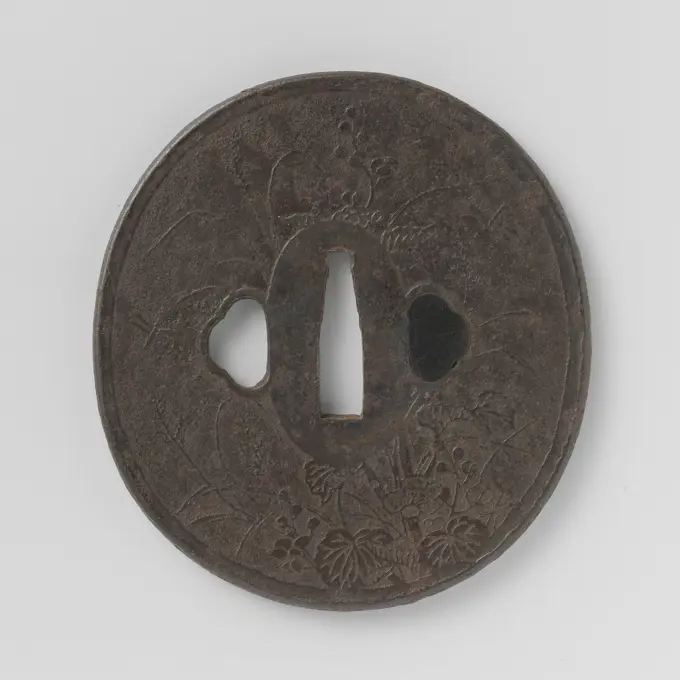
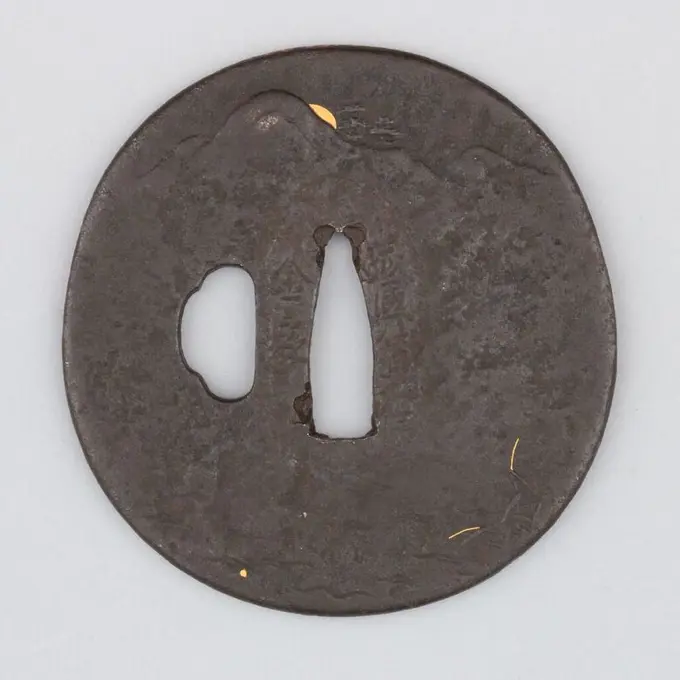
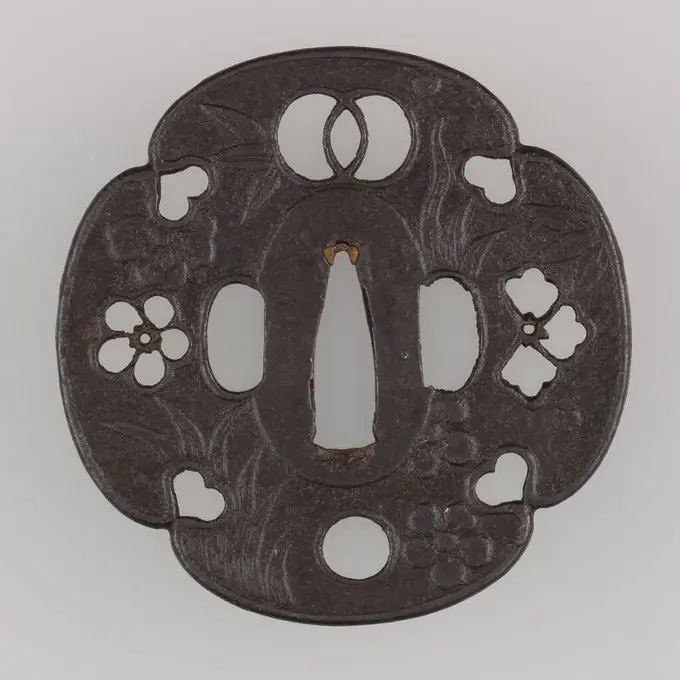
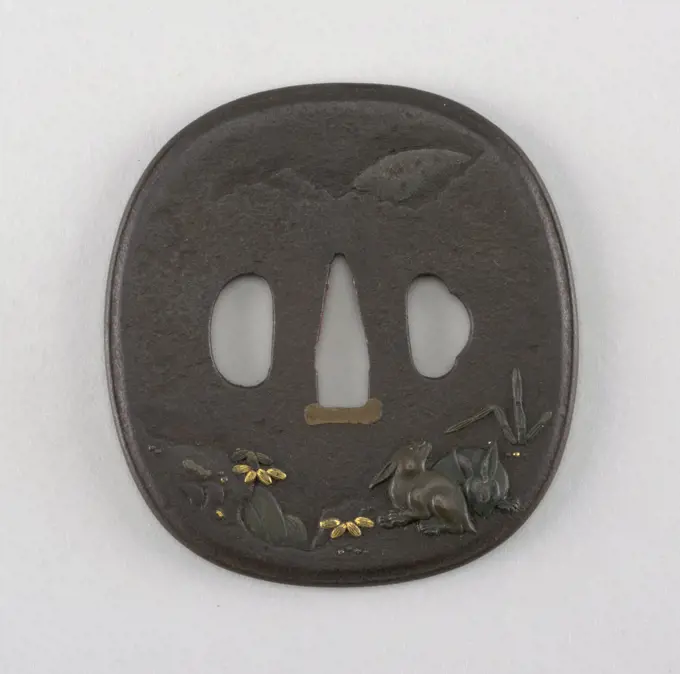
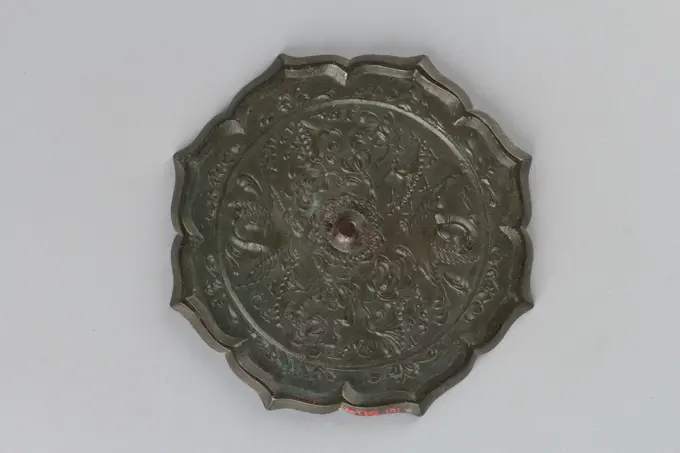
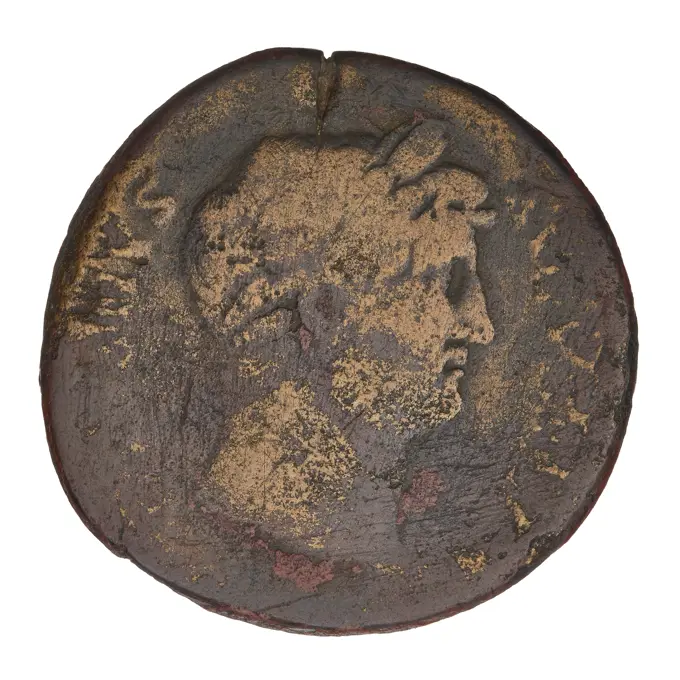
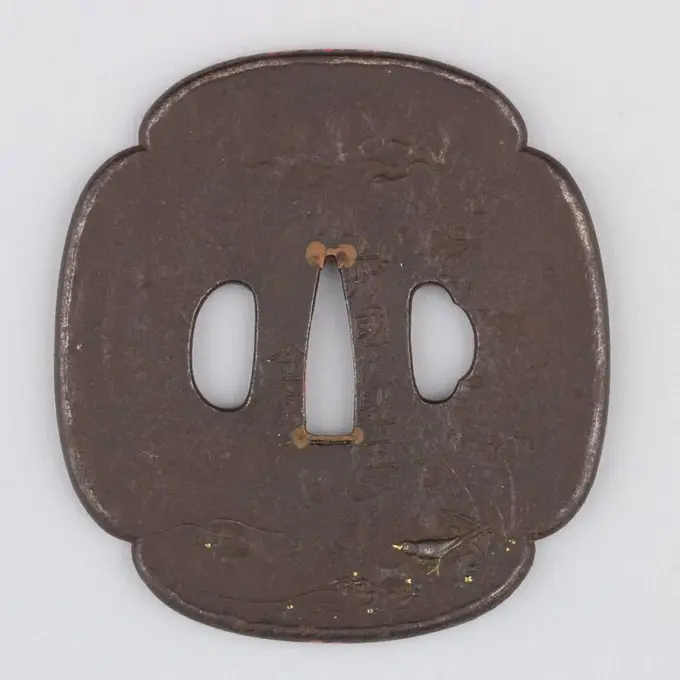
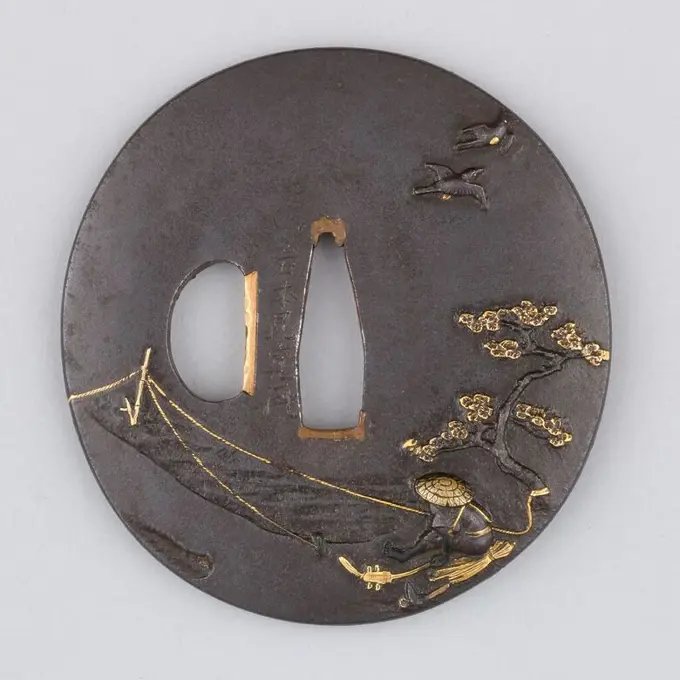
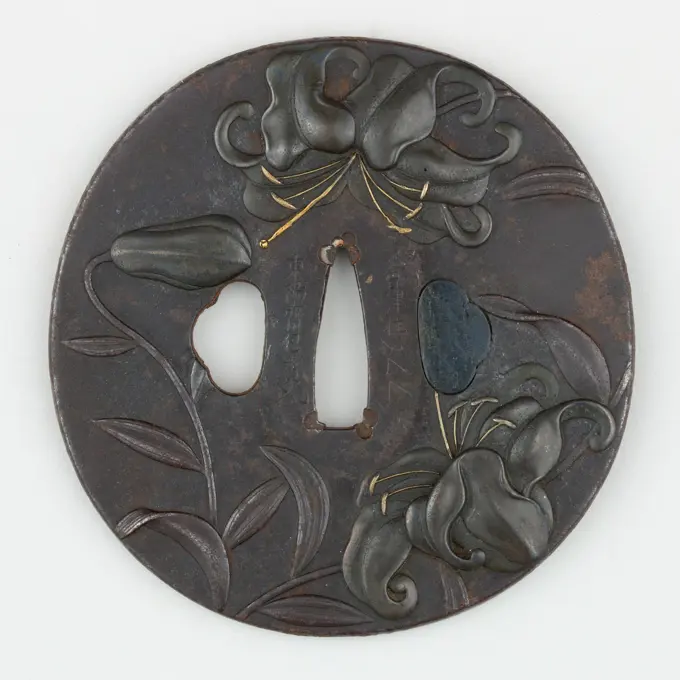
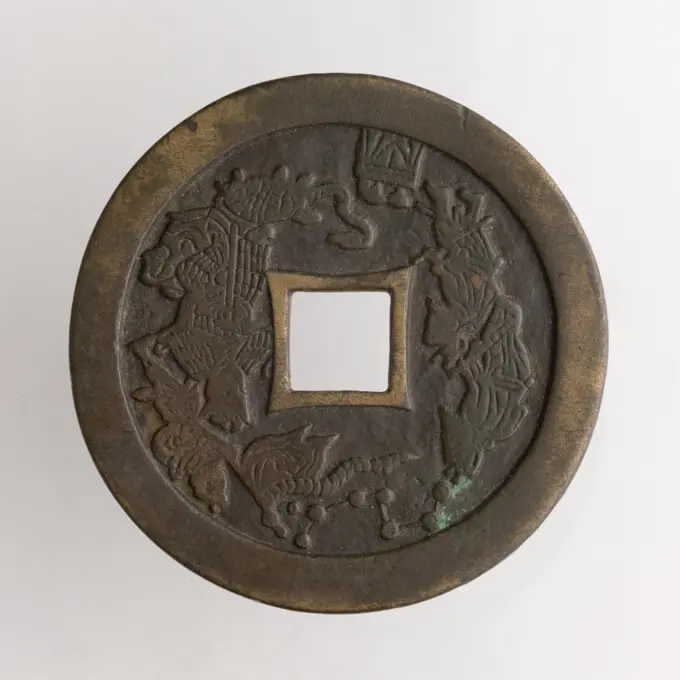
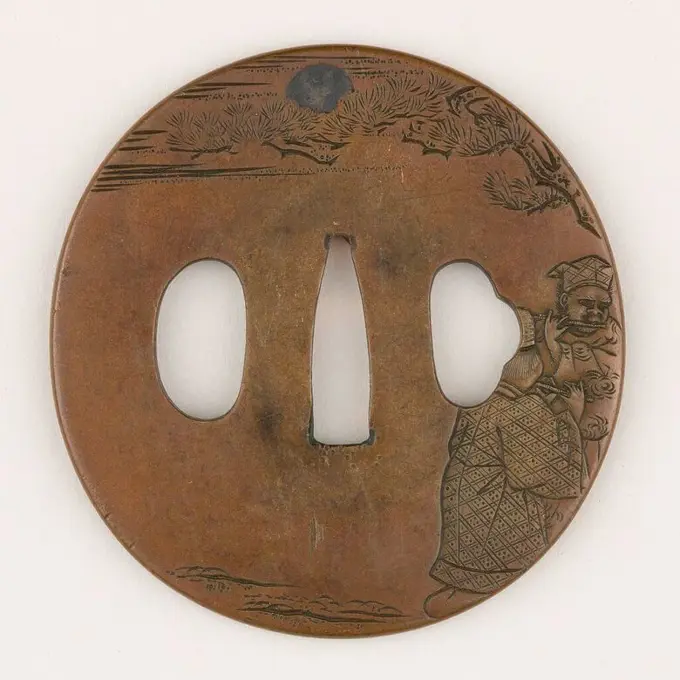
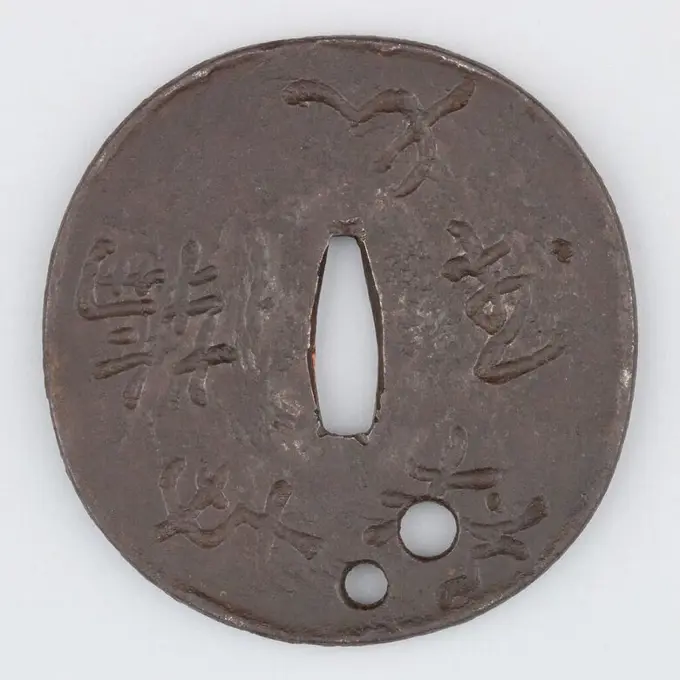
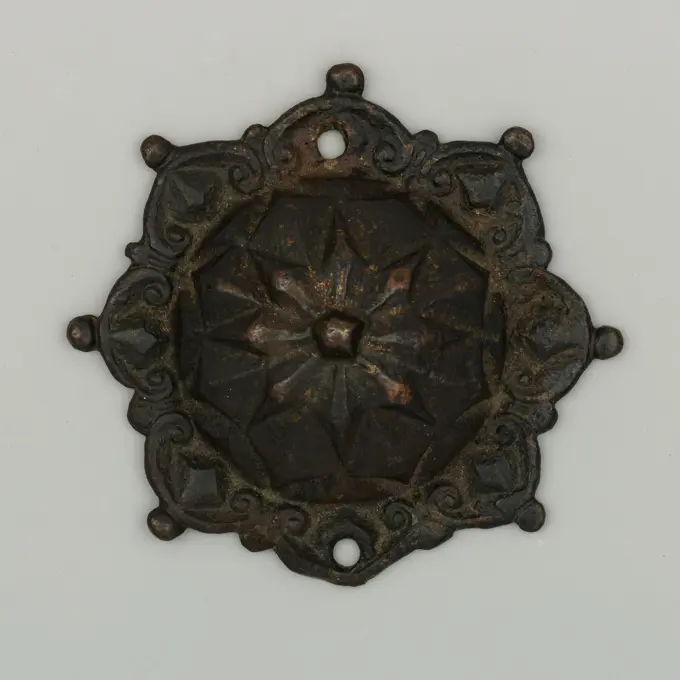
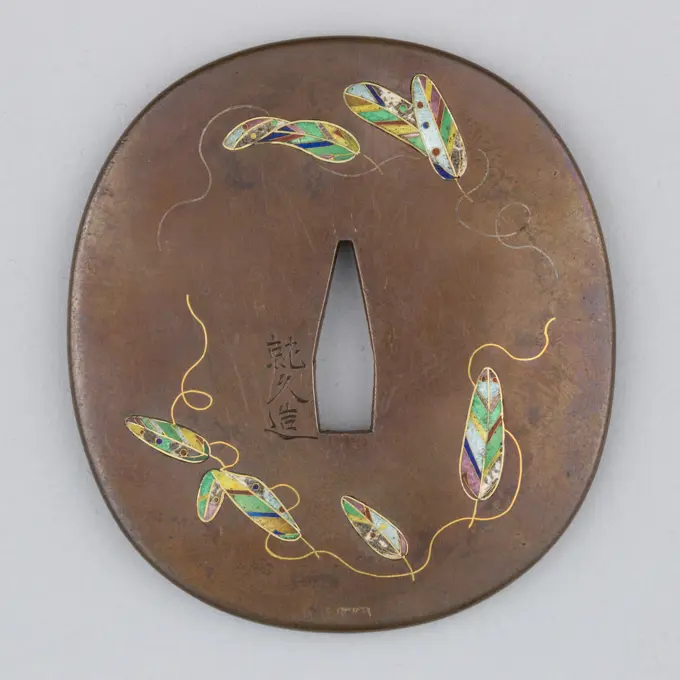
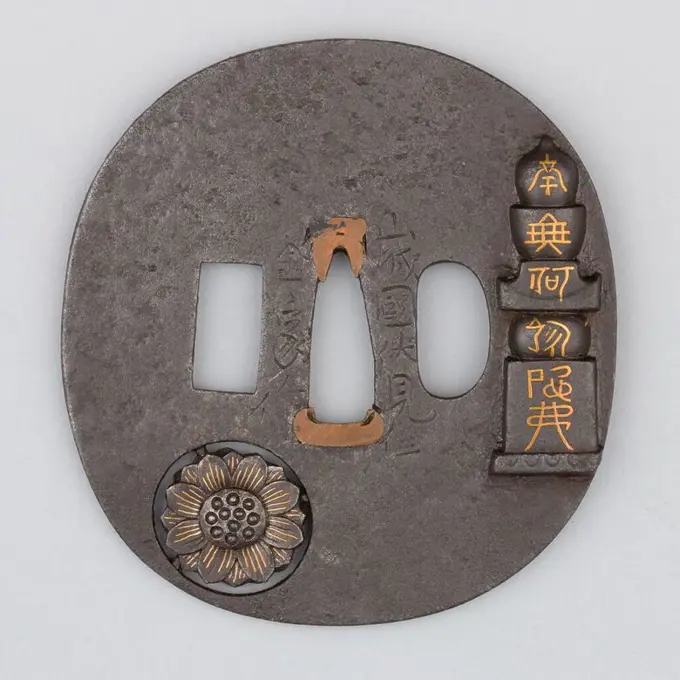
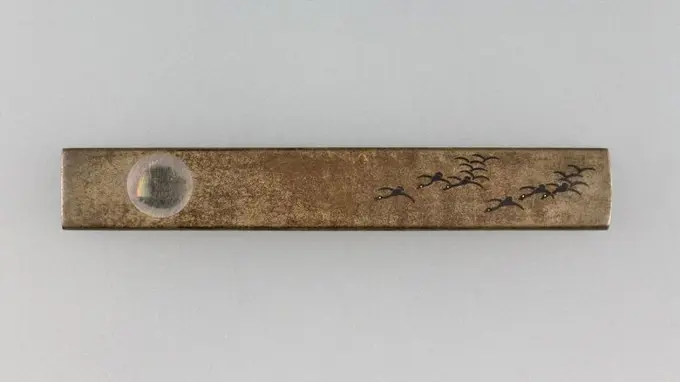
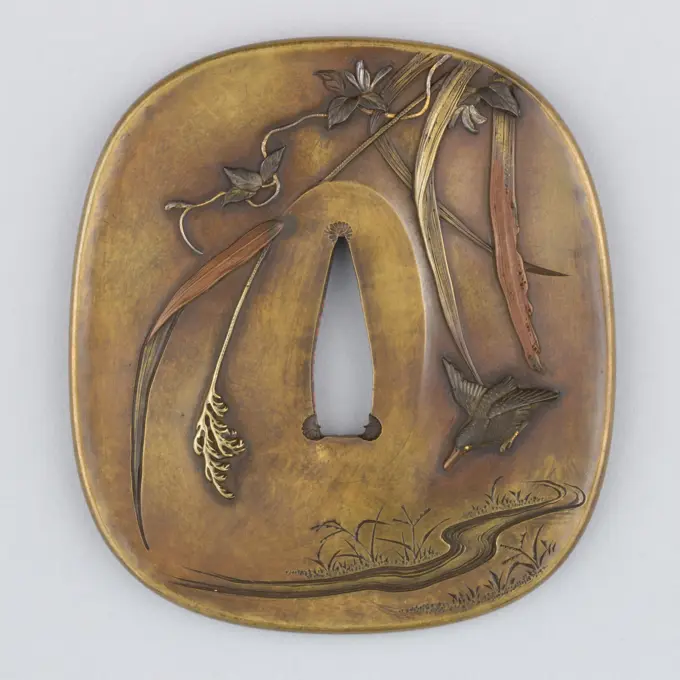
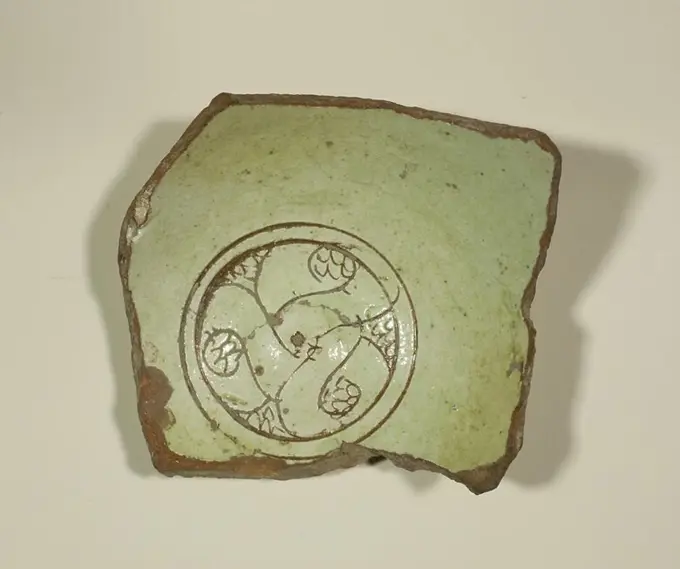
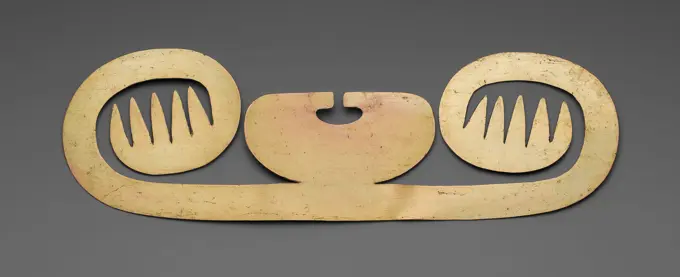
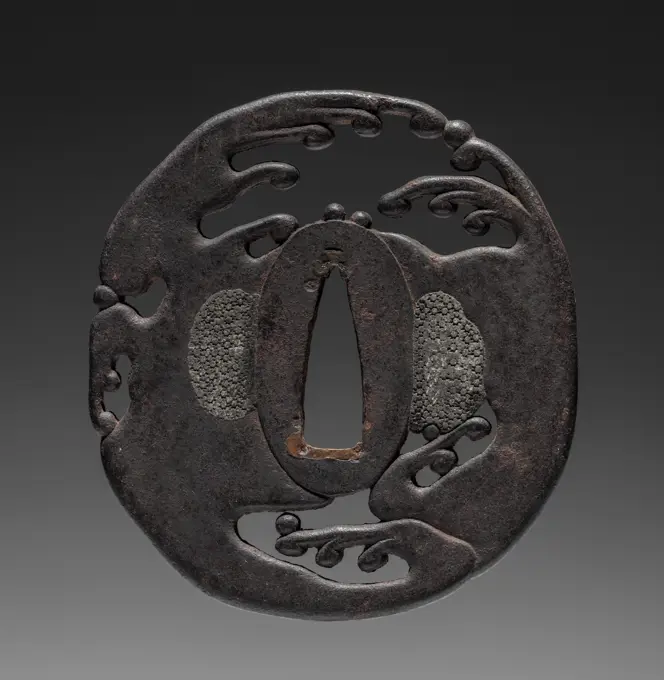
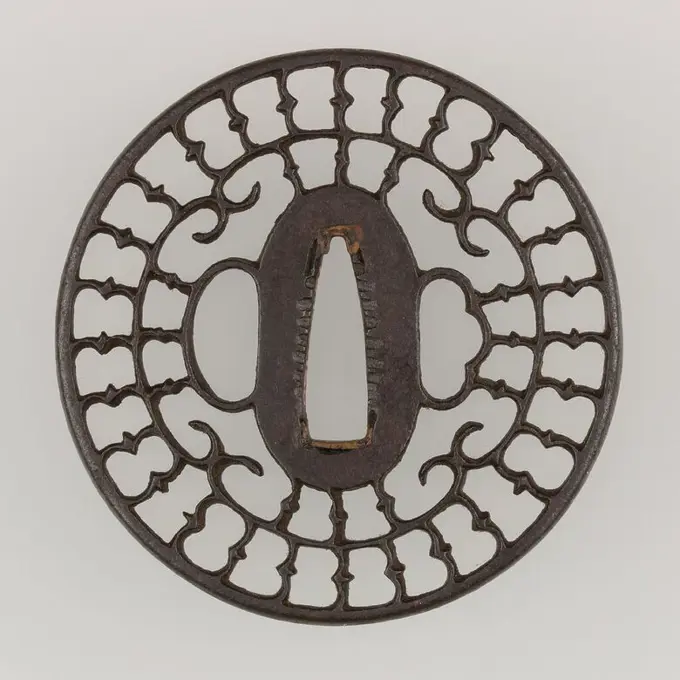
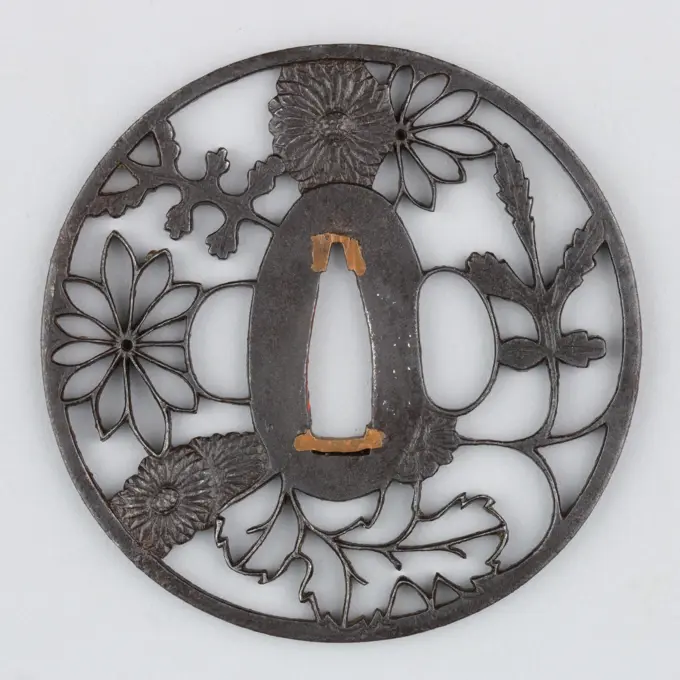
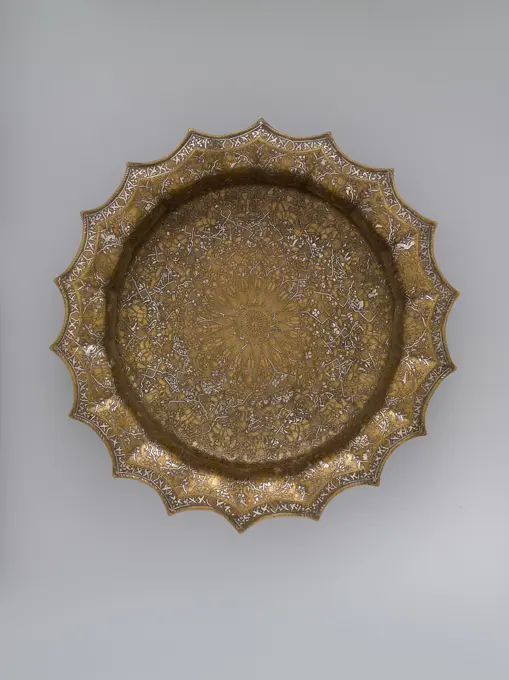
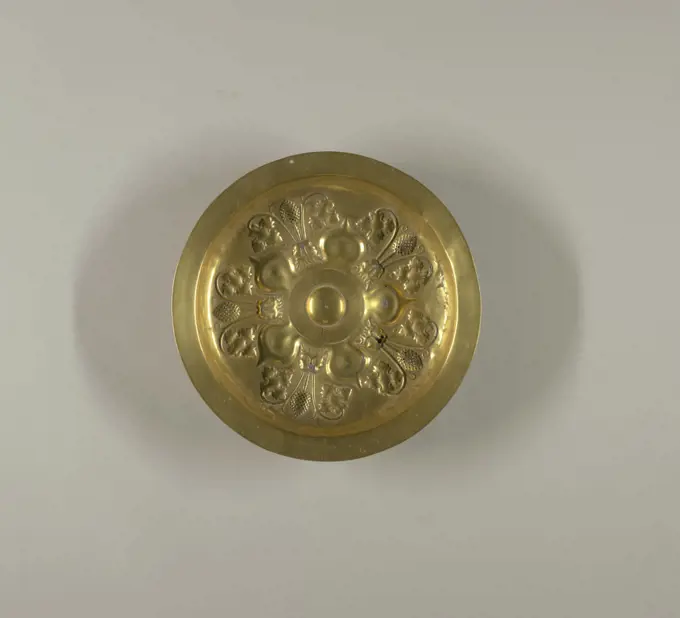
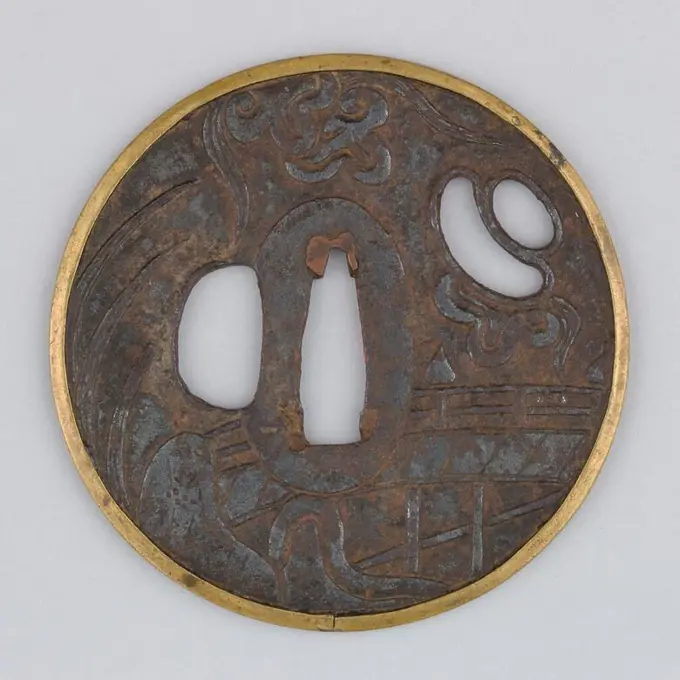
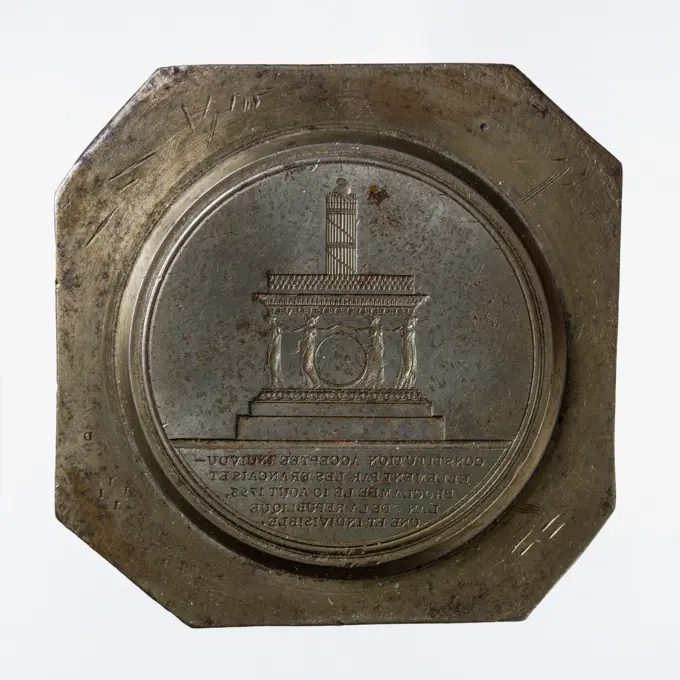
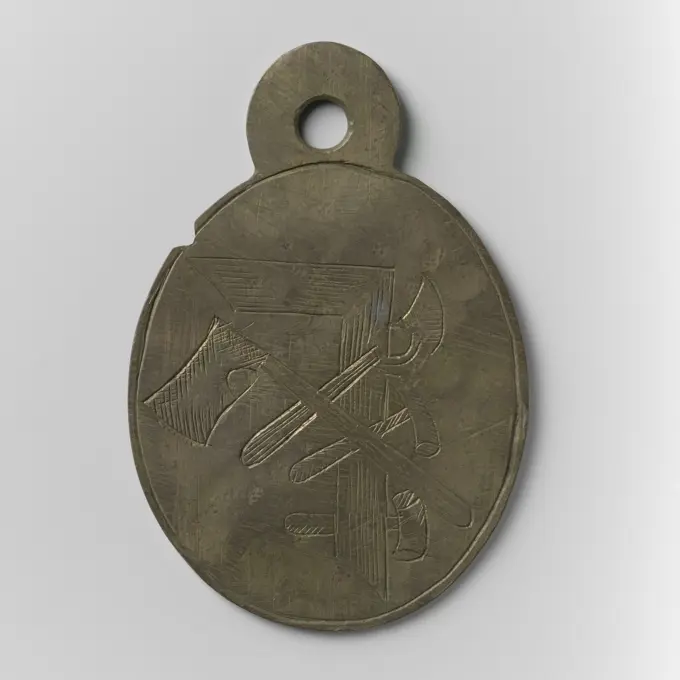
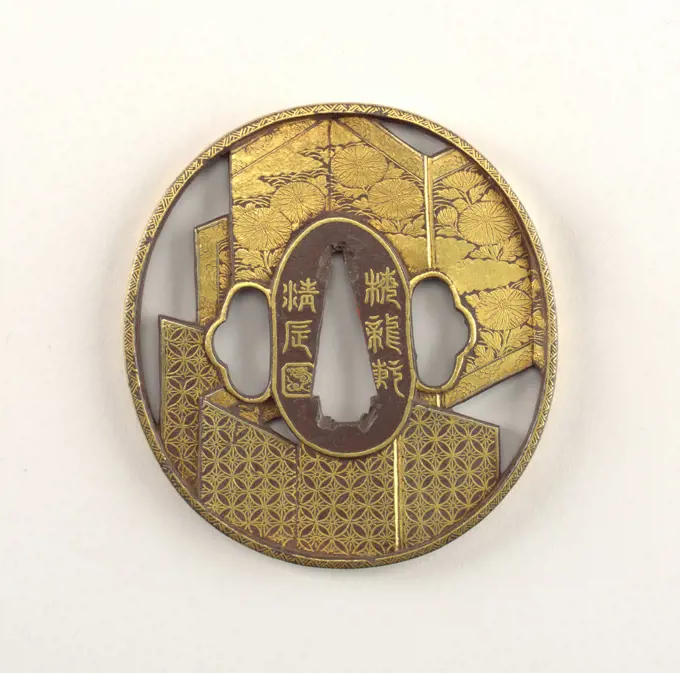
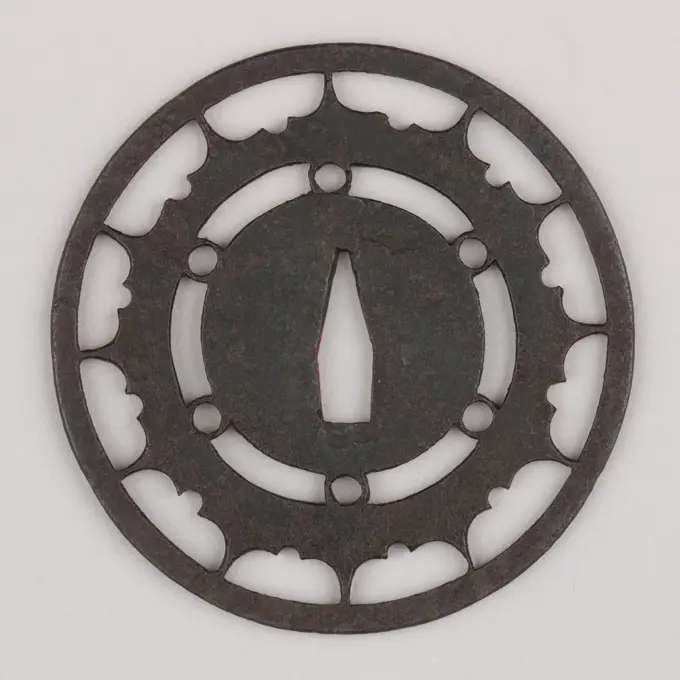
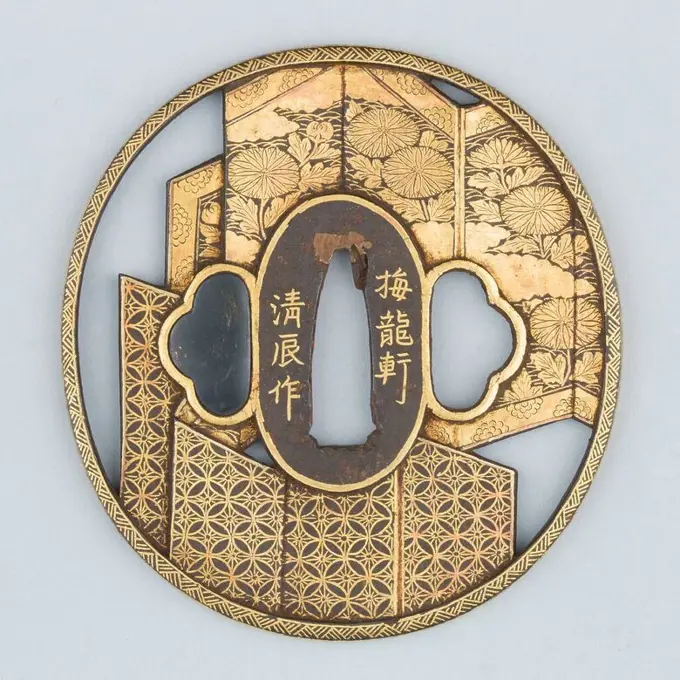
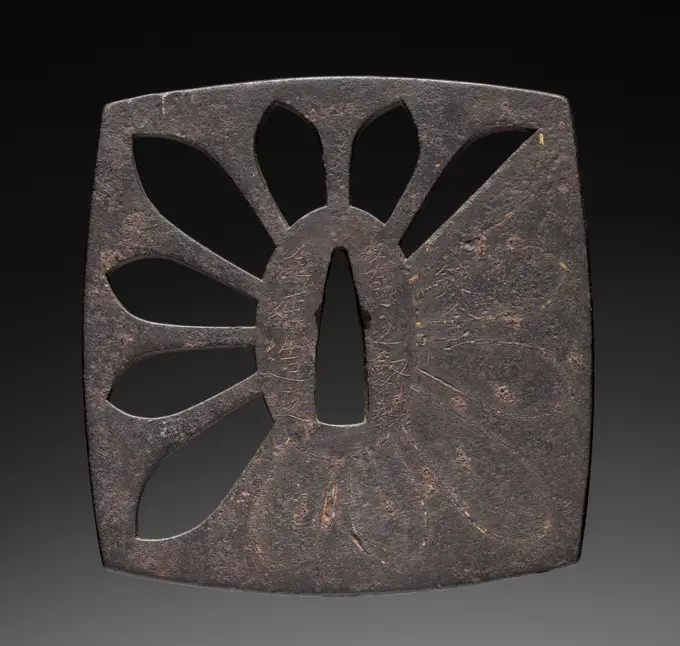
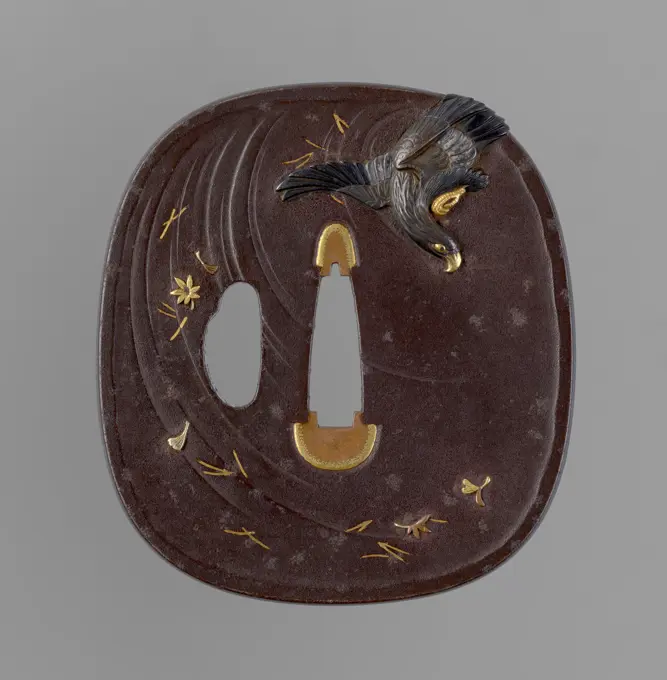
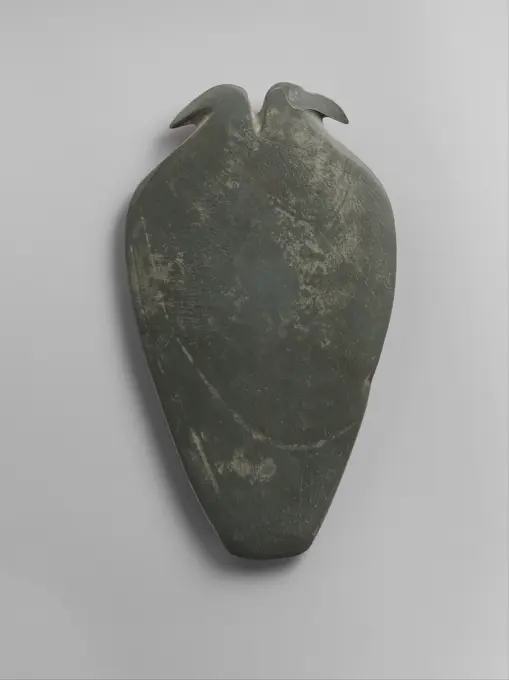
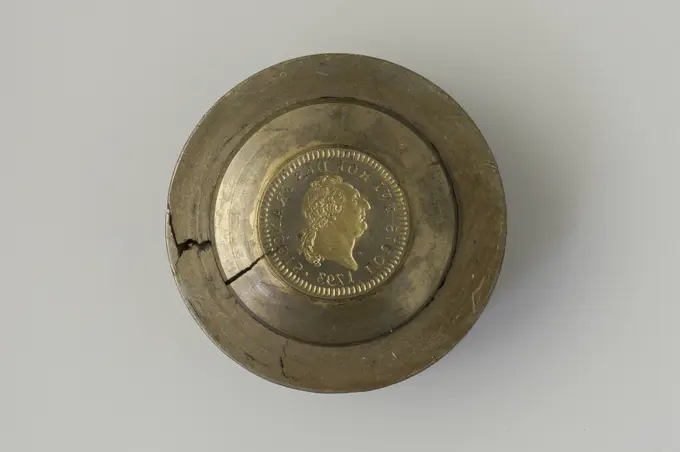
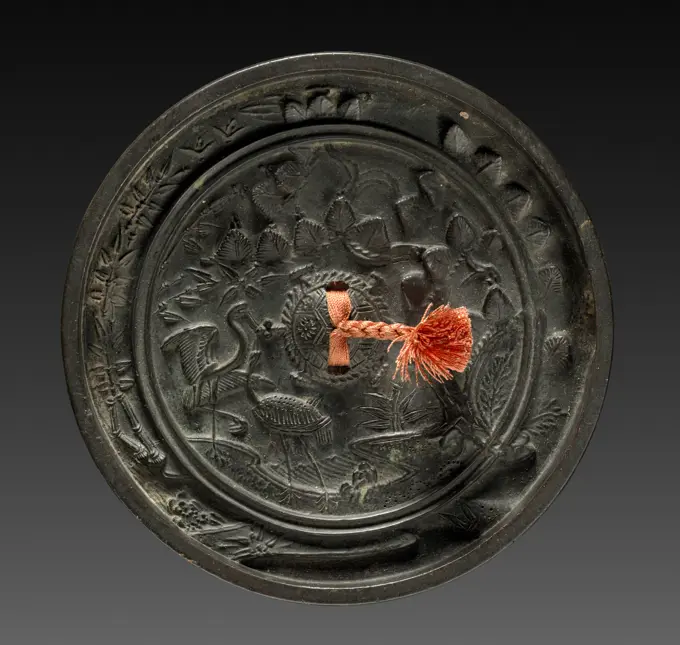
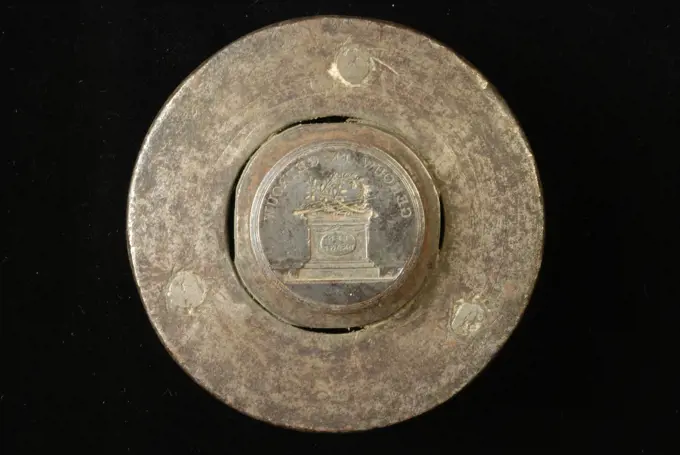
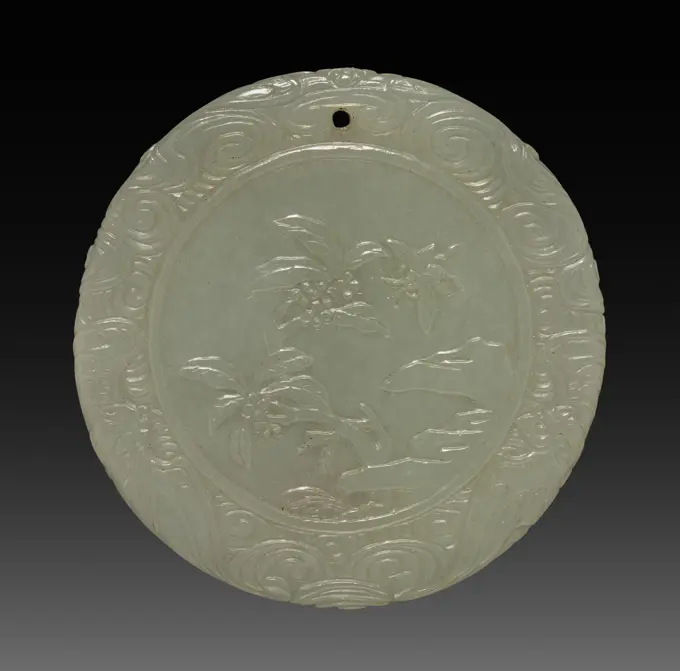
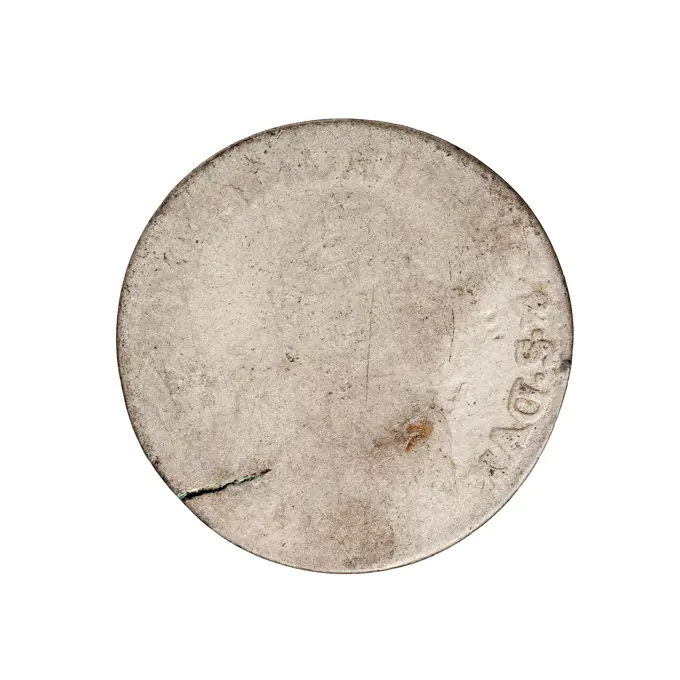
Sword Guard (Tsuba) ca. 1615-1868 Japanese A tsuba is a sword guard and part of a sword mounting. It is mounted between the swords blade and grip to protect the users hands.. Sword Guard (Tsuba) 33475Medal; 1902-26-3Hand guard, anonymous, 1600 - 1900 Oval tsuba with on one side in low relief plants, flowers and insects; on the other side various geometric motifs, placed next to each other in fields; One of the Ryo-Hitsu is filled with Shakudo; Signed "kashu ju ...." (wiped out). Japan iron (metal) Oval tsuba with on one side in low relief plants, flowers and insects; on the other side various geometric motifs, placed next to each other in fields; One of the Ryo-Hitsu is filled with Shakudo; Signed "kashu ju ...." (wiped out). Japan iron (metal)Sword Guard (Tsuba). Culture: Japanese. Dimensions: H. 3 in. (7.6 cm); W. 2 15/16 in. (7.5 cm); thickness 3/16 in. (0.5 cm); Wt. 4.4 oz. (124.7 g). Date: possibly 17th century. Museum: Metropolitan Museum of Art, New York, USA.Half of Dam disk with portrait: Theophano, wife of Otto II, Anonymous, c. 1550 Theophatha. Nicephori. Soror.othonis.vxor. Theophano, Vanaf 972 Gehowd Met Otto 2) Nuremberg boxwood Theophatha. Nicephori. Soror.othonis.vxor. Theophano, Vanaf 972 Gehowd Met Otto 2) Nuremberg boxwoodSword Guard (Tsuba) late 18th-early 19th century Japanese A tsuba is a sword guard and part of a sword mounting. It is mounted between the swords blade and grip to protect the users hands.. Sword Guard (Tsuba) 26373Sword Guard (Tsuba). Culture: Japanese. Dimensions: Diam. 3 3/16 in. (8.1 cm); thickness 1/8 in. (0.3 cm); Wt. 3.2 oz. (90.7 g). Date: early 17th century. Museum: Metropolitan Museum of Art, New York, USA.Sword Guard (Tsuba) ca. 1615-1868 Japanese A tsuba is a sword guard and part of a sword mounting. It is mounted between the swords blade and grip to protect the users hands.. Sword Guard (Tsuba) 33459Mirror;  19th century (1801-00-00-1900-00-00);Sword Guard (Tsuba) late 18th century Japanese A tsuba is a sword guard and part of a sword mounting. It is mounted between the swords blade and grip to protect the users hands.. Sword Guard (Tsuba) 24622Sword Guard (Tsuba). Culture: Japanese. Dimensions: H. 3 1/8 in. (7.9 cm); W. 2 15/16 in. (7.5 cm); thickness 3/8 in. (1 cm); Wt. 4.7 oz. (133.2 g). Date: 18th century. Museum: Metropolitan Museum of Art, New York, USA.Grahal-Manzara. Carnavalet 2013-2016 collection sites. Numismatics.Sword Guard (Tsuba) late 17th century Japanese A tsuba is a sword guard and part of a sword mounting. It is mounted between the swords blade and grip to protect the users hands.. Sword Guard (Tsuba) 33406Sword Guard (Tsuba) 18th century Japanese A tsuba is a sword guard and part of a sword mounting. It is mounted between the swords blade and grip to protect the users hands.. Sword Guard (Tsuba) 26309Media Médaille Reiti de Francesco Sciences and Sebastian Insabert and Des Arts in Jesius Bitius, 1796 Rambert Dumarest (1750-1806). "Award Medal of the National Institute of Science and Arts in the effigy of Junius Brutus, 1796". Money. 1796.Tsuba, Iron, shakudo (copper and gold alloy), The iron tsuba is an irregular oval in shape and has a raised, rim-chased mimi (edge)., At bottom, a high relief decoration of rabbits and plants with brass details. At top,a low relief of clouds and a mountaintop, with textured tsushime hammer work., At the center is the nakago-ana, an opening through which the sword passes. At the bottom of the opening has sekigane (plugs added to fit the tsuba to a sword) made of shakudo (a soft copper and gold alloy). On either side are ryo-hitsu, openings for the kozuka (utility knife) and the kogai (skewer tool). At left is sashi ura, the side which faces the blade, whose opening takes the hangetsu-kei (half moon) shape. Opposite is the more elaborately decorated sashi omote side, which would face the sword hilt. Its tri-lobed opening is of the suhama type, symbolically representing the coastline of Horai, the holy island of the Immortals., Japan, late 16th-17th century, metalwork, Decorative Arts, TsMirror with Decoration of Phoenix and Flowers Japan. Mirror with Decoration of Phoenix and Flowers. Japan. Bronze. Kamakura period (1185-1333). Mirrorssesterce; Hadrian (76-138; Roman emperor 117-138); 125-128 (119-00-00-138-00-00);Roma (mitol.), Heads, abundance horns, shields, laurel wreathsBlack-Glaze Dish with Inscription. UnknownSword Guard (Tsuba). Culture: Japanese. Dimensions: H. 3 7/16 in. (8.7 cm); W. 3 1/4 in. (8.3 cm); thickness 3/16 in. (0.5 cm); Wt. 5.6 oz. (158.8 g). Date: ca. 1615-1868. Museum: Metropolitan Museum of Art, New York, USA.Sword Guard (Tsuba). Culture: Japanese. Dimensions: H. 2 9/16 in. (6.5 cm); W. 2 13/16 in. (7.1 cm); thickness 5/16 in. (0.8 cm); Wt. 4.9 oz. (138.9 g). Date: ca. 1800. Museum: Metropolitan Museum of Art, New York, USA.Decorative door boss and nail, Steel-plated wrought iron, Flat, square mount with square molded element rising at center. Each quadrant of design has a projecting cusp and two barbs forming a leaf-like pattern. Grooved nail heads on a square shank., Spain, ca. 1550-1700, metalwork, Decorative Arts, Decorative door boss and nailSword Guard (Tsuba) ca. 1615-1868 Japanese A tsuba is a sword guard and part of a sword mounting. It is mounted between the swords blade and grip to protect the users hands.. Sword Guard (Tsuba) 33438Sword Guard (Tsuba) 18th century Japanese A tsuba is a sword guard and part of a sword mounting. It is mounted between the swords blade and grip to protect the users hands.. Sword Guard (Tsuba) 30081Sword Guard (Tsuba) with Lily Motif (合図鐔) mid-19th century Japanese The obverse of this tsuba shows three lily (Japanese: yuri, 合), two open with their flowers occupying the upper and bottom right areas, and one closed flower closed towards the left. The pistils are inlaid in gold and slilver and the reverse makes use of much undecorated space, showing just one lily with two closed flowers. Kaneyasu studied with master Tanaka Tōryūsai Kiyotoshi (田中東龍斎清寿, 1804-1876) in Edo and moved afterwards to Aizu where he also worked in the local Aizu-Shōami style. Kaneyasu’s real name was Iwata Bennosuke (岩田弁之助). There is a dated work from Kōka four (弘化, 1847) known which roughly informs us about his active period.. Sword Guard (Tsuba) with Lily Motif (合図鐔) 25687Amulet. Copper alloy, China, Song dynasty. Paris, Cernuschi museum. Amulet, Asian art, Chinese art, circle, belief, disc, Song dynastyMirror with Family of Cranes by Pine, 1392-1573. Japan, Muromachi period (1392-1573). Bronze; diameter: 12 cm (4 3/4 in.).Sword Guard (Tsuba) 18th century Japanese A tsuba is a sword guard and part of a sword mounting. It is mounted between the swords blade and grip to protect the users hands.. Sword Guard (Tsuba) 33401Decorative Door Boss And Nail; wrought ironSword Guard (Tsuba). Culture: Japanese. Dimensions: H. 2 3/4 in. (7 cm); W. 2 5/8 in. (6.7 cm); thickness 3/16 in. (0.5 cm); Wt. 4.2 oz. (119.1 g). Date: ca. 1615-1868. Museum: Metropolitan Museum of Art, New York, USA.Sword Guard (Tsuba). Culture: Japanese. Dimensions: H. 3 3/8 in. (8.6 cm); W. 3 1/4 in. (8.3 cm); thickness 1/4 in. (0.6 cm); Wt. 8 oz. (226.8 g). Date: 16th century. Museum: Metropolitan Museum of Art, New York, USA.Bit Boss first half 17th century probably Netherlandish Bit bosses were ornamental elements decorating both sides of a horse bit. This circular bit boss is adorned with a domed faceted center and a rim presenting a frieze of pointed lobes. This object belongs to a large group of bosses featuring a series of rims and centers combined in different ways. The exact center of production of these bosses is still unclear. If the motifs used are Italian, the scale of the production and the process of combining a series of rims and center recalls contemporary German practices. Some of them, however, are identical or very similar to bosses seen in several early 17th-century Netherlandish paintings, a likely origin for the manufacture of these objects.. Bit Boss. probably Netherlandish. first half 17th century. Copper alloy. Equestrian Equipment-BitsSword Guard (Tsuba) 17th century Japanese A tsuba is a sword guard and part of a sword mounting. It is mounted between the swords blade and grip to protect the users hands.. Sword Guard (Tsuba) 30096Plateau. White proto-chip; beige dough, green glaze; Relief and incised decor. Cernuschi Museum, Asia Museum of Asia in the city of Paris.Bronze shield boss. Culture: Italic. Dimensions: Diam.: 8 11/16 in. (22.1 cm). Date: 7th century B.C..Convex bronze disks, often with punched or incised ornament, were frequently attached to wooden, leather or bronze shields. They were probably made for ceremonial or funerary purposes since they are too fragile to have any practical use in combat. Museum: Metropolitan Museum of Art, New York, USA.Tsuba; mixed and inlaid metals; Bequest of George Cameron Stone; 1936-4-48Sierschotel van tin, anonymous, c. 1550 - c. 1575 Sier dish from Tin. The flat has decorated a band with hermes and ornaments. Inside it goes flat in an elevation with mascarons in cartouches. In the middle a separate set -up with a navel medallion. The edge is equipped with mascarons in cartouches, separated by Hermen, saters, horses, deer and monkeys. France tin (metal) casting Sier dish from Tin. The flat has decorated a band with hermes and ornaments. Inside it goes flat in an elevation with mascarons in cartouches. In the middle a separate set -up with a navel medallion. The edge is equipped with mascarons in cartouches, separated by Hermen, saters, horses, deer and monkeys. France tin (metal) castingCup with Floral Scrolls late 12th century China. Cup with Floral Scrolls. China. late 12th century. Silver with chased and repoussé decoration. Southern Song dynasty (1127-1279). MetalworkDisk Brooch 6th century Frankish. Disk Brooch 464875 Frankish, Disk Brooch, 6th century, Copper alloy, partial gilt, remnant of iron pin; see conservation, Overall: 1 3/8 x 5/16 in. (3.5 x 0.8 cm). The Metropolitan Museum of Art, New York. Gift of J. Pierpont Morgan, 1917 (17.191.18)Sword Guard (Tsuba). Culture: Japanese. Dimensions: H. 3 1/4 in. (8.3 cm); W. 3 1/8 in. (7.9 cm); thickness 5/16 in. (0.8 cm); Wt. 4.2 oz. (119.1 g). Date: ca. 1615-1868. Museum: Metropolitan Museum of Art, New York, USA.Knife Handle (Kozuka). Culture: Japanese. Dimensions: L. 3 13/16 in. (9.7 cm); W. 9/16 in. (1.4 cm); thickness 3/16 in. (0.5 cm); Wt. 1.1 oz. (31.2 g). Date: 19th century. Museum: Metropolitan Museum of Art, New York, USA.Sword Guard (Tsuba), c. 1615-1868. Japan, possibly Edo period (1615-1868). Iron; overall: 6.8 x 6.8 cm (2 11/16 x 2 11/16 in.).Campania Napoli Naples S. Lorenzo Maggiore33. Hutzel, Max 1960-1990 Medieval: Sculpture, architecture, architectural sculpture (including Roman spolia) 13-14th century Chapter house; sarcophagi, gravestones; wall painting. Fragment of mosaic; sculptural fragments in the Sala Capitolare. Post-medieval: Architecture, architectural sculpture, ceiling painting fresco cycle; prints depicting Venice c. 1845 (4), sculpture; life-size creche figures dressed in original Neapolitan costume Church restored in 1882, 1926, 1944; excavations under the transept undertaken between 1958-1962, and in the cloister in 1976, have revealed remains of a Roman macellum (market), street, and the paleochristian basilica of the 6th c. AD. Antiquities: Pottery: black-glazed, archaic banded, domestic wares, bucchero; architectural terracottas, statuettes, lamps, sculpture fragments Object Notes: 3 color negatives with no prints at the end. General Notes: Most objects/paintings/frescoes unidentified. Three batches Sword Guard (Tsuba). Culture: Japanese. Dimensions: H. 3 1/16 in. (7.8 cm); W. 2 15/16 in. (7.5 cm); thickness 1/8 in. (0.3 cm); Wt. 4.9 oz. (138.9 g). Date: ca. 1615-1868. Museum: Metropolitan Museum of Art, New York, USA.Sword Guard (Tsuba) ca. 1615-1868 Japanese A tsuba is a sword guard and part of a sword mounting. It is mounted between the swords blade and grip to protect the users hands.. Sword Guard (Tsuba) 34480Sword Guard (Tsuba) ca. 1615-1868 Japanese A tsuba is a sword guard and part of a sword mounting. It is mounted between the swords blade and grip to protect the users hands.. Sword Guard (Tsuba) 34362Fragment from the Base of a Bowl. Byzantine; Constantinople or vicinity, or Cyprus. Date: 1101-1300. Dimensions: H. 5 cm (2 in.); w. at widest point: 9 cm (3 1/2 in.). Glazed terra-cotta. Origin: Salonika. Museum: The Chicago Art Institute, Chicago, USA.Sword Guard (Tsuba) with Hermit Crab, c. 1615-1868. Japan, possibly Edo period (1615-1868). Iron; average: 7 x 7.7 cm (2 3/4 x 3 1/16 in.).Nose Ornament with Lateral Extensions in Suggesting Whiskers, Wings, or Fish Barbels 1000-1500 Miraflores. Gold . NariñoSword Guard (Tsuba) with Rough Waves, 1615-1868. Japan, Edo period (1615-1868). Iron; diameter: 7.7 cm (3 1/16 in.).Sword Guard (Tsuba). Culture: Japanese. Dimensions: Diam. 3 1/16 in. (7.8 cm); thickness 1/4 in. (0.6 cm); Wt. 3 oz. (85 g). Date: 18th century. Museum: Metropolitan Museum of Art, New York, USA.Project Grange Manzary MANZA 2014-2016 Carnavalet Museum, Medals CollectionSword Guard (Tsuba) Japanese ca. 1615-1868 A tsuba is a sword guard and part of a sword mounting. It is mounted between the swords blade and grip to protect the users hands.Decorative Door Boss And Nail; decorative door boss and nailAnonymous cut, 1255. Internal ivory and black internal covers sandstone. Cernuschi Museum, Asia Museum of Asia in the city of Paris.Grahal-Manzara. Carnavalet 2013-2016 collection sites. Numismatics.Sword Guard (Tsuba) 16th century Attributed to the Hagi school Japanese This tsuba features an openwork design of chrysanthemums.. Sword Guard (Tsuba) 29976Hand guard, Kinai, 1675 - 1800 Round tsuba with an openwork decoration in positive silhouette and in raised relief of shells in two kidney -shaped fields; Signed "Echizen Ju Kinai Saku". Japan iron (metal) Round tsuba with an openwork decoration in positive silhouette and in raised relief of shells in two kidney -shaped fields; Signed "Echizen Ju Kinai Saku". Japan iron (metal)Shield late 15th century Turkish or Mamluk This shield, engraved with large cartouches enclosing floral arabesques, may have originated in fifteenth-century Iran.. Shield 35952Sword Guard (Tsuba). Culture: Japanese. Dimensions: H. 3 3/8 in. (8.6 cm); W. 3 1/8 in. (7.9 cm); thickness 1/8 in. (0.3 cm); Wt. 4.8 oz. (136.1 g). Date: ca. 1615-1868. Museum: Metropolitan Museum of Art, New York, USA.Eccentric Anthropomorph 1500-500 B.C. India. Eccentric Anthropomorph 50642Batter of a mission tire. Ten fitting parts of a mission tape, from brass. The ten parts are cut from copper plate, driven, engraved and sponately edited. A copper button with seven facets is riveted on each of them. They are equipped with holes on the corners or along the edge to be able to turn nails, with which they were constituted on the book band. Four corner pieces have a rear edged on two sides. The remaining four have that only at the top or bottom (these were placed against the back of the book). Two sides have been deposited with an open edge of cross flowers from each corner piece. The field in the middle is taken by three-dialed tendrils. The ornament on the middle parts exists on the corners from a plant with three leaves and two flowers in a pot. The four parts in between are taken by fantasy decreases.Sword Guard (Tsuba) Japanese late 16th-early 17th century A tsuba is a sword guard and part of a sword mounting. It is mounted between the swords blade and grip to protect the users hands.Basin with Figural Imagery early 14th century A limited number of basins were produced with this distinctive scallop-shaped edge during the Ilkhanid period in Iran. Its intricately inlaid surface, worked entirely in gold and silver, comprises figural imagery within a radiating geometric framework. Musicians, courtiers, and polo players are among the diverse and lively inhabitants of its interior. Considering its celebration of courtly pastimes, intricate drawing, and high-quality craftsmanship, this basin was likely created for a patron of high status.. Basin with Figural Imagery. early 14th century. Brass; raised, engraved, inlaid with silver and gold. Attributed to Iran. MetalSpindle Whorl 10th-early 16th century Mexican. Spindle Whorl 307695Dish, Brass, Deep round dish with narrow shallow rim; bottom decorated with repoussé design. About a small raised central boss surrounded by a band of illegible lettering, five onion-shaped petals spring outward, separating five lion masks facing outward from whose mouth spring three stems, the central stem terminating in a bunch of conventionalized grapes, the flanking ones terminating in a grape leaf and volute., Germany, ca. 1500, metalwork, Decorative Arts, DishCarnavalet museum, tokens collectionTsuba. Signed, Japan. Copper inlaid, gold, 18th century-19th century. Paris, Cernuschi museum. Blank weapon, armament, Asian art, Japanese art, weapon custody, art object, metallic object, armament piece, tsuba, 19th XIX 19th 19th 19th 19th century, 18th 18th 18th 18th 18th 18th 18th 18Black -sided lamp rug, on which embroidered three horns of abundance, anonymous, c. 1840 - c. 1860 Black -sided lamp rug, on which embroidered three horns of abundance, from which flowers and fruits come. With gold thread, sequins and beads.  silk. paillette Black -sided lamp rug, on which embroidered three horns of abundance, from which flowers and fruits come. With gold thread, sequins and beads.  silk. paillette. Talam, sacrificial blade, bronze, decorated in the middle with a pot with flower bearing branches. On the belly of the "SRI sign".Sword Guard (Tsuba), c. 1615-1868. Japan, possibly Edo period (1615-1868). Iron; diameter: 7.7 cm (3 1/16 in.).Sword Guard (Tsuba), c. 1615-1868. Japan, possibly Edo period (1615-1868). Iron; overall: 6.1 x 4.6 cm (2 3/8 x 1 13/16 in.).Aalmoezeniersweeshuis in Amsterdam, Anonymous, 1806  One -sided, rectangular lead with hole in it. Front: coat of arms, surrounded by leaf branches between inscription AW above the year. Reverse: Blanco Amsterdam tin (metal) striking (metalworking)  AmsterdamSword Guard (Tsuba). Culture: Japanese. Dimensions: Diam. 3 1/4 in. (8.3 cm); thickness 1/8 in. (0.3 cm); Wt. 3.5 oz. (99.2 g). Date: 16th century. Museum: Metropolitan Museum of Art, New York, USA.Augustin Dupré (1748-1833). Ark of the Constitution, August 10, 1793. Steel, octagonal block. 1793 (obverse). Paris, Carnavalet museum. Medal, numismaticsSword Guard (Tsuba). Culture: Japanese. Dimensions: H. 2 5/8 in. (6.7 cm); W. 2 1/4 in. (5.7 cm); thickness 3/16 in. (0.5 cm); Wt. 3 oz. (85 g). Date: ca. 1615-1868. Museum: Metropolitan Museum of Art, New York, USA.Timmer, bricklayer, plumbing, stonemason and street makers 'guild of' s-Hertogenbosch, guild pin of Frans van Mosseveld, Anonymous, 1796 medal Brass oval medal to wearing. Front: United Winkelhaak, Bijl, Trowel, Plumbing and Steenhouwershamer. Reverse: inscription under stylized flower or crown; Upstairs by shaded zigzaglijn separate year the Bosch brass (alloy) engraving  the BoschTsuba, Iron, gold inlay, gold leaf, This Kenji style tsuba is naga maru (round) in shape and has a gilded mimi kaku koniku (a square rim with slight rounding). The decoration uses maru bori (round surface carving) with nunome kin zogan (an inlay of gold leaf affixed to a serrated ground), and shows byo bu isso (a pair of folding screens) with patterns., At the center is the nakago-ana, an opening through which the sword passes. Surrounding this is the seppadai, a flat oval area that is migaki (burnished) and rimmed in gold. On either side are ryo-hitsu openings, both of the suhama type, symbolically represents the coastline of Horai, the holy island of the Immortals., Kyoto, Japan, 1830-43, metalwork, Decorative Arts, TsubaSword Guard (Tsuba) 15th century Attributed to the Katchūshi school Japanese A tsuba is a sword guard and part of a sword mounting. It is mounted between the swords blade and grip to protect the users hands.. Sword Guard (Tsuba) 35193Sword Guard (Tsuba). Culture: Japanese. Dimensions: H. 3 1/4 in. (8.3 cm); W. 3 in. (7.6 cm); thickness 3/16 in. (0.5 cm); Wt. 3.7 oz. (104.9 g). Fittings maker: Inscribed by Bairyuken Kiyotatsu (Japanese, active late 18th century). Date: late 18th century.This tsuba features a design of a six-fold screen. Museum: Metropolitan Museum of Art, New York, USA.Pa. German Pie Dish. Dated: c. 1937. Dimensions: overall: 51.5 x 38.5 cm (20 1/4 x 15 3/16 in.). Medium: oil paint on paperboard. Museum: National Gallery of Art, Washington DC. Author: C. W. Perky.Bliżej Kultury unknownSword Guard, 1615-1868. Japan, Edo period (1615-1868). Iron; diameter: 6.7 cm (2 5/8 in.).Mirror in the style of the Tang dynasty (618-907) China. Mirror in the style of the Tang dynasty (618-907). China. Bronze. Ming dynasty (1368-1644). MirrorsSword Guard (Tsuba), c. 1615-1868. Japan, possibly Edo period (1615-1868). Iron; overall: 8.6 x 8.6 cm (3 3/8 x 3 3/8 in.).Decorative Door Boss And Nail; steel-plated wrought ironSword Guard (tsuba). Hidetsugu, metalwork artistMirror with Pair of Birds in Landscape, 1392-1573. Japan, Muromachi period (1392-1573). Bronze; diameter: 9.6 cm (3 3/4 in.).Double bird palette ca. 3500-3300 B.C. Predynastic, Naqada II. Double bird palette 547359Grahal-Manzara. Carnavalet 2013-2016 collection sites. Numismatics. Law bust of Louis XVI, naked collar, tied hair, right.Round Plaque. Culture: Vicús. Dimensions: Diam. 3 1/16 in. (7.8 cm). Date: 3rd century B.C.-A.D. 2nd century. Museum: Metropolitan Museum of Art, New York, USA.six; Ernest Jan Biron (Ksi  Kurland and Semigalia; 1763-1769); 1763-1764 (1763-00-00-1764-00-00);Mirror with Pair of Cranes in Landscape, 1392-1573. Japan, Muromachi period (1392-1573). Bronze; diameter: 11.5 cm (4 1/2 in.).Grahal-Manzara. Carnavalet 2013-2016 collection sites. Numismatics.Mirror With Decoration of Flying Birds and Fishnets. Culture: Japan. Dimensions: Diam. 4 in. (10.1 cm); D. 1/4 in. (.6 cm). Date: 12th century. Museum: Metropolitan Museum of Art, New York, USA.Stamp for medals as result of the resolution of the Rotterdam town council in 1787, stroke stamp tool kit iron, low relief Round body with representation of the reverse side of the medal with the altar of the fatherland on which text on the altar: DRAGT Rotterdam revolt police custodian government vroedschap vroedschapspenningCircular Pendant, 1735-1795. China, Qing dynasty (1644-1911), Qianlong reign (1735-1795). Jade; diameter: 7.7 cm (3 1/16 in.).Trojak; Ernest Jan Biron (Ksi  Kurland and Semigalia; 1763-1769), Schröder, Justyn Karol (Mincmist Mitawa Mitawa 1763-1764) (Leave); 1764 (1764-00-00-1764-00-00);Sword Guard (Tsuba), c. 1615-1868. Japan, possibly Edo period (1615-1868). Iron with brass inlay; diameter: 8.3 cm (3 1/4 in.).Coat of arms with stork or crane, Anonymous, 1881  Oval wooden weapon board. The weapon carries a crane standing on one leg, the other raised in which a ball or potato is clamped on a blue field.  panel  armorial bearing, heraldry