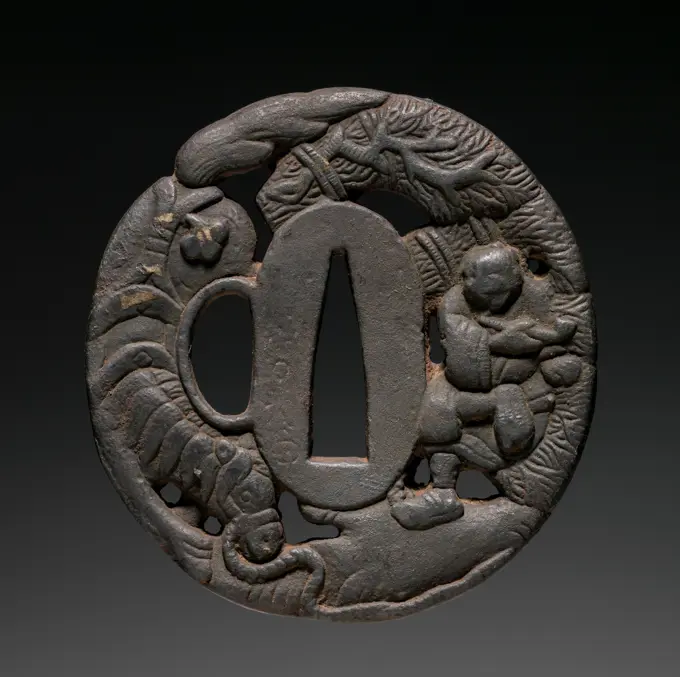
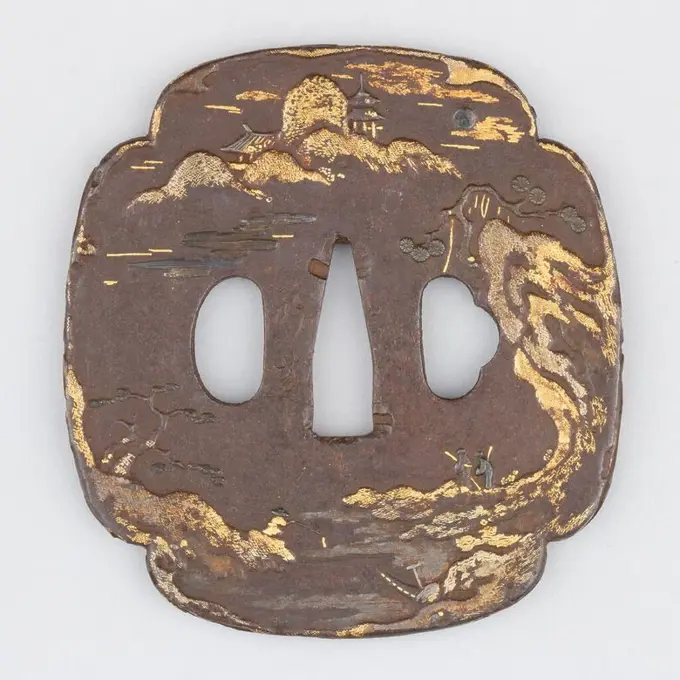
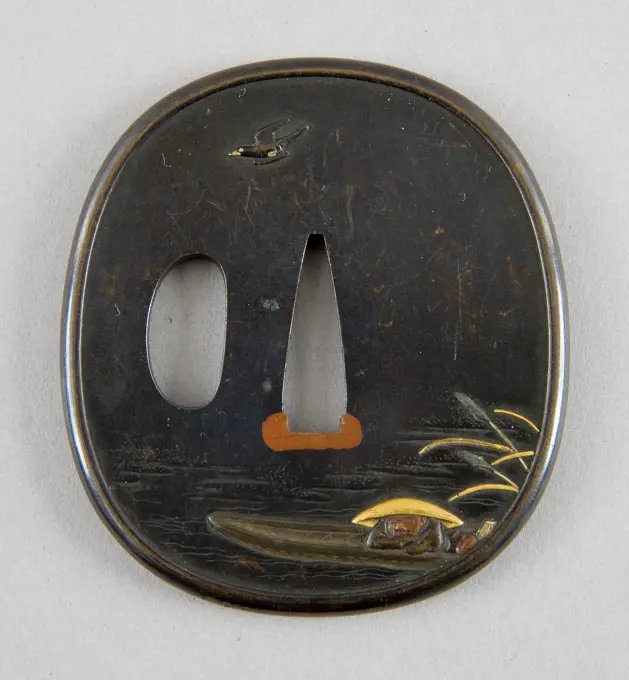
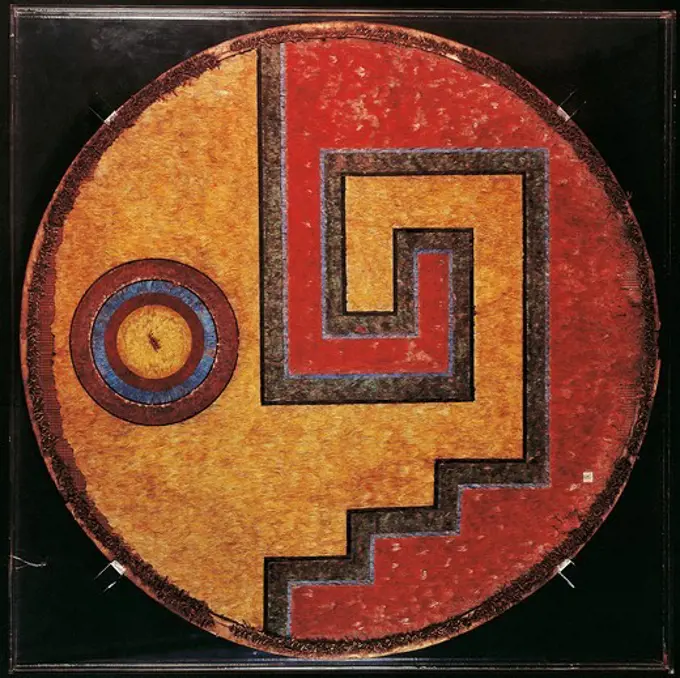
Japanese Sword Guards

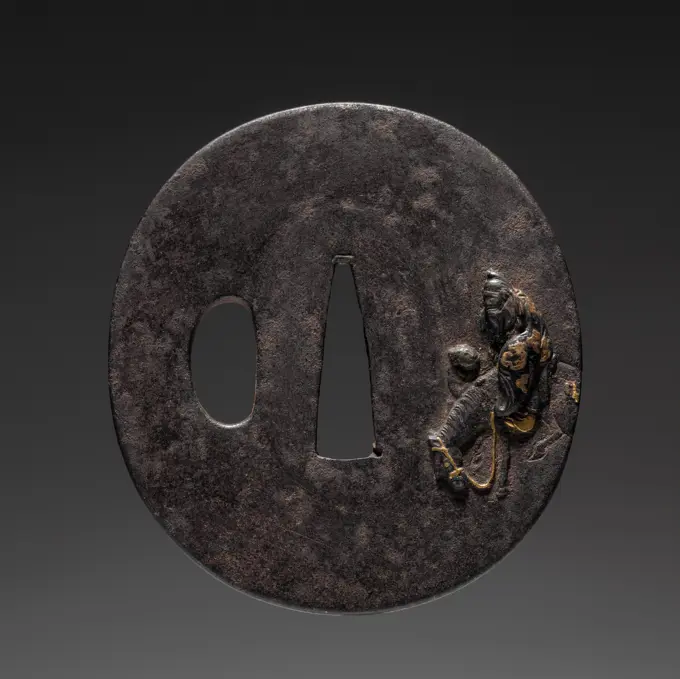
Displays intricate tsuba, or sword guards, from Japan, featuring detailed motifs and designs representing various historical elements.
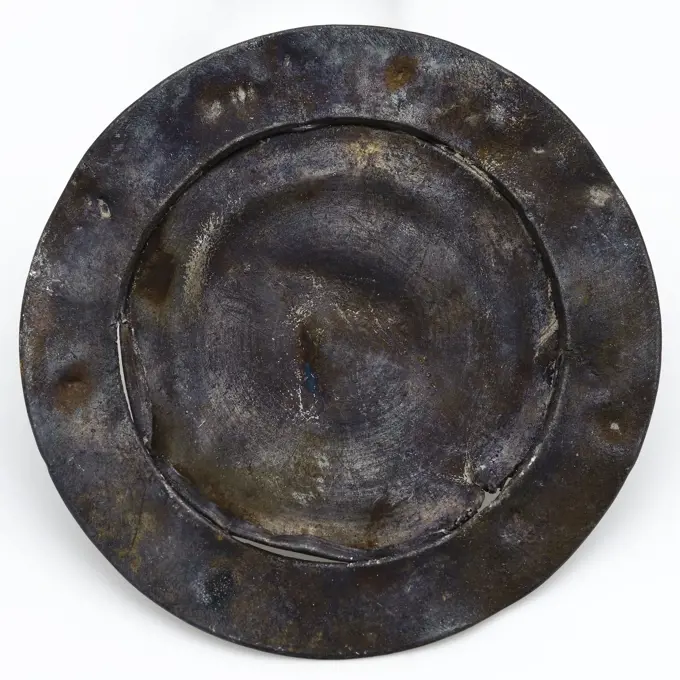
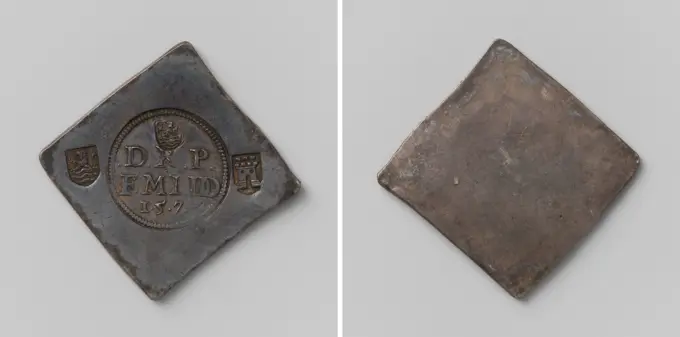
Hendrick van Duyveland, Tin toy plate with tin mark, plate crockery holder miniature toy relaxant soil find tin metal, cast tin plate. Toys Wide stand surface, short upright sidewall and flat flag. Turnings of the casting mold Inlaid tin mark on the underside tin mark: crowned Tudor rose with HVDP archeology Rotterdam rail tunnel indigenous tin child play child's play Soil discovery: railway tunnel Rotterdam.
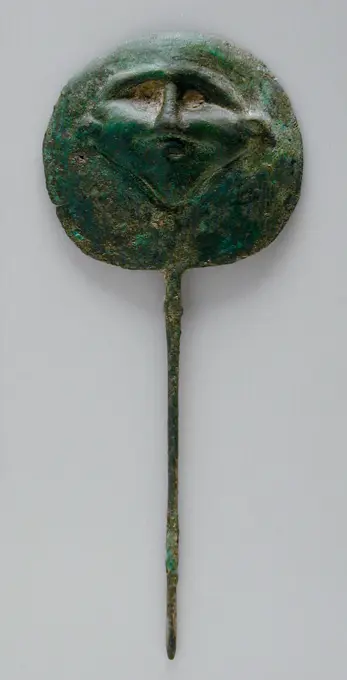
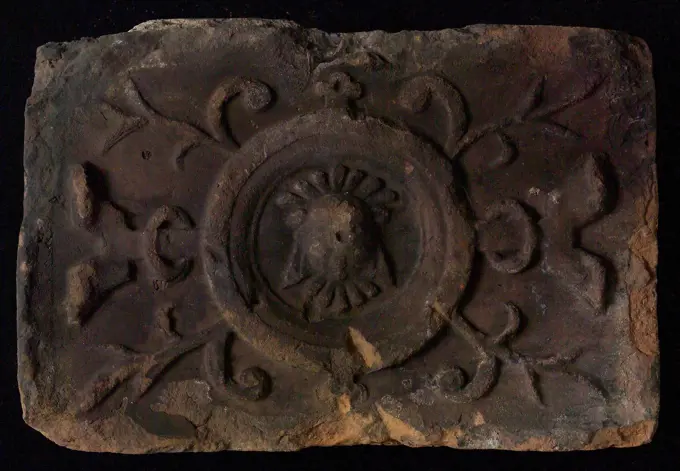
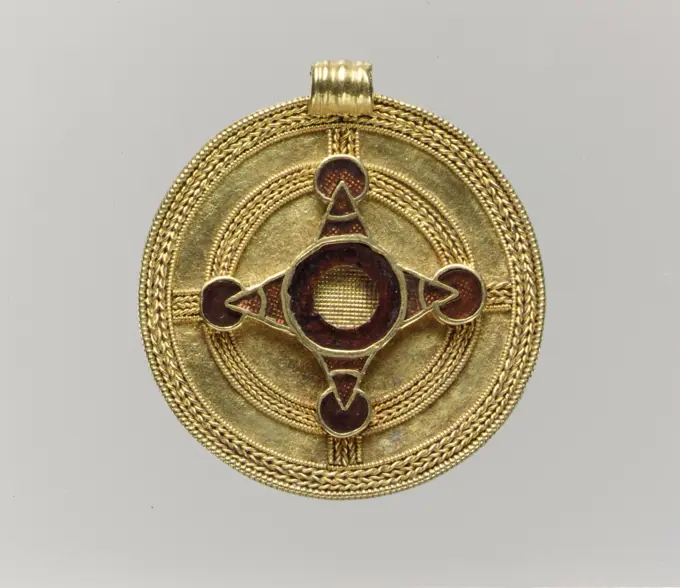
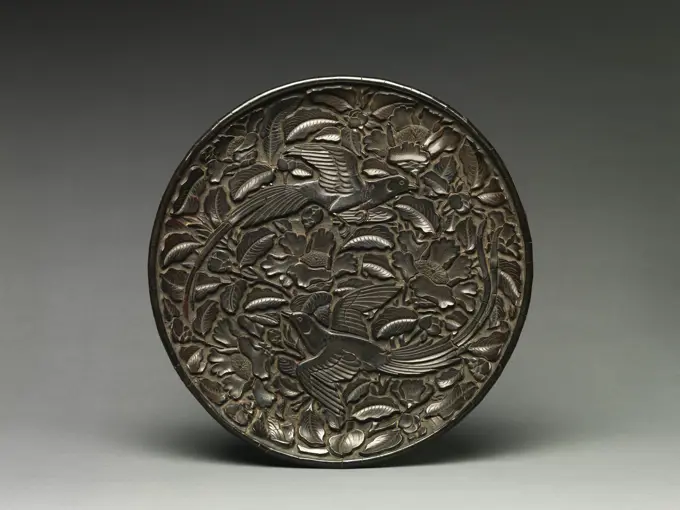
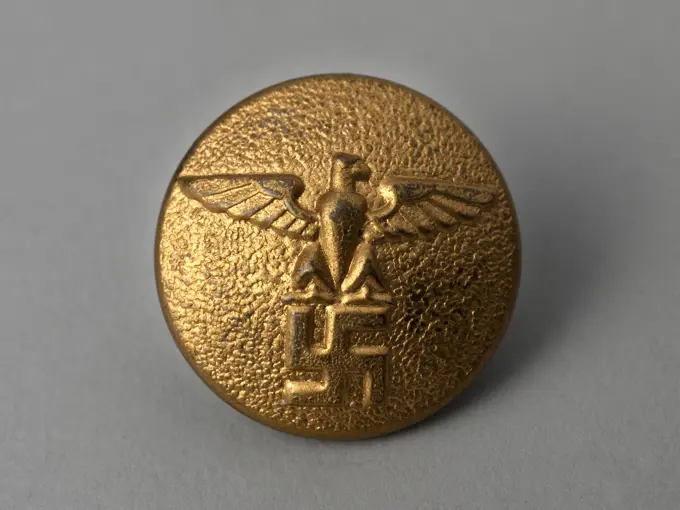
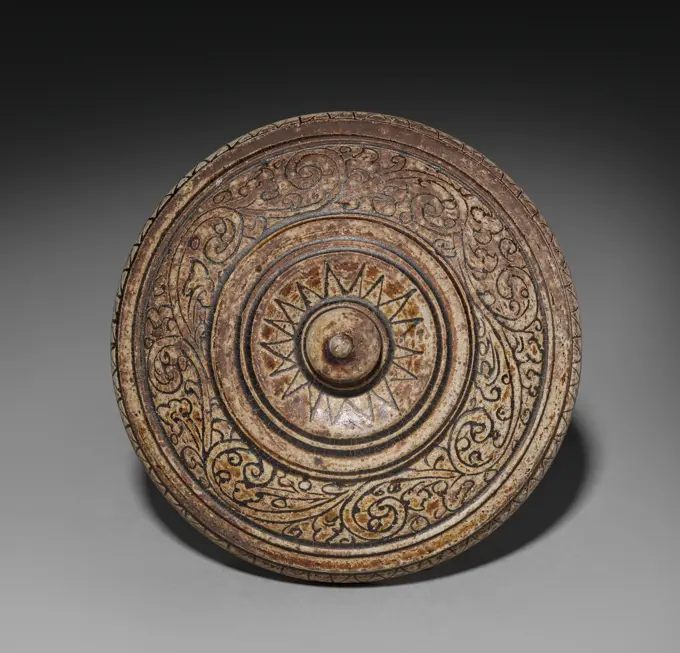
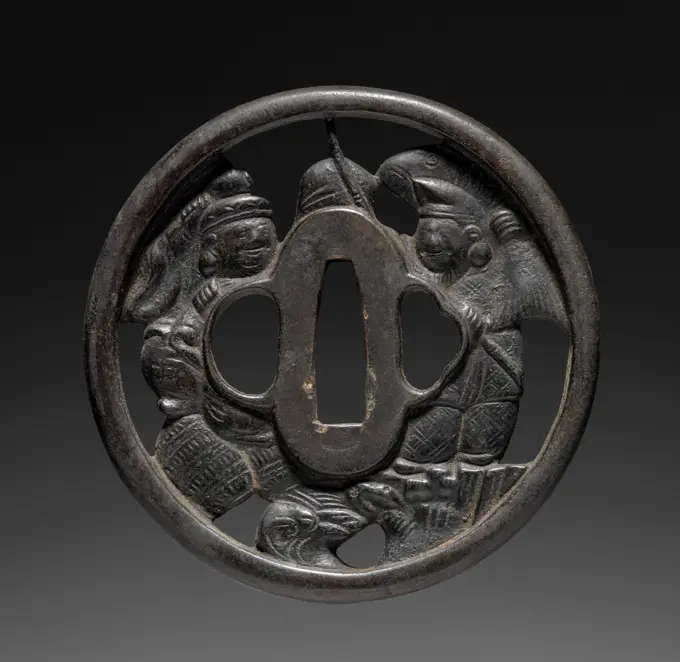
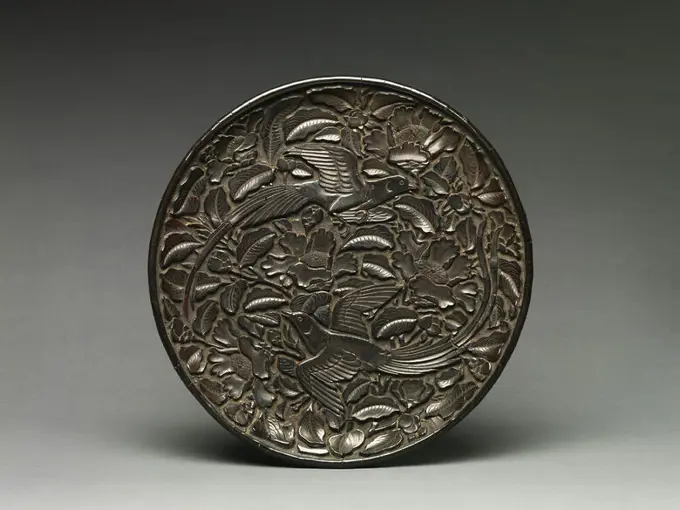
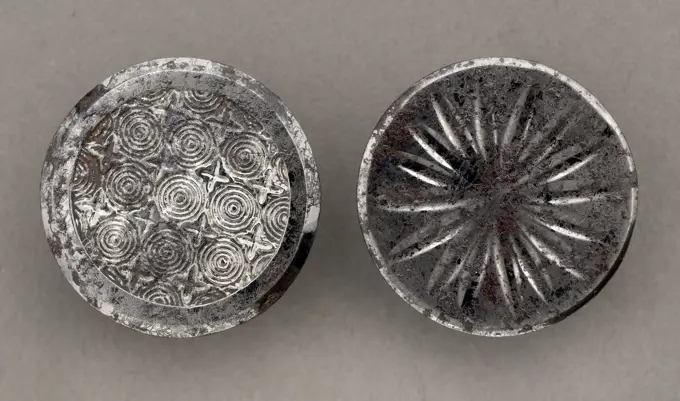
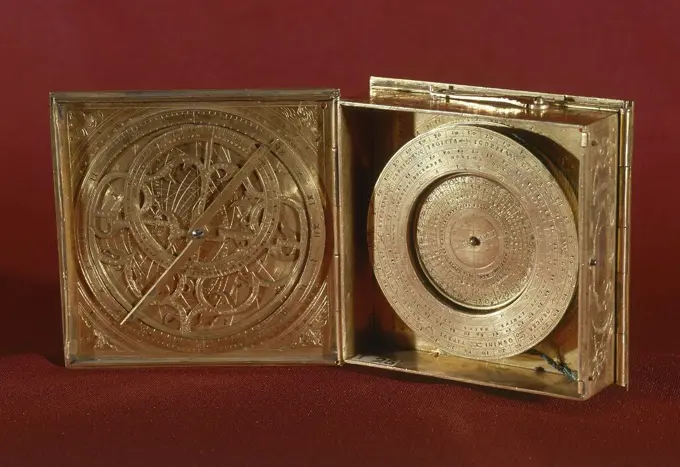
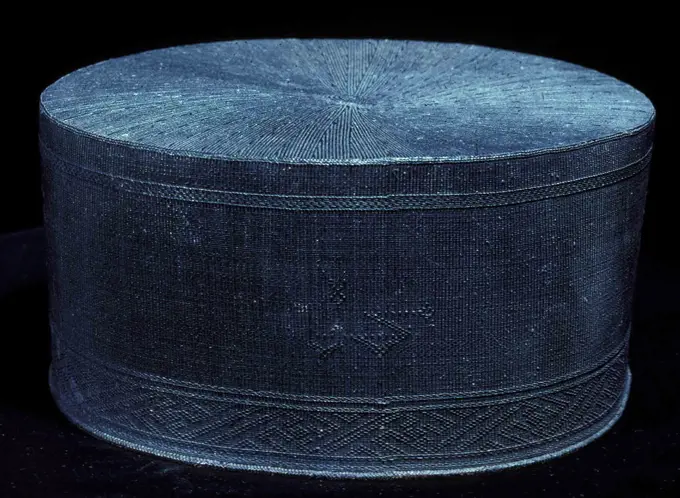
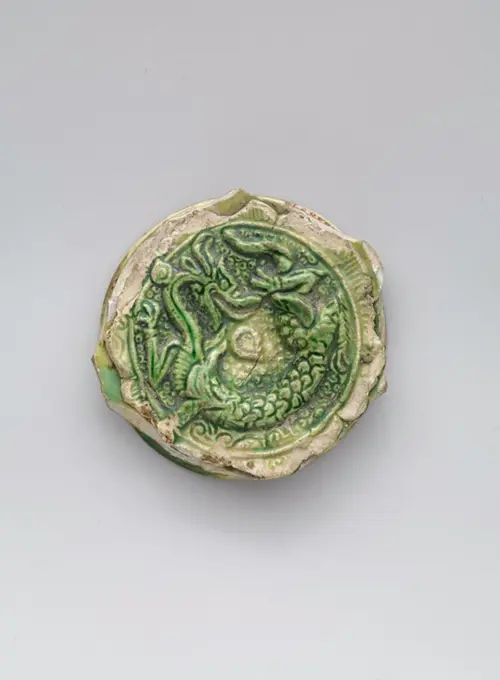
Fragment of an Imported Chinese Bowl. Dimensions: 2 5/8 in. (6.7 cm). Date: late 7th-first half 8th century.Chinese ceramics were highly valued and commonly imitated in Nishapur. The Nishapur imitations took different forms: the whiteness of the Chinese porcelains led local potters to develop the opaque white glazes with which they covered their wares, while the three-color sancai Chinese imports led to the invention of splashware, made by dripping brown, yellow, and green glazes over their pots. This medallion from the base of a bowl, with the molded image of a dragon with a flaming jewel, is an example of an imported Chinese sancai ware object; its find at Nishapur is an important piece of evidence in the story of Nishapuri pottery development. Museum: Metropolitan Museum of Art, New York, USA.Crown Talar False of Majnert; Zygmunt I Stary (King of Poland; 1506-1548); 1532 (1533-00-00-1533-00-00);Beer brewing guild of Amsterdam, gildeping by Willem Losser. Brass oval guild piping. Front: crowned barrel in a bran wreath. Turning side: inscription within a bran wreathPerpetual calendar possibly 16th century German. Perpetual calendar 188867 German, Perpetual calendar, 16th century(), Brass, 3-1/2 x 3-1/8 in. (8.9 x 7.9 cm). The Metropolitan Museum of Art, New York. Gift of Mrs. Stephen D. Tucker, 1903 (03.21.70)Cornelis Kluit, Silver distinguishing sign harbor master Delfshaven, insignia insignia silver, weapon of Delfshaven (in the field), HAVENMEESTER (legend in double border) Delfshaven RotterdamHalf Daalder, emergency coin from Middelburg, beaten after the siege and the intake of the city, Anonymous, 1574 coin. siege coin diamond -shaped emergency coin with rounded corners. Front: two stamps above each other: upper stamp: coat of arms; Below that: inscription in round pearl edge. Reverse: private label Middelburg silver (metal) striking (metalworking) / engraving  MiddelburgDisc - headed Pin. Iran, Luristan, circa 1000-650 B.C.. Jewelry and Adornments; pins. Bronze, hammeredSword Guard, early to mid-1800s. Japan, Edo period (1615-1868). Iron; diameter: 5.8 cm (2 5/16 in.).False Coin, Penny, 1013 1025, Mieszko II (1025 1031)Lazio Latina Sezze Antiquarium Comunale6. Hutzel, Max 1960-1990 German-born photographer and scholar Max Hutzel (1911-1988) photographed in Italy from the early 1960s until his death. The result of this project, referred to by Hutzel as Foto Arte Minore, is thorough documentation of art historical development in Italy up to the 18th century, including objects of the Etruscans and the Romans, as well as early Medieval, Romanesque, Gothic, Renaissance and Baroque monuments. Images are organized by geographic region in Italy, then by province, city, site complex and monument.False Coin, 10 Groschen, 1818, Alexander I (1815 1825), Kingdom of PolandSword Guard (Tsuba) ca. 1800 Japanese A tsuba is a sword guard and part of a sword mounting. It is mounted between the swords blade and grip to protect the users hands.. Sword Guard (Tsuba) 647370Game Piece with Zodiac Sign of Cancer or Scorpio mid-12th century North French This rare carving of a stylized crab representing the sign for Cancer or Scorpio likely came from a set of game pieces containing the Zodiac signs. The opposing twelve pieces probably depicted the Labors of the Months, scenes of common rural activities in the Middle Ages.. Game Piece with Zodiac Sign of Cancer or Scorpio 479663Hearthstone, from Antwerp Belgium, without frame, with mascaron, hearth fireplace component ceramics brick, baked Hearth stone of the Antwerp type without displaying representation of mascaron in laurel wreath building history heatingDish early 16th century German. Dish 467547Tray 14th century. Tray 444534Pendant early 600s Anglo-Saxon The region of Kent, in southeastern England, was an important center of Anglo-Saxon jewelry production of the type represented by this delicate, brightly colored piece. The interlace patterns created by gold filigree and the polished garnets reflect the high quality of goods worn by individuals in life and later buried with them.. Pendant. Anglo-Saxon. early 600s. Gold with garnets. Metalwork-GoldDish with long-tailed birds and flowers second half of the 14th century China A sophisticated example of the two-bird design, the compact composition of this dish features flowers and long-tailed birds (shoudai, or paradise flycatchers)a symbol of a rewarding career and long lifecarved in a three-dimensional effect.. Dish with long-tailed birds and flowers. China. second half of the 14th century. Carved black lacquer. Yuan (1271-1368)-early Ming (1368-1644) dynasty. LacquerMirror withDioskouroiSword Guard (Tsuba). Culture: Japanese. Dimensions: H. 3 3/8 in. (8.6 cm); W. 3 1/2 in. (8.9 cm); thickness 3/16 in. (0.5 cm); Wt. 6.6 oz. (187.1 g). Date: 17th-18th century. Museum: Metropolitan Museum of Art, New York, USA.Sword Guard (Tsuba) 18th century Japanese A tsuba is a sword guard and part of a sword mounting. It is mounted between the swords blade and grip to protect the users hands.. Sword Guard (Tsuba) 26255War 1939-1945. "Politsescher Certer" button. General Leclerc Museum of Hauteclocque and the Liberation of Paris, Jean Moulin Museum. 75311-3 Nazi eagle, button, cross range, leader, Nazi district, war 1939-1945 39-45, IIIeme 3rd 3rd 3rd Reich, Kreisleiter, Kreisleitung, nsdap, object, Nazi party, Second World War, Nazi symbol, Third Reich, military uniform,Sword Guard (Tsuba) ca. 1615-1868 Japanese A tsuba is a sword guard and part of a sword mounting. It is mounted between the swords blade and grip to protect the users hands.. Sword Guard (Tsuba) 34492Covered Jar, Sawankhalok ware (lid), 1300s. Thailand, Sukhothai Period, 14th century. Pottery; overall: 9.2 cm (3 5/8 in.).Sword Guard (Tsuba) possibly 18th-19th century Japanese A tsuba is a sword guard and part of a sword mounting. It is mounted between the swords blade and grip to protect the users hands.. Sword Guard (Tsuba) 34994Ornament. Culture: China. Dimensions: H. 3/16 in. (0.5 cm); Diam. 2 1/8 in. (5.4 cm). Date: 18th-19th century. Museum: Metropolitan Museum of Art, New York, USA.Bowl 12th-13th centurySword Guard, 1766-1834. Japan, Edo period (1615-1868). overall: 6.8 x 6.1 cm (2 11/16 x 2 3/8 in.).Clothing rang. Applique, A-jour edited and decorated in granulation technique.Winterhilfswerk des Deutschen Volkes (WHW) Winterhilfswerk 1935/1936 badge (WHW: Winter help work) representing the Wolfsangel (Wolf or Crampon hook) with Traverse (attributed title), 1935. Leather. Metal. Museum of the Liberation of Paris - General Leclerc Museum - Jean Moulin Museum.Bakkersgilde van Enkhuizen, Gildepenning by Cornelis Heineman, Anonymous, 1750 medal Silver medal. Front: to the left desired bakery, standing in his bakery, busy sliding bread in oven inside decorative edge consisting of four rider shields. Reverse: inscription Inside Sierrand consisting of four rider shields Enkhuizen silver (metal) engraving baker EnkhuizenSpindle Whorl 10th-early 16th century Mexican. Spindle Whorl 307559Imitation Luster Bowl, inscribed "Blessing". Dimensions: H. 2 9/16 in. (6.5 cm)Diam. 9 5/16 in. (23.7 cm). Date: 10th century.This piece copies a known type of tenth-century monochrome luster-painted ware from Iraq, of which several fragments were found in the Nishapur excavations. Unlike the bowls from Iraq, whose shape is based on that of Chinese porcelains, the bowls made in Nishapur have straight walls and a flat base. It is inscribed with two instances of the word "blessing"--facing up on one side and down on the other. Museum: Metropolitan Museum of Art, New York, USA.Spindle Whorl, 700s - 900s. Iran, early Islamic period, 8th - 10th century. Bone, incised; overall: 0.7 x 1.6 x 1.6 cm (1/4 x 5/8 x 5/8 in.).MirrorRosette from the Temple of Ramesses III 1186 BCE-1069 BCE Egypt. Faience . Ancient EgyptianBowl, Scorpions A.D. 950-1150 Mogollon (Mimbres) Mimbres pottery from southern New Mexico is one of the most well known ceramic traditions of the Southwest. Mimbres painters, wielding brushes made of yucca leaves, created both representational and geometric images on the slipped interior of nearly hemispheric bowls. These designs feature a great range of symbolic patterns as well as references to elaborate mythological narratives. Such bowls were ritually "killed" during funerary rituals when a central hole was punctured, rendering it non-functional in its journey to the afterlife.. Bowl, Scorpions. Mogollon (Mimbres). A.D. 950-1150. Ceramic, pigment. United States, New Mexico. Ceramics-VesselsLombard account token, XIII-15th century Anonymous. "Lombard account token, 13th-15th century". Copper. 1200-1400.This is a sports  equipment. Very helping to people for healthy life. Is indispensable in the sports centerJules Clément Chaplain (1839-1909). "Miss Mary Chapman medal". Metal Bronze, 1864. Museum of Fine Arts of the city of Paris, Petit Palais. 57557-16 Bronze, woman, medal, metal, numero inventory, numismatics, profile, portrait, reverseSword Guard (Tsuba) 18th century Japanese A tsuba is a sword guard and part of a sword mounting. It is mounted between the swords blade and grip to protect the users hands.. Sword Guard (Tsuba) 30073COTTIAD. "Genius belt plaque Iind Empire - Third Republic". Brass. 1862-1914. General Leclerc Museum of Hauteclocque and the Liberation of Paris, Jean Moulin Museum. 158815-7Carnavalet museum, tokens collectionPapyrus Lid from Tutankhamun's Embalming Cache ca. 1336-1327 B.C. New Kingdom. Papyrus Lid from Tutankhamun's Embalming Cache. ca. 1336-1327 B.C.. Papyrus. New Kingdom. From Egypt, Upper Egypt, Thebes, Valley of the Kings, Embalming Cache of Tutankhamun (KV 54), Davis/Ayrton excavations, 1907-08. Dynasty 18StampDaalder, emergency coin from Middelburg, beaten during the investment coin of a faller, of the siege of Middelburg, Anonymous, 1572 coin. siege coin Unilateral, diamond -shaped emergency coin. Front: four stamps: inscription in round pearl edge; Left and over the middle stamp: state weapon, right: city coat of arms. Reverse: Blanco Middelburg silver (metal) striking (metalworking)  MiddelburgHolder of Nautilusschelp, Cornelis Bellekin, 1650 - 1700 Round holder decorated with leaf and floral motifs Amsterdam ivory cutting Round holder decorated with leaf and floral motifs Amsterdam ivory cuttingGrahal-Manzara. Carnavalet 2013-2016 collection sites. Numismatics. Reverse a star, followed by the inscription the sciences / and the fatherland / cry / This illustrious scientist / death victim of / fury / re -skills / ex. And ded. TO. SOC. SV. / By Aug. Durp sic / The year 10 rep. .Carnavalet museum, medal collectionEscutcheon plate 16th century German. Escutcheon plate 468814cup of greek pottery cup of greek pottery, V to III bC, Iberian Museum of Jaén, Andalusia, Spain Copyright: xZoonar.com/BartomeuxBalaguerxRotgerx 21714828Sword Guard (Tsuba) with Daikokuten and Ebisu, c. 1615-1868. Japan, possibly Edo period (1615-1868). diameter: 8 cm (3 1/8 in.).Round dish with long-tailed birds and flowers. Culture: China. Dimensions: H. 1 7/16 in. (3.7 cm); Diam. 12 3/8 in. (31.4 cm). Date: second half of the 14th century.A sophisticated example of the two-bird design, the compact composition of this dish features flowers and long-tailed birds (shoudai, or paradise flycatchers)--a symbol of a rewarding career and long life--carved in a three-dimensional effect. Museum: Metropolitan Museum of Art, New York, USA.Stamped steel button with sunburst design, 1820-1840. 1953F370. Steel button stamped with overall design of small concentric circles within a plain rim, 1820-1840. Produced in BirminghamHead of a Pharoah. Dated: probably 19th century. Dimensions: overall: 6.7 x 6.8 x 3.9 cm (2 5/8 x 2 11/16 x 1 9/16 in.). Medium: steel. Museum: National Gallery of Art, Washington DC. Author: Possibly French 19th Century.Cast iron grill black steel texture lines patternTsuba Tyou Kinko  a fisherman sleeping in Łódź and a bird Unknown, school HamanoLluís Masriera / Molde de yeso para colgante con insecto, 1906. Colección privada. Author: LLUÍS MASRIERA I ROSÉS.Kyliks czarnofigurowy, oczowy. unknown, authorFloor tile: all Dinc has-tears. Floor tile decorated with a square with a coat of arms around which the inscription: all Dinc has-bees-ties. In the corners, a quarter of rosette.Year of the 1975 woman. Year of the woman 1975. Bronze cast medal. VZ: 5 in succession, women dressed in dresses. KZ: Female symbol that breaks through tire, around it.Compartmented stamp seal ca. late 3rd-early 2nd millennium B.C. Bactria-Margiana Archaeological Complex. Compartmented stamp seal 326838ESTUCHE NAUTICO DE FELIPE II-CALENDARIO. Location: MUSEO NAVAL / MINISTERIO DE MARINA. MADRID. SPAIN.IslamicCap, 19th century orearlier, Rattan; plaited, 9.5 × 18 × 15 cm (3 3/4 × 7 1/16 × 5 7/8in.), ILE2006.4.318 , Made in Bima, Sumbawa, Indonesia, Bima, 19thcentury, Apparel/CostumeSword Guard (Tsuba), c. 1615-1868. Japan, possibly Edo period (1615-1868). Iron; average: 7.7 x 8 cm (3 1/16 x 3 1/8 in.).Bliżej Kultury unknownGirdle plaque China. Girdle plaque 43882Mexico, Aztec civilization. feather shield with linear meander design incorporating eye motifs. From Mexican Altiplanogolden sun handcraft from Mediterranean isolated on white backgroundKouei-burning burner. Bronze. China. Paris, Cernuschi museum. 76403-1 Chinese art, bronze, archaging bronze, burparfum kouei, detail, writing, inscription, decorative motifPortrait of Kazimierz Chłędowski - Project of a Commemorative Medallion Raszka, Jan (1871 1945)Mullin, Detroit Tigers, baseball card portraitPortrait of Jacek Malczewski Raszka, Jan (1871 1945)