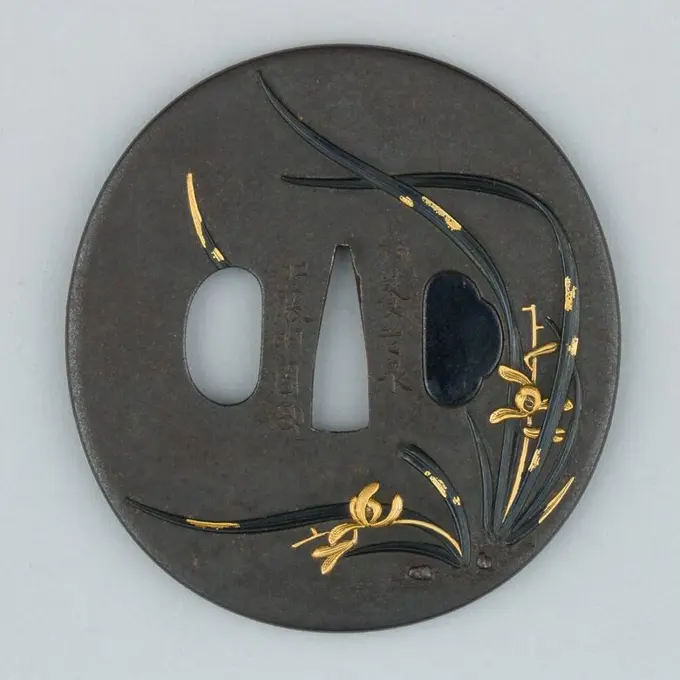
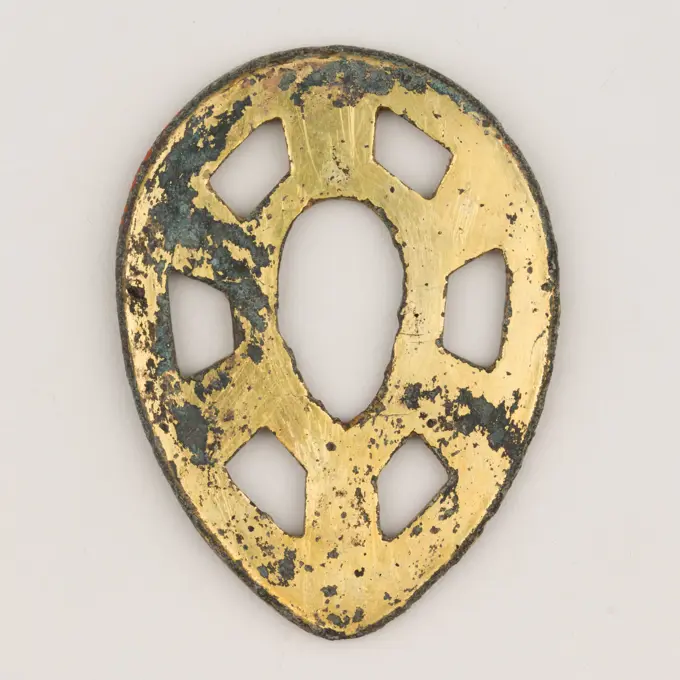
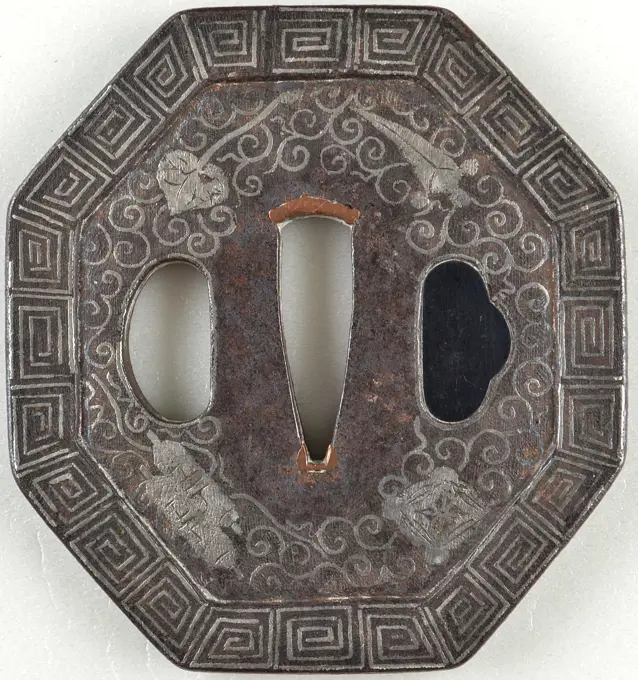
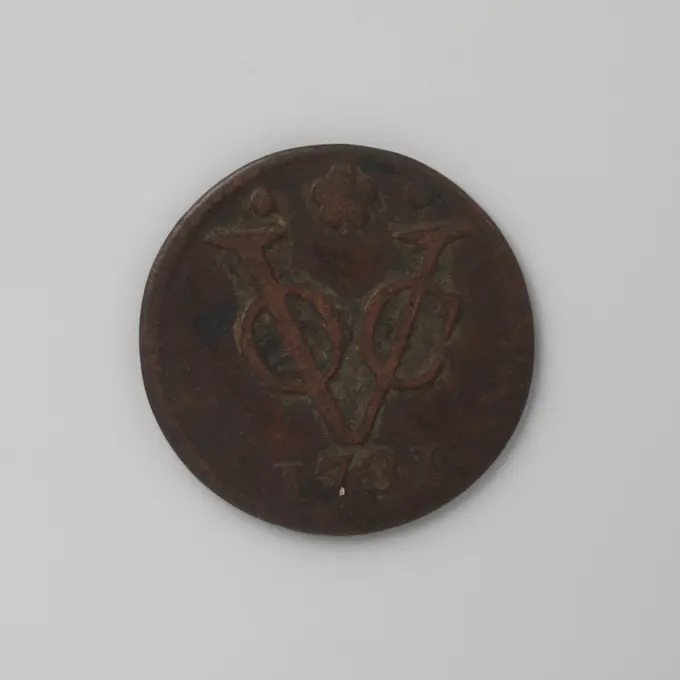
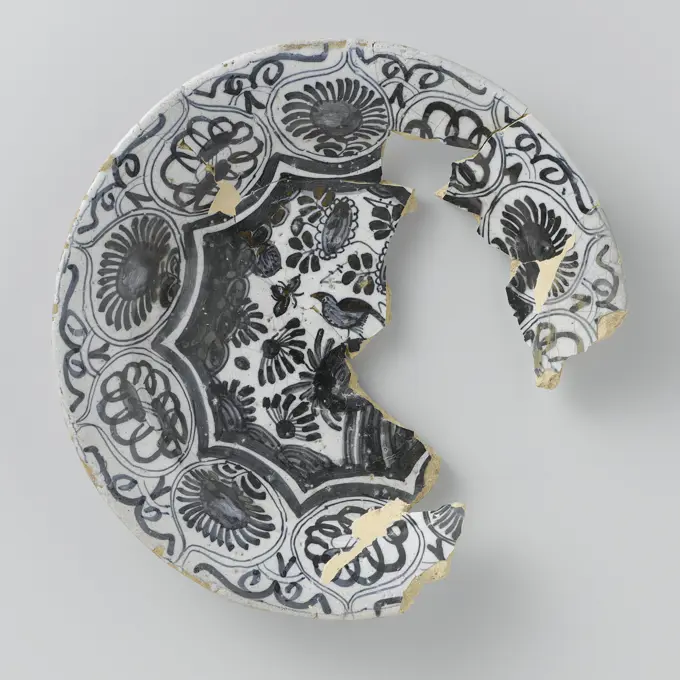
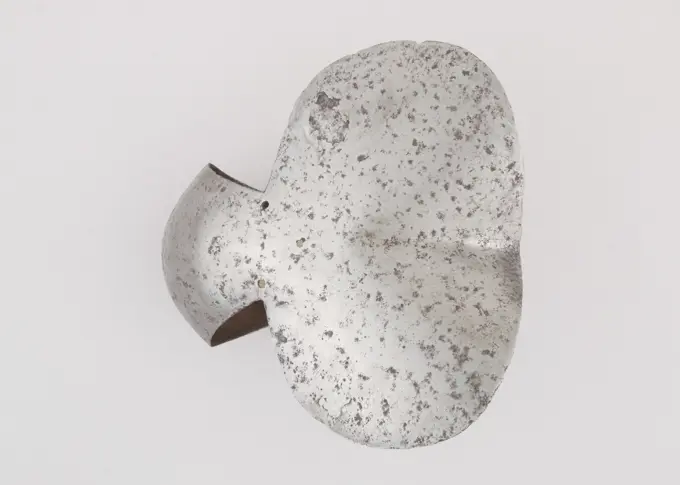
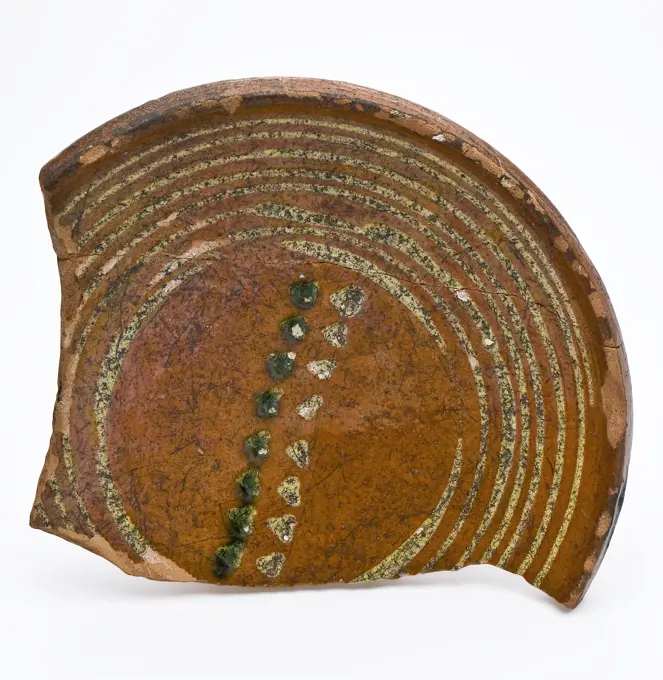
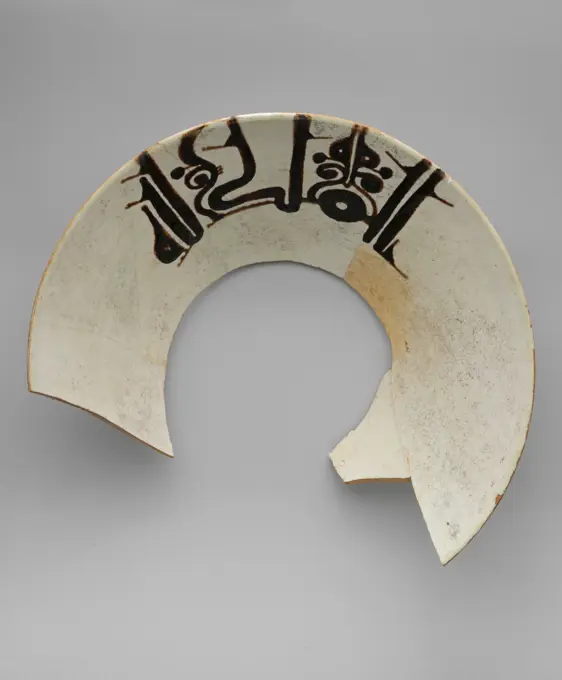
Japanese Tsuba Sword Guards

A collection of ornate Japanese tsuba sword guards featuring intricate designs and historical significance, showcasing craftsmanship from the 16th to 18th century.

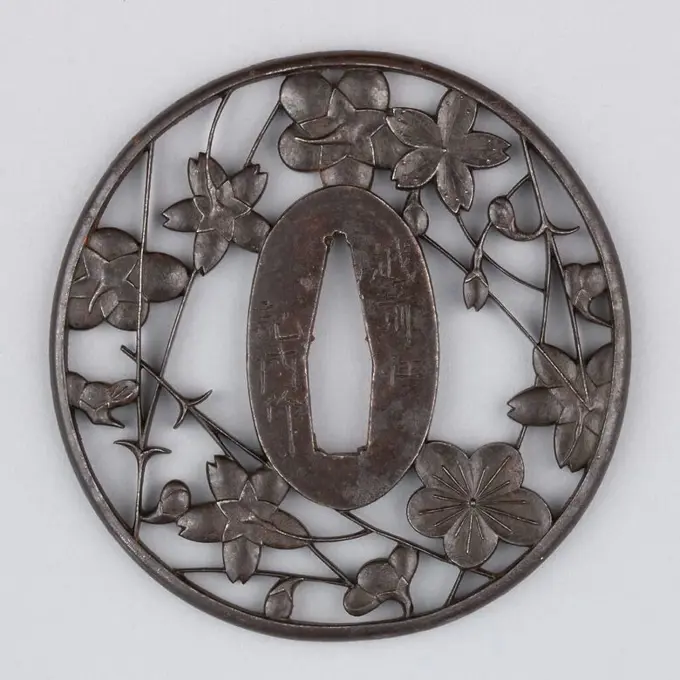
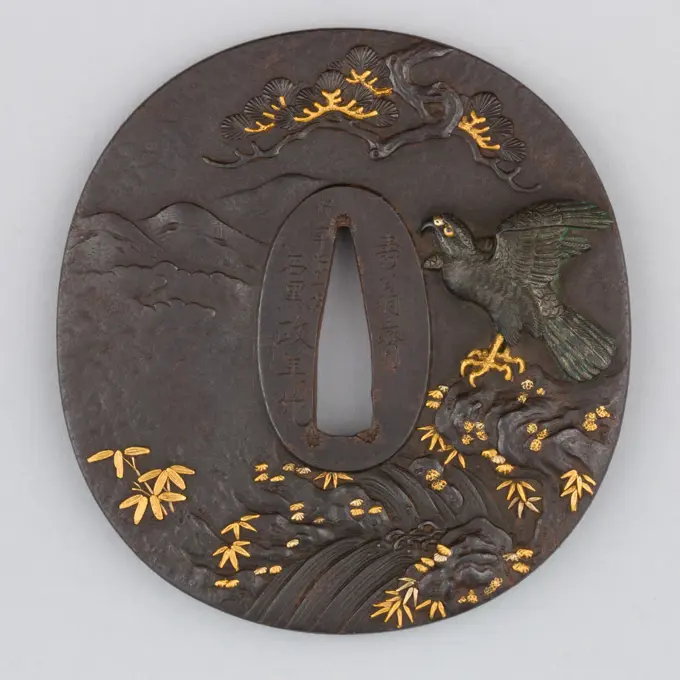
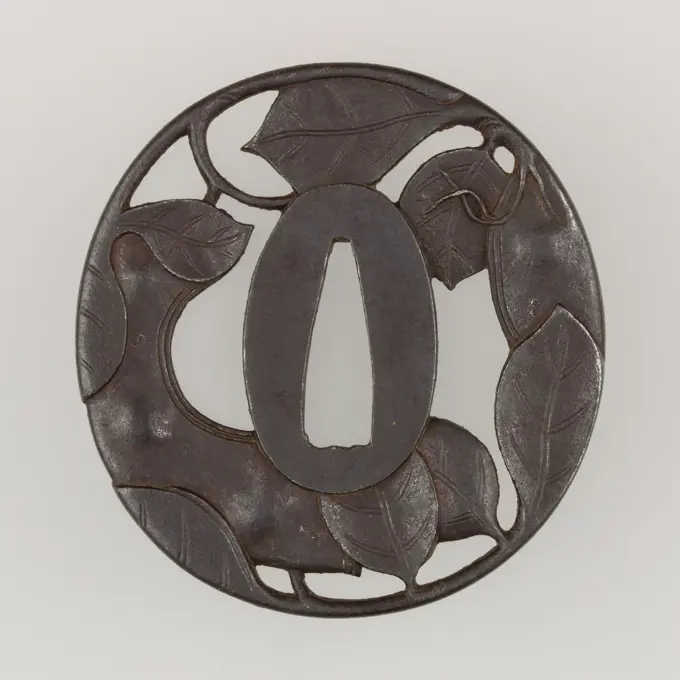
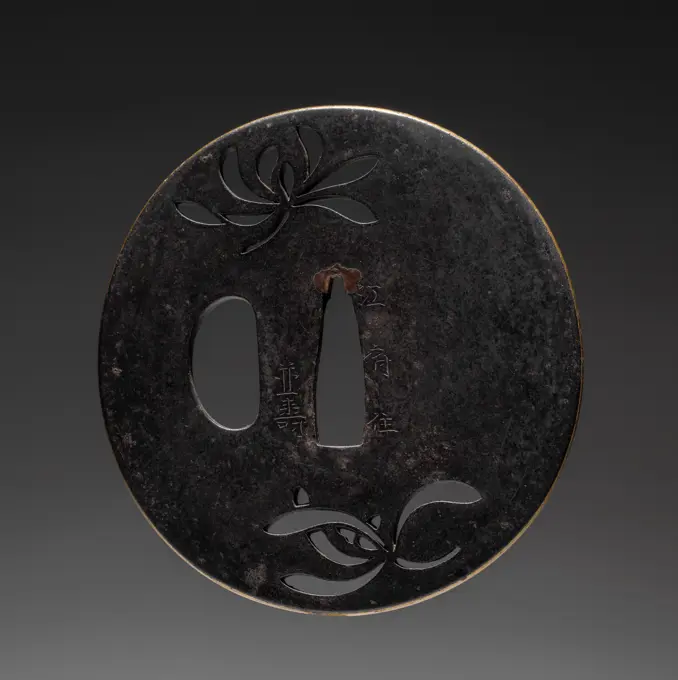
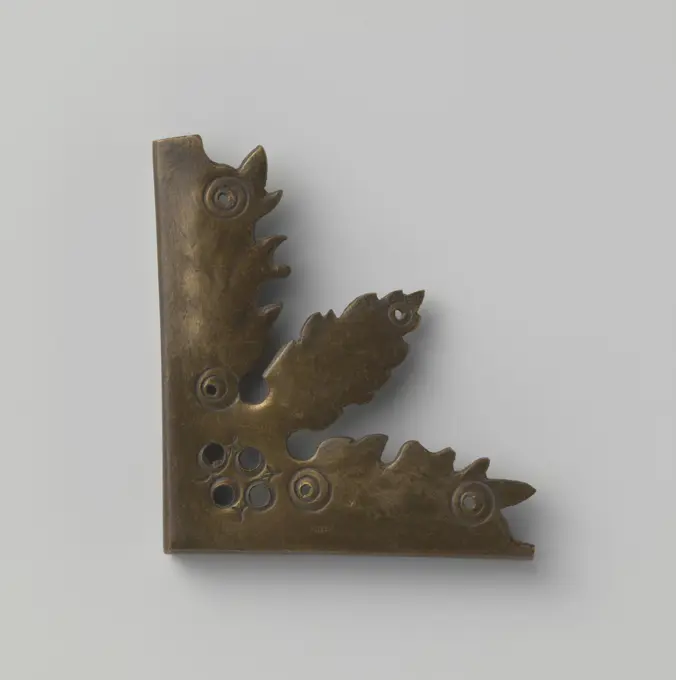
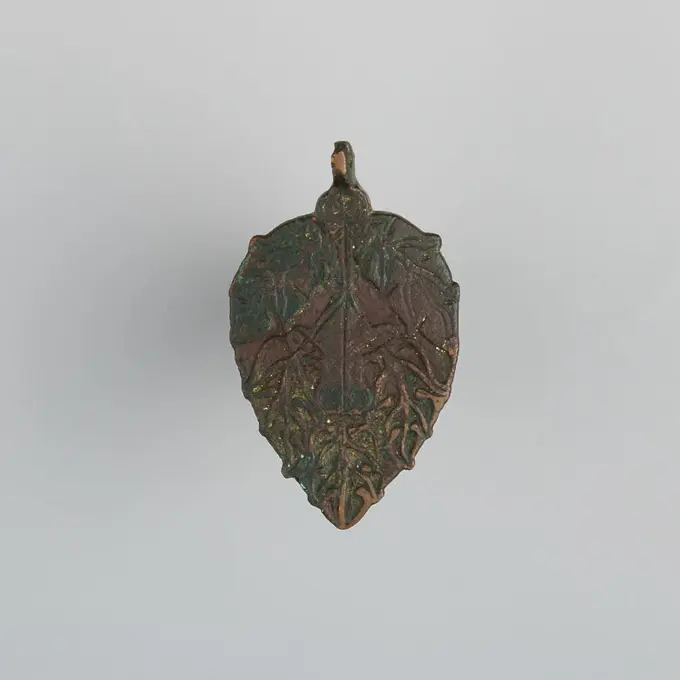
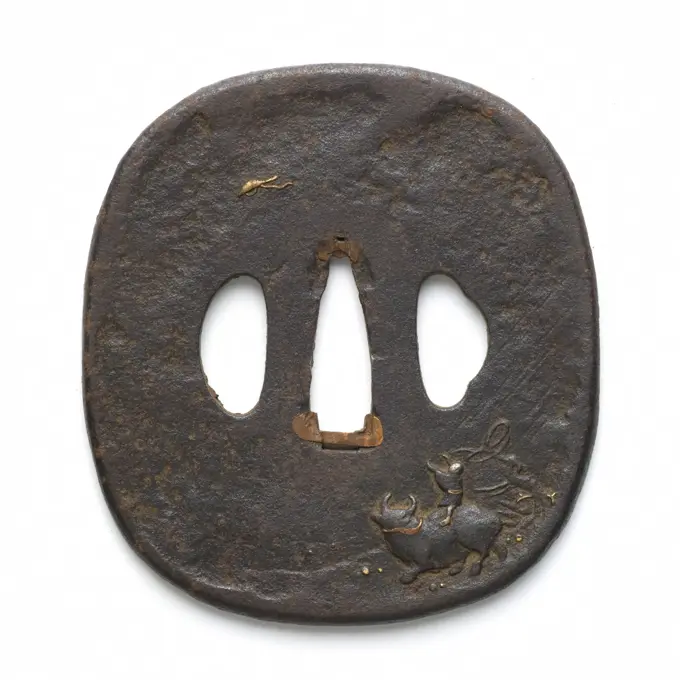
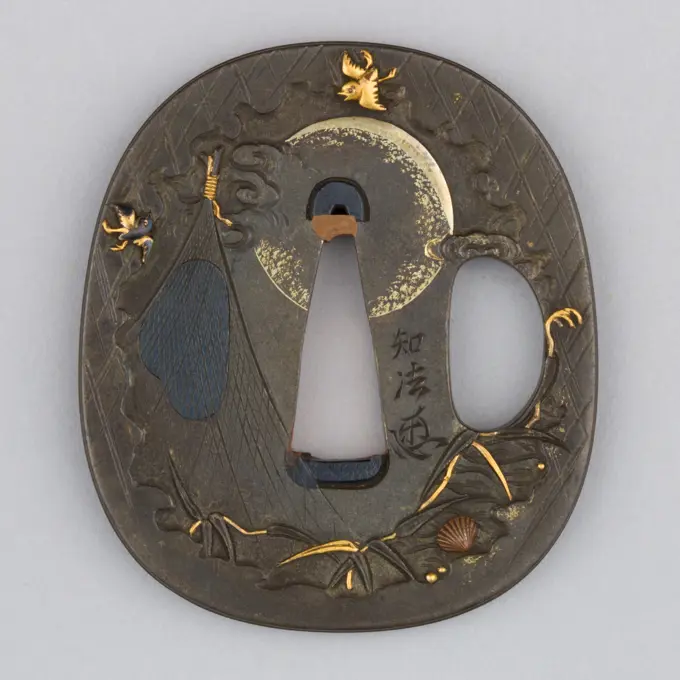
Sword Guard (Tsuba) possibly late 16th century Japanese A tsuba is a sword guard and part of a sword mounting. It is mounted between the swords blade and grip to protect the users hands.. Sword Guard (Tsuba) 29986
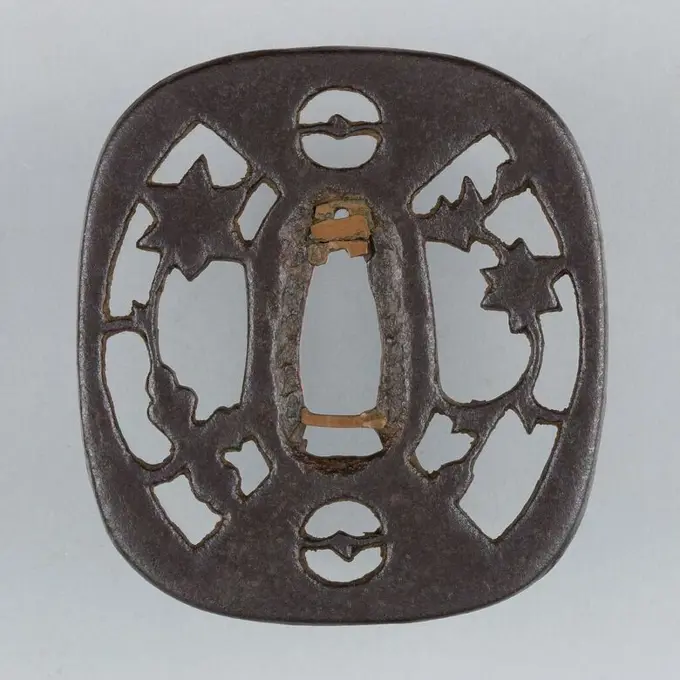
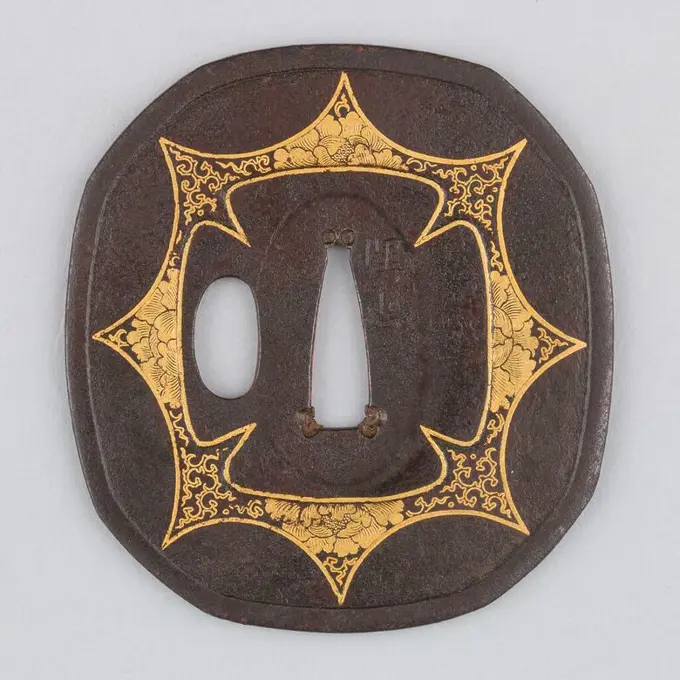
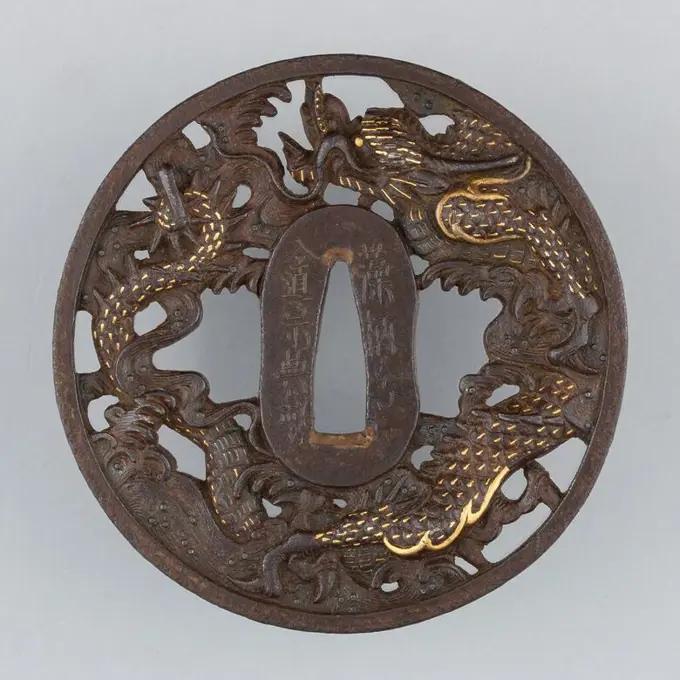
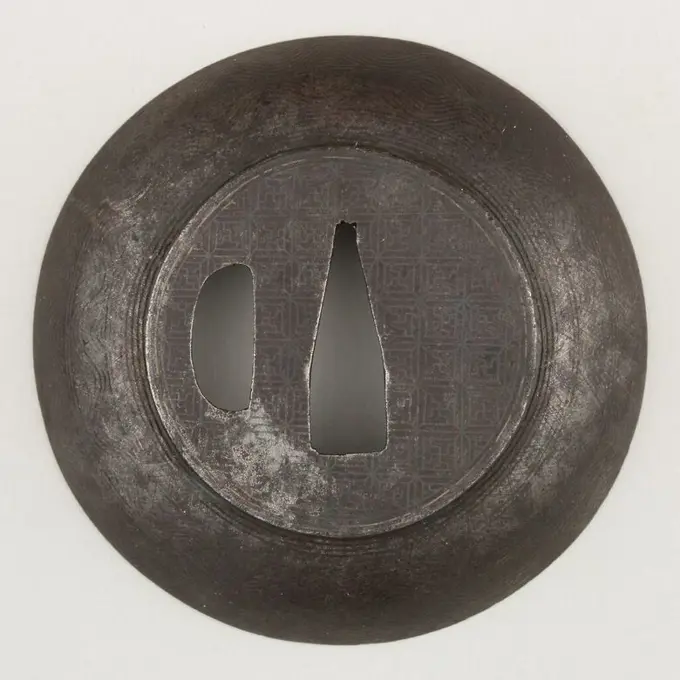
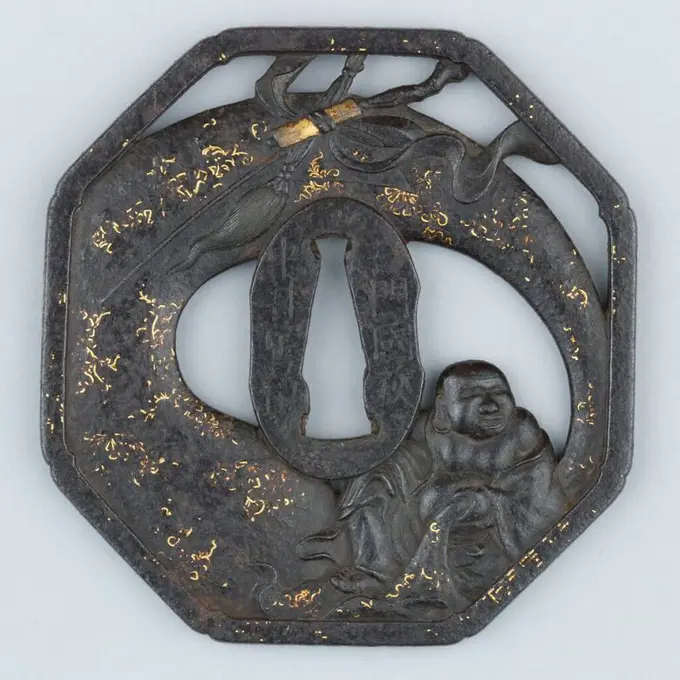
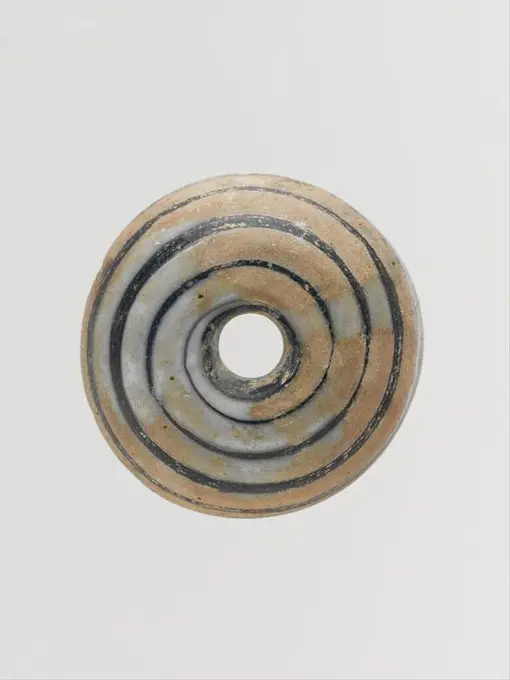
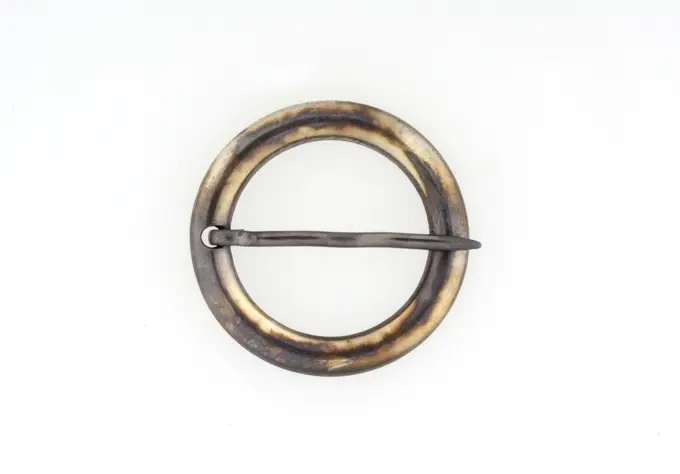
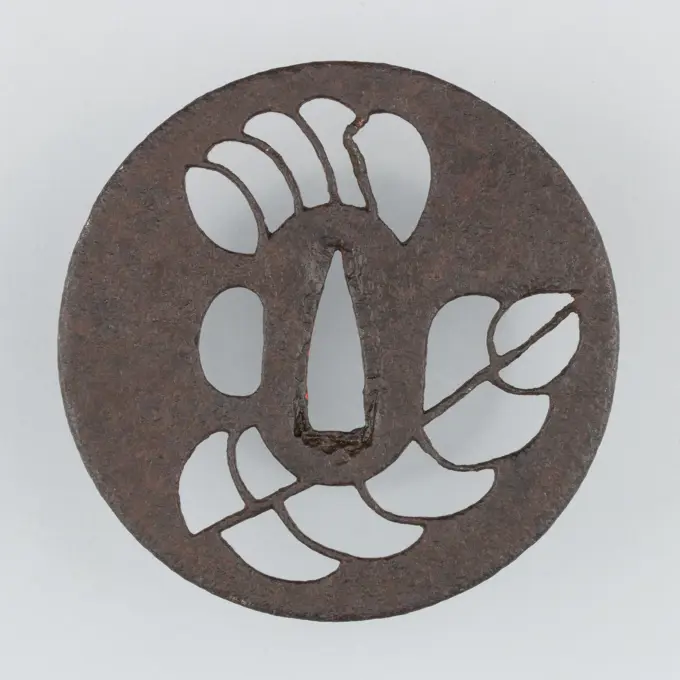
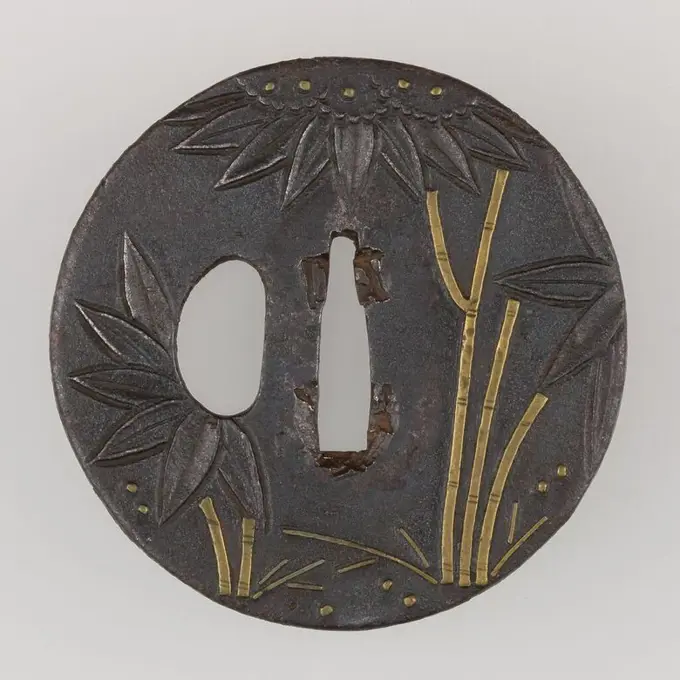
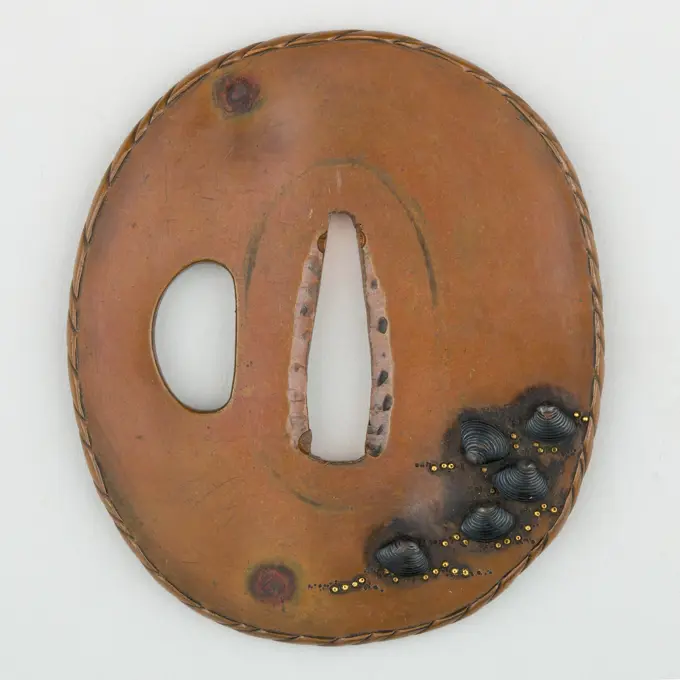
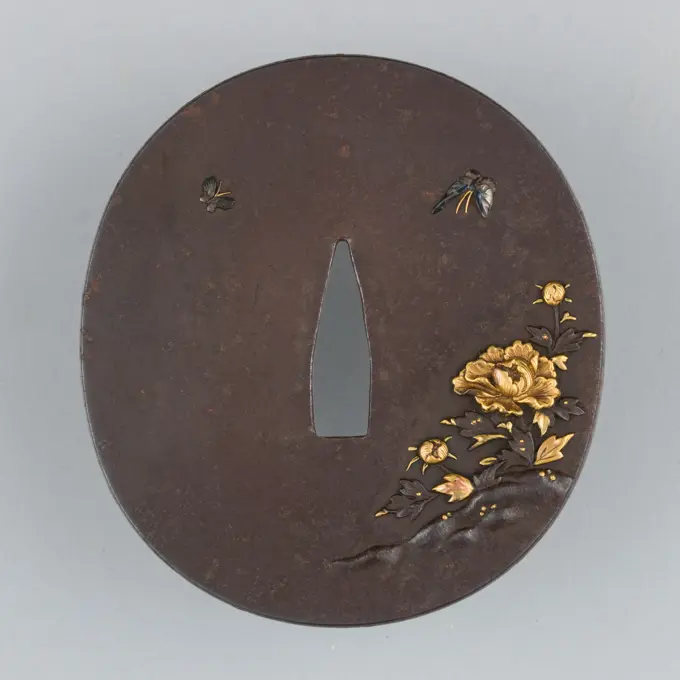
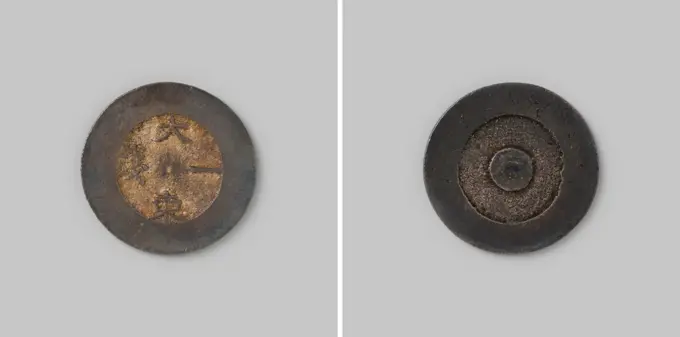
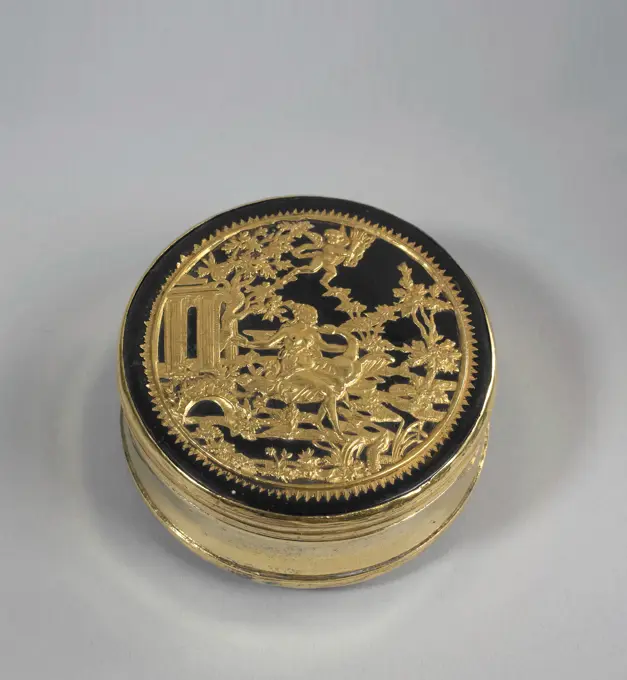
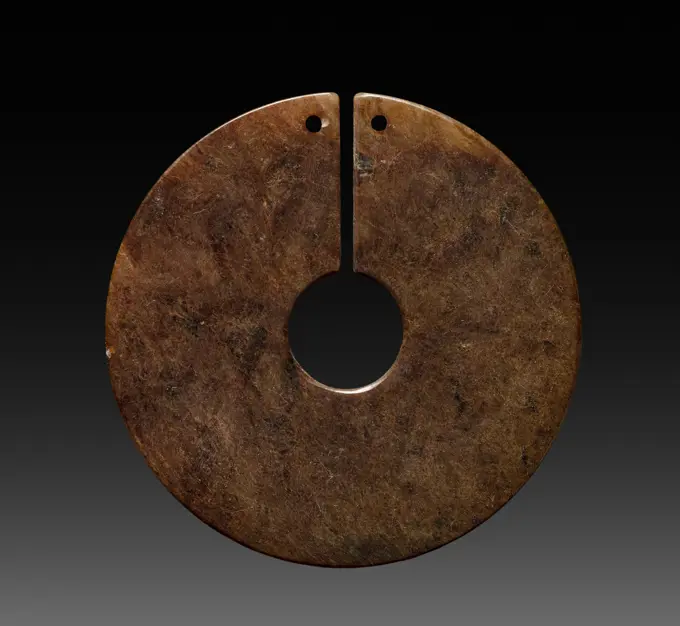
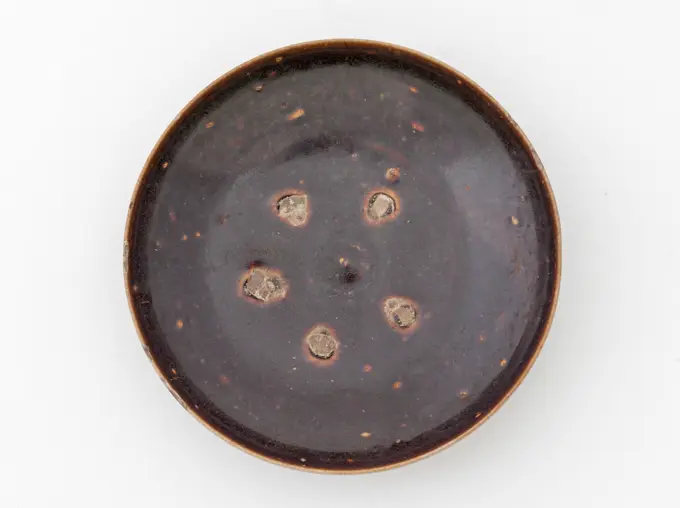
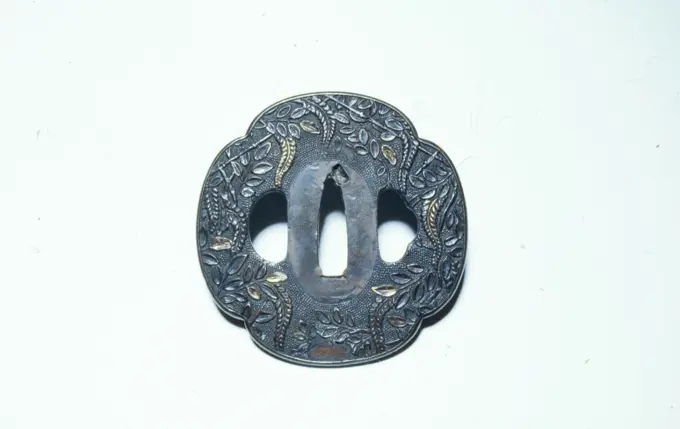
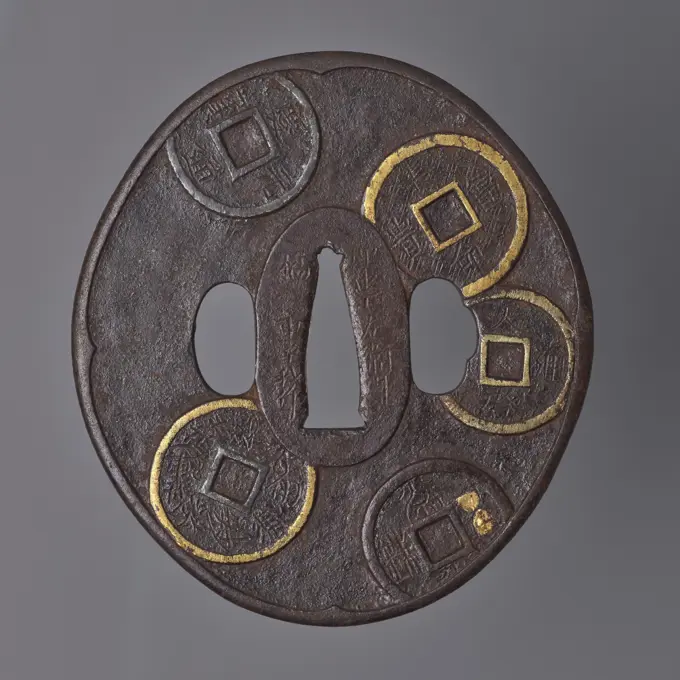
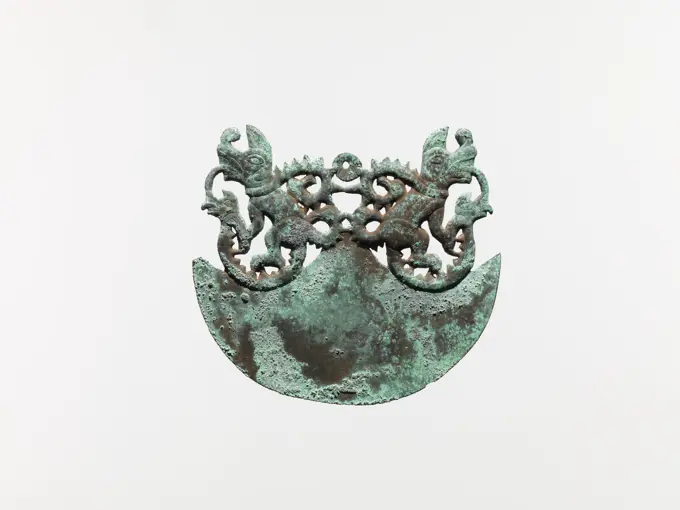
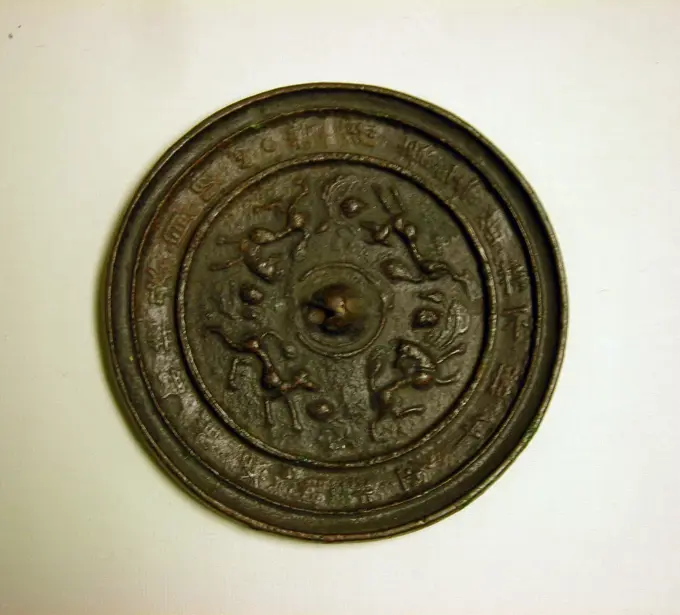
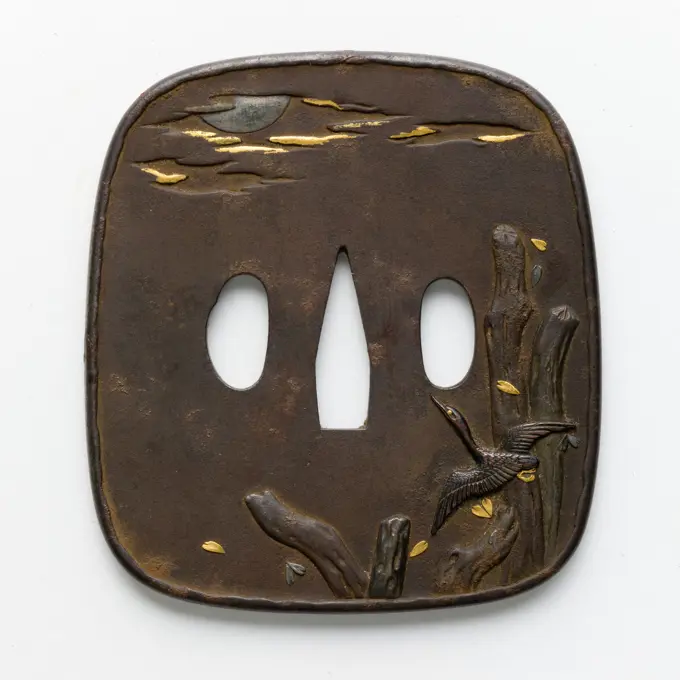
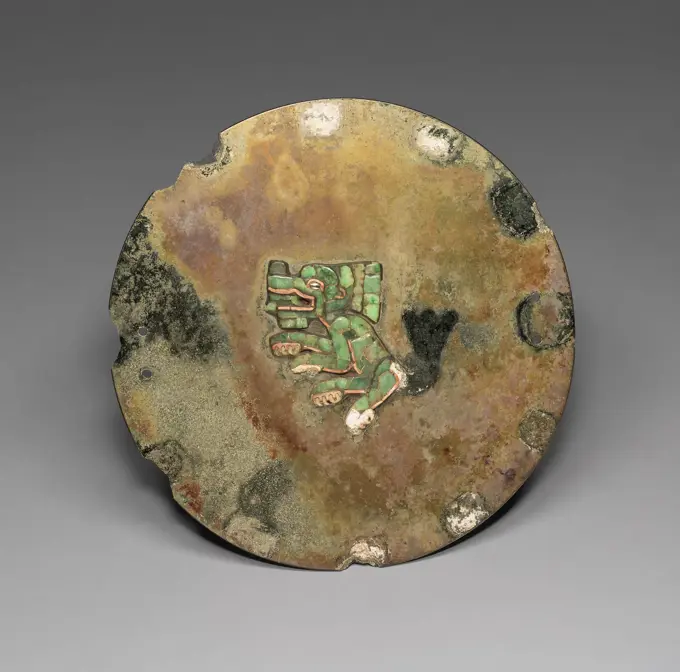
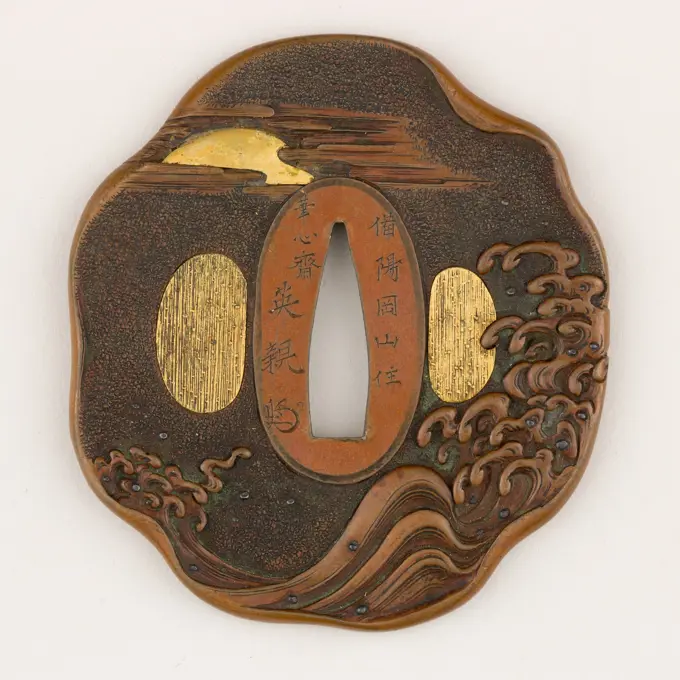
Sword Guard (Tsuba) possibly late 16th century Japanese A tsuba is a sword guard and part of a sword mounting. It is mounted between the swords blade and grip to protect the users hands.. Sword Guard (Tsuba) 29986. Oval tsuba with at the front in Ire Takazogan and raised embossed Chokaro Sennin and the Demondoder Shoki, which holds the gourd of Chokaro and let it escape a devil from it; a pine at the rear; Signed "Hiroyasu".Sword Guard (Tsuba). Culture: Japanese. Dimensions: H. 3 3/16 in. (8.1 cm); W. 3 3/16 in. (8.1 cm); thickness 3/16 in. (0.5 cm); Wt. 4.3 oz. (121.9 g). Date: 18th century. Museum: Metropolitan Museum of Art, New York, USA.Sword Guard (Tsuba). Culture: Japanese. Dimensions: H. 2 5/8 in. (6.7 cm); W. 2 7/16 in. (6.2 cm); thickness 3/16 in. (0.5 cm); Wt. 3.3 oz. (93.6 g). Date: late 16th-early 17th century. Museum: Metropolitan Museum of Art, New York, USA.Sword Guard (Tsuba). Culture: Japanese. Dimensions: H. 3 1/4 in. (8.3 cm); W. 3 1/8 in. (7.9 cm); thickness 1/8 in. (0.3 cm); Wt. 4.3 oz. (121.9 g). Date: 17th century. Museum: Metropolitan Museum of Art, New York, USA.Sword Guard (Tsuba). Culture: Japanese. Dimensions: Diam. 3 3/8 in. (8.6 cm); thickness 7/16 in. (1.1 cm); Wt. 5.7 oz. (161.6 g). Date: late 17th century. Museum: Metropolitan Museum of Art, New York, USA.Bit Boss late 16th - early 17th century Italian Bit bosses were ornamental elements decorating both sides of a horse bit. The decoration of this very popular kind of Italian bit boss imitates traditional Venetian filigree.. Bit Boss. Italian. late 16th - early 17th century. Copper alloy. Equestrian Equipment-BitsSword Guard (Tsuba). Culture: Japanese. Dimensions: Diam. 3 1/16 in. (7.8 cm); thickness 11/16 in. (1.7 cm); Wt. 2 oz. (56.7 g). Date: 18th century. Museum: Metropolitan Museum of Art, New York, USA.Sword Guard (Tsuba). Culture: Japanese. Dimensions: Diam. 3 1/8 in. (7.9 cm). Date: 17th-19th century. Museum: Metropolitan Museum of Art, New York, USA.Sword Guard (Tsuba). Culture: Japanese. Dimensions: H. 3 in. (7.6 cm); W. 2 7/8 in. (7.3 cm); thickness 3/16 in. (0.5 cm); Wt. 4.4 oz. (124.7 g). Date: ca. 1615-1868. Museum: Metropolitan Museum of Art, New York, USA.Sword Guard (Tsuba) 18th century Japanese A tsuba is a sword guard and part of a sword mounting. It is mounted between the swords blade and grip to protect the users hands.. Sword Guard (Tsuba) 25651Sword Guard (Tsuba) mid-19th century Japanese A tsuba is a sword guard and part of a sword mounting. It is mounted between the swords blade and grip to protect the users hands.. Sword Guard (Tsuba) 29960Sword Guard (Tsuba). Culture: Japanese. Dimensions: Diam. 2 15/16 in. (7.5 cm); thickness 3/16 in. (0.5 cm); Wt. 2.5 oz. (70.9 g). Date: late 18th century. Museum: Metropolitan Museum of Art, New York, USA.Sword Guard (Tsuba) ca. 1615-1868 Japanese A tsuba is a sword guard and part of a sword mounting. It is mounted between the swords blade and grip to protect the users hands.. Sword Guard (Tsuba) 34393Sword Guard (Tsuba). Culture: Japanese. Dimensions: H. 3 3/4 in. (9.5 cm); W. 3 1/2 in. (8.9 cm); thickness 3/16 in. (0.5 cm); Wt. 6.3 oz. (178.6 g). Date: ca. 1615-1868. Museum: Metropolitan Museum of Art, New York, USA.Hand guard, anonymous, 1600 - 1699 Almost round tsuba; Flower vines in bronze on both sides on a very irregular surface. Japan iron (metal). bronze (metal) Almost round tsuba; Flower vines in bronze on both sides on a very irregular surface. Japan iron (metal). bronze (metal)Sword Guard (Tsuba) ca. 1615-1868 Japanese A tsuba is a sword guard and part of a sword mounting. It is mounted between the swords blade and grip to protect the users hands.. Sword Guard (Tsuba) 34411Decorative door boss and nail, Steel-plated wrought iron, Square type, pierced and embossed with wrought lines. Quadrant leaf design based on old examples, with raised boss on each leaf. Collared nail with round head on square shank., Spain, ca. 1550-1700, metalwork, Decorative Arts, Decorative door boss and nailHand guard, Masatomo, 1600 - 1900 Oval tsuba inlaid on both sides with different types of stone that represent three aubergines; Signed "Masatomo". Japan iron (metal). mother of pearl. precious stone (material) Oval tsuba inlaid on both sides with different types of stone that represent three aubergines; Signed "Masatomo". Japan iron (metal). mother of pearl. precious stone (material)Sword Guard (Tsuba). Culture: Japanese, Higo. Dimensions: H. 3 3/4 in. (9.5 cm); W. 3 5/8 in. (9.2 cm); thickness 1/4 in. (0.6 cm); Wt. 6.6 oz. (187.1 g). Date: early 18th century. Museum: Metropolitan Museum of Art, New York, USA.Sword Guard (Tsuba) ca. 300-710 Japanese A tsuba is a sword guard and part of a sword mounting. It is mounted between the swords blade and grip to protect the users hands.. Sword Guard (Tsuba) 35136Brooch -Sword Guard (Tsuba) late 18th-early 19th century Japanese A tsuba is a sword guard and part of a sword mounting. It is mounted between the swords blade and grip to protect the users hands.. Sword Guard (Tsuba) 26344Carnavalet Museum, Medals CollectionCarnavalet Museum, Medals CollectionSword Guard (Tsuba). Culture: Japanese. Dimensions: H. 2 5/8 in. (6.7 cm); W. 2 7/16 in. (6.2 cm); thickness 3/16 in. (0.5 cm); Wt. 3.1 oz. (87.9 g). Date: ca. 1615-1868. Museum: Metropolitan Museum of Art, New York, USA.Shield (sipar);  XVIII/19th century (1790-00-00-1810-00-00);Sword Guard (Tsuba), mid-1800s. Japan, Edo period (1615-1868). Iron; diameter: 7 cm (2 3/4 in.).Glass spindle whorl. Culture: Roman. Dimensions: 7/8 × 5/16 in. (2.3 × 0.7 cm). Date: ca. 1st-2nd century A.D..Translucent cobalt blue, with opaque white trail.Low, domed body, slightly flattened at center; flat bottom; vertical hole.Trail applied to upper surface in a spiral from center to outer edge.Intact but slight chip on lower edge; some dulling and pitting, and surfaces largely covered with brownish enamel-like weathering.Made by winding trail in a spiral around rod.Blue domed spindle-whorl with thick white spiral glass thread. Museum: Metropolitan Museum of Art, New York, USA.Brooch -Gesp, Liberty & Co., 1902 - 1903 Buckle of silver. The buckle has a simple, abstract, symmetrical shape. There is a hammer -lag structure in the silver. Birmingham silver (metal) Buckle of silver. The buckle has a simple, abstract, symmetrical shape. There is a hammer -lag structure in the silver. Birmingham silver (metal)Dish, anonymous, c. 1690 - c. 1705 Stor made of wood with black, gold and silver Hiramakia (relief) and Takamakia (flat) paintwork; The rear in a fine brown-red Nashiji paintwork (of gold and silver foil). In midfield Het Wapen Valckenier under a helmet sign, Japanese coastal landscape with river mouths, houses, bridges, people, cloud patches and a flee geese on the edge. A thickened gold lacquered lip edge. Japan, ca. 1690-1700. Japan wood (plant material). lacquer (coating) lacquering Stor made of wood with black, gold and silver Hiramakia (relief) and Takamakia (flat) paintwork; The rear in a fine brown-red Nashiji paintwork (of gold and silver foil). In midfield Het Wapen Valckenier under a helmet sign, Japanese coastal landscape with river mouths, houses, bridges, people, cloud patches and a flee geese on the edge. A thickened gold lacquered lip edge. Japan, ca. 1690-1700. Japan wood (plant material). lacquer (coating) lacqueringSword Guard (Tsuba) late 16th century Japanese A tsuba is a sword guard and part of a sword mounting. It is mounted between the swords blade and grip to protect the users hands.. Sword Guard (Tsuba) 29989Sword Guard (Tsuba). Culture: Japanese. Dimensions: H. 3 in. (7.6 cm); W. 2 3/4 in. (7 cm); thickness 3/16 in. (0.5 cm); Wt. 4.7 oz. (133.2 g). Date: ca. 1615-1868. Museum: Metropolitan Museum of Art, New York, USA.Sword Guard (Tsuba). Culture: Japanese. Dimensions: Diam. 2 13/16 in. (7.1 cm); thickness 3/16 in. (0.5 cm); Wt. 3.7 oz. (104.9 g). Date: 18th century. Museum: Metropolitan Museum of Art, New York, USA.Sword Guard (Tsuba) Depicting Clams (図鐔) 19th century Japanese This tsuba shows at the bottom right of the obverse five shakudō clams (Japanese: hamaguri) and gold highlights that allude to sand. The reverse only shows a flush shakudō hira-zōgan element which bears the inscription "Tōu" (東雨). The remainder of the plate is undecorated and the rim is finished to represent a rope.. Sword Guard (Tsuba) Depicting Clams (図鐔) 25707Disc for packaging from V.O.C. ship De 'Witte Leeuw', Before 1613  Disc for packaging from V.O.C. ship the 'Witte Leeuw'. The disk has a substantive ring with gold paint and in the middle and on the side remains of red lacquer. The disk is split in two. The small part is darker in color.  wood (plant material). lacquer (coating)   Sint-HelenaDecorative Door Boss And Nail; wrought ironSword Guard (Tsuba) mid-19th century Japanese A tsuba is a sword guard and part of a sword mounting. It is mounted between the swords blade and grip to protect the users hands.. Sword Guard (Tsuba) 29514Sword Guard (Tsuba). Culture: Japanese. Dimensions: H. 3 1/2 in. (8.9 cm); W. 2 7/8 in. (7.3 cm); thickness 3/16 in. (0.5 cm); Wt. 3.5 oz. (99.2 g). Date: ca. 1615-1868. Museum: Metropolitan Museum of Art, New York, USA.Sword Guard (Tsuba). Culture: Japanese. Dimensions: H. 3 1/8 in. (7.9 cm); W. 2 7/8 in. (7.3 cm); thickness 1/4 in. (0.6 cm); Wt. 5.1 oz. (144.6 g). Date: 1858. Museum: Metropolitan Museum of Art, New York, USA.Plate 15th-16th century European. Plate. European. 15th-16th century. Iron. Metalwork-Iron. Octagonal tsuba with some openwork geometric decorations; On both sides in Hon-Zogan flowers, leaves and shells, which float in a stream; red copper border; The Kogai-Hitsu-Ana is filled with shakudo.Races of the Champ de Mars, 1800 Benjamin Duvivier (1730-1819). Races field. Bronze, 1800.Fars that coin is coin, 103, 193333, Resract of AsialandsSword Guard (Tsuba) ca. 3rd-7th century Japanese This tsuba comes from a burial mound (kofun) in Shioda, in the Japanese province of Bizen, and is one of the earliest sword guards to survive from Japan. It was part of the exchange of objects between the Imperial Museum (later the Tokyo National Museum) and The Metropolitan Museum of Art, which was arranged by Bashford Dean in 1905-6.. Sword Guard (Tsuba) 25817Sword Guard (Tsuba) in the Japanese Style late 17th-early 18th century Korean This sword guard is comparable in design and workmanship to examples from Korea, particularly certain Hwando (military swords) from the Joseon Dynasty (15th to 19th centuries). Korean and other Southeast Asian swords were influenced by Japanese swords. Due to the close similarity of this guard with Japanese sword guards (tsuba), it can be seen as a reference point in the study of cultural and artistic inter-Asian influences.. Sword Guard (Tsuba) in the Japanese Style. Korean. late 17th-early 18th century. Iron, silver. Sword Furniture-TsubaLuckenbooth brooch -Sword Guard (Tsuba) 18th century Japanese A tsuba is a sword guard and part of a sword mounting. It is mounted between the swords blade and grip to protect the users hands.. Sword Guard (Tsuba) 30072Lazio Latina Sezze Antiquarium Comunale03. Hutzel, Max 1960-1990 German-born photographer and scholar Max Hutzel (1911-1988) photographed in Italy from the early 1960s until his death. The result of this project, referred to by Hutzel as Foto Arte Minore, is thorough documentation of art historical development in Italy up to the 18th century, including objects of the Etruscans and the Romans, as well as early Medieval, Romanesque, Gothic, Renaissance and Baroque monuments. Images are organized by geographic region in Italy, then by province, city, site complex and monument.Bit Boss. Culture: probably French. Dimensions: Diam. 2 1/2 in. (6.4 cm); Wt. 1.3 oz. (36 g). Date: first half 16th century.Bit bosses were ornamental elements decorating both sides of a horse bit. These hat-shape bit bosses, probably inspired by Ancient shield bosses excavated at the time, were very popular in Italy and France in the 16th and the early 17th century. Museum: Metropolitan Museum of Art, New York, USA.Goldweight with a Geometric Design 1700-1899 Ghana. This rectangular gold weight has a surface composition consisting of four vertical raised bars and five horizontal raised bars. Gold weights were used for five centuries, between 1400 and 1900, throughout the Akan area of southern Ghana and CÙte díIvoire as a tool for weighing the local currency, gold dust. Made of a copper alloy, the gold weights enabled merchants to trade with towns in the West African Sahel and North Africa, and later with the Europeans in the late 15th century. Brass cast gold weights ceased being used at the beginning of the 20th century when gold was replaced by bank notes and coinage. However, they continued to be made for sale to tourists.ñPermanent Collection Object Description. Copper alloy . AsanteBliżej Kultury unknownDang of the VOC from Holland, 1731, United Oostindische Compagnie, 1731 coin Copper mint. Front: crowned coat of arms of Holland. Reverse: monogram of the VOC, above which mint sign and including the year. Smooth edge. Dordrecht copper (metal) striking (metalworking)Sword Guard (Tsuba). Culture: Japanese. Dimensions: H. 2 15/16 in. (7.5 cm); W. 2 3/4 in. (7 cm); thickness 3/16 in. (0.5 cm); Wt. 3.4 oz. (96.4 g). Date: ca. 1615-1868. Museum: Metropolitan Museum of Art, New York, USA.Decorative door boss and nail, Wrought iron, Pierced mount in eight part design of projecting barbs and petals., Spain, 16th century, metalwork, Decorative Arts, Decorative door boss and nailCorner piece of a book fittings (), C. 1400 - c. 1950 Corner piece of a book attachment () From brass.  brass (alloy) Corner piece of a book attachment () From brass.  brass (alloy)Seven-puffed door plate. Seven-puffed plate. With door knocker ().Chon from the kingdom of Korea ,, 1882 - 1883 coin Silver coin. Front: Inside wide, smooth edge three characters, above and left, meaning together: rich of the big east. Right value indication: 1 by means of a lying line. Reverse: Inside wide, smooth edge small circle, on which blue email is applied. In the email Chinese sign: HO = Ministry of Finance. Smooth edge,  silver (metal) striking (metalworking)Sword Guard (Tsuba) ca. 1615-1868 Japanese A tsuba is a sword guard and part of a sword mounting. It is mounted between the swords blade and grip to protect the users hands.. Sword Guard (Tsuba) 34410Sword Guard (Tsuba), c. 1615-1868. Japan, possibly Edo period (1615-1868). Iron with brass inlay; diameter: 9.3 cm (3 11/16 in.).Sword Guard (Tsuba). Culture: Japanese. Dimensions: H. 3 5/16 in. (8.4 cm); W. 3 1/8 in. (7.9 cm); thickness 1/4 in. (0.6 cm); Wt. 5.3 oz. (150.3 g). Date: ca. 1615-1868. Museum: Metropolitan Museum of Art, New York, USA.Box (probably Italy)Badge or Harness Pendant 14th century Spanish Heraldry, or coat-of-arms, were vitally important in Europe throughout the Middle Ages and the Renaissance. Heraldic emblems were used to identify noble families, cities, regions, and even countries. In addition to being displayed on shields and flags, heraldry was incorporated into architectural decoration on the interior and the exterior of buildings, on furniture, works of art, clothing, and horse equipment. Harness pendants, like this example, would have been attached to a headstall, bridle, or other straps making up the tack of a horse ridden by a nobleman or noblewoman, or a member of their household. Many harness pendants also have decoration that is simply ornamental, or have symbols that are not specifically heraldic in nature.. Badge or Harness Pendant. Spanish. 14th century. Copper, gold, enamel. Miscellaneous-BadgesChüeh (Ornament), 206 BC - AD 220. China, Han dynasty (202 BC-AD 220) or earlier. Jade; diameter: 6.1 cm (2 3/8 in.).Sword Guard (Tsuba). Culture: Japanese. Dimensions: H. 3 3/16 in. (8.1 cm); W. 3 1/8 in. (7.9 cm); thickness 1/8 in. (0.3 cm); Wt. 4 oz. (113.4 g). Date: ca. 1615-1868. Museum: Metropolitan Museum of Art, New York, USA.Cup ". GRS covered brown. Paris, Muse Cernuschi. Coupe Asian art, extreme-East art, Vietnamese art, ceramic, cut, gres, dishesSword guard with wisteria, 19th century, Unknown Japanese, 2 15/16 x 2 7/8 x 1/8 in. (7.46 x 7.3 x 0.3 cm), Copper, Japan, 19th centuryShoe spacer, oval, decorated with four flowers and leaf work (), Anonymous, 1770 Shoe spur of silver, oval, decorated with four flowers and leaf work (). The hinged closure with two pins is made of steel. Middelburg Buckle: Silver (Metal). Closure: Steel (Alloy) casting Shoe spur of silver, oval, decorated with four flowers and leaf work (). The hinged closure with two pins is made of steel. Middelburg Buckle: Silver (Metal). Closure: Steel (Alloy) castingHand guard, anonymous, 1700 - 1900 Mokko-shaped tsuba, made up of 17 layers of alternating shakudo and red copper; On both sides, deep volutes are cut out in the Shakudo surface, making the different layers of metal visible (Guri-Bori technology); The Ryo-Hitsu are filled with Shakudo. Japan copper (metal) Mokko-shaped tsuba, made up of 17 layers of alternating shakudo and red copper; On both sides, deep volutes are cut out in the Shakudo surface, making the different layers of metal visible (Guri-Bori technology); The Ryo-Hitsu are filled with Shakudo. Japan copper (metal)Jelec (Tsuba); Umetsada, Shigeyoshi, Meetada; 1. PO. 18th century (1701-00-00-1750-00-00);Crescent Ornament 6th-7th century Moche (Loma Negra). Crescent Ornament. Moche (Loma Negra). 6th-7th century. Copper. Peru. Metal-OrnamentsBowl cover China. Bowl cover. China. Gilt bronze. Tang dynasty (618-907). Metalwork. Numerous concentric ornament tires; on the widest seven rosettes.Plate, fragment, with a bird in blue on the flat. Rand with Wan Li Decor, Anonymous, c. 1650 - c. 1690 Round plate (fragmentary) of blue painted faience, with a Wan-Li edge and a bird on the flat. The board is a bottom find from Delft. Delft earthenware. tin glaze.   Delft Round plate (fragmentary) of blue painted faience, with a Wan-Li edge and a bird on the flat. The board is a bottom find from Delft. Delft earthenware. tin glaze.   DelftBrooch -CERAMICA IRANI-CUENCO DE BARRO ROSADO S XIII. Location: MUSEO ARQUEOLOGICO NACIONAL-COLECCION. MADRID. SPAIN.Left and Right Knee Defenses (Poleyns) ca. 1450 Italian This is part of a large find of medieval armor discovered in 1840 in the ruins of the fortress of Chalcis, on the Greek island of Euboea (then a Venetian colony called Negroponte). The fortress had been captured and destroyed by the Turks in 1470. Now divided largely between the Ethnological Museum, Athens, and The Metropolitan Museum of Art, the Chalcis hoard contains many rare and unusual elements of fourteenth- and fifteenth-century armor. Of particular importance are the variety of headpieces and the many fragments of brigandines (armor for the torso constructed of small plates riveted to layers of fabric), some of which retain portions of their original velvet covering. The Chalcis armor provides a unique picture of the armament used in the Aegean, one of the easternmost military outposts of the Venetian empire.. Left and Right Knee Defenses (Poleyns) 23279Aalmoezeniersweeshuis in Amsterdam, Anonymous, 1798  One -sided, cross -shaped lead with hole in it. Front: Coat of arms between the year above inscription AAW. Reverse: Blanco Amsterdam tin (metal) striking (metalworking)  AmsterdamOrnamental Rosette, c. 1775-1825. France, late 18th - early 19th centuries. Gilt bronze; diameter: 4.8 cm (1 7/8 in.).Pottery plate on stand, decorated in sludge technology with circles and hearts, plate crockery holder soil find ceramic earthenware clay glaze lead glaze, ring 6.7 hand turned glazed fried lemon cord Pottery plate on stand ring Decorated in sludge technique ring earl Shallow plate without flag and shoulder with upright outer edge Decoration consists of series of circles under the saucer edge in the middle two rows of hearts yellow and green underside unglazed archeology Rotterdam Heliport terrain indigenous pottery serving serve serving table room Soil discovery: Heliport site Rotterdam June 1978.Bowl with Inscription, "Sovereignty is God's" late 9th-early 10th century One of the most common phrases found on Nishapur objects is al-mulk li-allah, or "Sovereignty is God's." Here, the letters are given a stately, elongated form and, unusually, are oriented toward the interior of the bowl.. Bowl with Inscription, "Sovereignty is God's" 449330Sword Guard (Tsuba), c. 1615-1868. Japan, possibly Edo period (1615-1868). Iron; diameter: 7.4 cm (2 15/16 in.).Dish early 16th century German. Dish 463052Badge (probably from Horse Harness). Culture: Spanish. Dimensions: H. 2 3/4 in. (6.9 cm); W. 1 11/16 in. (4.2 cm); Wt. 1 oz. (28.3 g). Date: 14th century. Museum: Metropolitan Museum of Art, New York, USA.Pendant 10th-4th century B.C. Olmec. Pendant. Olmec. 10th-4th century B.C.. Jadeite. Mexico, MesoamericaCarnavalet Museum, Medals CollectionFalse Coin, Iithuanian Half Groschen, 1555, Sigismund II Augustus (1544 1572)Tsuba. Japan. Fer. Paris, Muse Cernuschi. Assessment, armaments, Asian art, Japanese art, weapon custody, art object, metallic object, armament piece, tsubaSword Guard (Tsuba). Culture: Japanese. Dimensions: H. 3 1/4 in. (8.3 cm); W. 3 in. (7.6 cm); thickness 1/4 in. (0.6 cm); Wt. 7.1 oz. (201.3 g). Date: ca. 1615-1868. Museum: Metropolitan Museum of Art, New York, USA.Spindle Whorl ca. 1860 Salish. Spindle Whorl 319089Sword Guard (Tsuba) ca. 1615-1868 Japanese A tsuba is a sword guard and part of a sword mounting. It is mounted between the swords blade and grip to protect the users hands.. Sword Guard (Tsuba). Japanese. ca. 1615-1868. Copper-silver alloy (shibuichi), gold, copper-gold alloy (shakud?), copper. Sword Furniture-TsubaGrahal-Manzara. Carnavalet 2013-2016 collection sites. Numismatics.Mirror in Han style 14th-15th century or later China. Mirror in Han style. China. 14th-15th century or later. Bronze. Yuan (1271-1368) or Ming dynasty (1368-1644). MirrorsTsuba. Japan. Inlaided iron: Copper, gold, Ringin, 19th century. Paris, Cernuschi museum. Blank weapon, armament, Asian art, Japanese art, weapon custody, art object, metal object, armament piece, tsuba, 19th XIX 19th 19th 19th centuryMirror with Jaguar or Coyote Mosaic 500 CE-600 CE México. For over 2,000 years, polished stone mirrors were an important component of Mesoamerican attire, ritual, and symbolic imagery. This mirror is made of a single sheet of polished pyrite stone and includes a jade jaguar mosaic at its center. Mirrors often functioned as emblems of rank and office and were typically worn at the small of the back. The depiction of such mirrors in ancient murals, as worn by warriors, priests, and state officials, attests to their importance in the spectacular art of ritual performance in Teotihuacan.. Iron pyrite, jade, shell, magnatite or ilmenite, and spondylus shell . TeotihuacanSword Guard (Tsuba) With the Motif of Sunrise Over the Ocean (の出に波濤図鐔) 19th century Japanese This irregularly shaped tsuba shows on both sides waves. The spray appears to be either silver or shakudō. On the obverse, the sun is inlaid in flush gold hira-zōgan and raises from behind clouds. The artist, whose name can be read Hidechika or Teruchika, is unrecorded but from this tsuba we learn that he used the art name Hisshinsai (筆心斎) and that he lived in Okayama in Bizen province (present-day Okamaya Prefecture).. Sword Guard (Tsuba) With the Motif of Sunrise Over the Ocean (の出に波濤図鐔) 25708Sword Guard (Tsuba) ca. 1615-1868 Japanese A tsuba is a sword guard and part of a sword mounting. It is mounted between the swords blade and grip to protect the users hands.. Sword Guard (Tsuba) 34499Menat fragment ca. 1479-1458 B.C. New Kingdom. Menat fragment. ca. 1479-1458 B.C.. Faience. New Kingdom. From Egypt, Upper Egypt, Thebes, Deir el-Bahri, Hatshepsut Hole, MMA excavations, 1922-23. Dynasty 18. The round scale rests on a stand ring and has a wide edge, made up of eight squares with soft, squarically driven picture frames in which mask-like motifs. The breans are alternately driven with flowers and putti with flowers. From the middle clockwise the first kner shows a putto with a branch with three tulips, the second a sunflower, irises, a venus shoe, a carnation and lisen, the third a putto with different types of garden anemones, the fourth a hood rose, the fifth A putto with garden animals, the sixth a lily and a garden anemone, the seventh a putto with two trumpet narcissus and an incomparabilis (daffodil), and the eighth one stem with collate and lilies. Extremely finely finely dotted insects are processed in the highly excreted performances. In midfield, a man and a woman are driven, which together are braiding a flower wreath. They are seated in a mountainous landscape.