My Boards
View Pictures
  • My Boards
← Artworks

Japanese Ukiyo-e Prints

Color woodblock prints illustrating beautiful women and cultural scenes from Japan, featuring traditional attire, music, and nature in serene settings.
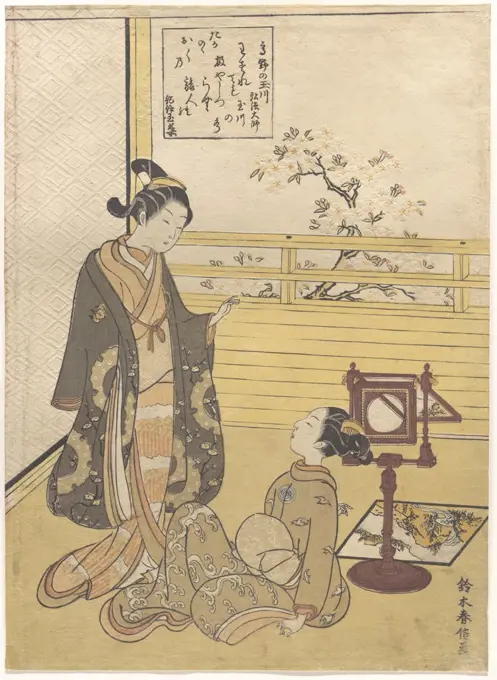
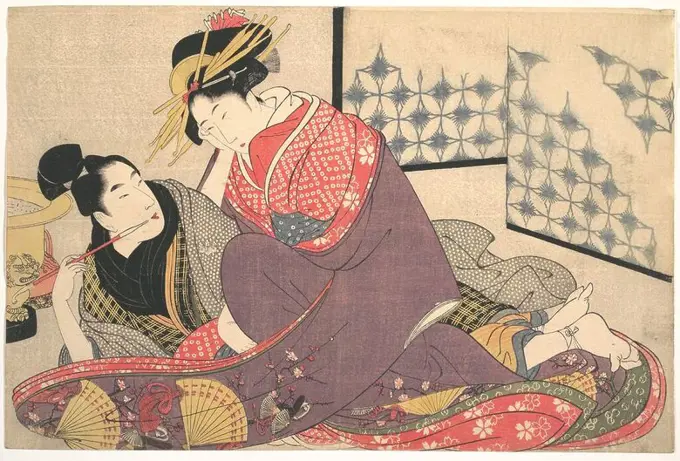
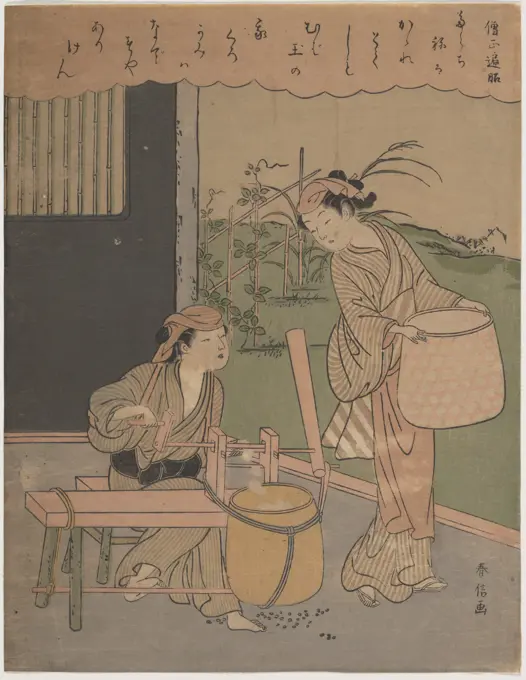
From the series Six Tama River, Harunobu, Suzuki (1724-1770)
393 assets in this story
4443-28742012
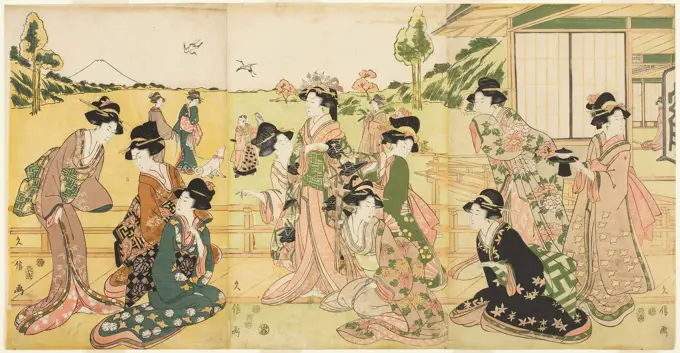
Hawking Party, 1807, 11th month, Hisanobu; Publisher: Iwatoya Kisaburō, Japanese, act. c. 1805-1809, 15 1/8 × 29 7/16 in. (38.4 × 74.7 cm) (image, sheet, vertical ōban triptych), Woodblock print (nishiki-e); ink and color on paper, Japan, 19th century, Hisanobu was an artistic name of Juka Sekijō.
4409-17381508
Erotic Print. Artist: Kitagawa Utamaro (Japanese, ca. 1754-1806). Culture: Japan. Dimensions: Image: 10 in. × 15 1/8 in. (25.4 × 38.4 cm)Mat: 15 1/2 × 22 3/4 in. (39.4 × 57.8 cm). Museum: Metropolitan Museum of Art, New York, USA.
4409-17436171
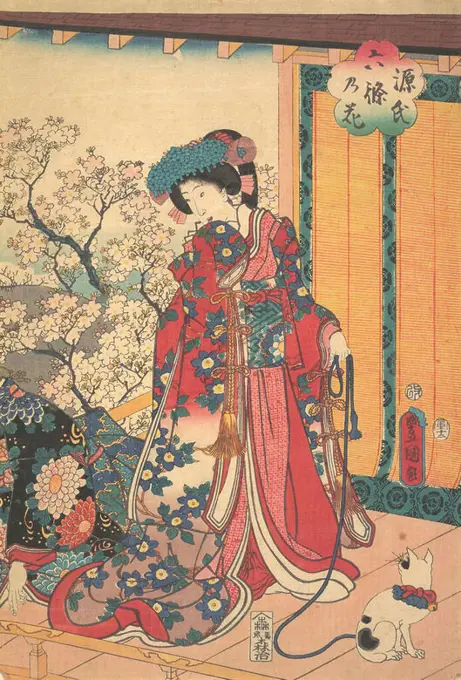
Genji roku no hana. Artist: Utagawa Kunisada (Japanese, 1786-1865). Culture: Japan. Dimensions: 14 5/8 x 10 in. (37.1 x 25.4 cm). Date: 1854. Museum: Metropolitan Museum of Art, New York, USA.
6145-30187892
Eguchi, from the series Pictures of No Performances (Nogaku Zue) 1893-1903 Japan. Color woodblock print . Tsukioka Kôgyo
6145-29120620
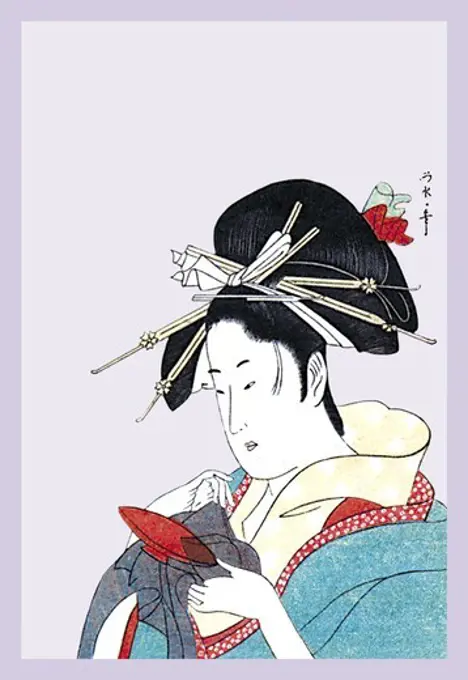
Geisha Blackening Teeth at 1:00 p.m.. Tsukioka Yoshitoshi (Japan, 1839-1892). Japan, 1880, October. Prints; woodblocks. Color woodblock print
6145-59463376
De Brokaat Schelp, Ryûryûkyo Shinsai, 1809  Still life of different types of fabric and a red children's jacket with a pattern of white cranes. In the foreground next to the cardigan is a range in package; This was a usual New Year's gift among traders. There is a cash book on the black piece. Print made for the new year of the snake, 1809. With two poems. This series has a literary association with a book entitled 'A series of shells such as brokaat van de Kust' written by ôeda Ryûhô in 1749. Japan paper color woodcut
1899-18309708
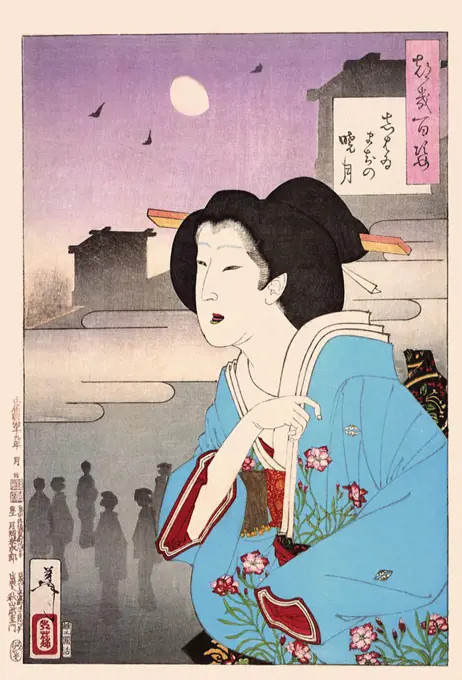
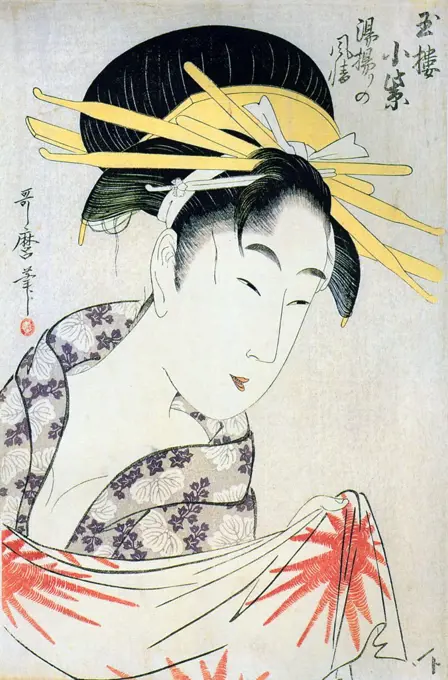
Theatre District Dawn Moon, Yoshitoshi, Tsukioka
4409-17561896
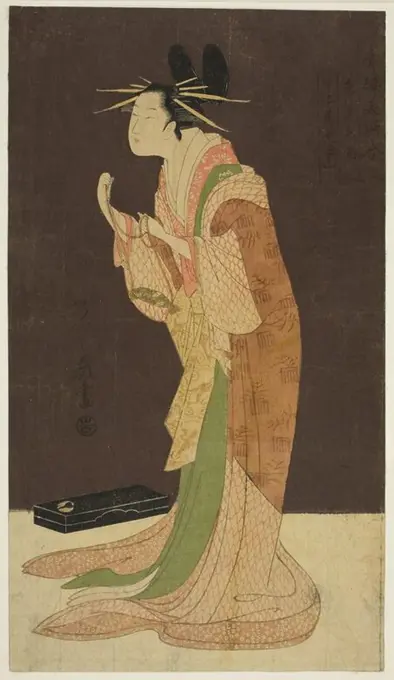
A Selection of Beauty from the Pleasure Quarters (Seiro bisen awase): Misayama of the Chojiya in Night Dress (Tokogi no zu - Chojiya Misayama). Chobunsai Eishi; Japanese, 1756-1829; Publisher: Iwato-Ya, Genpachi; Japanese, unknown. Date: 1791-1801. Dimensions: 38.1 x 25.4 cm (15 x 10 in.). Color woodblock print; oban. Origin: Japan. Museum: The Chicago Art Institute, Chicago, USA. Author: Chobunsai Eishi.
1899-18793164
Kitagawa Utamaro (ca. 1753 - October 31, 1806) was a Japanese printmaker and painter, who is considered one of the greatest artists of woodblock prints (ukiyo-e). He is known especially for his masterfully composed studies of women, known as bijinga. He also produced nature studies, particularly illustrated books of insects.
6145-45622070
The Kyoto stopping place; The erotic road to the capital. Man and geisha in chic, colorful kimono, love in room with a view of landscape with houses.
1899-18789564
Kitagawa Utamaro (ca. 1753 - October 31, 1806) was a Japanese printmaker and painter, who is considered one of the greatest artists of woodblock prints (ukiyo-e). He is known especially for his masterfully composed studies of women, known as bijinga. He also produced nature studies, particularly illustrated books of insects.
6145-30165233
Holland (Oranda koku) 1861 Japan. Color woodblock print; oban . Utagawa Yoshikazu
6176-66098057
The caption of this print readsShunzan: Centre sheet of triptych. A group of a ladies in a garden by a lake; signed Shunzan; publisher, Yeijudo. The Japanese painter Katsukawa Shunzan was active c. 1782-1798. Shunzan was noted for his wood prints.
6145-30159248
Woman leaning against wine cask, from an untitled series of Eight Immortals of the Wine Cup 1800-1833 Japan. Color woodblock print; surimono, trimmed . Teisai Hokuba
4409-17563402
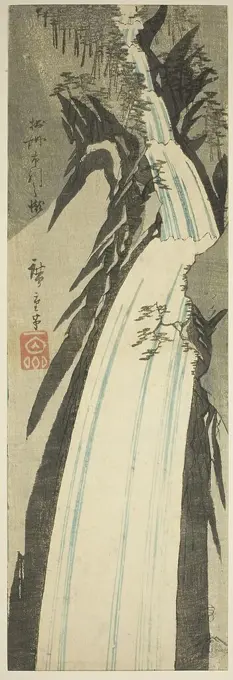
Nunobiki Waterfall in Settsu Province (Sesshu Nunobiki no taki), from an untitled series of views of the provinces. Utagawa Hiroshige  ; Japanese, 1797-1858. Date: 1854. Dimensions: 34.2 x 11.3 cm (13 7/16 x 4 7/16 in.). Color woodblock print; aitanzaku. Origin: Japan. Museum: The Chicago Art Institute, USA.
6145-59569571
Kissing fisherman and diving, 1815 - 1823 print Visser in Kimono with green diamond motifs, doing love with a naked diver with loose hair; A basket with shells in the bottom left.  paper color woodcut cunnilingus. container made of plant material other than wood: basket
4409-17562010
Act Nine: Yuranosuke's House in Yamashina from the play Chushingura (Treasury of the Forty-seven Loyal Retainers). Katsukawa Shun'ei; Japanese, 1762-1819. Date: 1790-1794. Dimensions: 25.5 x 19.3 cm (10 1/16 x 7 5/8 in.). Woodblock print; chuban, keyblock proof impression. Origin: Japan. Museum: The Chicago Art Institute, Chicago, USA.
6145-50510343
Evening walk at the Ryogoku bridge in Edo; from the series: Toto meisho (Famous Places of the Eastern Capital); left panel of the triptych. Utagawa, Hiroshige I (1797-1858), graphic artist
6145-46667799
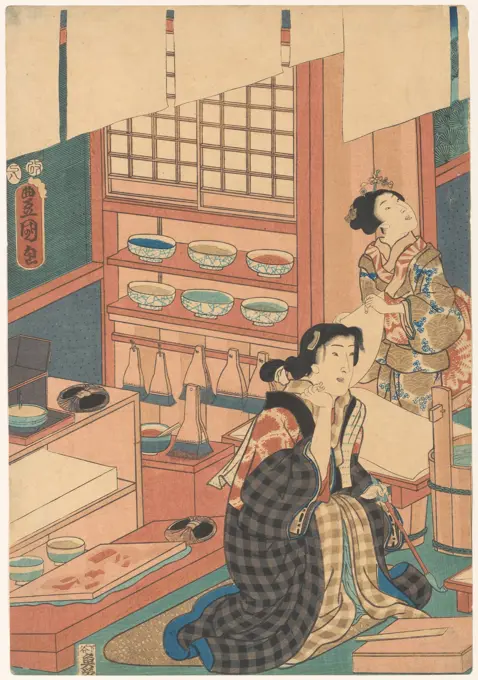
Women make prints (left part). Left part of a triptych with women making prints.
4409-21518896
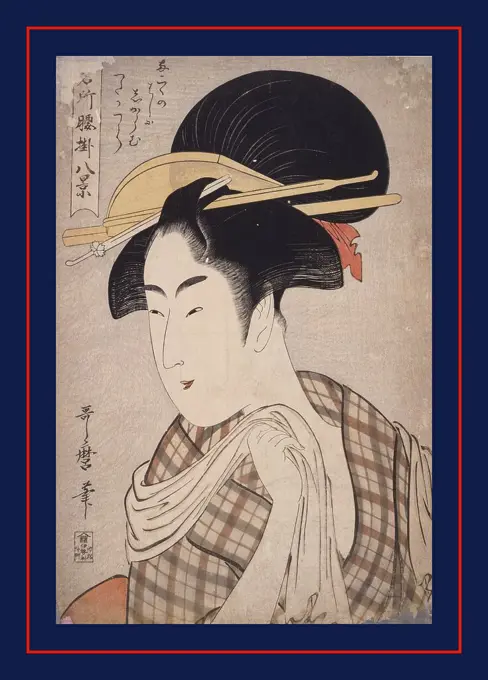
Tenugui = Hand-towel, Kitagawa, Utamaro (1753?-1806), (Artist), Date Created: ca. 1793-ca.1804.
1899-18789325
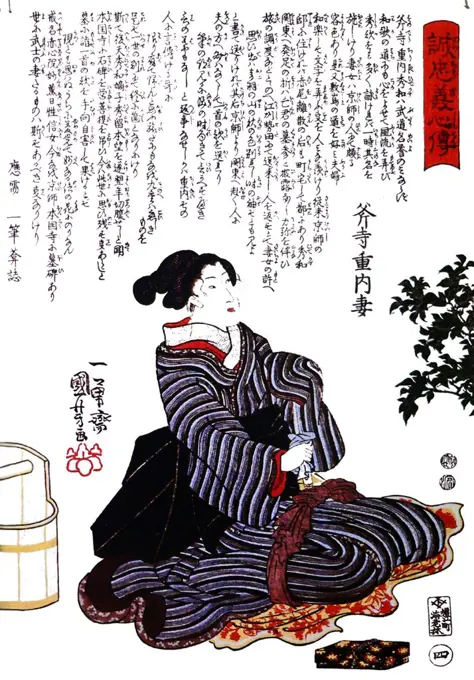
The revenge of the Forty-seven Ronin (Shi-ju-shichi-shi), also known as the Forty-seven Samurai, the Aki vendetta, or the Genroku Aki incident (Genroku aki jiken) took place in Japan at the start of the 18th century. One noted Japanese scholar described the tale as the country's 'national legend'. It recounts the most famous case involving the samurai code of honor, bushidi. The story tells of a group of samurai who were left leaderless (becoming ronin) after their daimyo (feudal lord) Asano Naganori was forced to commit seppuku (ritual suicide) for assaulting a court official named Kira Yoshinaka, whose title was Ki zuke no suke. The ronin avenged their master's honor after patiently waiting and planning for two years to kill Kira. In turn, the ronin were themselves ordered to commit seppuku for committing the crime of murder. With much embellishment, this true story was popularized in Japanese culture as emblematic of the loyalty, sacrifice, persistence, and honor that all good peopl
6145-45458414
Aktor Bandō Shūka W Roli KobieCej Hashimoto Ya Shiraito / Sumidagawa TSUI NO KAGAMON. Hashimoto ya shiraito Utagawa, kuniyoshi (1797 1861)
6145-29254339
A man seducing a woman beneath an autumn moon. Gouache painting.
6145-58826966
Wrestler and two women, Katsukawa Shunei, 1785 - 1790 Sitting wrestler, a piece of paper upstairs, smiling by Courtisane with Shamisen (string instrument) and pointing girl. Japan paper. color woodcut Sitting wrestler, a piece of paper upstairs, smiling by Courtisane with Shamisen (string instrument) and pointing girl. Japan paper. color woodcut
4266-26762
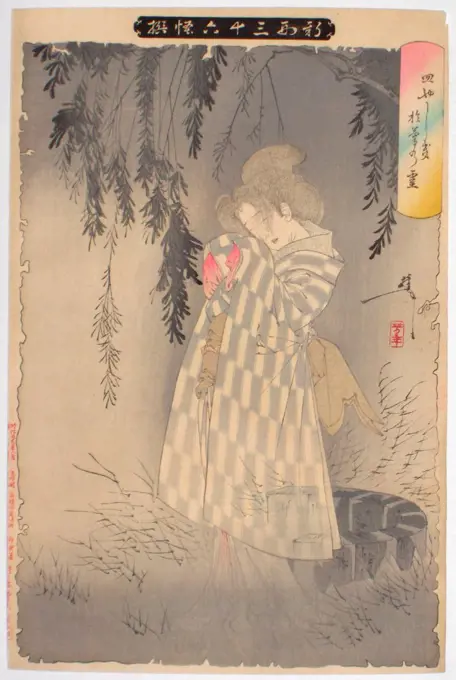
The ghost of Okiku at Sarayashiki. (From the series 'New Forms of Thirty-six Ghosts') by Yoshitoshi, Tsukioka (1839-1892)  Private Collection  1890  Japan  Colour woodcut  Graphic arts  Opera, Ballet, Theatre,Mythology, Allegory and Literature
4409-17513936
Night Rain on the Brothel Shutters, from the series Parody on the Eight Views of the Hours of the Yoshiwara in Two Versions. Date: 1822-1826. Dimensions: 39 cm x 26 cm. Museum: Van Gogh Museum, Amsterdam. Author: UTAGAWA KUNISADA.
6145-29749288
Teahouse in Shinagawa ca. 1783 Torii Kiyonaga Japanese. Teahouse in Shinagawa 55165
6145-29718648
Girl Fishers and Bathers 1791 Kitagawa Utamaro Japanese. Girl Fishers and Bathers 37339
4409-17555980
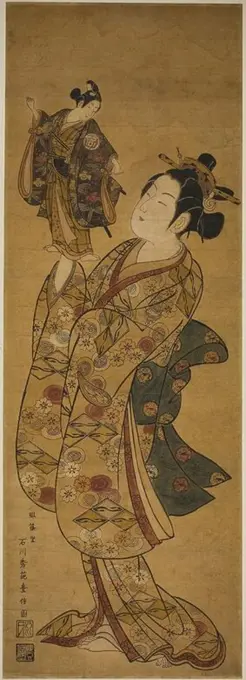
The Actor Onoe Kikugoro I holding a puppet of the Actor Sanogawa Ichimatsu I. Ishikawa Toyonobu; Japanese, 1711-1785. Date: 1740-1749. Dimensions: 66.3 x 23.1 cm (26 1/8 x 9 1/4 in.). Hand-colored woodblock print; vertical oban diptych, sumizuri-e. Origin: Japan. Museum: The Chicago Art Institute, Chicago, USA.
6145-54682727
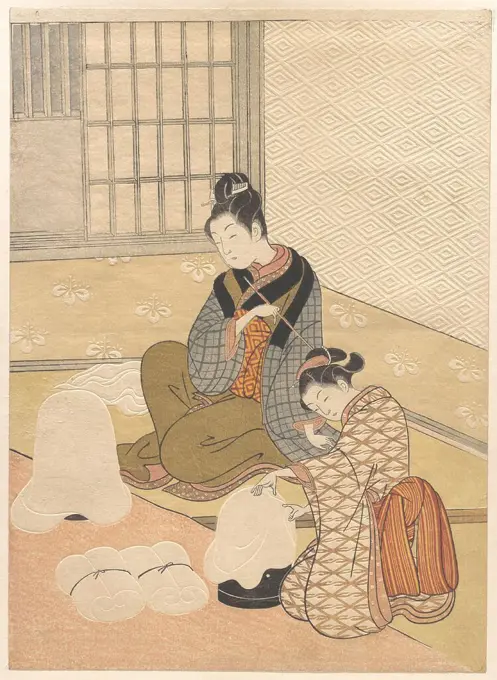
Evening Snow on the Heater Suzuki Harunobu Japanese late 18th century The interior scene in this print is fortified by double windows, both a series of bars and shoji sliding panels. The windows, however, are open. One woman, seated and holding a pipe, seems to expect that she will be seen by a man through the gaps and will be able to arrange an assignation.The other woman is making wadding by stretching sheets of floss silk over the lacquered dome-shaped heaters known as nurioke. Floss silk draped over a nurioke represents the "evening snow" in this print, one of the Eight Views of the Xiao and Xiang Rivers, which originated in China and became popular in Japan. The karazuri embossing technique outlines the shape of the floss silk, emphasizing its softness. This print is not a first edition: Slight variations in color and patterns on the walls were added, and the seal of the commissioner, Kyosen, was omitted for the commercial product.
6145-30187397
Viewing Ikebana 1797-1807 Japan. Color woodblock print, oban . Utagawa Toyohiro
6145-46583105
. A Courtisan looking like the goddess bents plays a Japanese lute (BIWA). The print is an A-copy from the Meiji period (1868-1912), the original design dates c. 1828.
1899-18856125
A member of the Thirty-six Medieval Poetry Immortals, Izumi Shikibu served at the court of Empress Shoshi (988-1074). She is best known for the Izumi Shikibu Collection ( Izumi Shikibu-shu) and the Imperial anthologies. Her life of love and passion earned her the nickname of 'The Floating Lady' from Michinaga. Her poetry is characterized by passion and sentimental appeal. Her style was the direct opposite of that of Akazome Emon, even though both served in the same court and were close friends. At the court she also nursed a growing rivalry with Murasaki Shikibu, who had a similar poetic style, though this rivalry pales in comparison with Murasaki Shikibu's spirited competition with Sei Shonagon. Izumi Shikibu's emotional poetry won her the praise of many at the court, including Fujiwara no Kinto.
6145-29130485
White. Utagawa Kunisada (Toyokuni III) (Japan, Edo, 1786-1865). Japan, circa 1847-1852. Prints; woodblocks. Color woodblock print
6145-44314830
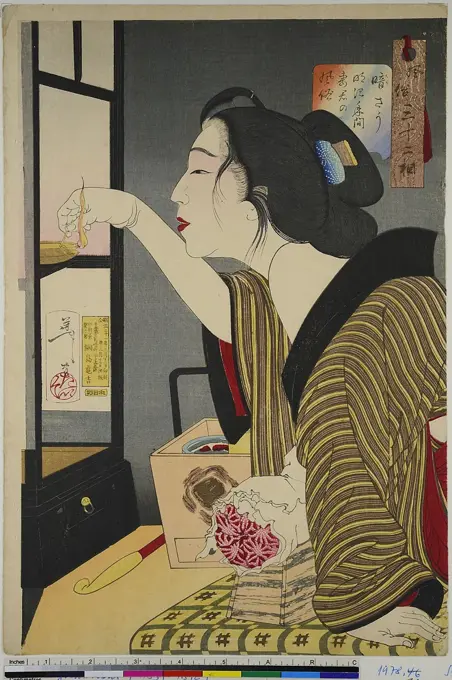
It seems to be dark: the practices of a housewife of Meiji time, leaf 27 from the series: 32 aspects of women. .
1899-18305434
The Fickle Type, Utamaro, Kitagawa, 1792
4409-17522192
Fujisawa, from the series The Tokaido in Fifty-Three Pairs. Date: 1845. Dimensions: 39 cm x 25 cm. Museum: Van Gogh Museum, Amsterdam. Author: UTAGAWA KUNIYOSHI.
4409-17418736
Evening Snow on the Heater. Artist: Suzuki Harunobu (Japanese, 1725-1770). Culture: Japan. Dimensions: 11 1/8 x 8 1/8 in. (28.3 x 20.6 cm)medium-size print (chu-ban). Date: late 18th century.The interior scene in this print is fortified by double windows, both a series of bars and shoji sliding panels. The windows, however, are open. One woman, seated and holding a pipe, seems to expect that she will be seen by a man through the gaps and will be able to arrange an assignation.The other woman is making wadding by stretching sheets of floss silk over the lacquered dome-shaped heaters known as nurioke. Floss silk draped over a nurioke represents the "evening snow" in this print, one of the Eight Views of the Xiao and Xiang Rivers, which originated in China and became popular in Japan. The karazuri embossing technique outlines the shape of the floss silk, emphasizing its softness. This print is not a first edition: Slight variations in color and patterns on the walls were added, and the se
1899-18793130
Oiran () were the courtesans of Edo period Japan. The oiran were considered a type of yujo () 'woman of pleasure' or prostitute. However, they were distinguished from the yujo in that they were entertainers, and many became celebrities of their times outside the pleasure districts. Their art and fashions often set trends among the wealthy and, because of this, cultural aspects of oiran traditions continue to be preserved to this day. The oiran arose in the Edo period (1600-1868). At this time, laws were passed restricting brothels to walled districts set some distance from the city center. In the major cities these were the Shimabara in Kyoto, the Shinmachi in Osaka, and the Yoshiwara in Edo (present-day Tokyo). These rapidly grew into large, self-contained 'pleasure quarters' offering all manner of entertainments. Within, a courtesan’s birth rank held no distinction, which was fortunate considering many of the courtesans originated as the daughters of impoverished families who wer
4409-17586112
The Actor Nakamura Shikan IV as Jinriki Tamigoro. Toyohara Kunichika; Japanese, 1835-1900. Date: 1867. Dimensions: 36.5 x 24.0 cm (14 3/8 x 9 1/4 in.). Color woodblock print; oban. Origin: Japan. Museum: The Chicago Art Institute, USA.
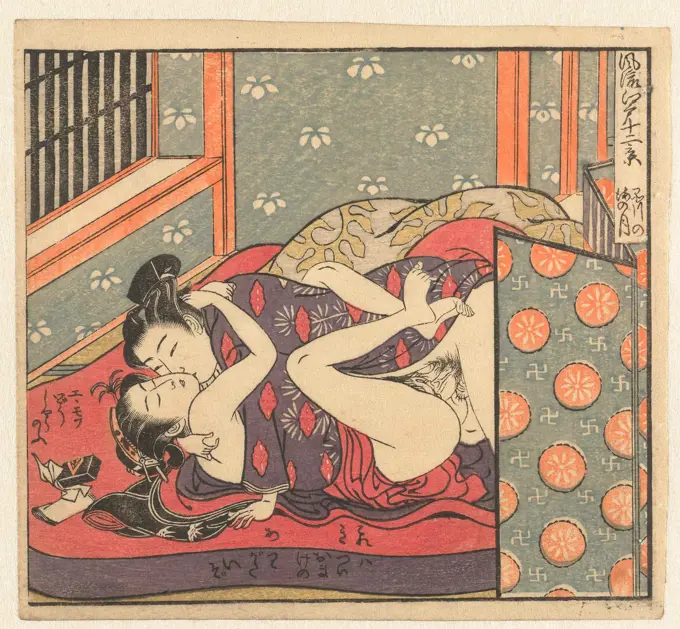
6145-45669028
Love couple behind room screen; Twelve faces on the refined edo; Furyu Edo Junikei. Copulating couple lying under window, on a futon; Right front of a room screen.
4443-20306520
Kokonoe no hanashi, Tale of the courtesan Kokonoe., Utagawa, Toyokuni, 1786-1865, artist, 1860., 1 print : woodcut, color ; 36.8 x 24.9 cm.
4443-28728904
Standing Beauty, 18th century, Hishikawa Moronobu, Japanese, c. 1618 - 1694, 34 5/16 × 13 1/4 in. (87.15 × 33.66 cm) (image)70 1/4 × 17 5/8 in. (178.44 × 44.77 cm) (mount, without roller), Ink and color on paper, Japan, 18th century
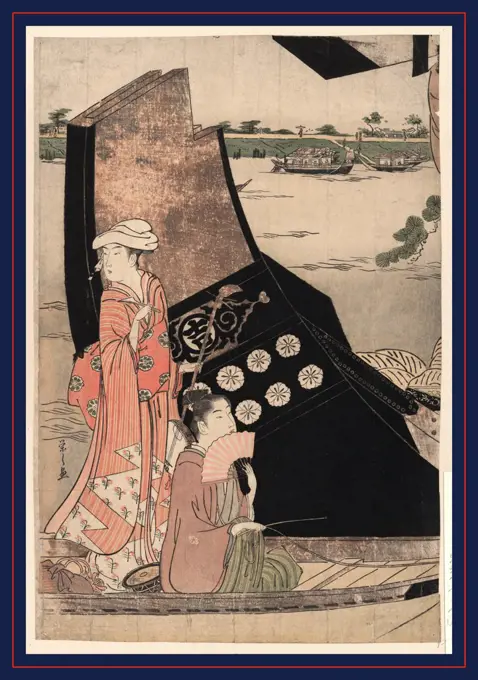
4443-20307256
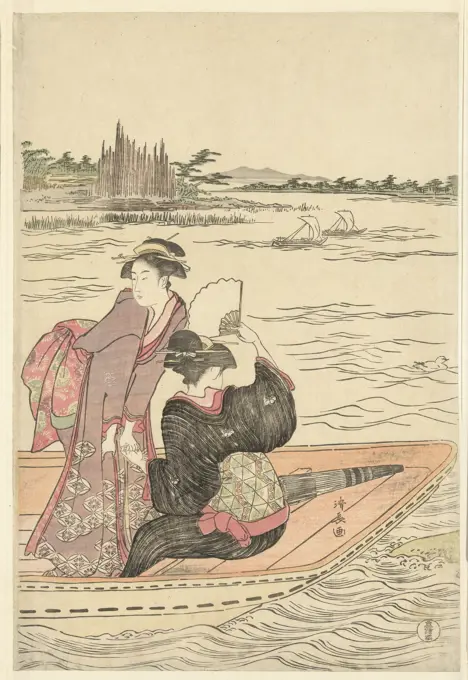
Senjo no sarumawashi, Sarumawashi performance on a boat., Hosoda, Eishi, 1756-1829, artist, between 1788 and 1792, 1 print : woodcut, color ; 38.3 x 25.9 cm., Print shows two women or actors on a boat in a river.
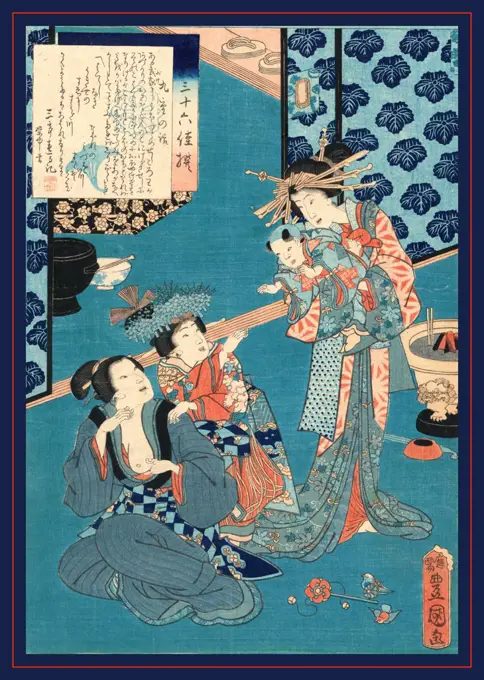
1899-18855285
8. 'Watching moths', depicting two women and their children watching flying moths in the evening. Kitagawa Utamaro (ca. 1753 - October 31, 1806) was a Japanese printmaker and painter, who is considered one of the greatest artists of woodblock prints (ukiyo-e). He is known especially for his masterfully composed studies of women, known as bijinga. He also produced nature studies, particularly illustrated books of insects.
4408-5511
Domestic Scene, Japanese Prints - Utamaro
6145-51819537
Amorous Couple Isoda Koryusai (Japanese, ca. 1766-1788). , ca. 1770-1775. Color woodblock print on paper, 7 3/8 x 10 in. (18.7 x 25.4 cm).   Asian Art ca. 1770-1775
6145-29120510
Okame Laughing at the Shadow of a Mushroom. Tsukioka Yoshitoshi (Japan, 1839-1892). Japan, 1882, May. Prints; woodblocks. Color woodblock print
6145-59559278
Chûro, Onderweg, Anonymous, 1850 - 1860 print Love couple where the man lies on the woman. Due to a small opening in the well -going clothing you can see how the couple, Yoshitsune and Shizuka, are connected. Behind them a blue fan against a red long distance.  paper color woodcut coitus, cohabiting, sexual intercourse. fan
6145-44313227
Die Schauspieler Iwai Shijaku I ALS Jihizō'S Frau Otane, Ebizō V ALS YOKOZō, IWAI TOJAKU I ALS KANSUKES MUTTER FUKAYUKI UND SAWAMURA TOSSHō I ALS JIHIZō.
6145-59569888
Ôkawa Hashizô I als Timmerman Rokusa, 1848 print Play player ôkawa Hashizô I as the carpenter Rokusa, in the piece "Azuma Miyage Date No Hinagata", staged in the Naka Theater in the eighth month of 1848.  paper color woodcut carpenter. portrait of actor, actress
4409-17562227
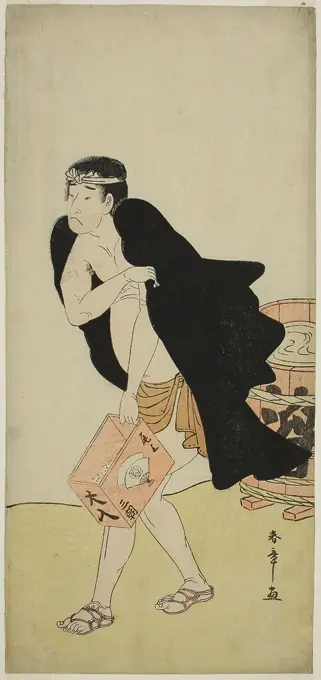
The Actor Onoe Matsusuke I as the Palanquin Bearer Gohei in the Play Kitekaeru Nishiki no Wakayaka, Performed at the Nakamura Theater in the Eleventh Month, 1780. Katsukawa Shunsho  ; Japanese, 1726-1792. Date: 1775-1785. Dimensions: 32.6 x 15.2 cm (12 13/16 x 6 in.). Color woodblock print; hosoban; from a multisheet composition. Origin: Japan. Museum: The Chicago Art Institute, USA.
6145-59461899
HET BEZOEK, HOSODA EISHI, 1788-1792 print Woman standing by opened door, behind which second wife looking at nobleman and kneeling court lady with sword. print maker: Japanpublisher: Tokyo paper color woodcut gate, entrance. dignitary at court - BB - female dignitary: lady-in-waiting. hacking and thrusting weapons: sword
4409-17561798
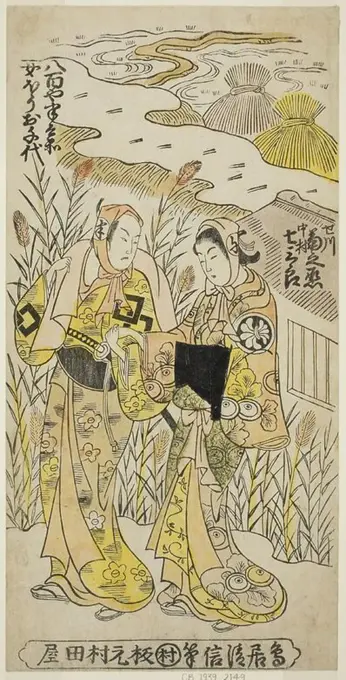
The Actors Segawa Kikunojo I as Ochiyo and Nakamura Shichisaburo II as Hanbei in the play "Higashiyama Gojitsu Yaoya Hanbei," performed at the Nakamura Theater in the eighth month, 1744. Torii Kiyonobu II; Japanese, active c. 1725-61. Date: 1744. Dimensions: 11 11/16 x 5 13/16 in. Hand-colored woodblock print; hosoban, urushi-e. Origin: Japan. Museum: The Chicago Art Institute, Chicago, USA.
1899-18305463
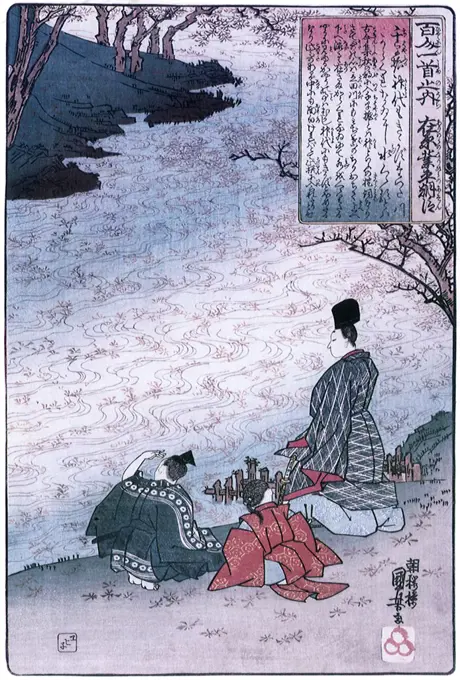
Ariwara Nahira by the Tatsuta River, Kuniyoshi, Utagawa, 1840
4408-10203
Precious Plate, Japanese Prints
6145-46583082
. The couple lies in post-coatal attitude, in which the seed is slowly running out.
6145-59480941
Ferry on the river Sumida, 1785 - 1789 print Two women in ferry; In the background two sailing ships and a wood yard Japan paper color woodcut rowing-boat, canoe, etc.. adult woman (+ two persons). sailing-ship, sailing-boat Summida-kawa
6145-29751102
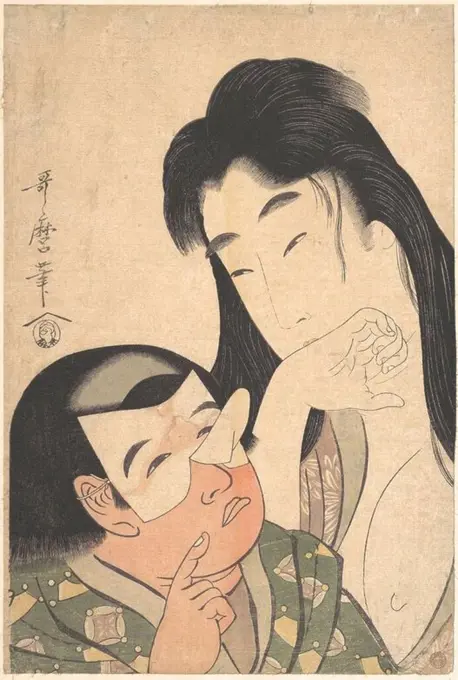
Yamauba Playing with the Young Kintoki ca. 1795 Kitagawa Utamaro Japanese. Yamauba Playing with the Young Kintoki 54859
4409-17421299
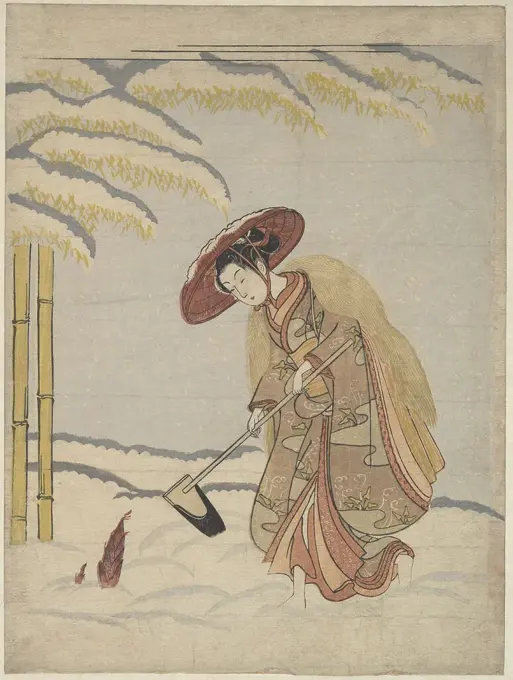
Woman Digging Bamboo Shoots in the Snow, or Parody of Meng Zong (Moso), from Twenty-Four Paragons of Filial Piety. Artist: Suzuki Harunobu (Japanese, 1725-1770). Culture: Japan. Dimensions: H. 11 1/8 in. (28.3 cm); W. 8 3/8 in. (21.3 cm)medium-size print (chuban). Date: ca. 1765.Harunobu treated a popular paragon theme with great innovation here, applying the playfully subversive spirit of ukiyo-e to the story of Meng Zong (J.: Moso), a boy whose filial piety prompted heaven to cause the sprouting of spring bamboo shoots in the dead of winter for his ill mother. The story is incorporated in a New Year's calendar print of bijin, or beautiful women. Combining a popular subject with the associations of a holiday, he made the virtuous theme entertaining to a general Edo audience. Museum: Metropolitan Museum of Art, New York, USA.
4409-17584168
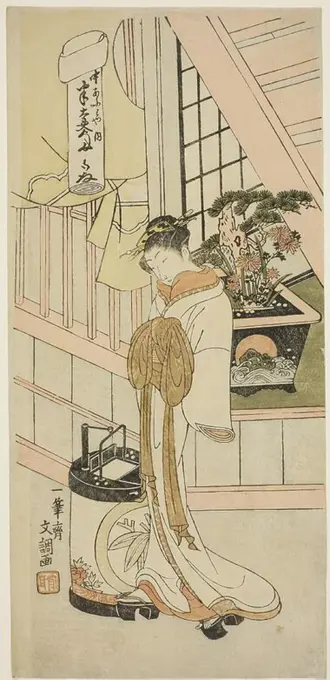
The Courtesan Handayu of the Nakaomiya House of Pleasure, from the series "Fuji-bumi (Folded Love-letters)". Ippitsusai Buncho; Japanese, active c. 1755-90. Date: 1764-1775. Dimensions: 31.9 x 15.1 cm (12 9/16 x 5 15/16 in.). Color woodblock print; hosoban. Origin: Japan. Museum: The Chicago Art Institute, Chicago, USA.
4409-17563360
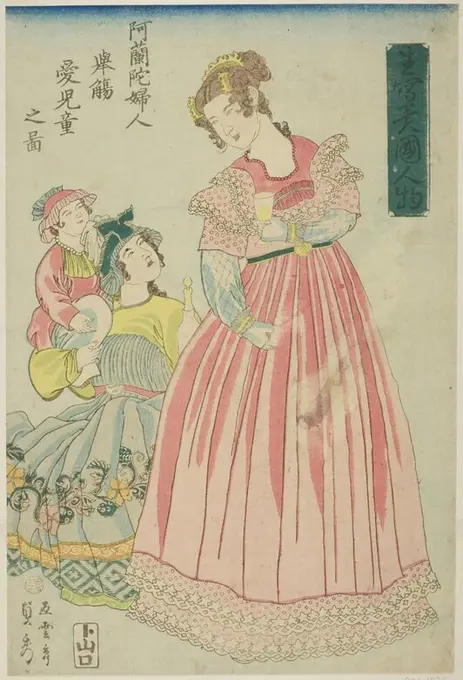
Dutch Woman Making a Toast to Her Children (Oranda fujin kyosho aijido no zu), from the series "Foreigners Drawn from Life (Ikiutsushi ikoku jinbutsu)". Utagawa Sadahide; Japanese, 1807-1873. Date: 1860. Dimensions: . Color woodblock print; oban. Origin: Japan. Museum: The Chicago Art Institute, Chicago, USA.
4430-2886
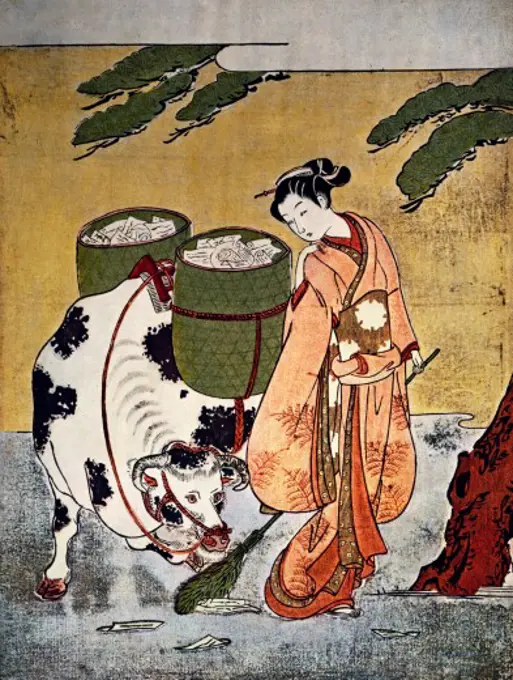
fine arts, Hanurobu, Suzuki, (circa 1724 - 1770), graphics, ""girl with ox carrying baskets with love letters"", Tokyo, 1765, colour woodcut, private collection, Washington,
6145-29752825
Poem by Henjō Sojō ca. 1766 Suzuki Harunobu Japanese This impression of a print commonly known as "Cotton Threshing" was made in the early twentieth century, as indicated by the palette characterized by brownish and flat color, presumably after an original print. The charming rural scene shows a yung woman seeding cotton and another carrying it off in a basket. The allusion to a poem by Hen Sojo is cleverly abscure as befitted the urbane patrons of Harunobu's art:These cotton clouds...whose black hair will fallon the sleeves they will become. Poem by Henjō Sojō 45083
4409-17373504
Yamauba and Kintoki. Artist: Kitagawa Utamaro (Japanese, ca. 1754-1806). Culture: Japan. Dimensions: H. 15 1/8 in. (38.4 cm); W. 8 7/8 in. (22.5 cm). Date: ca. 1795.The ostensible subjects of these portraits are the ruddy wild boy Kintoki (also known as Kintaro) and his adoptive mother, the woman of the mountains, Yamauba. Utamaro produced many images of this pair. The prints astutely capture the sometimes complicated relationship between a mother and son. Museum: Metropolitan Museum of Art, New York, USA.
6145-29774705
Scene from a Drama 1735 or 1736 Torii Kiyonobu II Japanese. Scene from a Drama 56768
4409-17351584
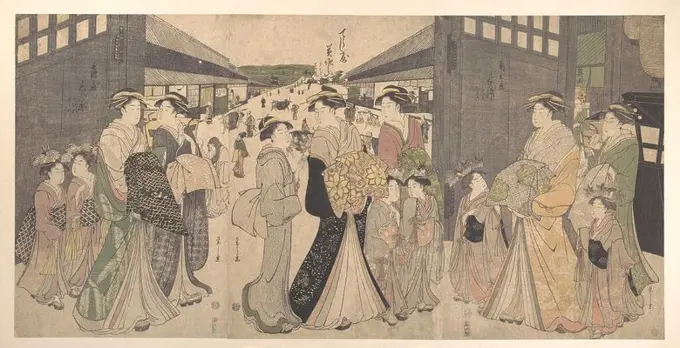
Oiran and Attendants at the O Mon or Great Gate of the Yoshiwara. Artist: Chobunsai Eishi (Japanese, 1756-1829). Culture: Japan. Dimensions: 14 3/8 x 28 23/32 in. (36.5 x 73.0 cm). Date: ca. 1794. Museum: Metropolitan Museum of Art, New York, USA. Author: Chobunsai Eishi.
4409-17385782
Scenes from the Tales of Ise (Ise monogatari). Artist: Tosa School. Culture: Japan. Dimensions: 9 3/8 x 6 13/16 in. (23.8 x 17.3 cm). Date: late 18th century. Museum: Metropolitan Museum of Art, New York, USA.
4409-28962515
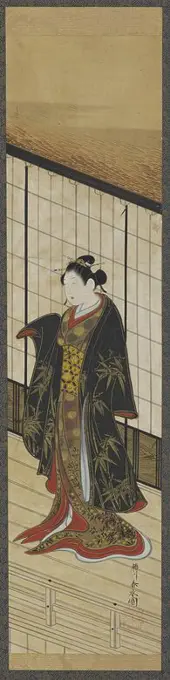
Woman standing on a second-story balcony. Date: mid-18th century. Origin: Japan. Period: Edo period. Full color, lacquer black, and ink on paper. Museum: Freer Gallery of Art and Arthur M. Sackler Gallery.
6145-29123041
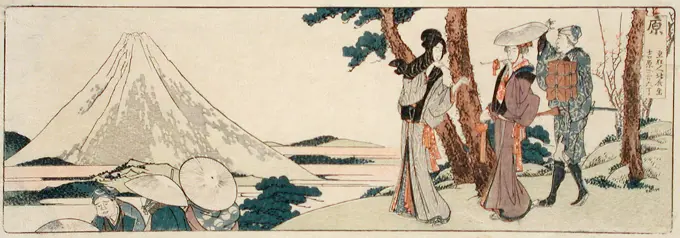
Hara. 3 ri and 6 chō to Yoshiwara. Katsushika Hokusai (Japan, 1760-1849). Japan, circa 1804. Prints; woodblocks. Color woodblock print
4443-28728194
Beauty at a River Under a Willow, 1820s-1830s, Utagawa Kunihide, 33 9/16 × 11 9/16 in. (85.25 × 29.37 cm) (image)67 1/8 × 16 7/16 in. (170.5 × 41.75 cm) (mount, without roller), Ink and color on silk, Japan, Nikuhitsu ukiyo-e
4409-17379919
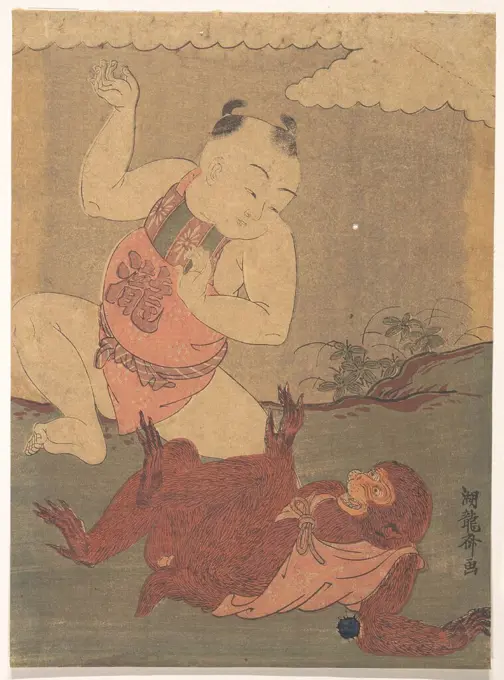
Boy and Monkey Playing. Artist: Isoda Koryusai (Japanese, 1735-ca. 1790). Culture: Japan. Dimensions: 10 × 7 1/2 in. (25.4 × 19.1 cm). Museum: Metropolitan Museum of Art, New York, USA.
6145-30150723
The Actor Iwai Hanshiro IV as Okumi of the Mieido Fan Shop ( ) in the Play Sanjuk-koku Yobune no Hajimari ( ), Performed at the Ichimura Theater ( ) in the Fifth Month, 1789 ( ) 1784-1794 Japan. Color woodblock print; hosoban . Katsukawa Shun'ei
6145-29194457
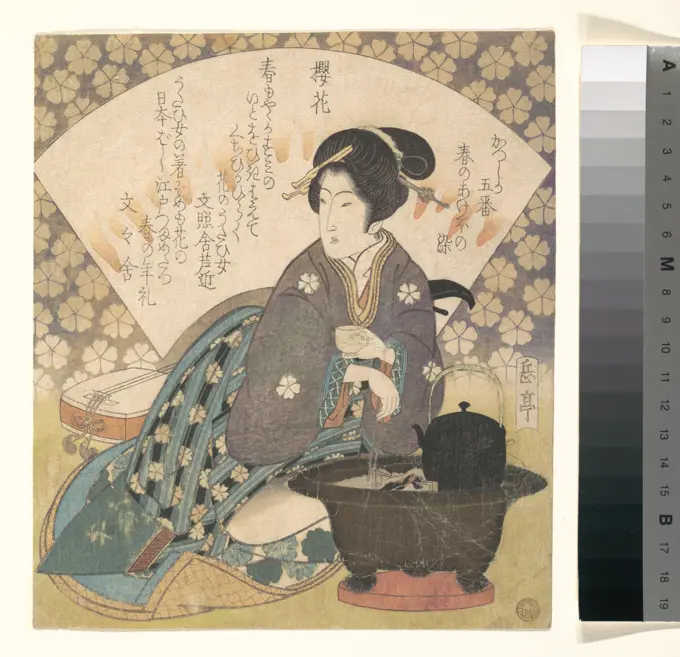
Courtesan Drinking Tea ca. 1830 Yashima Gakutei Japanese. Courtesan Drinking Tea 54346
4443-20307749
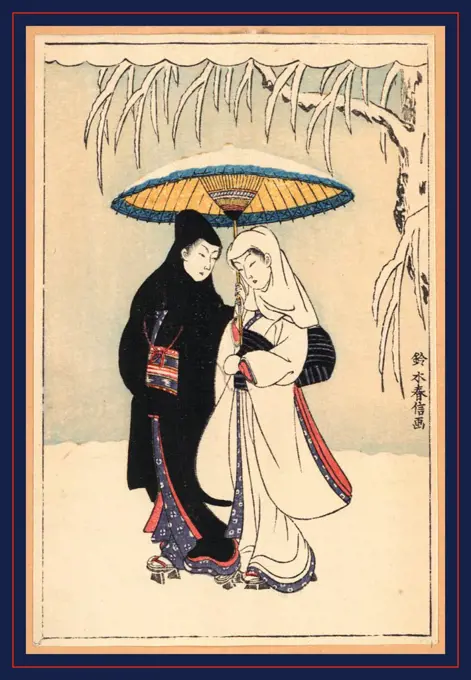
Secchu aiaigasa, Couple under umbrella in the snow (crow and heron)., Suzuki, Harunobu, 1725-1770, artist, 1 print : woodcut, color., Print shows a man and a woman standing in the snow beneath a snow-covered umbrella.
4409-17562170
The Actor Segawa Kikunojo III as Otoma () in the Play Sayo no Nakayama Hiiki no Tsurigane (), Performed at the Nakamura Theater () in the Eleventh Month, 1790 (). Katsukawa Shun'ei; Japanese, 1762-1819. Date: 1785-1795. Dimensions: 33.2 x 15 cm (13 1/8 x 5 7/8 in.). Color woodblock print; hosoban; from a multisheet composition. Origin: Japan. Museum: The Chicago Art Institute, Chicago, USA.
4443-28745096
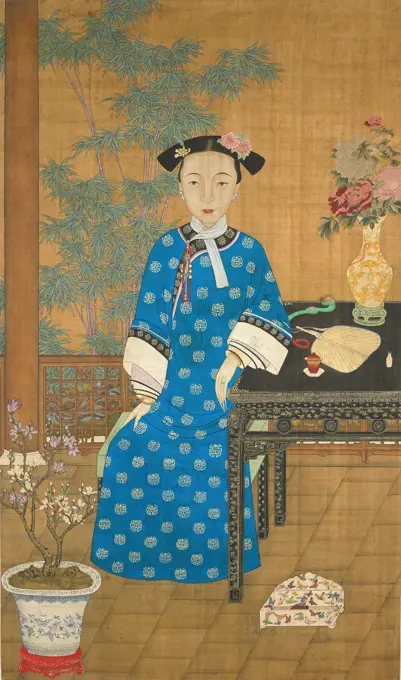
Birthday Portrait of a Young Manchu Lady, c. 1800-1850, 45 3/16 × 26 5/8 in. (114.8 × 67.6 cm) (image)83 × 34 15/16 in. (210.8 × 88.7 cm) (without roller)86 1/8 × 39 1/16 in. (218.8 × 99.2 cm) (mount, with roller), Ink and color on silk, China, 18th-19th century, This aristocratic young woman wears a blue robe adorned with circular shou (longevity) characters, telling us that her portrait was commissioned to celebrate her birthday. She is seated at a lacquered table on a garden terrace, wearing a fashionable hairstyle and surrounded by refined and expensive objects. On the table near her elbow are a snuff bottle, fan, ruyi (wish-granting) scepter, and a porcelain flower vase. At her feet are a blue-and-white flowerpot and an unusual tissue container or sewing box, possibly made in Europe. Both objects are lavishly decorated with butterflies, an auspicious motif whose Chinese character (die) is a pun for the word meaning 'age 70'another way of wishing someone a long, happy life.
4409-17557673
Parody of act VII of the play "Treasury of Loyal Retainers (Chushingura)". Torii Kiyonaga; Japanese, 1752-1815. Date: 1777-1787. Dimensions: 69.6 x 12.7 cm. Color woodblock print; hashira-e. Origin: Japan. Museum: The Chicago Art Institute, USA.
6137-28690786
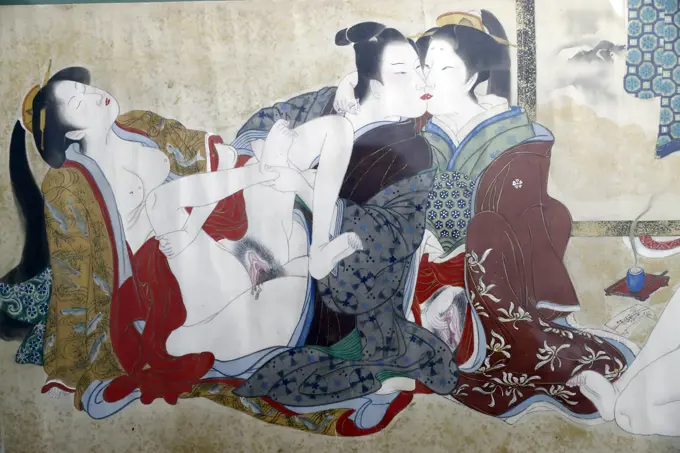
World Erotic Art Museum.  Japanese Shunga ( erotic art ) painting on paper scroll.   Setei Tsuikioka 1726-1787.  Miami, Florida, USA.
1899-18712250
Saigo-no-Tsubone, or 'Lady Saigo', was a concubine who advised Tokugawa Ieyasu before the 1575 Battle of Nagashino. Lady Saigo was an important and influential figure during the late Age of Warring States in Japan. She was the first consort and trusted confidant of Tokugawa Ieyasu and mother of the second shogun of the Edo Period, Tokugawa Hidetada. During their relationship, Ieyasu often sought her counsel and followed her advice during his rise to power in the 1570s. Her influence on his philosophy, his choice of allies, and future policies indirectly influenced the course of events leading to the Tokugawa Shogunate and the beginning of the Edo Period. Although there is less known of her than other figures of the era, and sources are conflicted over some details of her early life, she is nonetheless regarded as the power behind the throne of Ieyasu. Lady Saigo bore a total of four children: she had a son (Saigo Katsutada) and a daughter (Saigo Tokuhime) by her first marriage. She lat
4409-17564690
True Picture of the French (Shosha Furansujin). Utagawa Yoshikazu; Japanese, active c. 1850-70. Date: 1861. Dimensions: . Color woodblock print; oban. Origin: Japan. Museum: The Chicago Art Institute, Chicago, USA.
4408-13557
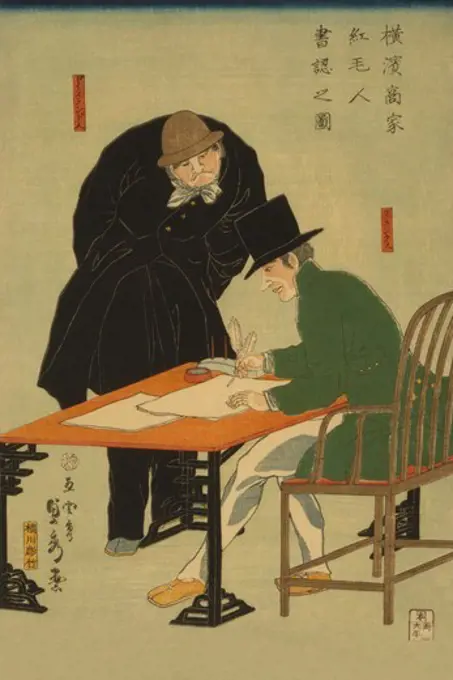
Foreigners in Yokohama draw up contract in mercantile house (Yokohama sho_ka komojin sho a mitomu no zu), Japanese Prints - Hiroshige
6145-30163223
Americans Drawn from Life (Sho utsushi Amerikajin) 1861 Japan. Color woodblock print; oban . Utagawa Yoshikazu
6145-59559281
Irome ôgi, the 'amorous fan', Anonymous, 1850 - 1860 print A love couple in hug. The man withdraws his member. Next to them tea and a fan. Behind them a purple fan.  paper color woodcut coitus, cohabiting, sexual intercourse. fan. tea-pot; samovar
6145-48861954
The Original Grecian Bend. Felice Beato (English, born Italy, 1832 - 1909)
1899-19189037
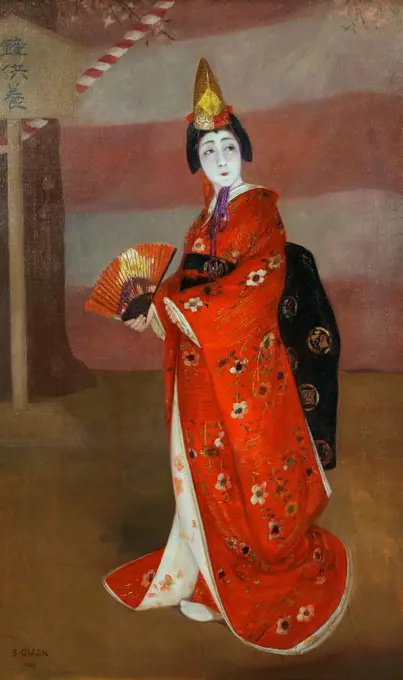
Japan: 'Nakamura Shikan V (Nakamura Utaemon V) in Dojoji (A Maiden at Dojoji)' by Okada Saburosuke (1869-1939), 1908. Okada Saburosuke (12 January 1869 - 23 September, 1939) was a Japanese yoga (Western-style) painter. He was influenced by great yoga painters such as Kuroda Seiki and Kume Keiichiro, and became one of the founding members of Hakuba-kai (White Horse Society), an artists' association. He was awarded the Order of Culture in 1937, the highest honour in the Japanese cultural world.
6145-59468731
Painted figures come to life, Ogata Gekkô, 1900 - 1910 print Painter, sitting in front of his canvas, looking at the painted figures that came to life. Japan paper color woodcut painter at work, in his studio
6145-59585060
Japanese printer, Emil Orlik, 1901 print   paper color woodcut printer. Japanese
6176-66096716
Greek mythical figure Persephone (Proserpina) eats Pomegrante seeds ub the underworld, after having been brought there by Hades.
1899-18852461
Advertisement characteristic of 'old Shanghai' in the 1920-1940s, a trend started by American newspaperman Carl Crow who lived in Shanghai between 1911 and 1937, starting the first Western advertising agency in the city and creating much of what is thought of today as the 'sexy China Girl' poster and calendar advertisements. In today's more liberal China, these are making a comeback and are widely considered minor works of art characteristic of 'Old Shanghai'.
6145-52364308
Wistaria, Japanese still image. Postcards. 1902 - 1903. The Miriam and Ira D. Wallach Division of Art, Prints and Photographs: Photography Collection. Wisteria
1899-18712888
Rising militarism is apparent in this 1936 advertisement for Gekkeikan sake. A Japanese woman in traditional kimono stands in front of the model of a soldier with gun. No sake is apparent in the poster.
6145-59573810
The old woman who lost her nodel, 1902 book Booklet of crepe paper with an old woman and a rod on the cover and above it the titlel; 10 magazines: 9 sheets with illustrations of the old woman and her search for the nod with accompanying text; 1 sheet with an explanation about the series; Inside cover contains the Colophon.  crepe paper color woodcut tales and fairy tales
PREVIOUS
of 4
NEXT
2401 S. Ervay, Suite 206
Dallas, Texas 75215
United States
Get Started
Free ResearchMy BoardsMy Cart
For Creators
How To License Your ContentContributor PortalFrame of Mind
Resources
API accessPricing
Contact
+1 866 236 0087help@viewpictures.co.uk Contact form
©2026 View Pictures. All Rights Reserved. -A
This site is protected by reCAPTCHA and Google Privacy Policy and Terms of Service apply.