Japanese Women in Traditional Art

Color woodblock prints depicting elegant women in traditional clothing, often interacting in serene natural settings or theatrical contexts, emphasizing cultural beauty.
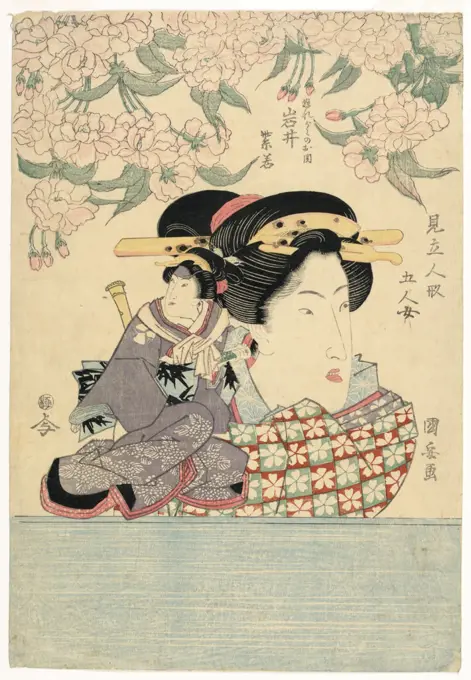
Pentaptych: Five girls with theater puppets, Utagawa Kuniyasu, Japanese, 1794 - 1832, Woodblock print (ukiyo-e) on mulberry paper (washi), ink with color, Japan, 1805-20, theater, Print, Print
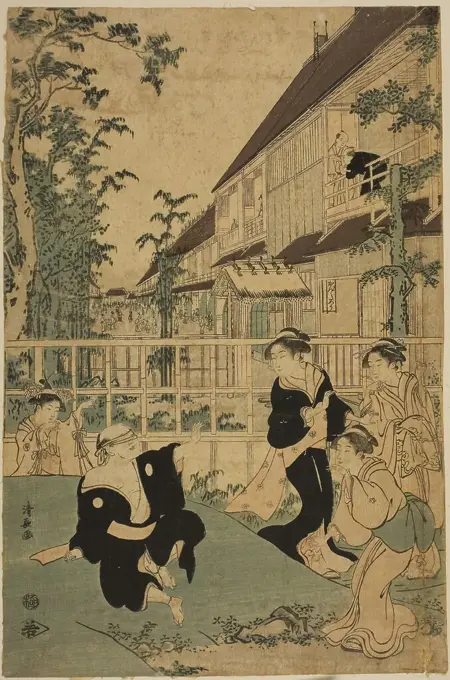
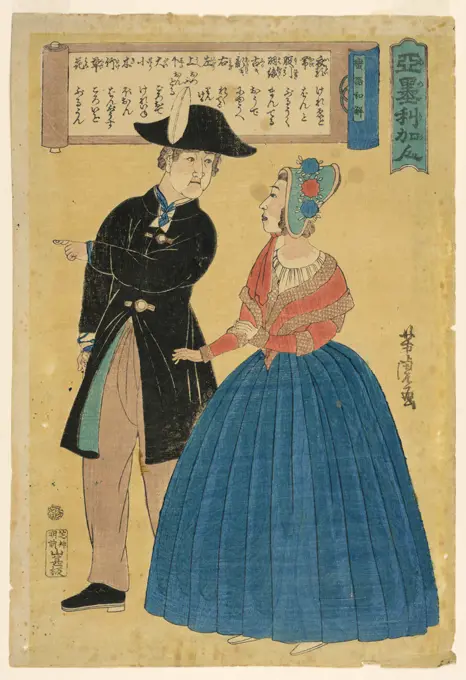
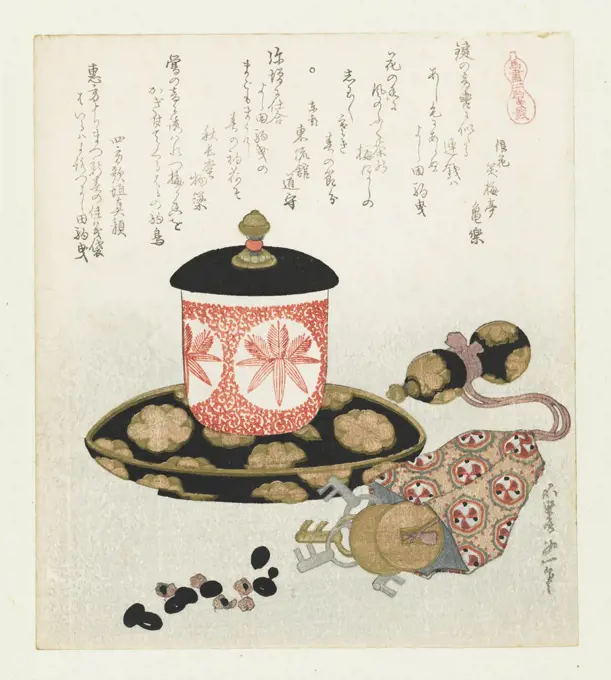
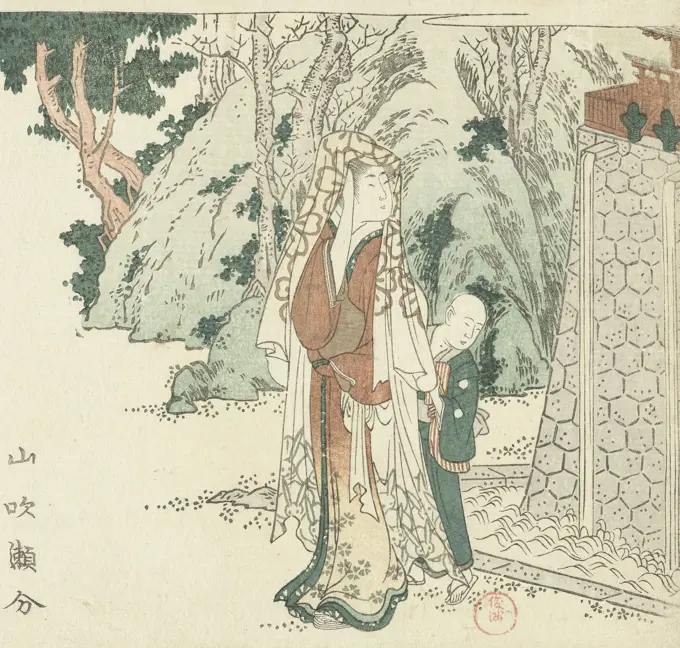
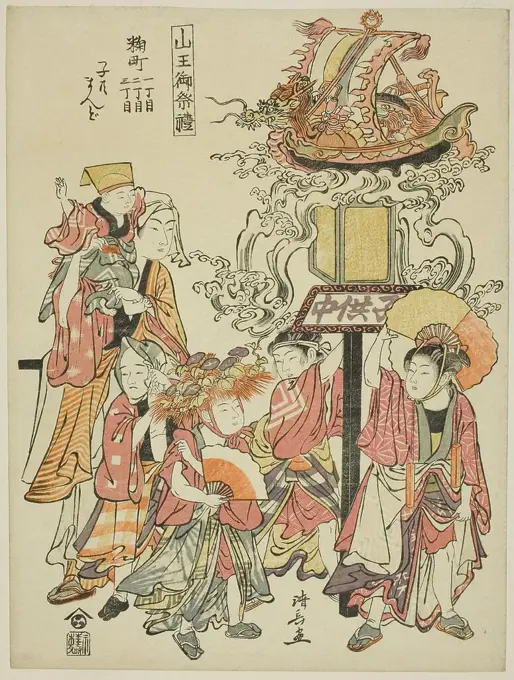
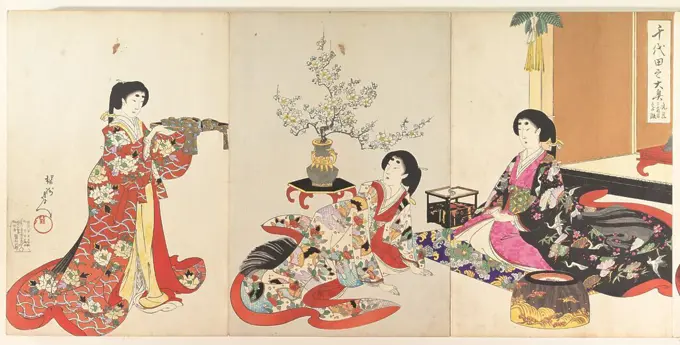
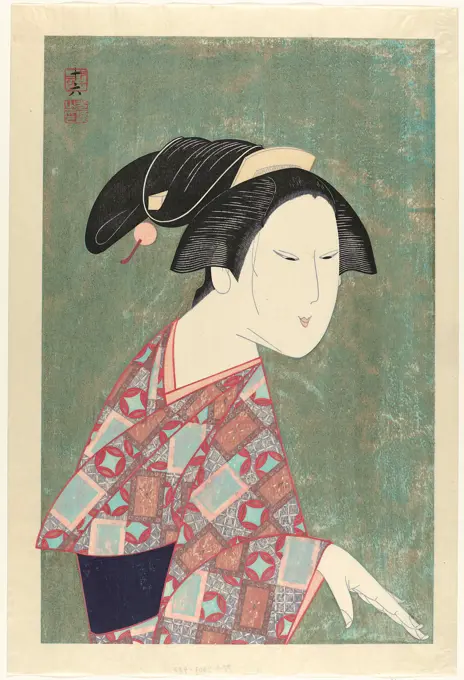
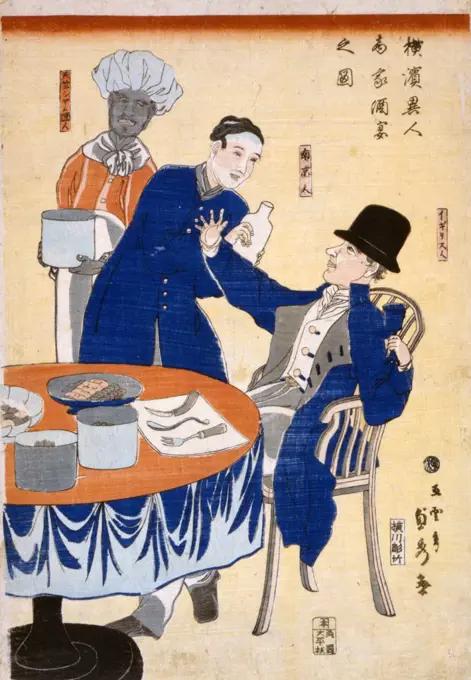
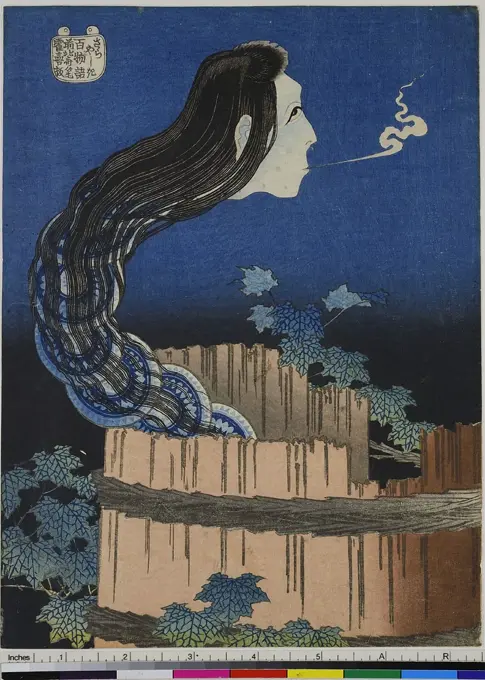
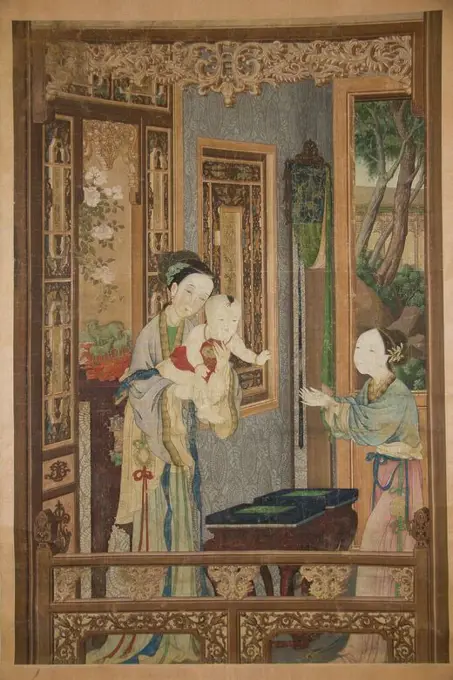
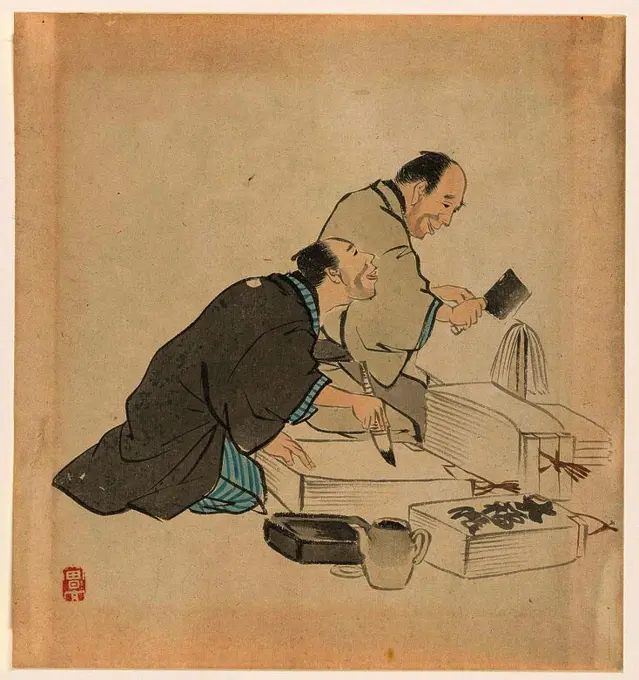
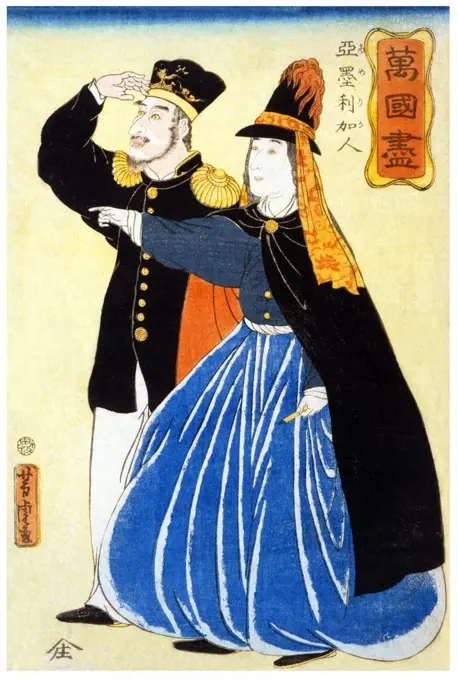
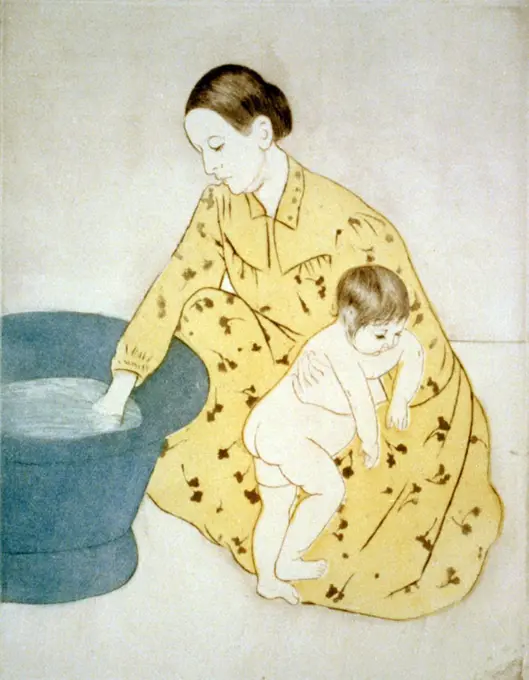
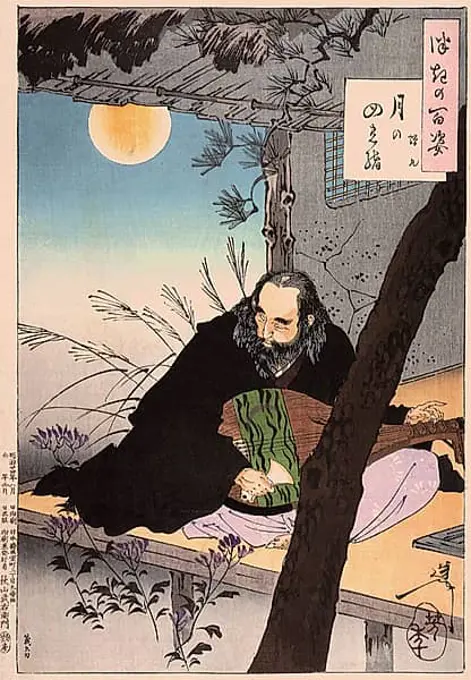
The Mansion of the Plates (Sara yashiki), from the series One Hundred Ghost Tales (Hyaku monogatari) 1831-1832 Japan. Color woodblock print, chuban . Katsushika HokusaiOutdoor Amusements at the Kankanro Teahouse in Yoshiwara. Torii Kiyonaga; Japanese, 1752-1815. Date: 1789-1799. Dimensions: 36.9 x 24.3 cm. Color woodblock print; left sheet of oban triptych. Origin: Japan. Museum: The Chicago Art Institute, USA.An American Officer Indicating Directions to his Wife ('Amerikajin'), from 'Japanese Translations of Barbarian Words ('Bango wakai'), Yoshitora Utagawa, Japanese, active 1850 - 1870, Woodcut on paper, Standing man and woman in western costume. He is shown in a Naval uniform; he is show in a Naval uniform. Lengthy inscription in Japanese at top, on a scroll. Yokohama print; censor seal: Kiwame., Japan, 1863, Print, PrintJapan: Sick Guan Suo Yang Xiong or Byokansaku Yoyu, one of the 'One Hundred and Eight Heroes of the Water Margin', gazing at the severed head of his adulterous wife, which he holds in one hand by the hair. Woodblock print by Utagawa Kuniyoshi (1797-1863), 1827-1830. The Water Margin (known in Chinese as Shuihu Zhuan, sometimes abbreviated to Shuihu, known as Suikoden in Japanese, as well as Outlaws of the Marsh, Tale of the Marshes, All Men Are Brothers, Men of the Marshes, or The Marshes of Mount Liang in English, is a 14th century novel and one of the Four Great Classical Novels of Chinese literature. Attributed to Shi Nai'an and written in vernacular Chinese.William Lee, inventor of the knitting machine. A man shows a knitted piece of a seated woman. The Japanese text tells how the English William Lee (approx. 1563-1614) invented a knitting machine. (Yokohama-e).Horse money Komahikizeni (title on object) A series with horses (series title) Umazukushi (series title on object), Red-white porcelain pot on a lacquer dish, next to it a bunch of keys. The beans in the foreground refer to the Setsubon party, where beans are thrown to ward off evil. This print is a calendar print for the year of the horse in 1822, where the black beans indicate the longs and the white beans the short months of that year. Komahikizeni are coins with an image of a horse on it. With five poems, coin, Katsushika Hokusai (mentioned on object), Japan, 1822, paper, polishing, h 216 mm × w 183 mmBowl with Black Shells and Udo Plant. Artist: Unidentified Artist. Culture: Japan. Dimensions: 8 5/16 x 5 1/2 in. (21.1 x 14 cm). Date: 18th-19th century. Museum: Metropolitan Museum of Art, New York, USA.This 1920 image shows: Two ladies and their maid passing along under a maple tree. It is signed by Yeisho with publisher's sign of Yamaguchi-ya Chusuke. Chokosai Eisho (fl.1790s) was a Japaneseukiyo-e artist. He also used the nameShoeido. He is the most prominent student ofEishi(also spelled Yeishi) and had a prolific output.Japan, Sewake, Yamabuki, Shunman, Kubota, Woman with servant at a waterfall, A lady and a temple boy stand in front of a brick terrace under which a stream flows. The lady's kimono is decorated with hares, but the print is from the year of the goat. With one poem., print, surimono, prints, Japan (collection), height 140 mm, width 106 mm, Japanese, 1757 - 1820, print maker, printmaker, 1799 - 1799, fourth quarter 18th century, Japanese paper (handmade paper), Japanese paper, colour woodcut, colour woodblock, poetMan and wife during the foreplay, Katsukawa Shunchō, c. 1789 - c. 1790 print   paper color woodcut man and woman cohabitingCarrying a lantern sponsored by the Kojimachi, from the series "The Festival of the Sanno Shrine (Sanno gosairei)". Torii Kiyonaga; Japanese, 1752-1815. Date: 1780. Dimensions: 25.8 x 19.3 cm. Color woodblock print; chuban. Origin: Japan. Museum: The Chicago Art Institute, USA.Chiyoda Castle (Album of Women). Artist: Yoshu (Hashimoto) Chikanobu (Japanese, 1838-1912). Culture: Japan. Dimensions: L. (page) 13 7/8 in. (35.2 cm); W. (page) 9 1/4 in. (23.4 cm). Date: 1895. Museum: Metropolitan Museum of Art, New York, USA. Author: Yoshu (Hashimoto) Chikanobu.Shimadatsu bushi hairstyle in Toshima play. Woman with raised hairstyle in Genroku katsuyama style, halves. Throw to the right, against green-brown background.Reading love couple, Isoda Kôryûsai, 1770 - 1775 print Copulating couple, lying on a futon, reading in a book; Through the View of Roofs and Trees window.  paper color woodcut coitus, cohabiting, sexual intercourseJapanese work on hosho paper, woodcut, colour. Title of work: Banquet at a foreign mercantile house in Yokohama, shows an English merchant seated at a table and being waited on by a Chinese man and a Thai cook during a banquet at a mercantile house in Yokohama, Japan. Artist is Sadahide Utagawa (1807-1873).Walker who buys a fish from a fisherman, under a tree, anonymous, c. 1800 - c. 1899 drawing  China paper. inkPortrait of an unknown Japanese woman, Ivo Puhonny, 1886 - 1940 print   paper color woodcut Japanese. historical persons - BB - womanUtagawa Kunisada (also known as Utagawa Toyokuni III) was the most popular, prolific and financially successful designer of ukiyo-e woodblock prints in 19th-century Japan. In his own time, his reputation far exceeded that of his contemporaries, Hokusai, Hiroshige and Kuniyoshi.The Tellergist Okiku rises from a fountain, from the series: 100 stories. .By the Stream 1760-1770 Japan. Two women in light, semi-transparent, summer kimono are relaxing by a stream. One has slipped her foot out of her wooden clogs and rests on a bench with her fan close at hand. The other ties her sash (obi), and has placed a brazier, pipe, and tobacco pouch on the bench.This is the second edition of a calendar print, with all of the year markings removed from the printing blocks. In its original edition, the imperial reign name of the year (second year of the Meiwa era, or 1765) appeared on the fan and on the brazier. In the Art Instituteís print, the fan bears the crest of a popular Kabuki actor.. Color woodblock print; left sheet of chuban diptych (right sheet 1925.2032) . Suzuki HarunobuInterior with Woman, Child and Nurse. Artist: Unidentified Artist. Culture: China. Dimensions: Image: 71 1/4 × 47 1/2 in. (181 × 120.7 cm)Overall with mounting: 92 3/8 × 50 3/8 in. (234.6 × 128 cm)Overall with knobs: 92 3/8 × 54 3/8 in. (234.6 × 138.1 cm). Date: late 18th-early 19th century. Museum: Metropolitan Museum of Art, New York, USA.An Illustration to Rip van Winkle: 'They Were Ruled by an Old Squaw Spirit...'. Arthur Rackham (1867-1939). Pen and black ink and watercolour on card. Signed and dated 1904. 35.5 x 26.6cm.A Flower Vendor 1737-1738 Japan. Hand-colored woodblock print; hosoban, urushi-e . Nishimura ShigenobuWatercolour - Piper AnonymousJapanese calligrapher and a Japanese bookbinder. Draughtsman: anonymous. Dating: c. 1900. Measurements: h 235 mm × w 220 mm. Museum: Rijksmuseum, Amsterdam.Amerika, Furansu, Nankin  | Library of CongressJapan: Bankoku Zukushi - Amerikajin (About Foreign Lands - Americans'), woodblock print, Utagawa Yoshitora (fl. 1850 - 1870), 1860The Bath,1891. Drypoint and aquatint, printed in colour. Mary Cassatt (1844-1926) American artist, from 1866 lived mainly in France. Mother testing temperature of bath for baby she holds. Influenced by Japanese woodblock prints.Tsukioka Yoshitoshi (1839 - 9 June 1892) one of the last great masters of the classical Japanese colour woodcut, here the work The Moon's Four Strings, Semimaru