Japanese Woodblock Prints of Actors

A collection of historical Japanese woodblock prints featuring actors in traditional costume, dramatic poses, and theatrical settings, showcasing rich colors and intricate details.
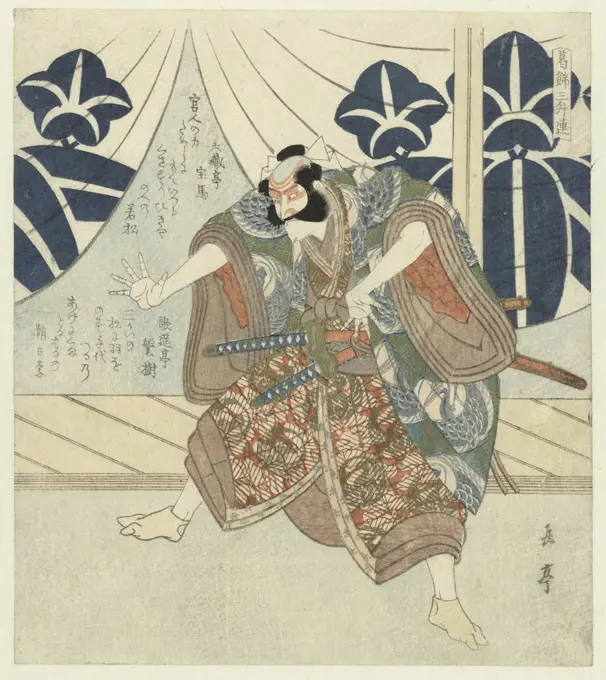
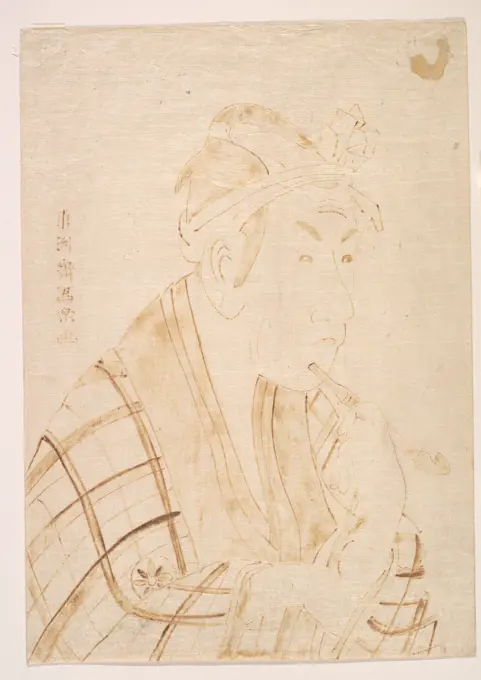
Asahina Saburô, The actor Seki Sanjûrô II (1786-1839) in the role of Asahina Saburô in the play about the Soga brothers. Saburô was a vassal of Kudô Suketsune who ran over to the enemy, the Soga brothers. With two poems. The third print (mainly) from a five-part, actor (on the stage), Yashima Gakutei (mentioned on object), Japan, 1823, paper, colour woodcut, h 212 mm × w 189 mm
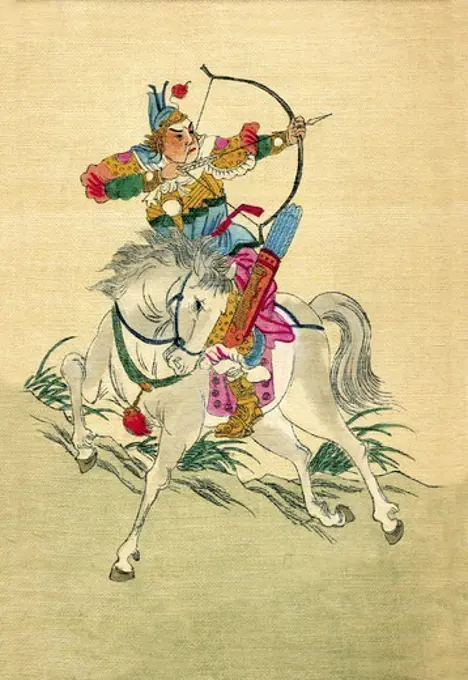
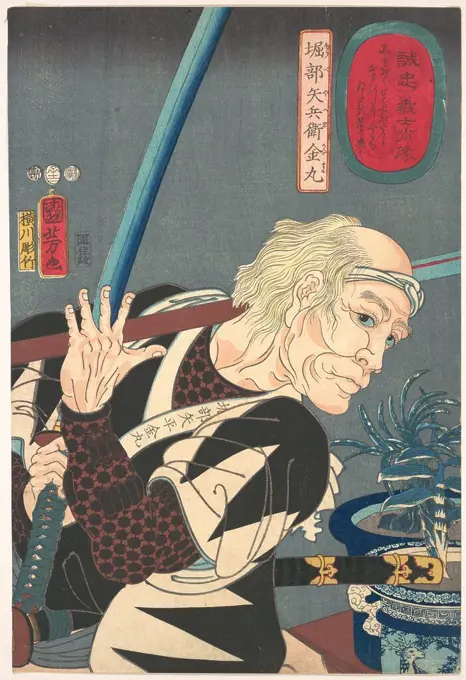
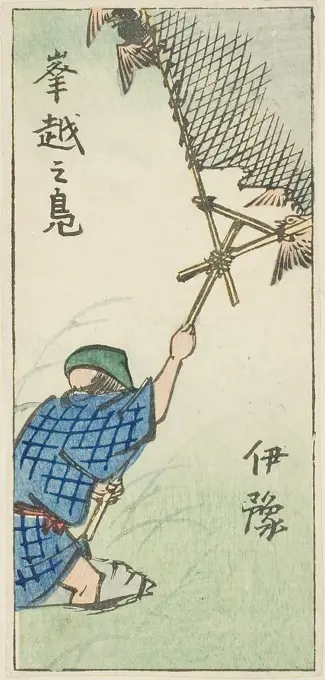
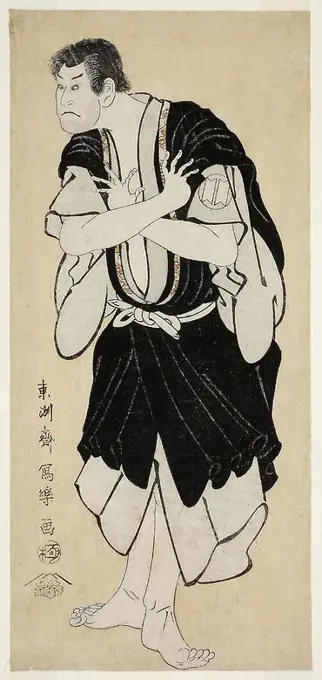
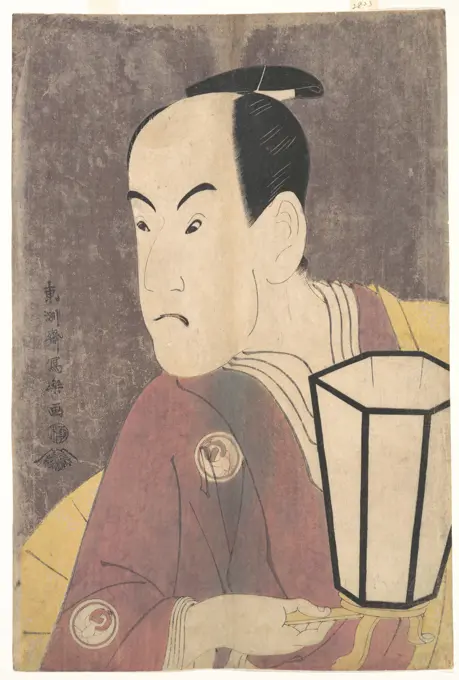
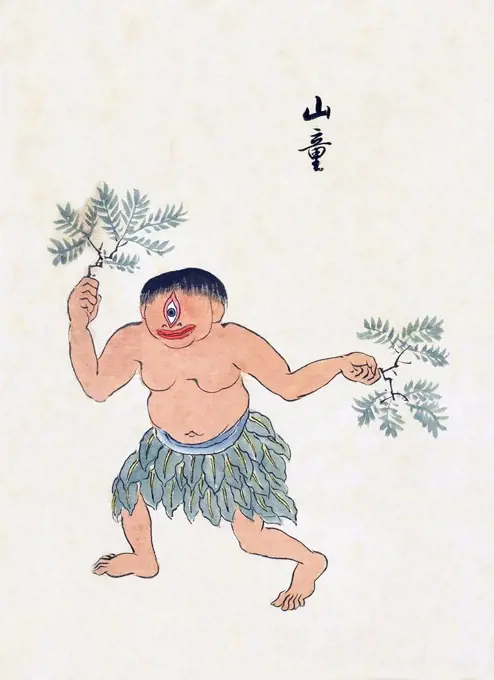
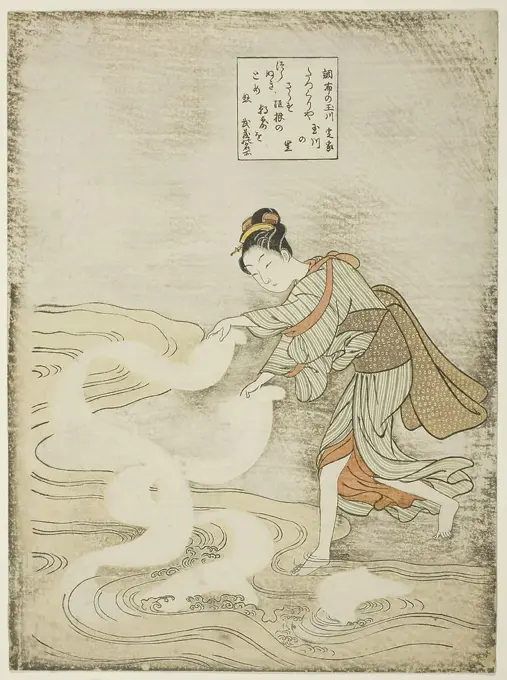
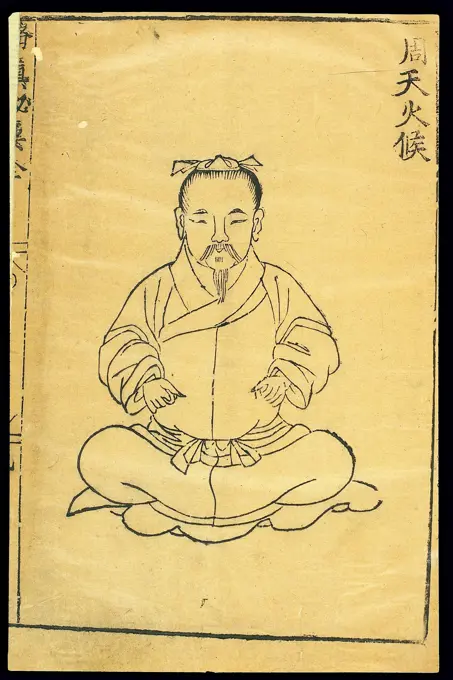
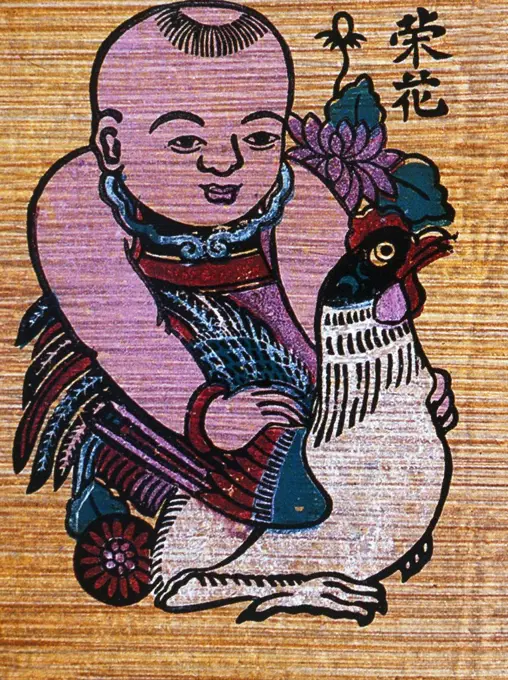
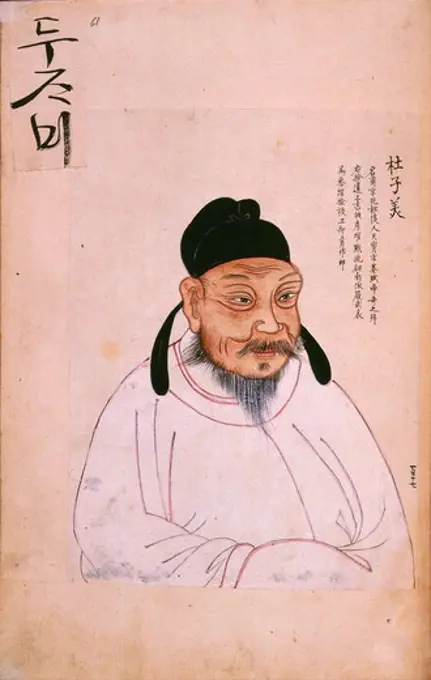
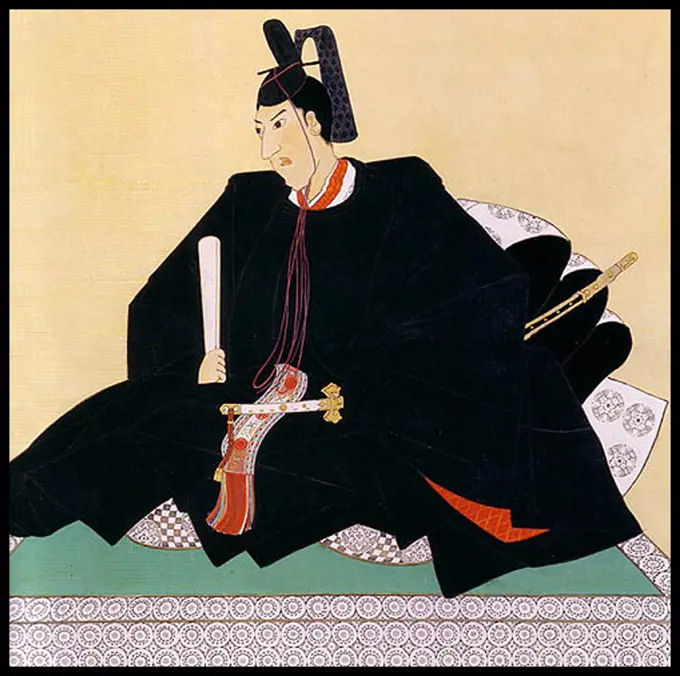
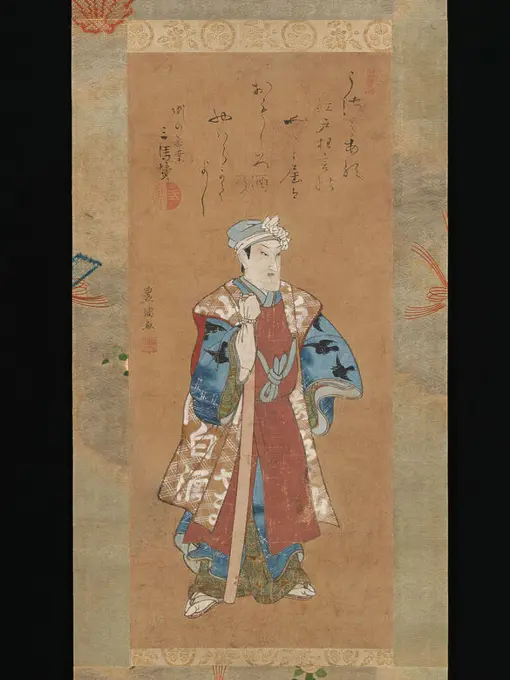
Bando Mitsugoro II as Shinbei in the Kabuki Play "Sukeroku". Artist: Utagawa Toyokuni I (Japanese, 1769-1825). Culture: Japan. Dimensions: Image: 23 9/16 × 10 3/8 in. (59.8 × 26.4 cm)Overall with mounting: 55 11/16 × 14 13/16 in. (141.5 × 37.7 cm)Overall with knobs: 55 11/16 × 17 1/8 in. (141.5 × 43.5 cm). Date: late 18th-early 19th century. Museum: Metropolitan Museum of Art, New York, USA.Warrior, Chinese PrintsOrosiaMounted Russian. Artist: Utagawa Yoshitora (Japanese, active ca. 1850-80). Culture: Japan. Dimensions: Image: 14 × 10 in. (35.6 × 25.4 cm). Date: 5th month, 1861. Museum: Metropolitan Museum of Art, New York, USA.Portrait of Oribe Yahei Kanamaru. Artist: Utagawa Kuniyoshi (Japanese, 1797-1861). Calligrapher: Engraved by Yokogawa Horitake. Culture: Japan. Dimensions: H. 14 5/8 in. (37.1 cm); W. 9 5/8 in. (24.4 cm). Date: 1852. Museum: Metropolitan Museum of Art, New York, USA.Catching Wild Ducks in Iyo Province (Iyo, okoshi no kamo), section of sheet no. 16 from the series "Cutout Pictures of the Provinces (Kunizukushi harimaze zue)". Utagawa Hiroshige  ; Japanese, 1797-1858. Date: 1852. Dimensions: 14.4 x 6.7 cm (5 5/8 x 2 9/16 in.). Color woodblock print; section of harimaze sheet. Origin: Japan. Museum: The Chicago Art Institute, USA.The Actor Sakata Hangoro III as Kosodate Kannonbo (Sandai-me Sakata Hangoro no Kosodate no Kannonbo). Toshusai Sharaku  ; Japanese, active 1794-95. Date: 1789-1799. Dimensions: 31.0 x 14.2 cm. Color woodblock print; hosoban, nishiki-e. Origin: Japan. Museum: The Chicago Art Institute, Chicago, USA.The Actor Matsumoto Koshiro as Banzuin Chobei Tōshūsai Sharaku Japanese. The Actor Matsumoto Koshiro as Banzuin Chobei 56045Half-Length Portrait of the Actor Onoe Matsusuke I as Retired Emperor Sutoku in Act Three of the play Kitekaeru Nishiki no Wakayaka (Returning Home in Splendor), Performed at the Nakamura Theater from the First Day of the Eleventh Month, 1780 1775-1785 Japan. Color woodblock print; aiban . Katsukawa Shunko IA Chinese seated figure with grey beard and black hat, with fan. Painting by a Chinese artist, ca. 1850.The Actor Ichikawa Ebizo II casting a curse at the hour of the ox 1745 Japan. Hand-colored woodblock print; hosoban, urushi-e . Torii Kiyomasu IIBandō Hikosaburō III as Sagisaka Sanai in the Play "Koinyōbō Somewake Tazuna" 1794 Tōshūsai Sharaku Japanese. Bandō Hikosaburō III as Sagisaka Sanai in the Play "Koinyōbō Somewake Tazuna" 37359fine arts, Korea, graphic, month Oh (""horse""), coloured woodcut, circa 17th - 19th century, private collection,The Bakemono Zukushi handscroll, painted in the Edo period (18th-19th century) by an unknown artist, depicts 24 traditional monsters that traditionally haunt people and localities in Japan.The Actor Ichikawa Yaozo III as Takebayashi Tadashichi, from Chusingura Katsukawa Shunei (Japanese, 1762-1819). The Actor Ichikawa Yaozo III as Takebayashi Tadashichi, from Chusingura, 1783. Color woodblock print on paper, 11 13/16 x 5 9/16 in. (29.9 x 14.0 cm).   Asian Art 1783RETRATO DE MINAMOTO-NO-YURI-TOMO - SIGLO XII. Author: FUJIWARA TAKANOBU. Location: NATIONAL MUSEUM. TOKYO. JAPAN. YURI TOMO MINAROTO. MINAMOTO NO YURI TOM / MINAMOTO YORITOMO.Emperor Jing of Han (188 BCE - 141 BCE) was an emperor of China in the Han Dynasty from 156 BC to 141 BCE. His reign saw the limit and curtailment of power of feudal princes which resulted in the Rebellion of the Seven States in 154 BCE. Emperor Jing managed to crush the revolt and princes were thereafter denied rights to appoint ministers for their fief. This move consolidated central power which paved the way for the glorious and long reign of his son Emperor Wu of Han.The Jewel River at Chofu (Chofu no Tamagawa), from an untitled series of Six Jewel Rivers. Suzuki Harunobu  ; Japanese, 1725 ()-1770. Date: 1761-1770. Dimensions: 28.2 x 20.9 cm (11 1/8 x 8 1/4 in.). Color woodblock print; chuban. Origin: Japan. Museum: The Chicago Art Institute, USA.Colored woodcut by Foyo, dating from 1790-1800, depicting two Chinese philosophers and a boy with books, illustrating figures, traditional attire, and scholarly setting with detailed composition.Woman Carrying a New Year Decoration. Utagawa Yoshikazu (Japan, Edo, active 1848-1871). Japan, 1850s. Prints; woodblocks. Color woodblock printPericardium channel of arm jueyin, C17/18 Chinese book artProserpine - Figure Study. By: Dante Gabriel RossettiPortrait of the sumo wrestler Mastugae(da) Kisaburo, in the ring Kunisada, UTAGAWA (1786 1864)C16 Chinese woodcut: Daoyin techniqueLuohan, after a set attributed to Guanxiu stone carved in 1757; rubbing 18th or 19th century Unidentified Of the many luohan painters throughout Chinese history, none was more influential than the Buddhist monk Guanxiu (832-912), whose wild caricatures inspired generations of artists to depict luohans as exotic, superhuman beings. Guanxiu’s paintings were already considered rare in 1757, when the Qianlong emperor encountered what he believed to be an authentic set in a monastery in Hangzhou. To preserve their appearance, the emperor commissioned copies and had them carved in stone so that rubbings like these could be made. The original paintings are now lost, making these copies some of the most important surviving evidence of Guanxiu’s style.. Luohan, after a set attributed to Guanxiu. Unidentified artist, possibly Ding Guanpeng (active 1726-71). China. stone carved in 1757; rubbing 18th or 19th century. Ink on paper. Qing dynasty (1644-1911). RubbingHand-coloured illustration from a Japanese miscellany on traditional trades, crafts and customs in mid-18th century Japan, dated Meiwa Era (1764-1772) Year 6 (c. 1770 CE).Dong Ho painting (Vietnamese: Tranh Đông Hồ or Tranh làng Hồ), full name Dong Ho folk woodcut painting (Tranh khắc gỗ dn gian Đông Hồ) is a genre of Vietnamese woodcut paintings originating from Dong Ho village (làng Đông Hồ) in Bac Ninh Province, Vietnam. Using the traditional điệp paper and colours derived from nature, craftsmen print Dong Ho pictures of different themes from good luck wishes, historical figures to everyday activities and folk allegories. In the past, Dong Ho painting was an essential element of the Tết holiday in Vietnam.A Chinese seated figure in pink silk with a brown border, holding a blue fan. Painting by a Chinese artist, ca. 1850.Hott Enmy Kokushi, is a posthumous title bestowed upon the Zen Buddhist monk Shinchi Kakushin (1203-1298) by the emperor Go-Daigo. The title means perfectly awakened national teacher of the Dharma lamp. Considered a fine example of Kamakura realism, while downplaying detail in the body, the sculpture emphasizes fidelity in representing the visage of Kakushin. Portrait of Hottō Enmyō Kokushi, c. 1295-1315. Japan, Kamakura period (1185-1333). Hinoki cypress wood with lacquer, metal staples and fittings; overall: 91.4 cm (36 in.).The Actor Ichikawa Komazo II as Ono Sadakuro in the Play Chuko Ryogoku Ori, Performed at the Nakamura Theater in the Seventh Month, 1790 1785-1795 Japan. Color woodblock print; hosoban . Katsukawa Shun'eiDu Fu, Chinese poet, 712-70 AD, c. 18th century, Chinese paintingEmbroidered Fragment 4th-3rd century B.C. Paracas. Embroidered Fragment. Paracas. 4th-3rd century B.C.. Camelid hair, cotton. Peru. Textiles-WovenThe Yongzheng Emperor (13 December 1678 - 8 October 1735), was the fifth emperor of the Manchu Qing Dynasty, and the third Qing emperor to rule over China proper, from 1722 to 1735. A hard-working ruler, Yongzheng's main goal was to create an effective government at minimum expense. Like his father, the Kangxi Emperor, Yongzheng used military force in order to preserve the dynasty's position. Suspected by historians to have usurped the throne, his reign was often called despotic, efficient, and vigorous. Although Yongzheng's reign was much shorter than the reigns of both his father, the Kangxi Emperor, and his son, the Qianlong Emperor, his sudden death was probably brought about by his workload. Yongzheng continued an era of continued peace and prosperity as he cracked down on corruption and waste, and reformed the financial administration.Tokugawa Iemochi (July 17, 1846-August 29, 1866) was the 14th shogun of the Tokugawa shogunate of Japan, who held office 1858 to 1866. During his reign there was much internal turmoil as a result of Japan's first major contact with the United States, which occurred under Commodore Perry in 1853 and 1854, and of the subsequent 're-opening' of Japan to western nations. Iemochi's reign also saw a weakening of the shogunate.Lands of the Earth - patrons of the five sides of the world;  beginning of the 20th century (1900-00-00-1932-00-00);Jabłoński, Witold (1901-1957) - collection, gift (provenance), Chinese artPaintingPortrait of Pablo Casals while playing cello, Ferdinand Schmutzer, c. 1900 - 1920 print  Vienna paper etching / drypoint portrait of a musician. viola, violoncello; double bassCaricature leaflet Feed of feed;  around 1908 (1903-00-00-1912-00-00);Semerau-Siemianowski, Władysław (1849-1938), Semerau-Siemianowski, Władysław (1849-1938)-collection, gift (provenance), occasional prints, Islamic art, Turkish art, leafletsSELLO DE YEMEN - PINTURA CHINA DEL SIGLO XIV - AUTOR DESCONOCIDO.Flier from the Young Turk Revolution period - Armenian topic. unknown, graphic artistEmperor Guangwu (13 January 5 BC - 29 March 57), born Liu Xiu, was an emperor of the Chinese Han Dynasty, restorer of the dynasty in AD 25 and thus founder of the Later Han or Eastern Han (the restored Han Dynasty). He ruled over parts of China at first, and through suppression and conquest of regional warlords, the whole of China was consolidated by the time of his death in 57. Yan Liben (Wade-Giles: Yen Li-pen, c. 600-673), formally Baron Wenzhen of Boling, was a Chinese painter and government official of the early Tang Dynasty. His notable works include the Thirteen Emperors Scroll and Northern Qi Scholars Collating Classic Texts. He also painted the Portraits at Lingyan Pavilion, under Emperor Taizong of Tang, commissioned in 643 to commemorate 24 of the greatest contributors to Emperor Taizong's reign, as well as 18 portraits commemorating the 18 great scholars who served Emperor Taizong when he was the Prince of Qin. Yan's paintings included painted portraits of various Chinese eKukai with Arhats Tani Buncho (Japanese, 1763-1840). , late 18th-early 19th century. Hanging scroll, ink, color, and gold on silk, Image: 56 3/4 x 28 5/16 in. (144.1 x 71.9 cm).   Asian Art late 18th-early 19th centuryMuseum of the Terracotta Warriors, Terracotta Warrior, Mausoleum of the first Qin Emperor, Xian, Shaanxi Province, China, AsiaAncient Man Sculpture Isolated Photo Front view shot ancient man sculpture isolated photo Copyright: xZoonar.com/DanielxFerreira-LeitesxCiccarinox 14761006In 1926, Young Companion Pictorial (Liang You, literally 'good friend') was established in Shanghai as the first colored variety magazine. During the 1920s and 30s, when printed news was rare and precious, Companion was already a pioneer in providing pictorial reports to the public. It quickly became the publication that chronicled and provoked Chinas passion for decades to come. Throughout the epic of war and peace, readers could see and read from Companion the faces and thoughts of influential politicians such as Sun Zhongshan (Sun Yat-sen), Jiang Jieshi (Chiang Kai-shek), Feng Yuxiang, Zhang Xueliang, Mao Zedong, Zhu De and Zhou Enlai. Influential thinkers and writers such as Lu Xun, Lao She, Yu Dafu and Lin Yutang all contributed their works to Companion. In addition, Companion published a series of autobiographies, written exclusively for its readers by the celebrities themselves. They inspired many Chinese not only with their successful stories but also their wisdom and attitude