Japanese Woodblock Prints of Women

Delicate woodblock prints depicting Japanese women in traditional attire, engaged in various activities, highlighting cultural elegance and floral motifs.

Sanokawa Mangiku, Nakamura Gentaro and Takashima Onoe Sanokawa Mangiku, Nakamura Gentaro and Takashima Onoe (title on object), Three actors in women's roles, two seated and one standing with the right arm raised, anonymous, Japan, 1718, paper, h 265 mm w 148 mm
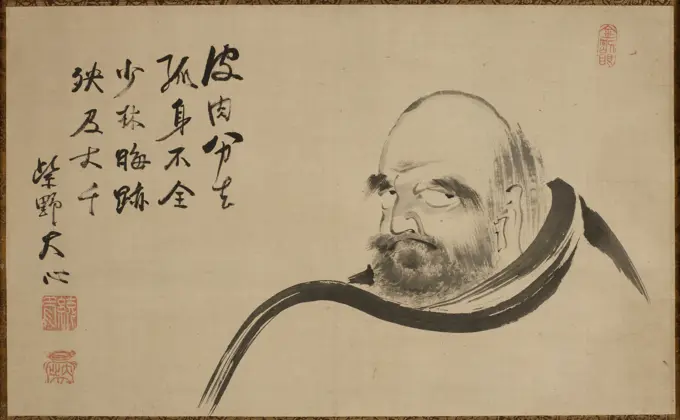
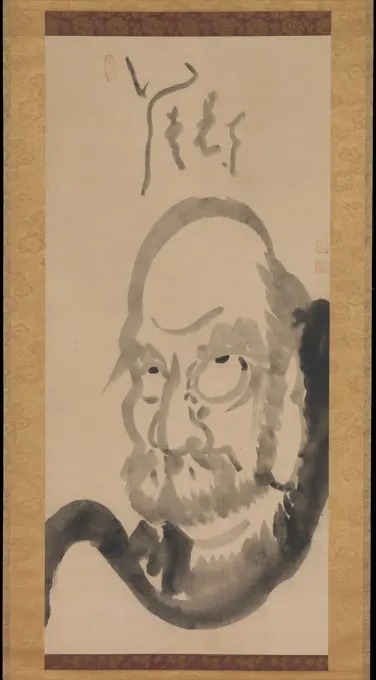
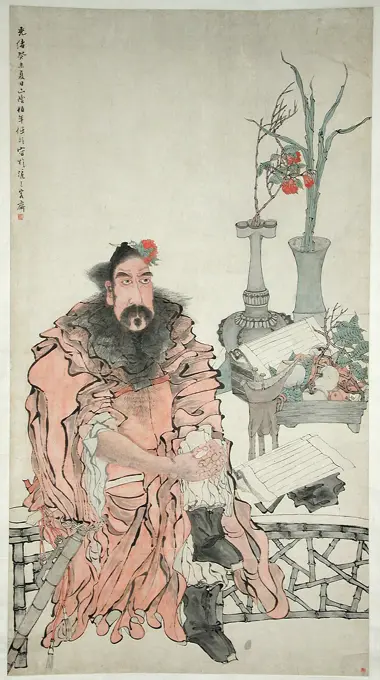
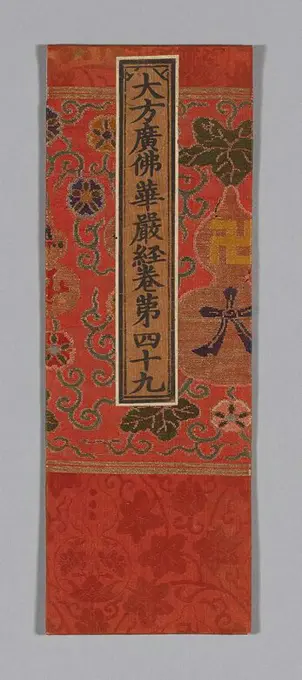
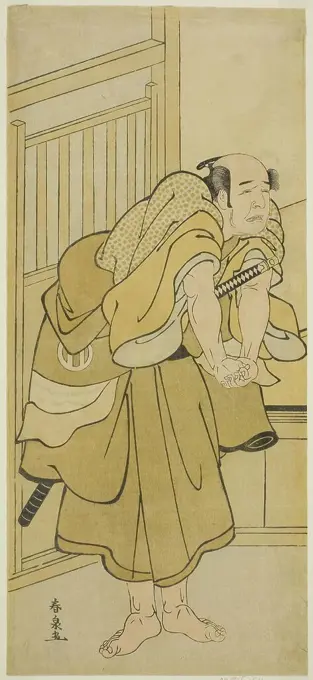
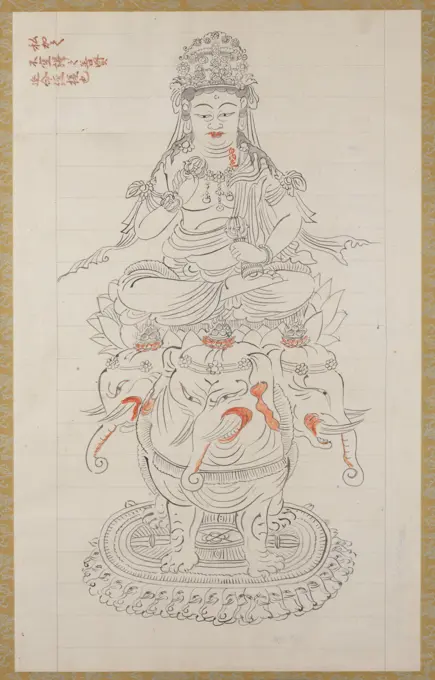
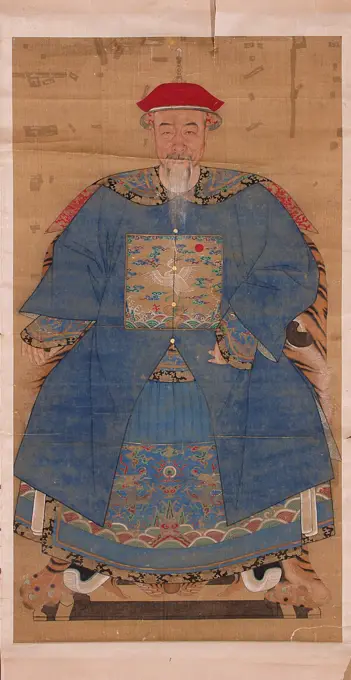
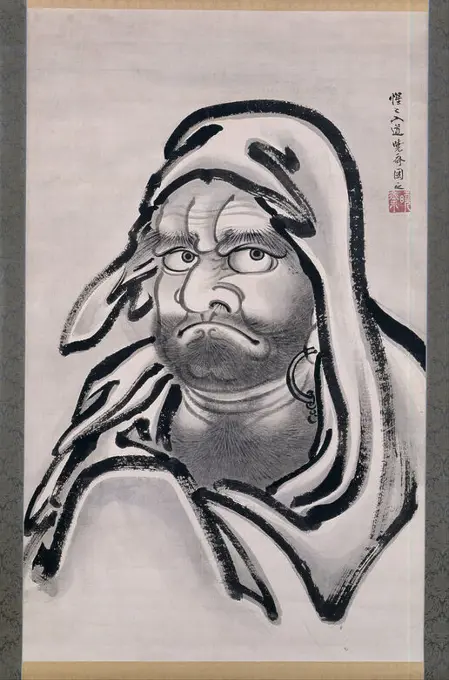
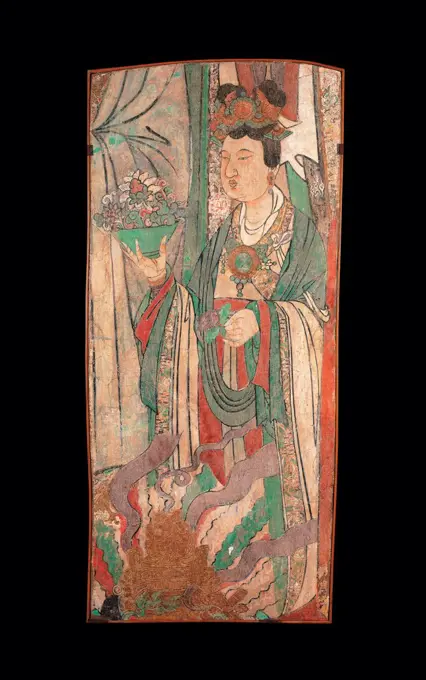
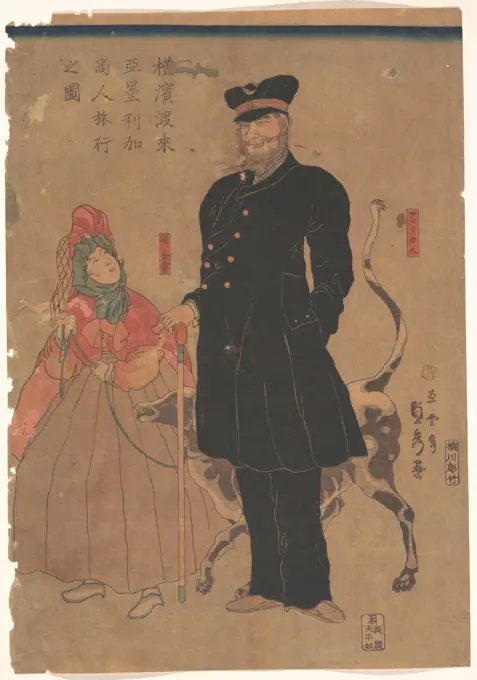
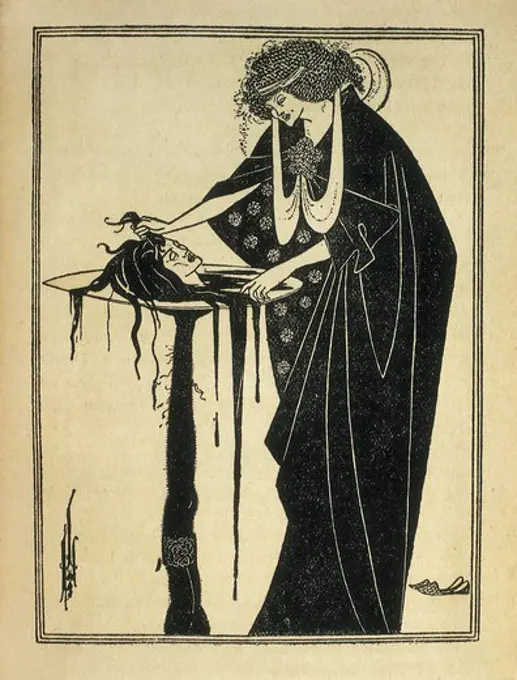
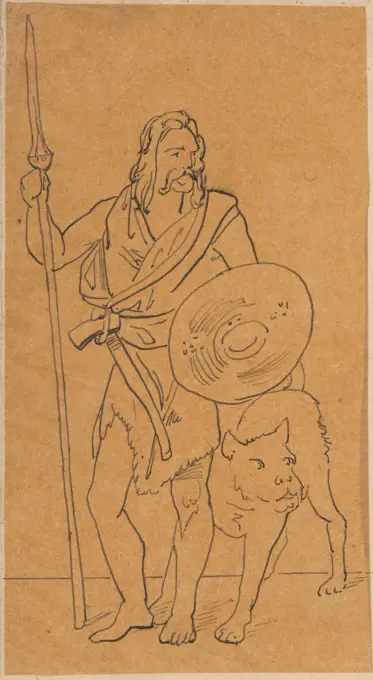
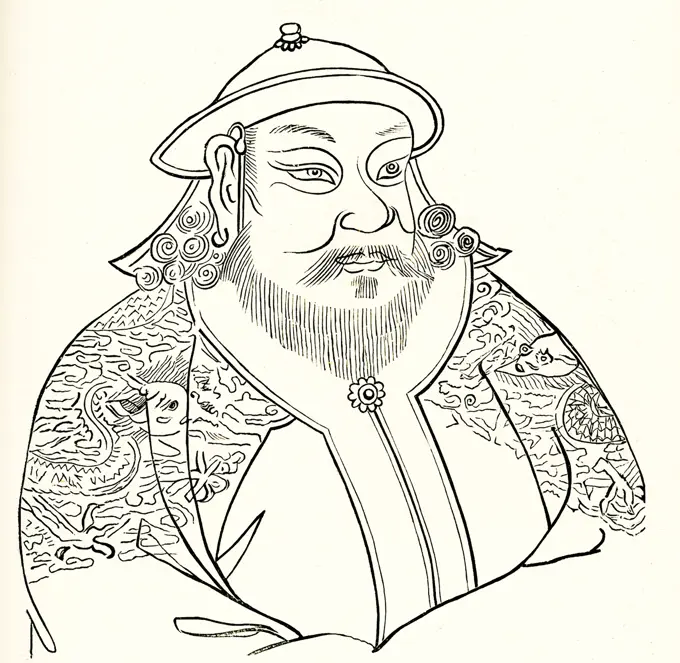
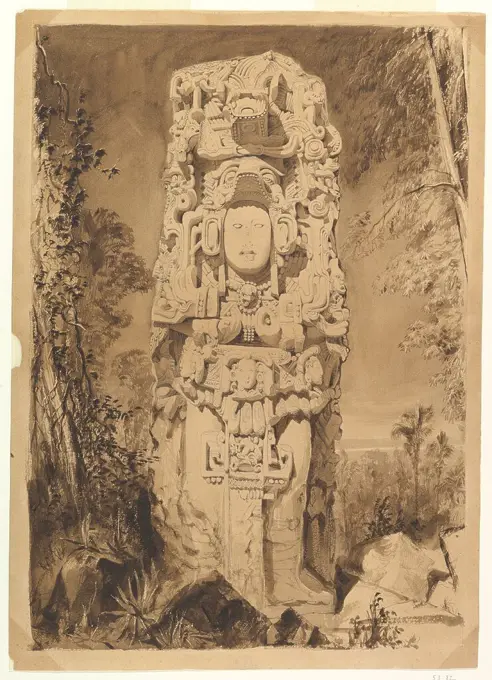
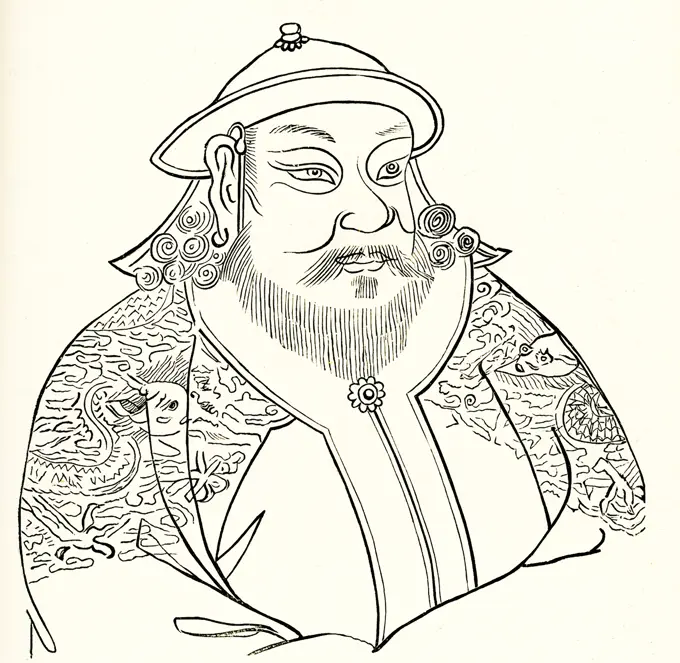
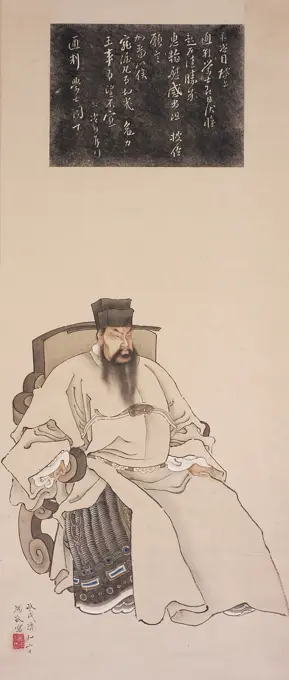
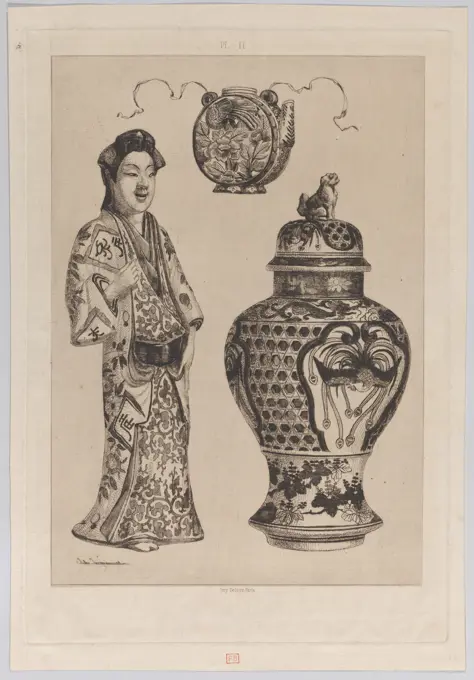
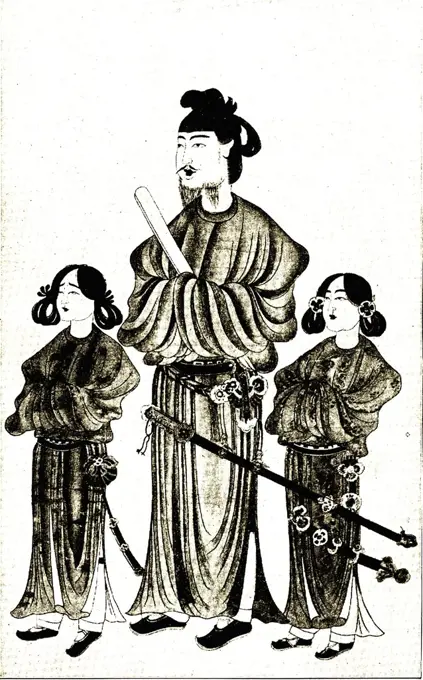
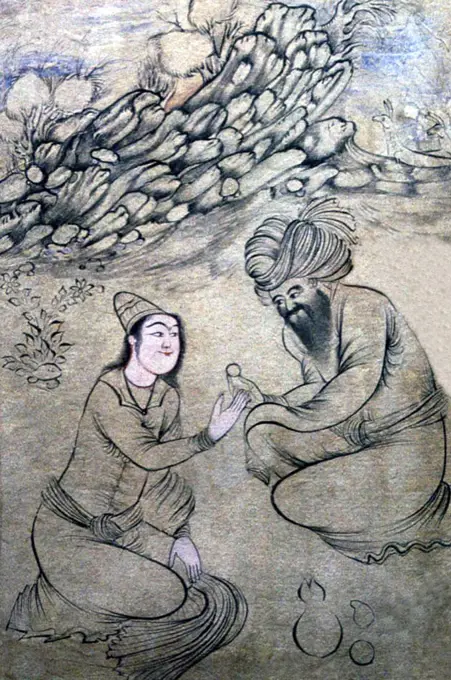
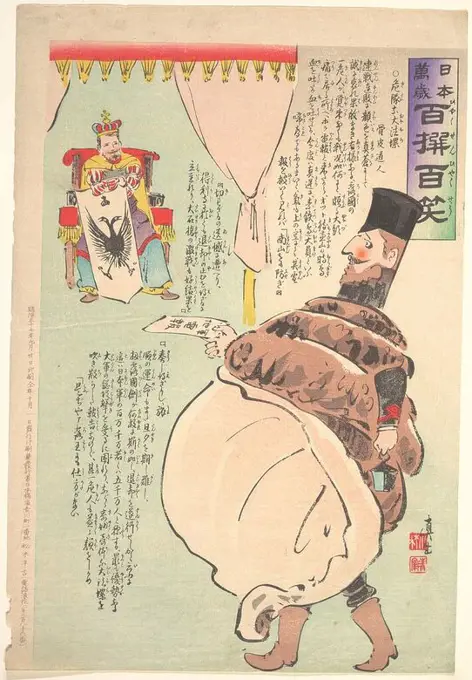
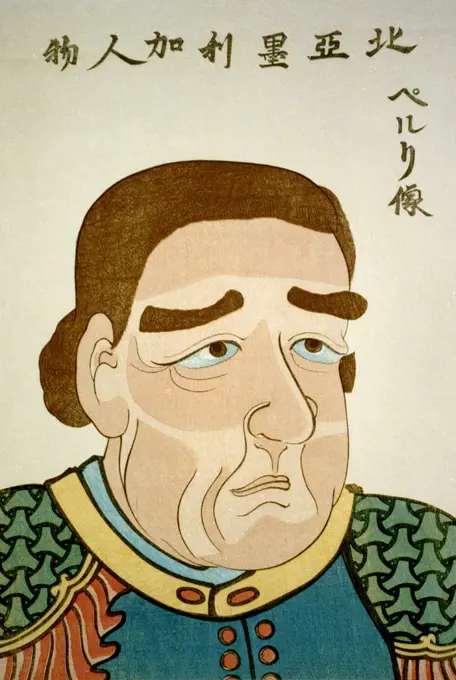
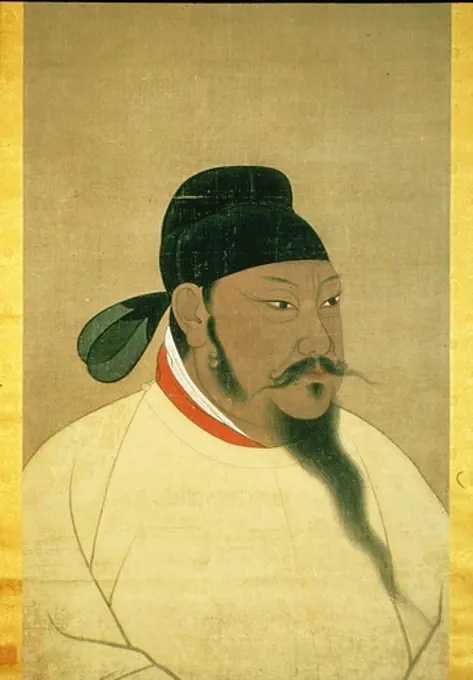
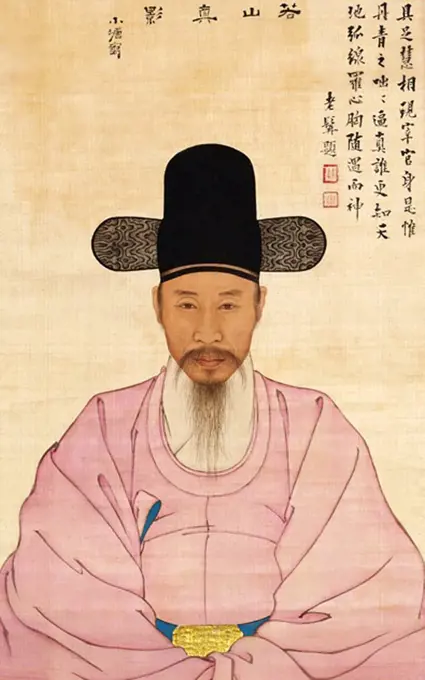
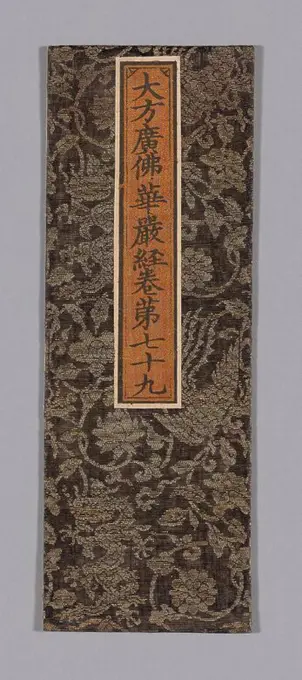
Sutra Cover. China. Date: 1590-1599. Dimensions: 34.2 × 11.9 cm (13 1/2 × 4 3/4 in.)Warp repeat: 19 cm (7 1/2 in.). Silk and gold-leaf-over-lacquered-paper strip, plain weave with supplementary patterning wefts bound in weft-float faced 1:3 'Z' twill interlacings; label: silk, plain weave; painted with ink, glued over paper. Origin: China. Museum: The Chicago Art Institute, Chicago, USA.Bodhidharma, 17th-18th century, Daishin Gitō, Japanese, 1657 - 1730, 12 3/16 × 19 15/16 in. (30.96 × 50.64 cm) (image)46 3/8 × 20 13/16 in. (117.79 × 52.86 cm) (without roller), Hanging scroll; ink on paper, Japan, 17th-18th centuryArhat Panthaka unknownfine arts, China, Tang Dynasty, portrait of a lady, brass rubbing of a doorframe, Tshangan, Shensi, 716,Portrait of Bodhidharma mid-18th century Hakuin Ekaku An influential monk and prolific painter, Hakuin Ekaku made striking and sometimes humorous pictures that played an important role in his teaching. Dozens of half-length portraits of Bodhidharma (Japanese: Daruma), the Indian monk credited with transmitting Zen Buddhist teachings to China in the sixth century, can be dated to the last few decades of the artists life. He brushed a variety of different messages on these pictures, perhaps the most common being four Chinese characters conveying a clear lesson: “Look inside yourself to become a buddha.” The inscription on this work, however, is more enigmatic and seemingly incomplete: “No matter how one looks at it.. ” In his teaching, Hakuin focused on the practice of koan, or paradoxical dialogues that when contemplated may lead to spontaneous awakening.. Portrait of Bodhidharma. Hakuin Ekaku (Japanese, 1686-1769). Japan. mid-18th century. Hanging scroll; ink on paper. Edo period (161Study: King. (Dummy title)Lying woman in pillows with a book. .China: 'The Classic of Filial Piety' (Xiao Jing). Northern Song Dynasty painter Li Gonglin (1049-1106) (Metropolitan Museum of Art, New York)Zhong Kui dated 1883 Ren Yi (Ren Bonian) Chinese Ren Yi, a leader of the late Qing Shanghai school of painting, was a disciple of the painter Ren Xiong (1820-1857). A prolific artist, Ren Yi commanded a wide range of techniques. In this depiction of Zhong Kui, the legendary Demon Queller, for example, he adopted the figural style of Chen Hongshou (1598-1652). During the late Qing dynasty, Zhong Kui became a popular symbol of Chinese opposition to the misrule of the Manchus and was often portrayed glowering ferociously over a motley retinue of cowering ghosts and demons. In Ren Yi's depiction, however, Zhong Kui appears as an elegant, if somewhat eccentric, scholar. His sword sheathed and a blossom stuck in his hair, he sits reading decorously beside a table laid out with archaic bronzes filled with flowers and fruits, an image that suggests it was the Chinese scholars' command of their cultural heritage rather than their military prowess that set them apart from their Manchu overlords.Miniatur; Miniatur.. Prints. 1912. The Miriam and Ira D. Wallach Division of Art, Prints and Photographs: Art & Architecture CollectionKhatun (Persian; Turkish: Hatun) is a female title of nobility and equivalent to male 'khan' prominently used in the First Turkish Empire and in the subsequent Mongol Empire. It is equivalent to queen or empress.PORTADA EDICION JAPONESA DEL QUIJOTE. Author: MIGUEL DE CERVANTES SAAVEDRA. Location: BIBLIOTECA NACIONAL-COLECCION. MADRID. SPAIN. DON QUIJOTE.PORTADA EDICION JAPONESA DEL QUIJOTE. Author: Miguel de Cervantes Saavedra (1547-1616). Location: BIBLIOTECA NACIONAL-COLECCION, MADRID, SPAIN.Officer with Lange Mantel, Anonymous, 1690 - 1710 Indian miniature. drawing  India paper brush / brush / brush / brushThe Rishi Li Tieh-kwai despatching his spirit to the Mountains of the Immortals, 17th century, (1886 Artist: UnknownSutra Cover. China. Date: 1590-1599. Dimensions: 34.7 × 12.1 cm (13 5/8 × 4 3/4 in.). Silk and gold-leaf-over-lacquered-paper-strips, satin damask weave with patterning and brocading; wrapped over cardboard and backed with paper; applied label of silk, plain weave; with inscribed title painted and/or printed with ink. Origin: China. Museum: The Chicago Art Institute, Chicago, USA.The Actor Asao Tamejuro I as Drunken Gotobei in the Play Yoshitsune Koshigoe Jo, Performed at the Ichimura Theater in the Ninth Month, 1790. Katsukawa Shunsen; Japanese, active 1780s-early 1790s. Date: 1785-1795. Dimensions: 30.7 x 13.8 cm (12 1/16 x 5 7/16 in.). Color woodblock print; hosoban. Origin: Japan. Museum: The Chicago Art Institute, USA.July 1909, 1909 book. magazine Number 10 of volume 12 (July 1909) of the literary monthly HOTOTOGISU: Cover on which a man on horseback; Inside a title plate of a rooster; Back on which an older woman with parasol near a pond.  paper letterpress printing / color woodcutFugen Enmei Bosatsu, 1322, Unknown Japanese, 18 1/4 × 11 1/4 in. (46.36 × 28.58 cm) (sheet)24 1/16 × 16 5/8 × 1/2 in. (61.12 × 42.23 × 1.27 cm) (outer frame), Ink and light color on paper, Japan, 14th centuryMonk Riding Backwards, 19th century, Hirano Gogaku; Artist: Hoashi Kyōu, Japanese, 1810 - 1884, 41 3/4 × 12 3/16 in. (106.05 × 30.96 cm) (image)78 13/16 × 16 13/16 in. (200.18 × 42.7 cm) (mount, without roller), Ink and color on paper, Japan, 19th centuryYasoda and Krishna, c. 1890. Eastern India, Bengal, Kolkata, Kalighat. Watercolor, graphite, ink, and tin on paper; secondary support: 48.9 x 33.8 cm (19 1/4 x 13 5/16 in.); painting only: 42 x 26 cm (16 9/16 x 10 1/4 in.).Portrait of a civil device;  XVIII-XIX century (1644-00-00-1900-00-00);Chinese (culture), coil painting, men, portraits, Chinese art, officials, scrolls, vertical gangliaIchikawa Danjuro V 1767-1777 Japan. Color woodblock print; koban . Katsukawa ShunshoShomen Kongo: The Blue-Faced Kongo, 1615-99. Japan, Edo period (1615-1868). Hanging scroll; ink and color on paper; painting only: 69.5 x 29.3 cm (27 3/8 x 11 9/16 in.); including mounting: 146.7 x 32.1 cm (57 3/4 x 12 5/8 in.).Wu Yong (Chitasei Goyo), from the series One Hundred and Eight Heroes of the Popular Water Margin (Tsuzoku Suikoden goketsu hyakuhachinin no hitori) 1822-1835 Japan. Color woodblock print; oban . Utagawa KuniyoshiHistorical print from the 19th Century, Chinese illustrationChina: Portrait of Zhang Fei (-221 CE), from a Qing Dynasty edition of 'Romance of the Three Kingdoms', released as Zengxiang quantu Sanguo yanyiA Chinese Sage Tachibana Morikuni (1670-1748). A Chinese Sage, 17th century. Woodblock print on paper, 10 1/8 x 6 9/16 in. (25.7 x 16.7 cm).   Asian Art 17th centuryGreat tributary channel of the spleen, Chinese woodcut, 1817Daruma. Date/Period: From 1801 until 1900. Scroll paintings. Ink on paper. Author: KAWANABE KYOSAI.This image shows: Shogun Tenasu. Kakemono a Japanese unframed painting made on paper or silk and displayed as a wall hanging in temple treasure are in Nikko. A Japanese woodcut.Tattoo Design representing 'America'. Artist: Clark & Sellers (American, active 20th century). Dimensions: Sheet: 6 9/16 × 4 1/4 in. (16.7 × 10.8 cm). Date: ca. 1900-1945. Museum: Metropolitan Museum of Art, New York, USA.Court ladies and attendant. Date: 16th century. Origin: China. Period: Ming dynasty. Ink and color on silk. Museum: Freer Gallery of Art and Arthur M. Sackler Gallery.Chinese woodcut: Obstruction of the urinary tractOfferer/Donor, 1368-1644 Century, mural painting, cm 158 x 73American Merchant Strolling in Yokohama 1861 (1st month) Utagawa (Gountei) Sadahide Japanese. American Merchant Strolling in Yokohama 55479Go-Daigo, Emperor of Japan, 1907. Artist: Unknown.Samurai in harness, draughtsman: Utagawa Kuniyoshi, 1808 - 1861, paper, brush, h 204 mm × w 152 mmCangjie (Ts'ang-chieh) is a very important figure in ancient China (c. 2650 BC), held to be the official historian of the Yellow Emperor and the inventor of Chinese characters. Legend has it that he had four eyes and four pupils, and that when he invented the characters, the deities and ghosts cried and the sky rained millet. He is considered a legendary figure rather than a historical figure.Four of Clubs, Japanese Courtship, from Harlequin Cards, 2nd Series (N220) issued by Kinney Bros. 1889 Issued by Kinney Brothers Tobacco Company Playing cards issued as trade cards from the "Harlequin Cards, 2nd Series" (N220), issued in 1889 to promote Kinney Tobacco Company.. Four of Clubs, Japanese Courtship, from Harlequin Cards, 2nd Series (N220) issued by Kinney Bros.. 1889. Commercial color lithograph. Issued by Kinney Brothers Tobacco CompanyTwo Members of Commodore Perry's Party, American Sailor and Soldier, Utagawa Yoshiiku, Japanese, 1833 - 1904, Woodcut on mulberry paper, Standing American sailor and man with a stick. Lengthy inscription in Japanese at top and bottom right., Japan, 1861, Print, PrintKatsumiMiyuke. Artist: George H. Langzettel, American, 1864-1953, B.F.A. 1898Haarlem, Ridder, Jan de, Silhouette of two men with a blindfolded prisoner, verso bottom center - stamped, A blindfolded man is on his knees. On the left a man holds up a bowl and on the right a man stands with a weapon. A dog is sitting in the top center., print, prent, prints, prenten, height 207 mm, width 156 mm, Noord-Nederlands, 1665-10-12 - 1735-11-16, print maker, prentmaker, 1675 - 1735, paper, papier, houtsnedePiece 18th-19th century Japan. Piece 66238Watercolor of musician playing mu yu late 18th century Chinese. Watercolor of musician playing mu yu 506074The inhabitants and vegetation of Musashino, 1920 book Book with text and illustrations about life in Musashino; Hard cover with white satin and image of woman at water well; title page; Seven color illustrations; 1-4, table of contents; 1-426, text and black and white illustrations; one page, colophon.  paper letterpress printing / color woodcutBEARDSLEY, Aubrey Vincent (1872-1898). Salome. 1894. Salome with the head of St. John the Baptist. Illustrated edition from Oscar Wilde's play 'Salome', written in 1893. Art Nouveau. Xylography. SPAIN. CATALONIA. Barcelona. Biblioteca de Catalunya (National Library of Catalonia).Miss Plum Blossom. Helen Hyde; American, 1868-1919. Date: 1897. Dimensions: 125 x 72 mm (image/plate); 166 x 123 mm (sheet). Color etching on paper. Origin: United States. Museum: The Chicago Art Institute, Chicago, USA.Warrior from the shields and in Lesser, Aleksander (1814-1884); 1830-1884 (1830-00-00-1884-00-00);Anglo -Saxons, Lesser, Aleksander (1814-1884), Lesser, Aleksander (1814-1884) - collections, Lesser, Wiktor Stanisław Zygmunt (Baron - 1853-1935), Lesser, Wiktor Stanisław Zygmunt (Baron - 1853-1935) - collection, gift (provenance), clothing, men's clothes, foreign clothing, armament, warriorsCaminade, Alexandre-François (N.1783-12-14-D.1862-05-27), Study for the death of the Virgin, Saint-Etienne Church of Mont (on the front and back) (main title), 1831 . Black stone, pen and black ink on glued paper on laid paper. Strip of another paper stuck on the left. Drawing with black stone on the back. Petit Palais, Museum of Fine Arts of the City of Paris.The cover for a scepter and Koto bridges preserved in the Hôryûji in Nara; Nantô Hôryûji Shozô Shakugoromo Narabi Kotoji No Zu.still Life with a Cover of Dust for a Japanese Sedger (Koto). In The Foreground A Bridge For a Koto.Japan: 'E-Karuta' (Playing Card), watercolour painting by Shigeru Aoki, 1904, Kawamura Art Museum, Sakura. Shigeru Aoki (1882-1911) was a Japanese painter famed for his combining of Japanese mythology and legends with the Western-style art movement that could be found in some late 19th and early 20th century Japanese paintings. Aoki was born into an ex-samurai household in northern Kyushu. He left his home in 1899 to pursue artistic studies in Tokyo, and soon began to accumulate critical acclaim for his artwork and its use of Pre-Raphaelite Brotherhood techniques mixed with Kojiki themes. He died in March 1911 from tuberculosis, aged only 28.Miniatura rytualna tsakali z wyobrażeniem dwuramiennej bogini Białej Tary (). unknown, painterYamato Takeru no Mikoto 18th-19th century School of Katsushika Hokusai Japanese. Yamato Takeru no Mikoto 57271Dang Huy Tru, a Hanoi intellectual, opened Vietnams first photo lab - the Cam Hieu Duong lab - on March 14th, 1869 in Hanoi. Dang Huy Tru was a senior official in the Nguyen Dynasty in the mid nineteenth century. In 1873, the French army attacked Hanoi for the first time, and Dang Huy Tru and his friend Hoang Ke Viem left behind photography to fight the European invaders. He died in 1874. In 1865, on a trip to Hong Kong, Tru was introduced to photography for the first time. He produced two photographs on the journey and brought them home to Vietnam. In 1867, with the help of a friend, Tru bought his first camera in Guangdong, China. Upon returning to Hanoi, Tru opened Cam Hieu Duong, Vietnams first photo lab. Sadly, it closed after Trus death in 1874.The caption for this map from The Travels of Marco Polo Vol I  as translated by Henry Yule reads: Portrait pf Kublai Khan. From a Chinese engraving). Kublai Khan, also known by his regnal name Setsen Khan, was the founder of the Yuan dynasty of China and the fifth khagan-emperor of the Mongol Empire from 1260 to 1294, although after the division of the empire this was a nominal position. Marco Polo was a Venetian traveler who left Venice, Italy, with his father Niccolo and uncle Maffeo in 1271. He arrived in China in 1275 where Kublai Khan had his court, and returned home in 1294.  Note thatImage of the deity of the guardian;  beginning of the 20th century (1901-00-00-1932-00-00);Jabłońska, Antonina (1901-1994), Jabłoński, Witold (1901-1957), Jabłoński, Witold (1901-1957)-collection, Chinese (culture), gift (provenance), Chinese artModel of a government offical at the historic Governor's Office in Pingyao City, Shanxi Province, ChinaBronze Man acupuncture figurine, front view, Chinese woodcutDecember 1906, 1906 book. magazine Number 3 of volume 10 (February 1906) of the literary monthly magazine Hototogisu: cover with image of winged horse against orange background; Inside: frontispies of landscape with flowering plant; Back, image of man at fruit tree and woman with sickle.  paper color woodcutApril 1905, 1905 book. magazine Number 7 of volume 8 (March 1905) of the literary monthly magazine Hototogisu: Cover with image of book Reading man; Inside: FrontieSpies of women in the surf, fishing persons and knights in a musician woman; Back, image of men in uniform.  paper letterpress printing / color woodcutBuilding Contractors. Felice Beato (English, born Italy, 1832 - 1909)Stela at Copan. Artist: Frederick Catherwood (British, London 1799-1854 died at sea, near Liverpool). Dimensions: 22-7/16 x 16-1/16 in. (57.1 x 40.8 cm). Date: 1843. Museum: Metropolitan Museum of Art, New York, USA.The caption for this map from The Travels of Marco Polo Vol I as translated by Henry Yule reads: Portrait pf Kublai Khan. From a Chinese engraving). Kublai Khan, also known by his regnal name Setsen Khan, was the founder of the Yuan dynasty of China and the fifth khagan-emperor of the Mongol Empire from 1260 to 1294, although after the division of the empire this was a nominal position. Marco Polo was a Venetian traveler who left Venice, Italy, with his father Niccolo and uncle Maffeo in 1271. He arrived in China in 1275 where Kublai Khan had his court, and returned home in 1294. Note that the city of Kinsai, the so-called 'Heavenly City,' was called by Marco Polo Coromoran. Kanbaliq is Turkic for what is today Beijing. Polo called it Cambaluc. Siam is present-day Cambodia. Polo dictated his adventures to Rustichello. These writings, written in French, were titled Books of the Marvels of the World, but are better known in English as The Travels of Marco Polo..Chinese woodcut: Life-prolonging nine revolutions, 8ENTREGA DEL MANUSCRITO DE LA RELACION DE MICHOACAN AL VIRREY MENDOZA - SIGLO XVI. Location: INSTITUTO DE COOPERACION IBEROAMERICANA. MADRID. SPAIN. IÑIGO LOPEZ DE MENDOZA-II CONDE DE TENDILLA. ANTONIO DE MENDOZA Y PACHECO (1490-1552). HIJO DE IÑIGO LOPEZ DE MENDOZA. VIRREY DEL PERU (1490-1552) ANTONIO DE MENDOZA.Painting, Seated Lady; China; brush and watercolor on rice paper; 21.5 × 15 cm (8 7/16 × 5 7/8 in.); 1910-28-17Ancient Persia. Sassanid period. Monarch Ardashir II (379-383 AD). Engraving. Color.Portrait of Yue Fei. Tsubaki Chinzan (Japan, 1801-1854). Japan, 19th century. Paintings; scrolls. Hanging scroll; ink and colors on paperEmperor Duzong (1240-1274) was the 15th emperor of the Song Dynasty of China, and the sixth emperor of the Southern Song. His personal name was Zhao Mengqi. He was the nephew of Emperor Lizong and reigned from 1264 to 1274. Duzong's reign was plagued with rebellions, warfare and upheaval. The Mongols had spent decades harassing the borders of the Southern Song and were on the verge of conquering the whole of China.<br/><br>  Duzong totally ignored his duties and instead delegated all state and military affairs to the hands of his incompetent minister Jia Sidao; the emperor instead indulged in drinking and women and lived in opulence. At first, he told the officials to be straightforward and tell him the problems in the country, but this was all an act. Soon, he completely neglected his duties. Furthermore, he had a very high sexual appetite. Under the Song's law, any female who had a sexual relation with the emperor needs to come pay respect to the emperor in the morning. At one point,Potala Palace entrance mural of Dhritarashtra the gaurdian of the Eastern direction - Lhasa, TibetPlate II; from History of Porcelain 1862 Jules-Ferdinand Jacquemart. Plate II; from History of Porcelain. History of Porcelain. Jules-Ferdinand Jacquemart (French, Paris 1837-1880 Paris). 1862. Etching. PrintsThe prince Shotoku (572-621 AD) and his two sons. From a seventeenth Century Painting. Prince Shtoku (574 – 622), also known as Prince Umayado was a regent and a politician of the Asuka period in Japan. He was a son of Emperor Ymei and his younger half-sister Princess Anahobe no HashihitoC18 Chinese woodcut: White tonsillitisC18 Chinese woodcut: Laryngitis extending to the tongueBliżej Kultury Michałowski, Piotr (1800 1855)Advertisement characteristic of 'old Shanghai' in the 1920-1940s, a trend started by American newspaperman Carl Crow who lived in Shanghai between 1911 and 1937, starting the first Western advertising agency in the city and creating much of what is thought of today as the 'sexy China Girl' poster and calendar advertisements. In today's more liberal China, these are making a comeback and are widely considered minor works of art characteristic of 'Old Shanghai'.The colouration of the youth's face and his conjoined eyebrows suggest a homoerotic theme not uncommon in Turkish and Persian art of the period. Siyah Kalem or 'Black Pen' is the name given to the 15th century school of painting attributed to Mehmed Siyah Kalem. Nothing is known of his life, but his work indicates that he was of Central Asian Turkic origin, and thoroughly familiar with camp and military life. The paintings appear in the 'Conquerors Albums', so named because two portraits of Sultan Mehmed II the Conqueror are present in one of them. The albums are made up of miniatures taken from manuscripts of the 14th, 15th, and early 16th centuries, and one series of paintings is inscribed 'work of Master Muḥammad Siyah Kalem'. Something of the style and techniques of Chinese paintings is apparent in these, and an acquaintance with Buddhist art, particularly in the depictions of grotesque demonic figures. It seems likely that certain paintings contained in the 'Conqueror's Albums' aKitai taihoraThe Spiraling (Effect) of the Fundamental Law on the Fearful Party (Russians). Artist: Kobayashi Kiyochika (Japanese, 1847-1915). Culture: Japan. Dimensions: 14 1/2 x 9 7/8 in. (36.8 x 25.1 cm). Date: September 1904. Museum: Metropolitan Museum of Art, New York, USA.Kyoka Hyaku nin Isshu (Literary celebrities), 1819, WoodcutsKultura w sieci  Kultura+ unknownA Chinese figure, seated, wearing black robes with a black, with flywhisk. Painting by a Chinese artist, ca. 1850.Genre Scene, 1 of 4 Genre Scene, 1 of 4, 19th century. Ink and color on paper, 9 13/16 x 9 1/16 in. (25 x 23 cm).   Asian Art 19th centurySeries of pictures Japanese, 1878, Paris, Warrior, Liebig picture, historical, digitally restored reproduction of a collectors picture from c. 1900Album of Genre Paintings Album of Genre Paintings, ca. 1871. Ink and color on paper, Each leaf, approx.: 8 1/8 x 7 7/8 in. (20.6 x 20 cm).   Asian Art ca. 1871A Cloth Wrapper and Koto Bridges, c. 1800 - c. 1805 print Still life with a cover of fabric for a Japanese citer (Koto). Combing in the foreground for the strings of a koto.  paper color woodcut the arts; artists. textile industry and clothing industryOur Chief Artist. Felice Beato (English, born Italy, 1832 - 1909)Sketch of Four Faces Katsushika Hokusai (Japanese, 1760-1849). , 1760-1849. Ink on paper, 10 5/8 x 9 1/8 in. (27 x 23.2 cm).   Asian Art 1760-1849Head and Shoulders Portrait of Admiral Matthew Perry, Japanese Print, 1854Album of Genre Paintings Album of Genre Paintings, ca. 1871. Ink and color on paper, Each leaf, approx.: 8 1/8 x 7 7/8 in. (20.6 x 20 cm).   Asian Art ca. 1871Why the face resists cold, Chinese, Ming periodPiece 16th-19th century China. Piece. China. 16th-19th century. Silk, metallic thread. Ming (1368-1644)-Qing (1644-1911) dynasty. Textiles-TapestriesCaricature of a Chinese Buddha statue, Honoré Daumier, 1834 print Cartoon against the reign of King Louis Philip I of France. Paris paper  caricatures (human types). Buddha, founder of Buddhism. political caricatures and satiresChina - 17th century - Beijing. PortraitChina: Domestic scene in an aristocratic household. Qing Dynasty watercolour painting by an anonymous artist, mid to late 19th centuryPanel, c. 1930, 49 3/8 x 35 1/4 in. (125.4 x 89.54 cm), Cotton; block print, United States, 20th centuryEmperor T'ai Tsung, 598-649, reigned 626-649, Tang Dynasty, ChinaDesign for the Verso of the Great Seal of the United States.Bodi (Budi) Alagh Khan (1504-1547) was the Mongol Khan of the Northern Yuan Dynasty in Mongolia. Bodi (Budi) Alagh Khan was Dayan Khan's second son's eldest son and was handpicked by Dayan Khan as his successor. However, after the death of Dayan Khan, Bars Bolud Jinong, Dayan Khan's third son, proclaimed himself as the great khan, claiming that Bodi Alagh Khan was too young and too inexperienced to maintain the large Mongol empire. In 1519 it was agreed that Barsbolad (Basbolud) Jinong would give up the crown and Bodi Alagh Khan would be the new Great Khan of Mongols.Kang Yi-o (1788-), who used the pen name Yaksan, was a grandson of the famous scholar-painter Kang Se-hwang. In this half-length, full-frontal portrait, he is depicted wearing an official's everyday pink robe (sibok) and a black silk hat. The colophon at top, praising the subject's wise appearance and the realistic likeness of the picture, was written by the famous calligrapher Kim Jeong-hui.