Japanese Woodblock Prints of Women

Delicate woodblock prints depicting Japanese women in traditional attire, engaged in various activities, highlighting cultural elegance and floral motifs.

Sanokawa Mangiku, Nakamura Gentaro and Takashima Onoe Sanokawa Mangiku, Nakamura Gentaro and Takashima Onoe (title on object), Three actors in women's roles, two seated and one standing with the right arm raised, anonymous, Japan, 1718, paper, h 265 mm w 148 mm
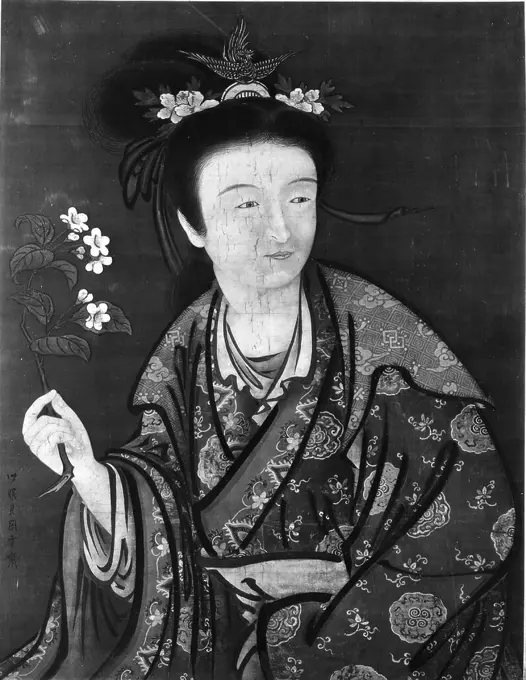
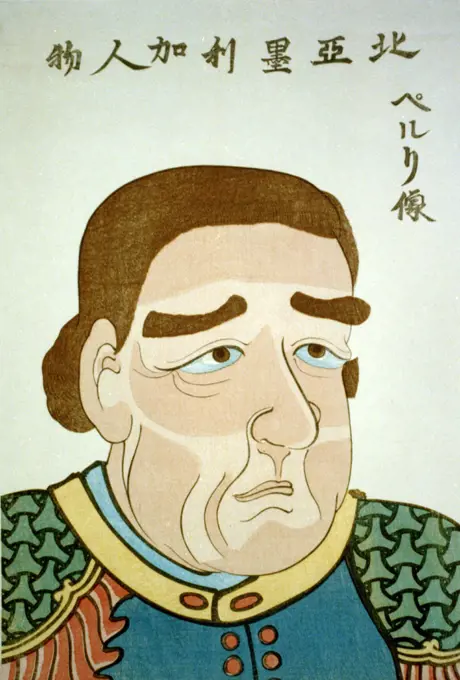
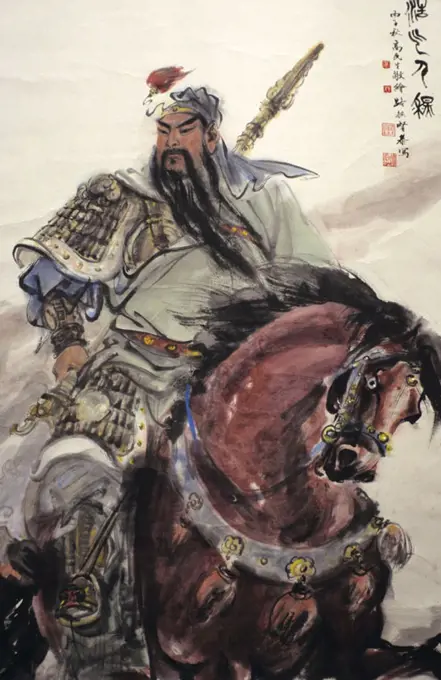
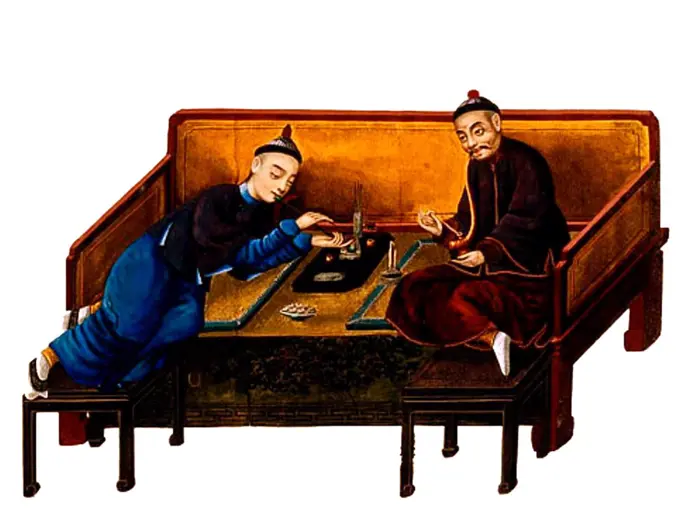
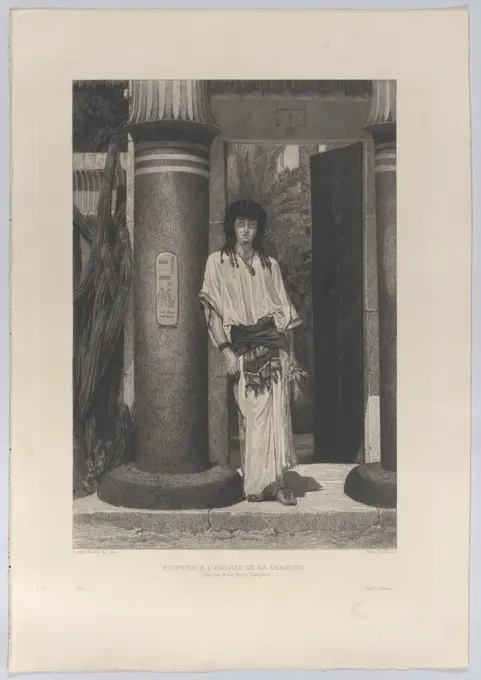
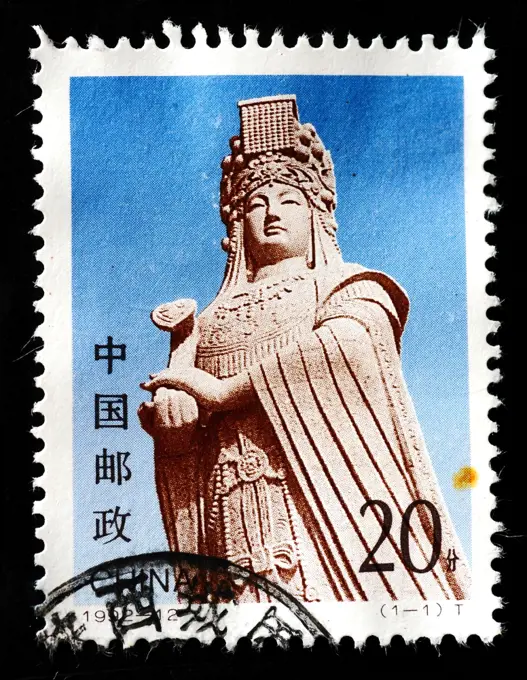
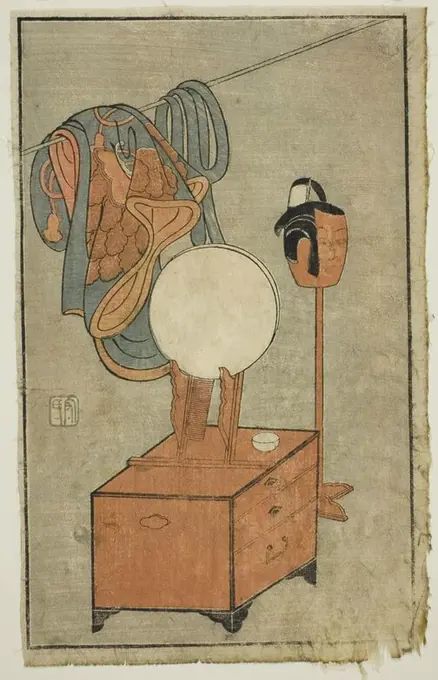
Actor's dressing table, from "A Picture Book of Stage Fans (Ehon butai ogi)". Ippitsusai Buncho; Japanese, active c. 1755-90. Date: 1770. Dimensions: 9 5/8 x 6 in. Color woodblock print; page from illustrated book. Origin: Japan. Museum: The Chicago Art Institute, Chicago, USA.Portrait of a Woman. Artist: In the style of Giuseppe Castiglione (Italian, Milan 1688-1766 Beijing); Attributed to Tsukioka Sessai (Japanese, 1761-1839). Culture: Japan. Dimensions: 35 3/4 x 27 in. (90.8 x 68.6 cm). Date: 19th century. Museum: Metropolitan Museum of Art, New York, USA.Bettoes, or Grooms. Felice Beato (English, born Italy, 1832 - 1909)Cho Hyun-myeong from Punhyang Cho Family, Korean Art, 1800sThe real Chinaman.. text. Advertising, Posters. 1895. The Miriam and Ira D. Wallach Division of Art, Prints and Photographs: Art & Architecture Collection. Publishing industry, Posters, American, Book & magazine postersA painting of Genghis Khan inside information center of the Genghis Khan Equestrian Statue (130 feet tall), which is part of the Genghis Khan Statue Complex on the bank of the Tuul River at Tsonjin Boldog, 33 miles east of Ulaanbaatar in Mongolia.C18 Chinese woodcut: Pale red laryngitisDescent of the AmidaTrinity, early 14thcentury, Hanging scroll: ink, color, and kirikane (cut gold) on silk, without mounting: 33 3/8 × 15 5/16 in. (84.7 × 38.9 cm), Japan, Japanese, Kamakura Period(1185-1333), PaintingsA North American: Portrait of Perry, c1854. Matthew Perry (1794-1858) Commodore in US Navy responsible for opening of Japan to the West - Convention of Kanagawa. Japanese print head-and-shoulders portrait, 1854Portrait of Pharaoh Ramses II, considered the greatest famous and most powerful pharaoh of the Egyptian Empire and oppressor of the Jews, ancient Egyptian empire. Ancient Egypt History. Old 19th century engraved illustration from El Mundo Ilustrado 1879Magot de la Chine. (Tiré du Cabinet de Mr. Ch. Philipon.) (A treasure from China.(taken from the private collection of Mr. Ch. Philipon)), pl. 416 from the journal La Caricature no.199. Artist: Honoré Daumier, French, 1808-1879Printer: Delaunois, French, active, 1830-1840 Publisher: Aubert et Cie, Paris, founded 1829Applique late 19th-early 20th century China. Applique. China. late 19th-early 20th century. Silk, metallic thread. Qing dynasty (1644-1911). Textiles-EmbroideredMatsuo Basho (1644 - November 28, 1694), was the most famous poet of the Edo period in Japan. During his lifetime, Basho was recognized for his works in the collaborative haikai no renga form; today, after centuries of commentary, he is recognized as a master of brief and clear haiku. His poetry is internationally renowned, and within Japan many of his poems are reproduced on monuments and traditional sites. Basho was introduced to poetry at a young age, and after integrating himself into the intellectual scene of Edo he quickly became well-known throughout Japan. He made a living as a teacher, but renounced the social, urban life of the literary circles and was inclined to wander throughout the country, heading west, east, and far into the northern wilderness to gain inspiration for his writing. His poems were influenced by his firsthand experience of the world around him, often encapsulating the feeling of a scene in a few simple elements.Emperor Renzong (May 30, 1010 - April 30, 1063) was the fourth emperor of the Song Dynasty of China. He reigned from 1022 to 1063. Renzong was the son of Emperor Zhenzong of Song. Despite his long reign of over 40 years, Renzong is not widely known. His reign marked the high point of Song influences and power but was also the beginning of its slow disintegration that would persist over the next century and a half.<br/><br>  The Song Dynasty (960-1279) was an imperial dynasty of China that succeeded the Five Dynasties and Ten Kingdoms Period (907-960) and preceded the Yuan Dynasty (1271-1368), which conquered the Song in 1279. Its conventional division into the Northern Song (960-1127) and Southern Song (1127-1279) periods marks the conquest of northern China by the Jin Dynasty (1115-1234) in 1127. It also distinguishes the subsequent shift of the Song's capital city from Bianjing (modern Kaifeng) in the north to Lin'an (modern Hangzhou) in the south.Chinese, from World's Smokers series (N33) for Allen & Ginter Cigarettes. Dimensions: Sheet: 2 3/4 x 1 1/2 in. (7 x 3.8 cm). Publisher: Issued by Allen & Ginter (American, Richmond, Virginia). Date: 1888.Trade cards from the "World's Smokers" series (N33), issued in 1888 in a set of 50 cards to promote Allen & Ginter brand cigarettes. Printer's samples included in set, as well. The printer's sample cards are on thinner card stock and do not have any printed text. Museum: Metropolitan Museum of Art, New York, USA.Handpainted Chinese scroll, Close-up of male warrior riding horseStudies van een vrouw die water uit een put haalt en een kruik uitschenkt. Dans la Province du Brabant (title on object). Draughtsman: Pieter van Loon. Dating: 1811 - 1873. Measurements: h 219 mm × w 260 mm. Museum: Rijksmuseum, Amsterdam.Album of Genre Paintings Album of Genre Paintings, ca. 1871. Ink and color on paper, Each leaf, approx.: 8 1/8 x 7 7/8 in. (20.6 x 20 cm).   Asian Art ca. 1871Opium poppy, Papaver somniferum, is the species of plant from which opium and poppy seeds are extracted. Opium is the source of many opiates, including morphine, thebaine, codeine, papaverine, and noscapine. The Latin botanical name means the 'sleep-bringing poppy', referring to the sedative properties of some of these opiates.Student, Japan. Old 19th century engraved illustration Travel to Japan by Aime Humbert  from El Mundo en La Mano 1879Egyptien à l'entrée de sa demeure (Egyptian at the entrance to his dwelling), from "L'Art" 1884 Edmond Ramus Almost twenty years after Alma-Tadema painted the subject of the Egyptian in a Doorway (2017.202.1), this print appeared in the French journal LArt, a periodical that specialized in high-quality etched reproductions. The artist launched his international career with paintings of ancient Egyptian scenes, winning a gold medal at his Paris Salon debut in 1864 for Pastimes in Ancient Egypt. Alma-Tadema produced Egyptian in a Doorway as part of his first commission from a dealer, Ernest Gambart, who found a ready market for the artists work in England. Ramuss etching is a testament to Alma-Tademas enduring reputation in France in the 1880s.. Egyptien à l'entrée de sa demeure (Egyptian at the entrance to his dwelling), from "L'Art". After Sir Lawrence Alma-Tadema (British (born The Netherlands), Dronrijp 1836-1912 Wiesbaden). 1884. Etching. PrintsCHINA - CIRCA 1993: A stamp printed in China shows the statue of Goddess Matsu, circa 1993A cycle of Cathay.. text. Advertising, Posters. 1895 - 1911. The Miriam and Ira D. Wallach Division of Art, Prints and Photographs: Art & Architecture Collection. Publishing industry, Posters, American, Book & magazine posters