Jewelry and Decorative Arts

Fine decorative pieces including intricate goldsmith work, antique jewelry, and scented bottles, showcasing historical craftsmanship and design.

Goldsmith's art, 19th century. Gold, enamel and cushion-cut diamonds bracelet with central separable brooch.
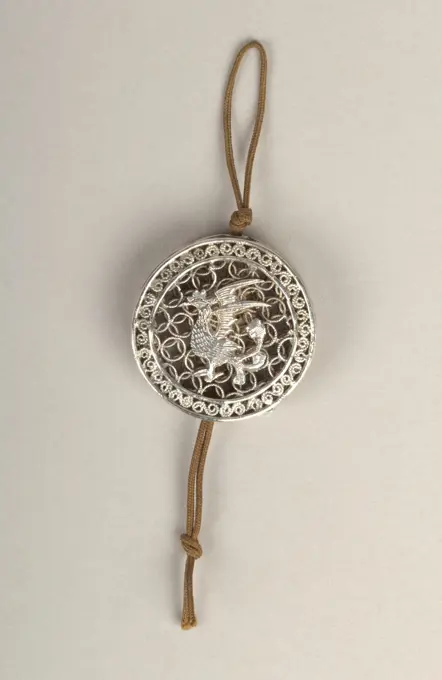
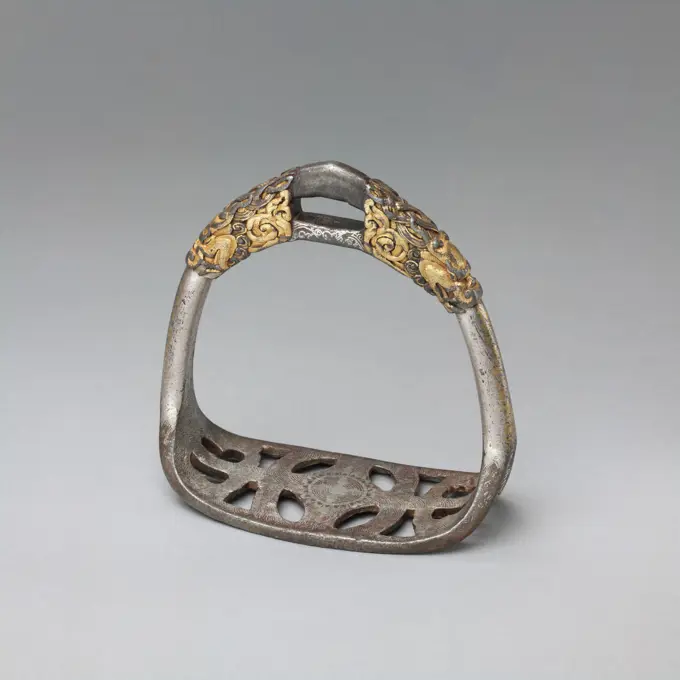
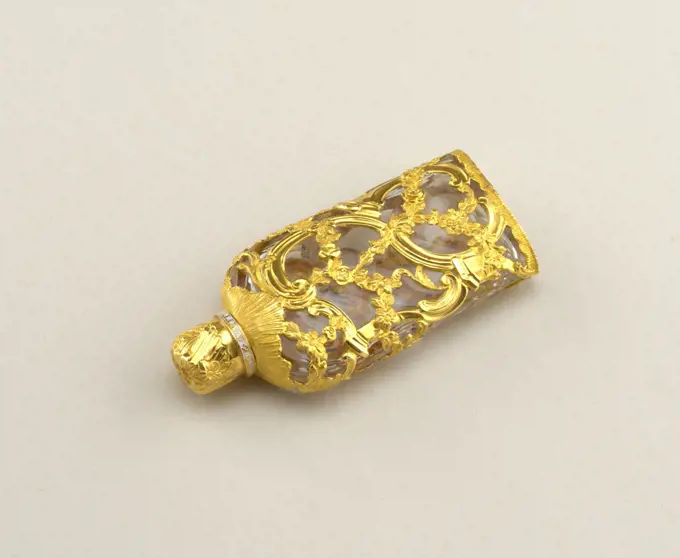
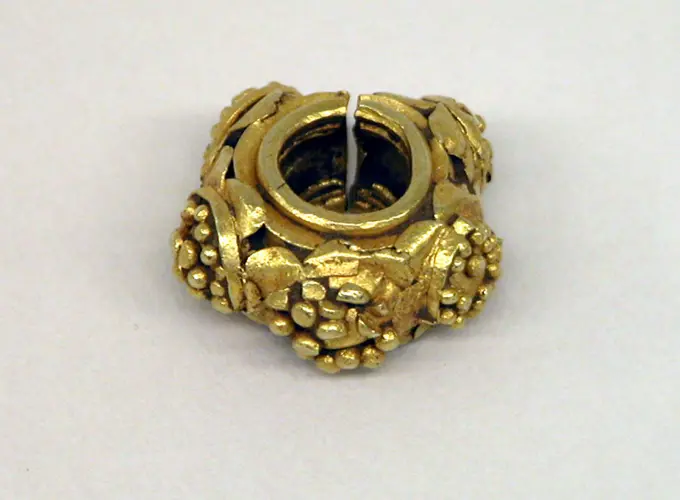
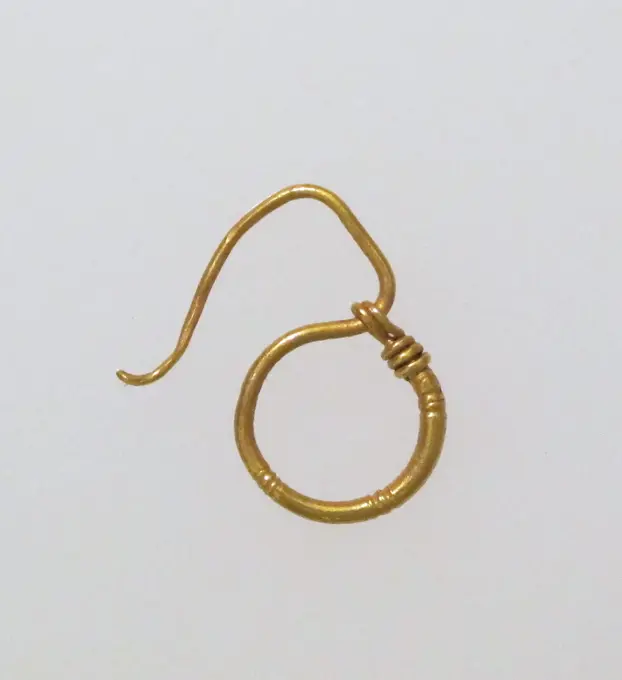
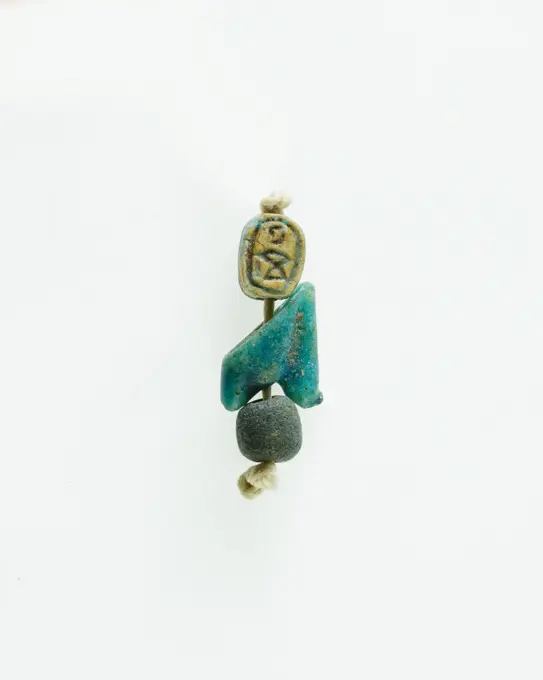
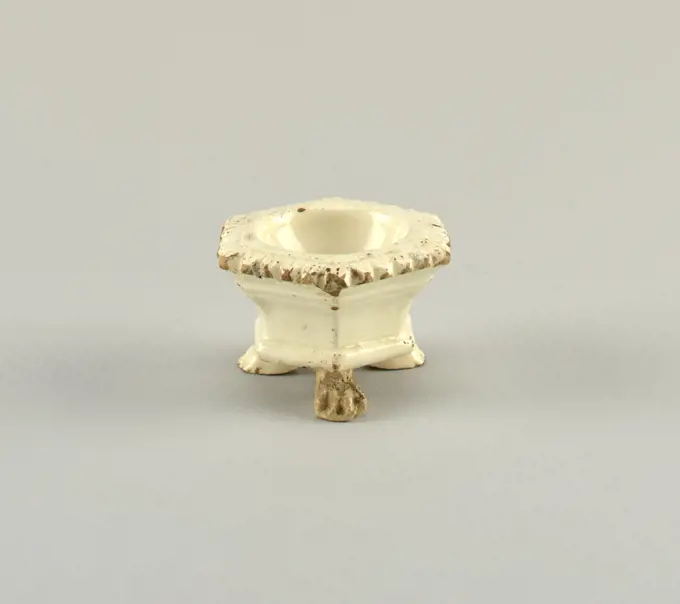
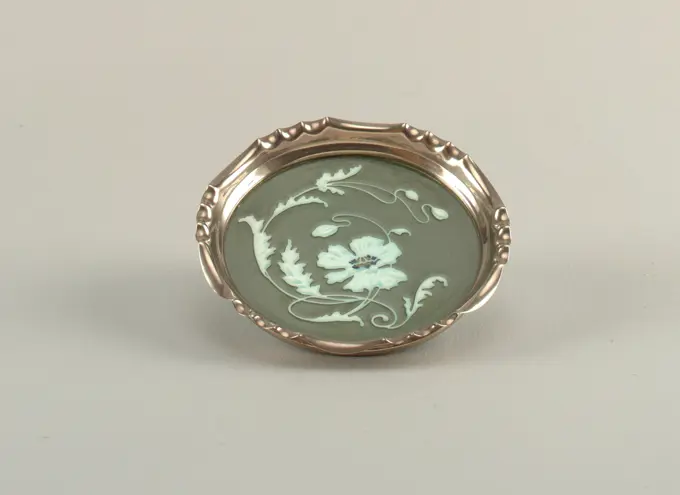
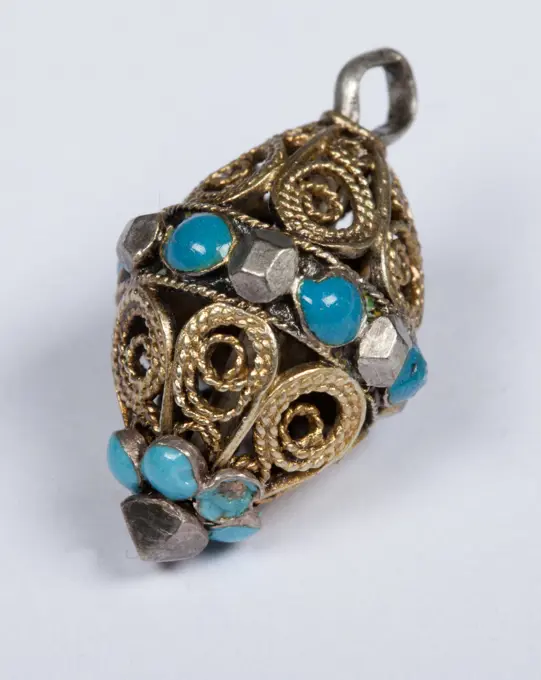
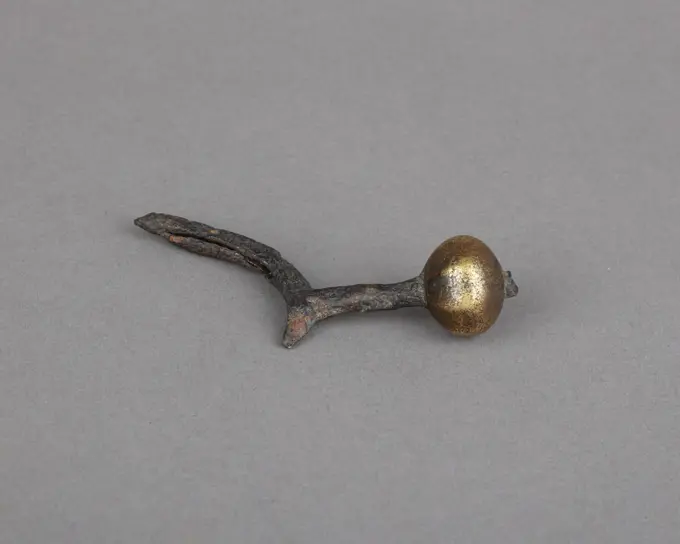
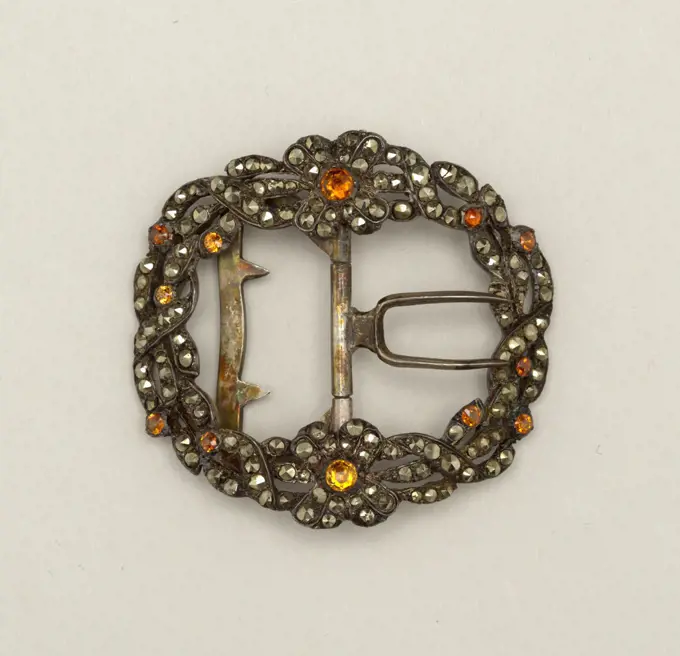
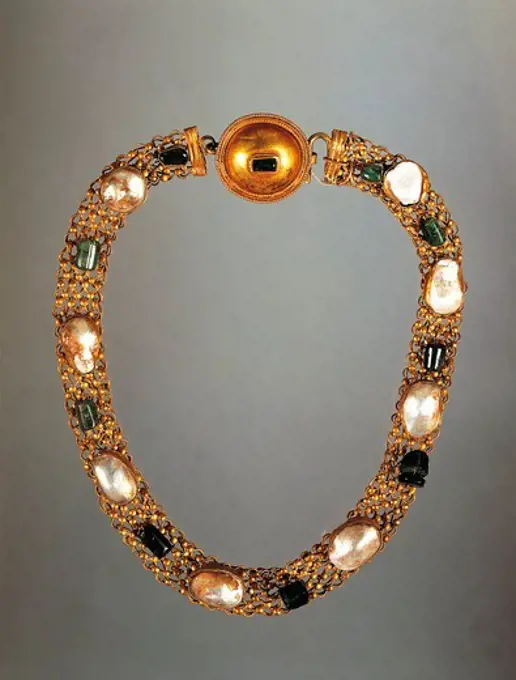
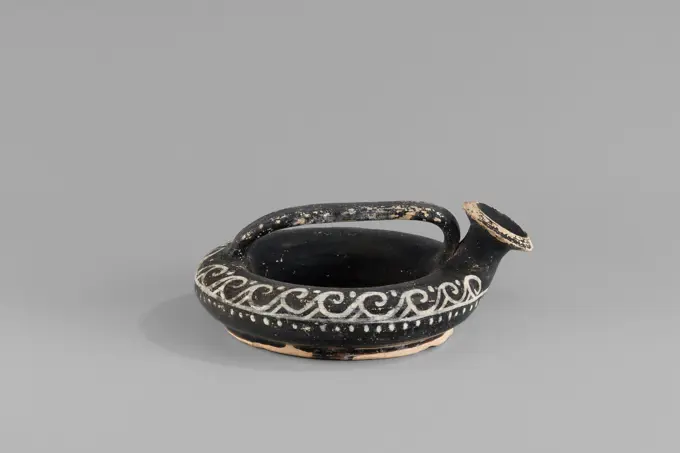
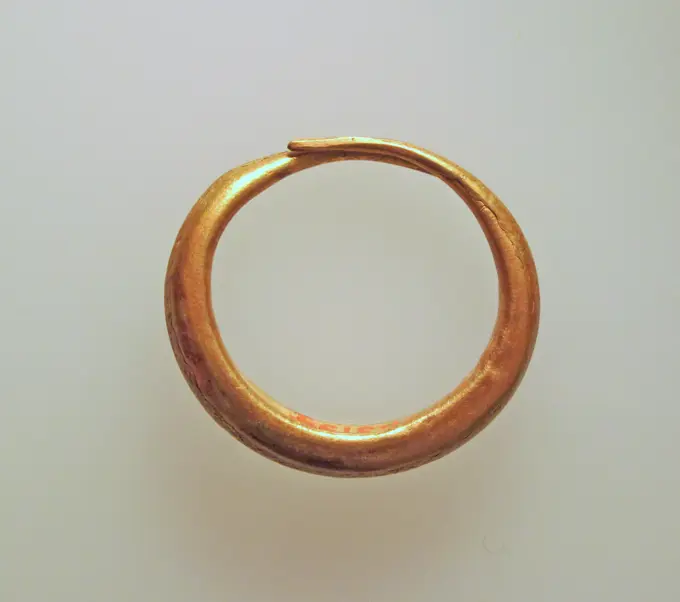
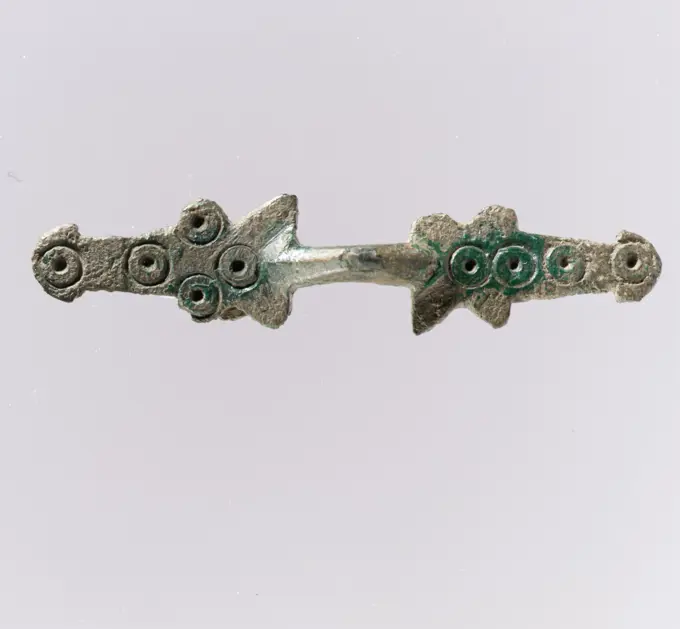
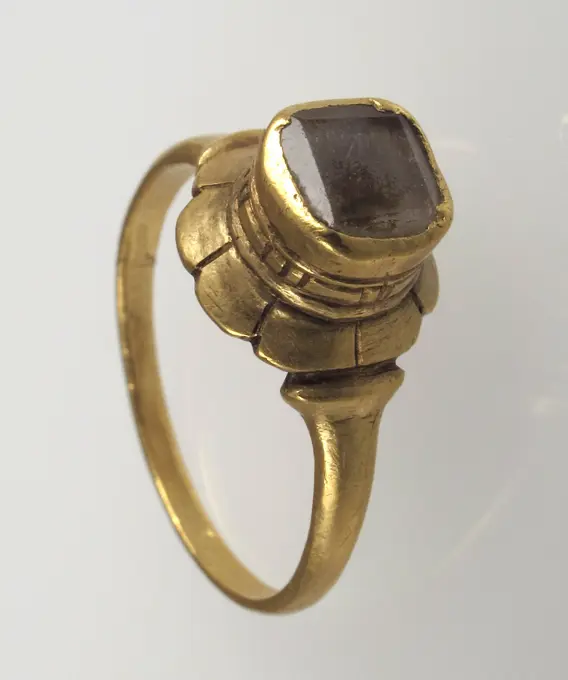
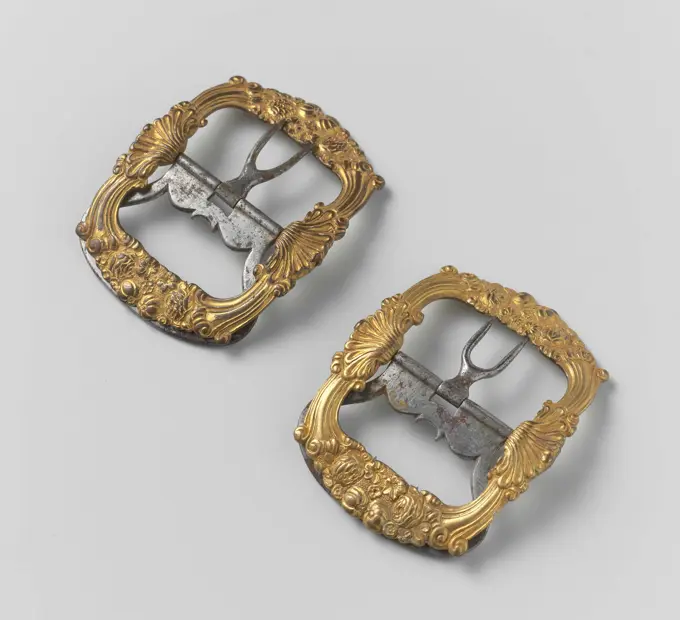
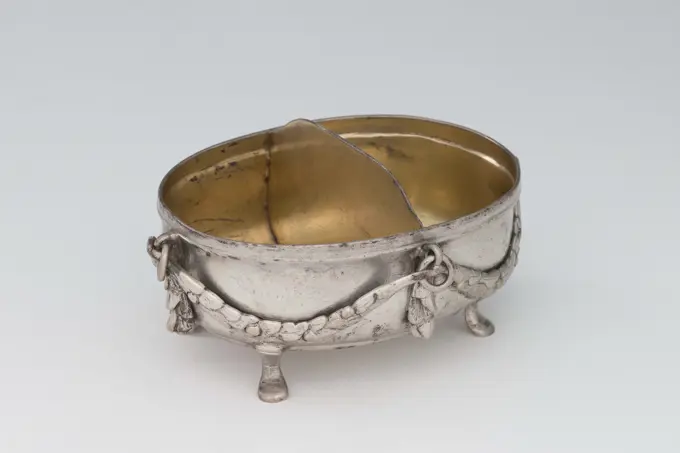
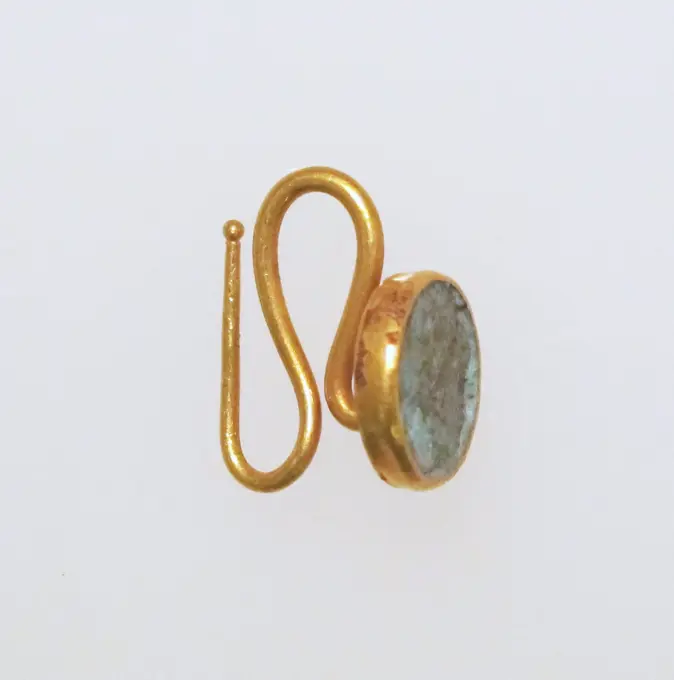
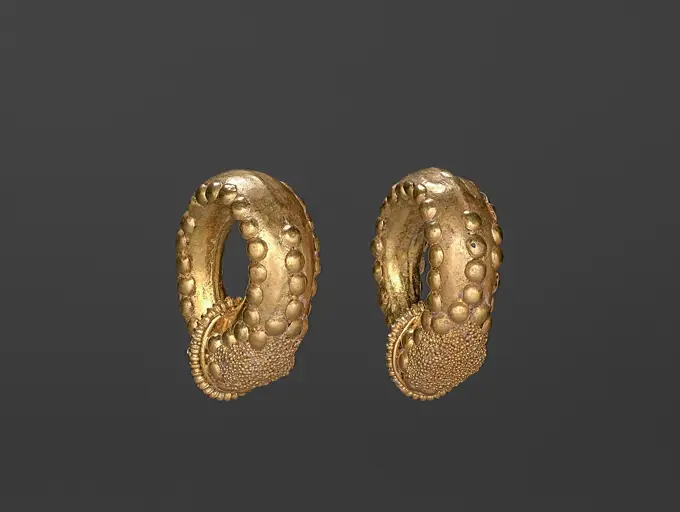
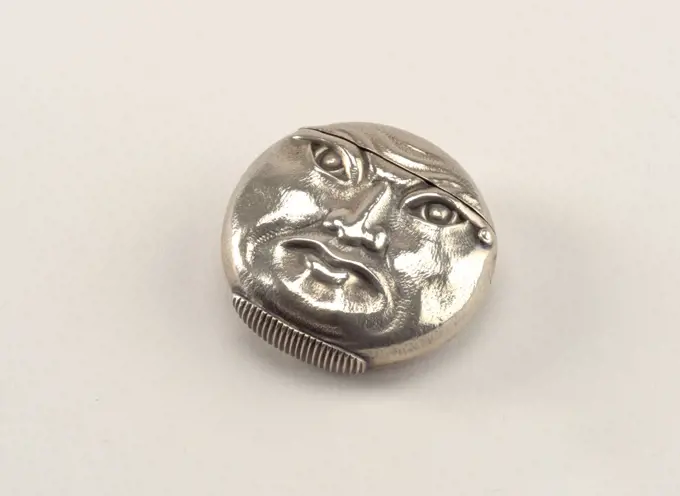
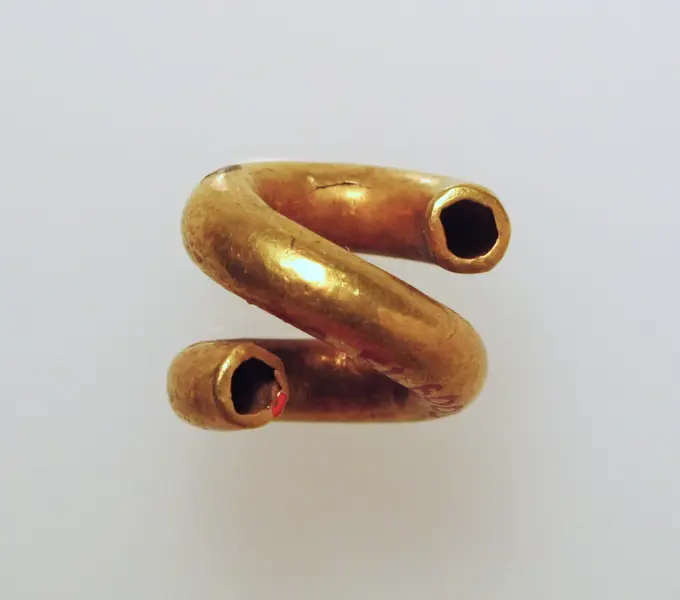
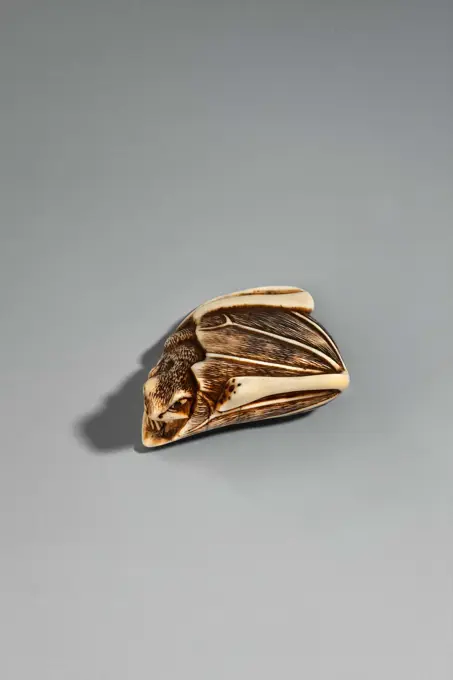
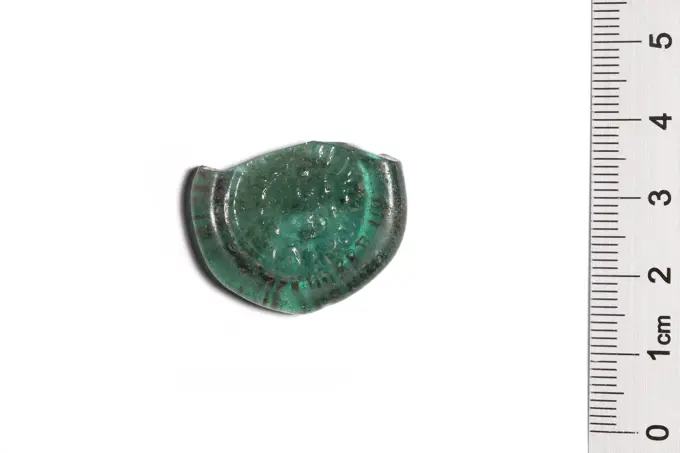
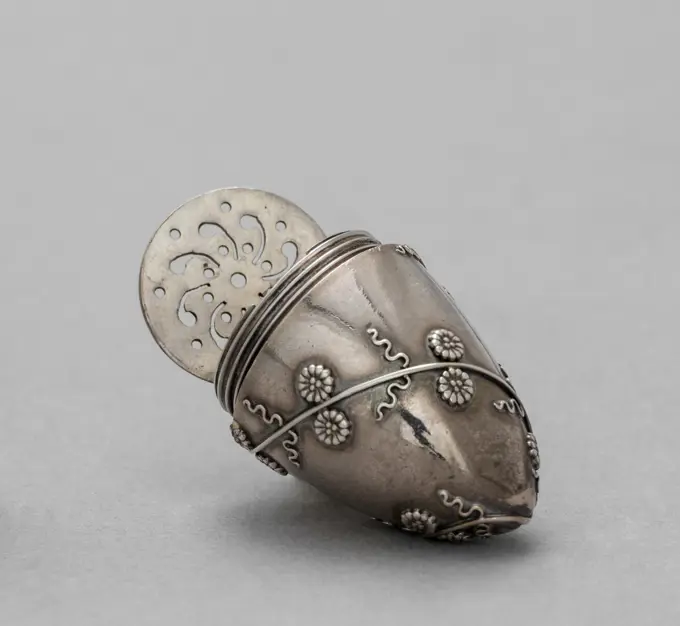
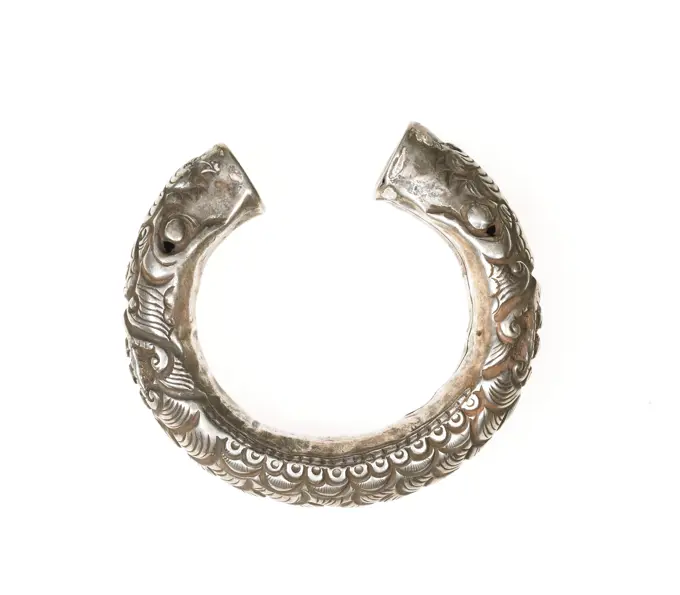
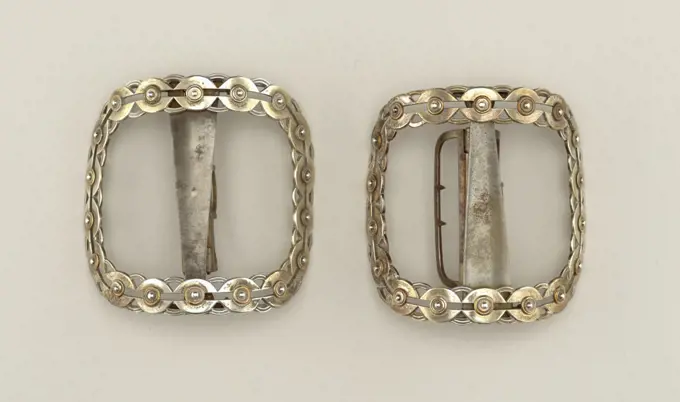
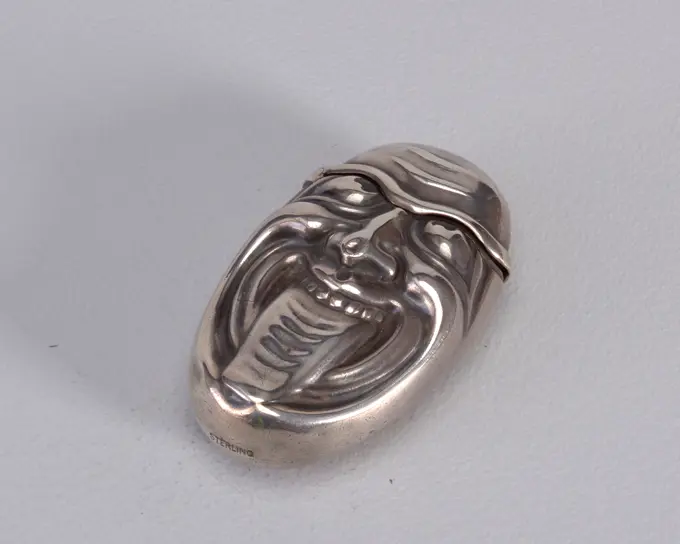
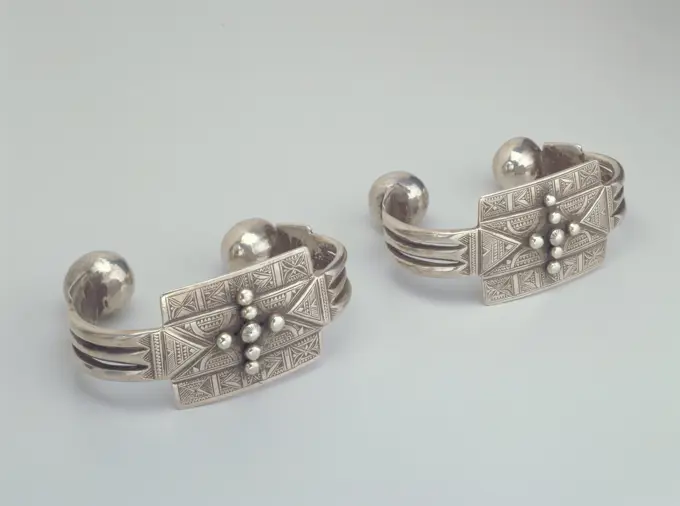
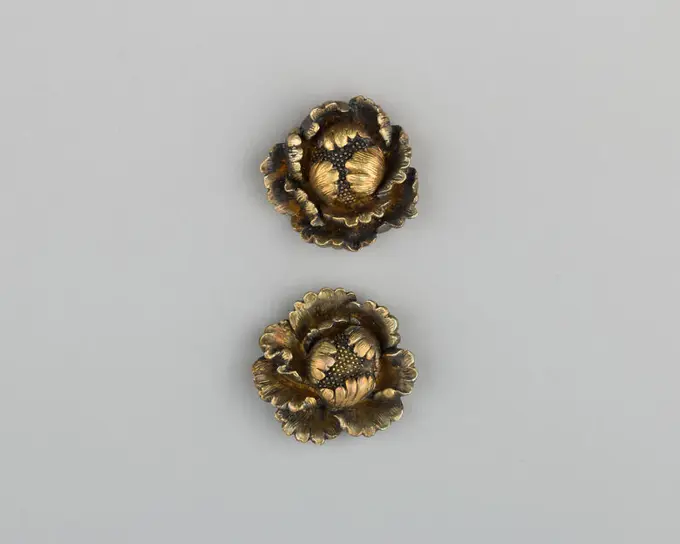
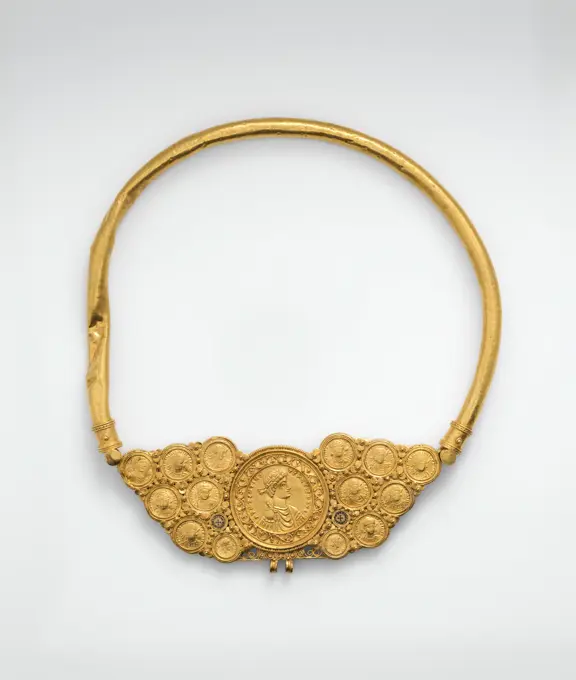
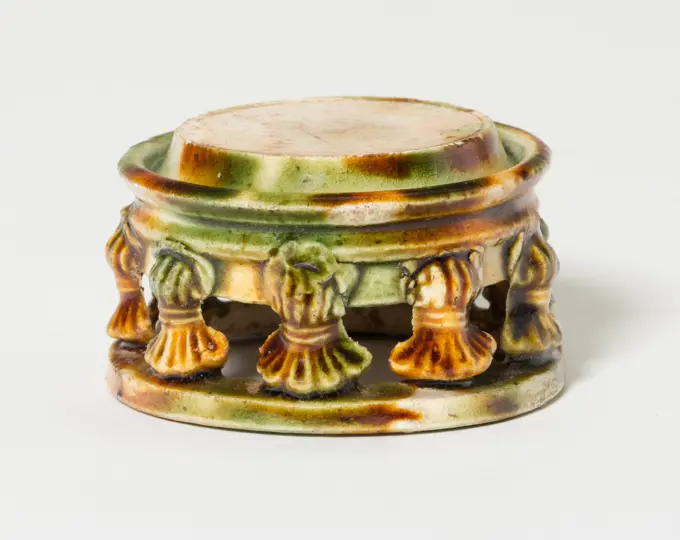
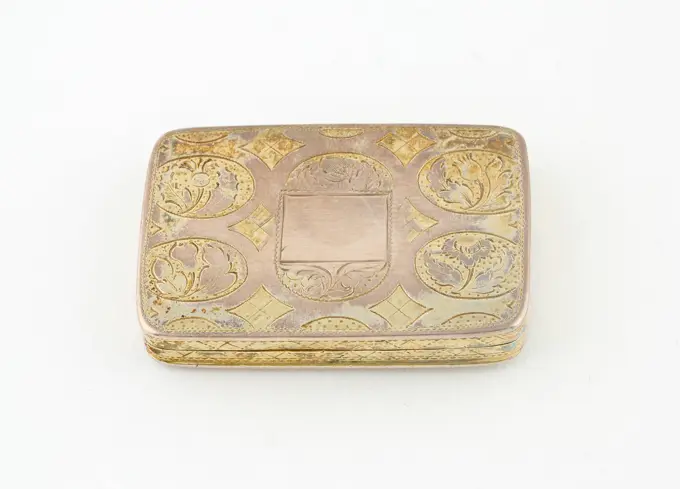
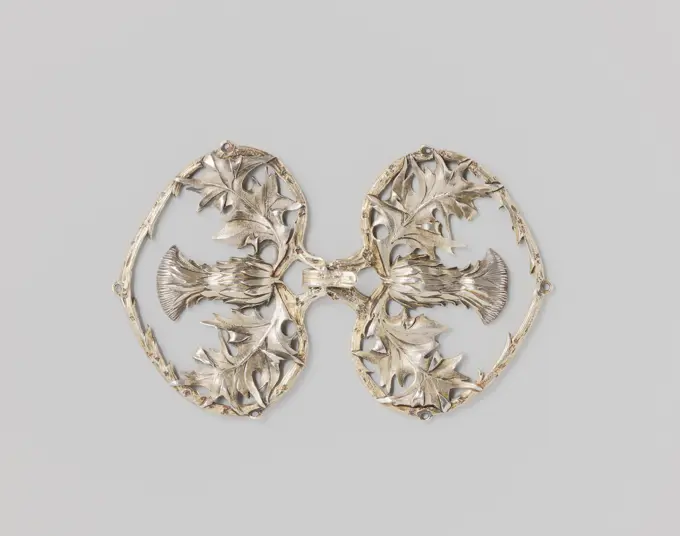
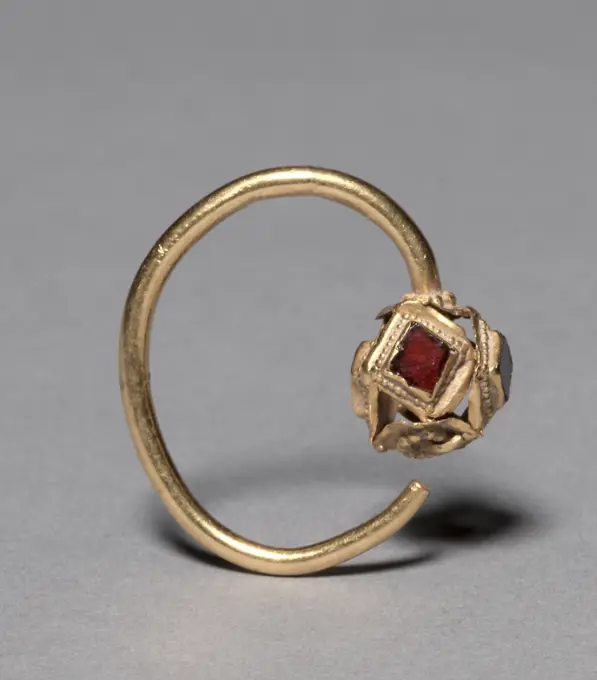
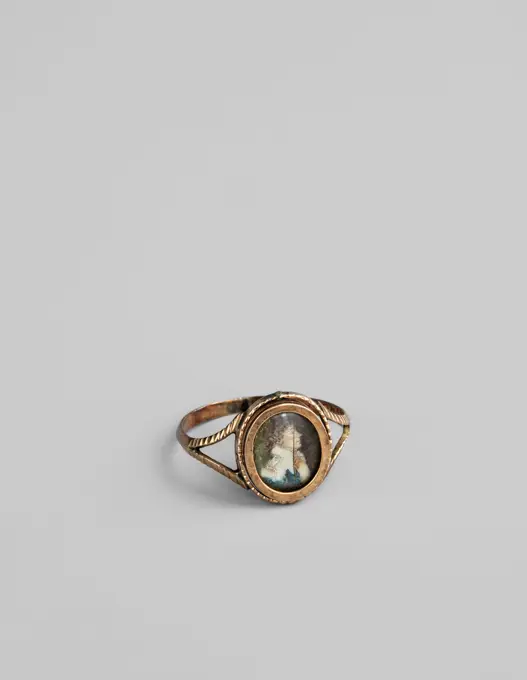
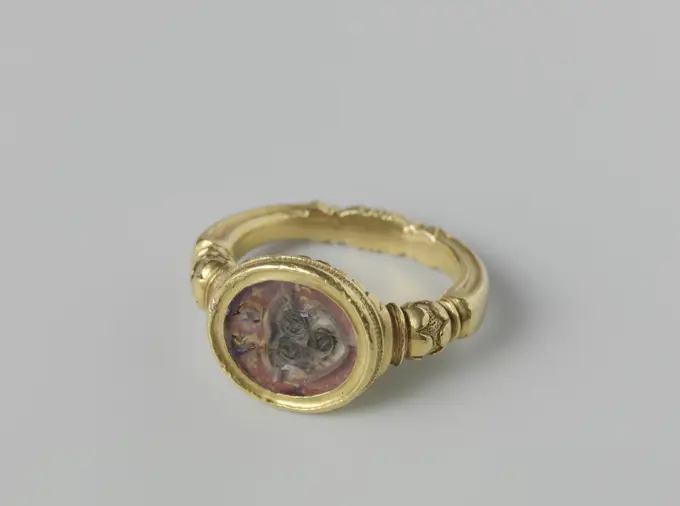
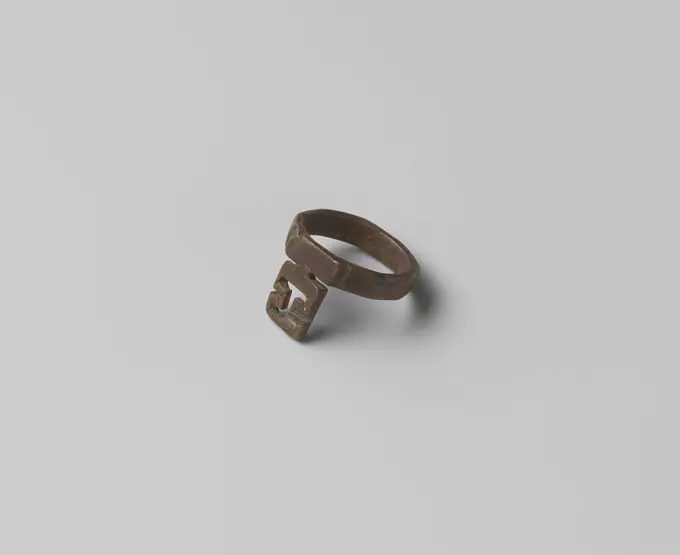
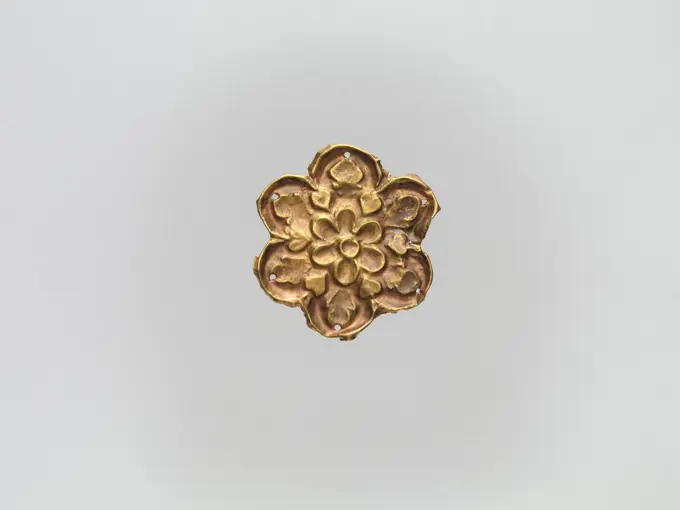
Goldsmith's art, 19th century. Gold, enamel and cushion-cut diamonds bracelet with central separable brooch.Gold earring with head of a goat 4th-3rd century B.C. Greek. Gold earring with head of a goat 242841Filigree Box Korea. Filigree Box. Korea. Silver. Goryeo dynasty (918-1392). MetalworkStirrup 15th-18th century Tibetan The form of this stirrup, with its peaked arch and rounded bottom corners, is distinctively Tibetan, as opposed to the more typical styles that were derived from Mongolia and China. The design damasened in silver in the center of the pierced tread represents the Wheel of Law, a symbol frequently found on Tibetan objects.. Stirrup 26630Bottle, Rock crystal, gold, Perfume bottle/scent container composed of a cage-like foil made up of scrolls and plant forms over a crystal bottle., England, ca. 1750, containers, Decorative Arts, BottleGold earring with pearl setting and pendant Roman. Gold earring with pearl setting and pendant 243227Ear Ornament Second half of the 8th-second half of the 10th century Indonesia (Java). Ear Ornament 49997Ear Ornament second half of the 8th-second half of the 10th century Indonesia (Java). Ear Ornament. Indonesia (Java). second half of the 8th-second half of the 10th century. Gold. Central Javanese period. JewelryEarring, delta-shaped. Earring, delta-shaped. Gold. Gold and SilverEarring with plain loop and disc. Earring with plain loop and disc 243145Earring with plain loop and disc. Earring with plain loop and disc 243122Bead Middle Kingdom ca. 1981-1640 B.C.  View more. Bead. ca. 1981-1640 B.C. . Faience. Middle Kingdom. From Egypt, Memphite Region, Lisht North, Cemetery, MMA excavations, 1920-22. Dynasty 12-13Saltcellar, Glazed earthenware (creamware), Hexagonal, on three paw feet. Molded profile, band of leaves about edge, hemispherical basin., England, ca. 1760, ceramics, Decorative Arts, SaltcellarClose up of watch detail. Close up of watch detail. Isolated on a white background. Copyright: xZoonar.com/OlegxBegunenkox 5800345Dish (Germany); Manufactured by Villeroy and Boch (Germany); glazed earthenware, metal; 1.8h x 13.3 diameter cm (11/16 x 5 1/4 in. )Bracelet. Culture: East Germanic. Dimensions: Overall: 2 9/16 x 2 5/16 x 15/16 in. (6.5 x 5.8 x 2.4 cm)knop: 15/16 x 1 1/4 in. (2.4 x 3.1 cm). Date: 7th century. Museum: Metropolitan Museum of Art, New York, USA.Knob, Versailles, France, ca. 1745, metalwork, Decorative Arts, KnobJewellery ring isolated on the black backgroundCONTUPUREPP, KARL JOHHANN FRIENCY, 1912 The buckle consists of two parts, each formed as a trapezoid with a rounded top end. In a wide rounded edge, a symmetrically opened pattern of an abstracted tree with berries has been applied. The closing needle is invested with a wide golden strip, decorated on either side with a ribbed edge. Seven cassets for Cabochon were soldered on the closing needle, which are supervised by balls on the corners. München silver (metal). gold (metal). The buckle consists of two parts, each formed as a trapezoid with a rounded top end. In a wide rounded edge, a symmetrically opened pattern of an abstracted tree with berries has been applied. The closing needle is invested with a wide golden strip, decorated on either side with a ribbed edge. Seven cassets for Cabochon were soldered on the closing needle, which are supervised by balls on the corners. München silver (metal). gold (metal).BumpPrick Spur 11th Century Swiss, Solothurn The prick spur was the first type of spur to be invented, and it consists of a goad or prick, more or less pointed, connected to side arms or a heel plate. The earliest spurs were probably simple thorns attached at the back of the heel, before they started to be made out of metal in antiquity. Prick spurs were the main type of spurs used in the Middle Ages until the mid-14th century, when they were supplanted by rowel spurs, which appeared in Europe a century before and with which they had cohabitated for a time. As a knights status was closely related to his horse, spurs became one of the symbols of chivalry, and one of the tokens given to him during his knighting.. Prick Spur. Swiss, Solothurn. 11th Century. Iron alloy, copper alloy. Solothurn. Equestrian Equipment-SpursUpholstery Trimming (USA); silk, copper stripsBrooch, Hair (human), gold, silver, metal, USA, ca. 1850-60, jewelry, Decorative Arts, BroochBuckle, Steel, yellow rose-cut pyrites, Buckle with frame in design of flowers and twisted lines in cut steel with yellow rose-cut pyrites; prings and fastener of steel., France, 19th century, jewelry, Decorative Arts, BuckleSugar tongs. Culture: American. Dimensions: 15/16 x 5 1/4 in. (2.4 x 13.3 cm); 1 oz. 8 dwt. (43.1 g). Maker: Attributed to Myer Myers (1723-1795). Date: ca. 1772. Museum: Metropolitan Museum of Art, New York, USA.Badge or Harness Pendant late 14th century Spanish Heraldry, or coat-of-arms, were vitally important in Europe throughout the Middle Ages and the Renaissance. Heraldic emblems were used to identify noble families, cities, regions, and even countries. In addition to being displayed on shields and flags, heraldry was incorporated into architectural decoration on the interior and the exterior of buildings, on furniture, works of art, clothing, and horse equipment. Harness pendants, like this example, would have been attached to a headstall, bridle, or other straps making up the tack of a horse ridden by a nobleman or noblewoman, or a member of their household. Many harness pendants also have decoration that is simply ornamental, or have symbols that are not specifically heraldic in nature.. Badge or Harness Pendant. Spanish. late 14th century. Copper, gold, enamel. Miscellaneous-BadgesRoman civilization, gold, emeralds and semi precious stones necklaceAskos pierścieniowaty dekorowany motywem fali. unknown, authorEarring of simple form Cypriot. Earring of simple form. Cypriot. Gold. Gold and SilverEqual-Arm Brooch 7th-8th century Frankish. Equal-Arm Brooch 464939 Frankish, Equal-Arm Brooch, 7th8th century, Copper alloy, Overall: 2 1/4 x 7/16 x 1/2 in. (5.7 x 1.1 x 1.3 cm). The Metropolitan Museum of Art, New York. Gift of J. Pierpont Morgan, 1917 (17.191.236)Circular Ear Ornament Second half of the 8th-second half of the 10th century Indonesia (Java). Circular Ear Ornament 50080Finger Ring 6th-11th century Frankish. Finger Ring 465282 Frankish, Finger Ring, 6th11th century, Gold, glass paste, Overall: 7/8 x 11/16 x 3/8 in. (2.3 x 1.8 x 0.9 cm) bezel: 1/4 x 1/8 in. (0.6 x 0.3 cm). The Metropolitan Museum of Art, New York. Gift of J. Pierpont Morgan, 1917 (17.192.216)Chatelaine 1775-1799 Burslem. Stoneware (jasperware) and steel . Wedgwood Manufactory (Manufacturer)Gold earring with pendant 2nd century A.D. Roman. Gold earring with pendant 243186. Gold-plated shoe pose from copper (), With shellfish and relieving relief. Rococco. Rectangular and curved model, rounded corners. From slippery and thickened for the spindle. Under buckle: single, U-shape eye of steel with two sharp points and a battery drawer shaped part at the spindle, which is blindly attached in the decorative edge. Loose, hinged yoke-shaped tongue (or point) With sharp points. England or France The shoe closes on the rubbed with two covered leather slippers, the other through the top edge. Forms a couple with BK-1978-407-b.Ring, anonymous, c. 1650 - c. 1690 Ring of gilded silver with rose -cut diamonds. The whole in the form of a bow.  silver (metal). diamond (mineral). gold (metal) gilding Ring of gilded silver with rose -cut diamonds. The whole in the form of a bow.  silver (metal). diamond (mineral). gold (metal) gildingPommel in the shape of coiled animals ca. 3rd-1st century B.C. Sarmatian. Pommel in the shape of coiled animals 327425Salt shaker. Bandau, Johann Georg I (fl. 1768-1816), goldsmithThai Bowl on on white background.Pull - Rosettes (1 Of 2) (Spain); ironPair of Ear ornaments, Ruby and Crystal 8th-12th century Indonesia (Central Java). Pair of Ear ornaments, Ruby and Crystal. Indonesia (Central Java). 8th-12th century. Gold. JewelryBlue Gemstone EarOrnamentEarring-hook type with disc and paste setting. Earring-hook type with disc and paste setting 243392Pair of Earrings, 300s BC. Italy, Etruscan, 4th century BC. Gold; overall: 1.4 x 1.7 cm (9/16 x 11/16 in.).Torque, 11 x 10 1/2 x 1 1/4 in. (27.94 x 26.67 x 3.18 cm), Silver, ChinaMoon Face, George W. Shiebler & Co., American, 1876 - 1910, Silver, Circular, featuring a full moon face on front, reverse features a bat flying among cloud formations. Lid hinged on upper side. Lozenge shaped striker on bottom., 1885-95, containers, Decorative Arts, Matchsafe, MatchsafeEarring with plain loop and disc. Earring with plain loop and disc 243146Granite and Silver Brooch or Pendant,  19th CenturyGold and copper alloy spiral 5th century B.C. Cypriot Worn in the upper lobe of the ear.. Gold and copper alloy spiral 242790Frog under a lotus leaf; nestuke. unknown, sculptorWatch ca. 1630 Watchmaker: Richard Masterson. Watch. British, London. ca. 1630. Silver, gilded brass, steel. HorologyGolden shoe spacer (), In relief decorated with shell and fruits, anonymous, c. 1770 Golden shoe spacer (), With shell and lighting in relief. Rococco. Rectangular and curved model, rounded corners. From under smooth and thickened for the pivot. Under buckle: single, U-shape eye of steel with two sharp points and an acculation-shaped part in the pivot, which is blindly attached in the decorative edge. Loose, hinged gaffel -shaped tongue (or point) With sharp points. England or France The shoe closes on the instep with two overlapping leather slips, the other through the upper edge. Forms a few with BK-1978-407-A. England (possibly) whole: copper (metal). whole: Gilding (Material) gilding Golden shoe spacer (), With shell and lighting in relief. Rococco. Rectangular and curved model, rounded corners. From under smooth and thickened for the pivot. Under buckle: single, U-shape eye of steel with two sharp points and an acculation-shaped part in the pivot, which is blindly attached in the orange carnival mask light tableWeight. unknown, craftsmanBracelet, One of a Pair. Dimensions: 2-3/4inches. Date: 18th century. Museum: Metropolitan Museum of Art, New York, USA.Stirrup-shaped Ring with Rectangular Bezel with "Sri" Second half of the 9th-first quarter of the 10th century Indonesia (Java). Stirrup-shaped Ring with Rectangular Bezel with "Sri". Indonesia (Java). Second half of the 9th-first quarter of the 10th century. Gold. late Central Javanese period. JewelryContainer for Smelling Salts, c. 1860-70. Tiffany & Co. (American, New York, est. 1837). Silver; overall: 8 x 7.9 x 2.5 cm (3 1/8 x 3 1/8 x 1 in.).Fragment of shoulder and neck of a jug from Persia, Anonymous, c. 1500 - c. 1600 Fragment of shoulder and neck of a jug. Gray -yellow earth species. On turquoise blue soil there is a drawing of rushed courses, circles and rosettes in green -like metal gloss. Persia. Fragment found in Cairo. In two pieces. Persia earthenware Fragment of shoulder and neck of a jug. Gray -yellow earth species. On turquoise blue soil there is a drawing of rushed courses, circles and rosettes in green -like metal gloss. Persia. Fragment found in Cairo. In two pieces. Persia earthenwareFinger Guard 1500-1600 Europe. Iron .Bracelet, one of a pair, 4 x 3 3/4 x 1 in. (10.16 x 9.53 x 2.54 cm), Silver, ChinaShoe buckles, Silver, iron, England, ca. 1790, jewelry, Decorative Arts, Shoe bucklesFace with Extended Tongue Matchsafe; USA; silver; 6.5 x 3.8 x 1.8 cm (2 9/16 x 1 1/2 x 11/16 in. )Bracelet, one of a pair, 3 5/16 x 3 1/2 x 3/4 in. (8.41 x 8.89 x 1.91 cm), Silver, ChinaKnob; 1904-21-79Anklet, one of a pair, 20th century, 3 1/2 x 3 15/16 x 1 3/4 in. (8.89 x 10 x 4.45 cm), Silver, Morocco, 20th centuryRingRosetteBroche, obra de Alfons Serrahima i Bofill, siglo XX. Colección privada.Glass mosaic fragment late 1st century B.C.-early 1st century A.D. Roman Translucent honey yellow with greenish tinge, opaque white, yellow, and pale blue.Almost flat with rough underside.Meander pattern on honey yellow ground formed with layers in white, yellow and blue on upper surface; small, oval ground facet on upper surface.Polished exterior; pitting of surface bubbles and weathering of facet on upper side; dulling, pitting, and creamy weathering on underside.. Glass mosaic fragment 257297Paperweight. Baccarat; France, founded 1764. Date: 1825-1850. Dimensions: Diam. 8 cm (3 1/8 in.). Glass. Origin: Baccarat. Museum: The Chicago Art Institute, Chicago, USA. Author: Baccarat Glassworks.Gold earring with head of a bull 4th-3rd century B.C. Greek. Gold earring with head of a bull 242892BumpGold hook type earring with discs in filigree. Gold hook type earring with discs in filigree 243429Pair of Sword-Grip Ornaments (Menuki). Culture: Japanese. Dimensions: Menuki (a); Diam. 13/16 in. (2.1 cm); Wt. 0.4 oz. (11.3 g); menuki (b); Diam. 13/16 in. (2.1 cm); Wt. 0.3 oz. (8.5 g). Date: 18th century. Museum: Metropolitan Museum of Art, New York, USA.Ear Clip with Granulate and Knotted Wire Design Second half of the 8th-second half of the 10th century Indonesia (Java). Ear Clip with Granulate and Knotted Wire Design 50004golden oval frame isolated on white background. golden framePair of Ear Plugs, 1 1/4 x 1 1/4 x 1 1/4 in. (3.18 x 3.18 x 3.18 cm) (a)1 3/8 x 1 1/4 x 1 1/4 in. (3.49 x 3.18 x 3.18 cm) (b), Silver, ChinaPectoral with Coins and Pseudo-Medallion ca. 539-50 Byzantine Neck rings, such as this imposing gold example, are cited in early sources as playing a role both in the glorification of military heroes and in coronation ceremonies. This pectoral necklace is composed of a plain, hollow neck ring attached to a frame set with a large central medallion flanked by coins and two small decorative disks. Although it was found in Egypt, the pectoral is believed to have been made in Constantinople, since a personification of that city is depicted on the reverse of the central medallion. The front of the medallion and the smaller coins depict Byzantine emperors. The two ribbed rings at the pectoral's lower edge once held a large medallion of the emperor Theodosius I. This imperial imagery suggests that the pectoral is composed of a collection of military trophies that once belonged to a distinguished general or a member of the imperial court. Listen to experts illuminate this artwork's story ListenModel of an Inkstone 618 CE-907 CE China. Earthenware with three-color (sancai) lead glazes .Goldsmith's art, 18th century. George III period silver and gold jewel set with diamonds, that could be worn as pendant or brooch.Vinaigrette 1807-1818 Birmingham. Silver and silver gilt .Handle of a bowl Cypriot. Handle of a bowl 244333Printing Block (USA); wood, copper, brass; 1941-87-1-sThimble-Shaped Vinaigrette 1835-1845 England. Silver and silver gilt .Pig, Silver, In the shape of a pig in profile, legs tucked beneath, with curly tail and floppy ears. Link attached on pig's back behind lid hinge. Head and front legs form lid. Striker recessed in bottom., late 19th century, containers, Decorative Arts, Matchsafe, MatchsafeOpenwork necklace. Königlich-Preussische Eisengiesserei in Gleiwitz (Gliwice ; huta żeliwa ; 1798-1945), foundry companyHeavy gold embossed bracelets from the Carambolo Treasure. Seville. 700-600 BC. SPAIN.. Image of cast silver, representing the holy michael with the dragon. From behind 2 protrusions to attach it to an object.Gold belt of Mereret from Dahshur, 1878-1798 b.c.CAPE-SPP IN ORIGINAL PUNE VEVER, FERDINAND ERHART, 1899 The buckle consists of two equal, heart -shaped parts. The continuous edge is made up of thin twigs and decorated in the middle with a thistle button between two leaves. In the lid of the rectangular box is the address Vever, 19 Rue de Paix 19 Paris, Grand Prix Exposition Universelle, 1889. Paris silver (metal) The buckle consists of two equal, heart -shaped parts. The continuous edge is made up of thin twigs and decorated in the middle with a thistle button between two leaves. In the lid of the rectangular box is the address Vever, 19 Rue de Paix 19 Paris, Grand Prix Exposition Universelle, 1889. Paris silver (metal)Earring, 400s. Ostrogothic, Migration period, 5th century. Gold with garnets; overall: 3.5 x 3.4 x 1.2 cm (1 3/8 x 1 5/16 x 1/2 in.).Antique ring and its reflection in the glassRing with Round Bezel and Crystal 8th-12th century Indonesia (Central Java). Ring with Round Bezel and Crystal 64318Ring with a miniature. unknown, jewellerSignet ring with the Van Wijnbergen family arms, anonymous, c. 1535 Sign ring of gold, with the weapon of Wijnbergen, three wheels, painted behind rock crystal. Northern Netherlands gold (metal). Sign ring of gold, with the weapon of Wijnbergen, three wheels, painted behind rock crystal. Northern Netherlands gold (metal).Few overhangers "fly", anonymous, c. 1870 - c. 1890 Compiled earrings of gold occupied with Applique in the form of a fly whose body is set with a around Cabochon sharpened sapphire and a round -faceted sapphire and six round -faceted pastes, with hooks. United Kingdom gold (metal). sapphire (mineral). grinding / faceting Compiled earrings of gold occupied with Applique in the form of a fly whose body is set with a around Cabochon sharpened sapphire and a round -faceted sapphire and six round -faceted pastes, with hooks. United Kingdom gold (metal). sapphire (mineral). grinding / facetingKey. Ring wrench with laster. The ring is nine corner.Ojime 19th century Japan. Ojime. Japan. 19th century. Edo period (1615-1868). OjimePenannular Earring ca. 1550-1425 B.C. Second Intermediate Period-Early New Kingdom. Penannular Earring. ca. 1550-1425 B.C.. Gold. Second Intermediate Period-Early New Kingdom. From Egypt, Upper Egypt, Thebes, Asasif, Carnarvon excavations. Dynasty 17-Early Dynasty 18Flower-Shaped Clothing Plaque 7th-9th century China (Xinjiang Autonomous Region, Central Asia) The nomadic communities of Central Asia used such plaques to embellish clothing and horse trappings. As these nomadic cultures herded animals and were constantly moving, their artistic production was expressed in portable objects that marked the wearers status and wealth. The outstanding preservation of these fragile ornaments suggests they were used in conjunction with burials, where the body was aggrandized with valuable textiles and augmented with gold. Although it is difficult to date and place these objects geographically, their presence in Central Asia and has a long, established history.. Flower-Shaped Clothing Plaque. China (Xinjiang Autonomous Region, Central Asia). 7th-9th century. Gold. Period of Tibetan Empire. Metalwork