Jewelry and Decorative Arts

Fine decorative pieces including intricate goldsmith work, antique jewelry, and scented bottles, showcasing historical craftsmanship and design.

Goldsmith's art, 19th century. Gold, enamel and cushion-cut diamonds bracelet with central separable brooch.
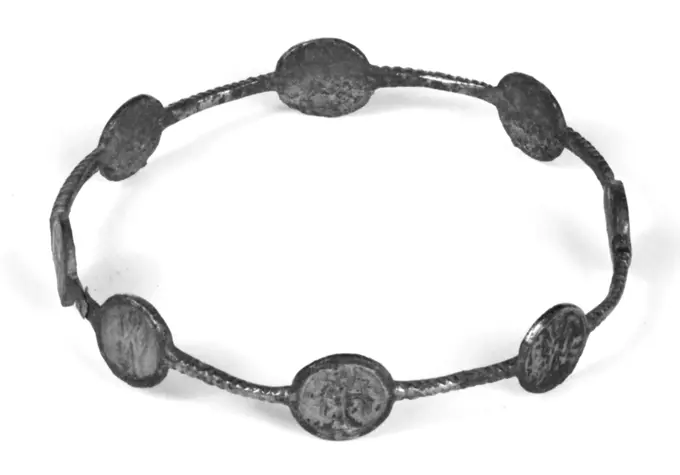
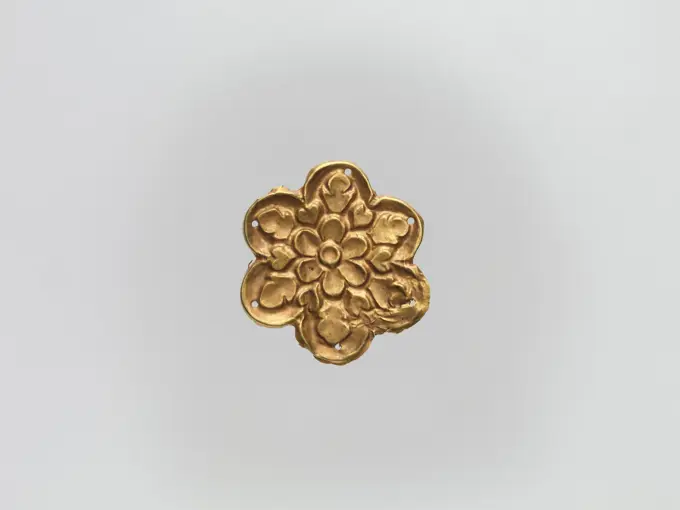
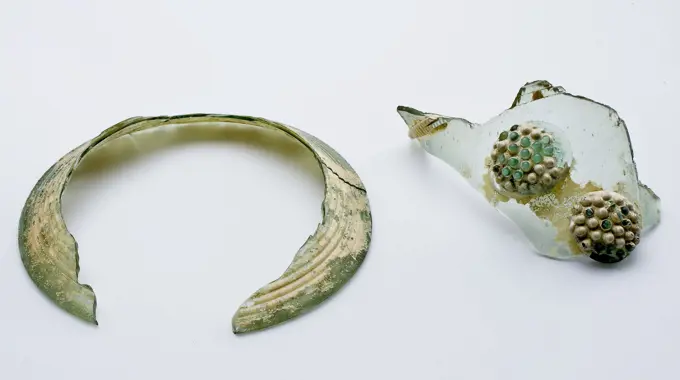
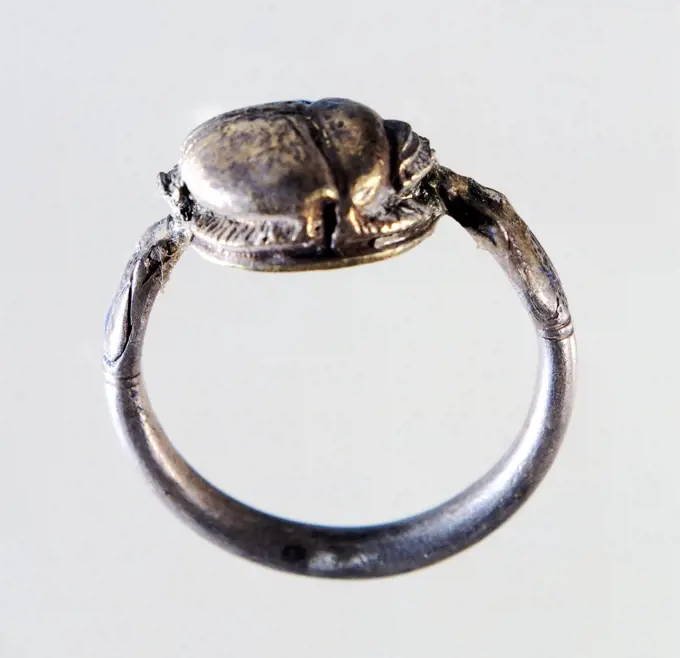
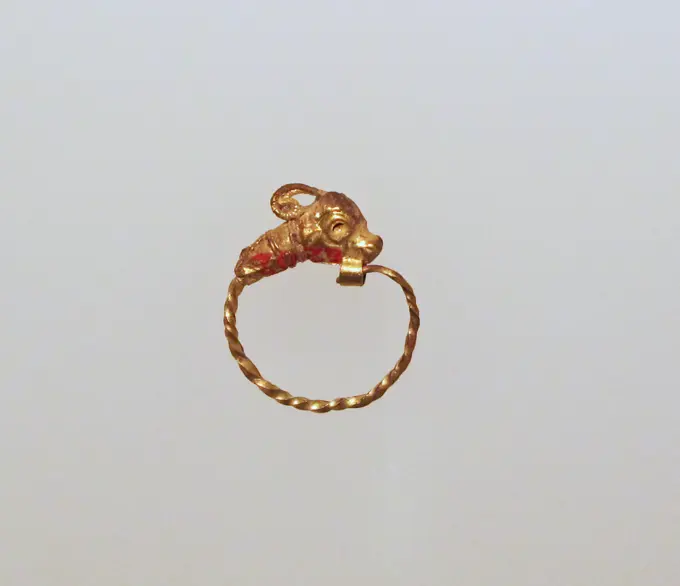
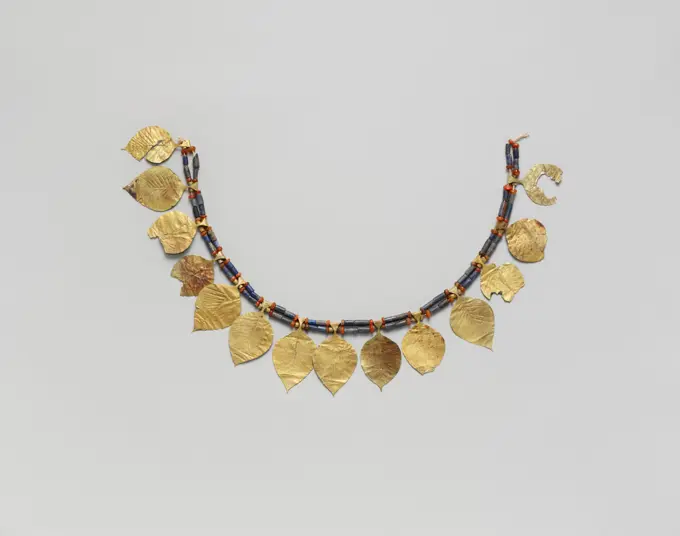
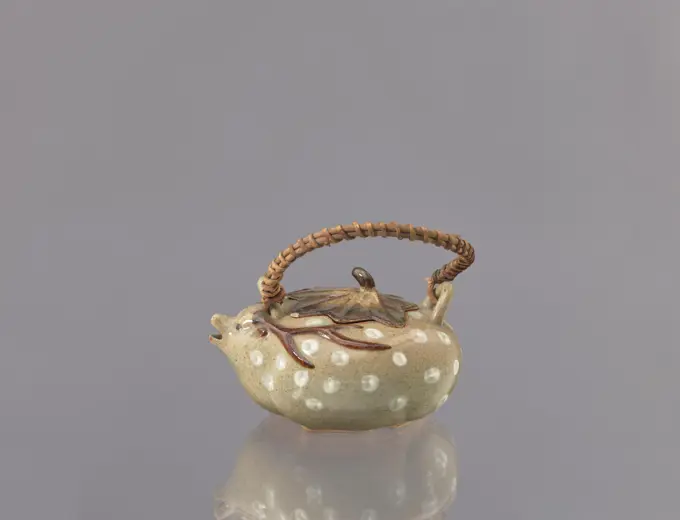
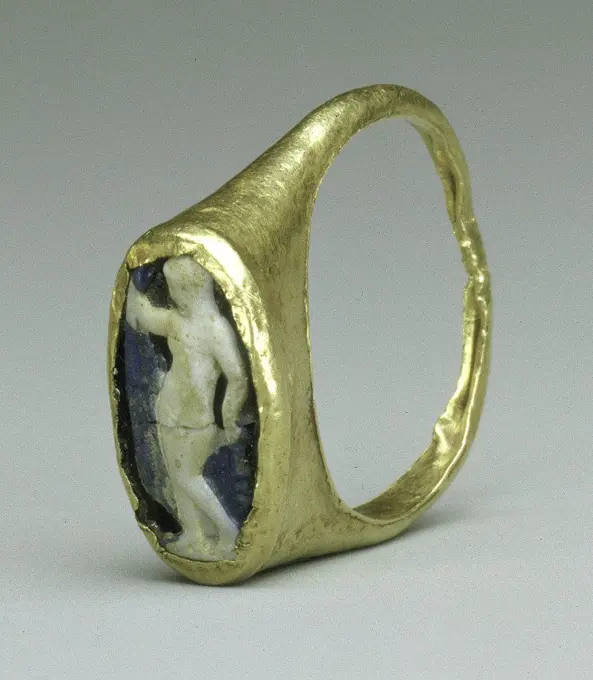
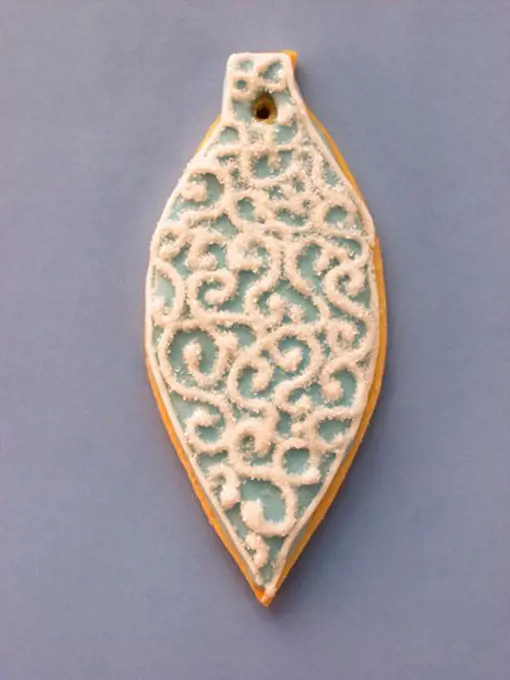
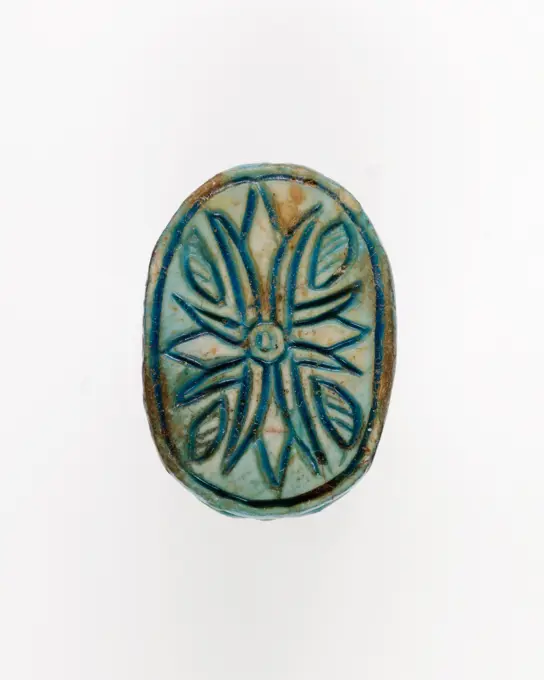
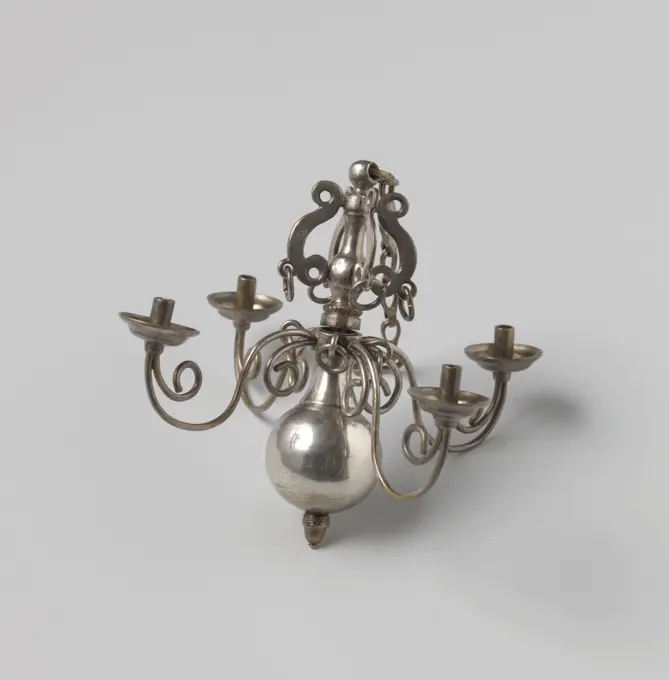
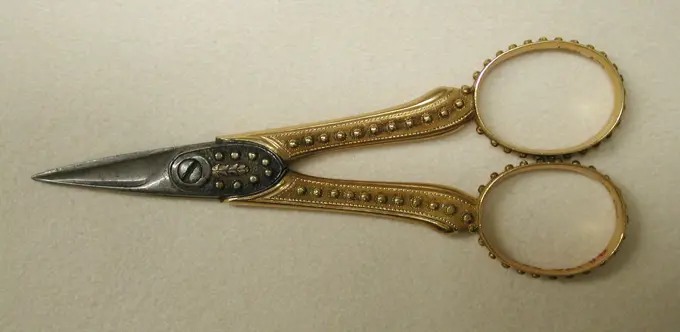
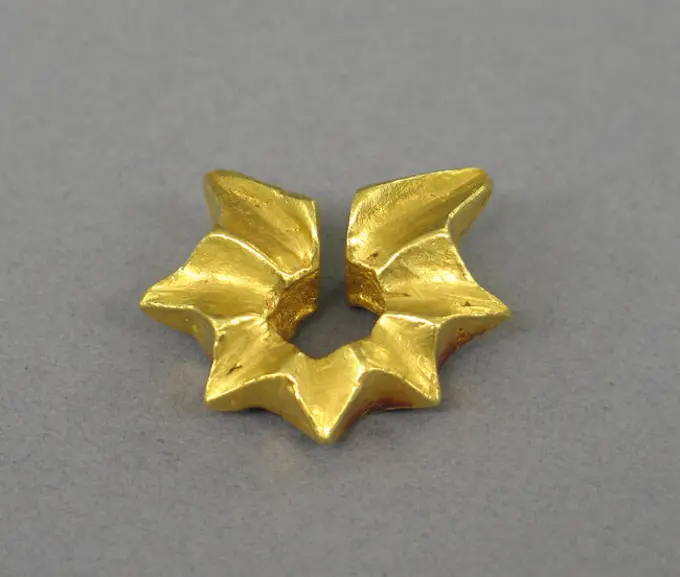
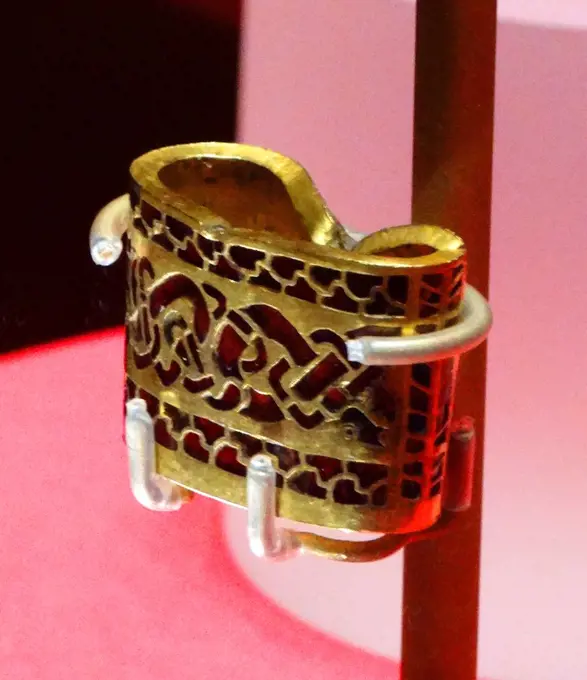
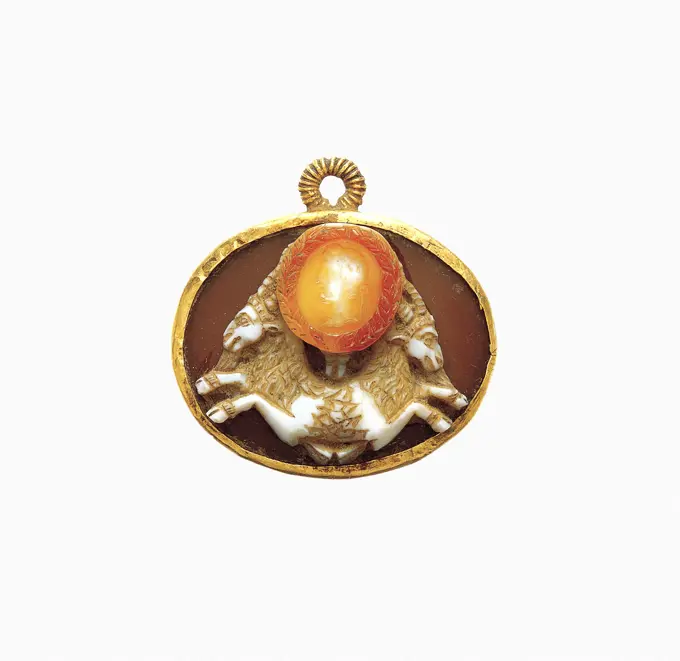
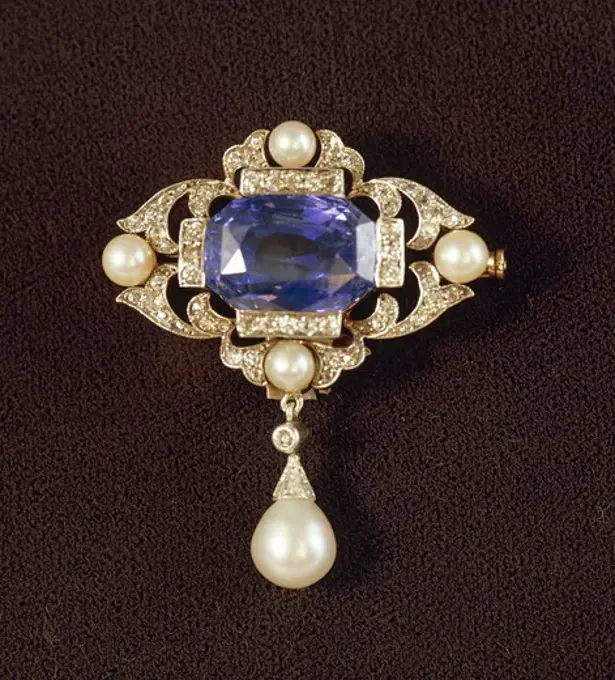
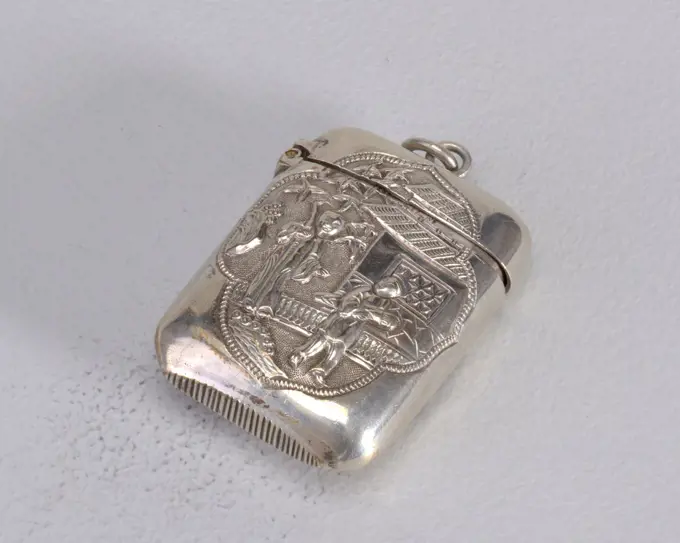
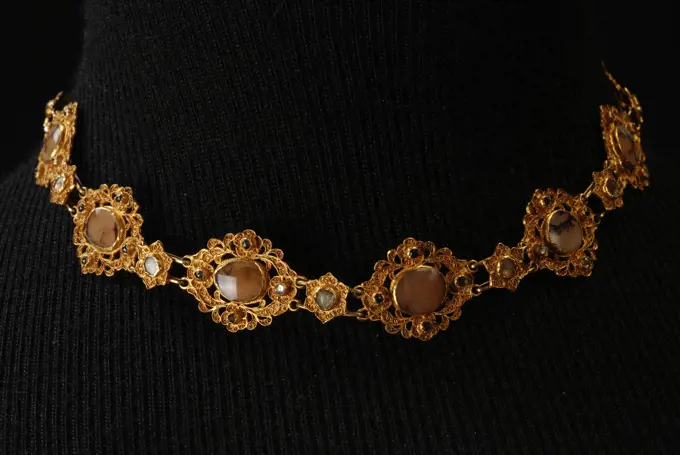
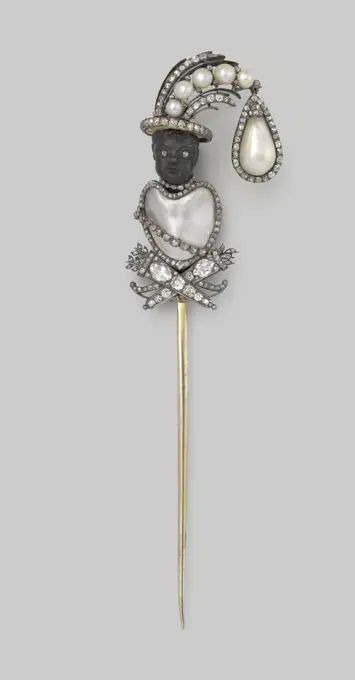
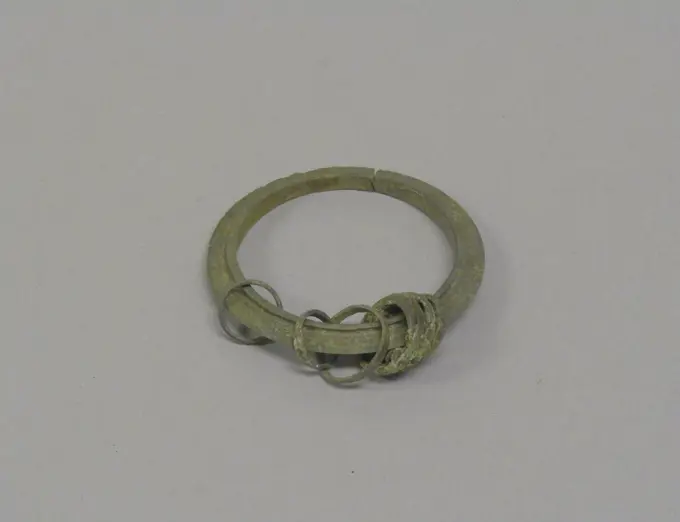
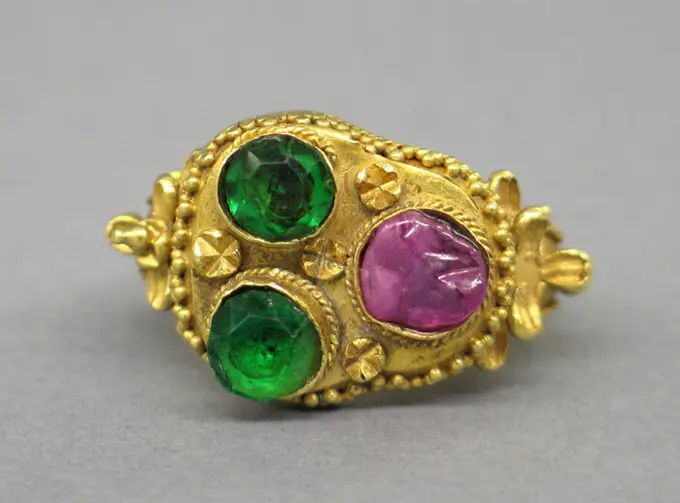
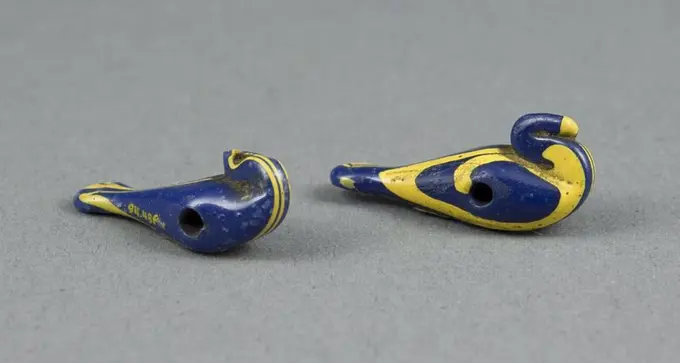
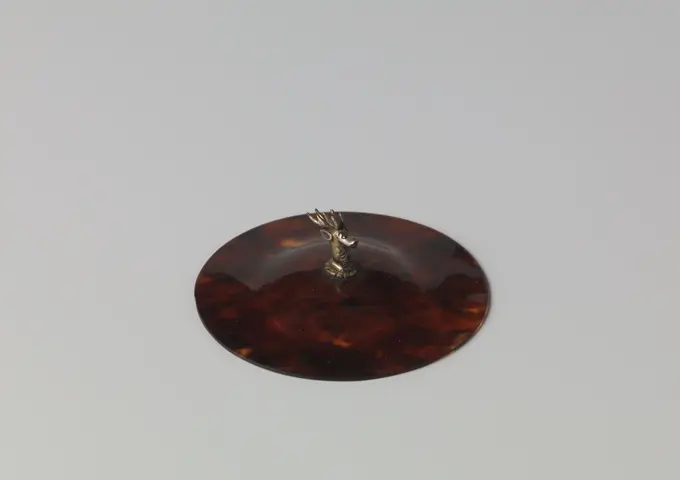
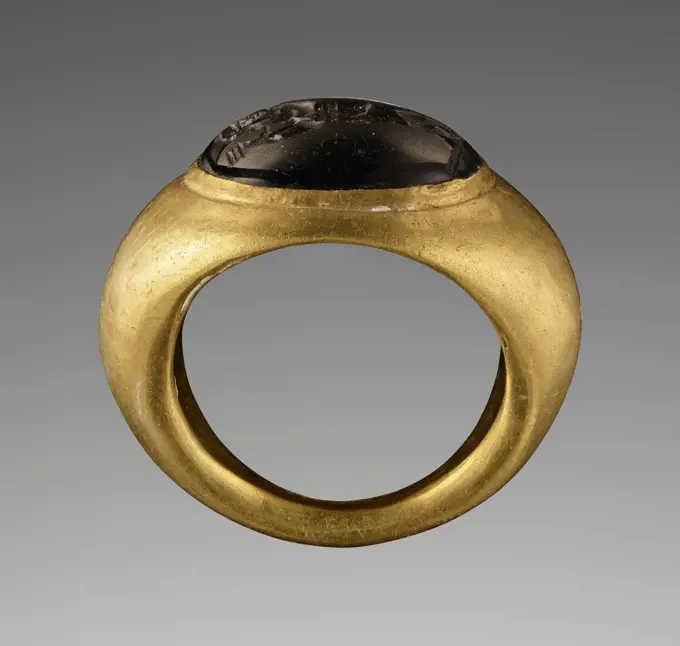
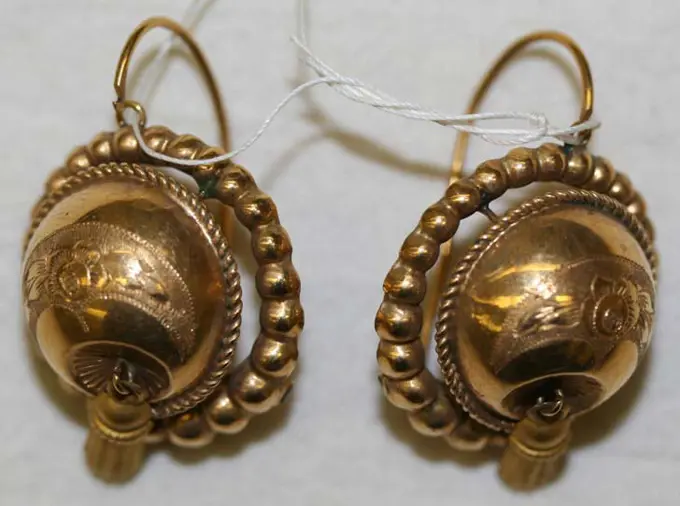
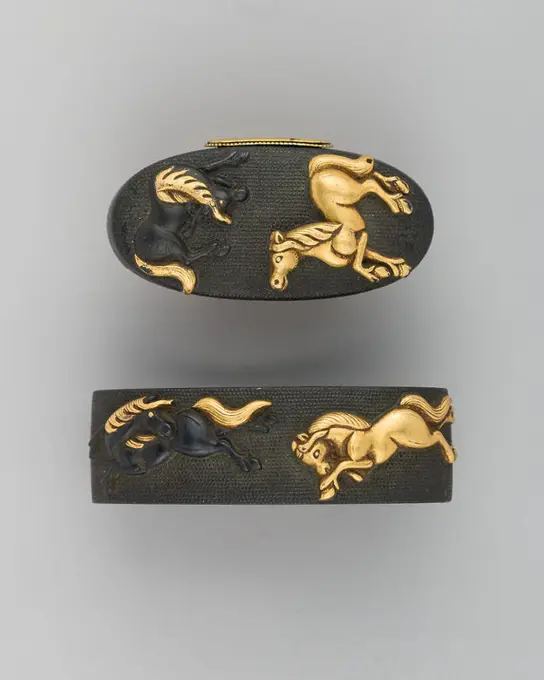
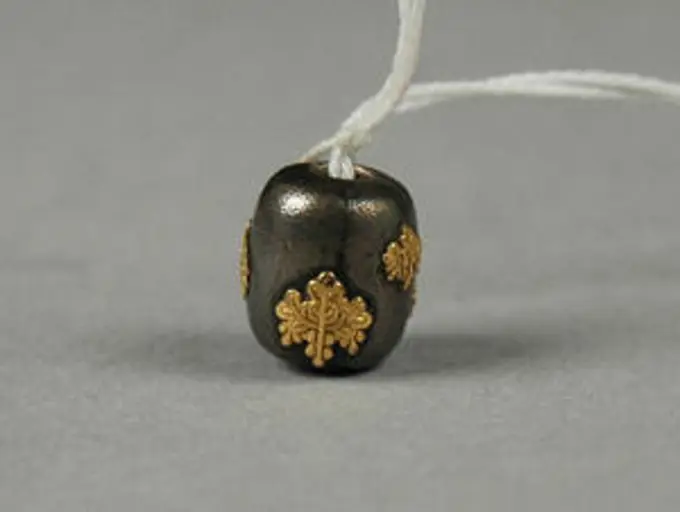
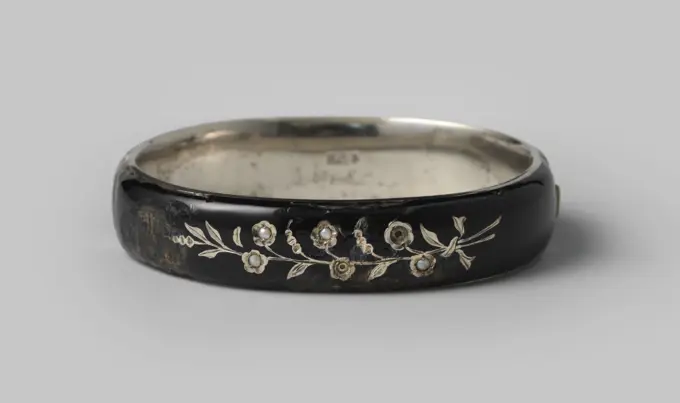
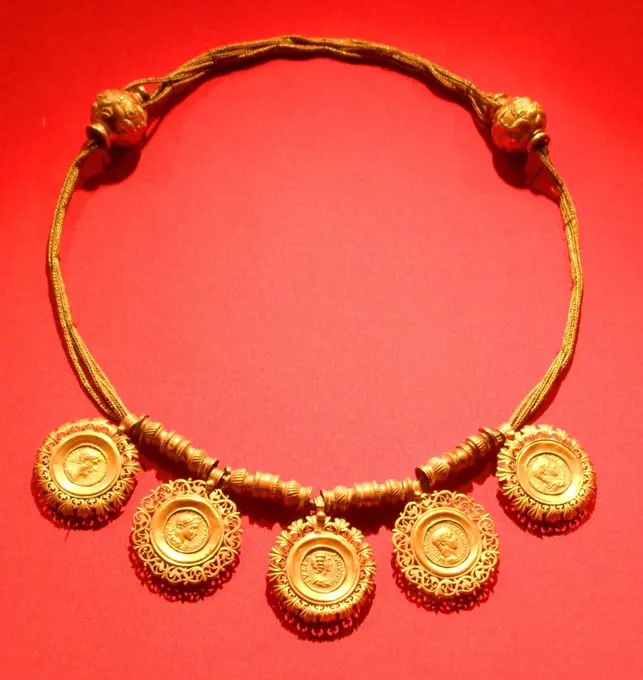
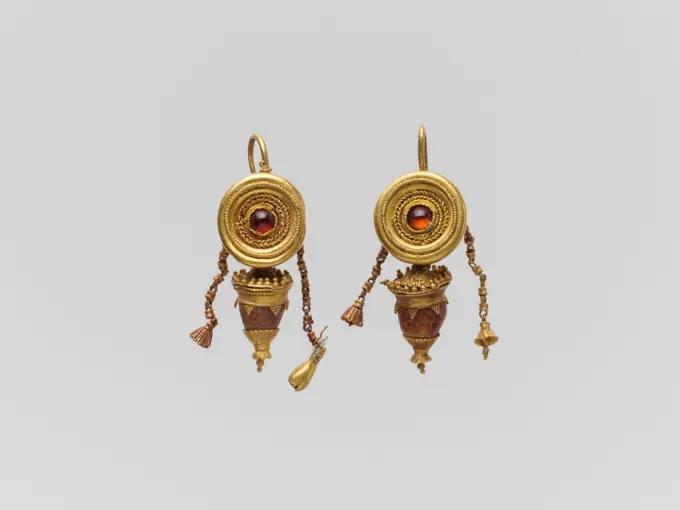
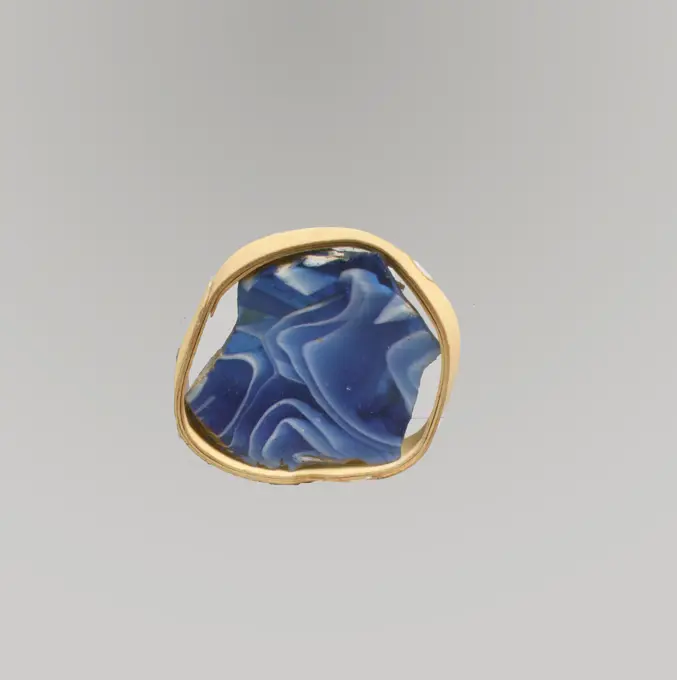
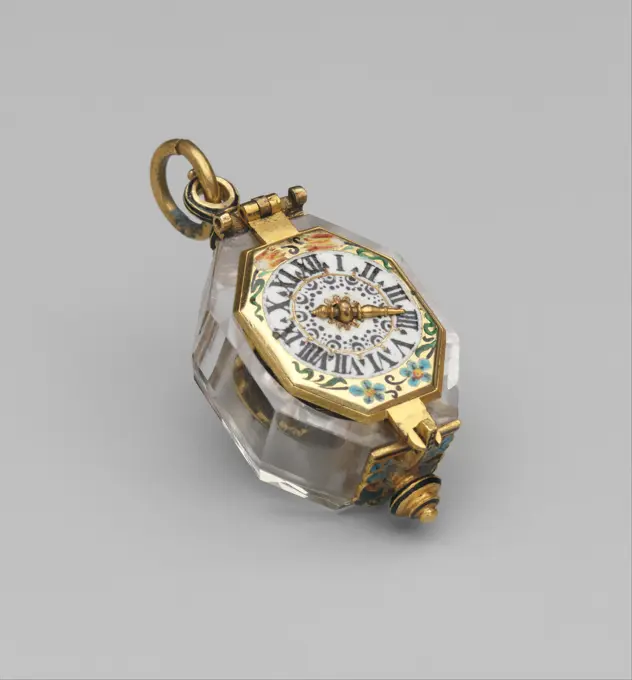
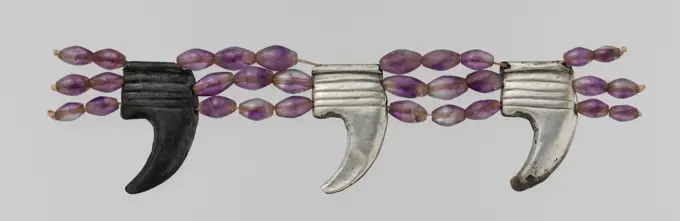
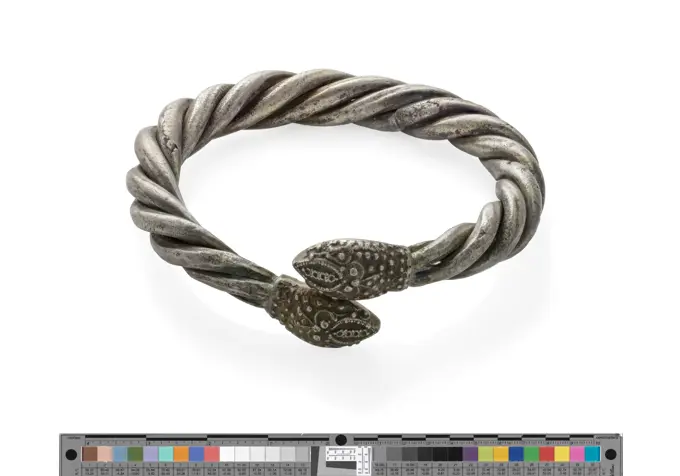
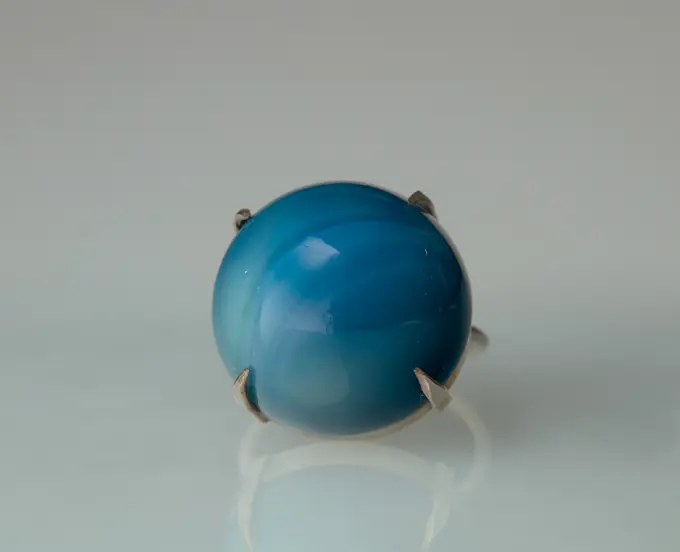
Gold spiral ca. 1600-1100 B.C. Cypriot Of plain wire with one turn.. Gold spiral. Cypriot. ca. 1600-1100 B.C.. Gold. Late Bronze Age. Gold and SilverPendant (France); gold, enamel, toothLoop.Bracelet with Engraved Roundels. UnknownFlower-Shaped Clothing Plaque 7th-9th century China (Xinjiang Autonomous Region, Central Asia) The nomadic communities of Central Asia used such plaques to embellish clothing and horse trappings. As these nomadic cultures herded animals and were constantly moving, their artistic production was expressed in portable objects that marked the wearers status and wealth. The outstanding preservation of these fragile ornaments suggests they were used in conjunction with burials, where the body was aggrandized with valuable textiles and augmented with gold. Although it is difficult to date and place these objects geographically, their presence in Central Asia and has a long, established history.. Flower-Shaped Clothing Plaque 65207Four fragments of foot and calyx of roemer, roemer wineglass drinking glass drinking utensils tableware holder soil find glass forest glass , free blown and formed glass application Three fragments (BD) of foot fragment (E) of part of trunk and starter part goblet of roemer in clear light green glass (forest glass) Rising twelve foot round wound glass wire Straight hollow trunk (dm 6.0 cm) open to chalice with four rows of five prominent bramble buds one of which is missing. E has two blackberry buds. Ribbed around wound glass wire at the transition of stem and calyx. Some incitement of chalice archeology drink show off festive mealBona Sforza (1493-1557), Queen of Poland. Culture: Polish, Krakow cameo with French frame. Dimensions: Overall: 2 13/16 x 1 3/4 in. (7.2 x 4.4 cm);Visible cameo (confirmed): 31 x 22 mm. Maker: Cameo by Giovanni Jacopo Caraglio (Italian, Parma or Verona ca. 1500/1505-1565 Krakow ()). Date: cameo ca. 1530-40, frame 19th century.Exceptionally for the Renaissance, this is a signed cameo, bearing the signature of Gian Giacomo Caraglio, who was born in Verona and later worked in Venice and then Cracow and who was best known as a printmaker. Bona Sforza, daughter of the duke of Milan, married Sigismund I, king of Poland, in 1518. At Sigismund's death in 1548 she returned to Italy, where she died in 1557. The cameo is inlaid with gold that enhances details of Bona's chain and hairnet, and a silver Medusa's head (see detail; for Medusa, see also fig. 59) is inset on her breast, in the same spirit of jewelry within jewelry. The only other gem signed by Caraglio, an agate similarly bedecked wiSilver ring with carved scarab from Locri, Calabria, Italy. Goldsmith art. Ancient Greek civilization, Magna Graecia.Gold earring with head of an antelope 4th-3rd century B.C. Greek Consisting of a circlet of gold wire, twisted or plain, which tapers from an animal's head at the front end to a hooked point which passes through a loop below the animal's throat.. Gold earring with head of an antelope. Greek. 4th-3rd century B.C.. Gold. Classical or Hellenistic. Gold and SilverEarring with head of lions 5th-4th century B.C. Greek. Earring with head of lions. Greek. 5th-4th century B.C.. Gold. Classical. Gold and SilverTeenage ring of silver with pearl on open worked button, c. 1960 - c. 1970 Teenage ring of silver with pearl on open worked button. The edge of the ring is sculpted. Amsterdam silver (metal). pearl Teenage ring of silver with pearl on open worked button. The edge of the ring is sculpted. Amsterdam silver (metal). pearlGermany, Trichtingen, Silver bracelet depicting a bull headOrnament, Christmas Tree (USA); dough and sugarEarring-hook type with pendant and disc. Earring-hook type with pendant and disc 243427Loop . Band of 24 round stones.Set Of Silversmith's Models (USA)Headdress ca. 2600-2500 B.C. Sumerian Kings and nobles became increasingly powerful and independent of temple authority during the course of the Early Dynastic period (2900-2350 B.C.), although the success of a king's reign was considered to depend on support from the gods. A striking measure of royal wealth was the cemetery in the city of Ur, in which sixteen royal tombs were excavated in the 1920s and 1930s by Sir Leonard Woolley. These tombs consisted of a vaulted burial chamber for the king or queen, an adjoining pit in which as many as seventy-four attendants were buried, and a ramp leading into the grave from the ground.This delicate chaplet of gold leaves separated by lapis lazuli and carnelian beads adorned the forehead of one of the female attendants in the so-called King's Grave. In addition, the entombed attendants wore necklaces of gold and lapis lazuli, gold hair ribbons, and silver hair rings. Since gold, silver, lapis, and carnelian are not found in Mesopotamia, the presJug for Sake (Chôshi) with a cover;  End of the 19th century (1891-00-00-1900-00-00);Wire wrapped Ring with Claw setStoneGold ring with glass cameo in bezel 1st-2nd century A.D. Roman, Cypriot The gold ring features a bezel in cameo glass, carved to show a nude male figure in white glass against a blue background. It is a fine example of the beautiful effects that could be achieved by combining gold and glass.. Gold ring with glass cameo in bezel 243656Blue & white sweet pastry biscuit (Christmas decoration)Scarab with Crucifom Lotus Flower Decoration ca. 1770-1670 B.C. Middle Kingdom Plants are a popular theme on the underside of ancient Egyptian seal-amulets because they refer to life, renewal, and regeneration. They mainly consist of representations of papyrus plants, and lotus flowers and their buds. This cruciform composition shows four lotus flowers, known from several other scarabs of the late Middle Kingdom (late Dynasty 12-Dynasty 13, ca. 1850-1640 B.C.). For the ancient Egyptians, the lotus is the symbol of Upper Egypt and of rebirth. In the empty spaces between the flowers are petals.The scarab shows details in the shape of its back, more specifically of its head, that indicate it was probably carved in a workshop in the vicinity of Lisht during Dynasty 13, approximatively between 1766 and 1677 B.C.. Scarab with Crucifom Lotus Flower Decoration 545705Candle crown for four candles, Anonymous, c. 1850 - Before 1883 A candle crown for four candles; of silver -plated brass, middle rod with volute decoration with rings, bulb and glans; Four arms with candle holders of thick silver -plated wire with curling decorations; Between arms loose rings hanging from copper chain. Amsterdam (possibly) silver (metal). copper (metal) A candle crown for four candles; of silver -plated brass, middle rod with volute decoration with rings, bulb and glans; Four arms with candle holders of thick silver -plated wire with curling decorations; Between arms loose rings hanging from copper chain. Amsterdam (possibly) silver (metal). copper (metal)silver vase. Decorative silver metal vase isolated on whiteSouvenir spoon with view of Sevilla Cathedral European late 19th centuryScissors 1780-81 French, Paris. Scissors. French, Paris. 1780-81. Gold, steel. Metalwork-Gold and PlatinumBracelet, 1700s. India, Mughal, Rajasthan, Jaipur, 18th century. Gold, emeralds, diamonds, and enamel; overall: 4 cm (1 9/16 in.).Coin China. Coin 61145Beautiful hairpin isolated on white backgroundBrooch (England or United States); enameled gold set with pearls, braided hair under glass coverScarab of Ramesses II ca. 1295-1070 B.C. New Kingdom, Ramesside. Scarab of Ramesses II 559957Nose Ring, before 1550. Colombia, Quimbaya, 16th century. Gold; overall: 1.8 x 2.2 cm (11/16 x 7/8 in.).Ear Clip in the Shape of a Starfruit Second half of the 8th-second half of the 10th century Indonesia (Java). Ear Clip in the Shape of a Starfruit 49945Brooch. Culture: British. Date: 1860-79. Museum: Metropolitan Museum of Art, New York, USA.Handle for a seax, or single-edged knife from the Staffordshire Hoard. This spectacular handle has some of the finest cloisonnÈ decoration. ëSeaxí describes any kind of single-edged knife. Everyone carried some sort of knife. The name ëSaxonsí probably means ëpeople of the knife'. The Staffordshire Hoard is a collection of Anglo-Saxon. Discovered in a field near the village of Hammerwich, near Lichfield, in Staffordshire, England, in 2009. it consists of over 3, 500 items, dated to the 7th or 8tFinger Ring 7th century Frankish. Finger Ring 464788 Frankish, Finger Ring, 7th century, Silver, glass cabochon, Overall: 1 x 1 x 5/8 in. (2.6 x 2.5 x 1.6 cm) bezel: 11/16 x 5/8 x 1/4 in. (1.7 x 1.6 x 0.7 cm). The Metropolitan Museum of Art, New York. Gift of J. Pierpont Morgan, 1917 (17.191.100)Carved Bead 19th century Japan. Carved Bead. Japan. 19th century. Ivory. OjimeFragment. Culture: European or Middle Eastern. Dimensions: L. 2 in. (5.1 cm). Date: ca. 1150-ca. 1250. Museum: Metropolitan Museum of Art, New York, USA.Sardonyx cameo of a double capricorn with a portrait of the emperor Augustus ca. 27 B.C.-A.D. 14 Roman The cameo bears a medallion with a portrait of Augustus supported on the horns of a double-headed goat. The imagery represents the constellation Capricorn, which was adopted by the Emperor Augustus as his own lucky star sign and was used as an imperial symbol on such things as coins and legionary standards.. Sardonyx cameo of a double capricorn with a portrait of the emperor Augustus. Roman. ca. 27 B.C.-A.D. 14. Sardonyx, gold. Early Imperial, Augustan. GemsOkucie. unknown, creatorRosary 17th-19th century Philippines. Rosary 40552Keeshondje, carrying sign in honor of Hendrik Danielsz. Hooft, mayor of Amsterdam, Anonymous, 1788 case Keeshondje, carrying sign in honor of Hendrik Danielsz. Hooft, mayor of Amsterdam. Fedral in the form of rectangular box with rounded corners, of which the top and bottom are decorated with lily branch inside edge of waves; On both sides, box is held together by cylindrical button, decorated with floral pattern; Sea eye is attached to the top button, while the bottom button is hinge, with which rectangular medallion can be turned in a frame of rounded corners from its partition. Silver medallion: front: breastpiece man under banderolle with inscription. Reverside: dog with pointed mouth, hairy head and neck with moons, smooth abdomen and long -length tail, which sinks with loop on the back of the year under Banderolle with inscription. Netherlands silver (metal). copper (metal) engraving / gilding dog AmsterdamGoldsmith's art, 19th century. Gold brooch set with a sapphire, pearls and diamonds.Figures in Lotus-Shaped Reserve, Silver, Rectangular, rounded sides and corners, featuring lotus-shaped reserve with Asian adult male and boy in garden setting, house in background, reverse features lotus-shaped reserve with plum blossoms. Link attached to lid at top, lid hinged on side. Striker on bottom., late 19th century, containers, Decorative Arts, Matchsafe, MatchsafeEarring, chain type. Earring, chain type 243099Pair of Gold EarringsWillem van Aken, Golden boat chain, necklace jewelery clothing accessory women's clothing gold, Gold boat chain consisting of ten boats and 11th boat for the lock. Each boat in the middle set with an oval cabochon-cut moss agate set closed by cannetille-work in which four small faceted silver colored glass stones called 'paste' on foil. Between the boats eleven six-bladed flowers of cannetille-work with in the center each somewhat larger faceted paste year letter S adorn womanStack of gilded silver ,, 1600 - 1800 At the top the bust of a moor. Head and back are cut from black rock. The chest consists of a baroque pearl, including two crossed arrow dothics, occupied with diamonds. The hat is formed from a baroque pearl with diamonds and pearls and a large pearl, in diamond. Germany silver (metal). diamond (mineral). pearl. gilding (material) gilding At the top the bust of a moor. Head and back are cut from black rock. The chest consists of a baroque pearl, including two crossed arrow dothics, occupied with diamonds. The hat is formed from a baroque pearl with diamonds and pearls and a large pearl, in diamond. Germany silver (metal). diamond (mineral). pearl. gilding (material) gildingBadge of the Order of the Garter 18th century British. Badge of the Order of the Garter 193677Shoe spur of silver and stras, P.J. Small (Possible), c. 1820 - c. 1830 Shoe spur of silver and stras. Strik model, concentrically doubled in two layers of silver, inlaid with rows of stras. Sint-Truiden (Possible) silver (metal). paste (glass) inlay (process) Shoe spur of silver and stras. Strik model, concentrically doubled in two layers of silver, inlaid with rows of stras. Sint-Truiden (Possible) silver (metal). paste (glass) inlay (process)Finger Ring 5th-6th century Byzantine. Finger Ring. Byzantine. 5th-6th century. Gold, with niello & sapphire intaglio. Metalwork-GoldBrooch (France); gold, enamel, citrines, amethyst; Overall: 4 x 5.1 cm (1 9/16 x 2 in.)Bangle with Rings 300 B.C.-A.D. 400 Thailand. Bangle with Rings 53383Ring with Bezel of Three Stones and Foliate Designs Last quarter of the 10th-last quarter of the 15th century Indonesia (Java). Ring with Bezel of Three Stones and Foliate Designs 50210Silver swivel ring with glazed steatite scarab in a gold setting. Culture: Cypriot or Phoenician. Dimensions: Other: 1 3/8 in. (3.5 cm). Date: 7th-early 5th century B.C..Swivel ring with Egyptian glazed steatite scarab with double footed ankh sign between crowned uraeus snakes.The type of ring is Phoenician in origin. Both the scarab and the technique of glazing steatite are connected with Egypt. Like the pendants with scarabs, the swivel rings were very widely distributed. Museum: Metropolitan Museum of Art, New York, USA.Pendant (France); fire-gilt bronzeClothes Fastener with CenterGemstone, mid 8th-9thcentury, Gold, 2.11 × 7.16 cm, 13.422 g (13/16 × 2 13/16 in., 13.422g), Made in Java, Indonesia, Java, Early Classic Period(700-1000), JewelryPair of Shoe Buckles. London, England. Date: 1775-1799. Dimensions: 7.6 × 5.1 cm (3 × 2 in.). Silver, copper or gold, and paste jewels. Origin: England. Museum: The Chicago Art Institute, Chicago, USA.Ojime 19th century Japan. Ojime. Japan. 19th century. Edo period (1615-1868). OjimeAmulet of a Duck. Egyptian. Date: 1550 BC-1069 BC. Dimensions: 2.9 × 1.3 × 1 cm (1 1/8 × 1/2 × 3/8 in.). Glass. Origin: Egypt. Museum: The Chicago Art Institute, Chicago, USA. Author: Ancient Egyptian.Necklace, 204-30 B.C., Gold and emerald (green beryl), 14 9/16 × 1 in. (37 × 2.6cm), Egyptian, PtolemaicPeriod, JewelryPendant Necklace. UnknownHeaddress Ornament, 1800s-1900s. China, Qing dynasty (1644-1911). Copper-silver alloy, gilding, kingfisher feathers, glass beads; overall: 10.7 x 12.4 cm (4 3/16 x 4 7/8 in.).Loop .Ornament, flower-shaped mount for stone bead. Ornament, flower-shaped mount for stone bead 243067RingFinger ring ca. 3rd century B.C.-A.D. 3rd century Parthian. Finger ring 323884Nine-Gem (Navaratna) Talismanic Bracelet, One of a Pair 19th century Talismanic and astrological attributions of gems and stones have a deep history in the Indian subcontinent. In the navaratna (nine gems) series, specific precious gems each relate to one of the nine planets of the astrological system. This bracelet is composed of ten gems in a variation of the traditional grouping, and the back of each setting is enameled with a four-petalled blossom in green.. Nine-Gem (Navaratna) Talismanic Bracelet, One of a Pair 454027Butterfly Stick Pin Finial; Style of René Lalique (French, 1860-1945); France; silver, opal, enamelMatchsafe, Silver, Rectangle with blunt corners. Plain silver surface with relief decoration in center a bust of grinning actor dressed as 'Charlie's Aunt'., late 19th-early 20th century, containers, Decorative Arts, MatchsafeRingEar Clip with Makara Motif Last quarter of the 10th-last quarter of the 15th century Indonesia (Java). Ear Clip with Makara Motif 49760Ankle strap, without decorations with some incustations, anonymous, -600 --100  Ban Chiang bronze (metal)  Ban Chiang bronze (metal)Gold pendant earring. Gold pendant earring 243433Carnavalet Museum, Medals CollectionLid of turtle with Hertekop of silver (series of 28 pieces A to BB), Anonymous, c. 1700 - c. 1799 Turtle cover (28 pieces: A to BB) with silver's deer head as a button. Indonesia silver (metal) Turtle cover (28 pieces: A to BB) with silver's deer head as a button. Indonesia silver (metal)Watch late 18th century Watchmaker: Jean Antoine Lépine. Watch 193356Engraved Gem with Mars inset into a Hollow Ring; 2nd - 1st century B.C; Gem: red garnet; ring: gold; 1.8 × 1.3 × 6.5 cm (11,16 × 1,2 × 2 9,16 in.)Earrings 18th century-19th century European, Eastern. Earrings 90379Moroccan hand of fatima, Corral del Carbón, "al-fundaq al-yadida", 14th century, Granada, Andalusia, Spain.RingSword-Hilt Collar and Pommel (Fuchigashira). Culture: Japanese. Dimensions: Fuchi (a); H. 1 1/2 in. (3.8 cm); Wt. 0.8 oz. (22.7 g); kashira (b); H. 1 5/16 in. (3.3 cm); Wt. 0.4 oz. (11.3 g). Date: 17th century. Museum: Metropolitan Museum of Art, New York, USA.Ojime 19th century Japan. Ojime. Japan. 19th century. Edo period (1615-1868). OjimeSilver bracelet with black enamel, anonymous, c. 1883 - c. 1886 Oval bracelet made of silver with black email. Stiff, spherical oval, with hinge and cut closure. Outside decorated with enamel, slender with flowers, in which seed pearls (two are missing). Brands: M u s 5/ m & s/ Hondekop with left 3 and right a/ wild boar head. Alsace (possibly) silver (metal). pearl Oval bracelet made of silver with black email. Stiff, spherical oval, with hinge and cut closure. Outside decorated with enamel, slender with flowers, in which seed pearls (two are missing). Brands: M u s 5/ m & s/ Hondekop with left 3 and right a/ wild boar head. Alsace (possibly) silver (metal). pearlcollar with medallions showing portraits of various Roman Emperors including Lucius Verus and Alexander Severus. AD 225 GoldGold earring with glass pendant in the form of a club 4th-1st century B.C. Greek Pendant:Dark cobalt blue.Flattened top; cylindrical body expanding downwards and pierced near top with suspension hole; uneven rounded bottom.Intact; pitting, blackish weathering, and patches of brilliant iridescence.. Gold earring with glass pendant in the form of a club. Greek. 4th-1st century B.C.. Gold, glass; tooled and rod-pierced. HellenisticHunt of a roebuck. Culture: Italian, Milan. Dimensions: Overall: 1 5/16 x 1 1/2 in. (3.3 x 3.8 cm); visible cameo: 31 x 37 mm. Date: probably late 16th century.The carver who used the deepest red of this ambitiously multicolored cameo for the fallen stag and a hound was also influenced by Alessandro Masnago (see 38.150.33), even to the point of indicating the source of light, in this case the sun at the center top. Museum: Metropolitan Museum of Art, New York, USA.Shoe buckles late 18th century British. Shoe buckles 127564Artefact from the Staffordshire Hoard of Anglo-Saxon gold and silver metalwork. Discovered in a field near the village of Hammerwich, near Lichfield, in Staffordshire, England, on 5 July 2009, it consists of over 3,500 items from the Anglo-Saxon kingdom of Mercia.Pair of gold, garnet, and glass paste disk and pendant earrings 2nd century B.C. Greek The pendants, of gold and glass paste, are in the form of vases.. Pair of gold, garnet, and glass paste disk and pendant earrings. Greek. 2nd century B.C.. Gold. Hellenistic. Gold and SilverGlass mosaic ribbed bowl fragment late 1st century B.C.-early 1st century A.D. Roman Translucent blue with opaque white.Body fragment with two ribs on exterior.Marbled mosaic pattern in blue ground with white threads and streaks.Polished on interior; pitting of surface bubbles; dulling and iridescent weathering on exterior and jagged edges.. Glass mosaic ribbed bowl fragment. Roman. late 1st century B.C.-early 1st century A.D.. Glass; cast and tooled. Early Imperial. GlassNecklace with 43 different beads;  664 B.C.-395 (-664-00-00-395-00-00);Watch ca. 1630-40 Watchmaker: Johann Possdorfer The association of Possdorffer with the superb Swiss clockmaker Jobst Bürgi (1552-1632) during a period when both worked in Prague for Prince Karl I of Liechtenstein (1569-1627) undoubtedly provided the opportunity for the transmission of the technical secrets of Bürgi's cross-beat escapement from Prague to Dresden. There, Possdorffer made a watch with a cross-beat escapement, which probably made it one of the most accurate portable timekeepers until the invention of the balance spring. The watch is now in the Grünes Gewölbe in Dresden. The Metropolitan Museum's watch has an ordinary verge escapement, and with an enameled dial that registers hours and half hours only, it is remarkable more for its tiny size than for its accuracy. The rock crystal cover is a replacement.. Watch 194118Anklet, Reconstructed Using Claw Pendants and Barrel Beads ca. 1850-1775 B.C. Middle Kingdom The piece is part of a group of objects found in tomb V21 at Abydos with two bodies. It was restrung in the Museum. The group includes 04.18.1-04.18.49.. Anklet, Reconstructed Using Claw Pendants and Barrel Beads. ca. 1850-1775 B.C.. Silver over wood core, amethyst. Middle Kingdom. From Egypt, Northern Upper Egypt, Abydos, Cemetery V, Tomb V21, Egypt Exploration Fund excavations, 1904. Dynasty 12, late-early 13Armlet. Iraq, 9th-10th century. Jewelry and Adornments. Silver, fabricated from wire and sheet, decorated with wire, and granulationThree Strings of Beads ca. 1479-1425 B.C. New Kingdom. Three Strings of Beads 558437RingSheet with six head and dishes, Willem van Strant, c. 1856 - c. 1895 Elongated tray with a scalloped, thickened edge. The leaf is on four cone -shaped legs. Six identical head and saucers are stored at the leaf. The magazine is marked: stk. = Amsterdam, Jrl. = D (1738), Mt. = Willem van Strant, a crowned o and an ax. The heads are on a foot and have a ear. A ZIG-Zag line is engraved along the edge of the heads, on the flat and along the edge of the dishes. The head and saucers are marked: Mt. = C.E. Hero and a sword. silversmith: Amsterdamsilversmith: Netherlands silver (metal) Elongated tray with a scalloped, thickened edge. The leaf is on four cone -shaped legs. Six identical head and saucers are stored at the leaf. The magazine is marked: stk. = Amsterdam, Jrl. = D (1738), Mt. = Willem van Strant, a crowned o and an ax. The heads are on a foot and have a ear. A ZIG-Zag line is engraved along the edge of the heads, on the flat and along the edge of the dishes. The head and saucers arPair of gold disk earrings with pendant Erotes 3rd-2nd century B.C. Greek Disc enclosing flower with pendant in the form of a winged Eros.. Pair of gold disk earrings with pendant Erotes. Greek. 3rd-2nd century B.C.. Gold. Hellenistic. Gold and SilverFour-Sided Ornament, anonymous, c. 1300 - c. 1400 Quadrangular tube fragment, open worked. Indonesia gold (metal) Quadrangular tube fragment, open worked. Indonesia gold (metal)