Jewelry and Decorative Arts

Fine decorative pieces including intricate goldsmith work, antique jewelry, and scented bottles, showcasing historical craftsmanship and design.

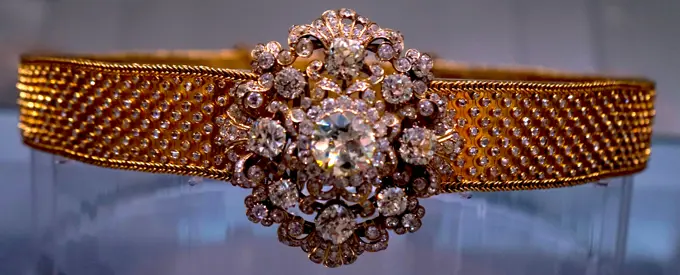
Goldsmith's art, 19th century. Gold, enamel and cushion-cut diamonds bracelet with central separable brooch.
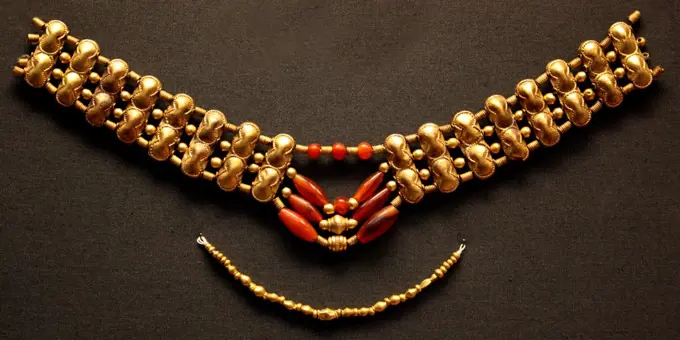
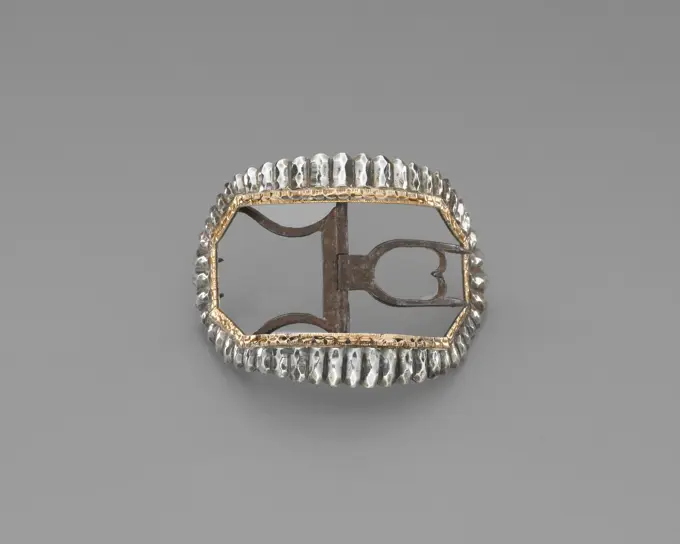
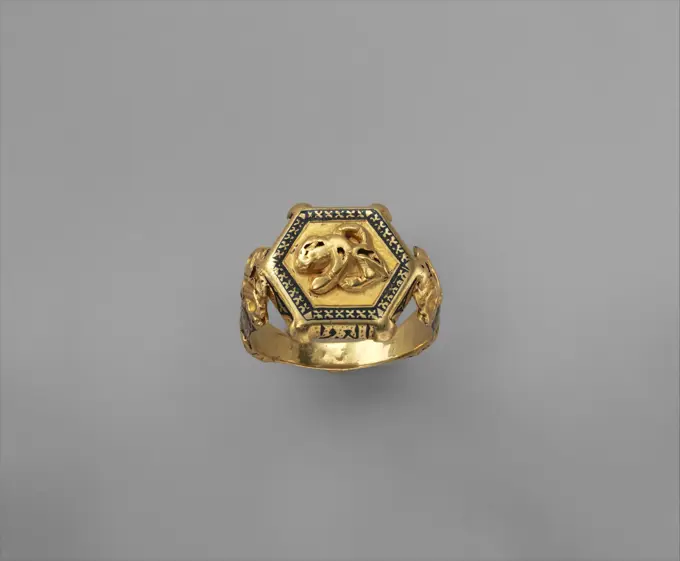
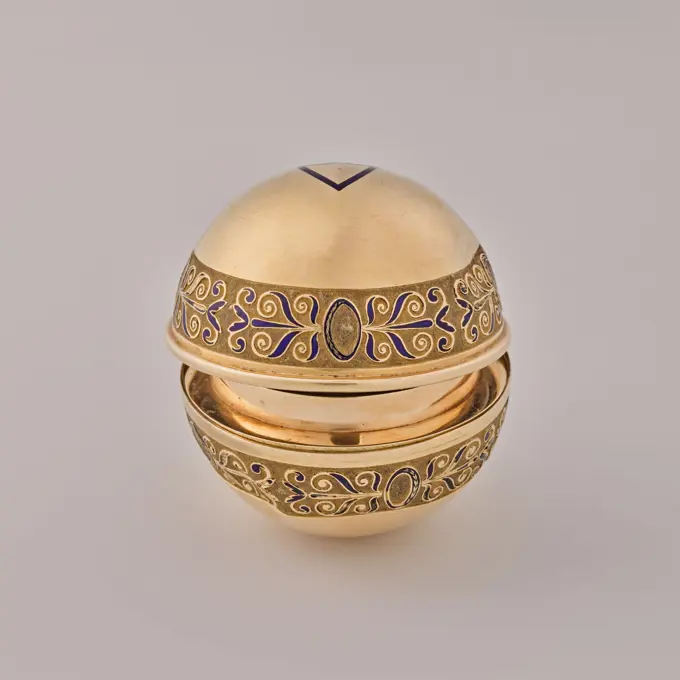
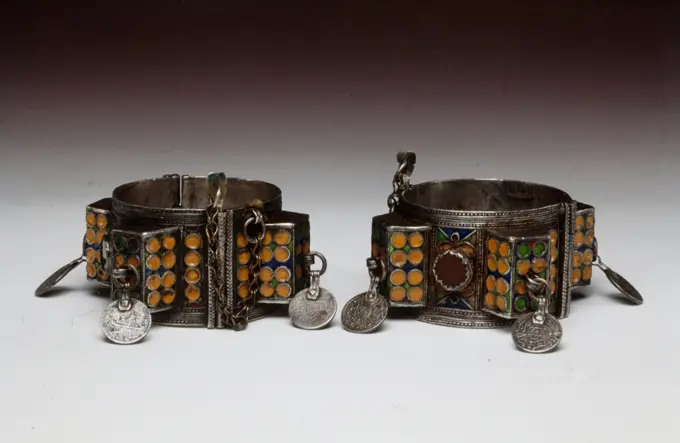
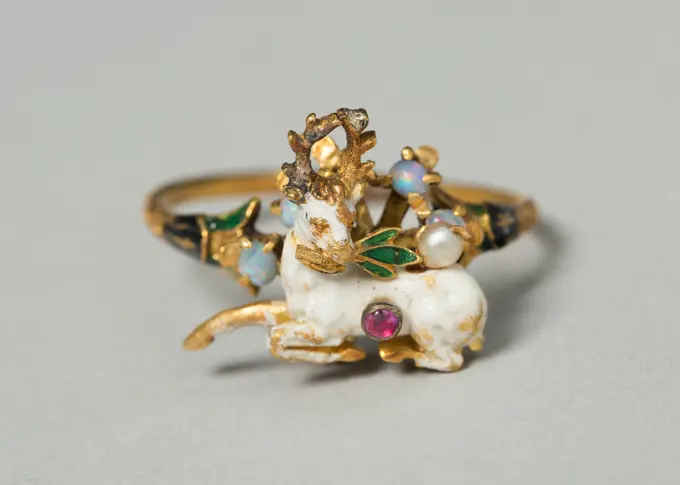
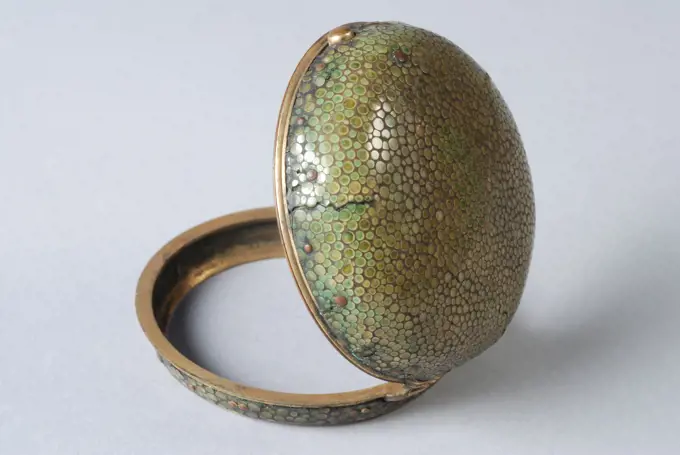
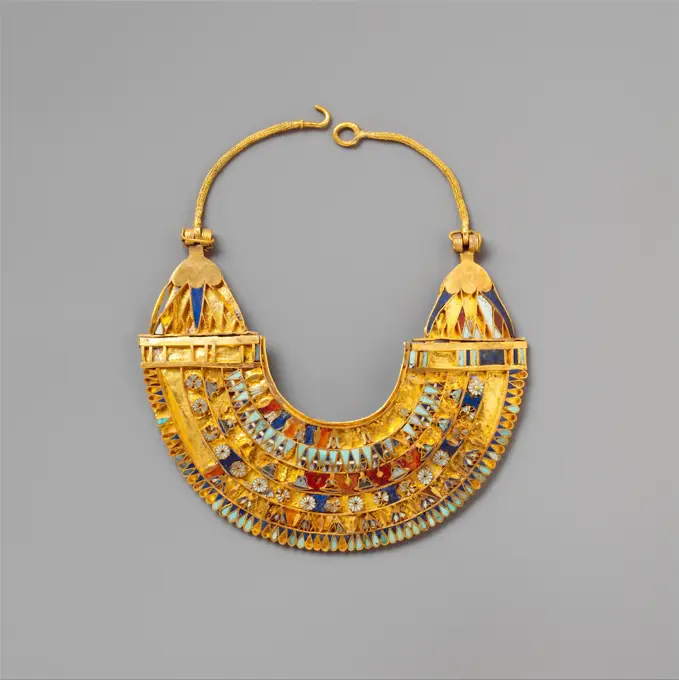
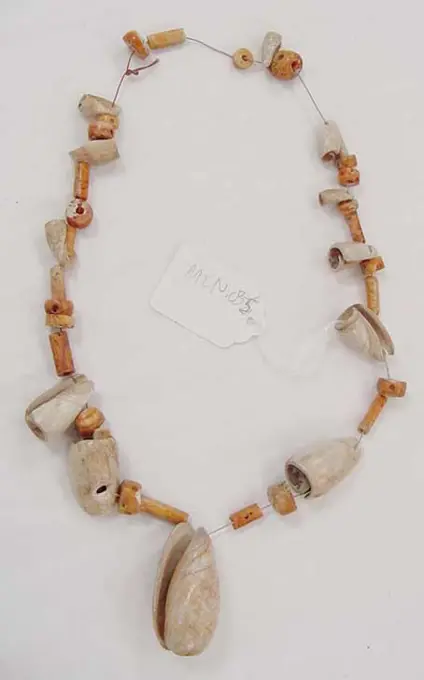
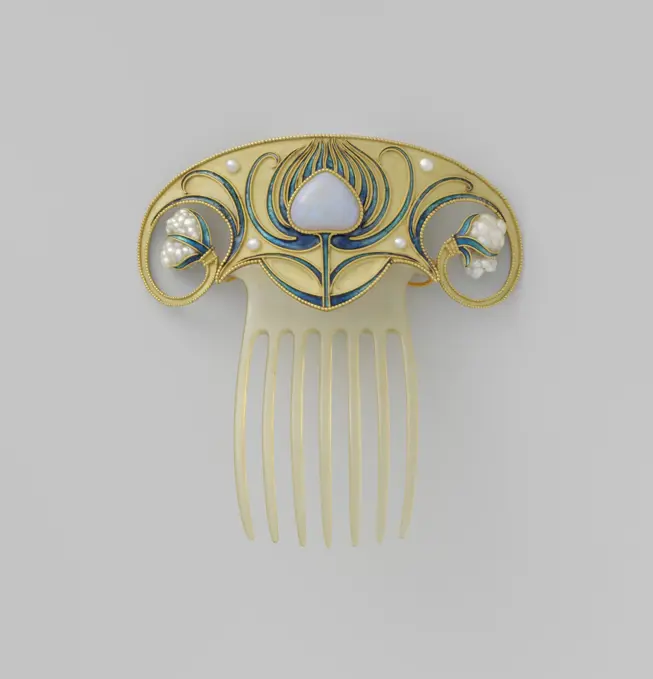
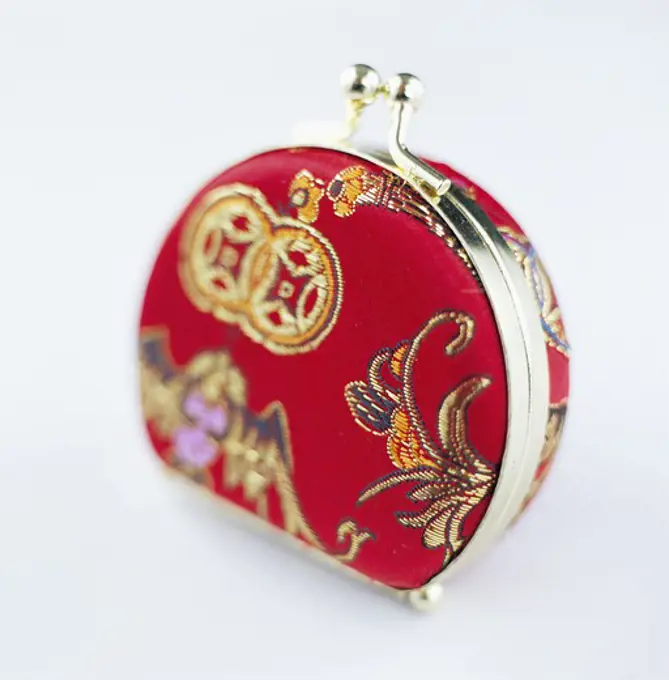
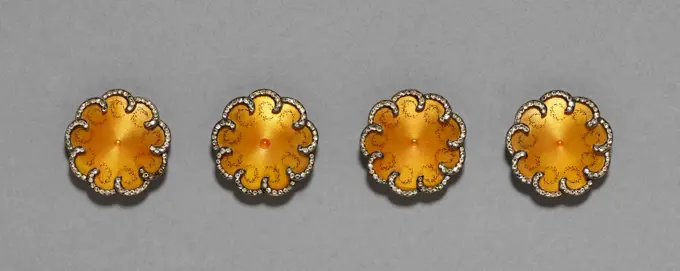
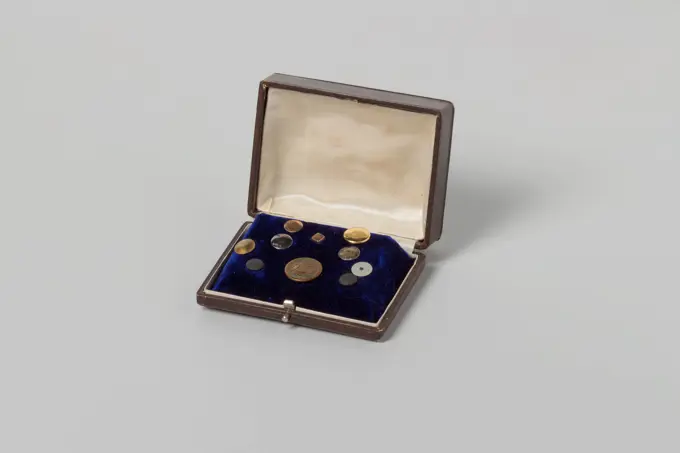
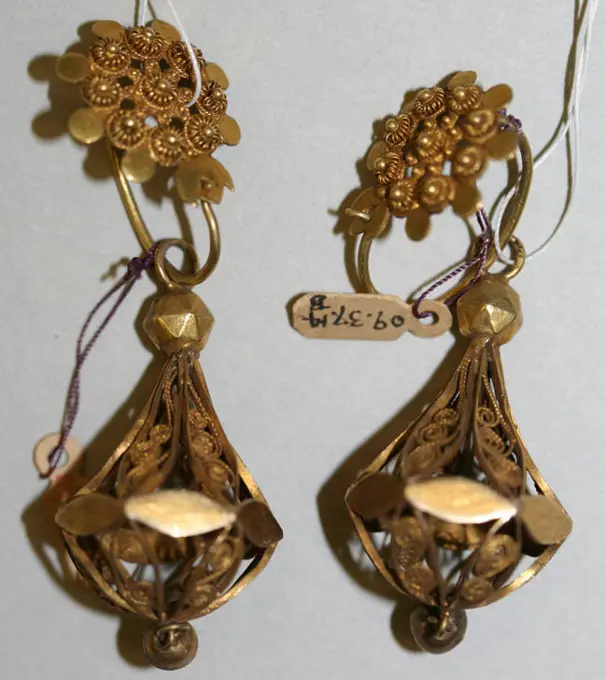
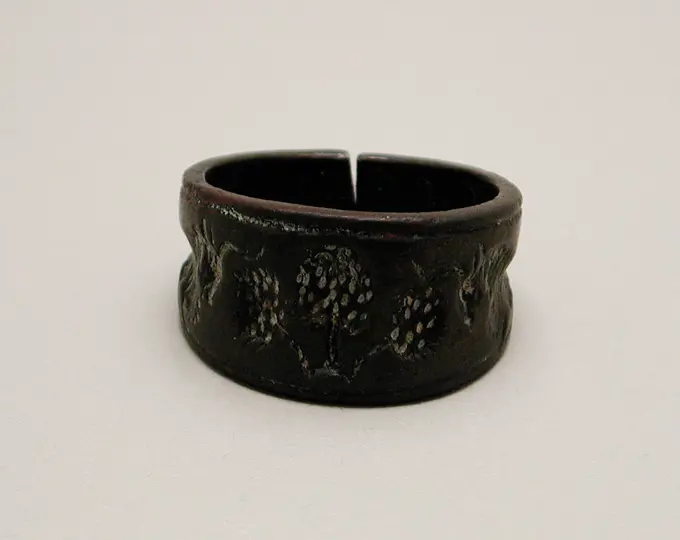
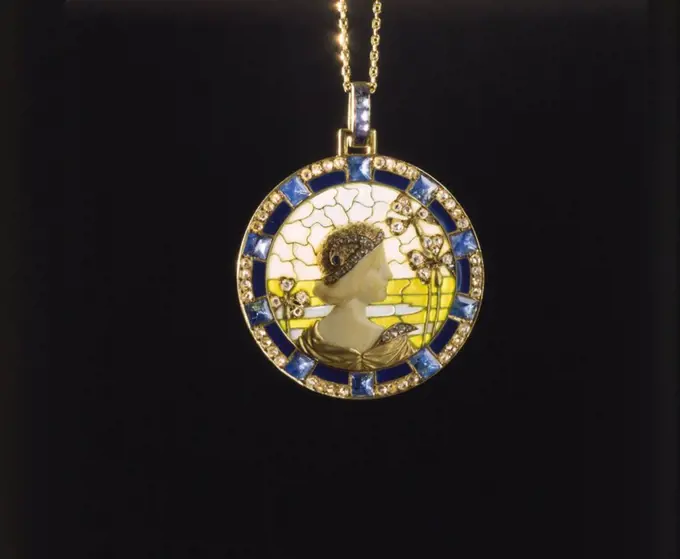
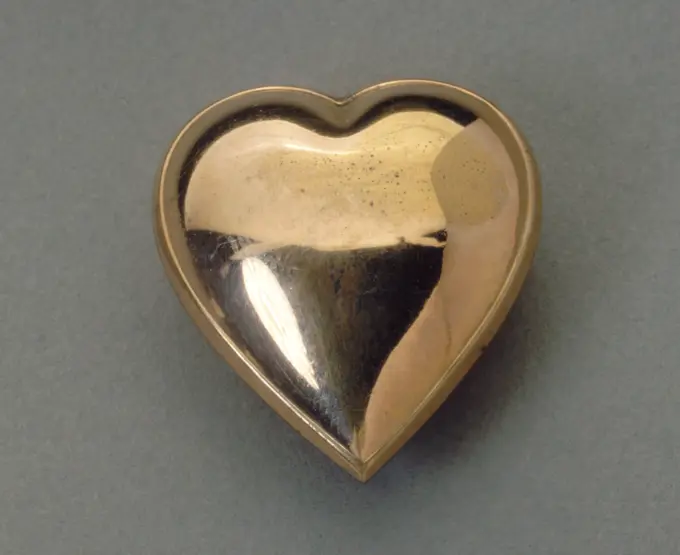
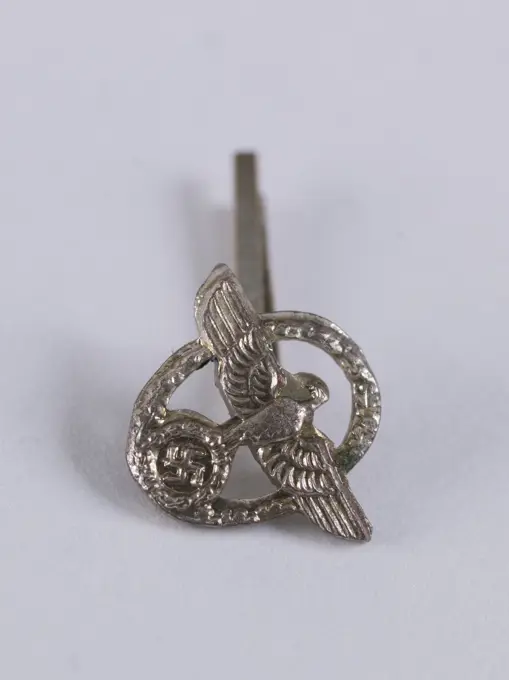
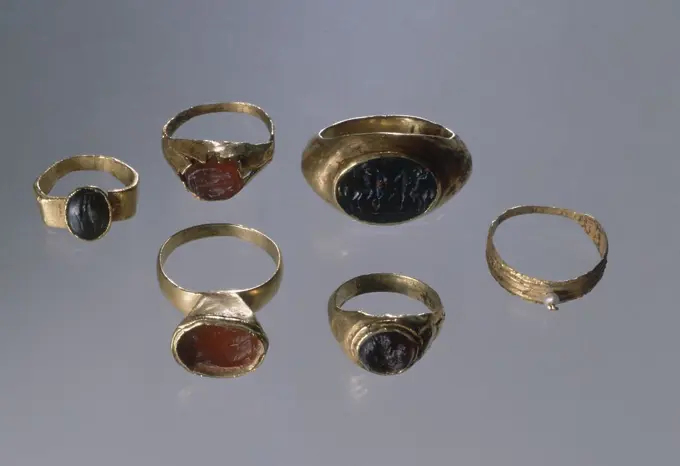
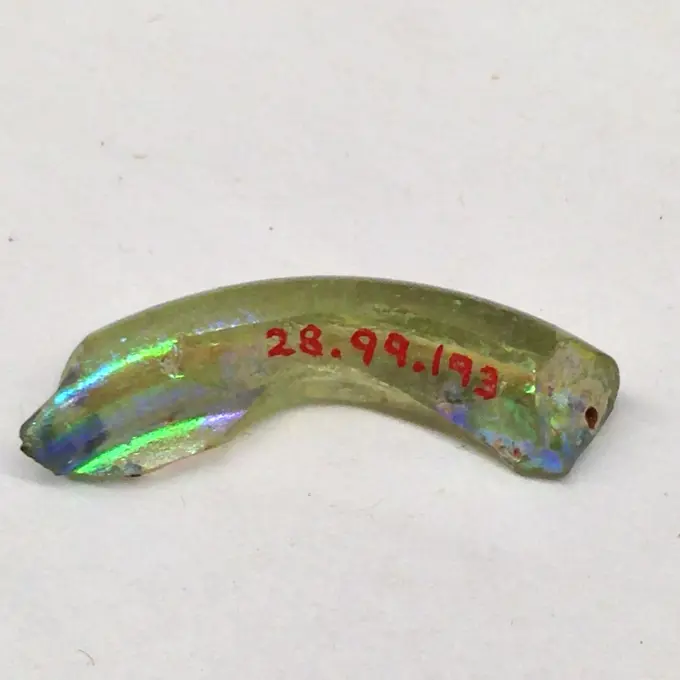
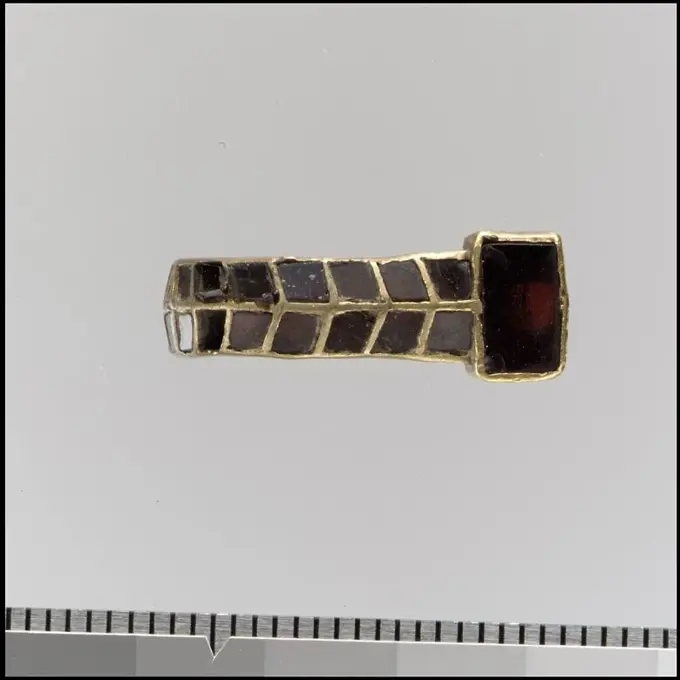
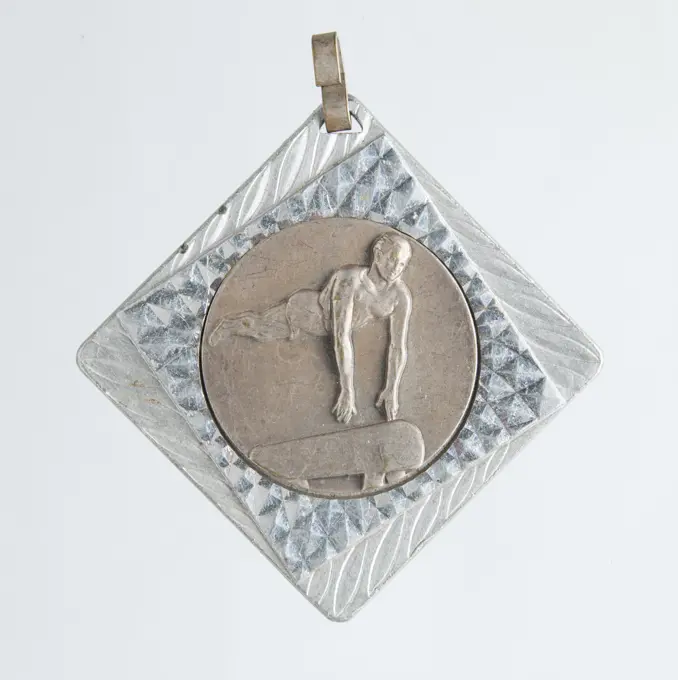
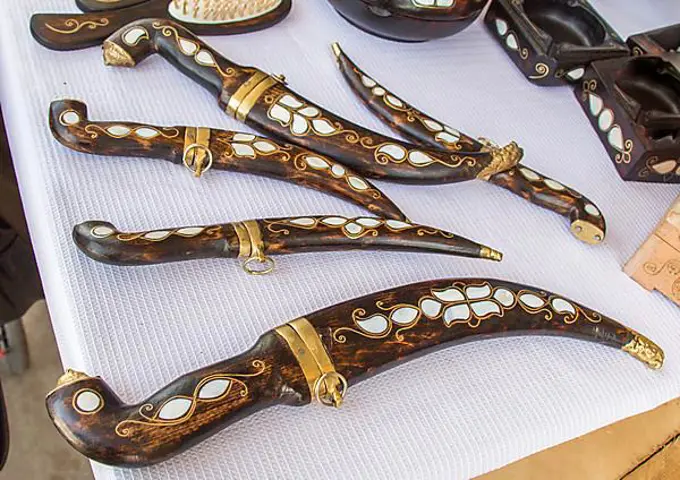
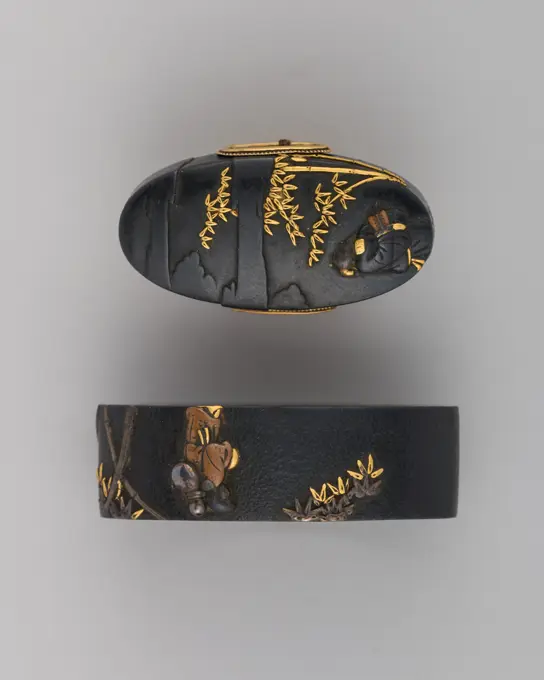
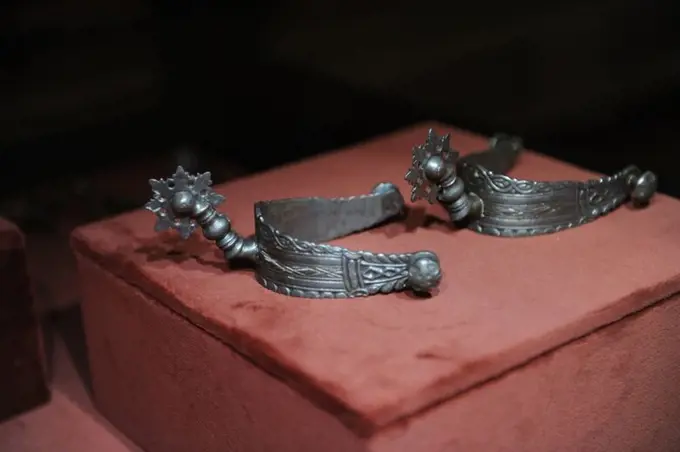
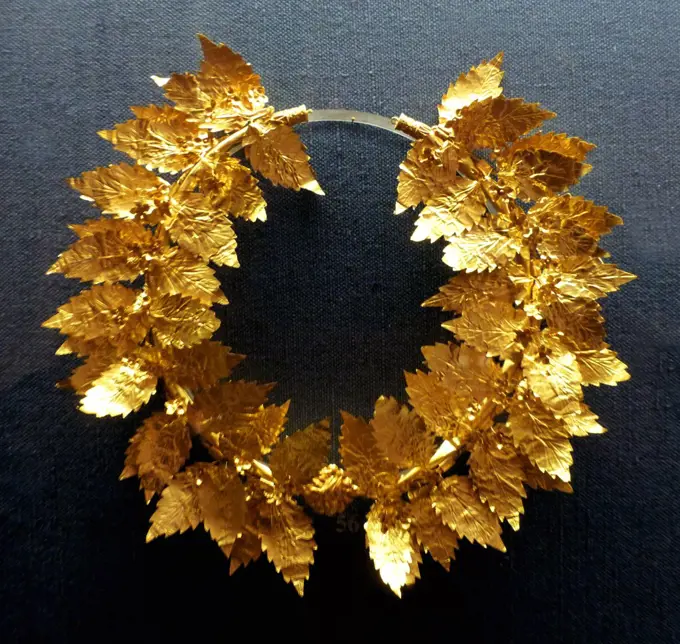
Earrings, trumpet-shaped 5th-3rd century B.C. Etruscan. Earrings, trumpet-shaped. Etruscan. 5th-3rd century B.C.. Gold. Gold and SilverGold and cornelian necklace. The sixteen gold beads are in the form of double figure of eight shields of Aegean inspiration linked by typically Cypriot spiral beads. The globular beads linking some of the cornelian beads are Palestinian in type but with collars inspired by Mycenaean GreeceRosetteNecklace And Pendant (possibly France); silver, enamel, jasper, pearls, glassSquare Plaque mid-7th-9th century Northwest China/Eastern Central Asia. Square Plaque. Northwest China/Eastern Central Asia. mid-7th-9th century. Gold. period of Tibetan rule. MetalworkString for Men's Hat, 1800s. Korea, Joseon dynasty (1392-1910). Wood; overall: 38 cm (14 15/16 in.).Earrings 19th century Spanish. Earrings. Spanish. 19th century. metal, pearlMourningRing.  Maker: J. K., American or British, active ca. 1765Honorand: Mary Chaplin, American, 1745-1765Goldsmith's art, Italy, 19th century. Gold earrings with cameos attributed to Fortunato Pio Castellani (1794-1865), 1820-1825.Shoebuckle.   Maker: Thomas Shields, American, 1742-1819Ring with Seated Lion 12th century This ring with molded lion and the niello inscriptionwhich employs a black organic compoundof the words “glory” and “prosperity” demonstrate the ubiquity of the imagery of power and protection in Seljuq art.. Ring with Seated Lion 456305Empire-style ladies accesory, ball-shaped, with 13 tools for embroidery and toiletry inside. unknown, authorPair of Sword-Grip Ornaments (Menuki) 18th century Japanese Menuki are a pair of ornamental sword fittings attached to either side of a sword hilt.. Pair of Sword-Grip Ornaments (Menuki). Japanese. 18th century. Copper-gold alloy (shakud), gold, copper. Sword Furniture-MenukiNecklace with gold beads and pendants attached to agate in box setting 5th-4th century B.C. Greek. Necklace with gold beads and pendants attached to agate in box setting 242832Finger Ring with Intaglio Depicting the Head of a Woman Made 100 CE Rome. Sardonyx or carnelian, gold . Ancient RomanBracelet, c. 1925, 2 1/2 x 3/4 in. (6.4 x 1.9 cm), Silver, turquoise, United States, 20th centuryPair of bracelets, 19th century, 1 3/4 x 2 1/2 in. (4.45 x 6.35 cm), Silver, red glass cabuchons, enamel, coins, Morocco, 19th centuryStag with Herb Branch Mounted as a Ring 1550-1600 Germany. Gold, enamel, ruby, opals, and pearls .Bracelet probably 14th-15th century The earliest known examples of this type of seamless mosaic glass bracelet are from the late thirteenth century; it continued to be produced well into the nineteenth century at Hebron, in Palestine. This bracelet, together with thirty-three others in the collection, comes from UpperEgypt and was probably made during the Mamluk period.. Bracelet 446021Necklace, c. 1400-1300 BC. Possibly Hungary, Bronze Age, c. 2500-800 BC. Bronze, cast; overall: 4.2 x 4.8 x 0.8 cm (1 5/8 x 1 7/8 x 5/16 in.).Protection case for pocket watch, outside green roggeleer, with open lid without glass, watch case watch element holder brass rogge leather steelBOOK;  XVII/18th century (1690-00-00-1710-00-00);Europe, Ireland, Killarney, Celtic design jewelry.THIS IMAGE RESTRICTED - Not available to U.S. land tour travel operators.Miniature broad collar 332-246 B.C. early Ptolemaic Period Depictions of Egyptian pharaohs presenting broad collars and other items of jewelry to deities are often found on temple walls. In the New Kingdom, these representations feature collars that tend to be nearly circular and, sometimes, to have a counterweight hanging from the back. Similar scenes in Ptolemaic temples tend to show semicircular collars that have long strings or chains at the back, but no counterweight, an arrangement that resembles this collar. The collar does not lie flat but slopes in way suggesting it was meant to lie across the chest of a divine statuette; however, the long chains and lack of counterweight would make such a fit very awkward. The possibility exists that the collar was a ritual offering and was not meant for wearing.Moving from the outermost to the innermost bands, the six strands of the necklace comprise: 1) turquoise drop beads alternating with lapis triangles; 2) hanging lapis and turquoise loNecklace probably 19th century Oceanic This collection of largely ethnographic jewelry includes examples from cultures in South America, North America, Europe, Asia, and Africa and dates from the Pre-Columbian period to the twentieth century. Owned by renowned art collector and fashion enthusiast Muriel Kallis Newman, the collection represents her knowledge and appreciation of a wide range of jewelry design and making traditions. Numerous items in her collection are composite artifacts made from various cultures and time periods reappropriated as modern jewelry creations by or for Muriel. It is important to note that Newman wore many of the pieces in the collection, interpreting them to suit and express her own singular, often avant-garde style.. Necklace 141489Broche, Frans Zwollo (I), c. 1906 Brooch van Goud and Turquoise, in the form of two spread wings on which a round turquoise flanked by 2 hoses in the middle. Amsterdam gold (metal). turquoise (mineral) Brooch van Goud and Turquoise, in the form of two spread wings on which a round turquoise flanked by 2 hoses in the middle. Amsterdam gold (metal). turquoise (mineral)Hair comb, anonymous, c. 1900 - c. 1910 Hair comb of gold, fan-shaped and ending on either side in a curl with a baroque pearl. In the middle a stylized flower from email. The seven teeth are from Hoorn. Germany whole: Gold (metal). Back: Horn (Animal Material). Back: Opal. Back: Pearl. back: forging Hair comb of gold, fan-shaped and ending on either side in a curl with a baroque pearl. In the middle a stylized flower from email. The seven teeth are from Hoorn. Germany whole: Gold (metal). Back: Horn (Animal Material). Back: Opal. Back: Pearl. back: forgingSmall elegant purse on white background, close-upEurope, Ireland, Killarney, Celtic design jewelry.THIS IMAGE RESTRICTED - Not available to U.S. land tour travel operators.Buttons, after 1896. Firm of Peter Carl Fabergé (Russian, 1846-1920), August Wilhelm Holmström (Russian, 1929-1903). Gold, enamel, diamonds; diameter: 3.5 cm (1 3/8 in.).Round cufflink of copper, with engraved wreath -shaped decoration, 1900 - 1925 Round cufflink of copper, with engraved wreath -shaped decoration. West-Europa copper (metal) engraving Round cufflink of copper, with engraved wreath -shaped decoration. West-Europa copper (metal) engravingCufflink consisting of a light blue bol round with a frame of rhinestones. Round cufflink consisting of a light blue bol round with a frame of rhinestones. At the rear an eye.Native American Man Matchsafe; Manufactured by Unger Brothers; USA; silver; 6 x 4.7 x 1.3 cm (2 3/8 x 1 7/8 x 1/2 in. )Earrings 18th century-19th century European, Eastern. Earrings 102408Goldsmith's art, 19th century. Tortoise shell pendant with gold and silver inlays, around 1850.old concrete wall and frame made in 3D graphicsFinger Ring. Western Iran, circa 1350-800 B.C.. Jewelry and Adornments; rings. Bronze, hammeredArmband.Gold bracelet, in the shape of a garter (jarretière).950/18 century 950/1000 silver loop. GAL 1990-148-28 Silver punch 2nd title for Paris., Damn in diamondsNecklace 200 BCE-200 CE Western Mexico. Figures and jewelry made of spondylus (spiny oyster) shell developed as a specialization in what are today the Mexican states of Colima and Jalisco. Like greenstone, jade, and colorful feathers, this bright orange shell was a luxury item sought by maritime merchants from Ecuador and Central America, who found it in warm Pacific waters as far north as the West Mexican coast. As emblems of authority and status, exotic materials were displayed by rulers during ceremonial events. Spondylus-shell jewelry carved with symbolic designs found in West Mexican tombs indicates the high esteem in which this valued material was held.. Spondylus shell . ColimaArtificial golden bangles close up on a textured background. Artificial golden bangles close up on a textured background.Hanging modernist female bust. Lluis Masriera. Modernism.Breton heart that George Sand wore around his neck. Paris, Museum of Romantic Life. 34998-8 Jewel, Breton, heart, French writer, pendantAnonymous, insignia as a reminder of decoration of Polizei (attributed title), 1933, Silver stamped metal (Mat), Museum of the Liberation of Paris - Museum of General Leclerc - Jean Moulin Museum.Bliżej Kultury unknown labelANILLOS SELLOS PROCEDENTES DE EXTREMADURA. Location: BANCO EXTERIOR-COLECCION. MADRID. SPAIN.Fragment ca. 1150-ca. 1250 European or Middle Eastern. Fragment 694348Rings 9th-11th century. Rings. 9th-11th century. Silver. Excavated in Iran, Nishapur. JewelryBracelet 14th century () Middle Niger civilization. Bracelet 317912Close-up of two bracelets, ItalyPocket watch; Angot, Isaac (fl. Ca 1698-1723); 1710-23 (1710-00-00-1723-00-00);Wierzejski, Tadeusz (1892-1974) - collection, Zamość (Lubelskie Voivodeship), baroque (style), gift (provenance), panoplia (ornament)Thai Royal Belt; Late 1890's. The queen wore this belt and accompanying pendant on state occasions. The construction of the belt reflects a long tradition in Thai goldsmithing of articulated, linked forms. Gold and diamonds Thailand (Bangkok). Commissioned for H.M. Queen Saowabha Pongsri, wife of King Chulalongkorn of Thailand (Rama V of the Chakri dynasty)Tongue from a buckle. Culture: Ostrogothic. Dimensions: Overall: 1 1/4 x 7/16 x 3/8 in. (3.1 x 1.1 x 1 cm). Date: 450-500. Museum: Metropolitan Museum of Art, New York, USA.Pair of Ear Clips with Blue Bead and Red Stone Second half of the 8th-second half of the 10th century Indonesia (Java). Pair of Ear Clips with Blue Bead and Red Stone 50009Sports Medal: Gymnastics, Kozła jumpingArched EarOrnamentOttoman Turkish style daggers with mother of pearl inlaysEarrings probably 19th century Muriel Kallis Newman American This collection of largely ethnographic jewelry includes examples from cultures in South America, North America, Europe, Asia, and Africa and dates from the Pre-Columbian period to the twentieth century. Owned by renowned art collector and fashion enthusiast Muriel Kallis Newman, the collection represents her knowledge and appreciation of a wide range of jewelry design and making traditions. Numerous items in her collection are composite artifacts made from various cultures and time periods reappropriated as modern jewelry creations by or for Muriel. It is important to note that Newman wore many of the pieces in the collection, interpreting them to suit and express her own singular, often avant-garde style.. Earrings. Chinese. probably 19th century. stone, metalBeautiful cosmetic mirror isolated on white background Sword-Hilt Collar and Pommel (Fuchigashira) 18th century Japanese A fuchigashira is a pair of matching sword fittings comprising the fuchi (collar at the base of the grip of the sword hilt) and kashira (pommel cap at the end of a sword hilt).. Sword-Hilt Collar and Pommel (Fuchigashira). Japanese. 18th century. Copper-gold alloy (shakud), gold, silver, copper, copper-silver alloy (shibuichi). Sword Furniture-Fuchi-Kashiracompass on old twisted ropeBox 1830-70 American. Box 933Watch with the Judgement of Paris, William Storey, 1774 Gold watch in double cupboard. On the cupboard a driven scene representing the judgment of Paris. London gold (metal). Gold watch in double cupboard. On the cupboard a driven scene representing the judgment of Paris. London gold (metal).European metal spurs , 16th-18th centuries. National Museum of Krakow, Poland.Gold wreath of oak leaves and flowers. Possibly from Attica, late 2nd-early 1st century BC.Vera Van Voris, Brooch and Earrings, c 1937 Brooch and EarringsRingOrnament Korea. Ornament. Korea. Gold. Goryeo dynasty (918-1392). Jewelry