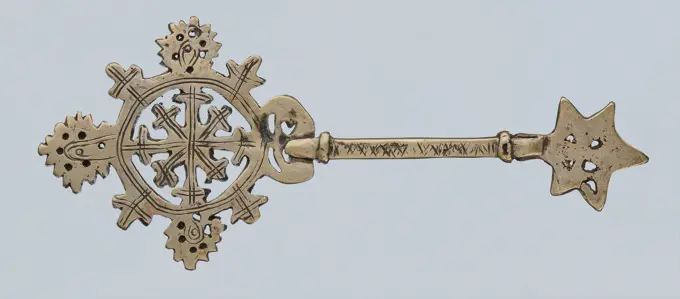
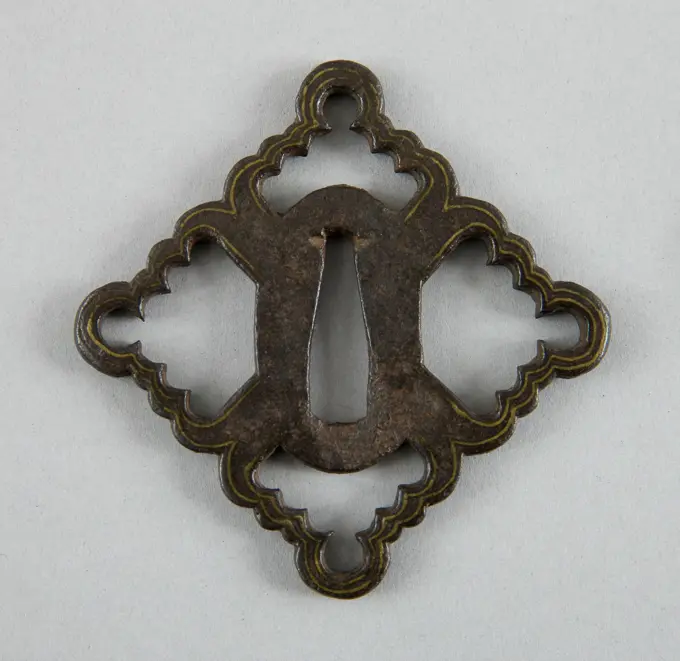
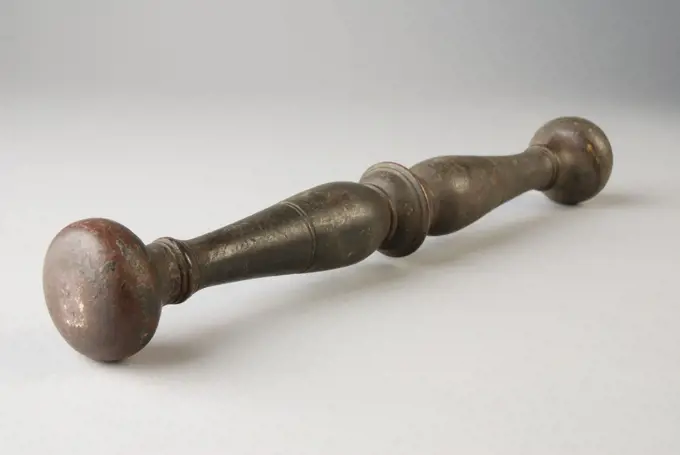
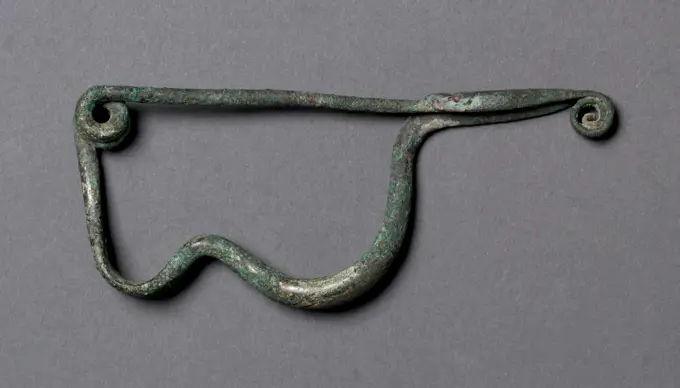
Keys And Security Artifacts

An array of historic keys and padlocks in various designs, showcasing metalwork craftsmanship from different periods and styles.

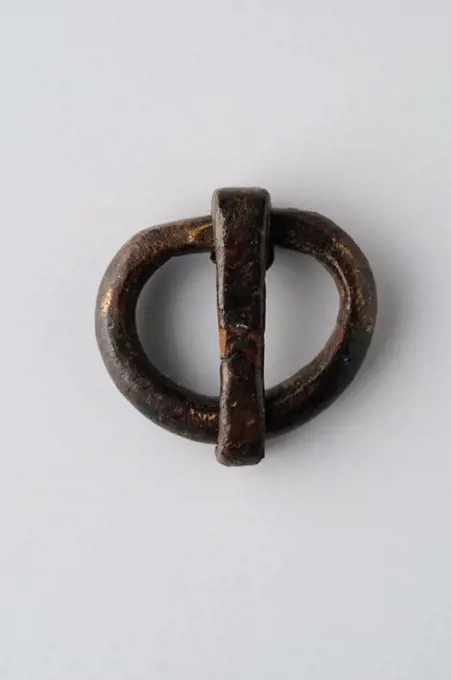
39 keys from the collection of Emmanuel Vita Israël, anonymous, c. 1600 - c. 1699 Pipe key whose handle consists of two leaf fillets from which two horses rise, under a bust and a crowned men's head. The capital consists of any discs decorated with pearl edge.  iron (metal) Pipe key whose handle consists of two leaf fillets from which two horses rise, under a bust and a crowned men's head. The capital consists of any discs decorated with pearl edge.  iron (metal)
39 keys from the collection of Emmanuel Vita Israël, anonymous, c. 1600 - c. 1699 Pipe key whose handle consists of two leaf fillets from which two horses rise, under a bust and a crowned men's head. The capital consists of any discs decorated with pearl edge. iron (metal) Pipe key whose handle consists of two leaf fillets from which two horses rise, under a bust and a crowned men's head. The capital consists of any discs decorated with pearl edge. iron (metal)
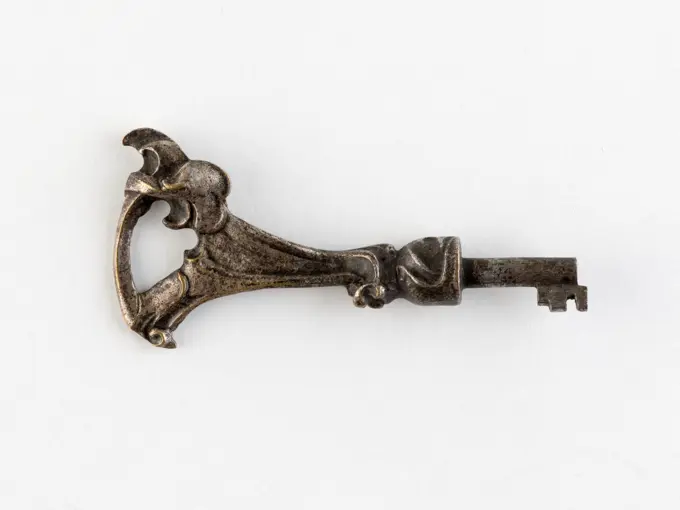
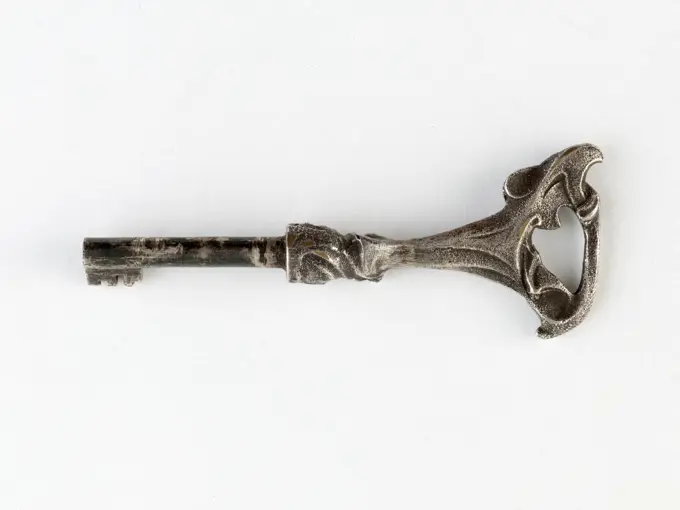
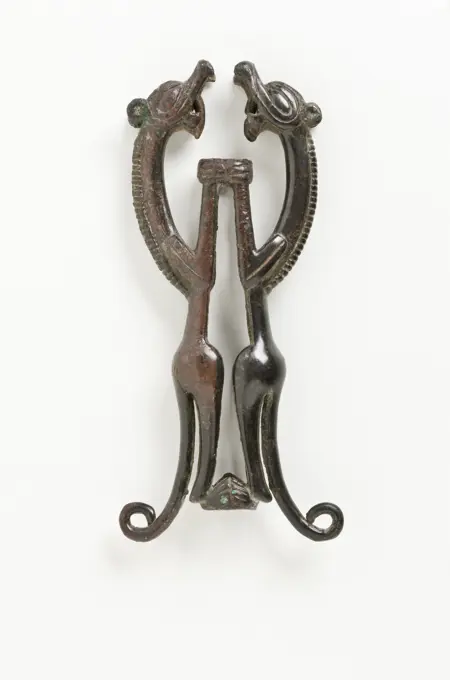
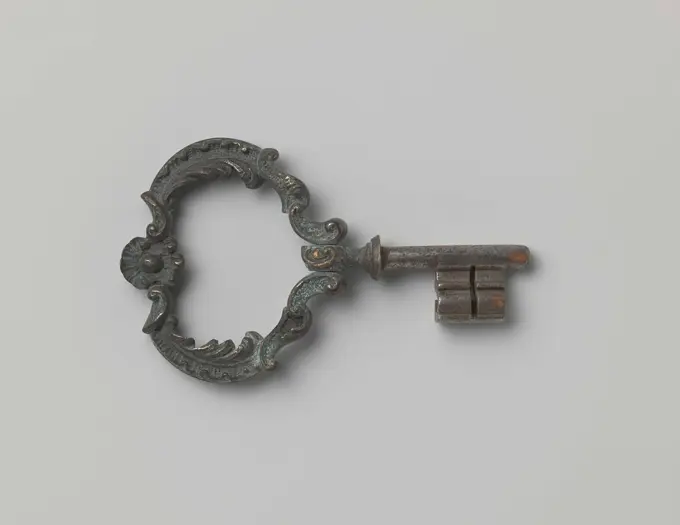
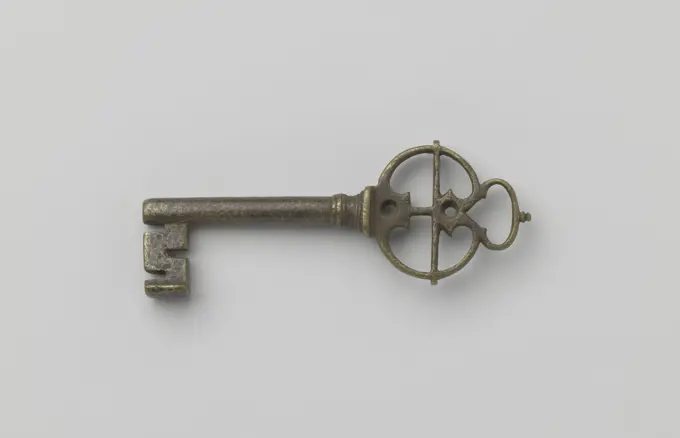
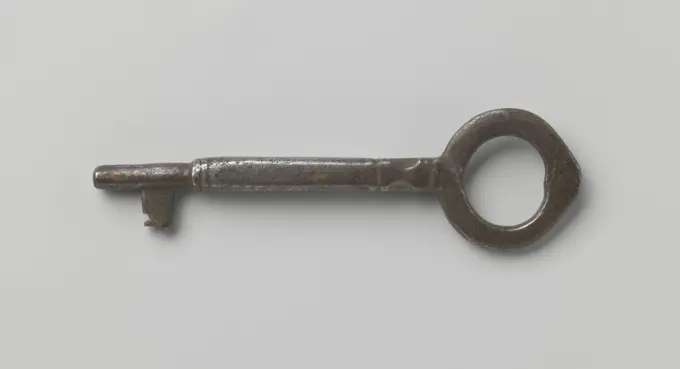
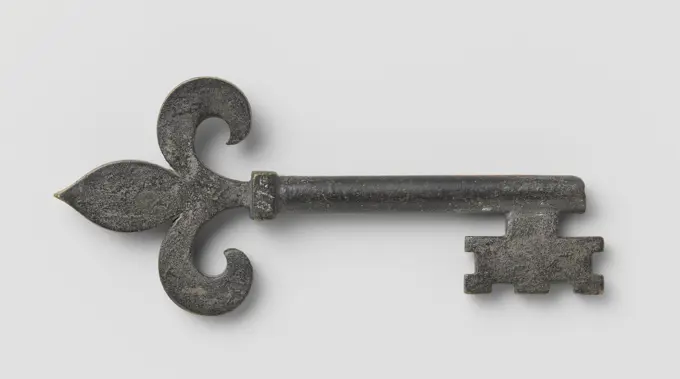
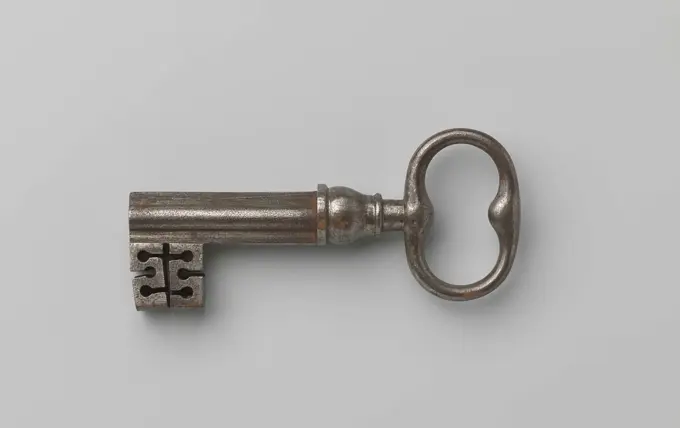
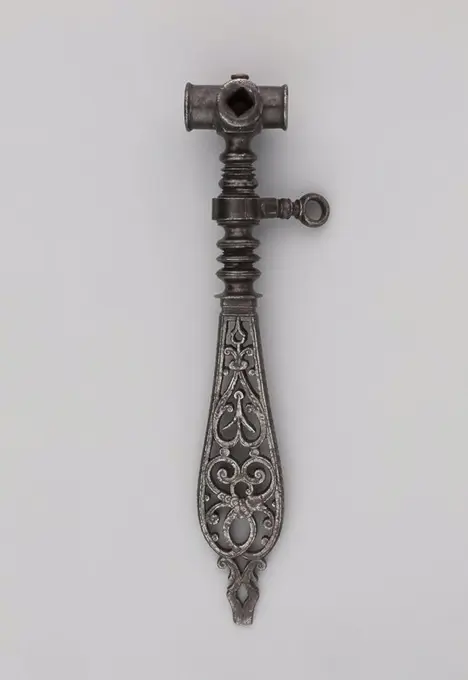
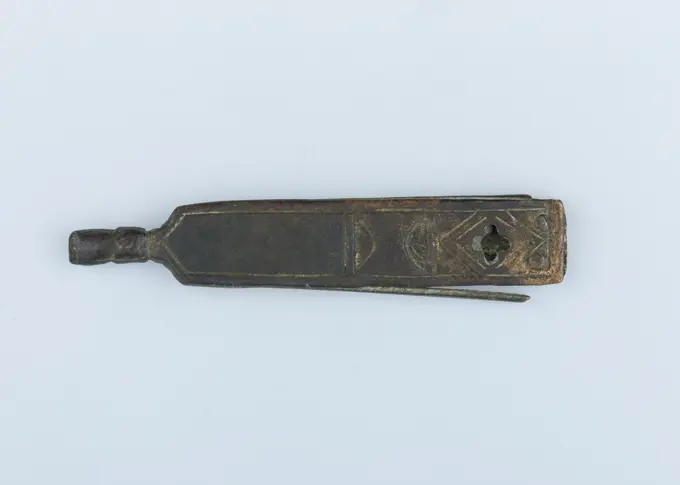
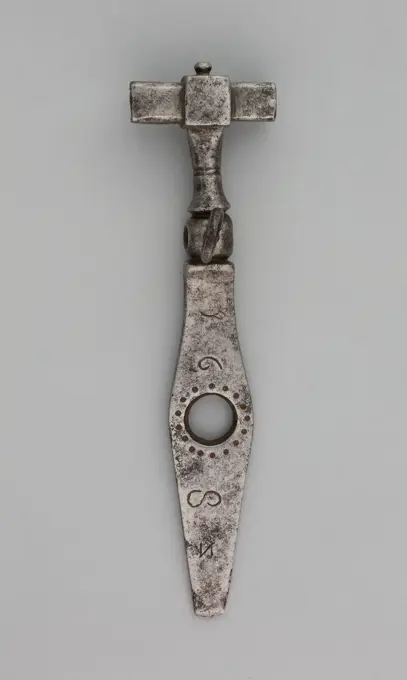
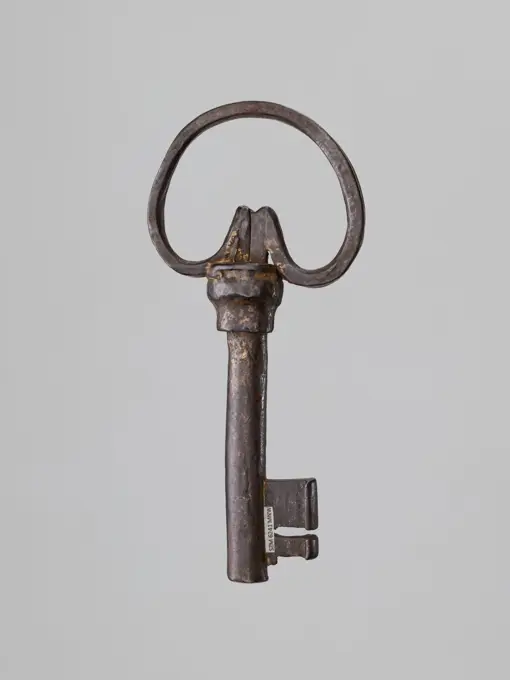
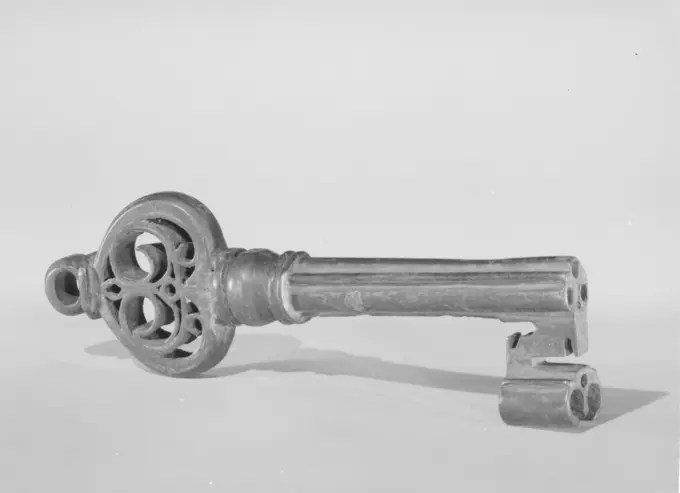
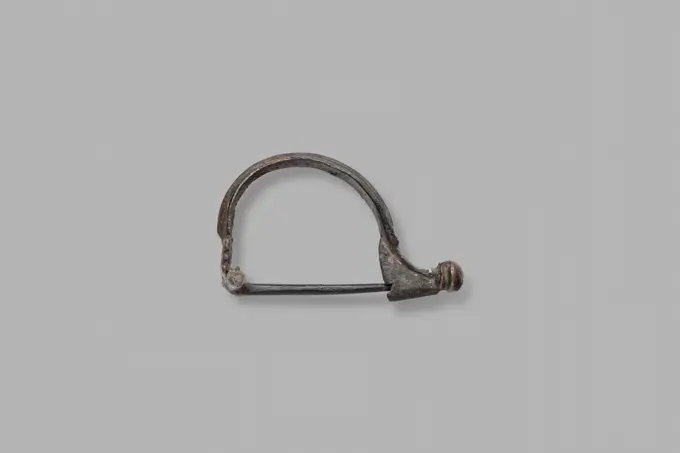
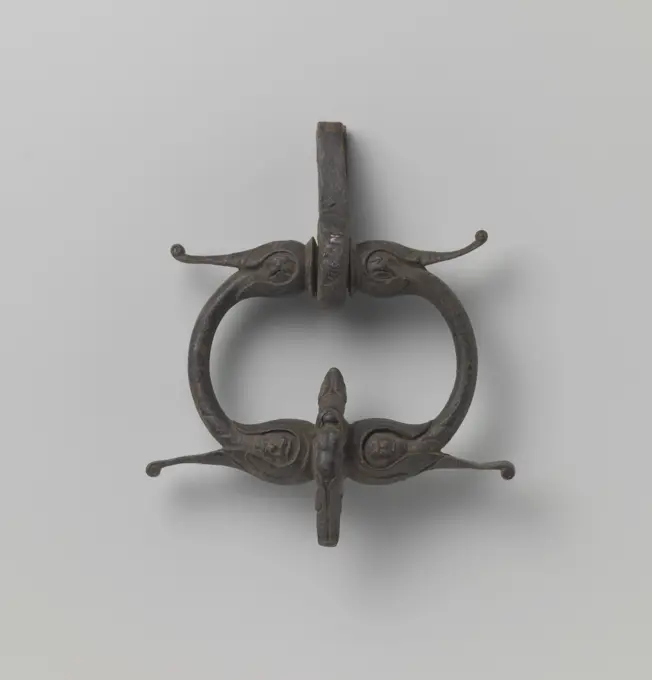
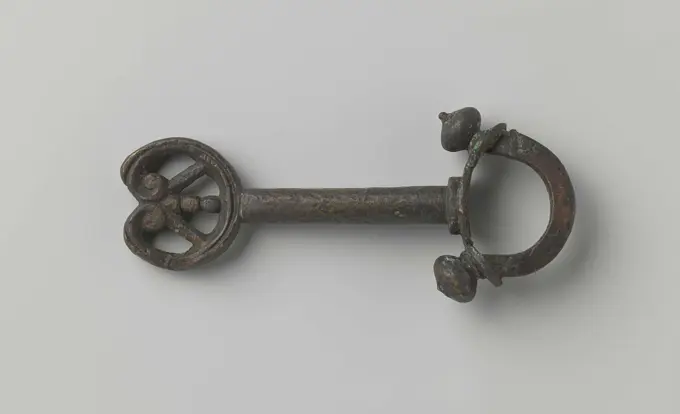
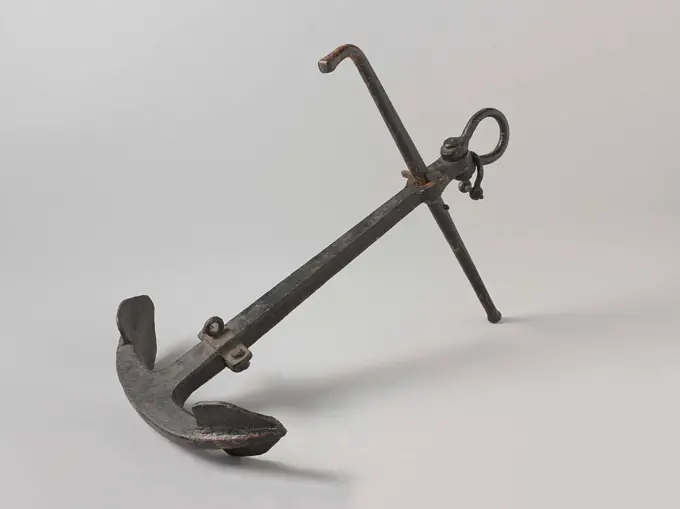
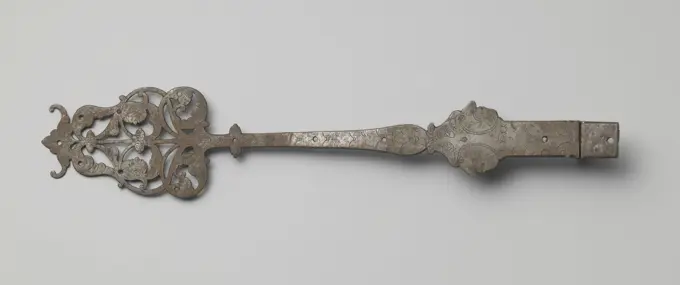
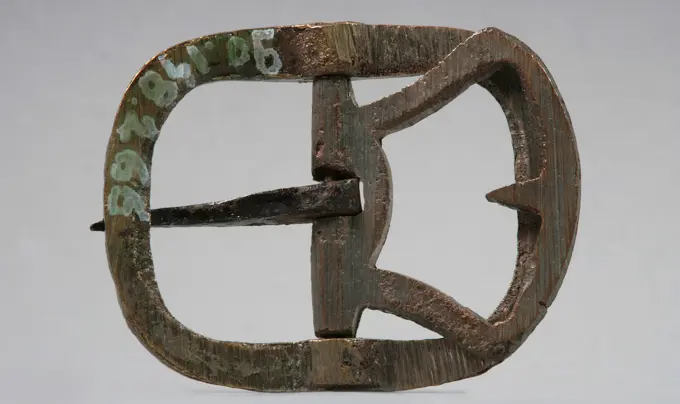
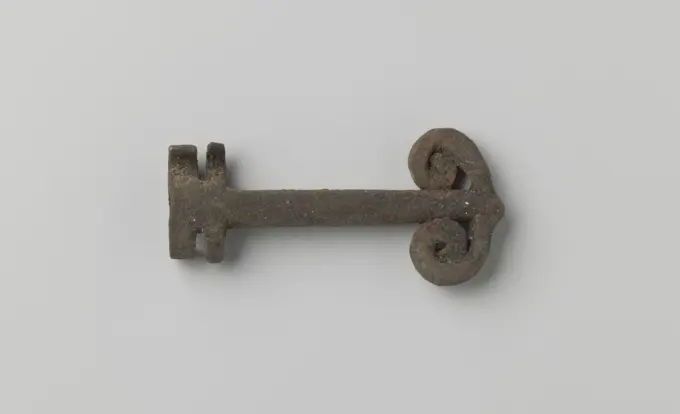
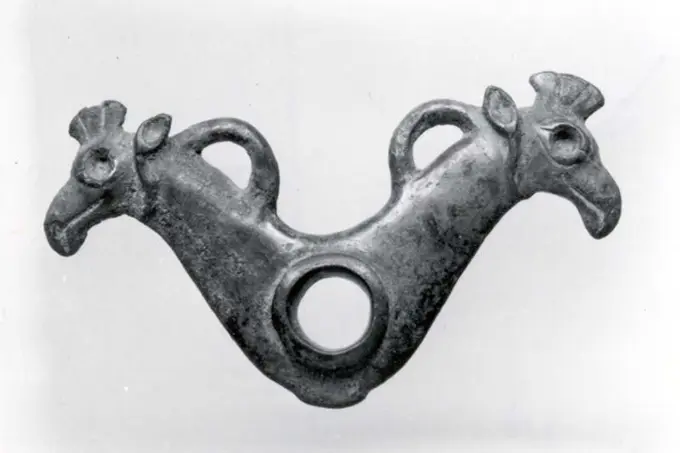
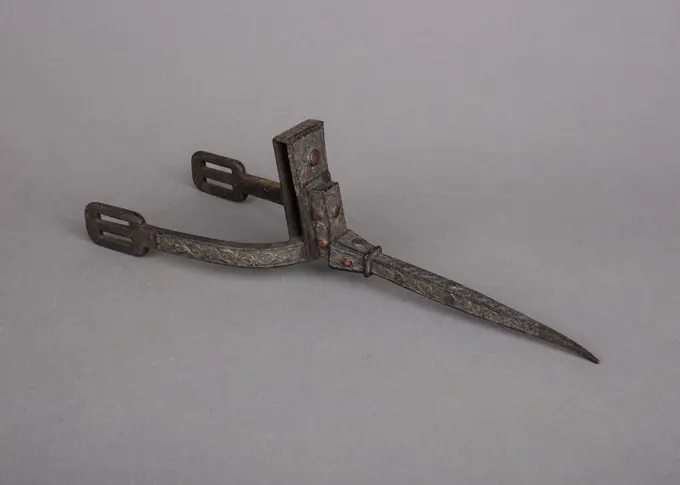
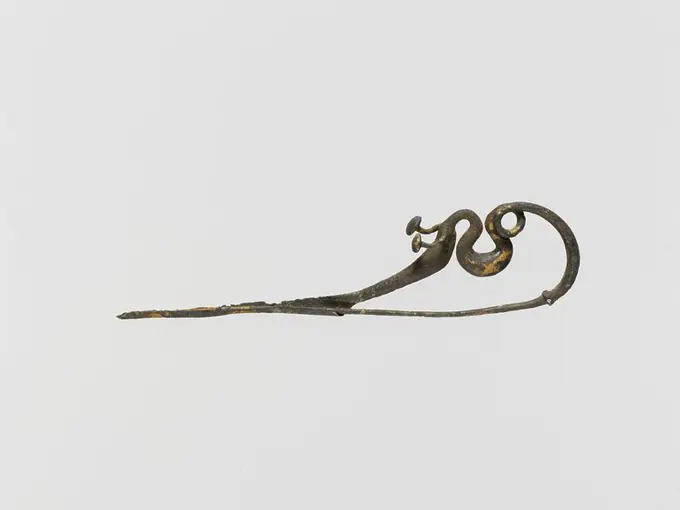
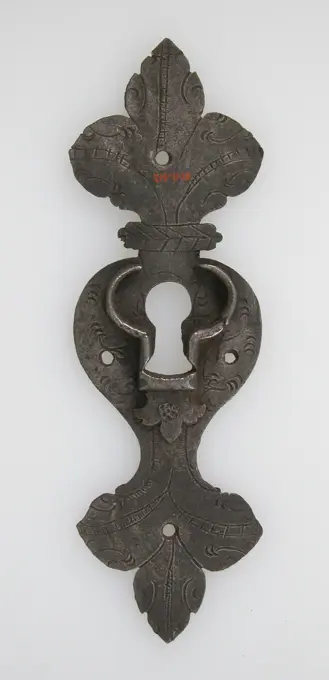
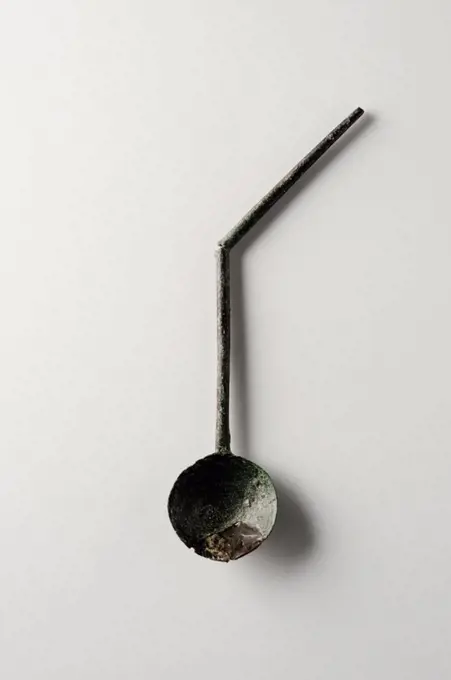
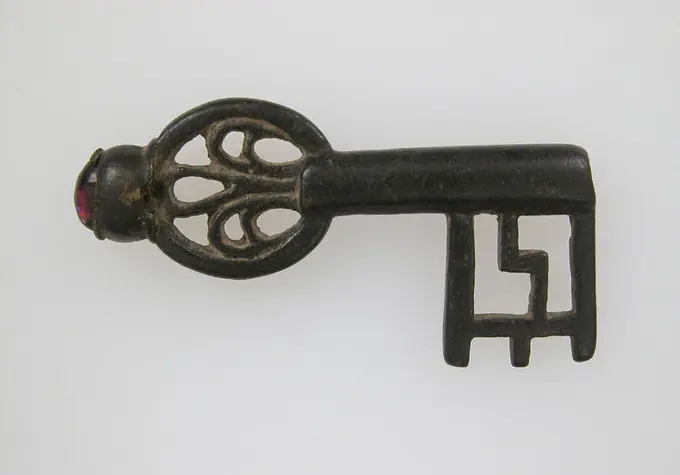
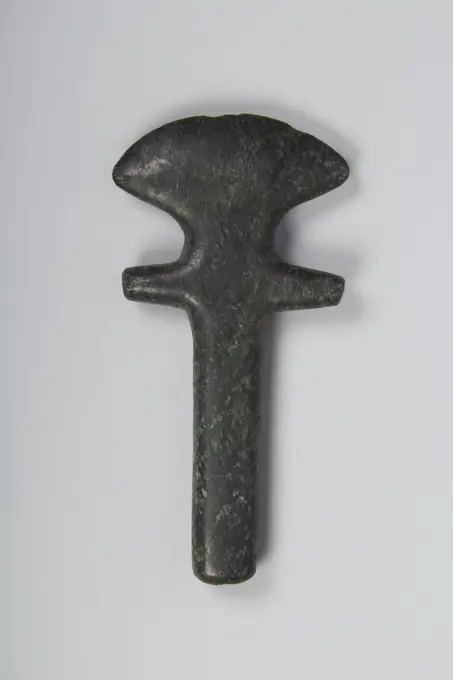
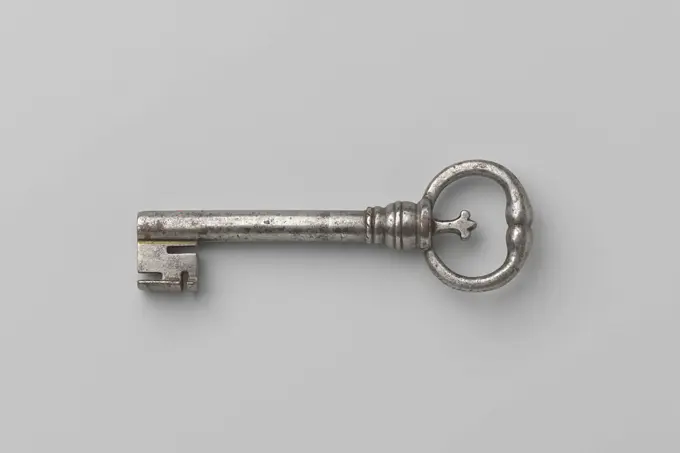
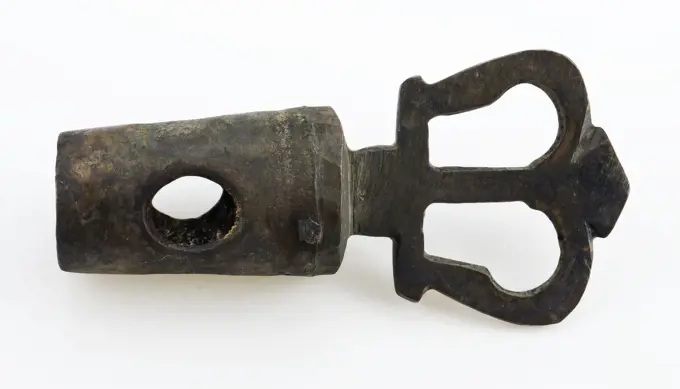
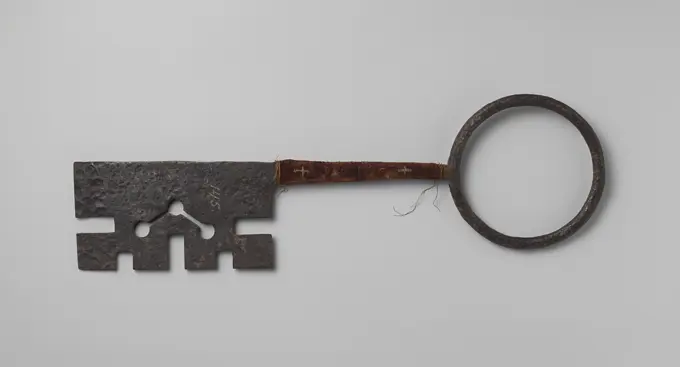
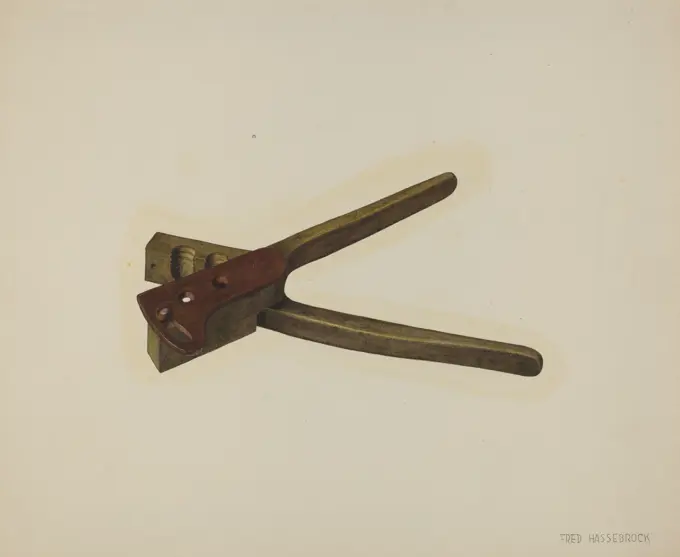
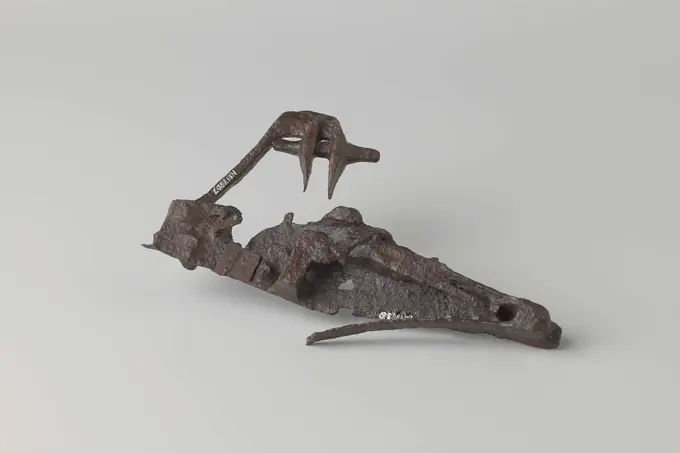
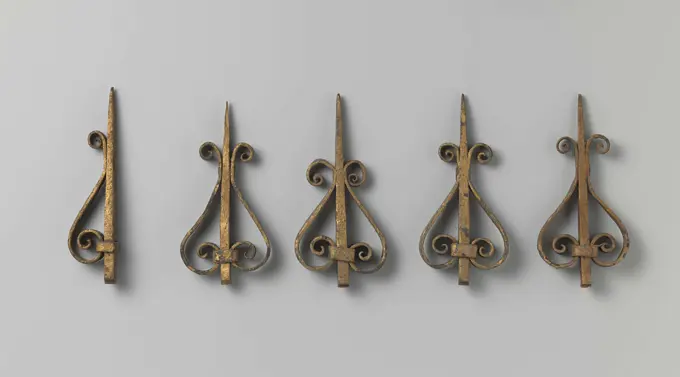
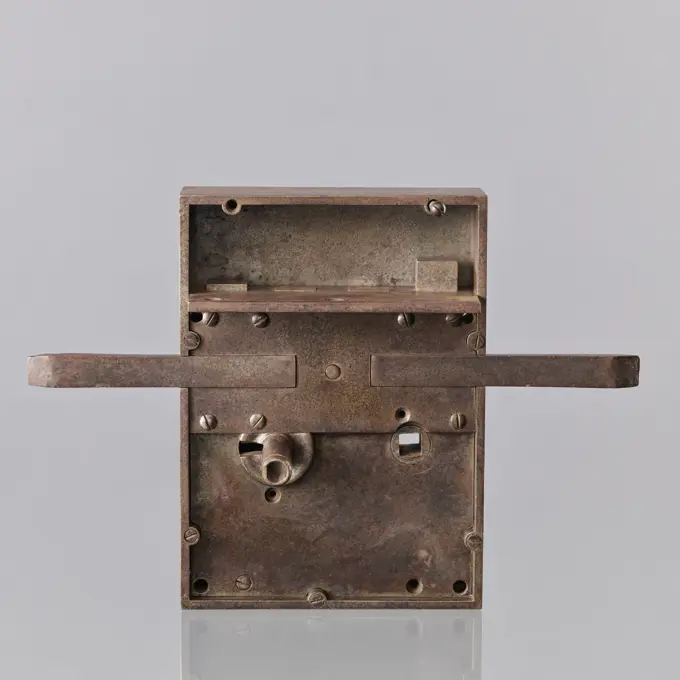
Padlock of iron. .Key, c. 1600 - c. 1699 Key with a square eye standing at an angle, which turns into a thickening of the shaft. This walks past the beard. A cross motif has been carved in the beard.  iron (metal) Key with a square eye standing at an angle, which turns into a thickening of the shaft. This walks past the beard. A cross motif has been carved in the beard.  iron (metal)Pipe key, c. 1400 - c. 1950 Pipe key with handle formed by three loops.  iron (metal) Pipe key with handle formed by three loops.  iron (metal)Hector Guimard (1867-1942). "Key". Bronze. 1909-1911. Museum of Fine Arts of the City of Paris, Petit Palais. 74618-17 BRONZE, CLE, CLEF, DECOREE, MetalHector Guimard (1867-1942). "Key". Bronze. 1909-1911. Museum of Fine Arts of the City of Paris, Petit Palais. 74618-23 Art Nouveau, bronze, key, key, decoration, metalPipe key. Pipe key with horizontal handle, connected to the shaft by means of a ball. The handle is formed from two excluded volutes, an eye between them. Cross-shaped incisions in the beard.Key 15th century German The decoration of Gothic iron locks and keys was often elaborate and of the highest standard of workmanship. The motifs were frequently drawn from Gothic architecture, reproducing on a miniature scale complicated tracery patterns and even tiny statuettes. A number of these tiny locks were compound, with some of the mechanisms concealed from view, and required two or even three keys used in sequence to open them. It has been suggested that the greatly expanded use of locks on doors, or coffrets and other types of storage chests was a result of the increasing urbanization of life and the new emphasis on material wealth and private ownership which developed in the late Middle Ages.. Key 468822Finial. Iran, Luristan, Luristan bronzes, circa 1350-800 B.C.. Architecture; Architectural Elements. BronzeKey, c. 1600 - c. 1699 Key with three -step handle, filled with the French lily and crowned by an eye. Below is the profiled eight -sided capital and the short shaft that runs past the small beard and ends in a button.  bronze (metal) Key with three -step handle, filled with the French lily and crowned by an eye. Below is the profiled eight -sided capital and the short shaft that runs past the small beard and ends in a button.  bronze (metal)39 keys from the collection of Emmanuel Vita Israël, anonymous, c. 1600 - c. 1699 Pipe key whose handle consists of two leaf fillets from which two horses rise, under a bust and a crowned men's head. The capital consists of any discs decorated with pearl edge.  iron (metal) Pipe key whose handle consists of two leaf fillets from which two horses rise, under a bust and a crowned men's head. The capital consists of any discs decorated with pearl edge.  iron (metal)Door key;  XVII-XVIII century (1650-00-00-1770-00-00);Pipe key. Pipe key with tear-shaped beard occupation. The handle consists of two degrees C-volutes, above uivorous ending and a slice. Capiteel consists of a torus and trochilus.Key 15th century German The decoration of Gothic iron locks and keys was often elaborate and of the highest standard of workmanship. The motifs were frequently drawn from Gothic architecture, reproducing on a miniature scale complicated tracery patterns and even tiny statuettes. A number of these tiny locks were compound, with some of the mechanisms concealed from view, and required two or even three keys used in sequence to open them. It has been suggested that the greatly expanded use of locks on doors, or coffrets and other types of storage chests was a result of the increasing urbanization of life and the new emphasis on material wealth and private ownership which developed in the late Middle Ages.. Key. German. 15th century. Iron. Metalwork-IronKey, c. 1500 - c. 1600 Key with three -step eye, crowned by a button. The round capital is grooved. The shaft ends in a profiled point. Beard bent.  iron (metal) Key with three -step eye, crowned by a button. The round capital is grooved. The shaft ends in a profiled point. Beard bent.  iron (metal)Key. Key whose handle also serves as a handle; This is connected to the handle with a hinge. The large, round handle is formed by C-Volutes, Acanthus leaves and a leaf rosette. The beard is Z-shaped. Hold from bronze, shaft and beard of iron.Coffer or chest key 17th-18th century probably Italian. Coffer or chest key. probably Italian. 17th-18th century. Wrought iron. Metalwork-IronKey 15th century German The decoration of Gothic iron locks and keys was often elaborate and of the highest standard of workmanship. The motifs were frequently drawn from Gothic architecture, reproducing on a miniature scale complicated tracery patterns and even tiny statuettes. A number of these tiny locks were compound, with some of the mechanisms concealed from view, and required two or even three keys used in sequence to open them. It has been suggested that the greatly expanded use of locks on doors, or coffrets and other types of storage chests was a result of the increasing urbanization of life and the new emphasis on material wealth and private ownership which developed in the late Middle Ages.. Key. German. 15th century. Iron. Metalwork-IronMeat fork of tinned iron with decorated lifts. Antfork from tinned iron. The lifts is decorated with a pepilled pattern of small circles with a dot in the middle and around it a band of dots and a band of stripes. Two widening devices have been applied in the lifting, one of which has been opened, the other is decorated with a floral pattern. A copper plate is also applied to the lifting lift with the year 1762 and the letters AVD.Key, c. 1800 - c. 1900 Key whose handle is formed by two C-Voluten, the upper and lower ends of which melt with recess of a hole. The whole is crossed by a crossbar and crowned by a bracket with a button. The handle rests on an abacus including a simply profiled capital. The beard has above one and below two notches.  bronze (metal) Key whose handle is formed by two C-Voluten, the upper and lower ends of which melt with recess of a hole. The whole is crossed by a crossbar and crowned by a bracket with a button. The handle rests on an abacus including a simply profiled capital. The beard has above one and below two notches.  bronze (metal)Key, c. 1400 - c. 1950 Key with flat, widening ring and four -sided shaft that is thinner in the small beard.  iron (metal) Key with flat, widening ring and four -sided shaft that is thinner in the small beard.  iron (metal)39 keys from the collection of Emmanuel Vita Israël, anonymous, c. 1800 - c. 1900 Pipe key with grip in the shape of a lily on a square block placed above the shaft.  bronze (metal) Pipe key with grip in the shape of a lily on a square block placed above the shaft.  bronze (metal)Key, c. 1600 - c. 1699 Key whose shaft is torn and profiled at the top. The handle consists of small, stocky C-Volutjes.  iron (metal) Key whose shaft is torn and profiled at the top. The handle consists of small, stocky C-Volutjes.  iron (metal)Pipe key, c. 1600 Pipe key with tear -shaped occupation of the beard. The handle consists of two C-Voluten, which is bothered to each other, above the ending and a disk to it. Kapiteeel consists of a torus and trochilus.  iron (metal) Pipe key with tear -shaped occupation of the beard. The handle consists of two C-Voluten, which is bothered to each other, above the ending and a disk to it. Kapiteeel consists of a torus and trochilus.  iron (metal)Key 15th century German The decoration of Gothic iron locks and keys was often elaborate and of the highest standard of workmanship. The motifs were frequently drawn from Gothic architecture, reproducing on a miniature scale complicated tracery patterns and even tiny statuettes. A number of these tiny locks were compound, with some of the mechanisms concealed from view, and required two or even three keys used in sequence to open them. It has been suggested that the greatly expanded use of locks on doors, or coffrets and other types of storage chests was a result of the increasing urbanization of life and the new emphasis on material wealth and private ownership which developed in the late Middle Ages.. Key 468912Bouwfragment, anonymous, 1700 - 1725 A wooden trapezoidal, openwork stair balluster; In the middle there are chalices and on both sides have been applied volutes. Northern Netherlands (possibly)Netherlands (possibly) wood (plant material). pine (wood). paint (coating). gilding (material) gilding A wooden trapezoidal, openwork stair balluster; In the middle there are chalices and on both sides have been applied volutes. Northern Netherlands (possibly)Netherlands (possibly) wood (plant material). pine (wood). paint (coating). gilding (material) gildingKnife Coin China. Knife Coin 61141Sleutel.Four gathered keys whose shafts are drilled to the four figures of the card game. The keys are numbered by mints of wells on the key chest.Brass hinged book fittings with decorations, decorative fittings soil found brass copper metal, cast engraved Two hinged pieces of batter; one short in the form of lily and the other has hurled shape with hook on the end archeology Rotterdam rail tunnel book close adornment Soil discovery: trajectory rail tunnel Rotterdam.Wheel-Lock Spanner and Turnscrew. German. Date: 1630-1670. Dimensions: L. 18.5 cm (7 1/4 in.). Iron, blued, fretted and engraved. Origin: Germany. Museum: The Chicago Art Institute, Chicago, USA.Mordant early 15th century French. Mordant. French. early 15th century. Bronze. Miscellaneous-Buckles & OrnamentPipe key, c. 1700 - c. 1900 Pipe key with silver handle and key breast; Shaft and beard of iron. Set of 4: BK-KOG-2314-A to -D. The shafts were drilled to the four figures of the card game.  iron (metal). silver (metal) Pipe key with silver handle and key breast; Shaft and beard of iron. Set of 4: BK-KOG-2314-A to -D. The shafts were drilled to the four figures of the card game.  iron (metal). silver (metal)Pijpsleutel.Pipe key of bronze, ring on the corners around urged, pipe with engraved rings decorated, beard from the front and on the sides "fur", moreover incised from below and from the front.Key.key.Key, Chiselled iron, Below is a baluster, upon which two leaf scrolls stand laterally. Scrolls which are below leaves stand upon them. The scrolls are connected below by a clasp, above by scrolls hanging from a crown on top. A calyx stand upon the clasp., France, 1725-50, metalwork, Decorative Arts, KeyFour point treble with round brass buttons with sharp points, dreg anchor ship equipment equipment founding stone metal copper brass iron metal, handforged Half four point treble with round brass buttons with sharp points. Square trunk tapered with eye archeology Rotterdam City center Stadsdriehoek Oostplein New harbor fishing fisherman catching treckets Soil discovery: Oostplein end Nieuwe Haven 1985.Knob, brass, Cast head with lead mouldings, circle of blue enamel along circumference, ca. 1795, metalwork, Decorative Arts, knob, knobWheellock Spanner and Turnscrew 1682 Germany. Iron .Iron key with inward beard, key iron value foundations iron metal, forged sawn archeology Rotterdam City Triangle Spaarbankstraat Market Binnenrotte close theft prevention property Soil discovery Inner rift between former Spaarbank and Markt hoek Spaarbankstraat.Key;  16th century (1501-00-00-1600-00-00);Key, anonymous A key. A key.Fragment fork from the wreck of the East Indieschief Hollandia. Cutlery, Fork; Fragm, Lower End or Stem With 3 Prongs, ID. NG 1980-27H3366.Bronze belt buckle so peanular with ring and rod. 28 mm x 28 mm.( 6 th CE ) - Visigoth period, from the "Afflicted Necropolis "- Archaeological site of Complutum in Alcalá de Henares ( Madrid ). SPAIN.Ceremonies key. Ceremonies key whose eye is formed by one whipped hoses supported on a wide squari area with Roset under and above closed by a profiled edge. Solid, square beard with four rectangular short teeth.Stamper van Brons, Henrick ter Horst (attributed to), 1622 Stamper van Brons has thickened ends, a profiled knot in the middle and a stem decorated with grooves. Deventer bronze (metal) casting Stamper van Brons has thickened ends, a profiled knot in the middle and a stem decorated with grooves. Deventer bronze (metal) castingCoffer or chest key 17th century Italian. Coffer or chest key. Italian. 17th century. Wrought iron. Metalwork-IronSmallsword Carrier Made 1660-1700 Spain. Steel .Fibula typu Aucissa. Rzym, workshopDoor beater, c. 1400 - c. 1950 A door beater.  iron (metal) A door beater.  iron (metal)Bronze sliding key. Bronze Key.Ceremoniesleutel, c. 1400 - c. 1950 Ceremony key with round, circular eye. The shaft is covered with red velvet on which crosses are embroidered with gold threads.  iron (metal) Ceremony key with round, circular eye. The shaft is covered with red velvet on which crosses are embroidered with gold threads.  iron (metal)Anchor. Stick and chain anchor, consisting of a shaft with a curved arm with anchor hands on the ends. Iron anchor stick, secured with a key and equipped with bulbs at the ends. The anchor ring has been replaced by a harp, to which a second harp. Around the shaft just above the anchor cross a bond with two eyes.Door's door tongs, decorated with engraving and fool heads, anonymous, 1600 - 1700 Door stalk of eater decorated with engravings. The batter is from the hinge as follows: a right beginning; A nodus with two outer -looking fool heads; Narrow baluster -shaped rod, from which a few leaf motifs spring towards the end, which curls like volutes. In the middle of it, two fool heads look at each other. The whole ends in a pointed leaf with two curling tendrils on either side of them.  iron (metal). tin (metal) engraving Door stalk of eater decorated with engravings. The batter is from the hinge as follows: a right beginning; A nodus with two outer -looking fool heads; Narrow baluster -shaped rod, from which a few leaf motifs spring towards the end, which curls like volutes. In the middle of it, two fool heads look at each other. The whole ends in a pointed leaf with two curling tendrils on either side of them.  iron (metal). tin (metal) engravingFragment of buyer from the wreck of the East India Hollandia.parts or artifacts; eroded fragments: Materials; Copper.Loop.Fibula Cypriot. Fibula 244433Pipe key, c. 1600 - c. 1699 Pipe key with double hook -shaped beard and grabbed two bent spirals. Belonging to a padlock.  iron (metal) Pipe key with double hook -shaped beard and grabbed two bent spirals. Belonging to a padlock.  iron (metal)pliers and metal nail on a white backgroundCavalry Trumpet. Copper wind instrument with two turns. The copper nozzle is perhaps from another instrument. The cup is repaired on the edge with copper and solder. With signature.Pin Fragment 4th century Late Roman. Pin Fragment 470274PIEZA. Location: MUSEO ARQUEOLOGICO / CASTILLO. LA CORUNA. A CORUÑA. SPANIEN.Chair Leg; painted and gilded walnutKey; 1909-2-264Pijpsleutel.Pipe key with circular grip, filled with residues of tracing. He is crowned by a transverse eye. Damaged.Knives. Bronze. 5th century BC. J.-C. Center-Sud de la Mongolie inner. Paris, Cernuschi museum. 59516-1 Antiquity, bronze, knife, Mongolian, ancientwrench tool on white backgroundHorse bit cheekpiece in form of addorsed griffin heads ca. 8th-7th century B.C. Iran. Horse bit cheekpiece in form of addorsed griffin heads 324488Prick Spur (Left) 19th century Algerian The prick spurs traditionally used in most of the Islamic world evolved directly from late Antique examples. They consist of straight U-shaped branches bearing a very long prick with sometimes a disc at its base. The flat loop at the top of the heel is used for attaching the strap going around the ankle. Here the latter and the left side of the spur are adorned with silver foil bands chiseled with vegetal scrolls and inlaid with coral cabochons, a type of decoration also found on Algerian Berber jewelry as well. Traditionally, Moroccan riders take great pride in their horses and still frequently adorn them with shiny and colorful tack for parades and festivals. Wealthy riders would increase their prestige by covering their mount with luxurious material and equipping themselves with as luxurious matching accessories.. Prick Spur (Left). Algerian. 19th century. Iron, silver, coral. Equestrian Equipment-SpursLuckenbooth brooch -Bronze dragon-type fibula (safety pin). Culture: Etruscan. Dimensions: Other: 4 7/16 in. (11.3 cm). Date: 700-650 B.C..The bow has two loops, a spiral of one turn, and one pair of horns. The head consists of a knob. Museum: Metropolitan Museum of Art, New York, USA.Buckle with hinged bracket, where two angels, buckle fastener part soil find buyer metal, Open bracket with two hooks at the ends in which second bracket that serves as an angel hinges. Angel bracket has pointed ends archeology Rotterdam rail tunnel confirmation Soil discovery: trajectory rail tunnel Rotterdam.Escutcheon plate 16th century German. Escutcheon plate 468807Bronze spoon (cochlear) ability of a centilitre used for eating shellfish seafood , snails and eggs with rod pointed bend. Length 9, 6 cm Width 2, 4 cm Thickness 0, 4 cm Weight 4, 9 gr ( 1 st - 3 rd CE ) - Roman period, from the archaeological site of Complutum in Alcalá de Henares ( Madrid ). SPAIN.Luckenbooth brooch -Krzyż ręczny. nieznany warsztat etiopski (1400-1970)Andiron 1700-1800. Andiron. 1700-1800. IronBronze bow-type fibula (safety pin) early 7th century Etruscan The bow is hollow. On its upper surface is a punched circle. The head is formed by a spiral of two turns.. Bronze bow-type fibula (safety pin) 246360Smoke  an openwork quadrangle unknown, school heianjozoBronze stamper, pestle tools equipment bronze, molded Pestle: round handle with profiled node in the middle. Bolls on both sides of node. At the ends pear-shaped widenings. Profiled ridges on transitions to widening health care pharmacy grinding mortar Rotterdam education Academy of Fine Arts and Technical Sciences Cool Coolvest Dijkzigt G.J. de Jonghweg City Triangle Blaak Academy of Fine Arts and Technical Sciences Rotterdam.Fibula, c. 700 BC. Italy. Bronze; overall: 10.2 cm (4 in.).Key. Culture: French (). Dimensions: Overall: 2 x 1 1/8 x 1/4 in. (5.1 x 2.8 x 0.7 cm). Date: 15th century ().The decoration of Gothic iron locks and keys was often elaborate and of the highest standard of workmanship. The motifs were frequently drawn from Gothic architecture, reproducing on a miniature scale complicated tracery patterns and even tiny statuettes. A number of these tiny locks were compound, with some of the mechanisms concealed from view, and required two or even three keys used in sequence to open them. It has been suggested that the greatly expanded use of locks on doors, or coffrets and other types of storage chests was a result of the increasing urbanization of life and the new emphasis on material wealth and private ownership which developed in the late Middle Ages. Museum: Metropolitan Museum of Art, New York, USA.Handle with handle in the shape of a Herm. The cast, consumered object consists of two parts: the handle and handle. The handle has the shape of a female Herm. The riveted handle has a Rococo ornament on the handle.Stone Axe with Hornlike Protrusions (Ykaku sekifu) Japan This exceedingly rare archaeological artifact—coincidentally resembling the Egyptian hieroglyph anhk, symbolizing “life”—appears to have had a ritual rather than practical function. Only a handful of other similar examples have been published, dated mostly to the mid-Yayoi period based on proximity to datable material in excavation sites in Chiba, Kanagawa, and the Thoku region. Stone Axe with Hornlike Protrusions (Ykaku sekifu). Japan. Stone. Final Jmon period (ca. 1000-300 B.C.). StonePipe key. Pipe key whose annular eye releases to both sides from the grooved and profiled round capital. It has two onion-shaped thickening at the top. A small lily raise rises from the capital.Trumpet from the wreck of the East Indied Flying Heart. Part brass wind instrument. See NG-1986-46-6 and -7.Small Buckle 7th century Frankish. Small Buckle. Frankish. 7th century. Copper alloy, iron tongue. Metalwork-Copper alloyCopper stopper with handle in the form of stylized open crown, stop closure part soil find bronze copper metal, cast sawn Mottled gray yellow-metal stop Conical pin with passhole Handle in the form of stylized open crown with three legs. Raw processing traces archeology tap faucet holder barrel beer wineLeft and Right Knee Defenses (Poleyns) ca. 1460 Western European This is part of a large find of medieval armor discovered in 1840 in the ruins of the fortress of Chalcis, on the Greek island of Euboea (then a Venetian colony called Negroponte). The fortress had been captured and destroyed by the Turks in 1470. Now divided largely between the Ethnological Museum, Athens, and The Metropolitan Museum of Art, the Chalcis hoard contains many rare and unusual elements of fourteenth- and fifteenth-century armor. Of particular importance are the variety of headpieces and the many fragments of brigandines (armor for the torso constructed of small plates riveted to layers of fabric), some of which retain portions of their original velvet covering. The Chalcis armor provides a unique picture of the armament used in the Aegean, one of the easternmost military outposts of the Venetian empire.. Left and Right Knee Defenses (Poleyns) 23278Anonymous, Italian cavalry cartridges, taken in Koufra (attributed title), 1939, metal, leather, Paris Liberation Museum - General Leclerc Museum - Jean Moulin Museum.Ceremoniesleutel.Ceremonies key with round, circular eye. The shaft is covered with red velvet on which crosses are embroidered with gold thread.Fred Hassebrock, Brass Bullet Mold, c 1940 Brass Bullet MoldLuckenbooth brooch -Bronze socket, c. 1300 - c. 1400 Bronze socket wrench, diamond -shaped ring, pen -spreading in pointed point, beard cut from below. France bronze (metal) Bronze socket wrench, diamond -shaped ring, pen -spreading in pointed point, beard cut from below. France bronze (metal)Key isolated on whiteDoor KnockerBronze ring key 3rd-4th century A.D. Roman There are four teeth, of which two are triangular and two rectangular, a thick, quadrilateral shaft, and a ring handle. On the shaft are incised lines.. Bronze ring key 246440Radlot, presumably intended for a large equestrian gun or fire rudder. Radlot, presumably intended for a large equestrian gun or fire rudder. The slot distinguishes itself through an annular stram to the wheel attached to the lock plate with two screws. On the outside of the lock plate, the fuse is still seen. The battle spring is broken, the slot is seriously corroded but the parts of the mechanism are still clearly recognizable. NM-7838 is mentioned incorrectly in connection with this object!Vijf afgebroken ornamenten van hekdeur.A fence consisting of two doors and two side panels. At the bottom they exhibit a plinth decorated with a double row of heart-shaped composite S volutes and some rosettes. Due to the baseline, the bars that fill the middle compartment and wear a narrow fries, occupied with a row profiled bulbs. The frieze is alternately awarded by a long, profiled button, on a pedestal and a short, upright stipulated rod against which two S volutes are placed. Iron in part. Buyer.Mors, -1121. Bronze. Cernuschi Museum, Asia Museum of Asia in the city of Paris.Photo tandard, 1880 - 1900    wood (plant material). metalTreasury castle; Konstable, Karol; 2 after. 19th century (1850-00-00-1875-00-00);