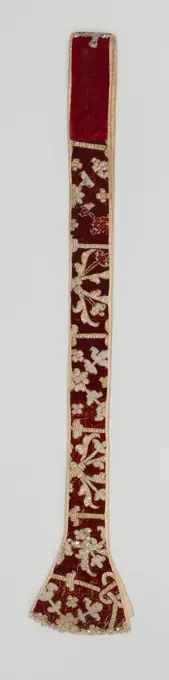
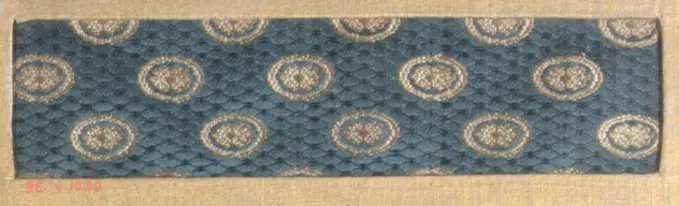
Lace Borders and Strips

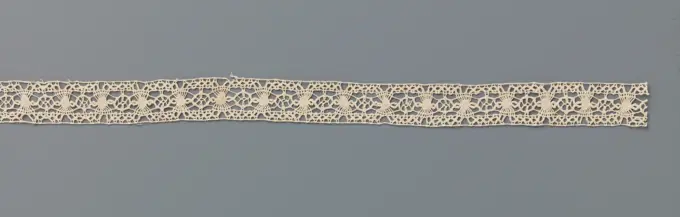
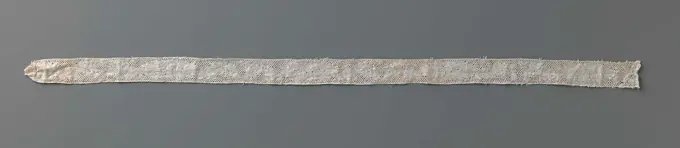
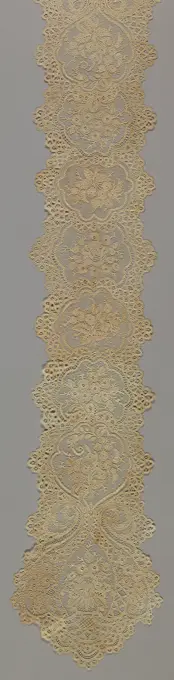
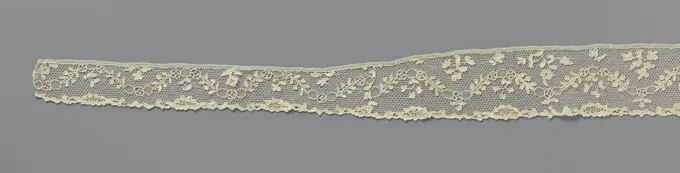
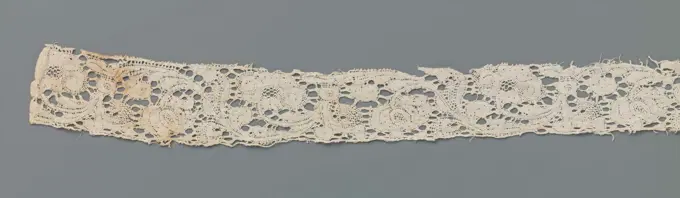
Delicate lace strips showcasing intricate vine and flower motifs, primarily in natural tones, representing French and Venetian needle lace traditions from the 18th to late 19th centuries.
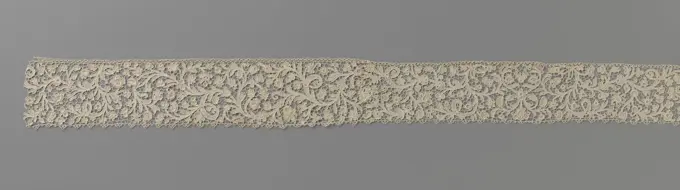
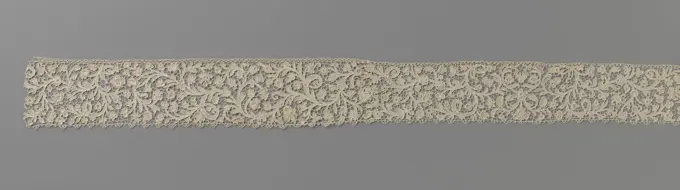
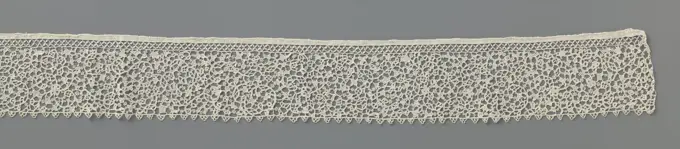
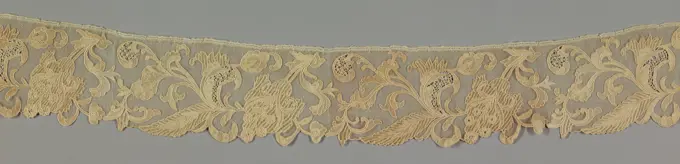
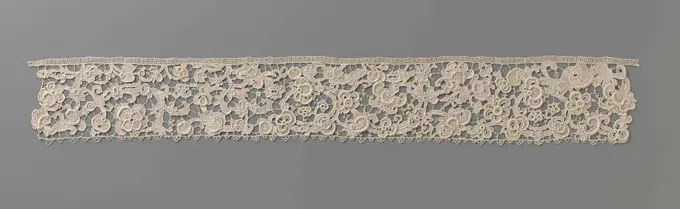
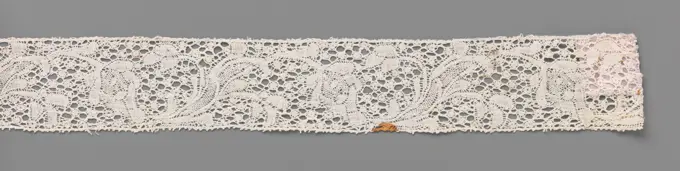
Strip of needle side with plumed tendrils, anonymous, c. 1875 - c. 1895 Strip of natural -colored needle side: Venetian rose side. On a bar of land with six -sided meshes, rich branches, to the left and right, are swiveling and right -wing, sometimes dwelling, sometimes walking. There are multifaceted, carefully detailed button -shaped flowers. Here and there the top of a slender has grown through an opening in the branch. Straight finish of alternately an eye and a triangle. BURANO linen (material) Venetian rose point Strip of natural -colored needle side: Venetian rose side. On a bar of land with six -sided meshes, rich branches, to the left and right, are swiveling and right -wing, sometimes dwelling, sometimes walking. There are multifaceted, carefully detailed button -shaped flowers. Here and there the top of a slender has grown through an opening in the branch. Straight finish of alternately an eye and a triangle. BURANO linen (material) Venetian rose point
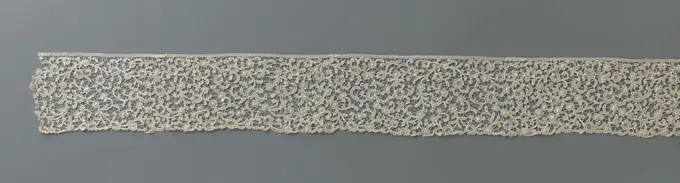
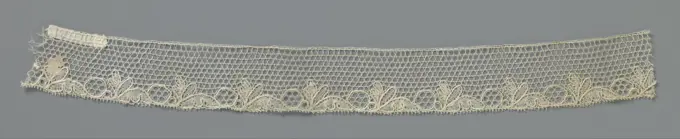
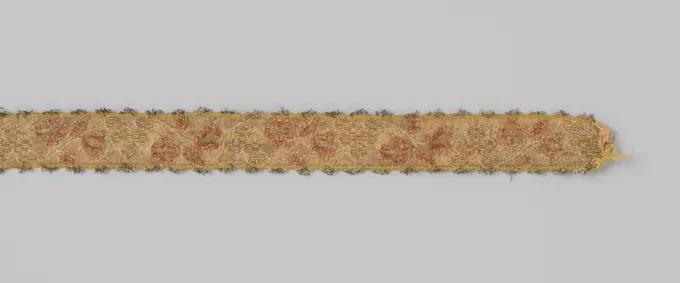
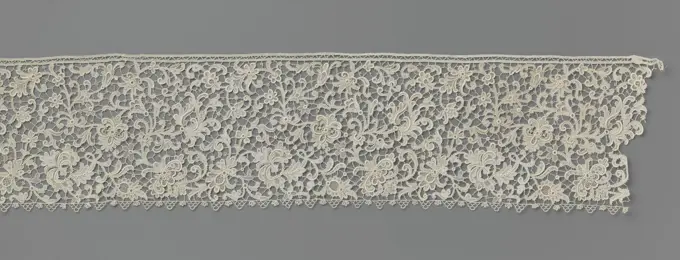
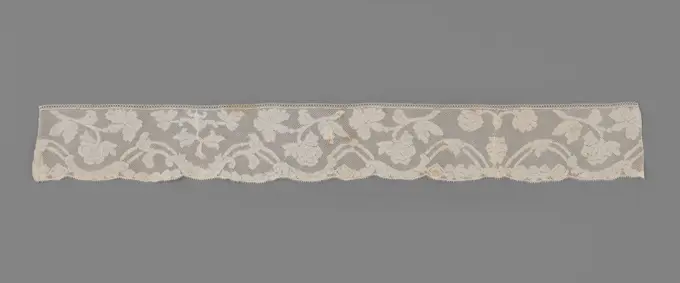
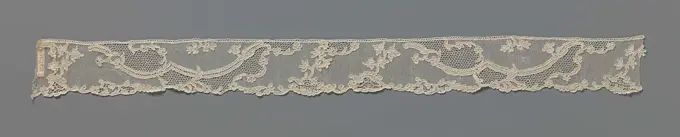
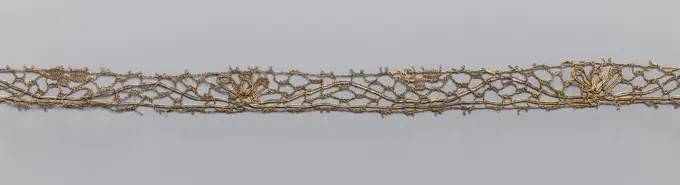
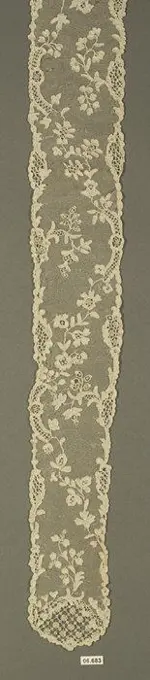
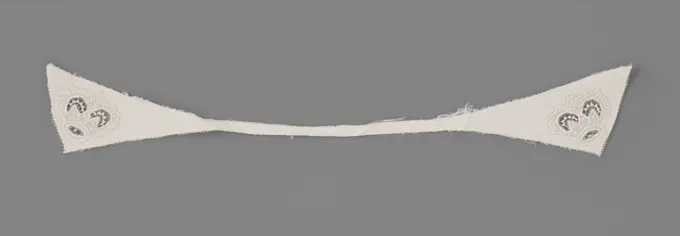
Border, Medium: linen Technique: needle lace, Needle lace with a design of twisting vines and grapes. Commonly called 'Point d'Argentan', France, 18th century, lace, BorderStrip of needle side with plumed tendrils, anonymous, c. 1875 - c. 1895 Strip of natural -colored needle side: Venetian rose side. On a bar of land with six -sided meshes, rich branches, to the left and right, are swiveling and right -wing, sometimes dwelling, sometimes walking. There are multifaceted, carefully detailed button -shaped flowers. Here and there the top of a slender has grown through an opening in the branch. Straight finish of alternately an eye and a triangle. BURANO linen (material) Venetian rose point Strip of natural -colored needle side: Venetian rose side. On a bar of land with six -sided meshes, rich branches, to the left and right, are swiveling and right -wing, sometimes dwelling, sometimes walking. There are multifaceted, carefully detailed button -shaped flowers. Here and there the top of a slender has grown through an opening in the branch. Straight finish of alternately an eye and a triangle. BURANO linen (material) Venetian rose pointStrip of needle side with plumed tendrils, anonymous, c. 1875 - c. 1895 Strip of natural -colored needle side: Venetian rose side. On a bar of land with six -sided meshes, rich branches, to the left and right, are swiveling and right -wing, sometimes dwelling, sometimes walking. There are multifaceted, carefully detailed button -shaped flowers. Here and there the top of a slender has grown through an opening in the branch. Straight finish of alternately an eye and a triangle. BURANO linen (material) Venetian rose point Strip of natural -colored needle side: Venetian rose side. On a bar of land with six -sided meshes, rich branches, to the left and right, are swiveling and right -wing, sometimes dwelling, sometimes walking. There are multifaceted, carefully detailed button -shaped flowers. Here and there the top of a slender has grown through an opening in the branch. Straight finish of alternately an eye and a triangle. BURANO linen (material) Venetian rose pointBorder with Cloud and Peony Motifs.The stylized clouds and peonies look Asian and exhibit the influence of Chinese porcelain and textiles in the Netherlands. The pattern in the clouds, with two symmetrically arranged birds and two angels bearing a halo, however, seems more European. A tiny bird is also incorporated in every peony.Band (Italy); linen; 1945-9-16Strook gemengde kant met gekloste bloemen en 'pareltjes' als bloemharten gemaakt met gefestonneerde naaldkantringetjes.Strip natural-colored mixed side: beaded rosaline. The repeating pattern consists of many curling ranks with different types of small and slightly larger flowers. The motifs are split into linen stroke with cut-outs a partly equipped with clost relief contours. The flower hearts are equipped with 'pearls': scented coniferous rings. In the flower hearts of the larger flowers, a closted ornamental soil has been applied, a closed game stroke ground. The top is straight finished with a straight red strap. The virtually straight underside in which the motifs form minimal shifts is finished with picots.Strip bobbin with circles and leaves along the underside, anonymous, c. 1850 - c. 1899  Strip of natural -colored bobbin, Parisian side. The pattern consists of a succession of a large and a small circle and two different leaves along the underside of the strip. The motifs are connected by a Maas soil, a Parisian soil. The motifs are made in separate linen battle and mains, with thicker and shiny contour threads. A rose soil has been used in the circles as a decorative soil. Up and bottom are straight finished, with the bottom with picots.  linen (material) bobbin lace / Paris laceSilk brokaat ribbon, partly decorated with velvet; A pattern has been applied to a golden surface of a continuous, wavy flower and leaf vend, anonymous, c. 1700 - c. 1725 Silk brokaat ribbon, partly decorated with velvet. A pattern has been applied to a continuous, wavy flower and leaf vend on a golden surface. West-Europa whole: Silk. Brocade (textile). Decoration: Velvet (Fabric Weave) Silk brokaat ribbon, partly decorated with velvet. A pattern has been applied to a continuous, wavy flower and leaf vend on a golden surface. West-Europa whole: Silk. Brocade (textile). Decoration: Velvet (Fabric Weave)Band, Medium: linen Technique: bobbin made continuous tape with bars added, Band in a scroll pattern with bars added. 17th-century pattern, worked later and edged with narrow pointed bobbin lace., Italy, 19th century, lace, BandStrip of needle side with serpentines, anonymous, c. 1675 - c. 1699 Strip of natural -colored needle side: flat Venetian side. Irregular open bars of short spikes occupied with cogs picots. Thin thin intersecting spiral bushes form a rolling pattern of serpentines. Straight outside list of equal triangles. Venice linen (material) flat Venetian (needle point) Strip of natural -colored needle side: flat Venetian side. Irregular open bars of short spikes occupied with cogs picots. Thin thin intersecting spiral bushes form a rolling pattern of serpentines. Straight outside list of equal triangles. Venice linen (material) flat Venetian (needle point)Edge, Medium: Technique: bobbin lace (Valenciennes ground), Narrow border in small scaled floral pattern., 18th century, lace, EdgeStrip 18th century French or Flemish. Strip. French or Flemish. 18th century. Bobbin lace. Textiles-LacesStrip of needle side with clover four, anonymous, c. 1875 - c. 1899 Strip of natural -colored needle side: Venetian relief side. Irregular bars of bar. The thick relief is mainly worked smoothly. The pattern is running and small from report. On the diagonally left, curved stems grow palm -shaped, star -shaped flowers and feathered leaves. A clover of four is enclosed under the top voltage. Belgium linen (material) Venetian raised work Strip of natural -colored needle side: Venetian relief side. Irregular bars of bar. The thick relief is mainly worked smoothly. The pattern is running and small from report. On the diagonally left, curved stems grow palm -shaped, star -shaped flowers and feathered leaves. A clover of four is enclosed under the top voltage. Belgium linen (material) Venetian raised workStrip bobbin with drop -shaped motif in confused pattern of bends, anonymous, c. 1700 - c. 1715  Strip of natural -colored bobbin, Old Flemish side. The apparently confused pattern consists of a succession of, among other things, very narrow C-shaped motifs with small oval buttons on it. Decorative tires with rectangles made in form, form a symmetrical motif in the shape of a drop. The motifs are connected by a braid ground. The very sparingly applied fullwork is made in netslag and linen battle, where the openwork edges are approximately as wide as the fullwork itself. Among other things, a decorative land has been used in the drop -shaped motifs. The top and bottom of the strip are straight finished, with the bottom with picots. Flanders linen (material) bobbin lace / old Flemish laceEdge (Belgium); linenBand, Medium: metallic thread Technique: bobbin lace, metallic, Wide border of metallic gold lace in all-over diamond shaped pattern., Europe, 18th century, lace, BandTrimming, Medium: linen Technique: appliqué on net, bobbin lace, Curving branches and bands of openwork., Belgium, late 18th century, lace, TrimmingNeedlepoint (Cutwork) Lace Band, 17th century. Italy, 17th century. Lace, needlepoint: linen; average: 3.5 x 33 cm (1 3/8 x 13 in.).Hats strip Van Kloskant with Zigzag Rivière, Anonymous, c. 1750 - c. 1760 Strip of natural -colored Brussels bobbin. A rivière in Zigzaglijn is crossed by spiral ranks, which enclose fan -shaped medallions. The motives are connected by a drachel soil. A coarser hexagonal soil has been used in the Rivières. On the fields that are bordered by the Rivière, there are twigs on which flowers in the form of pomegranates, pears or winged insects. The strip was probably used or made for a hat. Brussels linen (material) bobbin lace / Brussels bobbin lace Strip of natural -colored Brussels bobbin. A rivière in Zigzaglijn is crossed by spiral ranks, which enclose fan -shaped medallions. The motives are connected by a drachel soil. A coarser hexagonal soil has been used in the Rivières. On the fields that are bordered by the Rivière, there are twigs on which flowers in the form of pomegranates, pears or winged insects. The strip was probably used or made for a hat. Brussels linen (material) bobbin Border, Medium: linen Technique: needle lace with 6-sided reworked ground, Border containing an overall floral and foliated pattern., France, 1765-75, lace, BorderBorder (Italy)Edge, Medium: linen Technique: bobbin lace (early Valenciennes ground), Valenciennes type of cap lace. Detached leaf and scroll motifs., Belgium, 18th century, lace, EdgeStrook geknoopte kant met twee rijen lussen.Natured strip knotted side: Frivolité. Two rows of loops. The top row consists of oval loops. The lower row has larger drip-shaped loops, alternately larger and smaller. The top is just finished. The loops are finished with picots at the bottom of the strip.Machinal side with a wavy line, anonymous, c. 1850 - c. 1899 Piles of natural-colored machine side: Machinal Valenciennes side. The repeating and continuous pattern consists of a wavy line, which runs in the middle of the length of the narrow strip. The line is made in linen battle with edges open on either side and is connected to a machine square Valenciennes ground, from which the rest of the strip exists. Top and bottom of the strip are straight. France (possibly) cotton (textile) Piles of natural-colored machine side: Machinal Valenciennes side. The repeating and continuous pattern consists of a wavy line, which runs in the middle of the length of the narrow strip. The line is made in linen battle with edges open on either side and is connected to a machine square Valenciennes ground, from which the rest of the strip exists. Top and bottom of the strip are straight. France (possibly) cotton (textile)Strip bobbin with a symmetrical composition of oval cartouches and peonies, anonymous, c. 1650 - c. 1660 Strip of natural -colored Dutch bobbin. The pattern consists of a repeating symmetrical composition of an oval cartouche and peonies. In the cartouches there is a symmetrical drawing with two rosette flowers, among other things. The pattern repeats itself, but the strip has been cut halfway through the oval cartouche on both sides. The motifs are connected by a round grid with braid strokes. The motifs are made in linen battle with openwork edges. The cut short sides are finished with a very closed strip of lace in linen battle with openwork edges, without soil. Southern Netherlands linen (material) bobbin lace Strip of natural -colored Dutch bobbin. The pattern consists of a repeating symmetrical composition of an oval cartouche and peonies. In the cartouches there is a symmetrical drawing with two rosette flowers, among other things. The pattern repeats itself, but the strip has bGalloon 17th-18th century Unknown. Galloon 213847Bobbin Lace Edging, early 19th century. England, Bedfordshire, early 19th century. Lace, bobbin; average: 9.5 x 69.2 cm (3 3/4 x 27 1/4 in.).Kloskant intermediate mate with zigzag line, anonymous, c. 1875 - c. 1949 Piles of Natural -colored bobbin side: Mechelse side. In the middle of the fine grid, a Mechelen soil (also known as ice soil), an openwork band runs in Zigzaglijn, cut over by two types of rosettes. Belgium linen (material) bobbin lace / Mechlin (lace) Piles of Natural -colored bobbin side: Mechelse side. In the middle of the fine grid, a Mechelen soil (also known as ice soil), an openwork band runs in Zigzaglijn, cut over by two types of rosettes. Belgium linen (material) bobbin lace / Mechlin (lace)Piece (one of three) 18th century Flemish. Piece (one of three) 220045Valenciennes side strip, anonymous, c. 1700 - c. 1750 Kloskant strip. The pattern has flowers and tendrils on a ground of diamond -shaped meshes. The strip belongs to two hat slips. France linen (material). Valenciennes lace Kloskant strip. The pattern has flowers and tendrils on a ground of diamond -shaped meshes. The strip belongs to two hat slips. France linen (material). Valenciennes laceStrip bobbin with a pot or dish with pine cone, c. 1800 - c. 1899 Strip of natural -colored bobbin, Parisian side. The repeating and symmetrical pattern consists of a pot or dish on a low base, in which a large pine cone or drop -shaped motif is located. The edges of the pots are decorated with a few flowers, papaverbollen and leaves. The successive pots are connected by a rosette flower. The motifs are connected by a Maas soil, a Parisian soil. The fullwork is largely made in linen battle with few recesses and with thicker contour threads. The center of the pine cone is partly made in netslag. Different decorative lands have been used, including a snowflake land. The top and bottom of the strip are straight finished, with the bottom with picots. France linen (material) bobbin lace / Paris lace Strip of natural -colored bobbin, Parisian side. The repeating and symmetrical pattern consists of a pot or dish on a low base, in which a large pine cone or drop -shaped motif is located. The eGalloon late 18th-early 19th century European. Galloon 224979Kloskant intermediate mate with wheels and suns, anonymous, c. 1600 - c. 1649 Piles of natural torque. It is possible to use as a decorative edge in a sheet. The pattern consists of two narrow tracks with a wider track in between with a repeating motif of a wheel, which is flanked on the left and right by a sun. In the narrow tracks, rows of five checks are made with braids over the motif, always with an interruption to the next motif. Top and bottom of the strip are straight. Italy (possibly) linen (material) bobbin lace Piles of natural torque. It is possible to use as a decorative edge in a sheet. The pattern consists of two narrow tracks with a wider track in between with a repeating motif of a wheel, which is flanked on the left and right by a sun. In the narrow tracks, rows of five checks are made with braids over the motif, always with an interruption to the next motif. Top and bottom of the strip are straight. Italy (possibly) linen (material) bobbin laceTrimming, Medium: silk Technique: woven, Design of white lozenges set in a red square with yellow borders and a scalloped picot edge., France, 17th century, trimmings, TrimmingStrook kloskant met drieblad op golf.Strip natural colosside: Valenciennes-side. On a ground ground, a square valenciennes-soil, a square Valenciennes, is a running pattern of a three-leaf, outstanding from the top of a wave. A smooth list fills the stretched slot. The strip consists of four parts sewn together.Fragment, Medium: linen Technique: needle lace, possibly Ragusa, Italy, late 17th-early 18th century, lace, FragmentFringe (Italy); silkLamb frames of white taf deposited with blue passing. Lice line for on the inside of the sky of a four-poster bed (foot end inside). The lambrem line is made from white taf off with blue passment. This label belongs to the so-called Rosendaelbed.Border Made 1601-1700 Spain. Linen, plain weave; embroidered with silk floss; in back and long-armed cross stitches .Tussenzetsel van kloskant met langgerekte ovale pioenroos tussen twee gebogen bladeren.Interesting of natural Dutch clamping side. The repeating and symmetrical pattern consists of an elongated oval peony between two horizontal lying, curved leaves. The motifs are connected by a more or less round table ground with braid. The motifs are made in linen stroke with openwork edges. Upper and bottom of the strip are straight finished. One short side has been sewn and named to a tip. This zoom has been released on the other short side.Breischede of silver with engraved rank ornament. Breischede or Silver With Engraved Rank Ornaments. Netherlands, ca. 1860.Piece 17th century Japan. Piece 71134EdgingStrip of needle side with spindly flowers, anonymous, c. 1875 - c. 1909 Strip of natural -colored Venetian needle side "Gros Point". On an open bar of land there is a running slender with multifaceted small flowers, which are set with spindly, strongly curved petals. The richly varied leaf voltues are also strongly curved. BURANO linen (material) Venetian gros point (heavy raised Venetian lace) Strip of natural -colored Venetian needle side "Gros Point". On an open bar of land there is a running slender with multifaceted small flowers, which are set with spindly, strongly curved petals. The richly varied leaf voltues are also strongly curved. BURANO linen (material) Venetian gros point (heavy raised Venetian lace)Strook naaldkant met gespleten spiralen.Strip natural needle side: Venetian relief side. There are walking, wide spiral drinks on an open bars soil, which are split in many places. There are also large openwork centers in the flower leaves, which typifies the 19th century. Finish with a right list of over and around large and small triangles.Piece 18th century () European. Piece 225086Strip bobbin with decorative border of stocky stylized flowers, anonymous, c. 1790 - c. 1799 fragment Strip of natural -colored bobbin: Lille side. Under a spray pattern of two rows of one -sided flower branches with a flower with three round petals, a decorative edge runs along the bottom. This consists of a succession of right -wing stocky flowers in two variants. They are alternately a drop -shaped stylized flour between two leaves and a stylized flower in the shape of a fork with three teeth between two leaves. The motifs are made with thicker and shiny contour threads within which a decorative ground, a rose ground, has been applied or not. The stalks of the flowers in the stray pattern and the fork flowers are made in sparingly applied linen battle. Thicker and shiny contour threads run around all the motifs. The motifs are connected by a traly land, a tuler land. Top and bottom of the strip are straight finished, with the bottom with picots. Lille linen (material) bobbin lace / Accessory (Belgium); linen; 1933-1-192Dress Trimming (France); silkStrip bobbin with 'earrings', anonymous, c. 1875 - c. 1899 The bastard of the bobbin (Mechelen soil or ice soil) is decorated with mulets, a row of one -sided targeted leaf branches and a series of 'earrings', which form the shells with campanes. Mechelen side. Belgium linen (material) bobbin lace / Mechlin (lace) The bastard of the bobbin (Mechelen soil or ice soil) is decorated with mulets, a row of one -sided targeted leaf branches and a series of 'earrings', which form the shells with campanes. Mechelen side. Belgium linen (material) bobbin lace / Mechlin (lace)Strip of bobbin with curved flower stem with plume flour, anonymous, c. 1700 - c. 1749 Strip of natural-colored bobbin: binche side. The repeating and continuous pattern consists of a curved flower stem with plume -shaped flour. The motifs are connected by a decorative land, a coarse snowflake ground. The motifs are made in linen battle and mains with openwork edges. At the top and bottom are straight finished, with the bottom with picots. Southern Netherlands linen (material) bobbin lace / Binche lace / snowflake filling Strip of natural-colored bobbin: binche side. The repeating and continuous pattern consists of a curved flower stem with plume -shaped flour. The motifs are connected by a decorative land, a coarse snowflake ground. The motifs are made in linen battle and mains with openwork edges. At the top and bottom are straight finished, with the bottom with picots. Southern Netherlands linen (material) bobbin lace / Binche lace / snowflake fillingFringe 17th century Italian. Fringe 225070Hats slip (barbe) from Mechelse side, Anonymous, c. 1775 - c. 1800 Barbe of Mechelse side with a spray pattern of three different flowers. The edges are trimmed with picots. Belgium . Mechlin (lace) Barbe of Mechelse side with a spray pattern of three different flowers. The edges are trimmed with picots. Belgium . Mechlin (lace)Strook naaldkant met lint en bloemslinger.Strip natural-colored coniferous lace: Alençon side. Pattern with a repetitive motif of a swinging ribbon with a few flowers, crossed by a winding flower garland. The space between ribbon and flower garland is filled with a relatively coarse pattern of hexagonal picoted bars, compared to the other, fine hexagonal maas soil. Two vertical flower branches always separate the repeating pattern of ribbon and flower garland. The top is trimmed with a border clamping side. The underside is finished with a sloping edge that comes from the pattern.Wampum belt -Bobbin Lace (Valenciennes) Lappet, 18th century. France, Valenciennes, 18th century (XVI period). Lace, bobbin: linen; overall: 95 x 9 cm (37 3/8 x 3 9/16 in.).Galloon 18th century French. Galloon 214113Japonslip met halve maantjes.On a coarse maasing ground there is a spreading pattern of Moesjes, who are grouped to half tubes, quadrilles and daisies. A narrow straight edge with fine mesh soil closes the outside and is bounded by pearl lists. Alençon side.Fragment, Medium: linen Technique: bobbin lace, Brussels style, Belgium, late 19th century, lace, FragmentBorder, Medium: linen Technique: bobbin lace made in Lille style with heavy outlining thread, Border of Lille-style lace edged with a garland formed by floral blossoms in a serpentine arrangement., Spain, late 18th century, lace, Border, Border, Medium: linen Technique: bobbin lace made in Lille style with heavy outlining thread, Border of Lille-style lace edged with a garland formed by floral blossoms in a serpentine arrangement., Spain, late 18th century, lace, BorderTrimming; linenTrimming, Medium: silk Technique: woven, Pink trimming fragment in a design of ornamented lozenges with scrolls and leaf forms., France, 19th century, trimmings, TrimmingHebrew ritual lace (one of four) early 18th century Italian, Burano. Hebrew ritual lace (one of four) 226256Tussenzetsel van kloskant met hartje en rond bloempje.Interesting of natural Dutch clamping side. The repeating pattern consists alternately from a heart and a flower ride between two elongated curly leaves. The heart is alternately upright and vice versa. The motifs are connected by a round table ground with braid. The motifs are made in linen stroke with openwork edges and recesses in the circular flower heart. Upper and bottom of the strip are straight finished and attached to a fragment linen from a demolition.Skirt Border, 20th century, 61 x 7 7/8 in. (154.94 x 20 cm), Cotton, Thailand, 20th centuryStole, embroidered unknownEdging early 18th century Flemish. Edging 222810Piece 18th-19th century Japan. Piece 66752Strip of needle side with oval on tops and in valleys of wavy leaf branch, anonymous, c. 1760 - c. 1770 Strip of natural needle side: Argentan side. The strip was part of a scary and is narrowed on the left. The largely repeating pattern consists of a regularly wavy leaf branch, with three ovals at the highest and lowest point of each wave. A flower branch always hangs down under each wave top. From the top of the strip a large flower branch hangs down in each golf valley. The flower branches differ. The motifs are made up of feston stitches with recesses as a decoration and equipped with relief contours. The wavy branch has a ladder pattern. The motifs are connected by a hexagonal soil of founded meshes, an Argentan ground. Flat sculpting edge is formed by a flower garland, which forms at a regular distance Spitsovale Cartouches in which different decorative lands have been used. The top of the strip is straight finished with a tie. Argentan . Argentan Lace Strip of natural needle sidStrip of gold side with arc and fan shells, anonymous, c. 1900 - c. 1937  Strip bobbin, gold side. The pattern consists of semicircular scallops, alternately formed by an arc with mains filling and a fan -shaped motif with loops.  . bobbin laceSampler (possibly Sweden); silkFragment Purple and Yellow Silk Luwel with Cutouts, Anonymous, 1500 - 1599 Fragment Silk flows with yellow soil in purple paragraph ornaments that form windows in which a palmet. Italy, 16th century. Hounder green. Italy silk Velvet chiseled Fragment Silk flows with yellow soil in purple paragraph ornaments that form windows in which a palmet. Italy, 16th century. Hounder green. Italy silk Velvet chiseledNeedlepoint (Venetian Flat Point) Edging, late 17th century. Italy, Venice, late 17th century. Lace, needlepoint; average: 7.3 x 125.8 cm (2 7/8 x 49 1/2 in.).Piece 18th century possibly French. Piece 225090Strook kloskant met golvende bladrank met kelkbloem en gelobde bloem.Strip of a climbing side, old-Flemish dick side. The repeating pattern consists of a continuous wavy rank with a crazy broiler curly side branch in each golf valley and under every golf top a curly side branch with a lobed flower. The motifs are connected by a braid ground. The motifs are made in linen battle with recesses and open editors. One own land with Grovere Maas is used in the heart of the lobed flower. Upper and bottom of the strip are straight finished. The edges are damaged by damaging. The short sides are finished with a soil.Goldsmith's art, Italy, 20th century. Mario Buccellati, openwork gold and silver band bracelet set with rose-cut diamonds, 1920s.Kloskant intermediate mantle with carnation and circular -forming feathered leaves, anonymous, c. 1740 - c. 1760 Piles of natural-colored bobbin, binche side. The repeating and continuous pattern consists of a sloping carnation on a curved stem with feathered leaves. The leaves form a circle. The motifs are connected by a decorative land, a snowflake ground. The motifs are made in linen battle with openwork edges. The long sides are right finished. The strip is cut out of a linen demolition, another edge of the linen runs along both long sides, the stitching is partly released. Binche linen (material) Bobbi Lace / Binche Lace Piles of natural-colored bobbin, binche side. The repeating and continuous pattern consists of a sloping carnation on a curved stem with feathered leaves. The leaves form a circle. The motifs are connected by a decorative land, a snowflake ground. The motifs are made in linen battle with openwork edges. The long sides are right finished. The strip is cut out of a Sash (USA); Designed by Lydia Bush-Brown (American, 1887-1984); cotton, silk; L x W: 247 x 22.5 cm (8 ft. 1 1/4 in. x 8 7/8 in.)Trimming, Medium: silk Technique: woven, Heading woven in a pattern of alternating pink and yellow stripes. Weft threads arranged to form narrow looped fringe on either side., Spain, 17th century, trimmings, TrimmingStrip of bobbin with stylized flour between two vertical lines and ovals on a rectangular batist, anonymous, c. 1600 - c. 1624 Strip of natural -colored bobbin, Old Flemish side or Dutch bobbin side. The strip is attached to a narrow rectangular fragment linen batist, possibly a remnant of a sheet. The side has a pattern that consists of vertical straight lines, between which a stylized flower stands. On the center line, the flower is flanked on the left and right by a lying rush -hour, which always cuts the vertical line. The motives are made in linen battle with recesses, there is hardly any soil, the motives are connected by very short braids. Up and bottom of the strip are finished with a straight edge. Northern Netherlands (possibly) linen (material) bobbin lace / old Flemish lace Strip of natural -colored bobbin, Old Flemish side or Dutch bobbin side. The strip is attached to a narrow rectangular fragment linen batist, possibly a remnant of a sheet. The side has a pattern that coEdging, Medium: cotton Technique: machine made, White imitation Alençon with a design of small sprays and openwork, motifs with ornamental border at one edge., possibly France, ca. 1890, lace, EdgingCollar of linen batist with smooth -set strip of bobbin with florets and edge of scoop, anonymous, c. 1750 - c. 1799  Collar of linen batist with a smoothly set strip of natural-colored bobbin, binche side. The collar has a rectangular model. The strip has a pattern with roses and a scrap edge. The motifs are connected by a grid, a five -part ground. Binche linen (material) Bobbi Lace / Binche LaceGalloon late 18th-early 19th century European. Galloon 225031Fragment of the lace;  18th century (1701-00-00-1800-00-00);Textile, Medium: silk Technique: fancy compound satin, Dark pink satin ground with brilliant polychrome symmetrical small scale repeat of flowering bush surrounded by serpentine vines and flanked by paired peacocks., India, 18th-19th century, woven textiles, TextileRibbon, China, 18th century, woven textiles, RibbonTrimming, Medium: silk Technique: cut and uncut supplementary warp pile (velvet), Red trimming fragment with a design of blocks covering half the width; the other half in a floral pattern. One picot edge., France, 19th century, trimmings, TrimmingBarbe ca. 1760 French. Barbe 212900Border, Technique: bobbin lace, Bobbin lace border, floral scroll; early 19th century Maline., early 19th century, lace, BorderBobbin Lace (Point d'Angleterre) Lappet, early 18th century. Belgium, Brussels, early 18th century. Lace, bobbin; average: 10.5 x 99.7 cm (4 1/8 x 39 1/4 in.).old wooden sign board isolated on whiteNeedlepoint (Point Alençon) Lace Edging, 18th century. France, Alençon, 18th century. Lace, needlepoint; average: 9.9 x 74.9 cm (3 7/8 x 29 1/2 in.).Valance 17th century Italian. Valance 236642Ribbon, c. 1870s. France, late 19th century. Silk; overall: 134.6 x 10.8 cm (53 x 4 1/4 in.).Hammered Silver Miniature Club 8th-mid-16th century Peru; north coast (). Hammered Silver Miniature Club 309197Fragment of a collar of linen with two openwork crowns, anonymous, c. 1910 - c. 1920 Fragment of a collar of linen with two openwork crowns.  linen (material) embroidering / bobbin lace Fragment of a collar of linen with two openwork crowns.  linen (material) embroidering / bobbin laceBobbin Lace Edging, 18th century. Spain, Seville, 18th century. Lace, bobbin; average: 2.9 x 22.3 cm (1 1/8 x 8 3/4 in.).Lappet (one of a pair) mid-18th century Flemish, Brussels. Lappet (one of a pair) 222799Border (possibly France); block-printed; 40.5 x 5 cm (15 15/16 x 1 15/16 in.); Purchase, Pauline Riggs Noyes Fund; 1953-202-2Galloon early 19th century French. Galloon 214014