Lace Borders and Strips

Delicate lace strips showcasing intricate vine and flower motifs, primarily in natural tones, representing French and Venetian needle lace traditions from the 18th to late 19th centuries.
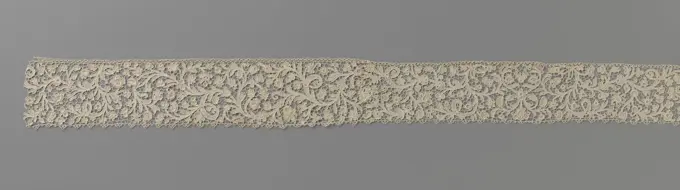
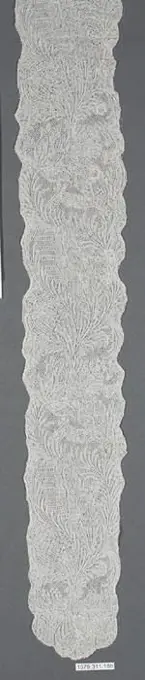
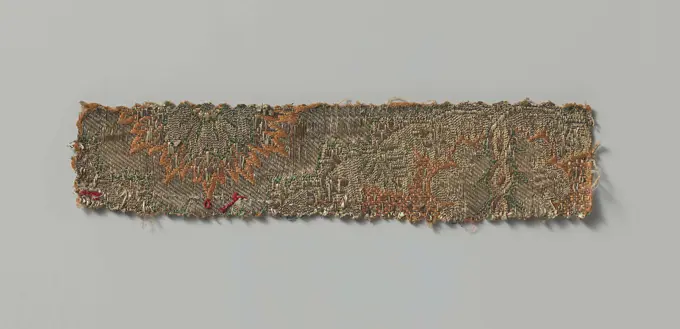
Strip of needle side with plumed tendrils, anonymous, c. 1875 - c. 1895 Strip of natural -colored needle side: Venetian rose side. On a bar of land with six -sided meshes, rich branches, to the left and right, are swiveling and right -wing, sometimes dwelling, sometimes walking. There are multifaceted, carefully detailed button -shaped flowers. Here and there the top of a slender has grown through an opening in the branch. Straight finish of alternately an eye and a triangle. BURANO linen (material) Venetian rose point Strip of natural -colored needle side: Venetian rose side. On a bar of land with six -sided meshes, rich branches, to the left and right, are swiveling and right -wing, sometimes dwelling, sometimes walking. There are multifaceted, carefully detailed button -shaped flowers. Here and there the top of a slender has grown through an opening in the branch. Straight finish of alternately an eye and a triangle. BURANO linen (material) Venetian rose point
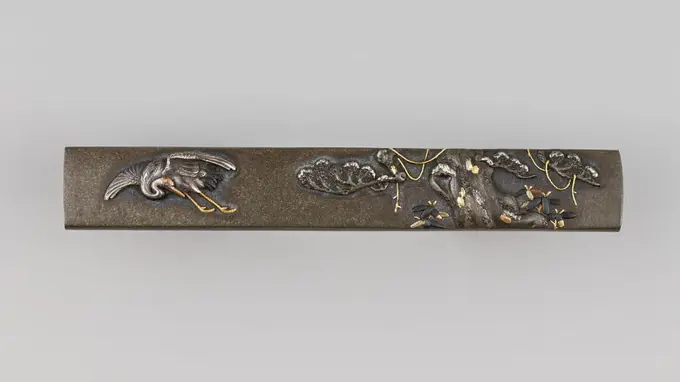
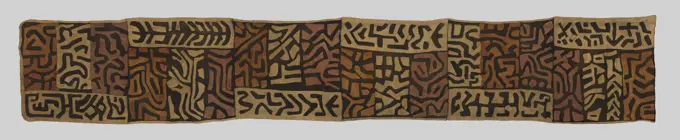
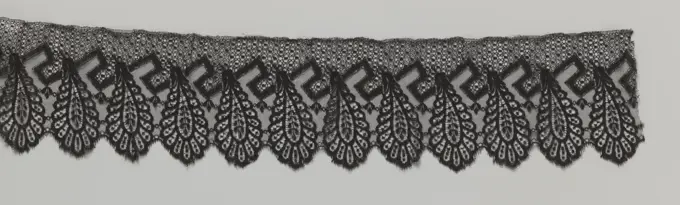
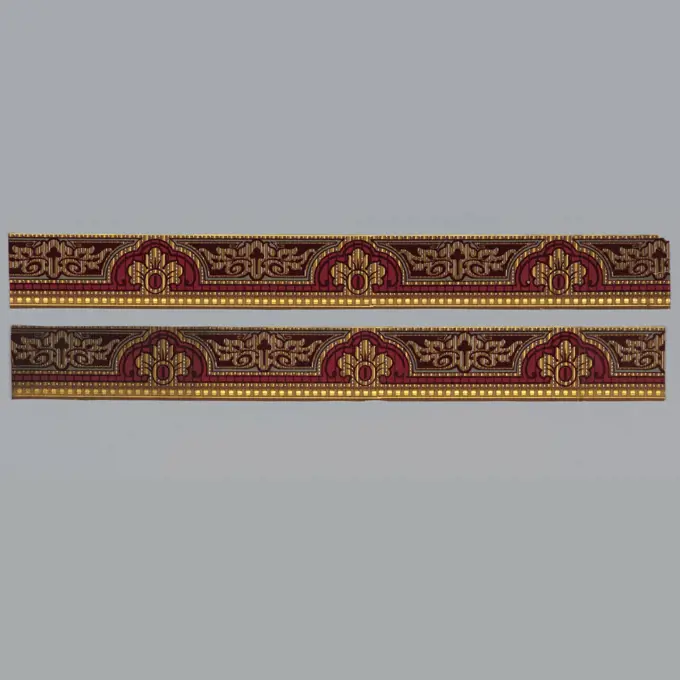
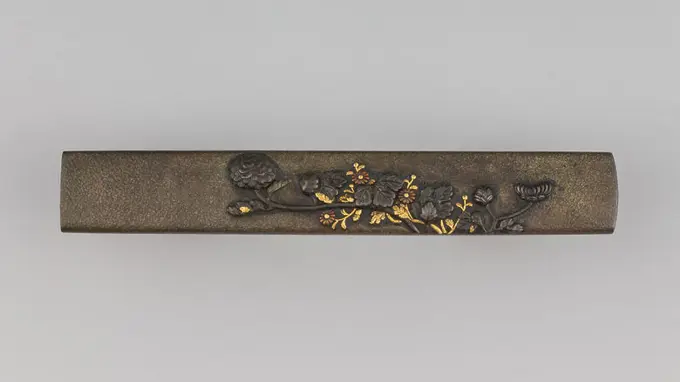
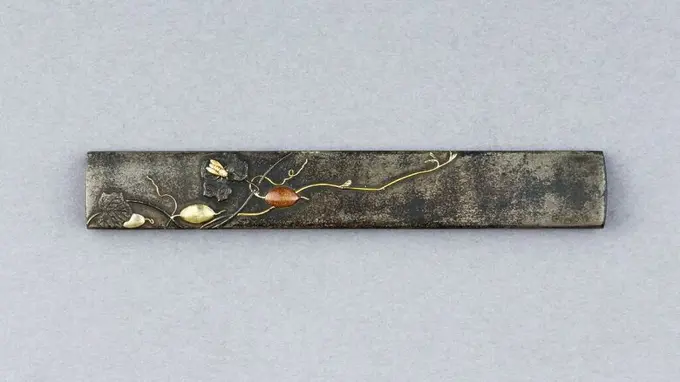
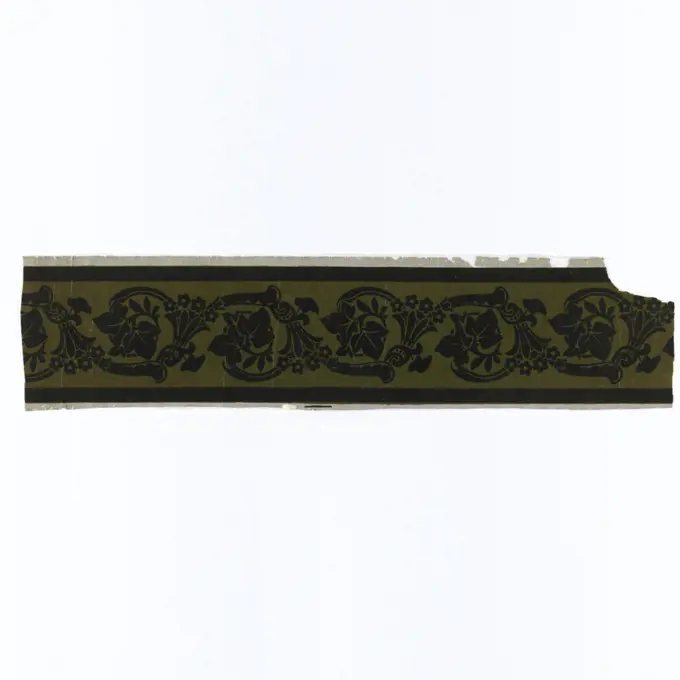
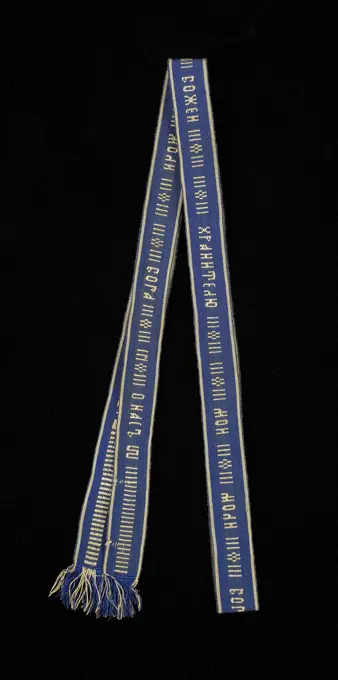
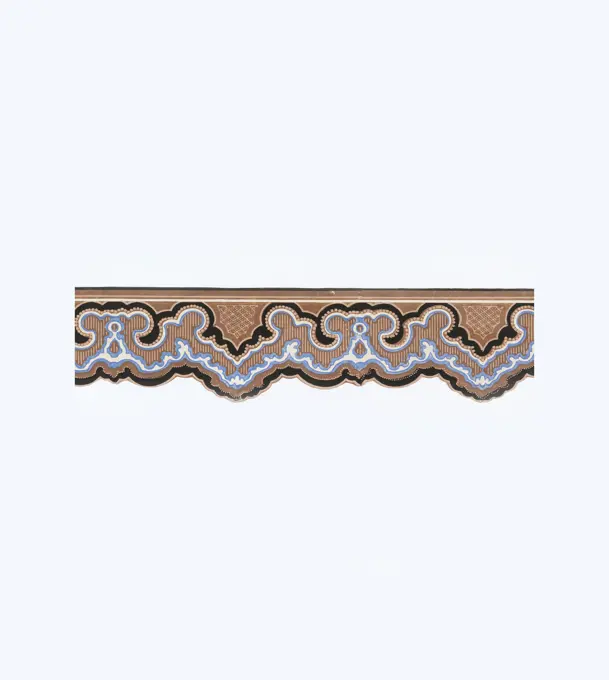
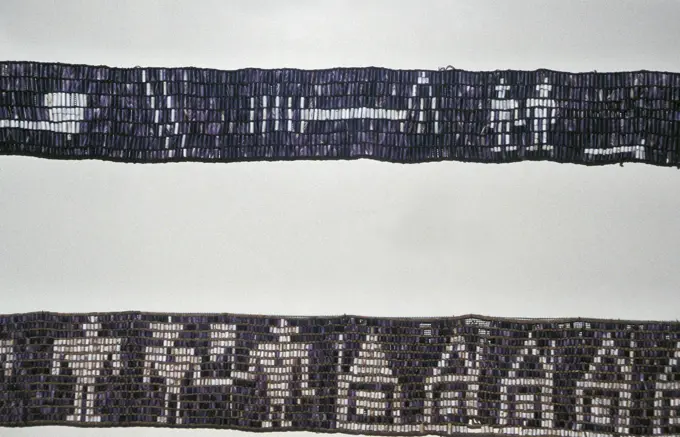
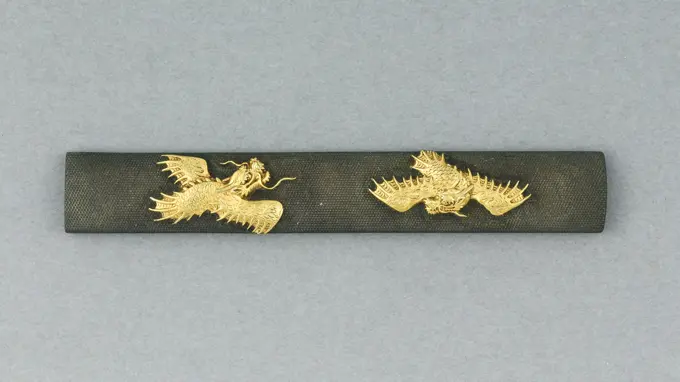
Needlepoint (Point Alençon) Lace Edging, mid 18th century. France, Alençon, mid 18th century. Lace, needlepoint; average: 8 x 179.1 cm (3 1/8 x 70 1/2 in.).Tussenzetsel van kloskant met golvende rank met pioenrozen.Inconsive of natural college side: Old clamp side with braid soil. The repeating and continuous pattern consists of a wavy flower drink with curling leaves and a large peony under every wave top and in every golf valley. The motifs are made in linen stroke with openwork edges and fine recesses. The motifs are connected by a braid ground. Upper and bottom of the strip are directly finished in which the underside is equipped with picots.Klomp Johannes Franziskus (1865-1946), St. Matthäus, Altena (1892-1898): Tower tip, view and cut (1: 1). Pencil on transparent, 59.1 x 333.4 cm (including scan edges) Klomp Johannes Franziskus  (1865-1946): St. Matthäus, AltenaPassementerie 17th century Spanish. Passementerie. Spanish. 17th century. Silk and metal thread. Textiles-TrimmingsGreen ribbon for a festive decor, isolated on a white background Green ribbon for a festive decor, isolated on a white background Copyright: xZoonar.com/OleksandrxKostiuchenkox 10044602Right Corner Block of a Cornice. UnknownTextile; silk, metallic yarnsLappet 18th century Franco-Flemish The Metropolitan Museum's great lace collection was started when the Museum became the first among American museums to organize a permanent collection of lace with the acceptance of the McCallum Collection in 1879 and the bequests of Mrs. John Jacob Astor, Mrs. Robert L. Stuart, Mrs. Augustus Cleveland, and Mrs. A. W. Winters shortly thereafter. In 1893 a loan collection of antique laces shown at the World's Columbian Exposition in Chicago was assembled by a committee of New York women headed by Catharine Augusta Newbold. About 1900 Miss Newbold arranged and labeled an exhibition of laces and linenworks lent to the Metropolitan Museum by Mrs. James Boorman Johnstone and the Misses Johnstone. "Her scholarly knowledge of lace technique enabled the Museum for the first time to offer a comprehensive display of lace illustrating its historical development," wrote Miss Frances Morris, then curator of the textile department. Miss Newbold's name occurs again Dass slip with volute vines, anonymous, c. 1675 - c. 1699 Dassle slip of natural -colored needle side: flat Venetian side. Symmetrical side with an irregular bar of bar, completely covered with thick volute bines on which club -shaped buttons. A straight list of similar triangles of arches runs around. Venice linen (material) flat Venetian (needle point) Dassle slip of natural -colored needle side: flat Venetian side. Symmetrical side with an irregular bar of bar, completely covered with thick volute bines on which club -shaped buttons. A straight list of similar triangles of arches runs around. Venice linen (material) flat Venetian (needle point)Piece 17th century Japan. Piece 71305Galloon 18th century Italian. Galloon 213959Bobbin Lace Insertion without Selvage, mid 16th century. Italy, Venice, mid 16th century. Lace, bobbin; average: 1.3 x 24.8 cm (1/2 x 9 3/4 in.).Sub -sleek of mechanical tulle decorated with tracing in the form of leaves, anonymous, c. 1820 - c. 1920 Sub -sleek of mechanical tulle, decorated with tracing in the form of leaves. West-Europa whole: Sub -sleek of mechanical tulle, decorated with tracing in the form of leaves. West-Europa whole:Rebozo (Mexico); silk, metal-wrapped silk coreBorder Made 1501-1700 Germany. Linen, plain weave; embroidered with silk .Probe. UnknownA sash from the funeral of Adam Mickiewicz in Krakow on July 4, 1890Trim, looped braid, 18th-19th century, 18 x 1 in. (45.72 x 2.54 cm), Passementerie, 18th-19th centuryBracelet made from a double link chain, c. 1850 Silver bracelet. Consisting of a double switch chain that closes with a cylindrical spring lock, with longitudinal tests. Netherlands (possibly) silver (metal) Silver bracelet. Consisting of a double switch chain that closes with a cylindrical spring lock, with longitudinal tests. Netherlands (possibly) silver (metal)Witte Strik, Unknown, 1920 - 1980  Europe textile materials  Europe textile materialsKnife Handle (Kozuka). Culture: Japanese. Dimensions: L. 3 13/16 in. (9.7 cm); W. 9/16 in. (1.4 cm); thickness 1/4 in. (0.6 cm); Wt. 1.1 oz. (31.2 g). Date: dated 1829. Museum: Metropolitan Museum of Art, New York, USA.Fan Case (probably England); printed paperCeremonial Skirt (Ntchak) late 19th century Kuba peoples, Bushoong group. Ceremonial Skirt (Ntchak). Kuba peoples, Bushoong group. late 19th century. Raffia palm fiber, natural dyes. Democratic Republic of the Congo, Kasai River region. Textiles-WovenPiece 17th century Japan. Piece 71186Funerary Diadem. UnknownFurnishing damask 1700-1725 probably Italian. Furnishing damask. probably Italian. 1700-1725. Silk satin damask. Textiles-WovenGallon;  1. PO. 18th century (1701-00-00-1750-00-00);Ribbon (USA); silkFragment veelkleurig brocatel.Five fragments of a silk tissue. Brown silk reputation with impacts of silver thread and from white, green, pink and red-brown silk. The drawing consists of large diamond-shaped medallions in which leaf and fruit motifs. Note: Selling; put together a small fragment; Skiper, satin, 1 cm wide. Different types and colors silk.Edging mid-18th century Flemish, Brussels. Edging 222795Fragment ca. 1800 Flemish. Fragment 212850Textile, Medium: cotton Technique: printed on plain weave, Border in purple on a white ground of rose sprigs and a grapevine garland. Top edge shows five-petal flowers enclosed in a scallops., England, 1840-49, printed, dyed & painted textiles, TextileKnitted Lace Sampler, 19th century. Italy, Sienna, 19th century. Knitted linen; average: 163.9 x 6.5 cm (64 1/2 x 2 9/16 in.).Gallon;  19th century (1801-00-00-1900-00-00);Glass Fragment 14th-15th century European. Glass Fragment. European. 14th-15th century. Colorless glass. Glass-StainedBorder of Needle Lace with Octagonal Rosettes, anonymous, c. 1550 - c. 1625 Strip of natural needle side, reticella. A repeating geometric pattern of crosses over a grid of 4x4 squares. Octagonal large rosettes between the crosses and smaller rosettes on every intersection of a cross. Open soil with smooth bars and fullwork with feston stitches. The top and bottom are finished with a straight edge. Italy linen (material) Strip of natural needle side, reticella. A repeating geometric pattern of crosses over a grid of 4x4 squares. Octagonal large rosettes between the crosses and smaller rosettes on every intersection of a cross. Open soil with smooth bars and fullwork with feston stitches. The top and bottom are finished with a straight edge. Italy linen (material)Hem of an alb unknownTassel, Medium: linen Technique: knotted, Long narrow tassel with many tiny cross arms formed by knots. End is fan shaped., Italy, late 16th-early 17th century, trimmings, TasselStrip Machine with hanging spring motifs and meander band, anonymous, c. 1870 - c. 1890 Strip of black machining side: Machinal Le Puy side. The repeating pattern consists of spring motifs hanging on a meander band. A typical coarse hexagonal decorative land with mosies has been used on the top of the strip. A much finer mechanical grid has been applied between the feathers. The top of the strip is straight finished. The scrap edge with deep sculptures is formed by the underside of the hanging feathers and is finished with picots. Calais silk Strip of black machining side: Machinal Le Puy side. The repeating pattern consists of spring motifs hanging on a meander band. A typical coarse hexagonal decorative land with mosies has been used on the top of the strip. A much finer mechanical grid has been applied between the feathers. The top of the strip is straight finished. The scrap edge with deep sculptures is formed by the underside of the hanging feathers and is finished with picots. CaBorder (France); block-printed and flocked on machine-made paper; 46.5 x 3.5 cm (18 5/16 x 1 3/8 in.)Band (for Woman's Trousers or Robe) Made 1875-1900 China. .Metal spectre from Peru. Dated 11th CenturyBorder, Block-printed, On white ground, orange cable molding or rope twist, outlined in black., USA or England, ca. 1850, Wallcoverings, BorderTrimming, Length of trim; possibly England; cotton, silk, wool, wood; Warp x Weft: 362 x 7 cm (11 ft. 10 1/2 in. x 2 3/4 in.); given by Miss Amy R. Knox; 1968-116-2-eBorder, Block-printed and flocked on paper, Two borders of arched and scalloped design with floral motifs in brown, gold, and burgundy., France, ca. 1825, Wallcoverings, BorderStrip of mechanical tulle with a strip of bobbin with rosettes, anonymous, c. 1840 - c. 1849 Strip of mechanical tulle with a narrower strip is sewn from natural -colored bobbin: Lille side. The pattern consists of a row of rosettes on the center line, interspersed with two square mouses placed one above the other. The shells along the underside are formed by connected ovals, between which one is always one -ranking and one -sided stem sticks. The sparing motifs are connected by a fine grid, a tuler floor. The sparing fullwork is made in linen battle, with thicker and shiny contour threads. The Mosjes and the center of each oval consist of cubes made in shape. The top is straight finished and the shells along the bottom are finished with picots. Lille linen (material) bobbin lace / Lille lace Strip of mechanical tulle with a narrower strip is sewn from natural -colored bobbin: Lille side. The pattern consists of a row of rosettes on the center line, interspersed with two square mouses Fringe ca. 1750 British. Fringe 225105Panel Made 1730-1732 France. Silk, plain weave of two-color complementary ground wefts with supplementary brocading wefts and self-patterned by areas of twill interlacing .Fringe French 18th centuryPiece 18th century Japan. Piece. Japan. 18th century. Silk / Compound weave. Edo period (1615-1868). Textiles-WovenIndian ornamentBarbed Point 3rd century B.C.-A.D. 2nd century Vicús. Barbed Point 315505Galloon 15th century Spanish. Galloon. Spanish. 15th century. Metal thread. Textiles-TrimmingsCase for Two Pipes 17th century. Case for Two Pipes 443099Knife Handle (Kozuka). Culture: Japanese. Dimensions: L. 3 13/16 in. (9.7 cm); W. 9/16 in. (1.4 cm); thickness 1/4 in. (0.6 cm); Wt. 1.2 oz. (34 g). Maker: Genshosai Masaharu (Japanese, died 1724). Date: 19th century. Museum: Metropolitan Museum of Art, New York, USA.Strook applicatiekant met klokjesbloemen en golvende bloemtak.Strip natural colored Brussels application side, needle side applicated on machine tulle. Sprinkle with two rows of brigs to which one bells flower, on a fine hexagonal mesh soil. The bland scalloped bottom edge stems from the repetitive motif of a wavy leaf branch to which two flowers and a flower bud. Motifs with relief contours of widely scented thread bundles. Decorative stitches in the flowers and flower buds and between a few leaves. The top is finished with a splitting strap.Fragment (From Obi) Made 1875-1900 Japan. .Ceremonial Knife in the Form of an Arm 2nd-6th century Moche. Ceremonial Knife in the Form of an Arm 318731Border, Block-printed on machine-made paper, Flocked and highlighted with metallic gold ink. A row of simple rosettes decorates this band with a flocked, shaded background and striped edgings. Printed in maroon flocking, metallic gold, ochre and black flocking., H#6, France, 1860-80, Wallcoverings, BorderBelt 18th century Italian. Belt 98364Fringe 18th century French. Fringe 224907Fringe (Italy); silkKnife Handle (Kozuka). Culture: Japanese. Dimensions: L. 3 7/8 in. (9.8 cm); W. 9/16 in. (1.4 cm); thickness 3/16 in. (0.5 cm); Wt. 1.1 oz. (31.2 g). Date: ca. 1615-1868. Museum: Metropolitan Museum of Art, New York, USA.Fringe, Medium: silk, cardboard Technique: woven, Red silk fringe still wound on the cardboard on which is was purchased., France, ca. 1865, trimmings, FringeTextile (Russia); silk, metallic threadTextile Strip with Leaves Japan. Textile Strip with Leaves. Japan. Resist-dyed and painted plain-weave silk. Edo period (1615-1868). Textiles-DyedFringe Italian late 18th centuryBand, Medium: linen Technique: bobbin made continuous tape with bars added, Border with a serpentine floral pattern containing birds and pierced hearts, outlined in relief., Italy, late 17th-early 18th century, lace, BandBorder, Medium: linen Technique: bobbin lace, discontinuous tape, Border fragment with tabs comprised of bird-like shapes., Italy, late 16th century, lace, BorderFragment of a Panel 10th century. Fragment of a Panel 453248Textile, Medium: silk on silk Technique: embroidery on plain weave, White taffeta, in long vertical strip for border. Green line and inner brown serpentine line on outer edges. Central serpentine small-scale flowering vine embroidered in chain stitch with green, yellow, brown, pink silks. Both A/ and B/ have a selvage present., France, late 18th century, embroidery & stitching, TextileFringe (France); silkKnife Handle (Kozuka). Culture: Japanese. Dimensions: L. 3 13/16 in. (9.7 cm); W. 9/16 in. (1.4 cm); thickness 3/16 in. (0.5 cm); Wt. 1.2 oz. (34 g). Date: ca. 1615-1868. Museum: Metropolitan Museum of Art, New York, USA.Knife Handle (Kozuka). Culture: Japanese. Dimensions: L. 3 13/16 in. (9.7 cm); W. 9/16 in. (1.4 cm); thickness 1/4 in. (0.6 cm); Wt. 1.3 oz. (36.9 g). Date: ca. 1615-1868. Museum: Metropolitan Museum of Art, New York, USA.Edging 16th century Italian, Genoa. Edging 221117Woman's Ceremonial Skirt (Tapis) 19th century Lampung. Woman's Ceremonial Skirt (Tapis). Lampung. 19th century. Cotton, gold wrapped thread, paillettes, lead. Indonesia, Sumatra, Lampung. Textiles-WovenKnife Handle (Kozuka). Culture: Japanese. Dimensions: L. 3 13/16 in. (9.7 cm); W. 9/16 in. (1.4 cm); thickness 1/4 in. (0.6 cm); Wt. 1.3 oz. (36.9 g). Date: ca. 1615-1868. Museum: Metropolitan Museum of Art, New York, USA.Belt -Border, Block-printed, flocked, handmade paper, joined, Basically a rinceau design done in black print on yellow-green flocked ground. Ivy leaves combine with four-part floral spray in design., France, ca. 1840, Wallcoverings, BorderShoulder cloth entertained to Fichu Van Kloskant with 'Blomwerck', Anonymous, c. 1710 - c. 1730 Shoulder cloth of natural -colored Brussels bobbin side. Destroyed to a forku with a wide back section, which runs into long narrow points. U-shaped model. Symmetrical leaf vines with 'seaweed' knots and lancet leaves enclose a middle with a candelabre motif, among other things with a small Fleur de Lys. Furthermore, swinging liners. Incidentally, unclear due to distortion. Entertained from straight strips. A false picot edge has been switched on all around. Southern Netherlands linen (material) bobbin lace / Brussels bobbin lace Shoulder cloth of natural -colored Brussels bobbin side. Destroyed to a forku with a wide back section, which runs into long narrow points. U-shaped model. Symmetrical leaf vines with 'seaweed' knots and lancet leaves enclose a middle with a candelabre motif, among other things with a small Fleur de Lys. Furthermore, swinging liners. Incidentally, unclear due to disTextile (France); silk, cotton; Anonymous bequest in memory of Albert and Rebecca Elsberg; 1938-82-50-cBand, Medium: linen Technique: bobbin lace, continuous braid-like, Band fragment with a central pair of continuous running lines that form circles containing rosettes. Between the circles are smaller half-circles filled with rosettes., Italy, 17th century, lace, BandBorder (France); block-printed and flocked; 48 x 9 cm (18 7/8 x 3 9/16 in.)A sash from the funeral of Adam Mickiewicz in Krakow on July 4, 1890Cuffs ca. 1890 Belgian. Cuffs 169641Sash 19th century Russian. Sash 173711Japanese scroll paper illustrationBorder (France); block-printedBelt (Russia); silk, metallic thread, silver, and turquoiseThe Shawnee Union wampum belt is on the bottom and the top belt is from the Delaware tribe. Wampum belts were made from quahog shells of white and purple that were made into beads.Piece 18th century China. Piece 72024Knife Handle (Kozuka) ca. 1615-1868 Japanese A kozuka is a handle of a by-knife that is part of a sword mounting. It is kept in a slot on the reverse of a katana scabbard, often with a matching kgai (hairdressing tool).. Knife Handle (Kozuka). Japanese. ca. 1615-1868. Copper-silver alloy (shibuichi), gold. Sword Furniture-KozukaAnklet ca. 1981-1640 B.C. Middle Kingdom. Anklet. ca. 1981-1640 B.C.. Black, white and green faience. Middle Kingdom. From Egypt, Memphite Region, Lisht North, Tomb 954, Burial 954F, MMA excavations, 1921-22. Dynasty 12-13Bell Pull (Germany); silk, wool, and metal thread on linen canvas, brass handle, cotton plain cloth; Overall: 194 x 11.2 cm (6 ft. 4 3/8 in. x 4 7/16 in.)Fragment Made 1501-1550 Italy. Silk and gilt-metal-strip-wrapped silk, satin weave with supplementary brocading wefts forming weft loops in areas and supplementary pile warps forming cut voided velvet .Handle from gilded silver, with end in the form of a round button. Decoration in email-cloisonon. On the side engraved: Hendrickie Verbeeck/Silent from Tong: and Gau in Hooren., Anonymous, 1600 - 1625 Handle from gilded silver. The end is crowned with a round button. The 2 sides are decorated with motifs in Cloisononé Émail. Engraved on the side: Hendrickie Verbeeck / Stil from Tong: and Gau in HOREN. Northern Netherlands silver (metal). gilding (material). gilding Handle from gilded silver. The end is crowned with a round button. The 2 sides are decorated with motifs in Cloisononé Émail. Engraved on the side: Hendrickie Verbeeck / Stil from Tong: and Gau in HOREN. Northern Netherlands silver (metal). gilding (material). gildingStockings 1897 American. Stockings 121455Dress Trimming (France); silkUP. (Armand Fernandez) Arman (1928-2005). Accumulation of strainers in polyester in Plexiglas and metal frame. Signed and dated 1964. 128.9 x 79.4cm.Fan Holder 18th-19th century China. Fan Holder 68833