Lace Borders and Strips

Delicate lace strips showcasing intricate vine and flower motifs, primarily in natural tones, representing French and Venetian needle lace traditions from the 18th to late 19th centuries.
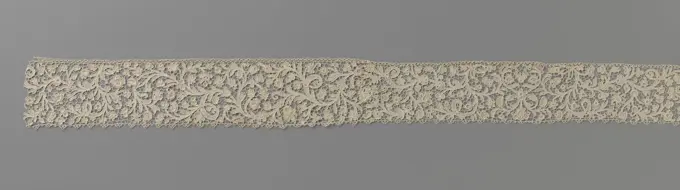
Strip of needle side with plumed tendrils, anonymous, c. 1875 - c. 1895 Strip of natural -colored needle side: Venetian rose side. On a bar of land with six -sided meshes, rich branches, to the left and right, are swiveling and right -wing, sometimes dwelling, sometimes walking. There are multifaceted, carefully detailed button -shaped flowers. Here and there the top of a slender has grown through an opening in the branch. Straight finish of alternately an eye and a triangle. BURANO linen (material) Venetian rose point Strip of natural -colored needle side: Venetian rose side. On a bar of land with six -sided meshes, rich branches, to the left and right, are swiveling and right -wing, sometimes dwelling, sometimes walking. There are multifaceted, carefully detailed button -shaped flowers. Here and there the top of a slender has grown through an opening in the branch. Straight finish of alternately an eye and a triangle. BURANO linen (material) Venetian rose point
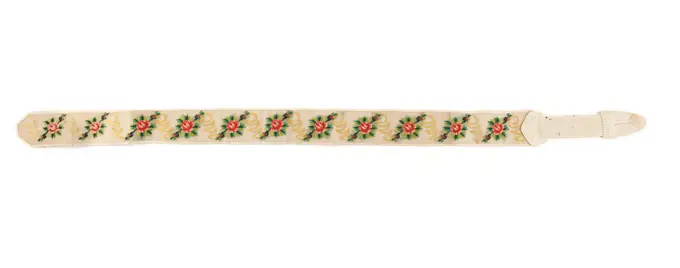
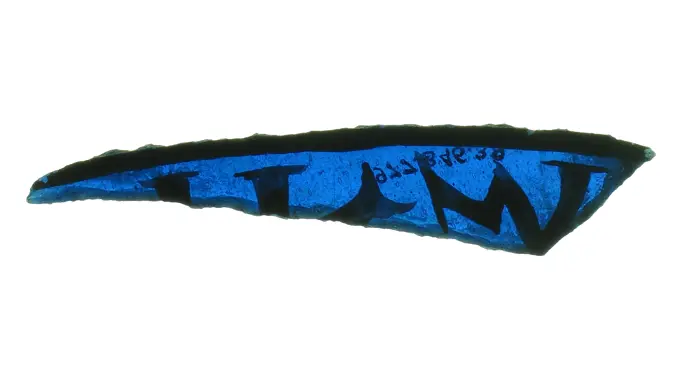
Vest button of plastic with relief rib, fixed eye and loose against clamp, anonymous, c. 1900 - c. 1940 Vest button of plastic with relief rib, fixed eye and loose against clamp. Netherlands (possibly) metal Vest button of plastic with relief rib, fixed eye and loose against clamp. Netherlands (possibly) metalRenaissance Fringe Made 1501-1600 Italy. Silk and gold gilt strip wound around silk fiber core, plain weave with supplementary patterning weft loop fringe and extended ground weft cut fringe .Fan Holder 18th-19th century China. Fan Holder 68839Anonymous, a strap (usual name), 1840. Multicolored silk embroidery at the small point on Ivory Canvas, ivory moire, ivory skin, metal repetitions. Palais Galliera, fashion museum of the city of Paris.Edging Hungarian-Slovak 19th centuryCartoon cute vector doodles wedding bannersBag in soumm-technique, single with tape and netsfranje, red grid with windows sign blue fond, windows filled with hook figures, edge with octicians. Bag in Soumm Technique, Single with Tire and Netsdring. In Midfield a Red Grid With Windows Against a Blue Fond. Windows Filled With Hook Figures. Edge with octos.A sash from the funeral of Adam Mickiewicz in Krakow on July 4, 1890Glass Fragment 12th-14th century French. Glass Fragment. French. 12th-14th century. Pot-metal glass, vitreous paint. Glass-StainedKnife Handle (Kozuka) mid-17th-early 18th century Japanese A kozuka is a handle of a by-knife that is part of a sword mounting. It is kept in a slot on the reverse of a katana scabbard, often with a matching kgai (hairdressing tool).. Knife Handle (Kozuka). Japanese. mid-17th-early 18th century. Copper-gold alloy (shakud), gold. Sword Furniture-Kozuka