Lace Fabric Strips

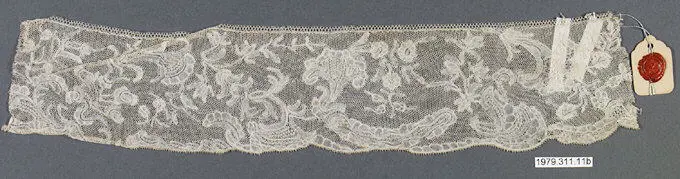
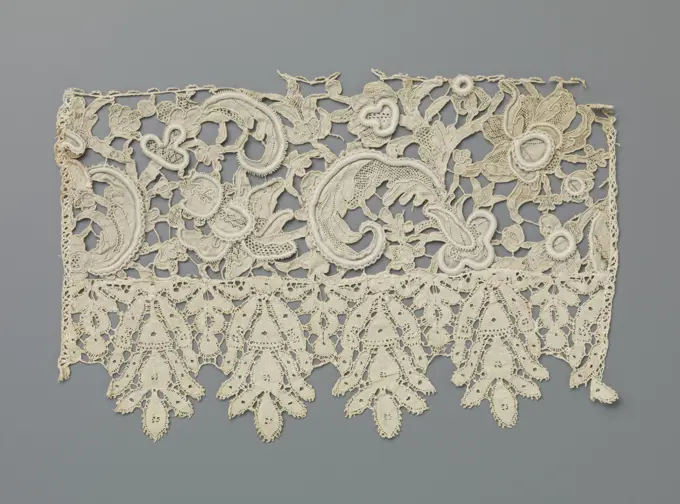
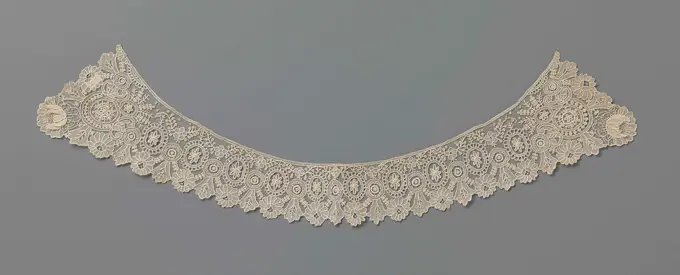
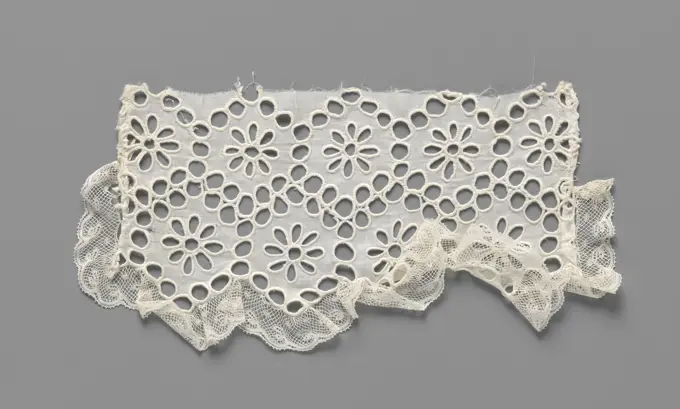
Intricate strips of lace showcasing floral and ornamental designs. Each lace piece features delicate craftsmanship, perfect for sewing and decoration.
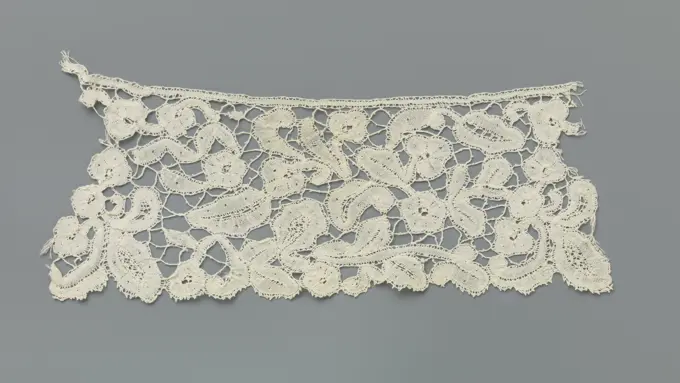
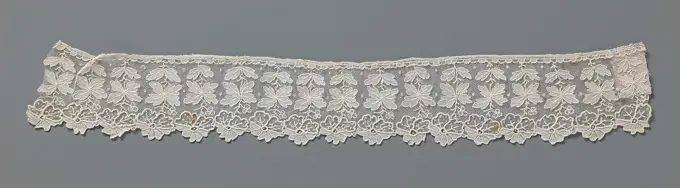
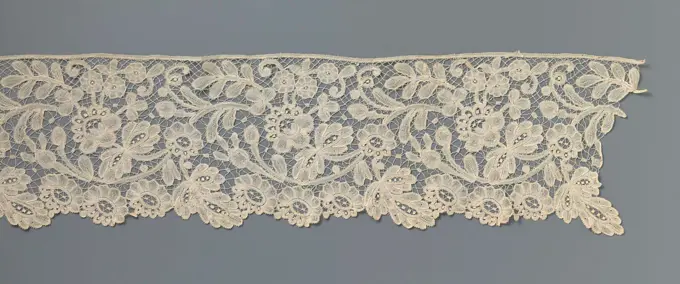
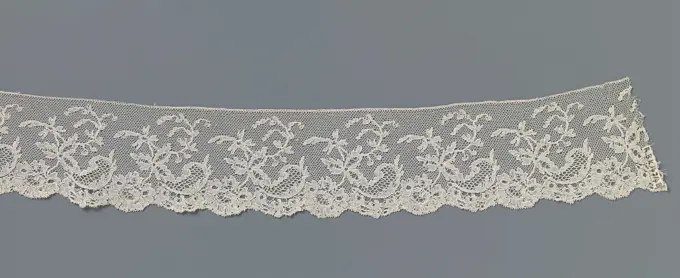
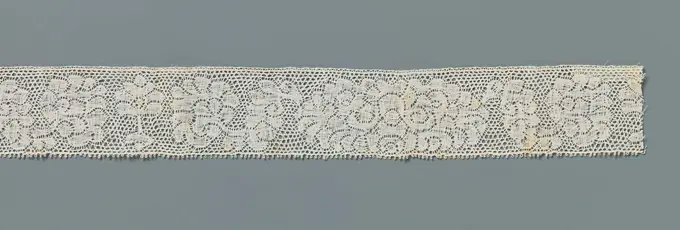
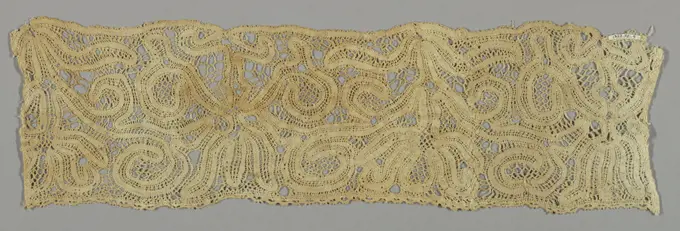
Strip bobbin with simple flowers and leaves, anonymous, c. 1900 - c. 1924 Strip of natural-colored bobbin: Duchesse side. Easily designed flower and leaf motifs and volutes are connected by a braid ground. Along the edge, among other things, a rush -in with two curly leaves. Belgium linen (material) bobbin lace Strip of natural-colored bobbin: Duchesse side. Easily designed flower and leaf motifs and volutes are connected by a braid ground. Along the edge, among other things, a rush -in with two curly leaves. Belgium linen (material) bobbin lace
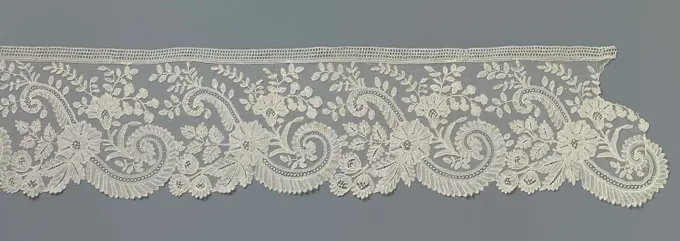
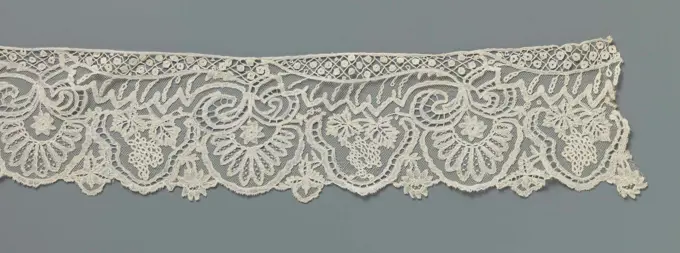
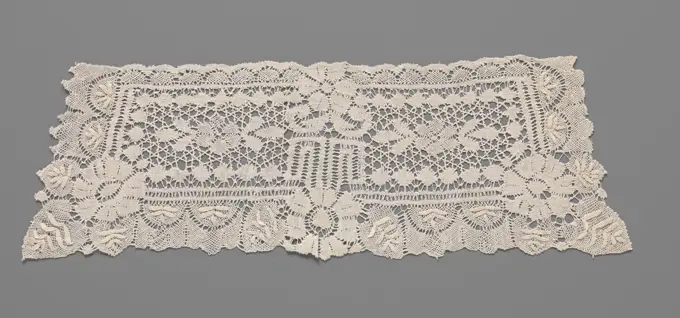
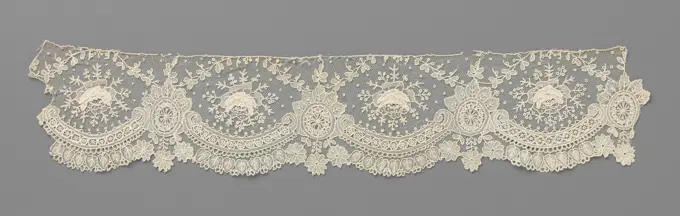
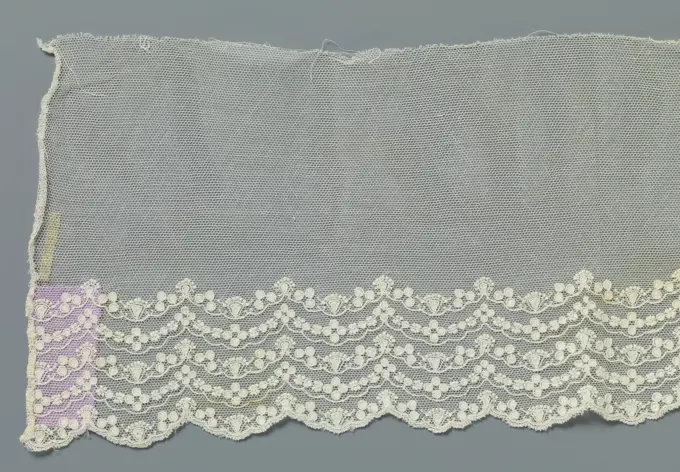
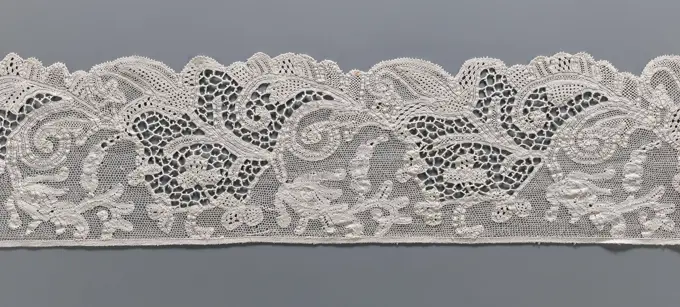
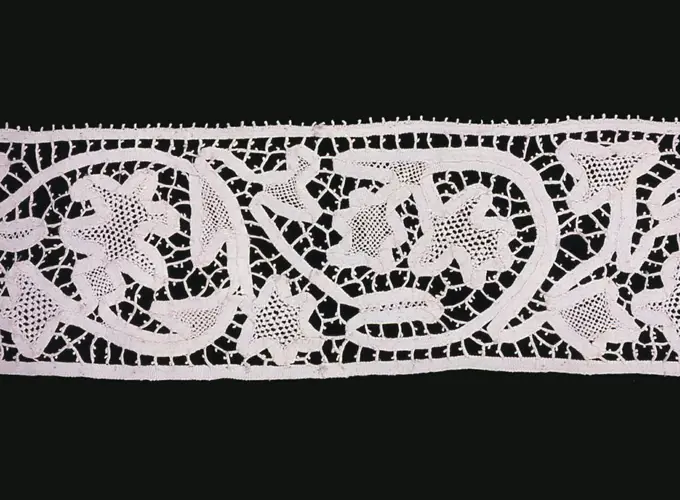
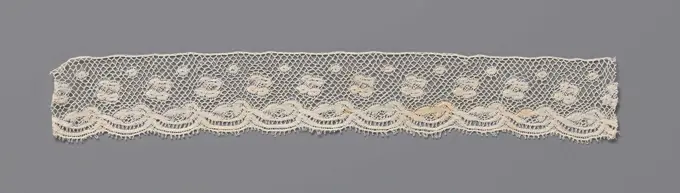
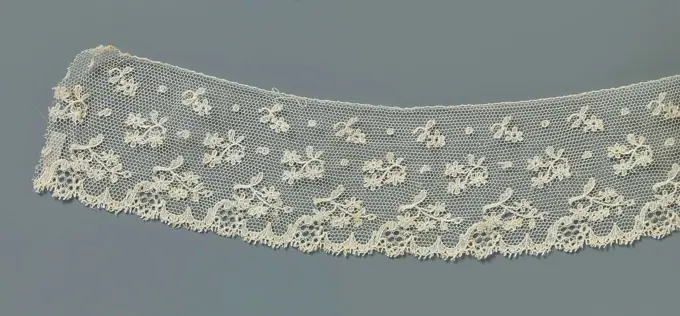
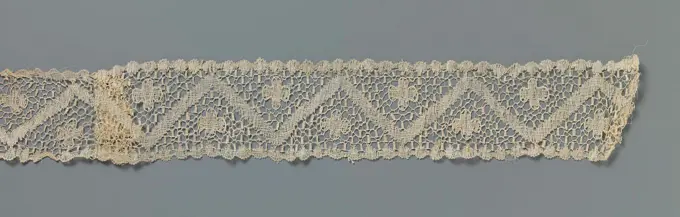
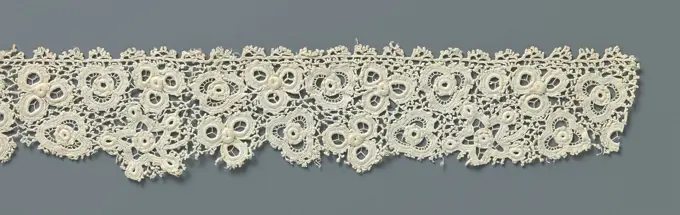
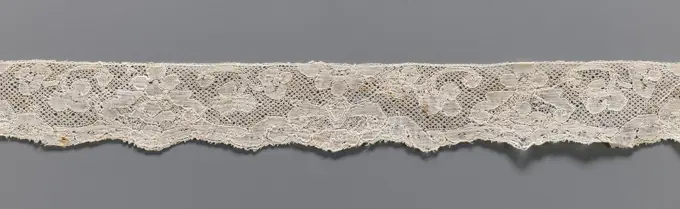
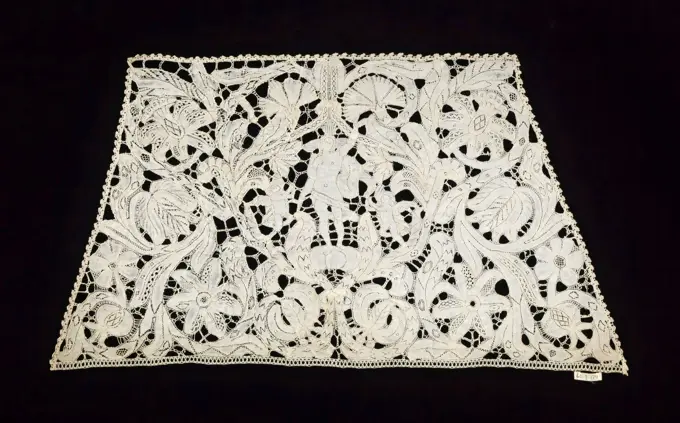
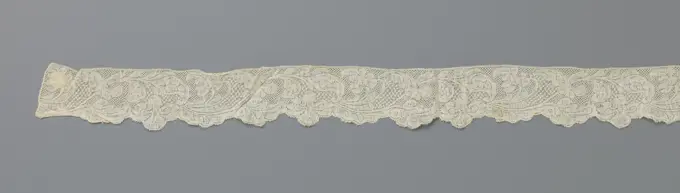
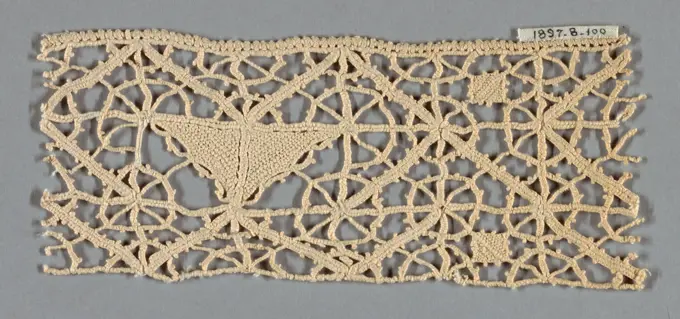
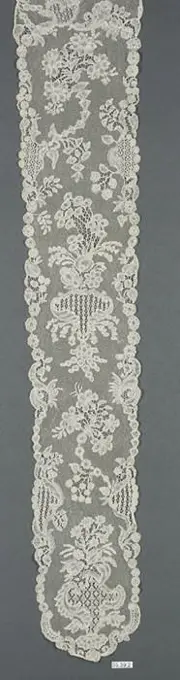
Strip bobbin with simple flowers and leaves, anonymous, c. 1900 - c. 1924 Strip of natural-colored bobbin: Duchesse side. Easily designed flower and leaf motifs and volutes are connected by a braid ground. Along the edge, among other things, a rush -in with two curly leaves. Belgium linen (material) bobbin lace Strip of natural-colored bobbin: Duchesse side. Easily designed flower and leaf motifs and volutes are connected by a braid ground. Along the edge, among other things, a rush -in with two curly leaves. Belgium linen (material) bobbin laceStrook naaldkant met rozetbloemen en vlindervormige bladeren.Strip natural-colored coniferous lace, point the gaze the bruxelles. Repetitive motif of becoming one asymmetrical rosette flower with butterfly shaped leaves on a fine soil with single-turned mesh, strewn with a few moes. The tubes along the underside are formed by rosette flowers. The top is finished with a straight edge.Strook gemengde kant met s-voluten.Strip natural-colored mixed side: Brussels climbing side in combination with a needle lace ground, a fine mesh side ground. This type of side is also known as the name: Point d'Angleterre. The running pattern consists of large S-SEN, decorated with a godridge edge and overcures by a large hanging rosary branch, which rises to the right point of the S volutes. An carnation, a bunch of bunch and fine, incised leaves grow on a founded side branch.Strook applicatiekant met druiventrossen en gehalveerde bladeren.Strip natural colored application side, climbing side applicated on machine tulle. A narrow part, along the inside, exhibits a running pattern of halved, lobed leaves, which accompanies an equally halved medallion with a raster filling. On a wide part with a substrate of tulle, symmetrical, deep slot, which are in turn are filled with a grinding tray and a fan plant.Strook kloskant met drie rozetbloemen en een drielobbig blad als schulpenrand.Strip natural colosside: fine bridges flower work. The repeating pattern consists along the lower edge of three obliquely placed oval rosette flowers and a large triple leaf. Above every three rosette flowers is a curved stem with two rosette hips on the one hand and on the other hand a kink in the stem and at the end to the rose hip-oriented rosette flower. Some leaves and smaller rosette flowers from this rosette flower. Above every shell that is formed by the triple leaf, a rosette bow hangs down to a curved stem. The motifs are connected by a picoted braid soil. The motifs are made in the battery and linen, with open editors and recesses. The motifs are equipped with thin to very thick contour wires and clost relief contours. In a part of the opened petals or flower hearts, cubes are made in shape stroke or in Linnenlag. The top of the strip is straight finished. The sloping edge is finished with picots.Fragment 18th century Italian, Burano. Fragment. Italian, Burano. 18th century. Needle lace. Textiles-LacesCuff of climbing side with symmetrical pattern with three large and three smaller rosette flowers. Cuff from natural colosside: Cluny side. Trapezoidal model. Symmetrical pattern with large rosette flowers at the bottom of the trapezoidal field, one at each corner point and one in the middle at the bottom. In the field filled with a star-shaped braid soil with picots filled two smaller rosette flowers, each between three leaves. In the center of the field there is a rectangular motif, possibly a flowerpot, awarded by volutes and another rosette flower. Around the field a slip edge of impeller-shaped slumps and spitsoval leaves, both decorated with 'embossed veins' made in shape stroke. The shelters are split into the slot, the rosette flowers and other designs in linse.Band, Medium: linen Technique: needle lace with ground of loop and twist with twist return, Fragment of a narrow band with a floral vine pattern., France, 18th century, lace, BandFragment early 18th century French. Fragment 218288Strip bobbin with wheels and five -lobe sculptes, anonymous, c. 1620 - c. 1630 Strip of natural -colored bobbin: Old Flemish side. In the semicircular scallops there is a repeating and symmetrical motif of two wheels placed one above each other, surrounded by five lobes along the bottom. The pattern is made up of a winding strap in linen and braids. Southern Netherlands linen (material) bobbin lace / tape lace (bobbin lace) / old Flemish lace Strip of natural -colored bobbin: Old Flemish side. In the semicircular scallops there is a repeating and symmetrical motif of two wheels placed one above each other, surrounded by five lobes along the bottom. The pattern is made up of a winding strap in linen and braids. Southern Netherlands linen (material) bobbin lace / tape lace (bobbin lace) / old Flemish laceStrip bobbin with tilted ovals under spray pattern of twigs, anonymous, c. 1785 - c. 1799  Strip of natural -colored bobbin: Mechelse side. The repeating and continuous pattern consists along the bottom edge of a succession of rush -hour and drop shapes, which are always tilted in relation to each other. Under the oval, a short pendulum of circles runs through, from which a leaf branch originates above the drop shape. Above this pattern is a stray pattern of two rows of loose twigs. The motifs are connected by a fine Maas soil, the Mechelen soil. The sparing fullwork is made in linen battle, which almost disappears here and there because of the thicker and shiny contour threads. Two different but very similar decorative lands, with coarse meshes, are used in the ovals and drop shapes. The straight underside is finished with picots. The top is finished with a separate strap. Mechelen linen (material) bobbin lace / Mechlin (lace)Strook kloskant zogenaamde pottekant.On a coarse grille (a Malinois or ice soil) there is a symmetrical pattern of two distant, hanging towers, which, in purpose, now above a low flower pot, then touch the straight outer edge and emboss a grid work medallion. There are two types of halved cross flowers on the inside. Both the tendrils and the cross flowers surround some parties filled with grid work. Mechelen side.Strip bobbin with five -leaf, anonymous, c. 1890 Strip of natural -colored bobbin, fine bridge flower arrangements. On an open bars stock there are concentric U-shapes with a running pattern of branches, on which an anemone, a five-leaf and a bunch of three almond-shaped fruits or leaves. Bruges (possibly) linen (material) bobbin lace Strip of natural -colored bobbin, fine bridge flower arrangements. On an open bars stock there are concentric U-shapes with a running pattern of branches, on which an anemone, a five-leaf and a bunch of three almond-shaped fruits or leaves. Bruges (possibly) linen (material) bobbin laceStrip of needle side with continuous split ranks, anonymous, c. 1700 - c. 1799 Strip EcoRkluig needle side with a motif of continuous split tibulates and flowers. Fullwork with few recesses. Open soil with sparingly irregularly potented bars. The top is finished with a more or less straight line with single Raderpicots. The underside is scooped. Venise flat. unknown linen (material) flat Venetian (needle point) Strip EcoRkluig needle side with a motif of continuous split tibulates and flowers. Fullwork with few recesses. Open soil with sparingly irregularly potented bars. The top is finished with a more or less straight line with single Raderpicots. The underside is scooped. Venise flat. unknown linen (material) flat Venetian (needle point)Strook naaldkant met waaierbloem in bogenslingers.Strip natural-colored coniferous lace: Alençon side. Pattern with a repetitive motif of a flower branch and above three rows of meadows, on a fine hexagonal Maas soil. On the landscape flower branch a downwardly dirty fan flower and a top-facing branch with three rosette flowers. The impeller flowers are filled with different ornamental grounds, as well as the garlands that form a regular archery to the bottom edge. One flower branch in every bow. The top is trimmed with a border clamping side.Strook van applicatiekant met bijou op de slingers voor een crinoline-japon.Japon strip natural colored application side, needle side applicated on machine tulle, point d'Angleterre. Two alternating types of round shelters together with a lace banderelle form a concatenation of large round reserves, upstairs a sowed feathers. The reserves are always filled with a bouquet or rose (clamping side). One scallop shows a ribbon decorated with a standing oval oval, which is suspended with a bow on the banderolle and is wound with a scalloped ribbon. The other scallop shows radiating twigs with rosettes between two rows of Campanes. There are small bouques above the reserves.Strip bobbin with hanging flour and comma-shaped motif, anonymous, c. 1800 - c. 1809 Strip of natural -colored bobbin: Lille side. The repeating pattern consists of a hanging flower on a curved stem with a curling of side branch at the top. There is a comma-shaped motif between the successive flowers. The motifs are placed close together and are connected by a fine grid, a tuler land. The motifs are made in linen battle with some large recesses and thicker contour threads. A few decorative lands have been applied, including in the comma-shaped motif and the Bloemhart. The top is straight. The scalloped underside stems from the pattern and is finished with picots. Lille cotton (textile) bobbin lace / Lille lace Strip of natural -colored bobbin: Lille side. The repeating pattern consists of a hanging flower on a curved stem with a curling of side branch at the top. There is a comma-shaped motif between the successive flowers. The motifs are placed close together and are connected by a fiStrook kloskant met hangende bloem en komma-vormig motief.Strip natural colosside: Lille side. The repeating pattern consists of a hanging flower at a curved stem with a top-curling side branch at the top. There is a comma-shaped motif between the consecutive flowers. The motifs are placed close together and are connected by a fine grille, a tulet. The motifs are made in linselag with some large recesses and thicker contour wires. Some ornamental grounds have been applied, among other things in the comma-shaped motif and the flower heart. The top is just finished. The scalloped underside comes from the pattern and is finished with picots.Strook kloskant met 'boompje' tussen ovaal pioenroos-motief.Strip natural-colored Dutch clamping side. The repeating and symmetrical pattern consists of a stylized oval peony between two smaller and round peonies, which with an S-shaped leaf from the side of flour. There is a 'tree' between the consecutive peony motifs. The motifs are made in linen battle with recesses and open editors. They are connected by a grille, a Paris soil. The top and bottom are immediately finished with picots on one side.Strip bobbin with S-Ranken, Anonymous, c. 1875 - c. 1899 Strip of natural-colored bobbin: Duchesse side. There is an ongoing pattern on a braid ground. S-ranks with three daisies and a border of Campanes form the scallops and end in a volute with single rose. Netherlands (possibly) linen (material) bobbin lace Strip of natural-colored bobbin: Duchesse side. There is an ongoing pattern on a braid ground. S-ranks with three daisies and a border of Campanes form the scallops and end in a volute with single rose. Netherlands (possibly) linen (material) bobbin laceMitaine van kloskant met c-voluten met zigzag-lijnen en hartvormige bladeren met een dubbel hart.Mitaine of natural colosside: fine bridges flower work. The pattern consists of the edge at the part where the hand sticks from the mitaine on the front and back from a C volute from which two heart-shaped leaves spring. The heart of these leaves is double-layered, made with an application of clamping side. In every volute a zigzag line and pearl edge. This zigzag with pearl edge comes back along the edge at the bottom. The remaining pattern includes tendrils with triple leaves and flowers with a poetic oval flower heart and openwork oval petals. With these flowers, top and bottom edge of the mitaine are finished. The motifs are made in linen stroke and slicer with thick contour wires and relief contours. The motifs are connected by a braid ground. In a single rosette flower, a block is tense in the flower heart, made in shape stroke.Trimming, Medium: silver metallic foil and silver metallic foil wound onto white silk Technique: bobbin lace, metallic, Wide border of metallic silver lace in all-over small scale repeated diamond shape, divided at intervals with a stripe. Outer edge is scalloped., Europe, 1750-1800, lace, TrimmingCuff (one of a pair) 17th century British. Cuff (one of a pair) 222460Border of Needle Lace, anonymous, c. 1600 - c. 1620 Strip of natural needle side, reticella and punto in Aria. Made for a 'medical collar'. Double strip with different patterns. One part has deep, toothed scales with two alternating wheels in the center; Each with a stiff triple spread leaf crown. The other strip has a pattern with alternate wheels and diamonds inside squares, finished on both long sides with a straight edge. Southern Netherlands linen (material) Strip of natural needle side, reticella and punto in Aria. Made for a 'medical collar'. Double strip with different patterns. One part has deep, toothed scales with two alternating wheels in the center; Each with a stiff triple spread leaf crown. The other strip has a pattern with alternate wheels and diamonds inside squares, finished on both long sides with a straight edge. Southern Netherlands linen (material)Fragment of the lace;  1st half XVII century (1600-00-00-1650-00-00);Shawl 1860-70 Belgian. Shawl 158184Japon strip made of application side with flower branches and servetwork, anonymous, c. 1875 Japon strip of Brussels application side: bobbin side with needle -lace -up stitches Applicated on mechanical tuler land. The repeating pattern consists of flower branches and servetwork. Ground littered with mosjes. The motifs are made in netslag and linen battle with openwork edges and equipped with contour threads. The scrap edge along the underside of the strip stems from the pattern and is finished with picots. The top is finished with a separate strap. The strip includes a note with the text: 'Coba from her mother. Later to Anneke '. Brussels linen (material) Brussels Applied Japon strip of Brussels application side: bobbin side with needle -lace -up stitches Applicated on mechanical tuler land. The repeating pattern consists of flower branches and servetwork. Ground littered with mosjes. The motifs are made in netslag and linen battle with openwork edges and equipped with contour threadsStrip bobbin so -called Pottekant, Anonymous, c. 1890 - c. 1910 On a rough grid (a Mechelen soil or ice soil) is a symmetrical pattern of two, hanging tifles, which, in pairs, are now once above a low flowerpot, then touch the straight outdoor edge and include a grid media media there. There are two types of halved crucifixes on the inside. Both the tiflets and the cross flowers surrounded any parties filled with gridwork. Mechelen side. Antwerp linen (material) bobbin lace / pot lace On a rough grid (a Mechelen soil or ice soil) is a symmetrical pattern of two, hanging tifles, which, in pairs, are now once above a low flowerpot, then touch the straight outdoor edge and include a grid media media there. There are two types of halved crucifixes on the inside. Both the tiflets and the cross flowers surrounded any parties filled with gridwork. Mechelen side. Antwerp linen (material) bobbin lace / pot laceStrook naaldkant met hangende hartjes.Strip natural-colored coniferous lace: Brussels mesh side. The repeating pattern consists of large semicircular shelters formed by each other lying c-volutes. Above every whole is one loose rose with a radius of short twigs with berries. The switching points between the volutes are formed by oval medallions, which are decorated with a leaf wreath. From the leaf crown a fine pendulum that runs over the rose with an arc to the next medallion. The sloping edge is formed by hanging heart-shaped leaves under the volutes interspersed by three dependent daisies under the medallions. The motifs are made up of feston stitches and equipped with relief contours. The roses have relief leaves. The motifs are connected by a fine Maas soil, a mesh side floor, on which some mashes are applied. Decorative stitches are applied in the roses and medallions. The top of the strip is straight finished.Strip Machine with five rows of synchronous wavers, anonymous, c. 1850 Strip of natural -colored machine side: mechanical Lille side. Five rows of synchronous wavers fill the strip from the bottom to almost on the center line. Each pendulum is decorated with circles and dots and varied with a kind of chalice with dots. The motifs are provided with contour threads and are connected by a fine tulip floor, which runs above the center line without motifs and rights. Along the underside of the strip, the lower pendulum provides a sculpy edge, which is finished with picots. One short side is finished with a zoompje. Europe (possibly) cotton (textile) Strip of natural -colored machine side: mechanical Lille side. Five rows of synchronous wavers fill the strip from the bottom to almost on the center line. Each pendulum is decorated with circles and dots and varied with a kind of chalice with dots. The motifs are provided with contour threads and are connected by a fine tulip floor, which runs Fragment, Medium: linen Technique: bobbin made continuous tape with net added, 18th century, lace, FragmentStrip application side with symmetrical volute motif, anonymous, c. 1850 Strip of natural application side, bobbin side with a single needle side stitches applied on mechanical tulle. Spread motif with mosjes on a fine hexagonal Maas soil. Repetitive motif with alternating a branch with two bell -shaped flowers and a symmetrical volute motif. Scalloped bottom edge with alternating three daisies and a large flower. Motives in linen battle with, among other things, thick contour threads and decorative stitches in the flowers. In addition, bursts of relief contours have been made in the small leaves, so -called ribs. The top is trimmed with a border bobbin. The hearts of the flowers and the mosjes are made in needle side stitches. Brussels linen (material) Strip of natural application side, bobbin side with a single needle side stitches applied on mechanical tulle. Spread motif with mosjes on a fine hexagonal Maas soil. Repetitive motif with alternating a branch with two bell -shaped flowStrip bobbin with stripped mushes and a border with daisies, anonymous, c. 1800 - c. 1824 Strip of natural -colored bobbin: Mechelse side. Under a wide lane with a spray pattern of open mousjes, the pattern along the bottom edge is formed by daisies hanging close to each other, stealing slightly bent with three spring -shaped leaves. The regularly wavy scallop of scallops follows the pattern, with one flower in each shell. The motifs are connected by a fine Maas soil, the Mechelen soil. The motifs are made in linen and is equipped with thicker and shiny contour threads. A sparingly used decorative land with coarser Maas is used in the flower hearts, with a rectangle in the center. Southern Netherlands linen (material) bobbin lace / Mechlin (lace) Strip of natural -colored bobbin: Mechelse side. Under a wide lane with a spray pattern of open mousjes, the pattern along the bottom edge is formed by daisies hanging close to each other, stealing slightly bent with three spring -shaped leaveNeedlepoint Lace Edging, 18th century. France, Alençon, 18th century. Lace, needlepoint: linen; average: 9.6 x 26.1 cm (3 3/4 x 10 1/4 in.).Japonstrook van kloskant met varens.Japon strip from black climbing side: Chantilly side. On a blank mesh stock is a closed edge with slot, filled with a garland of flowers and leaves. On the intersections there is a small shell with a hanging rose, above which a striker bouquet rises from four large fern leaves and a flower branch, which reaches the top edge. Here a horizontal ivy drink with hanging twigs runs, while a large bouquet depends on the large scallop of this ivy drink, among other things with a tulip.Flounce (Belgium); linenStrip needle side with cornflowers. Two-thirds of the width is filled with a scattering pattern of falling cornflowers on a coarse ground (of abusive bars). A third of the width forms a right-ended outer edge (with a single Alençon-distance), lined with two parel lists, and decorated with a horizontal rank of coordinated stems, each with three cornflowers, which are always in the same direction. Alençon side.Fragment, Medium: linen Technique: bobbin lace, continuous braid-like, Fragment of a band with triangular tab edge and loose floral vine., Italy, 1500-1550, lace, FragmentFragment of the lace;  2. PO. 19th century (1851-00-00-1900-00-00);Strip bobbin with four -fold mosies, anonymous, c. 1900 - c. 1909 Strip of natural-colored bobbin, Valenciennes side. Repetitive motif of a flower, made with a four -time mush. Diagonally above the flour is a single mush. Faint scallop with decorative tires. The top is finished with a straight edge. Belgium linen (material) Bobbi Lace / Valenciennes Lace Strip of natural-colored bobbin, Valenciennes side. Repetitive motif of a flower, made with a four -time mush. Diagonally above the flour is a single mush. Faint scallop with decorative tires. The top is finished with a straight edge. Belgium linen (material) Bobbi Lace / Valenciennes LaceBorder Made 1875-1900 Europe. Linen, needle lace with woven tape .Fragment, Medium: linen Technique: bobbin lace, continuous tape with connections, 17th century, lace, FragmentStrook kloskant met viervoudige moesjes.Natural collate strip, Valenciennes side. Repetitive motif from a flower made with a quadruple moot. Santa above the flour is a single mouth. Slight sculpture with decorative tires. The top is finished with a straight edge.Strook machinale kant met drie rijen bloemtakken en w-vormige motiefjes langs de onderzijde.Strip natural-colored machining: Machine Alençon side. The strip is slightly curved in shape. The repeating pattern consists of three rows of flower branches with always one mole between the flower branches in the upper two rows. The consecutive flower branches in the upper row consist of one flower with two leaves. In the middle row there are always three flowers on the flower branches. The lower flower branches are greatest with three flowers and a flower bud in the top. Along the bottom edge, W-shaped motifs are between which circles made with an ornamental ground, a machining rose. The motifs are equipped with contour wires and are interconnected by a hexagonal Maas soil, a machining alençon ground. The top of the strip is straight finished. The bland scalloped underside stems from the pattern with the w-shaped motifs and circles and is finished with picots.Strook kloskant met vierlobbig rozet boven en onder een zigzag-band.Strip natural colosside, blonde. The repetitive and continuous pattern consists of a zigzag band, which divided the strip into triangular fields. There is a quadruped rosette in the center of each field. Along the top and bottom of the strip a sculpture runs, which consists of a concatenation of circles. The crafts are finished with picots. The motifs are connected by a coarse mesh soil, strewn with square moes. The zigzag band, rosettes and circles edges are made in linen stroke, whereby the rosettes are equipped with a contour wire.Pair of lappets and joined cap edging 18th century Flemish. Pair of lappets and joined cap edging 227708Strook gehaakte kant met vijfpuntige sterren en bloemen gemaakt met open cirkels.Strip natural-colored Irish crochet side. Pattern consists of a double row with triangular floral motifs made with open circles, interspersed with one five-pointed star with a circle in the middle and to each point a circle. Crocheted irregular mesh soil with picots. Upper finished with a picoted bow edge. The picoted slot on the underside stems from the pattern with the triangular floral motifs and stars.Fragment of Lace. Belgium, Brussels, 1850-1900. Textiles; fragments. Cotton Duchesse bobbin laceSleeve ruffle, Medium: linen Technique: bobbin lace, Mechlin style, Mechlin sleeve ruffle with the upper part showing floral sprays and leaf ornaments with little squares sprinkled over the field. The lower part has an openwork band with medallions and a scalloped border of pendant flowers., Belgium or France, early 19th century, lace, Sleeve ruffleFragment of the lace;  2. PO. 18th century (1751-00-00-1800-00-00);Band, Medium: linen Technique: needle lace (The tabs were worked on a 4-element braid. The 2 3/8 in. square grid of the band was created by two 4-element flat braids along the length connected by cords covered with figure-8 interlacing.), Border of square compartments with a narrow serpentine band running through the entire length. Piece edged by pendants., Italy, late 16th-early 17th century, lace, BandStrook kloskant met rocailles en ananassen.Strip natural colosside: Old Brabantse side. The pattern has two alternating symmetrical compositions, which are triangular in shape and wherein the motifs are connected by an irregular braid soil with picots. One composition consists of slanted seed beads that form two lines of a triangle in which four crosses, or four-point stars, and round shapes or berries are caught. With the other composition, a large pineapple or pomegranate fills the triangle, which is further filled by a round motif and flowers and leaves. The motifs are made in separately worked linen stroke, with very ruins occurring relief contour lines. The top is finished with a scrossed edge with a woven edge above that. The tube edge on the underside comes from the pattern. The ends are sewn together. In the woven edge there are stuck some marks and / or letters sewn with colored wire, a S, a T (or a plus sign) and a W, further one and another one and another t (or a plus sign)Bobbin Lace Edging, 18th century. Italy, Abruzzi, 18th century. Lace, bobbin; average: 4.8 x 21.7 cm (1 7/8 x 8 9/16 in.).Strip needle side with cornflowers. Two-thirds of the width is filled with a scattering pattern of falling cornflowers on a coarse ground (of abusive bars). A third of the width forms a right sealed outer edge (with a single Alençon soil), lined with two parel lists, and decorated with a horizontal rank of coordinated stems, each with three cornflowers, which are always in the same direction. Alençon side.Piece 18th century German, Saxony. Piece 214717Border (Altar Cloth) Made 1701-1800 Germany. Cotton, plain weave; embroidered with linen yarns; cut and drawn work embroidered in back, buttonhole, Greek cross filling, interlocking lace, and punch stitches; overcast bars and loop picots; pulled threadwork embroidered in buttonhole, cross, crossed back, four-sided, Greek cross filling , interlocking lace, marking cross, overcast, punch, satin, single faggot, and wave filling stitches; embroidered in buttonhole, chain, running, and satin stiches .Band; linen; 1933-1-147Altar cloth Belgian late 19th centuryLace laceStrip application side with campanes, anonymous, c. 1890 Strip of natural -colored application side: bobbin lacquered on mechanical tulle. On a soil strewn with mushes, semi -rounds with a border of Campanes, a clockflower hanging to the right and a twig -bent twig to the left. Brussels (possibly) linen (material) Strip of natural -colored application side: bobbin lacquered on mechanical tulle. On a soil strewn with mushes, semi -rounds with a border of Campanes, a clockflower hanging to the right and a twig -bent twig to the left. Brussels (possibly) linen (material)Strip of needle side with small dense and large open circles, anonymous, c. 1900 - c. 1949 Strip of natural needle side, reticella with edges of work with extended threads. Pattern with one row of squares, which are made up of four small squares. Each large square has been crossed, at every intersection alternating a small closed and a large openwork circle. The top and bottom of the strip are finished with straight edges with open windows in work with pulled out threads. unknown cotton (textile) Strip of natural needle side, reticella with edges of work with extended threads. Pattern with one row of squares, which are made up of four small squares. Each large square has been crossed, at every intersection alternating a small closed and a large openwork circle. The top and bottom of the strip are finished with straight edges with open windows in work with pulled out threads. unknown cotton (textile)Strook Valenciennes de Brabant ,, c. 1850 - C. 1875 Strip bobbin with a lower edge with large scales. The edge of the scallops is also sculpted. The large scallops show a large rose on the intersections. The rose grows at the top of a wavy branched slender, on which roses, roses and tulips. This decor repeats itself in every big shell. Ghent . Bobbi Lace / Valenciennes Lace Strip bobbin with a lower edge with large scales. The edge of the scallops is also sculpted. The large scallops show a large rose on the intersections. The rose grows at the top of a wavy branched slender, on which roses, roses and tulips. This decor repeats itself in every big shell. Ghent . Bobbi Lace / Valenciennes LaceEdging mid-18th century Flemish or British The Metropolitan Museum's great lace collection was started when the Museum became the first among American museums to organize a permanent collection of lace with the acceptance of the McCallum Collection in 1879 and the bequests of Mrs. John Jacob Astor, Mrs. Robert L. Stuart, Mrs. Augustus Cleveland, and Mrs. A. W. Winters shortly thereafter. In 1893 a loan collection of antique laces shown at the World's Columbian Exposition in Chicago was assembled by a committee of New York women headed by Catharine Augusta Newbold. About 1900 Miss Newbold arranged and labeled an exhibition of laces and linenworks lent to the Metropolitan Museum by Mrs. James Boorman Johnstone and the Misses Johnstone. "Her scholarly knowledge of lace technique enabled the Museum for the first time to offer a comprehensive display of lace illustrating its historical development," wrote Miss Frances Morris, then curator of the textile department. Miss Newbold's name occurCollar of needle side with non -bound tibbles, anonymous, c. 1875 - c. 1909 Collar of natural -colored needle side: Venetian relief side. Narrow, rectangular model. Randomly spread large and small palm flowers and only a few stems with leaf voltuts are standing against an open bar of land. A row of triangular arcs has been installed along the outside, a pearl list at the two ends. Venice linen (material) Venetian raised work Collar of natural -colored needle side: Venetian relief side. Narrow, rectangular model. Randomly spread large and small palm flowers and only a few stems with leaf voltuts are standing against an open bar of land. A row of triangular arcs has been installed along the outside, a pearl list at the two ends. Venice linen (material) Venetian raised workFragment (Border) Made 1601-1650 Italy. Linen, bobbin straight lace .Border (France); linenStrip of needle side with incised leaves, anonymous, c. 1900 Walking pattern of incised leaves above a rose and a three -leaf, which together form the sharply toothed outside line. Cross-shaped bars with button (soil of long X-shaped bars with a spider). The Remplis consists of buttonholes and a long distance gazé. German side: 'Carlsbader Points'. Karlsbad (Germany) (possibly) linen (material) Walking pattern of incised leaves above a rose and a three -leaf, which together form the sharply toothed outside line. Cross-shaped bars with button (soil of long X-shaped bars with a spider). The Remplis consists of buttonholes and a long distance gazé. German side: 'Carlsbader Points'. Karlsbad (Germany) (possibly) linen (material)Fragment 17th century Flemish. Fragment 214468Cuff of needle side with hanging points from bobbin, anonymous, c. 1660 - c. 1699 Cuff of natural Venetian needle side "Gros Point", trimmed with a strip of Old Flemish bobbin side. The needle side has a pattern of flowers and volutes. The motives are provided with contour threads and partly with thick cordons, decorated with Pictos. Different decorative stitches have been used within each motif. The bobbin pattern consists of hanging cook flowers, possibly tulips. The motifs are made in linen battle with openwork edges and recesses. The top of the cuff is finished with a bow edge (needle side). The showered scales are finished with picots. And the short sides are finished with a messing strap. The scrap edge of Kloskant is probably older than the needle side and is made in the Southern Netherlands. The needle side is made in Italy. The sides have been compiled into a cuff in the 19th century. Southern Netherlands linen (material) Venetian gros point (heavy raised Venetian lace) / bobbBobbin Lace Insertion without Selvage, mid 16th century. Italy, Venice, mid 16th century. Lace, bobbin; average: 5.1 x 18.5 cm (2 x 7 5/16 in.).Kraag van naaldkant met een keten van ovaaltjes.A narrow circle arc has widened corners, in which a round medallion. These are connected by a shift chain of large and small rings. Alternating bells flowers and rosettes are alternately in the edge. In the corners a rose with blade relief imposed. Point the Gaze de Bruxelles.Strip bobbin with rose branches, anonymous, c. 1850 - c. 1899 Strip of natural-colored bobbin, Valenciennes side. The repeating pattern consists of a rosette flower on the center line of the strip that hangs down on a curved branch. Above the row of rose branches that this is created is a row of thick C-shaped leaves. Along the underside of the strip is a succession of elongated volutes that form a very silly outskirts of scales. The motifs are connected by a Maas soil, a round Valenciennes ground. The motifs are made in linen battle with openwork edges and a recess in the Bloemhart. The top of the strip is straight finished. The silly scallops along the bottom are finished with picots. The short sides are sewn together. Valenciennes cotton (textile) Bobbi Lace / Valenciennes Lace Strip of natural-colored bobbin, Valenciennes side. The repeating pattern consists of a rosette flower on the center line of the strip that hangs down on a curved branch. Above the row of rose branches that tBatist cuff with contiguous hex corners in which margins of lace -ups and finished on three sides with a strip of machine side, C.I. Bosch Reitz-Teding van Berkhout, c. 1910 Cuff of natural -colored batist with lace bobbins: English embroidery. Rectangular model with a scales of scales at the bottom. The pattern consists of a row of continuous hexagons made with openwork circles, with an open work Margriet in each hexagon. The scrap edge follows the pattern with the hexagons. The cuff is finished along three sides with a wrinkled strip of mechanical side: Machinal Valenciennes side. The embroidery was made around 1870, the collar around 1910. Amsterdam batiste Valenciennes lace Cuff of natural -colored batist with lace bobbins: English embroidery. Rectangular model with a scales of scales at the bottom. The pattern consists of a row of continuous hexagons made with openwork circles, with an open work Margriet in each hexagon. The scrap edge follows the pattern with the hexagons. The cuCuffs late 17th century probably Flemish This fine design, in w hich the lace pattern fills up the entire piece, is characterized by intricate patterning within the motifs. The central male Christian figure, representing either a saint or Christ, is atypical of imagery seen in lace accessories.. Cuffs 156030Strip bobbin with horn with abundance closed by an acanthus leaf, anonymous, c. 1740 - c. 1749 Strip of natural-colored bobbin: binche side. The repeating pattern consists of a horn of abundance, which is closed by an acanthus leaf. Apparently from the edge of the horn a pest glaard from the edge of the horn, which hangs a three -lobby flower from the edge of the horn. These flowers, possibly carnations, form scallops along the underside of the strip. The scrap edge along the underside of the strip is formed between the 'flower abuse' by a leaf that lies under the horn of abundance. The motifs are made in linen battle with openwork edges and recesses. The motifs are connected by a grid, a five -part ground. A few different decorative lands have been applied, including a snowflake land in the horn of abundance and in the field above the hanging flower. The top of the strip is straight finished. The scrap edge is finished with picots. France (possibly) linen (material) bobbin lace / BincLength of Lace. Belgium, Mechlin, 18th century. Textiles; textile lengths. Linen bobbin laceCap Crown; linen; Bequest of Marian Hague; 1971-50-411Needlepoint (Reticella) Lace Insertion, 16th century. Italy, 16th century. Lace, needlepoint: linen; average: 6.1 x 23.6 cm (2 3/8 x 9 5/16 in.).Fragment (Italy); linenPair of lappets 18th century Flemish, Brussels. Pair of lappets 223043Cuff from crocheted side with fan -shaped flowers, anonymous, c. 1890 - c. 1909 Cuff made of natural Irish crocheted side, imitation coarse Venetian side. Pattern with fan -shaped flowers with stems and a crocheted irregular mesh soil with picots. The top is finished with a straight edge. The semi -circular sculpts on the lower edge are trimmed with picoted arches. Ireland cotton (textile) Cuff made of natural Irish crocheted side, imitation coarse Venetian side. Pattern with fan -shaped flowers with stems and a crocheted irregular mesh soil with picots. The top is finished with a straight edge. The semi -circular sculpts on the lower edge are trimmed with picoted arches. Ireland cotton (textile)Strip Machine with rosette flower under two large oval leaves, anonymous, c. 1900 Strip of natural -colored machine side: Machinal Beverse side. The repeating pattern consists of under the center line of the strip from a rosette flower under two unilaterally oriented large oval leaves. Above the rosette flower, next to the leaves, is still a small rosette flower. There is a row of palms along the straight underside. The motifs are provided with contour threads and they are connected by a fine machining tuler land that is littered with square mosies. The mosjes are made in machine forms. A decorative land has been used in the motifs, a machine rose ground. Top and bottom of the strip are straight finished, with the bottom with picots. Europe cotton (textile) Strip of natural -colored machine side: Machinal Beverse side. The repeating pattern consists of under the center line of the strip from a rosette flower under two unilaterally oriented large oval leaves. Above the rosette flower, nPiece French 19th centuryScarf of machining with medallions and bouquets. Natural Machine Scarf: Machine side with contours of machined tambourish applicated on machine tulle. Spacious semi-circular model. Flower bouquets above a border with medallions and palmets, two edges with flower ornament, flower branches and hanging skellar flowers and daisies.Strip bobbin with mirrored S-motif, anonymous, c. 1900  Strip of natural -colored bobbin, Eastern European side. The pattern consists of a ribbon that is laid in the form of two connected mirrored s-and, standing and elongated and a round recess in each turn. In the center of the motif is a stylized flower with six petals. The strip shows two of these s-motifs side by side, which are reversed in relation to each other. With such a ribbon placed in bends, other forms were also made on either side of this pattern, but these are partly cut and no longer complete. The ribbons are made in linen battle, as well as the straight tire that runs along the top of the strip. The leaves in the center of the S-shaped motifs are made in form. The motifs are connected by a braid ground. Top and bottom of the strip are straight finished, with the bottom with picots. Eastern Europe linen (material) bobbin lace / East European laceCollar ca. 1880 Italian. Collar 168485Fragment Italian 17th centuryStrip 18th century Flemish, Antwerp. Strip 212857Strook kloskant met open profiellijst.Natural collate strip: Mechelen side. On a grade soil stewed (a mashed soil or ice soil) is a symmetrical pattern of a hanging flower branch, which overcasts both a hanging pendulum and an open profile list; The list follows the pendulum, but is angularly drawn. The scivels are in turn of a wingerblad and three daisies.Border Copy 1801-1900 Northern Italy. Linen, needle lace worked on a laid and plaited thread grid .Strip bobbin with connected diamond -shaped meshes made with braids, anonymous, c. 1800 - c. 1899 Strip of natural -colored bobbin: tie. Between two very narrow lanes with a tie -boning ground, an open network of braids forms a row of connected diamond -shaped meshes. At the bottom of the strip, a scrap edge is formed by arcs in a litter. The top of the strip is straight finished. Italy linen (material) Bobbi lace / lace cloth Strip of natural -colored bobbin: tie. Between two very narrow lanes with a tie -boning ground, an open network of braids forms a row of connected diamond -shaped meshes. At the bottom of the strip, a scrap edge is formed by arcs in a litter. The top of the strip is straight finished. Italy linen (material) Bobbi lace / lace clothCap band 17th-18th century Flemish. Cap band 218207Fragment of the lace;  18th century (1701-00-00-1800-00-00);Place piece of crocheted side with twisted stems and rosettes. Curved semicircular design of natural-colored crochet Irish side. Pattern with three rosette flowers with large composite leaves with twisted stems. On either side of the middle rosette flower a circle. Crochet soil with irregular diamond-shaped meshes and picots. Along the entire, flammed circumference of the support a border with three-piece arcs.Fragment 16th century Italian. Fragment 214861Flounce early 18th century Flemish. Flounce 218762Border; linenEmbroidered Border. Italy, 1550-1650. Textiles; fragments. Linen plain weave with cutwork, linen thread embroidery, and linen needle laceInsertion 17th century Italian, Venice. Insertion. Italian, Venice. 17th century. Bobbin lace. Textiles-LacesJaponstrook van naaldkant met anjer- en rozentak.Belled shaped. Alternately large and small shelters are closed on the top by fine winds. In the Great Schulps there is a branch with two carnations and a rose roof. The small bell-shaped shell has an oval in the top and an asymmetrical Rocaille medallion in the heart. The petals alternately have a very matte and a ijiler fond. Point the Gaze de Bruxelles.