Lace Fabric Strips

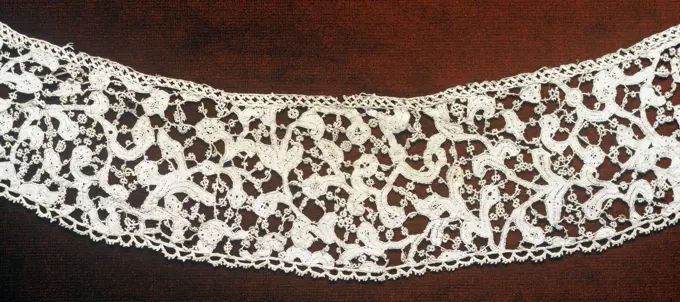
Intricate strips of lace showcasing floral and ornamental designs. Each lace piece features delicate craftsmanship, perfect for sewing and decoration.
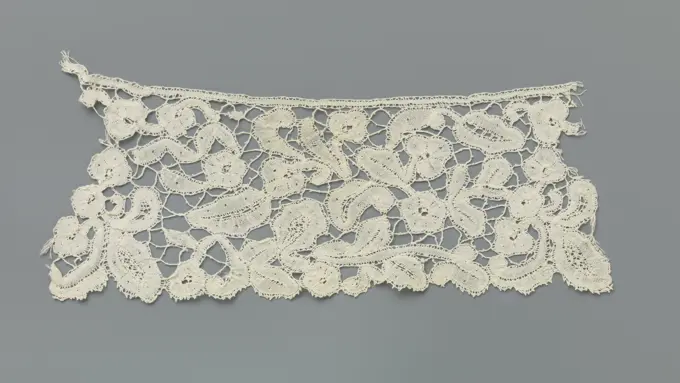
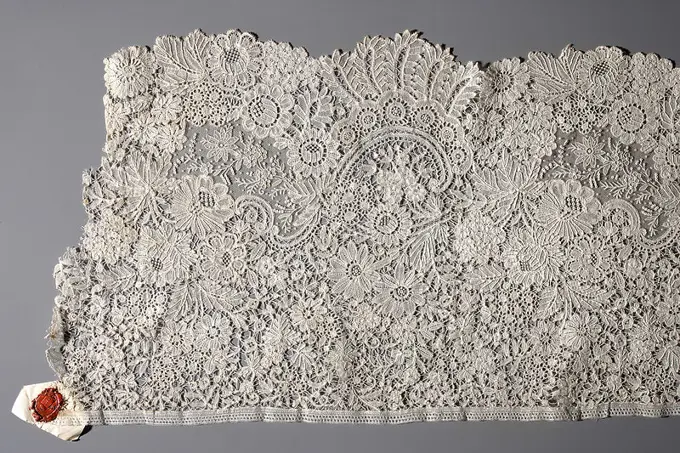
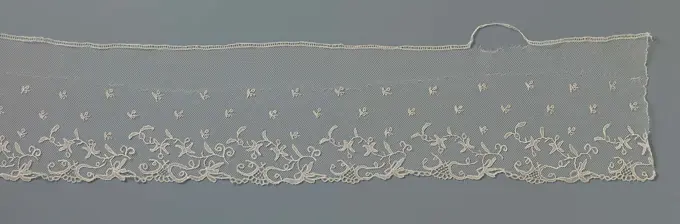
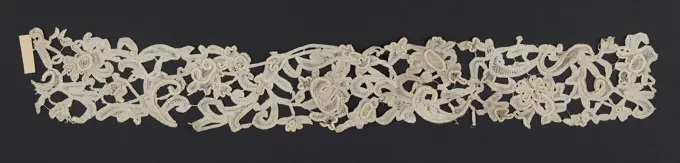
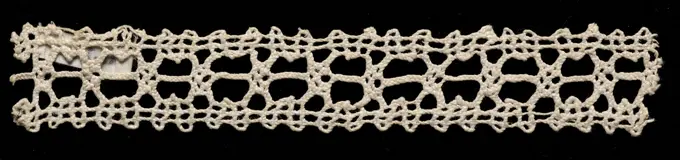
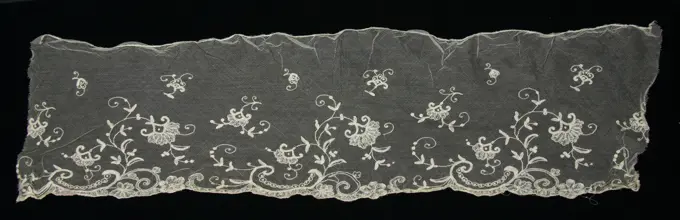
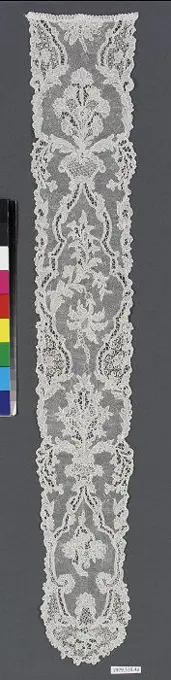
Strip bobbin with simple flowers and leaves, anonymous, c. 1900 - c. 1924 Strip of natural-colored bobbin: Duchesse side. Easily designed flower and leaf motifs and volutes are connected by a braid ground. Along the edge, among other things, a rush -in with two curly leaves. Belgium linen (material) bobbin lace Strip of natural-colored bobbin: Duchesse side. Easily designed flower and leaf motifs and volutes are connected by a braid ground. Along the edge, among other things, a rush -in with two curly leaves. Belgium linen (material) bobbin lace
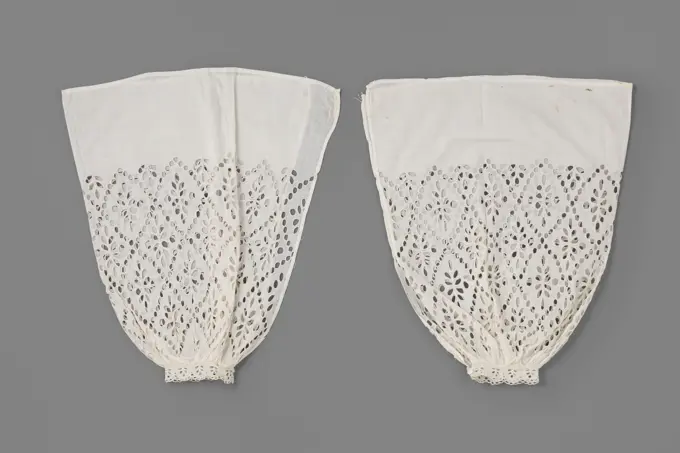
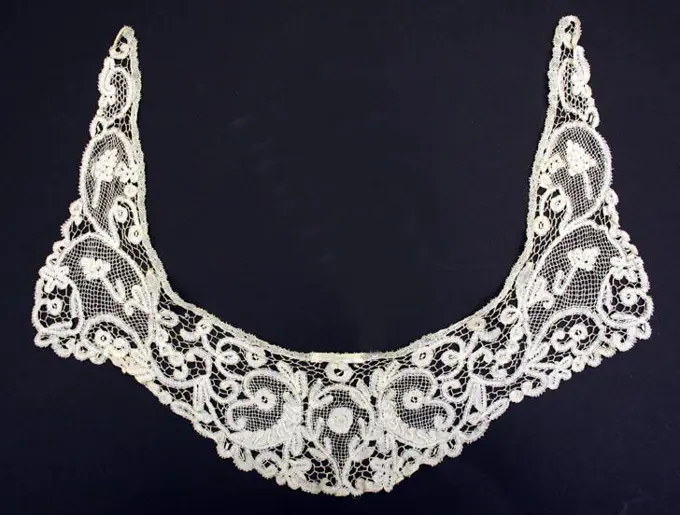
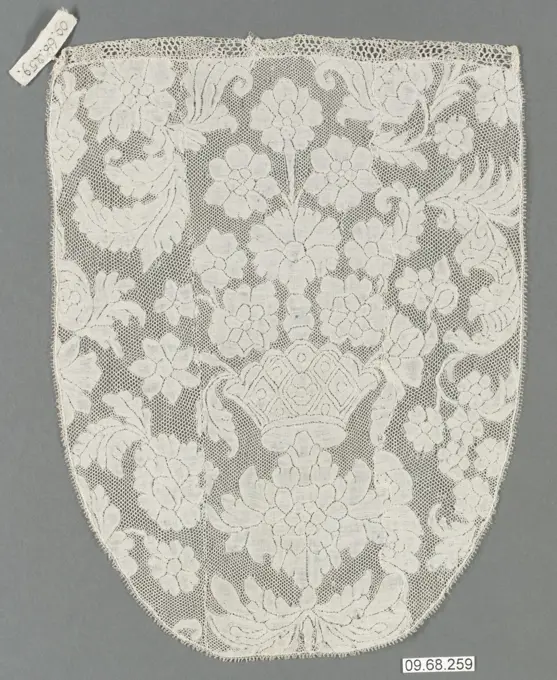
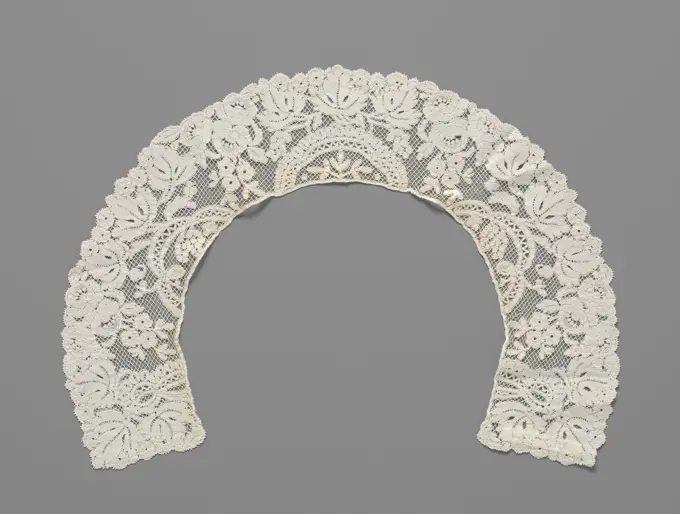
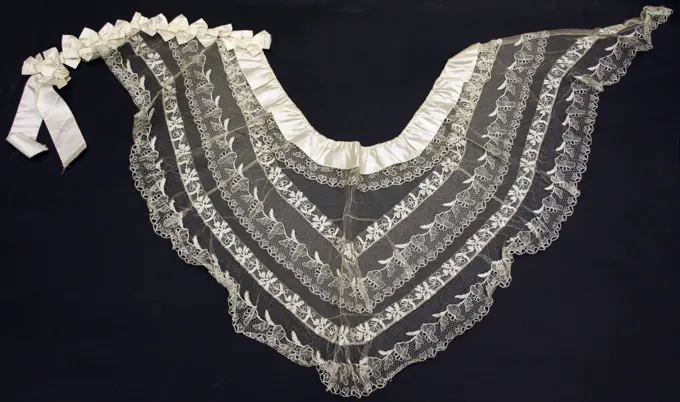
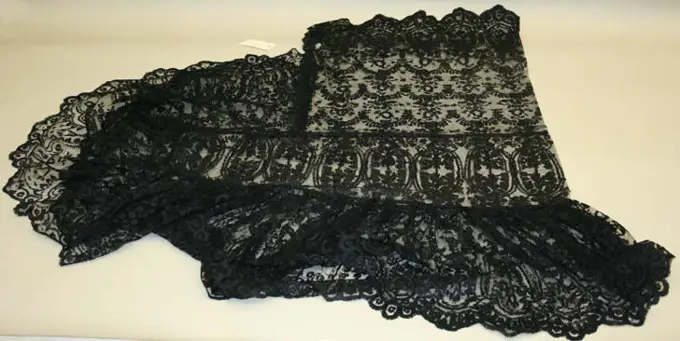
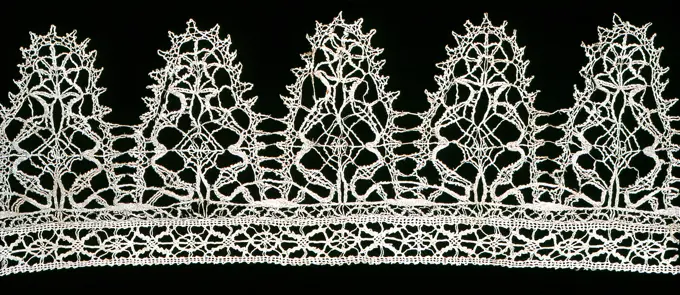
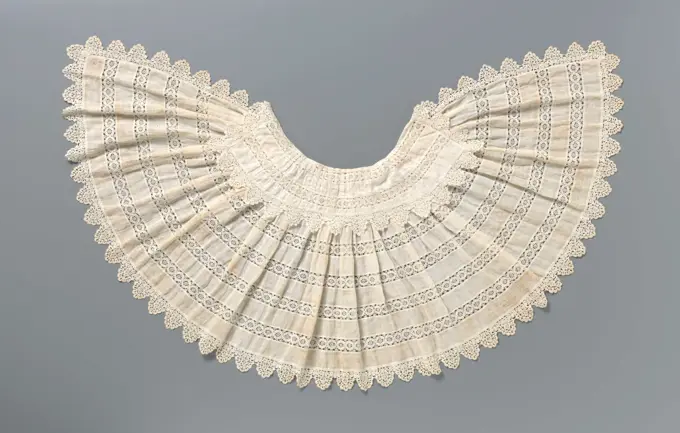
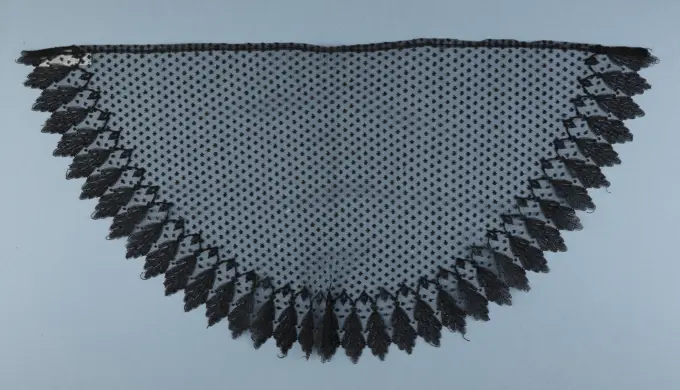
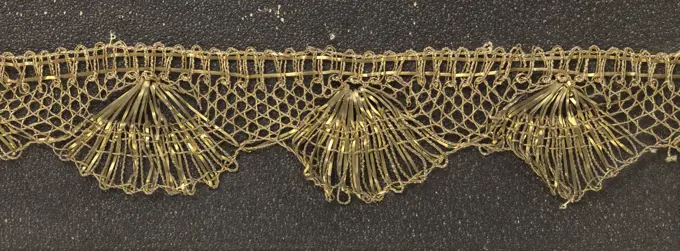
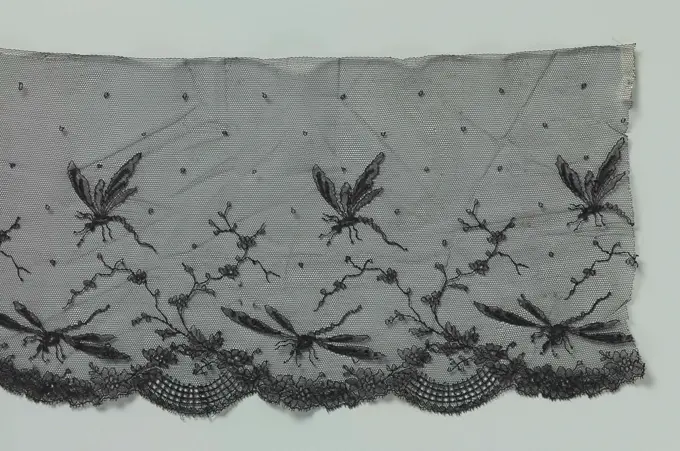
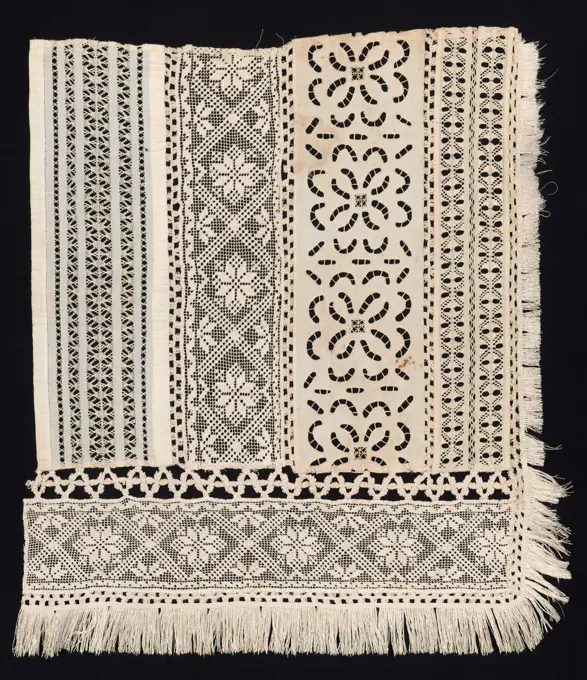
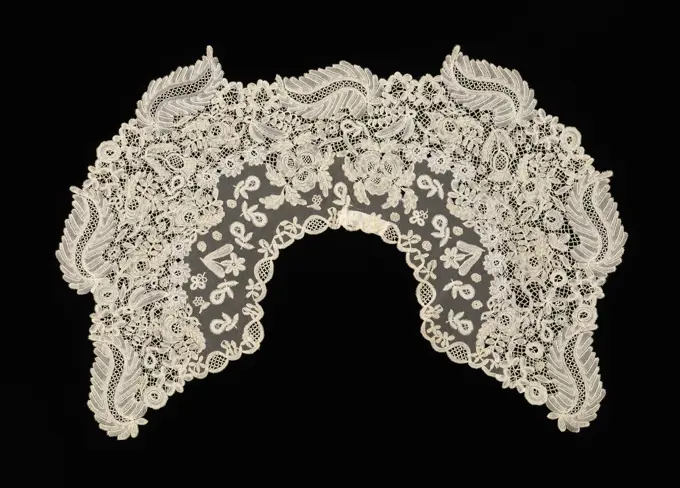
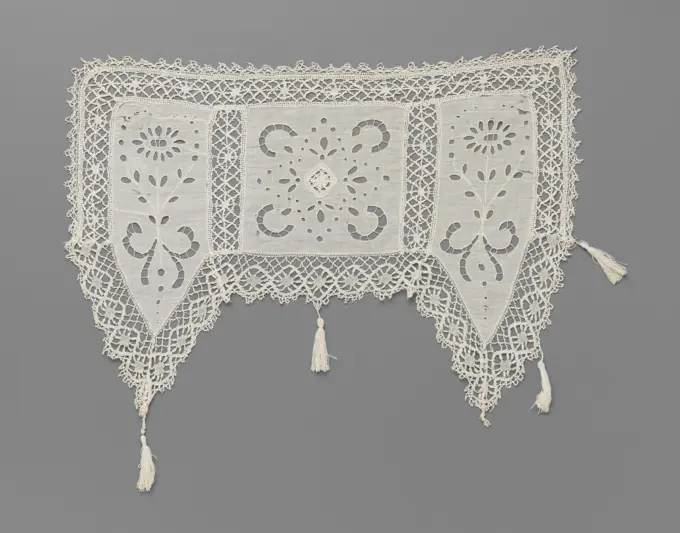
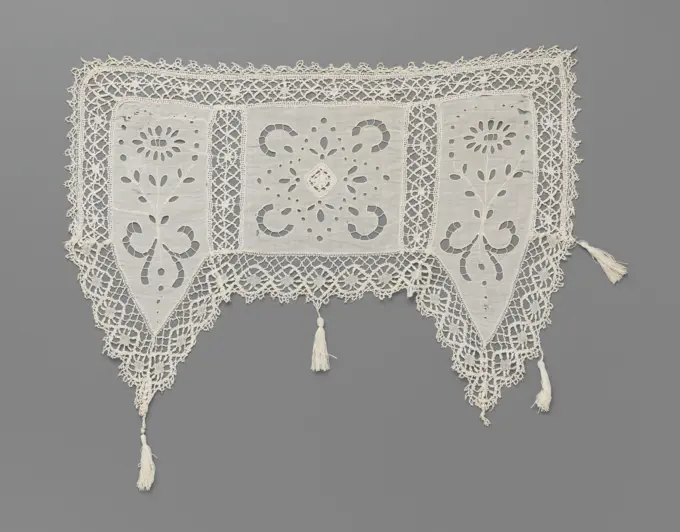
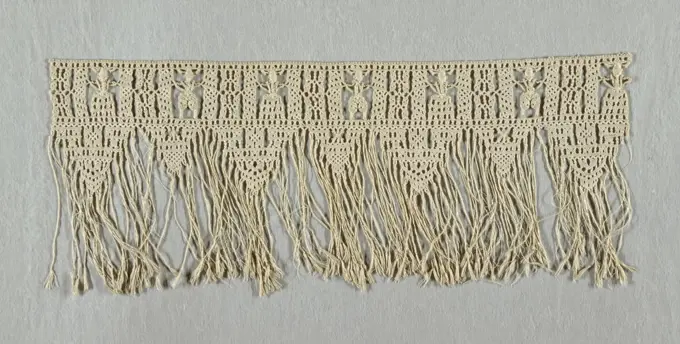
Handkerchief fourth quarter 19th century Belgian. Handkerchief 170505Insertion 17th century Italian. Insertion 214943Under sleeve of linen batist, with English embroidery, anonymous, c. 1865 Underemen of linen batist. The sleeve is decorated with English embroidery in the form of a diamond pattern in which symmetrical motifs. The cuff, to which the sleeve is wrinkled, is also decorated with English embroidery. With a button of glass. West-Europa Batiste. Linen (Material). Button: Glass Underemen of linen batist. The sleeve is decorated with English embroidery in the form of a diamond pattern in which symmetrical motifs. The cuff, to which the sleeve is wrinkled, is also decorated with English embroidery. With a button of glass. West-Europa Batiste. Linen (Material). Button: GlassBobbin lace unknownLace laceTowel end, Medium: linen, cotton Technique: braiding, These fringes were probably cut from towels and were originally the ornamentation made by weaving and braiding the warp ends. A lozenge design with crosses and quatrefoils in openwork., USA, 19th century, knotted, knitted and crocheted textiles, Towel endFragment of Brussels lace. unknown, authorFragment 16th century Italian. Fragment. Italian. 16th century. Drawnwork. Textiles-LacesHandkerchief, late 1800s. France, 19th century. Embroidered cotton, bobbin lace; overall: 47 x 48.6 cm (18 1/2 x 19 1/8 in.).Needlepoint (Punto in aria) Lace Collar, early 17th century. Italy, early 17th century. Lace, needlepoint; average: 14.3 x 90.2 cm (5 5/8 x 35 1/2 in.).Application with heart shape of machining. Application of natural-colored machining. Heart-shaped model. The symmetrical pattern consists of a decorative edge along the underside of the heart of opened squares with a cross with a dot in the center in each square. Half-relieved slump along this belt along with the same crosses. The squares and shifts take direction the tip at the bottom in size. At the top the heart is bordered by a slider with small leaves. In the heart there are three chali flowers with two rosette flowers in between, both with small leaves.Knitted lace doily, circa 1890, maker unknown. Gift of Dr Tom Farrar, 2010.Boy collar from crocheted side with relief senes such as Schulpenrand, W. de Jong, c. 1910 - c. 1920 Collar for a boy of Irish crocheted side. Lying model, ending in points and three flat lobes (shoulders and middle behind). Symmetrical pattern of round roses on long one handle with two leaves. The two roses in the middle behind a V and the roses are connected by a diamond -shaped network with picots. A border of diamond -shaped leaves runs along the neck. Along the outer edge runs a sculpy edge of connected relief senes, such as the roses in midfield, but without a stem. A bow edge around each rose. Nijmegen cotton (textile) Collar for a boy of Irish crocheted side. Lying model, ending in points and three flat lobes (shoulders and middle behind). Symmetrical pattern of round roses on long one handle with two leaves. The two roses in the middle behind a V and the roses are connected by a diamond -shaped network with picots. A border of diamond -shaped leaves runs along the neck. Along Cutslip from Binchekant with Floral Motif, Anonymous, c. 1745 - c. 1755 Cutslip from Binchekant with floral motif. The barbe runs down tapered, is equipped with a scalloped edge with picots. Southern Netherlands linen (material) Binche Lace Cutslip from Binchekant with floral motif. The barbe runs down tapered, is equipped with a scalloped edge with picots. Southern Netherlands linen (material) Binche LaceCollar 1840-60 possibly Swiss. Collar 169672Collar 1700-1941 American. Collar 119184Piece early 18th century French. Piece 218201Collar of climbing side with wingerd leaves and roses. Collar of natural colosside: Brabant Valenciennes side. Half circular model. The pattern has a border of alternating three winger leaves and three roses on the outside and the ends. On the inside are five arc-shaped ornaments with zigzags and godreways under the winder leaves. The motifs are clamped in very closed linen stroke and are connected by a square valenciennes ground.Collar unknownFragment 18th century French. Fragment 214602Textile 1800-1850 Russian. Textile 173435Edging and insertion 16th century Italian, Venice. Edging and insertion. Italian, Venice. 16th century. Bobbin lace. Textiles-LacesStrook applicatiekant met rocailles.Strip natural colored application side, needle side applicated on machining tulle, point d'Angleterre. The inner area is widely strewn with beadbles twigs. The edge with running dessess shows a shifted twig to the left with pointed leaves. Below is a rocaille with grid work. Flat scoops of links, campanes and leaves.Fichu ca. 1845 European. Fichu 119060Collar (Italy); linen; Bequest of Marian Hague; 1971-50-386Fragment of needlelace unknownCollar 19th century French. Collar. French. 19th century. Bobbin lace. Textiles-LacesPiece 1760-65 French. Piece 220218Collar ca. 1850 Belgian. Collar 170393Fragment 18th century Swiss. Fragment 215178Edge; linen; 1933-1-230Edging 17th century Italian, Liguria. Edging 221014Fragment crocheted side with flowers and grapes, anonymous, c. 1890 - c. 1909 V-shaped part of a lot of natural Irish crocheted side. Pattern with flowers and grape bunches and a crocheted irregular mesh soil with picots. On the outside, the semi -circular scallops are trimmed with picoted arches. Different parts of edges are not finished and/or cut or cut. Ierland (possibly) cotton (textile) V-shaped part of a lot of natural Irish crocheted side. Pattern with flowers and grape bunches and a crocheted irregular mesh soil with picots. On the outside, the semi -circular scallops are trimmed with picoted arches. Different parts of edges are not finished and/or cut or cut. Ierland (possibly) cotton (textile)Veil 19th century Irish, Limerick. Veil. Irish, Limerick. 19th century. Machine net. Textiles-LacesLace late 19th century European. Lace 169668Round collar of Mechelse side, Anonymous, c. 1850 - c. 1870 Round collar of Mechelse side. Decorated with a small flower in running pattern is repeated. On the seam an agrement with a rosette and forget-me-nots is sewn. A tear on the left. Mechelen . bobbin lace Round collar of Mechelse side. Decorated with a small flower in running pattern is repeated. On the seam an agrement with a rosette and forget-me-nots is sewn. A tear on the left. Mechelen . bobbin laceEdging 16th century Italian. Edging 222455Christening cap 1861 American. Christening cap 103360Fragment, Medium: silk Technique: machine lace, Full three-quarter length sleeve of fine silk machine embroidered with a floral pattern in white silk floss and gathered to a small straight white satin cuff., France, late 19th century, lace, FragmentFragment; silk; 1953-162-72-a/fBobbin Lace Insertion, 17th-18th century. Italy, 17th-18th century. Lace, bobbin; average: 2.6 x 14.7 cm (1 x 5 13/16 in.).Edging (France); linenBorder early 19th century French. Border 222012Bobbin Lace Insertion, mid 16th century. Italy, Venice, mid 16th century. Lace, bobbin; average: 2.6 x 19.8 cm (1 x 7 13/16 in.).Fragment of lace. unknown, authorMantilla 19th century European. Mantilla 102601Collar of climbing side with geometric pattern of double zigzag with bow border. Natural collar collar: Cluny side. Lying around model with a narrow mid and long points on the ends. The collar is not symmetrical because one of the points makes a kink out and the other point not. The pattern has a double zigzag line with ovals on the nodes, where through length and cross lines. The motifs are split into linen battle with decorations in shape stroke. The motifs are connected by a braid ground. Sloppy edge with flat uniform tubes with back and forth running loops.Border (Belgium); linenDress of edge embroidery with emerging suns along diamond shape. Square dress of natural-colored edge embroidery, carved work. Pattern with a square made up of four small squares. Each small square is divided by a diagonal line, with a 'rising sun' on the outside and a triangle on the inside. Together this ensures a diamond shape in the large square with a four-pointed star in the middle. To the large square on all sides a border with rectangles, filled with bundles of wires or with a dense grid work with opened diamonds. A finished edge in linen stroke on all sides.Cotton collar with printed motif and decorative edge, anonymous, c. 1700 - c. 1800 Collar of white cotton with printed purple and red flowers and dots. A separate edge has been put on the round, flat collar with crossed tires. Netherlands cotton (textile) printing Collar of white cotton with printed purple and red flowers and dots. A separate edge has been put on the round, flat collar with crossed tires. Netherlands cotton (textile) printingHandkerchief Made 1760-1769 Valenciennes. Linen, plain weave; embroidered with cotton and linen in antique hem, back, padded overcast, and padded satin stitches; edged with cotton, bobbin-made tape and linen, bobbin straight lace of a type known as ValenciennesCollar, double, fine linen. Undercury larger and polygonal. Upper collar with pleats. Trimmed with dick edge. Double collar of fine linen. The undercarriage is larger and polygonal; The upper collar has pleats in the neck and is at the back hemisphere. Both collars are slot off with a wide strip of clamping side (not by split upper collar). The closure is stuck with two straps on the front and rear on the undercarriage, through which a double cord with round flat bonding and two akertjes is arranged.Kapmantel of kamdoek van batist met schulpenrand en tussenzetsels van kloskant met aaneengeschakelde cirkels.Hooded mantle or natural-colored batist and natural colosside. Semi-circular model, formed by five strips of batist with intermediates of clusters. The bottom strip of batist is finished with an edge clamping side with oval-shaped slot. The upper strip of batist is wider than the other strips and is heavily wrinkled to a coarse linen border. A narrow version of the collar is attached to this edge belt, which partially overlaps the wide collar. The narrow collar consists of three strips of batist with two intermedia climbing side and is finished with a slip edge. The strips of the narrow collar are not wrinkled, but smoothly turned on and in shape by CoupenAds. The closted intermedies have a continuous pattern of two regularly wavy lines that cross each other and thus form a concatenation of circles. The lines are made in linen stroke. Around the circles the intermediate set is fWoman's Collar. Belgium, Brussels, mid-19th century. Costumes; Accessories. Cotton point de gaze needle lacePair of Lappets Made 1780-1799 France. Linen, bobbin straight lace of a type known as Valenciennes with a round Valenciennes mesh ground .Lace length laceParasoldek from cluster side with spitsovals. Parasoldek from blacklose edge: Chantilly side. Spitsovale fields are on eight sectors with a blank mesh fond, flanked by narrow spitsovals. The surrounding arises partly from climbing drinks, partly from astone list; The fillings consist of a flowerwear. Heart-shaped medallions and an edge of Eike leaves form wide tubes; A rose caught in two leaves forms small slot. A loose pompoentje of equal side is applied to the top.Neckerchief. Culture: American. Date: 1700-1938. Museum: Metropolitan Museum of Art, New York, USA.Fragment of the lace;  XVII century (1601-00-00-1700-00-00);Length of Lace. Belgium, 1825-1850. Textiles; textile lengths. Silk Chantilly bobbin laceLace veil, black unknownCollar of batist decorated with whitework in the form of baskets with flowers and C-volutes, anonymous, c. 1840 - c. 1850 Collar, cone -shaped, from batist, trimmed with a scallop. The collar is decorated along the edge with whitework consisting of C-volutes and baskets with flowers. Switzerland (possibly) batiste Collar, cone -shaped, from batist, trimmed with a scallop. The collar is decorated along the edge with whitework consisting of C-volutes and baskets with flowers. Switzerland (possibly) batisteEvening mitts 1830-39 American. Evening mitts 156984Parasol Cover Made 1870-1879 France. Silk, Pusher machine lace imitation of Blonde Matte bobbin lace .Strip of black machine side with dragonflies, anonymous, c. 1890 - c. 1899 Strip of black machine side: Machinal Chantilly side. The repeating pattern consists of two, almost straight -placed, flying dragonflies. The wings of the upper Libelle are more upset and those of the lower dragonfly sideways. A thin, split rose branch with a few flowers and leaves originates at the bottom of the strip on a wavy line, which consists of a succession of rose branches. There is a curved short decorative band with a square grid under each wave top. The motifs are provided with contour threads and are connected by a machine tuler floor, which is littered with mosies. As a decorative land, a machine rose soil has been used in the curved decorative band and in the flower hearts. The curved decorative belt forms the Schulpenrand, which is finished with picots under the tops of the continuous wavy rose branches. The top of the strip is straight finished. Calais cotton (textile) Strip of black machine sidGold side strip, 1700 - 1800 Gold side strip.  . Gold side strip.  .Dress Front and Pair of Cuffs. Belgium, Brussels. Date: 1890-1900. Dimensions: a: 40.8 × 28.2 cm (16 × 11 1/8 in.)b: 8.9 × 24.2 cm (3 1/2 × 9 1/2 in.)c: 9.4 × 23.2 cm (3 5/8 × 9 1/8 in.). Cotton and linen, mixed lace of needle lace and bobbin part lace of a type known as "Duchesse". Origin: Brussels. Museum: The Chicago Art Institute, Chicago, USA.Tulle collar with lace board, c. 1935 Collar of Tulle with lace board, on which encouraged a hanging machine sculpted strip of lace, decorated with flowers. West-Europa board: Collar of Tulle with lace board, on which encouraged a hanging machine sculpted strip of lace, decorated with flowers. West-Europa board:Strip black machining with dragonflies. Strip black machine side: machining chantilly-side. The repeating pattern consists of two, almost straight placed, flying dragonflies. The wings of the upper dragonfly are more upright and those of the lower dragonfly sideways. A thin, split rosary with a few flowers and leaves exprceeds at the bottom of the strip of a wavy line, which consists of a concatenation of rose branches. Under each wave top hangs a curved short decorative tire with a square grid. The motifs are equipped with contour wires and are interconnected by a machining tulet, which is strewn with mashes. As ornamental ground, machine rose soil has been applied in the curved decorative tire and in the flower hearts. The curved decorative tire forms the slip edge under the tops of the through wavy rosary branches, which is finished with picots. The top of the strip is straight finished.Négligémuts from tulle decorated with Valenciennes side and silk, anonymous, c. 1910 - c. 1925 Négligémuts from Tulle. The sphere is wrinkled on the crown. The pass is decorated with an embroidered slender. A border tulle is attached to the pass that is trimmed with a strip of Valenciennes side. Five decorations of light pink silk are sewn on the border that are also trimmed with Valenciennes side. West-Europa whole:. Decoration: Silk. strip: Valenciennes lace Négligémuts from Tulle. The sphere is wrinkled on the crown. The pass is decorated with an embroidered slender. A border tulle is attached to the pass that is trimmed with a strip of Valenciennes side. Five decorations of light pink silk are sewn on the border that are also trimmed with Valenciennes side. West-Europa whole:. Decoration: Silk. strip: Valenciennes laceHead Scarf (France); silkCorner Fragment with a Variety of Patterns, 19th century. Italy, 19th century. Needle lace, machine-made burato (twined ground and darned in two directions), cutwork, drawnwork, and applied fringe; bleached linen (est.); overall: 79.8 x 71.4 cm (31 7/16 x 28 1/8 in.). Textiles often incorporate multiple needlework techniques within a single piece. One of the main techniques in this example of lace is called cutwork. In cutwork, portions of the textile ground, such as a linen or cotton cloth, are cut away and threads are removed to create holes. The edges of the hole are then reinforced with embroidery and a pattern of needle lace can be created within the perimeter. Rather than adding to the cloth to create a design, the craftsperson removes threads to fabricate a pattern.Undersleeves ca. 1870 American. Undersleeves 170399Bertha ca. 1895 British. Bertha 156803Cravat End. Flanders, Brussels. Date: 1740-1749. Dimensions: 32.2 × 20.8 cm (12 5/8 × 8 1/8 in.). Linen, bobbin part lace of a type known as "Brussels" with snowflake type mesh ground. Origin: Brussels. Museum: The Chicago Art Institute, USA.Handkerchief 1840-80 French or Swiss. Handkerchief 236959Mantille from black machining with leaf volutes. Mantille from black machining, imitation black blonde. Triangular model. Against a fine mesh network, an asymmetrically highly closed patterned pattern comes from leaf volutes to long stems with a compostion flower. The pattern of an all-round edge consists of a concatenation of both main motifs.Antimakassar van batist met Richelieuwerk en Clunykant.AntiMakassar (chair protector) of natural-colored batist with embroidery - white work with richelcome news - and climbing side: Cluny side. Rectangular model with two points. The model is made up of a landscape middle piece from batist that is connected to a close side intermediates on either side to a standing rectangular piece of batist that is cut down in a point. A strip of clamping side of the same type is running around the whole as the intermediaries. The intermediates and the strip along the upper half of the antimakassar are probably not original and neighborhoods from the strip used along the underside of the antimakassar. Given the attachment and color scheme, this strip is probably original. Four brushes hang on the bottom. In the center of the batters center piece, a deployment of clamping side is placed in a diamond-shaped part-worked part, with an eight-leaved flower made with shape layers. The embroidery consists ofAntimakassar from Batist with Richerieuwerk and Clunykant, Anonymous, c. 1905 - c. 1910 Antimakassar (chair protector) of natural -colored batist with embroidery - Whitework with rich new and bobbin: Cluny side. Rectangular model with two points. The model is made up of a lying center piece of Batist that is connected to a standing rectangular piece of batist on either side of batis side that is cut at the bottom. A strip of bobbin of the same type as the intermediate sinks runs around the whole. The intermediate sinks and the strip along the upper half of the Antimakassar are probably not original and deviate from the strip used along the underside of the antimakassar. Given the attachment and color scheme, this strip is probably original. Four brushes hang at the bottom. In the center of the Batisten Middenpiece, a bleeding of bobbin is put in a diamond -shaped open worked part, with an eight -leaf flower made with shape strokes. The embroidery consists of large openwork parts, with Fragment (Russia); cotton, wool (cat card 1966); 1952-80-19Bulgaria, Central Mountains, Veliko Tarnovo-area, Arbanasi, souvenir embroideryManchet van applicatiekant met een stralenkrans van bloemen rond spitsovalen die de schulpen vormen en twee takken trosroosjes.Cuff of natural colored applicationant: needle side applicated on machine tulle. Trapezoidal model with a wrinkled wide strip decorated tulle on a narrow incredible board. The cuff is hanging in three-quarter sleeves such as pagoda rails. The repeating sculpture pattern consists of a spindle with a radius of flowers, the flowers at the top easier than the hanging flowers that form the lobes of each shell. A curly stem with a rosette flower with a rosette flower rings on the right side. In the field above, two identical branches with tray roses are applied to the tulle on one side of the cuff.Scarf collar from Beige Crêpe Georgette with a mechanical edge of the mechanical side in the form of peacock tails, anonymous, c. 1933 Scarf collar of beige colored crepe georgette with a mechanical edge of a sculpy: etching side. The scallops have the shape of peacocks. The collar has a lying down part and a cover along the neck. The right transfer is covered far by the left. Netherlands . Scarf collar of beige colored crepe georgette with a mechanical edge of a sculpy: etching side. The scallops have the shape of peacocks. The collar has a lying down part and a cover along the neck. The right transfer is covered far by the left. Netherlands .Mantle;  2. PO. 19th century (1851-00-00-1900-00-00);Fragment, Medium: linen Technique: grid of laid cords with needle lace (reticella style); edge of punto in aria, Fragment of border with three V-shaped tabs., Italy, 16th century, lace, FragmentBorder fringe, Medium: linen Technique: knotting (macramé), Border with highly stylized male and female figures, with pendant triangles below, finished with a long fringe., Italy, early 17th century, non-woven textiles, Border fringeArmchair; Coromandel Coast, India; about 1680 - 1720; Ebony, ebonized hardwood, ivory, ebonized walnut inner-seat frame with cane; 106.7 x 61 x 49.4 cm (42 x 24 x 19 7,16 in.)Woman's ShawlTrimming Ornaments (USA); linenFragment, Medium: linen Technique: bobbin lace (discontinuous tape), Triangular-shaped fragment of discontinuous bobbin lace., 17th century, lace, FragmentBRUGES BELGIUM DETAIL OF HAND MADE LACEAntimakassar of linen with carved work. Natural colored batist antimakassar with edge embroidery: carved work. The carved work forms a triangular field, with stepped edges because it is made up of squares. The squares are alternately decorated, such as with a checkerboard pattern, with a wheel around the center of a cross and with two sloping paths. The triangular field precludes the full width of the linen, on a zoom on each side. And it runs in a point to almost at the top of the Batist. The batist is along the two long sides and the bottom finished with narrow hems. A edge with arcs is attached along the hem on the underside. The top of the batist is not finished. Left and right to each long sides a band is attached to it, approximately at the tip of the triangular field.Bertha ca. 1895 Belgian. Bertha 168727Fringe, Medium: silk Technique:, Red fringe with a heading formed by red silk loops stitched to a narrow tape. From this heading hangs red silk cords caught together in a lozenge pattern and ending in loops, ornamented with balls of floss., France, late 18th century, trimmings, FringeLappet (one of a pair) mid-18th century French The Metropolitan Museum's great lace collection was started when the Museum became the first among American museums to organize a permanent collection of lace with the acceptance of the McCallum Collection in 1879 and the bequests of Mrs. John Jacob Astor, Mrs. Robert L. Stuart, Mrs. Augustus Cleveland, and Mrs. A. W. Winters shortly thereafter. In 1893 a loan collection of antique laces shown at the World's Columbian Exposition in Chicago was assembled by a committee of New York women headed by Catharine Augusta Newbold. About 1900 Miss Newbold arranged and labeled an exhibition of laces and linenworks lent to the Metropolitan Museum by Mrs. James Boorman Johnstone and the Misses Johnstone. "Her scholarly knowledge of lace technique enabled the Museum for the first time to offer a comprehensive display of lace illustrating its historical development," wrote Miss Frances Morris, then curator of the textile department. Miss Newbold's name oJabot 1700-1940 American or European. Jabot. American or European. 1700-1940. cottonJuego de cama. Lino de color blanco con cinta de seda de color rosa. Bordad ode color blanco. Barcelona, hacia 1900.Handmade Lace on the WoodBib -Child collar of rib cotton, c. 1800 - c. 1900  Children's collar of rib cotton, decorated with two edges of white embroidery. One border with circles in English embroidery and a scallop with three flowers in each shell. The closure consists of a fabric button with loop. West-Europa whole: Cotton (textile)