Lace Fragments and Samples

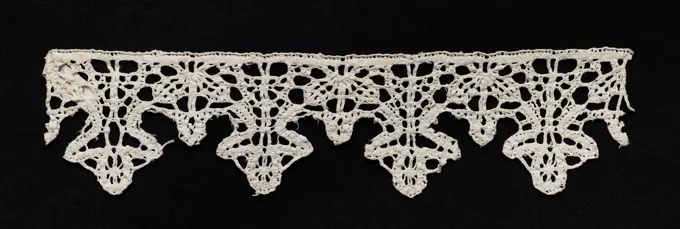
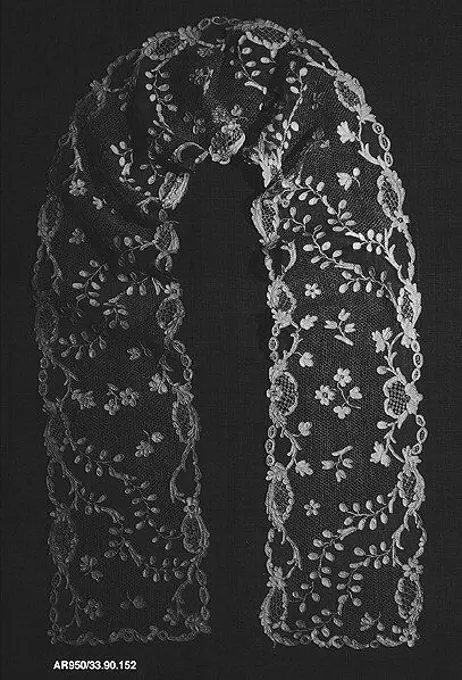
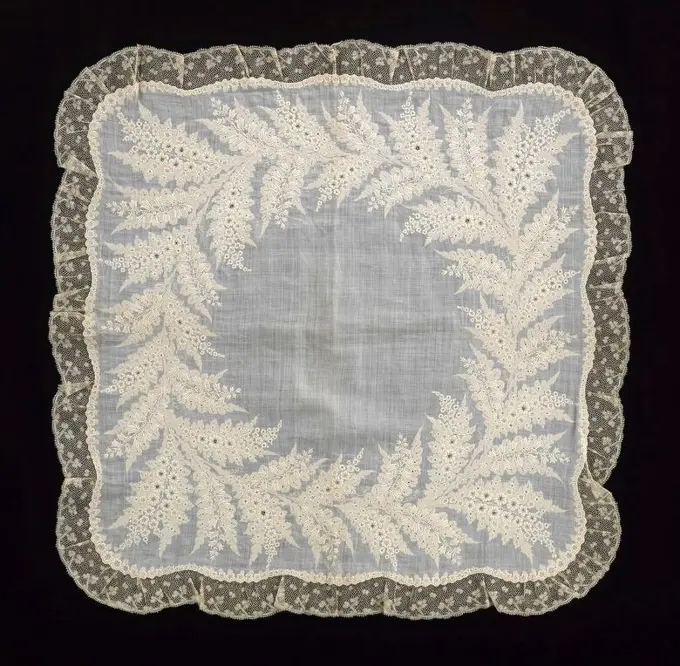
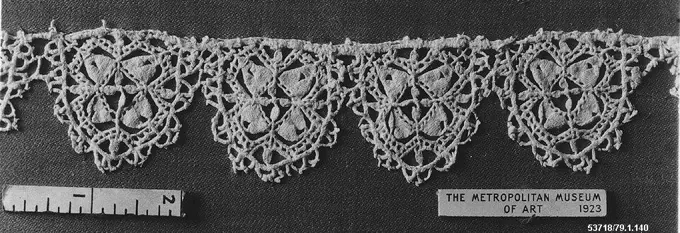
Historical lace fragments showcasing intricate patterns, created with techniques like bobbin lace, reflecting 18th to 19th century craftsmanship.

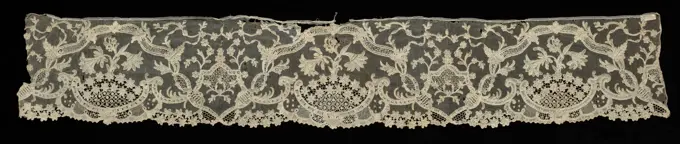
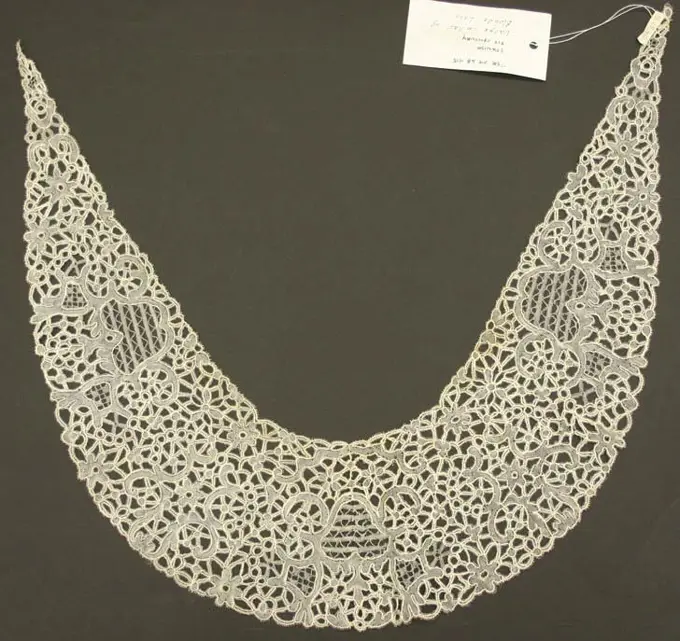
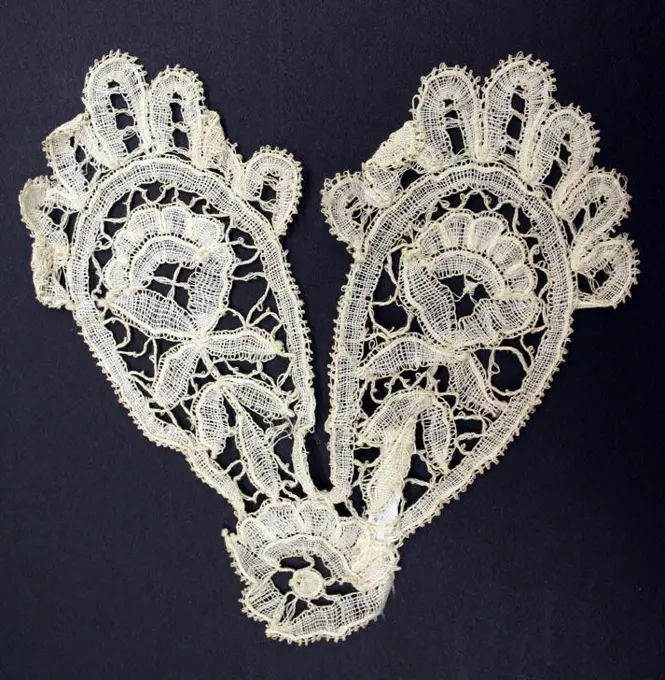
Strip bobbin with two halved cartouches with wide serrated decorative edge, anonymous, c. 1735 Strip of natural -colored Brussels bobbin. The symmetrical pattern consists of two halved cartouches placed next to each other, the half -shaped center of which is on the top of the strip. The wide serrated decorative edge reaches around it up to the underside of the strip and is richly decorated with sloping stripes and a straight down -hanging iris or French lily. The pattern between the cartouches is not symmetrical, but beyond on both sides. This pattern consists of rosette flowers and volute leaves in which elements return from the cartouches in different ways. The motifs are connected by picoted braids. The motifs are made in linen battle with recesses and openwork edges and with mains fillings. Most motives are provided with burst relief contours. Different decorative lands have been applied, including fine snowflake grounds and fine mesh plots with square motifs in shape. The top is f
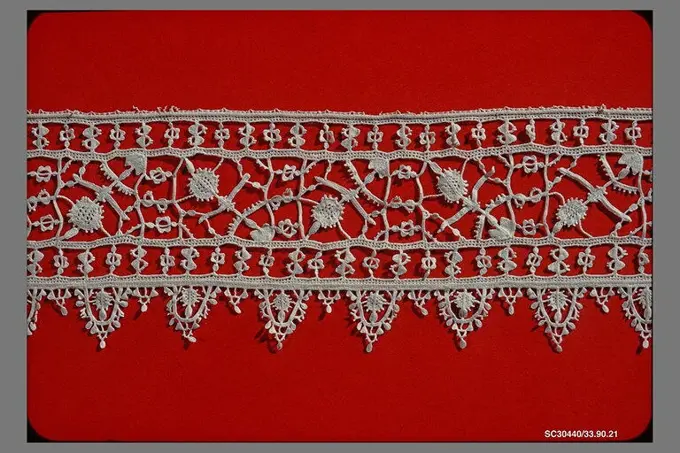
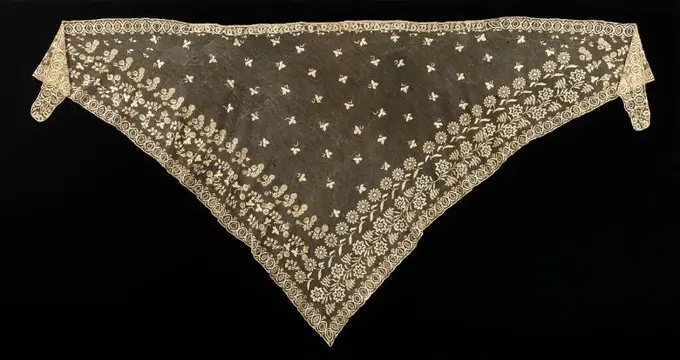
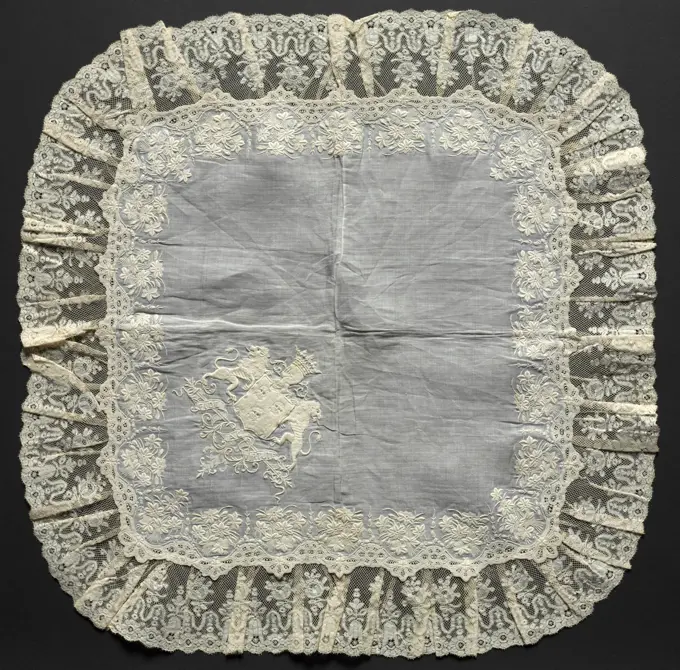
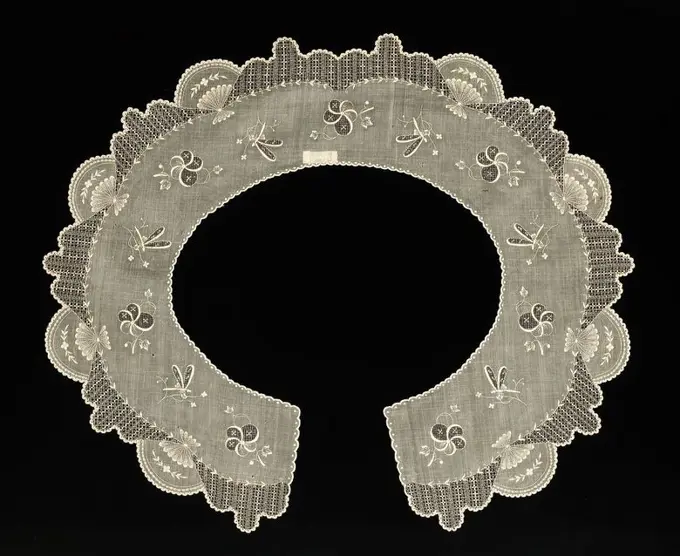
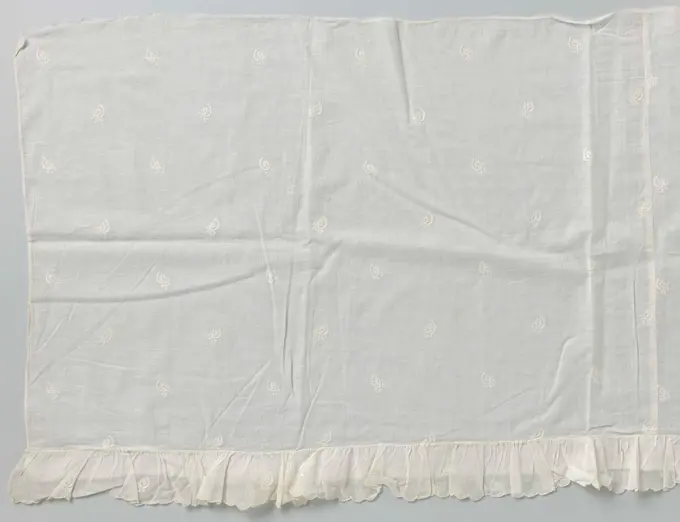
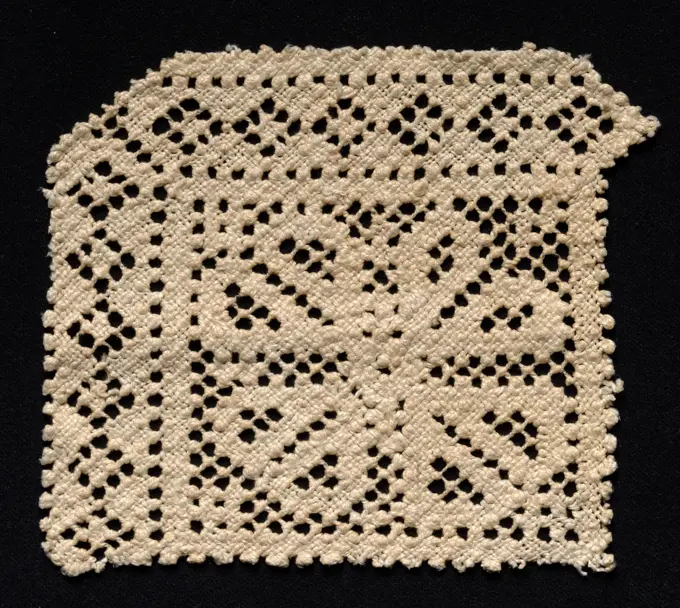
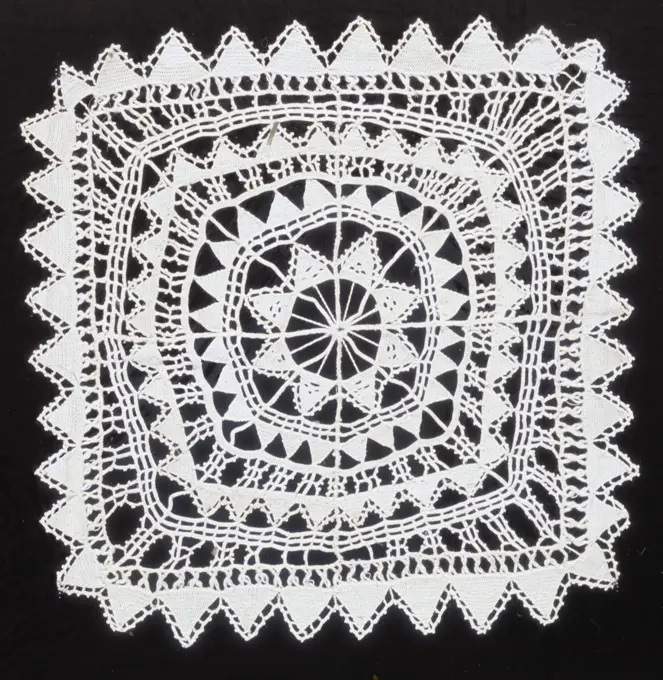
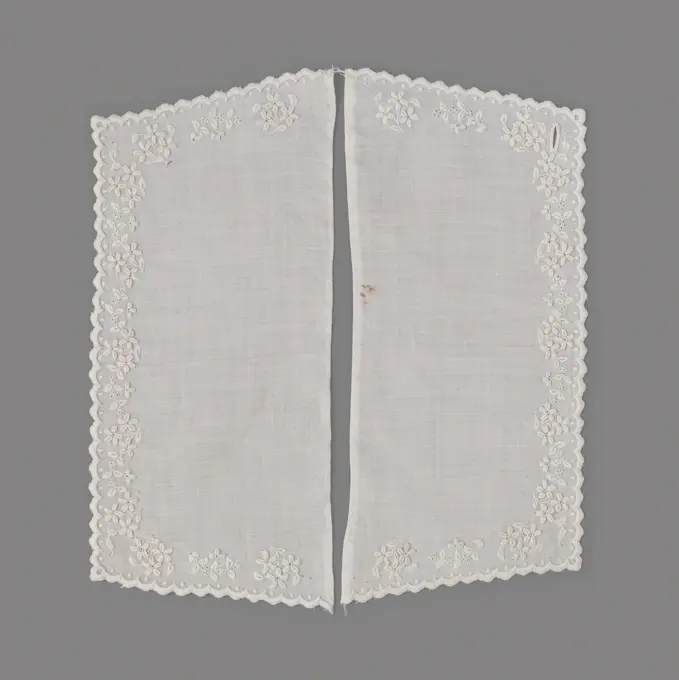
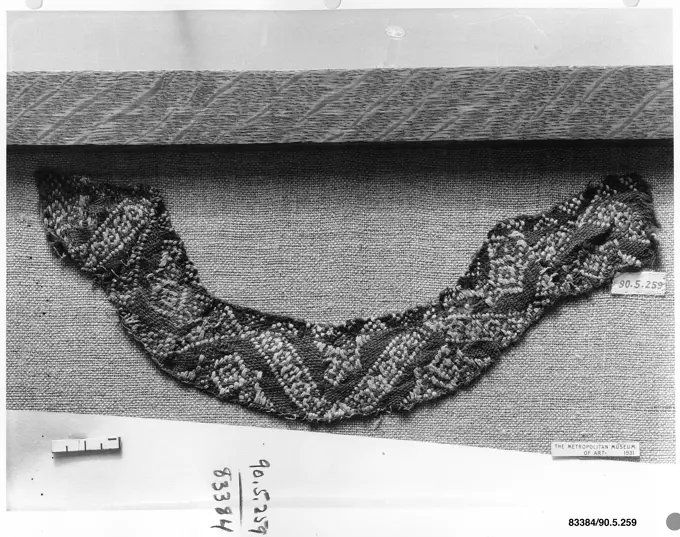
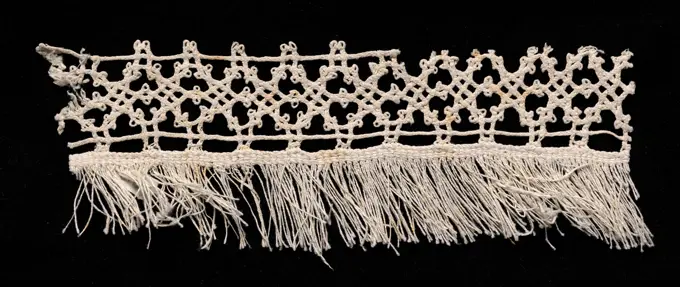
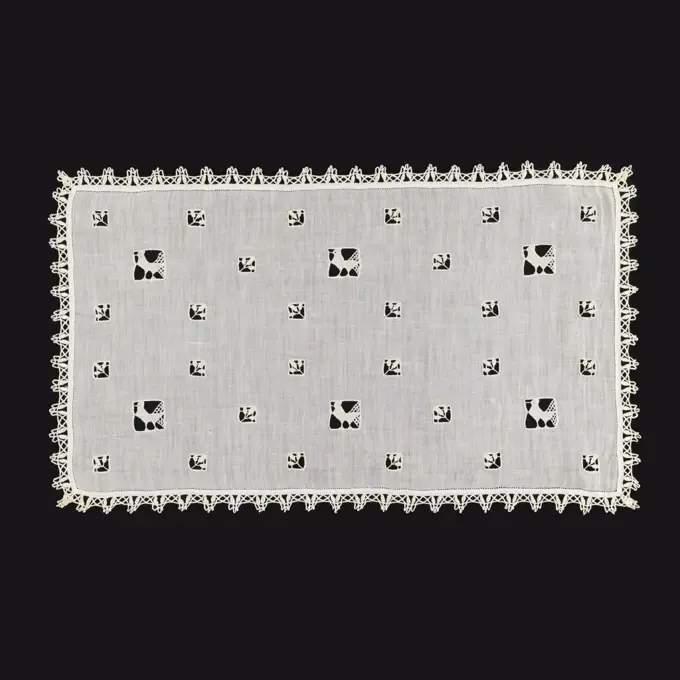
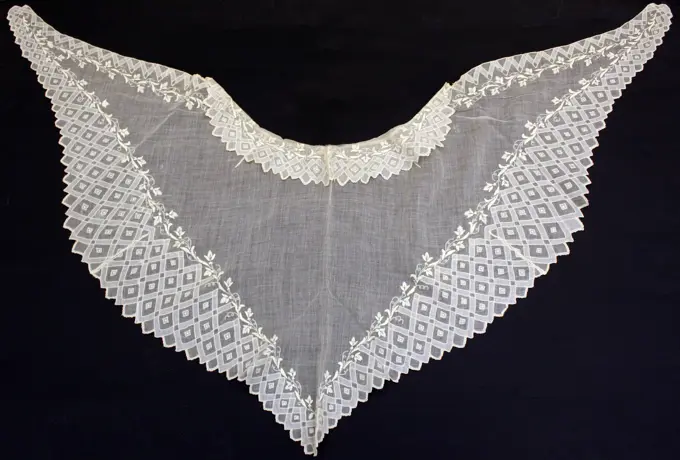
Pelerine 1830-35 French. Pelerine 102663Workpiece for diploma beautiful crafts, Geesje Smid, c. 1890 - c. 1900 Exam, strip of frivolité in green and white. Netherlands Exam, strip of frivolité in green and white. NetherlandsHandkerchief, 19th century. Switzerland, 19th century. Embroidery: linen; average: 43.8 x 43.8 cm (17 1/4 x 17 1/4 in.).Towel border. Culture: Russian. Dimensions: 15 x 9 1/2 in. (38.1 x 24.1 cm). Date: early 19th century.This object is from the collection of Natalia de Shabelsky (1841-1905), a Russian noblewoman compelled to preserve what she perceived as the vanishing folk art traditions of her native country. Traveling extensively throughout Great Russia, she collected many fine examples of textile art of the wealthy peasant class. From the 1870s until moving to France in 1902, Shabelsky amassed a large collection of intricately embroidered hand-woven household textiles and opulent festival garments with rich decoration and elaborate motifs. The Brooklyn Museum holdings include many fine examples including the majority of the garments. Portions of Shabelsky's collection are also housed at the Museum of Fine Arts, Boston, the Cleveland Art Museum, and the Russian Museum of Ethnography in St. Petersburg.In 19th-century Russia the swastika was a heraldic symbol along with the imperial eagle. In SlavicFlounce Made 1860-1869 Brussels. Cotton, needle lace of a type known as Point de Gaze applied to machine made net .Bertha. Culture: Philippine. Date: ca. 1890.The production of pineapple cloth is specific to the Philippines and West Indies. Woven by hand from the leaf fiber of the pineapple plant, and embellished with intircate embroidery, this highly valued fabric was fashioned into clothing and accessories that were a part of the traditional Filipino hertitage for centuries. Exportation to Europe and America started early, but became widespread during the 19th century, when it was promoted by Christian missionaries. The exported items, fashioned for both men and women, were highly prized for their beauty and novelty. Museum: Metropolitan Museum of Art, New York, USA.Handkerchief 1875-99 French. Handkerchief 169749Fall of Batist, for a dressing table. Batisten fall in a boudoir for a dressing table.Fragment, Medium: linen Technique: withdrawn element, Fragment with wheel-like shapes within squares., Italy, 16th century, lace, FragmentFragment of a Corner with Floral Motif, 17th-18th century. Spain, 17th-18th century. Needle lace, filet/lacis (knotted ground and darned in two directions); bleached linen (est.); overall: 12.5 x 14.1 cm (4 15/16 x 5 9/16 in.). Though this fragment of lace is completed in the filet/lacis technique, the floral motif imitates a form of needle lace particular to Spain known as Ruedas or Sol Lace, due to its radial patterns.Bobbin Lace Insertion, mid 16th century. Italy, Venice, mid 16th century. Lace, bobbin; average: 3.5 x 20.4 cm (1 3/8 x 8 1/16 in.).Statue robe. Culture: Italian. Dimensions: L. 16 inches (40.6 cm). Date: mid-18th century. Museum: Metropolitan Museum of Art, New York, USA.Bobbin Lace (Needlepoint Design) Edging with Points, early 17th century. Italy, Genoa , early 17th century. Lace, bobbin; average: 4.5 x 17.9 cm (1 3/4 x 7 1/16 in.).Bliżej Kultury unknownCravat mid-18th century French. Cravat 222839Handkerchief. Culture: French. Date: 1850-60.The beautiful workmanship of this handkerchief is expressed in the sense of movement of the design and the highly detailed embroidery. Museum: Metropolitan Museum of Art, New York, USA.Edging 16th-17th century Italian. Edging. Italian. 16th-17th century. Needle lace. Textiles-LacesFontaneldoek van Linen with Mechelen side, Anonymous, c. 1740 - c. 1760 Brain pan - fontan cloth () - of linen with lace strips. Europe linen (material). bobbin lace / Mechlin (lace) Brain pan - fontan cloth () - of linen with lace strips. Europe linen (material). bobbin lace / Mechlin (lace)Lace, 1800s , Malta, maker unknown. Gift of Mrs G. Acland Allen, 1955.Batist cuff with recommended strip of Rijssel side, Anonymous, c. 1880 Batist cuff with called Rijssel Side strip. The lace has a scallop of flowers and moes in windows. The cuff can be closed through the middle of two hooks. West-Europa batists. band: Lille lace Batist cuff with called Rijssel Side strip. The lace has a scallop of flowers and moes in windows. The cuff can be closed through the middle of two hooks. West-Europa batists. band: Lille laceBatist cuff with called Rijssel Side strip, c. 1880 Batist cuff with called Rijssel Side strip. The lace has a scallop of flowers and moes in windows. The cuff can be closed through the middle of two hooks. West-Europa batists. band: Lille lace Batist cuff with called Rijssel Side strip. The lace has a scallop of flowers and moes in windows. The cuff can be closed through the middle of two hooks. West-Europa batists. band: Lille laceFlounce Made 1875-1900 France. Silk, bobbin straight lace .Mittens early 19th century British. Mittens 102564Fragment; linenCollar ca. 1860 Belgian. Collar 170424Fragment, Medium: linen Technique: bobbin lace, Brussels-style fragment showing reserve area on the border filled with bobbin imitation of needlepoint openwork stitches and set off by tiny floral wreath. Vrai droschel ground., Belgium, mid-18th century, lace, FragmentMitaine of white linen with bobbin and English embroidery, c. 1800 - c. 1850 Mitaine of white linen, in horizontal stripes made up of linen with English -embroidered flowers and bobbin side, trimmed at the top with lace ribbon and a white knot. A ribbon on the bottom. West-Europa whole: Linen (Material) bobbin lace Mitaine of white linen, in horizontal stripes made up of linen with English -embroidered flowers and bobbin side, trimmed at the top with lace ribbon and a white knot. A ribbon on the bottom. West-Europa whole: Linen (Material) bobbin laceNeedlepoint (Burano Point) Lace Flounce, 20th century. Italy, Burano, 20th century. Lace, needlepoint: linen; average: 120 x 19.1 cm (47 1/4 x 7 1/2 in.).Fragment Swedish, Vadstena 19th centuryDoily, 20th century, Lace, Syria, 20th centuryCuff, scalloped, with French embroidery, c. 1850 - c. 1920  Cuff, scalloped, with French embroidery. West-Europa linen (material) embroidering / sewingCollar 19th century Spanish. Collar 102579Textile Fragment 5th-6th century. Textile Fragment 443745Bobbin Lace Insertion with Fringe, mid 16th century. Italy, Venice, mid 16th century. Lace, bobbin; average: 6.5 x 16.6 cm (2 9/16 x 6 9/16 in.).Table cover, Medium: linen Technique: cutwork with needle lace, Rectangular panel of linen ornamented with small squares containing leaves worked in needle lace and larger squared containing birds worked in needle lace, edged with narrow bobbin lace., USA, ca. 1900, lace, Table coverEdging 17th century Italian Punto in arialiterally, "stitches in the air"is one of the earliest styles of needle lace, which is itself developed from cutwork of primarily geometric design. When lacemakers transitioned to using a foundation of threads laid out according to a pattern drawn on parchment, they were able to incorporate more fluid lines and curves into their designs.. Edging 222713Shawl. Culture: Flemish. Date: 1820-50. Museum: Metropolitan Museum of Art, New York, USA.Ornament (one of a pair) 1600-1650 () possibly Spanish. Ornament (one of a pair) 222470. Panels Reticella merged into a 'collar'. Model: A fan-shaped part that is deposited with Punto in aria points that is connected to both rectangular briskets by means of a cut-away intermediate site. There are a number of folds and pleats in the fan-shaped part. The two narrow tires, which are set to the collar, do not seem to have a function. Two around-woven cords with akertjes (knotted ornaments) are attached to the intermediate resource by means of trens. A number of the open hems, which are vertically in the violative part, continue in the linen that is now ónder the intermediate site. This is illogical if the collar would have been cut from a contemporary shirt. Decoration: The pattern has squares within which different variations.Jabot 1860s American. Jabot 118889Sample (France)Fragment Swedish, Vadstena 19th centurySPAIN - Arzúa (district) - Galicia - A CORUÑA. Dombodán / Arzua; restaurante "Casa Brandariz"; armario con mantelería y servilletasCuff for a lady or gentleman of Batist and finished all around with bobbin, anonymous, c. 1640 Cuff for a lady or gentleman, made of batist and finished all around with natural bobbin: Old Flemish side. Model: rectangular linen that is laid in a curved shape with fine pleats. On one long side, the cuff has a wide strip of bobbin and a narrower strip on the other sides. Along the long side with the narrower strip side is also a mirrored narrow strip of lace, which falls over the linen. The repeating and symmetrical pattern of the wide strip with a total of five sculptures consists of a flower pot surrounded by seven triple leaves. The pattern of the narrow strips consists of connected triple flowers that at the same time form sculpes. Flandersnetherlands linen (material) bobbin lace / old Flemish lace Cuff for a lady or gentleman, made of batist and finished all around with natural bobbin: Old Flemish side. Model: rectangular linen that is laid in a curved shape with fine pleats. On oneBorder, Medium: Technique: needle lace, Needle lace; mid-17th century Point Plat de Venise, mid-17th century, lace, BorderValuable clapper work in the house of the photographer