Lace Patterns and Textiles

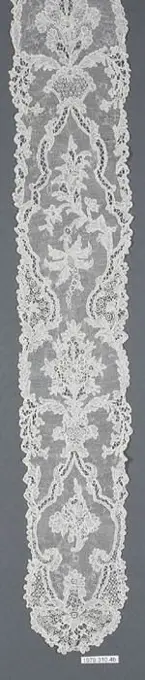
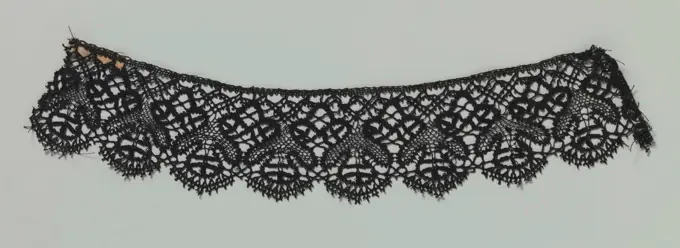
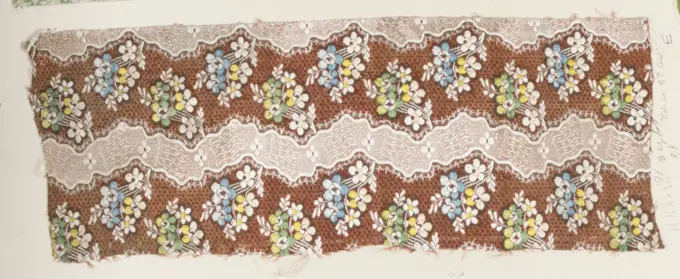
Elegant lace strips showcasing intricate designs and historical details, suitable for fashion and interior decoration inspirations.

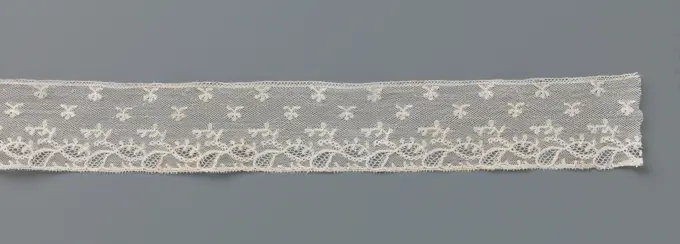
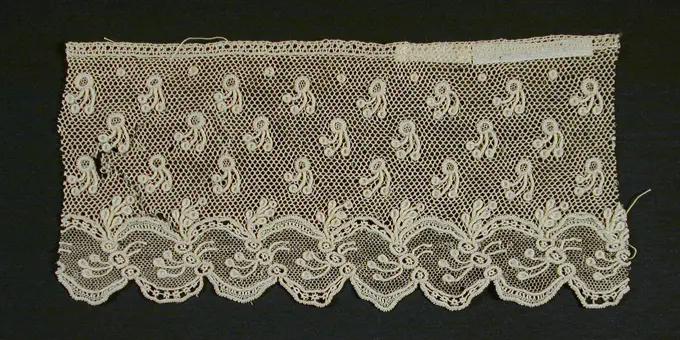
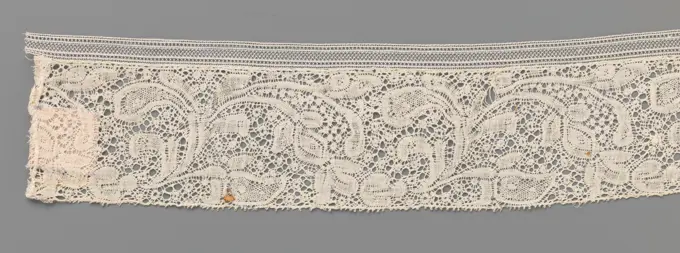
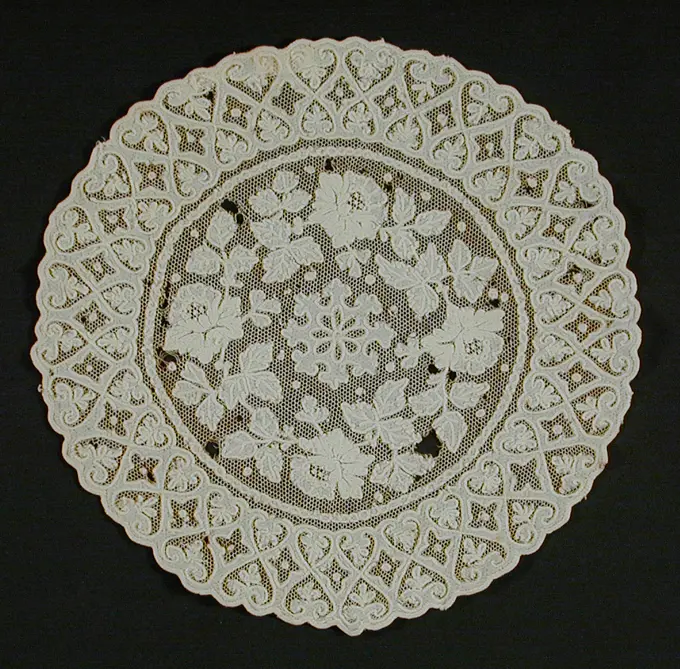
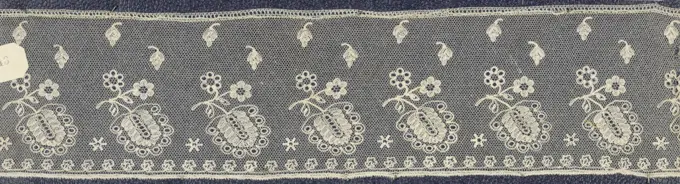
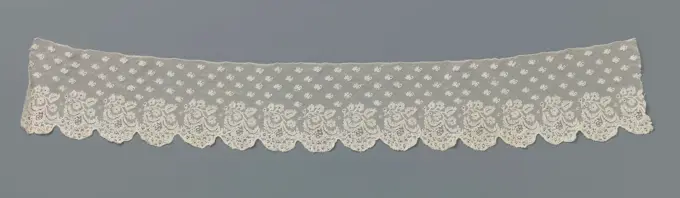
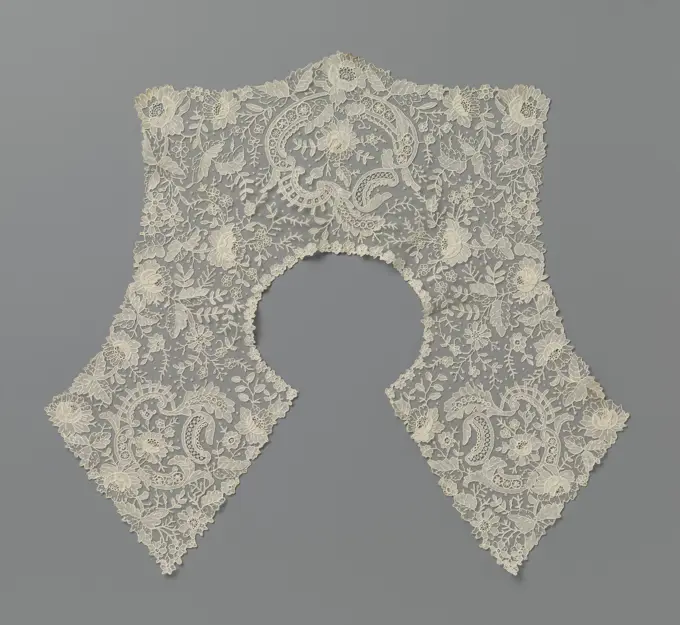
Strip of needle side with cornflowers, anonymous, c. 1800 - c. 1820 Two -thirds of the width is filled with a spreading pattern of falling cornflowers on a coarse soil (of flooded bars). A third of the width forms a right-winged outer edge (with a single alençon soil), lined with two pearl lists, and decorated with a horizontal flank of stretched stalks, each with three cornflowers, which are always in the same direction. Alençon side. France linen (material) Alençon Lace Two -thirds of the width is filled with a spreading pattern of falling cornflowers on a coarse soil (of flooded bars). A third of the width forms a right-winged outer edge (with a single alençon soil), lined with two pearl lists, and decorated with a horizontal flank of stretched stalks, each with three cornflowers, which are always in the same direction. Alençon side. France linen (material) Alençon Lace
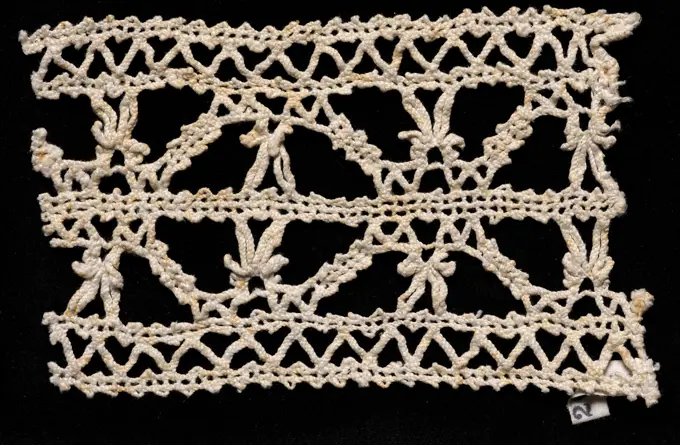
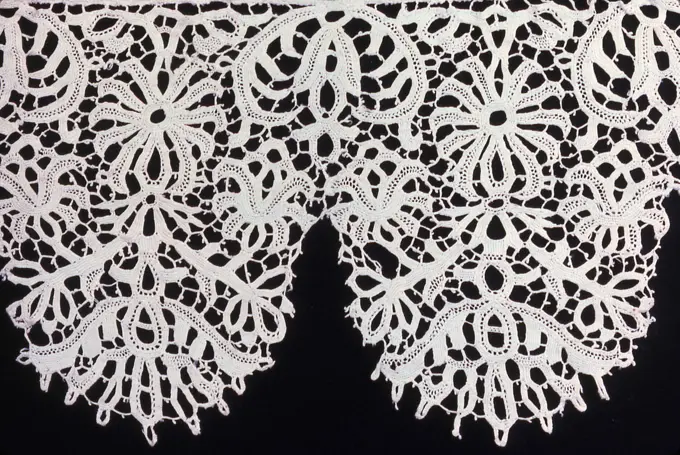
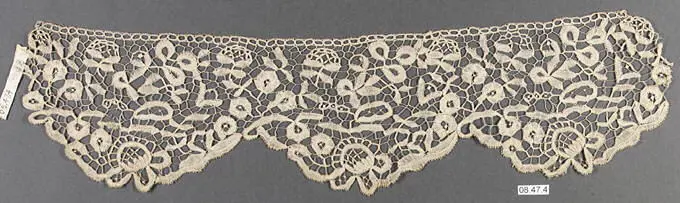
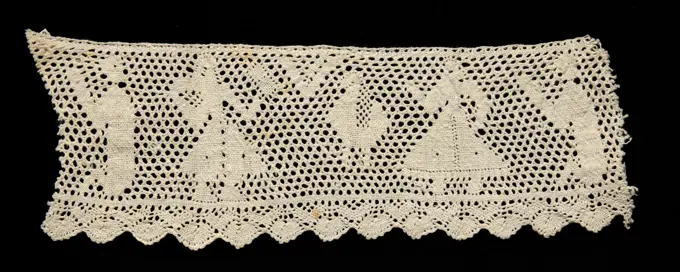
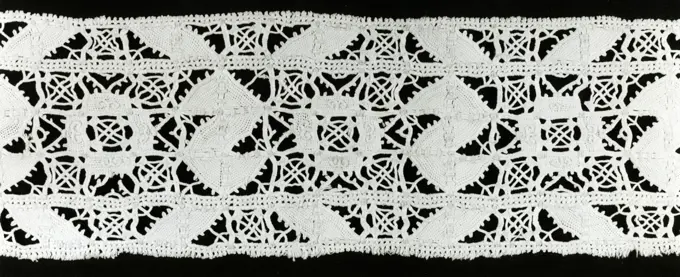
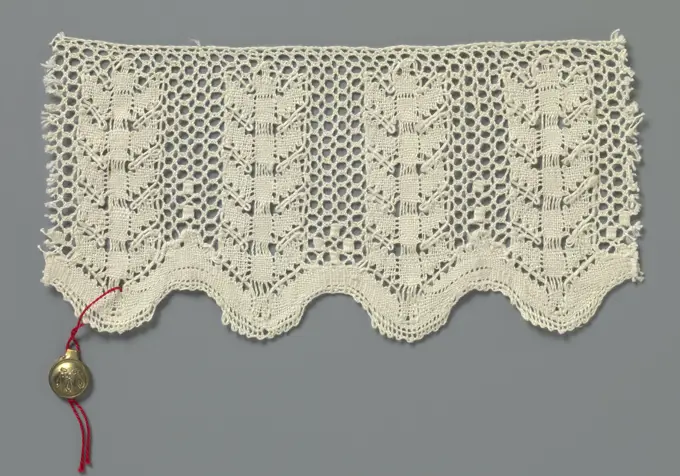
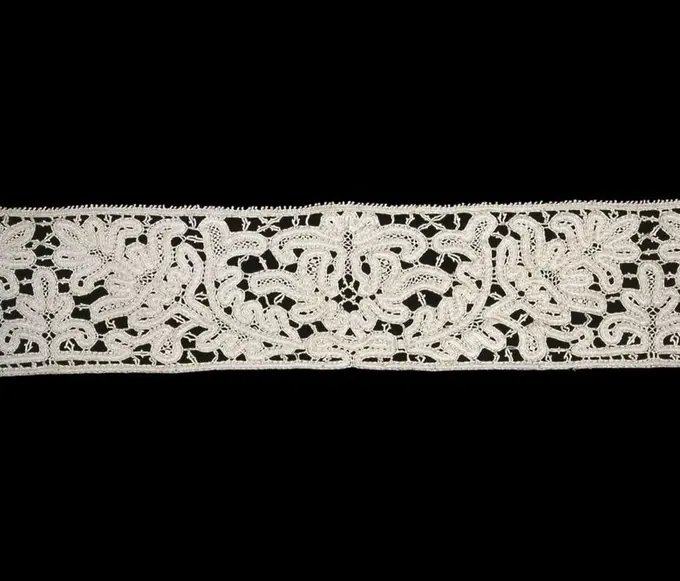
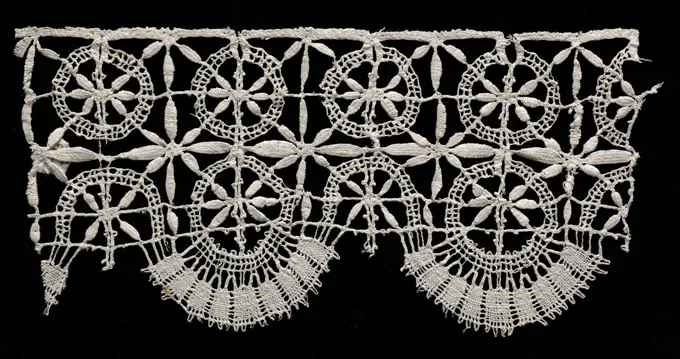
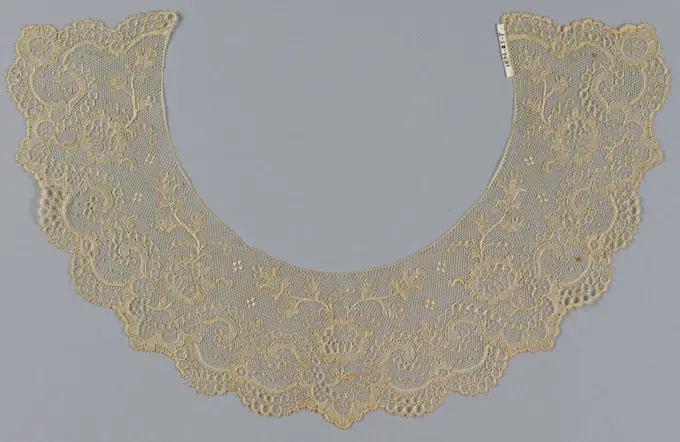
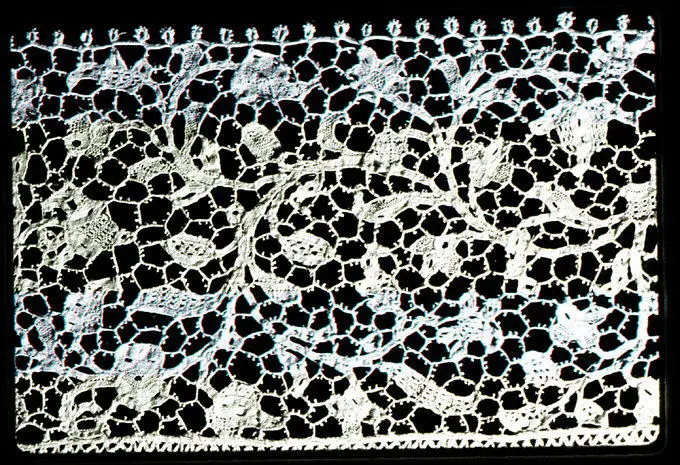
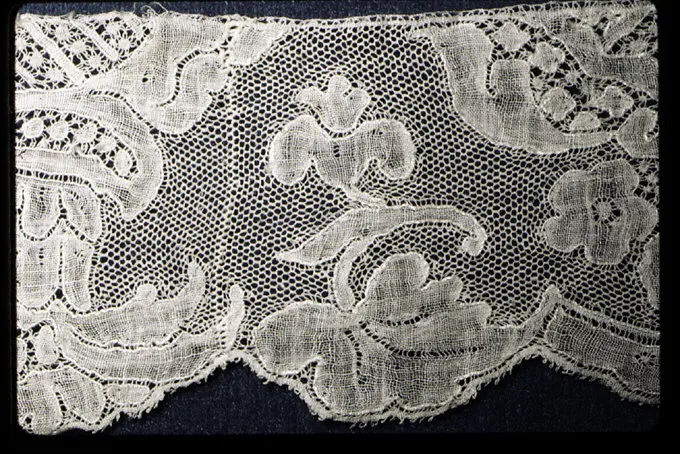
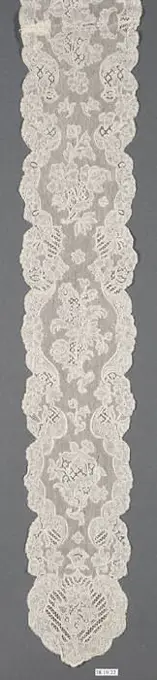
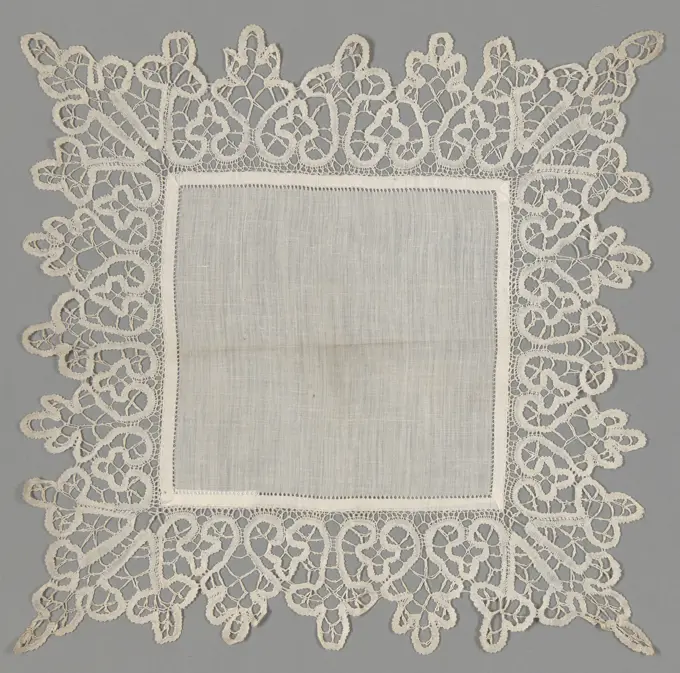
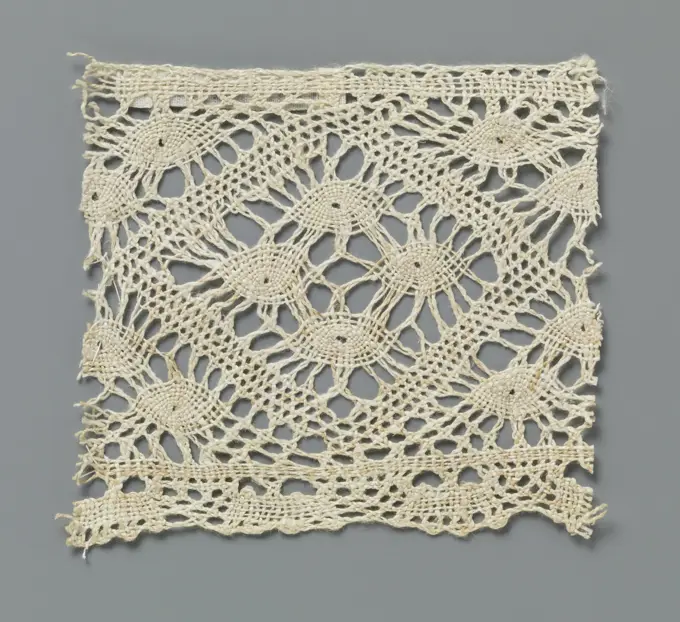
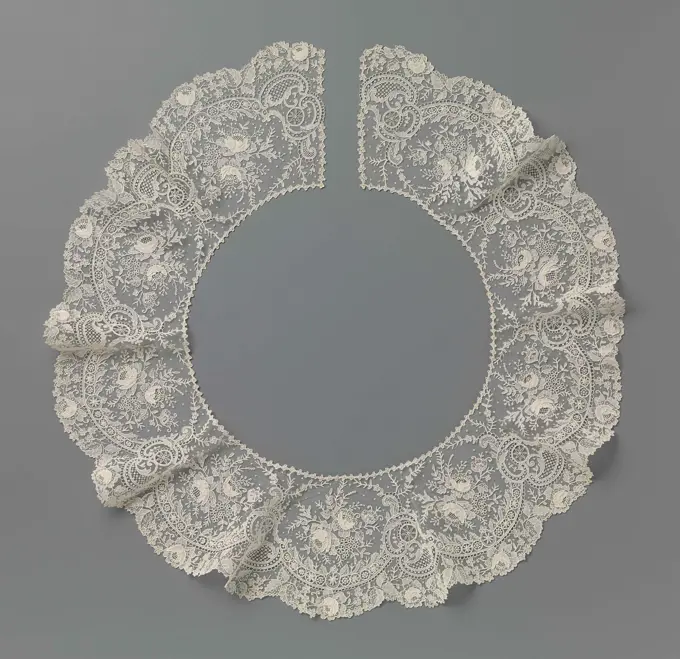
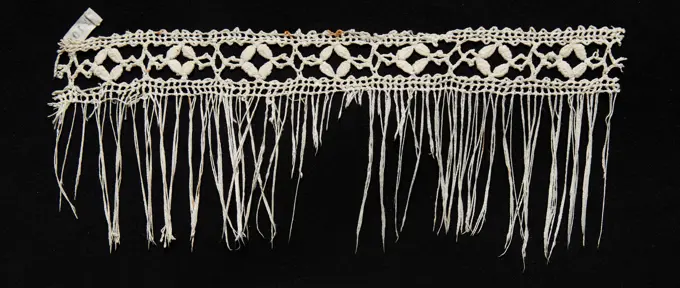
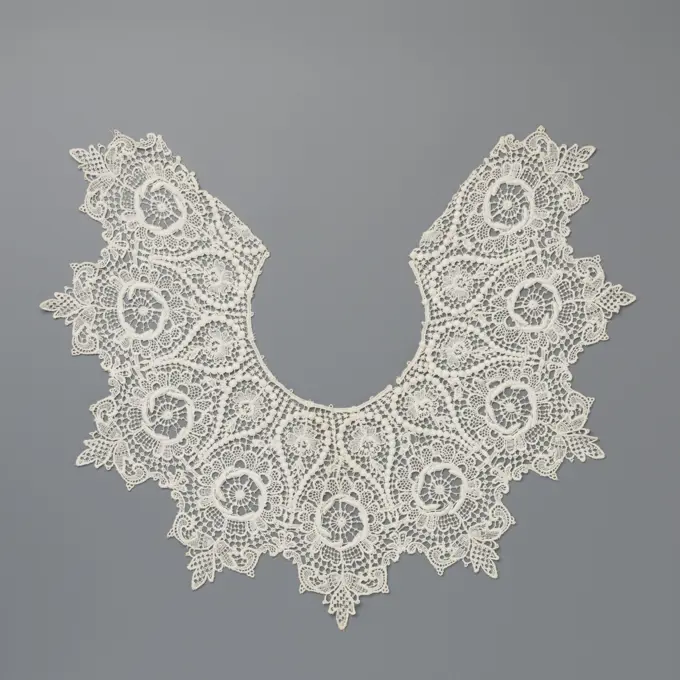
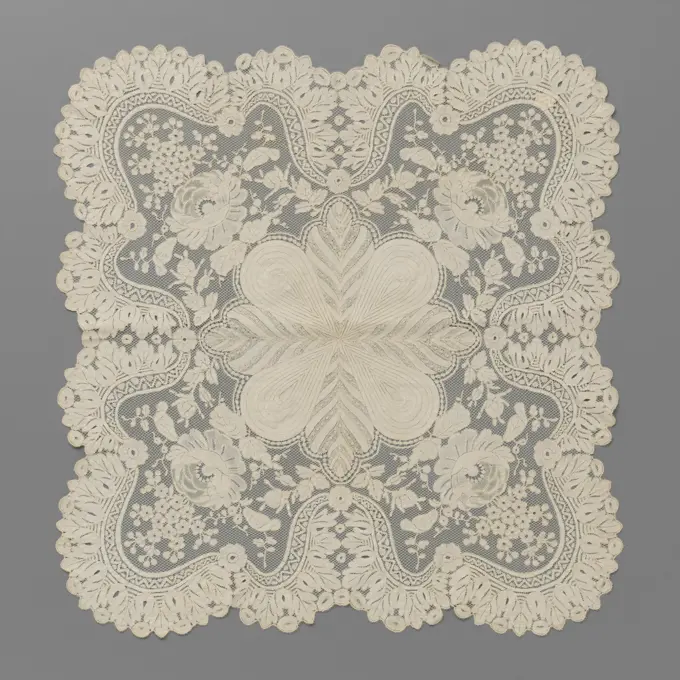
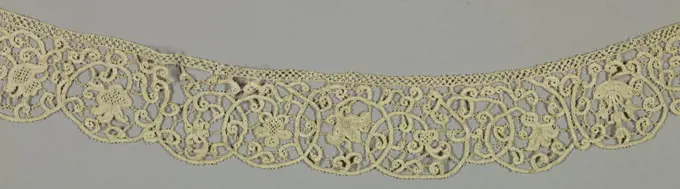
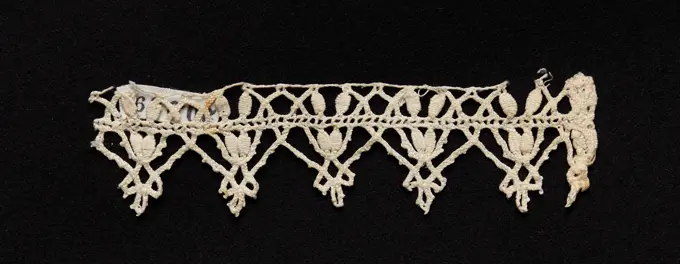
Bobbin Lace Insertion and Edging of Points, early 17th century. Italy, Venice, early 17th century. Lace, bobbin; average: 13.4 x 40.7 cm (5 1/4 x 16 in.).Insertion 16th century Italian, Venice. Insertion 221091Pair of cuffs and collar 17th century Northern Italian. Pair of cuffs and collar 212342Cooper Union Museum Lace Study Card, Medium: linen Technique: bobbin lace, Two fragments of narrow straight-edged borders., Belgium, 17th-18th century, lace, Fragments, FragmentsBorder, Medium: linen Technique: bobbin lace, continuous braid-like, Narrow band in a design of open, abstract flowers and leaves with a large hanging triangular pendant of floral sprays., Italy, late 16th-early 17th century, lace, BorderStrip bobbin with tilted ovals under spray pattern of twigs, anonymous, c. 1785 - c. 1799  Strip of natural -colored bobbin: Mechelse side. The repeating and continuous pattern consists along the bottom edge of a succession of rush -hour and drop shapes, which are always tilted in relation to each other. Under the oval, a short pendulum of circles runs through, from which a leaf branch originates above the drop shape. Above this pattern is a stray pattern of two rows of loose twigs. The motifs are connected by a fine Maas soil, the Mechelen soil. The sparing fullwork is made in linen battle, which almost disappears here and there because of the thicker and shiny contour threads. Two different but very similar decorative lands, with coarse meshes, are used in the ovals and drop shapes. The straight underside is finished with picots. The top is finished with a separate strap. Mechelen linen (material) bobbin lace / Mechlin (lace)Bobbin Lace Insertion, mid 16th century. Italy, Venice, mid 16th century. Lace, bobbin; average: 7.1 x 11.5 cm (2 13/16 x 4 1/2 in.).Pair of lappets 18th century Flemish, Brussels. Pair of lappets 227667Fragment of Lace. France, late 18th century. Textiles; fragments. Linen point d'Alençon needle laceSleeve, 17th-19th century, 34 1/2 x 19 in. (87.63 x 48.3 cm), Philippines, 17th-19th centuryBorder (From a Collar) Made 1620-1659 Flanders. Linen, needle lace .Edging early 19th century British, Honiton. Edging 213303Lace laceBobbin Lace Insertion and Edging, 17th-18th century. Italy, Abruzzi, Pescocostanzo , 17th-18th century. Lace, bobbin; average: 10.2 x 30.5 cm (4 x 12 in.).Handkerchief from cluster side with the hanging lilies. For a cross-shaped batters center piece, a lace edge runs with a fond of ice soil. Two profile tires filled with raster work, in rights and round parts, framed a fine mesh stock, on which across across hules stand. In the corners there is a rosette branch between three hanging lilies and a fine pendulum. Mechelen side.Insertion (For a Cover) Made 1675-1725 Italy. Linen, needle lace worked on plain weave cut and drawn thread work grid; embroidered in double hem and overcast stitches .Insertion 16th century Italian, Venice. Insertion 220891Strip bobbin with flower stem with three connected flowers, anonymous, c. 1700 - c. 1749 Strip of natural-colored bobbin: binche side. The repeating and continuous pattern consists of a curved flower stem with three connected flowers at the end. The motifs are connected by a decorative land, a coarse snowflake ground. The motifs are made in linen battle with openwork edges and two leaves have a mains filling. The bottom is straight finished and provided with picots. A separate stretched strap is sewn along the top, with a fine pattern. Southern Netherlands linen (material) bobbin lace / Binche lace / snowflake filling Strip of natural-colored bobbin: binche side. The repeating and continuous pattern consists of a curved flower stem with three connected flowers at the end. The motifs are connected by a decorative land, a coarse snowflake ground. The motifs are made in linen battle with openwork edges and two leaves have a mains filling. The bottom is straight finished and provided with Shacf of lace pledger and etching side with stripes, anonymous, c. 1900 Scarf of natural -colored mechanical tulle with machine lace and etching side. Elongated rectangular model. Pattern with three continuous longitudinal stripes made with a slightly wavy thin rank with which alternately fine leaves and one open worked rosette. In the lanes between the stripes there are loose cherry branches at a regular distance. At the ends the scarf is finished with a richly decorated and opened symmetrical pattern with three large rosette flowers and C-volutes. Along the long sides a regular scrap edge along which an arc garland runs with openwork rosettes. Plauen  embroidering Scarf of natural -colored mechanical tulle with machine lace and etching side. Elongated rectangular model. Pattern with three continuous longitudinal stripes made with a slightly wavy thin rank with which alternately fine leaves and one open worked rosette. In the lanes between the stripes there are loose cherry branches aStrip machine side with rose branches between C-volutes along the bottom, anonymous, c. 1885 - c. 1899 Strip machine side: Machinal Chantilly side. The repeating pattern along the underside of the strip consists of C-volutes between which rose branches spring. The branches transform partly a thin leaf garland that moves along the top of the strip with arcs and loops. The motives are provided with contour threads and are connected by a machine tuler. Decorative lands have been used in the motifs. The scrap edge along the underside of the strip stems from the pattern with the C-Voluten and is finished with picots. The top of the strip is straight finished. Calais cotton (textile) Strip machine side: Machinal Chantilly side. The repeating pattern along the underside of the strip consists of C-volutes between which rose branches spring. The branches transform partly a thin leaf garland that moves along the top of the strip with arcs and loops. The motives are provided with contour threads Strip bobbin with standing corners or "stående ax", anonymous, c. 1800 - c. 1899 Strip of natural -colored bobbin, Swedish side. The strip is attached to a light blue cardboard with pins, with four other strips. At the top of the cardboard is "Wadstena. Sweden." Written and under the strip is "Standing Ears (Stående AX)" written. The repeating and symmetrical pattern consists of a stylized grain, who rises straight up from the middle of a semicircular, until almost at the top of the strip. The corner is made up of cubes, with a sloping block on both sides. Between the successive Korenaren are alternating in the hexagonal Maas soil, two and four mushes alternately. A dense band runs along the scalloped underside, with a few lines made with recesses. The motives are made in linen battle with contour threads. The Mosjes are made in square forms. The top of the strip is straight finished. The scums are finished with picots. On the strip hangs a red thread with a gold -colored seal on whichStrip of a climbing side with diamond and fan-shaped slot. Strip natural colosside, sling. The repeating pattern consists of a diamond of a window. Between the consecutive windows, a fan-shaped shell is always dependent, with an open-worked vertical web. The windows are connected along the top by a coarse Maas soil, a Paris soil. The windows are made in scroll and the fans in linen stroke. The top of the strip is straight finished. The shelters are finished with picots.Fragment (Belgium); linenFragment; linenBobbin Lace Jabot, early 18th century. Belgium, Mechelen, early 18th century (Louis XIV period). Lace, bobbin: linen; average: 30.2 x 29.9 cm (11 7/8 x 11 3/4 in.).Laces, 17th century. Lace decorated with rosettes, beginning of 1600's. Detail.Handkerchief with a rim of needle side with four large and four small ovals, anonymous, c. 1870 - c. 1890 Handkerchief with a border of natural -colored needle side, Brussels mesh side. Around a cross -shaped batisten in the middle, a wide edge of lace with hollow scoops runs, which are cut by four large cornerovals, interspersed with four smaller ones. The scoops are composed of 'SpoorRils', a wheel edge and a leaf branch. The strikers are crowned by a leaf palm. The ovals filled with stars and wheels are closed by a scallop, which consists of daisies, including leaves. Holle and Bolle C-Voluten form the inner edge. Brussels linen (material) Brussels Gaze Point Handkerchief with a border of natural -colored needle side, Brussels mesh side. Around a cross -shaped batisten in the middle, a wide edge of lace with hollow scoops runs, which are cut by four large cornerovals, interspersed with four smaller ones. The scoops are composed of 'SpoorRils', a wheel edge and a leaf branch. The strLace, 1600-1700, Italy, maker unknown. Bequest of Mrs Alice Bakewell, 1965.Border, Medium: linen Technique: grid of laid cords with needle lace, reticella style, edge of punto in aria, Wide border of two rows of squares bordered at one side by pendants. Squares and pendants filled by circular blossoms., Italy, late 16th-early 17th century, lace, BorderZakdoek van batist met een rand doorstop en borduurwerk.Handkerchief of Batist with embroidery - white work - and around a wide edge Edge embroidery: tuledo stroke. Square model with round middle piece of batist. Sixteen rectangular shelters are cut to the Batist, which are finished with a narrow cutter edge of work with pulled out wires. The batist is embroidered along the edge and ending in the rectangular shelered with a flower branch with two large round flowers and finer chali flowers or rose hips interspersed by four winger leaves in the subsequent scallop. The flower branches and wingerd leaves are always connected to each other with a thin sling with one bow and one forget-me-not. The lace pattern is equal and symmetrical along each side. The machine tulle has pounded on every angle with a symmetrical palmet motif between two large drip-shaped leaves. On both sides this motif is flanked by a large flower, possibly a peony, between some large curling leaves. In the middle of eacFragment; linenHandkerchief; linenBobbin Lace Edging, 18th century. Spain, 18th century. Lace, bobbin; average: 5.8 x 18.5 cm (2 5/16 x 7 5/16 in.).Strip bobbin with stylized flowers in alert from the lower and top of the strip, anonymous, c. 1600 - c. 1799  Strip bobbin, Antwerp side. The pattern consists of stylized flowers and leaves, which occur alternately from the top and top of the strip. The motives are connected by a very sparingly used and irregular Maas soil. The motifs are made in linen battle with openwork edges. The top and bottom of the strip are straight finished, with picots on one side. Antwerp linen (material) bobbin lace / Antwerp lacePiece 18th century Italian. Piece 214912Border. Italy. Date: 1650-1700. Dimensions: 8.6 x 395.3 cm (3 3/8 x 155 5/8 in.)Width repeat: 30.1 cm (11 7/8 in.). Linen, bobbin part lace. Origin: Italy. Museum: The Chicago Art Institute, Chicago, USA.Bobbin Lace Cuff, 18th century. Italy, Milan, 18th century. Lace, bobbin: linen; overall: 22 x 19 cm (8 11/16 x 7 1/2 in.).Panel, Medium: linen Technique: withdrawn element work; bobbin lace, Panel edged on one side with a wide border in a design showing a conventionalized vine pattern. Trimmed with bobbin lace., Italy, 17th century, embroidery & stitching, PanelBobbin Lace (Rose Lace) Edging with Bell Points, 17th century. Italy, Genoa, 17th century. Lace, bobbin; average: 8.6 x 18.5 cm (3 3/8 x 7 5/16 in.).Collar (Denmark); linen, silk; 1898-23-7Fragment early 19th century Flemish. Fragment 214517Collar Made 1875-1900 England. Cotton, machine net; appliquÈd with cotton, bobbin part lace; edged with cotton and linen, bobbin part lace of a type known as Honiton .Edge; linen; 1931-27-23Doily. Ireland, possibly Carrickmacross, mid-19th century. Textiles; doilies. Linen Carrickmacross laceFragments, Cooper Union Museum Lace Study Card; linenCollarBorder; linen; 1933-1-138Edging late 17th or early 18th century Italian or French The Metropolitan Museum's great lace collection was started when the Museum became the first among American museums to organize a permanent collection of lace with the acceptance of the McCallum Collection in 1879 and the bequests of Mrs. John Jacob Astor, Mrs. Robert L. Stuart, Mrs. Augustus Cleveland, and Mrs. A. W. Winters shortly thereafter. In 1893 a loan collection of antique laces shown at the World's Columbian Exposition in Chicago was assembled by a committee of New York women headed by Catharine Augusta Newbold. About 1900 Miss Newbold arranged and labeled an exhibition of laces and linenworks lent to the Metropolitan Museum by Mrs. James Boorman Johnstone and the Misses Johnstone. "Her scholarly knowledge of lace technique enabled the Museum for the first time to offer a comprehensive display of lace illustrating its historical development," wrote Miss Frances Morris, then curator of the textile department. Miss NewbolStrip clamp side with diamond between bulbs. Strip natural colosside: straw side. The pattern consists of a diamond in a square field formed by a list of connected single spheres. In every angle between the diamond and the bulbs there is a spouse relevant in linen stroke. The window consists of an ornamental ground that forms square cubes. The strip has been cut halfway at the subsequent field. This field was probably also diamond-shaped and is formed by a grille with an oval grating. The top of the strip is straight finished. Under the balls along the bottom of the strip, a bow tire is split into a cut-off. The bowes form the sloping edge.Scarf. Belgium, probably Bruges. Date: 1880-1899. Dimensions: 149 × 24.8 cm (58 5/8 × 9 3/4 in.)Width repeat: 8.1 cm (3 1/8 in.). Cotton, bobbin part lace of a type known as "Duchesse de Bruges". Origin: Belgium. Museum: The Chicago Art Institute, Chicago, USA.Strip bobbin with rush-hour v-shaped band, anonymous, c. 1800 - c. 1899 Strip of natural -colored bobbin, straw side. The pattern consists of an openwork and inverted V-shaped band, in which Spitsovaaljes are made between crossing couples. The triangular fields that occur along the top and bottom of the zigzag band are made in linen battle. The top of the strip is straight finished. The underside is finished with arcs made with a continuous braid that is equipped with three picots per arch. Buckingham cotton (textile) Bobbi lace / lace cloth Strip of natural -colored bobbin, straw side. The pattern consists of an openwork and inverted V-shaped band, in which Spitsovaaljes are made between crossing couples. The triangular fields that occur along the top and bottom of the zigzag band are made in linen battle. The top of the strip is straight finished. The underside is finished with arcs made with a continuous braid that is equipped with three picots per arch. Buckingham cotton (textile) Collar, 1800s. France or Switzerland, 19th century. Embroidery; cotton; overall: 55.9 x 6.7 cm (22 x 2 5/8 in.).Cape 19th century Irish. Cape 78933Mount (France); cast and gilt bronze; L x W: 7.3 x 31 cm (2 7/8 x 12 3/16 in.)Strook gehaakte kant met roosje en klaverblad.Strip natural-colored Irish crochet side. A repeating pattern of around and around a layered rose and a three-piece cloverleaf and a stroke pattern of small lightly curved rectangles. Crochet soil with irregular meshes with picots. The strip is finished on all sides with picoted three-part arcs.Batist handkerchief around finished with needle side. Batist handkerchief that is finished with natural-colored coniferous lace: Brussels gauze side. The batist is eight of shape wherein the lobes are angularly finished. The side has a pattern of C-Volutes, flowers and flower branches with berries. The largest flowers are the roses on the corners along the edge: per corner one large rose, overhoeks placed and left and right flanked by three simple roses. In the U-shaped field above it allows a rose branch with one rose from which sprigs of berries. This field is crowned by a cornflower or carnation between two volutes. A more or less comparable but smaller pattern is in midfield that has been faced between two large C volutes. The motifs are made with different festivo stabs and equipped with relief contours. The motifs are connected to each other by a mesh side ground, decorated with a few mashes. Conifiers and ornamental grounds have been applied in the flower hearts and spaces in thEdging 18th century Flemish. Edging 213302Strip of bobbin with crooked twigs, anonymous, c. 1875 - c. 1899 On a coarse and mushroom mesh stock (square Maas) stands, above a semi -circular shell, an open pattern of an overhanging twig with a flower. Valenciennes side. Originally this strip was one of the parts of a strip that consisted of four separate parts. Of these, however, three are sewn together: BK-BR-J-259-A, -B, -C. In 1966, a slightly narrower strip was then set on this top of the long strip that originated, BK-BR-J-321-A, with a somewhat similar pattern. Sluis (Possible) linen (material) Bobbi Lace / Valenciennes Lace On a coarse and mushroom mesh stock (square Maas) stands, above a semi -circular shell, an open pattern of an overhanging twig with a flower. Valenciennes side. Originally this strip was one of the parts of a strip that consisted of four separate parts. Of these, however, three are sewn together: BK-BR-J-259-A, -B, -C. In 1966, a slightly narrower strip was then set on this top of the long strip that orPair of lappets 18th century Flemish. Pair of lappets 226292Strook applicatiekant met drie blaadjes op ovale bloem.Strip natural-colored application side, needle side applicated on machine tulle. Repetitive motif with alternating a curved branch, a smaller curved branch and a symmetrical motif with C-shaped leaves. The four flowers on the largest branch are oval with two or three leaves at the top. The pattern is appliqued on the lower part of the strip, on a fine hexagonal maas soil. Relief contours with wide scented thread bundles and decorative stitches in the oval flowers, among others. Virtually straight edge along the bottom from which the branches spring. The top is finished with a straight edge.Needlepoint (Punto in aria) Lace Insertion, 17th century. Spain, 17th century. Lace, needlepoint; average: 4.5 x 17.8 cm (1 3/4 x 7 in.).Flounce (Possibly From an Alb) Made 1701-1750 Italy. Linen, bobbin part lace (continuous clothwork tapes) .Length of Lace. Belgium, 1825-1850. Textiles; textile lengths. Silk Chantilly bobbin laceDouble Lappets. Eastern Europe or Russia. Date: 1701-1725. Dimensions: 130.2 × 12.6 cm (51 1/4 × 5 in.). Linen, bobbin straight lace. Origin: Eastern Europe. Museum: The Chicago Art Institute, Chicago, USA.Bliżej Kultury unknownStrip bobbin with four rush -hour stoves in the corners of a window, anonymous, c. 1800 - c. 1899 Strip of natural -colored bobbin, straw side. Due to the limited length of the strip, the entire pattern is not visible. The visible pattern consists of a tire in mainslag, which forms the contours of a window. In the window there is a rush -in -ahead in every corner. The Spitsovalen are connected to each other with crossing couples and to the circumference of the window. On the outside of the window, two rush -hour dovals are connected per side, which are wholly or partly intact. They are partly connected by a grid, a lace-hole traly. The top of the strip is straight finished. Along the underside runs a faint edge of the scaffold, which is formed by a decorative band of arches in linen stroke that are linked to each other with a lace hole traly. Italy linen (material) Bobbi lace / lace cloth Strip of natural -colored bobbin, straw side. Due to the limited length of the strip, the entire pFlounce Made 1675-1700 Italy. Linen, needle lace with raised details; added cotton edging .Needlepoint (Punto Avorio or Ivory Stitch) Lace Insertion, 17th century. Italy, 17th century. Lace, needlepoint; average: 3.2 x 24.8 cm (1 1/4 x 9 3/4 in.).Machine side with four inverted flower pots with fan flower, anonymous, c. 1910 Collar of natural -colored machine side: Etskant, imitation of needle side. The wide collar is almost two -thirds of a circle. Symmetrical pattern with four inverted flower pots with a large fan -shaped flower on two leaves. Between the successive flower pots, a pattern of curly terrants have been placed that end the outer edge with a row of a total of six oval flowers. The tenders are interconnected by a potente land. On the inside of the collar, the motifs are connected by a finer Maas soil, with a spray pattern of rosette flowers. A decorative land has been used in the flower pots with a scaly structure. The contours of the flower pots have a Spoorrils pattern. All motifs are provided with contour threads. The largest flowers are equipped with relief contours in the Bloemharten. Switzerland cotton (textile) Collar of natural -colored machine side: Etskant, imitation of needle side. The wide collar is almFragment of the lace;  2. PO. 19th century (1851-00-00-1900-00-00);Strip of brown bobbin with wheels in semicircular sculptes, anonymous, c. 1870 - c. 1890  Strip brown bobbin: Cluny side. The repeating pattern consists of wheels in a wavy scrap of scales with semi -circular scales. The spokes of the wheels are made in shape around a center in Linnenlag. The top of the strip is straight finished. The Puy silk bobbin lace / Cluny laceGodet of needle side with Rocaille-Schulpen. Belled model with alternating large and small slot. In the large tubes with a bond of circles is a tuft of roses and forgetmine ties. In the small slip, two asymmetrical C volutes, one with a wheel filled, the other with a spring motif with grid work. Edge with wavy branch with one rose per scallop. Inner edge of cozes. Point the Gaze de Bruxelles.Strip bobbin with semi -circular scales and rosette roses between windows, anonymous, c. 1850 - c. 1874  Strip black bobbin: Le Puy side. The repeating and symmetrical pattern consists of a continuous wide decorative band, which forms a scrap of scales with semi -circular sculpts. On the switching points between the sculptes there is a rosette flower that is crowned by a three -lobe motif. A variation on this flower with a three -lobby motif is reflected in every shell. Above the switching points is a more or less diamond -shaped field containing a square grid, with crosses made in form. The window is bordered at the top by three rosette flowers with drop -shaped motifs in between. The motives are made in linen battle. They are accentuated by contour threads and are connected by different decorative lands. The scrap edge is finished with picots. The top of the strip is straight finished. The Puy linen (material) bobbin lacePelerine 1830-39 British. Pelerine 103987Oval rug van Kloskant with shaded medallions, anonymous, c. 1920 - c. 1940 Dress of natural-colored bobbin: Duchesse side. Oval model with symmetrical pattern. On a braid of soil there are two edges with S-ranks and 'butterflower' inside flat oval frames. In the middle is a large oval medallion, filled with cross arcoses. There are four smaller medallions with arcing in the outer edge. Netherlands (possibly) linen (material) bobbin lace Dress of natural-colored bobbin: Duchesse side. Oval model with symmetrical pattern. On a braid of soil there are two edges with S-ranks and 'butterflower' inside flat oval frames. In the middle is a large oval medallion, filled with cross arcoses. There are four smaller medallions with arcing in the outer edge. Netherlands (possibly) linen (material) bobbin laceBobbin Lace (Needlepoint Design) Insertion with Fringe, second half of 16th century. Italy, Genoa, second half of 16th century. Lace, bobbin; average: 8.6 x 24.5 cm (3 3/8 x 9 5/8 in.).Lappet (one of a pair) mid-18th century French The Metropolitan Museum's great lace collection was started when the Museum became the first among American museums to organize a permanent collection of lace with the acceptance of the McCallum Collection in 1879 and the bequests of Mrs. John Jacob Astor, Mrs. Robert L. Stuart, Mrs. Augustus Cleveland, and Mrs. A. W. Winters shortly thereafter. In 1893 a loan collection of antique laces shown at the World's Columbian Exposition in Chicago was assembled by a committee of New York women headed by Catharine Augusta Newbold. About 1900 Miss Newbold arranged and labeled an exhibition of laces and linenworks lent to the Metropolitan Museum by Mrs. James Boorman Johnstone and the Misses Johnstone. "Her scholarly knowledge of lace technique enabled the Museum for the first time to offer a comprehensive display of lace illustrating its historical development," wrote Miss Frances Morris, then curator of the textile department. Miss Newbold's name oTextile, Technique: embroidered machine net, Embroidered machine net, floral unit repeated; late 19th century Brittany, late 19th century, embroidery & stitching, TextileStrook kloskant met staand drielobbig blad en hangende waaierbloem.Strip of black climbing side, Cluny side. The repeating pattern consists of two symmetrical motifs that join each other: the space between two consecutive three-lawy leaves forms the two leaves between which a fan-shaped flower depends down. The hanging flowers form the slip edge along the underside of the strip, with pointed scallops as petals on the bottom. The circumference of the leaves is made in linen stroke. The triple leaves and flower hearts are decorated with artificial trees. The motifs are connected by a braid soil, decorated with picots. In the leaves next to the flower, a coarse tulet is applied as an ornamental ground. The top of the strip is straight finished.Fragment (Belgium); linenZakdoek van batist met borduurwerk met druppelvormige bloemen met een waaier van puntige bloemblaadjes eraan en een rand kloskant met hangend rozetbloempje.Handkerchief of Batist with embroidery - Plugers - and rounded around with a border of the climbing: Valenciennes-side. Square model with a slightly wrinkled strip side. The embroidery is exclusively along the edge of the Batist. The pattern consists of a twig with two dropulating flowers that are busy on the bulge with a range of narrow pointed petals. The pattern repeated eight times along each side, with a small variety of the twig with flowers in the corners. In one corner the letters S and T are embroidered above the embroidered edge. The edge of the batist is finished with an edge work with pulled out wires to which the strip side is sewn. The upper half of the strip lace has no motifs. Along the lower half of the strip, the pattern consists of a slip edge of regular arcs, with a hanging twig with a rosette flower in every shuEmbroidered Handkerchief, late 19th century. Switzerland, late 19th century. Embroidery: linen; average: 35.6 x 35.6 cm (14 x 14 in.).Cap streamers, Medium: linen Technique: bobbin lace, Brussels style, Cap streamers in design showing vertical arrangement of floral ornaments with flowers and leaves at either side and filling in spaces between the main ornaments., Belgium, early 18th century, lace, Cap streamersCover (Italy); linen; 1974-8-10Strip for a lace border brewery with a border bobbin, anonymous, c. 1550 - c. 1599 Strip for a wander of natural -colored lace -ups, work with extended threads. Pattern with windows containing rosette flowers without stem. The pattern has a narrow lane with squares in which windows are located on the bottom, the strip is finished here with a scrap of bastard. On the three other sides, the strip is finished with a zoompje. Italy (possibly)  bobbin lace Strip for a wander of natural -colored lace -ups, work with extended threads. Pattern with windows containing rosette flowers without stem. The pattern has a narrow lane with squares in which windows are located on the bottom, the strip is finished here with a scrap of bastard. On the three other sides, the strip is finished with a zoompje. Italy (possibly)  bobbin laceApplication side with switching band, anonymous, c. 1860 - c. 1870 Cape of natural -colored application side, bobbin and some needle side applied on mechanical tulle. A circular model shows a whimsically scalloped outline of a large chestnut magazine, rejected with a dahlia. Within this edge, a switching band of stretched six -sided links (needle side), connected by a diamond shape of braid work runs. The midfield, which is littered with large mosques in the form of sequins, shows three large bouquets, including a tulip on which numerous leaf garlands depend on. These garlands form the connections with four intervening smaller bouquets. Many sling arches cross each other along the neckline and the front edges. Brussels (possibly) linen (material) Cape of natural -colored application side, bobbin and some needle side applied on mechanical tulle. A circular model shows a whimsically scalloped outline of a large chestnut magazine, rejected with a dahlia. Within this edge, a switching bandFragment 18th century Italian. Fragment 230237Cooper Union Museum Lace Study Card, Medium: linen Technique: bobbin lace, Fragment with an open, meandering pattern of scrolling, ribbon-like lines and straight edges., Belgium, 17th century, lace, Fragment, FragmentMachine collar with nine circular flowers between ten roses in reverse drops, anonymous, c. 1910 Machinal side collar: etching side, imitation of needle side. The wide collar with nine sculptures forms two -thirds of a circle. Along a narrow strap on the inside of the circle are ten drops - the first and the last halved - that risen out with their pointed ends. Between the points are nine circular flowers, on which three leaves hang between four C-Voluten. These flowers form the large edge of Schulpen with their appendices. The contours of the drops are made with connected thick balls. The contours of the large circular flower hearts are made of six, overlapping thick cordons, which seem festunned. The other contours around the motifs also seem to be founded. The motifs are connected by bars, equipped with picots or road picots. Different decorative lands have been used in the motifs. Switzerland cotton (textile) Machinal side collar: etching side, imitation of needle side. The wide coStrook kloskant met hangende bladtak.Natural collate strip: Mechelen side. Under a scattering pattern of one-sided sprigs with a one-way flower-looking branch, it consists of a trickling pattern from a curved twig. A large composite flower depends on this twig between two leaf volutes. The flower consists of a drip-shaped flower heart that lies half a wreath of five rosette flowers. Every consecutive flower forms a semicircular shell in this way. The motifs are made in linen stroke and with thicker and shiny contour wires. The motifs are connected by a nice ground ground, a Mechelen soil. In the drop-shaped flower hearts, a coarse ornamental soil has been applied with cubes made in shape stroke. The sloping edge is finished with picots. The top of the strip is straight finished.Bertha 19th century Belgian. Bertha 118912Zakdoek van kloskant druppelvormen in het centrum en rozen in de hoeken.Natural Collaboration Handkerchief: Ghent Valenciennes-Side. Square model with rounded corners, wavy sloping edges. The pattern consists of a closed flour in the center, which is made up of four drop shapes between which four elongated heart shapes, each awarded by a small drip-shaped motif. From every large drop shape, a large rose springs towards a short stem with two leaves. The rose is crowned by branches with forget-me-staples and flanked on both sides by a smaller branch with a rose in the button. An ornamental band forms a three-lawy table with zigzag line and dots, which is decorated along the outside with a concatenation of leaves and ovals. The motifs are largely made in very polar linen battle with openwork edges and fine recesses as leaf growers. Some petals from the rose are made in slurbase. The motifs are connected by a square valenciennes ground. The handkerchief comes from the Congregation of SisteWoman's Cuff. Armenia, late 19th century. Costumes; Accessories. Cotton knotted lace, silk embroideryCollar And Cuffs; linenChalice Cover (Italy); linenLying collar of needle side with asymmetrical reserves, anonymous, c. 1850 - c. 1860 There is a rocaille-shaped reserve in the almost square back piece and the two rabats, framed by a large and two small C-volutes. Outside of a full spreading pattern of pink and forget mine-lit branches. The leaves show a closed and an open half. The roses have occasionally doubled with a open relief. Along the round neckline a cord of forget minesten. Point the Gaze de Bruxelles. Brussels linen (material) There is a rocaille-shaped reserve in the almost square back piece and the two rabats, framed by a large and two small C-volutes. Outside of a full spreading pattern of pink and forget mine-lit branches. The leaves show a closed and an open half. The roses have occasionally doubled with a open relief. Along the round neckline a cord of forget minesten. Point the Gaze de Bruxelles. Brussels linen (material)Strip of needle side with heart -shaped mosies and connected ovals along the underside, anonymous, c. 1900 - c. 1915 Strip of natural-colored needle side: Burano side. Pattern with seven rows of heart -shaped mosies and connected oval cartouches along the bottom. The ovals are each crowned by an openly worked oval and with rader picots in it. Such the same open worked oval is also located in the center of every oval cartouche and always originates with a stalk from the right. The semicircular underside of the cartouches are formed by a row of connected and worked ovals. The motives are made with feston stitches and are equipped with relief contours. The motifs are connected by a fine Maas soil. The top of the strip is straight finished. The scrap edge with semicircular sculptes stems from the pattern and is finished with picots. BURANO cotton (textile) Strip of natural-colored needle side: Burano side. Pattern with seven rows of heart -shaped mosies and connected oval cartouches along Edge, Medium: linen Technique: bobbin made continuous tape with bars added and needle lace fillings, Italy, 17th century, lace, EdgeBobbin Lace (Needlepoint Design) Edging of Points, second half of 16th century. Italy, Genoa, second half of 16th century. Lace, bobbin; average: 2.6 x 11.5 cm (1 x 4 1/2 in.).Flounce Made 1775-1800 Italy. Linen, bobbin part lace (made of continuous clothwork tapes) .