Lace Patterns and Textiles

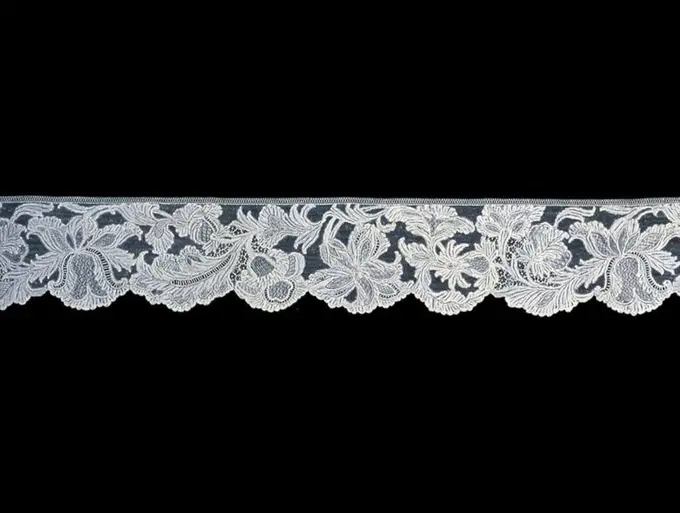
Elegant lace strips showcasing intricate designs and historical details, suitable for fashion and interior decoration inspirations.

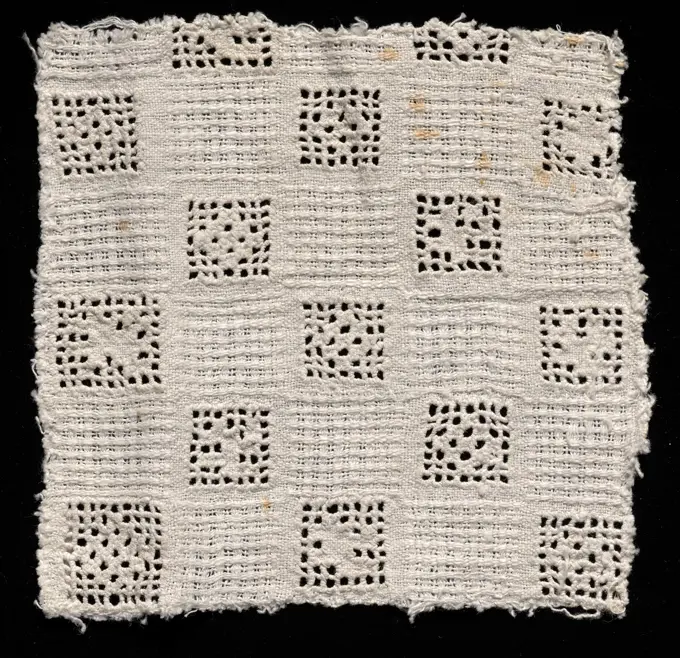
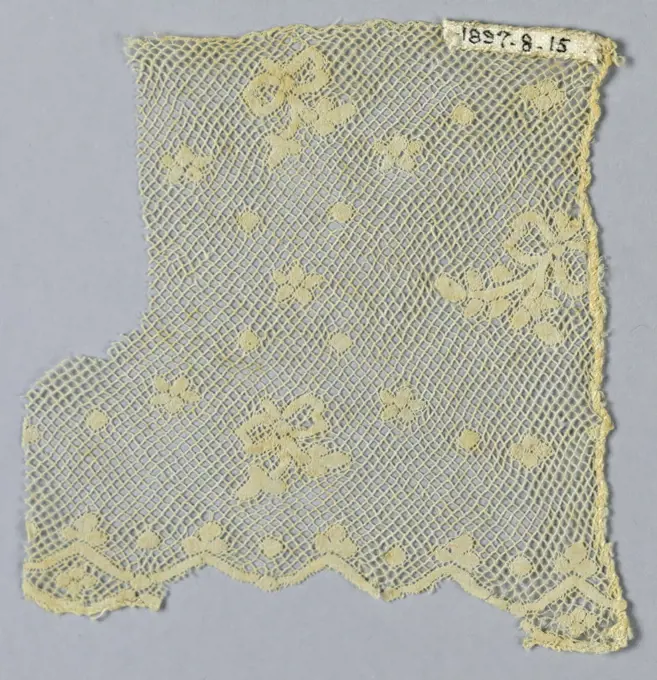
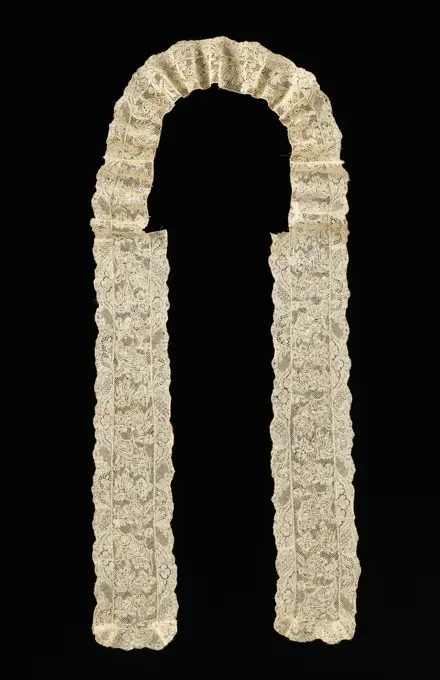
Strip of needle side with cornflowers, anonymous, c. 1800 - c. 1820 Two -thirds of the width is filled with a spreading pattern of falling cornflowers on a coarse soil (of flooded bars). A third of the width forms a right-winged outer edge (with a single alençon soil), lined with two pearl lists, and decorated with a horizontal flank of stretched stalks, each with three cornflowers, which are always in the same direction. Alençon side. France linen (material) Alençon Lace Two -thirds of the width is filled with a spreading pattern of falling cornflowers on a coarse soil (of flooded bars). A third of the width forms a right-winged outer edge (with a single alençon soil), lined with two pearl lists, and decorated with a horizontal flank of stretched stalks, each with three cornflowers, which are always in the same direction. Alençon side. France linen (material) Alençon Lace
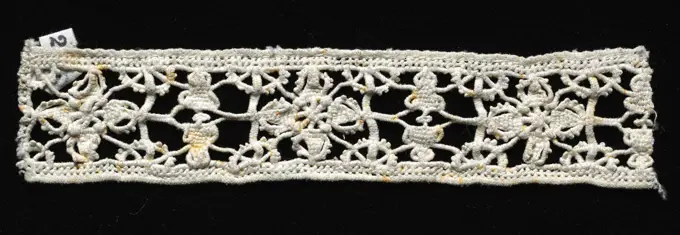
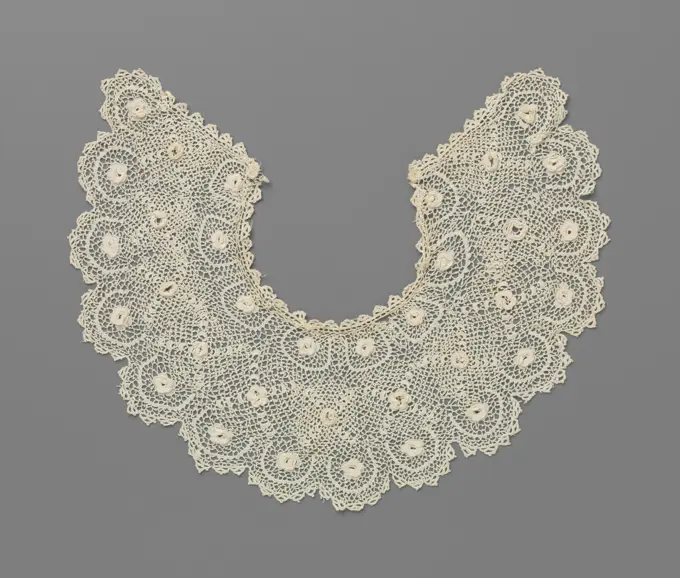
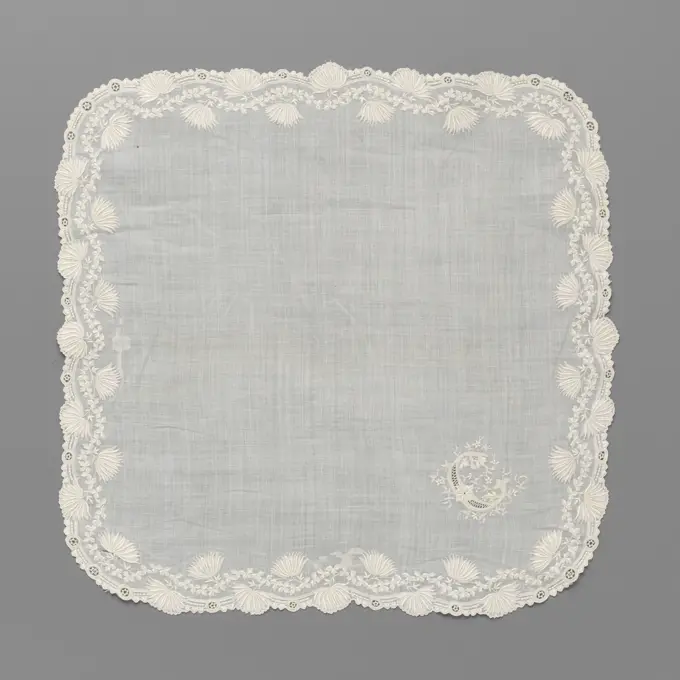
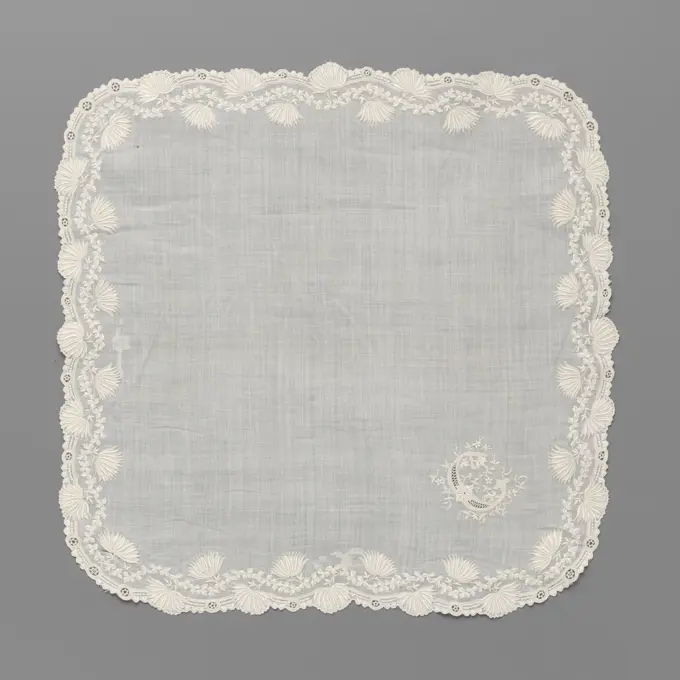
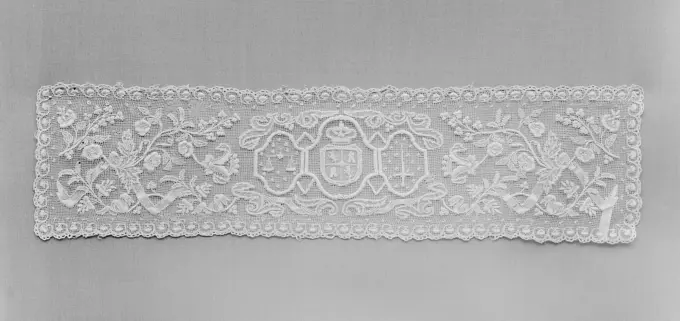
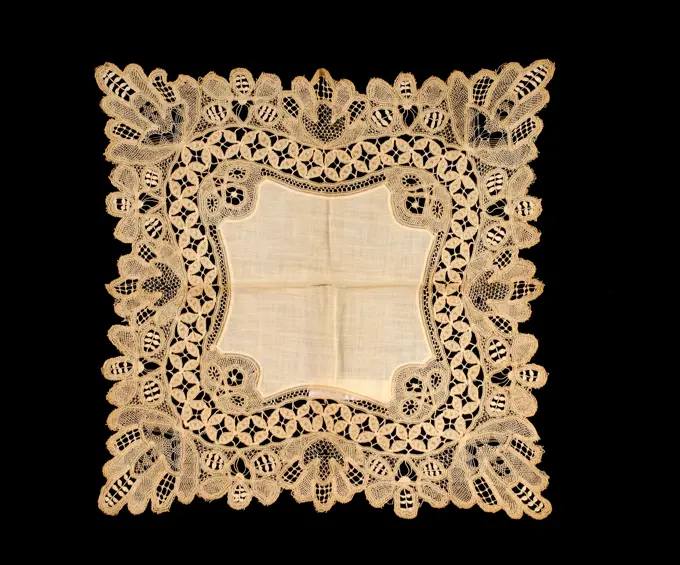
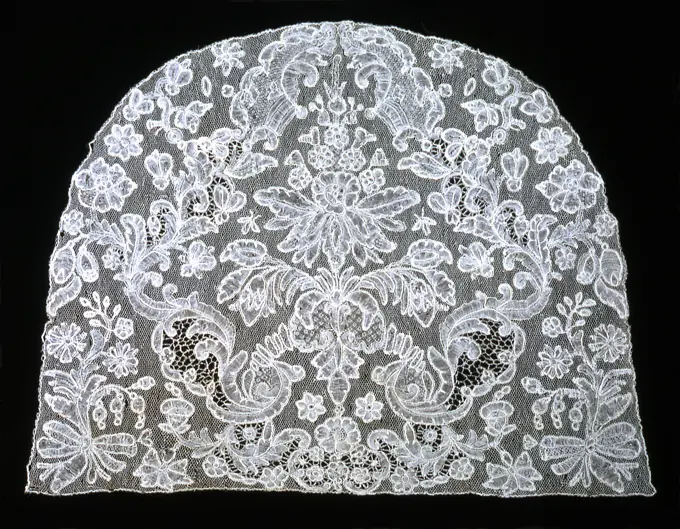
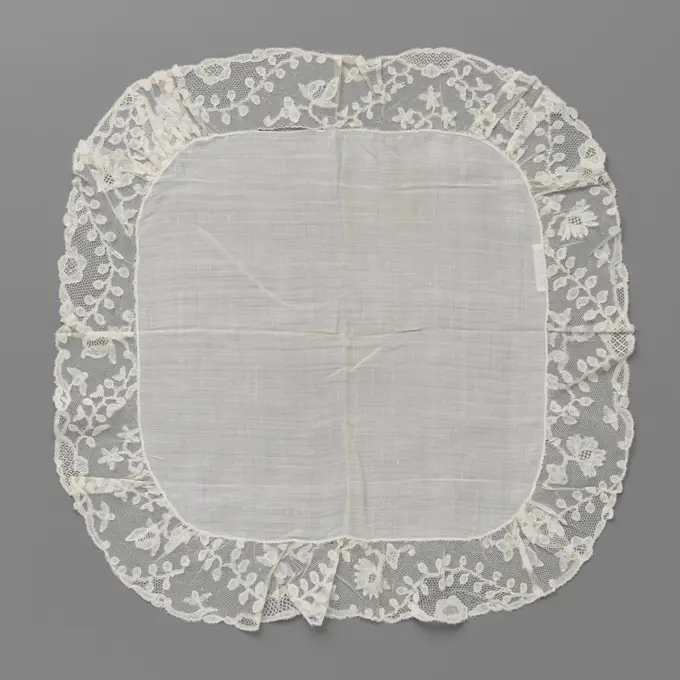
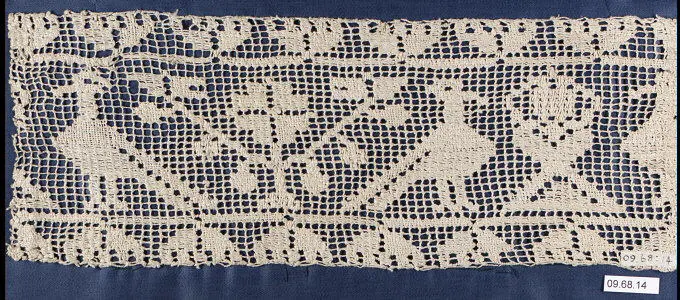
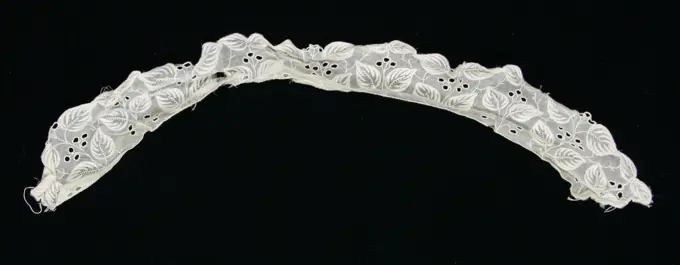
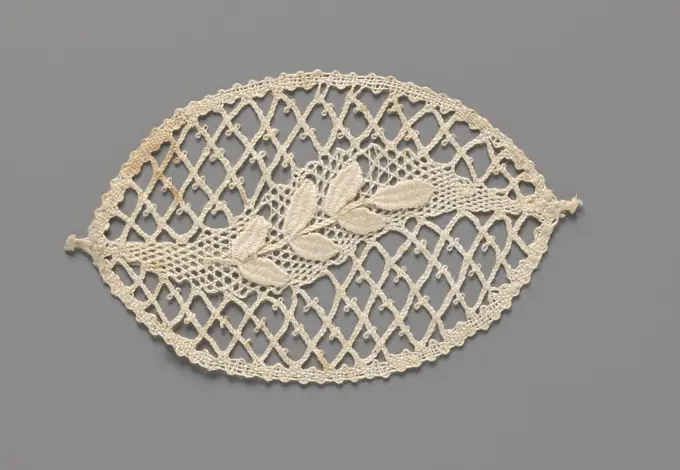
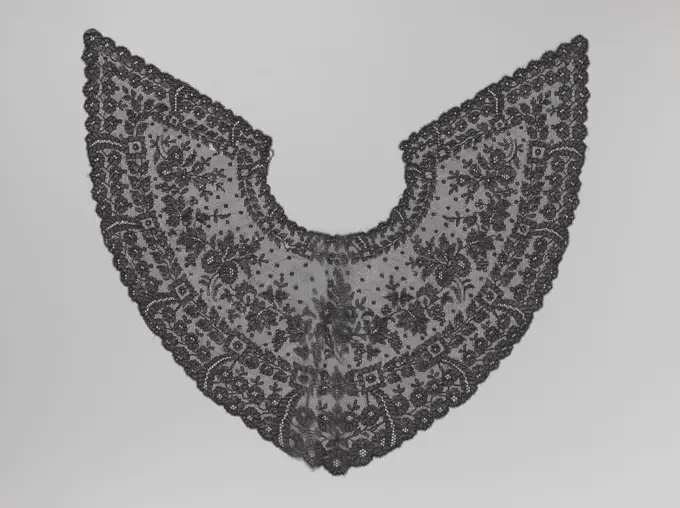
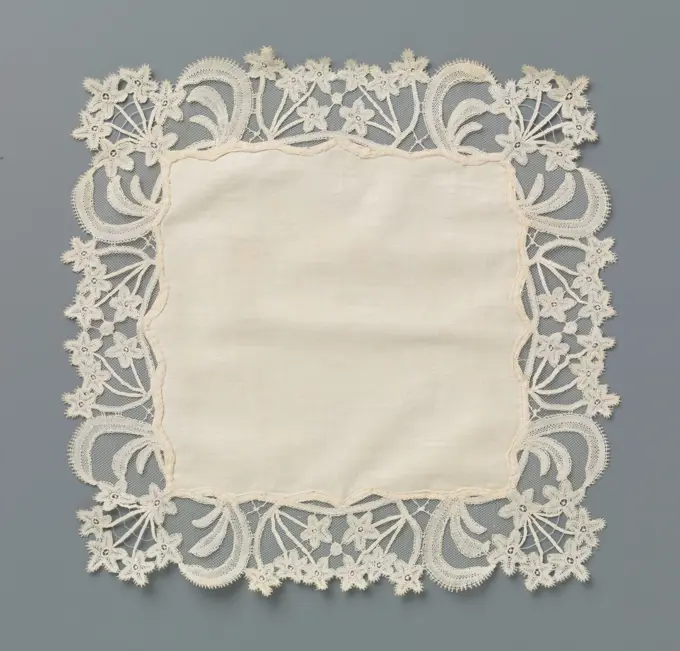
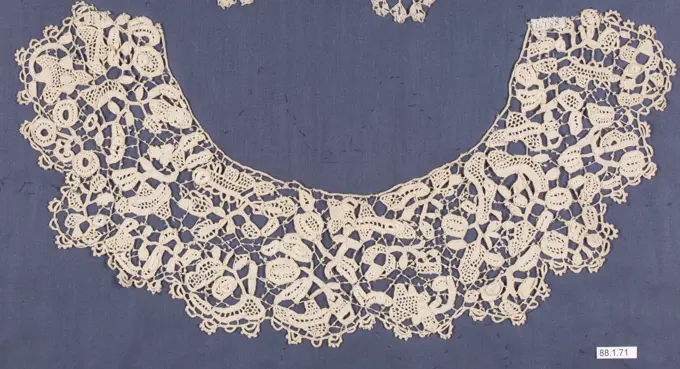
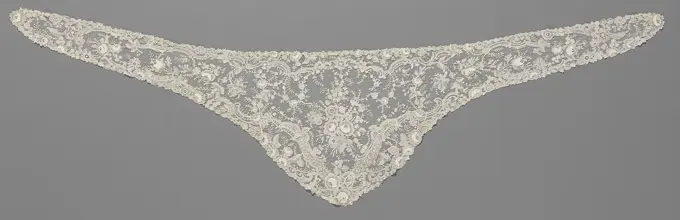
Handkerchief with a border needle side with rose bouquets in medallions on the corners and violets along the edges, anonymous, c. 1850 - c. 1874 Batist handkerchief with a rim of natural -colored needle side: Brussels mesh side. Square model with an octagonal center of batist and a wide edge side. In every corner there is an oval medallion with a rose booklet in it and radiating feathered leaves all around. Between the medallions runs over each side a straight decorative band with a diamond -shaped grid with underneath, along the outer edge of the handkerchief, a flower row of five violets. The feathered leaves around the medallions and the violins form the scrap edge. Around the Batisten Central part volutes with acanthus leaves. The motifs are made up of feston stitches and equipped with relief contours. The motifs are connected to each other by a mesh cincloth, with here and there mosques. Sparingly applied decorative stitches in Bloemharten. Brussels cotton (textile) Brussels Gaze Needlepoint (Reticella) Lace Insertion, 16th century. Italy, Venice, 16th century. Lace, needlepoint: linen; average: 2.9 x 13.4 cm (1 1/8 x 5 1/4 in.).Kloskant collar with a symmetrical pattern of flower branches with curly tendrils, anonymous, c. 1900 - c. 1914 Collar of natural -colored bobbin: Rosaline. U-shaped model with pointed ends and five scales on the outside, around the curve of the U. The symmetrical pattern consists of curly tifles made of crushed straps, on which a variation of small and slightly larger flowers. The edges are formed by C-Voluten interspersed with flowers. The motives are made in linen battle with sparing recesses. Simple decorative lands have been used in the larger flowers. The motifs are connected by a braid ground with one or no picot per braid. Belgium linen (material) rosaline lace (bobbin lace) Collar of natural -colored bobbin: Rosaline. U-shaped model with pointed ends and five scales on the outside, around the curve of the U. The symmetrical pattern consists of curly tifles made of crushed straps, on which a variation of small and slightly larger flowers. The edges are formed by C-Voluten interBobbin Lace 2, Medium: linen Technique: bobbin lace, Two levels of pinwheels connected with flowers and circles of alternating central motif. The bottom level has scalloped edges., Genoa, Italy, 17th century, lace, Band, BandStrip of bobbin with rosettes, anonymous, c. 1830 - c. 1850 On the traly lot, a Mechelen soil (also known as ice soil), there is a row of twigs between scattered forget mineits, of which heavy Margrites depend. The circular arched sculptes are equal and formed by a chain of rosettes. Mechelen side. Belgium linen (material) bobbin lace / Mechlin (lace) On the traly lot, a Mechelen soil (also known as ice soil), there is a row of twigs between scattered forget mineits, of which heavy Margrites depend. The circular arched sculptes are equal and formed by a chain of rosettes. Mechelen side. Belgium linen (material) bobbin lace / Mechlin (lace)Slab of glass batist with a strip of Mechelen, anonymous, c. 1800 - c. 1900  Slab of glass batist. The bib is trimmed with a scrap edge. Around the neck opening the bib is trimmed with Mechelen bastard. The side has a pattern of sprinkling flowers and an openwork edge with a mesh stock and is fell with picots. West-Europa silk. bobbin lace / Mechlin (lace)Kraag van gehaakte kant met drie rijen reliëfroosjes en ronde schulpen.Collar of natural-colored Irish crochet side. Strip-shaped round model, 2/3 of a circle, with points. Pattern with three rows of embossies. Along the outer edge, the florets are in the semicircular slot, per scallop one rose. In the middle row the roses always form the center of crosses made with moon-shaped messes. A U-shaped list runs around every row in the row along the inner edge. The motifs are connected by a diamond-shaped network with picots. The collar is finished around with a bow edge of triple arcs with picots.Fragment, Medium: linen Technique: bobbin lace (Brussels-style), Fragment has an incomplete large-scale floral design with varied patterns of ground mesh., Belgium, 18th century, lace, FragmentParasoldek of black tulle decorated with an application of a large eight -pointed star and with tambouring work, Gustav Schnitzler, c. 1875 - c. 1900 Parasold deck of black/ dark green tulle. Around the center of the deck an application of an eight -pointed star. The scalloped edge is decorated with tambouring work. Nijmegenwitzerland whole: Parasold deck of black/ dark green tulle. Around the center of the deck an application of an eight -pointed star. The scalloped edge is decorated with tambouring work. Nijmegenwitzerland whole:Machine side with flower branches and squares, anonymous, c. 1885 - c. 1899 Machinal side, imitation chantilly side. Pattern with flower branches framed by a leaf edge, which is interrupted by squares. The edge pattern along the scalloped outside consists of a double row with a total of eight rosette flowers on a branch, which is always interrupted by a spring -shaped elongated leaf. France (possibly) Machinal side, imitation chantilly side. Pattern with flower branches framed by a leaf edge, which is interrupted by squares. The edge pattern along the scalloped outside consists of a double row with a total of eight rosette flowers on a branch, which is always interrupted by a spring -shaped elongated leaf. France (possibly)Jabot of batist with machined white embroidery and a border machine side. Jabot of Batist with machine white embroidery and a border machine side, imitation Valenciennes-side. In the middle an elongated oval insert on which a thin rank is embroidered with alternately a daisy and an open wheel. On both sides, a semi-circle piece of batist is sewn, with a thin branch with one daisy and one open wheel from the insert. Along the entire circumference of the jabot is a wrinkled strip of machining coffin sewn, with a hexagonal mesh soil. Along the top and bottom of the otherwise incertainty strip, a border is running in linen.Cap 19th century British. Cap 98204Cap 19th century British. Cap 98202Three Fragments (Border). Italy, Aquila. Date: 1675-1750. Dimensions: a: 15.2 × 344.8 cm (6 × 135 3/4 in.)Width repeat: 17.6 cm (7 in.)b: 15.9 × 33.6 cm (6 1/4 × 13 1/4 in.Width repeat: 16.1 cm (6 3/8 in.)c: 16 × 34.4 cm (6 1/4 × 13 1/2 in.)Width repeat: 17.2 cm (6 3/4 in.). Linen, bobbin part lace (continuous cloth work tapes). Origin: Aquila. Museum: The Chicago Art Institute, Chicago, USA.Border. Belgium, Flanders, Brussels. Date: 1730-1749. Dimensions: 8.5 × 291.1 cm (3 3/8 × 114 1/2 in.)Width repeat: 39.4 cm (15 1/2 in.). Linen, needle lace. Origin: Flanders. Museum: The Chicago Art Institute, Chicago, USA.Woman's Collar. Belgium, Brussels, late 19th century. Costumes; Accessories. Cotton point de gaze needle laceBobbin Lace (Needlepoint Design) Edging of Points, second half of 16th century. Italy, Genoa, second half of 16th century. Lace, bobbin; average: 2.9 x 13.1 cm (1 1/8 x 5 3/16 in.).Cap Streamer (Belgium); linenSupport for the Making of a Woman's Needle Lace Collar, Pen,ink,parchment,paper, Europe, ca. 1660, textile designs, Drawing, DrawingZakdoek van batist met plumetis borduurwerk.Natural batist handkerchief with embroidery: white work with plush. Square model with rounded corners and sloping edge. Along the edges of the batist is a decorative tire above which a wavy garland from maple leaves from which alternately spring up and down large fan-shaped flowers. In a corner the letter C is embroidered, decorated with flowers and leaves.Strook kloskant met twee rijen open moesjes en een rij blaadjes.Strip natural colosside, Lille side. The pattern consists of two rows of open meadows on the center line of the strip, with a row placed closely on top of each other directly below the bottom of the strip. The motifs are connected by a fine Maas soil, a tulet. The motifs are made in linen stroke and blackhead, with thicker, shiny contour wires. The mates are accented with a contour wire accented larger meshes in the tulet. The top of the strip is straight finished. The scales along the bottom, which arise through the leaves, are finished with picots.Fragment of the lace;  18th century (1701-00-00-1900-00-00);Fossil fragment of silicified internal model of Baculites.Fragment of lace. unknown, authorCrocheted side with three rows of reliachets and round scallops, anonymous, c. 1900 - c. 1910 Collar of natural Irish crocheted side. Strip -shaped round model, 2/3 of a circle, with points for. Pattern with three rows of reliachets. Along the outer edge are the roses in the semicircular scallops, one rose per shell. In the middle row, the roses are always the center of crosses made with moon -shaped mulets. A U-shaped list runs around each rose in the row along the inner edge. The motifs are connected by a diamond -shaped network with picots. The collar is finished all around with a bow edge of triple arcs with picots. West-Europa cotton (textile) Collar of natural Irish crocheted side. Strip -shaped round model, 2/3 of a circle, with points for. Pattern with three rows of reliachets. Along the outer edge are the roses in the semicircular scallops, one rose per shell. In the middle row, the roses are always the center of crosses made with moon -shaped mulets. A U-shaped list runs arouFragment 18th century Flemish. Fragment 218911Border; medium:; 1974-52-29Strip crochet side with triangular floral pattern made with open circles. Strip natural-colored Irish crochet side. A pattern with a single row of triangular floral motifs made with open circles set against each other, randomly interspersed with triangular floral patterns with semi-circles shown against each other. Limited crocheted irregular Maas soil with picots. Upstairs finished with a straight edge. The picoted slot on the underside stems from the pattern with the triangular floral motifs.BorderFragment; linenBatist handkerchief with plumetis embroidery, anonymous, c. 1850 - c. 1890 Natural -colored batist with embroidery: whitework with plumetis. Square model with rounded corners and scrap edge. Along the edges of the batist, a decorative band runs above which a wavy pendulum of maple leaves, which alternately spring up and down large fan -shaped flowers. The letter C is embroidered in a corner, decorated with flowers and leaves. Europe linen (material) embroidering Natural -colored batist with embroidery: whitework with plumetis. Square model with rounded corners and scrap edge. Along the edges of the batist, a decorative band runs above which a wavy pendulum of maple leaves, which alternately spring up and down large fan -shaped flowers. The letter C is embroidered in a corner, decorated with flowers and leaves. Europe linen (material) embroideringCuff (one of a pair) late 17th century Italian, Venice. Cuff (one of a pair) 218107Fragment 17th century Italian. Fragment 214810Fragment late 17th century Flemish. Fragment 214472Echarpe of applicationant with conical configuration of flower branches at the ends. Echarpe of application side: needle side applicated on machine tulle. The applications are arranged around the echapre in a continuous row and at the ends. The application to each end consists of curved flower branches that form a conical configuration. There are several large and smaller flowers and leaves on the flower branches. The repeating pattern along the edge consists of an elongated leaf, which is slightly curved along the edge. A relatively very small rosette flower is raised from the hollow part of the leaf. Just above, a flower branch with three slightly larger rosette flowers and an elongated leaf bend over it. The sequence of curved leaves ensures a slip edge.Tassel, Medium: linen Technique: knotted, Tassel attached to a scalloped border. Three cross arms. Made with tiny knots that give the appearance of fringe., Italy, late 16th-early 17th century, trimmings, TasselPair of sleeve pieces early 19th century Philippine The Spanish arms and the symbols of Law and Justice suggest that these sleeve pieces were worn by an official of the law-courts during the Spanish occupation of the Philippine Islands.. Pair of sleeve pieces. Philippine. early 19th century. Pineapple fiber. Textiles-EmbroideredHandkerchief second quarter 19th century American. Handkerchief 170283Cap Crown (Belgium); linenApplication side scarf with large bows, anonymous, c. 1890 - c. 1910 Scarf of natural application side, bobbin side with some details in needle side applied on mechanical tulle. Rectangular model with slightly widened straight ends. Symmetrical pattern compared to the short axis. At the ends there is a large bow of an open worked ribbon, the slipper of which depends on the corners. A branch above rises, which carries a chalice and a carnation on fine, curved stems. From the middle, a deep pendulum with the same flowers hangs to two sides. Different, stripped flower branches fill the remaining field. Quite flat sculptures of openwork medallions run all around, which are high as golf trees to midfield. Netherlands (possibly) linen (material) Scarf of natural application side, bobbin side with some details in needle side applied on mechanical tulle. Rectangular model with slightly widened straight ends. Symmetrical pattern compared to the short axis. At the ends there is a large bow of anNeedlepoint (Drawnwork) Lace Insertion, late 16th century. Italy, late 16th century. Lace, needlepoint: linen; average: 12.8 x 13.7 cm (5 1/16 x 5 3/8 in.).Trimming (Italy); 1905-23-2Bobbin Lace Edging, 18th century. Italy, Genoa, 18th century. Lace, bobbin: linen; average: 10.2 x 115.6 cm (4 x 45 1/2 in.).Fragment of a Band with Geometric Motif, 17th-18th century. Spain, 17th-18th century. Needle lace, filet/lacis (knotted ground and darned in two directions); bleached linen (est.); overall: 5.5 x 15.8 cm (2 3/16 x 6 1/4 in.). The thick and graphic darning, or area of woven pattern, depicts triangular and circular geometric motifs. In addition to the knotting of the thread (filet/lacis technique), the lace maker used thicker thread to create the bold and heavy pattern.Collar of Batist with Whitework, Anonymous, c. 1700 - c. 1800 Collar of batist with whitework. The embroidery consists of stylized flowers on swinging tendrils with fern -like leaves. The edge has small scoops in Festonsteek. West-Europa linen (material) embroidering / sewing Collar of batist with whitework. The embroidery consists of stylized flowers on swinging tendrils with fern -like leaves. The edge has small scoops in Festonsteek. West-Europa linen (material) embroidering / sewingNeedle's Engageante with tulips, anonymous, c. 1730 - c. 1740 Engageante of natural -colored Venetian needle side. In the middle, the symmetrical pattern consists of a more or less heart -shaped motif surrounded by feathered leaves, including three flowers. From the flower, left and right, wavy tifles spring with feathered and curling leaves, bunches and large tulips. The motifs are made up of undressed feston stitches with a lot of fine cut -outs to suggest pages and in a variety of patterns with diamonds, cubes, zigzag. Other decorative grounds that have been applied include a diamond soil and a coarser decorative soil with potentially. An incomed thicker contour thread runs around the motifs, which creates a slight relief. The fine Maas soil that connects the motifs with each other is made up of long -range speeds. The top of the Engageante is straight finished with a tie. The scrap edge along the bottom is finished with picots. Brussels linen (material) Venetian needlepoint EngageaFragment of a Border with Vines and Floral Motifs, 1600s. Italy, 17th century. Needle lace, filet/lacis (knotted ground and darned in one direction) and bobbin lace edging; bleached and blue dyed linen (est.); overall: 13.5 x 17.4 cm (5 5/16 x 6 7/8 in.).Cooper Union Museum Lace Study Card, Medium: linen Technique: bobbin lace, Lace fragment with a loosely-woven pattern of leaf motifs in a type of rose ground called 'fond à la vierge.' Fragment is mounted on a fabric-covered board and framed behind glass. Frame is natural wood., Belgium, 18th century, lace, Fragment, FragmentBatist handkerchief with an edge bobbin with cartouches and slanting tifles with oval leaves on either side, anonymous, c. 1775 - c. 1799 Batist handkerchief all around with a strip of Brussels bobbin. Square model with rounded corners along which the strip of side is wrinkled. The pattern consists of more or less rushed cartouches and tendrils on both sides of oval leaves. From one cartouche, two tendrils spring, in an oblique line to the left and to the right, where they bend and end in a flower at the top of the strip. The subsequent cartouche is formed by a slender that bends over a flower with a large bow, which lies along the underside of the strip. The motifs are made in linen battle with openwork edges, very few and fine cut -outs and partly with contour acts and burst relative contours. The motifs are connected by a traly land: drochel soil. Various grounds have been used as decorative land, including gridwork decorated with form strokes. The scrap edge along the underside of Embroidered Collar, 1810-1840. America, 19th century. Embroidery and drawn work: cotton; average: 54.6 x 41.9 cm (21 1/2 x 16 1/2 in.).Edging, Medium: silk Technique: bobbin lace, blonde style, Edging lace showing a pattern of flowers and leaves that form scallops along one side., Spain, 19th century, lace, EdgingFragment; medium:Fragment climbing side with a scattering pattern of fantasy motifs. Fragment natural colosside. Rectangular model, possibly a wide strip of which the underside and one side are tilt. The pattern consists of a kind of scattered fantasy motifs, curved lines with short blur stunting. The motifs are connected by a mesh soil, a diamond-shaped valenciennes ground. The motifs are made in linen stroke with openwork edges. There is a straight band in linseed along the top. The rough thread with which has shouted is spun by mountain dwellers from the abruzzi.Border 16th-17th century Italian. Border 217946Lace, maker unknown. Acquisition history unknown.Edge; 1933-1-171Kloskant motif in the form of an oval with a diamond-shaped grid and a branch on a faint s-shaped field, Sophia Gerardine Cenijn-Smit, c. 1914 Motif in the form of an oval of natural-colored bobbin: Cluny side. The contour of the oval is made in Linnenlag. Within the contour a braided diamond-shaped grid and a faint s-shaped field in mains stroke on which a branch with seven leaves made in form. The diagonal braids that are the grid with picots. Amsterdam linen (material) bobbin lace / Cluny lace Motif in the form of an oval of natural-colored bobbin: Cluny side. The contour of the oval is made in Linnenlag. Within the contour a braided diamond-shaped grid and a faint s-shaped field in mains stroke on which a branch with seven leaves made in form. The diagonal braids that are the grid with picots. Amsterdam linen (material) bobbin lace / Cluny laceStrip 18th century German. Strip 215502Border 18th century Flemish, Brussels. Border 227685Fragment early 19th century Dutch. Fragment 214751Border Made 1575-1625 Italy. Linen, three bands of needle lace; edged; with center band and edging worked on a plain weave cut and drawn thread work grid; embroidered in hem, and overcast stitches .Underemen with embroidery of roses, anonymous, c. 1860 Onderemen van Tulle, which is wrinkled to the cuff. The sleeve and cuff are both decorated with white embroidery in the form of flowers and leaves. The cuff is trimmed with a scalloped edge, and can be closed with a glass knot. Netherlands whole:. Button: Glass embroidering Onderemen van Tulle, which is wrinkled to the cuff. The sleeve and cuff are both decorated with white embroidery in the form of flowers and leaves. The cuff is trimmed with a scalloped edge, and can be closed with a glass knot. Netherlands whole:. Button: Glass embroideringStrip early 18th century French. Strip 218206Fragment, Medium: linen Technique: bobbin lace, Fragment of Valenciennes lace has a powdered design of floral bouquets tied with ribbons. Border of lozenges enclose a four-petal blossom. Diamond-shaped mesh., France, late 18th century, lace, FragmentAccessory set ca. 1865 American. Accessory set 168751Strip last quarter 18th century French. Strip 212948Lace, 1900s, maker unknown. Acquisition history unknown.Border; linenEdging 17th century Italian, Liguria. Edging. Italian, Liguria. 17th century. Bobbin lace. Textiles-LacesMitaine of white crochet cotton, anonymous, c. 1800 - c. 1899 Mitaine made of white crocheted cotton in a pattern of windows and lying stripes, a scallop on the top and a ribboned ribbon on the bottom, for baby or child. Netherlands whole: Cotton (textile) crocheting Mitaine made of white crocheted cotton in a pattern of windows and lying stripes, a scallop on the top and a ribboned ribbon on the bottom, for baby or child. Netherlands whole: Cotton (textile) crochetingHat or Japong Barnering from Needle Side, Anonymous, c. 1800 - c. 1899 Hat or Japongarnering from Needlekant. The pattern consists of a bouquet surrounded by sprinkling flowers. West-Europa . Alençon Lace Hat or Japongarnering from Needlekant. The pattern consists of a bouquet surrounded by sprinkling flowers. West-Europa . Alençon LaceWedding stockings mid-19th century American. Wedding stockings 122639Cuff (one of a pair) early 18th century Italian, Venice. Cuff (one of a pair) 218076Band 16th century Italian. Band 212295Bobbin Lace Insertion with Fringe, mid 16th century. Italy, Venice, mid 16th century. Lace, bobbin; average: 10.2 x 14.7 cm (4 x 5 13/16 in.).Kraag van machinale kant met bloemtakken en vierkantjes.Collar of machining, imitation Chantilly side. Pattern with flower branches framed by a leaf edge, interrupted by squares. The edge pattern along the scallop outside consists of a double row with a total of eight rosette flowers on a branch, which is always interrupted by a spring-free leaf.Cuffs mid-19th century Flemish. Cuffs 168455Border Fringe (Italy); linen; 19.2 x 48 cm (7 9/16 x 18 7/8 in.) Repeat: 5 and 1/2 inches; Bequest of Richard Cranch Greenleaf in memory of his mother, Adeline Emma Greenleaf; 1962-50-280Collar, Medium: cotton Technique: needlework on net, Round net collar with an scalloped border edged with triangular tabs. Leafy vine runs along three sides with oval groups of flowerheads in the interstices., Scotland, ca. 1840, embroidery & stitching, CollarEvening mitts. Culture: American. Date: 1830-39. Museum: Metropolitan Museum of Art, New York, USA.Handkerchief with an application side with sickle leaves, Kantwerkschool (Apeldoorn), c. 1903 - c. 1904 Handkerchief with edge of natural -colored application side, bobbin side - Duchesse side - sewn applicated on mechanical tulle. Pattern with sickle leaves. Apeldoorn linen (material) Handkerchief with edge of natural -colored application side, bobbin side - Duchesse side - sewn applicated on mechanical tulle. Pattern with sickle leaves. Apeldoorn linen (material)Dress of lace pledger with a star in a geometric pattern, anonymous, c. 1900 - c. 1924  Dress of linen with lace plunger: Reticella in open sewing technique. Square model. The rug is shared in four lines and then with diagonal lines in eight. A star motif has been made with openwork and closed triangles around concentric circles. Along the edges of the linen fabric has been made a decorative edge with work with extended threads. Sicily linen (material)Fragment of lace. unknown, authorFragment early 19th century British, Buckinghamshire. Fragment 215374Border Of A Chalice Cover (Italy); linenLappet 1740-70 Flemish Although these joined lappets are not originally designed lappets, but rather were made from a length of lace, the lace is fine and delicate and the 18th century devotion to naturalism is embodied in the floral motif. Lappet 156840Strip 16th century Italian. Strip 221107Border Made 1725-1750 England. Linen, bobbin part lace .Doily of bobbin lace with gimp trim, circa 1890, maker unknown. Gift of Dr Tom Farrar, 2010.Handkerchief French late 19th centuryCollar ca. 1850 Irish. Collar 212544Collar 1700-1941 American. Collar 119188Clunykant collar, anonymous, c. 1900 - c. 1925 Clunykant collar. Lying round collar with extended spots from bobbin, decorated with a row of wheels and a scallop. West-Europa . Cluny lace Clunykant collar. Lying round collar with extended spots from bobbin, decorated with a row of wheels and a scallop. West-Europa . Cluny laceFragment, Medium: linen Technique: needle lace, Fragment of raised lace in an ornamental flower design with a diamond diaper stem., Venice, Italy, 17th century, lace, FragmentCap Streamers; linenInsert of needle side in the shape of a diamond with a man having a jacket and raising a hand. Insert of needle side: Flat Venetian side. Diamond-shaped model. The pattern consists of a man with a rounded jacket and a round "Pillbox" hat. He or she puts one hand on while the other hand sticks into the jacket (bag). On either side, in the corners of the window, man is flanked by square flour or sun. The motifs are made in closed festival stitches with recesses. The motifs are connected by picoted bars.Salaterka ĆmielówGuimpe of application side with coarse flower chaplains, anonymous, c. 1910 Guimpe made of natural application side, mixed side - duchesse side - Applicated on mechanical tulle. On a circle -round part of Tulle, a standing board is sewn on which loose ornament parts of lace, consisting of twigs with flower chalice, are applied. Outdoor edge of oak leaves; On the seam of the board, an edge of large 'dune roses'. Netherlands Guimpe made of natural application side, mixed side - duchesse side - Applicated on mechanical tulle. On a circle -round part of Tulle, a standing board is sewn on which loose ornament parts of lace, consisting of twigs with flower chalice, are applied. Outdoor edge of oak leaves; On the seam of the board, an edge of large 'dune roses'. NetherlandsCollar 1700-1943 American. Collar 118886FICHU of coniferous side with V-shaped pendulum. In the triangular backpiece is inside a V-shaped winding band with circle filling a large bouquet of daisy, roses, ran bass and forgetmine ties. The ends walk striker. A sling of C-Volutes is running in the top edge. The roses show an imposed relief. There are sprinkled on the fond. Point the Gaze de Bruxelles.