Lace Textile Fragment

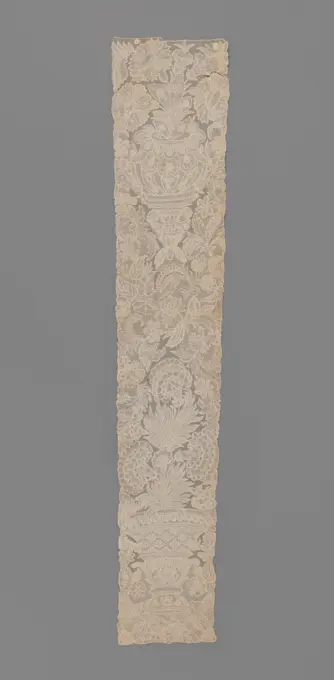
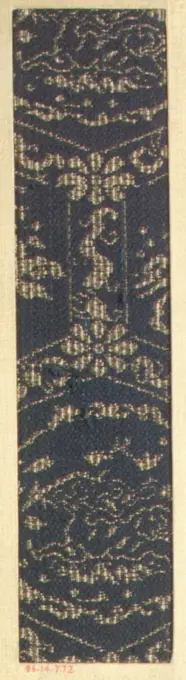
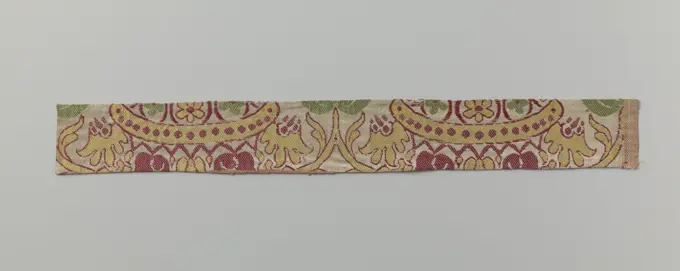
Historical lace strips showcasing intricate patterns in various styles, emphasizing craftsmanship and decorative textile design.

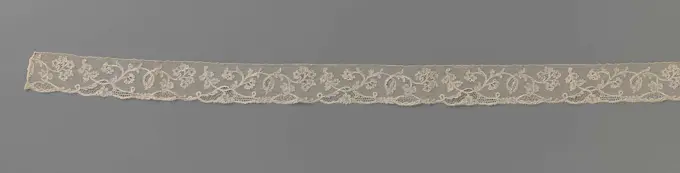
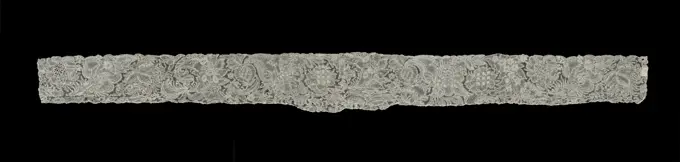
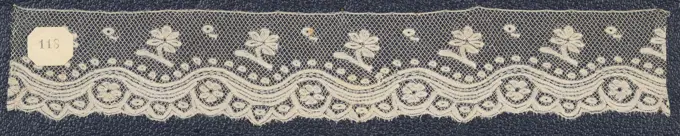
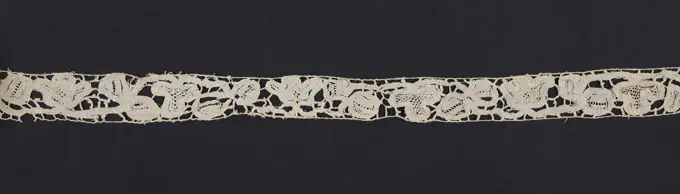
Strip bobbin with curly flower branch on continuous slender, anonymous, c. 1700 Strip of natural -colored bobbin: Old Flemish bobbin with braid soil. The repeating pattern consists of a continuous wavy slender with a curly side branch with a flower in each golf valley and a curly branch with a flower under each golf top under each golf top. The motifs are connected by a braid ground. The motifs are made in linen battle with openwork edges. Top and bottom of the strip are straight finished, the bottom is equipped with picots. The upper edge is somewhat ragged due to damage. Flanders linen (material) bobbin lace / Flemish lace with plaited ground Strip of natural -colored bobbin: Old Flemish bobbin with braid soil. The repeating pattern consists of a continuous wavy slender with a curly side branch with a flower in each golf valley and a curly branch with a flower under each golf top under each golf top. The motifs are connected by a braid ground. The motifs are made in linen battle with
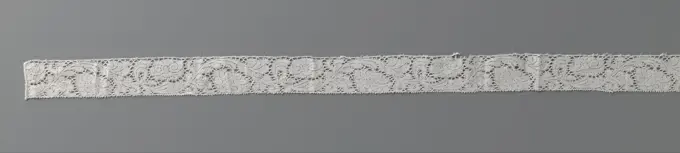
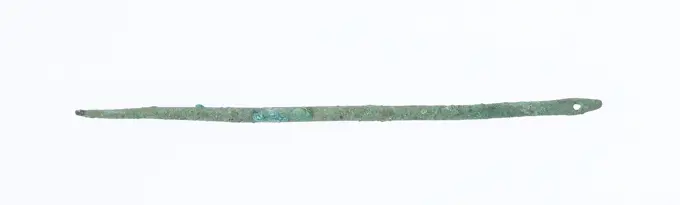
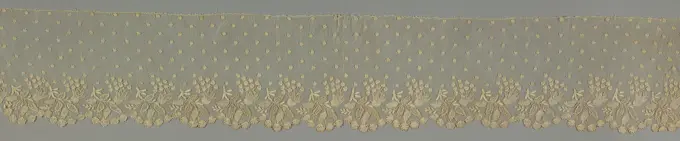
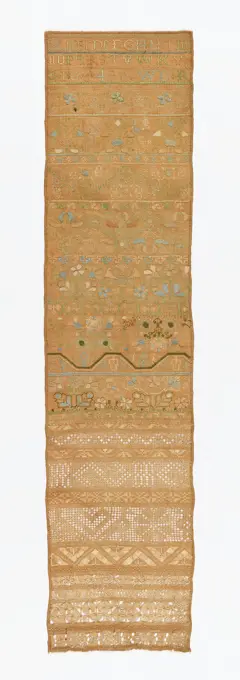
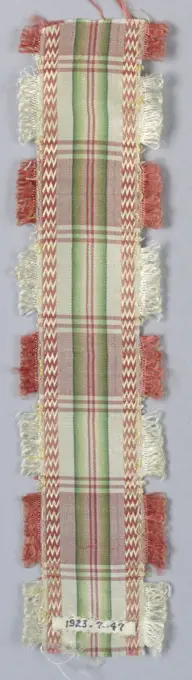
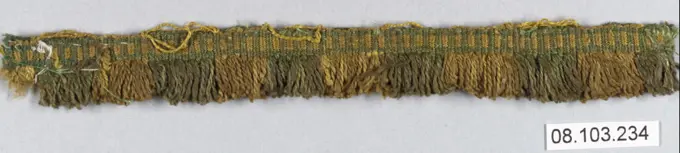
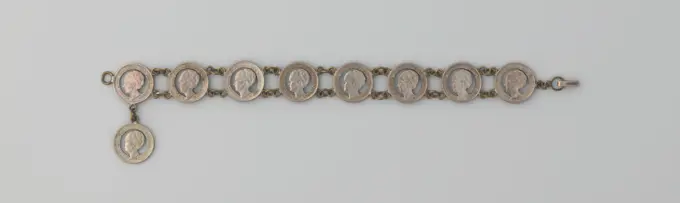
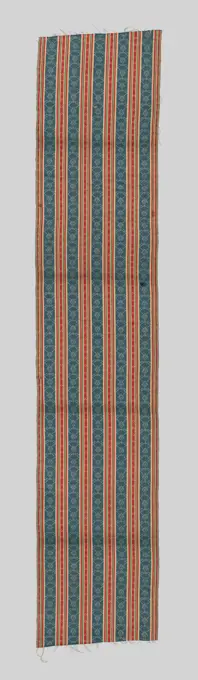
Strip 1750-1850 Flemish, Mechlin. Strip 212867Strip 18th century Flemish. Strip. Flemish. 18th century. Bobbin lace. Textiles-LacesKloskant's intermediate base with wavy slender with peonies, anonymous, c. 1650 - c. 1699 Intermediate base of natural -colored bobbin: Old Flemish bobbin with braid soil. The repeating and continuous pattern consists of a wavy flower vend with curling leaves and a large peony under every golf top and in every golf valley. The motifs are made in linen battle with openwork edges and fine recesses. The motifs are connected by a braid ground. Top and bottom of the strip are straight finished with the bottom with picots. Antwerp linen (material) bobbin lace / Flemish lace with plaited ground Intermediate base of natural -colored bobbin: Old Flemish bobbin with braid soil. The repeating and continuous pattern consists of a wavy flower vend with curling leaves and a large peony under every golf top and in every golf valley. The motifs are made in linen battle with openwork edges and fine recesses. The motifs are connected by a braid ground. Top and bottom of the strip are straight finished wFragment early 19th century Italian, Venice. Fragment 212740Edge (France); linen; 1933-1-11Fragment (possibly France); cottonStrip bobbin with curly flower branch on continuous slender, anonymous, c. 1700 Strip of natural -colored bobbin: Old Flemish bobbin with braid soil. The repeating pattern consists of a continuous wavy slender with a curly side branch with a flower in each golf valley and a curly branch with a flower under each golf top under each golf top. The motifs are connected by a braid ground. The motifs are made in linen battle with openwork edges. Top and bottom of the strip are straight finished, the bottom is equipped with picots. The upper edge is somewhat ragged due to damage. Flanders linen (material) bobbin lace / Flemish lace with plaited ground Strip of natural -colored bobbin: Old Flemish bobbin with braid soil. The repeating pattern consists of a continuous wavy slender with a curly side branch with a flower in each golf valley and a curly branch with a flower under each golf top under each golf top. The motifs are connected by a braid ground. The motifs are made in linen battle withTrimming (France); silkPiece 18th-19th century Japan. Piece 67399Trimming (France); metallic, silver; 1947-63-1-bFragment (possibly France); cottonStrip bobbin with hanging rose, anonymous, c. 1900 - c. 1924 On the traly land, a Mechelen soil (also known as ice soil), there is a row of double twigs under a stiff row of leaves and flowers, with small flowers and leaves on a raised branch and a hanging rose on a side branch. The latter forms the shells with 'rail rails'. Mechelen side. Belgium linen (material) bobbin lace / Mechlin (lace) On the traly land, a Mechelen soil (also known as ice soil), there is a row of double twigs under a stiff row of leaves and flowers, with small flowers and leaves on a raised branch and a hanging rose on a side branch. The latter forms the shells with 'rail rails'. Mechelen side. Belgium linen (material) bobbin lace / Mechlin (lace)Strook kloskant met een onregelmatig golvende bloemstengel met lus.Strip natural colosside: Mechelen side. The repeating pattern consists of an irregularly wavy flower stalk, with disgusting smaller and larger flowers and leaves. Halfway the stem makes a loop and at the end it splits into five short sprigs with three rosette flowers and two leaves. The flower stalk appears to stick by the pattern along the bottom edge. The pattern along the bottom edge consists of a double pendulum, which alternately forms a spindle-free cartouche and a larger cartouche in the form of a wave top. The motifs are connected by a fine Maas soil. The motifs are made in linen stroke, with thicker and shiny contour wires. Different ornamental grounds have been applied in the cartouches, loop and between flowers to the stem. The top of the strip is straight finished. The bland scaled bottom edge comes from the pattern and is finished with picots. The short sides are finished with a soil.Ribbon (China)Border, Medium: linen Technique: bobbin lace (Valenciennes ground), 18th century, lace, BorderStrip of needle side with fine flowers on C-shaped tendrils, anonymous, c. 1650 - c. 1699 Strip of natural needle side, venise flat. Repetitive motif with split C-shaped tiflens and fine flowers. Irregular open bar with picots. The top is trimmed with a border bobbin. The underside is finished with a straight picot edge with triangles. unknown linen (material) flat Venetian (needle point) Strip of natural needle side, venise flat. Repetitive motif with split C-shaped tiflens and fine flowers. Irregular open bar with picots. The top is trimmed with a border bobbin. The underside is finished with a straight picot edge with triangles. unknown linen (material) flat Venetian (needle point)Trimming (Italy); silk, silver metallic threadBand, Medium: linen Technique: bobbin lace, Binche ground, Band with scrolling vine., Belgium, 1700-1750, lace, BandNeedlepoint (Point Alençon) Lace Edging, 18th century. France, Alençon, 18th century. Lace, needlepoint: linen; average: 5.8 x 58.5 cm (2 5/16 x 23 1/16 in.).Galloon 17th-18th century probably European. Galloon 213871Fringe (Italy); silkFragments, Medium: silk Technique: cut and uncut supplementary warp pile (velvet) in a woven foundation, Seven velvet braids of different designs., France or Italy, late 18th-early 19th century, trimmings, FragmentsFragment, Medium: silk Technique: 5-harness satin damask, Dark crimson damask with small close-set allover design of bars and springs., Italy, 16th century, woven textiles, FragmentEdging; metal-wrapped silk and flat metal stripsFringe early 18th century Italian. Fringe 213395Needlepoint (Drawnwork) Lace Band for Insertion, 19th century. Unassigned, 19th century. Lace, needlepoint: cotton; average: 7 x 58.4 cm (2 3/4 x 23 in.).Passementerie 18th century Italian. Passementerie. Italian. 18th century. Silk. Textiles-TrimmingsGalloon 18th century French. Galloon 214095Fragment (Italy); linenKloskant's intermediate base with alternating a flat in linen stroke and a surface with braids, anonymous, c. 1700 - c. 1799 Piles of natural -colored bobbin, Old Flemish side. The pattern consists of a flat in linen stroke that is interspersed with a surface with three columns of braids that form a kind of rectangular Maas soil. At the top and bottom are straight. Flanders linen (material) bobbin lace / old Flemish lace Piles of natural -colored bobbin, Old Flemish side. The pattern consists of a flat in linen stroke that is interspersed with a surface with three columns of braids that form a kind of rectangular Maas soil. At the top and bottom are straight. Flanders linen (material) bobbin lace / old Flemish laceNeedlepoint Lace Flounce, 18th century. Belgium, Dinant, 18th century. Lace, needlepoint: linen; average: 24.2 x 325.1 cm (9 1/2 x 128 in.).Fragment (Japan)Band 19th century. Band 445952Galloon 18th century French. Galloon. French. 18th century. Silk and cotton. Textiles-TrimmingsLength, Medium: linen Technique: bobbin lace made in Lille style with heavy outlining thread, Design of V shape with leaves inside point.., England, 19th century, lace, LengthBorder (France); linenBorder (Italy); silver metal wrapped on silk threadWitte Strik, Unknown, 1920 - 1980  Europe textile materials  Europe textile materialsPassementerie ca. 1830 German. Passementerie. German. ca. 1830. Metal thread. Textiles-TrimmingsStrip early 18th century Flemish, Mechlin. Strip 218190Border (Belgium); linenBorder. Italy. Date: 1601-1700. Dimensions: 9.2 x 57.1 cm (3 5/8 x 22 1/2 in.). Linen, plain weave; embroidered with silk floss and gold gilt strip wound around a silk fiber core in back, individual satin, and satin stitches. Origin: Italy. Museum: The Chicago Art Institute, Chicago, USA.Strip of button work with small and large windows, anonymous, c. 1800 - c. 1899 Strip of natural button work made with a needle. Pattern of small and large windows. The strip has tissue ends and at the top and bottom it is fell with a double -folded edge of linen. Fez linen (material) Strip of natural button work made with a needle. Pattern of small and large windows. The strip has tissue ends and at the top and bottom it is fell with a double -folded edge of linen. Fez linen (material)Trimming (France); 1909-2-217Galloon 17th-18th century probably European. Galloon 213877Textile, Medium: silk Technique: plain compound satin, Light terra-cotta satin ground with incomplete small scale, closely-spaced design based on lotus forms, highly conventionalized in ploychrome silk wefts. At one end portion of warp end of fabric., China, late 18th-early 19th century, woven textiles, TextileStrip 18th century Italian. Strip 215517Fragment of fabric from a pouch unknownTextile manufacturing tool ca. 1295-1070 B.C. New Kingdom, Ramesside. Textile manufacturing tool. ca. 1295-1070 B.C.. Bronze. New Kingdom, Ramesside. From Egypt, Memphite Region, Lisht North, Late New Kingdom Settlement, MMA excavations, 1920-22. Dynasty 19-20Edge, Medium: Technique: bobbin lace (Valenciennes ground), 18th century, lace, EdgeBorder, Medium: linen Technique: bobbin lace, Mechlin style, Border showing small-scale blossoms and powdered-over ground with a border of symmetric, repeated floral sprays., Belgium, late 18th century, lace, BorderEmbroidered Border Fragment 5th-2nd century B.C. Paracas. Embroidered Border Fragment 308064Fragment of a stole unknownBand, Medium: linen Technique: grid of withdrawn element with needle lace, reticella style, Panel with a repeating scroll pattern., Italy, 16th-17th century, lace, BandInscribed Chisel From Foundation Deposit 2 of Hatshepsut's Valley Temple ca. 1479-1458 B.C. New Kingdom. Inscribed Chisel From Foundation Deposit 2 of Hatshepsut's Valley Temple. ca. 1479-1458 B.C.. Bronze or copper alloy. New Kingdom. From Egypt, Upper Egypt, Thebes, Asasif, Hatshepsut Valley Temple, Foundation Deposit 5AFD2, MMA excavations, 1915-16. Dynasty 18Bobbin Lace Lappet, 18th century. Belgium, Brussels, 18th century. Lace, bobbin: linen; average: 9.6 x 95.9 cm (3 3/4 x 37 3/4 in.).Valance, Medium: cotton, linen Technique: resist printed and indigo dyed, Long, straight valance in white with a resist design in two shades of blue. Incomplete pattern shows large scale foliage and flower. Edging of resist-printed tape in a simple blue and white vine design. Lined in blue-checked linen. Face down, below border with striped cotton in two shades of blue., England, 18th century, printed, dyed & painted textiles, ValanceTrimming, Medium: silk Technique: woven, Yellow trimming fragment in a design of diagonal lines forming triangles with conventionalized leaf ornaments inside., France, 19th century, trimmings, TrimmingGar tire from beige silk with Lancé effect; The garter is decorated with flowers and leaves in silver and orange; with silver torsade, anonymous, c. 1700 - c. 1800 Gar tire from beige silk with Lancé effect. The garter is decorated with flowers and leaves in silver and orange. A silver torsade is attached to one of the short sides; On the other one hook. Netherlands whole: Silk. whole: Silver thread. Torsade: Silver (Metal) Gar tire from beige silk with Lancé effect. The garter is decorated with flowers and leaves in silver and orange. A silver torsade is attached to one of the short sides; On the other one hook. Netherlands whole: Silk. whole: Silver thread. Torsade: Silver (Metal)Trimming (France); silkHeadband (or Sash), 50 1/4 x 4 1/4 in. (127.64 x 10.8 cm), Silk (), cotton, yellow metal, ChinaStrip 18th century Italian. Strip 215511Stockings ca. 1885 French. Stockings. French. ca. 1885. cottonTrimming (France); silk, metallic threadBands (France); linen, horsehairBobbin Lace (Point d'Angleterre) Edging, mid 18th century. Belgium, Brussels, mid 18th century. Lace, bobbin; average: 8.3 x 221 cm (3 1/4 x 87 in.).Band, Medium: linen Technique: grid of withdrawn element with needle lace, reticella style, Panel with a repeating geometric scroll pattern., Italy, 16th-17th century, lace, BandOosters tapijt.Oriental carpet of knotted wool, runner format. In midfield diamond-shaped patterns with rosettes and medallions. Around four edges.Finial with Spiral and Net Patterning. UnknownGimp mid-19th century French. Gimp 214220Sampler (England); silk and linen embroidery on linen foundationBorder, Medium: linen Technique: bobbin lace, Bobbin lace edge, floral vine; early 18th century Binche, early 18th century, lace, BorderRibbon, Medium: silk Technique: plain weave, Rose, white, green and ivory plaid taffeta ribbon with rose and white loops along edges., France, early 19th century, trimmings, RibbonBorder (England); block-printed, flocked; 82 x 9 cm (32 5/16 x 3 9/16 in.)Border 16th century possibly Italian. Border 222569Fragments, Medium: silk, linen Technique: embroidered, Export-style embroidered fragments with a design of scattered floral sprays and birds., India, 18th century, embroidery & stitching, FragmentsBorder; cotton, metalChasuble back, Medium: silk, metallic thread Technique: plain weave with supplementary weft, Shaped panel with a large-scale vertical turnover repeat of multicolored flowers, leaves, garlands, and shells that flank symmetrically an oversize bunch of pale strawberries. Multicolored patterning and silver-white ground brocaded on a foundation of sky blue silk gros de tours (ribbed tabby) which shows through as an elaborate lobed outline., France or Italy, early 18th century, woven textiles, Chasuble backTowel scarf, 19th century, 17 x 109 in. (43.2 x 276.9 cm), Embroidery on linen with silk, Algeria, 19th centuryGimp 18th century Italian. Gimp. Italian. 18th century. Silk. Textiles-TrimmingsSilver bracelet of nine sawn Dutch dimes, c. 1940 - c. 1950 Silver bracelet of nine sawn Dutch dimes connected through indoor eyes and provided with a hook closure. The ninth dime hangs on a dime to which the closure is attached. The bracelet is not inspected. Netherlands silver (metal) sawing Silver bracelet of nine sawn Dutch dimes connected through indoor eyes and provided with a hook closure. The ninth dime hangs on a dime to which the closure is attached. The bracelet is not inspected. Netherlands silver (metal) sawingTrimming, Medium: silk, metallic thread Technique: woven, Design of conventional ornament alternating with diagonally placed block., France, 17th century, trimmings, TrimmingSheath with Lucretia at the top. A putto on a sphere bears and console on which a pair is. There are two putti above their heads. Lucretia is up there.Length of wool Calimanco mid-18th century British, Norwich Brightly colored wool textiles such as this length of furnishing fabric were a staple of the British textile industry. So-called "calimancos" were made of long-staple worsted wool, had a natural sheen and were long-wearing. These fabrics were used domestically and imported, especially to North America. Many bed quilts and quilted petticoats with plain calamanco linings have survived from the 18th century, but fewer of the striped patterns still exist today.. Length of wool Calimanco. British, Norwich. mid-18th century. Wool, woven. Textiles-WovenHat -slip (barbe) from Brussels bobbin, anonymous, c. 1715 - c. 1725 Capslip (Barbe) from Brussels bobbin. The shape is tapered to straight bottom corners. The sides have a picot edge. The decoration consists of garden vases. Brussels . Brussels bobbin lace Capslip (Barbe) from Brussels bobbin. The shape is tapered to straight bottom corners. The sides have a picot edge. The decoration consists of garden vases. Brussels . Brussels bobbin lacePiece 18th-19th century Japan. Piece 66496Border, Technique: bobbin lace, Bobbin lace border, flowering plants; late 19th century Brussels, late 19th century, lace, BorderFragment of the lace;  18th century (1701-00-00-1800-00-00);EdgingFragment Silk Lampas With Flowers and Crowns, Anonymous, 1550 - 1599 Fragment with partial pattern of two crowns with pearl row and rosettes. Italy (possibly) silk lampas (textile material) Fragment with partial pattern of two crowns with pearl row and rosettes. Italy (possibly) silk lampas (textile material)Bands, Medium: linen Technique: bobbin lace, discontinuous tape, Border fragments with scrolling vines and angels., Italy or Belgium, early 18th century, lace, BandsCrowning of a decorated flagpole, Anonymous, 1600 - 1800  Reward for a flagpole of Amsterdam's ship. Tapered processed elongated piece of wood, gilded. NB: with incorrect number NG-57. Netherlands wood (plant material). gilding (material) cutting / gildingAltar Cloth, 1800s. Italy , 19th century. Embroidered cotton; overall: 35.6 x 291.7 cm (14 x 114 13/16 in.).Ribbon 18th century French. Ribbon 216400Trimming (France); 1909-2-184Needlepoint (Drawnwork) Lace Collar and Cuffs, 19th century. Italy, 19th century. Lace, needlepoint: linen; average: 8.3 x 40.1 cm (3 1/4 x 15 13/16 in.).Sampler 19th century German or Austrian. Sampler. German or Austrian. 19th century. Cotton and silk on cotton. Textiles-EmbroideredWireline Grab. A tool used to retrieve wire or string that has broken from inside a tubing or wellbore or a tangle. The Encyclopedic and Biographical Dictionary of Industry and the Industrial Arts - E.O. Lami, vintage engraving, 1881.Trimming (France); silk, silver metallic threadLace insert (2 fragments) unknown