Lace Textile Fragments

Delicate lace strips featuring intricate patterns and techniques, highlighting traditional craftsmanship from different historical periods.

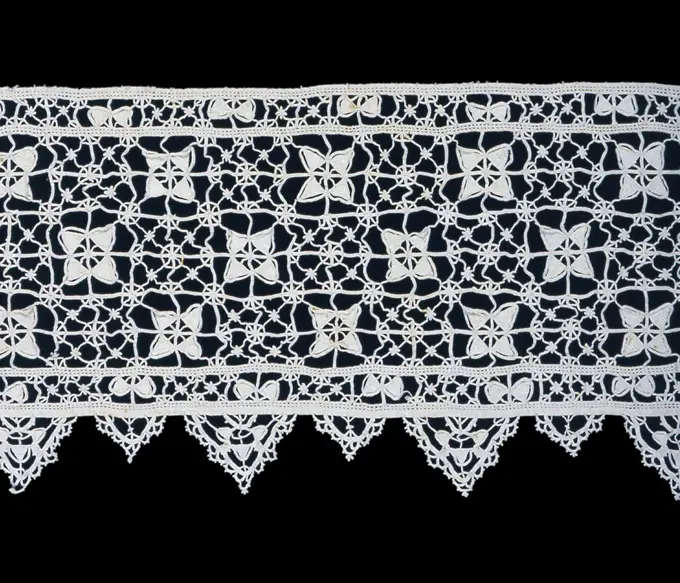
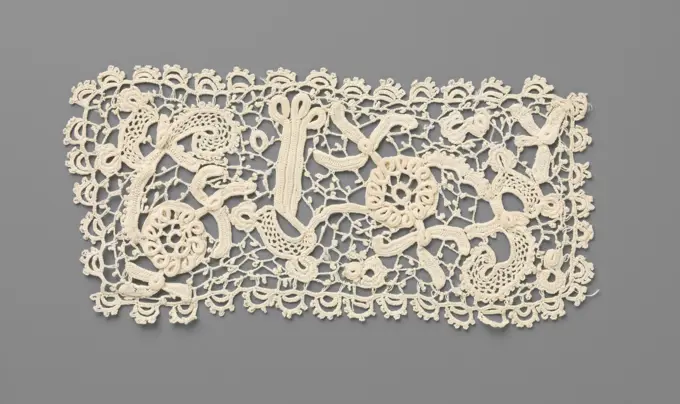
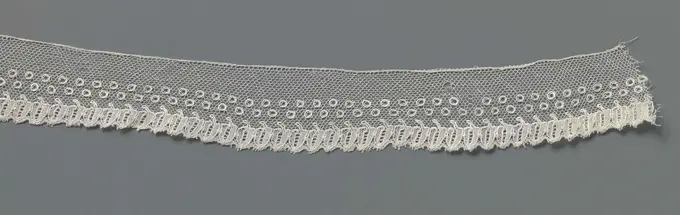
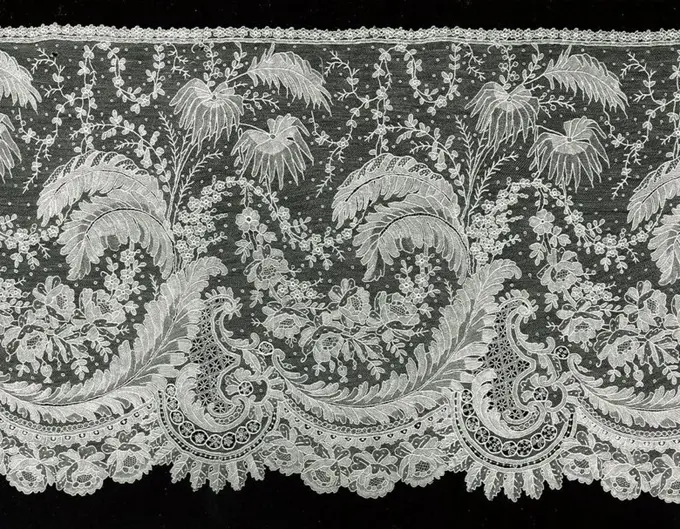
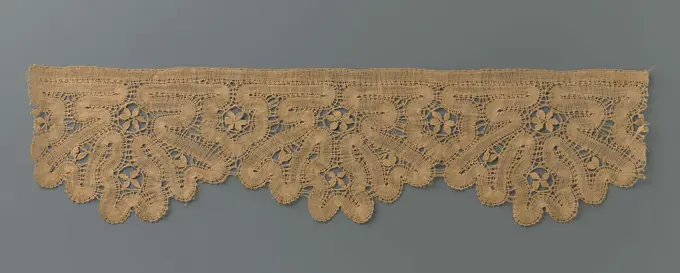
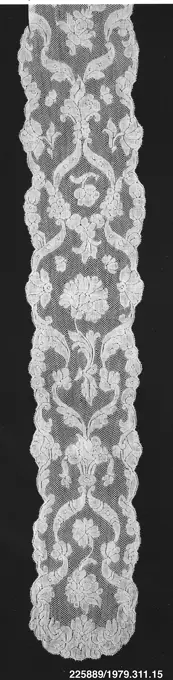
Border; linen
Border; linen
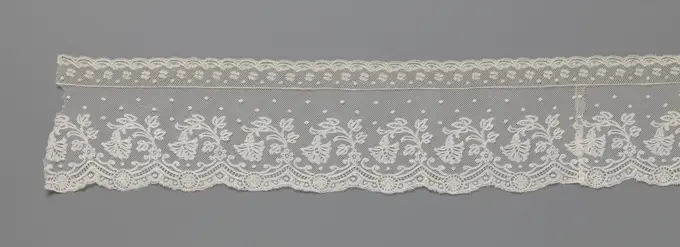
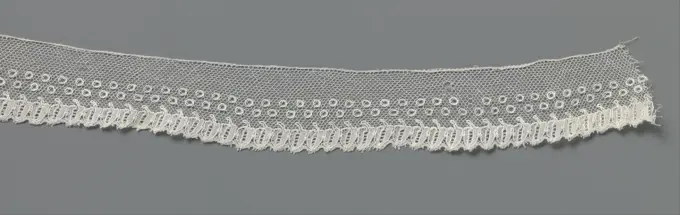
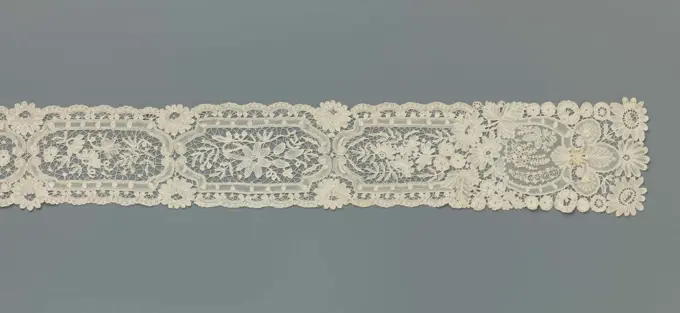
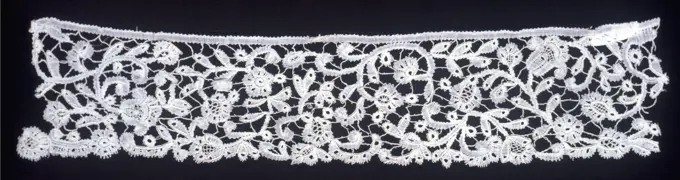
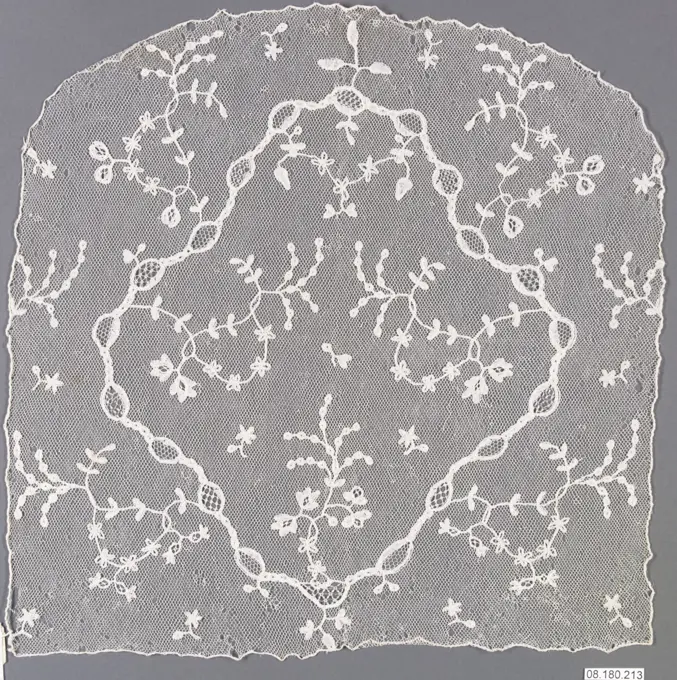
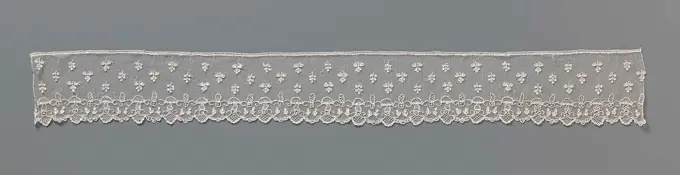
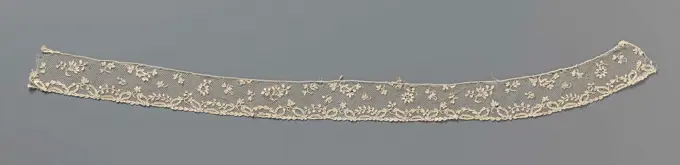
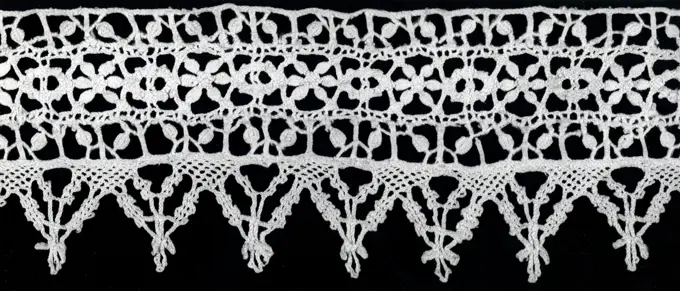
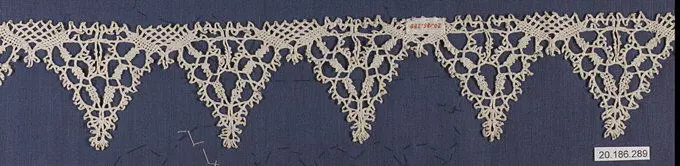
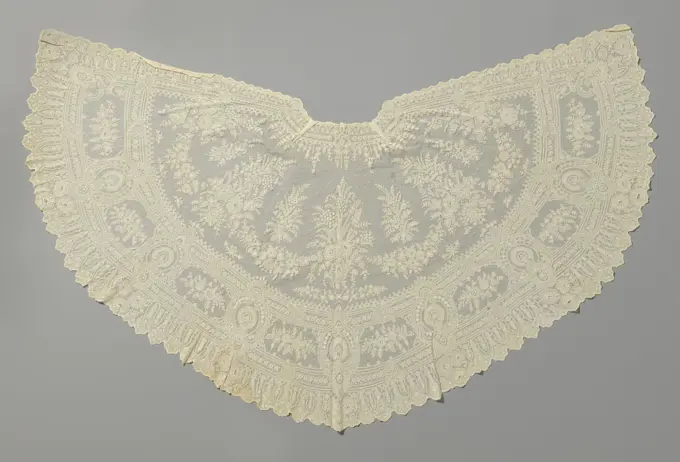
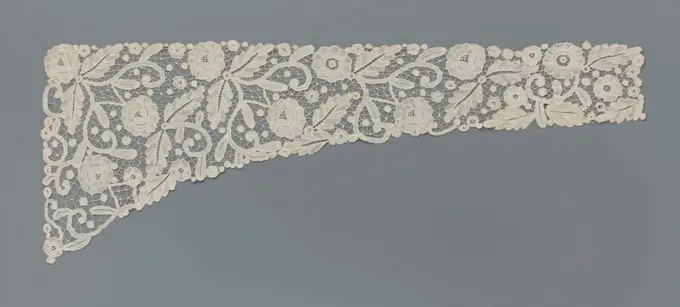
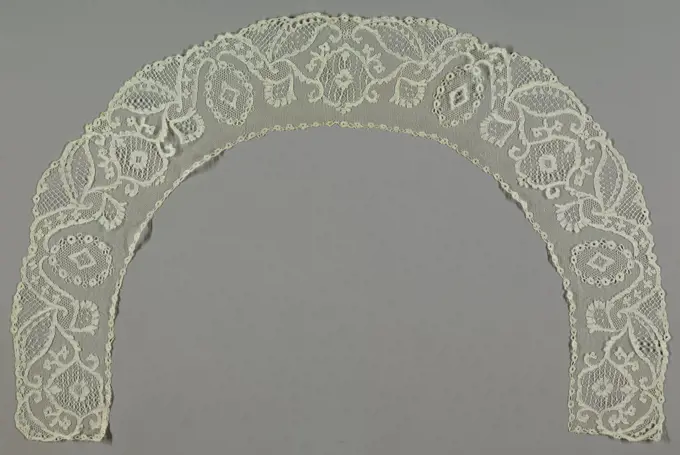
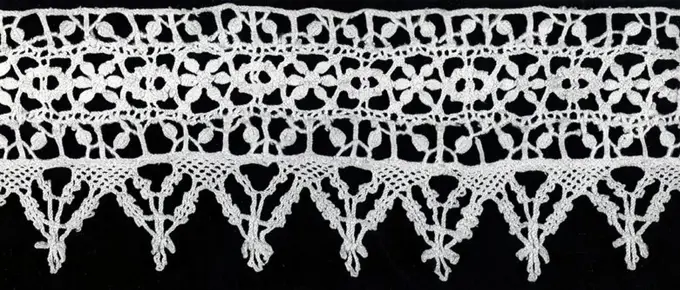
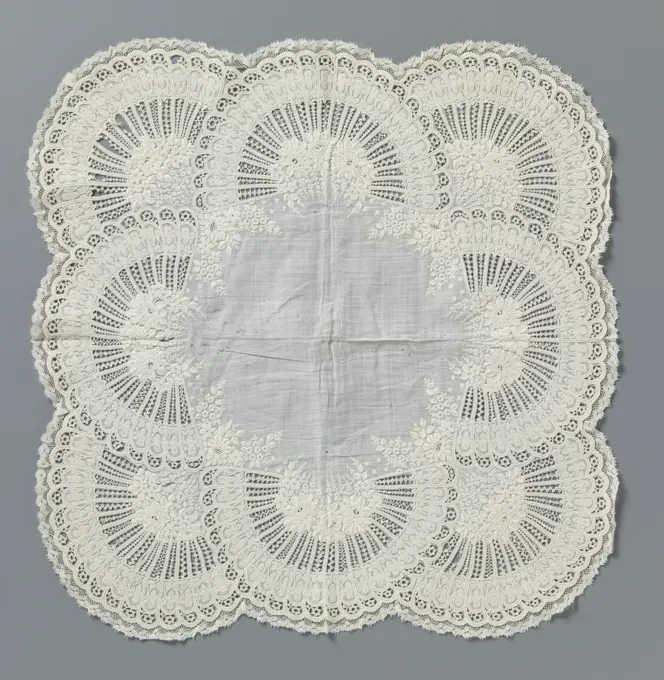
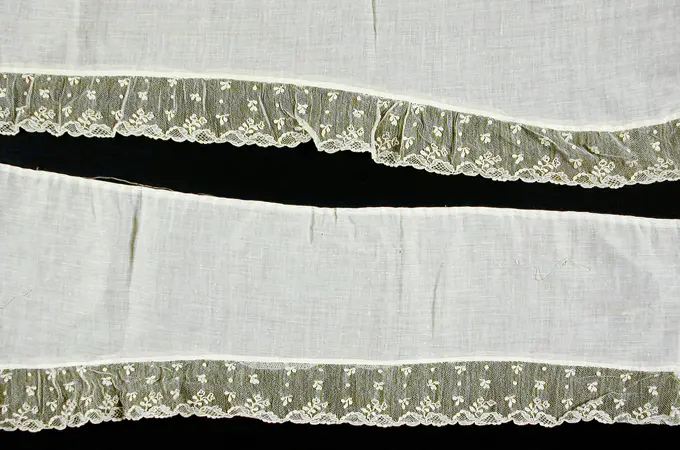
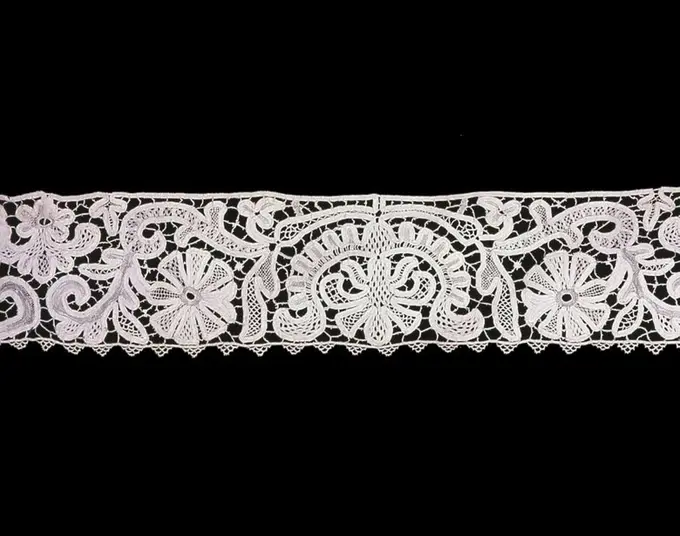
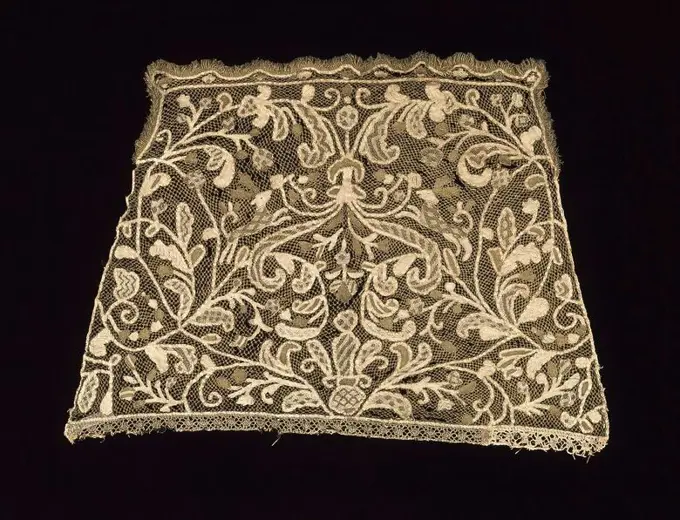
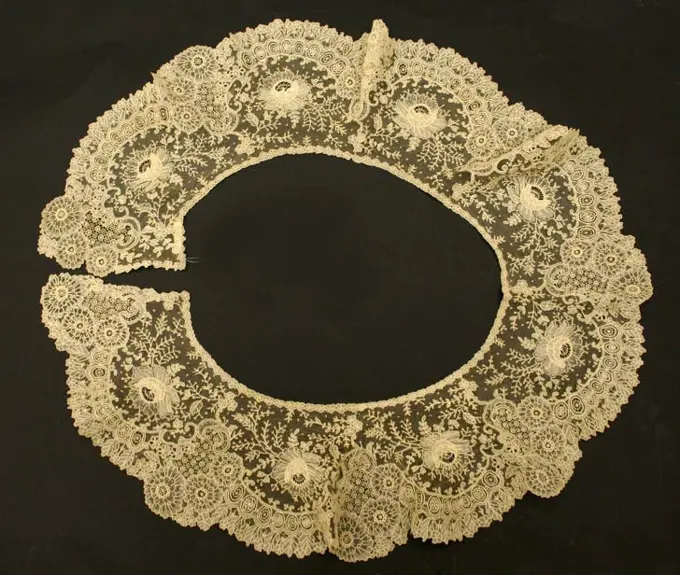
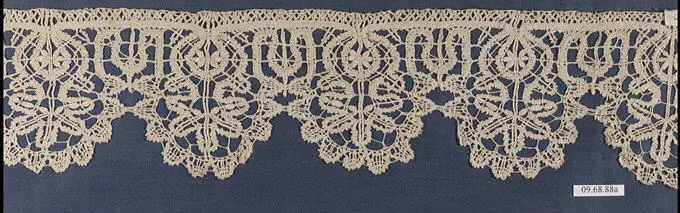
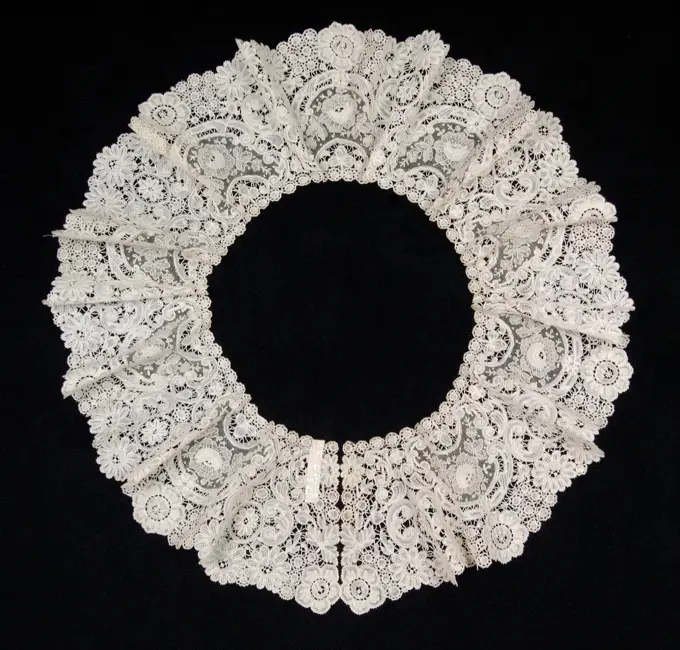
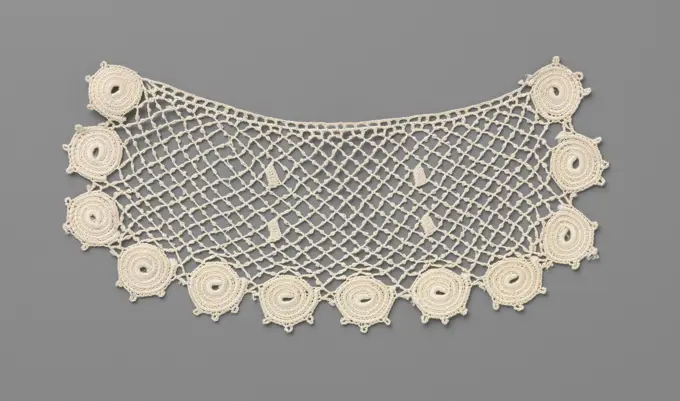
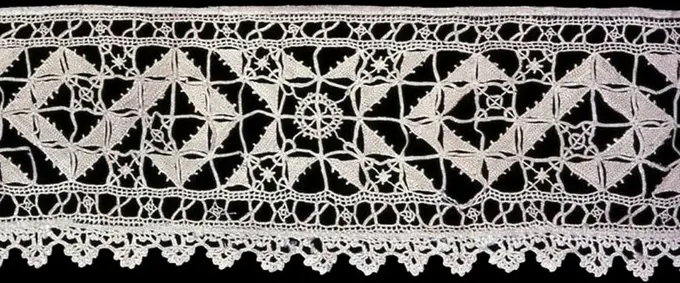
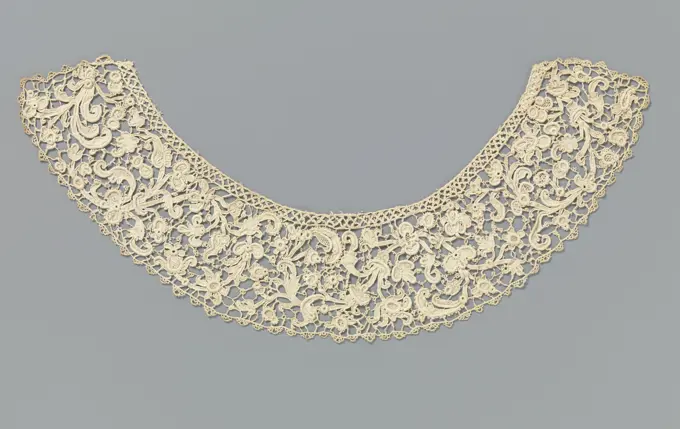
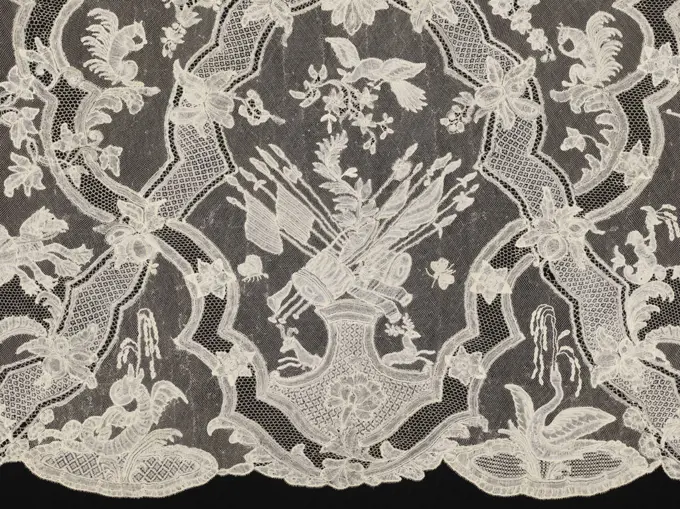
Edging 16th century Italian, Venice. Edging 221087Scarf Made 1875-1900 Belgium. Cotton and linen, mixed lace known as Brussels application lace bobbin part lace with needle lace fillings applied to machine-made net .Cap streamers. Date/Period: 1700-1750. Cap streamers. Medium: linen. Technique: bobbin lace. Author: UNKNOWN.Needle's jabot with symmetrical pattern from a candelabre motif on the central axle with, among other things, lotus flowers, anonymous, c. 1670 Jabot of natural -colored needle side: Venetian relief side. The pattern is symmetrical from a central axle with candelabre motif and shows palm flowers, lotus flowers and lily-shaped flowers to coral-like stems with deeply cut leaves that end in volutes. The Jabot is straight finished with Raderpicots. Venice linen (material) Venetian raised work Jabot of natural -colored needle side: Venetian relief side. The pattern is symmetrical from a central axle with candelabre motif and shows palm flowers, lotus flowers and lily-shaped flowers to coral-like stems with deeply cut leaves that end in volutes. The Jabot is straight finished with Raderpicots. Venice linen (material) Venetian raised workStrip 17th century Italian. Strip 212361Lace, 1900s , maker unknown. Gift of Heather Lloyd, 1990.Fragment (Insertion) Made 1701-1750 Italy. Linen, bobbin part lace .Border early 18th century Flemish. Border 218210Strook machinale kant met rozenbotteltak.Natural-colored Machine Side Strip: Machine Valenciennes. The strip is strongly curved in shape. The repeating pattern consists of a curved branch with a rosehip and a few leaves. Under each branch is a wide curved shell made along which a narrow unilateral blade lies. The motifs are made in linen stroke with openwork edges and some recesses. They are interconnected by a square mesh soil, a machining valenciennes ground. The top of the strip is straight finished. The sloping edge along the bottom of the strip is finished with picots.Fragment 17th century Dutch. Fragment 214756Edging 16th century Italian. Edging 220990Strip bobbin with four -fold mosies, anonymous, c. 1900 - c. 1909 Strip of natural-colored bobbin, Valenciennes side. Repetitive motif of a flower, made with a four -time mush. Diagonally above the flour is a single mush. Faint scallop with decorative tires. The top is finished with a straight edge. Originally this strip was one of the parts of a strip, which consisted of nine separate parts. However, six of these loose parts are sewn together: BK -BR -J -274 -A, -c, -d, -e, -f, -g. In 1966, a wide strip with a different pattern was set at the top of the long strip that was created: BK-BR-J-267. Belgium linen (material) Bobbi Lace / Valenciennes Lace Strip of natural-colored bobbin, Valenciennes side. Repetitive motif of a flower, made with a four -time mush. Diagonally above the flour is a single mush. Faint scallop with decorative tires. The top is finished with a straight edge. Originally this strip was one of the parts of a strip, which consisted of nine separate parts. However, siCuff early 17th century Italian. Cuff 214833Strip bobbin with two rows of open mouses and a row of leaves, anonymous, c. 1850 - c. 1899 Strip of natural -colored bobbin, Lille side. The pattern consists of two rows of open mosjes on the center line of the strip, with a row of close -standing leaves close together directly along the underside of the strip. The motifs are connected by a fine Maas soil, a tuler land. The motifs are made in linen and mains, with thicker, shiny contour threads. The Mosjes are accentuated Mazen in the tuler land with a contour wire. The top of the strip is straight finished. The shells along the underside that form through the leaves are finished with picots. Belgium cotton (textile) bobbin lace / Lille lace Strip of natural -colored bobbin, Lille side. The pattern consists of two rows of open mosjes on the center line of the strip, with a row of close -standing leaves close together directly along the underside of the strip. The motifs are connected by a fine Maas soil, a tuler land. The motifs are mStrook kloskant met afgeronde driehoekige schulpen.Strip natural colosside, blonde. The strip is slightly curved in shape. The repeating pattern begins consists of a sloping branch, which curls at the bottom. On the branch is a round flower with six rectangular petals on either side. Below the branch hang three different, rounded triangles as shuts down. A vaulted pillar always raises straight up from the bottom of the strip after each third of the strip and thus forms a separation between consecutive branches. Above the pattern, the strip consists of a fine Maas soil, a tulet. Under the branches and in the pillars an ornamental soil has been applied, a rose ground. The motifs are made in linen stroke with a recess in the flower hearts and in every triangular shell. A particularly thick contour wire has been used to accentuate the pillars and the triangular shelters in a continuous line. The branches are not provided with a contour wire. The top of the strip is straight finished. The tStrook gehaakte kant met rozettenkrans.Strip natural-colored Irish crochet side. A repeating pattern of a wreath with six rosette flowers interspersed by two right-hand rosette flowers. Irregular crocheted Maas soil with picots. In the wreath a coarse hexagonal maas soil. Along the top and bottom finished with three-piece arcs with a few picots.Fragment of the lace;  XVII/18th century (1601-00-00-1900-00-00);Strip of needle side with large leaves and small flowers, anonymous, c. 1880 - c. 1890 Strip of natural needle side, point the gaze de bruxelles. Repetitive motif of large leaves and small flowers on a fine hexagonal Maas soil, with single twisted meshes. Fullwork with various very fine mesh grounds and decorative stitches. The scums along the underside are formed by the underside of the pattern with leaves and flowers. The top is trimmed with a border bobbin. Brussels linen (material) Strip of natural needle side, point the gaze de bruxelles. Repetitive motif of large leaves and small flowers on a fine hexagonal Maas soil, with single twisted meshes. Fullwork with various very fine mesh grounds and decorative stitches. The scums along the underside are formed by the underside of the pattern with leaves and flowers. The top is trimmed with a border bobbin. Brussels linen (material)Strook gemengde kant voor een superplie met lelies.Strip natural needle side: Venetian ribbon side. The closed, circumferent strip is intended for a superplie and has a pattern of voluntaries, wingerd leaves and lilies on an open ground with scented bars. The contours of the pattern are formed by a woven ribbon. Different ornamental grounds within the contours. The top is trimmed with a woven edge. The bottom is trimmed with a straight edge.Das of cravat van gemengde kant met hoefijzervormige reserve.Das or cravat from natural mixed side - climbing side in combination with coniferous lace - Brussels Duchesse. A long rectangle is divided into six retted panels with fine profile lists and a regularly scalloped border, which is interrupted by large roses. The panel fillings consist of three types of flower branches, stabbing against an open braid soil. At each end there is a horseshoe-shaped medallion with fine meading net (needle side), including a golden control branch (needle side). Symmetrical termination of two roses, a palm with a three-leaf, on which a loosely imposed rosette.Band; linenCap streamers. Date/Period: Early 18th century. Cap streamers. Medium: linen. Technique: bobbin lace. Author: UNKNOWN.Fragment 17th century Italian. Fragment 218795Fragment (Belgium); linen; Bequest of Marian Hague; 1971-50-446Japon strip of application side with pointed Boogrand and clocks, Anonymous, c. 1800 - c. 1809 Japon strip Natural -colored application side: Needle side Applicated on Machine Tulle. This type of lace is also known under the name: Point d'Angleterre. The outer, ornamental edge consists of palms, under pointed arches, interspersed with a standing twig. The outside is right by an eye list. A spray pattern of hanging bell flowers fills the stock above the edges. Brussels linen (material) Japon strip Natural -colored application side: Needle side Applicated on Machine Tulle. This type of lace is also known under the name: Point d'Angleterre. The outer, ornamental edge consists of palms, under pointed arches, interspersed with a standing twig. The outside is right by an eye list. A spray pattern of hanging bell flowers fills the stock above the edges. Brussels linen (material)Scarf made of needle side with pear-shaped medallions.Sjaal from natural needle side: Brussels mesh edge. Triangular model. Large tape work placed in C-shapes and with radiating oak leaves have pear-shaped medallions, which in the ends and inner edge decrease the size of earrings in the ends and the inner edge. Filling rosary branches in large spirals. The ground is strewn with moes.Border Made 1875-1900 Italy. Linen, needle lace worked on a plain weave cut and drawn thread work grid; embroidered in double hem, hem and overcast stitches .Cuff from crocheted side with round flowers and elongated chalice, anonymous, c. 1900 - c. 1910 Cuff made of natural Irish crocheted side. Rectangular model. Pattern with two round flowers and two elongated chalice. The cuff is finished all around with a scrap of double arches, with picots on the outer arches. Netherlands (possibly) cotton (textile) Cuff made of natural Irish crocheted side. Rectangular model. Pattern with two round flowers and two elongated chalice. The cuff is finished all around with a scrap of double arches, with picots on the outer arches. Netherlands (possibly) cotton (textile)Strook kloskant met twee rijen open moesjes en een rij blaadjes.Strip natural colosside, Lille side. The pattern consists of two rows of open meadows on the center line of the strip, with a row placed closely on top of each other directly below the bottom of the strip. The motifs are connected by a fine Maas soil, a tulet. The motifs are made in linen stroke and blackhead, with thicker, shiny contour wires. The mates are accented with a contour wire accented larger meshes in the tulet. The top of the strip is straight finished. The scivels along the bottom that originated by the leaves are finished with picots.Flounce. Belgium. Date: 1860-1869. Dimensions: a: 23.5 × 328.5 cm (9 1/4 × 129 3/8 in.)b: 23.4 × 150.6 cm (9 1/4 × 59 1/4 in.)Width repeat: 14.3 -14.7 cm (5 5/8-5 3/4 in.). Cotton, needle lace of a type known as "Point de Gaze". Origin: Belgium. Museum: The Chicago Art Institute, Chicago, USA.Lappet (one of a pair) 18th century French. Lappet (one of a pair) 218117Band; medium:; 1938-30-4Fragment of Bobbin Lace Flounce, early 18th century. Italy, Milan, early 18th century. Lace, bobbin design on mesh ground: linen; average: 42 x 39.4 cm (16 9/16 x 15 1/2 in.).Needle -sided Engageante with a symmetrical pattern with a flower vase of tendrils on which feathered leaves and irises, anonymous, c. 1725 - c. 1749 Engageante of natural -colored needle side: flat Venetian net soil side (). The pattern has a vase with symmetrically suitable flowers, flanked by two running ranks, on which large flowers with "house in the house" work. Moreover, the pattern has an iris flanked by bunches. The motifs are made with undisputed feston stitches, with countless fine recesses between them. A slightly thicker, but equally fine contour wire has been used to accentuate pattern parts. The motifs are connected by a fine Maas soil with transfers. In and around most flowers and leaves, very fine decorative lands have been used in many variants, including decorative land with diamonds, 'patrixties', cubes and zigzag lines. The scrap edge stems from the pattern and is finished with picots. The top is straight and finished with a messing strap. On the right side, the EnBorder, Technique: bobbin lace, Bobbin lace border, scrolling leaves and flowers; early 18th century Flemish, early 18th century, lace, BorderFragment 16th-17th century Italian. Fragment 220632Bobbin Lace Insertion without Selvage, mid 16th century. Italy, Venice, mid 16th century. Lace, bobbin; average: 2.6 x 16.6 cm (1 x 6 9/16 in.).Strip of cotton with lace plunger with a geometric pattern of hexagons between windows and zigzag sculptes, C.I. Bosch Reitz-Teding van Berkhout, c. 1860 - c. 1880 Strip of natural cotton with lace bobbins: English embroidery. Close together geometric pattern with two rows of windows formed by embroidered straight zigzag jobs. The lower (third) row has been halved, creating zigzag debts. Between the lanes with windows and the zigzag debts, elongated hexagonal fields are formed with a daisy with open worked petals and an elongated Spitsovaal Bloemhart in each hexagon. In the Zigzag lanes rows with openwork circles and at any intersection between all fields there is an openwork circle with needle side stitches in it. Amsterdam cotton (textile) Strip of natural cotton with lace bobbins: English embroidery. Close together geometric pattern with two rows of windows formed by embroidered straight zigzag jobs. The lower (third) row has been halved, creating zigzag debts. Between the lanes witBobbin Lace Edging, mid 18th century. England, Devonshire, mid-18th century. Lace, bobbin; average: 4.5 x 23.5 cm (1 3/4 x 9 1/4 in.).Collar ca. 1860 French. Collar 169676Machinale tulle hat with application side, anonymous, c. 1840 - c. 1850 Hat veil, white, from machine tulle with an application side along three slightly sculpted sides. The decoration consists of flowers, flower branches and pomegranates. West-Europa . Hat veil, white, from machine tulle with an application side along three slightly sculpted sides. The decoration consists of flowers, flower branches and pomegranates. West-Europa .Edging 17th century Italian, Genoa. Edging. Italian, Genoa. 17th century. Bobbin lace. Textiles-LacesFragment (Italy); linenFragment (Border) Made 1601-1625 Italy. Linen, bobbin straight lace .Border; linenCap crown (Fanchon) late 18th century Flemish, Brussels. Cap crown (Fanchon) 214567Border, Technique: bobbin lace, Bobbin lace edge, floral tab edge; mid-18th century Flemish, mid-18th century, lace, BorderStrook naaldkant met paddenstoeltjes.Strip natural-colored coniferous lace: Alençon side. Under a scattering pattern of three rows hanging flower branches consists of a repeating and ongoing pattern along the underside of the strip from mushrooms, interspersed with a thin out with a circle of a circle of a circle in the center by a standing oval. The sloping edge is formed by fan-shaped motifs, one under each mushroom one. The ranges are connected to each other by a pendulum of three circles with raderpicots in it. The motifs are connected by a fine hexagonal Maas soil, an Alençon-soil with retrieved feston stitches. The sparse full work is made with feston stitches, the motifs are equipped with relief contours. Some different fine ornamental grounds are applied in the motifs in the pattern on the bottom of the strip. The top of the strip is finished with a separate splitting strap. The shelters along the underside are finished with picots.Cuff 18th century French. Cuff 218202Strook naaldkant met bloemenstrooipatroon en spitsovaaltjes.Strip natural needle side, Argent tank. Spreading pattern from twigs to whom alternately a small or larger flower, leaves and / or berries. Ground with meshes that are close to the buttonhole stitches. The pattern along the lower edge consists of two-way-around spindle releases between which a flower or berry branch exprements. The oval pairs are connected by a bow of leaves and / or berries and hearts. Among these arcs along the bottom edge a flat, oval oval. The oval-shaped figures in the pattern are filled with a fine hexagonal Maas soil (alençong soil). Different ornamental grounds in the flowers. Full work without recesses in flowers, leaves and berries. Sloppy edge on the underside through a concatenation of heart-shaped leaves, regularly interrupted by a rosette flower and the flat oval oval. The top is finished with a straight edge.Insertion Made 1601-1625 Italy. Linen, strips of needle lace worked on a laid and plaited thread ground; joined to bobbin straight lace points .Strook naaldkant met rozet en geometrische vormen.Strip natural needle side: Reticella in combination with Punto in Aria. The strip consists of a row of eleven squares, alternately filled with a rosette and a pattern that is made up of different, more or less triangular shapes. A shell is formed with arcs and triangles under each square. The top of the strip is straight finished with a splitting strap.Border Made 1875-1900 Belgium. Cotton, needle lace of a type known as Point de Gaze .Fragment, Cooper Union Museum Lace Study Card; France; linenBobbin Lace (Rose Lace) Edging with Bell Points, late 17th century. Italy, Genoa, late 17th century. Lace, bobbin; average: 7.1 x 19.1 cm (2 13/16 x 7 1/2 in.).Fragment (From an Altar Frontal). Italy. Date: 1801. Dimensions: 17.75 x 35.6 cm (7 x 14 in.). Origin: Italy. Museum: The Chicago Art Institute, Chicago, USA.Cuff (one of a pair). Culture: Italian. Dimensions: L. 11 x W. 4 inches27.9 x 10.2 cm. Date: 16th century. Museum: Metropolitan Museum of Art, New York, USA.Edging 16th century Italian, Venice. Edging 221099Shawl (France); silk; W (widest point): 284 cm (9 ft. 3 13/16 in.); 1933-5-1Machinal side with medallions and bouquets, anonymous, c. 1870 Scarf of natural -colored machine side: Machine side with contours of machine tambooering work applied on mechanical tulle. More than half -circular model. Flower bouquets above a border with medallions and palmets, two edges with flower ornament, flower branches and hanging chalice and Margrites. France (possibly) cotton (textile) Scarf of natural -colored machine side: Machine side with contours of machine tambooering work applied on mechanical tulle. More than half -circular model. Flower bouquets above a border with medallions and palmets, two edges with flower ornament, flower branches and hanging chalice and Margrites. France (possibly) cotton (textile)Edging 17th century Italian, Genoa. Edging 220918Border. Possibly England. Date: 1675-1700. Dimensions: 18.3 × 356.5 cm (7 1/4 × 140 3/8 in.)Width repeat: appro×. 39.4 cm (15 1/2 in.). Linen, needle lace with woven tapes. Origin: England. Museum: The Chicago Art Institute, Chicago, USA.Fragments (From a Border) Made 1601-1625 Northern Italy. Linen, bobbin part lace made in sections; cloth work tapes .Sierstuk voor een avondmantel van gemengde kant met rozenhaag.Decorative piece for an evening casing of natural-colored mixed side - climbing side in combination with coniferous lace - Brussels Duchesse. In a widely spread braid soil there are roses that usually support two leaves. An intermediate ornament consists of a few and double voluntaries and many small flowers.Fragment (Italy); linen; Bequest of Marian Hague; 1971-50-278Fragment (Belgium); linenCollar, Medium: linen Technique: bobbin lace made in Lille style with heavy outlinig thread, Deep collar or 'Bertha' ornamented with flowers and compartments enclosing various stitches., 19th century, lace, CollarInsertion. Italy. Date: 1601-1625. Dimensions: 6.8 x 25.1 cm (2 3/4 x 9 7/8 in.). Linen, strips of needle lace worked on a laid and plaited thread ground; joined to bobbin straight lace points. Origin: Italy. Museum: The Chicago Art Institute, Chicago, USA.Cut -ball of the needle side with iris in oval cartouche, anonymous, c. 1760 - c. 1770 Hat of natural-colored needle side: Alençon side. Symmetrical pattern with flower branch in oval cartouche. There are irises on the branch and a few surrounding branches. The motifs are built with feston stitches, where sparingly recesses have been applied for decoration. They are equipped with relief contours and connected by a fine Maas soil, an alençon ground. In the oval decorative frame and in Bloemharten, decorative lands have been used with radar picots. The hat ball is finished all around with a mess () Band. France linen (material) Alençon Lace Hat of natural-colored needle side: Alençon side. Symmetrical pattern with flower branch in oval cartouche. There are irises on the branch and a few surrounding branches. The motifs are built with feston stitches, where sparingly recesses have been applied for decoration. They are equipped with relief contours and connected by a fine Maas soil, an aleEmbroidery handkerchief with eight fans, anonymous, c. 1850 Natural embroidery handkerchief on natural batist: plumetis. Very fine and closed satin stitches, filled over filling stitches, show 'feathered' ('plumetis') leaves. Sand stitch and open needle side stitches enliven the inner drawing. Four fan -shaped scumples in the corners are cut over by four others on the sides. Upon onset there is a flower bouquet in every fan. The openwork legs of the fans are slightly s-shaped. The fan blade is narrow and high ('Cabriolet' fan) and has music keys. All around a edge of natural-colored bobbin side: Valenciennes side. Netherlands linen (material). batiste Embroidering / Bobbi Lace / Valenciennes Lace Natural embroidery handkerchief on natural batist: plumetis. Very fine and closed satin stitches, filled over filling stitches, show 'feathered' ('plumetis') leaves. Sand stitch and open needle side stitches enliven the inner drawing. Four fan -shaped scumples in the corners are cut over by foBobbin Lace Edging, 17th-18th century. Spain, Huelva, 17th-18th century. Lace, bobbin; average: 6.4 x 12.1 cm (2 1/2 x 4 3/4 in.).Lengths of Lace. France, circa 1785-1790. Textiles; textile lengths. Linen point d'Alençon needle laceEdging 17th century Italian, Genoa. Edging. Italian, Genoa. 17th century. Bobbin lace. Textiles-LacesFragment bobbin consisting of one shell with two wheels, anonymous, c. 1600 - c. 1624 Fragment of natural -colored Genoese bobbin. The fragment consists of one half oval -shaped sculpt and is probably part of a strip. Along the curve of the half oval, two circles merging together with a wheel in each circle are one wheel. The half oval itself is deposited with seven semi -circular sculptes. The ribbon -shaped motifs are connected by a braid ground. The top of the shell is trimmed with a strip of linen with lace border, work with pulled threads together. Knee linen (material) bobbin lace / Genoese pillow lace Fragment of natural -colored Genoese bobbin. The fragment consists of one half oval -shaped sculpt and is probably part of a strip. Along the curve of the half oval, two circles merging together with a wheel in each circle are one wheel. The half oval itself is deposited with seven semi -circular sculptes. The ribbon -shaped motifs are connected by a braid ground. The top of the shBorder (Italy); linenPiece early 18th century Flemish. Piece 214513Fragment; linen; 1933-1-146Border. Northern Europe, possibly Flanders, Northern Germany, or England. Date: 1625-1675. Dimensions: 12.1 x 191.2 cm (4 3/4 x 75 1/4 in.)Width repeat: 46.5 cm (18 3/4 in.). Linen, needle lace with woven tapes. Origin: Northern Europe. Museum: The Chicago Art Institute, Chicago, USA.Cuffs. Culture: probably European. Date: 1700-1710.This is a very unusual piece because of the incorporation of gold metallic thread and linen and the use of a pre-made tape at such an early date. The naive drawing style of the design indicates that it was not made for an important personage, giving it a personal charm. Museum: Metropolitan Museum of Art, New York, USA.Bobbin Lace Lappet, 18th century. Belgium, Mechelen, 18th century. Lace, bobbin: linen; average: 11.5 x 104.1 cm (4 1/2 x 41 in.).Fragment second half 16th century Italian. Fragment 214860Border, Cooper Union Museum Lace Study Card; Made for Cooper Union Museum; Netherlands; linenHat -slip and part of a forehead strip of Brussels bobbin, Anonymous, c. 1750 Hat -slip and part of a forehead strip of Brussels bobbin. The hat -slip has a round end, is slightly sculpted and provided with a picot edge. The decoration consists of C-shaped volutes and flower branches. Brussels . Brussels bobbin lace Hat -slip and part of a forehead strip of Brussels bobbin. The hat -slip has a round end, is slightly sculpted and provided with a picot edge. The decoration consists of C-shaped volutes and flower branches. Brussels . Brussels bobbin laceBertha third quarter 19th century Belgian. Bertha 119405Edging 16th century Italian, Venice. Edging 221043Fragment of needlelace unknownBliżej Kultury unknownBorder early 17th century Italian. Border 218027Bertha ca. 1895 Belgian. Bertha 170281Strip 16th-17th century Italian, Tuscany. Strip. Italian, Tuscany. 16th-17th century. Bobbin lace. Textiles-LacesEdging 17th century Italian, Genoa. Edging 220978Trimming (Russia); linen; Bequest of Marian Hague; 1971-50-436Manchet van gehaakte kant met ronde spiraalschulpen.Cuff of natural colored Irish crochet side. Rectangular model with rounded corners. Four mashs, slightly curved rectangles, in two rows in a diamond-shaped network with picots. Finished on three sides with a sloping edge of co-switched round spiral slot, which are formed by a rounded and embedded wire bundle. The top is just finished.Border (From a Pillow Cover). Italy. Date: 1550-1600. Dimensions: 8.7 x 61.6 cm (3 3/8 x 24 1/4 in.)Weft repeat: 11.7-13.3 cm (4 5/8-5 1/4 in.). Linen, needle lace worked on a plain weave cut and drawn work grid; edged with bobbin straight lace. Origin: Italy. Museum: The Chicago Art Institute, Chicago, USA.Collar of needle side with a variety of flowers and curling leaves on tendrils, anonymous, c. 1700 - c. 1724 Collar of natural -colored needle side: Venetian relief side. Curved strip -shaped model. Pattern: diverse flowers and curling leaves on tendrils. The motifs are made with feston stitches, where different patterns in flowers and leaves have been realized with recesses. They are equipped with relief contours and the cordons are or not decorated with picots. The motifs are connected by an irregular soil with bars with picots and rader picots. The collar is finished along the short sides and underside with a bow edge. The top is finished with a messing strap, with a cross pattern made with leaf -shaped artificial strokes. Europe linen (material) Venetian raised work Collar of natural -colored needle side: Venetian relief side. Curved strip -shaped model. Pattern: diverse flowers and curling leaves on tendrils. The motifs are made with feston stitches, where different patterns in flFlounce, Medium: linen Technique: Brussels style bobbin lace, Section of a wide flounce with a design of curving garlands that alternates with a symmetrical framing element. Neptune with a trident alternates with a group of heraldic banners with field drums., Belgium, 1745-65, lace, FlounceBand, Medium: linen Technique: bobbin made continuous tape with bars and net added, Symmetrical repeat of diagonal floral bands with a flowering plant at the apex of symmetrically reversed diagonals., Italy, 18th century, lace, BandStrook kloskant bedoeld of gebruikt als meubelbekleding met kelkbloem in hangende bloempot.Strip light brown colored dick edge: Abruzzo side. The strip has been intended or used as (a part) of furniture covering. The repetitive and symmetrical pattern consists of a continuous ribbon that forms a hanging flowerpot with one chalis flour in it. The continuous ribbon forms a rosette flower between the consecutive flower pots. The ribbon is split into linen stroke with openwork edges. In the center of the Kelkbloem, the vase and the rosette flower are rosette flowers of leaves in shape stroke. Two leaves in shape stroke are processed in each double-spinning leaf on either side of the skellar flowers. The top of the strip is straight finished. The slot edge is formed by the pattern with the skellar flowers in the hanging flower pots. The side was made in a monastery in Naples.Strip bobbin with lying flower branch with two up and one down bending flour, anonymous, c. 1800 - c. 1899 Strip of natural -colored bobbin: Lille side. Under a narrow lane with a spray pattern of square mushes, the repeating pattern consists of a reclining flower branch, with two bending flowers upwards and one bending flower down where a large leaf hangs over it. Between the successive flower branches there are a few configurations of seven and of four moes. Along the underside of the strip, unilaterally targeted leaves sprout from a straight strap. The motifs are connected by a fine grid, a tuler land. The motifs are made in linen battle with large recesses and thicker and shiny contour threads. A decorative land has been used in the largest flowers. The Mosjes are made in form. The top of the strip is straight finished. The straight -shot band along the bottom is finished with picots. Southern Netherlands linen (material) bobbin lace / Lille lace Strip of natural -colored bobbin: LLappet late 18th century Franco-Flemish The Metropolitan Museum's great lace collection was started when the Museum became the first among American museums to organize a permanent collection of lace with the acceptance of the McCallum Collection in 1879 and the bequests of Mrs. John Jacob Astor, Mrs. Robert L. Stuart, Mrs. Augustus Cleveland, and Mrs. A. W. Winters shortly thereafter. In 1893 a loan collection of antique laces shown at the World's Columbian Exposition in Chicago was assembled by a committee of New York women headed by Catharine Augusta Newbold. About 1900 Miss Newbold arranged and labeled an exhibition of laces and linenworks lent to the Metropolitan Museum by Mrs. James Boorman Johnstone and the Misses Johnstone. "Her scholarly knowledge of lace technique enabled the Museum for the first time to offer a comprehensive display of lace illustrating its historical development," wrote Miss Frances Morris, then curator of the textile department. Miss Newbold's name occurs a