Lace Trimmings

Intricate lace trimmings showcasing detailed patterns and textures, highlighting craftsmanship from various historical periods with a focus on elegance.

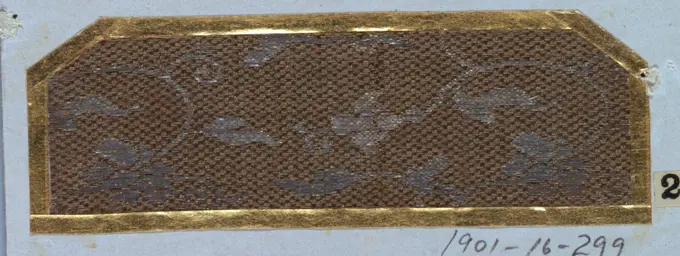
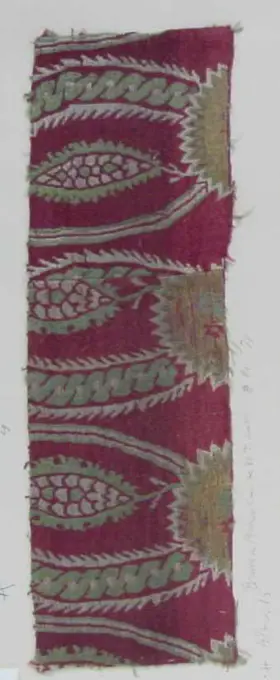
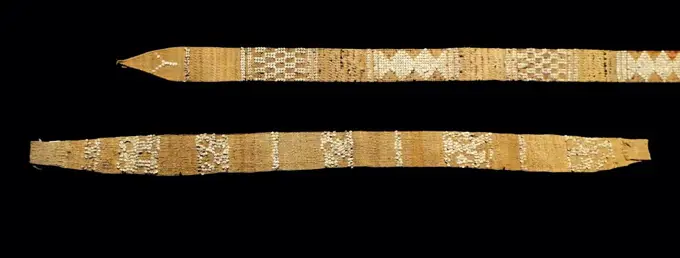
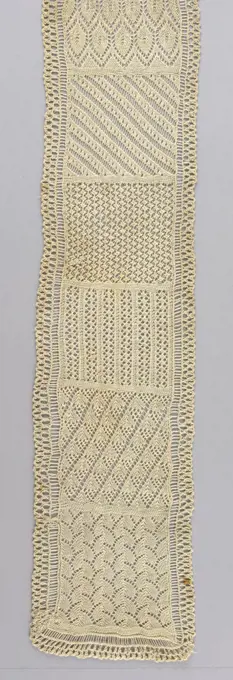
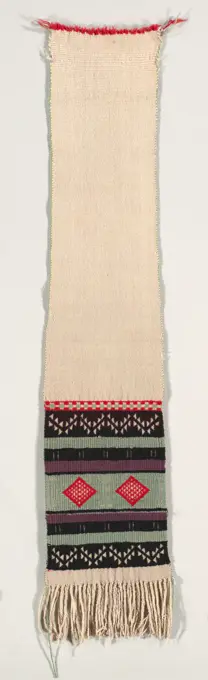
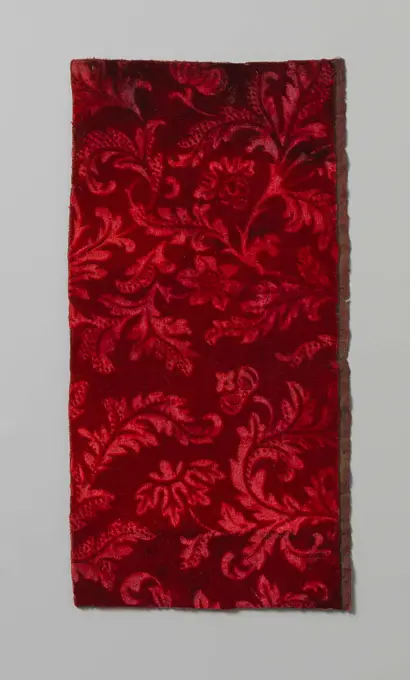
Excerpt black velvet with recesses with pattern of pomegranate moths, anonymous, c. 1470 - c. 1499 Fragment Black Silk Luweel with recesses with a pattern of horizontally ripened five -lobe leaves in which a pomegranate, with acanthusloof and dense surrounded by flowers. Mounted on linen. Italy silk Fragment Black Silk Luweel with recesses with a pattern of horizontally ripened five -lobe leaves in which a pomegranate, with acanthusloof and dense surrounded by flowers. Mounted on linen. Italy silk
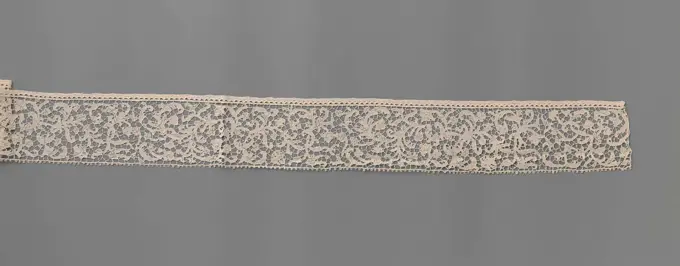
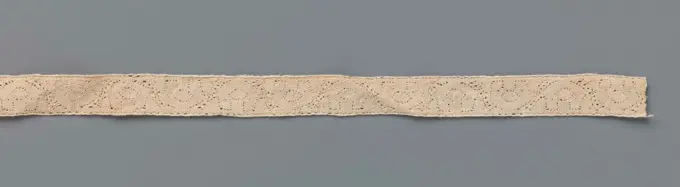
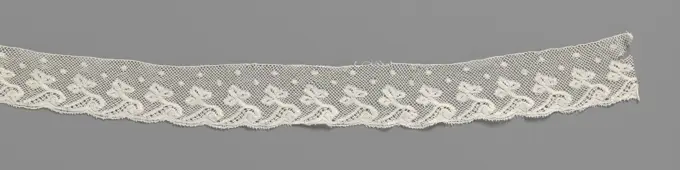
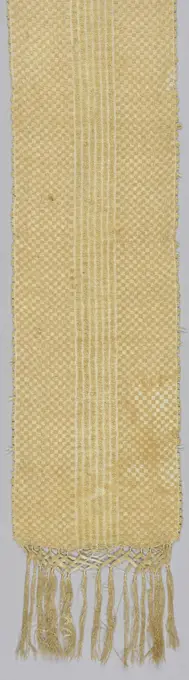
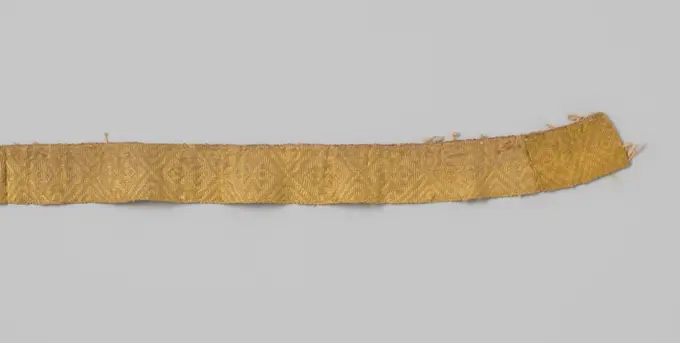
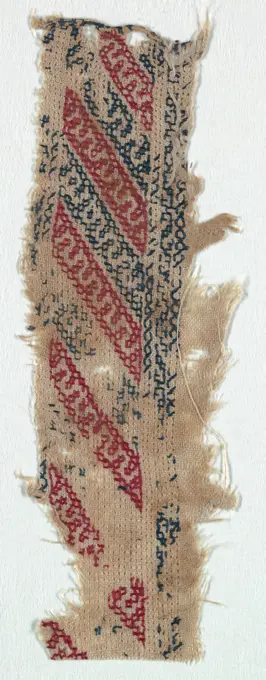
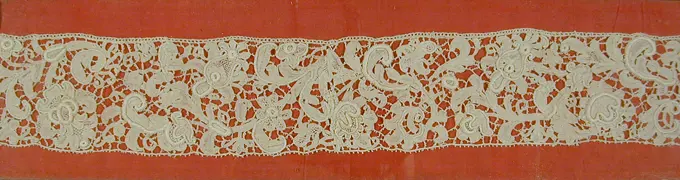
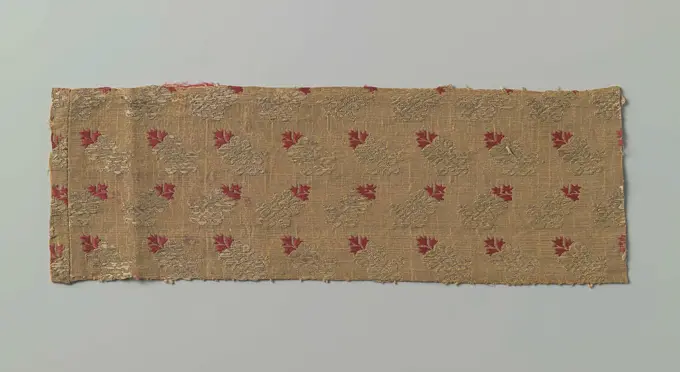
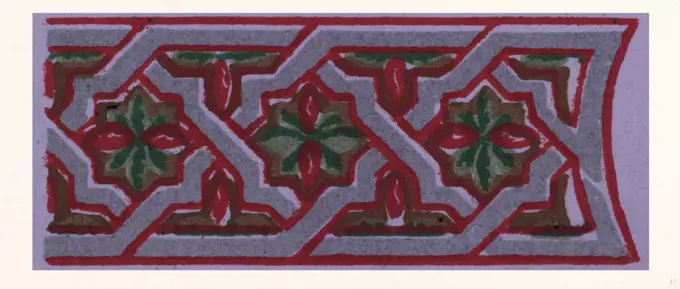
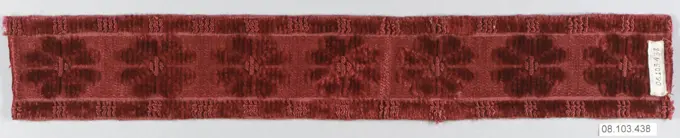
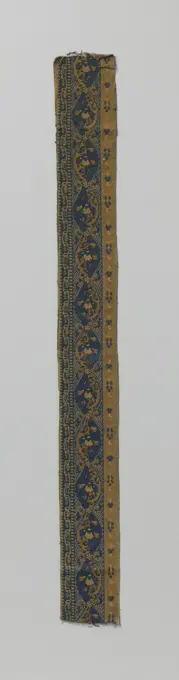
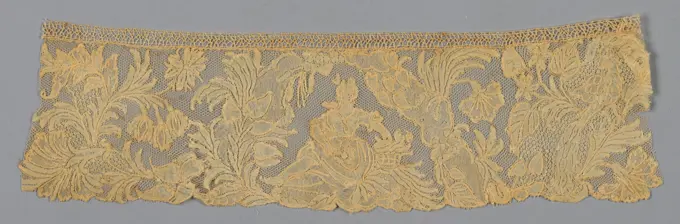
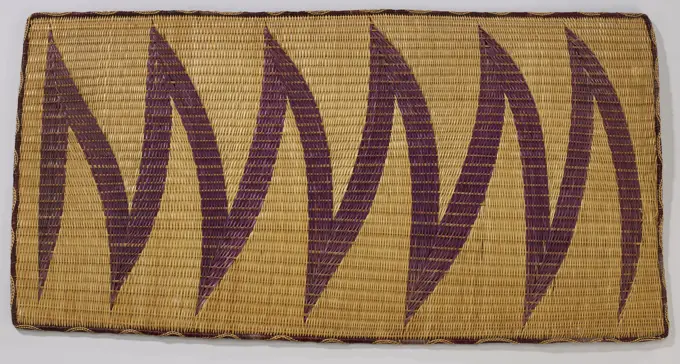
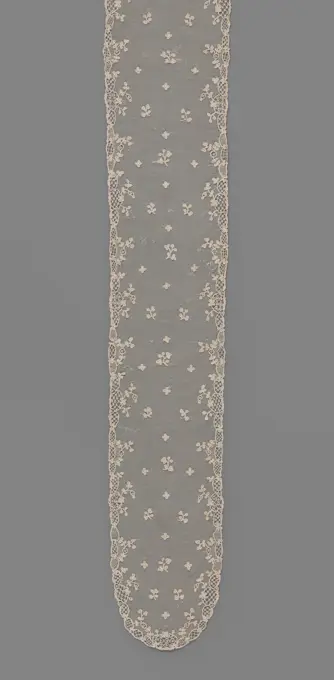
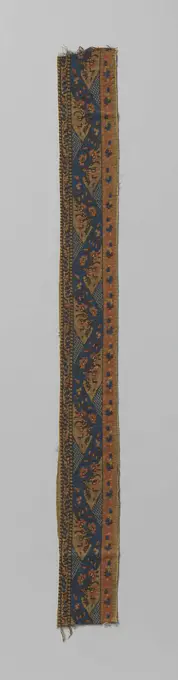
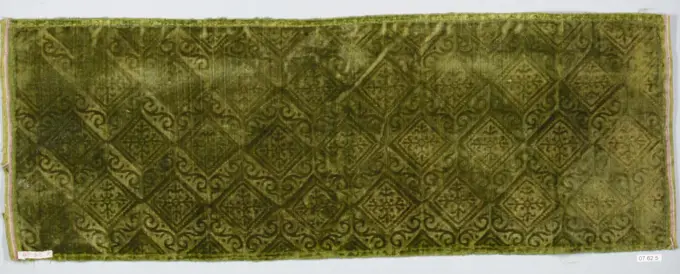
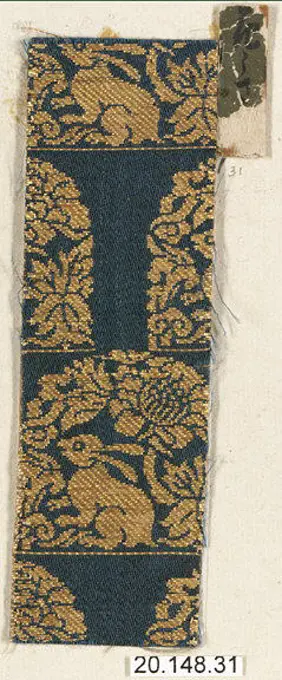
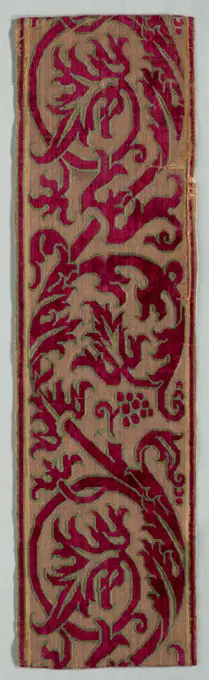
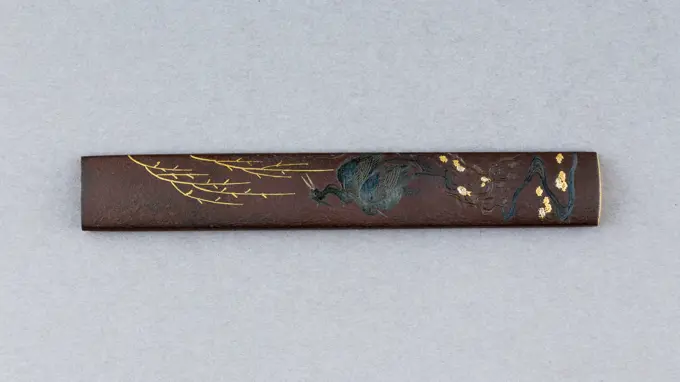
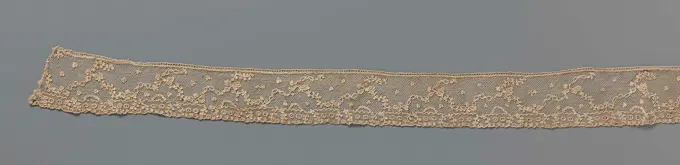
Strook naaldkant met cirkeltjes in fijnmazige onderrand.Natural coniferous strip: Men-Alençon. Pattern of a fine winding rank with small leaves on a fine hexagonal soil with wounded meshes. The pattern on the underside of the strip consists of two wavy lines between which, among other things, leaf packs and circles with a Raderpicot in the center. Full work of feston stitches in (flour) leaves and except the raderpicots in the circles, no ornamental grounds. Nuance differences are made by applying an even finer hexagonal soil between the undulating lines along the underside and in a few leaves on the rank. The meshes of this fine soil are not wounded but rotated. Founded contour lines. The underside is finished with a virtually straight edge with ragfine picots. The top is trimmed with a border clamping side.Trimming, Medium: metallic Technique: bobbin lace, Wide border, metallic gold lace in all over small scale repeated diamond shape., Europe, 18th century, lace, TrimmingStrook naaldkant met gevederde ranken.On an open bar's fond there is an ongoing pattern of wide fanning, feathered voluntaries with palm-free flowers. Straight thick outer frame with small cogs-picots. Venise flat.Strip mid-18th century Flemish. Strip 212526Band; silk; Repeat: 5 and 1/4 inches; 1931-53-7Oranjelint, anonymous, in or after 1747 ribbon (material) Silk ribbon with fringes of silver wire and fringes of green silk on the long sides. Alternating pattern consisting of a green tree with 7 large orange apples in graceful silver with blue vase on gray -like stock, and inscription in yellow on whimsical silver band with the date on whitish stock on both sides. Cut through the inscription on the two ends. Inscription: Vivat / WCH / Friso. In between: AO 1747 /3 Mey (1 x repeated). Holland (possibly)Utrecht (possibly) silk. silver threadStrip of needle side with crossing tones, anonymous, c. 1900 Strip of natural -colored needle side: Venetian rose side. On an open soil of the most smooth bars is a symmetrical pattern of widely spread branches that often cross each other. On the axes of Symmetry there is alternating fan plant and a group of three hanging clovers. Belgium (possibly) linen (material) Venetian rose point Strip of natural -colored needle side: Venetian rose side. On an open soil of the most smooth bars is a symmetrical pattern of widely spread branches that often cross each other. On the axes of Symmetry there is alternating fan plant and a group of three hanging clovers. Belgium (possibly) linen (material) Venetian rose pointGallon;  19th century (1801-00-00-1900-00-00);Indian Diaper, Medium: cotton Technique: printed, Medium-scale all-over symmetrical design of trellis framework in tans, each diamond containing a stylized flower and leaf pattern in tans and dark blue. Plain wide unprinted selvedge., England, designed 1876, printed, dyed & painted textiles, Textile, TextileExcerpt black velvet with recesses with pattern of pomegranate moths, anonymous, c. 1470 - c. 1499 Fragment Black Silk Luweel with recesses with a pattern of horizontally ripened five -lobe leaves in which a pomegranate, with acanthusloof and dense surrounded by flowers. Mounted on linen. Italy silk Fragment Black Silk Luweel with recesses with a pattern of horizontally ripened five -lobe leaves in which a pomegranate, with acanthusloof and dense surrounded by flowers. Mounted on linen. Italy silkGalloon 17th-18th century Italian or French. Galloon 213797Galloon 17th-18th century Unknown. Galloon 213803Trimming (Spain); metal-wrapped silk thread and metallic foil; 1950-82-3Galloon 17th-18th century Unknown. Galloon 213891Wall hanging, c. 1890, 59 x 38 1/2 in. (149.86 x 97.79 cm), Cotton, silk; ikat, embroidery, Uzbekistan, 19th centuryFragment (Italy), 17th century; linen, cotton; Warp x Weft: 6.7 x 33.4 cm (2 5/8 x 13 1/8 in.)Tussenzetsel van kloskant met spitsovaaltje in u-vorm.Inserting natural colosside in close-uped linen, ancient side. With small recesses, a repeating pattern can be distinguished from a spindle site surrounded by a more or less u-shaped edge. This pattern is over and upright and upside down. Straight finished and bottom.Strip 18th century Flemish. Strip 212788Fragment (Japan)Swaddling bands 17th century Italian. Swaddling bands. Italian. 17th century. Linen, drawnwork. Textiles-LacesFragment 16th century Italian. Fragment 230329Textile Fragment late 17th century. Textile Fragment 454517Belt made from vegetable fibres by the Native American Chumash people, Santa Barbara, Southern California. Dated 19th CenturySampler, Medium: cotton Technique: knitting, Thirty different knitting patterns., Germany, 19th century, knotted, knitted and crocheted textiles, SamplerFragment Green Silk Luwel with palmets, Anonymous, 1500 - 1599 Fragment Green Silk Luwel with horizontal rows of beams and blocks, interspersed with hexagons surrounded by palmets. Italy silk Velvet chiseled Fragment Green Silk Luwel with horizontal rows of beams and blocks, interspersed with hexagons surrounded by palmets. Italy silk Velvet chiseled"Hopi Brocade" Style Dance Sash, c. 1880-1900. America, Native North American, Southwest, Pueblo (Hopi), Post-Contact, Transitional Period. Plain weave with supplementary weft wrap; wool (homespun and Germantown); overall: 116 x 25 cm (45 11/16 x 9 13/16 in.).Galloon 17th-18th century Unknown. Galloon 213862Fragment of the fabric;  XVII century (1601-00-00-1700-00-00);Krzywiec, Rudolf (1895-1982) - collection, gift (provenance), fragments of silk fabrics, fabrics, patterned fabricsGallon;  19th century (1801-00-00-1900-00-00);Textile, China, 18th-19th century, woven textiles, TextileBobbin Lace Edging, 17th century. Italy, Abruzzi, Pescocostanzo, l'Aquila, 17th century. Lace, bobbin: linen; average: 10.2 x 139.1 cm (4 x 54 3/4 in.).Strip bobbin with Drieblad on Golf, Anonymous, c. 1920 Strip of natural-colored bobbin: Valenciennes side. On a traly land, a square Valenciennes-Ground, a square pattern of a Drieblad, emerging from the top of a wave. A smooth list fills the stretched scallops. The strip consists of four parts of each other. Netherlands (possibly) linen (material) Bobbi Lace / Valenciennes Lace Strip of natural-colored bobbin: Valenciennes side. On a traly land, a square Valenciennes-Ground, a square pattern of a Drieblad, emerging from the top of a wave. A smooth list fills the stretched scallops. The strip consists of four parts of each other. Netherlands (possibly) linen (material) Bobbi Lace / Valenciennes LacePart of a Valance Made 1650-1700 Italy. Linen, plain weave; cut and drawn thread work in overcast stitches .Rug;  End of the 19th century (1890-00-00-1900-00-00);Makaty, purchase (provenance)Textile, Medium: silk and metallic thread Technique: plain compound cloth, Deep red ground with pattern of large-scale ogive enclosing a central stylized rosette. Pattern produced by extra wefts of silver thread (flat metal strips) shot through the surface-when not needed for design pass to reverse of fabric--results in a damask-like effect., Italy, 17th century, woven textiles, TextileTextile Fragment 19th century. Textile Fragment 445881Galloon Italian 19th centurySilk Stola with a pattern of four passes within Ovalen ,, 1850 - 1900 Silk stola with a four -pass patoon inside oval. Neo-gothic. Roermond (Possible) silk Silk stola with a four -pass patoon inside oval. Neo-gothic. Roermond (Possible) silkPiece 15th century Japan. Piece 71032Sash, Medium: silk Technique: plain compound weave, Sash with a broad band of checkered squares in two shades of tan on either side of thin stripes in the center, also in shades of tan. Knotted warp fringe at one end., USA, 19th century, woven textiles, SashPassement of linen and yellow side in complex window pattern, anonymous, c. 1700 - c. 1899 Passement of linen and yellow side in a complex diamond pattern. Pattern equal to BK-NM-12186-24-A and BK-NM-12186-24-B. Europe silk. linen (material) Passement of linen and yellow side in a complex diamond pattern. Pattern equal to BK-NM-12186-24-A and BK-NM-12186-24-B. Europe silk. linen (material)Fragment, Medium: silk, linen Technique: woven, Plant forms in white and yellow ochre., 17th century, woven textiles, FragmentStrip bobbin with carnation and pear -shaped flour between heart fans, anonymous, c. 1725 - c. 1749 Strip of natural-colored bobbin, binche side. The repeating and continuous pattern consists of a wavy leaf vank, which determines the shape of the scallops. Below and above the wave tops there are a fan with hearts, a pear -shaped flour, a hanging carnation and a pear -shaped flower with a four -lobbish rosette flower in the top. The motives are connected by mains fillings. The motifs are made in linen battle with recesses and openwork edges. A decorative soil with snowflakes has been used above the hanging carnation. The scalloped underside is equipped with picots. The top is straight. Binche linen (material) Bobbi Lace / Binche Lace Strip of natural-colored bobbin, binche side. The repeating and continuous pattern consists of a wavy leaf vank, which determines the shape of the scallops. Below and above the wave tops there are a fan with hearts, a pear -shaped flour, a hanging carnationFragment; silk on linen; Bequest of Marian Hague; 1971-50-16Textile, Medium: silk, metallic yarns Technique: twill weave, Narrow band showing repeating pattern of flowers and birds., Iran, 17th-early 18th century, woven textiles, TextileTussenzetsel van kloskant met ovalen tussen kruizen aan stroken linnen met opengewerkte zomen.Interesting climbing side between two strips linen with openwork hems - work with pulled wires - which are the fragments of a pillowcase. The repeating and geometric climbing side pattern consists of a three-part concentric oval and a cross (x). The successive crosses ensure a hexagonal field in which each oval is. The ovals are made of braids. The crosses are made in a dense barn stroke. Upper and bottom of the strip are straight finished and attached to the non-finished pillowcase fragments: the linen strips with openwork hems.Band or Border (from Woman's Garment) Made 1875-1900 China. .Miser's purse, Medium: silk, steel beads Technique: knotted net, Small netted purse in dark brown silk with cut steel beads in floral design. Looped tassels of cut steel beads at each end; single steel ring., early 19th century, costume & accessories, Miser's purseBorder, Technique: bobbin lace, Bobbin lace border, sparse floral; mid-18th century, Valenciennes, mid-18th century, lace, BorderShaker Rug. Dated: c. 1936. Dimensions: overall: 46.1 x 28 cm (18 1/8 x 11 in.). Medium: watercolor and graphite on paper. Museum: National Gallery of Art, Washington DC. Author: Alice Stearns.Lace Fragment. Italy, Venice, 1650-1700. Textiles; textile lengths. Linen laceFragment gele zijde met bladmotief in geel en rood.Fragment of yellow-green silk with pattern of stylized flower branches used to the left and right.Byzantine ornamentPair of cuffs Hungarian-Slovak 19th centuryTrimming (Italy); silk; Warp x Weft: 59.4 x 6.2 cm (23 3/8 x 2 7/16 in.)Band; linenBrass tongue, elongated from two parts riveted together, engraved decoration, fitting belt clothing accessory clothing soil find brass copper bronze metal, archeology Rotterdam City Triangle Spaarbankstraat Market Binnenrotte Soil discovery Inner rift between former Spaarbank and Markthoek Spaarbankstraat.Galloon early 19th century Italian. Galloon 213935Piece 17th century Japan. Piece 71088Tulle skirt zoom embroidered with white beads, anonymous, c. 1910 - c. 1920 Tulle skirt zoom with beads embroidered. Between the edges of contiguous round beads, diagonally, as shaded, wide lanes long beads, interspersed with lanes of round beads. Paris whole:. Beads: Glass glassblowing / embroidering Tulle skirt zoom with beads embroidered. Between the edges of contiguous round beads, diagonally, as shaded, wide lanes long beads, interspersed with lanes of round beads. Paris whole:. Beads: Glass glassblowing / embroideringFragment in Kashmierjaaltechniek, Anonymous, 1800 - 1850 A fragment of a scarf (). Nîmes (Possible) silk. wool. cashmere (wool) A fragment of a scarf (). Nîmes (Possible) silk. wool. cashmere (wool)Textile Fragment. Dimensions: L: 3 in (7.6 cm) x W: 12 in (30.5 cm). Date: ca. 1700. Museum: Metropolitan Museum of Art, New York, USA.Fragment of the lace;  XVII century (1601-00-00-1700-00-00);Strip of linen batist with an intermediate creature from bobbin with two stylized mirrored flowers between vertical lines and oval, anonymous, c. 1600 - c. 1635 Strip linen batist with an intermediate creature of natural -colored Dutch bobbin side. The side has a repeating motive that consists of vertical straight lines, which are cut in the middle by a Spitsovaal. There are two stylized flowers between the vertical lines that are mirrored over the length axis. The motives are made in densely worked linen battle with recesses. There is hardly any soil, the motives are held together by very short braids. Southern Netherlands linen (material) bobbin lace Strip linen batist with an intermediate creature of natural -colored Dutch bobbin side. The side has a repeating motive that consists of vertical straight lines, which are cut in the middle by a Spitsovaal. There are two stylized flowers between the vertical lines that are mirrored over the length axis. The motives are made in densely woBand 19th century. Band 445705Architectural Fitting (Gong) Made 770 BCE-481 BCE China. This is one of sixteen hollow bronze fittings in the museumís collection that together comprise rectangular, L-shaped, and cylindrical pieces. In 1973, fittings of similar shape and design were excavated from the site of a palace of the 7th century B.C. in modern-day Fengxiang, Shaanxi province in north China. Most show tightly interlaced surface patterns like those cast in this piece. Archaeologists have conjectured that these fittings, some of which preserve traces of wood, originally served as collars and sleeves that had been socketed over a framework of timber columns and tie beams embedded into the earthen walls. Some of these pieces may originally have been stuffed with silk to tighten them.. Bronze .Fringe early 18th century British. Fringe 225109Band; silk; Warp x Weft: 136 x 2.5 cm (53 9/16 x 1 in.); 1961-86-7Border Made 1801-1825 France. Silk, warp-float faced 4 1 satin weave with weft-float faced 3 1 twill interlacings of secondary binding warps and supplementary patterning wefts .Galloon 17th-18th century Unknown. Galloon 214076Trimming fragment, Medium: silk and metallic gold thread, Trimming (galloon) fragment with design of flowers and leaves on curving stem on ribbed ground; furnishing trim, Italy, 17th century, trimmings, Trimming fragmentPiece 18th century Japan. Piece 72171Fragment rood geperst fluweel.A fragment red, pressed relief velvet. The pattern has acanthus leaves and flowers. The velvet is made of red and white yarn.Fragment (Belgium); linenreplica of an artefact from the Staffordshire Hoard of Anglo-Saxon gold and silver metalwork. Discovered in a field near the village of Hammerwich, near Lichfield, in Staffordshire, England, on 5 July 2009, it consists of over 3,500 items from the Anglo-Saxon kingdom of Mercia.Border, Medium: linen Technique: deflected element work, Border with a pattern of floral sprays and sprigs. Small fields of various lace and embroidery stitches., Italy, 18th century, lace, BorderFrisian of oak with openwork symmetrical acanthus vranks, anonymous, c. 1650 - c. 1700 Frisian of oak wood with openwork symmetrical acanthus drinks with flowers, putti, eagles and dogs. Cherry with two door panels (inv. No. BK-KOG-594-A) and two panels (inv.no. BK-KOG-594-B). The whole is probably from a cupboard or a paneling. Northern Netherlands wood (plant material). oak (wood) Frisian of oak wood with openwork symmetrical acanthus drinks with flowers, putti, eagles and dogs. Cherry with two door panels (inv. No. BK-KOG-594-A) and two panels (inv.no. BK-KOG-594-B). The whole is probably from a cupboard or a paneling. Northern Netherlands wood (plant material). oak (wood)Ornamental band late 16th century German. Ornamental band 468802Samples, Orinoka Mills, (Philadelphia, Pennsylvania, USA), a. green ground with rust color motif, b. rust color ground with green motif, USA, ca. 1910, woven textiles, SamplesMat, 20th century, 10 1/4 x 20 1/4 in. (26.04 x 51.44 cm), Plant fibers, Rwanda, 20th centuryFragment, Medium: silk Technique: supplementary warp forming cut and uncut raised pile on plain weave foundation (velvet) with supplementary warp, Lozenges and running bands in tan and yellow on blue., 16th-17th century, woven textiles, FragmentCap from the needle side, anonymous, c. 1780 Cap from Alençon side. The side has a pattern of stripped flowers. Various decorative stitches have been used along the edges. The edges are trimmed with picots. West-Europa linen (material) Alençon Lace Cap from Alençon side. The side has a pattern of stripped flowers. Various decorative stitches have been used along the edges. The edges are trimmed with picots. West-Europa linen (material) Alençon LaceFragment in kasjmiersjaaltechniek.Fragment in cashmers scarf technology. The strip comes from a scarf ().Piece 16th-17th century Italian. Piece 213043Piece late 16th century China. Piece 71029Band with a triangle motif ..Fragment, 1800s. India, Rajasthan, 19th century. Block printed, resist dyed and painted; cotton; overall: 28.8 x 13.9 cm (11 5/16 x 5 1/2 in.).Border Fragment, late 1600s. Italy, late 17th century. Velvet (cut and uncut); silk; overall: 38.1 x 43.2 cm (15 x 17 in.).Fringe, Medium: silk, glass and imitation pearl beads Technique: plain woven, beaded, Alternating strands of imitation pearl beads and white glass beads suspended from a narrow white silk band., France, 1870-80, trimmings, FringeTrimming, Medium: silk Technique: cut and uncut supplementary warp pile (velvet), Design of a detached leaf between straight borders. In red velvet on a yellow ground., Italy, 19th century, trimmings, TrimmingBlack-standing edge of black machining with winding flower and leaf motif, on cardboard, Gustav Schnitzler, c. 1925 Black-standing edge of black machining with winding flower and leaf motif, on cardboard. Nijmegen .. cardboard Black-standing edge of black machining with winding flower and leaf motif, on cardboard. Nijmegen .. cardboardTextile (France); silk, metallic threadBand, Medium: linen Technique: grid of laid cords with needle lace (reticella style), edge of punto in aria, Squares filled with floral shapes. Bordered on one side by an open pattern of ribbons and blossoms., Italy, early 17th century, lace, BandKnife Handle (Kozuka) ca. 1615-1868 Japanese A kozuka is a handle of a by-knife that is part of a sword mounting. It is kept in a slot on the reverse of a katana scabbard, often with a matching kōgai (hairdressing tool).. Knife Handle (Kozuka) 34639Border, Block-printed and flocked on polished ground, Pattern of formalized symmetrical clusters of acanthus, palemettes, and flowers in pale gray-green with diagonal striations in white and darker green, springing horizontally from centers of four six-petalled flowers in olive green flock. Clusters spaced by rosettes of same striated pale greens. On strong green ground, between narrow bandings along each edge of three lines in same pale striated greens, and bandings of olive green flocked balls., France, 1815-25, Wallcoverings, BorderPiece 19th century Japan. Piece 72117Gallon;  18th century (1701-00-00-1800-00-00);Band van Oranje Moiré side, Anonymous, c. 1850 - c. 1950 On either side of the tire a loop with a buttonhole of white textile. Europe silk On either side of the tire a loop with a buttonhole of white textile. Europe silkMedieval ornamentBand. Culture: Spanish. Dimensions: Overall: 35 1/2 x 4 5/8 x 1 in. (90.2 x 11.8 x 2.5 cm). Date: late 15th century. Museum: Metropolitan Museum of Art, New York, USA.