Lace Trimmings

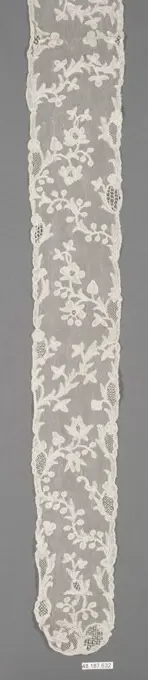
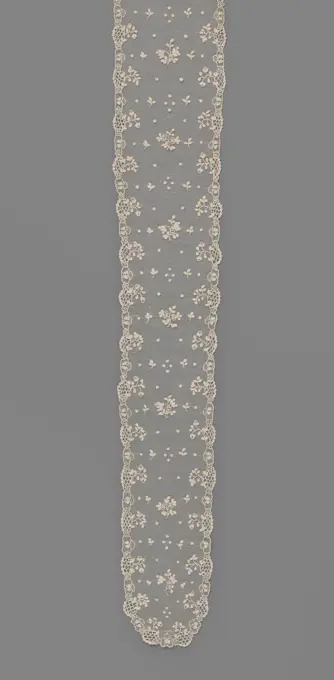
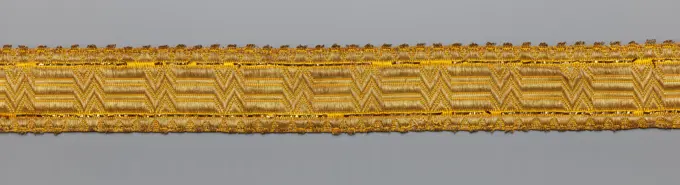
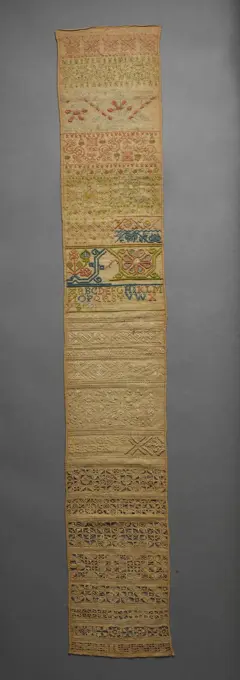
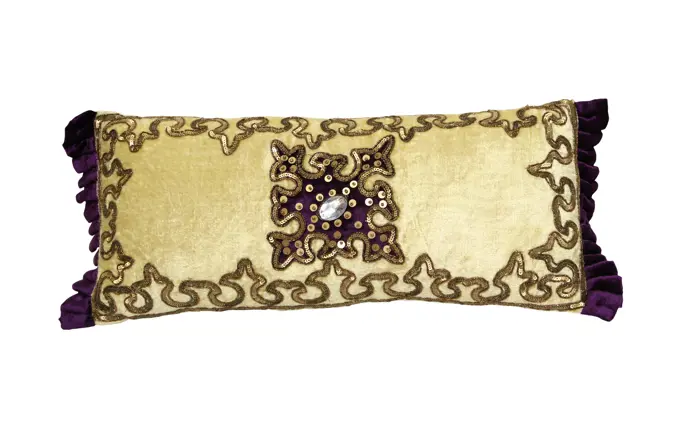
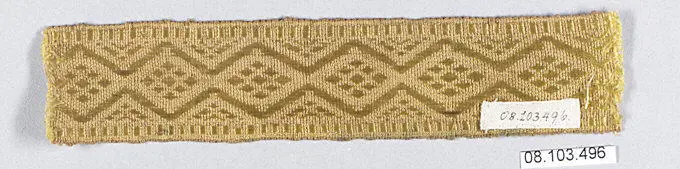
Intricate lace trimmings showcasing detailed patterns and textures, highlighting craftsmanship from various historical periods with a focus on elegance.


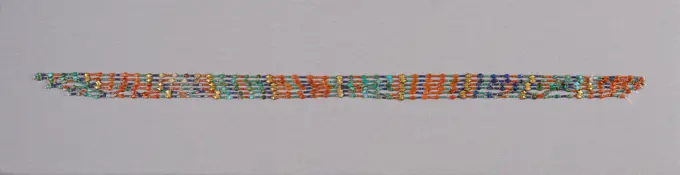
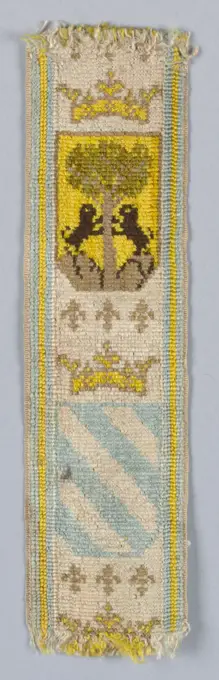
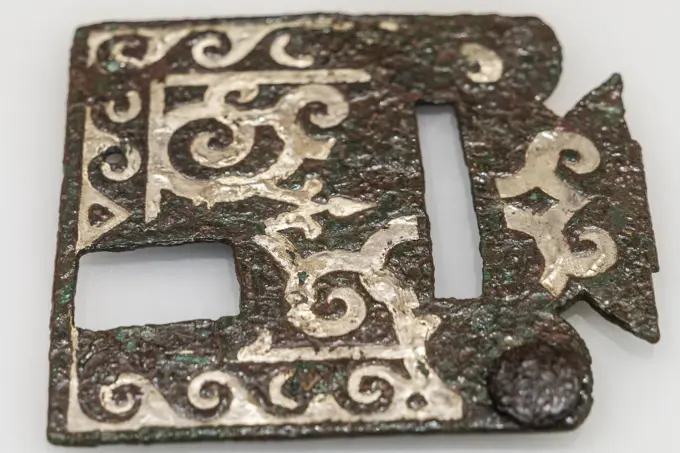
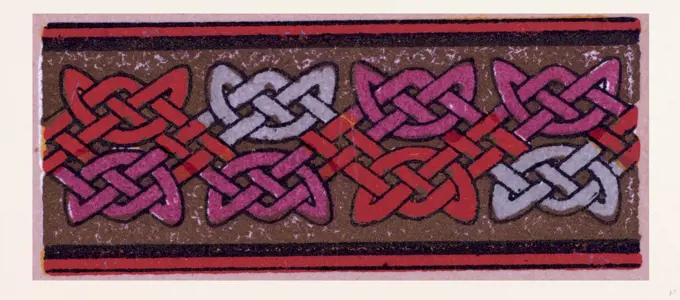
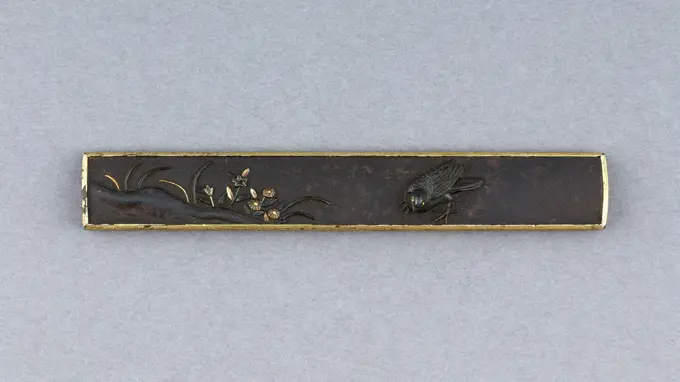
Excerpt black velvet with recesses with pattern of pomegranate moths, anonymous, c. 1470 - c. 1499 Fragment Black Silk Luweel with recesses with a pattern of horizontally ripened five -lobe leaves in which a pomegranate, with acanthusloof and dense surrounded by flowers. Mounted on linen. Italy silk Fragment Black Silk Luweel with recesses with a pattern of horizontally ripened five -lobe leaves in which a pomegranate, with acanthusloof and dense surrounded by flowers. Mounted on linen. Italy silk
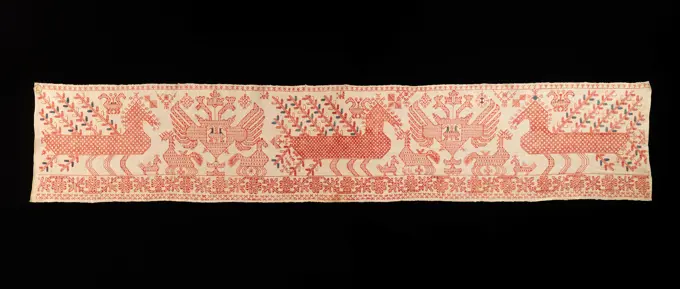
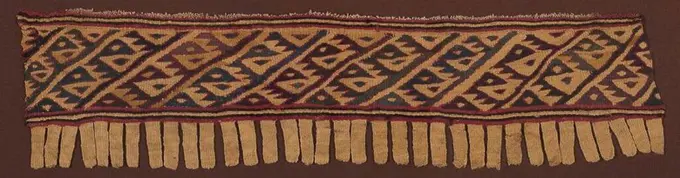
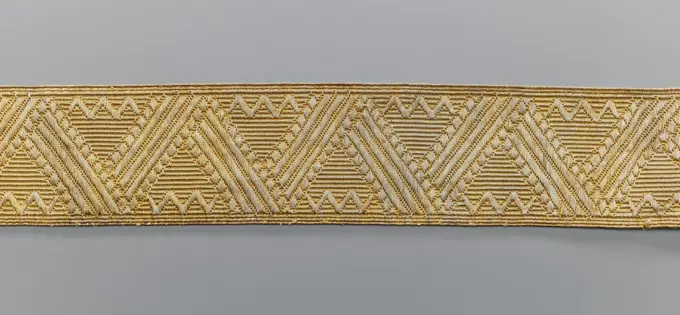
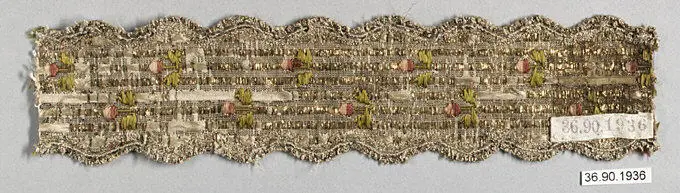
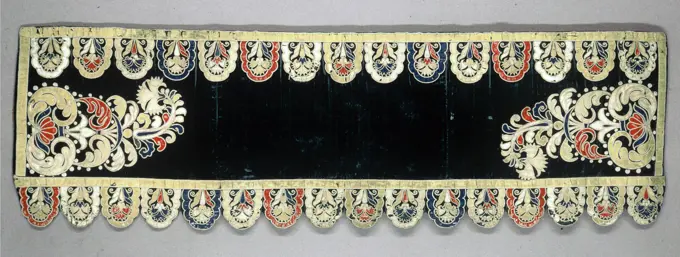
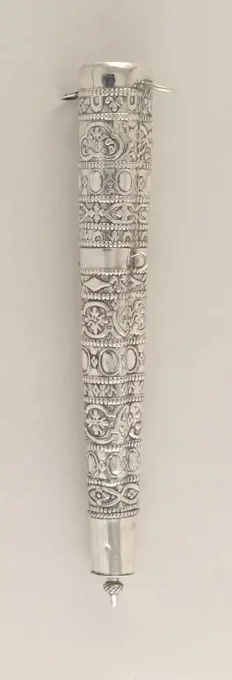
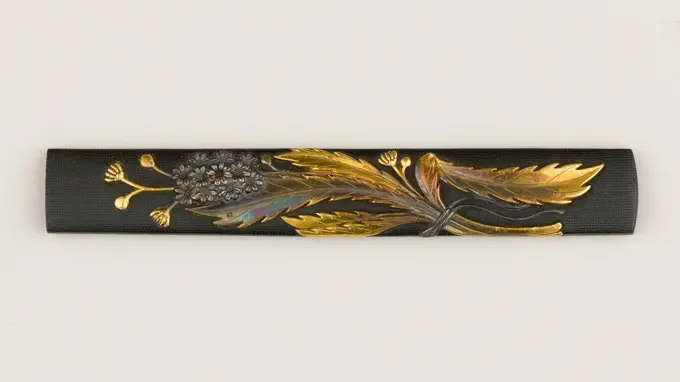
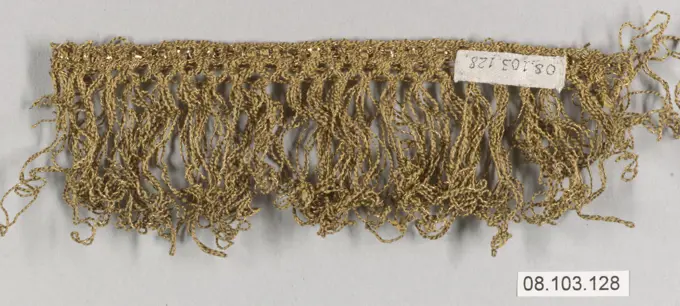
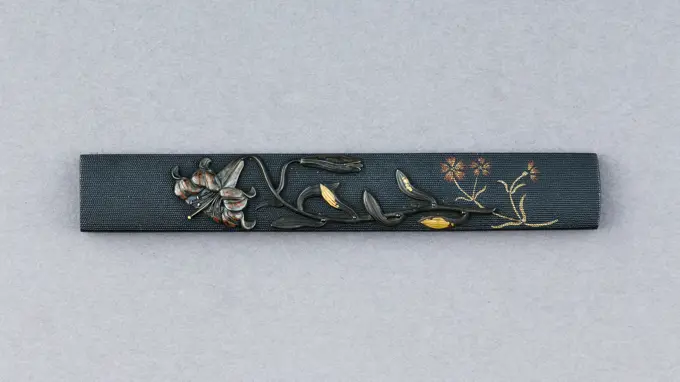
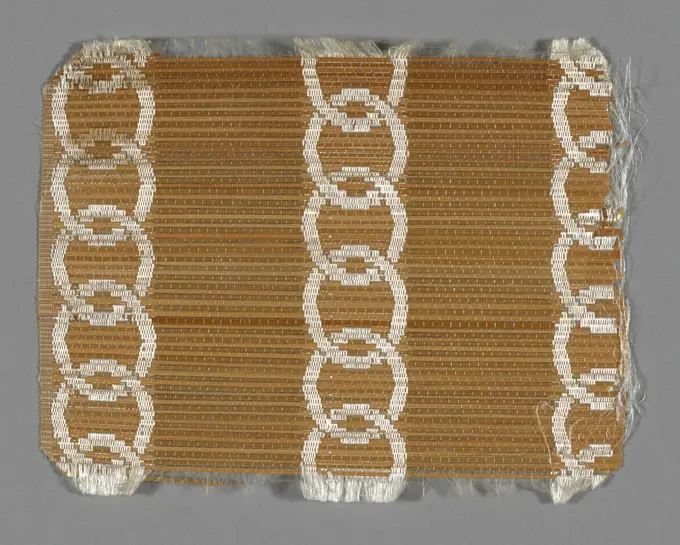
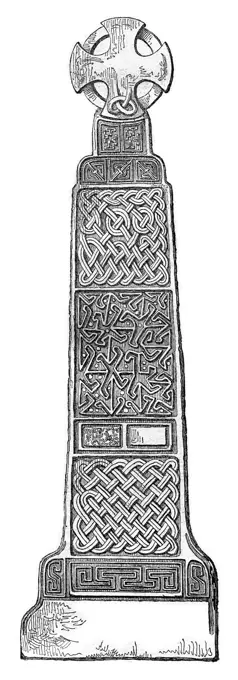
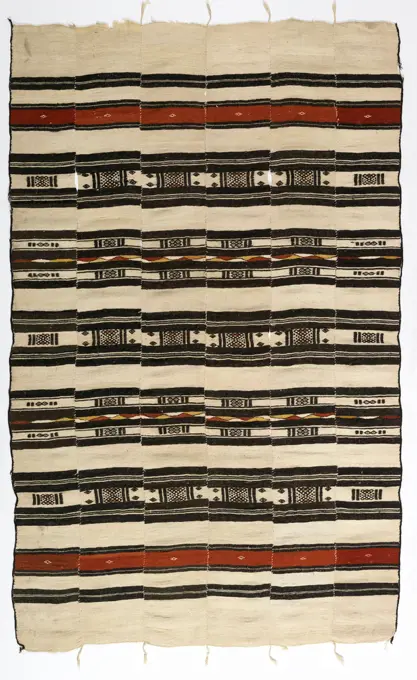
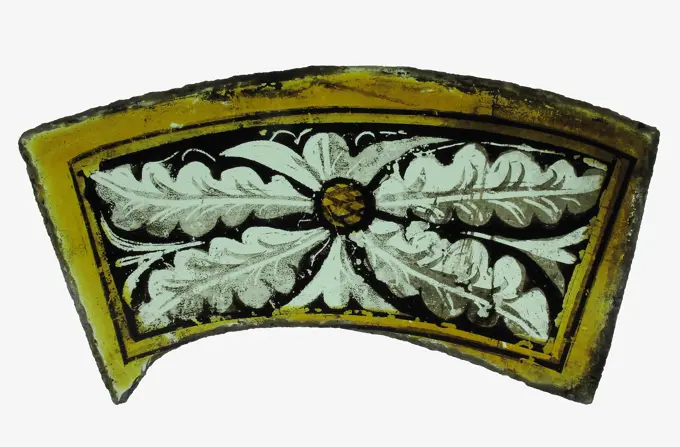
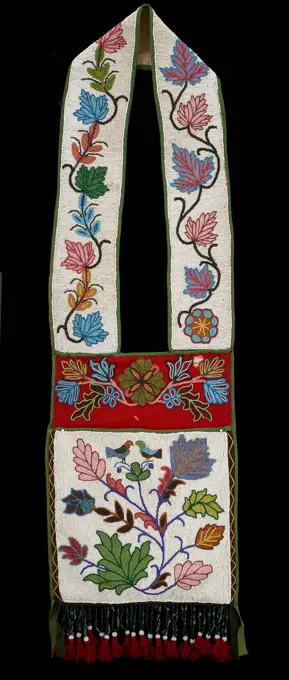
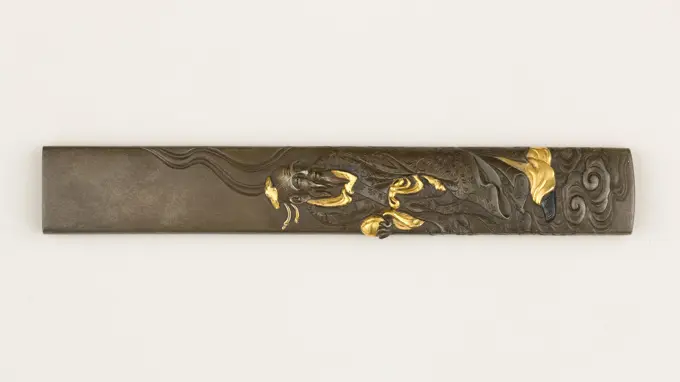
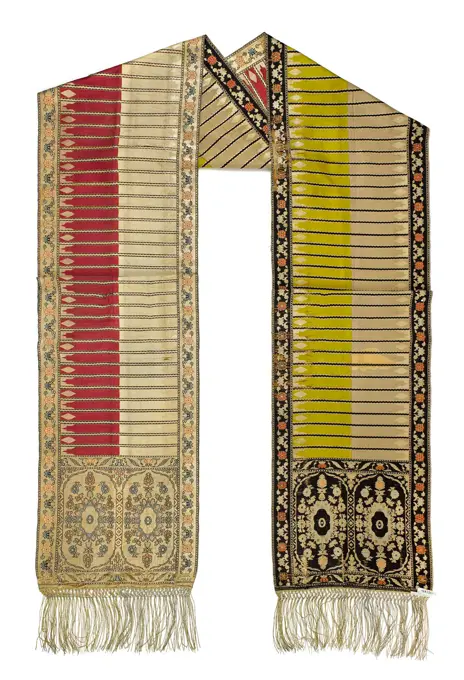
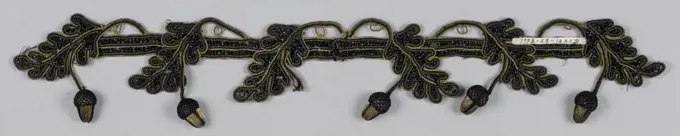
Ribbon, Medium: silk and silver thread Technique: woven, Design of detached flowering sprays in silver thread on a silk ground. In pink and silver., France, 17th century, woven textiles, RibbonBed curtain border. Culture: Russian. Dimensions: 20 1/4 x 72 in. (51.4 x 182.9 cm). Date: 1780-1820.This object is from the collection of Natalia de Shabelsky (1841-1905), a Russian noblewoman compelled to preserve what she perceived as the vanishing folk art traditions of her native country. Traveling extensively throughout Great Russia, she collected many fine examples of textile art of the wealthy peasant class. From the 1870s until moving to France in 1902, Shabelsky amassed a large collection of intricately embroidered hand-woven household textiles and opulent festival garments with rich decoration and elaborate motifs. The Brooklyn Museum holdings include many fine examples including the majority of the garments. Portions of Shabelsky's collection are also housed at the Museum of Fine Arts, Boston, the Cleveland Art Museum, and the Russian Museum of Ethnography in St. Petersburg.Russian bed curtains and towels were not only used for decorative purposes, but also provided an imBed curtain border first half 19th century Russian This object is from the collection of Natalia de Shabelsky (1841-1905), a Russian noblewoman compelled to preserve what she perceived as the vanishing folk art traditions of her native country. Traveling extensively throughout Great Russia, she collected many fine examples of textile art of the wealthy peasant class. From the 1870s until moving to France in 1902, Shabelsky amassed a large collection of intricately embroidered hand-woven household textiles and opulent festival garments with rich decoration and elaborate motifs. The Brooklyn Museum holdings include many fine examples including the majority of the garments. Portions of Shabelsky's collection are also housed at the Museum of Fine Arts, Boston, the Cleveland Art Museum, and the Russian Museum of Ethnography in St. Petersburg.Russian bed curtains and towels were not only used for decorative purposes, but also provided an important role in ceremony. Bed curtains often adornedOne wide fries and two narrow friezes with moresken; Frisians and geometric motifs with Moresken and Arabesken; Three ornament edges on one plate. In the middle of the top a mask.The Left half of the Frisians Consisters of White Moresken on a Dark Fond, The Right Half or Black Moresken on a White Surface. There is a mascaron in the middle of the wide fries. One of 15 Sheets from a Series or 23 with Title Page.Fragment (Border). Chancay; Peru, Central coast. Date: 1000-1476. Dimensions: 15.6 x 60.3 cm (6 1/8 x 23 3/4 in.). Cotton, plain weave and cotton and wool (camelid), slit tapestry weave with eccentric and wrapping outlining wefts; slit tapestry tab fringe. Origin: Peru. Museum: The Chicago Art Institute, Chicago, USA.Swaddling Cloth (Italy); cotton; 1967-82-1-bTrimming (France); 1909-2-165Fragment with Sempervivum tectorum motif 1475-1525 Italian, probably Milan. Fragment with Sempervivum tectorum motif 230681Gallon;  beginning of the 19th century (1801-00-00-1810-00-00);Ribbon second quarter 19th century Italian, Venice. Ribbon. Italian, Venice. second quarter 19th century. Silk. Textiles-TrimmingsGalloon 18th century French. Galloon 225017Barbe late 18th century Flemish or French. Barbe 227361Piece 18th century Japan. Piece 71091Tunic, Fragment or Mantle, Border, Fragment Chimú. , 1000-1532. Cotton, camelid fiber, 1 3/16 × 16 1/4 in. (3 × 41.3 cm).   Arts of the Americas 1000-1532Galloon 18th century German, Silesia. Galloon 216399Sutra Cover Made 1590-1599 China. Silk, warp-float faced 4 1 stain weave with supplementary patterning wefts bound in weft-float faced 1 4 satin interlacings .Border, Block-printed on handmade paper, Stylized foliate forms, striped edging. End of run included. Printed in yellow, brown, orange and tan. Printed on ocher background over a gray base coat., France, 1825-30, Wallcoverings, BorderRibbon: "Allegories of Harvest", 1800 - 1850. England, early-mid-19th century. Patterned tabby weave; silk; overall: 44.5 x 5 cm (17 1/2 x 1 15/16 in.).Pilaster panel 18th century French. Pilaster panel 189482 French, Pilaster panel, 18th century, Oak, wax-polished, Overall: 56 3/4  5 1/8 in. (144.1  13 cm). The Metropolitan Museum of Art, New York. Gift of J. Pierpont Morgan, 1906 (07.225.216)Barbe of needle, anonymous, c. 1780 Barbe of needle side. On the ground small flower branches, leaves and moesjes in a symmetrical ranking. Rand of oval motifs with decorative stitches, with small flower branches above and smaller motifs in between. Type Kant: Alençon. West-Europa . Barbe of needle side. On the ground small flower branches, leaves and moesjes in a symmetrical ranking. Rand of oval motifs with decorative stitches, with small flower branches above and smaller motifs in between. Type Kant: Alençon. West-Europa .Piece 18th century Japan. Piece 72073Fringe (Italy); silkBirthday address. unknown, authorA Sash from the Funeral of Stanisław WyspiańskiFragment 16th-17th century () Italian. Fragment 215420Fringe European 19th centuryKontusz sash/belt. Królewska manufaktura jedwabna w Grodnie (Grodno; wytwórnia tkanin jedwabnych i pasów; 1768-1780), manufactureBelt -Ornamental Shoulder Bands from a Tunic, 500s. Egypt, Byzantine period, 6th century. Undyed linen and dyed wool: tapestry weave with supplementary weft wrapping; overall: 65.1 x 7.6 cm (25 5/8 x 3 in.); mounted: 74.9 x 15.2 cm (29 1/2 x 6 in.).Lice mining of a four-poster bed. Lice line with passing, belonging to a wall sky bed.Belt. Culture: North Italian. Dimensions: 65 3/8 × 1 5/16 × 9/16 in. (166 × 3.3 × 1.4 cm)Other (waist size): 21 1/16 - 33 7/16 in. (53.5 - 85 cm)Other (width of textile support): 7/8 in. (2.3 cm)Other (From end of belt buckle to change in orientation): 34 1/16 in. (86.5 cm)Other (From end of belt strap to change in orientation): 40 3/16 in. (102 cm). Date: ca. 1330-50.The celebrated Italian poet Giovanni Boccaccio (1313-1375) tells of a silver belt stolen from a virtuous Genoese woman that was offered for sale in the market at Acre, a principal arrival point for European Christian pilgrims. The story bears witness to thelucrative and lively commerce between Italian merchant cities and the Holy Land. This belt, which combines typically European motifs like that of a woman spinning with images of men in Persian inspired costumes, boasts of the same wide world that Boccaccio took for granted. Museum: Metropolitan Museum of Art, New York, USA.Fragment (USA); cottonBorder (USA); Manufactured by M.H. Birge & Sons Co. (United States); block-printed paper, embossed, hand-rubbed oil finishFragment of upholstery trimming, Medium: silk and wool Technique: plain compound twill on silk damask, b/: Red wool functional weft and red silk warp form a loose twill - over this a repeat, in extra yellow silk seft, of palmette between two leaves - two of these narrow bands have been sewed as borders to red silk damask., one of a pair, France, ca. 1830, woven textiles, Fragment of upholstery trimmingFragment, Drawer Front; wood, carvedValance (Spain); silkTrimming (France); 1909-2-174Belt -Lice line or strip of embroidery application. Lice line or strip of application embroidery on a wine-red velvet fond. The pattern has symmetrical lying S-tanks, together in the middle with a lily and a rose. The rich branched rank is occupied with leaf trips and ends in volutes of Acanthus leaves and silver bonding drinks. The strip is finished with gold passement and goldfring from the bottom. The strip belongs to three strips.Band; cotton, silk, woolBand. Date/Period: 17th-18th century. Band. Medium: silk, metallic threads. Technique: macramé (knotting). Height: 404 mm (15.90 in); Width: 53 mm (2.08 in). Author: UNKNOWN.Case and cap, Silver, Tapered case for two implements. Stamped horizontal bands with decorative pattern of scrolls, fleur-de-lis, lozenges and rosettes. Segmented beaded borders. Two attachment rings on the sides. Plain end with pointed finial., Stamped silver cap slides on to sheath (1985-103-43-a). Two attachment rings on the sides. Similar decorative pattern to that of sheath., possibly Turkey or Balkan region, early-mid-19th century, cutlery, Decorative Arts, Case and capKnife Handle (Kozuka) late 18th-early 19th century Japanese A kozuka is a handle of a by-knife that is part of a sword mounting. It is kept in a slot on the reverse of a katana scabbard, often with a matching kōgai (hairdressing tool).. Knife Handle (Kozuka) 25210Fringe (Spain); silk, metallic thread (silver strips on silk core)Textile Fragment 6th-7th century. Textile Fragment 443698Fragment of Peruvian fabric unknownFragment. United States. Date: 1801-1825. Dimensions: 25.7 x 13.3 cm (10 1/8 x 5 1/4 in.). Sample of stripe and check patterns of blue, white and tan. Origin: United States. Museum: The Chicago Art Institute, Chicago, USA.Edging (France); linenFringe probably European 19th centuryIndian ornamentFragment, Sleeve Ornament from a Tunic, 500s - early 600s. Egypt, Byzantine period, 6th-early 7th century. Tapestry (probably originally inwoven in tabby ground); wool; overall: 2.5 x 16 cm (1 x 6 5/16 in.).Sample early 19th century French. Sample. French. early 19th century. Silk on silk. Textiles-EmbroideredStrip late 17th century French. Strip 214029Gallon;  19th century (1801-00-00-1900-00-00);Sampler 1661-63 Margret Barber This band sampler by Margret Barber, probably worked between 1661 and 1663, is divided into rows within three larger sections, each of which showcases a specific technique. The top two-thirds of the sampler includes motifs easily classifiable into standard categories, such as alphabetic characters, geometric designs, and floral motifs, worked in silk and linen on a linen ground using several common stitch techniques. An embroidered alphabet marks the end of the top third of the piece. The middle third is worked with white thread on a white ground, a technique commonly known as whitework. This middle section features scattered design motifs and concludes with an embroidered rendering of the makers name and dates of production.The bottom third of the piece is worked in reticella, a technique that originated in the late fifteenth century. The technique developed from cutwork and utilized stitches common to embroidery. Threads were pulled from a plain weave Lamella. UnknownDecorative pillowbrDecorative pillow Decorative pillow isolated with clipping path included Decorative pillow isolated with clipping path included Copyright: xZoonar.com/Baloncicix 7046694Galloon French 18th centuryMonkey on a snow hill, mid 19th century, Ōhara Donshū, Japanese, 1792 - 1857, 53 × 4 15/16 in. (134.62 × 12.54 cm) (image)66 1/8 × 7 1/2 in. (167.96 × 19.05 cm) (mount, without roller), Ink and color on paper, Japan, 19th centuryGalloon 18th century French. Galloon 213993Lappet, Medium: linen Technique: bobbin lace, Linen double lappet of bobbin lace on machine net. At either end large-scale floral pattern and cartouche. Rest of net dotted with fleurs volantes., Belgium, 19th century, lace, LappetAcacia Bead Girdle of Senebtisi ca. 1859-1770 B.C. Middle Kingdom. Acacia Bead Girdle of Senebtisi. ca. 1859-1770 B.C.. Gold, carnelian, turquoise, lapis-lazuli, also possibly ivory (restored), crystal. Middle Kingdom. From Egypt, Memphite Region, Lisht North, Tomb of Senwosret (758), Pit 763, burial of Senebtisi, MMA excavations, 1906-07. late Dynasty 12-early Dynasty 13Band, Medium: linen, silk Technique: plain weave embroidered with counted stitch: long-armed cross, Cream-colored band embroidered in red with the motto 'Liberta' contained in a diagonal-shaped scroll. Stylized leaves and acorns appear in between scrolls.., Italy, 17th century, embroidery & stitching, BandConciliate belt;  2nd half 18th century (1751-00-00-1800-00-00);Knife Handle (Kozuka) ca. 1615-1868 Japanese A kozuka is a handle of a by-knife that is part of a sword mounting. It is kept in a slot on the reverse of a katana scabbard, often with a matching kōgai (hairdressing tool).. Knife Handle (Kozuka) 34604Band (Italy); linenTrimming, White and colored silk in uncut voided velvet weave., Crowned shield showing a lion rampant, red, yellow, and black; alternating with an ornament composed of interlacing band in blue with dots in red and yellow., Spain, early 19th century, trimmings, TrimmingBand fragment, Medium: Warp; S-spun linen. Wefts; S-spun linen, S-spum wool. Technique; woven slit tapestry with supplementary weft wrapping plus embroidery., Long and narrow band of leaves on a serpentine vine, above a section with embroidered herring-bone stitches., Egypt, 3rd-4th century, woven textiles, Band fragmentFragment; silk, metallicSample Made 1801-1900 France. Silk and straw, plain weave self-patterned by areas of twill interlacings over plain weave and layers of plain weave; woven on loom with Jacquard attachment .Lungserma/I Kapur, 20th century, 101 x 49 in. (256.54 x 124.5 cm), Silk, Bhutan, 20th centuryBelt -Border, Medium: silk and metal embroidery on cotton foundation Technique: embroidered in running, roumanian, stem and chain stitches on plain weave, Embroidered hem cut from a woman's chemise. Design looks like an abstract village. Primarily red with brown, beige, blue, yellow, green and white on natural. Entire piece has a curved shape., Greece, 19th century, embroidery & stitching, BorderNeedle sheath 17th century Italian. Needle sheath. Italian. 17th century. Textiles-Methods and MaterialsStone cross at Carew in Pembrokeshire, vintage engraving. Stone cross at Carew in Pembrokeshire, vintage engraved illustration. Magasin Pittoresque 1870. Copyright: xZoonar.com/PatrickxGuenettex 10679065Bell Pull (Germany); silk, wool, linen, cotton, brass handles; Overall: 194 x 11.2 cm (6 ft. 4 3/8 in. x 4 7/16 in.)Blanket (kaasa) (Nigeria); Woven by Fulani people; hand-spun wool, cottonCylinder seal ca. 1500-1100 B.C.. Cylinder seal 322547Card case first quarter 19th century American. Card case 168470Fragment 15th century European. Fragment. European. 15th century. Pot-metal glass and vitreous paint. Glass-StainedWeaving tools ca. 1295-1070 B.C. New Kingdom, Ramesside. Weaving tools. ca. 1295-1070 B.C.. Bone. New Kingdom, Ramesside. From Egypt, Memphite Region, Lisht North, Late New Kingdom Settlement, MMA excavations, 1920-22. Dynasty 19-20Bandolier bag, c. 1900-1930, 38 × 12 9/16 in. (96.52 × 31.91 cm) (without fringe), Beads, wool, cotton, United States, 20th centuryKnife Handle (Kozuka). Culture: Japanese. Dimensions: L. 3 13/16 in. (9.7 cm); W. 9/16 in. (1.4 cm); thickness 3/16 in. (0.5 cm); Wt. 1.1 oz. (31.2 g). Date: ca. 1615-1868. Museum: Metropolitan Museum of Art, New York, USA.Macushi people weaving split cane. The matape is used to strain boiled yucca to remove toxins. Fairview Amerindian village, Iwokrama Reserve, GuyanaSample (Dress Trimming). England or France. Date: 1815-1840. Dimensions: 19.69 × 56.52 cm (7 3/4 × 22 1/4 in.). Silk, plain weave; appliquéd with silk, plain weave and silk, satin weave, interlined with cotton, plain weave; edged with cording covered with silk, satin weave. Origin: France. Museum: The Chicago Art Institute, Chicago, USA.Textile Fragment, undetermined, or Tunic, Fragment Inca/Moquegua. Textile Fragment, undetermined, or Tunic, Fragment, 600-1000 C.E. Cotton, camelid fiber, 5/16 x 5 5/16in. (0.8 x 13.5cm).   Arts of the Americas 600-1000 C.E.Knife Handle (Kozuka) 19th century Tanaka Kiyotoshi (Kiyonaga) Japanese A kozuka is a handle of a by-knife that is part of a sword mounting. It is kept in a slot on the reverse of a katana scabbard, often with a matching kōgai (hairdressing tool).. Knife Handle (Kozuka) 25271Trimming (Italy); white, black, and colored silk in uncut velvet weave.; Overall: 18.5 x 4.8 cm (7 5/16 x 1 7/8 in.)belt brooch plate decorated with silver damascening belt brooch plate decorated with silver damascening, 3rd century BC, Cerro Maquiz, Mengibar, Iberian culture, Iberian Museum of Jaén, Andalusia, Spain Copyright: xZoonar.com/BartomeuxBalaguerxRotgerx 21704820Celtic ornamentFragment of Border 14th century. Fragment of Border 451034Panel fragment ca. 1548-54 French. Panel fragment. French. ca. 1548-54. Carved oak. WoodworkKnife Handle (Kozuka) ca. 1615-1868 Japanese A kozuka is a handle of a by-knife that is part of a sword mounting. It is kept in a slot on the reverse of a katana scabbard, often with a matching kōgai (hairdressing tool).. Knife Handle (Kozuka) 34651Sidewall (possibly France); embossed paper; 32.5 x 52 cm (12 13/16 x 20 1/2 in.); Anonymous Gift; 1948-14-16-a/eBorder, Block-printed, c) Simulates a draped lambrequin held up by gold ornaments with a gold molding top and bottom. Printed in green, gold and gray; d) wider central band contains a rod and ribbon twist. Gold band along top edge. Band of strung beads below, alternating large and small. Narrow band of sawtooth edge along very bottom. Printed in green flock, green, metallic gold, yellow ocher and salmon-color., USA, 1840s, Wallcoverings, BorderGallon;  beginning of the 19th century (1901-00-00-1910-00-00);Kontusz sash. Manufaktura Karola Stanisława Radziwiłła (Słuck ; wytwórnia pasów ; ca 1767-1790), manufacture, Madżarski, Jan (fl. ante 1757-ca 1800), manufacturerDoek, Anonymous, 1900 - 1949 Cloth with geometric motifs. Flores cotton (textile) Cloth with geometric motifs. Flores cotton (textile)Liturgical fabric;  Unspile (0-00-00-0-00-00);Trimming, Medium: silk and gilt thread, jet beads Technique:, Trimming in pattern of oak leaves and acorns across horizontal band., USA, 19th century, trimmings, Trimming