Lace Trimmings And Inserts

Historical lace pieces from different centuries, showcasing detailed designs, perfect for fashion embellishments or decorative arts.
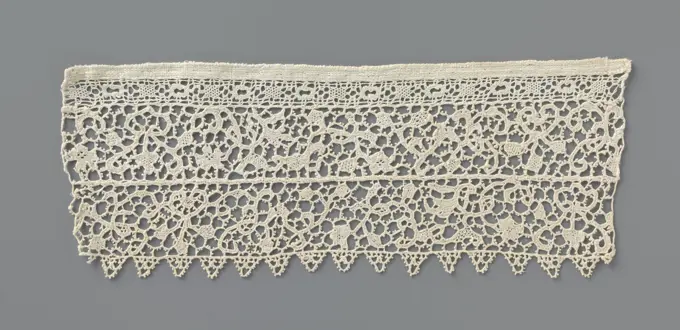
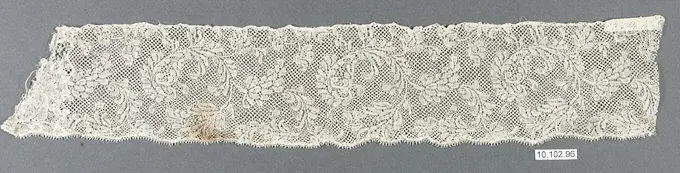
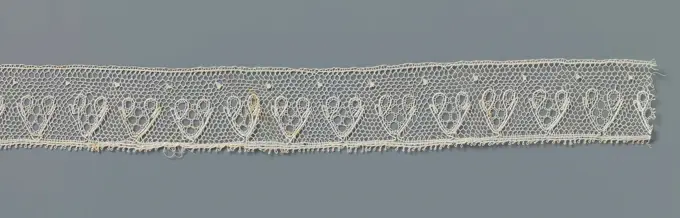
Doubled strip of needle side with heart -shaped slens, anonymous, c. 1690 - c. 1699 Strip of natural -colored needle side: flat Venetian side. On a soil of regular six-sided meshes is a fine pattern of two symmetrical, heart-shaped slens connected by serpentine ranks. Straight finish of large triangles. Venice linen (material) flat Venetian (needle point) Strip of natural -colored needle side: flat Venetian side. On a soil of regular six-sided meshes is a fine pattern of two symmetrical, heart-shaped slens connected by serpentine ranks. Straight finish of large triangles. Venice linen (material) flat Venetian (needle point)
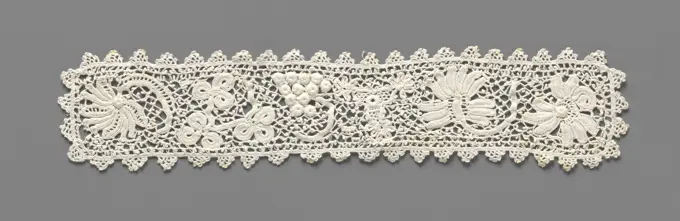
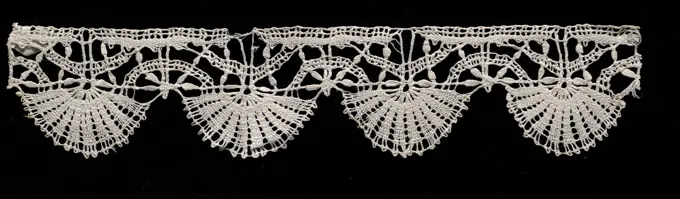
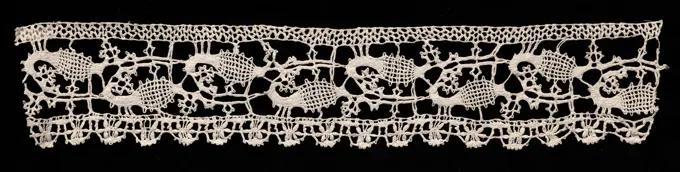
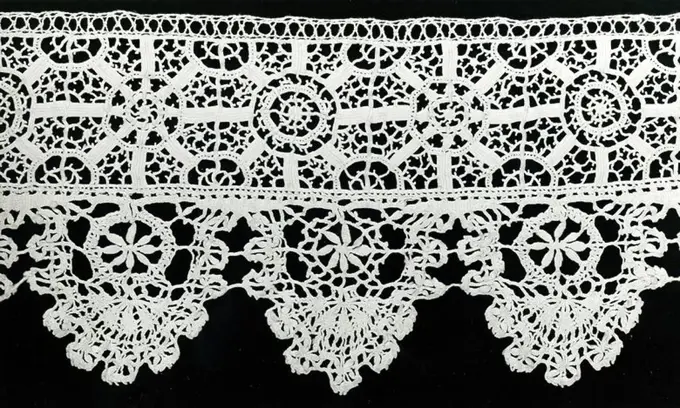
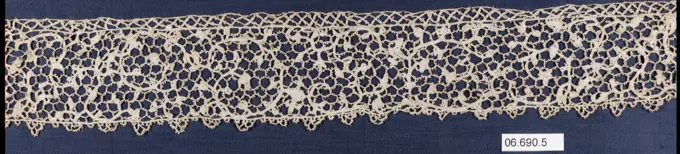
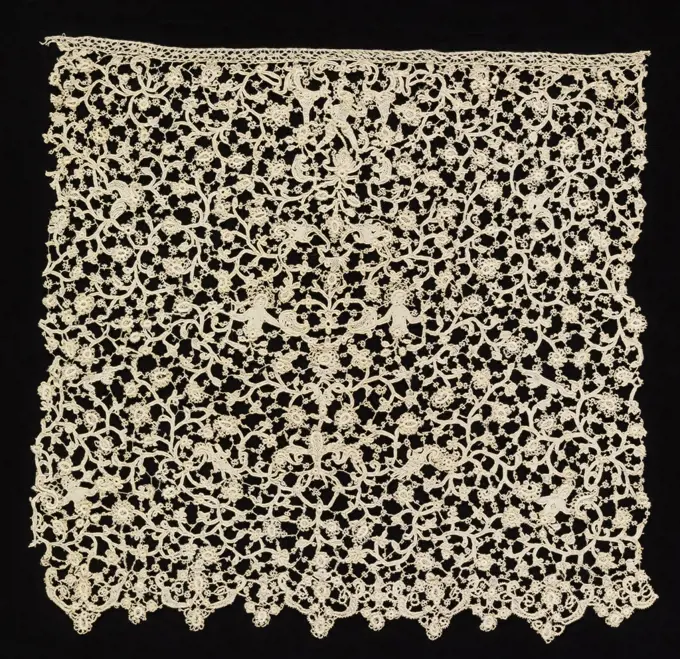
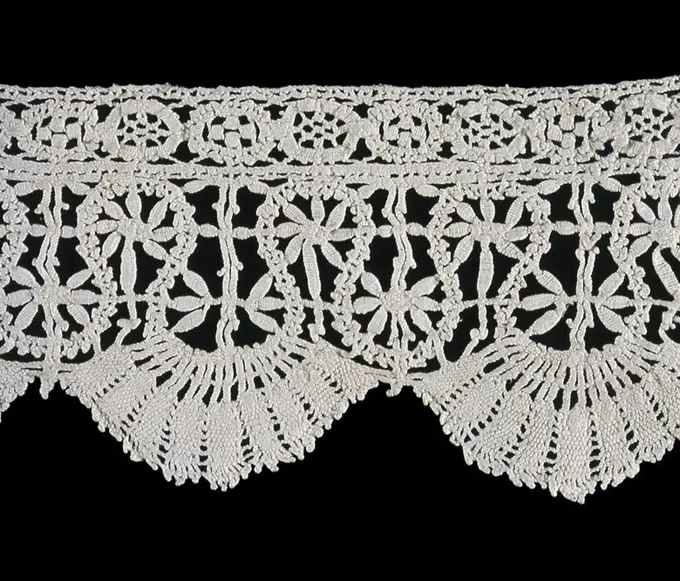
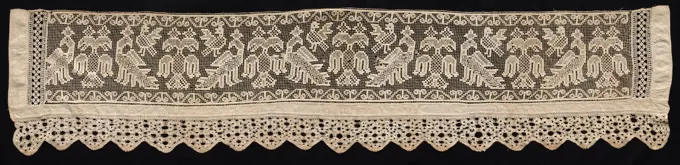
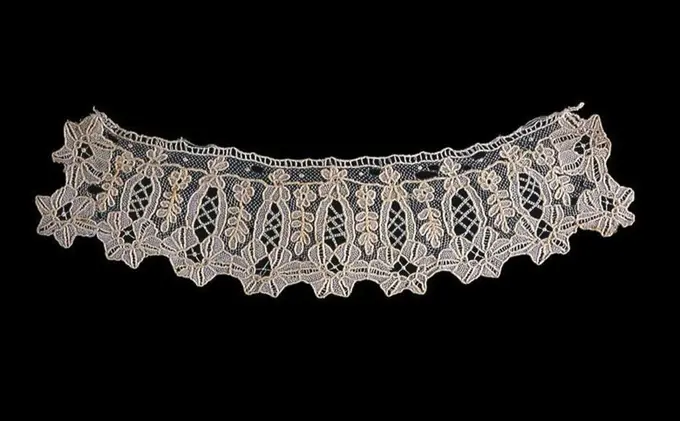
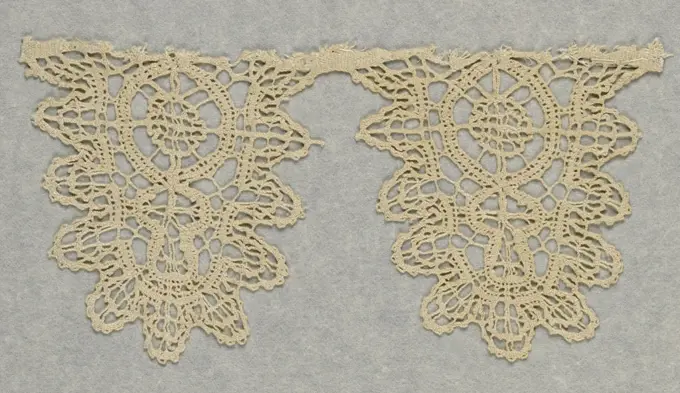
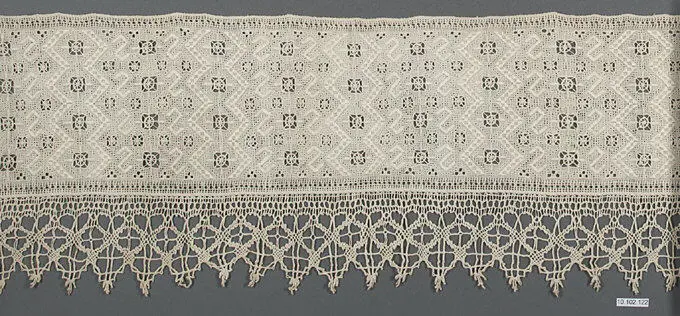
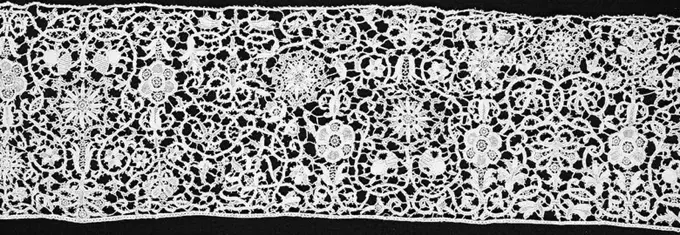
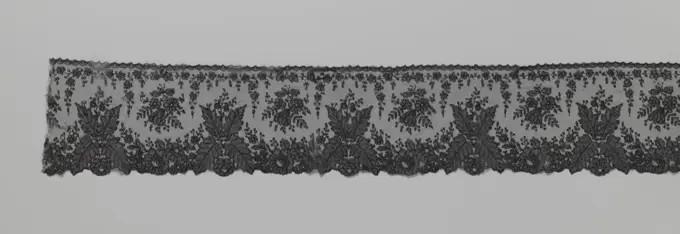
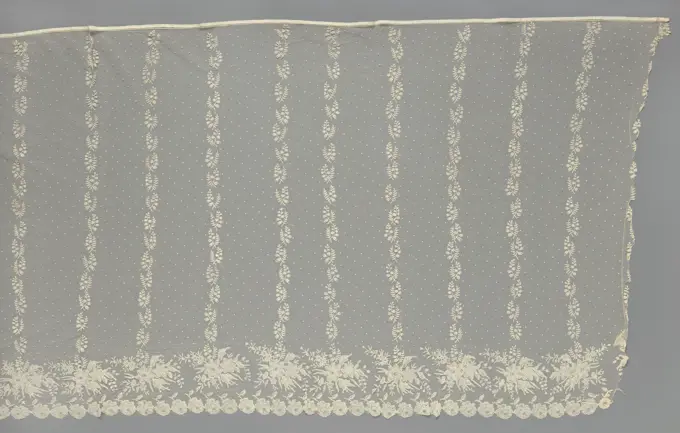
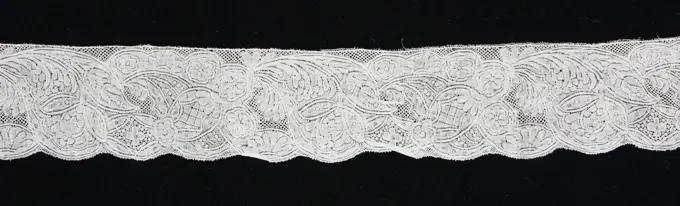
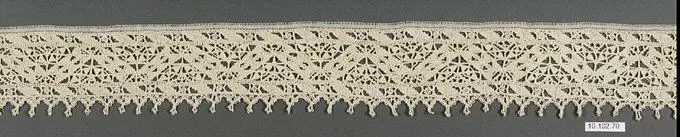
Strip 18th century Flemish. Strip 218844Insertion 17th century Italian, Genoa. Insertion 220874Border 17th century Italian. Border 214827Bobbin Lace (Needlepoint Design) Insertion, 16th-17th century. Italy, Genoa, 16th-17th century. Lace, bobbin; average: 6.1 x 19.7 cm (2 3/8 x 7 3/4 in.).Doubled strip of needle side with heart -shaped slens, anonymous, c. 1690 - c. 1699 Strip of natural -colored needle side: flat Venetian side. On a soil of regular six-sided meshes is a fine pattern of two symmetrical, heart-shaped slens connected by serpentine ranks. Straight finish of large triangles. Venice linen (material) flat Venetian (needle point) Strip of natural -colored needle side: flat Venetian side. On a soil of regular six-sided meshes is a fine pattern of two symmetrical, heart-shaped slens connected by serpentine ranks. Straight finish of large triangles. Venice linen (material) flat Venetian (needle point)Band, Medium: linen Technique: bobbin lace, continuous braid-like, Italy, mid- 16th-17th century, lace, BandFragment; linen; 1933-1-153Strip bobbin with a wave of a fan -shaped flour and feathered leaf, anonymous, c. 1720 - c. 1750 Strip of natural-colored bobbin, binche side. The repeating pattern consists of a curved flower stem with a targeted fan -shaped flower, from which a large feathered leaf rises that bends to the underside. Between the successive loose waves that arise in this way, there is a tulip on a curved stem along the top. Below the underside there is a loose flower with five pointed petals on one side. The motifs are connected by a decorative land, a snowflake ground. The motifs are made in linen battle with openwork edges. At the top and bottom are straight finished, with the bottom with picots. Southern Netherlands linen (material) Bobbi Lace / Binche Lace Strip of natural-colored bobbin, binche side. The repeating pattern consists of a curved flower stem with a targeted fan -shaped flower, from which a large feathered leaf rises that bends to the underside. Between the successive loose waves that Border late 17th-early 18th century Italian, Venice. Border 227422Cuff made of crocheted side with flowers and grape ros, anonymous, c. 1880 - c. 1899 Cuff made of natural Irish crocheted side. Pattern with grapes or bunch flower, three other flowers and a flower branch with three smaller flowers, each with three round petals. Next to the grapesros is a triangular motif with a rosette flower on every corner and a circle in the center. The cuff is finished all around with a scum of more or less triangular shells that are made up of seven small arches, finished with a few picots. Ierland (possibly) cotton (textile) Cuff made of natural Irish crocheted side. Pattern with grapes or bunch flower, three other flowers and a flower branch with three smaller flowers, each with three round petals. Next to the grapesros is a triangular motif with a rosette flower on every corner and a circle in the center. The cuff is finished all around with a scum of more or less triangular shells that are made up of seven small arches, finished with a few picots. Ierland (poBand, Medium: linen Technique: bobbin lace, Binche style with no ground, Binche style with snowballs., Belgium, 18th century, lace, BandLace, bobbin, 18th Century, Italy, maker unknown. Gift of Yvonne Riddiford, 2007.Edging 17th century Italian, Liguria. Edging. Italian, Liguria. 17th century. Bobbin lace. Textiles-LacesStrip crocheted side with a row of squares with rosettes, anonymous, c. 1900  Strip crocheted side. Reticella pattern with a row of square fields, with a rosette in each field. Top and bottom of the strip are straight. One short side is cut diagonally. Brittany linen (material)Edging 17th century Italian, Genoa. Edging 221103Edging 17th century Italian, Venice. Edging 221028Band (possibly Belgium); linenStrip crocheted side with four flowers around a circle, anonymous, c. 1890 - c. 1909 Strip of natural -colored Irish crocheted side. A repeating pattern of a circle from which four flowers originate at a regular distance, which always creates a square shape. Crocheted soil with potentially irregular meshes. The top is finished with a straight edge. The straight lower edge is trimmed with potente arches. Ireland cotton (textile) Strip of natural -colored Irish crocheted side. A repeating pattern of a circle from which four flowers originate at a regular distance, which always creates a square shape. Crocheted soil with potentially irregular meshes. The top is finished with a straight edge. The straight lower edge is trimmed with potente arches. Ireland cotton (textile)Strip bobbin with a border of U-shaped motifs interspersed by three round meshes, anonymous, c. 1800 - c. 1899 Strip of natural -colored bobbin, Swedish side. The strip is attached to a light blue cardboard with pins, with seven other strips. At the top of the cardboard is "Laces from Skåne. Sweden." Written and above the strip is "from Testup". Testerup is a castle in Skåne that lies in the south of Sweden. The repeating pattern consists of a row of flat U-shaped motifs made in linen battle with openwork edges along the underside of the strip, in which there is always a triangular field that is formed by three round mesh. The upper half of the strip consists of a Maas soil, a tough grid, with two rows of meshes. The top of the strip is straight finished. The pattern along the underside of the strip provides a scum with small shells, which are fitted with picots alternately. Vadstena linen (material) bobbin lace / Swedish lace Strip of natural -colored bobbin, Swedish side. The strip iBorder 17th century Italian, Venice. Border 218086Fragment (Italy); linen; Bequest of Marian Hague; 1971-50-416Fragment early 19th century British, Buckinghamshire. Fragment. British, Buckinghamshire. early 19th century. Textiles-LacesStrip early 17th century Italian. Strip 212422Fragment (Three Joined Strips from Small Pillow). Italy. Date: 1550-1600. Dimensions: 9.4 x 66.4 cm (3 3/4 x 26 1/8 in.). Linen, plain weave; cut and drawn work in overcast stitches with needle lace inserts; embroidered in back, buttonhole, double faggot, double hem, eyelet hem, overcast, and satin stitches. Origin: Italy. Museum: The Chicago Art Institute, Chicago, USA.Band 17th century Italian. Band 214829Edging 16th century Italian, Venice. Edging 221042Border 17th century Sardinian. Border 214795Strip needle side with composite tendrils pattern. Strip natural needle side: Venetian relief side. Composed of two strips sewn together with a different pattern. The left area consists of a pattern with elongated tendrils with flowers, on an open ground with picoted bars. The right-angled area consists of a finer and more closed pattern of flowers on a bar ground with raderpicots. This part of the strip has the shape of a hats slip with Picotland.Fragment 17th century Italian, Genoa. Fragment 220634Fragment Swedish, Dalarna 19th centuryStrook applicatiekant met wijnrank.Strip natural colored Brussels application side: needle side applicated on slighten ground. Under a spreading pattern of vine leaves, a continuous rank runs along the bottom edge, showing twigs with wine leaves and grape fees to two sides. The very flat sloping edge is formed by straight upholstered wine leaves, interspersed by wreaths with pearl edges and filled with decorative stitches. Motives are made up with feston stitches and are accentuated by relief contours of widely scented thread bundles. The top is straight finished with a splitting strap.Fragment, Medium: linen Technique: bobbin lace, Binche-style fragment with a Binche ground in a design of floral and ribbon wreaths., Belgium, 18th century, lace, FragmentLength of Lace. Italy, early 17th century. Textiles; textile lengths. Linen needle laceFragment, Medium: linen Technique: bobbin lace (continuous, braid like), Insertion with geometric design. Central square with sixteen raised knobs. Other motifs radiate from square in groups of four., Venice, Italy, 16th century, lace, FragmentBorder 1860-70 French. Border. French. 1860-70. Bobbin lace. Textiles-LacesFragment, Medium: linen Technique: grid of withdrawn element with needle lace (reticella), A geometric design based on the square. Zigzag formed by spacing of closely worked squares., Italy, 16th century, lace, FragmentKloskant's intermediate creature with triangles, anonymous, c. 1875 - c. 1899  Piles of natural -colored bobbin side. The repeating pattern consists of triangles made in linen battle, which alternately lie on the top and the underside of the strip and are connected by an openwork diagonal orbit of potented braids. On the opposite side of each triangle, two narrow arrow point -shaped motifs are made in shape with three ribs. On both sides, the strip is finished with a double braid with a zigzagging braid in between. Mirecourt linen (material) bobbin laceEdgingBorder Made 1875-1900 Italy. Linen, needle lace worked on plain weave cut and drawn thread work grid; two pieces joined .Bobbin Lace (Rose Lace) Edging of Bell Points, 17th-18th century. Italy, Genoa, 17th-18th century. Lace, bobbin; average: 4.5 x 23.2 cm (1 3/4 x 9 1/8 in.).Needlepoint and Bobbin Lace Sleeve Flounce, 19th century. Belgium, Brussels, 19th century. Lace, needlepoint and bobbin; average: 10.5 x 40.7 cm (4 1/8 x 16 in.).Bobbin Lace Insertion and Edging, early 17th century. Italy, Venice and Genoa, early 17th century. Lace, bobbin; average: 7.7 x 39.4 cm (3 1/16 x 15 1/2 in.).Border Made 1675-1700 Flanders. Linen, bobbin part lace .Border. Italy, points probably Genoa. Date: 1601-1625. Dimensions: 15.3 x 198.6 cm (6 x 78 1/8 in.)Band width repeat: 11.9 cm (4 3/4 in.)Point width repeat: 8.5 cm (3 3/8 in.)Band height: 5.6 cm (2 1/4 in.)Heading height: .8 cm (3/8 in.)Point height: 7.8 cm (3 in.). Linen, needle lace worked on a laid and plaited thread ground, Reticello pattern; edged with bobbin straight lace points. Origin: Italy. Museum: The Chicago Art Institute, Chicago, USA.Fragment of reticella lace unknownStrip of cotton with lace pledger with daisies between feathered S-shaped leaves, C.I. Bosch Reitz-Teding van Berkhout, c. 1860 - c. 1880 Strip of natural cotton with lace bobbins: English embroidery. The pattern has sloping, feathered S-leaves between two Margrites, one of which hangs in each shell. Amsterdam cotton (textile) Strip of natural cotton with lace bobbins: English embroidery. The pattern has sloping, feathered S-leaves between two Margrites, one of which hangs in each shell. Amsterdam cotton (textile)Border; linen; 1933-1-111Fragments, Medium: linen Technique: bobbin lace (Lille-style with heavy outlining thread), Lille-style fragments with a pattern of conventionalized leaf and flower cut by diagonal lines., England, 19th century, lace, FragmentsFragment, Medium: linen Technique: bobbin lace (Binche style with snowflake ground), Deeply scrolling design of foliage and blossoms. Snowflake ground. Straight edges., Belgium, 18th century, lace, FragmentBorder. Date/Period: 1670-90. Border. Medium: linen. Technique: needle lace. Author: UNKNOWN.Collar ca. 1890 Irish. Collar 180665Length of Lace. Belgium, 1750-1775; or 1830s. Textiles; textile lengths. Linen Lille-type bobbin laceFragment early 18th century Italian or French. Fragment 212940Border (Belgium); linen, cottonBobbin Lace (Punto di Milano) Insertion, 17th-18th century. Italy, Milan, 17th-18th century. Lace, bobbin; average: 5.1 x 42 cm (2 x 16 9/16 in.).Fragment, Medium: linen Technique: needle lace, Fragment showing powdered dots and berries. Lower border has a repeat of baskets., France, late 18th century, lace, FragmentStrip 17th century German. Strip 217796Collar And Cuffs; linen; 1945-38-1-a/cPallo cloth of needle side with geometric motifs and pointed points, anonymous, c. 1600 - c. 1615 Pallo cloth of needle side. Geometric motifs, edge with pointed points. Italy linen (material) Pallo cloth of needle side. Geometric motifs, edge with pointed points. Italy linen (material)Border; linenBorder, Medium: linen Technique: bobbin lace, continuous braid like and interlacing, Border of connected pendants containing alternating small and large geometric rosettes., Genoa, Italy, early 17th century, lace, BorderStrip 18th century Italian, Adriatic. Strip 215503Flounce fragment, Medium: linen Technique: needle lace, Portion of a flounce with an elaborated variant of 'candlestick' pattern, interspersed with human and animal figures. Style of lace commonly called Rosaline., Belgium or Italy, 18th century, lace, Flounce fragmentStrook kloskant met harten gemaakt met cirkeltjes.Strip natural colosside: Lille side. The repeating pattern consists of a heart made of a circles forming ornamental soil. The hearts are placed against the bottom. Above the hearts there is a row of square moes, always one mole between the consecutive hearts. The motifs are connected by a fine grille, a tulet. The contours of the hearts are made with thicker and shiny wires. The Moeses are made in shape stroke. The top and bottom of the strip are straight finished, the underside with picots.Fragment (Italy); linenFragment (Border). Italy, probably Genoa. Date: 1601-1650. Dimensions: 9.1 x 28.7 cm ( 3 5/8 x 11 3/8 in.)Weft repeat: 7.2 cm (2 7/8 in.). Linen, bobbin straight lace. Origin: Italy. Museum: The Chicago Art Institute, Chicago, USA.Border with Crowned and Double-Headed Birds, 18th-19th century. Russia, 18th-19th century. Needle lace, filet/lacis (knotted ground and darned in one direction) and bobbin lace edging; bleached linen (est.); overall: 35.6 x 154.3 cm (14 x 60 3/4 in.). This long border may have functioned as a valance, a decorative drapery made for attachment at the frame of the bed. Crowned double-headed eagles confront peacocks, while smaller birds fly above them.Collar or Cuff (Fragment). Belgium, Brussels. Date: 1860-1869. Dimensions: 5.5 × 17.5 cm (2 1/8 × 6 7/8 in.)Width repeat: 1.7-2.0 cm (5/3-3/4 in.). Cotton, needle lace of a type known as "Point de Gaze". Origin: Brussels. Museum: The Chicago Art Institute, Chicago, USA.Fragment. Culture: Italian. Dimensions: L. 15 x W. 6 inches (38.1 x 15.2 cm). Date: 17th century. Museum: Metropolitan Museum of Art, New York, USA.Fragment of the lace;  after. 18th century (1740-00-00-1760-00-00);Lace, 1774-1793, France, maker unknown. Gift of Mrs G. Acland Allen, 1955.Kloskant motif in the form of a drop, Sophia Gerardine Cenijn-Smit, c. 1914 Motif in the form of a drop of natural-colored bobbin: Cluny side. The contour of the drop is made in Ovenlag and is finished on the outside with a bow edge that is formed by a swinging braid with picots. Within the contour a flower with four leaves in shape and a flower heart in linen battle. Above the flower a branch with five leaves in shape. Amsterdam linen (material) bobbin lace / Cluny lace Motif in the form of a drop of natural-colored bobbin: Cluny side. The contour of the drop is made in Ovenlag and is finished on the outside with a bow edge that is formed by a swinging braid with picots. Within the contour a flower with four leaves in shape and a flower heart in linen battle. Above the flower a branch with five leaves in shape. Amsterdam linen (material) bobbin lace / Cluny laceLappet late 19th century Belgian. Lappet 117467Border, 16th century, 10 x 7 in. (25.4 x 17.78 cm), Linen, silk; buratto; lace, Italy, 16th centuryFragment, Medium: linen Technique: bobbin lace (continuous braid-like), Two deep pendulous rounded points edged with smaller points in a rosette design., Italy, 17th century, lace, FragmentFragment. Date/Period: Early 17th century. Fragment. Medium: linen. Technique: bobbin lace, discontinuous tape. Author: UNKNOWN.Border with cutwork and bobbin lace late 16th-early 17th century Italian. Border with cutwork and bobbin lace 218870Border. Italy, probably Venice. Date: 1625-1650. Dimensions: 733.1 x 14.8 cm (288 5/8 x 5 7/8 in.)Width repeat: 19.3 cm (7 5/8 in.). Linen, needle lace. Origin: Italy. Museum: The Chicago Art Institute, Chicago, USA.Kloskant dress strip with ferns, anonymous, c. 1850 - c. 1855 Black bobbin jelly strip: Chantilly side. On an empty mesh stock there is a closed edge with scoops, filled with a garland of flowers and leaves. On the intersections there is a small shell with a hanging rose, above which a striker bouquet rises from four large fern leaves and a flower branch, which extends to the top edge. Here a horizontal climbing window with hanging twigs runs, while on the field above the large shell of this climbing crank a large bouquet depends, among other things with a tulip. France (possibly) silk bobbin lace Black bobbin jelly strip: Chantilly side. On an empty mesh stock there is a closed edge with scoops, filled with a garland of flowers and leaves. On the intersections there is a small shell with a hanging rose, above which a striker bouquet rises from four large fern leaves and a flower branch, which extends to the top edge. Here a horizontal climbing window with hanging twigs runs, while on Collar 1700-1943 American. Collar 118880Piece 18th century Italian. Piece 214887Skirt of a dress from application side with vertical stripes of lily of valleys that spring from rose bouquets, anonymous, c. 1815 - c. 1825 Skirt of a dress of natural -colored application side - Kloskant Applicated on Drochelgrond - Point d'Angleterre. Strip -shaped model (the skirt is cut open). The wide strip is littered with moesjes. The repeating pattern consists of standing stripes, which are formed by stacked, crossed lily of valleys. The stripes spring from a flower bouquet at the bottom of the strip, with two large roses and forget-me-nots. The successive flower bouquets form an edge above the scrub, where each shell is formed by a hanging rose. The motives are made in linen and mains and are equipped with burst relief contours. In Bloemharten and petals, decorative land and decorations have been applied in form. The motifs are applied to a fine grid, a drachel soil. The top is finished with a separate stretched strap on which a linen strap is sewn. The scrap edge along the uLace, 1800s , maker unknown. Bequest of Mrs Alice Bakewell, 1965.Rabat Fragment (France); linenStrook kloskant met wiel in halfronde schulp.Strip natural colosside, cluny side. The repeating pattern consists of a circle with spokes in a semicircular shell. The circle is a concatenation of eight leaves made in shape stroke. The spokes are braids that pass in the center of the circles in a Maas soil, a steam ground. Along the top is a right strap with smaller square meshes, finished with picots. Along the schulls a band runs into linen stroke, which is finished at the bottom with a cut-away edge with picots.Fragment 16th-17th century Italian. Fragment 218819Barbe late 17th century Northern Italian or Flemish. Barbe 218614Strip bobbin with salmon pink windows, anonymous, c. 1800 - c. 1899 Strip -colored bobbin: straw side. The colors used are salmon pink and natural. The pattern consists of two salmon pink zigzag lines in a further natural whole. The salmon pink zigzag lines cross each other and in this way form a chain of diamond-shaped fields over the center line of the strip. However, the strip is short, so that only one diamond -shaped field is complete, flanked on two sides by half a diamond -shaped field. In the complete field there is a flower with twelve petals made in form. A traly land has been applied above the zigzag: a tie. With a narrow strap in Linnenlag, a smaller diamond -shaped field has been formed in it with a rush -in style. Under the zigzag are fan -shaped fields, made in linen battle, which form a flat edge of the scaffold. The top of the strip is straight finished.  linen (material) Bobbi lace / lace cloth Strip -colored bobbin: straw side. The colors used are salmon pink and natBobbin Lace Insertion, 18th century. Italy, Abruzzi, 18th century. Lace, bobbin; average: 3.2 x 22.3 cm (1 1/4 x 8 3/4 in.).Dasslip from dick edge with a symmetrical pattern of candelabers or floral baskets surrounded by garlands of voluten. Natural collate dasslip. Pattern with short tales, rosettes and candelabers or flourets, in which various decorative stitches and shape layers are also split, be connected to a symmetrical drawing by garlands of volutes and a grade land. Suspended reliefs surround some details of the decor. Three sides of each slip are scalloped from two repeating motifs.Kloskant dress with one whole circle between four half and four quarter circles, anonymous, c. 1800 - c. 1899  Dress of natural -colored Genuese bobbin. Rectangular model. The rug is divided in four with a horizontal and vertical line. Around each corner point of the four smaller rectangles that arise, a circle is made with six leaves such as spokes in a wheel. Only the circle in the center of the rug is whole. Only a quarter of the circles can be seen in the corners of the rug and semi -circles along the sides. The circles are connected to each other in the center of the smaller rectangles by a diamond between four leaves. The motifs are made with braids and in leaf -shaped forms. The sides of the rug are finished with a border that consists of two rows of square meshes, with picots on the outer edge. Italy (possibly) linen (material) bobbin lace / Genoese pillow laceSquare; linen; Bequest of Marian Hague; 1971-50-377Strip 17th century possibly German. Strip 217788Fragment, Bobbin Lace 3; linenBand; linen; Bequest of Marian Hague; 1971-50-398Strip of cotton with lace plunger with an ongoing 'pearl necklace' of openwork circles along the scrap edge and in above each shell an oval Margriet, C.I. Bosch Reitz-Teding van Berkhout, c. 1860 - c. 1880 Strip of natural cotton with lace bobbins: English embroidery. Pattern with a continuous 'pearl necklace' of openwork circles along the scrap edge and an oval daisy in above each shell. A sort of needle lace -cantal stitches have always been used in the Bloemharten. Each shell always has five embroidered lobes. Amsterdam cotton (textile) Strip of natural cotton with lace bobbins: English embroidery. Pattern with a continuous 'pearl necklace' of openwork circles along the scrap edge and an oval daisy in above each shell. A sort of needle lace -cantal stitches have always been used in the Bloemharten. Each shell always has five embroidered lobes. Amsterdam cotton (textile)Albestrook van naaldkant met granaatappels en veren en centraal een sint-jacobsschelp.Alstriply of natural needle side: sedan side. Pattern with large and richly decorated motifs in the form of, among other things, pomegranates and feathers with a hexagonal cared Maas soil. The pattern is symmetrical compared to the Sint-Jacobschelp in the mid-top of the Albe. The rich decorations in the motifs are made with all kinds of different patterns through recesses in full work. Here and there embossed relief contour lines. The top edge is trimmed with a border clamping side and reinforced with a woven band. The tube edge on the underside comes from the pattern. Also shelters along the left, the right side is cut with a wavy line.Flounce Made 1860-1869 Belgium. Cotton, needle lace of a type known as Point de Gaze .Border; linen; 1933-1-112Border. Italy. Date: 1601-1625. Dimensions: 27.95 x 427.1 cm (11 x 168 1/8 in.). Linen, plain weave; drawn work in bullion, buttonhole, double faggot, eyelet, hem, detached overcast, double overcast, overcast, satin, and stem stitches; cut work in buttonhole and interlocking lace stitches; buttonhole, double buttonhole, and overcast bars decorated with bullion, plaited and buttonhole collar picots (needle lace fillings); glass beads; heading (later in date): cotton, bobbin straight lace. Origin: Italy. Museum: The Chicago Art Institute, Chicago, USA.