Lace Trimmings And Inserts

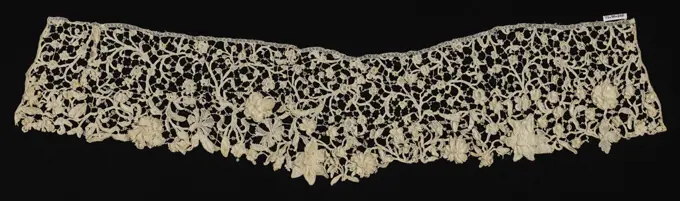
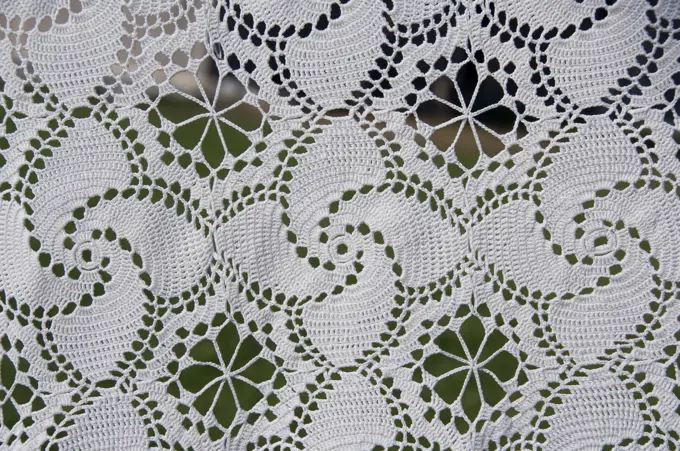
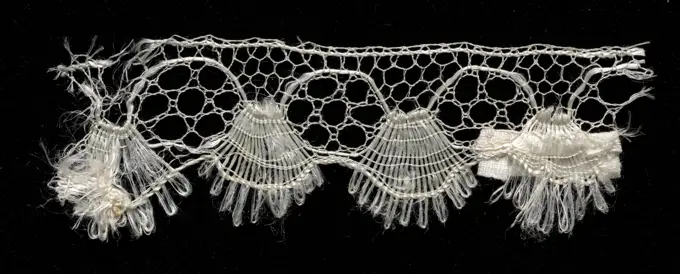
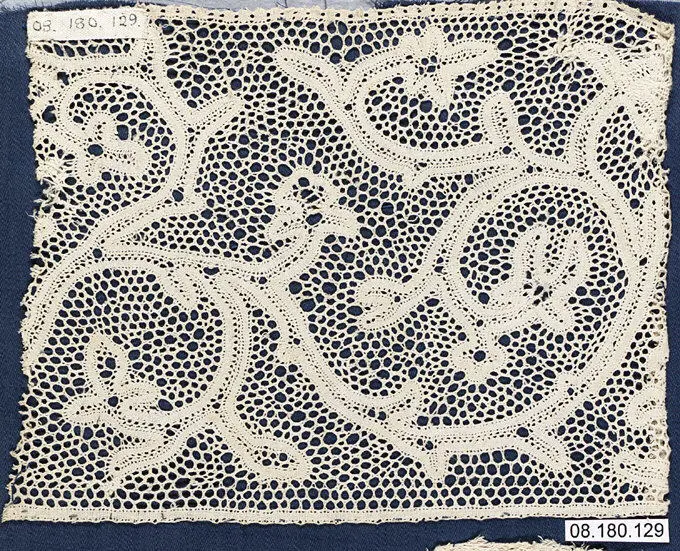
Historical lace pieces from different centuries, showcasing detailed designs, perfect for fashion embellishments or decorative arts.
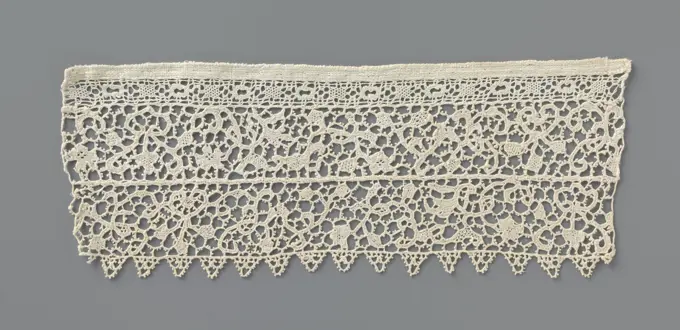
Doubled strip of needle side with heart -shaped slens, anonymous, c. 1690 - c. 1699 Strip of natural -colored needle side: flat Venetian side. On a soil of regular six-sided meshes is a fine pattern of two symmetrical, heart-shaped slens connected by serpentine ranks. Straight finish of large triangles. Venice linen (material) flat Venetian (needle point) Strip of natural -colored needle side: flat Venetian side. On a soil of regular six-sided meshes is a fine pattern of two symmetrical, heart-shaped slens connected by serpentine ranks. Straight finish of large triangles. Venice linen (material) flat Venetian (needle point)
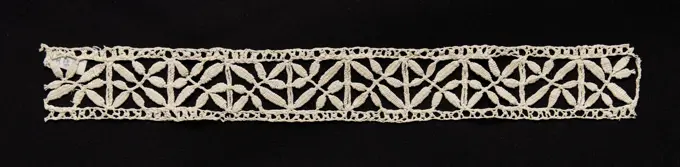
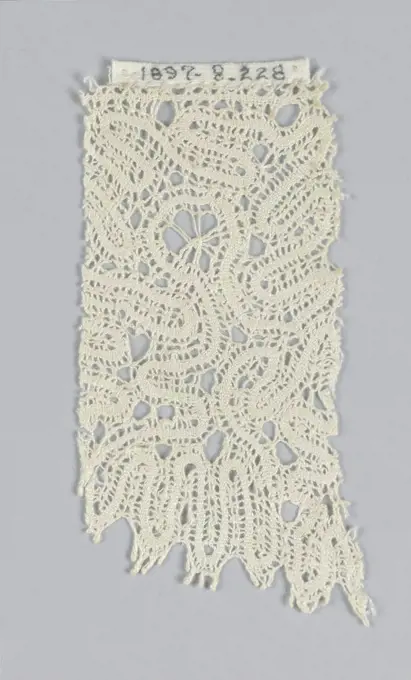
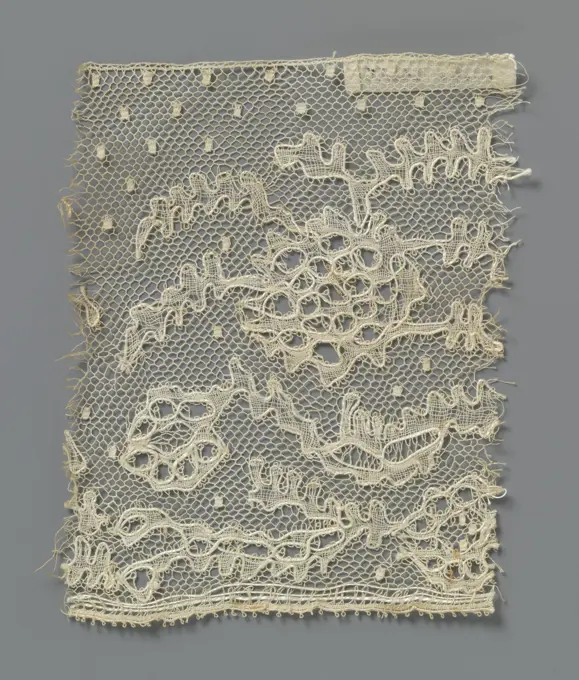
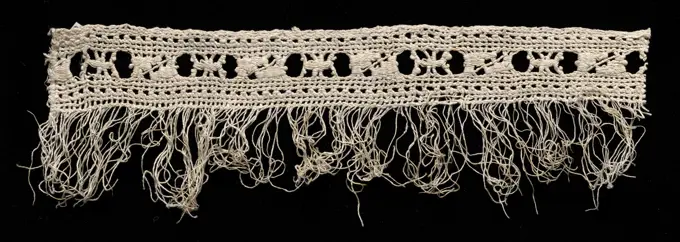
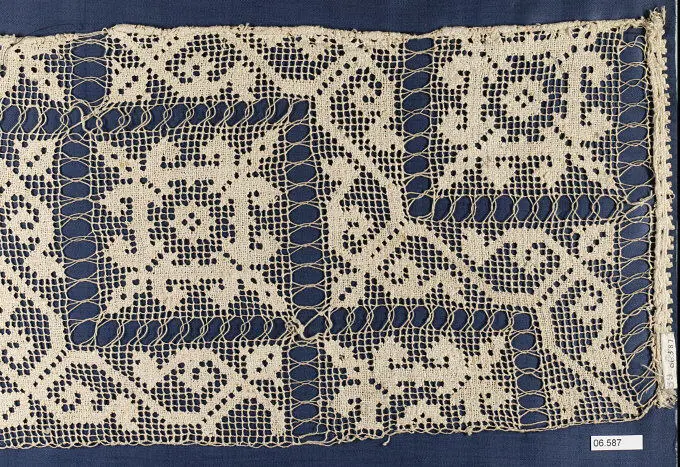
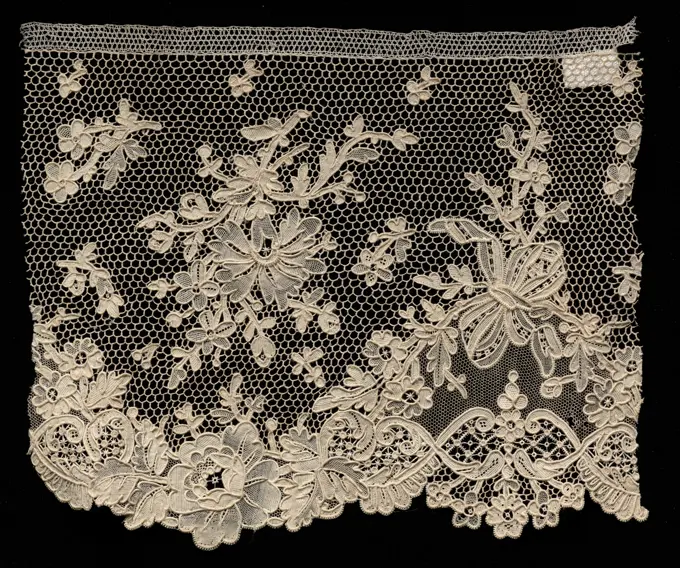
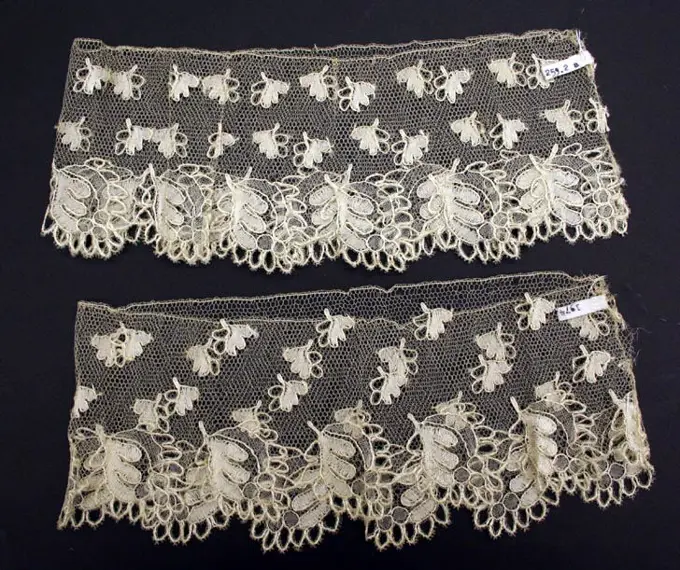
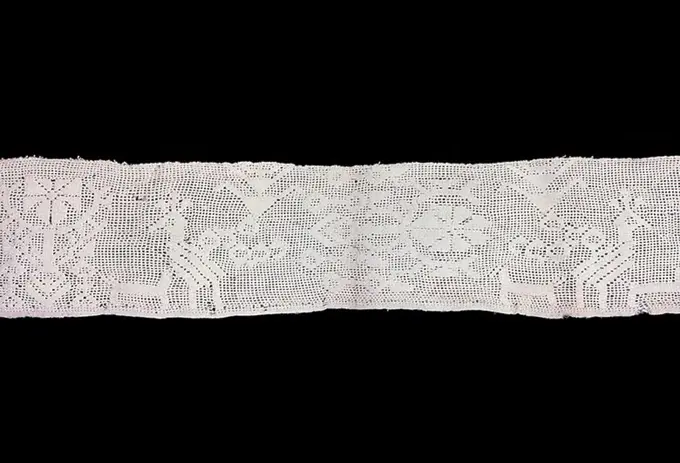
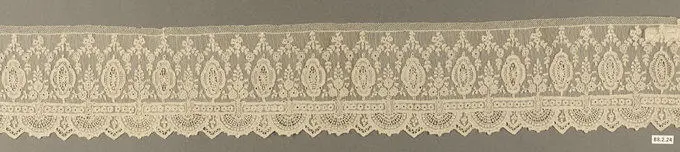
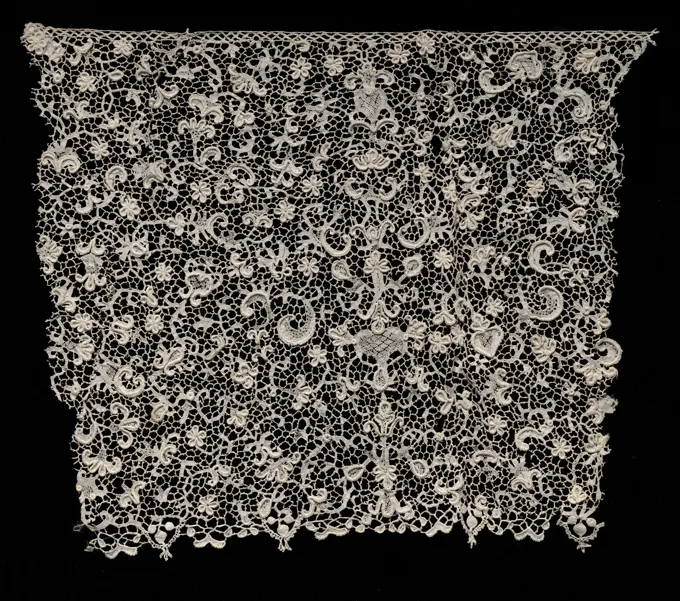
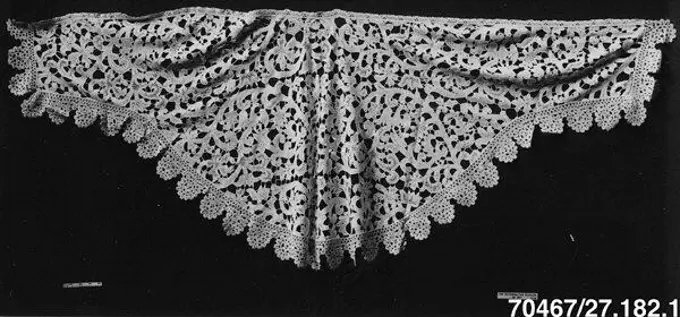
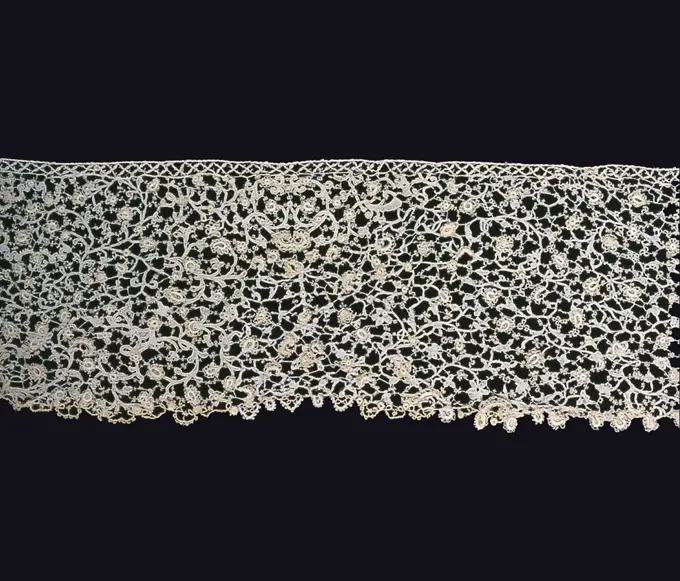
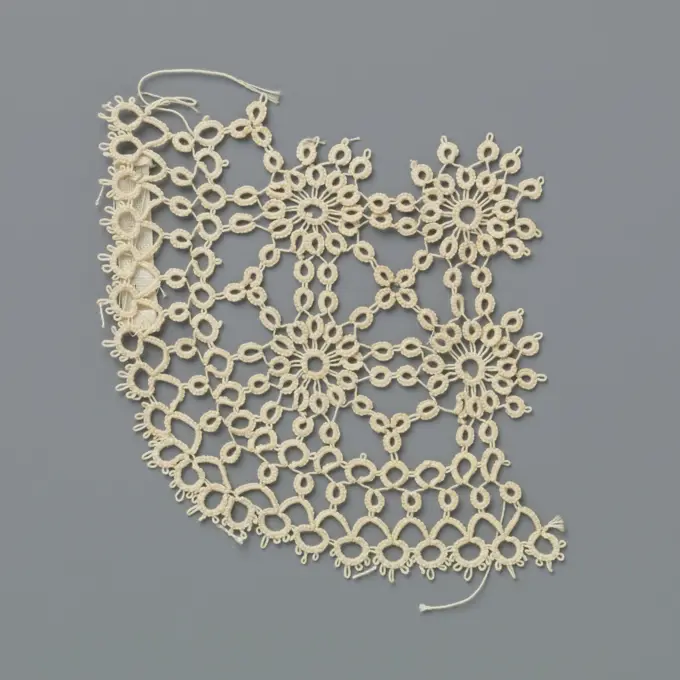
Fragment 17th century Spanish. Fragment 215124Borders; linen; 1933-1-180-a,bFragment, 1100s - 1300s. India, 12th-14th century. Plain cloth, resist dyed; cotton; overall: 7 x 25.1 cm (2 3/4 x 9 7/8 in.).Fragment 18th century Flemish, Mechlin. Fragment 214494Scarf 18th century French. Scarf 219363Edging 16th century Italian, Venice. Edging 220958Bobbin Lace (Needlepoint Design) Insertion, second half of 16th century. Italy, Genoa, second half of 16th century. Lace, bobbin; average: 3.5 x 28.3 cm (1 3/8 x 11 1/8 in.).Fragment, Medium: linen Technique: bobbin lace, Fine, wavy, ribbon-like scrolling design with scalloped border., Belgium, 17th century, lace, FragmentStrip bobbin with whimsical round flower, anonymous, c. 1900 - c. 1924  Strip of natural -colored bobbin, Lille side. The pattern is not complete, a whimsical flower can be seen from all sides of whimsical leaves. Below are two similar but smaller flowers with horizontal leaves. The motifs are connected by a mesh soil, a tuler floor, strewn with square mosies. The motifs are made in linen battle with large cut -outs and with thicker and shiny contour threads. The edges of the recesses are decorated and a decoration with crossing couples has been realized with two openwork oval. The Mosjes are made in form. The top and bottom of the strip are straight finished, with the bottom with picots. Belgium linen (material) bobbin lace / Lille laceNeedlepoint (Drawnwork) Lace Edging and Fringe, 16th century. Italy, 16th century. Lace, needlepoint: linen; average: 8.3 x 26.4 cm (3 1/4 x 10 3/8 in.).Edging; linen; Bequest of Marian Hague; 1971-50-351Strook naaldkant met cirkel en kruis.Strip natural needle side, reticella. The top of the pattern consists of squares, which are made up of four small squares. In squares around and around a small circle with cross and a large circle with beams. Around the small circle stylized flowers made with six triangles, the flowers form a cross together. Around the large circle a ray wreath with diamonds. The pattern on the underside consists of semi-relocated deep slippers, with different triangles made with small picoted arcs. The top of the strip is an edge unfinished woven linen.Fragment 17th century Italian. Fragment 212808Bobbin Lace (Bride Ground) Border, 17th century. Italy, Milan, 17th century. Lace, bobbin: linen; overall: 10.3 x 44.8 cm (4 1/16 x 17 5/8 in.).Needlepoint Lace (Argentan Type) Edging, 20th century. France, Argentan, 20th century. Lace, needlepoint: cotton; average: 14.7 x 17.9 cm (5 13/16 x 7 1/16 in.).Fragment (Italy); linenFragment 17th century Italian, Genoa. Fragment 219399Towel end, Medium: linen, cotton Technique: braiding, These fringes were probably cut from towels and were originally the ornamentation made by weaving and braiding the warp ends. A lozenge design with crosses and quatrefoils in openwork. C has a flower and bird design., USA, 19th century, knotted, knitted and crocheted textiles, Towel endInsertion early 17th century Italian, Sicily. Insertion 218023Cuffs 19th century Spanish. Cuffs 119778Border (From a Cover). Southern Italy or Sicily. Date: 1701-1750. Dimensions: 60.4 x 12.3 cm (23 3/4 x 4 7/8 in.). Linen, plain weave; pulled thread work in single faggot and darning stitches. Origin: Southern Italy. Museum: The Chicago Art Institute, Chicago, USA.Fragment; linenStrip bastard with connected cartouches, anonymous, c. 1800 - c. 1899 Strip of natural-colored bobbin, Buckingham side. The repeating pattern consists of connected as-symmetrical cartouches, alternately a smaller crowned by a rosette flower and a larger crowned by a triangle made with seven circles. The motifs are connected to each other at the top by a Maas soil, a tuler land. The motifs are made in linen stroke and provided with thick and shiny contour threads. The heart of the rosette flower has been saved. As a decorative land, a rose soil is used in the cartouches, whereby snowflakes are also incorporated in the small cartouche, which are not equipped with contour threads. The top of the strip is straight finished. The scrap edge along the underside follows the underside of the cartouches and is finished with picots. Buckingham cotton (textile) bobbin lace / Bucks point (lace) Strip of natural-colored bobbin, Buckingham side. The repeating pattern consists of connected as-symmetriFragment, Medium: linen Technique: bobbin lace of discontinuous tape, Fragment of a floral vine band., Italy, 17th century, lace, FragmentFragment of banding ca. 1850 French. Fragment of banding. French. ca. 1850. Needle lace. Textiles-LacesStrip of a climbing side with fan sleeve under a pattern with a zigzag and leaf-shaped shape strokes. Strip natural colosside: sloping. The pattern probably repeats, but the strip is too short to know this. The pattern consists of the bottom of the strip of two triangular fields, between which a fan-shaped motif is placed, which also forms a glule. The triangular fields are made with a grille: a nozzle ground. The impeller is made in linen stroke with a cut-away center line. Above this pattern, a zigzag band runs, made with a straw trace. The fields under the zigzag consist of a coarse braid soil, with one pair of motifs placed in shape stroke in each field. A much flatter zigzag line made with a braid between crossing couples repeats itself in a narrow path at the top of the strip, which is straight finished, with a narrow strap made with a nozzle ground.Border, Medium: silk Technique: needle lace, Chantilly style, Black Chantilly-style border in a dot and leaf design., Belgium or France, 19th century, lace, BorderNeedlepoint (Point de France) Lace Edging, late 17th century. France, late 17th century. Lace, needlepoint; average: 24.5 x 30.5 cm (9 5/8 x 12 in.).Fragment, Medium: linen Technique: bobbin made continuous tape with bars added, Fragment of a band with floral vine., Italy, 17th century, lace, FragmentTowel End (Germany); linenEdging 18th century Flemish, Brussels. Edging. Flemish, Brussels. 18th century. Bobbin lace, Brussels bobbin lace. Textiles-LacesCollar 17th century Northern Italian. Collar 222102Handkerchief Belgian 19th centuryStrip of coarse bobbin with white and red threads, anonymous, c. 1850 - c. 1899  Strip of red and white bobbin, Cluny side. On a strap with square meshes hang open worked semi -rounds, each with three lobes and made with braids. Bohemia linen (material) bobbin lace / Cluny laceGold side strip, 1700 - 1800 Gold side strip.  . Gold side strip.  .Fragment Swedish 19th centuryBobbin Lace Edging, 19th century. Italy, Abruzzi, 19th century. Lace, bobbin: linen; average: 2.9 x 53.4 cm (1 1/8 x 21 in.).Strip late 18th century Italian, Burano. Strip 212385Bobbin Lace (Needlepoint Design) Edging of Fringe and Points, second half of 16th century. Italy, Genoa, second half of 16th century. Lace, bobbin; average: 5.8 x 24.2 cm (2 5/16 x 9 1/2 in.).Strip of Goudkant.strip or Gold Side.Flounce Made 1675-1700 Italy. Linen, raised needle lace .Fragment 18th century Italian, Genoa. Fragment 214880Flounce, Medium: linen Technique: needle lace, Slightly V-shaped flounce with three-dimensional flowers on a scrolling vine., Italy, 1650-1700, lace, FlounceFragment 17th century Italian. Fragment 215385Kloskant motif in the shape of a pear, Sophia Gerardine Cenijn-Smit, c. 1914 Motif in the form of a pear of natural-colored bobbin: Cluny side. The slightly wavy contour of the pear is made in linen battle with openwork edges and a recess at every wave. The center is filled with a grid made of cubes in shape, which are connected to each other with short braids. Amsterdam linen (material) bobbin lace / Cluny lace Motif in the form of a pear of natural-colored bobbin: Cluny side. The slightly wavy contour of the pear is made in linen battle with openwork edges and a recess at every wave. The center is filled with a grid made of cubes in shape, which are connected to each other with short braids. Amsterdam linen (material) bobbin lace / Cluny laceInsertion 16th century Italian, Venice. Insertion 221064Europe, Belgium, Brugge (aka Brug or Bruge). Historic Brugge, UNESCO World Heritige Site. World famous Belgium lace.Serbia, Donji Milanovac. Typical handmade Serbian lace.Edging Italian 16th centuryFragment 16th century Italian, Venice. Fragment 220805Bobbin Lace (Blonde Lace) Edging, 19th century. Spain, 19th century, Reign of Isabel II (1830-1904). Lace, bobbin; average: 1.6 x 6.1 cm (5/8 x 2 3/8 in.).Border. Date/Period: Late 16th century. Border. Medium: linen. Technique: needle lace (punto in aria). Author: UNKNOWN.Strip knotted side with sloping lines and scoops, anonymous, c. 1800 - c. 1899 Strip of natural knotted side: chebka side. The repeating pattern consists of sloping lines of alternately a fine diamond -shaped grid and openwork ovals. Schulpenrand with rounded triangular scallops. The sculptes consist of the same diamond -shaped grid as in the pattern above. Three sloping jobs above each shell. The top of the strip is straight finished. Armenia linen (material) Strip of natural knotted side: chebka side. The repeating pattern consists of sloping lines of alternately a fine diamond -shaped grid and openwork ovals. Schulpenrand with rounded triangular scallops. The sculptes consist of the same diamond -shaped grid as in the pattern above. Three sloping jobs above each shell. The top of the strip is straight finished. Armenia linen (material)Fragment 17th-18th century Flemish. Fragment 214484Fragment, Medium: linen Technique: needle lace (reticella), Fragment of reticella with a broad central band in a design of diamond shapes with circles and diagonal lines. Narrow bands above and below have straight lines intersected by diagonal lines., Italy, 16th century, lace, FragmentPiece ca. 1600 Italian. Piece 221348Fragment, Medium: linen Technique: bobbin lace (Lille-style with heavy outlining thread), Fragment of Lille type bobbin lace, 19th century, lace, FragmentGalloon 17th century French or Italian. Galloon 214117Europe, Belgium, Brugge (aka Brug or Bruge). Historic Brugge, UNESCO World Heritige Site. World famous Belgium lace.Fragment coil work with four circles and part of a decorative edge, anonymous, c. 1850 fragment Fragment natural knotted side: Frivolité. Pattern with four circles and part of a decorative edge. The circles are in a square composition. A decorative band runs along two sides and forms a rounded angle. Unfinished ends. Europe (possibly) linen (material)Fragment (France); linenCollar (Made from Border). Italy. Date: 1601-1625. Dimensions: 11 x 47.7 cm (4 3/8 x 18 3/4 in.)Top band height: .9 cm (3/8 in.)Top band width repeat: 5.3 cm (2 1/8 in.)Center band height: 5.1 cm (2 in.)Center band width repeat: 4.9 cm (1 7/8 in.)Lower band height: 3.8 cm (1 1/2 in.)Lower band width repeat: 3.0 cm (1 1/2 in.)Edging height: 1.2 cm (1/2 in.)Edging height width repeat: 1.1 cm (1/2 in.). Linen, three bands of needle lace; upper band worked on a plain weave cut and drawn thread work grid; embroidered in double hem stitches; later edging of bobbin straight lace. Origin: Italy. Museum: The Chicago Art Institute, Chicago, USA.Bobbin Lace Edging of Points, 16th-17th century. Italy, Venice, 16th-17th century. Lace, bobbin; average: 4.8 x 20.4 cm (1 7/8 x 8 1/16 in.).Border 17th century Italian Punto in arialiterally, "stitches in the air"is one of the earliest styles of needle lace, which is itself developed from cutwork of primarily geometric design. When lacemakers transitioned to using a foundation of threads laid out according to a pattern drawn on parchment, they were able to incorporate more fluid lines and curves into their designs.. Border. Italian. 17th century. Needle lace. Textiles-LacesEurope, Belgium, Brugge (aka Brug or Bruge). Historic Brugge, UNESCO World Heritige Site. World famous Belgium lace.Two Borders. France, probably Calais. Date: 1880-1900. Dimensions: a: 10.9 × 26.8 cm (4 1/4 × 10 1/2 in.)b: 10.2 × 26.4 cm (4 × 10 3/8 in.)Width repeat: 10.6-10.8 cm (4 1/8-4 1/4 in.). Cotton, linen, and silk, Leavers machine lace, an imitation of a bobbin lace known as "Mechlin". Origin: France. Museum: The Chicago Art Institute, Chicago, USA.Collar lace 1850-75 British. Collar lace. British. 1850-75. Textiles-LacesBorderFragment. Date: 5th-6th century. Museum: Metropolitan Museum of Art, New York, USA.Turkish colorful needle work embroidery flowers as backgroundTurkish needle work embroidery Ornamental with lace patterns, details, flowersFringe (Italy); silkhaekeleien 8 - handmade 8 haekeleien 8 - handmade 8 Copyright: xZoonar.com/murxxxx 1279022Border Made 1701-1750 Italy. Linen, bobbin part lace .Collar ca. 1860 American. Collar 156702Two Borders Made 1880-1900 France. Cotton, linen, and silk, Leavers machine lace, an imitation of a bobbin lace known as Mechlin .