Lace Trimmings

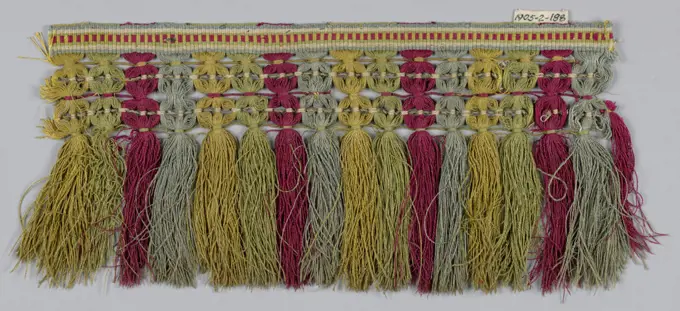
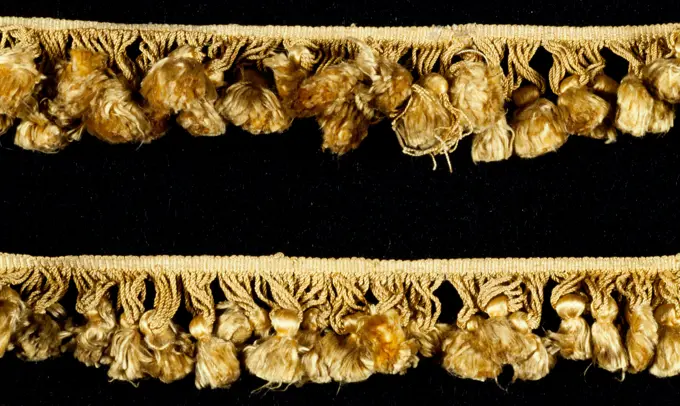
Intricate lace trimmings showcasing detailed patterns and textures, highlighting craftsmanship from various historical periods with a focus on elegance.

Excerpt black velvet with recesses with pattern of pomegranate moths, anonymous, c. 1470 - c. 1499 Fragment Black Silk Luweel with recesses with a pattern of horizontally ripened five -lobe leaves in which a pomegranate, with acanthusloof and dense surrounded by flowers. Mounted on linen. Italy silk Fragment Black Silk Luweel with recesses with a pattern of horizontally ripened five -lobe leaves in which a pomegranate, with acanthusloof and dense surrounded by flowers. Mounted on linen. Italy silk
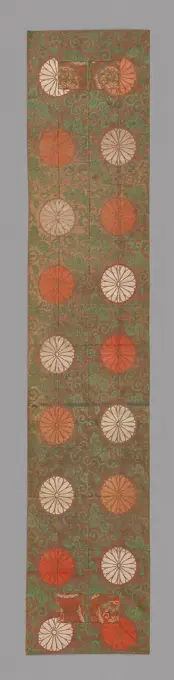
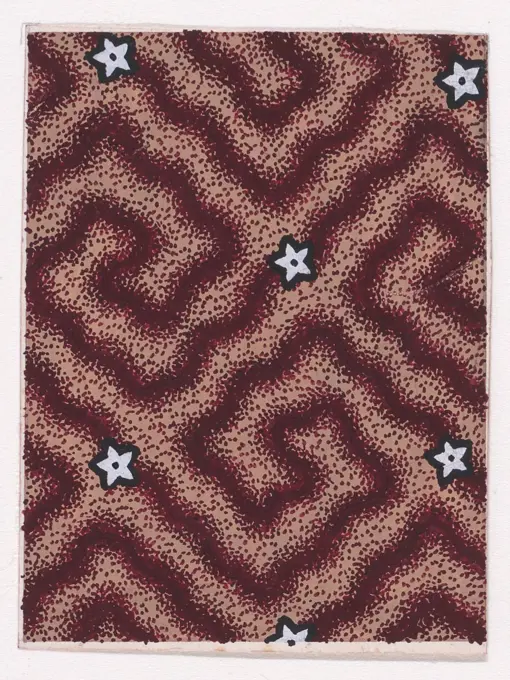
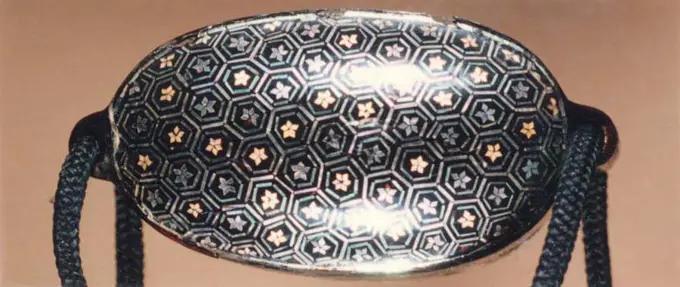
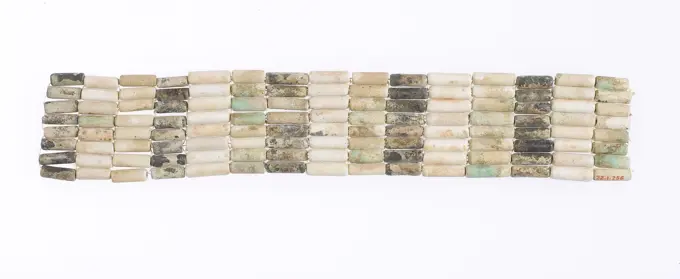
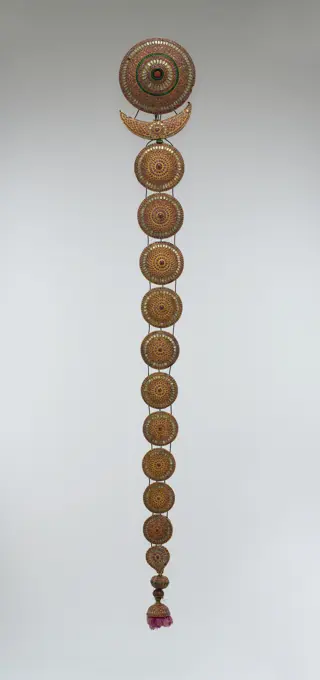
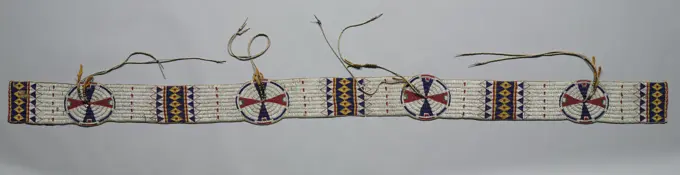
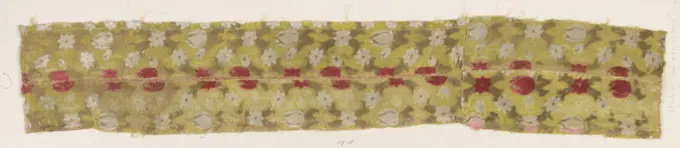
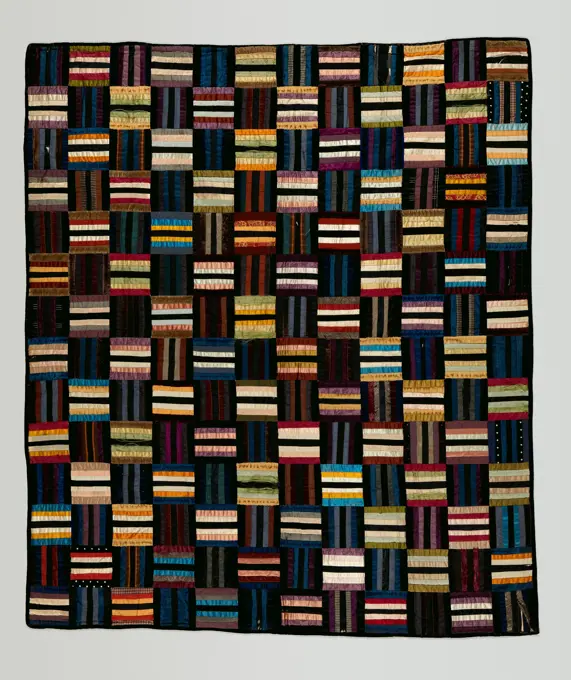
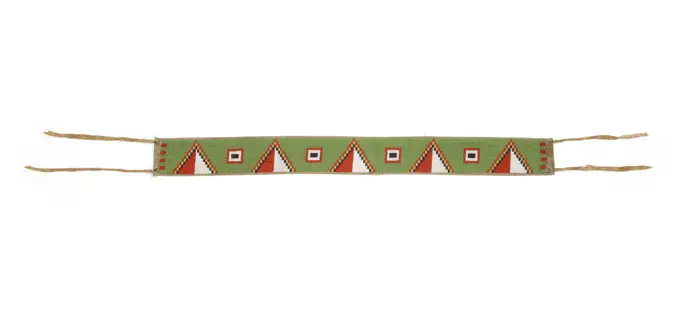
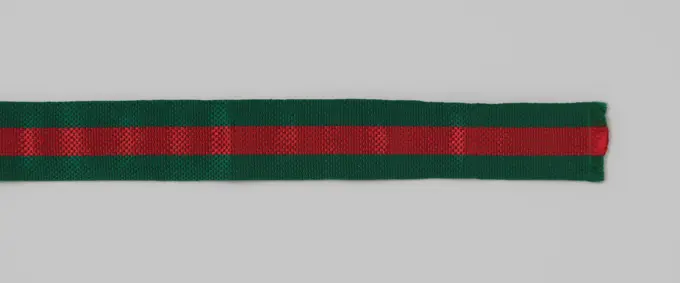
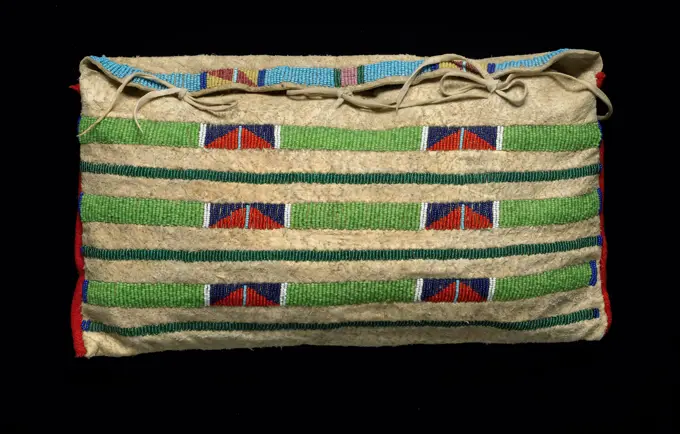
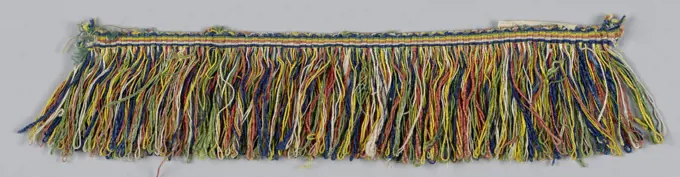
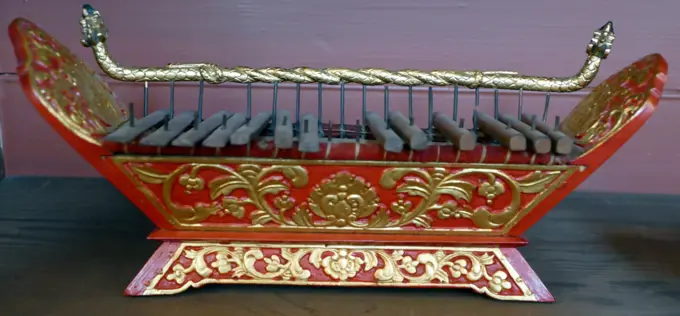
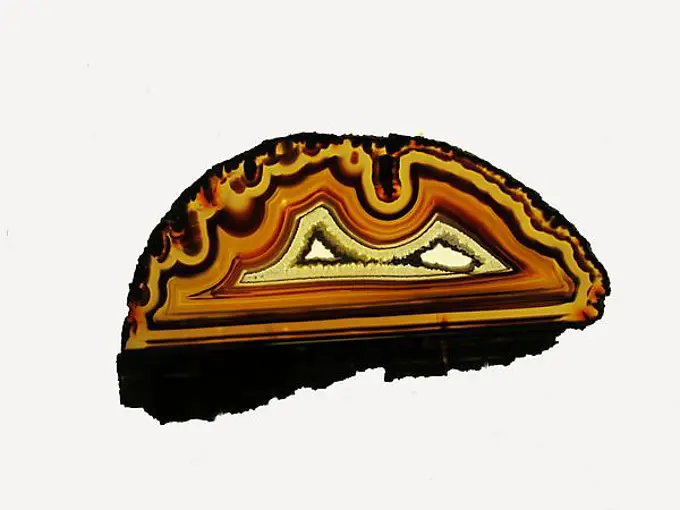
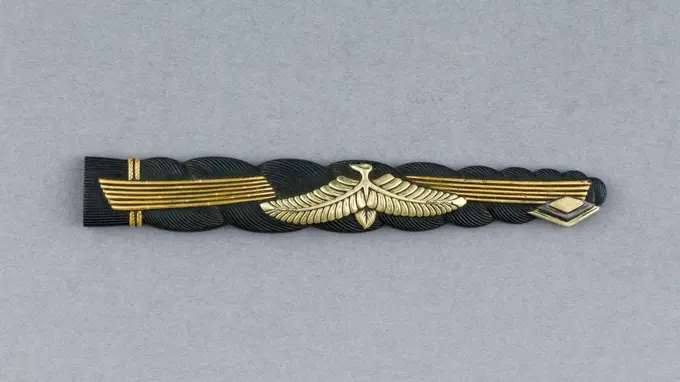
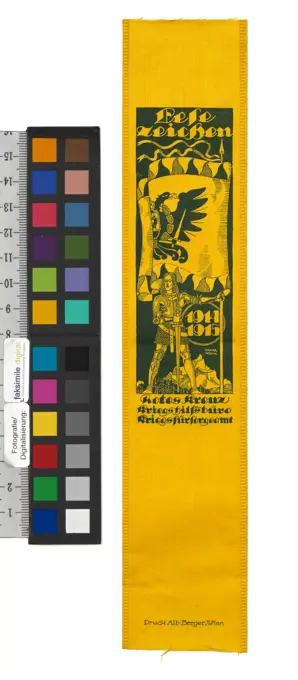
Swaddling Cloth (Italy); cotton; 1967-82-1-cGold bracelet, narrow model, c. 1960 - c. 1970 Gold bracelet, narrow model. Voorschoten gold (metal) Gold bracelet, narrow model. Voorschoten gold (metal)Ôhi (Stole) Made 1801-1825 Japan. Silk and gold-leaf-over-lacquered-paper-strips, warp-float face 2 1 'Z' twill weave with weft-float faced 1 2 'Z' twill interlacing of secondary binding warps and supplementary patterning wefts; patches silk, warp-float faced 4 1 satin weave with weft-float faced 1 2 'Z' twill interlacings of secondary binding warp and supplementary patterning wefts; lined with silk, plain weave .Textile Design with Alternating Rows of Rosettes with Triangular Petals over a Labyrinth-Like Pattern 1840 Anonymous, Alsatian, 19th century Rectangular sheet of paper with a textile design from a group, dated 1840, made in Mulhouse, Alsace, which was an important nineteenth-century center for textile production in the Haut-Rhin region of France. The design is made up of alternating rows of rosettes with five triangular petals colored with white over a labyrinth-like pattern rendered with stipples of dark reddish-brown color over a light tan base.. Textile Design with Alternating Rows of Rosettes with Triangular Petals over a Labyrinth-Like Pattern. Anonymous, Alsatian, 19th century. 1840. GouacheCase (Inr) with Two Four-Clawed Dragons among Swirling Clouds 18th century Japan. Case (Inr) with Two Four-Clawed Dragons among Swirling Clouds. Japan. 18th century. Lacquer, roiro, aogai and gold foil kirigane, white lacquer, inlaid eyes; Interior: nashiji and fundame. Edo period (1615-1868). InrGlass Fragment 16th century European. Glass Fragment. European. 16th century. Colorless glass. Glass-StainedFringe, Medium: silk Technique: soumak weave, Red, blue and yellow fringe with a soumak heading. Skirt threads are looped and twisted to form stripes., Spain, 16th century, trimmings, FringeSample (Dress Trimming) Made 1815-1840 France. Silk, plain weave; appliquÈd with silk, plain weave and silk, satin weave, interlined with cotton, plain weave; edged with cording covered with silk, satin weave .Textile Swatches Onondaga Silk Company, Inc. (1925-1981). , 1948-1959. Silk, 48 x 17 3/4 in. (121.9 x 45.1 cm).    1948-1959Bell BREAK (Inscription: Captm Eccle)  Zygmuntów Tower, Wawel Cathedral, KrakowAnklet ca. 1981-1640 B.C. Middle Kingdom This anklet is made from cylindrical faience beads and forms a pair with 22.1.257. It is part of a faience jewelry set that also included a broad collar (see 22.1.1632) and at least one armlet. When the anklets were excavated, the ancient string had deteriorated, and the archaeologists restrung the beads on modern string.. Anklet. ca. 1981-1640 B.C.. Faience. Middle Kingdom. From Egypt, Memphite Region, Lisht North, Tomb 954, Burial 954L, MMA excavations, 1921-22. Dynasty 12-13"Navajo Style" Belt/ Sash, c. 1900-1930. America, Native North American, Southwest, Navajo, Post-Contact, Early Period. Warp face plain weave with supplementary warp float: wool and cotton; overall: 266.6 x 11 cm (104 15/16 x 4 5/16 in.).Fringe (Spain); silkHip cloth. Cloth with geometric motifs.Fragment, Medium: silk Technique: cut and uncut supplementary warp pile in a plain weave foundation (ciselé voided velvet), Rows of diagonal motifs: one a lozenge with two vine appendages in green formed by cut velvet, the other a lozenge with vine scrolls in yellow green formed by the foundation fabric (voided velvet) on a green ground of uncut velvet. Diagonals reversed from row to row. Interspaces are filled with tiny diamonds., Italy, 17th century, woven textiles, FragmentBracelet 1840 British. Bracelet 124218Plait Ornament (Jadanagam) 18th-19th century This type of plait ornament, typically worn by brides and dancers, is called a jadanagam (hair serpent) for the grouping of snakes may once have been attached to its topmost disk. This disk and the crescent shape below represent the sun and the moon. Decorated in the kundan technique in which hundreds of rubies, emeralds, amethysts, and pieces of rock crystal were inset into malleable gold foil and made flush with the surface of the ornament, the entire object would have sparkled with the movement of its wearer. In Hindu tradition, a womans braid was associated with Triveni Sangam, the sacred confluence of three rivers - the Ganges, the Yamuna, and the mythic Saraswati.. Plait Ornament (Jadanagam). 18th-19th century. Gold; inset with rock crystal, rubies, emeralds, and amethysts. Attributed to India, probably Madras. JewelryBöhmer Franz (1907-1943), Reich Ministry of Food and Agriculture in Berlin-Mitte (1938-1938): Ornament. Coal on transparent, 45.7 x 18.2 cm (including scan edges)Belt of beadwork apron of Senebtisi ca. 1850-1775 B.C. Middle Kingdom. Belt of beadwork apron of Senebtisi 544163Fragment (Italy); silk, metallic threadBand Fragment 4th-6th century Recuay. Band Fragment 307956Belt -Blanket Strip, c. 1900. America, Native North American, Plains, Tistsistas (Cheyenne) people, Post-Contact. Native-tanned hide, glass beads, yellow trade cloth, brass beads, sinew thread ; overall: 188 x 10.8 cm (74 x 4 1/4 in.).Brown velvet attachment. Plug of brown velvet hearing at the sky of the so-called Rosendaelbed. Front sky. For the corresponding attachments, see BK-1958-20-A-4 and -5.Textile with Polychrome Checks Japan. Textile with Polychrome Checks. Japan. Silk twill brocaded with silk. Edo period (1615-1868). Textiles-WovenRibbon (France); 1914-2-1-bChef De Piece (France); Company: J.P.Meiller et Cie.; cotton; Warp: 14 cm (5 1/2 in.). Weft: 75 cm (29 1/2 in.) Left selvedge present.Mosaic tiles decorative border 19Borders (France); block-printed and flocked paper; 65.5 x 25 cm (25 13/16 x 9 13/16 in.)Piece 17th century Japan. Piece 71131Fragment decorated with butterflies, flowers, and grasses, 19th century, Unknown Ryukyuan, 87 1/2 × 7 in. (222.25 × 17.78 cm) (overall), Cloth: cotton; bingata (stencil resist with applied pigments), Japan, 19th centuryA sash from the funeral of Adam Mickiewicz in Krakow on July 4, 1890Apparel from a Dalmatic, early 1500s. Italy, early 16th century. Embroidery; silk and metallic threads; overall: 3.7 x 66.4 cm (1 7/16 x 26 1/8 in.).Lace Samples. Europe, 18th century-19th century. Textiles; embroidery. Linen bobbin lace, linen thread embroidery, silk plain weave (taffeta), with silk passementerieFragment 18th century Italian. Fragment 230072Stockings early 19th century British. Stockings 98173Fragment; silk; Bequest of Marian Hague; 1971-50-48Border (France); block-printed and flocked on paper; 44 x 18 cm (17 5/16 x 7 1/16 in.)Trimming (Italy); white, black, and colored silks in voided velvet weave.; Overall: 16.5 x 5.5 cm (6 1/2 x 2 3/16 in.)Blanket strip -Front doubleur. Brillat-Savarin (1755-1826). bindings (gathered matter components), Book covers. 1879. Spencer Collection. BookbindingFringe, Medium: silk Technique: woven, Red, blue, yellow and green fringe with heading, trellis and skirt threads arranged in stripes., Greece, 17th century, trimmings, FringeQuilt (or decorative throw), Roman Stripes pattern ca. 1865 Julia Perry Brigham The quilt top is pieced in narrow strips of patterned and plain silks and silk velvets in shades of purple, navy-blue, black, maroon, and brown. There are some lighter-colored silks in the horizontal strips. The back is of a faded pink cotton fabric, and the binding is of black velvet. The piece is unquilted; the layers are tied together at wide intervals with pink cotton thread.. Quilt (or decorative throw), Roman Stripes pattern. American. ca. 1865. Silk, silk velvet, and cotton. Made in Wyoming County, New York, United StatesPanel, 20th century, 52 3/4 x 26in. (134 x 66cm), Wool, silk; discontinuous supplementary weft patterning, Myanmar (Burma), 20th centuryTextile Fragment 3rd-4th century. Textile Fragment 443735Fragment (Band) Made 1000-1476 Peru. Slit tapestry with weft loop fringe .Fragment. Egypt. Date: 501 AD-600 AD. Dimensions: 7.5 × 3.5 cm ( 2 15/16 × 1 3/8 in.). Silk, compound weave; incomplete pattern. Origin: Egypt. Museum: The Chicago Art Institute, Chicago, USA.Belt -Sampler, Medium: silk embroidery on linen foundation Technique: satin, cross, double running, eyelet and surface stitches on plain weave, Cross borders showing floral ornament and dogs. Also an alphabet., England, 17th century, embroidery & stitching, SamplerCollodium photograph by Frana Jesenko showing ears of Bochara wheat, Petkuser rye, and their F1 hybrid generation, mounted on a box.Ribbon of artificial fiber, green with red center track; Wanted around, Anonymous, c. 1400 - c. 1950 Ribbon of artificial fiber, green with red center track. The ribbon is woven around. West-Europa synthetic fiber Ribbon of artificial fiber, green with red center track. The ribbon is woven around. West-Europa synthetic fiberBag, 1875-1900, 12 7/8 x 7 1/2 x 1 5/8 in. (32.7 x 19.05 x 4.13 cm) (without ties), Animal hide, beads, United States, 19th century, Apsaalooka beadwork consists of two extremes: highly or minimally decorated items. Most beaded objects are highly decorated with fields of color over their entire surface.Border 17th century Italian, Sicily. Border. Italian, Sicily. 17th century. Textiles-EmbroideredWrist Rest, 18th-19th century, 2 x 10 15/16 x 3 1/16 in. (5.1 x 27.8 x 7.8 cm), Bamboo, China, 18th-19th centuryRibbon, Medium: silk, metallic thread Technique: tapestry weave, Purple ribbon with geometric ornament in multicolored silks and metallic thread., Russia, ca. 1870, woven textiles, RibbonFringe ca. 1750 British. Fringe 224901Fragment from aShirt?.  Artist: UnknownFringe late 18th century Italian. Fringe 224900Colorful bench made with little tiles showing beach with seaTassel, 1950, 14 1/2 in. (36.83 cm) (object part, one tassel), Silk, mother-of-pearl; passementerie, Egypt, 20th centuryVictor Hugo (1802-1885). Chinese decor from Juliette Drouet's house in Guernsey, West Wall. Green wooden record containing plates and dishes, composed of fourteen compartments (left side of the fireplace). Painted wood. 1857-1864. Paris, house of Victor Hugo. 78171-21 Asian art, decorative arts, green wood, Chinese cabinet, chinoiserie, compartment, decor, earthenware, painted, storage, Chinese living room, dishes, 19th XIX 19th 19th 19th 19th century, plate, dishBorder. Date/Period: 1800-50. Border. Block-printed, flocked, gilt. Height: 675 mm (26.57 in); Width: 140 mm (5.51 in). Author: UNKNOWN.Chromolithography on glass slide - The daily life of poultry, chromolithographic lantern slide, 1840-90  Ernst Plank  (1866-1985) Ernst Plank  (1866-1985)Shoulder cloth, 79 1/2 x 10 3/8 in. (201.93 x 26.35 cm), Silk, LaosTraditional style, lacquered wooden box for prayer beads, Indian 21st centuryTrim, fringe, 18th-19th century, 41 in. (104.14 cm), Passementerie, 18th-19th century8 of Nooses, from The Cloisters Playing Cards. Culture: South Netherlandish. Dimensions: 5 3/16 × 2 3/4 in. (13.2 × 7 cm). Date: ca. 1475-80.The Cloisters set of fifty-two cards constitutes the only known complete deck of illuminated ordinary playing cards (as opposed to tarot cards) from the fifteenth century. There are four suits, each consisting of a king, queen, knave, and ten pip cards. The suit symbols, based on equipment associated with the hunt, are hunting horns, dog collars, hound tethers, and game nooses. The value of the pip cards is indicated by appropriate repetitions of the suit symbol. The figures, which appear to be based on Franco-Flemish models, were drawn in a bold, free, and engaging, if somewhat unrefined, hand. Their exaggerated and sometimes anachronistic costumes suggest a lampoon of extravagant Burgundian court fashions. Although some period card games are named, it is not known how they were played. Almost all card games did, however, involve some form of gaFragment, Medium: silk Technique: plain weave with supplementary discontinuous weft, Stripes of a dark red silk ribbed weave alternating with stripes of white satin edged with light blue on which a small floral pattern is brocaded., France, 1751-1800, woven textiles, FragmentFringe, Medium: silk Technique: woven, Fringe in red, yellow, blue, green and white with a striped heading. Skirt threads are looped and twisted in a polychrome effect., Spain, 18th century, trimmings, FringeGalloon 18th century Italian. Galloon. Italian. 18th century. Textiles-TrimmingsWrapper, 20th century, 86 x 50 1/2 in. (218.44 x 128.27 cm) (irregular, including fringe), Cotton, Nigeria, 20th centurymodel gamelan ochestral instrument, from Indonesia, collected by Sir Stamford Raffles (1781-1826), British statesman, Lieutenant Governor of Java and founder of Singapore in 1819Agate sliceSmall Hanging 19th century China. Small Hanging 65671Staal zijde in album.Steel printed silk, blue, red, yellow and green on white, with stylized flower plant inside parallelepiped-shaped frame (Dessreinr. 7134 5/17).Knife Handle (Kozuka) ca. 1615-1868 Japanese A kozuka is a handle of a by-knife that is part of a sword mounting. It is kept in a slot on the reverse of a katana scabbard, often with a matching kōgai (hairdressing tool).. Knife Handle (Kozuka) 34660Tobacco box 17th century Dutch The box is shaped like a book. Its cover shows a couple seated outside their house, within a hexagonal frame. Flowers are depicted in the corners. Inscribed below is: Goet begin (Good beginning).The underside is similarly engraved, the scene now reversed, and is inscribed: Goet bekage (Good end). This box would have been an appropriate gift for a newly married couple.With lined rims.. Tobacco box. Dutch. 17th century. Brass. Metalwork-BrassTrimming, Medium: silk Technique: woven, Yellow trimming fragment in a design of lozenge shapes and crosses., France, 19th century, trimmings, TrimmingValance (one of a set of three) 1600-1633 British. Valance (one of a set of three) 228976Feathered Panel, 600-900. Peru, Far South Coast, Pampa Ocoña, 7th-10th century. Papagayo macaw feathers knotted onto strings and stitched to cotton plain-weave cloth; camelid fiber plain-weave cloth upper tape; overall: 81.3 x 223.5 cm (32 x 88 in.); mounted: 94 x 236.2 cm (37 x 93 in.).Spine. 1908. bindings (gathered matter components), Book covers. Spencer Collection. BookbindingDA-SC-85-04248. Country: UnknownBliżej Kultury unknownA sash with the dedication of Adam MickiewiczBorder (Egypt); warp: s-spun wool; wefts: s-spun linen, s-spun woolsKontusz sash. Manufaktura Karola Stanisława Radziwiłła (Słuck ; wytwórnia pasów ; ca 1767-1790), manufacture, Madżarski, Jan (fl. ante 1757-ca 1800), manufacturerRug;  2. PO. 18th century (1751-00-00-1800-00-00);rugBookmark, man in Harnish with sword and flag, Franz Wacik -, Draft