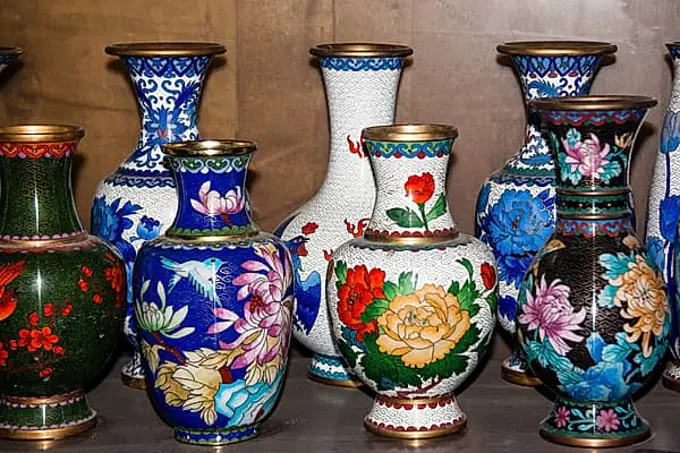
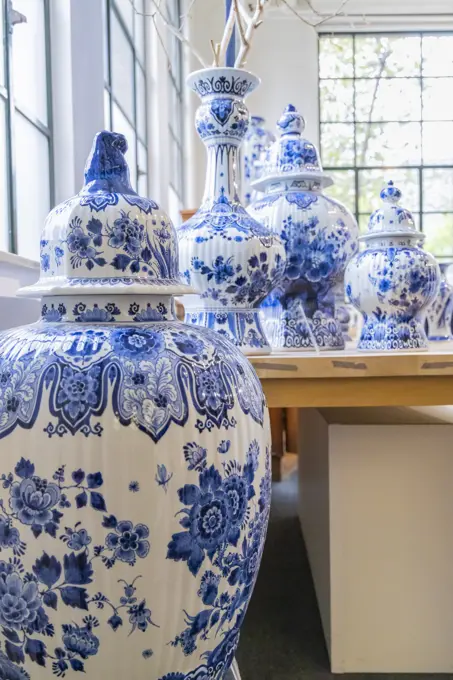
Lidded Porcelain Jars

Group of large, beautifully crafted porcelain jars with intricate underglaze blue decorations and floral motifs. Each jar has a distinctive lid design and vibrant details.

Vase, the Moriaanshooft (attributed to), after Jannitge Claesdr Hoppesteijn-van Staten, c. 1670 - c. 1680 Vase van Faience with a chinoiserie decoration Delft . Vase van Faience with a chinoiserie decoration Delft .
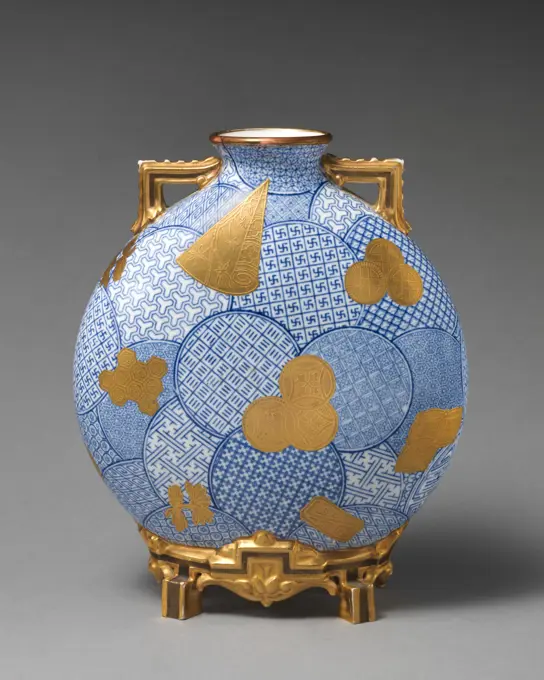
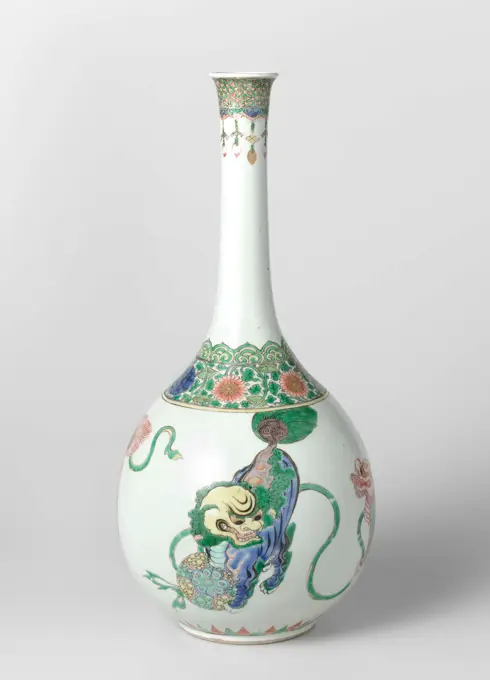
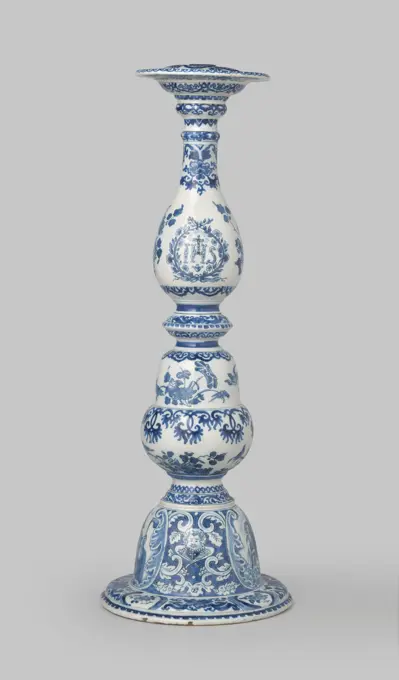
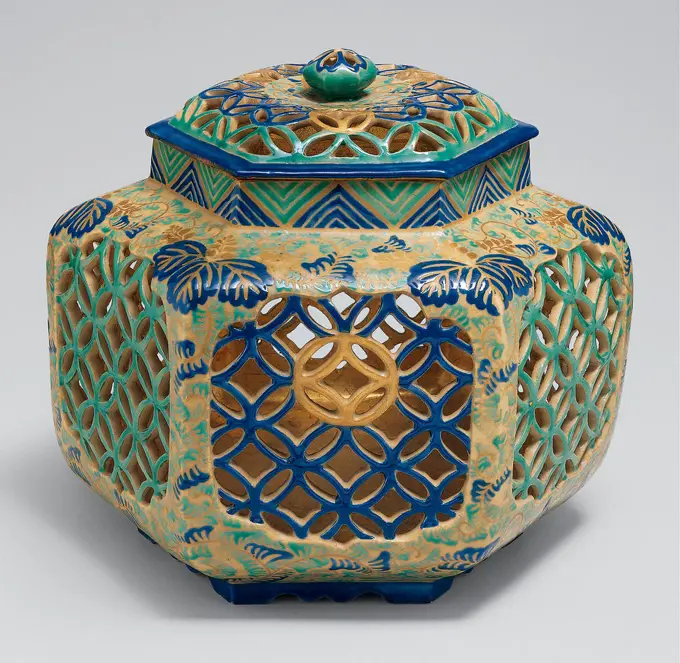
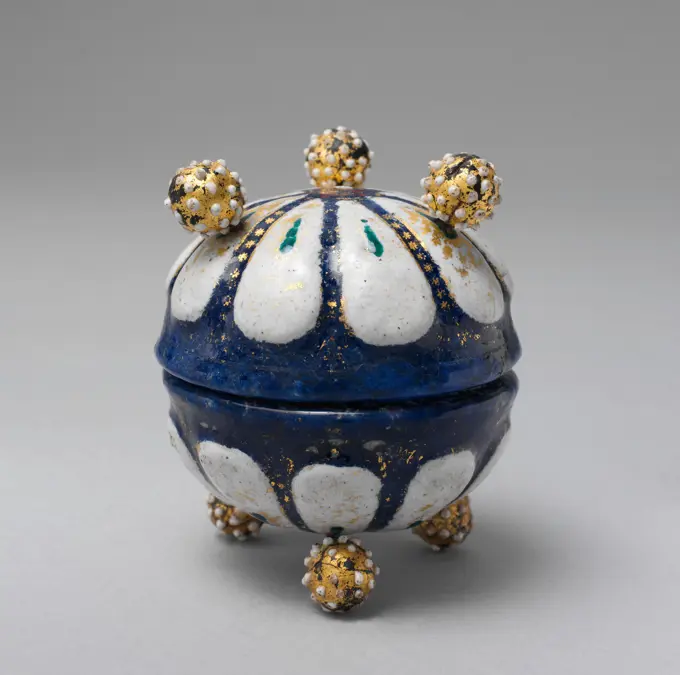
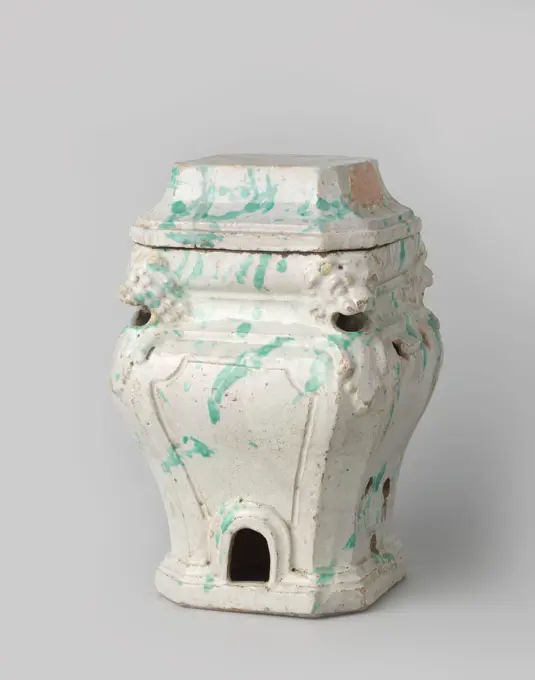
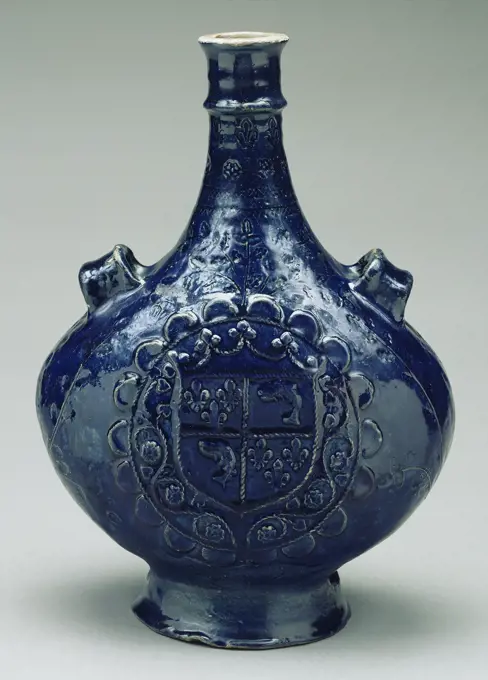
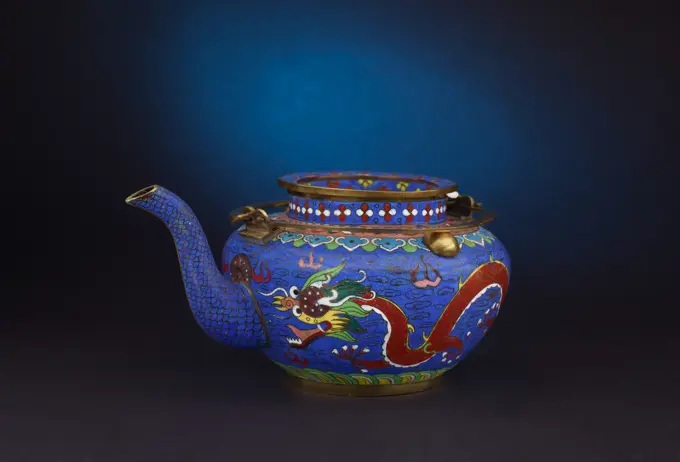
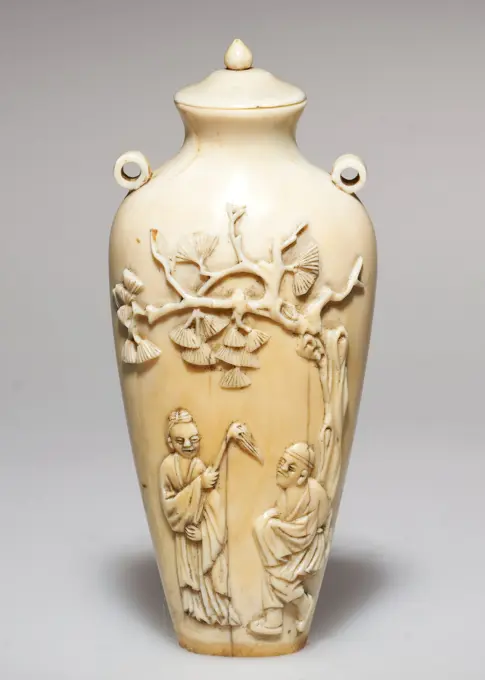
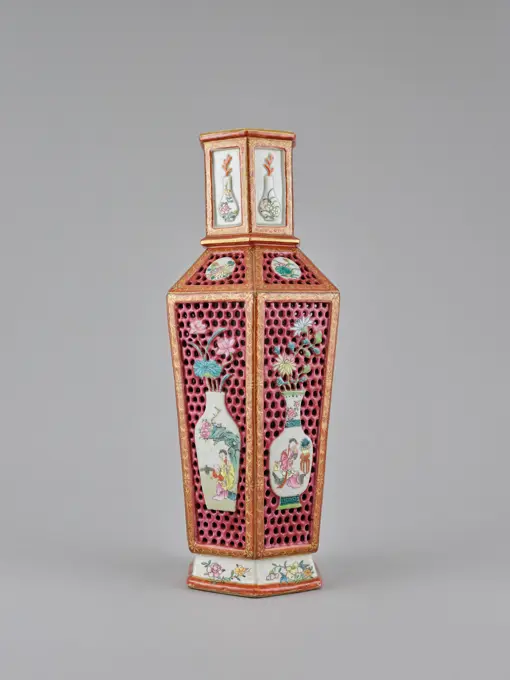
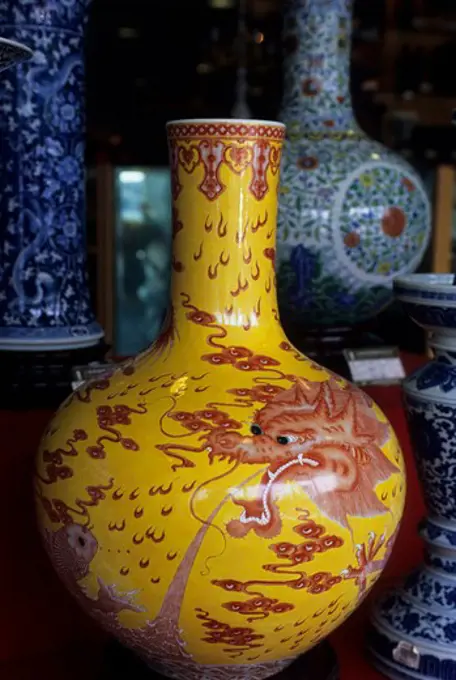
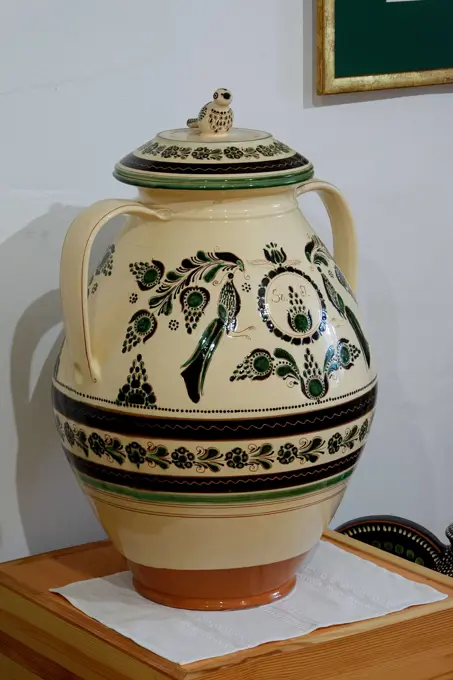
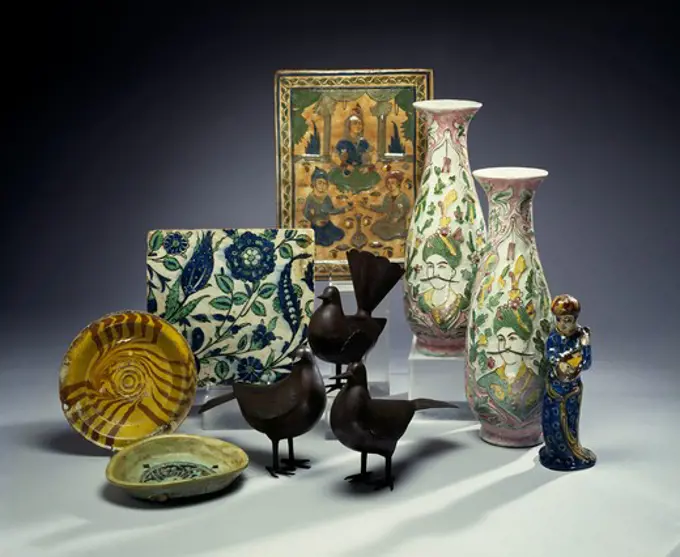
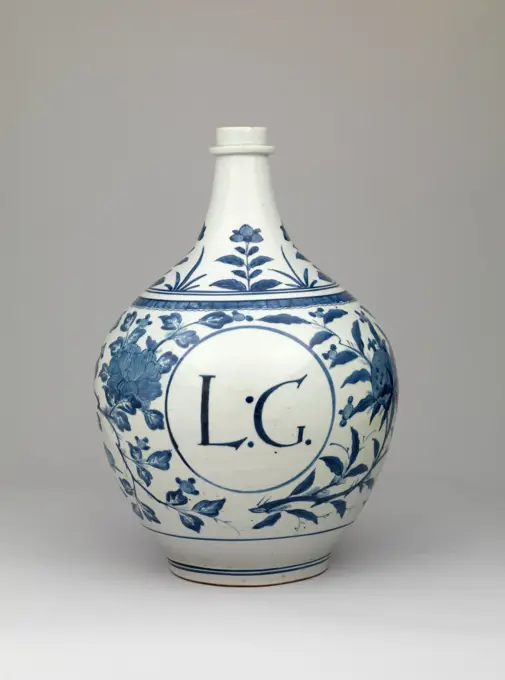
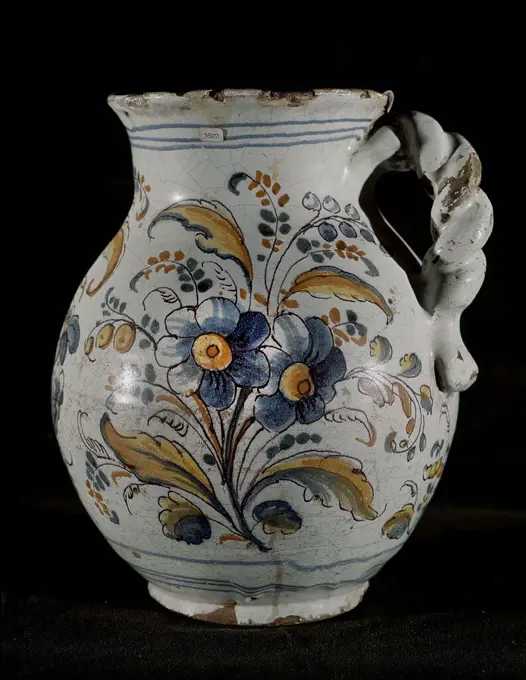
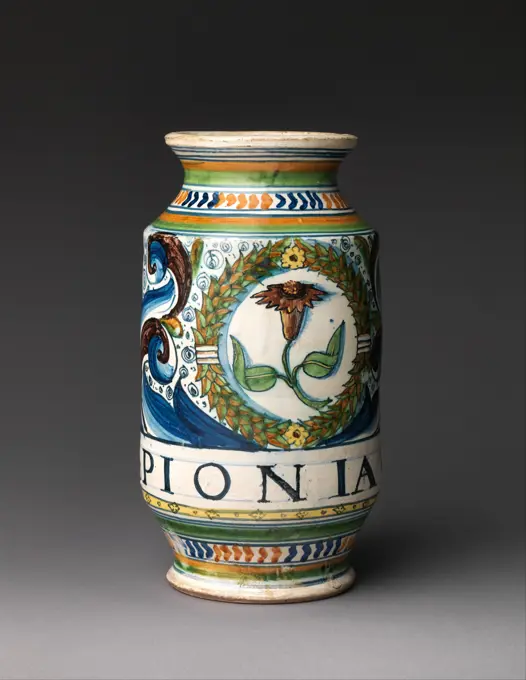
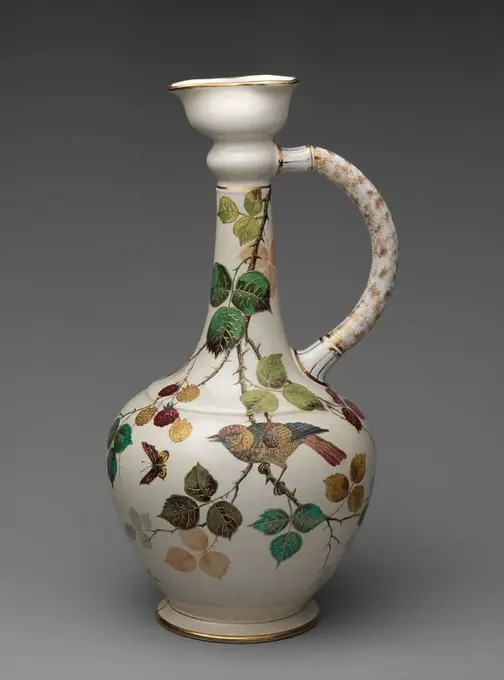
Ewer. Culture: American. Dimensions: H. 15 x 8 in. (38.1 x 20.3 cm). Maker: Faience Manufacturing Company (American, New York, 1881-1892). Date: 1886-90.A long-necked ewer with a pinched spout displays the synthesis of Near and Far Eastern shape and decoration characteristic of the Faience Manufacturing Company's vessels. The decoration of bird and butterfly amid raspberry branches is simultaneously indebted to Japanese motifs as well as those of the much-admired English artists at the Worcester Royal Porcelain Company. By leaving some of the raspberry leaves ungilded, the decorator created a subtle illusion of depth on the surface. The ungilded leaves seem to recede into the background. Museum: Metropolitan Museum of Art, New York, USA.Ovoid Covered Jar With Four Chinese Ladies in a Fenced Garden. Egg-shaped porcelain lid pot, painted in underglaze blue. Two Chinese ladies (long likes) twice in a fenced garden, separated by a rock and a banana plant. A decorative band on the shoulder. The lid with a lotus drink and a tire with dependent, pointed leaf motifs. Marked on the bottom with an artemisia leaf. Lid is glued. Blue White.Moon flask 1878 Worcester factory After the end of the Flight, Barr & Barr ownership of the Worcester factory in 1840, the firm went through a succession of owners and mergers before falling under the ownership of Kerr & Binns in 1852. During the partnership, the factory sought to rebuild its former eighteenth-century reputation in porcelain and known for Renaissance-inspired designs. With the establishment of the Royal Worcester Porcelain Company in 1862, the company gradually gained recognition for its Japanese-inspired designs, which formed part of Japonisme, a collective fascination with Japan that took place in Europe and the United States following the opening of Japanese markets to the West by Commodore Perry in 1853. Listen to experts illuminate this artwork's story Listen Play or pause #418. Christopher Dresser and the Birth of Industrial Design Supported by Bloomberg Philanthropies We're sorry, the transcript for this audio track is not available at this time. We are working Vase with willow tree, rock, and butterflies China late 18th centuryOctagonal Bottle, 18th century, 5 3/8 x 2 5/8 x 2in. (13.7 x 6.7 x 5.1cm), Glass, enamel, Switzerland, 18th centuryJeposoel support 'She did Man. Spent: 33 Hates, Spepals, Seltone Dectant, Cuadans. 17000 k. 18000 Pharmacist's pharmacy. Painted with ear and spout and blue with inscription: S/ Althae AE. Simpl: Delft . Pharmacist's pharmacy. Painted with ear and spout and blue with inscription: S/ Althae AE. Simpl: Delft .Ovoid tea caddy with the arms of the De Neufville family, anonymous, c. 1740 Egg -shaped porcelain tea with ribbed wall, painted on the glaze in blue, red, black and gold. On the belly the weapon of the De Neufville family. The weapon consists of four towers and a golden Sint Andreaskruis with an anchor in the middle. The shape of the shield is in Louis XIV style with on top of the Griffioen as a helmet sign. The weapon is surrounded by a cover of leaf vines. Around the foot a band with curl in relief. On the shoulder a band Lotusranken and a Spearhead-Border. Weapon porcelain with email colors. China porcelain. glaze. gold (metal) painting / gilding / vitrification Egg -shaped porcelain tea with ribbed wall, painted on the glaze in blue, red, black and gold. On the belly the weapon of the De Neufville family. The weapon consists of four towers and a golden Sint Andreaskruis with an anchor in the middle. The shape of the shield is in Louis XIV style with on top of the Griffioen as a heSquare bottle with birds on flower sprays, anonymous, c. 1725 - c. 1774 Square bottle of porcelain, painted on the glaze in blue, red, green, yellow, eggplant, black and gold. On the wall twice a bird on a peony branch and twice a bird on a chrysanthemum branch with a prunus, hedges and two quail. On the shoulder a band with servetwork with flowers interrupted by four cartouches with a quail. The underside is unglazed. A gilded, bronze frame around the edge. Arita, decorated in the Japanese Kakiemon style in Europe. Japanpainter: Europe Porcelain. Glaze. Gold (Metal). frame: bronze (metal) painting / gilding / vitrification Square bottle of porcelain, painted on the glaze in blue, red, green, yellow, eggplant, black and gold. On the wall twice a bird on a peony branch and twice a bird on a chrysanthemum branch with a prunus, hedges and two quail. On the shoulder a band with servetwork with flowers interrupted by four cartouches with a quail. The underside is unglazed. A gilded, bronze Coffeepot ca. 1720 Vienna. Coffeepot 203195Pear-Shaped Bottle Vase With Four Shishi and Floral Scrolls. Bottle-shaped porcelain vase with a pear-shaped body and long, slightly spreading neck, painted on the glaze in blue, red, green, yellow, eggplant, black and gold. Four times a shishi on the belly. The shoulder with a band with flower drinks and one with Ruyi motifs. The outer edge with a band napkin work and dependent brushes with valuables (diamond, music stone). Above the foot a tire with pointed leaf motifs. Famille Verte.Altar candlestick Van Faience, De Witte Starre, After Dirck Witsenburg (I), c. 1690 - c. 1700 Altar candlestick from Faience, painted in blue with flower branches and birds. At the bottom of an image of Maria with child. At the top IHS and Mar. Delft . Altar candlestick from Faience, painted in blue with flower branches and birds. At the bottom of an image of Maria with child. At the top IHS and Mar. Delft .Hexagonal Jar (Rokkaku-tsubo) with Paulownia and Geometric Design 18th century Japan In ceramics, the burst of color and decorative design that characterized the art of the Momoyama period (1573-1615) became prominent again with Nonomura Ninsei (ca. 1646-1694), whose vivid overglaze patterns were inspired by the beauty of the changing seasons and landscapes of Kyoto. These traditions influenced Kiyomizu ware, produced near the temple Kiyomizudera and embellished with green, blue, and gold overglaze motifs. This hexagonal jar is based on a famous prototype owned by the temple Yoshiminedera.. Hexagonal Jar (Rokkaku-tsubo) with Paulownia and Geometric Design 53419 Japan, Lidded Brazier (Te-aburi) with Paulownia and Geometric Design, 18th century, Stoneware with overglaze enamels and gold (Ko-Kiyomizu ware), H. 8 1/4 in. (21 cm); Diam. of mouth. 5 1/8 in. (13 cm); Diam. of foot: 5 5/8 in. (14.3 cm). The Metropolitan Museum of Art, New York. Mary Griggs Burke Collection, Gift of the Mary Toilet box late 15th or early 16th century Italian, Venice This dainty box, which separates into two hemispheres, may have been intended to hold so-called wash ballspotash mixed with various oils and scented with powdered herbs, roots, and flowers then kneaded into a paste and shaped into small balls of soap.. Toilet box 231040Jug with flowers and stylized leaves, anonymous, c. 1640 - c. 1670 Fragment of a jug of stoneware on a high base (broken) with a spherical body and narrow neck. The upper part of the neck and the ear are missing. Partly covered with cobalt blue. On the front of the abdomen a medallion in relief formed by a printed and laid band of small flowers with a larger flower surrounded by four breached leaves. A stamped flower in each leaf. On both sides a vertical band with the same imposed flowers and breached leaves. On the back a damage where the ear has been broken off. Westerwald. Westerwald stoneware. glaze. cobalt (mineral) vitrification Fragment of a jug of stoneware on a high base (broken) with a spherical body and narrow neck. The upper part of the neck and the ear are missing. Partly covered with cobalt blue. On the front of the abdomen a medallion in relief formed by a printed and laid band of small flowers with a larger flower surrounded by four breached leaves. A stamped flower inVase, multi-colored painted with a kakiemon decor, meissener porzellan manufaktur, c. 1725 - c. 1730 Cylindrical vase of painted porcelain. The vase is decorated with a boy in green and blue on a checkered blue soil, a bouquet of flowers in blue and violet tied together with a blue ribbon and a green kylin. The bottom is unglazed. The vase is not marked. Float porcelain Cylindrical vase of painted porcelain. The vase is decorated with a boy in green and blue on a checkered blue soil, a bouquet of flowers in blue and violet tied together with a blue ribbon and a green kylin. The bottom is unglazed. The vase is not marked. Float porcelainVase with lid, 1700 - 1800 The vase has a square shape with a 'convex' belly. White underlaze with light green leaf-like motifs. Leeuwekoppen are sitting on the corners of the vase with an open mouth.  . The vase has a square shape with a 'convex' belly. White underlaze with light green leaf-like motifs. Leeuwekoppen are sitting on the corners of the vase with an open mouth.  .Pilgrim Flask; Puisaye, Burgundy, France; early 16th century; Cobalt-glazed stoneware; 33.5 x 23.1 x 12.8 cm (13 3,16 x 9 1,8 x 5 1,16 in.)Faenza ceramic vase, by Nonni Francesco, 1920, 20th Century, Unknow. Italy, Lombardy, Gardone Riviera, Brescia, The Vittoriale. Vase white blue gold.Vase or lid jar, blue white glazed with scattered floral pattern, the metal pot, after lambertus van unicorn, 1691 - 1724  Delft earthenware  Delft earthenwareTeapot with a motif of two dragons unknownEnamelled jar and cover, ceramics, Chinese ArtSnuff Bottle, 1850-1900, 3 1/2 x 1 1/2in. (8.9 x 3.8cm), Ivory, ChinaBeaker vase with landscapes in panels, anonymous, c. 1700 Porcelain cup vas with a light spherical central part and spreading neck and foot, painted in underly glaze blue. The vase is divided into five rows of lotus leaf -shaped cartouches with landscapes. Upstairs and below the thickening in the center, above the foot and on the inner and outer edge a band with a zigzag pattern. Bekervaas is part of a cupboard set. Blue White. China porcelain. glaze. cobalt (mineral) painting / vitrification Porcelain cup vas with a light spherical central part and spreading neck and foot, painted in underly glaze blue. The vase is divided into five rows of lotus leaf -shaped cartouches with landscapes. Upstairs and below the thickening in the center, above the foot and on the inner and outer edge a band with a zigzag pattern. Bekervaas is part of a cupboard set. Blue White. China porcelain. glaze. cobalt (mineral) painting / vitrificationSnuff Bottle 19th century China. Snuff Bottle. China. 19th century. Glass with coral stopper. Qing dynasty (1644-1911). Snuff BottlesOctagonal bottle of milk glass with flower vessels and braid motifs, anonymous, c. 1700 - c. 1800 Flat ground. Octagonal, body blown into the shape with black, red, green, yellow and blue stylized flower vines on the front and rear and flower and braid motifs on the narrow sides. A slender on the shoulder. The mouth is caught in an edge of tin. Middle Europe glass. tin (metal) glassblowing Flat ground. Octagonal, body blown into the shape with black, red, green, yellow and blue stylized flower vines on the front and rear and flower and braid motifs on the narrow sides. A slender on the shoulder. The mouth is caught in an edge of tin. Middle Europe glass. tin (metal) glassblowingUnknown (n. - d.), Covered vase. Ceramics, porcelain, moufle fire enamels (small lights). Petit Palais, Museum of Fine Arts of the City of Paris.CHINA, SHANGHAI, SHANGHAI MUSEUM, GIFT SHOP, REPLICAS OF TRADITIONAL CHINESE VASESpainted big ceramics Krug with cover from master potter szücs imre from tiszafüred, hungary 1033903268Antique Middle Eastern Pottery including Islamic, Qajar, Ottoman and Persian Islamic ArtKuan vase; Belvedere (faience manufacture; 1770-1780); 1770-1780 (1770-00-00-1780-00-00);Vase by J & L Lobmeyr, Vienna, Austria. Lead glass painted with enamels and gilt. During the 19th century Islamic objects were collected avidly throughout Europe.Close-up of a golden pottery vase in unique floral patternInkpot. Pennis, Antony (1759-1782), company owner, De Twee Scheepjes (wytwórnia fajansu : 1635-1796), factoryVase. Culture: American. Designer: Designed by Louis Comfort Tiffany (American, New York 1848-1933 New York). Dimensions: 8 1/8 x 8 1/8 in. (20.6 cm). Maker: Tiffany Studios (1902-32). Manufacturer: Attributed to Tiffany Glass and Decorating Company (American, 1892-1902) or. Date: 1902-3. Museum: Metropolitan Museum of Art, New York, USA.Shards of Kommen from V.O.C. ship De 'Witte Leeuw', Anonymous, Before 1613 bowl Shards Kraakporcelain from V.O.C. ship De 'Witte Leeuw'. Jingdezhen bone china (material)   Sint-HelenaApothekerspot 'S/ CARD.BENED', anonymous, c. 1750 - c. 1800 Pharmacist's pharmacy. Painted with ear and spout and blue with inscription: s/ card.bened Delft . Pharmacist's pharmacy. Painted with ear and spout and blue with inscription: s/ card.bened Delft .Incense Burner in the Form of Four Chinese Boys on a Standing Drum. Japan, 19th century. Ceramics. Hirado Mikawachi ware; porcelain with blue underglazeFlask with panels of floral decoration. Dated 17th CenturyBottle with Birds and PanelDesignPair of cups with famille rose type decoration with images of an armed women and a man in armour unknownFlower vase. unknown, craftsmanCandlestick 1845-65 Probably Boston & Sandwich Glass Company. Candlestick 1308Bottle with the Initials L. G., 1660-1680, Unknown Japanese, 19 1/2 × 13 3/8 × 13 3/8 in. (49.53 × 33.97 × 33.97 cm), Imari ware; porcelain with underglaze cobalt blue, Japan, 17th century, The initials L.G. refer to the unknown, likely European, client who commissioned this bottle. The vessel was produced in the Arita region of western Japan. Before it was fired, an artist painted the initials and surrounding floral motifs with a brush, using a blue pigment made of cobalt oxide. The finished bottle would have left from the port of Imari, headed for Europe on a ship probably controlled by the Dutch East India Company.JARRA DE TALAVERA - SIGLO XVIII. Location: INSTITUTO VALENCIA DE DON JUAN-COLECCION. MADRID. SPAIN.Pharmacy jar (albarello) ca. 1500-1510 Italian, Montelupo Storage vessels were among the most frequently produced maiolica wares in late medieval and Renaissance Italy. Made in fairly standard shapes, they were designed to fit with dozens of others on a shelf, often in a pharmacy or shop. Their handles therefore tend to fit within the vessels profile, and the cylindrical albarello type is generally narrower at the middle than at the top or bottom, making it easy to grip. Other common features include inscriptions indicating contents and flanged lips to help secure cloth or paper seals. The decoration, usually more elaborate on one side than the other, can sometimes link pieces to a known dispensary or specific workshop or artist.. Pharmacy jar (albarello) 204514Collection Of Chinese Vases Beijing ChinaBrush holder. unknown, craftsmanNetherlands, South Holland, Delft. Delftware pots at the Royal Delft ceramics factory.Chinese, Pair of Parrots, porcelain.Two vases and a sign designed by Theo Colenbrander on the 1800-1900 School / Amsterdam Impressionists Hall. .