My Boards
View Pictures
  • My Boards

Liturgical Artwork and Textiles

Depictions of ornate church vestments and religious artwork, highlighting intricate designs and cultural significance within sacred spaces.

Częstochowa. Treasury of the monastery in Jasna Góra - chasuble; Trzciński, Stanisław (1867-1939); around 1896 (1890-00-00-1900-00-00);
164 assets in this story
6145-46249527
Biblical performance with two figures and an angel. Leaf 1 Recto from a sketchbook with 37 sheets.
1886-54761
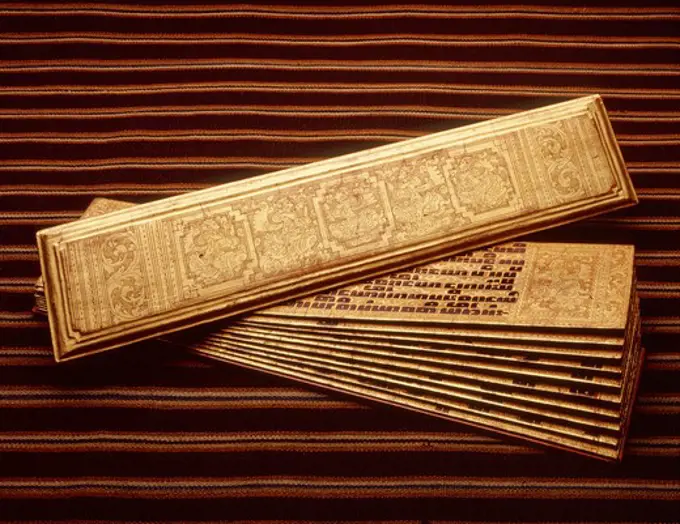
BURMESE BUDDHIST SCRIPTURES
6145-29818439
Priest's Stole Japan. Priest's Stole 68386
6145-29788792
Sutra Cover with the Chinese Character Shou (Longevity) 16th century China Sutra cover with repeating pattern of the Chinese character shou (longevity); green on a red background. Silk twill damask in two colors.. Sutra Cover with the Chinese Character Shou (Longevity) 76606
6145-30211278
Reproduction of a chasuble (TF)
6145-54594886
Colored woodcut by Georg Lemberger depicting the walls of the Abbey Hut from the Old Testament (2nd Moses 26, 15-30), created in 1524. The print shows architectural details and biblical elements.
6145-59050798
Paintings of the shadow: Our Lady (fragment of the character);  early 11th century (1000-00-00-1020-00-00);Faras (Sudan), Maria (Mother of Jesus Christ), Our Lady of Hodegetria (iconogr.), Wall paintings, Polish excavations in Faras (Sudan)
6145-54560175
Mudras.. Belnos, S. C., Mrs.. Prints, Illustrations. 1851. General Research Division. Gods, Hindu, Brahmans, Hinduism , Rituals, Prayer , Hinduism, India , Religious life and customs, Gesture , Religious aspects, Mudras (Hinduism)
6145-59442119
Archangel Michaël with scales, P. Lapret, after Félicie de Fauueau, c. 1820 print  Paris paper  psychostasis, the Archangel Michael weighing the souls in the scales (and stabbing the devil)
6145-29721297
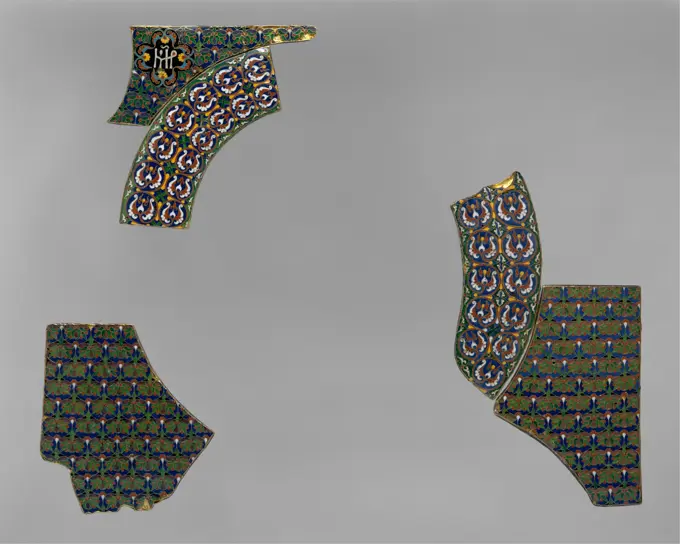
Panel from a Cover for an Icon of the Virgin ca. 1100 Byzantine These panels were once part of a cover for an icon of the Virgin Hagiosoritissa, or Virgin of the Holy Soros (reliquary chest). Named for the church in Constantinople that contained the original icon of the type, this popular middle Byzantine icon shows the Virgin turning to the side with her hands raised in a gesture of prayer.. Panel from a Cover for an Icon of the Virgin 464518
6145-45776354
Tabernacle with pattern of cherubs. The tabernacle of woven cloths with a pattern of Cherubs stands in a fence. The landscape is visible in the background.
6145-29865053
Howard H Sherman, Window in Choir Loft Looking South San Luis Rey Mission, 1936 Window in Choir Loft Looking South San Luis Rey Mission
6188-63327198
arabian design arabian design Copyright: xZoonar.com/ReshetnyovaxOxanax 1481157
6145-29148506
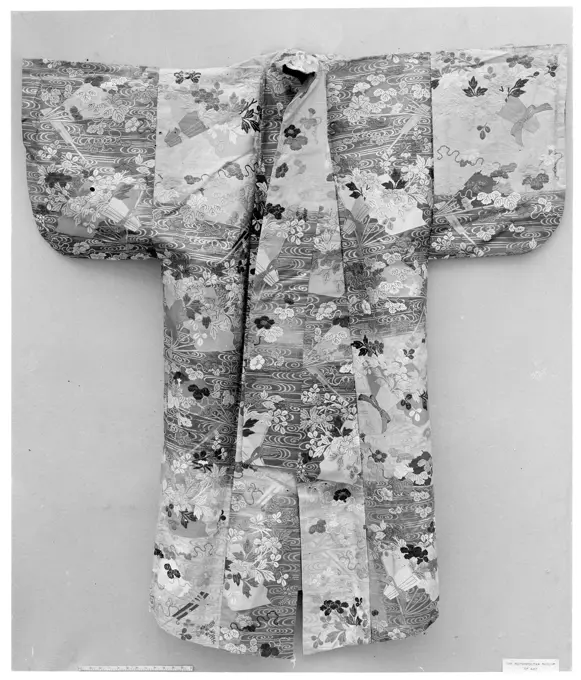
Noh Costume (Karaori) with Pattern of Fans Floating on Water 18th century Japan The layering of patterns and techniques is particularly complex in this Noh costume. The water pattern woven in gold, known as Kanze mizu ("Kanze water") because of its association with the Kanze school of Noh performers, flows gently over background blocks of red, brown, and light blue. On the water float various fans-open, closed, and half-open-that overlap intriguingly and, in their turn, are covered with flowers. Ygao (literally, "evening faces") flowers partially cover the half-open fans, and the fully open fans are nearly concealed by auspiciously wrapped peonies and bush clover (hagi). The fan pattern repeats along the length of the costume but does not seem at all repetitive thanks to the skillful use of color in the textile.. Noh Costume (Karaori) with Pattern of Fans Floating on Water. Japan. 18th century. Twill-weave silk brocaded with silk and metallic thread. Edo period (1615-1868). Costumes
1899-17318398
Peace unto Israel. Hebrew inscription on a mosaic floor. Synagogue at Ussfiya. 5th century AD.
6145-30136483
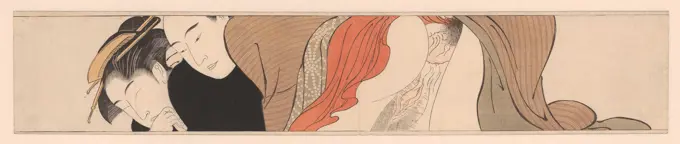
Geisha with eyes closed.; Sode no maki.geisha with closed eyes during anal penetration by man in stalked robe. Horizontal pillar print from the 12-part Serie Sode No Maki (also translated as "The Sleeve Scroll").
6145-30148247
The Actor Segawa Kikunojo II as the Nun Seigen 1758-1768 Japan. Color woodblock print; hashira-e, benizuri-e . Suzuki Harunobu
6145-51830316
Virgin and Child Enthroned with Saints Peter, Catherine of Alexandria, a Female Saint and Anthony Abbot Martino di Bartolomeo (Italian, Sienese School, circa 1365/70-1435). Virgin and Child Enthroned with Saints Peter, Catherine of Alexandria, a Female Saint and Anthony Abbot, ca. 1408. Tempera on wood panel, 8 1/4 x 6 1/2 in. (21.0 x 16.5 cm).   European Art ca. 1408
6145-29063826
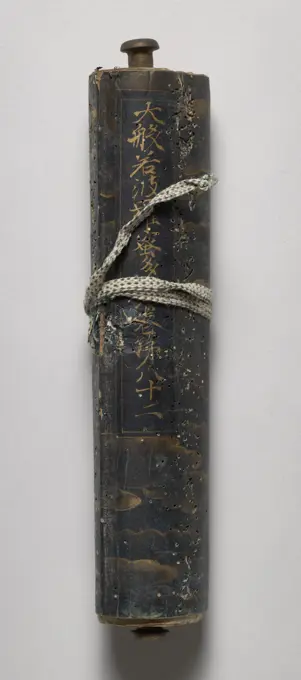
Volume from the Great Perfection of Wisdom Sutra, late 1100s. Japan, Heian period (794-1185). Handscroll; ink and gold on dyed paper; This scroll is part of the 600-volume Great Perfection of Wisdom Sutra. The sacred text addresses the perfection of wisdom and the nonsubstantiality of all phenomena, or the emptiness of all things. It takes the form of Shakyamuni Buddhas preaching at four locations. This scroll is from the Perfection of Wisdom in 100,000 Lines, which occupies the first 400 volumes. At one time, religious clergy kept all the scrolls in a lacquered wood repository. They are now too fragile to open and we will conserve them over time.
6145-59226779
Ornament with the Holy Spirit, Wierix (attributed to), 1594 print  Antwerp paper engraving / letterpress printing Holy Ghost represented as a dove (in flames). flowers ~ ornament
1525-21278983
AGRA, INDIA - APRIL 10: Pattern on Taj Mahal on April 10, 2012 in Agra, India. Taj Mahal is widely recognized as the jewel of Muslim art and one of the universally masterpieces of the world
6145-30181103
Altar Frontal Made 1801-1900 Spain. Square crosswork; plain material; plain fringe; darned filet .
1525-57108199
Black Drongo Coloring Pages with Crisp Lines, Mandala Designs, and White Background
6145-29235095
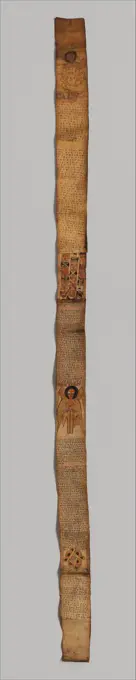
Healing Scroll 19th century Amhara or Tigrinya peoples In Ethiopia customized protective scrolls that interweave sacred imagery with textual prayers have been prescribed by traditional healers for over two thousand years. These were carried on the person of the individual to whom they were specifically dedicated to shield them from harm.Often the customized content of a scroll is astrologically determined. In Ethiopia as in ancient Greece, each human being has a corresponding zodiac sign associated with a particular destiny and talismanic character. The iconography of the scrolls thus alternate between talismanic "seals" and representations of saints, angels and archangels shown in the act of fighting demons. The seals are modeled on the seal of God that was revealed to King Solomon and feature geometric patterns intertwined with stylized representations of multiple visages and eyes that indicate prayers for divine intervention.. Healing Scroll. Amhara or Tigrinya peoples. 19th century
1848-60509165
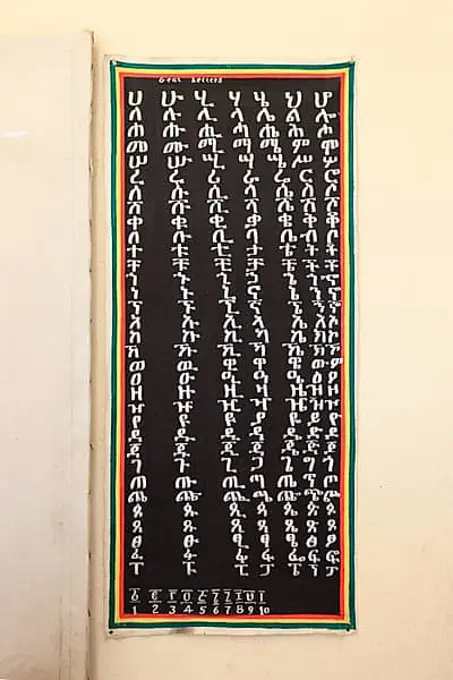
Tigray region, in the stele park of Axum, Aksum, in the muesum, Ethiopian characters, Ethiopia, Africa
6145-29734179
Page from a Dispersed Romance of Chandrabhanu and Lavanyavati 16th-17th century India (Orissa) In India, palm leaves were utilized as book pages during the medieval period. By the fiftheenth century, paper had largely supplanted them. In Orissa, however, the ancient tradition continues to this day. Because of their perishability, early Orissan pages are rare.. Page from a Dispersed Romance of Chandrabhanu and Lavanyavati. India (Orissa). 16th-17th century. Ink and opaque watercolor on palm leaf. Paintings
6145-46803761
Ceremonial Weaving(Tampan)
6145-46858444
A Procession ofFelines.  Artist: Unknown
6145-46825587
Priests Staff
1848-49381889
The Road to Egypt, Palestinian embroidery Tatreez symbol drawing over white background
6145-29175516
Healing Scroll 19th century Amhara or Tigrinya peoples Ethiopian healing scrolls use written prayers and talismanic imagery to combat demons that cause illness. This scroll was constructed from four pieces of parchment sourced from a ritually sacrificed animal. The preparation and viewing of the scroll are equally vital parts of the healing process. The talismans on this example are rendered in washes of red, black, and green, their sketchy, rounded outlines lending the work an overall linear simplicity. In the uppermost talisman, a youthful, beardless saint rides a rearing horse. His bare toes wrap around an Ethiopian toe stirrup as he points his spear upward in the pose of the victorious knight of Christ. Images of saints were popular in Ethiopian Christian art for their association with spiritual intervention. This example may illustrate Saint Tewodros, who was commonly depicted astride a red horse.In the central panel, a frontally posed archangellikely Michaelwears a striped robe
6145-46859515
Shadow Puppet (Wayang Kulit) of BimaNiyu
1525-20442758
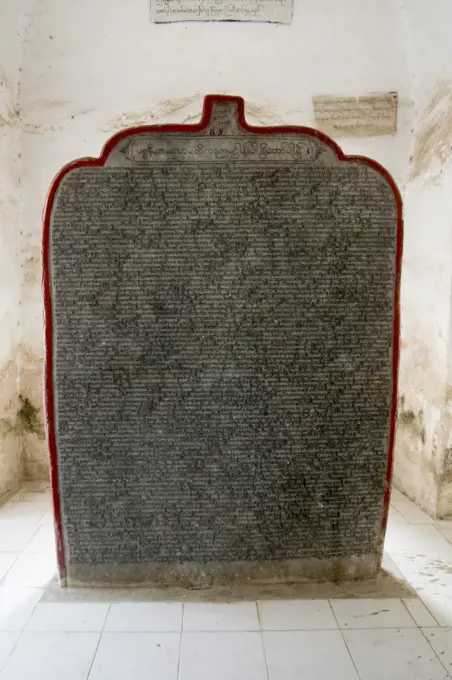
 the Kuthodaw Paya in the City of Mandalay in Myanmar in Southeastasia.. ASIA MYANMAR MANDALAY KUTHODAW PAYA
1525-21304524
Mosaic on the wall of the Church of the Saviour on Spilled Blood, St. Petersburg, Russia
1899-18853675
Candi are the Hindu and Buddhist temples and sanctuaries of Indonesia, mostly built during the 8th to 15th centuries. However, ancient non-religious structures such as gates, urban ruins, and pools and bathing places are often also called 'candi'. Candi refers to a structure based on the Indian type of single-celled shrine, with a pyramidal tower above it, and a portico. The term Candi is given as a prefix to the many temple-mountains in Indonesia, built as a representation of the Cosmic Mount Meru, an epitome of the universe. However, the term also applied to many non-religious structures dated from the same period, such as gopura (gates), petirtaan (pools) and some habitation complexes. The term 'candi' itself derived from Candika one of the manifestations of the goddess Durga as the goddess of death. This suggested that in ancient Indonesia the 'candi' had a mortuary function as well as a connection with the afterlife.
6145-46797728
Pultuel
6145-48967801
Two door zushi chapel with a figure of bodhisattva Fugen sitting on an elephant unknown
6145-29782710
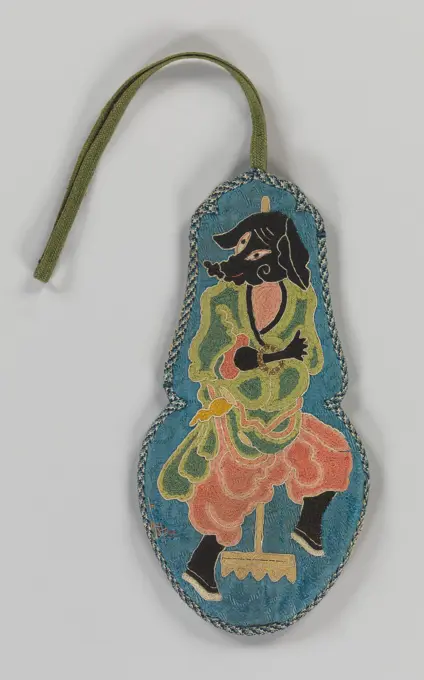
Gourd-Shaped Case with Pattern of Pig-Faced Creature 18th-19th century China The imagery on this bag is taken from the Xiyou ji (The Journey to the West), a Ming-dynasty (1368-1644) text based on the historical pilgrimage of the Buddhist monk Xuanzang (596-664) from China to India for the purpose of bringing back Buddhist scriptures. The boldly rendered, pig-faced creature is Zhu Bajie, one of Xuanzangs supernatural animal companions, shown here with the rake he uses as a weapon.. Gourd-Shaped Case with Pattern of Pig-Faced Creature 54419
6145-29650565
Poll photo collection. Jerusalem in art. Print representing the city of Jerusalem with the entry of Jesus and his disciples on Palm Easter in the foreground. 1953-00-00}. Israel, Jerusalem, Jordan
6145-29249752
Scorpion-like creature, incorporating human faces: charm image designed to protect against demons. Ink drawing, Tibet, 1850/1910
1899-18792575
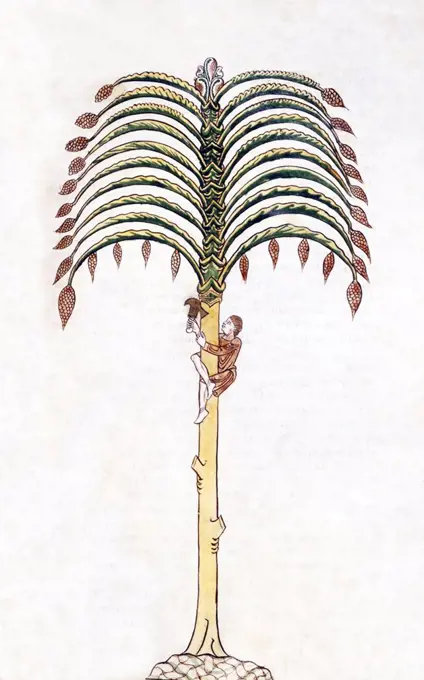
The Tacuinum (sometimes Taccuinum) Sanitatis is a medieval handbook on health and wellbeing, based on the Taqwim al-sihha   ('Maintenance of Health'), an eleventh-century Arab medical treatise by Ibn Butlan of Baghdad. Ibn Butln was a Christian physician born in Baghdad and who died in 1068. He sets forth the six elements necessary to maintain daily health: food and drink, air and the environment, activity and rest, sleep and wakefulness, secretions and excretions of humours, changes or states of mind (happiness, anger, shame, etc). According to Ibn Butln, illnesses are the result of changes in the balance of some of these elements, therefore he recommended a life in harmony with nature in order to maintain or recover one’s health. Ibn Butln also teaches us to enjoy each season of the year, the consequences of each type of climate, wind and snow. He points out the importance of spiritual wellbeing and mentions, for example, the benefits of listening to music, dancing or ha
1899-18787775
Commentary on the Apocalypse (Commentaria In Apocalypsin) was originally an eighth century work by the Spanish monk and theologian Beatus of Liebana. Today, it refers to any of the extant manuscript copies of this work, especially any of the 26 illuminated copies that have survived. It is often referred to simply as the Beatus. The historical significance of the Commentary is made even more pronounced since it included a world map, which offers a rare insight into the geographical understanding of the post-Roman world. Well-known copies include the Morgan, the Saint-Sever, the Gerona, the Osma and the Madrid (Vitr 14-1) Beatus codices. Considered together, the Beatus codices are among the most important Spanish medieval manuscripts and have been the subject of extensive scholarly and antiquarian enquiry.
1525-20980999
Big wood door in a temple. Generally in Thailand, any kinds of art decorated in Buddhist church, temple pavilion, temple hall, monk’s house etc. created 

with money donated by people to hire artist. They are public domain or treasure of Buddhism, no restrict in copy or use, no 

name of artist appear (but, if there is artist name, it only for tell who is the artist of work, not for copyright). This photo is taken 

under these conditions.
1525-27914978
Ringing of the church of the Abbey, in Fulda, near Reusbach, in Bavaria, vintage engraved illustration. Magasin Pittoresque 1857.
6145-59461556
Head of Buddha, Reijer Stolk, 1943 print  Netherlands transparent paper  Buddha, founder of Buddhism
6145-46859523
Shadow Puppet (Wayang Kulit) of DusaSana
6188-64575747
Close-up of colourfully painted Tilaka, Sri Ranganathswami temple, Tiruchirappalli, Trichy, Tamil Nadu, India Copyright: xNitinxKelvalkar/DinodiaxPhotox
6137-28690620
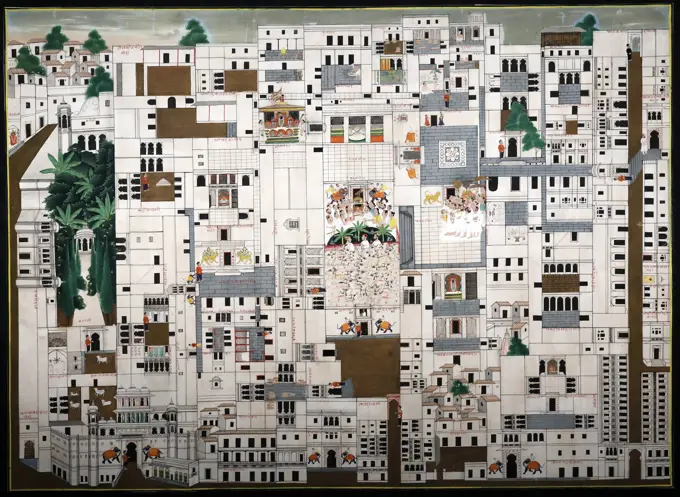
Asian Civlisations Museum.  Temple of Shrinathji. India 19th century. Ink and gouache on paper.  Singapore.
1899-30031381
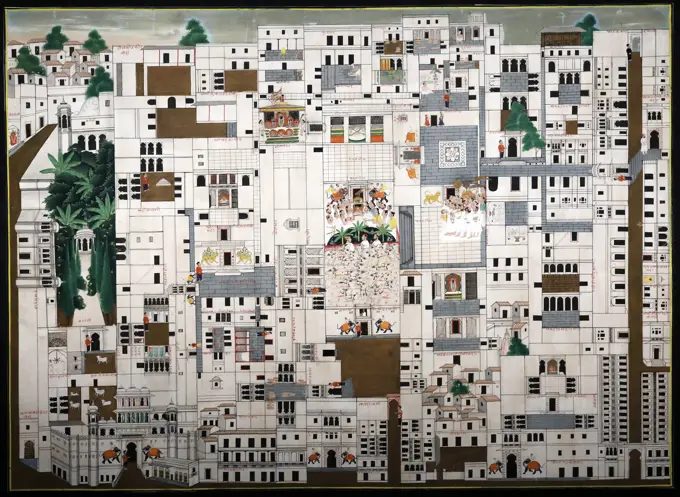
Asian Civlisations Museum.  Temple of Shrinathji. India 19th century. Ink and gouache on paper.  Singapore.
6145-51830318
Virgin and Child Enthroned with Saints Peter, Catherine of Alexandria, a Female Saint and Anthony Abbot Martino di Bartolomeo (Italian, Sienese School, circa 1365/70-1435). Virgin and Child Enthroned with Saints Peter, Catherine of Alexandria, a Female Saint and Anthony Abbot, ca. 1408. Tempera on wood panel, 8 1/4 x 6 1/2 in. (21.0 x 16.5 cm).   European Art ca. 1408
6145-48517620
Funeral of Sadi Carnot, President of the Republic of France. Roty, Louis-Oscar (1846-1911), male medallist
6145-46859750
Shadow Puppet (Wayang Kulit) of SuryaRicikan
6145-43597743
Masonic apron (Venerable Master of the Lodge). Gloton, Virgil (Paryż : wytwórnia masoników ; fl. 1909-ca 1969), factory
6145-54092397
220407-N-BB298-1009 Naval Medical Center Portsmouths (NMCP) Diversity Committee hosted a Holocaust Remembrance ceremony in the commands Chapel of Comfort, April 7. The display of Holocaust memorabilia included literature and poems, along with viewing a video about the Holocaust.
6145-45694810
Men's Haori with the old cormorant fisherman from 'ukai'. Haori for a man with a decoration at the lining of a rectangular representation of an old man in a boat that is fishing at night with cormorants, a basket and a fire pit in the boat, against a background of a show in silhouette of Hills and a man fishing with cormorants in a boat. A text on the rectangle. The fish (usually ayu) are attracted by the fire, the aligned cormorants is prevented by swallowing with an iron ring around the neck. This image and text probably refer to the No-Theater Piece Ukai (the Cormorant Visser), in which two monks meet an old cormorant fisherman at the river ISAWA, which turns out to be a mind. Dark gray silk with brocade woven decoration.
1788-21783408
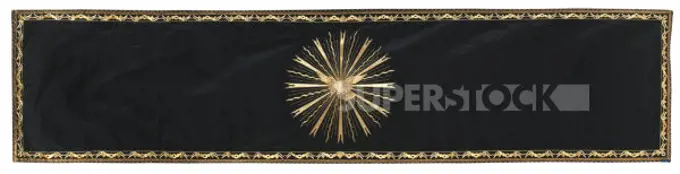
Black liturgical stole embroidered with the dove of the Holy Spirit, Lombardy. Italy, 18th century.
6145-29261939
Arabic geomantic signs, wheel of life and death, the zodiac wheel and the Veronica. Engraving.
6145-30389739
Priests Stole
1746-28997424
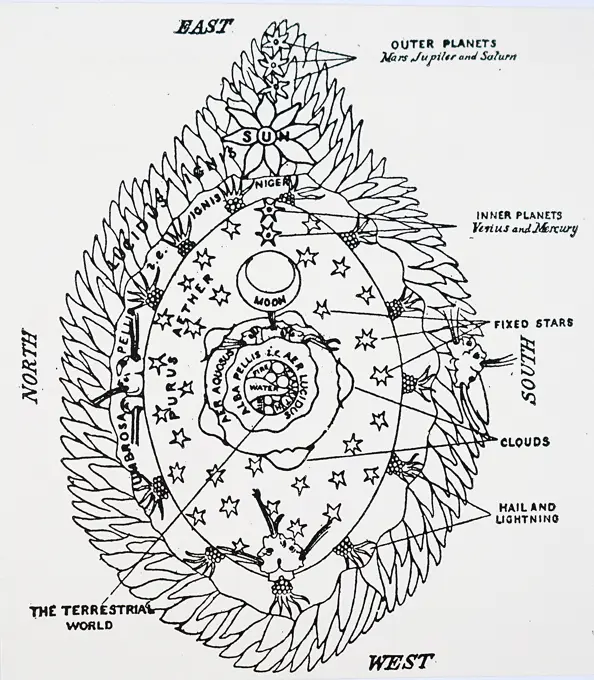
Engraving depicting Hildegard von Bingen's first scheme of the universe. Hildegard von Bingen (1098-1179) a German Benedictine abbess, writer, composer, philosopher, Christian mystic, visionary and polymath. Dated 12th Century
1848-54706959
Khanda symbol, symbol of Sikhism, Gurdwara Bangla Sahib, Sikh temple near Connaught Place, Delhi, North India, India, Asia
6188-64697393
Buddhist scripture by wood Buddhist scripture by wood Copyright: xZoonar.com/dinhxxngocxhungx 8298769
1848-67289974
Zillis, village church of St Martin, Romanesque wooden ceiling with biblical depictions
6177-V53606425
6145-29060449
Sudhana and a Pair of Antelopes: Folio 37 (recto), from a Gandavyuha-sutra (Scripture of the Supreme Array), 1000-1100s. Nepal. Ink and color on palm leaves; average: 4.2 x 52.4 cm (1 5/8 x 20 5/8 in.).
PREVIOUS
of 2
NEXT
2401 S. Ervay, Suite 206
Dallas, Texas 75215
United States
Get Started
Free ResearchMy BoardsMy Cart
For Creators
How To License Your ContentContributor PortalFrame of Mind
Resources
API accessPricing
Contact
+1 866 236 0087help@viewpictures.co.uk Contact form
©2026 View Pictures. All Rights Reserved. -B
This site is protected by reCAPTCHA and Google Privacy Policy and Terms of Service apply.