Luxury Dagger Artifacts

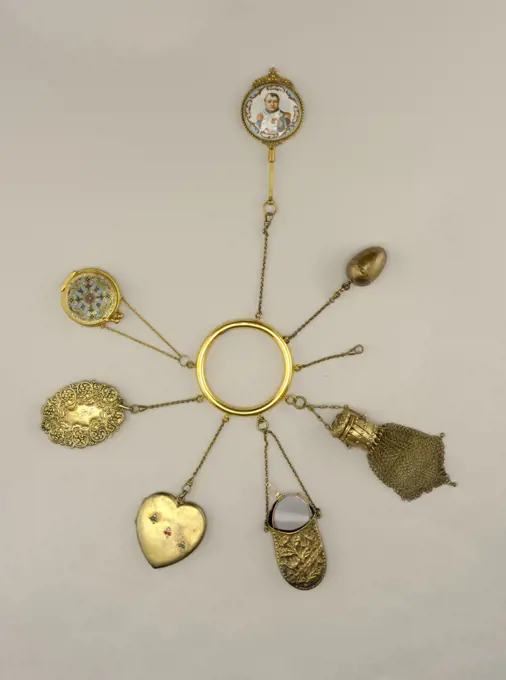
Ornate golden pieces from historical weapons and decorative arts, showcasing rich craftsmanship and intricate designs.

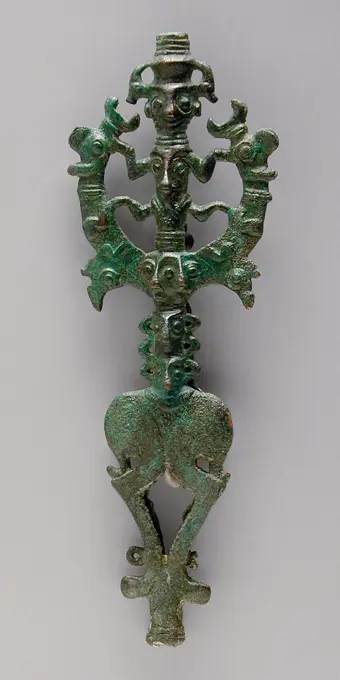
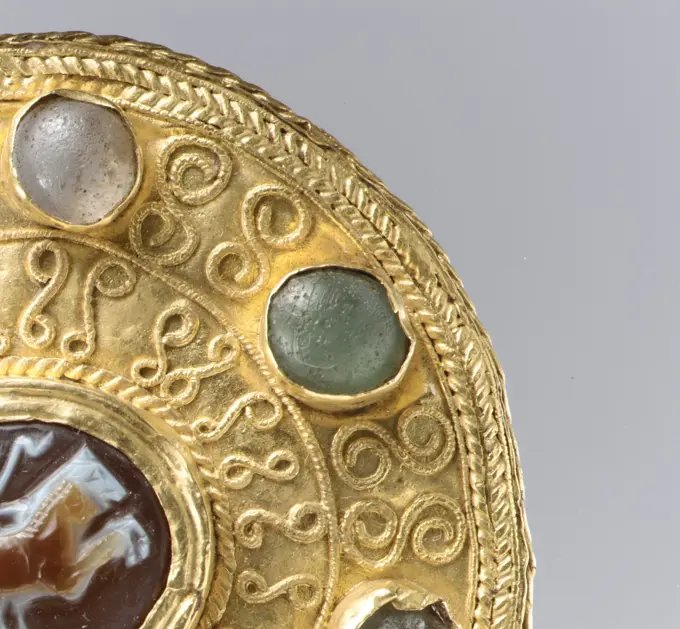
Gilded silver fibula with finger like projections and zoomorphic figures, Crimea. Gotho-Alanic Civilization, 4th-9th Century.
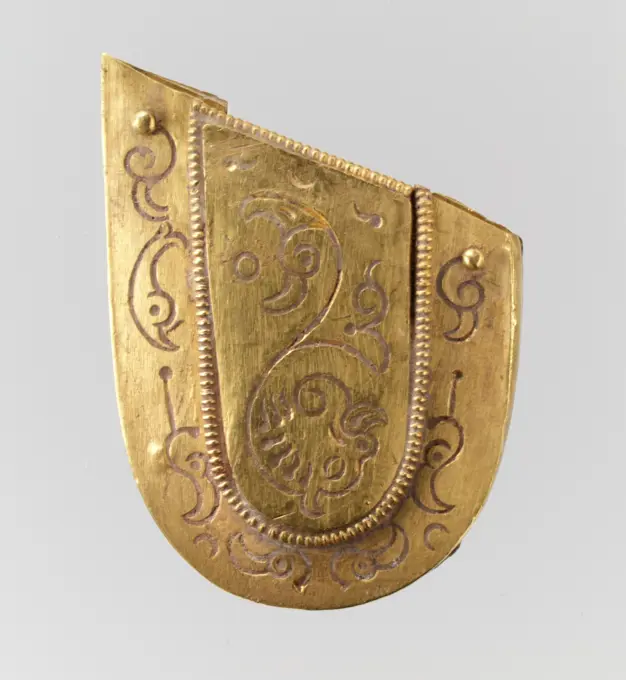
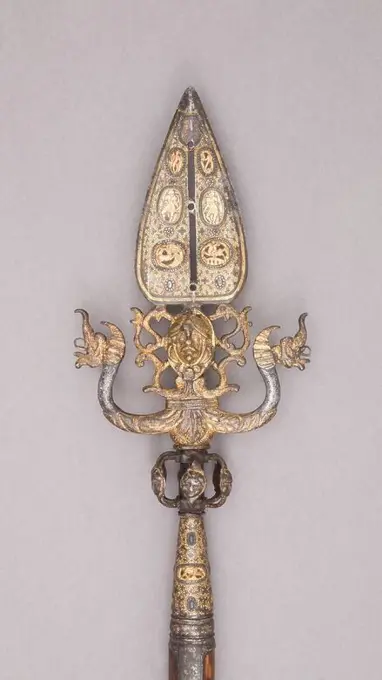
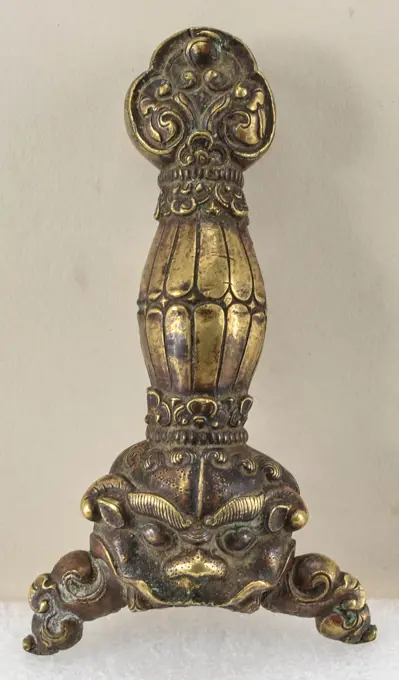
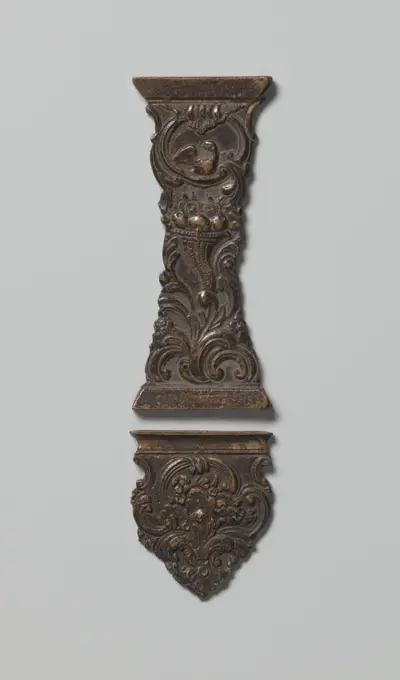
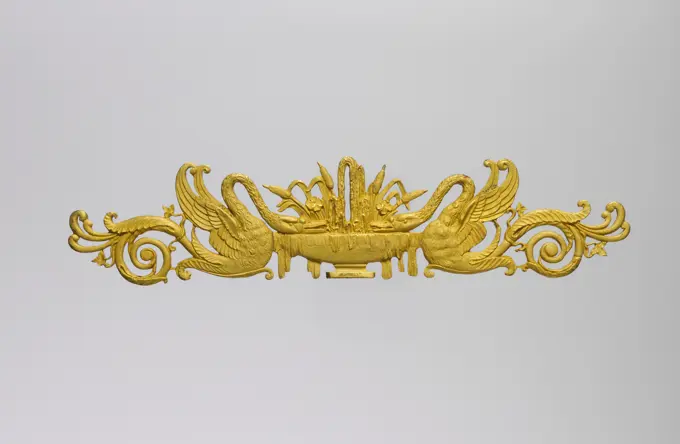
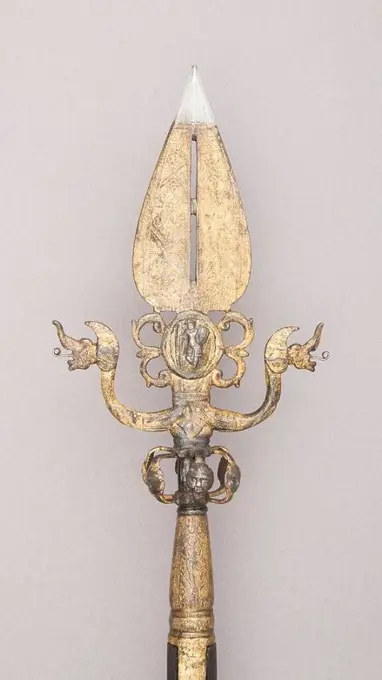
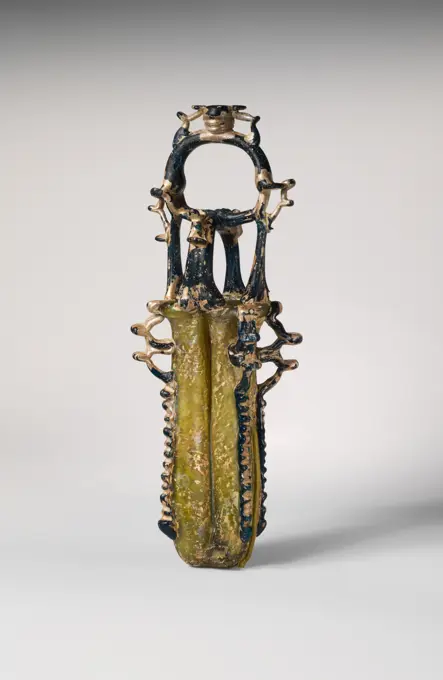
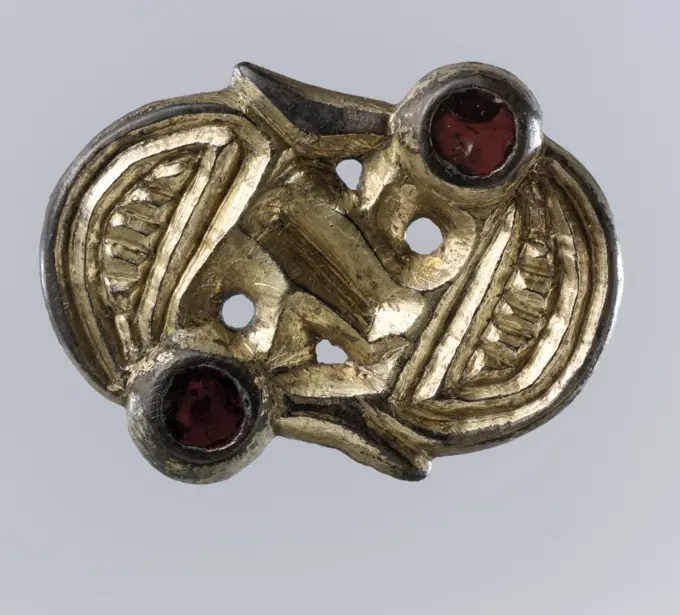
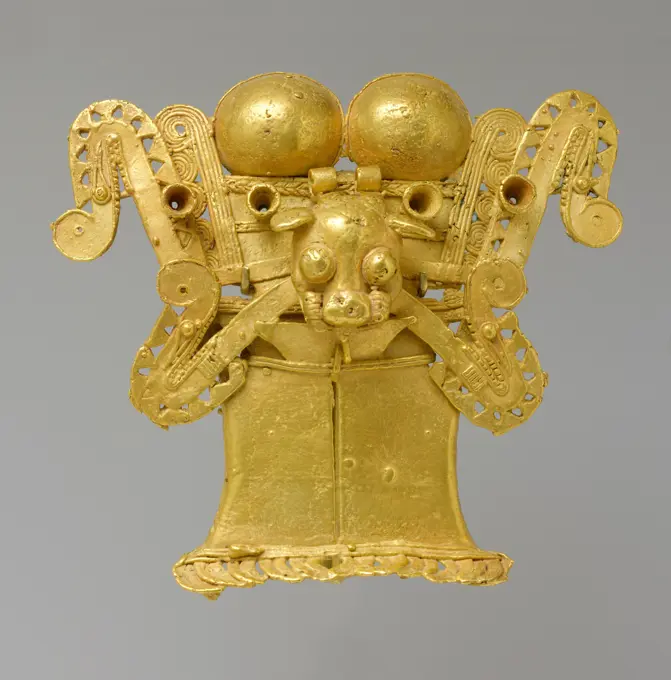
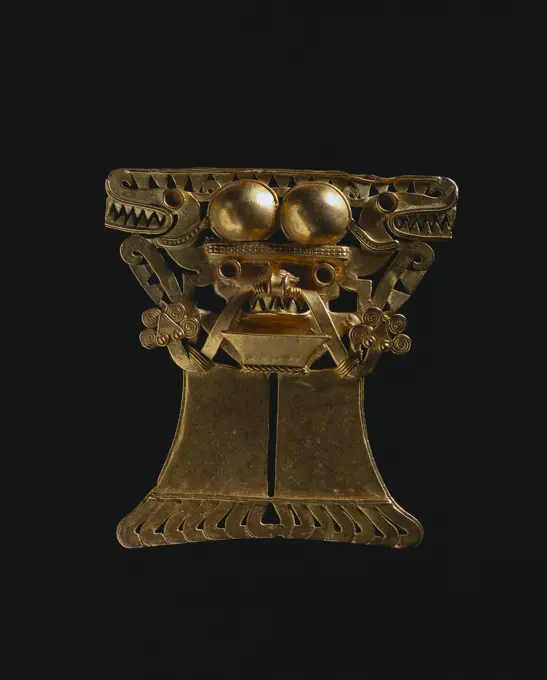
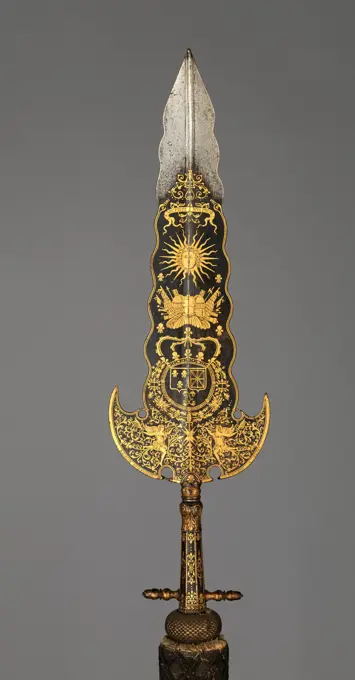
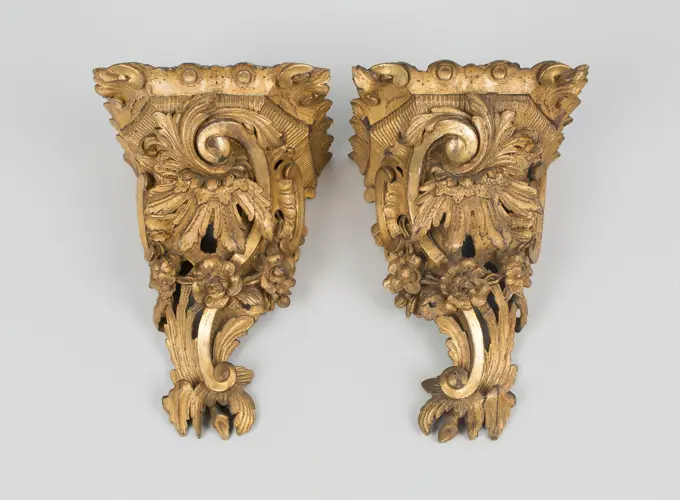
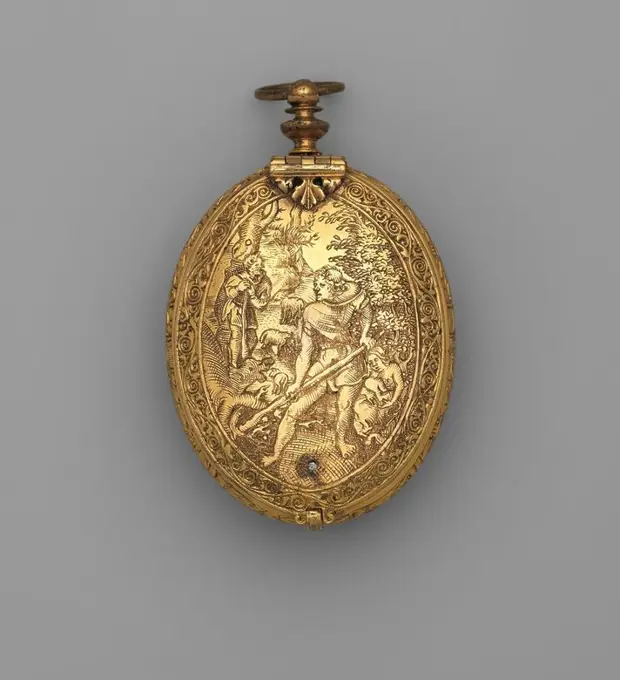
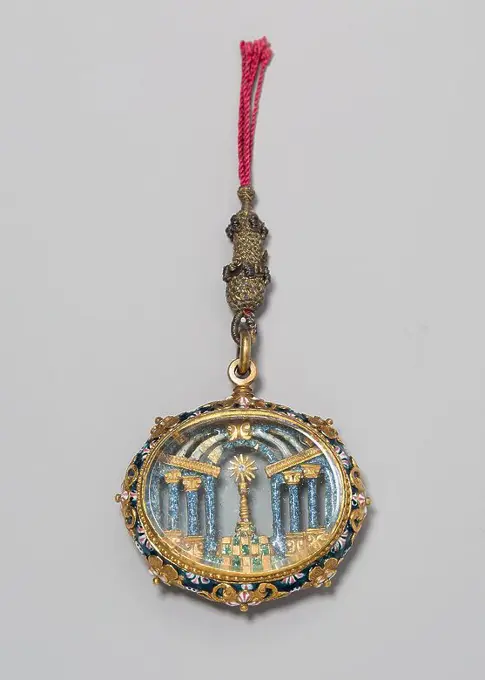
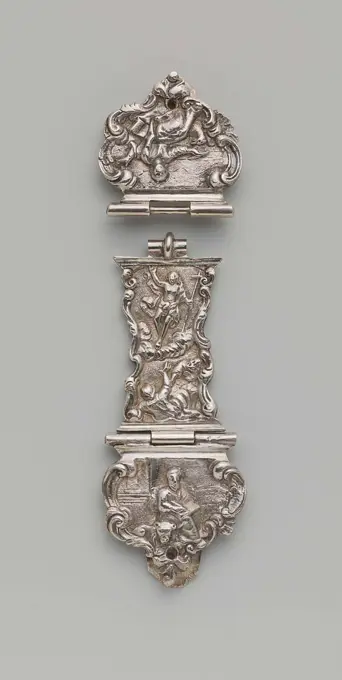
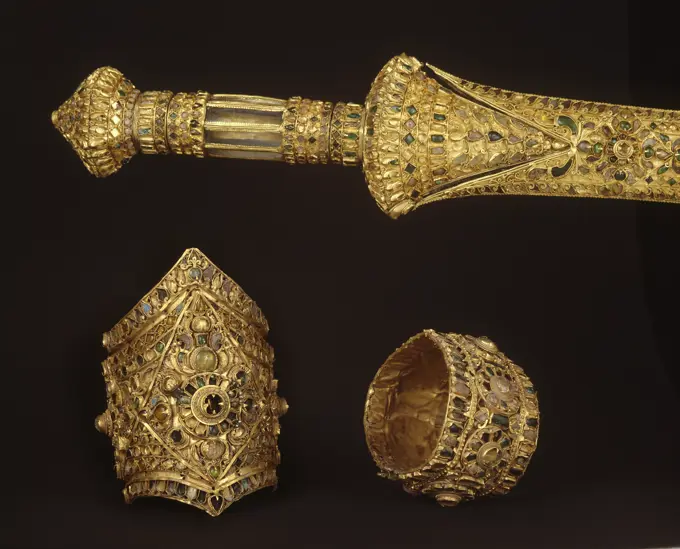
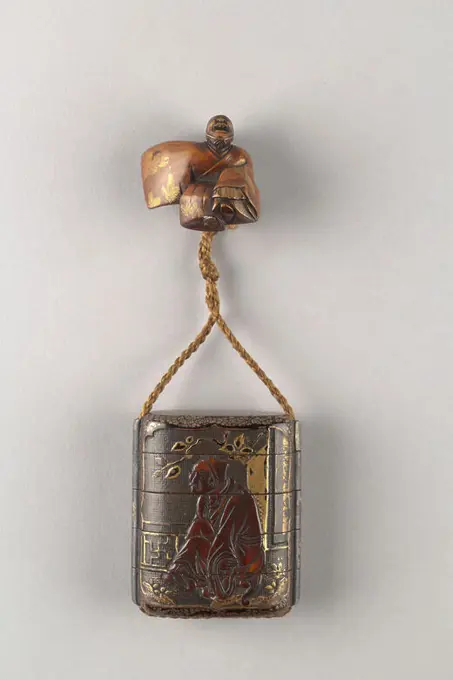
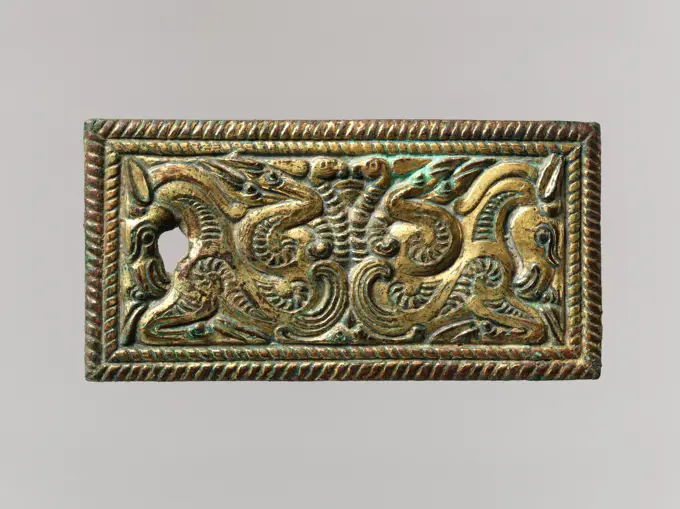
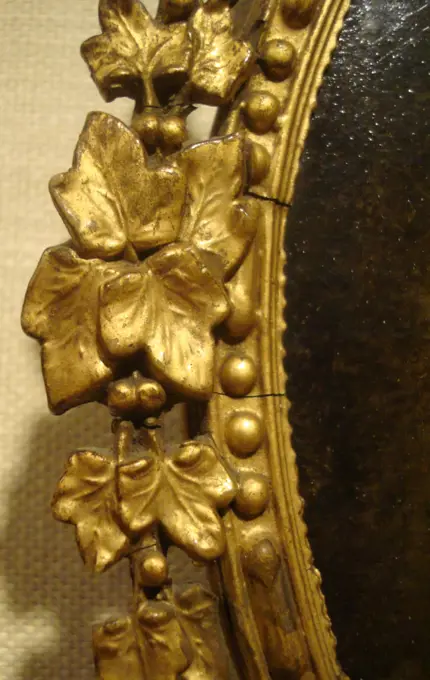
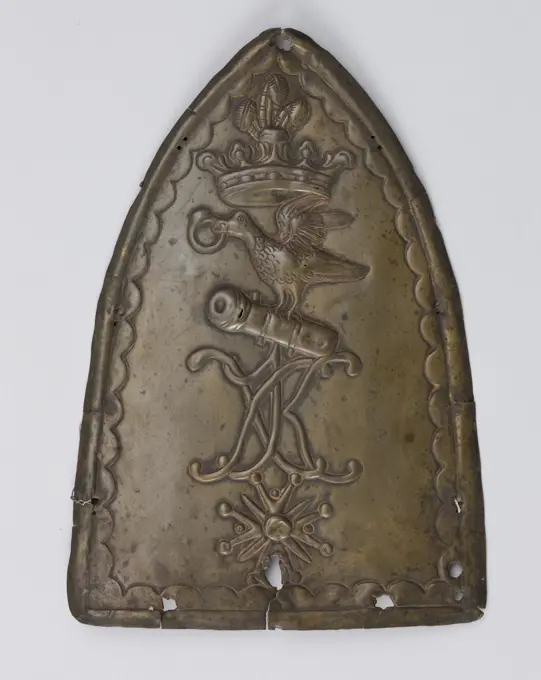
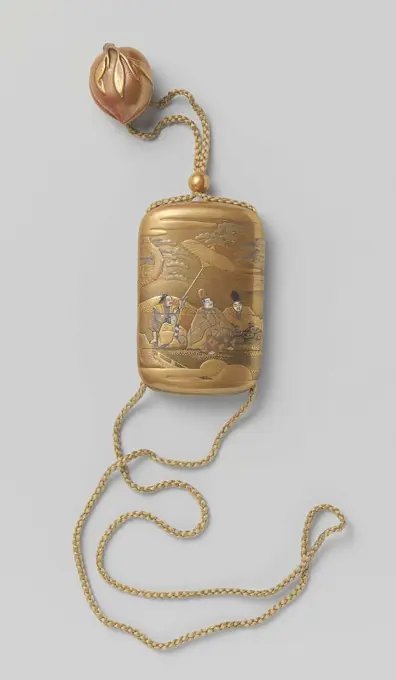
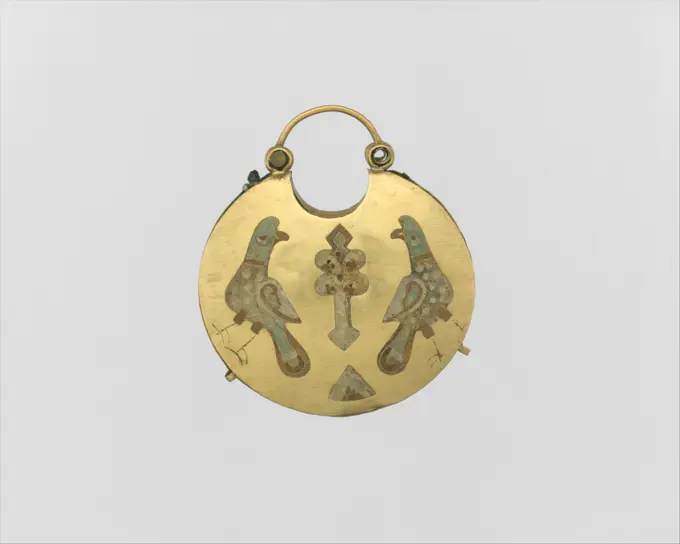
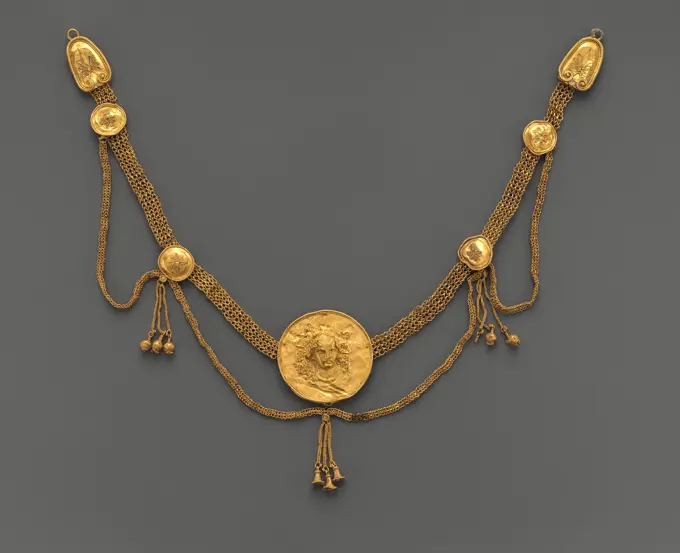
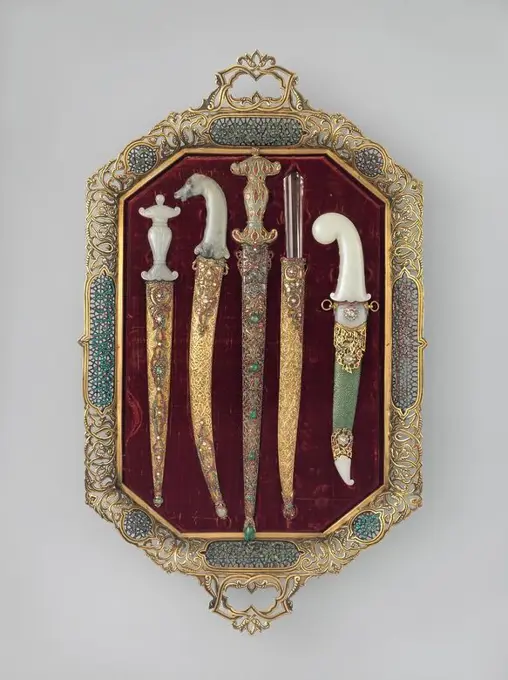
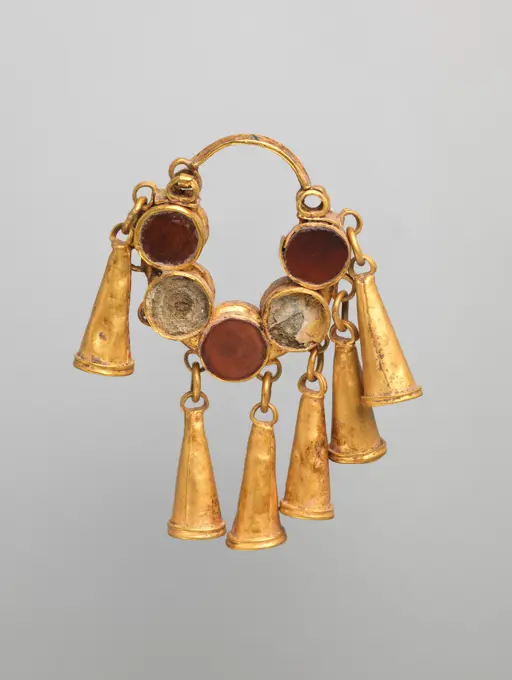
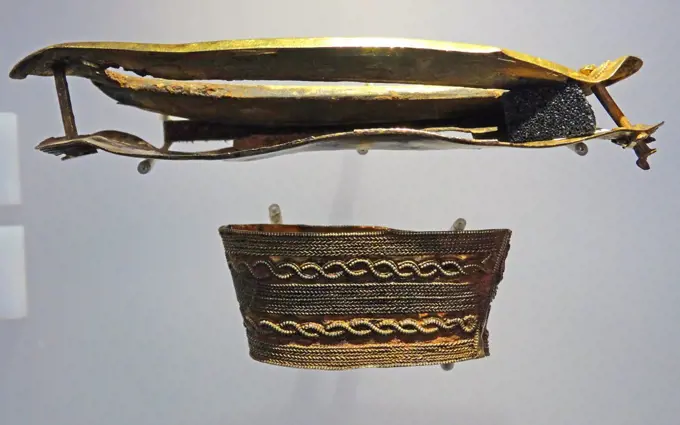
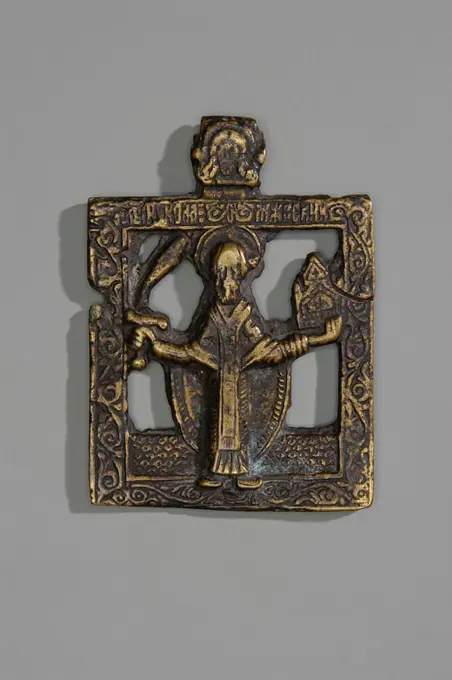
EscutcheonPiece from a Luxury Iron Dagger ca. 600 Langobardic These piecesgrip terminal, mounts, scabbard chape, all in goldare all that remain of a luxury dagger. The stamped designs of sea monsters and dolphins belong to Byzantine metalworking tradition and appear on other Langobardic objects from this period.This group of objects was found in the grave of a Langobardic horseman, who was buried in his warrior dress, with weapons, shield, helmet, and the fittings for his horse. What remains are the many gold pieces that would have ornamented his clothing and equipment, and they attest to the great wealth of the Langobardic aristocracy within a generation of settling in Italy.. Piece from a Luxury Iron Dagger 469022Mount, Gilt bronze, head, France, ca. 1715, metalwork, Decorative Arts, MountLinstock. Culture: Italian. Dimensions: L. 84 in. (213.3 cm); L. of head 14 1/2 in. (36.8 cm); W. 6 1/16 in. (15.4 cm); Wt. 4 lbs. 5 oz. (1960 g). Date: ca. 1600. Museum: Metropolitan Museum of Art, New York, USA.Hilt of a Ritual Sword 16th-17th century Tibetan Originally fitted with a proportionately small blade, perhaps ten inches long, this hilt symbolizes the Sword of Wisdom, used to sever ties to spiritual and temporal ignorance and drive out the demons of negative thoughts and actions, particularly in the context of rituals associated with the Buddhist deities Manjushri, Padmasambhava, and Palden Lhamo. In addition to the use of such swords in actual rituals and ceremonies, iconographically, swords of this type appear in Tibetan scroll paintings (thang ka), wall murals, sculptures and other works of art, usually wielded by protective deities. They are also depicted among the objects required for votive or ritual use and are shown in great detail in a manuscript of ritual practices prepared for the Great Fifth Dalai Lama in the seventeenth century.The hilt is cast in one piece, with decoration in low relief accented by engraved details. The pommel has a trilobate or trefoil form and probab. .MountModel for a bracket and clamp of a book lock with a horn with fruits, surrounded by rococo ornament, anonymous, c. 1750 - c. 1775 The models for founding shapes driven from plate are equipped with rococo ornament. The bracket (A) contains a horn with fruits and a bird and the clamp (B) flowers and fruits. Amsterdam copper (metal) The models for founding shapes driven from plate are equipped with rococo ornament. The bracket (A) contains a horn with fruits and a bird and the clamp (B) flowers and fruits. Amsterdam copper (metal)Gold sword belt buckle depicting griffins, a man and a panther, from the Vinnica Region, Ukraine. Jewellery. Sarmatic Civilization, 4th- 2nd Century BC.Gilded silver fibula with finger like projections and zoomorphic figures, Crimea. Gotho-Alanic Civilization, 4th-9th Century.MountSwans and Fountain Appliqué ca. 1810-30 Henry Kellam Hancock. Swans and Fountain Appliqué 5242Nose Ornament 5th-8th century Venado Beach. Nose Ornament. Venado Beach. 5th-8th century. Gold (cast). Panama, Venado Beach. Metal-OrnamentsLinstock. Culture: Italian. Dimensions: L. 94 7/8 in. (240.9 cm); L. of head 13 1/4 in. (33.6 cm); W. 6 3/8 in. (16.2 cm); Wt. 3 lbs. 13 oz. (1730 g). Date: ca. 1580. Museum: Metropolitan Museum of Art, New York, USA.Phylactery from the treasure of Nejzac, Ukraine. Mongolian Civilization, 14th Century.Four Wall Lights (Two pairs).Labret in the Form of a Saurian Head with Bifurcated Volute Emerging from Mouth 1000-1500 Colombia. Gold and copper alloy . TaironaGlass multiple cosmetic flask (kohl tube) 5th century A.D. Roman, Syrian Translucent yellow green; handles and trails in translucent deep turquoise blue.Outsplayed rim folded over and in; body comprising four compartments made by pinching tubular paraison vertically to form diaphragms; irregular flattened bottom, slightly concave, with central circular pontil mark; ornate handle comprising a thick rod, applied to top of neck at junction of two compartments and drawn up to form an arched basket handle; two other rods applied above junction of compartments, drawn up vertically with flattened loops above, tooled in horizontally, and attached to top of basket handle, thus forming a cross-shaped design; another thick rod applied to top of flattened loops, with pinched horizontal projections, and drawn up to form a second arched basket handle above.On handle, on top a circular solid knob, flanked by two small trails applied to upper basket handle and drawn up with pinched fold at mid-point, BracketMountS-Shaped Brooch mid-6th century Frankish Garnets, worked in the cloisonné technique, featured prominently in the luxury jewelry of the Franks. Jewelers would solder small compartments arranged in geometric patterns onto the surface of a metal disk. In those cells, or cloisons, they would place a textured piece of gold foil, which would show through the thin translucent garnet that would then be set on top.. S-Shaped Brooch 465246 Frankish, S-Shaped Brooch, mid-6th century, Silver-gilt, garnets, Overall: 1/16 x 1 3/16 x 3/8 in. (0.1 x 3 x 0.9 cm). The Metropolitan Museum of Art, New York. Gift of J. Pierpont Morgan, 1917 (17.192.184)Thimble.  Maker: Jacob Hurd, American, 1702-1758Chatelaine, intended for a watch, consisting of a hook and four chains. The object is composed of the following mostly molded pieces: the hook, four chains, which are attached to a hinge and at the bottom of the element for the watch. The decoration consists of C volutes.Defects;  19th century (1801-00-00-1900-00-00);Mount (France); bronze (gilt), goldStylized Figure Pendant 12th-14th century Coclé (Parita). Stylized Figure Pendant 309420Animal-Headed Figure Pendant, c. 1000-1550. Panama, Veraguas or Parita style, c. 1000-1550. Cast gold; overall: 10.5 x 9.8 x 2 cm (4 1/8 x 3 7/8 x 13/16 in.).Hairpin China. Hairpin 60860Partisan Carried by the Bodyguard of Louis XIV (1638-1715, reigned from 1643) ca. 1678-1709 Inscription probably refers to Bonaventure Ravoisie French This partisan, along with two like it also in the Metropolitan Museum's collection (acc. nos. 14.25.454, 04.3.64), are thought to have been carried by the Gardes de la Manche (literally, guards of the sleeve,” indicating their close proximity to the king), an elite unit of the bodyguard of Louis XIV. This example (along with 04.3.64) bears the king’s motto and sunburst above the crowned arms of France and Navarre, which are encircled by the collars of the royal orders of the Holy Spirit and Saint Michael. It is inscribed RAVOISIE FOVRBISSEVR DV ROY A PARIS, probably referring to Bonaventure Ravoisie, a royal cutler recorded between 1678 and 1709.The other partisan (14.25.454) is from a small group designed by Jean Bérain the Elder (1637-1711) for the marriage of Louis’s niece Marie-Louise d’Orléans to Carlos II of Spain in 1679. The decMountBadge or Harness Pendant 15th century Spanish Heraldry, or coat-of-arms, were vitally important in Europe throughout the Middle Ages and the Renaissance. Heraldic emblems were used to identify noble families, cities, regions, and even countries. In addition to being displayed on shields and flags, heraldry was incorporated into architectural decoration on the interior and the exterior of buildings, on furniture, works of art, clothing, and horse equipment. Harness pendants, like this example, would have been attached to a headstall, bridle, or other straps making up the tack of a horse ridden by a nobleman or noblewoman, or a member of their household. Many harness pendants also have decoration that is simply ornamental, or have symbols that are not specifically heraldic in nature.. Badge or Harness Pendant. Spanish. 15th century. Copper, gold, enamel. Miscellaneous-BadgesBracketNose Ornament 6th-7th century Moche (Loma Negra). Nose Ornament 313412MountBadge or Harness Pendant 14th century possibly Spanish Heraldry, or coat-of-arms, were vitally important in Europe throughout the Middle Ages and the Renaissance. Heraldic emblems were used to identify noble families, cities, regions, and even countries. In addition to being displayed on shields and flags, heraldry was incorporated into architectural decoration on the interior and the exterior of buildings, on furniture, works of art, clothing, and horse equipment. Harness pendants, like this example, would have been attached to a headstall, bridle, or other straps making up the tack of a horse ridden by a nobleman or noblewoman, or a member of their household. Many harness pendants also have decoration that is simply ornamental, or have symbols that are not specifically heraldic in nature.. Badge or Harness Pendant. possibly Spanish. 14th century. Copper, gold, enamel. Miscellaneous-BadgesMountPair of Brackets 1740-1750 England. Pine, carved and gilded .Watch. Culture: Flemish, Antwerp or possibly Ghent. Dimensions: Overall: 1 7/8 × 1 1/4 × 7/8 in. (4.8 × 3.2 × 2.2 cm); Height of back plate: 1 5/8 in. (4.1 cm). Maker: Watchmaker: W.A.. Date: 1571.The engraving on the cover of the case is from a print by Jacob Binck (ca. 1500-1569) titled A Roman Soldier Presenting Grapes to a Nude Woman. Other engravings on the case allude to allegories of faithful wives. The use of both brass and steel for the wheels of the movement seems to indicate a Flemish origin for the watch. The primitive form of the cock would appear to support the early date. Museum: Metropolitan Museum of Art, New York, USA.Pendant with the Eucharist, or Holy Sacrament. Spanish. Date: 1675-1699. Dimensions: 4.7 × 4.6 cm (1 7/8 × 1 13/16 in.). Gold, enamels, and glass. Origin: Spain. Museum: The Chicago Art Institute, Chicago, USA.Curtain Loop OrnamentsBoekslot met de verrijzenis van Maria.Book lock of silver, with the resurrection of Mary. Two evangelists in the corners.Royal gold sword and jewellery dating from late 14th century found in the crypt of Wat Ratburana, Ayutthaya, now in Ayutthaya National Museum, Thailan...Loop . Openwork strip decorated with garlands of flowers and leaves.Rosette. Parasol button of gold. The button is from below oval and widens itself to the round, slightly basic top. He rests on a slightly basic, smooth tire, above which a frieze is driven from a recurring pattern of lily-like flowers against a roughened background. The top is decorated with a pearl, from which three C-shaped garlands run, each consist of four in size decreasing golden seats with alternating sapphires and diamonds. The button is driven around with water and various plants such as water lilies, lis dods and reed plumes and above a dragonfly, against a very finely roughened background. The hollow bottom is filled with ivory with a hole in the heart. According to () A blade with wavy contour on both sides.HandleChatelaine, Silver, gold wash, ivory, enamel, glass, Seven components of various materials attached to simple, gold-washed hoop bracelet: a: Ring; b: Mirror; c: Egg; d: Mesh bag; e: Eyeglass case; f: Eye glass; g: Heart shaped Locket; h: Memo pad; i: Compact; j: Pin cushion; k: string., USA, ca. 1860, jewelry, Decorative Arts, ChatelaineDoor-Knocker. Dated: 16th century. Dimensions: overall: 15.9 x 11.2 x 3 cm (6 1/4 x 4 7/16 x 1 3/16 in.). Medium: bronze//Medium brown patina. Museum: National Gallery of Art, Washington DC. Author: Italian 16th Century.Standard FinialApplication;  PO .XVIII century (1750-00-00-1750-00-00);Case (Inro) with Design of Chinese Sages Seated on Verandah. Culture: Japan. Dimensions: 2 1/2 x 2 1/16 x 7/8 in. (6.3 x 5.3 x 2.3 cm). Date: 17th-18th century. Museum: Metropolitan Museum of Art, New York, USA.Belt Buckle with Beaked Ungulates 2nd century B.C. North China. Belt Buckle with Beaked Ungulates. North China. 2nd century B.C.. Gilded bronze. MetalworkTassel, Medium: metallic thread, linen, wood core, Tassel with a turned wooden core (vase shaped) has metallic thread and collars over a cover of yellow linen cloth. Skirt of twisted metallic threads with strands of spiral twist and ornaments formed of paillettes and rosettes. Loop of green silk and metallic cord., Spain, 18th century, trimmings, TasselBritish, Gothic Revival frame, Unknown framemaker, late 18th century, Wood and compo, original oil and water gildingMount; bronze (gilt)Pair of frieze ornaments possibly Etienne Martincourt French ca. 1770-85Silversmith's art, Italy, 17th century. Giovan Domenico Vinaccia (1625-1695), Silver centerpiece, 1671. Detail.. Bracket of a book lock of gold, cast and scilated, with representation in relief of the presentation of Jesus in the temple. The show is surrounded by Rocaille ornaments. Bible lock.Cabbitus sheet from the Krasińscy Court Militia unknown labelChatelaine of gilded copper, anonymous, c. 1800 - c. 1900 Chatelaine of gilded copper consisting of four quoted plates with a hook and two boxes of gilded copper and mother -of -pearl.  copper (metal). mother of pearl gilding Chatelaine of gilded copper consisting of four quoted plates with a hook and two boxes of gilded copper and mother -of -pearl.  copper (metal). mother of pearl gildingFragment goudgalon, 1800 - 1900 Fragment golden galon, decorated with garlands with flowers and a branch with leaves and flowers.  . Fragment golden galon, decorated with garlands with flowers and a branch with leaves and flowers.  .BracketDisk Brooch mid-600s Frankish The dress of Frankish women generally consisted of a tunic, cinched by a belt from which hung an array of pendants. A wrap or cloak went over the tunic. Shoes and hosiery, fastened with buckles, covered the legs. Earrings, necklaces, and hairpins completed the ensemble.Aspects of this dress changed from the 300s to the 600s, and brooches in particular convey changes in taste. From the 300s to the 500s, pairs of small brooches, in an array of inventive shapes, held the wrap in place. By the 600s, a single large disc brooch, usually elaborately decorated, served the same function. No other piece of jewelry is more characteristic of Frankish dress than the brooch, and no other better demonstrates the virtuosity of Frankish metalworkers.. Disk Brooch. Frankish. mid-600s. Gold; garnet; red, pale, amber and blue glass; mother-of-pearl. Metalwork-GoldMount (France); stamped, cast, and chased gilt bronzePair of Gauntlets. Culture: French. Dimensions: L. of each 12 in. (30.5 cm); W. of each 8 in. (20.3 cm). Date: ca. 1600.The battle scenes depict soldiers wearing contemporary armor and include banners with the arms of France. These gauntlets are part of an embossed and gilt parade armor that once belonged to the English collector Horace Walpole (1717-1797) at Strawberry Hill, which was among the first Gothic Revival houses in Europe. Museum: Metropolitan Museum of Art, New York, USA.dragon headed bracelets & jewels from Sikkim, Northern India 19th centuryJewelry in the form of a Schelphoorn ,, 1400 - 1500 Jewelry in the form of a Schelphoorn. Java gold (metal) Jewelry in the form of a Schelphoorn. Java gold (metal)Curtain Tieback (France); gilt bronzeInro with lilies.Box of golden lacquer, consisting of five parts. In a landscape a mandarin is accompanied by woman and child, while a servant holds a parasol above them. The faces are made of ivory.Snuffbox ca. 1750 German. Snuffbox 193896One of a Pair of Temple Pendants, with Two Birds Flanking a Tree of Life (front) and Leaf and Rosette Motifs (back) 11th-12th century Kievan Rus' When Kievan Rus, a powerful new state to the north of the Byzantine Empire, accepted Christianity as its official religion in 988, the aristocracy also adopted the manners and dress of the Byzantine court. Local artists soon produced their own versions of Constatinopolitan fashions. This temple pendant of precious metals worked in cloisonné enamel or niello are local variants of the more intricately detailed works made for the Byzantine court.As in Byzantium, temple pendants may have been worn next to the face by both the men and the women of Rus. The works shown here were perhaps buried by their owners when the Mongol armies under Batu Khan sacked Kiev in 1240.. One of a Pair of Temple Pendants, with Two Birds Flanking a Tree of Life (front) and Leaf and Rosette Motifs (back) 464576Gold earring with head of a bull ca. 1400-1050 B.C. Cypriot Most of the raw materials for Cypriot jewelry came from the East. Gold became plentiful in the Late Bronze Age, when Syria and Egypt were the primary sources. This earring is a Cypriot creation, an ornament in the form of a bull's head.. Gold earring with head of a bull. Cypriot. ca. 1400-1050 B.C.. Gold. Late Bronze Age. Gold and SilverGold necklace late 4th-3rd century B.C. Greek, South Italian, Tarentine The ribbon of intricate linked chains is decorated with a central medallion of Dionysos flanked by other pendant ornaments. It is not a true necklace but a hormos (collar) that was pinned to the clothing across the chest.. Gold necklace. Greek, South Italian, Tarentine. late 4th-3rd century B.C.. Gold. Early Hellenistic. Gold and SilverTray of Jeweled Daggers. Culture: Turkish. Dimensions: L. 31 3/8 in. (79.7 cm); W. 18 1/2 in. (47 cm). Date: probably late 19th century.This opulent array of daggers belongs to a large group of flamboyant gem-studded weapons that were probably made in Istanbul in the waning years of the Ottoman Empire. Their traditional shapes and luxurious materials were intended to evoke romantic notions ofthe exotic orient, Arabian Nights, or perhaps the sultan's treasury. As most of these weapons are found today in American and European collections rather than in Turkish museums, they may have been made exclusively for Western tourists. Museum: Metropolitan Museum of Art, New York, USA.Earrings ca. 1st-2nd century A.D Parthian This gold earring is formed of a hoop with five circles inlaid with red glass or garnet and other vitreous material (only partially preserved) on both sides. Six conical pendants are suspended from eight loops below the circles (two pendants are missing). Parthian wealth obtained through lucrative trade networks resulted in substantial patronage of the arts and luxury goods including jewelry, often inlaid with semiprecious stones. In addition to surviving examples, representations of earrings, necklaces, bracelets and frontal bands appear in funerary portraits from Palmyra and statuary from Hatra.. Earrings. Parthian. ca. 1st-2nd century A.D. Gold, garnet (pyrope). Parthian. Mesopotamia or IranChain with Birds and Geometric Motifs 1000-1200 Kievan Rus' Chains, called riazni, were created from small cloisonné enamel medallions. The chains may have joined layers of dress, been worn as necklaces or bracelets, or used to suspend circular or crescent-shaped pendants known as temple pendants or kolti. Rus women wore temple pendants in pairs, suspended beside the face, at the temple, as part of their elaborate headdress.. Chain with Birds and Geometric Motifs 464555Pair of Tazzas. Jean Delahaye (France, active 1579-1611)Nicolas de Villiers II (France, active 1582-1613). France, Paris, 1583-1584, with 17th-century English additions. Furnishings; Serviceware. Silver giltBliżej Kultury unknownEarring by Byzantine Master, gold, enamel, gems, 12th century, Russia, Moscow, State Armory Chamber in the Kremlin, D 12, 5Necklace 14th-15th century. Necklace. 14th-15th century. Gold. Made in Spain. JewelryThe past of the future unknownGalvanoplastic reproduction of a triangular salt barrel on Bolpoten, Fa. Elkington & Co., after 1865 - Before 1878 Galvanoplastic reproduction of a triangular salt barrel on bol feet with a three round floor; arabesks on each side. Gilded. London copper (metal). silver (metal) gilding Galvanoplastic reproduction of a triangular salt barrel on bol feet with a three round floor; arabesks on each side. Gilded. London copper (metal). silver (metal) gildingGold hilt collar from a sword, from the Staffordshire Hoard. Dated 6th CenturyLower hilt collar and guard from a sword. Dated 6th CenturyMount; bronzeEarring 6th-7th century Langobardic or Byzantine () Fashionable in Italy for at least a century before the arrival of the Langobards, earrings of the “basket” variety, like the many shown in this case, quickly became part of Langobardic women’s dress.. Earring 469003Pair of Rowel Spurs Made 1620-1640 Western Europe. Brass .MountBoekslot with presentation of Aaron, W.N. Ernens, 1814 - 1827 Kerkboekslot of silver, with a representation of Aaron. Marked: we, and minerva head. Hoorn (North Holland) silver (metal) Kerkboekslot of silver, with a representation of Aaron. Marked: we, and minerva head. Hoorn (North Holland) silver (metal)Disk Brooch 600-700 Frankish. Disk Brooch 464821 Frankish, Disk Brooch, 600700, Gold, blue and green glass, garnet, mother-of-pearl; silver back, Overall: 1 5/8 x 1/2 in. (4.1 x 1.2 cm). The Metropolitan Museum of Art, New York. Gift of J. Pierpont Morgan, 1917 (17.191.130)Oxhorn with copper batter, anonymous, c. 1400 - c. 1950 Ossenhoorn with copper batter. In the middle of the horn a weapon, in which the year 1623 and a change of Everzoen is called this ... Serve him. On two such tires under the weapon, an inscription.  horn (animal material). copper (metal) Ossenhoorn with copper batter. In the middle of the horn a weapon, in which the year 1623 and a change of Everzoen is called this ... Serve him. On two such tires under the weapon, an inscription.  horn (animal material). copper (metal)Mount; L x W x D: 4 x 7 cm (1 9/16 x 2 3/4 in.)Ikona: Św. Mikołaj Możajski. nieznany warsztat rosyjski (1700-1970), factoryKey of iron and gilt bronze, with monogram JPC by Johann Philipp von Waldorff, Elector of Trier, Anonymous, c. 1765 Key of iron and gilt bronze, with monogram JPC by Johann Philipp von Waldorff, Elector of Trier (1756-1768). Key belongs to Bureau that was manufactured around 1765 by Abraham Roentgen (BK-16676). France iron (metal). bronze (metal). gilding (material) gilding Key of iron and gilt bronze, with monogram JPC by Johann Philipp von Waldorff, Elector of Trier (1756-1768). Key belongs to Bureau that was manufactured around 1765 by Abraham Roentgen (BK-16676). France iron (metal). bronze (metal). gilding (material) gildingHunnish gold fibula in the form of a cicada, 2nd century. Artist: UnknownMarksmanship Trophy. Netherlands or southern Germany, circa 1600. Sculpture. Silver, silver gilt, and jewelsFragment of the upper part of the earringFurniture Mount (France), early 19th century; gilt bronzeRing with scarab. Ring with scarab 245917Feline Mouth Mask andBangles.  Artist: Unknown