Luxury Dagger Artifacts

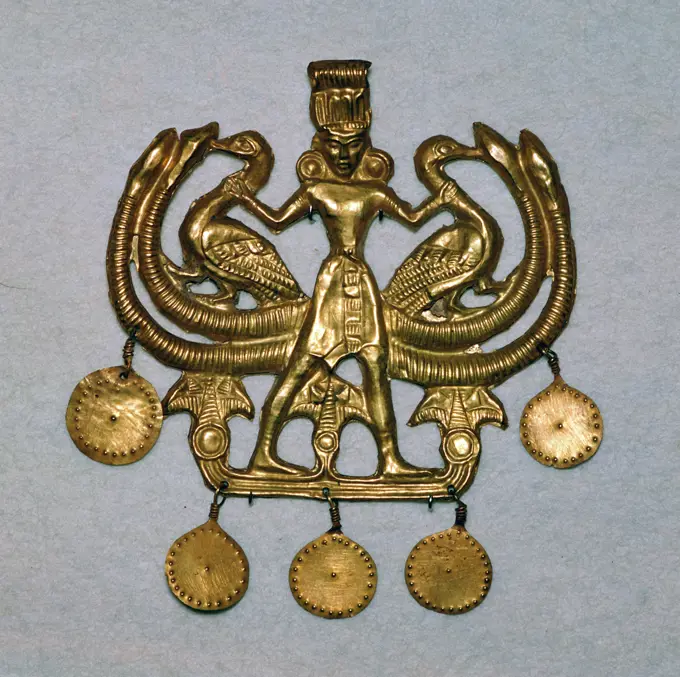
Ornate golden pieces from historical weapons and decorative arts, showcasing rich craftsmanship and intricate designs.

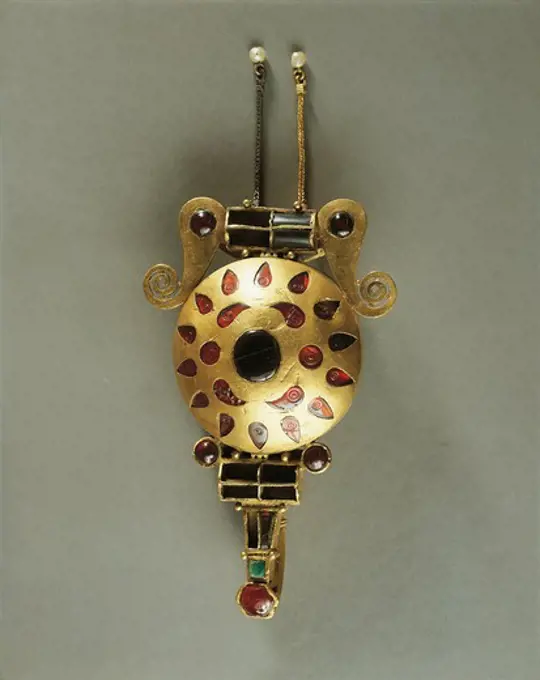
Gilded silver fibula with finger like projections and zoomorphic figures, Crimea. Gotho-Alanic Civilization, 4th-9th Century.
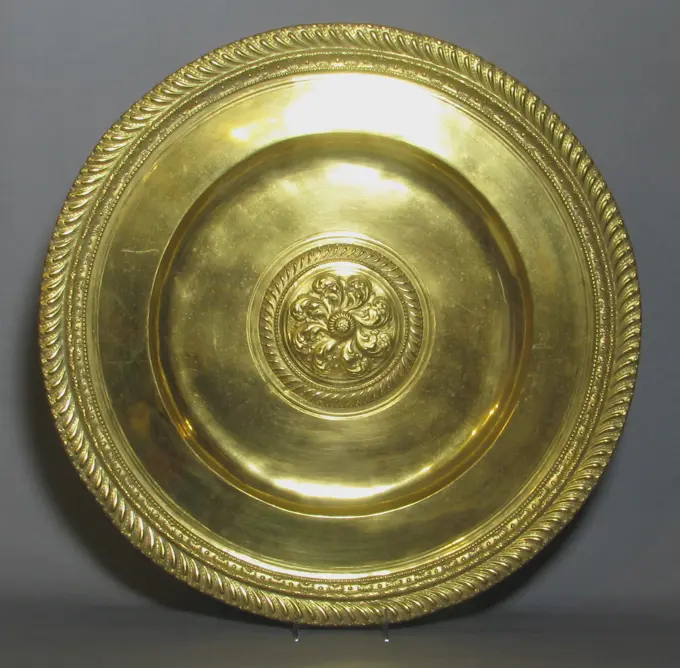
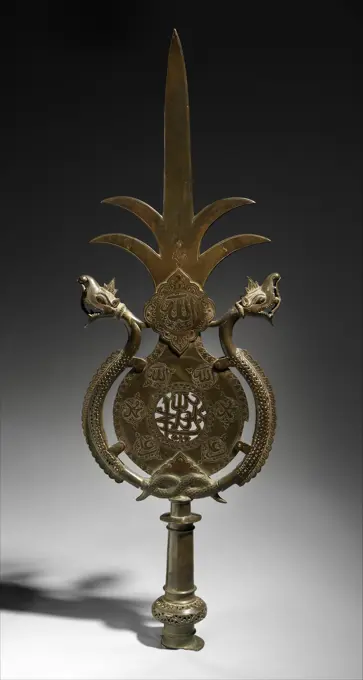
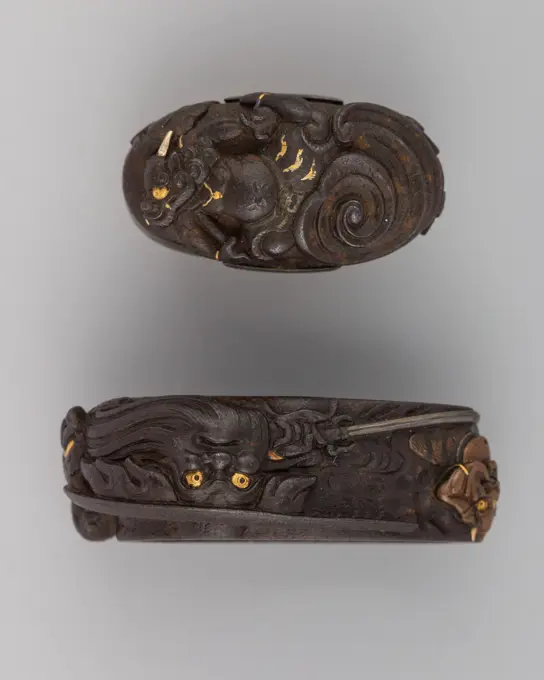
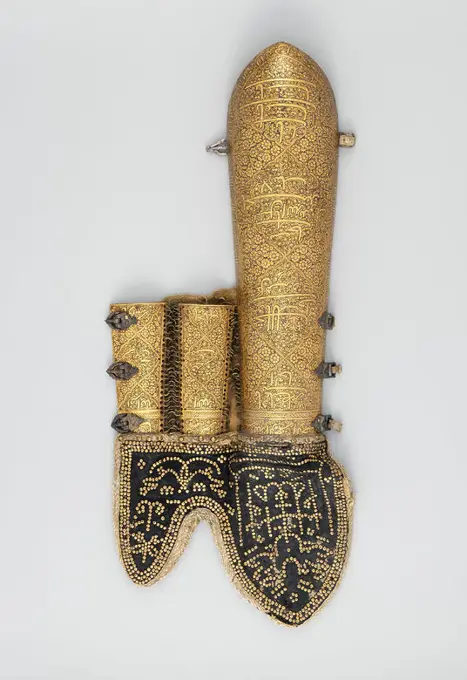
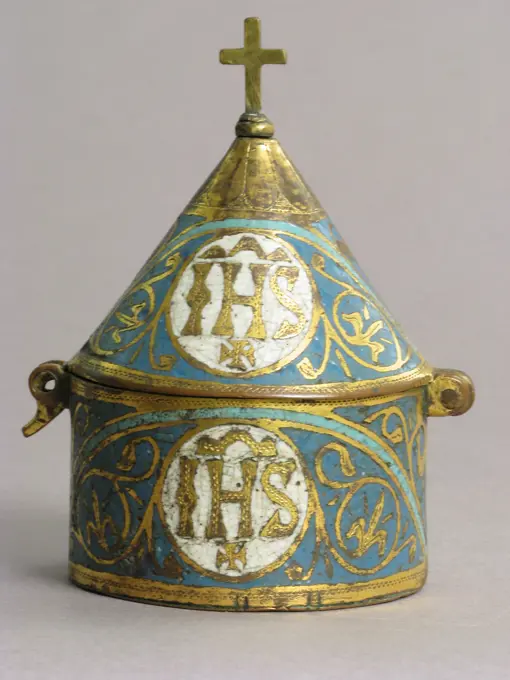
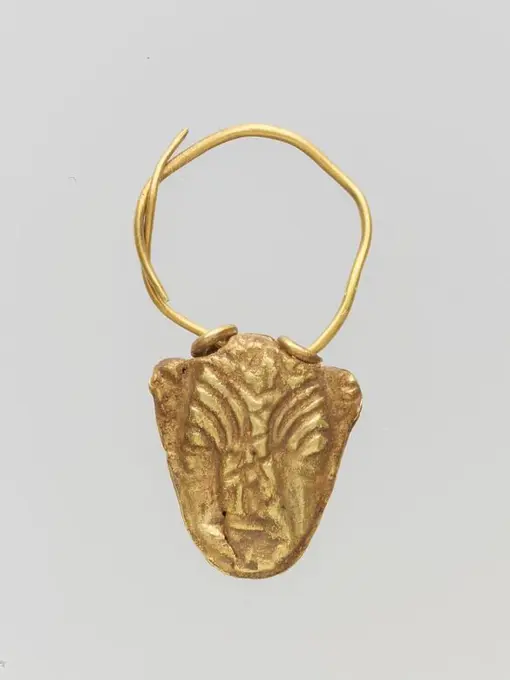
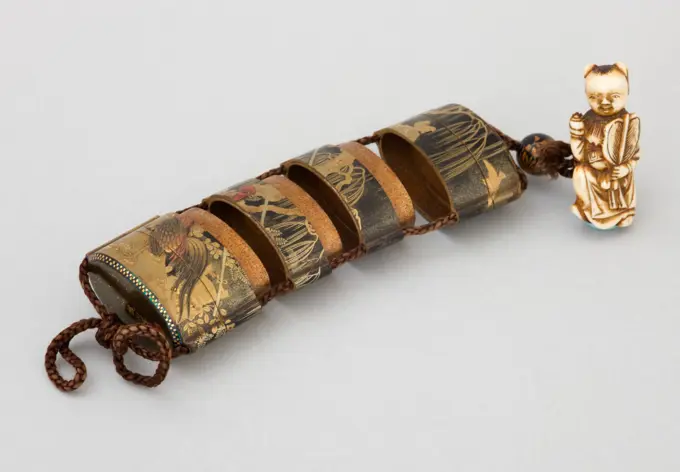
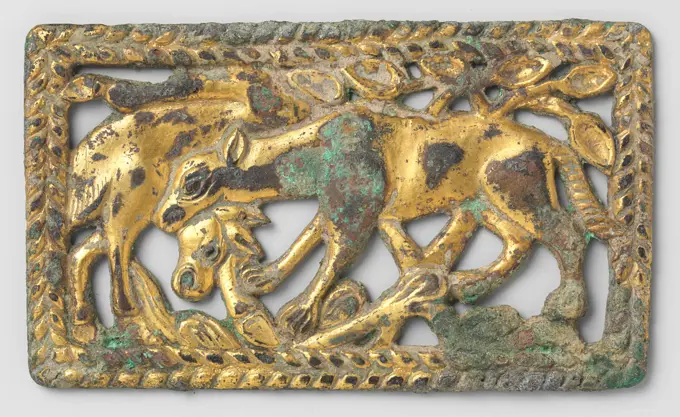
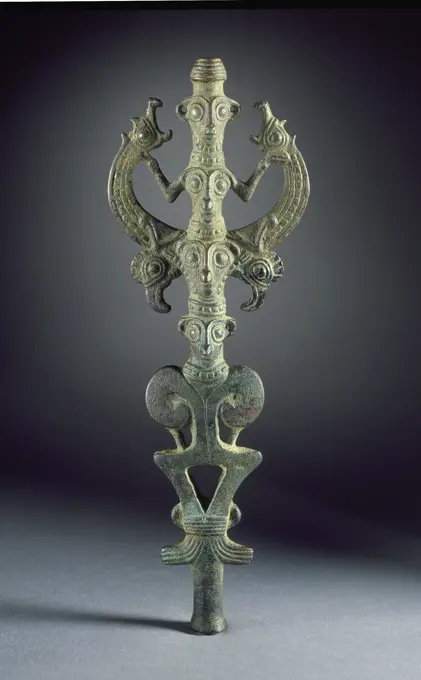
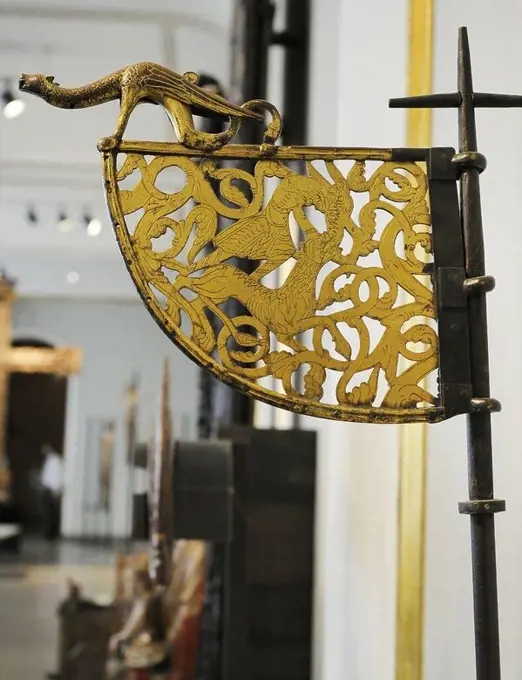
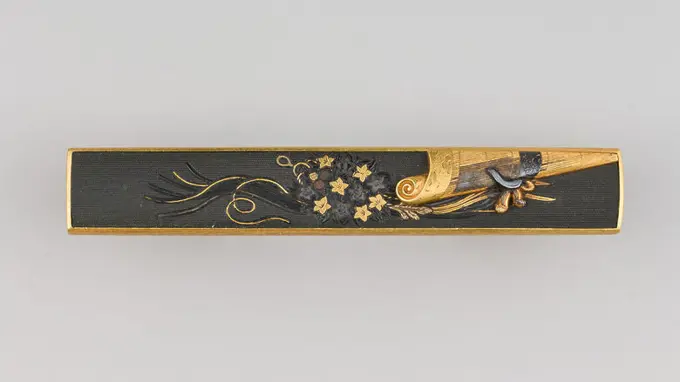
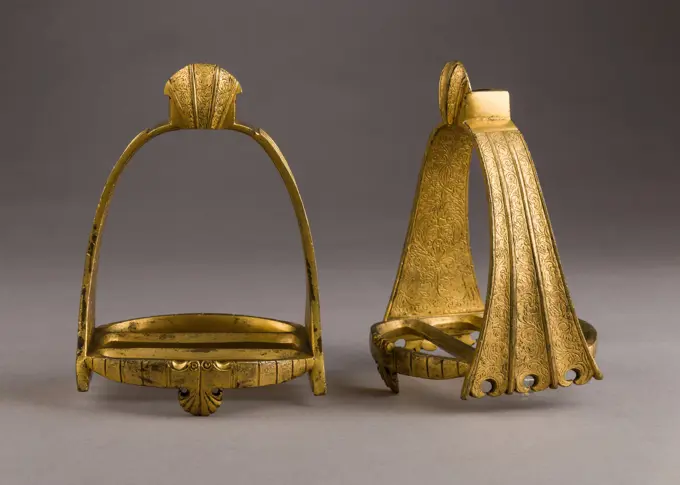
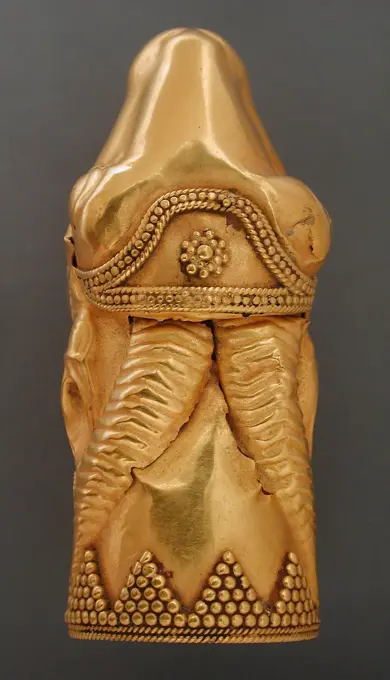
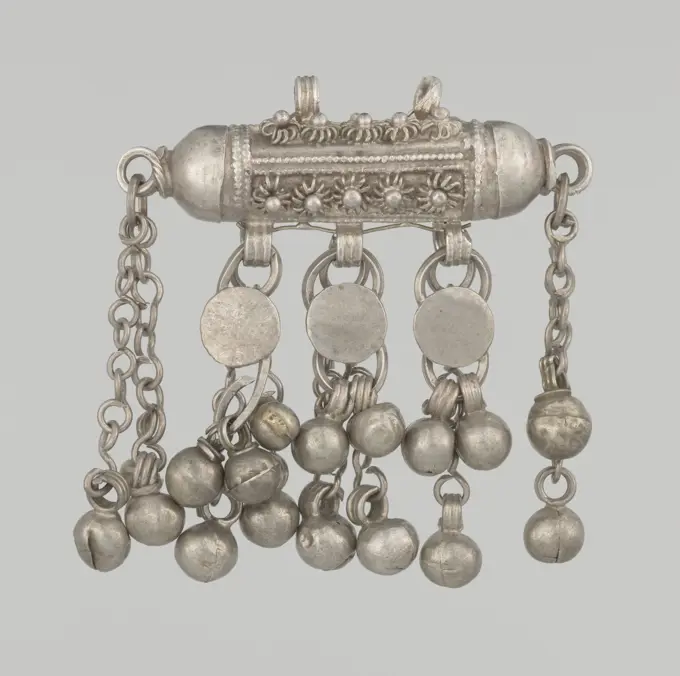
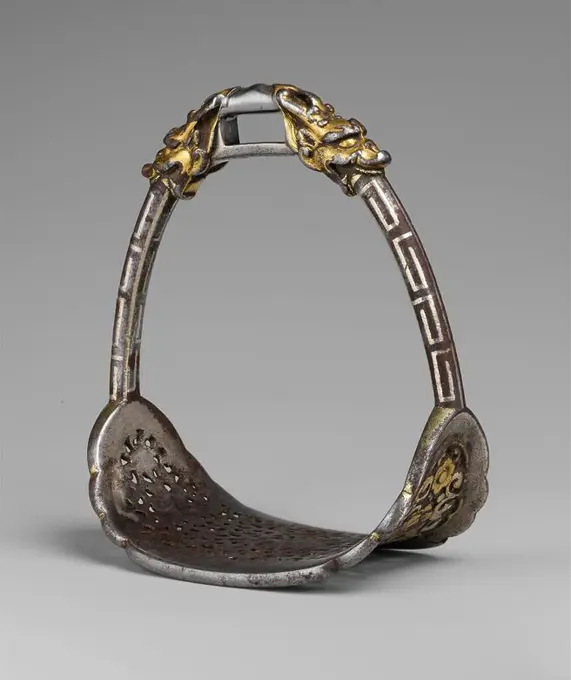
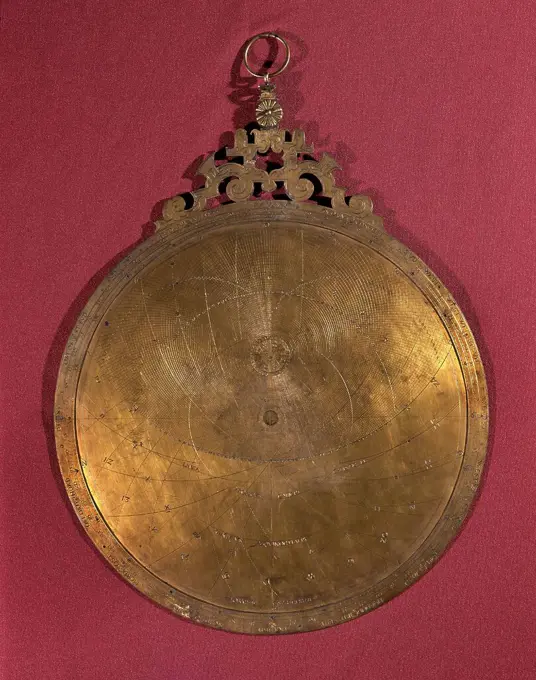
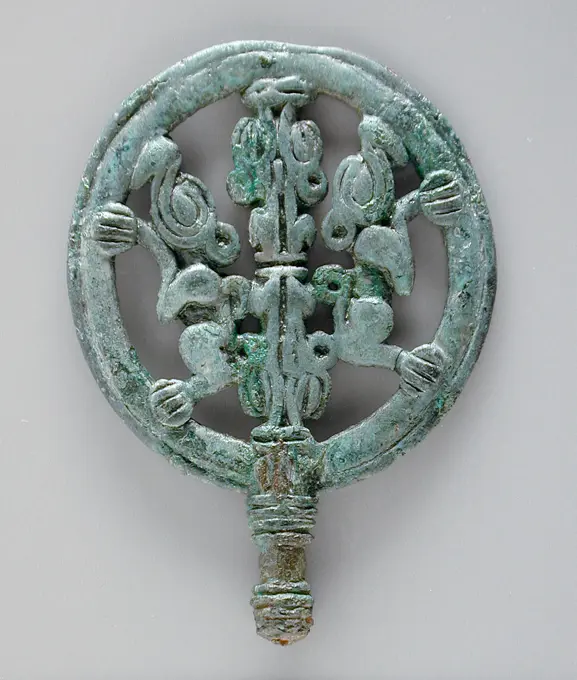
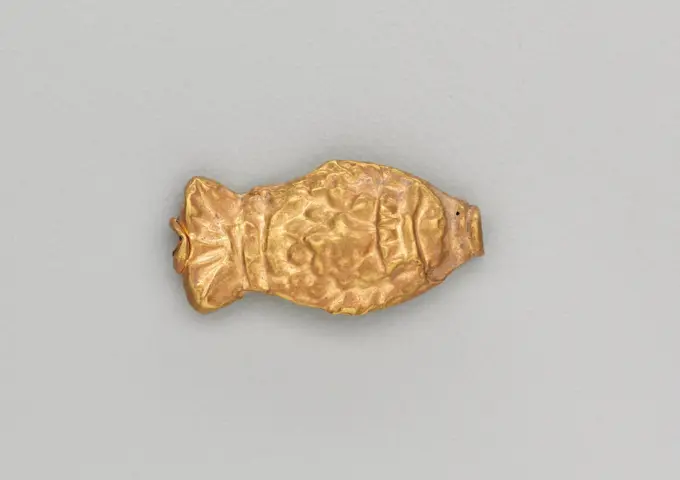
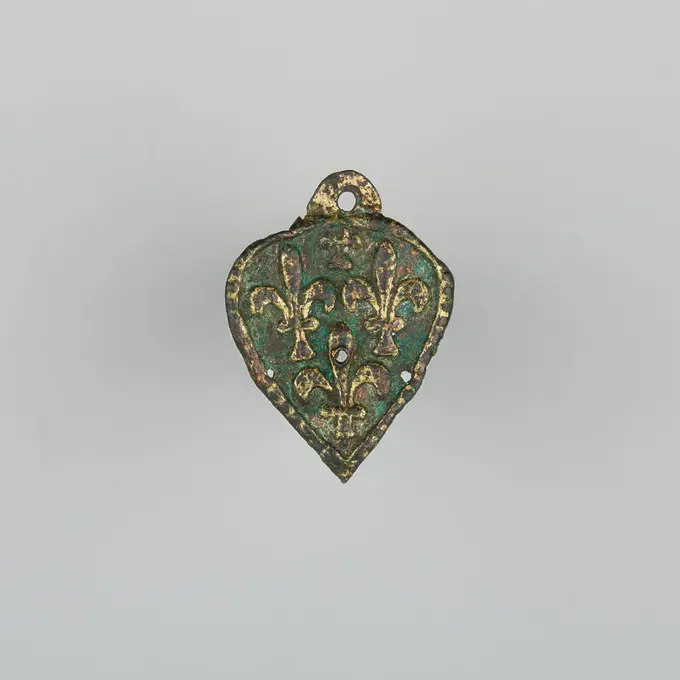
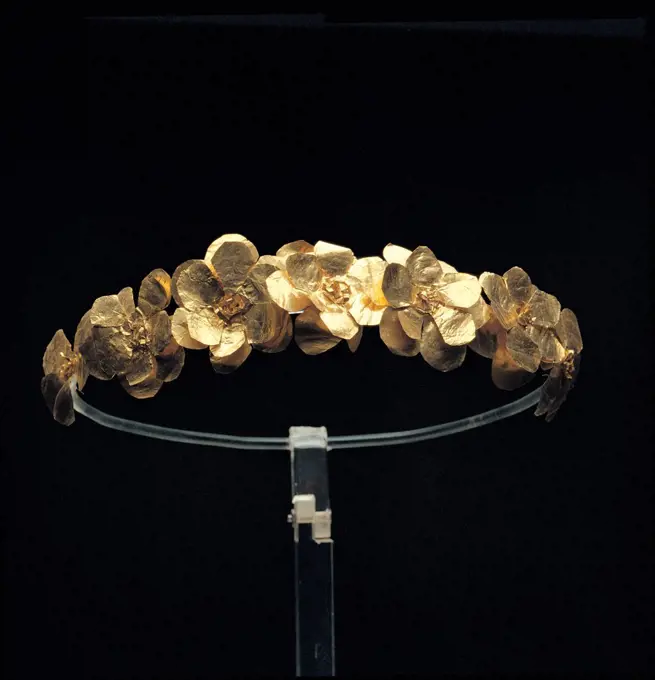
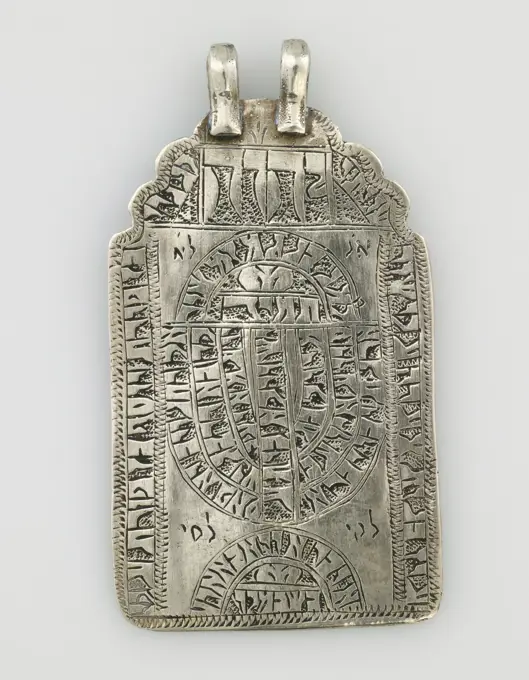
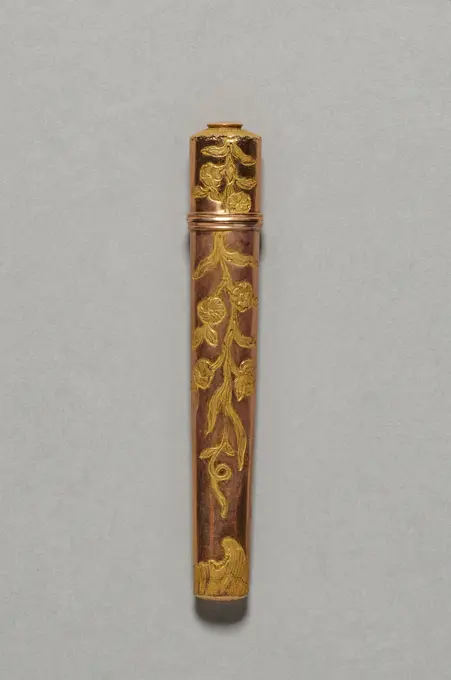
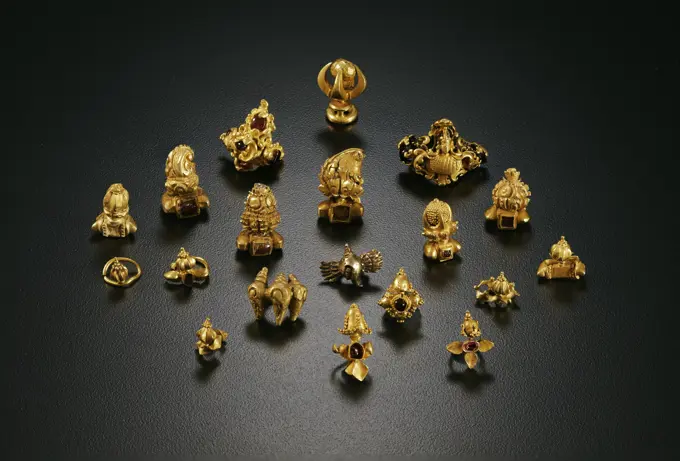
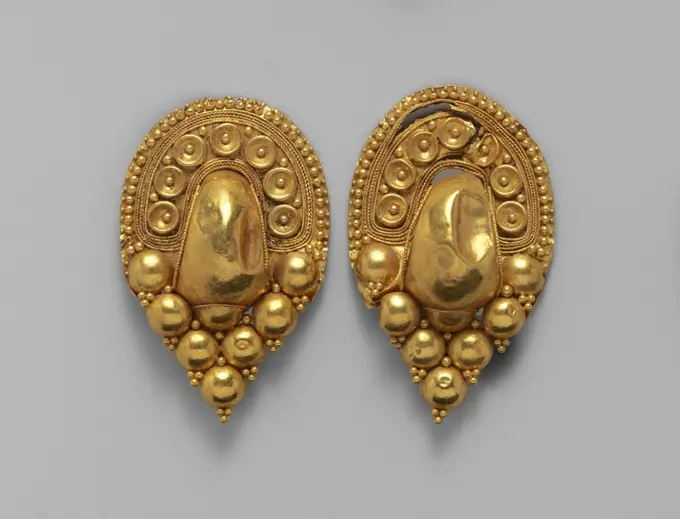
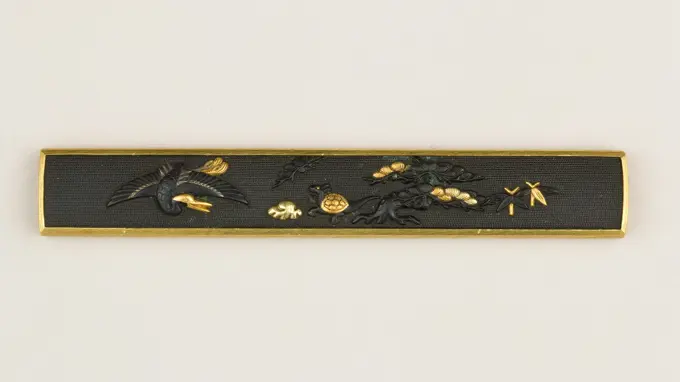
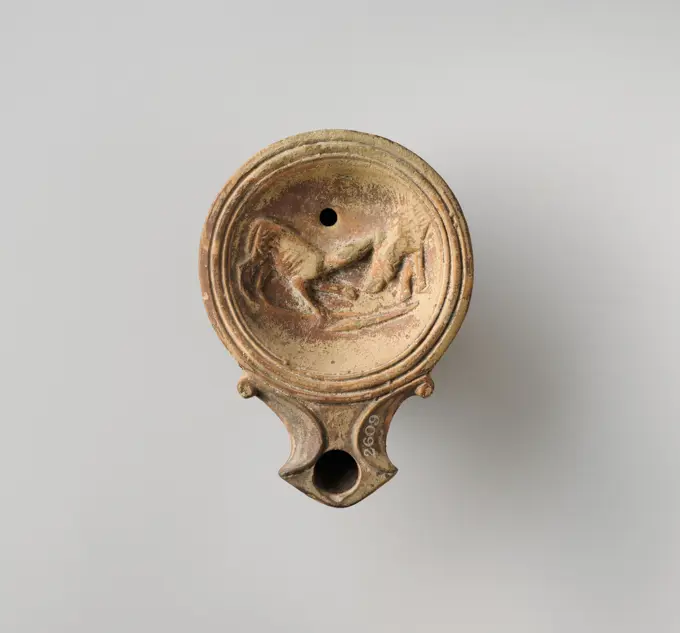
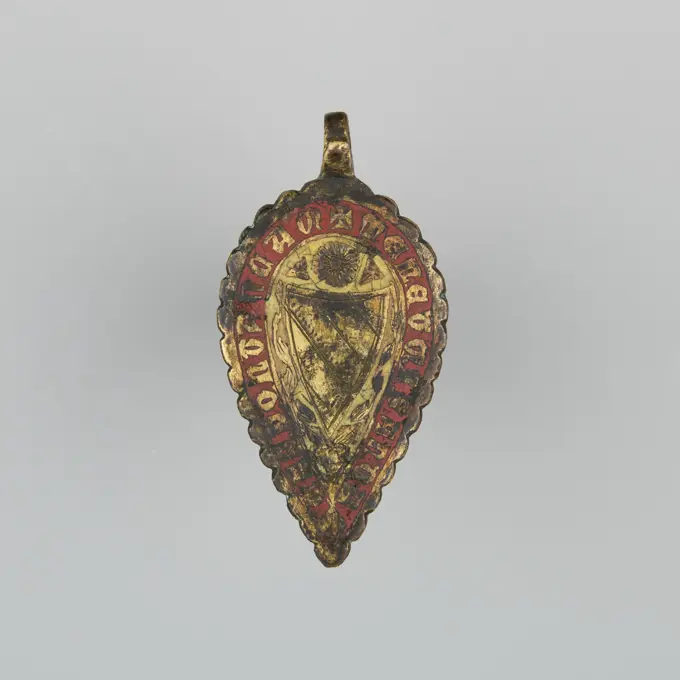
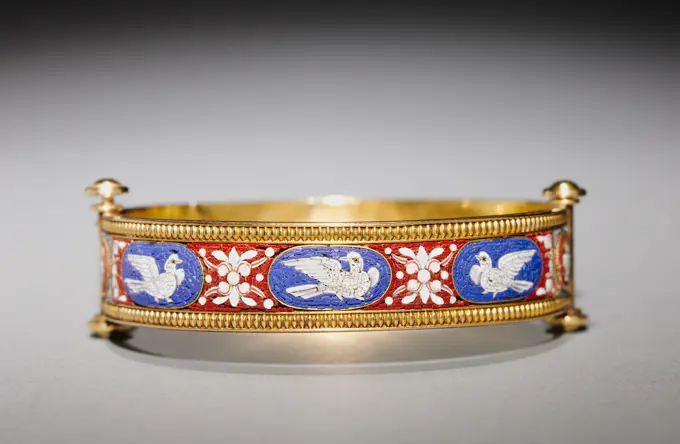
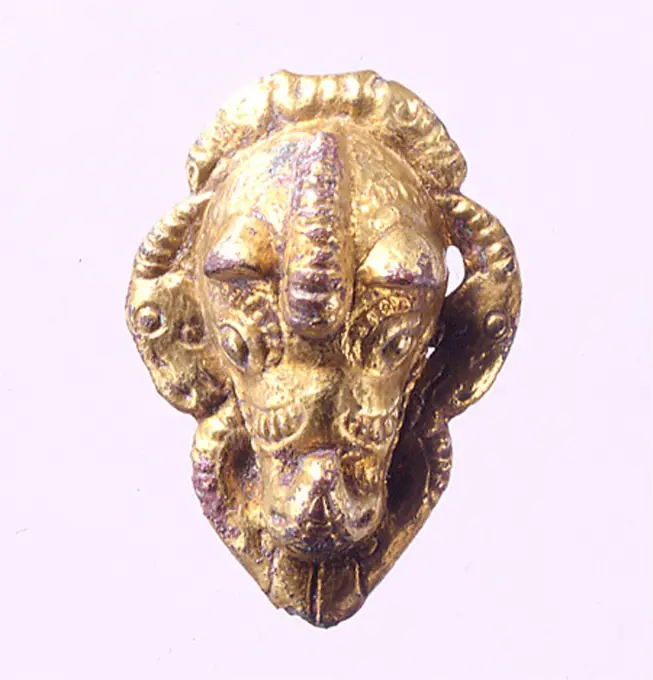
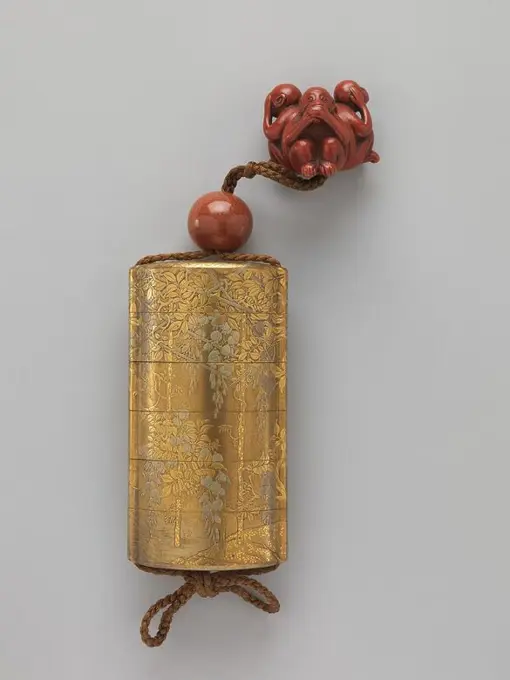
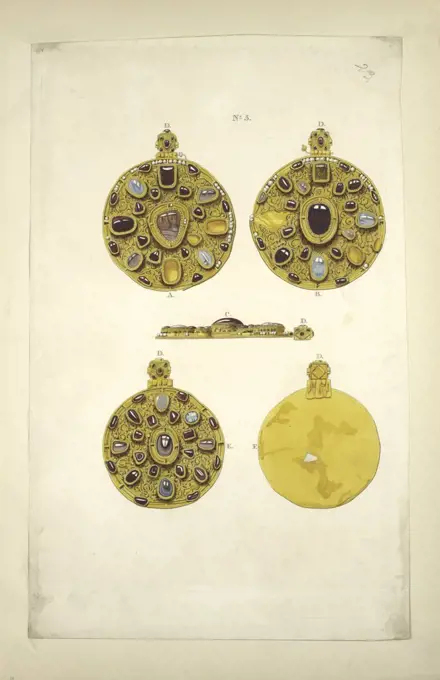
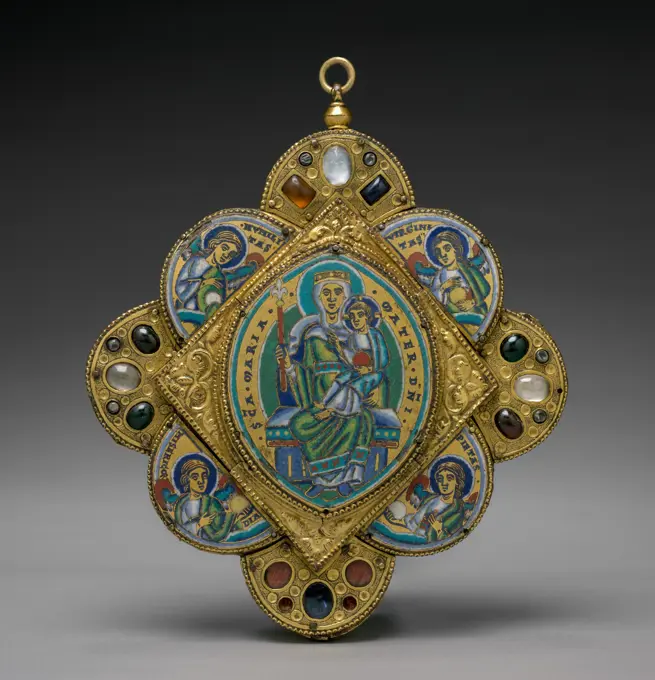
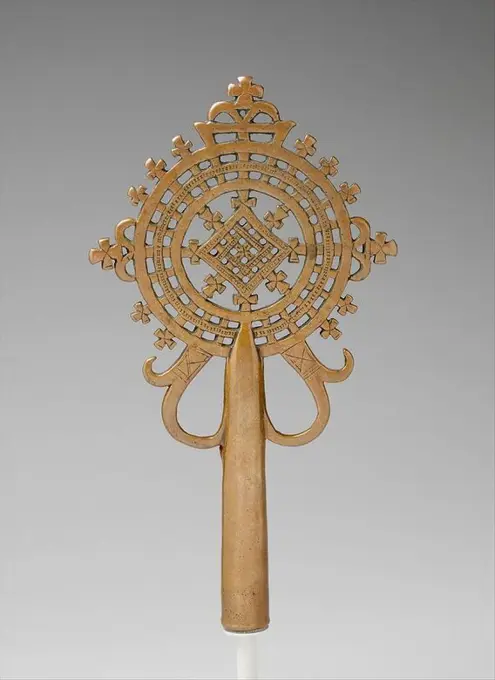
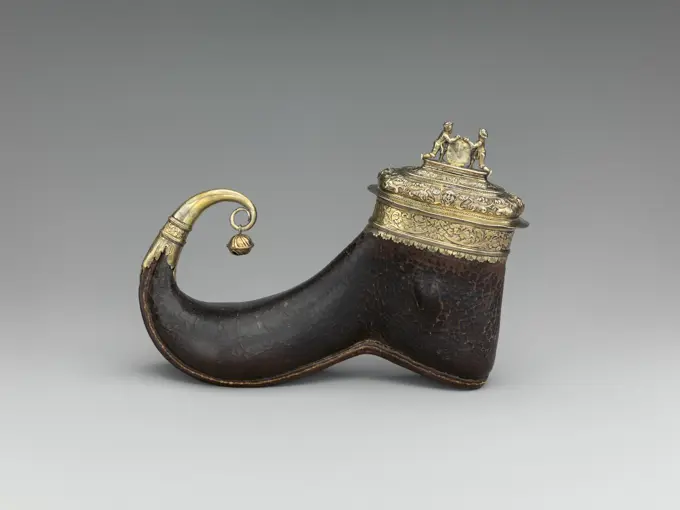
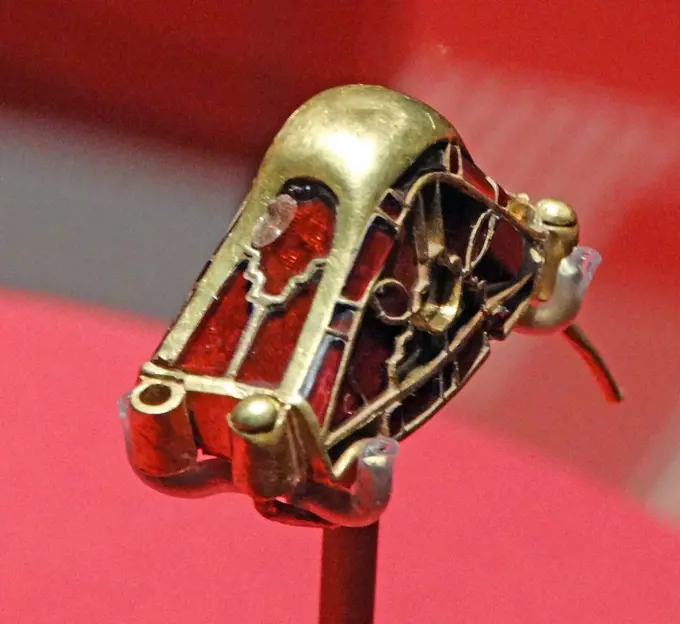
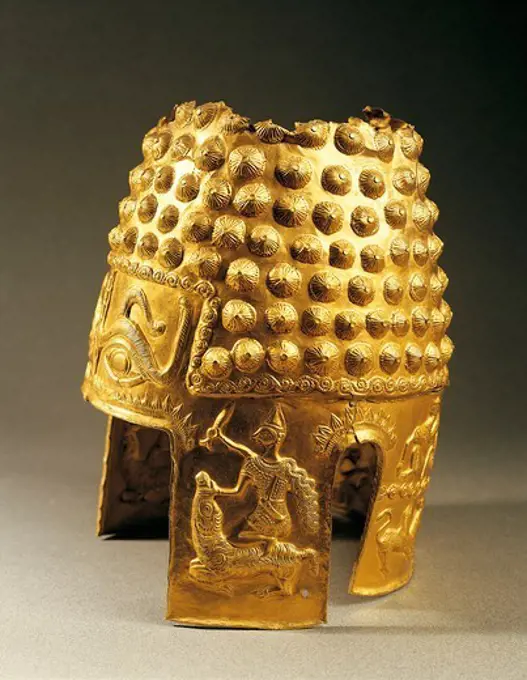
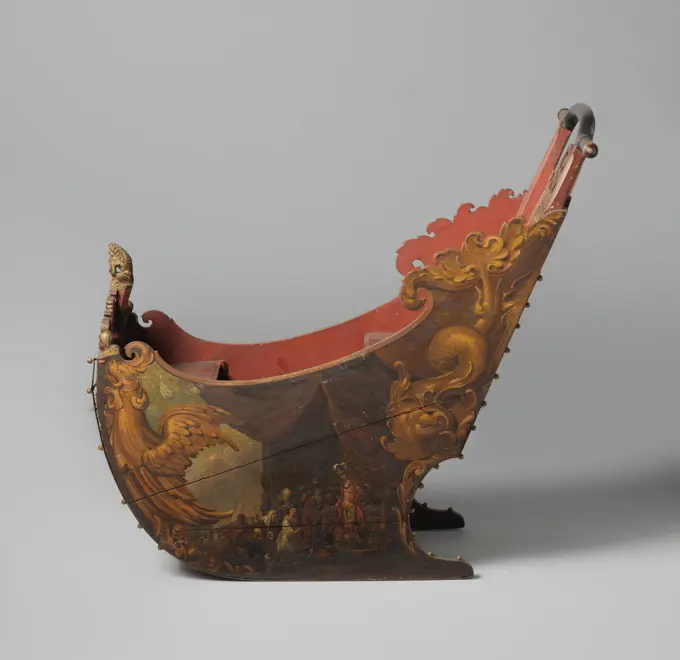
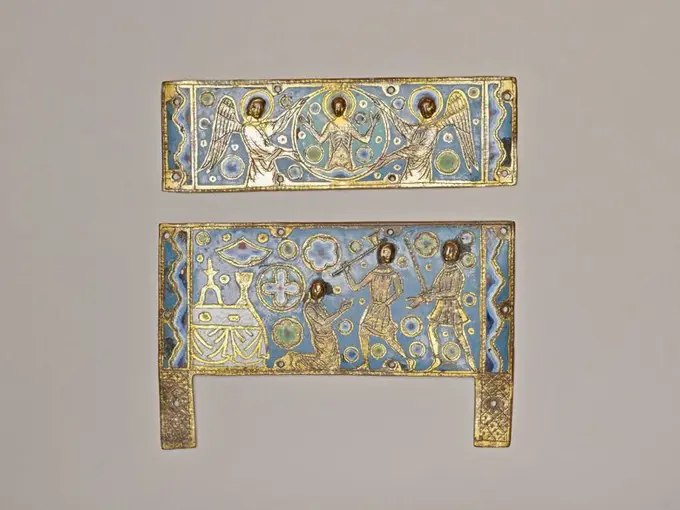
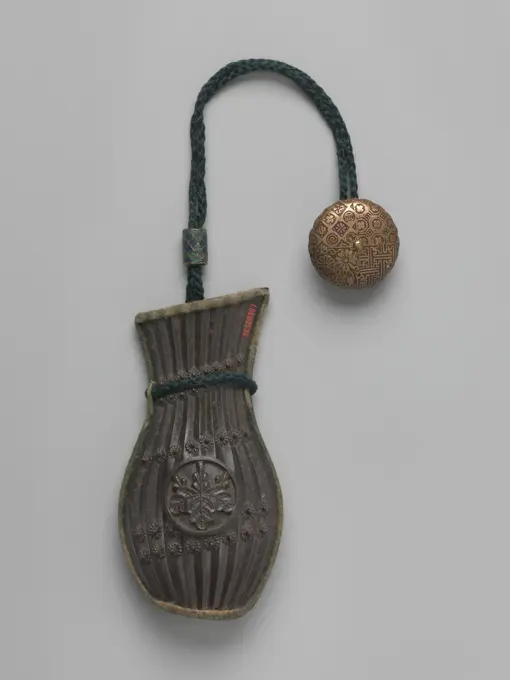
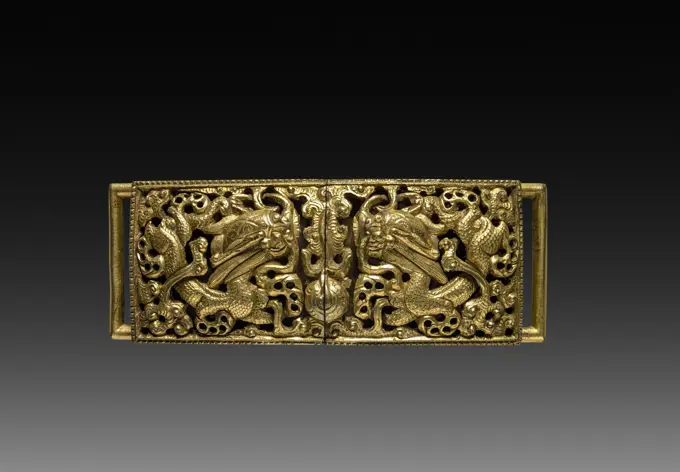
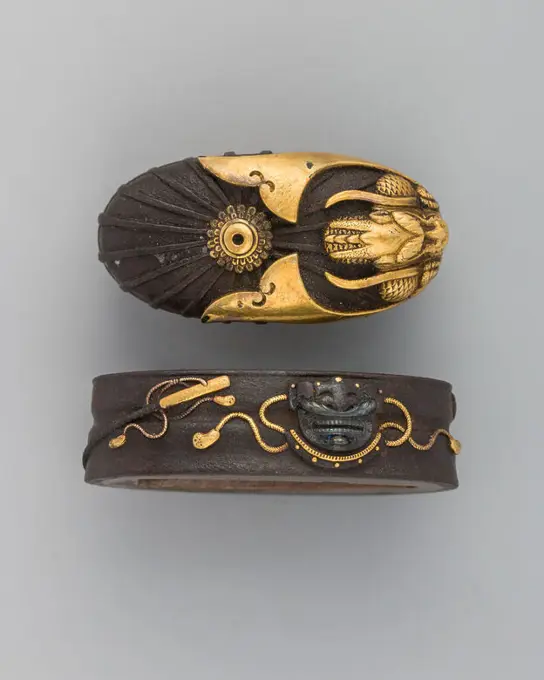
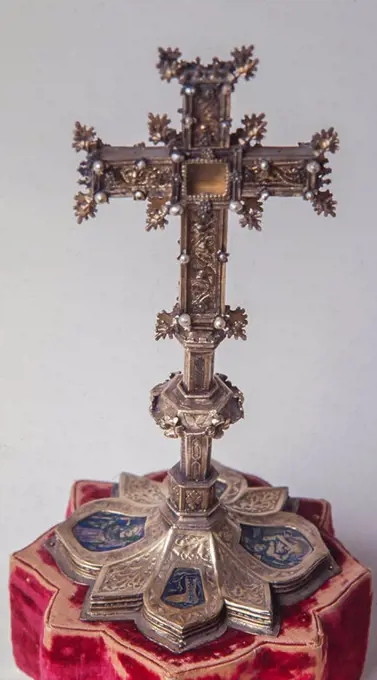
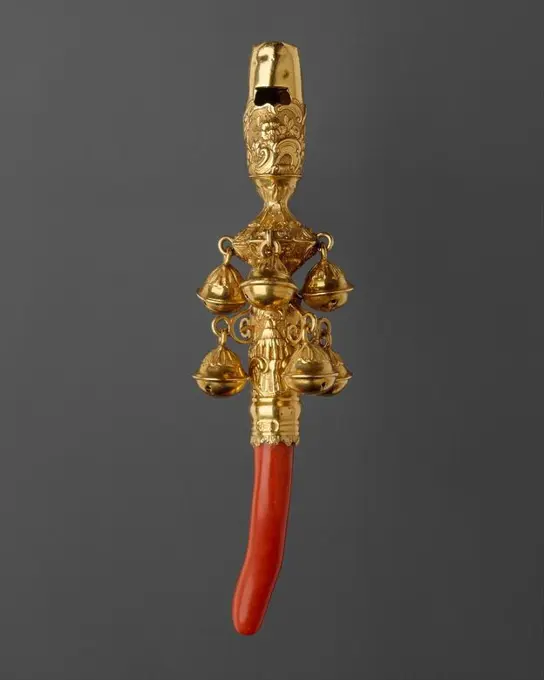
Rattle, Whistle, and Bells. Culture: American. Dimensions: L. 6 1/8 in. (15.6 cm); 2 oz. 13 dwt. (82.3 g). Maker: Nicholas Roosevelt (1715-1769). Date: 1755-68. Museum: Metropolitan Museum of Art, New York, USA.Loop .Salver 19th century, after 16th century original British, after German, Augsburg original This electrotype is after a sixteenth-century original in the Winter Palace, St. Petersburg, at the time of reproduction.. Salver 186507Processional Standard ('Alam) late 17th-early 18th century Standards are used in many parts of the Muslim world by the Shi'a community in processions marking the martyrdom of Imam Husain, grandson of the Prophet Muhammad, who died at the Battle of Karbala in A.D. 680. The pierced inscription at the center of this example reads "Allah, Muhammad, 'Ali," and these names are repeated in roundels surrounding the main inscription. Dragons encircle the central section and grasp it with their feet, while their tails intertwine at the bottom. Their bodies are pierced, and they have rounded scales on their backs, with nub-like legs.. Processional Standard ('Alam). late 17th-early 18th century. Brass. Made in India, probably Hyderabad, Deccan. MetalGold hilt collar from a sword, from the Staffordshire Hoard. Dated 6th CenturySword-Hilt Collar and Pommel (Fuchigashira) 18th century Japanese A fuchigashira is a pair of matching sword fittings comprising the fuchi (collar at the base of the grip of the sword hilt) and kashira (pommel cap at the end of a sword hilt).. Sword-Hilt Collar and Pommel (Fuchigashira). Japanese. 18th century. Iron, gold. Sword Furniture-Fuchi-KashiraArm Guard (Dastana). Culture: Indian. Dimensions: L. 21 in. (53.3 cm); W. 4 in. (10.2 cm). Date: 18th century.This type of arm guard, known as a dastana, was used throughout Turkey, Iran, and India. Its curved plate protected the outside of the forearm and is connected to a pair of shorter plates that guarded the inside of the wrist. The inscriptions on this example are incorporated into the gold decoration and the nail-head design on the mitten and include Qur'anic verses and the popular Shi'i prayer Nad-i 'Ali (Call upon 'Ali). Museum: Metropolitan Museum of Art, New York, USA.Pyx ca. 1250 French The white discs inscribed with Christograms, ihs (Jesus), suggest a common form of the host (communion wafer) that this conical box would have held.. Pyx 467490Gold pendant in the form of a bull's head. Culture: Cypriot. Dimensions: L. 1 5/16 in. (3.4 cm). Date: ca. 1400-1050 B.C..Most of the raw materials for Cypriot jewelry came from the East. Gold became plentiful in the Late Bronze Age, when Syria and Egypt were the primary sources. These earrings are a Cypriot creation, an ornament in the form of a bull's head. Museum: Metropolitan Museum of Art, New York, USA.Diadem 5th-10th century () Middle Magdalena River. Diadem. Middle Magdalena River. 5th-10th century (). Gold. Colombia, Middle Magdalena River, Rio Magdalena region. Metal-OrnamentsConsole  19th century (1801-00-00-1900-00-00);INRO Z OJIME I Netsuke unknownCeintuur applique, muildier en roofdieren.Applique for a belt with the representation of a mule attacked by a predator.Standard Finial. Iran, Luristan, Luristan bronzes, cicra 1000-circa 650 B.C.. Architecture; Architectural Elements. BronzeWall lye, Anonymous, 1700 Wall Alder of Gilded Lindehout. The five arms consist of broken Acanthusvoluten; Candle holders and fat catchers are decorated with grunts. The vase -shaped trunk is covered with a lambrequin and is crowned by acanthus leaves with a fruit as a button. The candle holders are made of copper. See also BK-NM-9804-A and b. Northern NetherlandsNetherlands wood (plant material). linden. gilding (material). copper (metal) gilding Wall Alder of Gilded Lindehout. The five arms consist of broken Acanthusvoluten; Candle holders and fat catchers are decorated with grunts. The vase -shaped trunk is covered with a lambrequin and is crowned by acanthus leaves with a fruit as a button. The candle holders are made of copper. See also BK-NM-9804-A and b. Northern NetherlandsNetherlands wood (plant material). linden. gilding (material). copper (metal) gildingShip's weathervane. Tingelstad Church, Gran, Oppland. 1150-1200. Historical Museum. Oslo. Norway.Nose Ornament 10th-16th century Colombia (). Nose Ornament 309986Amulet with an Ankh and Two Was Scepters ca. 1390-1352 B.C. New Kingdom. Amulet with an Ankh and Two Was Scepters. ca. 1390-1352 B.C.. Faience. New Kingdom. From Egypt, Upper Egypt, Thebes, West Valley of the Kings, Tomb of Amenhotep III (WV 22), Carnarvon/Carter excavations, 1915. Dynasty 18Knife Handle (Kozuka). Culture: Japanese. Dimensions: L. 3 13/16 in. (9.7 cm); W. 9/16 in. (1.4 cm); thickness 1/4 in. (0.6 cm); Wt. 1.5 oz. (42.5 g). Date: 18th century. Museum: Metropolitan Museum of Art, New York, USA.Wooden weapon board with three clovers in the weapon, from the Hopman family, Anonymous, 1650 - 1800  Wooden polychromed weapon board. The weapon is covered by a helmet and has cover rugs. The weapon carries three clovers (two upstairs, one below). The helmet sign consists of a fist that clips a block. The colors are largely worn out. Of the two red-gold wings around the helmet sign, the left is broken down and searched. Overijssel wood (plant material) cutting  OverijsselKnobRitual Peg (phurbu) 1601-1700 Tibet. Bronze, crystal, jade, opal and turquoise, with gilding and semiprecious stones .Pair of Stirrups early 17th century Italian Each stirrup is decorated on the outside and on the front shell with elegant grape vine scrolls. The inside of each branch is adorned too, displaying a candelabra composition with scrolls, cornucopias and unicorn protomes, probably inspired from an ornamental print. This shape of stirrups, evolved from 16th-century German types, became very popular in several other countries in the first decades of the 17th century, including the Netherlands, Northern Italy or Spain.. Pair of Stirrups. Italian. early 17th century. Copper alloy, gold. Equestrian Equipment-StirrupsScenes of the Passion 16th century possibly Mexican. Scenes of the Passion. possibly Mexican. 16th century. Boxwood, feathers, gold, enamel. Formerly considered made in Spain; Possibly made in MexicoCeremonial halberd blade or finial China The dramatic and imposing shape of this massive blade exemplifies the flamboyant style of bronze decoration in the early Western Zhou dynasty (ca. 1046-771 B.C.) and suggests that it served as a ceremonial weapon or ritual finial.. Ceremonial halberd blade or finial. China. Bronze. Western Zhou dynasty (1046-771 B.C.). MetalworkGoldsmith's art, Italy, 17th century. Brass warming pan from Lombardy region.Ibex. Near East, Mannaean, late 9th century - early 8th century BCE. Sculpture. GoldPendant in the form of a container for amulet;  20th century (1901-00-00-1990-00-00);Stirrup. Culture: Mongolian or Tibetan. Dimensions: H. 6 1/4 in. (15.9 cm); W. 5 1/2 in. (14 cm); Wt. 15 oz. (421 g). Date: 16th-17th century.A detailed Mongolian inscription on the base of this stirrup gives the name of its maker and of the Mongolian nobleman who commissioned it. Such an inscription appears to be unique not only for a stirrup but also for any example of secular ironwork from Mongolia or Tibet, making this stirrup and it's mate (acc. no. 2007.182) invaluable as a touchstone against which all other decorative ironwork of this type can be compared. Museum: Metropolitan Museum of Art, New York, USA.Astrolabe disk (mater) - 16th CENTURY. Author: ROJAS JUAN DE SIGLO XVI. Location: MUSEO NAVAL / MINISTERIO DE MARINA. MADRID. SPAIN.Finial (Italy)Openwork Pinhead. Iran, Luristan, circa 1000-650 B.C.. Jewelry and Adornments; pins. Bronze, castNecklace Bead in the Form of a Fish, 185-72 BC. India, Sunga Period (185-72 BC). Gold repoussé with granulation;Europe, Russia. Scythian warriors. Black Sea Coast region. 4th cent. BC.Arc fibulae, from Fraore, fraction of Parma, ItalyConch-shaped EarOrnamentBadge (probably Mounting from Horse Harness). Culture: Spanish or French. Dimensions: H. 2 in. (5.1 cm); W. 1 7/8 in. (3.1 cm); Wt. 0.1 oz. (2.8 g). Date: 14th century. Museum: Metropolitan Museum of Art, New York, USA.Luxurious temple earrings with crescent-shaped ornament. Podgrade (Asseria). Croatia. Museum of Croatian Archaeological Monuments, Split, Croatia.Mount; L x W x D: 19 x 10.5 cm (7 1/2 x 4 1/8 in.)Golden crown formed of a garland of roses, by Unknown artist, 3rd Century, . Italy: Puglia: Taranto: Taranto: National Archaeological Museum. Whole artwork. Gold diadem crown decoration floral motifs lamina bracteate carvedAmulet, 3 3/4 x 2 1/8 x 5/16 in. (9.53 x 5.4 x 0.79 cm), SilverRomania, Gold buckle with gems from the Pietroasele treasure, found in 1837Needle Case from a Sewing Box (Nécessaire), c. 1765. Austria, Vienna(), 18th century. Gold and mother-of-pearl;Lobed Ball with Gem BirdRingGranulated Sphere BirdRingGold earrings 4th- early 3rd century B.C. Etruscan This type of earring is called a grappolo (in Italian, like a grape-cluster) because its general shape resembles a bunch of grapes.. Gold earrings. Etruscan. 4th- early 3rd century B.C.. Gold. Late Classical. Gold and SilverKnife Handle (Kozuka) 17th century Gotō Renjō (Mitsutomo) Japanese A kozuka is a handle of a by-knife that is part of a sword mounting. It is kept in a slot on the reverse of a katana scabbard, often with a matching kōgai (hairdressing tool).. Knife Handle (Kozuka) 25345Watch in Sirihoos. Sirih box of silver in which a watch with white enamel dial with Roman numerals.Fragment, Swag; wood, gildedBliżej Kultury League of Women's Supreme National CommitteeMouth Mask, 100 BC-AD 700. Peru, South Coast, Nasca style (100 BC-AD 700). Hammered gold alloy; overall: 14 x 19.4 cm (5 1/2 x 7 5/8 in.).Terracotta oil lamp ca. A.D. 40-100 Roman Loeschcke Type 1A. Mold-made. Deep concave discus: a hunting dog, facing right, attacking a boar, of which only the front half is shown at right, facing left; raised ground line below dog and another line extending from center below boar at right; a single, small filling hole above figures at back, with a band of lines and grooves at edge. Volutes flanking angular nozzle, with a large wick hole. Broad, raised base ring, and flat base.Intact.. Terracotta oil lamp. Roman. ca. A.D. 40-100. Terracotta. Early Imperial. TerracottasDagger (Katar) with Sheath 18th-19th century Indian. Dagger (Katar) with Sheath 31471Badge or Harness Pendant 14th century Spanish Heraldry, or coat-of-arms, were vitally important in Europe throughout the Middle Ages and the Renaissance. Heraldic emblems were used to identify noble families, cities, regions, and even countries. In addition to being displayed on shields and flags, heraldry was incorporated into architectural decoration on the interior and the exterior of buildings, on furniture, works of art, clothing, and horse equipment. Harness pendants, like this example, would have been attached to a headstall, bridle, or other straps making up the tack of a horse ridden by a nobleman or noblewoman, or a member of their household. Many harness pendants also have decoration that is simply ornamental, or have symbols that are not specifically heraldic in nature.. Badge or Harness Pendant. Spanish. 14th century. Copper, gold, enamel. Miscellaneous-BadgesBliżej Kultury unknownPierrot Figure Matchsafe; brass; 6 x 4 x 2.1 cm (2 3/8 x 1 9/16 x 13/16 in. )Bangle, c. 1860-1870. Attributed to Fortunato Pio Castellani Firm (Italian). Gold, micro-mosaic glass; diameter: 7.7 cm (3 1/16 in.).Harness Fitting with Zoomorphic Motif 3rd century B.C. North China. Harness Fitting with Zoomorphic Motif 59591Case (Inro) with Design of Wisteria Trellis. Culture: Japan. Dimensions: H. 4 in. (10.2 cm); W. 2 1/16 in. (5.3 cm); D. 1 1/4 in. (3.2 cm). Date: mid-19th century. Museum: Metropolitan Museum of Art, New York, USA.Russian Jewellery before the Mongol invasion. From the Antiquities of the Russian State, Solntsev, Fyodor Grigoryevich (1801-1892)Ethiopian Coptic Christian processional cross. Brass 20th centuryScale of silver, with eight lobes, interspersed with shells and birds and cobblestone. Drifting of flowers., Anonymous, c. 1740 - c. 1760 Eight -lobe silver bowl with driven decoration of flowers and cherubs in the wide edge. Between the curves are excellent shells and each time a few of two birds with a turned head. The swollen lobes have a decoration of a flower with a bird on both sides and a winged cup underneath. A engraved rose in the middle of the flat. Mid -18th century. Sri Lanka (possibly) silver (metal) Eight -lobe silver bowl with driven decoration of flowers and cherubs in the wide edge. Between the curves are excellent shells and each time a few of two birds with a turned head. The swollen lobes have a decoration of a flower with a bird on both sides and a winged cup underneath. A engraved rose in the middle of the flat. Mid -18th century. Sri Lanka (possibly) silver (metal)Pendant with the Virgin and Child, c. 1160-1170. Circle of Godefroid de Huy (Netherlandish). Gilded copper, champlevé enamel; the reverse decorated in vernis brun; overall: 19.8 x 17 x 3.2 cm (7 13/16 x 6 11/16 x 1 1/4 in.). This pendant was made in the Rhine-Meuse region--now in modern Belgium--renowned for the production of fine metalwork objects, especially enamels. An enamel plaque depicting the enthroned Virgin and Christ child dominates the pendant. Four peripheral enamels depict angelic figures representing virtues: Humility, Virginity, Piety, and Mercy, each identified by an inscription. The pendant may have been made to serve as a reliquary to house a consecrated host. The refined craftsmanship and costly materials fittingly honor these sacred remains.Processional Cross. Culture: Amhara or Tigrinya peoples. Dimensions: H. 10 1/4 x W. 5 1/2 in. (26 x 14 cm). Date: 15th century.Metal processional crosses have historically been cast through the lost-wax process, ensuring that each work is by definition a unique and original creation. Over the centuries, the inventiveness of Ethiopian metal casters in their representation of this central motif has known no bounds. In this example, a central lozenge is framed by a series of three concentric circles. Projecting from the top and sides of the outermost band's perimeter are crosses that suggest buds of vegetation. Museum: Metropolitan Museum of Art, New York, USA.Chasse 13th century (core); 19th century or later (enamels) French. Chasse 464484Lluís Masriera / Broche con ángel y nido, 1911. Oro, diamantes y esmalte traslúcido «pliqué-à-jour». Museu Nacional d'Art de Catalunya (MNAC). Author: LLUÍS MASRIERA I ROSÉS.Ring with the Name of Pope Paul II (r. 1464-71). Culture: Italian, Rome. Dimensions: Length: 1 15/16 in. (4.9 cm);Length (bezel): 1 3/8 in. (3.5 cm). Date: 1464-71.At the corners of the bezel are emblems of the four Evangelists, and on the sides are the shield of Paul II and that of the French crown. Papal rings may have been used at investitures or in establishing diplomatic credentials. Museum: Metropolitan Museum of Art, New York, USA.Kastane, 18th century, Sri Lanka, Álava Armory Museum, Vitoria, Basque Country, Spain.Loop .Five-case inrô (medicine case). Yoshiaki (fl. ca1800 - 1860)Necklace in gold filigree, from Maltepe burial mound, near Istanbul, Turkey. Goldsmith art. Thracian Civilization, 4th-3rd Century BC.Cup in the form of a shoe late 16th century German Worlds apart from the rock crystal bird (see 17.190.534a, b), this unlikely vesselcalled a blackjackis similarly worked from a natural material: soft, pliable leather. The form was cut, sewn, and molded together, and then temporarily filled with molten pitch or resin to render it watertight. Elevating the lowly base material are silver mounts: the tiny bell would tinkle as the cup was used; the two figures on the lid struggle under the weight of an armorial shield bearing a triskelion, or triple-spiral motif. Leather shoe cups are traditionally associated with craft guilds (such as the shoemakers’), whose members passed them around as each drank allegiance to the guild.[Elizabeth Cleland, 2017. Cup in the form of a shoe. German. late 16th century. Leather, with silver mounts. Metalwork-Silver In CombinationMountPommel cap, decorated with cloisonné garnets. from the Staffordshire Hoard. The Staffordshire Hoard is a collection of Anglo-Saxon. Discovered in a field near the village of Hammerwich, near Lichfield, in Staffordshire, England, in 2009. it consists of over 3, 500 items, dated to the 7th or 8th centuries, placing the origin of the items in the time of the Anglo-Saxon kingdom of Mercia.Side Table. Design attributed to Johann Paul Schor (called Giovanni Paolo Tedesco) (Austrian, 1615 - 1674)Embossed gold helmet from Poiana Prahova, Romania. Jewellery. Geto-Dacian Civilization, 5th Century BC.Brooch 19th century Norwegian. Brooch 90365A monk on a horse under a tree - decorative panneau;  19th century (1801-00-00-1900-00-00);Whistle rattle, c. 1821, Joseph Taylor, British, (Birmingham, England), mark entered 1780, d. 1827, 1 1/4 x 4 1/2 x 2 in. (3.18 x 11.43 x 5.08 cm), Silver, coral, EnglandPush sleigh, polychrome painted, including mirror monogram L and R, Anonymous, 1685 - 1700 Polychromed oak push sled. The internally red -painted container contains a built -in sofa and a separate seat shelf. Glijders with round gilded nails. The sled shows several painted performances and ornaments; At the front, among other things, a cartouche with mirror monogram L and R on a blue stock. The front shows an open -sawn gilded decoration of two lions, acanthus vranks and a cartouche with a painted man in an interior, two sculpted heads and lion with shield. Northern NetherlandsNetherlands wood (plant material). oak (wood). gilding (material) gilding Polychromed oak push sled. The internally red -painted container contains a built -in sofa and a separate seat shelf. Glijders with round gilded nails. The sled shows several painted performances and ornaments; At the front, among other things, a cartouche with mirror monogram L and R on a blue stock. The front shows an open -sawn gilded deHair Ringlet with Ram Head, c. 4th Century BC. Greece, Hellenistic period. Gold; overall: 3.2 cm (1 1/4 in.).Album of the Gearspectors of the Kingdom of SaxonyGold pendant from the Aegina treasure, 17th century BC. Artist: UnknownTrilobate Cuirass. UnknownReliquary. France. 15th century. The State Hermitage Museum. Saint Petersburg. Russia.Box 1766-67 J. P. M., Paris, France. Box 200429Plaques from a Reliquary Casket with the Martyrdom of a Saint. French; Limoges. Date: 1250-1300. Dimensions: Top Plaque: 4.8 × 15.6 cm (1 7/8 × 6 1/8 in.); Bottom Plaque: 9.7 × 15.6 cm (3 13/16 × 6 1/8 in.). Gilt copper, champlevé enamel. Origin: Limoges. Museum: The Chicago Art Institute, Chicago, USA.Gold open-work jewellery Late Roman to Early Byzantine 4th Century AD, Turkish provinces of Roman EmpireTobacco pouch 18th century Japan. Tobacco pouch 58948Pyx 16th century or earlier Italian. Pyx 467986Buckle, 1900s. China, 20th century. Brass; overall: 8.6 cm (3 3/8 in.).Afghanistan, Gold artifact from Tillya Tepe find, six tombs of Bactrian nomadsGold Rhyton shaped as deer Panagjurist treasure 4-3rd century BC. Museum: ARCHAEOLOGICAL MUSEUM, Sofia, BULGARIA.Sword-Hilt Collar and Pommel (Fuchigashira). Culture: Japanese. Dimensions: Fuchi (a); H. 1 1/2 in. (3.8 cm); Wt. 0.7 oz. (19.8 g); kashira (b); H. 1 7/16 in. (3.7 cm); Wt. 0.6 oz. (17 g). Date: 18th century. Museum: Metropolitan Museum of Art, New York, USA.Lotus Blossom Star. UnknownFigure Pendant 10th-16th century Tairona. Figure Pendant 313144Scenes of Various Sporting Pursuits: Painted on a Set of Eighteen Victorian Lacquer Buttons, in Two Sized, in Tartan Covered Case, unknown artist, ca. 1850, Painted lacquer buttons, Overall: 7 1/2 inches, sporting artKey of life, Gold, wood, gems, 14th century BC, Egypt, Cairo, The Egyptian Museum, H 27Cruz relicario del fuste de la Vera Cruz, hacia 1420, plata cincelada sobre alma de madera, 27,5 x 14 x 14 cm. Museu Nacional d'Art de Catalunya.Remains of a wooden sleigh, decorated with reliefs and silver and bronze nails. Found in the Tomb of the Boat of Oseberg, Norway. 9th century. Viking Ship Museum. Oslo. Norway.