Marine and Fungal Anatomy Illustrations

Scientific illustrations of marine invertebrates and fungi, displaying detailed anatomical features and classifications for educational purposes.
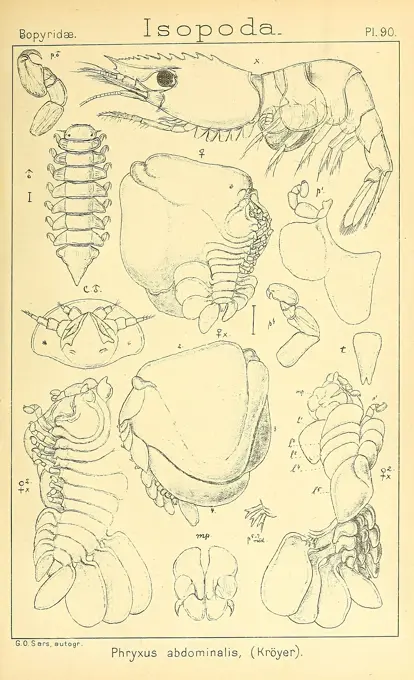
An account of the Crustacea of Norway Christiania, A. Cammermeyer, 1895-1928, Crustacea, Norway, Crustaceans, This illustration features a detailed scientific study of various isopod species, specifically focusing on *Phryxus abdominals*. It includes labeled diagrams showcasing different anatomical features such as the head, thorax, and abdomen, displaying their segmented bodies and appendages. Various views highlight the morphology of these crustaceans, with specifics on limb structures and carapace details. The background appears simplistic, emphasizing the intricacy and precision of the depicted specimens intended for educational purposes in zoology.
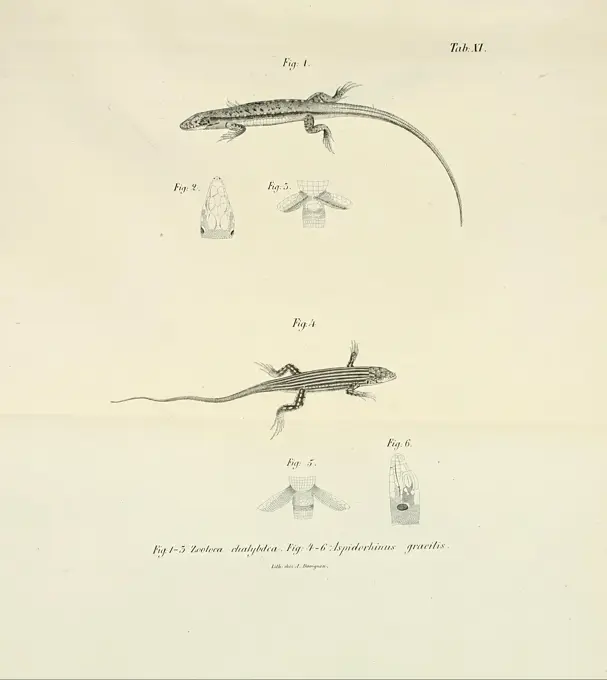
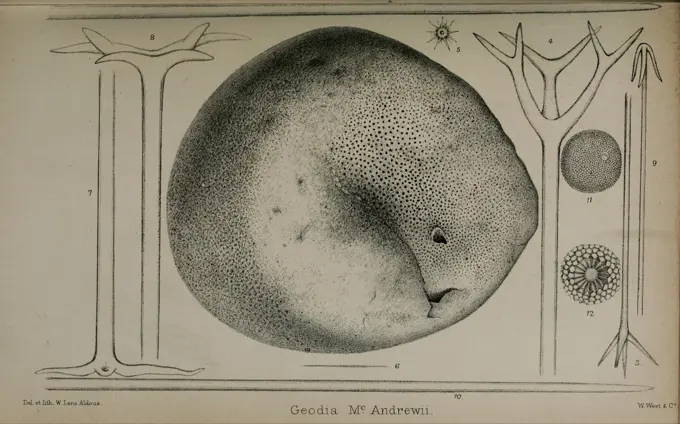
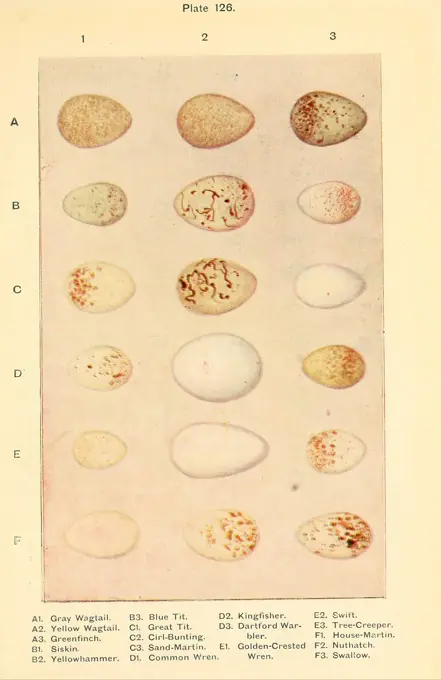
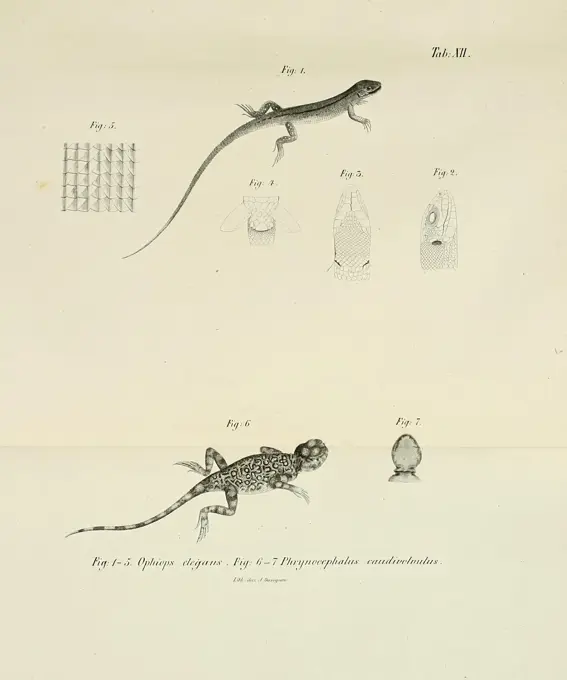
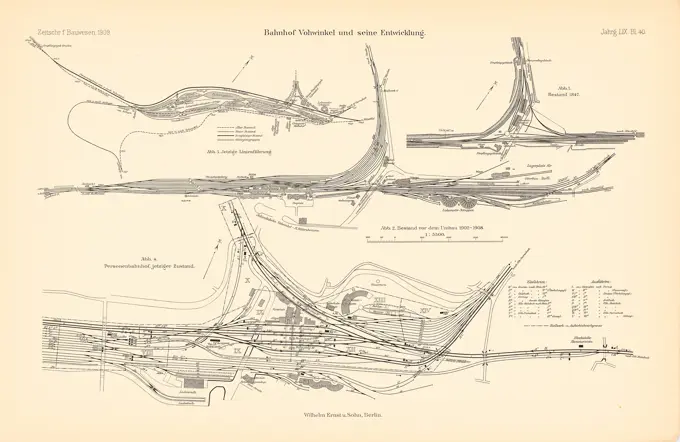
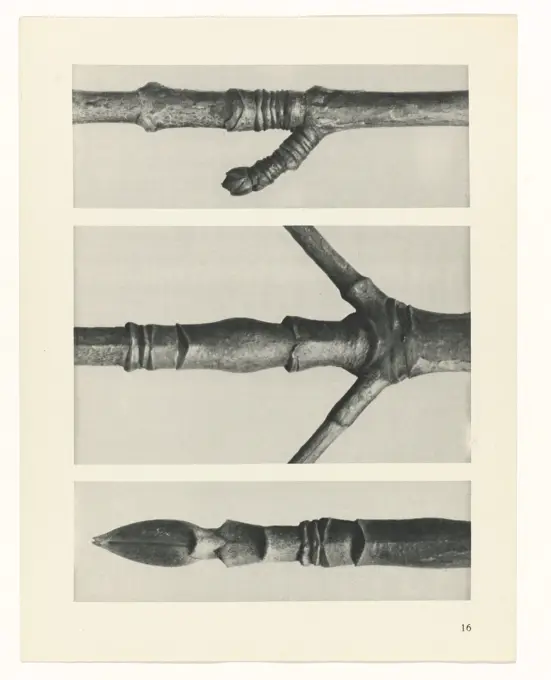
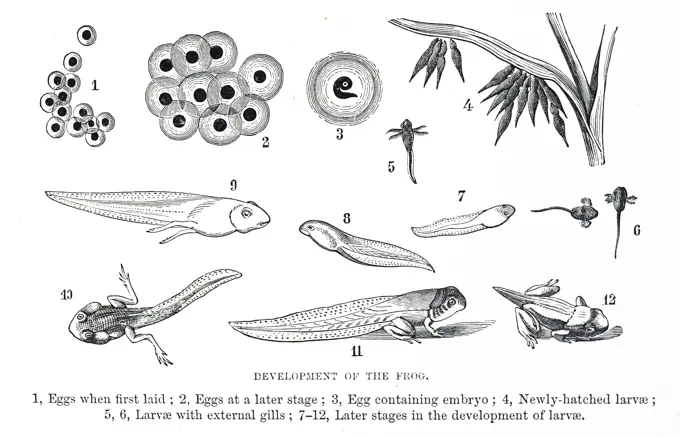
Mededeelingen van 's Rijks Herbarium, Leiden, Rijks Universiteit, Rijks Herbarium, 1911-, Horsetails, The image features two distinct archaeological artifacts, each displaying intricate patterns of incised lines. The left artifact is irregularly shaped, showcasing a series of parallel, wavy lines that create a textured surface, possibly indicative of its cultural or functional significance. The right artifact is more elongated and features a consistent, finely detailed pattern of vertical lines, suggesting a design that emphasizes symmetry and order. Both pieces appear to have labels attached, likely providing information about their origins or context within an archaeological study. These artifacts may represent ancient techniques in carving or textiles, offering insights into the artistic practices of the culture they come from.Palaeontological memoirs and notes of H. Falconer, with a biographical sketch of the author. London, 1868, An illustration showcasing two detailed views of a fossilized jawbone, specifically from the genus *Brontotherium*. The left side depicts the lateral aspect of the jaw, highlighting the distinctive molars and dental structure, while the right side presents a superior view, emphasizing the profile and overall morphology. Each part is labeled for educational reference, displaying the anatomical features significant for paleontological study and classification. The illustration serves as a valuable resource for understanding the characteristics of this prehistoric creature.Nouveaux mémoires de la Société impériale des naturalistes de Moscou Moscow La Société 1829-1915 geology learned institutions and societies Moskowskoe obscheshtvo liubiteleĭ prirody natural history periodicals Russia science Museum of Comparative Zoology lizard, The illustration presents a scientific study of various lizard species, showcasing multiple distinct figures. The top section features a slender aquatic lizard with an elongated tail, labeled as Figure 1. Below it, Figure 2 depicts an abstract representation, possibly of a lizard's habitat or features, while Figure 3 shows another lizard that appears more robust and has a different body shape. The bottom section continues with Figures 4 to 6, each detailing varying anatomical characteristics and patterns of a range of lizards, emphasizing the diversity within the species. The precise labels and meticulous styling suggest this is part of a larger zoological exploration, aimed at documenting and classifying these reptiles.Proceedings of the Zoological Society of London, London, Zoological Society of London, The composition features a detailed illustration of various marine organisms, including a prominently displayed, rounded, textured body resembling a type of gelatinous creature. Surrounding this central figure are several other depicted forms, including starfish-like structures and circular patterns, which suggest a diverse environment rich in marine life. The meticulous lines and shading emphasize the unique characteristics of each organism, showcasing the intricacies of their shapes and structures. This representation highlights the beauty and diversity found in oceanic ecosystems.Zurich, Brunner & Hauser, Bottles with ice, recto - printed, photomechanical print, page, photographs, photographically illustrated books, Figur 11. Figur 12., height 237 mm, width 298 mm, photographer, 1889-02-22 - 1889-03-27, paper, papier, collotype, Swiss, cliché makerBritish birds & their eggs London W. & R. Chambers 1909 Great Britain birds eggs nests excellent, The visual showcases a series of eggs displayed in rows, each with unique patterns and colors. The eggs vary in shape and size, featuring intricate designs ranging from speckled to smooth surfaces. Labels are positioned alongside each specimen, indicating their specific identifiers, such as A1, B2, and so on. This collection illustrates the diversity of avian eggs, highlighting the beauty and variation found in nature. The arrangement is systematic, providing a clear comparison among the different types represented.Mededeelingen van 's Rijks Herbarium, Leiden, Rijks Universiteit, Rijks Herbarium, 1911-, horsetails, The illustration showcases a series of textured surfaces, each displaying intricate patterns and details. The top-left section features a close-up of a ridged surface, emphasizing its linear grooves. Adjacent to it, another segment presents a different texture with a distinct, more randomized pattern. The bottom half features two additional sections; on the left, a more substantial, elongated surface showcases deep markings and a rougher texture, while the right section offers an irregularly shaped piece with pronounced lines and variations in depth. These elements suggest a study of geological formations or materials, highlighting the diversity of natural textures.Nouveaux mémoires de la Société impériale des naturalistes de Moscou. Moscou, La Société, 1829-1915. geology, learned institutions and societies, Moscow, Moskovskoe obshchestvo liubiteleĭ prirody, natural history, periodicals, Russia, science, Museum of Comparative Zoology, lizard, The illustration showcases a detailed study of various lizard species. The top section features outlined figures showing anatomical details of the reptiles, including scales and body structures. The bottom section presents two distinct species: the first lizard is depicted in profile, highlighting its elongated body and slender limbs, while the second, with a patterned exterior, is portrayed in a dynamic pose, emphasizing its unique markings and physical characteristics. Both illustrations are labeled for clarification, contributing to the scientific examination of these reptiles.N.N., four-track expansion of the Vohwinkel-Elberfeld railway line. (From: Atlas to the magazine for Building, ed. V. Ministry of public work (1909-1909): floor plans. Pressure on paper, 29.8 x 45.9 cm (incl. Scan edges) N.N. : Viergleisiger Ausbau der Eisenbahnstrecke Vohwinkel-Elberfeld. (Aus: Atlas zur Zeitschrift für Bauwesen, hrsg. v. Ministerium der öffentlichen Arbeiten, Jg. 59, 1909)Plant Study, 1928 photograph Fach enlargement. Afkomstig uit losblady uitgave. Berlin paper. ink  plants (in general)Transactions of the Entomological Society of London, London, The Society, entomology, periodicals, insect, The image showcases two detailed illustrations of the larva of *Latorina orbitoides*, highlighting key anatomical features. The first section illustrates the honey-gland regions of the larva in its second instar, showcasing intricate structures measured at 50 times magnification. The second section presents the larva in its third instar at a magnification of 60 times, with a focus on further developed anatomical features. Both illustrations are essential for understanding the developmental stages and morphology of this species.Plant Study, 1928 photograph Fach enlargement. Afkomstig uit losblady uitgave. Berlin paper. ink  plants (in general)Tenants of an old farm, New York, Fords, Howard & Hulbert, 1885 1884, insects, juvenile literature, The illustration depicts a cross-sectional view of a tree trunk, highlighting variations in texture and patterning within the wood. Distinct areas of granularity are visible, showcasing the intricate details of the tree's growth rings. Some sections display darkened spots, which may indicate the presence of knots or other natural imperfections. The surrounding lines and illustrations suggest a study of wood characteristics, emphasizing the complexities of tree anatomy, likely for educational or scientific purposes.Pedestals, bases and mouldings, 19th century illustrationAbklatsch of the chalk drawing on page 52, c. 1886 - c. 1903  Page 53 from sketchbook XXXII with 92 pages. Amsterdam paperEngraving depicting the stages in development of the frog. Dated 19th centuryOphiuridae of the genus Echinodermata. Line block.Scheme of a drum anchor winding