Medieval Armor Artifacts

Display of historical armor pieces including bascinets, breastplates, and molds, showcasing the craftsmanship of medieval weaponry.

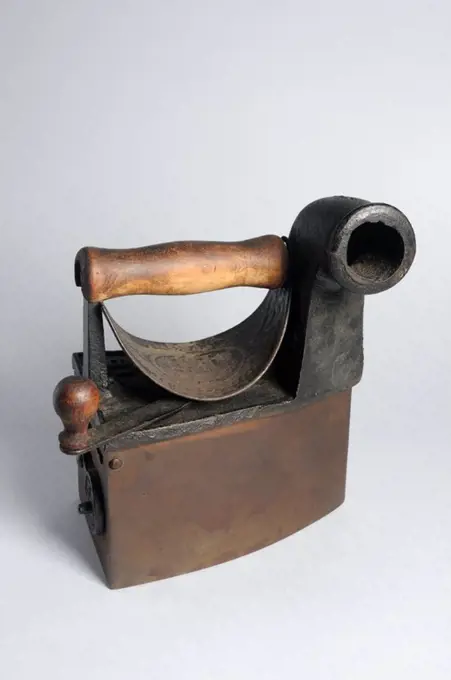
Old vintage iron Vintage electric ironing applicance Copyright: xZoonar.com/YannxPoirierx 8964204
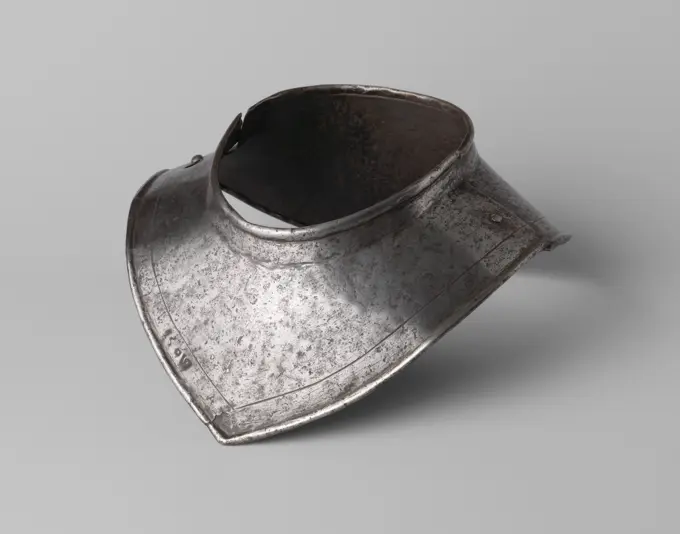
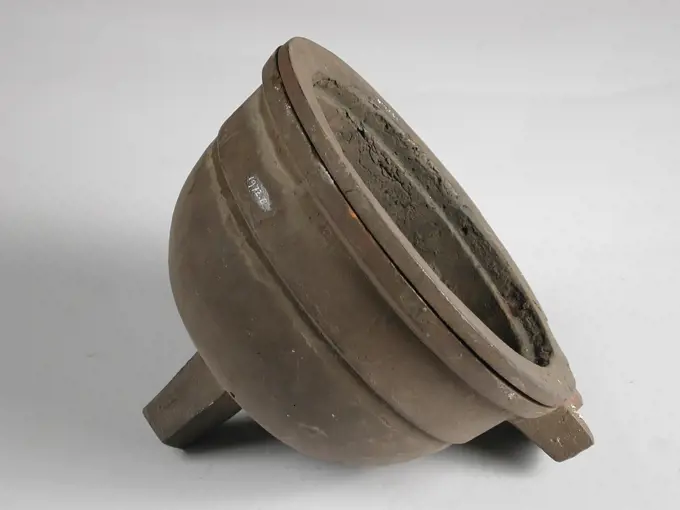
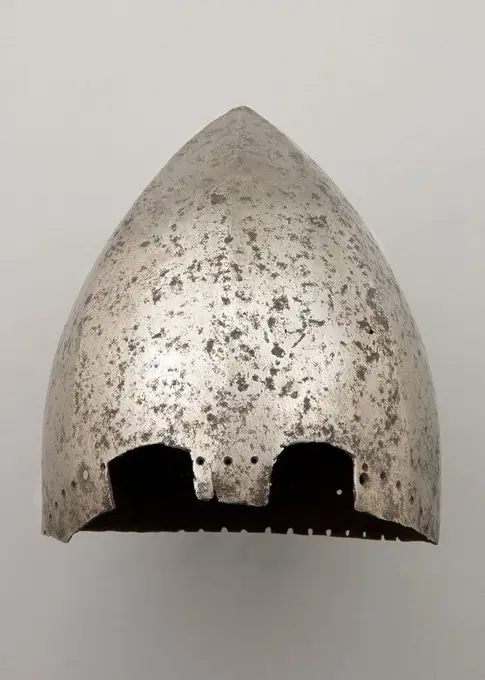
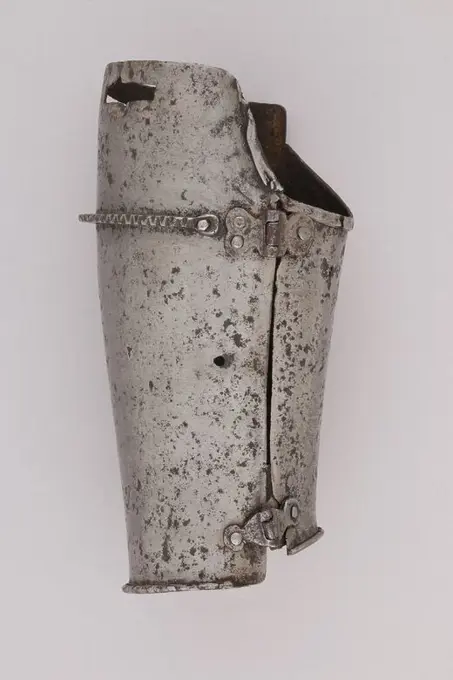
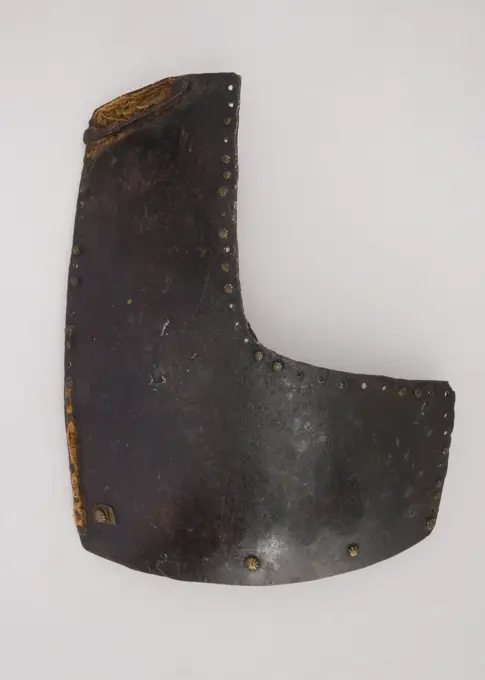
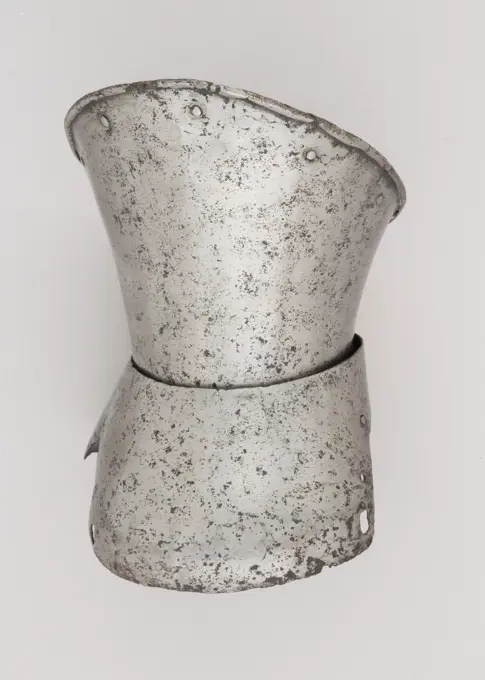
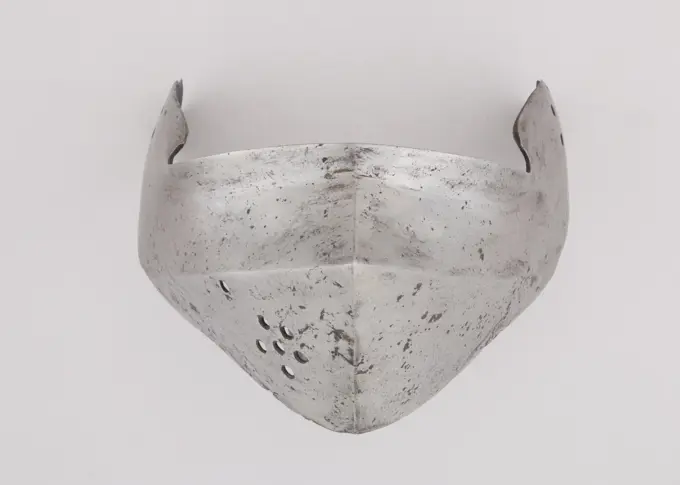
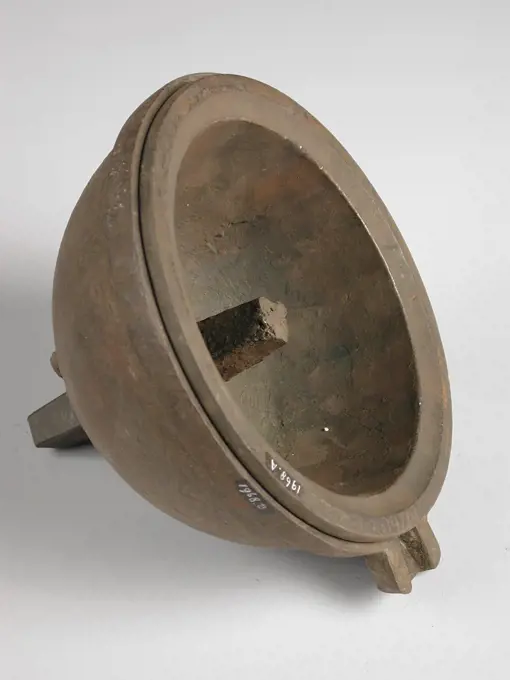
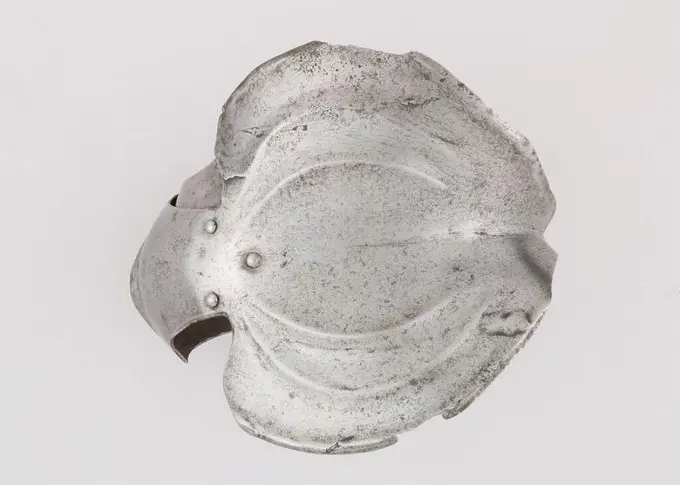
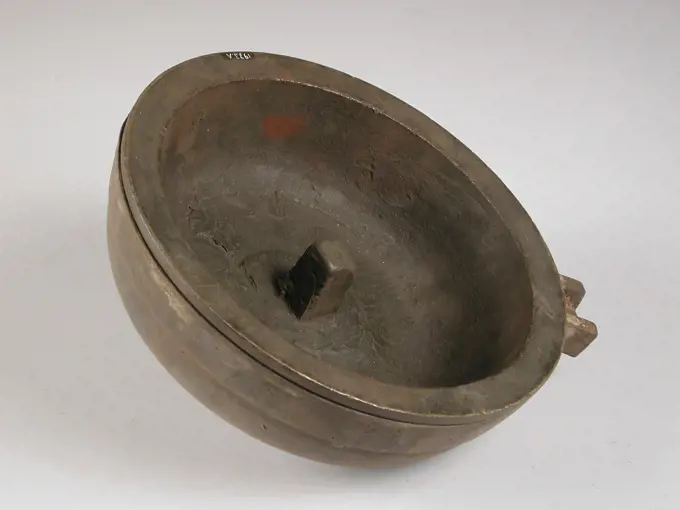
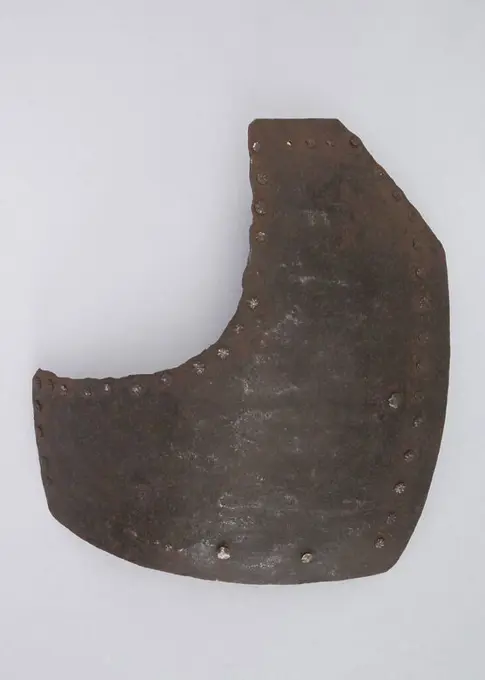
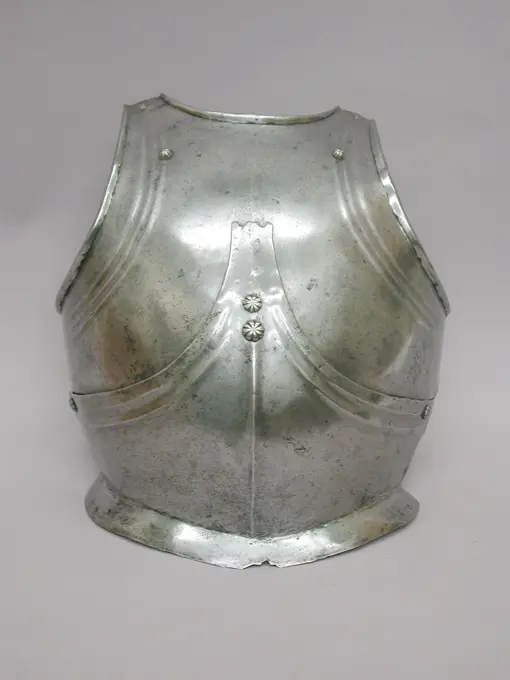
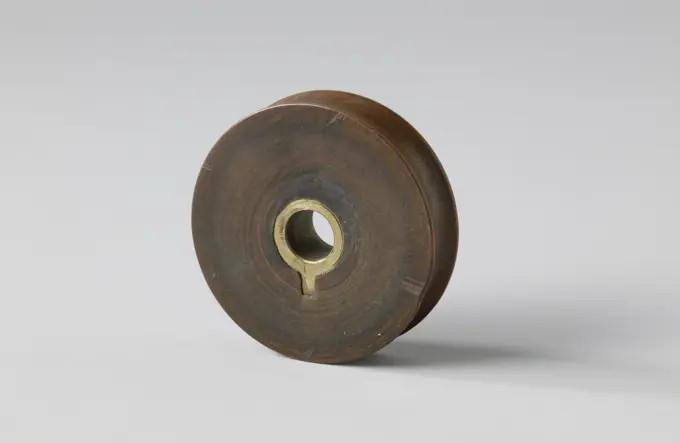
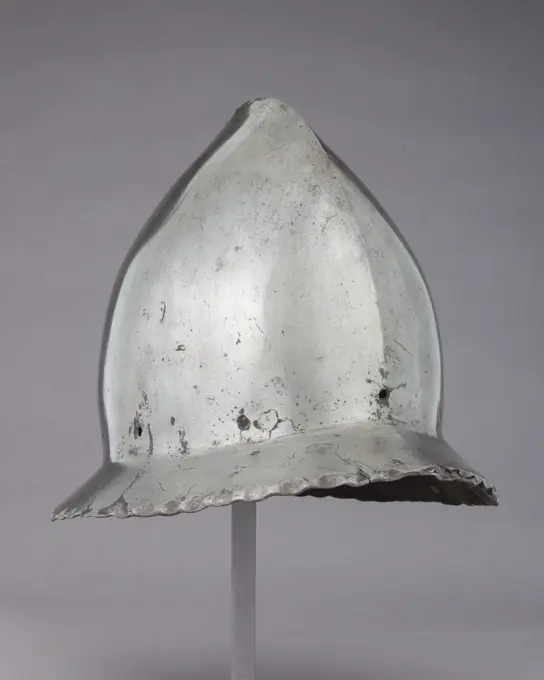
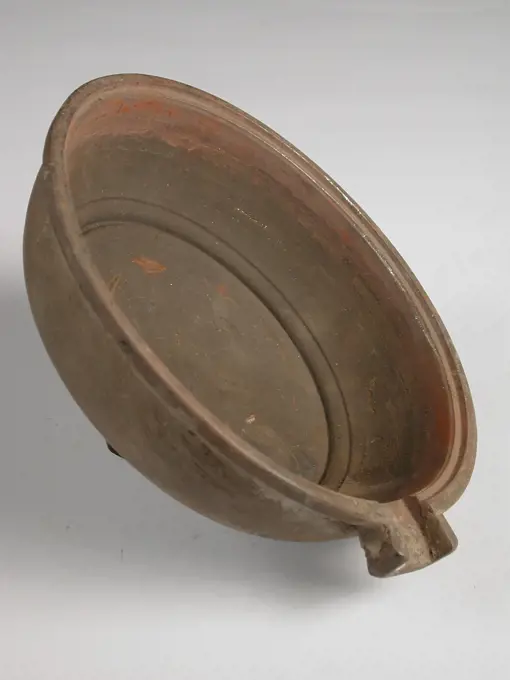
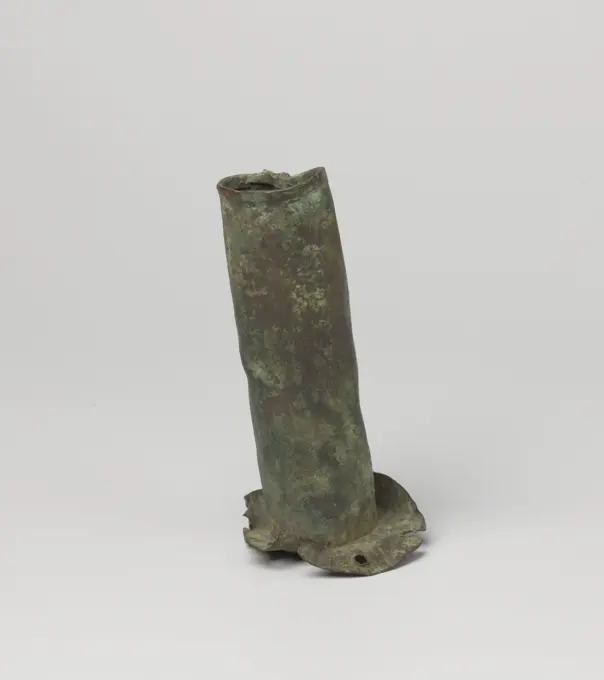
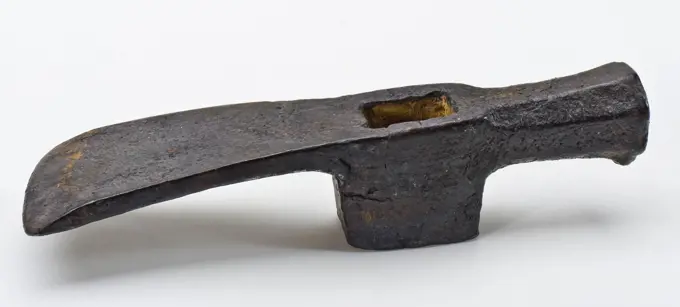
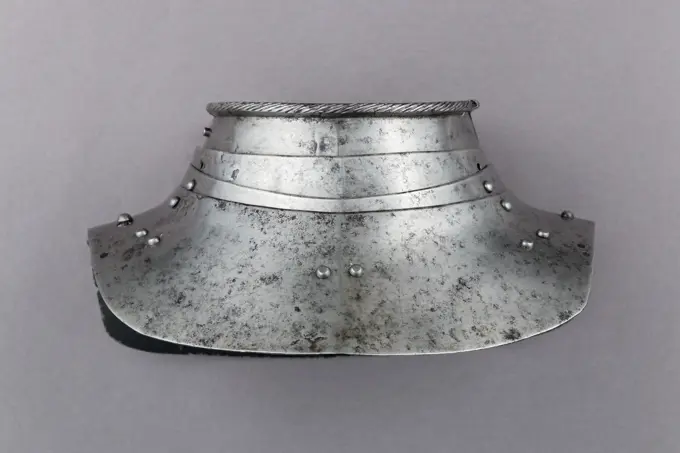
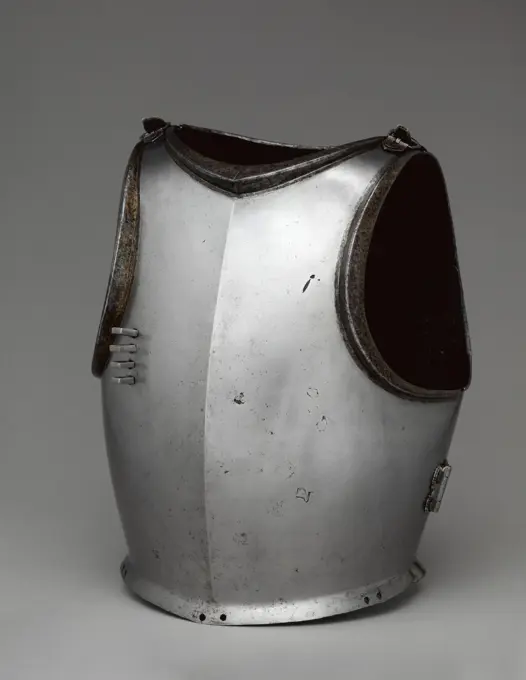
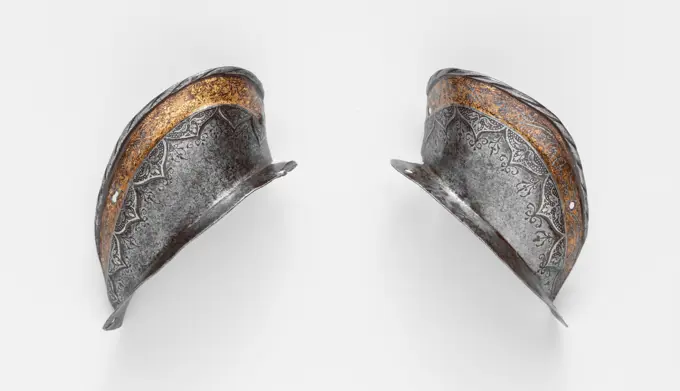
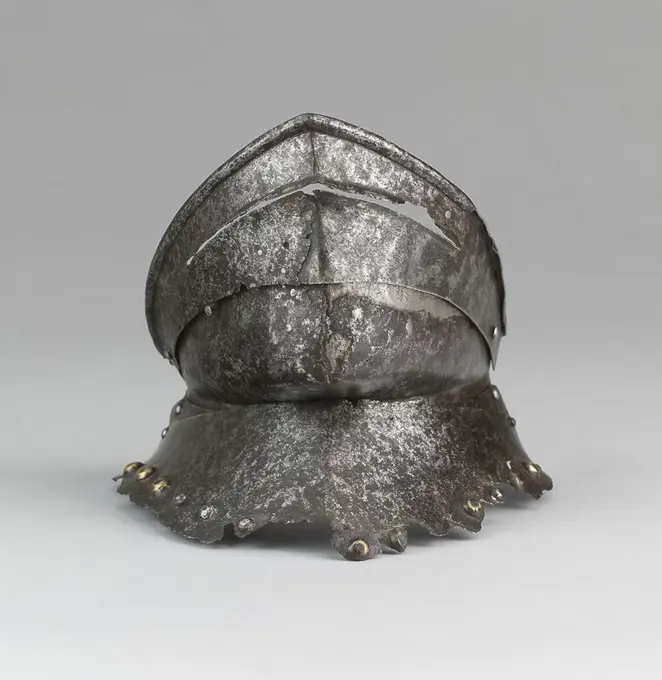
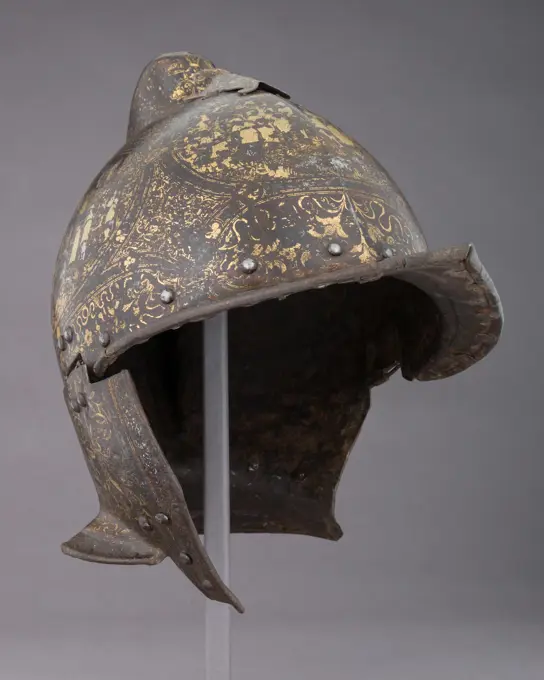
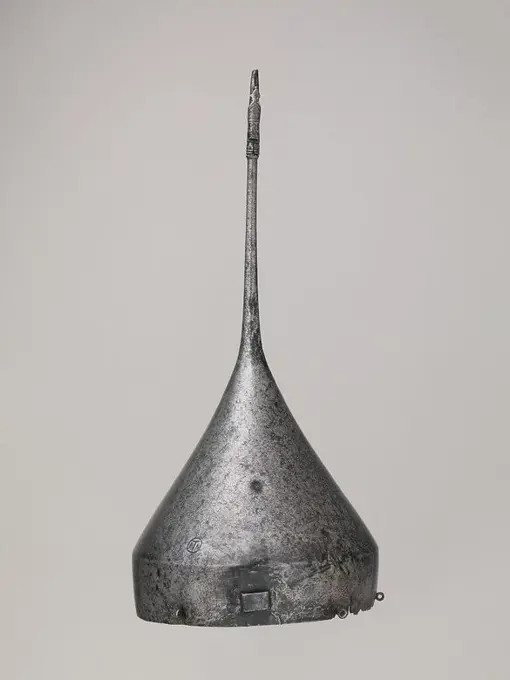
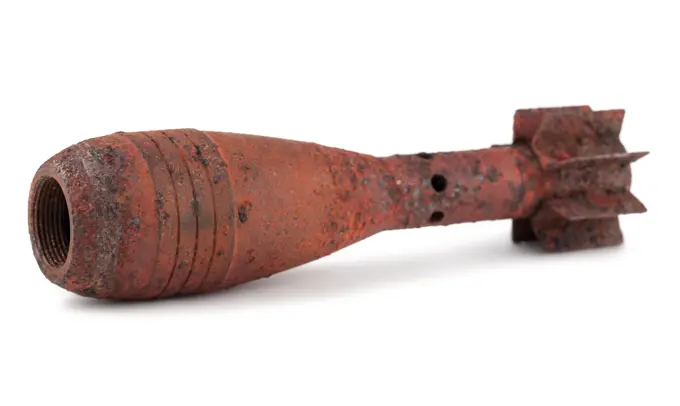
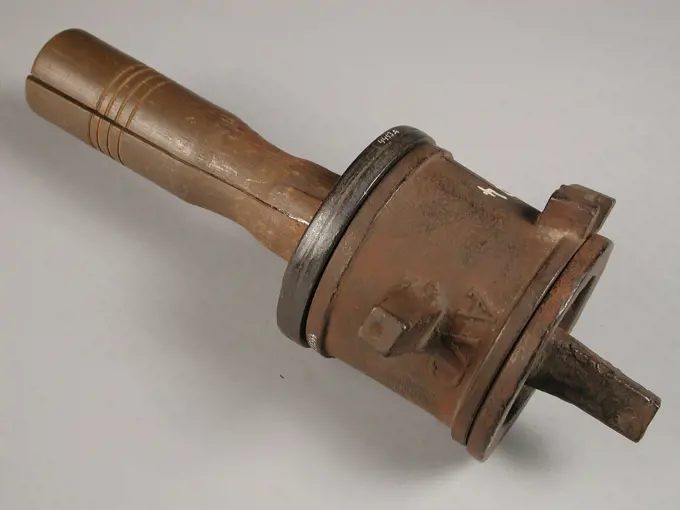
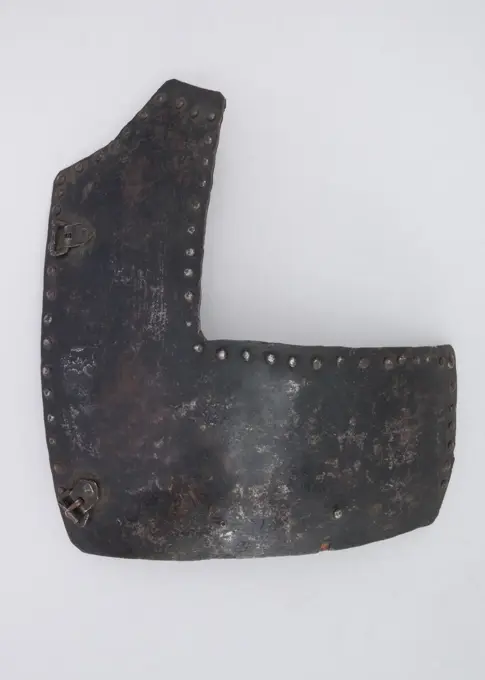
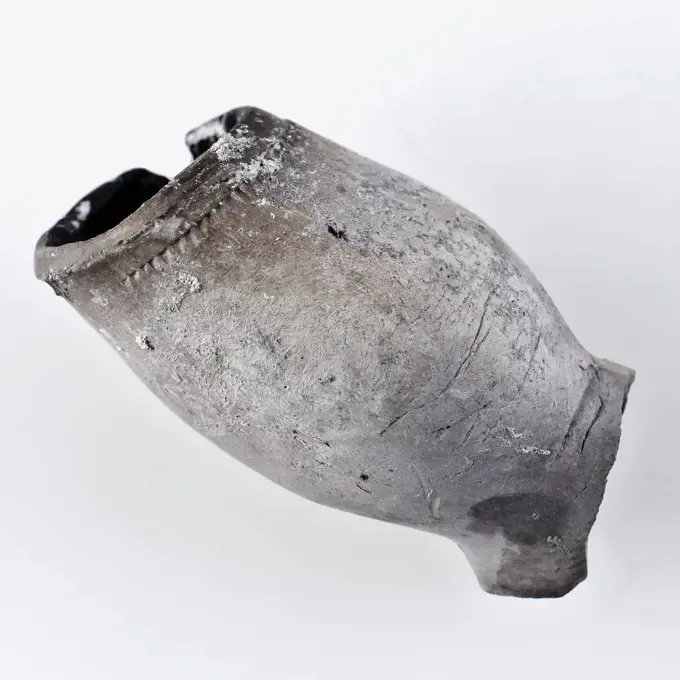
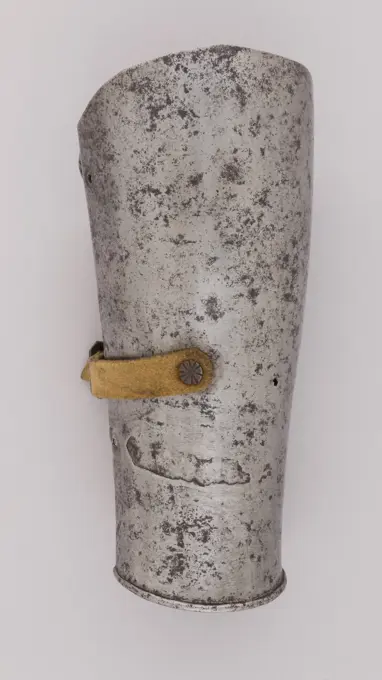
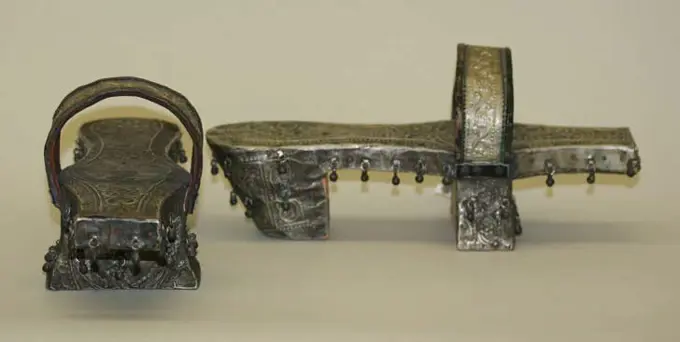
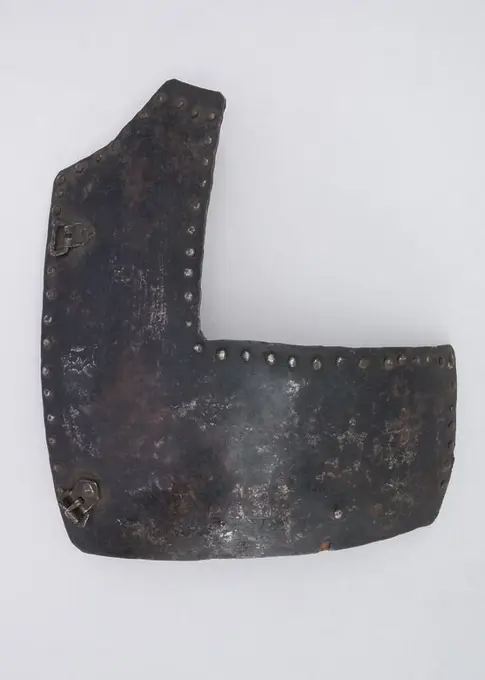
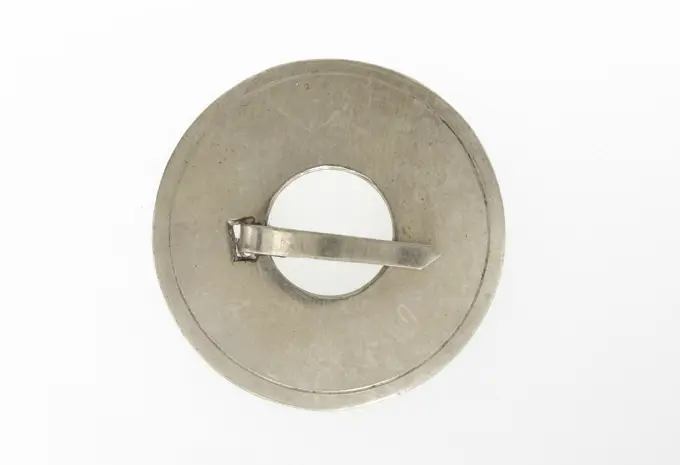
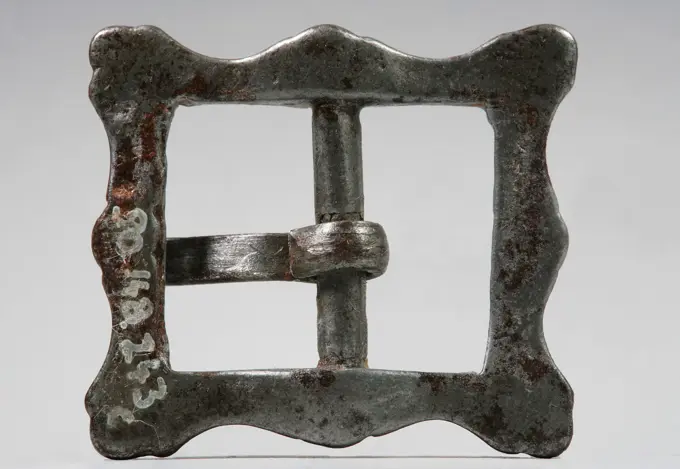
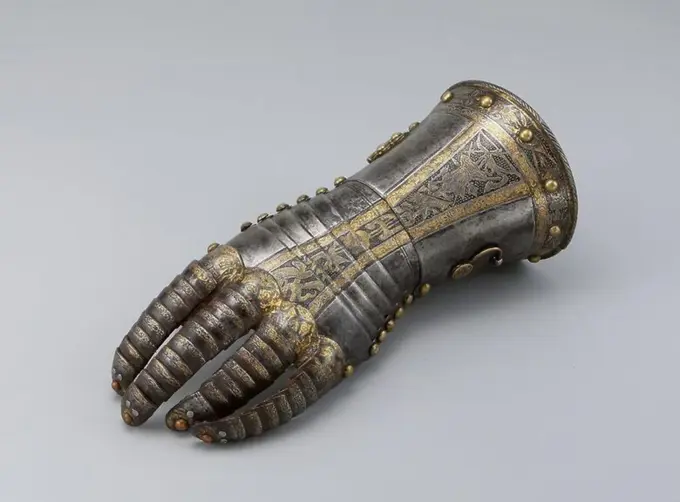
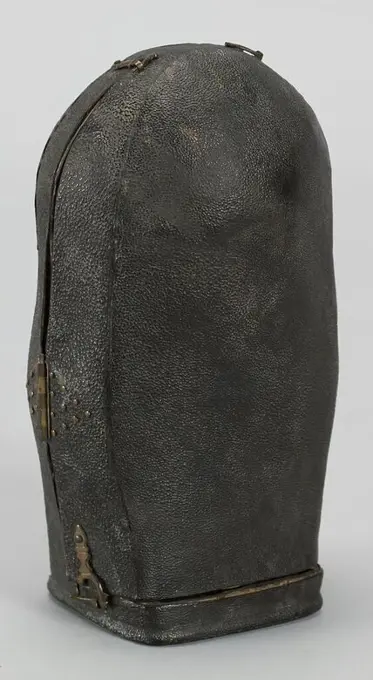
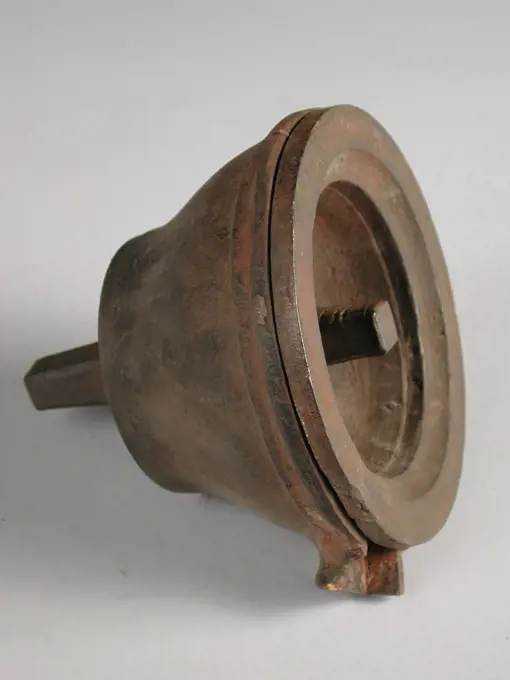
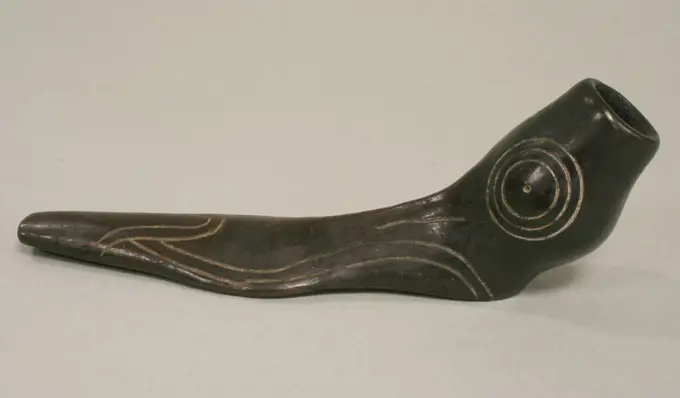
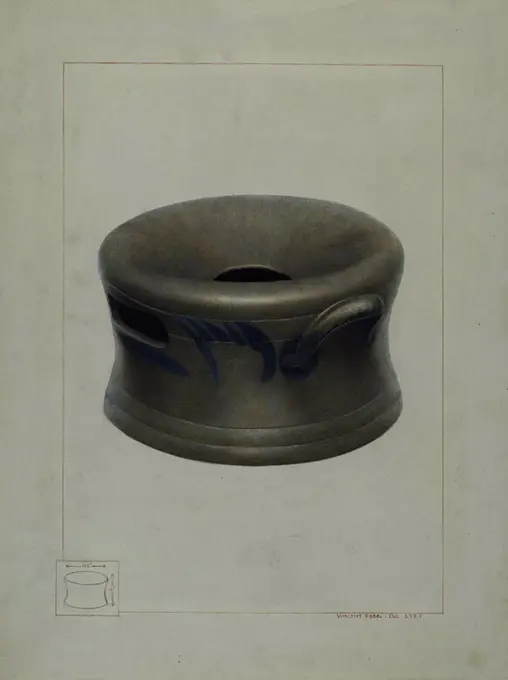
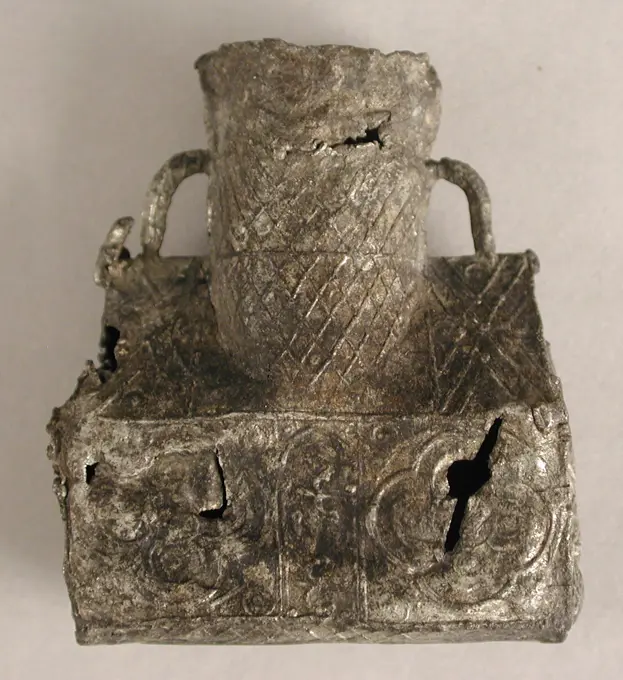
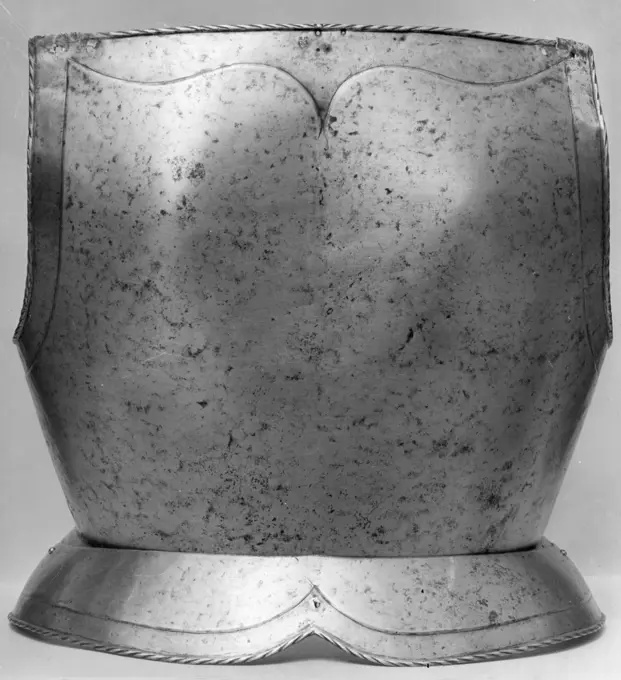
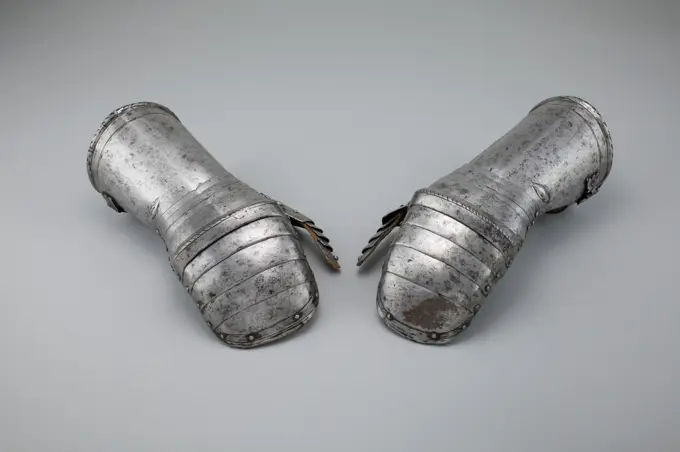
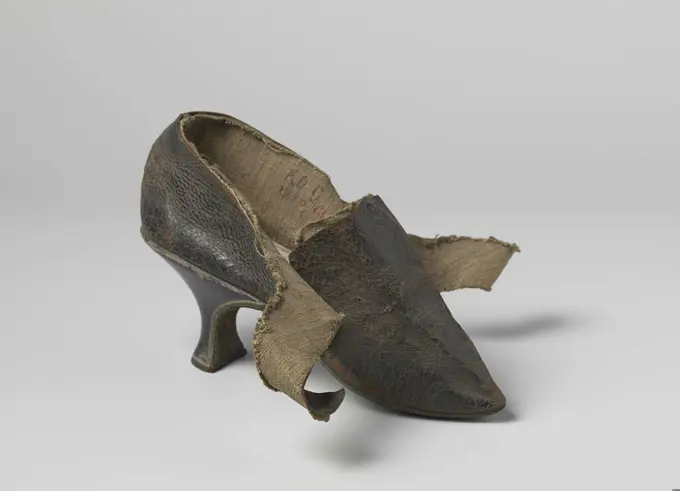
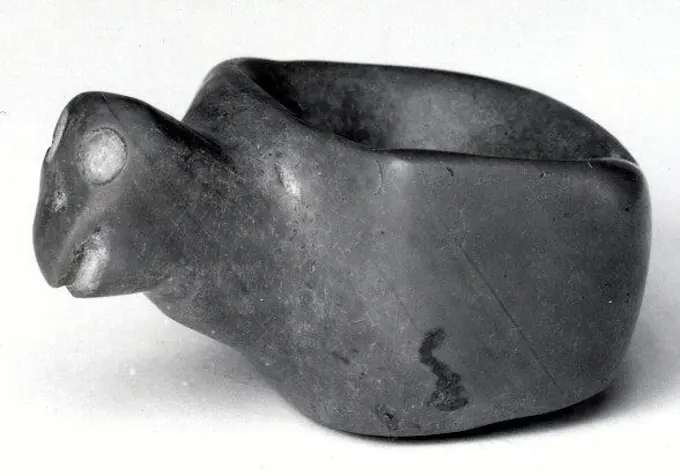
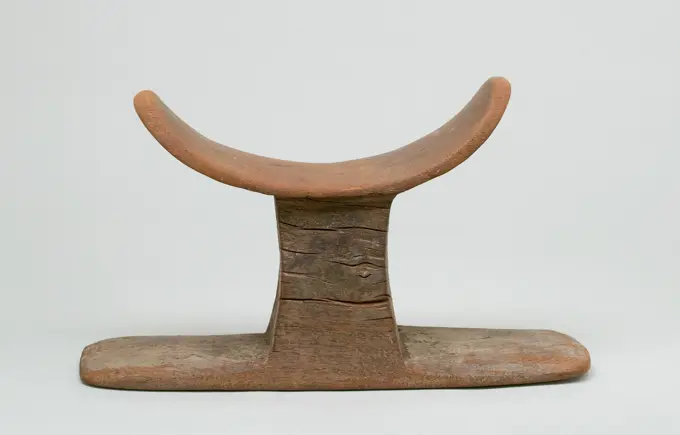
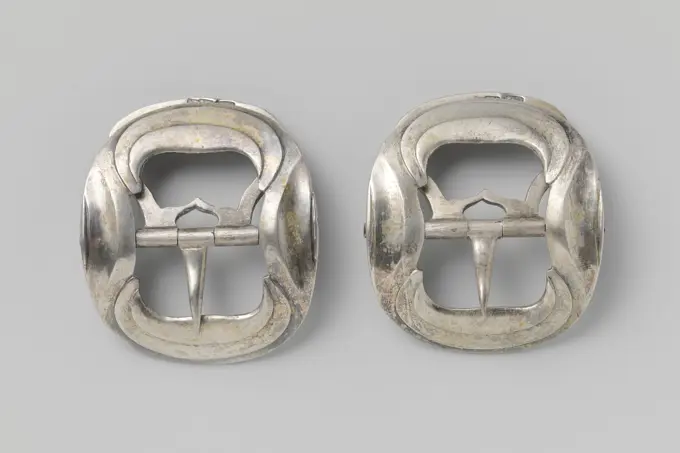
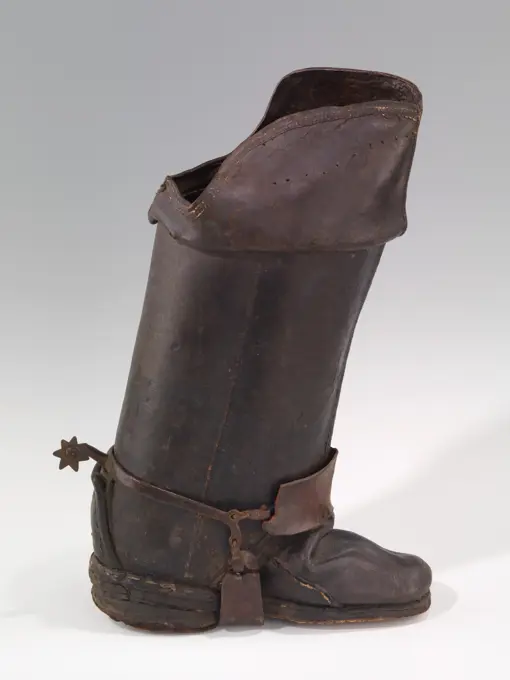
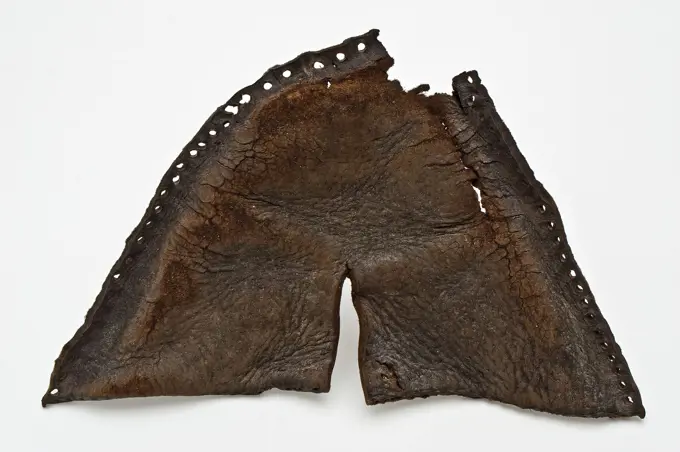
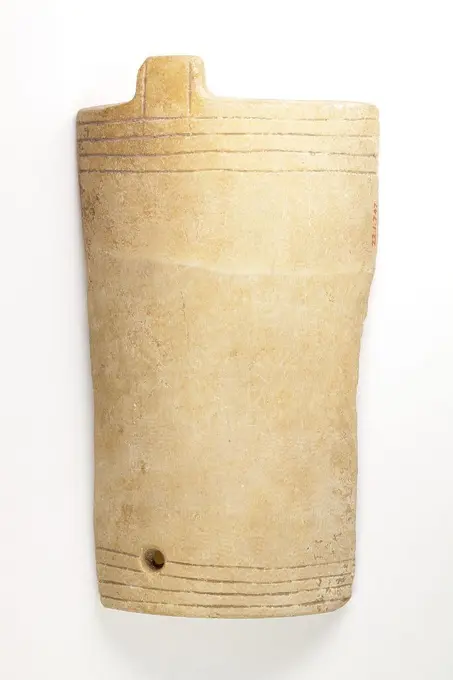
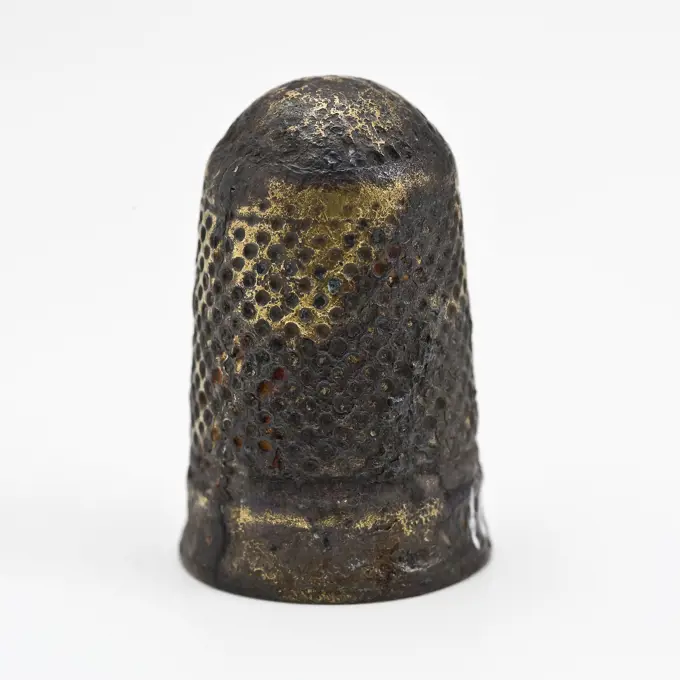
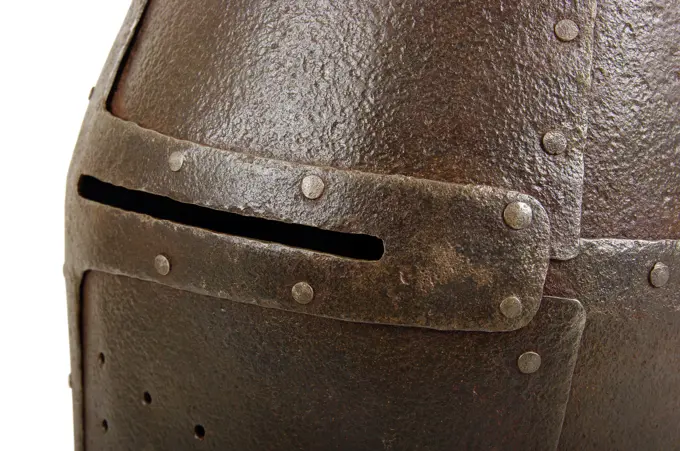
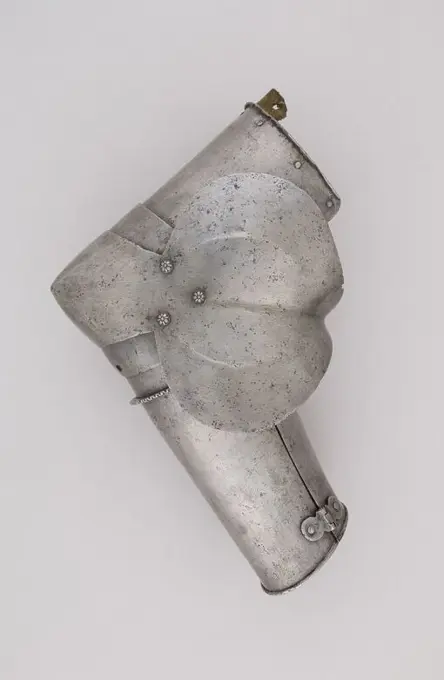
Forearm Defense (Vambrace). Culture: Italian. Dimensions: H. 8 1/4 in. (21 cm); W. 3 1/2 in. (8.9 cm); D. 3 in. (7.6 cm). Date: ca. 1450-70. Museum: Metropolitan Museum of Art, New York, USA.Ring collar, 1599 - 1699  Ring collar, white, iron, consists of two parts that have been held together on both sides. To the left of the neck opening is an opening with which the ring collar can be opened. The edges of the collar have been flooded, running parallel to the edge a single line that serves for decoration. Inside is painted black.  whole: Iron (metal) forging / striking (metalworking)Mold for tap jug, cast molding tool tools base metal bronze, cast turned Two-piece bronze mold for bottom of small tap jug bottom: Rotterdam tin casting tin tin Meeuws Druy craft Forms come from the originally 18th century Rotterdam tinnegieter J Druy. The large molds that were not signed or dated were the property of the tinker guild and were rented to the small tin caster.Bascinet. Culture: possibly Italian. Dimensions: H. 8 in. (20.3 cm); W. 7 1/2 in. (19.1 cm); D. 8 1/4 in. (21 cm); Wt. 2 lb. 6 oz. (1064 g). Date: ca. 1325-50.A bascinet with a faceted bowl is rare. The helmet was originally longer, but the lower edges have been trimmed and cutouts made over the eyes, modifications probably done for a later owner. Museum: Metropolitan Museum of Art, New York, USA.Outer Plate of a Forearm Defense (Vambrace). Culture: Italian. Dimensions: Plate; H. 7 7/8 in. (20 cm); W. 3 in. (7.6 cm); D. 4 1/4 in. (10.8 cm); fragment of two lames; H. 2 3/4 in. (7 cm); W. 2 5/8 in. (6.7 cm); D. 4 7/8 in. (12.4 cm); Wt. 3.1 oz. (87.9 g). Date: ca. 1400. Museum: Metropolitan Museum of Art, New York, USA.Left Half of a Breastplate ca. 1400-1450 Italian This is part of a large find of medieval armor discovered in 1840 in the ruins of the fortress of Chalcis, on the Greek island of Euboea (then a Venetian colony called Negroponte). The fortress had been captured and destroyed by the Turks in 1470. Now divided largely between the Ethnological Museum, Athens, and The Metropolitan Museum of Art, the Chalcis hoard contains many rare and unusual elements of fourteenth- and fifteenth-century armor. Of particular importance are the variety of headpieces and the many fragments of brigandines (armor for the torso constructed of small plates riveted to layers of fabric), some of which retain portions of their original velvet covering. The Chalcis armor provides a unique picture of the armament used in the Aegean, one of the easternmost military outposts of the Venetian empire.. Left Half of a Breastplate 27672Codpiece 1500-1600 Germany. Steel .Gauntlet for the Left Hand ca. 1440-50 Italian This is part of a large find of medieval armor discovered in 1840 in the ruins of the fortress of Chalcis, on the Greek island of Euboea (then a Venetian colony called Negroponte). The fortress had been captured and destroyed by the Turks in 1470. Now divided largely between the Ethnological Museum, Athens, and The Metropolitan Museum of Art, the Chalcis hoard contains many rare and unusual elements of fourteenth- and fifteenth-century armor. Of particular importance are the variety of headpieces and the many fragments of brigandines (armor for the torso constructed of small plates riveted to layers of fabric), some of which retain portions of their original velvet covering. The Chalcis armor provides a unique picture of the armament used in the Aegean, one of the easternmost military outposts of the Venetian empire.. Gauntlet for the Left Hand 35747Visor for an Armet ca. 1475 Italian This is part of a large find of medieval armor discovered in 1840 in the ruins of the fortress of Chalcis, on the Greek island of Euboea (then a Venetian colony called Negroponte). The fortress had been captured and destroyed by the Turks in 1470. Now divided largely between the Ethnological Museum, Athens, and The Metropolitan Museum of Art, the Chalcis hoard contains many rare and unusual elements of fourteenth- and fifteenth-century armor. Of particular importance are the variety of headpieces and the many fragments of brigandines (armor for the torso constructed of small plates riveted to layers of fabric), some of which retain portions of their original velvet covering. The Chalcis armor provides a unique picture of the armament used in the Aegean, one of the easternmost military outposts of the Venetian empire.. Visor for an Armet 27656Visor for an Armet. Culture: Italian. Dimensions: H. 7 in. (17.8 cm); W. 8 1/4 in. (21 cm); D. 9 1/4 in. (23.5 cm); Wt. 1 lb. 6 oz. (623.7 g). Date: ca. 1475. Museum: Metropolitan Museum of Art, New York, USA.Two-piece bronze mold for bottom medium jug with initials JVDP, year 1751 and hand, mold casting tool tools kit metal_metal bronze, cast turned Two-piece bronze shape for the bottom of medium jug with initials JVDP year and hand with cuff pointing to it signed IVDP 1751 (Jan van der Pol) Rotterdam tin foundry tin stain tin Meeuws Druy artisan Shapes are from the originally 18th century Rotterdam tinnegieter J Druy. The large molds that were not signed or dated were the property of the tinker guild and were rented to the small tin caster.Knee Defense (Poleyn). Culture: Italian. Dimensions: H. 6 1/2 in. (16.5 cm); W. 5 1/4 in. (13.3 cm); D. 8 3/8 in. (21.3 cm); Wt. 11.7 oz. (331.7 g). Date: ca. 1450-75. Museum: Metropolitan Museum of Art, New York, USA.Two-piece mold for part of pot or jug, mold casting tool tools kit metal_metal bronze, cast turned Two-piece bronze mold for part of jug or pot Rotterdam tingieterij tinnegieter tin Meeuws Druy craft Forms come from the origins of 18th century Rotterdam inkwell J Druy. The large molds that were not signed or dated were the property of the tinker guild and were rented to the small tin caster.Brigandine Plate. Culture: Italian. Dimensions: H. 10 1/8 in. (25.7 cm); W. 9 1/8 in. (23.2 cm); Wt. 1 lb. 7.9 oz. (677.6 g). Date: 1400-1450. Museum: Metropolitan Museum of Art, New York, USA.Breastplate ca. 1480 German This breastplate is made from two parts, held together by four star-shaped rivets. The deeply scooped neckline and the arm-holes have outward-turned borders; the lower part of the breast is sharply ridged and sweeps up into a central squared-off point with twin cutouts at the top. The edges of the lower plate are paralleled by two shallow embossed ridges. The waist lames are missing, but holes indicate they were once attached. In the upper part of the upper breast, two star-shaped rivets indicate where shoulder straps were once attached.Throughout the fifteenth century breastplates were made in two parts, loosely riveted together in the German fashion or attached to one another by straps and buckles in the Italian fashion, to allow extra mobility of the body. The cuirass--breastplate and backplate--was the last element of body armor added to the complete "knight in shining armor." This was not for lack of technical dexterity on the part of the armorers, becaSheave with Brass Coak, J. Lehman de Lehnsfeldt, 1845 rigging Block disc with brass forest with a ridge. Netherlands (possibly) wood (plant material). brass (alloy)Cabasset second half 16th century possibly Spanish. Cabasset 27105Six-Pounder Shot, Joseph Whitworth, 1861 instruction model. grenade (ammunition) Whitworth grenade for a sixte. The term grenade, although customary for this projectile, is not correct because it does not bear an explosive charge; It is actually a bullet. It is made of solid iron and has an elongated oval shape with a flattened base; Six sloping oval impressions were made in the sides; These follow a screw movement, which gives the bullet its turning movement in a run with hexagonal drawn soul. Manchester iron (metal)Old vintage iron Vintage electric ironing applicance Copyright: xZoonar.com/YannxPoirierx 8964204Two-piece mold for bottom of pot or jug, mold casting tool tools base metal bronze, cast twisted Two-piece bronze mold for bottom of jug or pot top: Rotterdam tin foundry tinnegieter tin Meeuws Druy craft Forms originate from the 18th century Rotterdam tinnegieter J Druy. The large molds that were not signed or dated were the property of the tinker guild and were rented to the small tin caster.Four-piece bronze mold for serving bowl, mold casting tool tools equipment base metal bronze, cast turned Four-piece bronze mold for serving bowl Rotterdam tin foundry tin stainer tin Meeuws Druy craft Shapes come from the originally 18th century Rotterdam inkwell J Druy. The large molds that were not signed or dated were the property of the tinker guild and were rented to the small tin caster.Drain tube with a 'mounting ring' with five holes, anonymous, c. 1590 - c. 1596  Drain tube with a 'mounting ring' with five holes for nails or screws at one end. Originally round tube with seam.  copper (metal) striking (metalworking)  Nova Zembla. Saving HuysDrawbar with hammerhead, drawbar tool equipment soil find iron metal, forged Drawbar with slightly curved chopping blade and conical hammer head octagonal in cross section. Heavy box with rectangular hole for the seat of the handle Marked on the underside of the sheet: round impact image not recognizable archeology yard construction woodworking carpenter craft shipbuilding Rotterdam Soil discovery Rotterdam.Gorget ca. 1525-75 German Burgonets and gorgets were among the most practical and widely used forms of armor for protecting the vital areas of head and neck. Examples like this gorget were worn by common soldiers, mercenaries, and militia troops across Europe.. Gorget. German. ca. 1525-75. Steel, leather. Armor Parts-ColletinsNested cup weight from the wreck of the Dutch East India ship Hollandia, anonymous, 1700 - in or before 1743  Weight, cupweight, complete nest; fragm, set of 7 weights, id. NG 1980-27H2775, corroded together, lid missing. Netherlands copper (metal)   SecondCuirass ca. 1490-1500 Italian or Flemish By the end of the fifteenth century, one-piece breastplates had mostly replaced the two-piece Gothic form. The shape of this breastplate, particularly the boldly boxed borders at the neck and arms, is characteristic of the new type created in Italy and emulated in Flanders.. Cuirass. Italian or Flemish. ca. 1490-1500. Steel, gold. Armor Parts-CuirassesTwo Ear Guards from a Shaffron (Horse's Head Defense) of Emperor Charles V (1500-1558) 1544 Attributed to Desiderius Helmschmid German These detached ear guards belong to a shaffron from the most famous of Charles V's (1500-1558) armors, the so-called Mühlberg garniture (after the Battle of Mühlberg--April 24, 1547--at which the emperor wore parts of that armor). Dated 1544, the large garniture consists of several hundred elements, including six shaffrons.. Two Ear Guards from a Shaffron (Horse's Head Defense) of Emperor Charles V (1500-1558). German, Augsburg. 1544. Steel, gold. Augsburg. Equestrian Equipment-ShaffronsHelmet. Culture: Chinese. Dimensions: H. 10 3/4 in. (27.3 cm); W. 8 in. (20.3 cm); D. 8 1/2 in. (21.6 cm); Wt. 30.7 oz. (870.3 g). Date: 18th-19th century. Museum: Metropolitan Museum of Art, New York, USA.Frontal Plate from a Tilting Heaume in French or German Style ca. 1850-1900 probably French or German. Frontal Plate from a Tilting Heaume in French or German Style 32811Double cut, c. 1400 - c. 1950 A double cut (unit).  iron (metal) A double cut (unit).  iron (metal)Box -Ancient Iron Old rusty iron on isolated background Copyright: xZoonar.com/AndreyxSkatx 16439133Bevor ("Falling Buff"). Spanish. Date: 1490-1510. Dimensions: . Steel. Origin: Germany. Museum: The Chicago Art Institute, Chicago, USA.Burgonet ca. 1560-70 Italian, Milan Richly damascened in gold and silver, this helmet is decorated with five oval vignettes depicting exotic scenes, with Oriental figures on land and ships and oared galleys at sea. The extensive pictorial use of damascening on a smooth, rather than embossed, surface is highly unusual but relates to damascened iron furniture made in Milan in the second half of the sixteenth century. The shape of the burgonet is also noteworthy, the arched comb alluding to ancient Roman helmets. (The left cheekpiece is missing.). Burgonet 25375White clay pipe, marked, smooth handle, clay pipe smoking equipment smoke floor pottery ceramics pottery, hand molded baked White clay pipe marked smooth handle. Heel mark. heel mark: Tudorroos archeology indigenous pottery import smoking tobaccoAlpaca Offering Container (Canopa), 1400-1532. Peru, Inka style (1400-1532). Stone; overall: 6.6 x 10.8 x 3.9 cm (2 5/8 x 4 1/4 x 1 9/16 in.).Helmet. Culture: Southern Russian or Iranian. Dimensions: H. 18 3/8 in. (46.7 cm); Wt. 3 lb. 7 oz. (1560 g). Date: early 16th century.This extremely tall conical helmet is noteworthy as an example of a type worn in Iran and Russia in the late fifteenth and early sixteenth centuries. Similar helmets depicted in miniature paintings often show a small pennon attached to the long finial. Museum: Metropolitan Museum of Art, New York, USA.Old rusty mortar bomb without a detonator Old rusty mortar bomb without a detonator isolated on white background Copyright: xZoonar.com/AndreyxEreminx 7657979Andreas van Duyveland, Four-piece bronze mold for gambling pot with initials AVD, 1766, mold casting tool tools kit metal_metal bronze wood iron, cast turned Four-part bronze mold for gorteport with screw thread with AVD. signed: AVD 1766 (Andreas van Duyveland) Rotterdam tin tinker tin tin Meeuws Druy artisan Shapes are from the originally 18th century Rotterdam tinnegieter J Druy. The large molds that were not signed or dated were the property of the tinker guild and were rented to the small tin caster.Brigandine Plate Italian 1400-1450 This is part of a large find of medieval armor discovered in 1840 in the ruins of the fortress of Chalcis, on the Greek island of Euboea (then a Venetian colony called Negroponte). The fortress had been captured and destroyed by the Turks in 1470. Now divided largely between the Ethnological Museum, Athens, and The Metropolitan Museum of Art, the Chalcis hoard contains many rare and unusual elements of fourteenth- and fifteenth-century armor. Of particular importance are the variety of headpieces and the many fragments of brigandines (armor for the torso constructed of small plates riveted to layers of fabric), some of which retain portions of their original velvet covering. The Chalcis armor provides a unique picture of the armament used in the Aegean, one of the easternmost military outposts of the Venetian empire.Fragments of foot, bottom, body, neck, spout and handle of spout jar, carafe holder fragment soil finds glass, free blown and shaped glass application Six fragments of foot bottom part of body almost whole pouring spout and small part handle and of neck of spout jar in clear colorless glass archeology Rotterdam IJsselmonde drinking serve serving wine Soil discovery: IJsselmonde Castle 1 and 2 Rotterdam 1972.08.30.Clay pipe, unnoticed with smooth handle, clay pipe smoking equipment smoke floor earthenware ceramic pottery, pressed finished baked Clay pipe with smooth handle unmarked Radical ring under lip top edge over entire circumference. In the head there is still lump of pipe earth present; untidy finished archeology Rotterdam City Center Cool Schiedamse Vest Mainland City Triangle Road indigenous pottery smoking tobacco craft Soil discovery: Vasteland-Baan Schiedamse Vest Rotterdam Complex of discovery with material from pottery and pipe making and house waste from the 17th century.Back plate of Kuras, 1599 - 1699  Back plate, iron, white, the arm and neck outings as well as the bottom edge of the lumbar strip flules around. Decoration lines applied parallel to the edges with a vertical line in the middle, a horizontal line just above the bottom of the lumbar strip. On both sides of the neck exit two-smocked punches of the shoulder straps, at the bottom, directly above the lumbar collar, bumped and conversation of the middle belt. On the lumbar strip right just above the edge a round hole. There is XX 33 under the neck exit. Inside of the back plate, the brand of the city of Amsterdam has been rejected in the middle. Netherlands (possibly) iron (metal). riem: leatherCantle Plates. Culture: possibly Flemish or British. Dimensions: 15 1/2 x 6 1/2 in. (39.4 x 16.5 cm); Wt. 2 lb. 4 oz. (1021 g). Date: ca. 1475-1525. Museum: Metropolitan Museum of Art, New York, USA.PoinconDisc for packaging from v.O.c.-ship the 'white lion'. Disc for packaging from v.O.c.-ship the 'white lion'. The disk has an in fully ring with gold paint and in the middle and on the side remains of red varnish. The disc is split in two. The small part is darker in color.Left and Right Forearm Defenses (Vambraces) mid-15th century Italian This is part of a large find of medieval armor discovered in 1840 in the ruins of the fortress of Chalcis, on the Greek island of Euboea (then a Venetian colony called Negroponte). The fortress had been captured and destroyed by the Turks in 1470. Now divided largely between the Ethnological Museum, Athens, and The Metropolitan Museum of Art, the Chalcis hoard contains many rare and unusual elements of fourteenth- and fifteenth-century armor. Of particular importance are the variety of headpieces and the many fragments of brigandines (armor for the torso constructed of small plates riveted to layers of fabric), some of which retain portions of their original velvet covering. The Chalcis armor provides a unique picture of the armament used in the Aegean, one of the easternmost military outposts of the Venetian empire.. Left and Right Forearm Defenses (Vambraces) 24896Hammam Shoes 19th century. Hammam Shoes 88863Can from the wreck of the East Indians Hollandia, Anonymous, 1700 - in or before 1743  Jug; completely squashed, top of handle broken off; probably baluster-shaped, handle semicircular in section, linear engravings around rim, mark on base (AVOC). Netherlands tin (metal)   SecondBrigandine Plate. Culture: Italian. Dimensions: H. 10 15/16 in. (27.8 cm); W. 9 3/4 in. (24.8 cm); Wt. 1 lb. 12.3 oz. (802.3 g). Date: 1400-1450. Museum: Metropolitan Museum of Art, New York, USA.Brooch -Spindle-whorl ca. 1600-1050 B.C. Cypriot Spindle whorls aided in the making of cloth for garments and bedding. They were placed in tombs, perhaps so that the deceased could continue to spin wool in the afterlife.. Spindle-whorl 240521Loop.Crown 9th-11th century Lambayeque (Sicán). Crown. Lambayeque (Sicán). 9th-11th century. Gold. Peru. Metal-OrnamentsOil lamp. Hospital. Terracotta. Late Antiquity. Paris, Carnavalet museum. 50056-15 Late antiquity, hotel-god, oil lamp, terracottaShards of wine bottles from the wreck of the East Indians' t Vliegend Hart ,, 1700 - 1735  Shards of onion -shaped wine bottles of green glass with red (port) wine and a cork. Netherlands cork (bark)Fingered Gauntlet for the Left Hand Made 1550-1570 Northern Italy. Steel, leather, and brass .Gauntlet from a Tournament Garniture of a Hapsburg Prince. Attributed to Anton Peffenhauser (German 1525--1603); Augsburg. Date: 1560-1590. Dimensions: 11.4 × 10.8 × 26.7 cm (4 1/2 × 4 1/4 × 10 1/2). Steel, gilding, brass, and leather. Origin: Augsburg. Museum: The Chicago Art Institute, Chicago, USA.Alps cowbell on white backgroundBrooch -White pipe bowl, embossed with sets of dots and two oval portraits, clay pipe smoking equipment smoke floor earthenware ceramic pottery, pressed baked White pipe head in relief decorated with series of dots and two oval portraits Due to extreme weathering of the pipe head the images are no longer recognizable archeology Rotterdam City Center Cool Eendrachtsweg Westzeedijk indigenous earthenware smoking tobacco Soil discovery: 1953 corner Eendrachtsweg Westzeedijk Rotterdam.Anonymous / 'Case for square-footed jasper cup with cameos'. XVII century. Leather, Wood, Velvet. Museum: Museo del Prado, Madrid, España.Bowl ca. 3500-3300 BCETwo-piece bronze mold for top of pot or jug, mold casting tool tools base metal bronze, cast twisted Two-piece bronze mold for pouring the collar top of pot or jug Rotterdam tin foundry tin stain tin Meeuws Druy craft Shapes are from the origin 18th century Rotterdam tinnegieter J Druy. The large molds that were not signed or dated were the property of the tinker guild and were rented to the small tin caster.Bliżej Kultury Jan Knedler's engravingTin ink set, along the edge of the pen box and on the lid of the ink jar with green stones, c. 1910 - c. 1930 Tin ink set. The pen box is oval with the rear round than the front. The front is decorated with three turquoise stones. On the back is the oval ink jar, which is closed with a one -a -cash hinge with a reversed conical lid ending in a cap with turquoise stone. The outside of the ink jar and lid is decorated with five vertically imposed tires. The cap has five volutes on the outside. A small, loose inner box is placed in the ink pot. Netherlands tin (metal). turquoise (mineral) Tin ink set. The pen box is oval with the rear round than the front. The front is decorated with three turquoise stones. On the back is the oval ink jar, which is closed with a one -a -cash hinge with a reversed conical lid ending in a cap with turquoise stone. The outside of the ink jar and lid is decorated with five vertically imposed tires. The cap has five volutes on the outside. A small, loose innerPipe. Culture: Aztec. Dimensions: H. 2 5/8 x W. 2 x D. 8 in. (6.7 x 5.1 x 20.3 cm). Date: 15th-16th century. Museum: Metropolitan Museum of Art, New York, USA.Crockery Cuspidor. Dated: c. 1938. Dimensions: overall: 30.5 x 23.1 cm (12 x 9 1/8 in.). Medium: watercolor, graphite, and heightening on paper. Museum: National Gallery of Art, Washington DC. Author: Vincent P. Rosel.A few silver shoe spheres, anonymous, c. 1770 A pair of silver shoe with fragment leather. Middelburg silver (metal). leather A pair of silver shoe with fragment leather. Middelburg silver (metal). leatherAmpule, Becket late 13th or 14th century British. Ampule, Becket 474363Glasses of iron, lined with green sheet, c. 1890 Glasses of iron, lined with green sheet. Oval spectacle box with lid. England (possibly) whole: Iron (metal). lining: Cloth forging Glasses of iron, lined with green sheet. Oval spectacle box with lid. England (possibly) whole: Iron (metal). lining: Cloth forgingBag of red leather. Rectangular bag with spherical soil. Lid hinges with bag. Belt with iron buckle sits through leather loops on a bag. Belt has decorative stitching in the form of S-shaped motifs that overlap each other. The bag is unfromed. There is a stylized crowned weapon on the lid (copper).Armharnas for right arm, c. 1525 - c. 1575  Arm cover, arm harness for right arm, iron, blank, consists of an upper arm pipe, an elbow hood and a forear pipe. The edges are surrounded. On the upper arm pipe a pointed pin and a leather belt. Decorations have been applied around the upper arm pipe. The elbow pipe is decorated and riveted rivets on the upper arm pipe and the forear pipe. Two hinges have been applied to the forearm pipe, so that the lower piece can be removed. A wide strip with decorations down from the elbow pipe. Inside is painted black. Europe metal. riem: leather etchingTurkey, Troy, Two-handled vaseBackplate 16th century German. Backplate 22999Pair of Mitten Gauntlets Made 1520-1540 Germany. Steel and leather .Metropolitan Water Works Miscellaneous, manhole cover, top, middle and bottom sections joined together, Mass., ca. 1900-1919 , waterworks, manhole componentsOil Lamp. Black leather shoe. Model: rounded nose, from three sheets: a cover page highly closed in a square tongue over the rubbed and two side blades ending in two flaps, one with perforation to fix a buckle. The front of the heel runs straight down in a rounded corner. The side and back of the heel are slightly fitted and lined with leather. The heel has a dark brown edge leather of the back flap.Helmet ca. 1515-1520 Egyptian or Syrian The engraved decoration, which includes Qur'anic inscriptions, recalls that found on helmets dating to the last years of Mamluk rule, before the Ottomans conquered Egypt in 1517. The helmet is incised with the mark of the Ottoman arsenal, indicating that it was carried back to Istanbul as booty. The spike at the top, the spear-like fixture at the front, and mail are later North African additions, suggesting that the helmet was recycled for use in Sudan during the Mahdi uprising in the 1880s and 1890s.. Helmet. Egyptian or Syrian. ca. 1515-1520. Steel, iron, copper alloy, gold. HelmetsTurtle Bowl 2nd century B.C.-A.D. 3rd century Colima. Turtle Bowl 314611Old iron ( 19th ).Lazio Viterbo Viterbo Museo Civico90. Hutzel, Max 1960-1990 Views of paintings (Middle Ages through 18th c.), frescoes, a tabernacle, coffin, sculpture reliefs, portal fragments, busts, sculpture, tapestry found in the Pinacoteca, Second floor gallery and Second floor cloister sequences. Antiquities: Many views of Etruscan and Roman fragments, sculpture, sarcophagi, pottery, masks, jewelry and other objects found in the Storeroom sequence (inventory numbers on back of prints), and the Cloister, Second floor Cloister, Valle Giulia, Sala Romana and Sala Etrusca sequences. General Notes: There are eight separate numerical sequences for this location. The cloister as an architectural structure, rather than museum site, is documented in the record and file for S. Maria della Verita, Cloister, all views of which are stored in Medieval core collection. Five views from the Museo Civico Second floor cloister sequence are stored in Medieval. German-born photographer and scholar Max Hutzel (1911-Model of a Maintop, anonymous, c. 1780 - c. 1800 demonstration model Model of a large march, completed at the front, with two long and two transversals. The march rim is reinforced with copper and the march floor is closed and reinforced with snaphans, radically around the soldier's hole. Netherlands wood (plant material). brass (alloy)Teapot from a coffee and tea service, c. 1930, 5 3/4 x 4 1/2 x 4 1/2 in. (14.61 x 11.43 x 11.43 cm), Silver, Italy, Art DecoEmpty wooden plate, knife, fork and cutting board set on textured concrete backgroundMiniature fender (part of a set) late 17th-early 18th century David Clayton British. Miniature fender (part of a set). British, London. late 17th-early 18th century. Silver. Metalwork-Silver-MiniatureDWORGLOWE CASTLE;  XVII century (1601-00-00-1700-00-00);Headrest ca. 1550-1295 B.C. New Kingdom. Headrest. ca. 1550-1295 B.C.. Wood. New Kingdom. From Egypt, Upper Egypt, Thebes, Dra Abu el-Naga, Tomb CC 37, Carnarvon/Carter excavations. Dynasty 18Shoe spur of silver with shallow decoration in relief, anonymous, c. 1763 Shoe spur of silver with shallow decoration in relief. Sneek (Possible) whole: Silver (Metal) forging Shoe spur of silver with shallow decoration in relief. Sneek (Possible) whole: Silver (Metal) forgingJackboots 18th century British The jack boot is a heavy, stiffened boot worn by postillion riders in the 17th and 18th centuries. While it would provide excellent protection to the riders leg, the extreme weight, forward cant, and absolute rigidity of the boot makes it utterly unfit for walking. The boot gets its name from the jacked leather, horsehide treated with wax and pitch or tar to make it black and waterproof, from which it was traditionally made. This heavily worn example from the collection, although missing its mate, is fortunate to have the matching spur with original leather straps.. Jackboots. British. 18th century. leatherCover of leather children's shoe, with notch in the middle of the leaf and along the edges of the sewing thread, shoe footwear children's clothing clothing floor discovery leather, archeology Rotterdam City Triangle Groenendaal child underground pit archaeological find in the soil Rotterdam underground pit Groenendaal from 15th century cesspit found 1975-09-11.Jar fragment. Dimensions: h. 16.4 cm (6 7/16 in); w. 9.2 cm (3 5/8 in). Dynasty: Dynasty 12-13. Date: ca. 1981-1640 B.C.. Museum: Metropolitan Museum of Art, New York, USA.Copper molded thimble with groove at the top, thimble sewing kit soil find copper brass metal, cast Copper molded thimble with round pits in lines on the top and with wheel punch and groove transition to the shaft with blank board with two grooves archeology Rotterdam rail tunnel Seamstress Tailor Sewing Textiles Sewing Clothes Needle and Thread Restoration Soil discovery: rail tunnel Rotterdam.Silver bracket, Anonymous, 1869 Silver bracket. Amsterdam silver (metal) Silver bracket. Amsterdam silver (metal)Bulgaria, Lovec, Teteven, Ritual axe, bronzeStoneware mineral water bottle on stand, arched model, stamped mark, mineral pitcher pitcher pitcher product packaging container soil find ceramic stoneware glaze salt glaze, opening 2.5 hand turned baked glazed Stoneware mineral pitcher gray shard with salt glaze bandoor with finger impression Contains spring water from Nieder Selter Slightly arched jug on stand. Profile rings round the neck and the foot stamped source: CURTRIER to Greek cross and blue ring archeology advertising health care import pottery packing serve drink medicine drug pharmacyGRANAAT CROPER, Anonymous, 1850 - 1900  Two wooden supports, inlaid with leather, and on the round inside with a thin layer of leather. The carrier has an H-shape and has two wooden handles on both outside. unknown wood (plant material). leatherIron helmet Iron helmet of the medieval knight. Very heavy headdress. Copyright: xZoonar.com/ValeryxxSibrikovx 2449766Empty wooden plate, knife, fork and cutting board set on textured concrete background