Medieval Armor Helmets

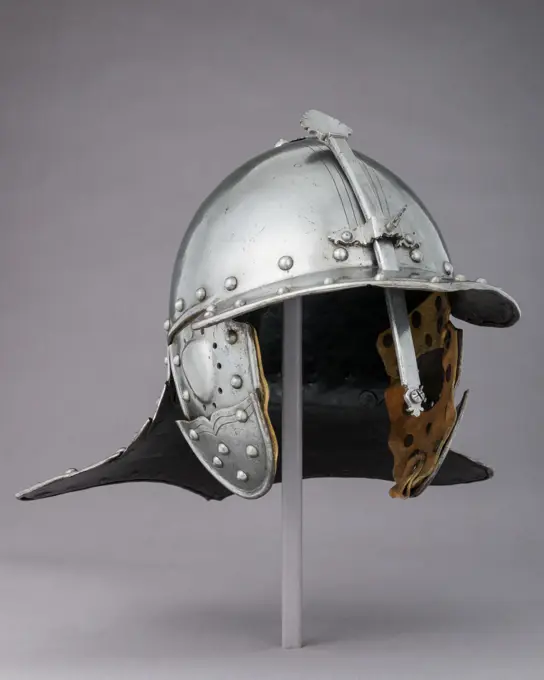
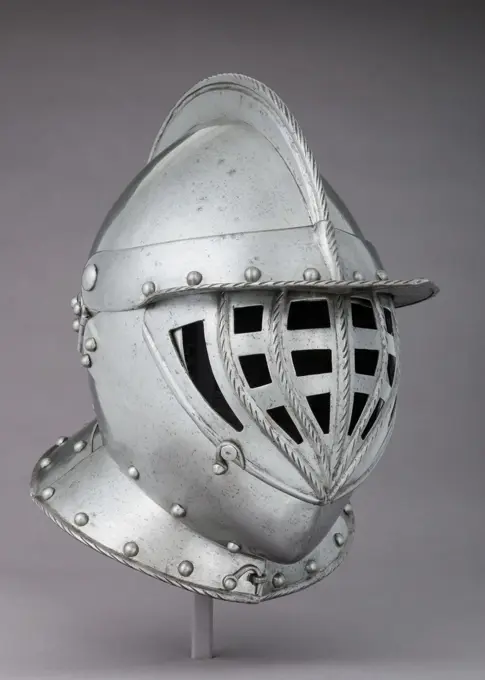
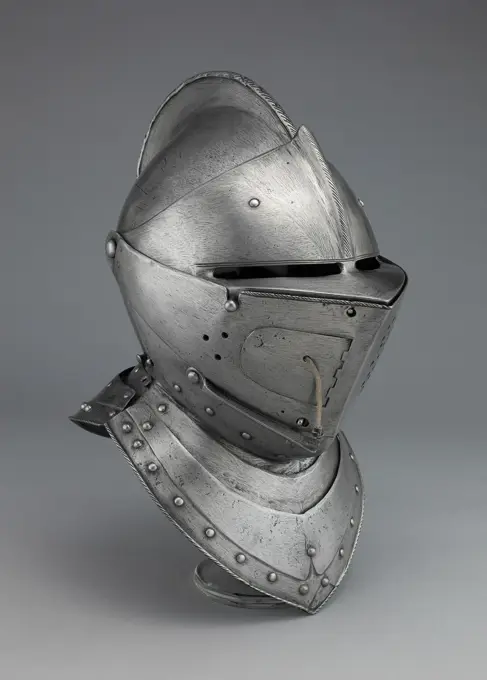
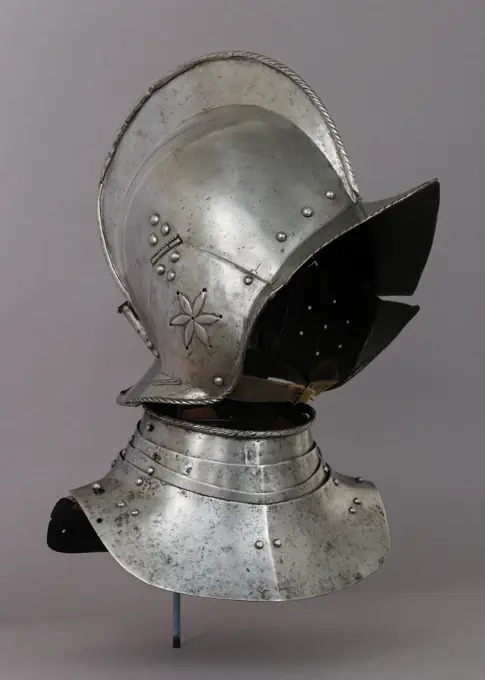
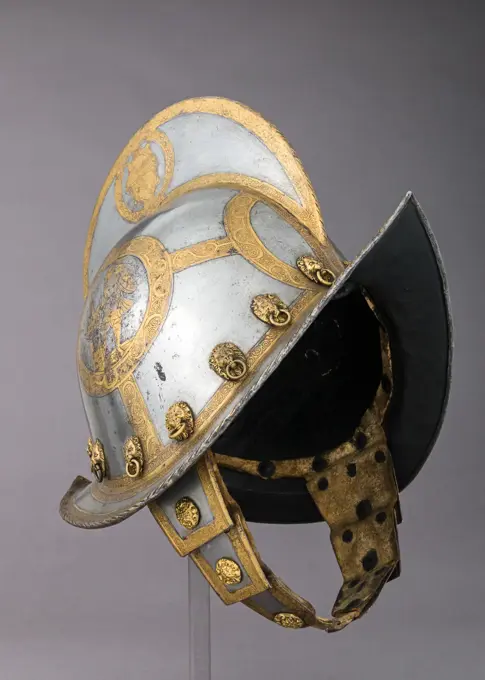
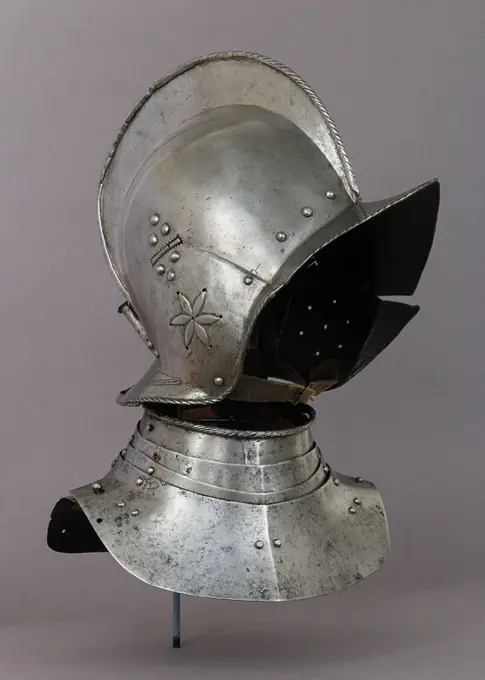
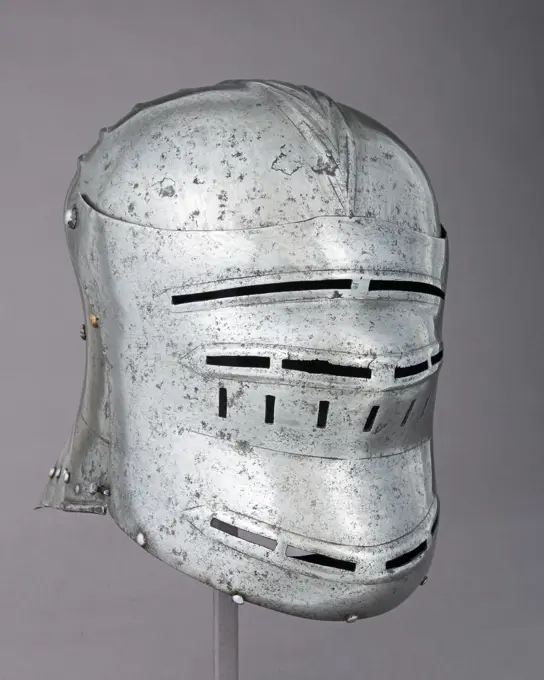
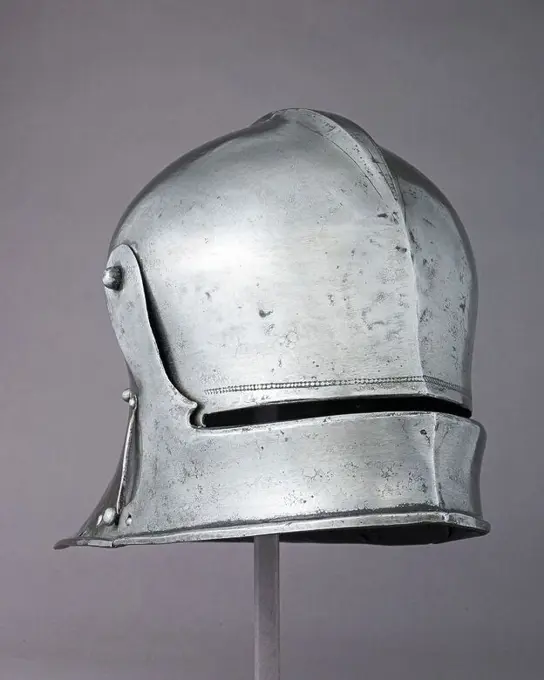
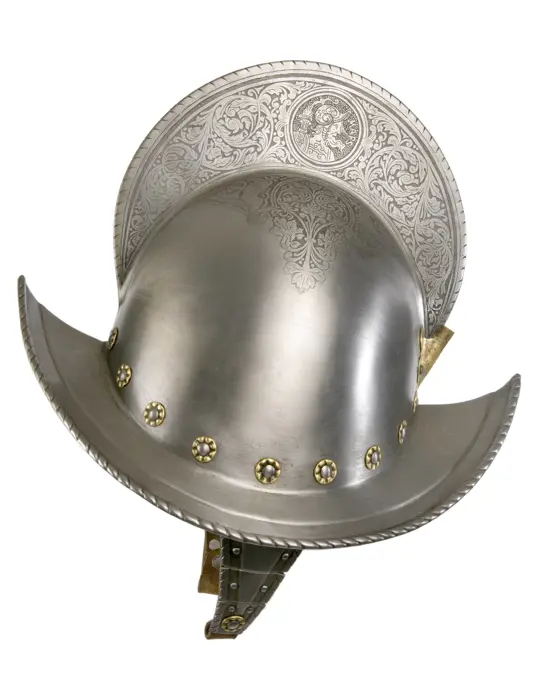
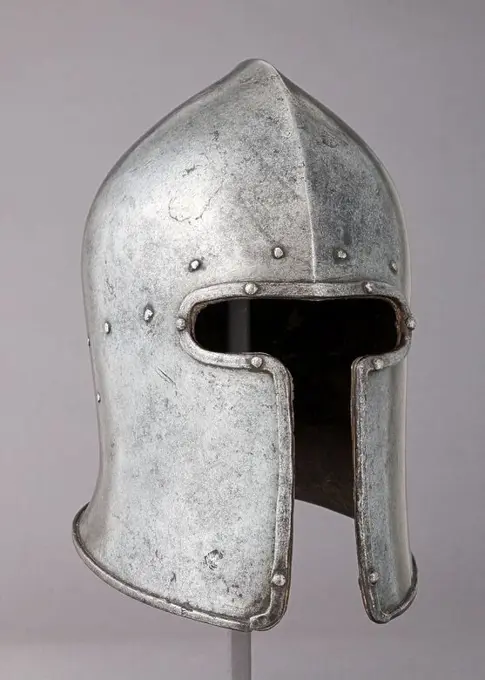
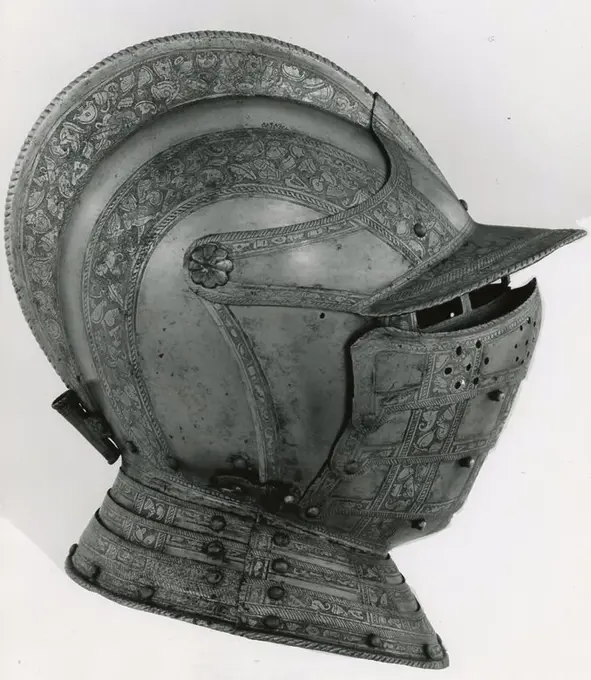
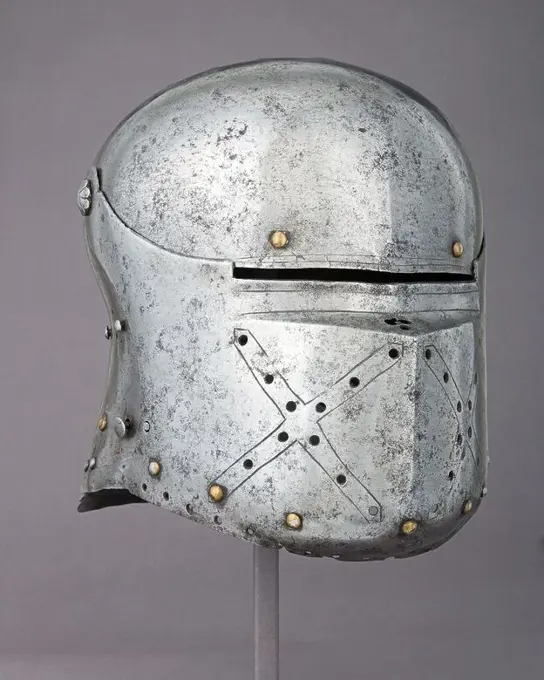
A collection of ornate medieval helmets showcasing steel craftsmanship, featuring designs like burgonets and sallets, highlighting historical and artistic significance.

Armour Armour of the medieval knight. Metal protection of the soldier against the weapon of the opponent Copyright: xZoonar.com/ValeryxxSibrikovx 2416552
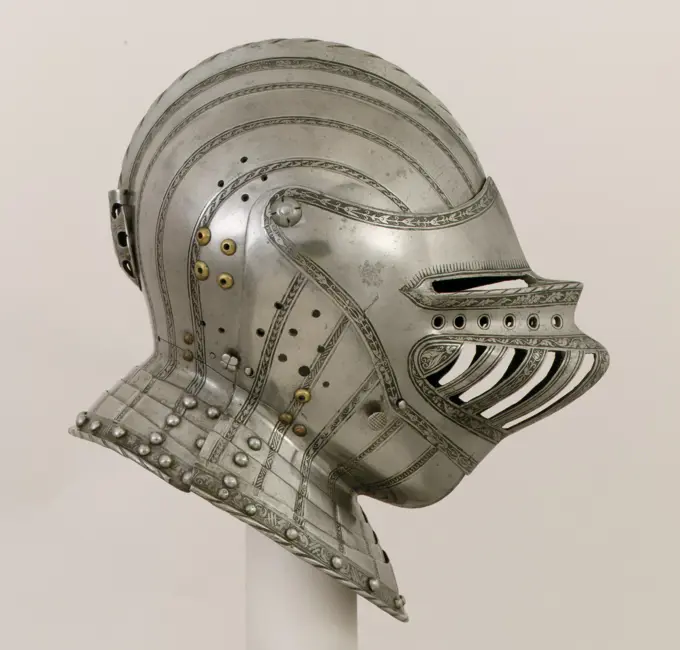
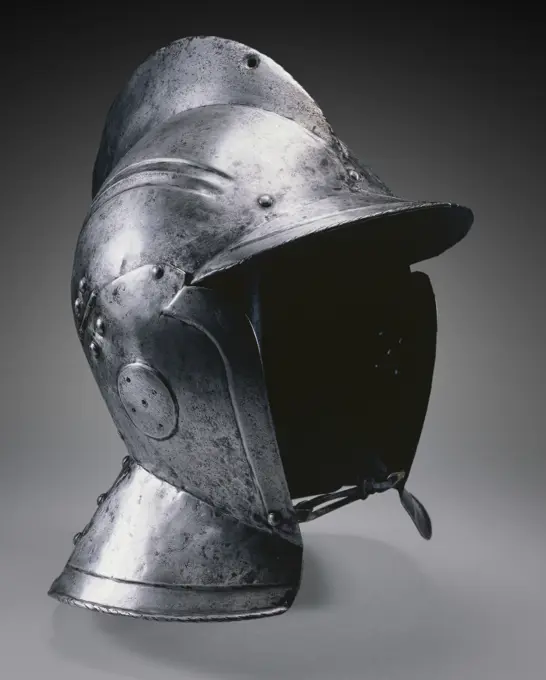
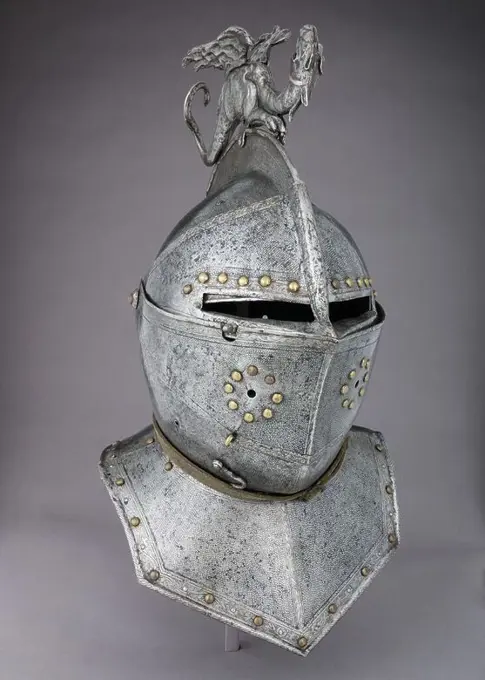
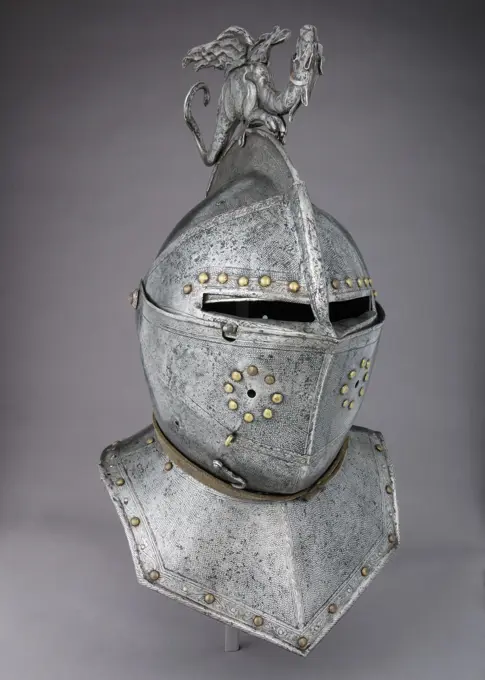
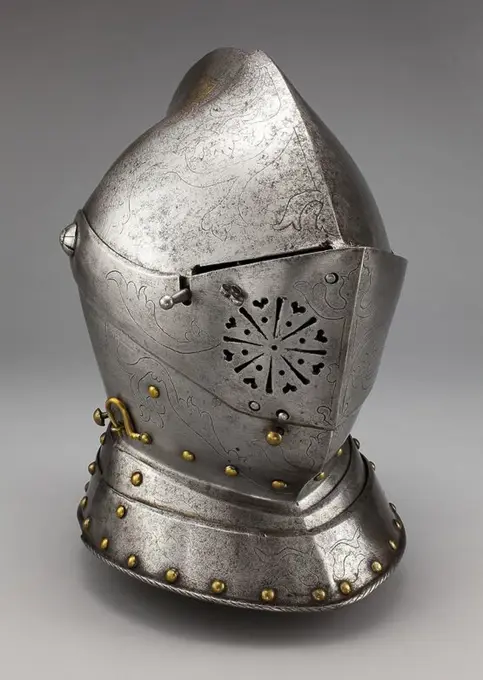
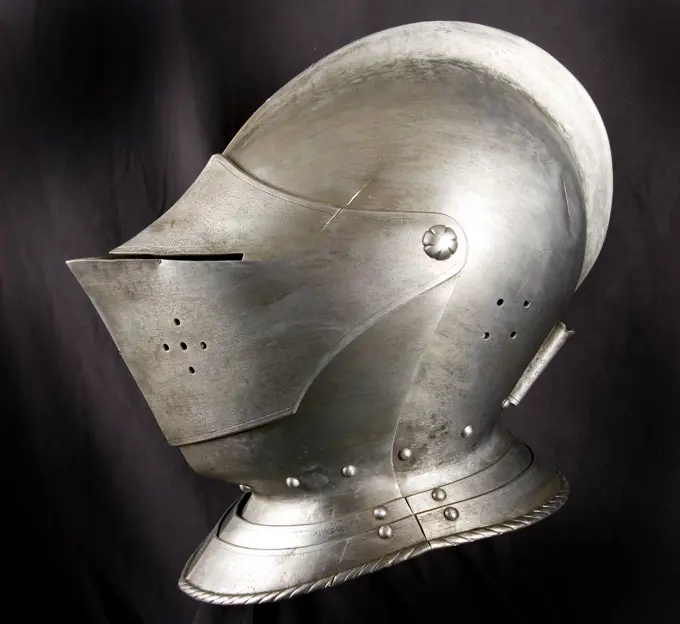
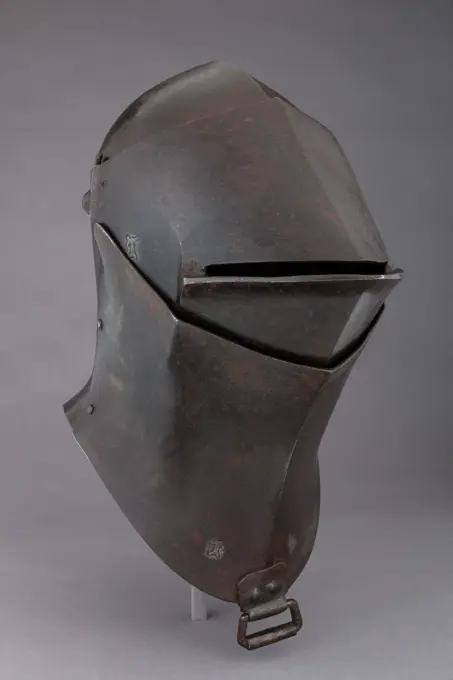
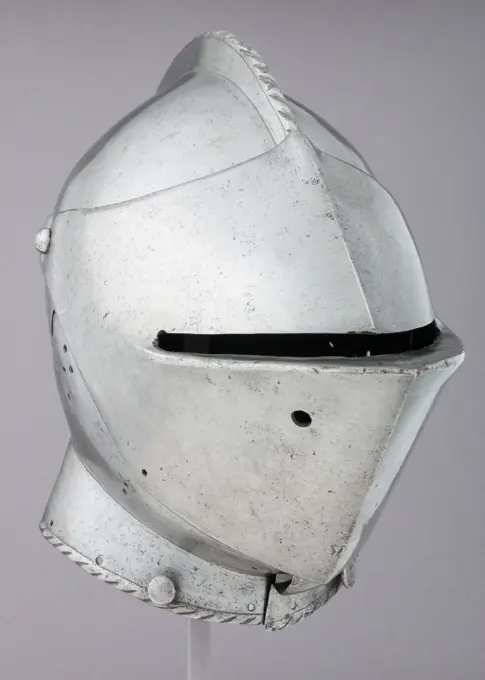
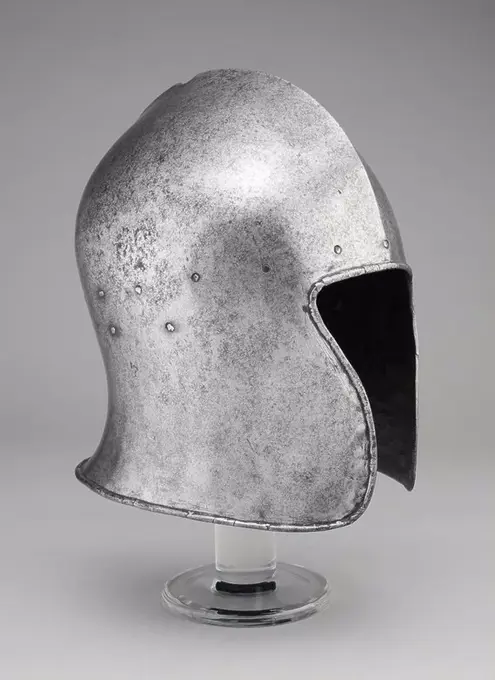
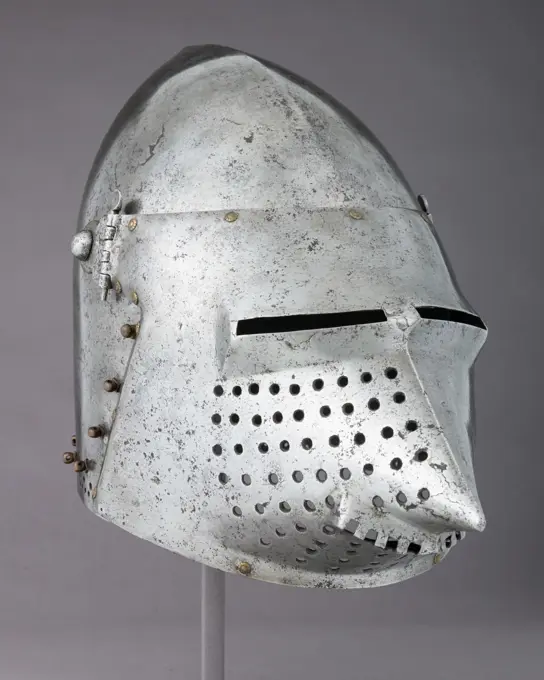
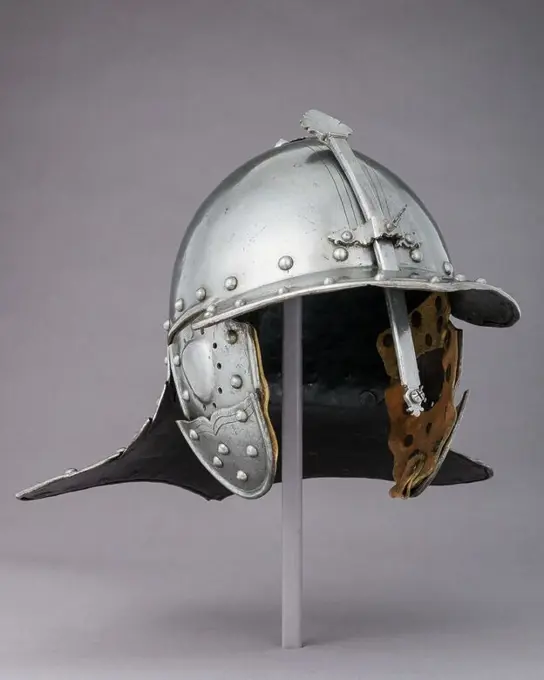
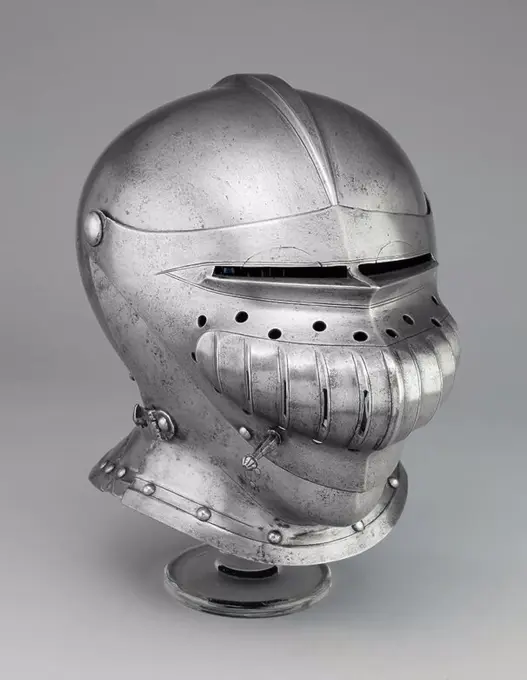
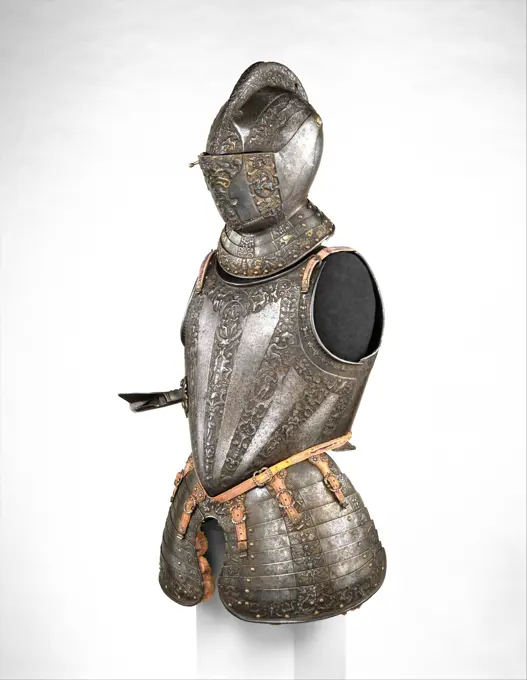
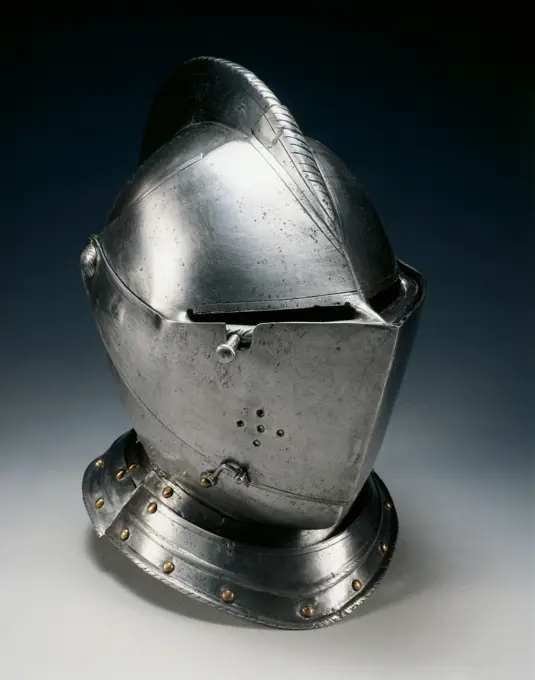
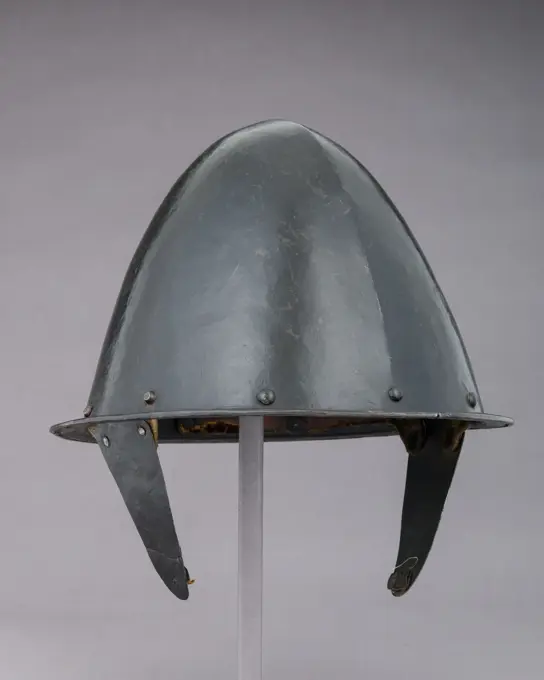
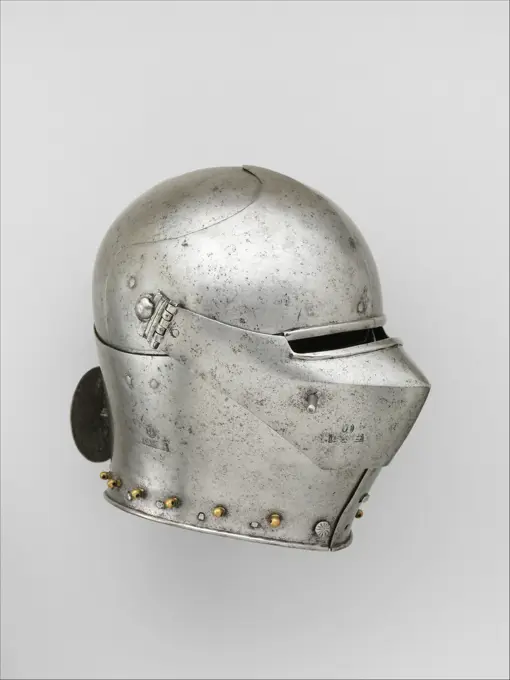
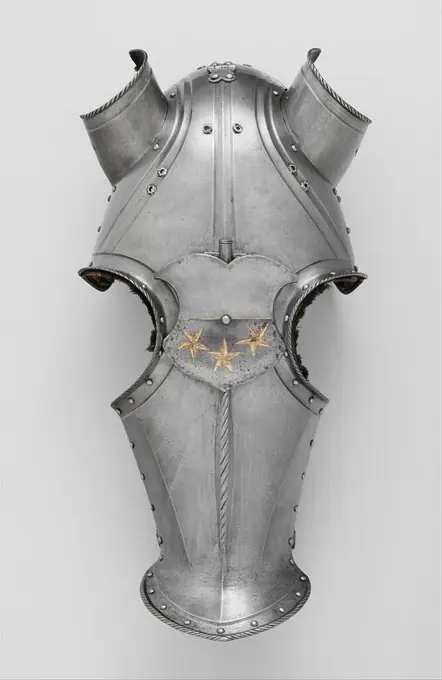
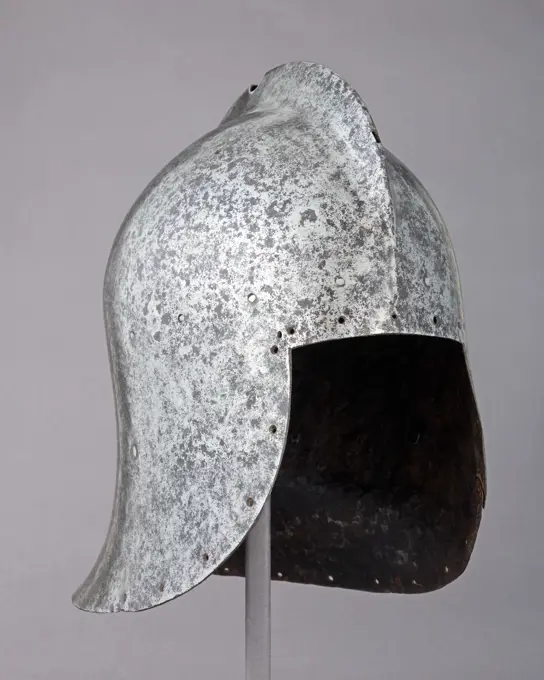
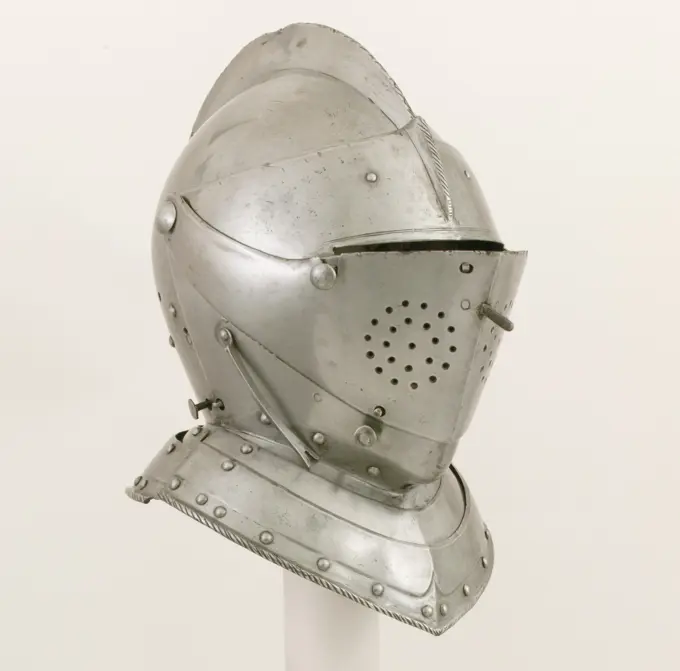
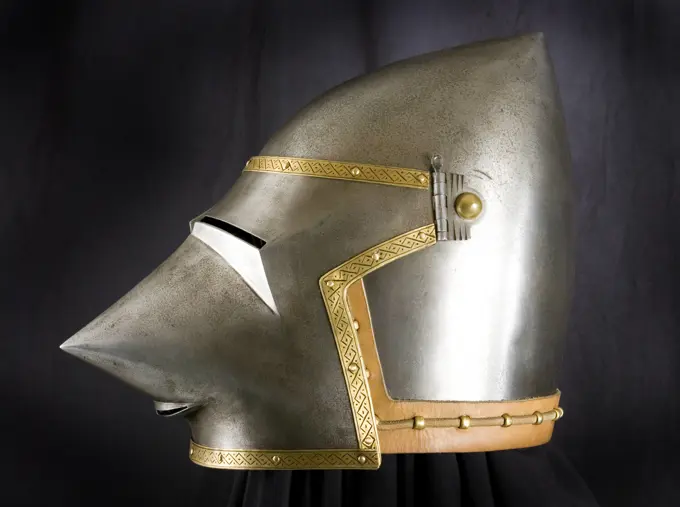
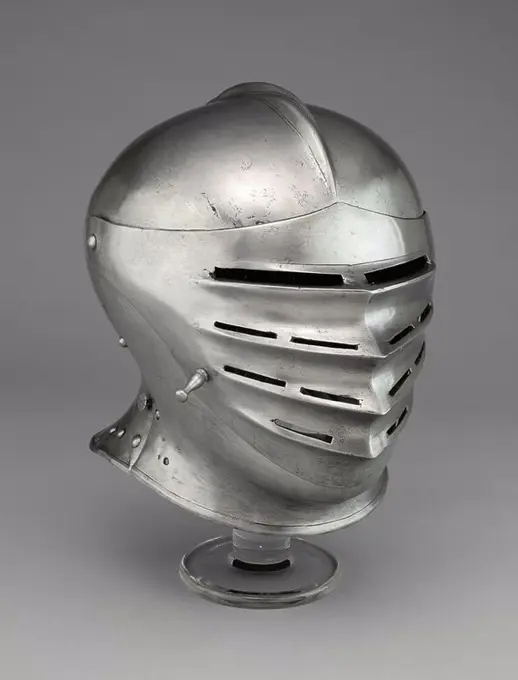
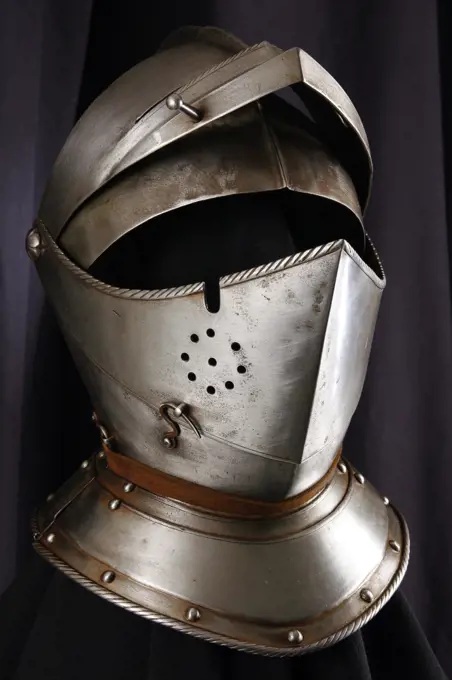
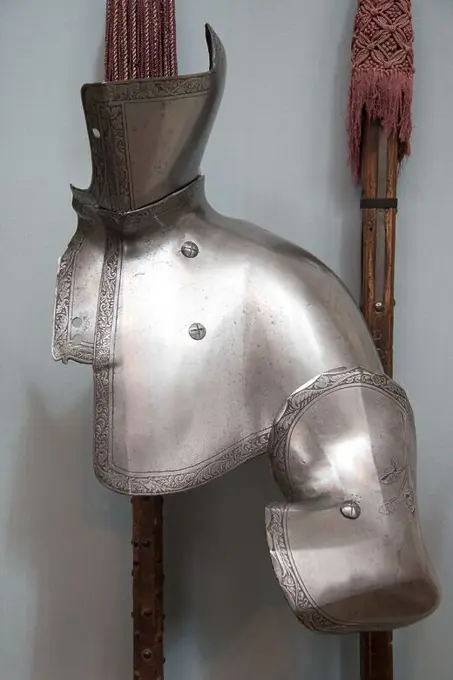
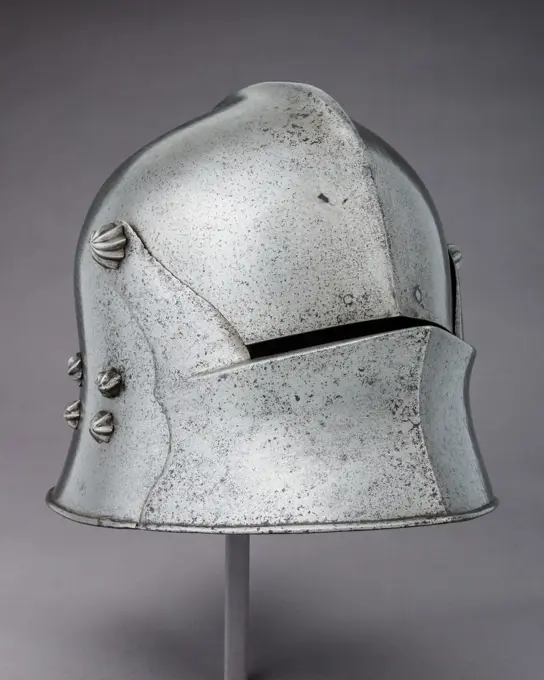
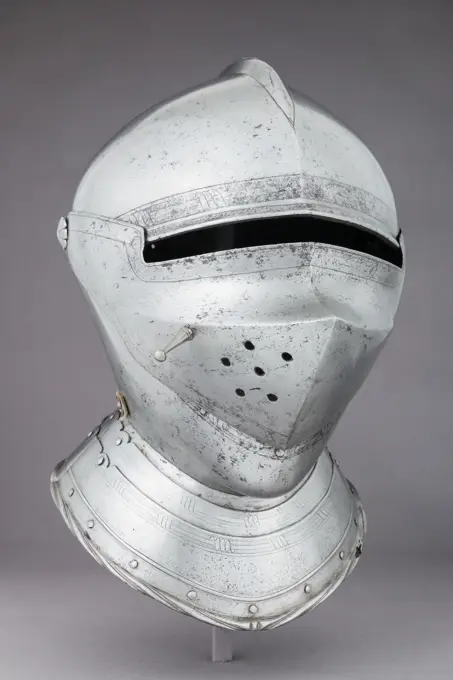
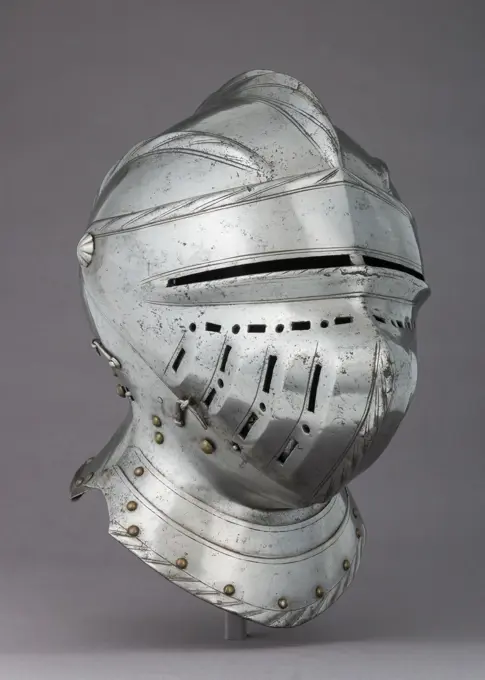
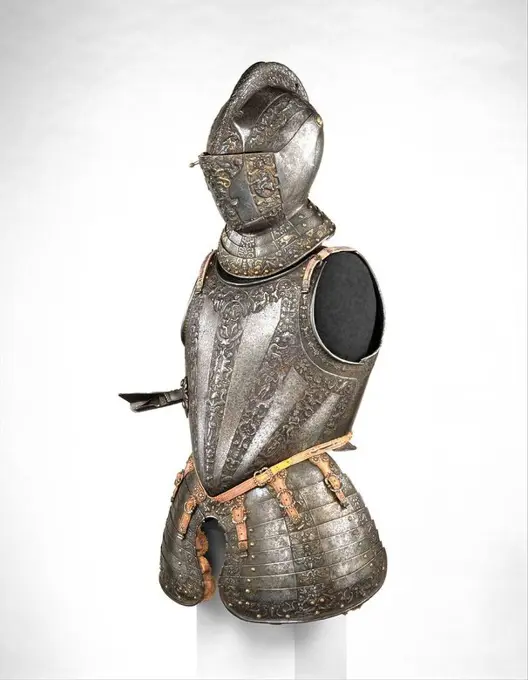
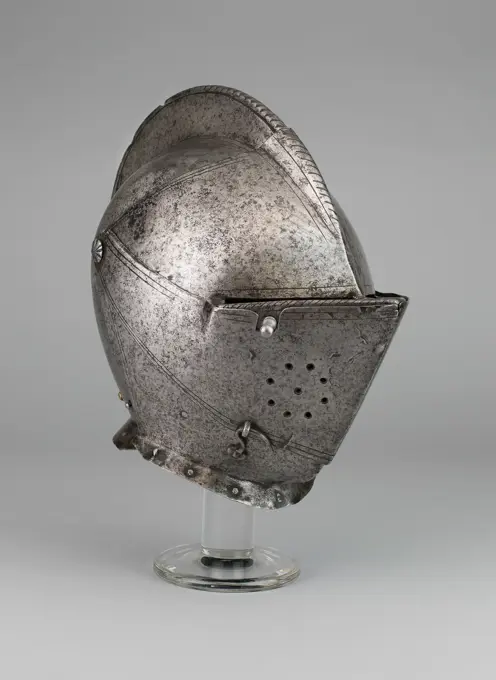
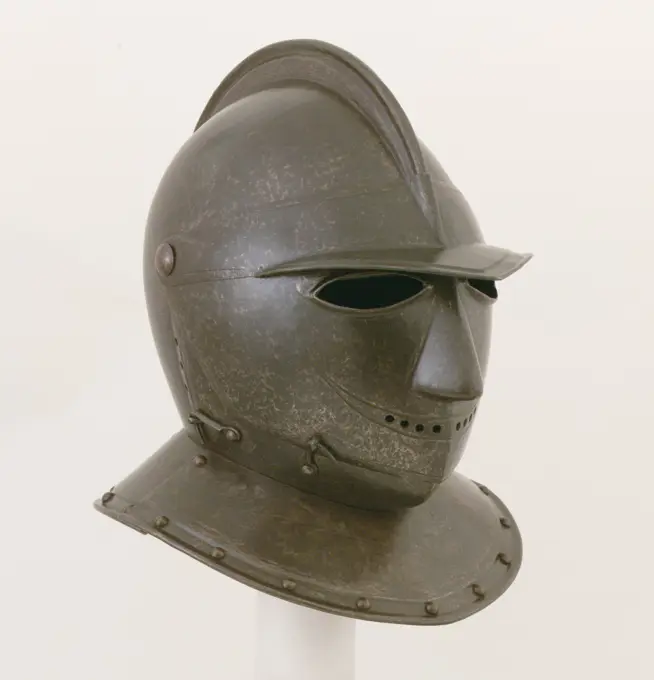
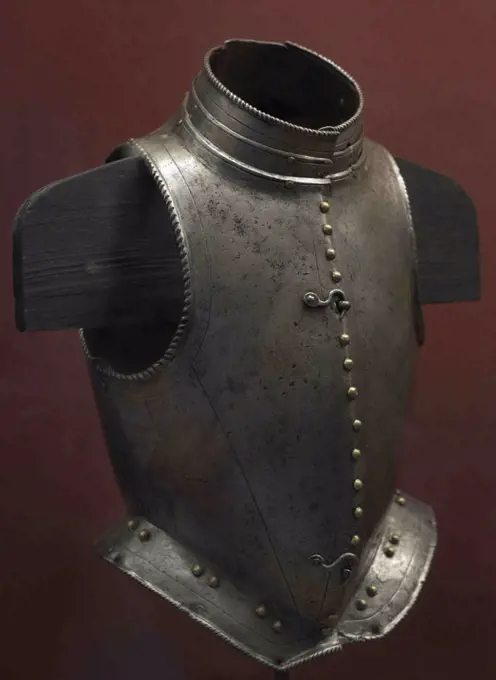
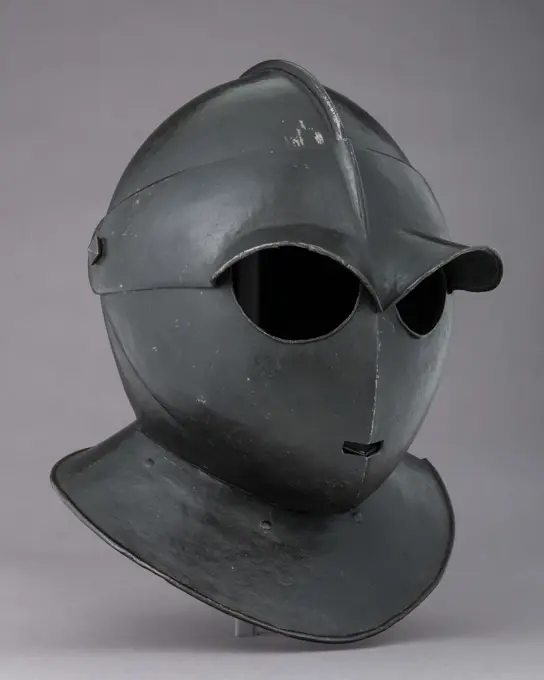
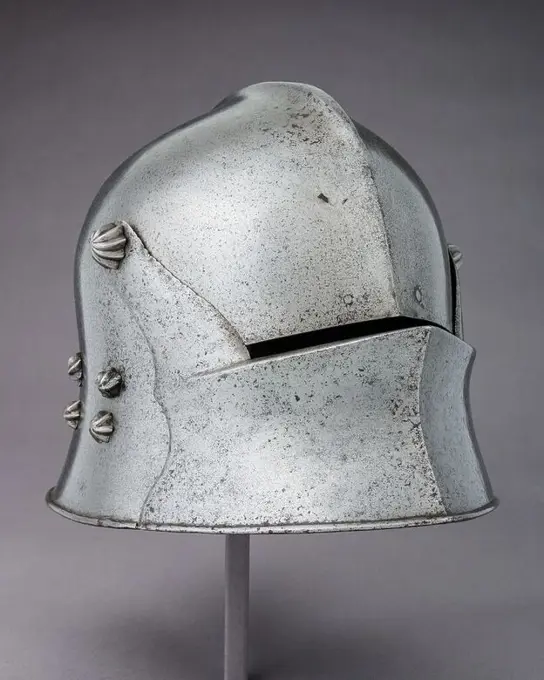
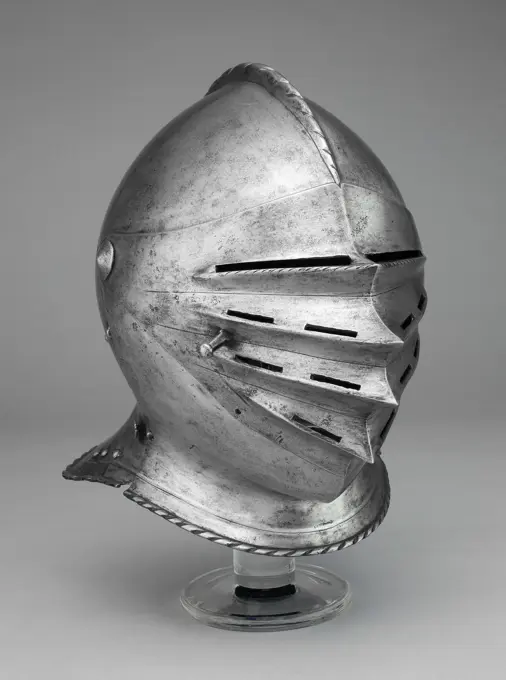
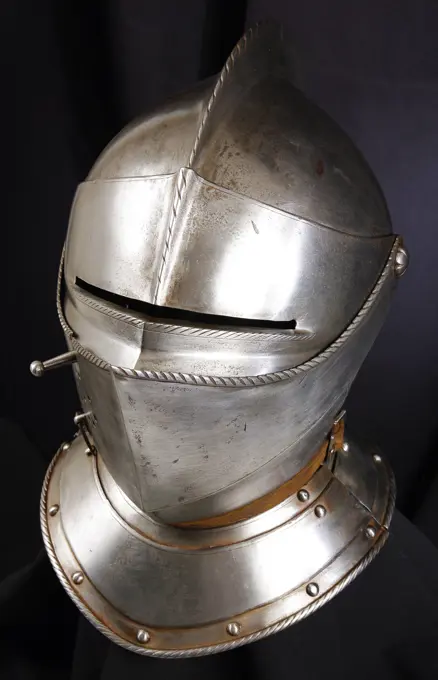
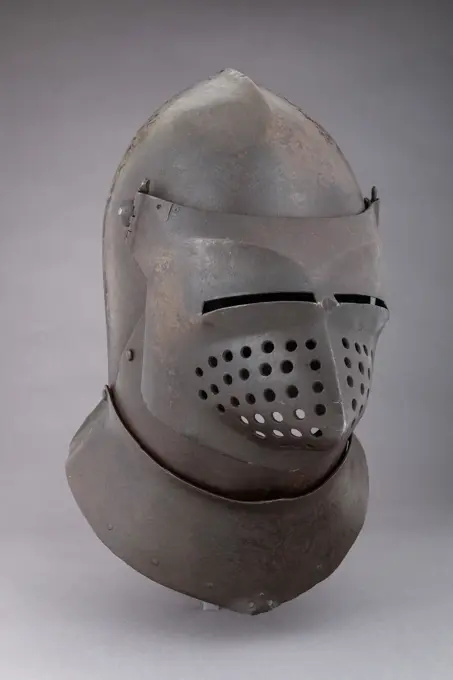
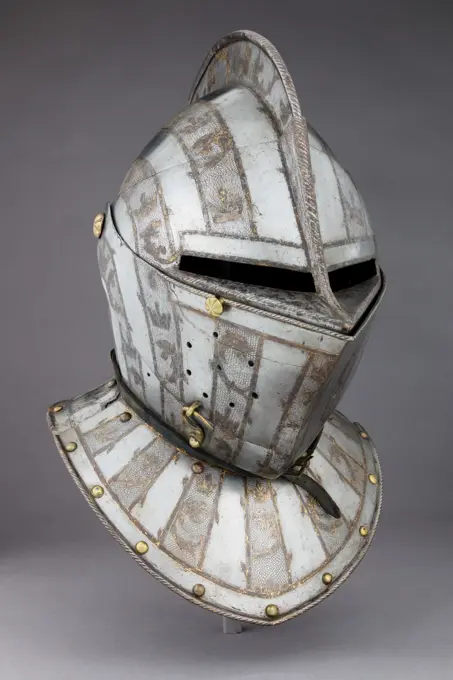
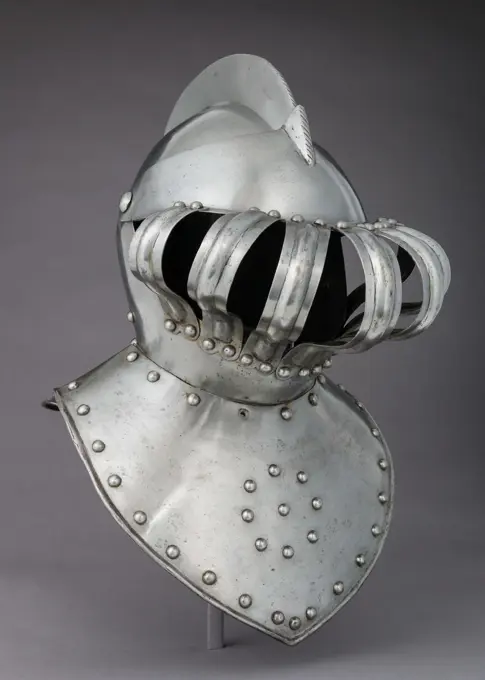
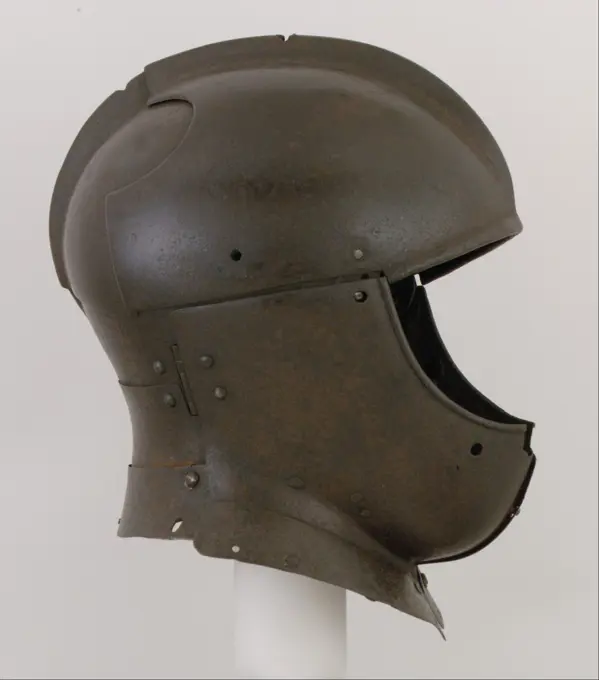
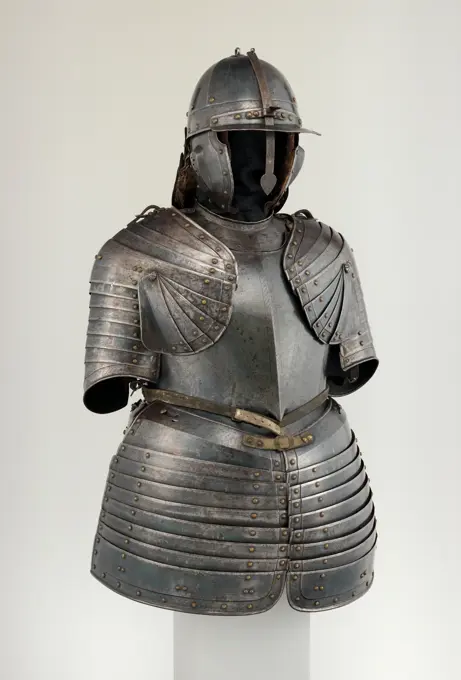
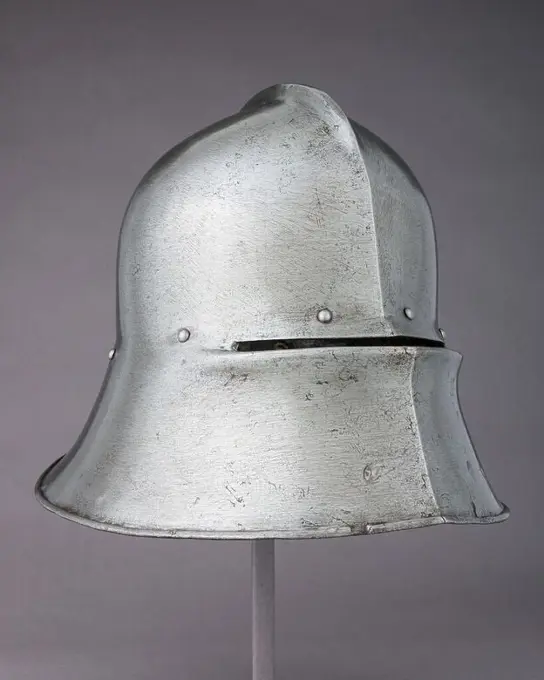
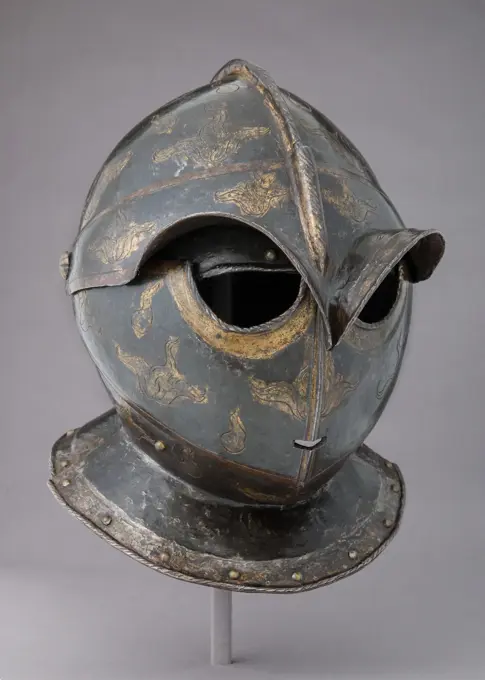
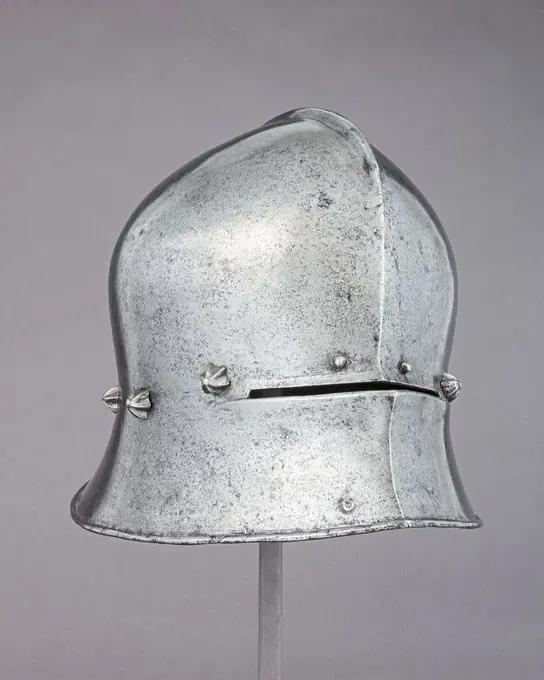
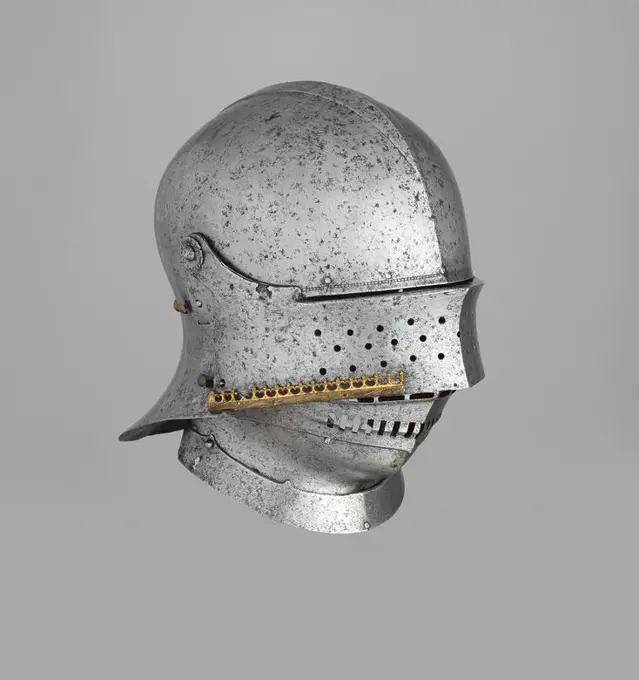
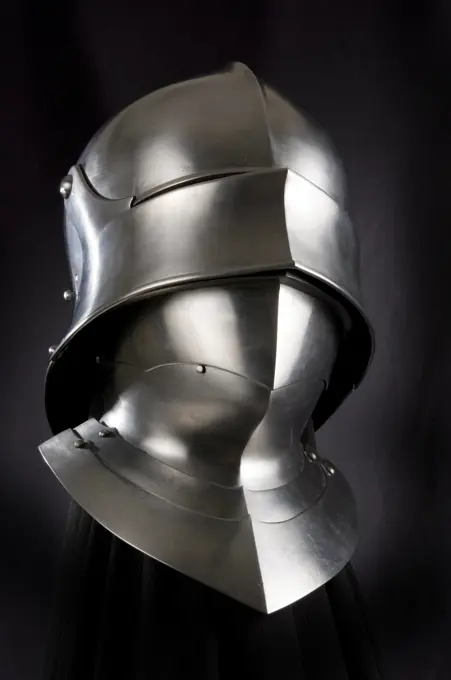
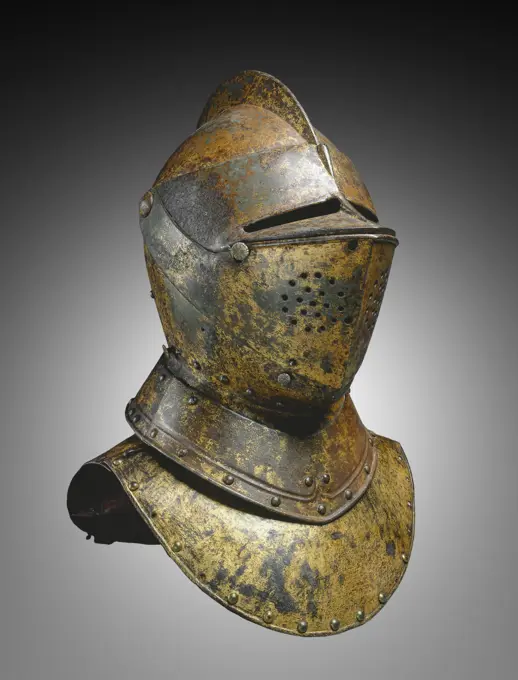
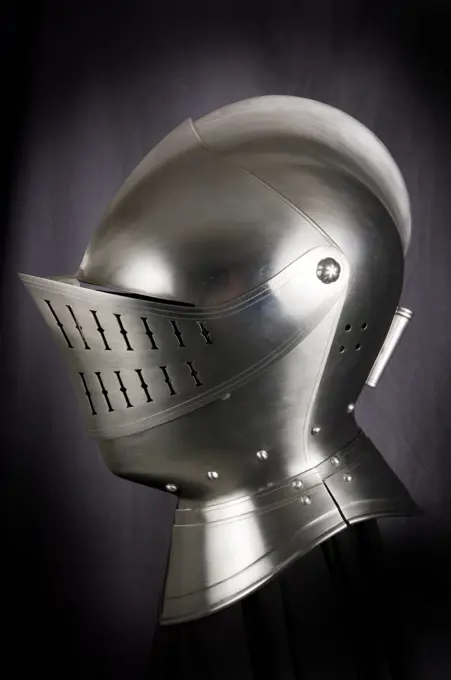
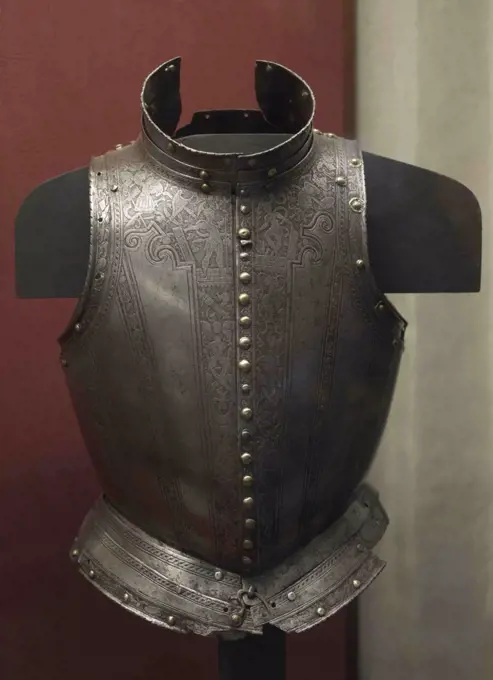
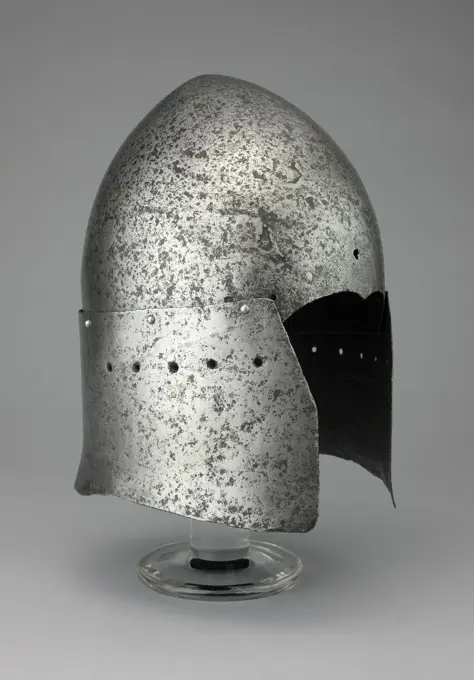
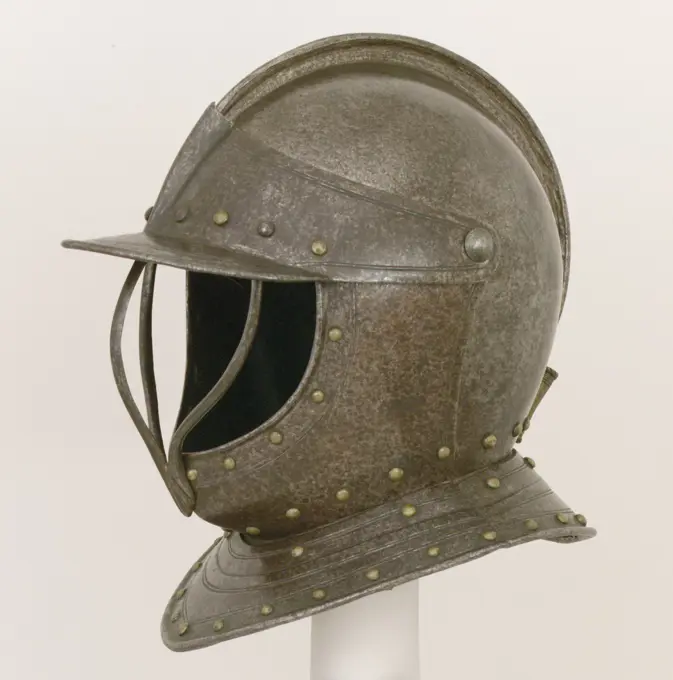
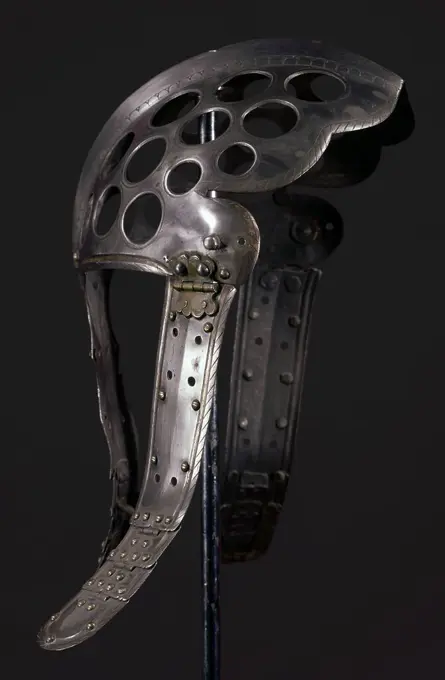
Armour Armour of the medieval knight. Metal protection of the soldier against the weapon of the opponent Copyright: xZoonar.com/ValeryxxSibrikovx 2470301Close Helmet for a Boy ca. 1530-40 Attributed to Kolman Helmschmid German Male children of aristocratic families were traditionally trained in the arts of horsemanship and fencing and began wearing armor at an early age. This finely wrought helmet, the openwork visor of which is clearly not intended for dangerous sport, was made for a boy. The distinctive one-piece visor, with its curved profile and etched ornament in the style of Daniel Hopfer, recalls late works by Kolman Helmschmid of Augsburg.. Close Helmet for a Boy. German, Augsburg. ca. 1530-40. Steel, leather, copper alloy. Augsburg. HelmetsArmet. Culture: French. Dimensions: H. 12 1/2 in. (31.8 cm); W. 7 3/4 in. (19.7 cm); D. 13 3/4 in. (34.9 cm); Wt. 6 lb. 8 oz. (2950 g). Date: first half 16th century. Museum: Metropolitan Museum of Art, New York, USA.Armour Armour of the medieval knight. Metal protection of the soldier against the weapon of the opponent Copyright: xZoonar.com/ValeryxxSibrikovx 2416552Close-Helmet for the Field ca. 1620-30 French The two-piece construction of the helmet bowl, the scalloped edges of the plates, and the distinctive snub-nosed profile of the visor recall French helmets of about 1620-30. The reinforcing shot-proof plates screwed to either side of the bowl, which add 3 pounds 10 ounces (1675 g) to the overall weight, are rare on close-hlemets for cuirassiers. Beneath the reinforces, the original smooth blue-black surface of the bowl is preserved.. Close-Helmet for the Field 26524Burgonet with Hinged Cheek Pieces, c. 1540. Germany, Nuremberg, 16th century. Steel, leather chin strap; overall: 33 x 28.5 x 26.2 cm (13 x 11 1/4 x 10 5/16 in.).Close Helmet. Culture: French. Dimensions: H. 21 in. (53.5 cm); W. 11 1/2 in. (29.2 cm); D. 13 in. (33 cm); Wt. 7 lb. 11 oz. (3487 g). Date: ca. 1630. Museum: Metropolitan Museum of Art, New York, USA.Sallet (Barbuta) Made 1440-1490 Milan. In Italy a form of close-fitting helmet called a barbuta was developed from the open-faced bascinet. Similar to ancient Greek helmets, the face was given a T-shaped opening for vision and ventilation. This example was strengthened with an applied steel strip to stop sword points from sliding into the wearerís face.. Steel . Master ZOClose Helmet ca. 1630 French. Close Helmet 34271Armet Made 1490-1510 Milan. Steel and leather .Close Helmet for Foot Tournament at the Barriers. Anton Peffenhauser (German, c. 1525--1603); Augsburg. Date: 1580-1600. Dimensions: H. 35.6 cm (14 in.)Wt. 12 lb. 6 oz. Steel, brass, gilding, and leather. Origin: Augsburg. Museum: The Chicago Art Institute, Chicago, USA.Visored Bascinet Italian ca. 1425-50 This particular form of helmet, with its two-piece construction, distinctive visor, and hinger flap on one side, is only found among the Chalcis group.Armour Armour of the medieval knight. Metal protection of the soldier against the weapon of the opponent Copyright: xZoonar.com/ValeryxxSibrikovx 2466745Tournament Helm ca. 1420-30 possibly Italian or French Although very similar helmets are depicted in early fifteenth century works of art, almost no other actual examples of this type exist today. Perhaps originally designed for use in battle, it appears to have been converted into a jousting helmet during its working lifetime. The armorers mark, a Gothic letter T, is found on at least three other pieces of fifteenth-century armor. The helmet was acquired by the Museum as part of the Duc de Dinos collection in 1904.. Tournament Helm. possibly Italian or French. ca. 1420-30. Steel. HelmetsArmet first half 16th century French. Armet. French. first half 16th century. Steel. HelmetsLobster-Tail Burgonet probably second quarter 17th century Northern European. Lobster-Tail Burgonet 27085Hat, 13 x 13 1/2 x 13 in. (33.02 x 34.29 x 33.02 cm), Silver, ChinaClosed Burgonet ca. 1610-20 German, Cologne. Closed Burgonet 27093Close Helmet for the Tourney Made 1600-1610 Augsburg. Steel and leather .Helmet and Gorget ca. 1525-75 German. Helmet and Gorget. German. ca. 1525-75. Steel, leather, copper alloy. Armor PartsClosed Burgundian storm hat with rare bizier, anonymous, c. 1800 - c. 1900  Closed Burgundian storm hat with a grille and helmet valve. Probably a nineteenth century variant of a seventeenth century storm hat or a compound storm hat. The grille bizier on the hinged Kinplaat is not authentic and incorrectly confirmed. What is now the underside of the visor was the top in the seventeenth century. The front half of the ring collar is missing.Sallet (Barbute). North Italian, Milan. Date: 1460-1480. Dimensions: H. 24.1 cm (9 1/2 in.). Steel. Origin: Milan. Museum: The Chicago Art Institute, Chicago, USA.Visored Bascinet ca. 1400 German. Visored Bascinet 34323Armour Armour of the medieval knight. Metal protection of the soldier against the weapon of the opponent Copyright: xZoonar.com/ValeryxxSibrikovx 2418582Closed Vizierhelm van Ruiterharnas, Anonymous, 1600 - 1625 helmet Closed sight helmet with two star -shaped air openings at the front; decorations with copper rosettes; At the rear, holder for Vederbos is engraved. Note: part of inv. No. NG-NM-528. Netherlands iron (metal). leather forging / striking (metalworking) / engraving  AmsterdamLobster-Tail Burgonet. Culture: Northern European. Dimensions: H. including nasal 11 3/4 in. (29.8 cm); H. excluding nasal 10 1/2 in. (26.7 cm); W. 14 1/2 in. (36.8 cm); D. 15 1/4 in. (38.7 cm); Wt. 4 lb. 10 oz. (2101 g). Date: probably second quarter 17th century. Museum: Metropolitan Museum of Art, New York, USA.Closed Burgonet Made 1600-1620 Brussels. Steel, silver, and leather .Close Helmet. South German. Date: 1500-1530. Dimensions: H. 20.3 cm (8 in.). Steel. Origin: Southern Germany. Museum: The Chicago Art Institute, Chicago, USA.Portions of a Parade Armor ca. 1575 Italian, Milan When complete, this horseman's armor would have included defenses for the arms and legs and perhaps a matching shaffron (horse's head defense) and saddle. The high-relief ornament, originally decorated with gold and silver, includes a scene of the Judgment of Paris at the top of the breastplate.Discovered in 1912 in the parish church at Aya, near San Sebastian in northern Spain, this important harness was restored in 1914 by the Metropolitan Museum's armorers, who expertly replaced the missing lower half of the visor and the collar of the helmet and most of the tassets (defenses for the upper thighs).. Portions of a Parade Armor 23094Suit of Armor, c.1550-70. Germany, 16th century. Iron, steel, leather and brass rivets; overall: 34.5 x 20 x 31.2 cm (13 9/16 x 7 7/8 x 12 5/16 in.).Iron helmet Iron helmet of the medieval knight. Very heavy headdress Copyright: xZoonar.com/ValeryxxSibrikovx 6496852Iron helmet of the medieval knight. Very heavy headdressCabasset 17th century possibly British. Cabasset. possibly British. 17th century. Steel, leather. HelmetsArmet ca. 1440 Stamped with the armorer's name, LIONARDO Italian This is one of the earliest complete examples of an armet, the characteristic headpiece worn in Italy by mounted soldiers from about 1410 to about 1510. It is stamped with the armorer's name, LIONARDO, and his mark, the letter L in a serrated circle.. Armet 24686Shaffron (Horse's Head Defense) with arms of the Freyberg family. Culture: German, probably Landshut. Dimensions: H. 24 7/8 in. (63.2 cm); W. 12 1/4 in. (31.1 cm); D. 8 1/4 in. (21 cm); Wt. 4 lb. 13 oz. (2188 g). Date: ca. 1540.This shaffron is fitted with an escutcheon plate bearing the arms of the barons of Freyberg. It comes from the armory at Hohenaschau Castle in Bavaria, the seat of that noble family, and probably belonged to Pancraz von Freyberg (1508-1565), a courtier in the service of the dukes of Bavaria in nearby Munich. Although unmarked, the shaffron is comparable in form to documented examples made in Landshut, a famous Bavarian armor-making center. Museum: Metropolitan Museum of Art, New York, USA.Sallet ca. 1510-20 Attributed to Pietro Giacomo da Castello Italian This type of sallet, with an open face and a long swept tail, was widely used by infantrymen in Italy. This example is stamped with armorer's marks attributed to Pietro Giacomo da Castello (documented 1485-1525), who worked for the dukes of Mantua.. Sallet 22136Close Helmet Made 1500-1520 Innsbruck. Steel and paint .Close-Helmet for the Tournament late 16th century German, probably Augsburg This helmet seems to have been designed for foot combat at the barriers, a sport in which pairs of contestants wearing armor only to the waist (hitting below the belt was forbidden) fought with pikes or swords over a separating wooden barrier. A brow reinforce was originally riveted to the visor. The long threaded bolt projecting from the upper bevor is a later working-life addition apparently intended to affix a reinforce (buffe) for mounted use in the tourney. The bowl and bevor retain their original linen-covered padded linings and shock-absorbing suspension straps between the bowl and the lining.. Close-Helmet for the Tournament. German, probably Augsburg. late 16th century. Steel, leather, textile. probably Augsburg. HelmetsRuiterhelm (Mantelhelm) Staatse Army, Anonymous, 1600 - 1649  Rider helmet or mantle helmet. The helmet is made of polished iron and equipped with a comb that is filed to mimic hair; An ajour processed plume cooker is attached to the rear; The visor is pointed and has a long lift on the right; There is a large rivet in the shape of a flower challenge on both sides; The facial plate is worked on both sides Ajour with four hearts around a circle with 16 laps around it; The rear hook has an extra eye for a leather lace that made it easier to open with gloves on the hook; This rider helmet has a push button or lifting pal to keep the visor up instead of a visor support; The edges of the helmet are decorated in the same way as the comb and further with a double incised line, and with round rivets. The appearance and manufacture of the helmet are very Dutch; A typical Dutch element is the decoration of the edges, giving you, as it were, eyebrows. Netherlands iron (metal)Iron helmet Iron helmet of the medieval knight. Very heavy headdress. Copyright: xZoonar.com/ValeryxxSibrikovx 2460648Close Helmet. Southern German or Austrian. Date: 1510-1530. Dimensions: H. 22.9 cm (9 in.). Steel. Origin: Southern Germany. Museum: The Chicago Art Institute, Chicago, USA.Armour of the medieval knight. Metal protection of the soldier against the weapon of the opponentReinforcing Plates of Armor for the Tilt. Culture: Austrian, Innsbruck. Dimensions: grandguard (21.138.2): L. 12 3/4 in. (32.39 cm); W. 14 1/8 in. (35.86 cm); Wt. 4 lb. 4 oz. (1928 g); tilting buffe (21.138.3): L. 15 in. (38.1 cm); W. 9 3/4 in. (24.77 cm); Wt. 4 lb.11 oz. (2126 g); elbow guard (21.138.4): L. 10 3/4 in. (27.31 cm); W. 7 7/8 in. (19.99 cm); Wt. 2 lb. 13 oz. (1276 g). Date: dated 1551.For the joust, or tilt, in the Italian fashion, the grandguard protecting the upper left chest and neck was close-fitting in contrast to the German use of a projecting tilt targe (cape-like defense for the left shoulder) screwed directly to the breastplate. The etched decoration, consisting of lush foliate scrolls and dragons on a recessed black ground, is characteristic of Innsbruck armors of the period. Museum: Metropolitan Museum of Art, New York, USA.Close Helmet for Foot Tourney at the Barriers 1550-1600 Milan. Chivalryówith its connotation of the knightly idealówas intimately connected with the horse (cheval in French). A knight took care to protect his mount, on which he was dependent for the mobility and speed required in both attack and retreat. In Roman times, some heavy cavalry used armor made of iron or bronze scales to protect their horses. From the twelth century on, knights covered their steeds in bands of iron mail (a network of interlocking rings). By the fifteenth century, full-plate armors were not uncommon. This shaffron, or headpiece, is etched in gilt bands with decoration on a finely dotted ground. Riveted between the eyes is an elongated conical spike, perhaps inspired by the horn of the mythical unicorn. A manifestation of great power and wealth, the shaffron has been valued for centuries as an object of beauty, not just as a tool of warfare and sport.. Steel with gilding, iron, brass, leather, and velvet weaveSallet 1475 German. Sallet 34261Armour Armour of the medieval knight. Metal protection of the soldier against the weapon of the opponent Copyright: xZoonar.com/ValeryxxSibrikovx 2425271Armet ca. 1500 Italian. Armet 27141Armet ca. 1520 German. Armet 27112Portions of a Parade Armor. Culture: Italian, Milan. Dimensions: Wt. 19 lb. 6 oz. (8800 g). Date: ca. 1575.When complete, this horseman's armor would have included defenses for the arms and legs and perhaps a matching shaffron (horse's head defense) and saddle. The high-relief ornament, originally decorated with gold and silver, includes a scene of the Judgment of Paris at the top of the breastplate.Discovered in 1912 in the parish church at Aya, near San Sebastian in northern Spain, this important harness was restored in 1914 by the Metropolitan Museum's armorers, who expertly replaced the missing lower half of the visor and the collar of the helmet and most of the tassets (defenses for the upper thighs). Museum: Metropolitan Museum of Art, New York, USA.Burgonet. Southern German. Date: 1550-1580. Dimensions: H. 27.3 cm (10 3/4 in.). Steel. Origin: Southern Germany. Museum: The Chicago Art Institute, Chicago, USA.Close Helmet Made 1570-1590 Northern Italy. Steel .Armour Armour of the medieval knight. Metal protection of the soldier against the weapon of the opponent Copyright: xZoonar.com/ValeryxxSibrikovx 2474710Iron helmet of the medieval knight. Very heavy headdressClosed Burgonet of "Savoyard" Type ca. 1600-1620 Italian "Savoyard" helmets are a distinctive form of late Italian close-helmet worn by cuirassiers, the heavy cavalry outfitted with plate armor worn only to the knee and armed with pistols and swords. The term Savoyard is a reference to the large number of these helmets that the Swiss captured from the troops of the duke of Savoy during an unsuccessful assault on the city of geneva during the night of December 11-12, 1602. These helmets are also referred to as Todenkopf ("death's head," in German), an illusion to the eerie skull-like quality of the face defense. This example, which is unusual in having a fully embossed human nose, has a decidedly more cheerful countenance.. Closed Burgonet of "Savoyard" Type. Italian. ca. 1600-1620. Steel, leather. HelmetsDouble-Crested Maximilian Helmet 1520 German. Double-Crested Maximilian Helmet 34259Waistcoat cuirass, ca.1580. North Italian. Armoury. Grandmaster Palace. Valletta, Malta.Siege Helmet 17th century Italian. Siege Helmet 27084Sallet. Culture: German. Dimensions: H. 10 1/2 in. (26.7 cm); W. 9 1/4 in. (23.5 cm); D. 15 1/4 in. (38.7 cm); Wt. 7 lb. 2.1 oz. (3234.7 g). Date: 1475. Museum: Metropolitan Museum of Art, New York, USA.Morion for the Bodyguard of the Prince-Elector of Saxony ca. 1570 German, Nuremberg The electors of Saxony appear to have been the only German princes in the sixteenth century to outfit their bodyguards with matching equipment. The guards' helmets are etched and gilt on one side with the coat of arms of the dukedom of Saxony and on the other side with the crossed swords that signify the duke's office as archmarshal of the Holy Roman Empire. Originally, the gilt decoration was contrasted with black painted surfaces (some now polished bright). The black and gold derived from the Saxon coat of arms and were also the colors of the guards' uniforms. This helmet, and another like it in the Museum's collection (acc. no. 1989.288) were made by armorers in Nuremberg. The similar helmet (acc. no. 1989.288) is dated 1568. The only dated morion of this series known, it establishes that the creation and use of the guard morions in the reign of August I (1553-86) occurred twenty to thirty years earlBreastplate third quarter 16th century North German, possibly Brunswick. Breastplate 22996Helmet and Gorget. Culture: German. Dimensions: Helmet (14.25.679a): Wt. 4 lb. 3 oz. (1899.4 g); gorget (27.183.59): H. 6 3/4 in. (17.1 cm); W. 11 in. (27.9 cm). Date: ca. 1525-75. Museum: Metropolitan Museum of Art, New York, USA.Sallet ca. 1500-1510 German Armor was made in southern Germany and Austria, areas rich in iron ore, since the early Middle Ages. By the fifteenth century, the armorers of this region had achieved an international reputation that rivaled the fame of their counterparts in northern Italy. Augsburg, Landshut, Nuremberg in Germany, and Mühlau and nieghboring Innsbruck in Austria were the major armor-producing centers. Their armorers could equip entire armies while also fulfilling personal commissions for the nobility throughout western Christendom. The patronage of the upper nobility spurred the leading armorers to develop technical innovations and decorative styles that set international standards of quality and beauty. Emperor Maximilan I (1459-1519) employed dozens of armorers to make battle and tournament armors for his personal use and as imperial gifts. Chief among these armorers was Lorenz Helmschmid (about 1445-1516) of Augsburg, possibly the most talented German armorer of the lateSallet. Armorer: Jörg Wagner (Austrian, Innsbruck, recorded 1485-92). Culture: Austrian, Innsbruck. Dimensions: D. of tail 7 1/2 in. (19.1 cm). Date: ca. 1485-95.This sallet is by Jörg Wagner (recorded 1485-92). The armorers of Innsbruck, capital of the Austrian Tirol, thrived under the patronage of the Habsburg court and produced armor that was internationally renowned for the strength of its steel and the beauty of its form. Located near the border between Austria and Italy, this center produced armor that reflected the influence of north and south, combining the elongated and spiky German Gothic style with that of the rounded and more robust forms preferred in Renaissance Italy. Museum: Metropolitan Museum of Art, New York, USA.Iron helmet of the medieval knight. Very heavy headdressClose Helmet Made 1510-1540 Nuremberg. Steel .Armour Armour of the medieval knight. Metal protection of the soldier against the weapon of the opponent Copyright: xZoonar.com/ValeryxxSibrikovx 2470313Visored Bascinet ca. 1450 German. Visored Bascinet. German. ca. 1450. Steel. HelmetsArmet ca. 1600 French. Armet 27129Iron helmet Iron helmet of the medieval knight. Very heavy headdress Copyright: xZoonar.com/VALERY-SIBRIKOVx 7538308Burgonet 17th century German. Burgonet. German. 17th century. Steel, leather. HelmetsIron helmet Iron helmet of the medieval knight. Very heavy headdress. Copyright: xZoonar.com/ValeryxxSibrikovx 2460639Armet ca. 1520 Anglo-Flemish Formerly part of a funerary achievement hung over a knight's tomb, this helmet originally appeared on the art market surmounted with a spike intended to support a heraldic crest. The location of the chapel and the identity of the knight are not recorded.This late form of armet (now incomplete) originally had a pivoting visor and articulated collar lames. Several features are especially noteworthy: the large cusped brow reinforce that overlaps a secondary reinforce covering the back of the bowl; the articulating lames covering the back of the neck; and the placement of the hinges of the cheekpieces at the back rather than at the top. While its overall form is Italianate, the armet's unusual construction recalls other helmets found in English churches, some of which are thought to be of English or Flemish manufacture.. Armet 26455Armour Armour of the medieval knight. Metal protection of the soldier against the weapon of the opponent Copyright: xZoonar.com/ValeryxxSibrikovx 5856070Armour Armour of the medieval knight. Metal protection of the soldier against the weapon of the opponent Copyright: xZoonar.com/ValeryxxSibrikovx 2415888Half Armor 1610-20 Attributed to Martin Schneider the Younger German Although made in Nuremberg, this cavalrymans armor is an unusual mix of different regional styles. The helmet is based on an eastern European type known as the Zischägge, which was inspired by Turkish examples. The pauldrons (shoulder defenses) with their overlapping, fanlike plates are of a type associated with Swiss armors of the period.The armor is stamped with the Nuremberg mark and an armorers mark—a shield containing the letters MSI above a pair of shears—that has been attributed to Martin Schneider the Younger.Despite its relative plainness, the armor is very well made. It would have been worn by a cavalryman equipped with a sword, a pair of pistols, and possibly a carbine (a short form of musket).. Half Armor 22251Closed Burgonet ca. 1550-60 Probably Austrian, Innsbruck The openwork visor, which allowed maximum ventialtion while providing excellent protection from cuts, originally could be closed by a falling buffe (now missing), which fitted over the pierced studs on either side of the bevor. The elegantly shaped bowl and scalloped edges of the plates recall Innsbruck armors made in the 1550s and early 1560s. (The rear collar lames are old but associated.). Closed Burgonet. Probably Austrian, Innsbruck. ca. 1550-60. Steel, leather, gold, brass. Innsbruck. HelmetsSallet and Bevor. Culture: German. Dimensions: Sallet (a); H. 10 1/4 in. (26 cm); W. 11 1/4 in. (28.6 cm); D. 15 in. (38.1 cm); Wt. 7 lb. 8.5 oz. (3416.1 g); bevor (b); H. 6 1/4 in. (15.9 cm); W. 8 3/4 in. (22.2 cm); D. 8 5/16 in. (21.1 cm); Wt. 1 lb. 3.2 oz. (544.3 g)Bevor, 6 x 8 3/4 in. (15.2 x 22.2 cm). Date: 1480. Museum: Metropolitan Museum of Art, New York, USA.Armour Armour of the medieval knight. Metal protection of the soldier against the weapon of the opponent Copyright: xZoonar.com/ValeryxxSibrikovx 2494304Bevor ( Falling Buff ) and Gorget Plate 1485-1495 Europe. Steel .Armour, helmet and sword of Admiral Jacob van Heemskerck, anonymous, c. 1580 - c. 1607 helmet Black lacquered harness, consisting of: breast and back piece, helmet and a thigh. The ring collar is missing.Closed Burgonet Made 1600-1620 Nuremberg. Steel and leather .Closed Burgonet of "Savoyard" Type, Possibly Made for Théodore Agrippa d'Aubigné (1552-1630) ca. 1600-1620 Italian Set off by blued steel surfaces, the etched and gilt flames provide an attractive and thoroughly appropriate decoration for a soldier constantly exposed to firearms and cannon fire.. Closed Burgonet of "Savoyard" Type, Possibly Made for Théodore Agrippa d'Aubigné (1552-1630) 26429Sallet. Armorer: Attributed to Adrian Treytz the Elder (Austrian, Innsbruck, active ca. 1473-92). Culture: Austrian, Innsbruck. Dimensions: H. 9 3/4 in. (24.8 cm); W. 11 1/2 in. (29.2 cm); D. 14 5/8 in. (37.1 cm); Wt. 6 lb. 2 oz. (2778 g). Date: ca. 1480.The maker's mark on this helmet, a horseshoe and a crescent, is attributed to Adrian Treytz the Elder, whose family included at least five armorers who worked for the Habsburg court in the late fifteenth and early sixteenth centuries. Museum: Metropolitan Museum of Art, New York, USA.Sallet of Emperor Maximilian I (1459-1519). Armorer: Attributed to Lorenz Helmschmid (German, Augsburg, ca. 1445-1516). Culture: German, Augsburg. Dimensions: H. 12 in. (30.5 cm); W. 9 in. (22.9 cm); D. 12 3/8 in. (31.4 cm); Wt. 4 lb. 15.7 oz. (2261 g). Date: ca. 1490-95.This sallet was a new type probably invented by Lorenz Helmschmid for Emperor Maximilian I (1459-1519) around the time he became head of the Holy Roman Empire in 1493. Its construction, with the falling buffe (chin defense) pivoting on the same points as the visor, anticipates the development of close helmets around 1510. The gilt fleur-de-lis trim, which originally bordered the entire helmet, is a typical late Gothic decoration on armors of high quality and is found on several that belonged to Maximilian and other members of the Habsburg court. Museum: Metropolitan Museum of Art, New York, USA.Close Helmet. Northern Italian. Date: 1570-1590. Dimensions: H. 20.3 cm (8 in.). Steel. Origin: Northern Italy. Museum: The Chicago Art Institute, Chicago, USA.Armour Armour of the medieval knight. Metal protection of the soldier against the weapon of the opponent Copyright: xZoonar.com/ValeryxxSibrikovx 2425272Iron helmet Iron helmet of the medieval knight. Very heavy headdress Copyright: xZoonar.com/ValeryxxSibrikovx 2476917Barbute. Armorer: Jacopo da Cannobio, called Bichignola (Italian, Brescia, active ca. 1460). Culture: Italian, Brescia. Dimensions: H. 11 3/8 in. (28.9 cm); W. 7 7/8 in. (20 cm); D. 10 5/8 in. (27 cm); Wt. 5 lb. 4 oz. (2381 g). Date: ca. 1460.This barbute is stamped with the mark attributed to the Brescian armorer Jacopo da Cannobio, called Bichignola, and with the lion of Saint Mark, which signified ownership by the Republic of Venice. Museum: Metropolitan Museum of Art, New York, USA.Close Helmet of Three-Quarter Armor. Italian, Milan. Date: 1570-1580. Dimensions: . Steel with gilding. Origin: . Museum: The Chicago Art Institute, Chicago, USA.Sallet. Culture: German. Dimensions: H. 10 1/4 in. (26 cm); W. 9 1/8 in. (23.2 cm); D. 12 in. (30.5 cm); Wt. 6 lb. 3 oz. (2820 g). Date: ca. 1500-1510.The ventilation holes in the visor, forming an X-shape or saltire, allude to the Cross of St. Andrew, a Burgundian emblem that was adopted by the Habsburgs and used as an insignia by imperial German troops. Museum: Metropolitan Museum of Art, New York, USA.Gorget (from a funerary achievement), c.1590-1625. Netherlands(), late 16th-early 17th Century. Gilded steel (invaded with rust); red velvet lining, plume holder; overall: 32.4 x 24.8 x 19.1 cm (12 3/4 x 9 3/4 x 7 1/2 in.). This helmet was originally intended for field use. Later, it seems to have served a funerary purpose, probably as an ornament (known as a funerary achievement) suspended over the church tomb of an unidentified knight. As such, it would have been a rich and imposing symbol of the dead knight's social rank and personal authority.Armour Armour of the medieval knight. Metal protection of the soldier against the weapon of the opponent Copyright: xZoonar.com/ValeryxxSibrikovx 2494307Armour, helmet and sword of Admiral Jacob van Heemskerck. Jacob van Heemskerck commanded the Dutch ships that defeated a Spanish fleet near Gibraltar in 1607. The admiral lost his life in the fray. He was commemorated with a monument in the Oude Kerk in Amsterdam. In keeping with custom, his armour washung above the tomb. The left cuisse (thigh defence) is missing: it was shattered by the cannonball that cost Van Heemskerck his life.Savoyard Helmet (Todenkopf), c. 1600-20. Italy or Germany, early 17th century. Steel, blackened; overall: 30.5 cm (12 in.).Closed Burgonet Made 1600-1640 . Steel and leather .Waistcoat cuirass, ca.1580. North Italian. Armoury. Grandmaster Palace. Valletta, Malta.Armour Armour of the medieval knight. Metal protection of the soldier against the weapon of the opponent Copyright: xZoonar.com/ValeryxxSibrikovx 2425277Great Sallet Made 1375-1425 Italy. Steel .Closed Burgonet ca. 1620-30 Dutch This simple but handsome example was originally blued or blackened; the barred face defense and pivot hooks on the right side are gilt. The triple-barred visor and the single collar lame at the front and back, each shaped and engraved to suggest several articulated lames, are features frequently found on Dutch armors of the period.. Closed Burgonet. Dutch. ca. 1620-30. Steel, gold, brass. HelmetsALMOFAR O ESCOFIA. Location: ARMERIA REAL, MADRID, SPAIN.