Medieval Armor Helmets

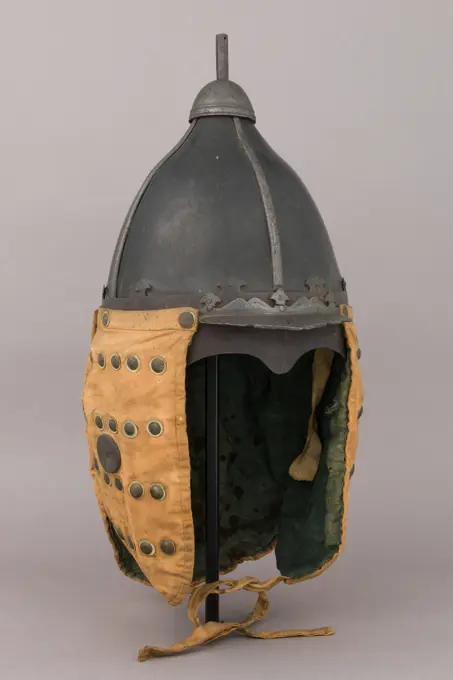
A collection of ornate medieval helmets showcasing steel craftsmanship, featuring designs like burgonets and sallets, highlighting historical and artistic significance.

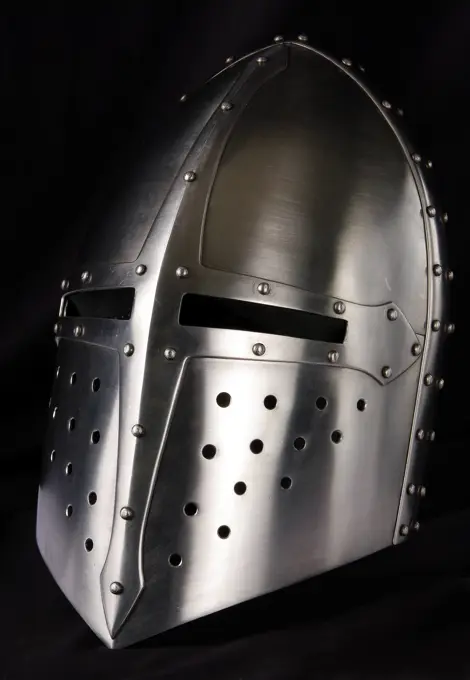
Armour Armour of the medieval knight. Metal protection of the soldier against the weapon of the opponent Copyright: xZoonar.com/ValeryxxSibrikovx 2416552
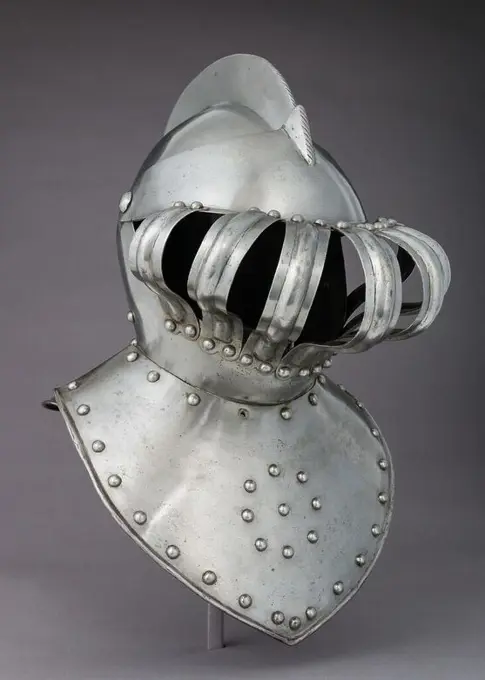
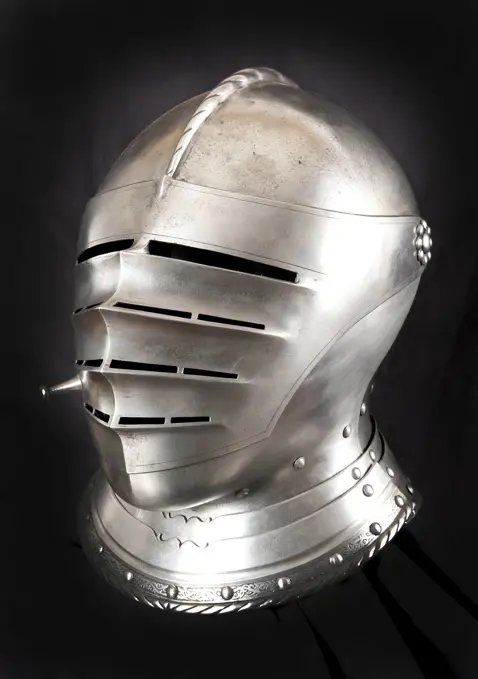
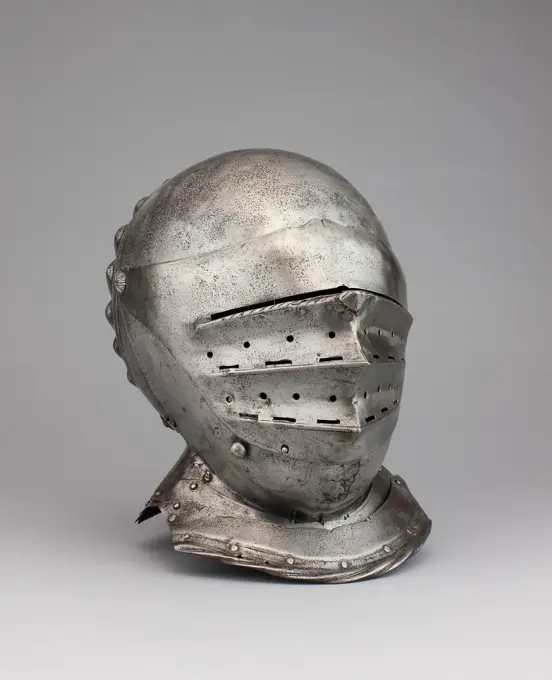
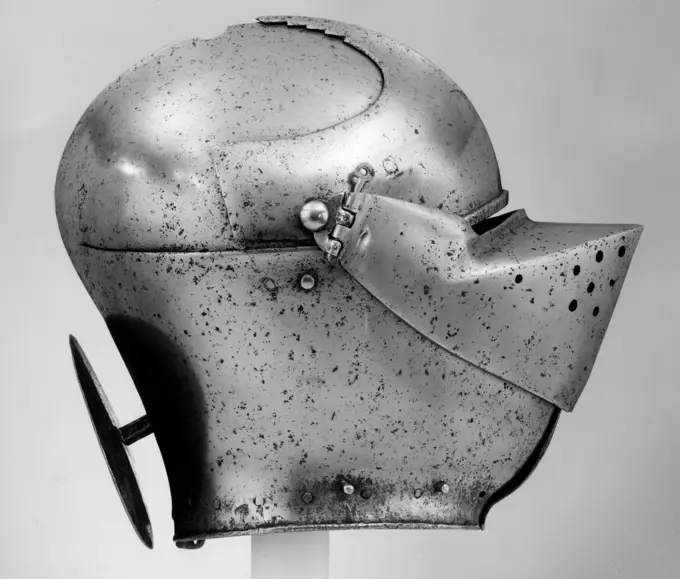
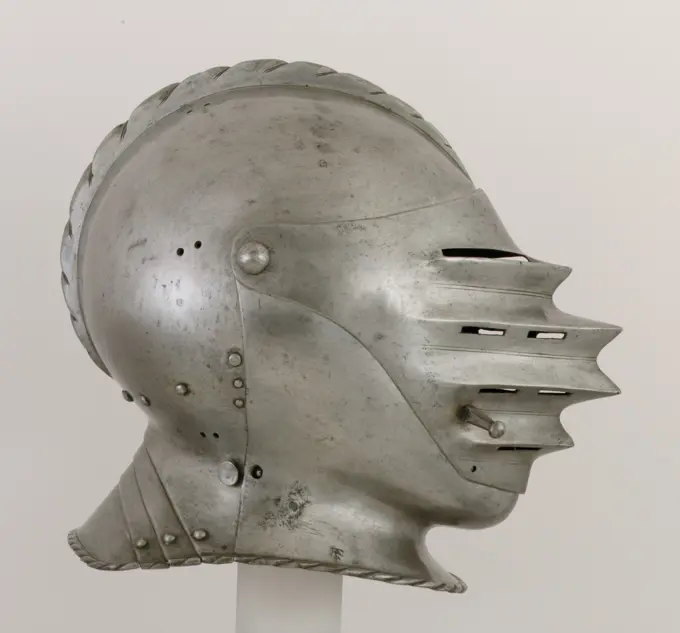
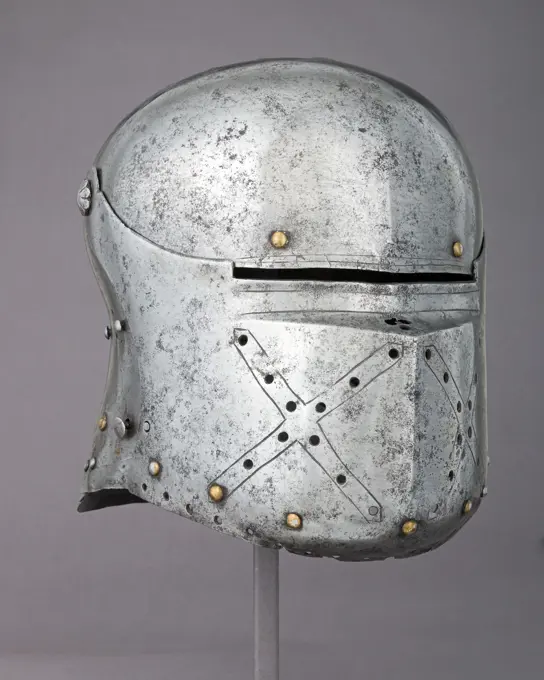
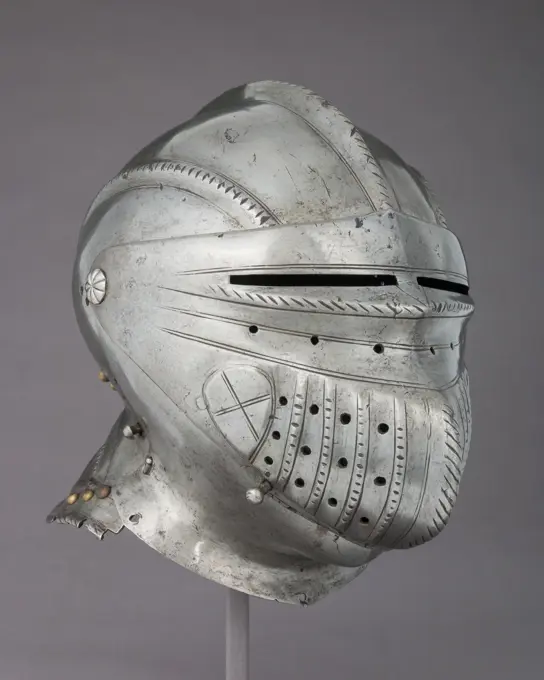
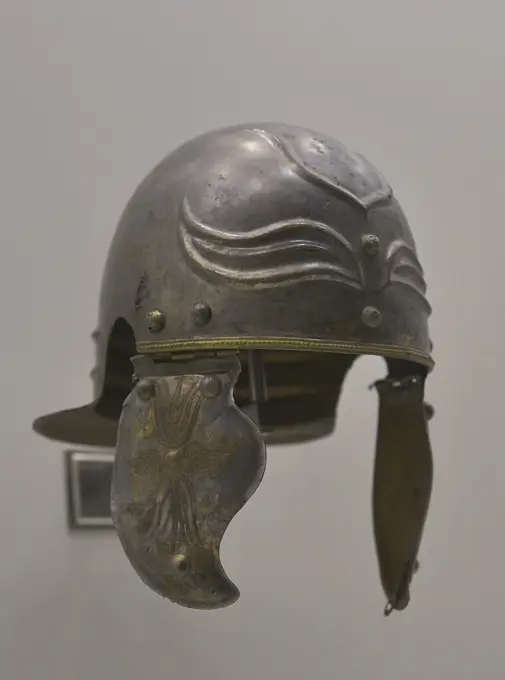
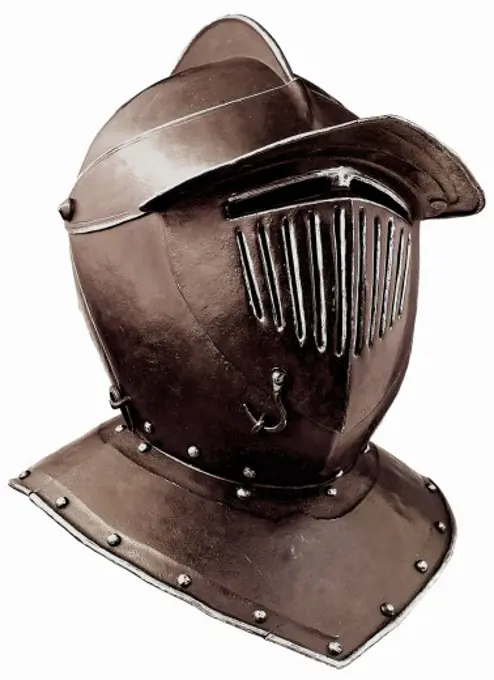
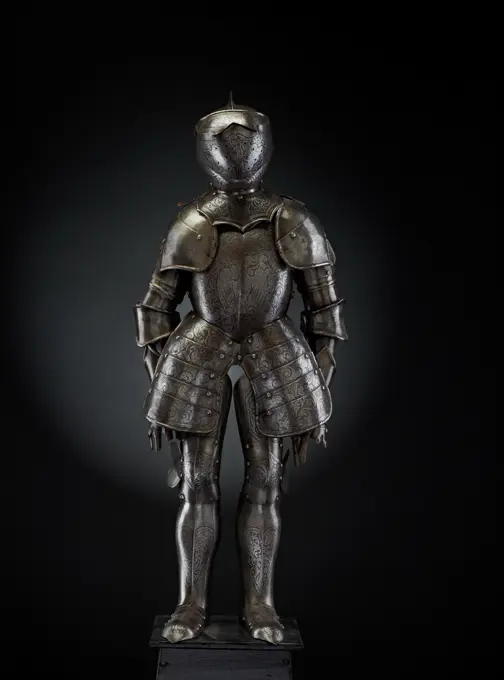
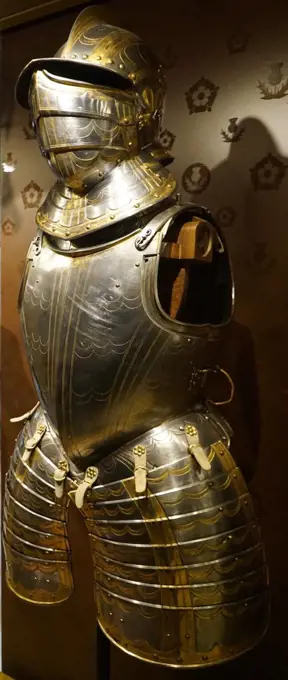
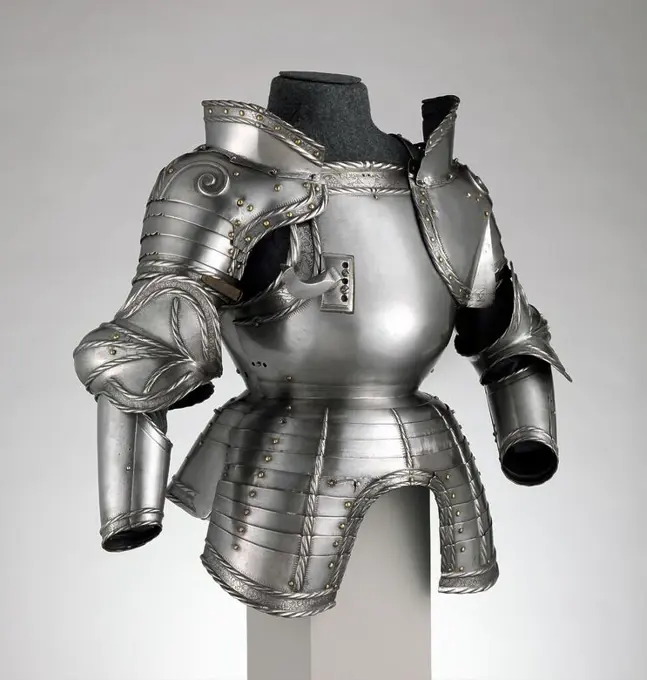
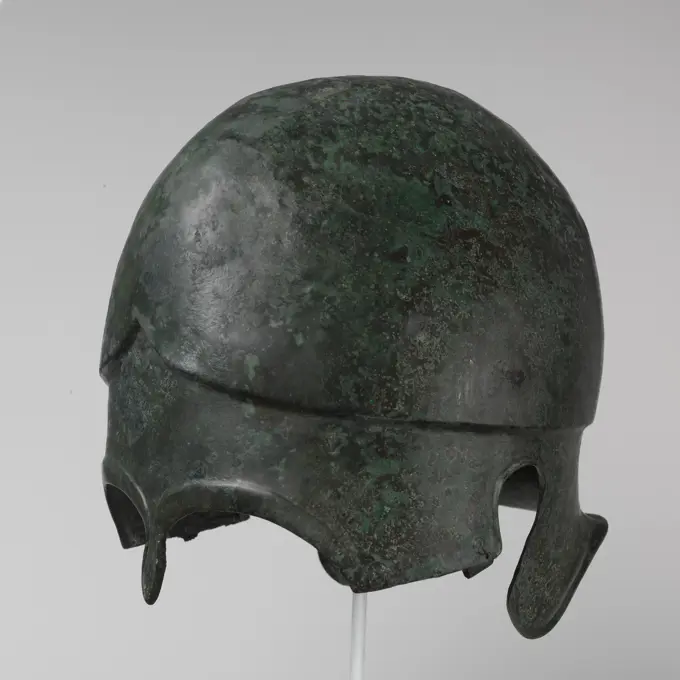
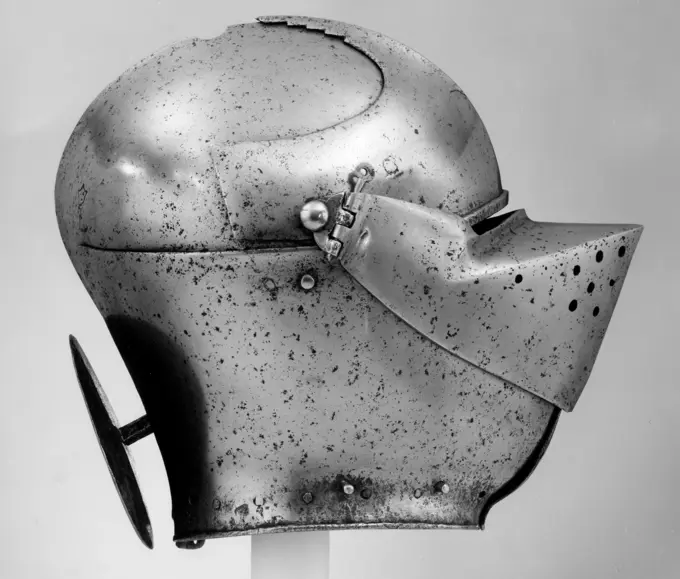
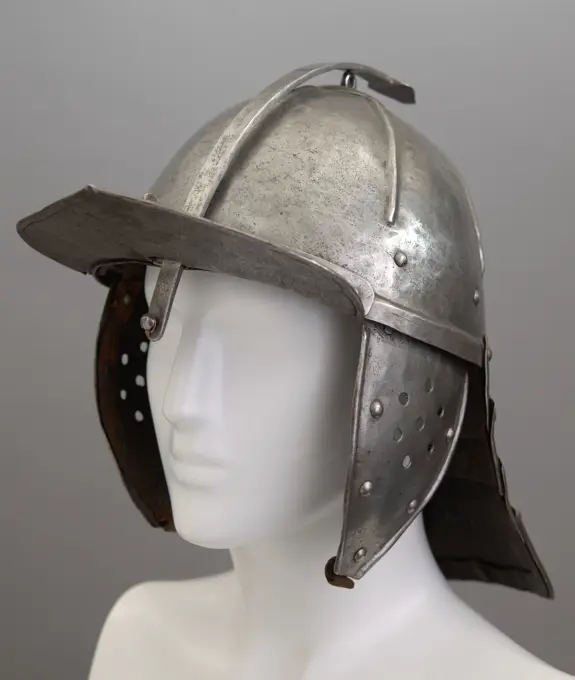
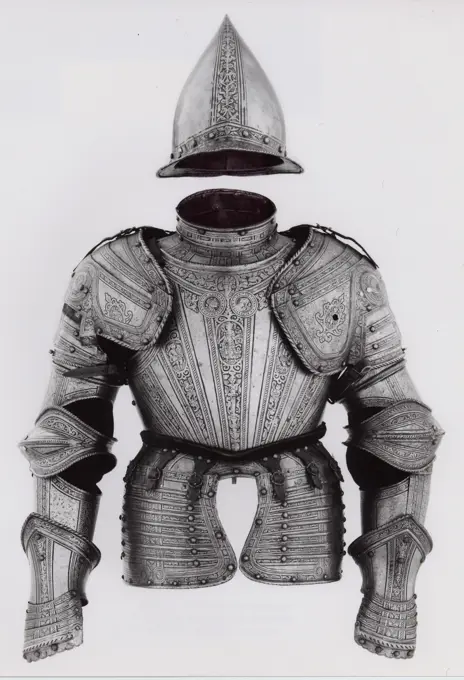
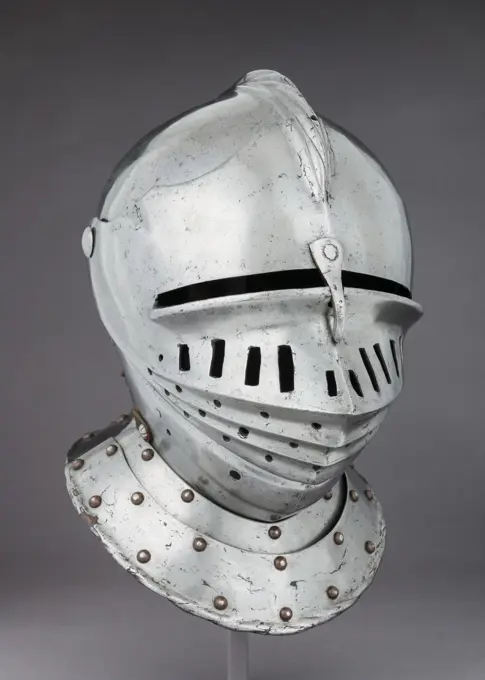
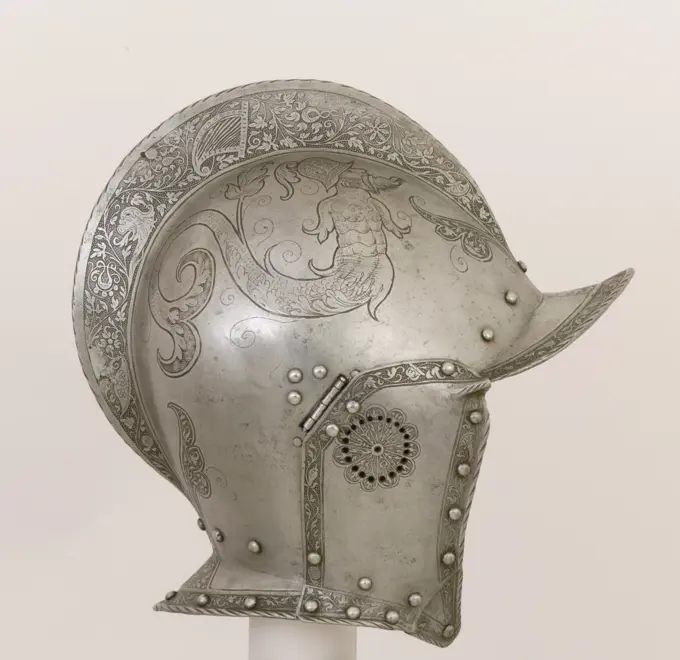
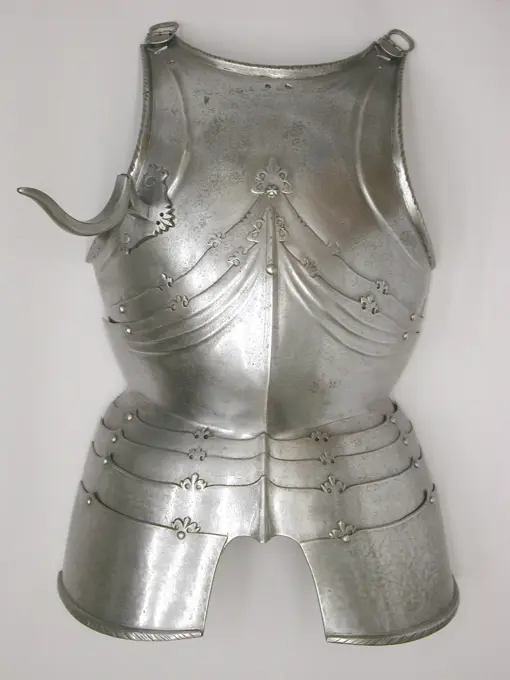
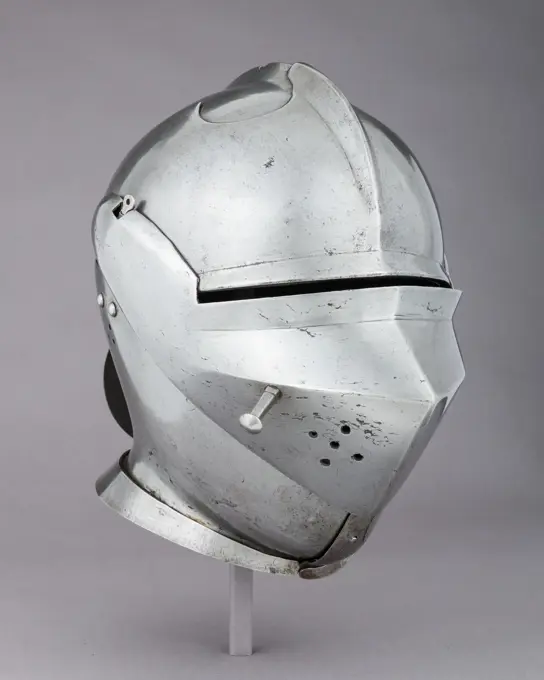
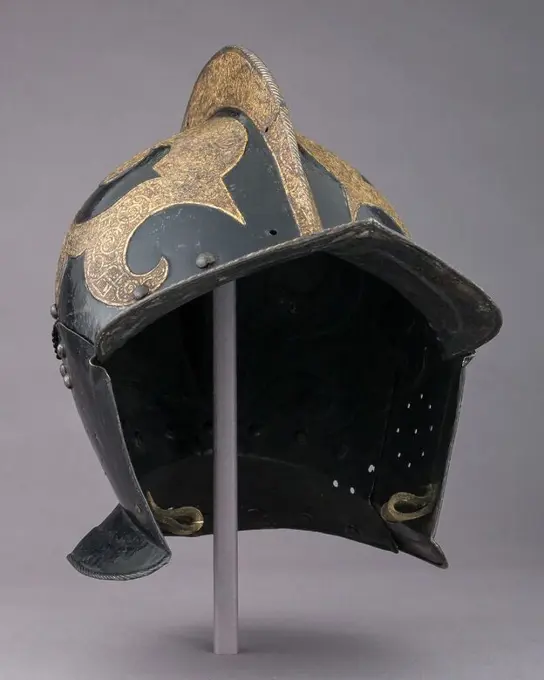
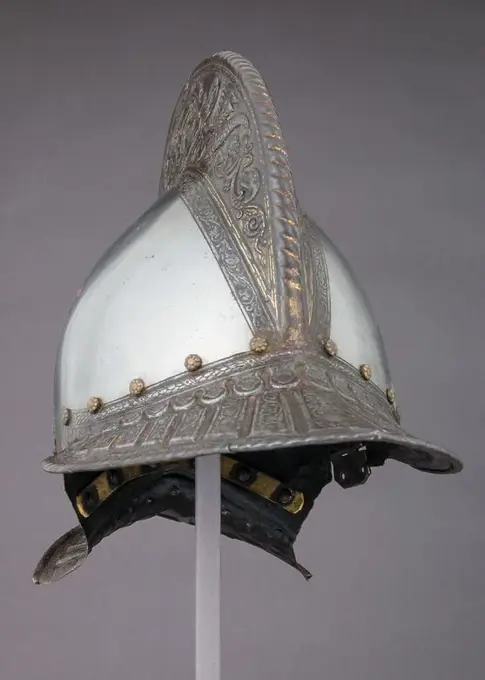
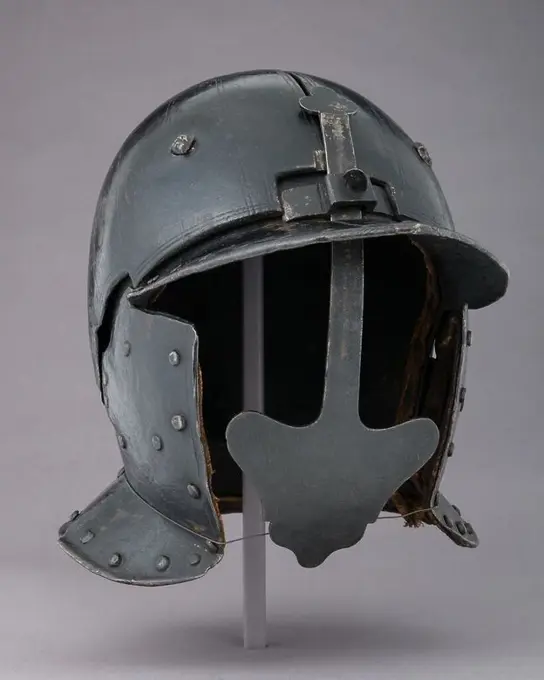
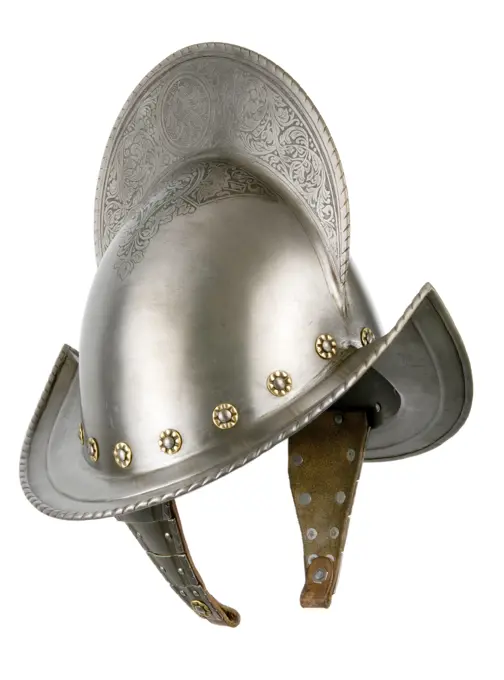
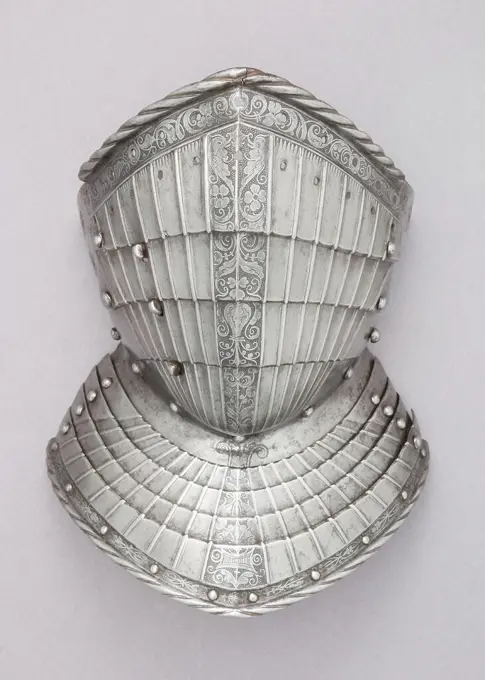
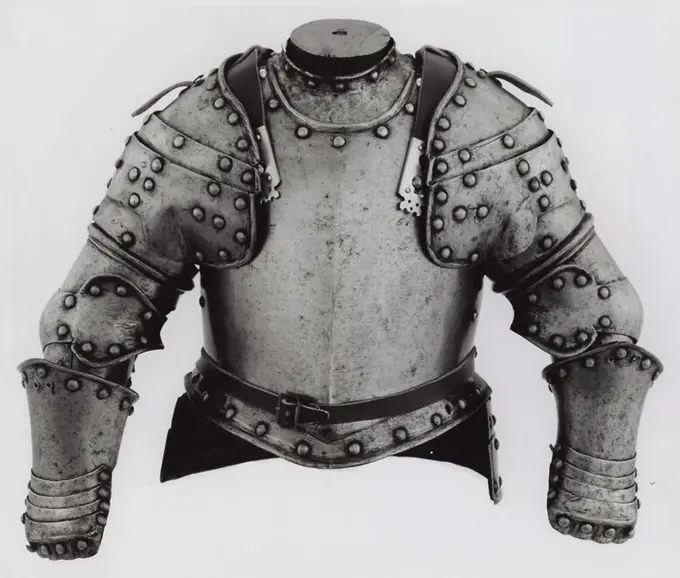
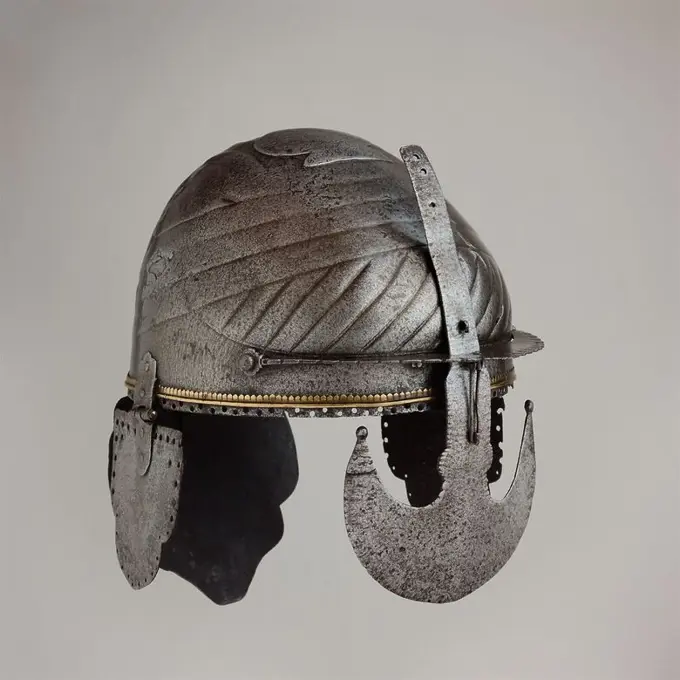
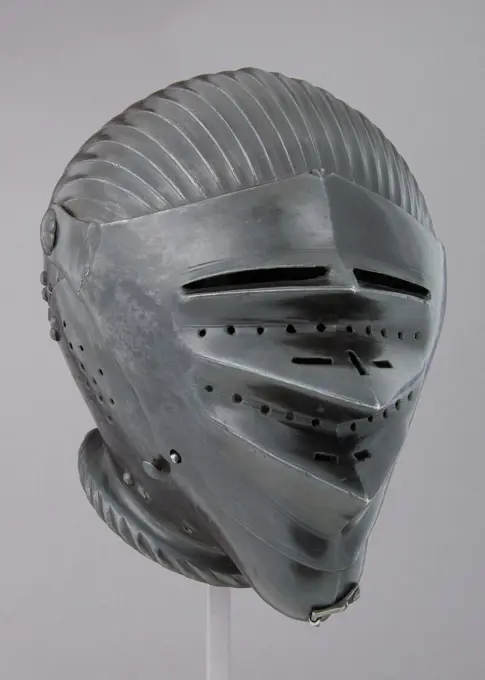
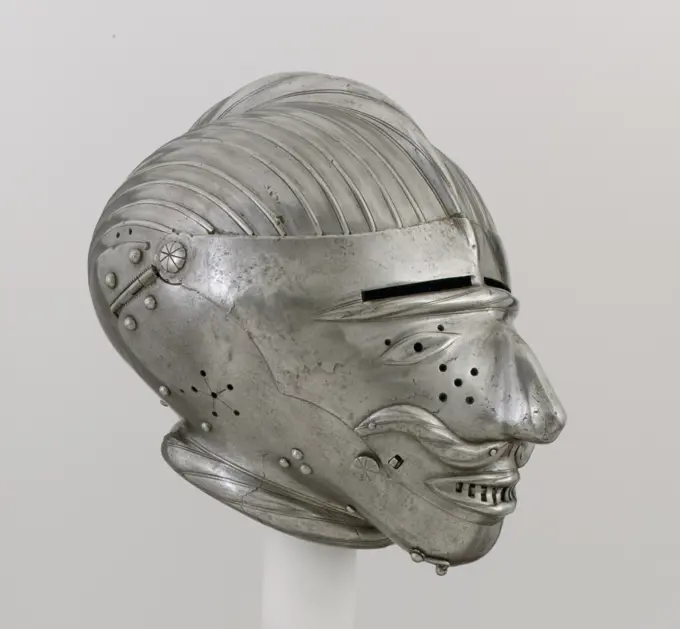
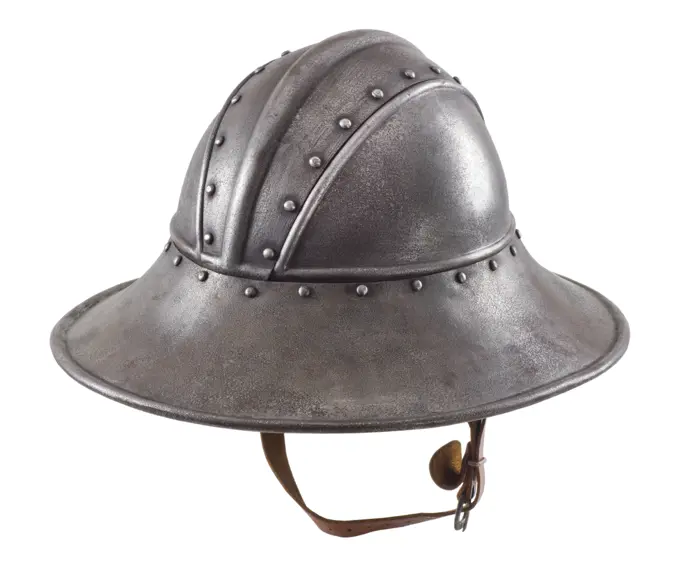
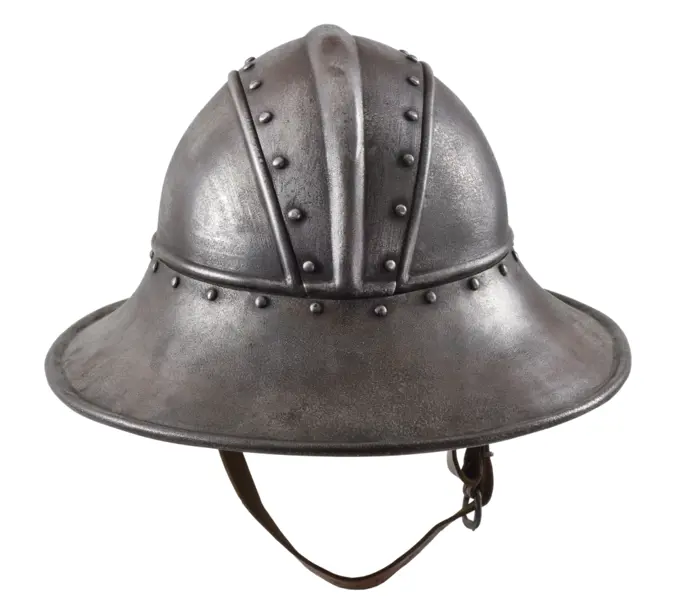
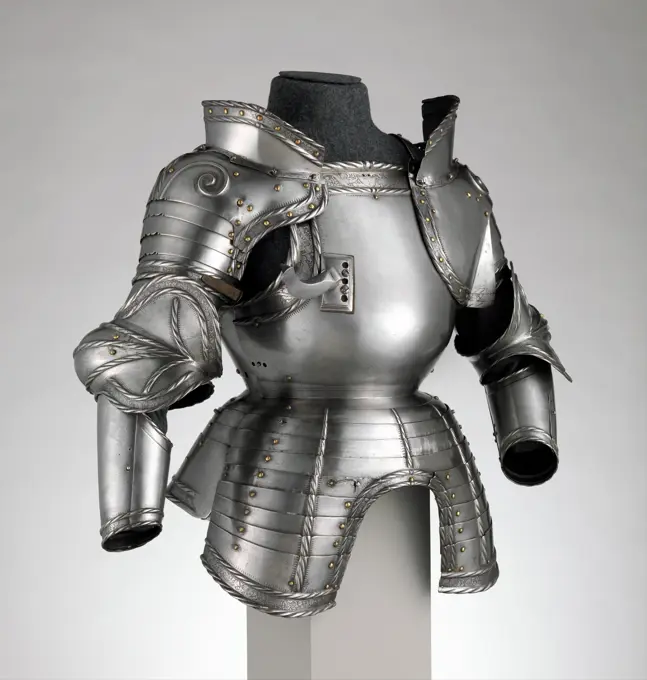
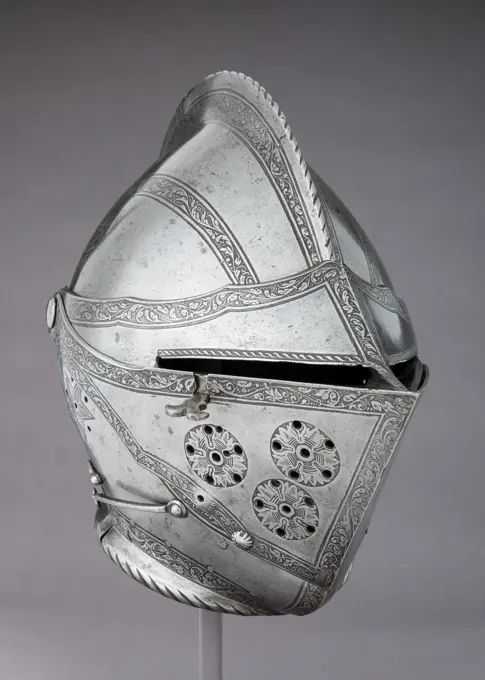
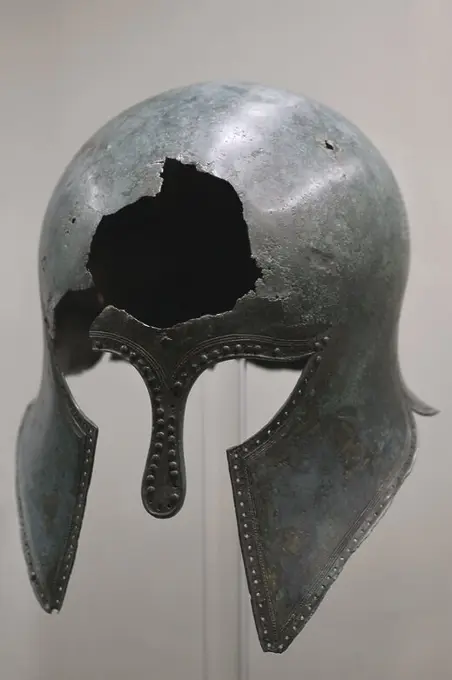
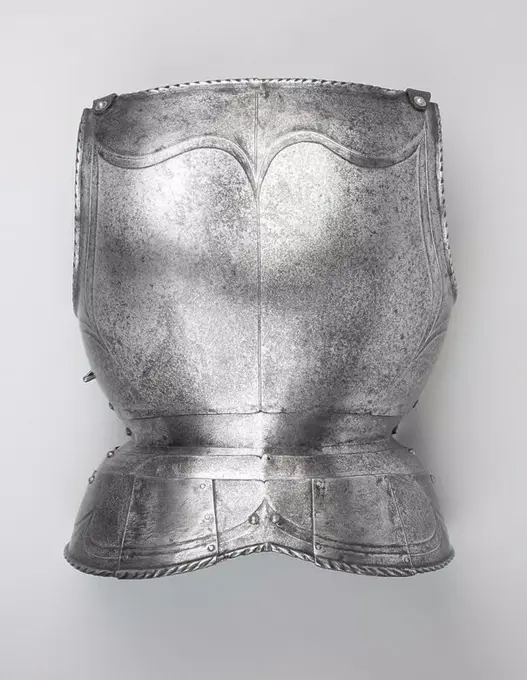
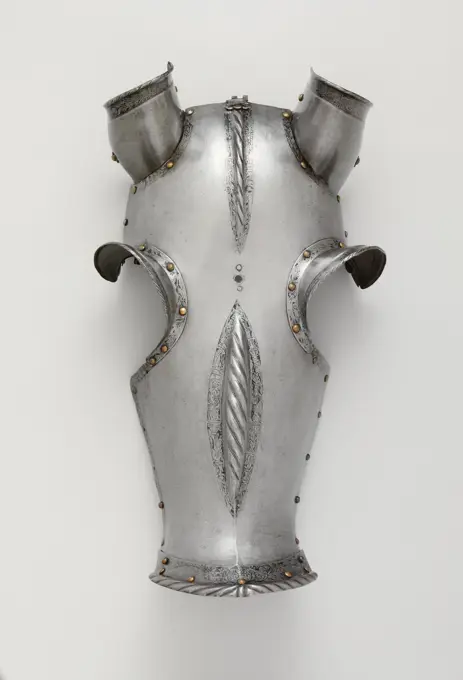
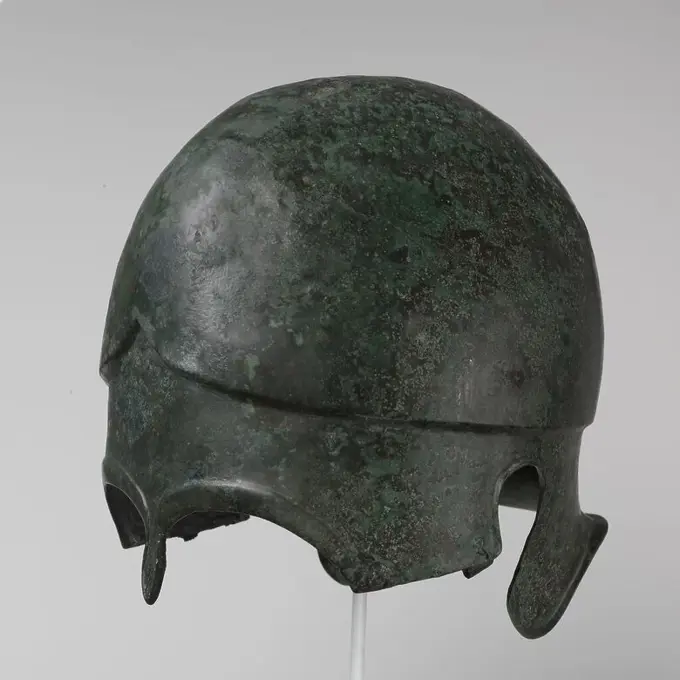
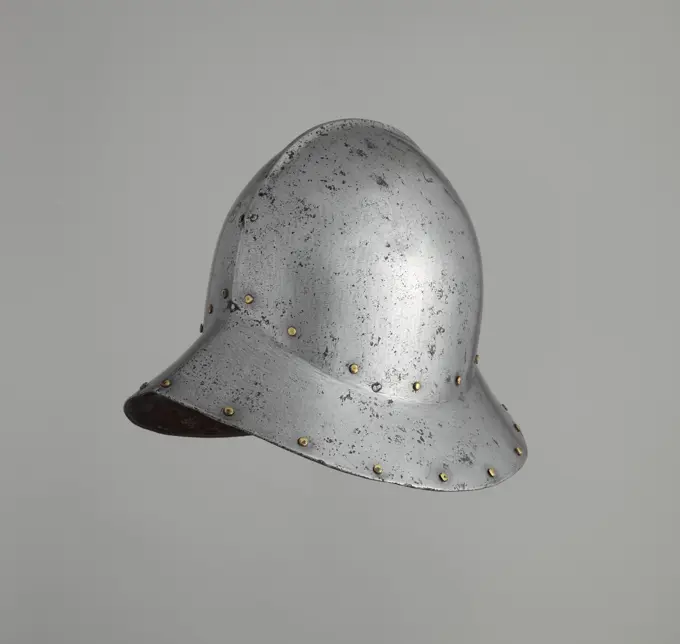
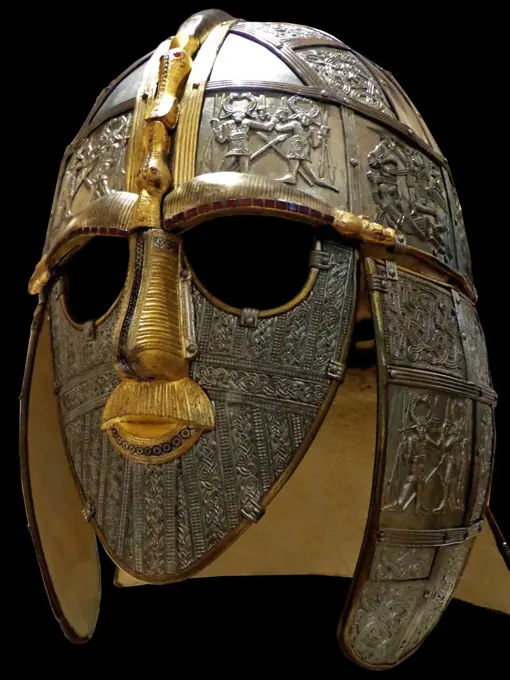
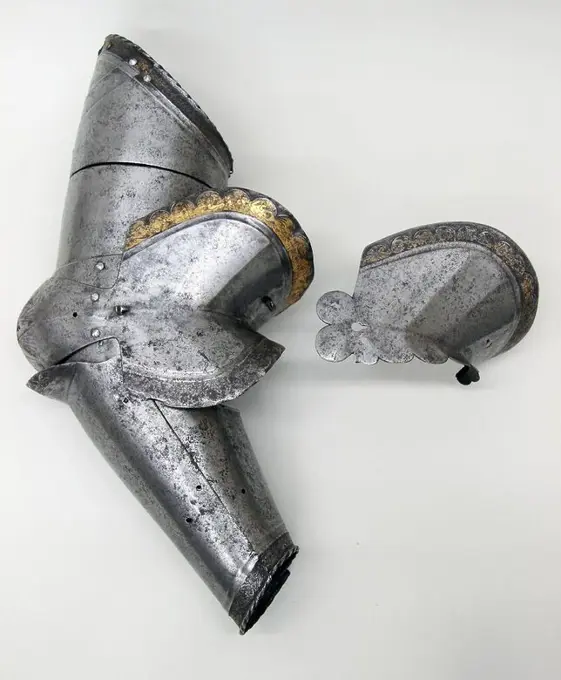
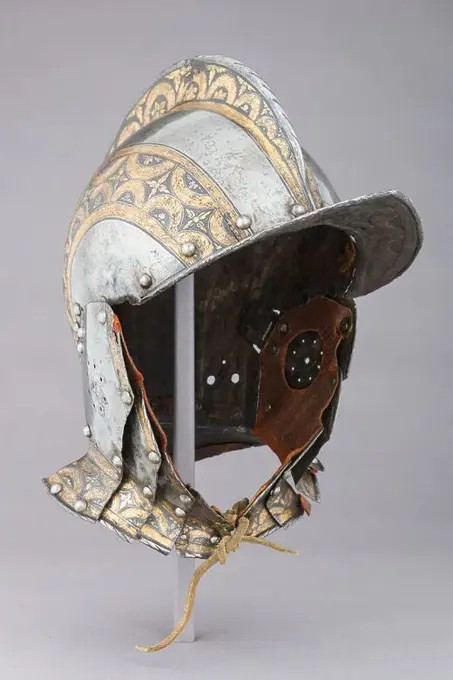
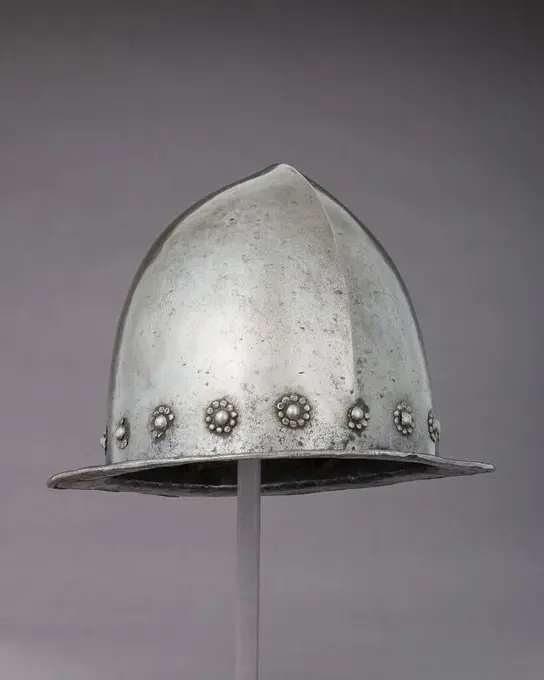
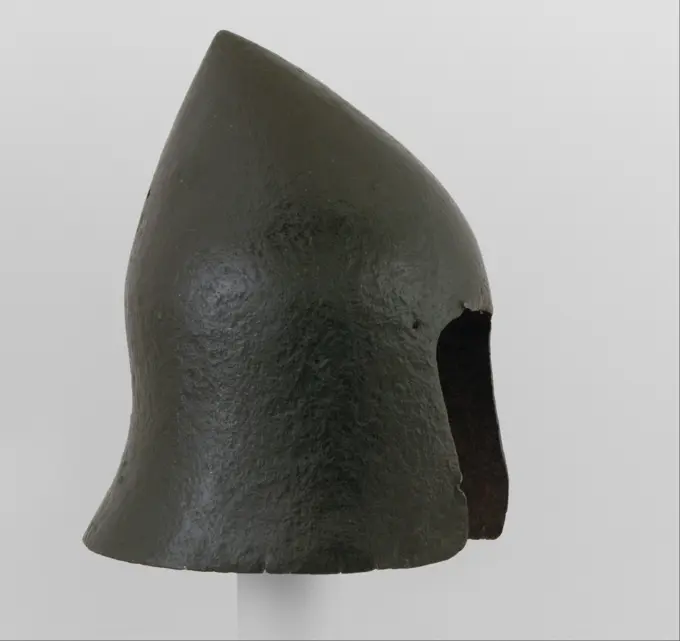
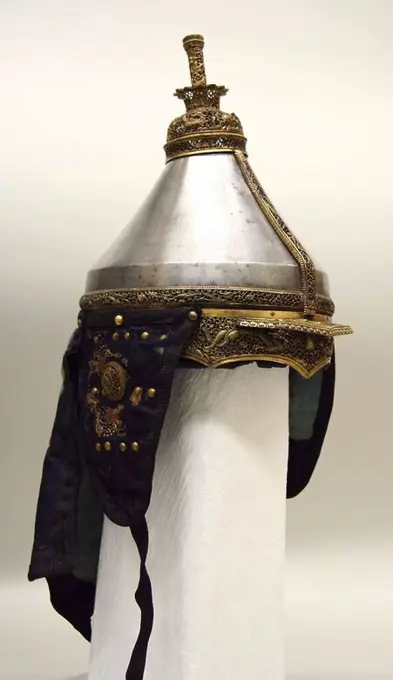
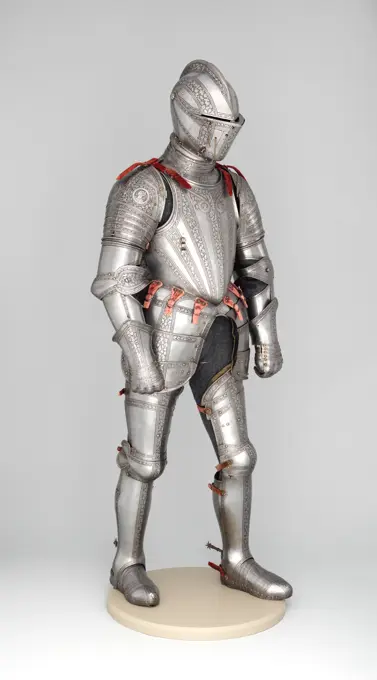
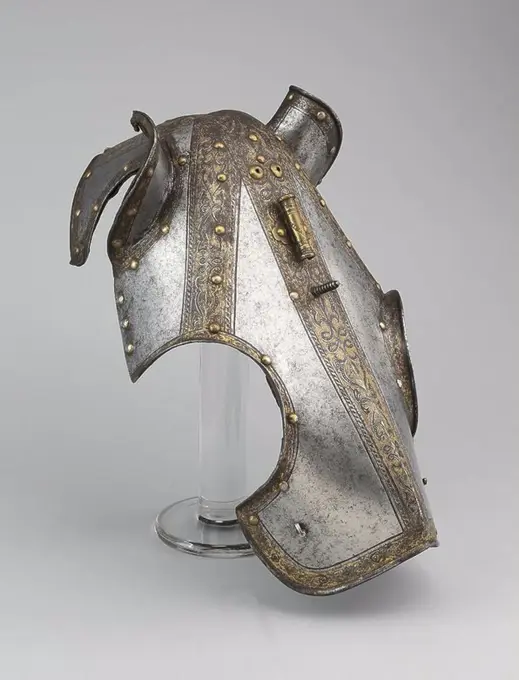
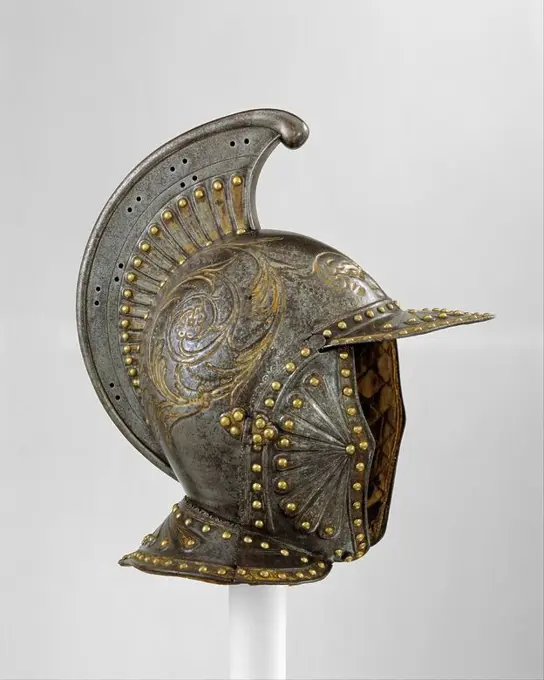
Iron helmet of the medieval knight. Very heavy headdressIron helmet Iron helmet of the medieval knight. Very heavy headdress Copyright: xZoonar.com/ValeryxxSibrikovx 2454282Burgonet. Culture: German. Dimensions: H. 19 7/16 in. (49.4 cm); W. 11 3/4 in. (29.8 cm); D. 14 3/4 in. (37.5 cm); Wt. 6 lb. 6 oz. (2892 g). Date: 17th century. Museum: Metropolitan Museum of Art, New York, USA.Helmet 18th-19th century Indian. Helmet 32130Iron helmet of the medieval knight. Very heavy headdressBurgonet Made 1550-1570 Nuremberg. Steel .Gothic Breastplate , c. 1490-1500. Possibly by Domenico dei Barini (Italian, 1492-c. 1516). Steel (with Lance Rest Mount); overall: 45 x 35.2 cm (17 11/16 x 13 7/8 in.).Iron helmet Iron helmet of the medieval knight. Very heavy headdress Copyright: xZoonar.com/ValeryxxSibrikovx 5718601Close Helmet Made 1500-1530 Italy. This Italian, Milanese, Close Helmet has an associated bevor (visor) and some resoration throughout is a rare quality piece.. Steel .Barbute. Culture: Italian. Dimensions: H. 11 in. (27.9 cm); W. 8 1/4 in. (21 cm); D. 11 in. (27.9 cm); Wt. 5 lb. 12 oz. (2615 g). Date: ca. 1470. Museum: Metropolitan Museum of Art, New York, USA.Armet ca. 1450-60; rondel, stem, and aventail, later Italian, probably Milan This is part of a large find of medieval armor discovered in 1840 in the ruins of the fortress of Chalcis, on the Greek island of Euboea (then a Venetian colony called Negroponte). The fortress had been captured and destroyed by the Turks in 1470. Now divided largely between the Ethnological Museum, Athens, and The Metropolitan Museum of Art, the Chalcis hoard contains many rare and unusual elements of fourteenth- and fifteenth-century armor. Of particular importance are the variety of headpieces and the many fragments of brigandines (armor for the torso constructed of small plates riveted to layers of fabric), some of which retain portions of their original velvet covering. The Chalcis armor provides a unique picture of the armament used in the Aegean, one of the easternmost military outposts of the Venetian empire.. Armet. Italian, probably Milan. ca. 1450-60; rondel, stem, and aventail, later. Steel. probabClose-Helmet for the Field ca. 1520 German, Nuremberg Although fluted surfaces generally characterize German armor of about 1510-30, smooth-surfaced harnesses were equally commonplace and were more quickly and cheaply manufactured. This helmet is fitted with a new form of visor, one of elaborately forged "bellows" shape, whereas the articulated neck lames look back to earlier sallet construction (see acc. no. 29.158.34). The right side of the bevor is struck on the outside with the arms of Nuremberg; inside the same plate is a stamped N within a pearled circle, another Nuremberg control mark. Along with Augsburg, the city of Nuremberg was a major center for armor manufacture in Germany and was especially renowned for its fluted harnesses.. Close-Helmet for the Field. German, Nuremberg. ca. 1520. Steel, leather. Nuremberg. HelmetsSallet (Barbute) Made 1470-1490 Milan. Steel .Sallet ca. 1500-1510 German The ventilation holes in the visor, forming an X-shape or saltire, allude to the Cross of St. Andrew, a Burgundian emblem that was adopted by the Habsburgs and used as an insignia by imperial German troops.. Sallet 23233Armour Armour of the medieval knight. Metal protection of the soldier against the weapon of the opponent Copyright: xZoonar.com/ValeryxxSibrikovx 2425278Sallet (Barbute). Antonio Missaglia (Italian, 1416/17-1495/96); Milan. Date: 1470-1490. Dimensions: 27.9 x 17.8 x 24.1 cm (11 x 7 x 9 1/2 in.)Wt. 6 lb. 1 oz. Steel. Origin: Milan. Museum: The Chicago Art Institute, Chicago, USA.Armet ca. 1535 German. Armet 27111Cabasset. Culture: Italian. Dimensions: H. 10 3/4 in. (27.3 cm); W. 9 5/8 in. (24.4 cm); D. 13 1/4 in. (33.7 cm); Wt. 3 lb. 6.2 oz. (1536.5 g). Date: ca. 1550-75. Museum: Metropolitan Museum of Art, New York, USA.Iron helmet Iron helmet of the medieval knight. Very heavy headdress Copyright: xZoonar.com/ValeryxxSibrikovx 2454147Iron helmet of the medieval knight. Very heavy headdressArmour of the medieval knight. Metal protection of the soldier against the weapon of the opponentRoman officer's helmet from the Early Roman Empire, 1st century, AD. Replica. Army Museum. Toledo, Spain. (On loan, National Archaeological Museum, Madrid, Spain).Iron helmet Iron helmet of the medieval knight. Very heavy headdress Copyright: xZoonar.com/ValeryxxSibrikovx 2460678weapons helmets visor helmet for cuirassiers German circa 1620,Miniature model of pseudo Renaissance armourExample of Field Armour Garniture & Half Shaffron featuring a specially hardened steel. Dated 16th CenturyVisored Sallet, c. 1490-1500. Germany, 16th century. Steel; overall: 21 x 25 x 42 cm (8 1/4 x 9 13/16 x 16 9/16 in.). The sallet is a partly open-face helmet common in Europe during the 1400s, used in both equestrian and infantry versions. Sallets with movable visors, like this example, are considered to be more technically and visually interesting; beautifully streamlined, it assumes a highly sculptural teardrop shape. Originally it would have been part of a complete suit of armor. The sallet became the quintessential helmet form of the late Middle Ages and is frequently represented in medieval miniatures and woodcuts.Bronze helmet. unknown, authorBreastplate Made 1570-1580 Milan. Steel and leather .Portions of a Field Armor. Culture: German, probably Augsburg. Dimensions: H. as mounted 29 3/4 in. (75.57 cm); Wt. 28 lb. (12.7 kg); breastplate (c): 14 3/4 × 14 3/4 × 7 11/16 in. (37.5 × 37.5 × 19.5 cm); Wt. 6 lb. 14 oz. (3112 g); tassets (d): 10 1/4 × 19 5/16 × 7 3/8 in. (26 × 49 × 18.7 cm); Wt. 3 lb. 3 oz. (1445 g); backplate (e): 15 9/16 × 14 15/16 × 9 1/4 in. (39.5 × 38 × 23.5 cm); Wt. 5 lb. 3 oz. (2340 g); culet (f): 5 7/8 × 18 5/16 × 12 3/16 in. (15 × 46.5 × 31 cm); Wt. 2 lb. 8 oz. (1141 g); right pauldron (g): 10 13/16 × 10 13/16 × 7 13/16 in. (27.5 × 27.5 × 19.8 cm); Wt. 2 lb. 7 oz. (1110 g); left pauldron (h): 11 5/8 × 11 5/16 × 8 9/16 in. (29.5 × 28.8 × 21.8 cm); Wt. 2 lb. 12 oz. (1251 g); vambrace (i): 20 × 6 × 9 1/2 in. (50.8 × 15.2 × 24.1 cm); Wt. 2 lb. 9 oz. (1165 g); vambrace (j): 20 × 5 1/2 × 9 in. (50.8 × 14 × 22.9 cm); Wt. 2 lb. 8 oz. (1136 g). Date: dated 1524.These pieces were once part of a complete armor designed for use in battle. Its missing parts include theRider helmet belonging to the armor, presumably worn by the knight Pankraz von Freyberg, Anonymous, c. 1500 - c. 1550  Rider helmet or mantle helmet with a double visor. The right side of the lower facial plate has air holes that consist of a rectangle that is crowned on both sides with a circle. In total there are 7 of such decorations. With push buttons, both visors can be kept up. The helmet has a comb. The lining is largely still present and probably nineteenth century. The ramped articulated neck plate consists of two parts, the lower one is trimmed with a cable decoration. Germany iron (metal) striking (metalworking)  Kasteel HohenaschauRight Poleyn (Knee Defense) from an Armor of Claude Gouffier (1501-1570) ca. 1555-60 French This is the only known fragment from what once must have been a magnificent French parade armor. The knee (or poleyn) consists of a main plate covering the kneecap with a heart-shaped wing on the outer side, with a portion of the lame above and a deep downward-overlapping lame below. This last has a turned and boldly roped lower edge, suggesting that it was the terminal lame of a long articulated tasset that extended from the waist to the knee, a type with which no lower leg defenses were worn. Armor so constructed followed Italian prototypes and was typically worn by the light cavalry. Its embossed and gilt decoration, consisting of dense foliate scrollwork and a grotesque mask with ram's horns (fig. 2) at the front of the main plate, recalls the ornamental motifs and workmanship of the Museum's armor of Henry II of France (39.121), which was probably made in a Parisian atelier about 1555. EtchIron helmet Iron helmet of the medieval knight. Very heavy headdress Copyright: xZoonar.com/ValeryxxSibrikovx 2476899Helmet (Khula Khud). Culture: Persian, Qajar. Dimensions: H. including mail 25 in. (63.5 cm); H. including nasal 15 1/4 in. (38.7 cm); H. excluding mail and nasal 10 1/2 in. (26.7 cm); Diam. 7 1/2 in. (19.1 cm); Wt. 3 lbs. 14.8 oz. (1780.4 g). Date: 19th century. Museum: Metropolitan Museum of Art, New York, USA.Rüstung Armour of the medieval knight. Metal protection of the soldier against the weapon of the opponent Copyright: xZoonar.com/ValeryxxSibrikovx 2494293Iron helmet Iron helmet of the medieval knight. Very heavy headdress Copyright: xZoonar.com/ValeryxxSibrikovx 5718628Bronze helmet of Chalcidian type 5th-4th century B.C. Greek This example represents a variant in which the cheek pieces are hinged rather than in one continuous piece.. Bronze helmet of Chalcidian type 257636Armet Italian, probably Milan ca. 1450-60; rondel, stem, and aventail, later This is part of a large find of medieval armor discovered in 1840 in the ruins of the fortress of Chalcis, on the Greek island of Euboea (then a Venetian colony called Negroponte). The fortress had been captured and destroyed by the Turks in 1470. Now divided largely between the Ethnological Museum, Athens, and The Metropolitan Museum of Art, the Chalcis hoard contains many rare and unusual elements of fourteenth- and fifteenth-century armor. Of particular importance are the variety of headpieces and the many fragments of brigandines (armor for the torso constructed of small plates riveted to layers of fabric), some of which retain portions of their original velvet covering. The Chalcis armor provides a unique picture of the armament used in the Aegean, one of the easternmost military outposts of the Venetian empire.Przeszo Przyszoci unknownBevor with two Gorget Plates. Spanish. Date: 1450-1550. Dimensions: . Steel. Origin: Spain. Museum: The Chicago Art Institute, Chicago, USA.Half Armor 1540-1580 Italy. Steel .Iron helmet of the medieval knight. Very heavy headdress.Hence the bridge;  IV-III century BC (-400-00-00--201-00-00);Guttmann's depositArmet ca. 1510 Italian. Armet 27127Burgonet ca. 1540-50 Attributed to Kunz Lochner German The peak is struck with the city arms of Nuremberg. The finely etched decoration, particularly the merman on either side of the bowl, recalls signed works by Kunz Lochner, Nuremberg's leading armorer in the mid-sixteenth century.. Burgonet. German, Nuremberg. ca. 1540-50. Steel, leather, textile. Nuremberg. HelmetsBreastplate with Taces and Tassets 19th century probably European. Breastplate with Taces and Tassets 26880Helmet 18th-19th century Indian, possibly Central Indian. Helmet 32124Armet ca. 1480 Italian. Armet. Italian. ca. 1480. Steel. HelmetsArmour Armour of the medieval knight. Metal protection of the soldier against the weapon of the opponent Copyright: xZoonar.com/ValeryxxSibrikovx 2425266Iron helmet Iron helmet of the medieval knight. Very heavy headdress Copyright: xZoonar.com/ValeryxxSibrikovx 2449793Great Sallet. Italian or Mediterranean in the Italian style. Date: 1375-1425. Dimensions: H. 20.3 cm (8 in.). Steel. Origin: Italy. Museum: The Chicago Art Institute, Chicago, USA.Burgonet. Culture: German, Saxon. Dimensions: H. 12 1/4 in. (31.1 cm); W. 9 in. (22.9 cm); D. 13 in. (33 cm); Wt. 3 lb. 3.3 oz. (1454.3 g). Date: 16th century. Museum: Metropolitan Museum of Art, New York, USA.Knighting CopyBurgonet. Culture: French. Dimensions: H. 12 in. (30.5 cm); W. 8 7/16 in. (21.4 cm); D. 15 1/8 in. (38.4 cm); Wt. 3 lb. 14 oz. (1757 g). Date: ca. 1550. Museum: Metropolitan Museum of Art, New York, USA.Gladiatorial parade bronze helmet, from Pompei, ItalySiege Helmet. Culture: French. Dimensions: H. including nasal 12 1/4 in. (31.1 cm); H. excluding nasal 11 1/4 in. (28.6 cm); W. 10 in. (25.4 cm); D. 13 9/16 in. (34.4 cm); Wt. 23 lb. (10.43 kg). Date: 17th century. Museum: Metropolitan Museum of Art, New York, USA.Iron helmet Iron helmet of the medieval knight. Very heavy headdress Copyright: xZoonar.com/ValeryxxSibrikovx 2476898Bronze helmet of South Italian-Corinthian type mid-4th-mid-3rd century B.C. Greek These helmets represent South Italian adaptations of the Greek type known as Corinthian. The general shape is more open at the bottom, and the articulation of the face includes marked ridges above the eyes and at the "hairline." The example with the plume holder (2003.407.4) also has lightly traced ornament and the figure of a horse.. Bronze helmet of South Italian-Corinthian type 257637Falling Buffe. Armorer: Attributed to Kolman Helmschmid (German, Augsburg 1471-1532). Culture: German, Augsburg. Dimensions: H. 10 in. (25.4 cm); W. 8 1/2 in. (21.6 cm). Date: ca. 1525.This type of face defense is called a falling buffe because its segments can be collapsed downward to allow for easier breathing and greater visability, or locked in an upright position to fully protect the face. It was probably made by the celebrated Augsburg armorer Kolman Helmschmid in about 1525 and is very similar in form and decoration to another helmet in the Metropolitan Museum of Art, also attributed to Helmschmid, which is a type known as a closed burgonet (accession number 27.159.18). Both that helmet and this buffe came from the armory of the Dos Aguas family in Valencia, Spain. Museum: Metropolitan Museum of Art, New York, USA.Sallet. Armorer: Kaspar Riederer (Austrian, Innsbruck and Mühlau, active 1455-99). Culture: Austrian, Innsbruck or Mühlau. Dimensions: H. 9 1/2 in. (24.13 cm); W. 9 in. (22.86 cm); D. 14 7/8 in. (37.77 cm); Wt. 6 lb. 8 oz. (2948 g). Date: ca. 1480. Museum: Metropolitan Museum of Art, New York, USA.Back plate of Harquebusiers harness for a young man, c. 1610 - c. 1620  Harquebusiers's back plate for a young man. See Description Bestpiece  iron (metal)Boy's Armor. Western European. Date: 1675-1700. Dimensions: H. 127 cm (50 in.). Steel, brass, and leather. Origin: France. Museum: The Chicago Art Institute, Chicago, USA.Iron helmet Iron helmet of the medieval knight. Very heavy headdress Copyright: xZoonar.com/ValeryxxSibrikovx 2454193Helmet. Culture: Indian, Deccan, probably Bijapur (Vijayapur). Dimensions: H. including nasal 12 in. (30.5 cm); H. including nape defense 10 in. (25.4 cm); H. excluding nasal and nape defense 5 1/2 in. (14 cm); W. 8 3/4 in. (22.2 cm); D. 11 in. (27.9 cm); Wt. 3 lb. 14.1 oz. (1760.5 g). Date: 17th century.The helmet is shaped in the form of a cloth turban. A steel plaque riveted at the top is inscribed in Arabic: "There is no hero like Ali and no sword like dhu'l-faqar." This refers to the son-in-law and cousin of the Prophet Muhammad and to the Prophet's sword, which he gave to Ali. Museum: Metropolitan Museum of Art, New York, USA.Maximilian Armet ca. 1525 German. Maximilian Armet 27113Armet with Mask Visor ca. 1520-25 German, Nuremberg or Austrian, Innsbruck Helmets fitted with masklike visors were a popular German fashion about 1510 to 1540. Visors forged as humorous or grotesque human masks were often worn in tournaments held during the exuberant pre-Lenten (Shrovetide) festivals, celebrations somewhat akin to modern Mardi Gras. The deep cuts on the left side of this example suggest that it was used in a mock battle, or tourney, fought by groups of horsemen armed with lances and swords. The helmet's powerful sculptural form, technical accomplishment, and imaginitive conception demonstrate the armorer's virtuosity.. Armet with Mask Visor. German, Nuremberg or Austrian, Innsbruck. ca. 1520-25. Steel. Nuremberg; Innsbruck. HelmetsIron helmet Iron helmet of the medieval knight. Very heavy headdress Copyright: xZoonar.com/VALERY-SIBRIKOVx 7138873Iron helmet of the medieval knight. Very heavy headdressIron helmet Iron helmet of the medieval knight. Very heavy headdress Copyright: xZoonar.com/ValeryxxSibrikovx 2460608Portions of a Field Armor dated 1524 German, probably Augsburg These pieces were once part of a complete armor designed for use in battle. Its missing parts include the helmet, collar, gauntlets, and leg defenses. Even though incomplete, this armor is notable for the quality of its construction, the elegance of its form, accented by prominent roped ridges, and for its lively etched decoration.The etched decoration features distinctive female heads, birds, and trophies amid foliate scrolls, all derived from prints by Daniel Hopfer (1471-1536). It is believed that early in his career, Hopfer etched ornament and figures on armor. Emperor Maximilian especially favored armor decorated with Italianate motifs in the Northern Renaissance style.. Portions of a Field Armor. German, probably Augsburg. dated 1524. Steel, leather. probably Augsburg. Armor for ManClose-Helmet 1550 Attributed to Kunz Lochner. Close-Helmet 26533Bevor with two Gorget Plates 1450-1550 Spain. Steel .Helmet. Bronze. Late 6th century BC. From Tomb I of the necropolis of Trebenista, North Macedonia. National Archaeological Museum. Sofia. Bulgaria.Backplate with Fauld. Southern German, Nuremberg(). Date: 1525-1575. Dimensions: . Steel. Origin: Southern Germany. Museum: The Chicago Art Institute, Chicago, USA.Shaffron (Horse's Head Defense) of Ottheinrich, Count Palatine of the Rhine (1502-1559) dated 1529 German, probably Nuremberg This shaffron is decorated with narrow bands of etched foliate ornament on a blackened, dotted ground in a manner associated with armor from Nuremberg. The decoration includes the date 1529 (in the center of the nose) and a shield emblazoned with the arms of the Palatinate and Bavaria (at the muzzle), indentifying the shaffron as having been made either for Ottheinrich (1502-1559) or for his brother Philipp (1503-1548), the two of whom co-ruled as counts palatine of the Rhine. It most likely comes from their large armory at Neuburg Castle, which rises over the Danube in the vicinity of Ingolstadt. Although the year 1529 was eventful for both siblings, it seems more probable that the armor to which this shaffron belongs was ordered by Ottheinrich for the ceremonies attendant with his wedding to Susanne, daughter of the duke of Bavaria, in that year.. Shaffron (HoBronze helmet of Chalcidian type. Culture: Greek. Dimensions: H. 9 1/2 in. (24.1 cm)Width: 7 3/4 in. (19.7 cm)Depth 9 3/4 in. (24.8 cm). Date: 5th-4th century B.C..This example represents a variant in which the cheek pieces are hinged rather than in one continuous piece. Museum: Metropolitan Museum of Art, New York, USA.CASCO DE CARLOS V IMITANDO SU CABEZA - FRONTAL - SIGLO XVI. Location: PALACIO REAL-REAL ARMERIA DE MADRID. MADRID. SPAIN.Ritter Armour of the medieval knight. Metal protection of the soldier against the weapon of the opponent Copyright: xZoonar.com/ValeryxxSibrikovx 3126728War Hat late 15th century Spanish Little is known about armor-making in Spain, and the majority of securely identifiable Spanish examples date from the late fifteenth century. War hats of this type, with either round or pointed bowls and deeply sloped brims, are uniquely Spanish and are frequently decorated with applied bands of gilt copper around the base of the bowl and the edge of the brim. This helmet has lost these appliqués, for which only rivet holes (now filled with modern copper rivets) remain. Struck three times on the right side at the back is an armorer's mark: a crowned letter. The front of the bowl is filled with a brow plate covered on its outer face with red textile, possibly part of the original lining.. War Hat. Spanish. late 15th century. Steel, brass. HelmetsBreastplate of Kuras, 1599 - 1699  Breastplate, iron, white, arm and neck cuts as well as the lower and rear edge of the stump. Decorative lines applied parallel to the flared edges of the breastplate. At the height of the arm cuts, two rotating hooks with buttons to which the shoulder straps can be attached. The left hook is partly copper -colored. In the center of the breastplate a vertical middle bone that runs down from the neck cut and ends in a small bulge just above the abdominal demand. Quite broad abdominal demand and two parts are folded over each other in the middle. Four buttons with round holes where the thigh plates can be attached to the abdominal demand. At the top in the middle between the decorative line and the edge is IG32. Inside is painted black, a newly inserted white rivet on the right side. In the middle the brand of the city of Amsterdam. Netherlands (possibly) iron (metal)Replica of the Sutton Hoo helmet. Produced in the 1970's by the Royal Armouries. Features decorated panels as the original would have, before it corroded.Firefighting helmet unknown labelBreastplate (with lance rest and fauld/ Nuremberg), c.1510-30. Germany, 16th century. Steel with black paint and leather straps; overall: 44 x 36.3 cm (17 5/16 x 14 5/16 in.).Knight´s armorClose Helmet Made 1510-1530 Southern Germany. Steel .Arm Defense for Right Arm. Culture: German, probably Augsburg. Dimensions: H. 18 in. (45.7 cm). Date: ca. 1530. Museum: Metropolitan Museum of Art, New York, USA.Burgonet with Falling Buffe possibly from an Armor of William Herbert, Earl of Pembroke Made 1550-1560 Greenwich. Steel, gilding, and leather .Burgonet. Culture: German. Dimensions: H. 13 1/2 in. (34.3 cm); W. 8 in. (20.3 cm); D. 12 1/2 in. (31.8 cm); Wt. 3 lb. 9.6 oz. (1632.9 g). Date: ca. 1550. Museum: Metropolitan Museum of Art, New York, USA.Iron helmet Iron helmet of the medieval knight. Very heavy headdress Copyright: xZoonar.com/ValeryxxSibrikovx 2454281Cabasset. Culture: Italian. Dimensions: H. 7 3/4 in. (19.7 cm); W. 10 1/2 in. (26.7 cm); D. 12 3/4 in. (32.4 cm); Wt. 3 lb. 7 oz. (1159 g). Date: 17th century. Museum: Metropolitan Museum of Art, New York, USA.Great Sallet late 14th-mid-15th century Italian This helmet is part of a unique group of late medieval helmets and armor fragments that was discovered about 1840 in the ruins of a Venetian fortress at Chalcis, on the Greek island of Euboea. Founding curator of the Arms and Armor Department at the Metropolitan Museum Bashford Dean saw the Chalcis group in Athens in the 1890s and, recognizing its rarity and importance, eventually was able to acquire a substantial portion of it (a selection is on permanent display in the Museum, gallery 373). After Dean's death, this helmet was owned by Clarence H. Mackay, a major art collection, trustee of the Museum, and great admirer of Dean. It later belonged to Dean's successor, Stephen Grancsay, who subsequently donated it to the Museum.. Great Sallet 26447War Hat 19th century in the style of the 15th century German or Austrian. War Hat 26542Composed Armor for a Youth or Small Boy ca. 1590 and later French or Italian. Composed Armor for a Youth or Small Boy. French or Italian. ca. 1590 and later. Steel, brass, leather. Armor for ChildArmor. Culture: Chinese. Dimensions: Helmet (a); H. including nape defense 20 3/4 in. (52.7 cm); H. excluding nape defense 11 1/4 in. (28.6 cm); W. 8 1/4 in. (21 cm); D. 10 in. (25.4 cm); Wt. 3 lb. 14.3 oz. (1766.2 g). Date: 18th century. Museum: Metropolitan Museum of Art, New York, USA.Armor for Field and Tilt ca. 1550-75 Italian This armor garniture comes from the armory of the Dos Aguas family in Valencia, Spain. The garniture is unusually large, containing pieces for use in battle and for the tilt in both the Italian and German fashions. The tilt was a tournament fought on horseback between two opponents armed with lances and separated by a lengthwise barrier.The armor as mounted is equipped with a helmet and vambraces (arm defenses) for the tournament. The buffe (chin defense), second breastplate (acc. no. 27.159.2), and manifer (reinforced left gauntlet) (27.159.6) would have been added to make the armor ready for exchange pieces for different forms of the tournament. For the German tilt, the trellised targe (shield) (27.159.7), small elbow defense (27.159.5), and small stomach defense (27.159.3) were added. For the Italian tilt, these elements were replaced by the form-fitting reinforce covering the left half of the torso and left shoulder (mezzo sovrapetto) (2Demi Shaffron of an Infantry Garniture. Italian; Milan. Date: 1560-1590. Dimensions: . Steel, gilding, and brass. Origin: . Museum: The Chicago Art Institute, Chicago, USA.Parade Helmet à l'Antique. Culture: French, probably Paris. Dimensions: H. 14 7/8 in. (37.6 cm); W. 8 1/2 in. (21.6 cm); D. 14 1/2 in. (36.8 cm); Wt. 4 lb. 8 oz. (2167 g). Date: ca. 1630.A reflection of the classical tradition in early Baroque France, this parade helmet was designed in imitation of ancient Roman examples. The tall arched comb was originally fitted with an elaborate feathered plume, and the colorful effect was heightened by the use of gold paint and gilt rivet heads. The padded lining, still intact, was once covered with pink silk. Undoubtedly created for a member of the court of Louis XIII (r. 1610-43), this wonderfully preserved helmet was probably intended for use in a mock joust or carousel. Museum: Metropolitan Museum of Art, New York, USA.Armour for a head of a horse of the medieval knightHelmet 16th-19th century Korean. Helmet 32128Iron helmet of the medieval knight. Very heavy headdress. Iron helmet of the medieval knight. Very heavy headdress. Copyright: xZoonar.com/ValeryxxSibrikovx 2449656