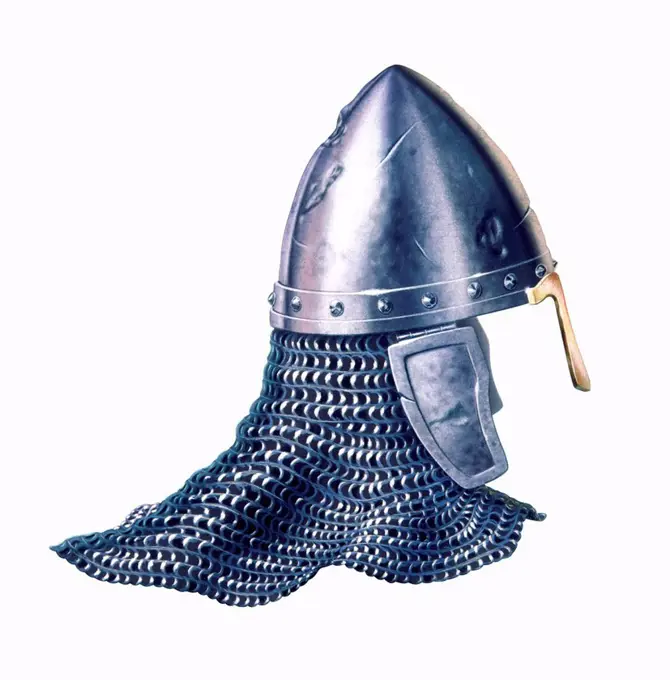
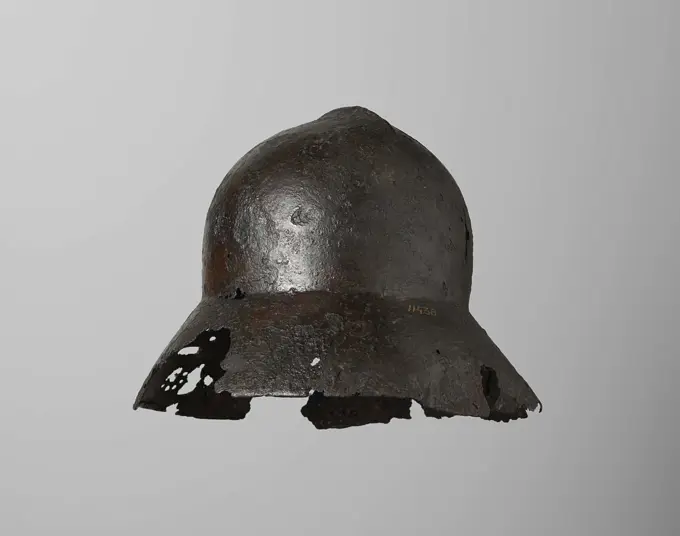
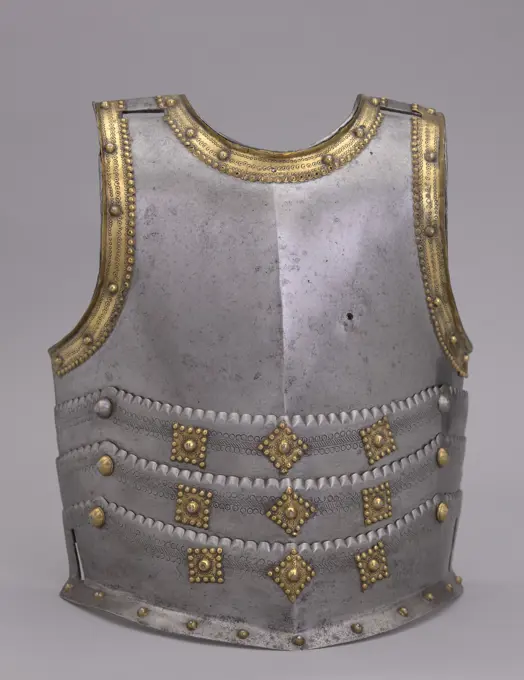
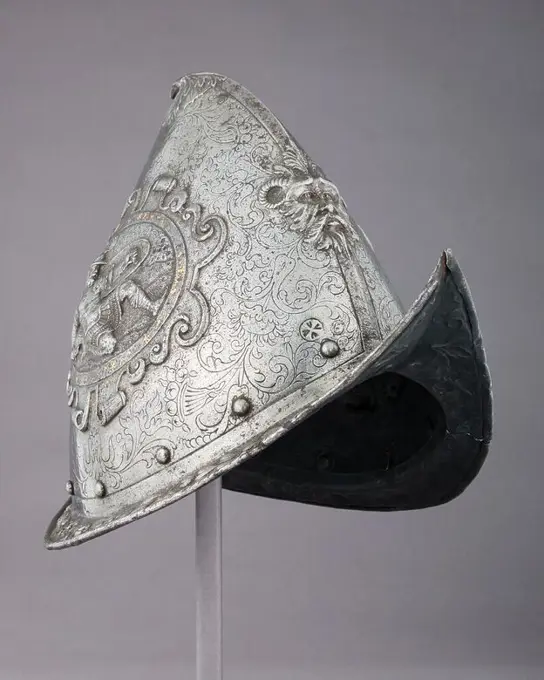
Medieval Armor Helmets

A collection of ornate medieval helmets showcasing steel craftsmanship, featuring designs like burgonets and sallets, highlighting historical and artistic significance.

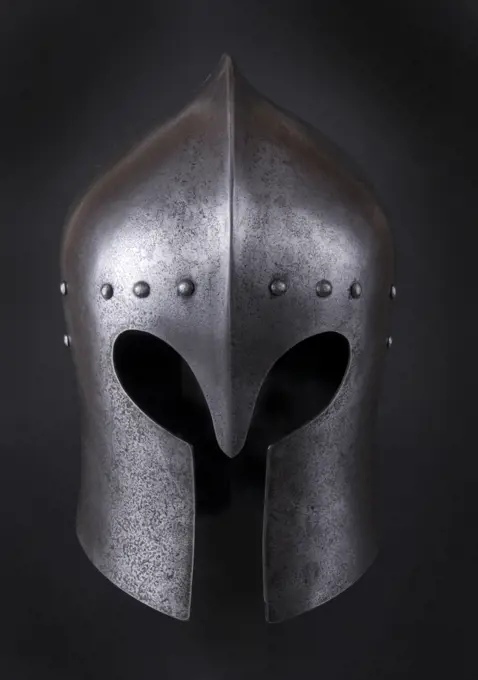
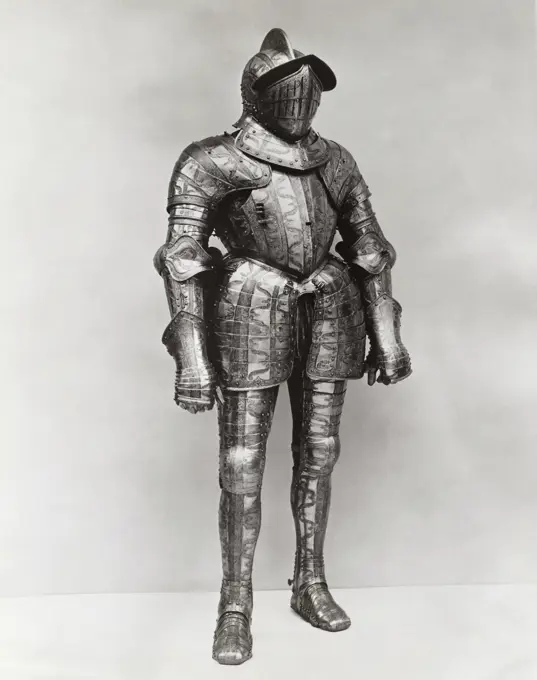
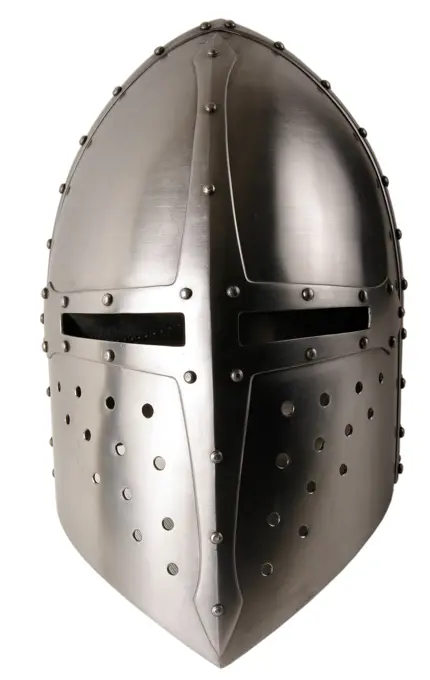
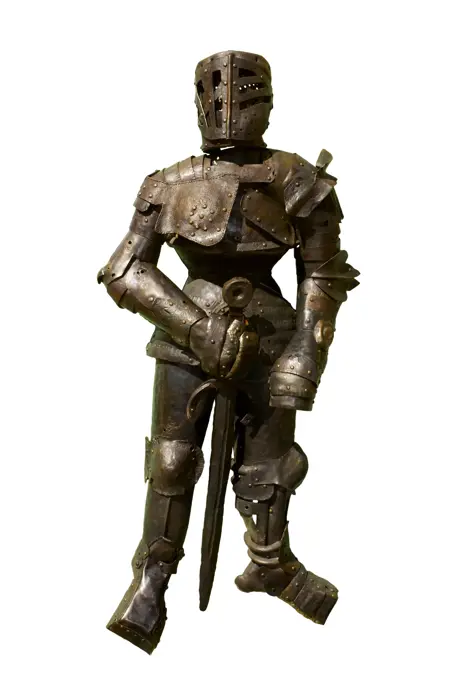
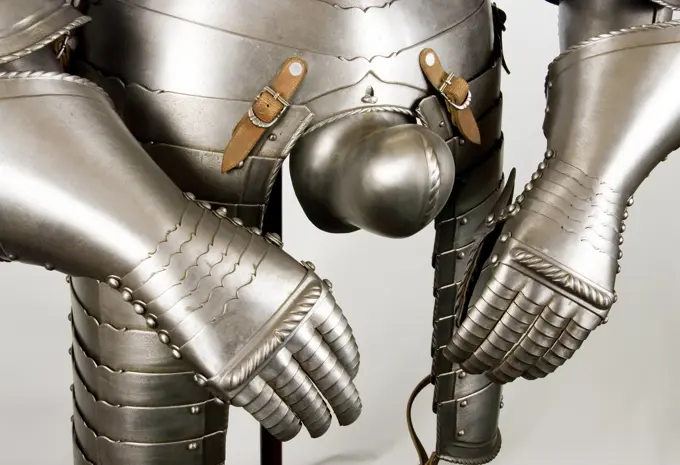
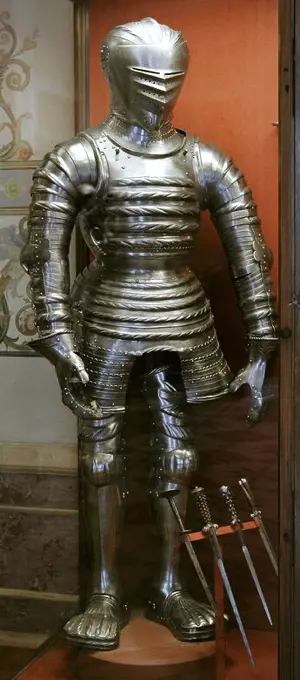
Armour Armour of the medieval knight. Metal protection of the soldier against the weapon of the opponent Copyright: xZoonar.com/ValeryxxSibrikovx 2416552
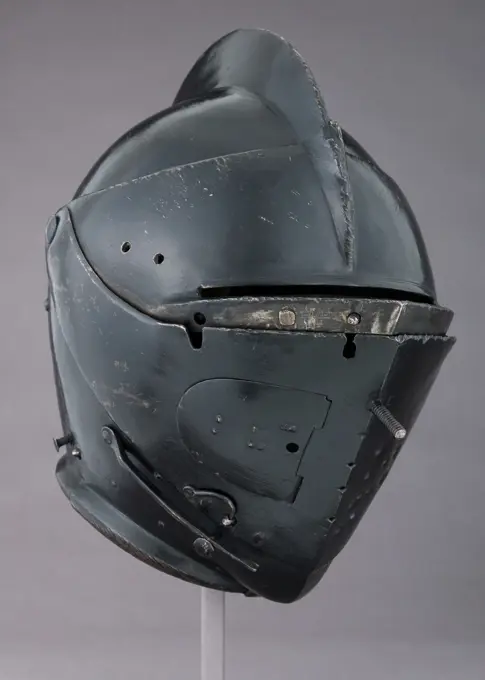
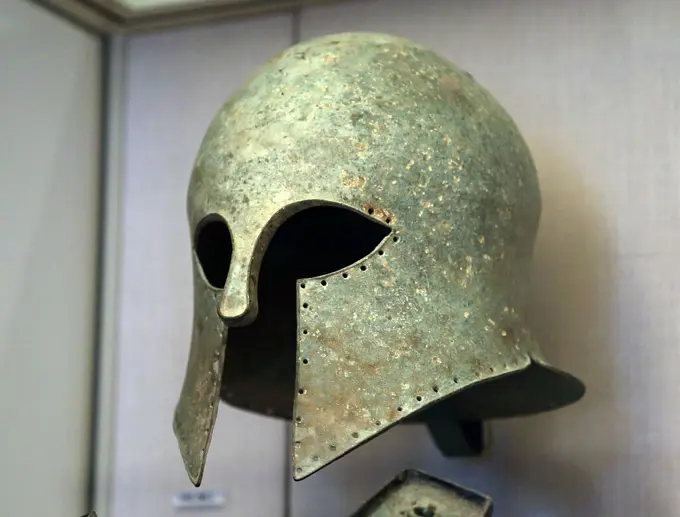
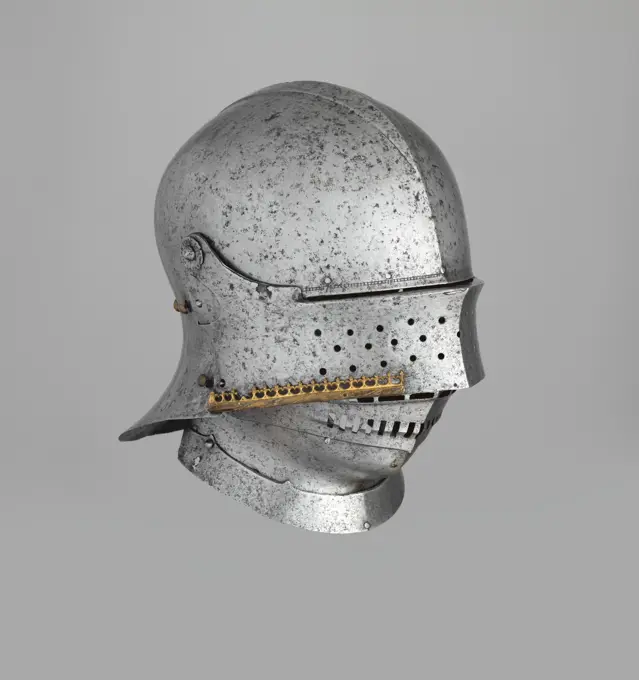
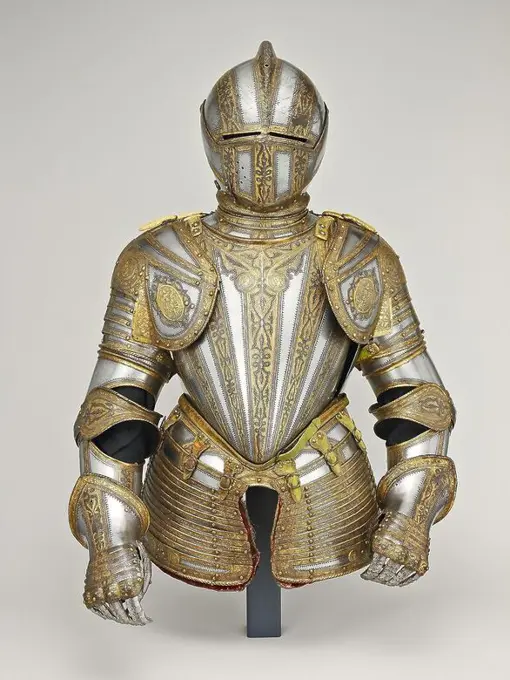
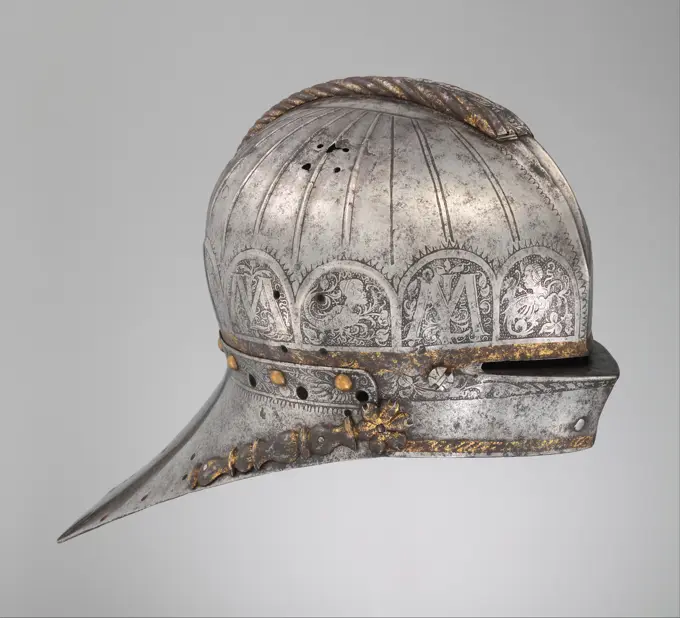
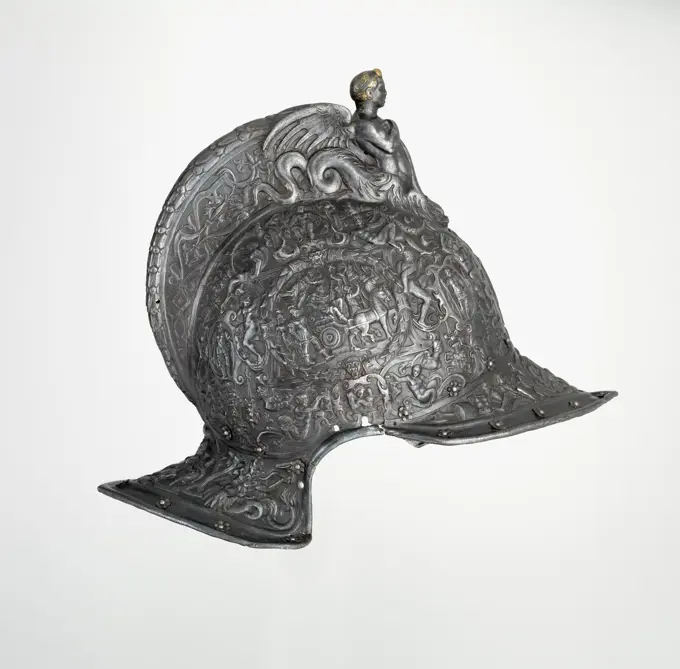
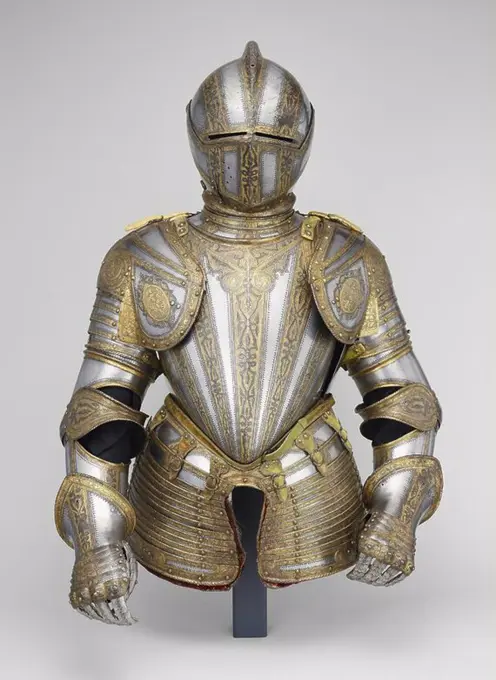
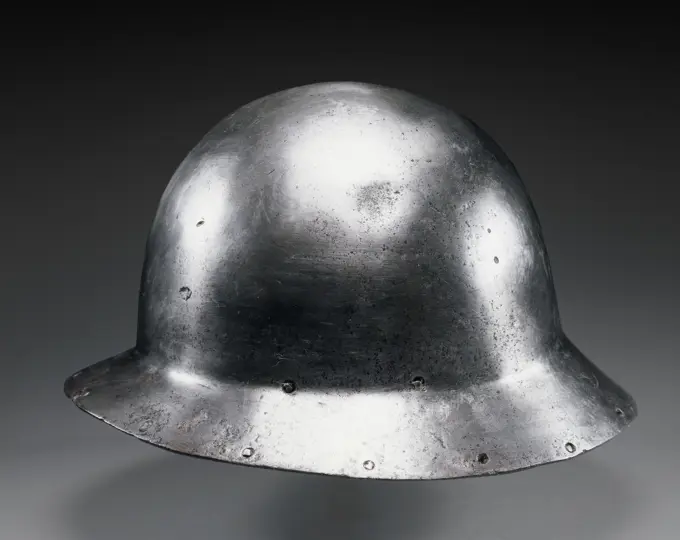
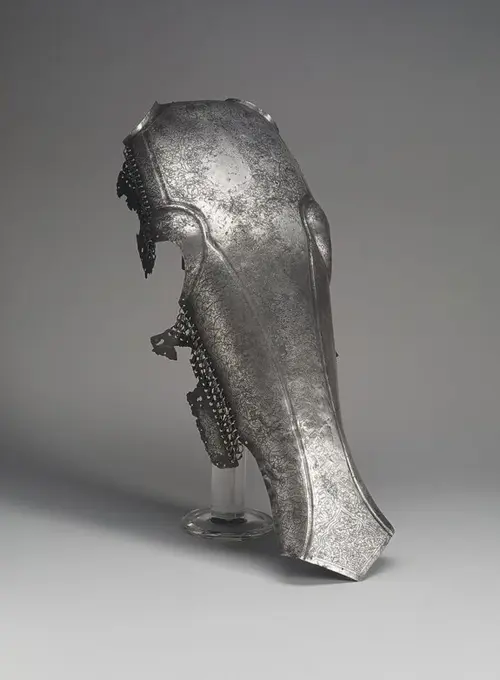
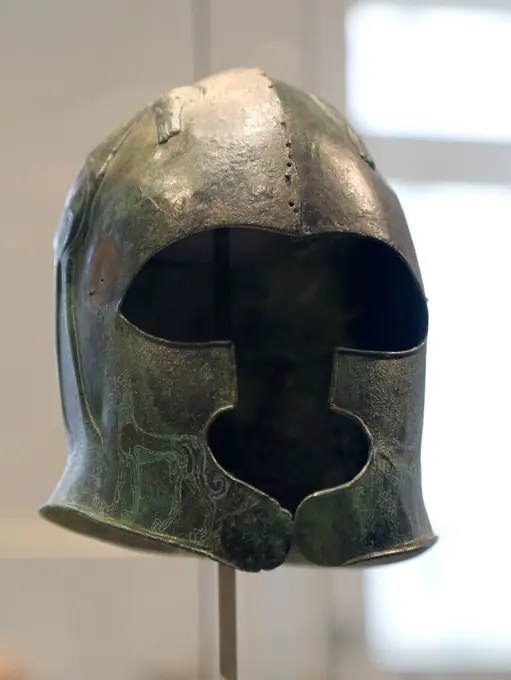
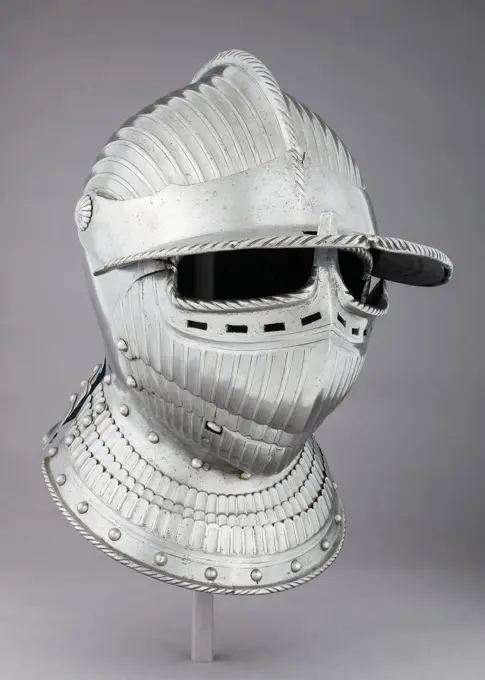
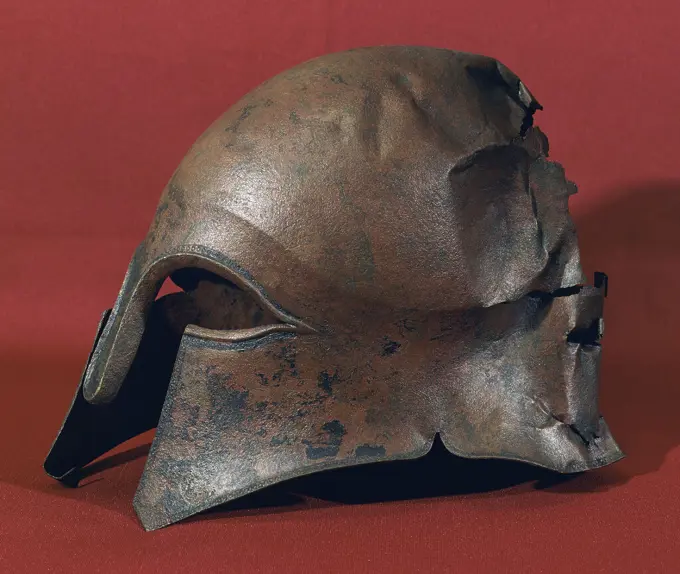
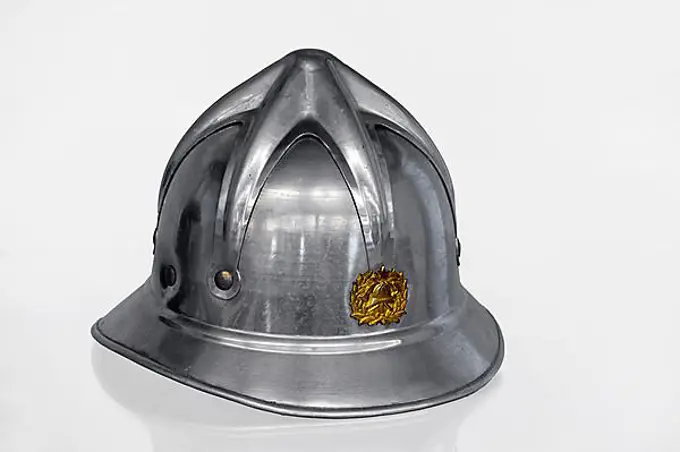
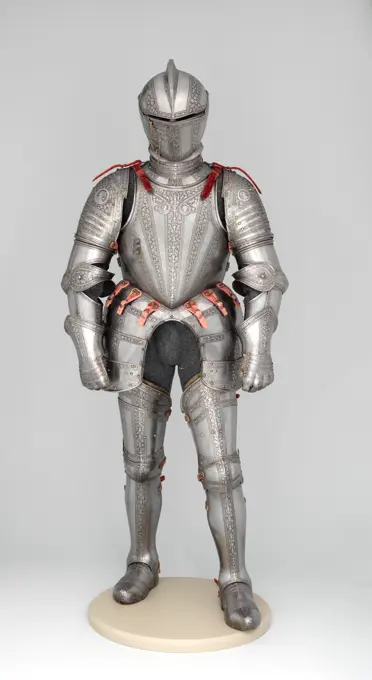
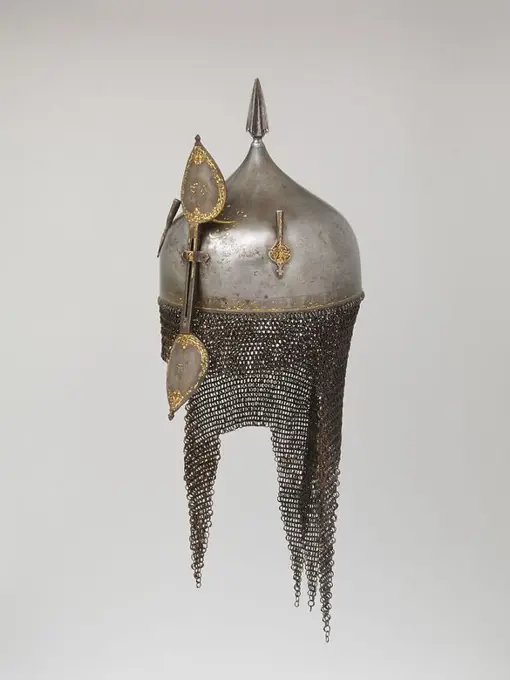
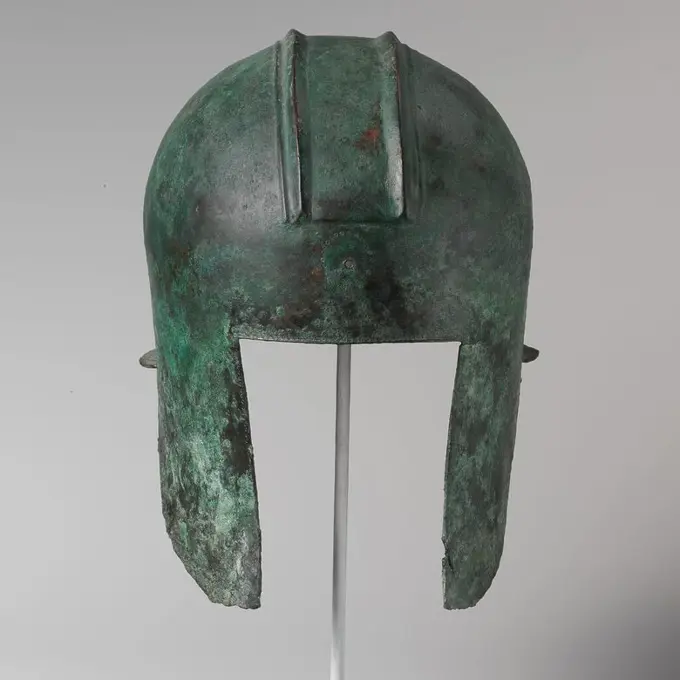
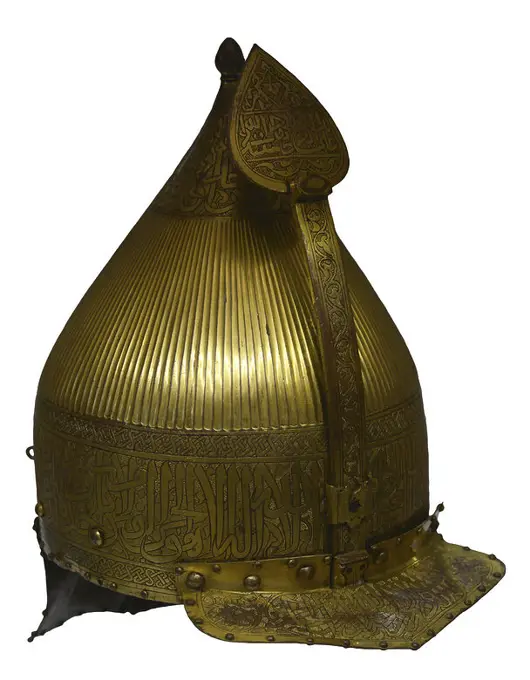
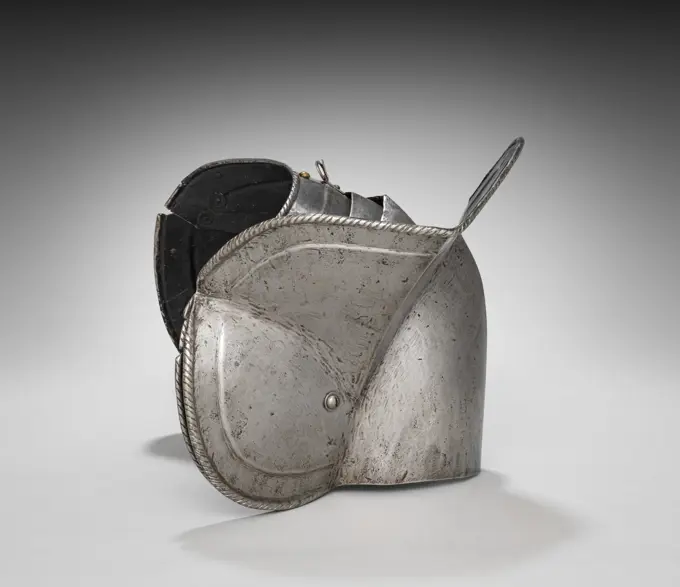
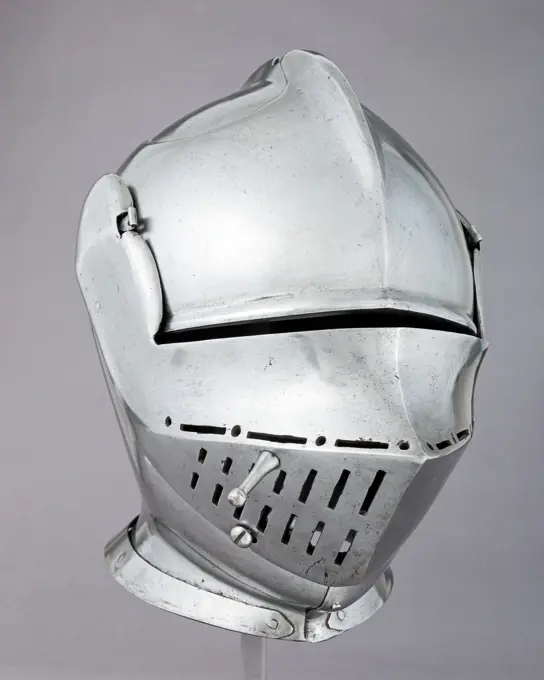
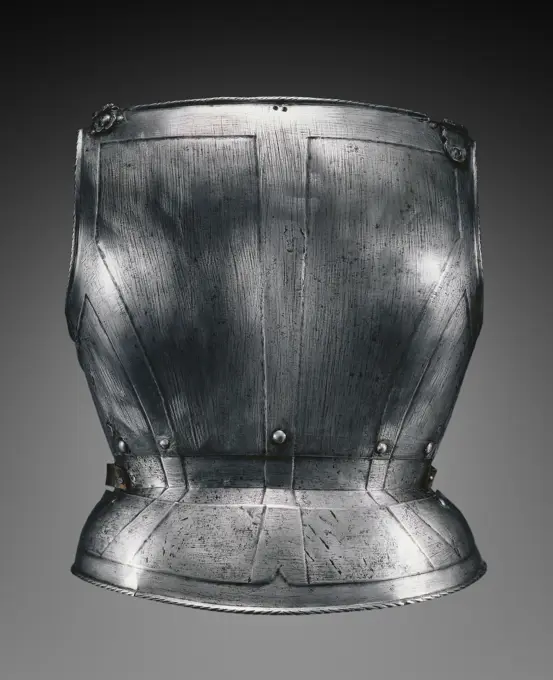
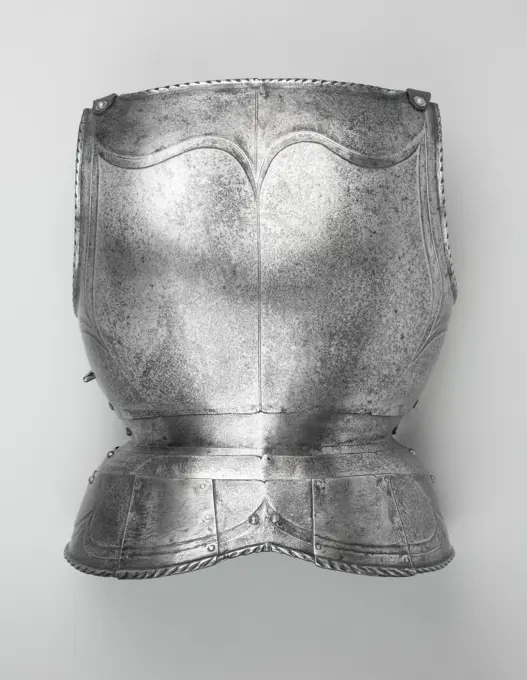
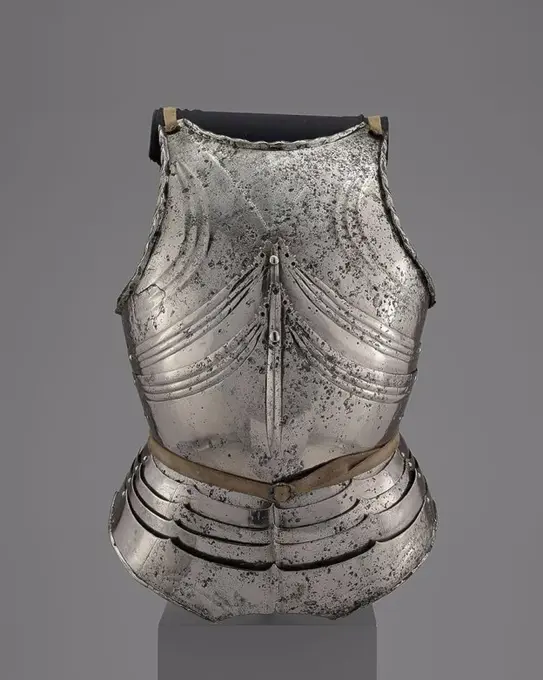
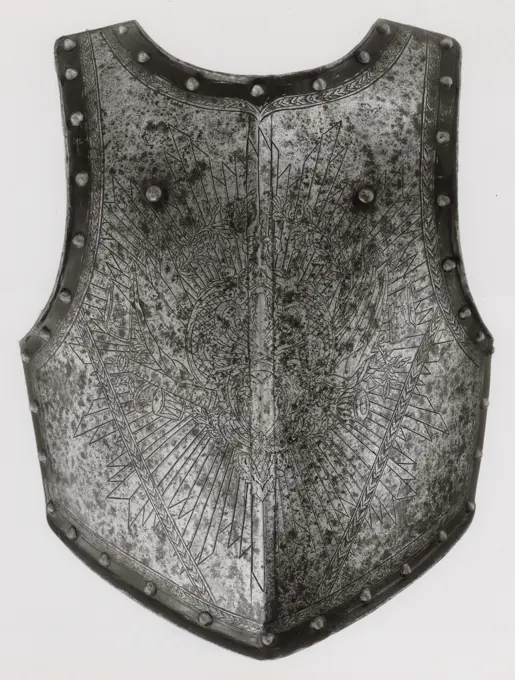
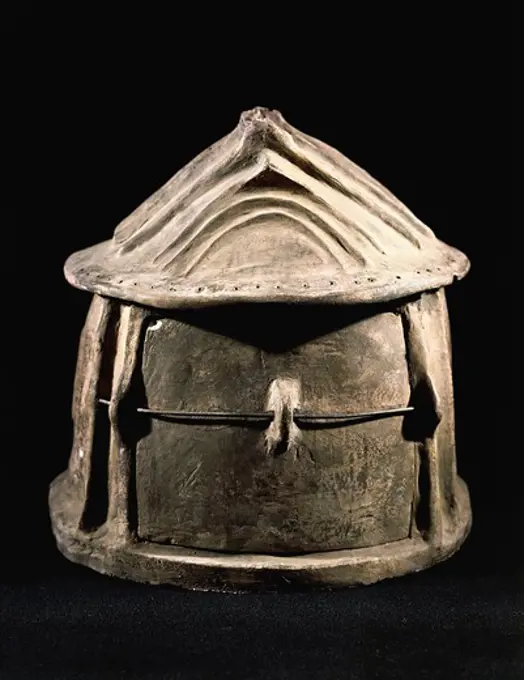
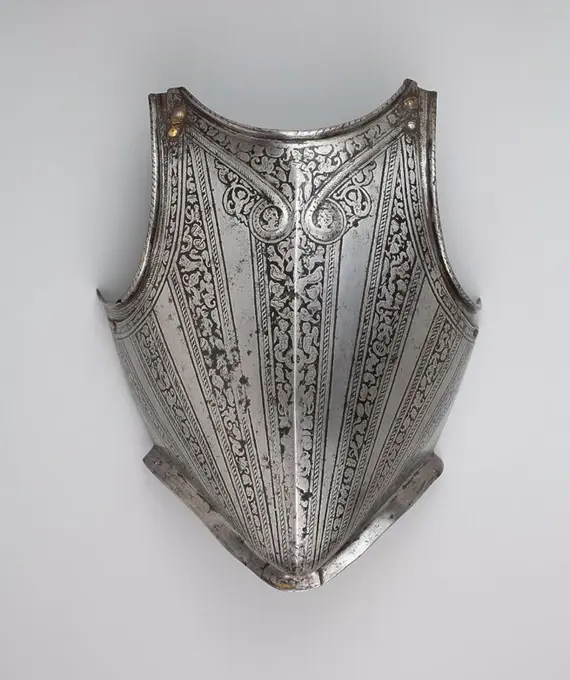
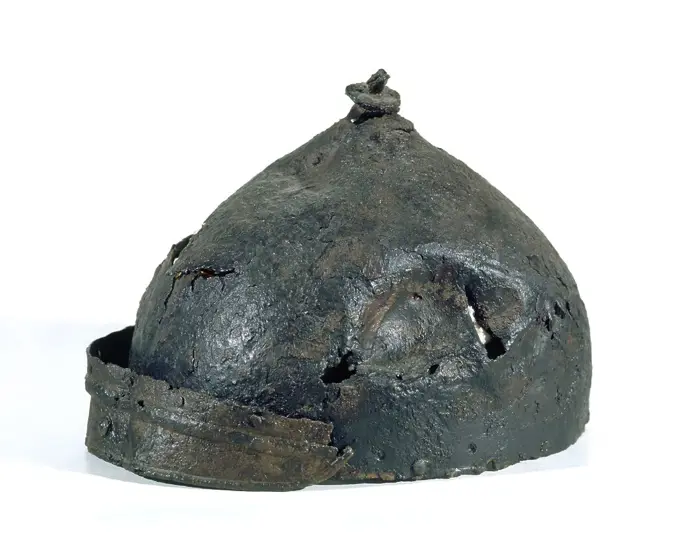
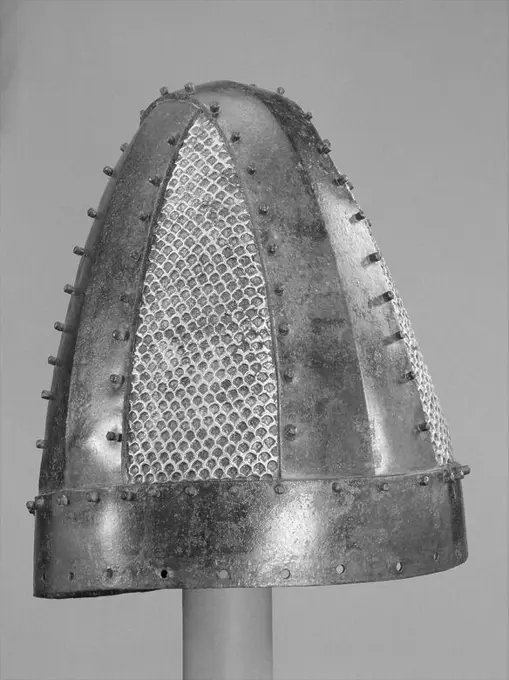
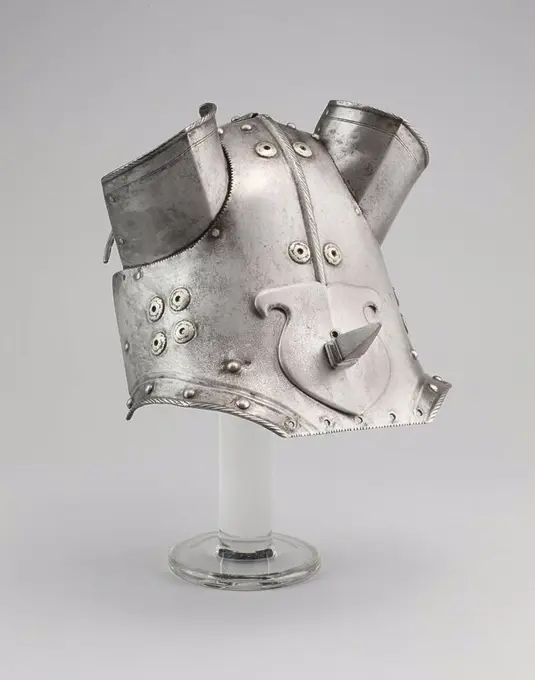
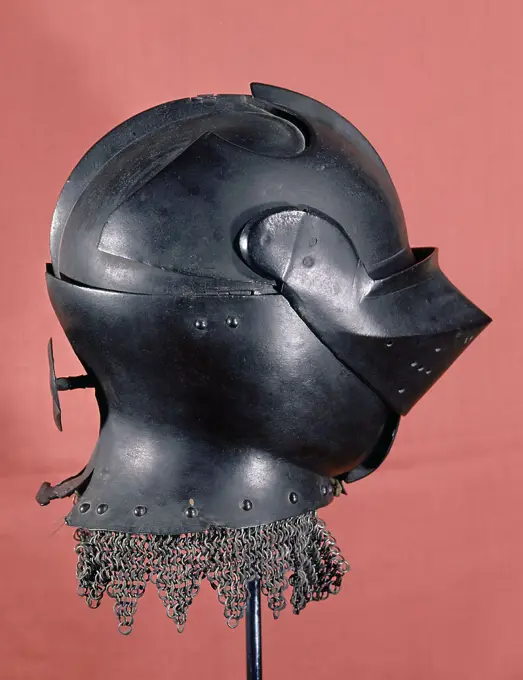
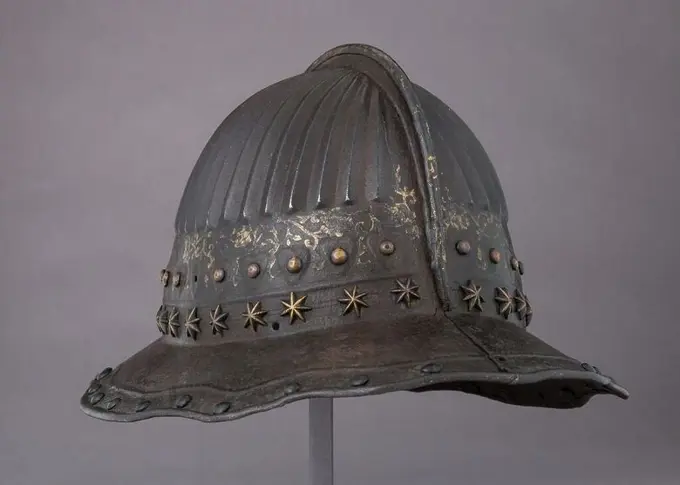
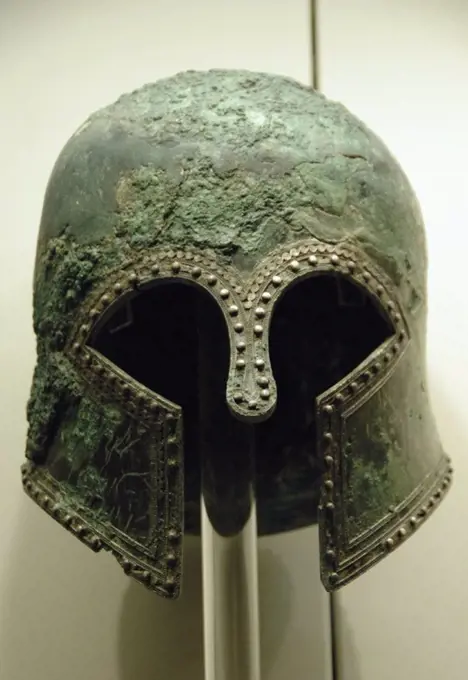
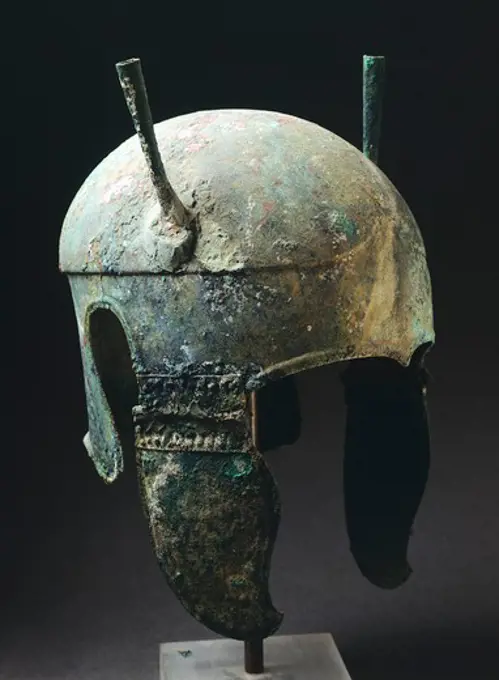
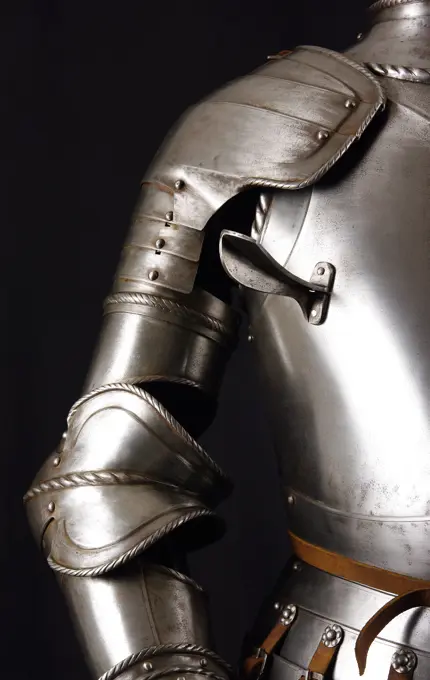
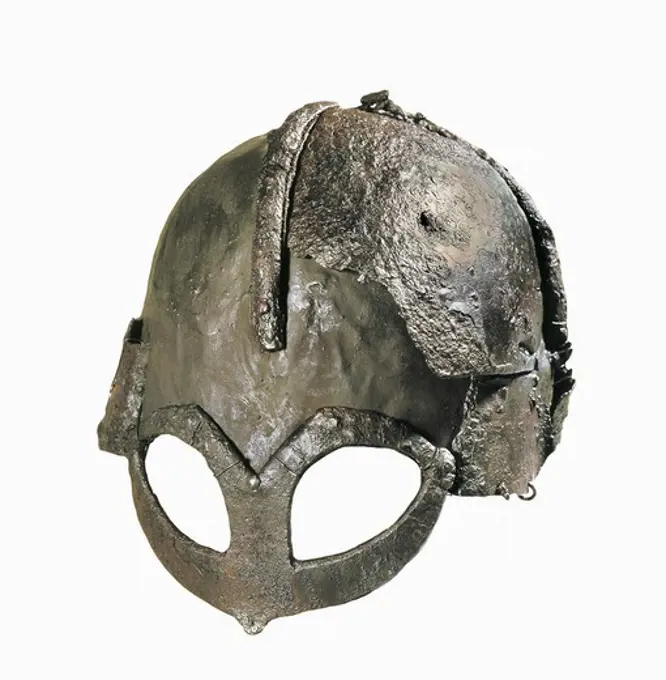
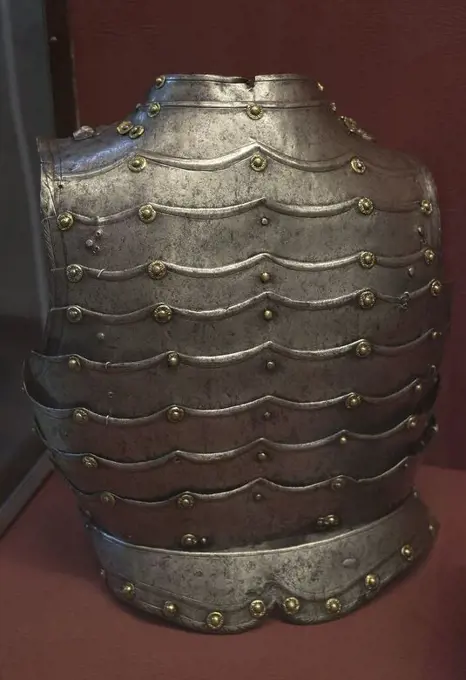
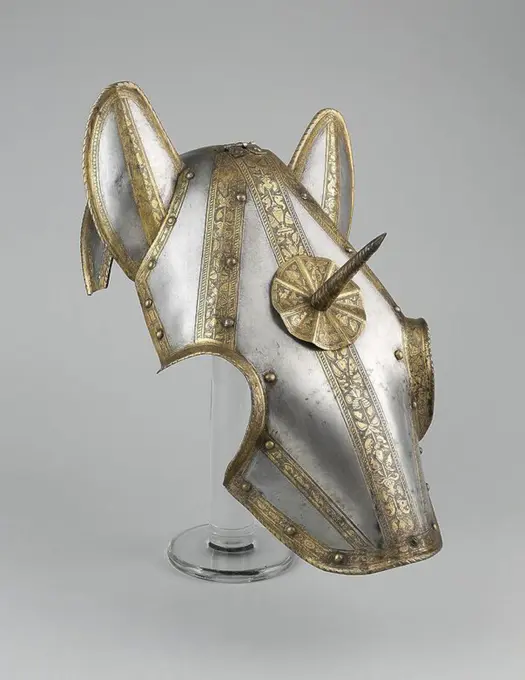
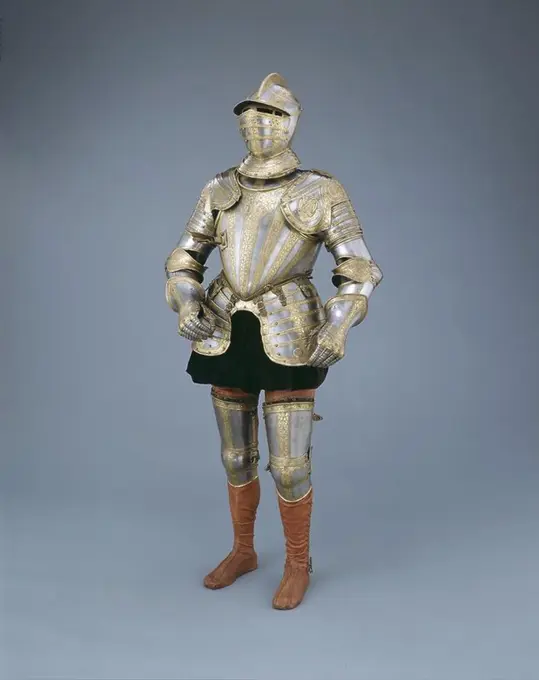
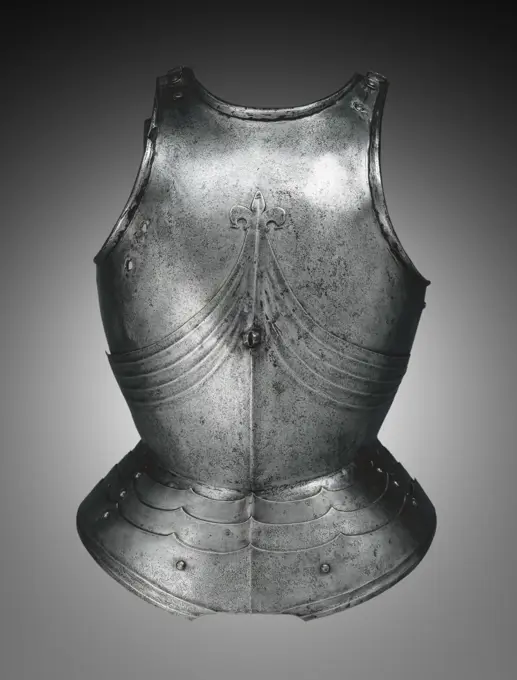
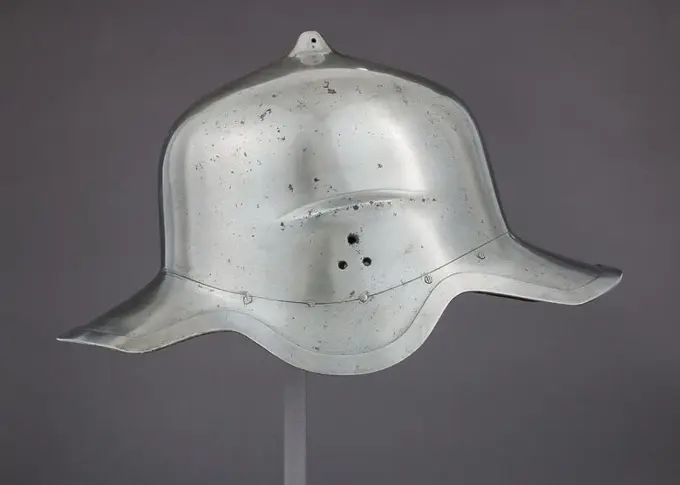
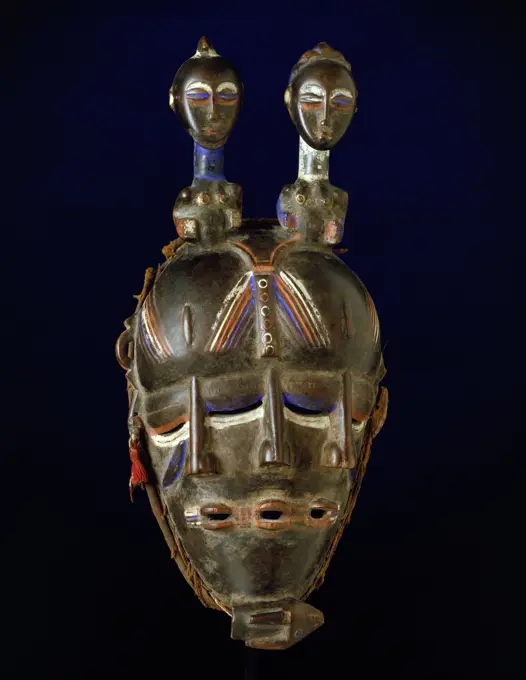
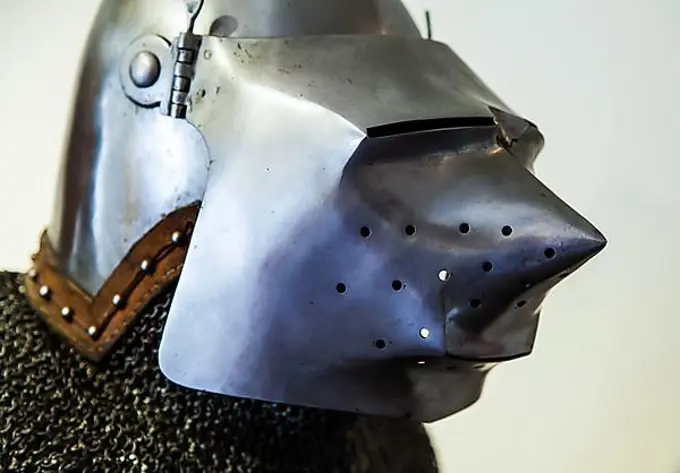
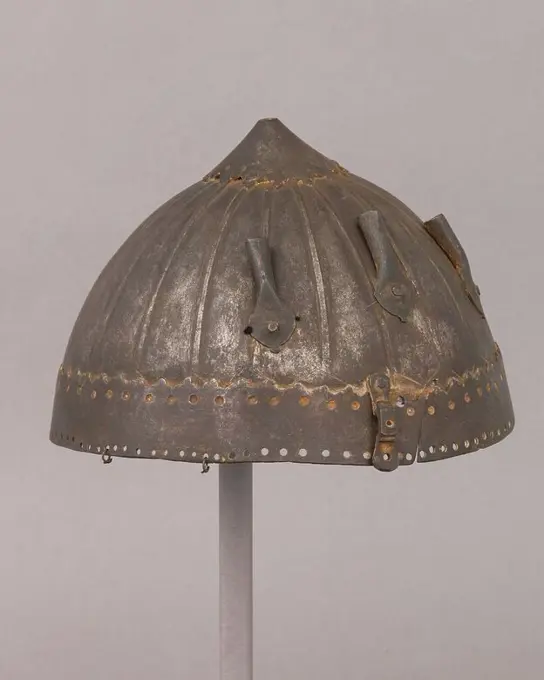
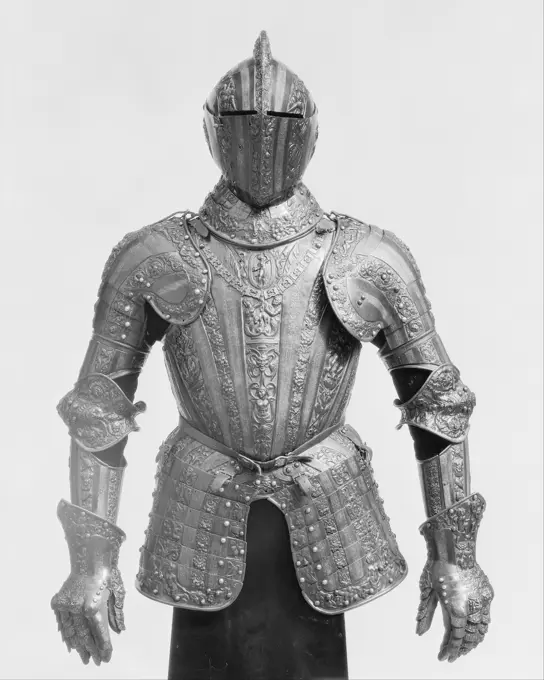
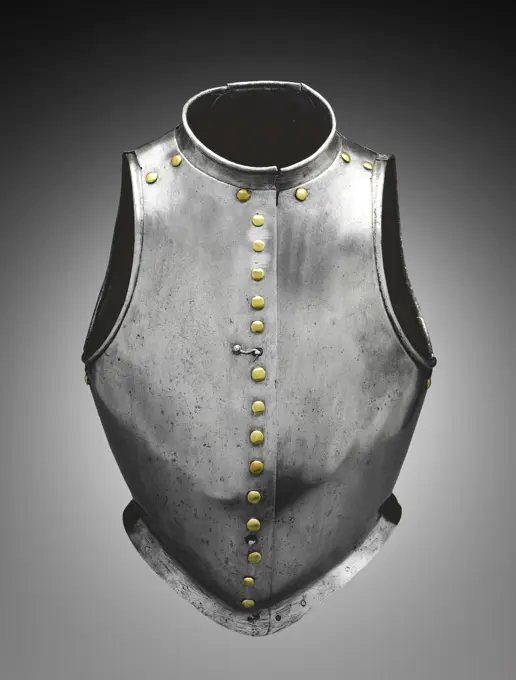
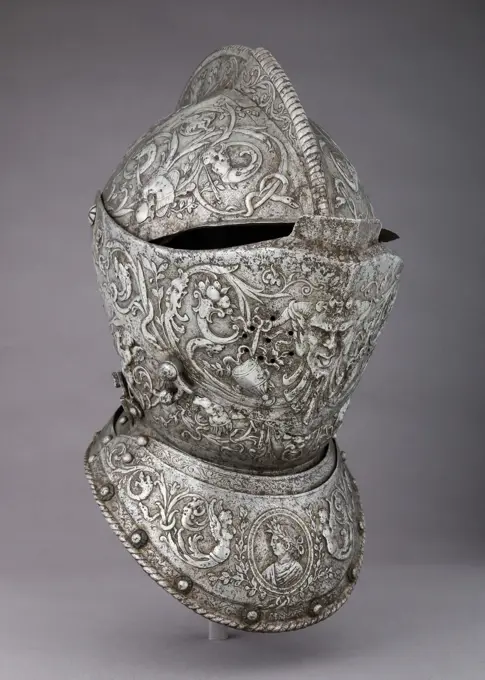
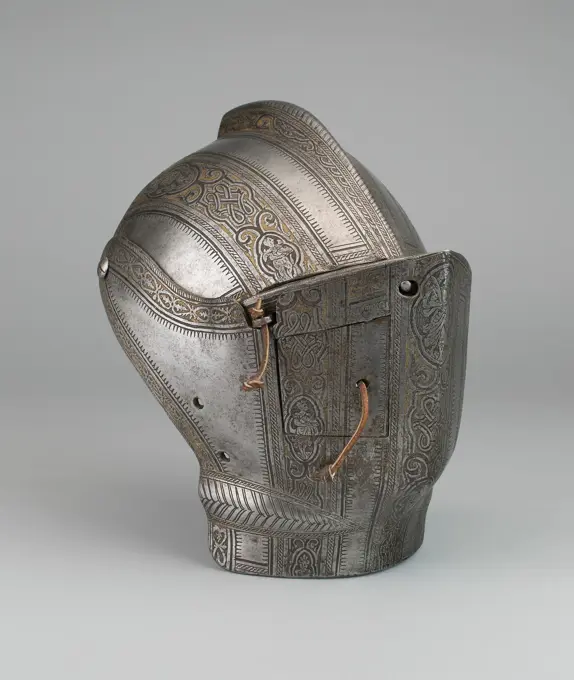
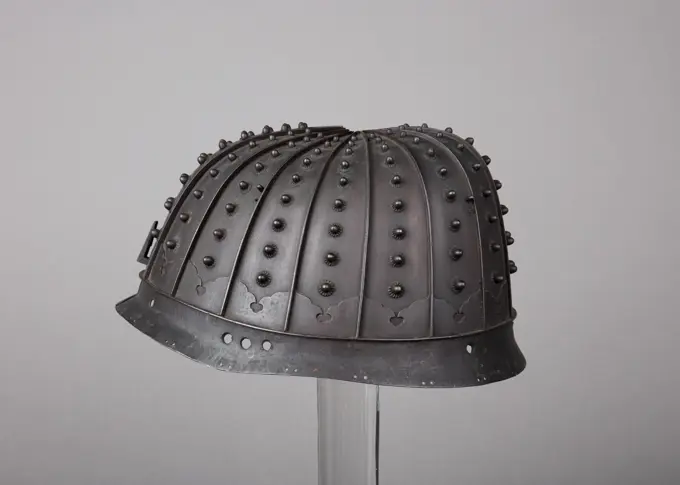
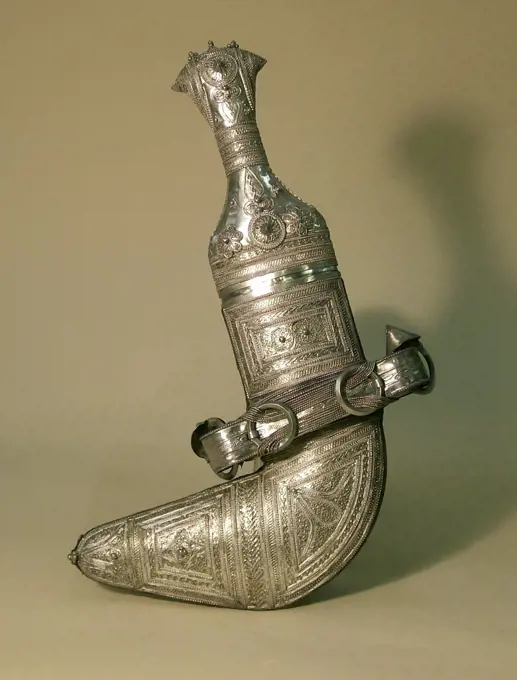
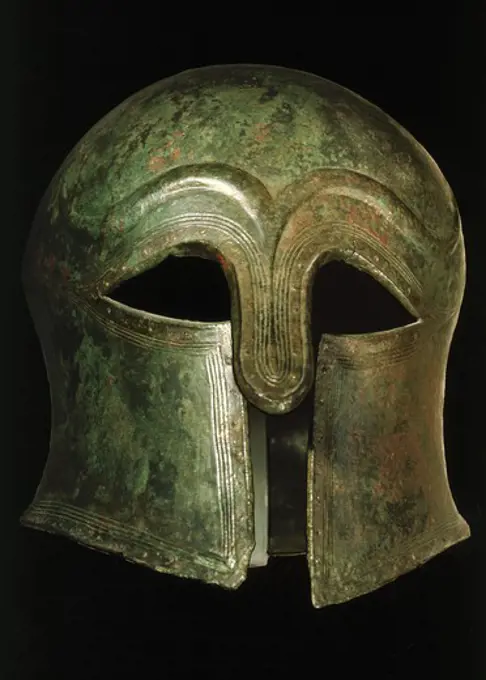
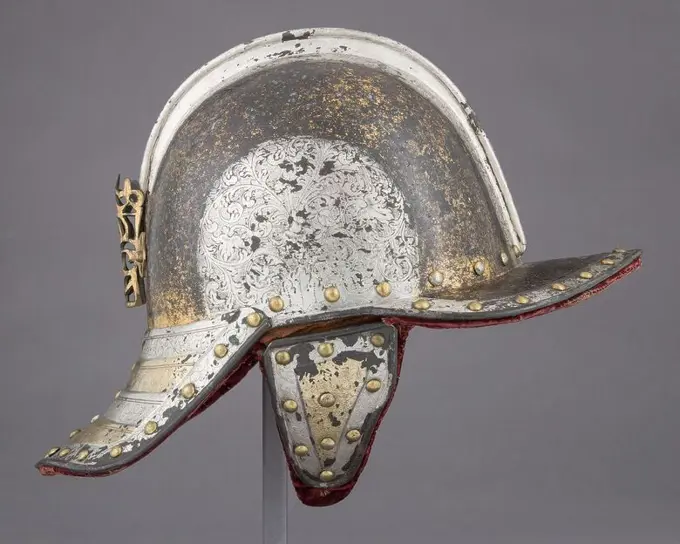
Lobster-Tail Burgonet for a Harquebusier. Culture: Dutch or British. Dimensions: H. 11 in. (27.9 cm); W. 8 in. (20.3 cm); D. 13 in. (33 cm); Wt. 2 lb. 9 oz. (1154 g). Date: ca. 1610-20.The rich decoration of this helmet is exceptional, covering it completely with wide bands of chiseled and punched floral designs alternating in silver and gold. Although it was once believed that its neck plate, cheekpieces, plume holder and lining were later restorations, futher study has confirmed that they are genuine and original to the helmet. In its quality and elaborate ornament, this helmet is similar to a Dutch armor in the Tower of London, which was made in 1612 for Henry, Prince of Wales. Museum: Metropolitan Museum of Art, New York, USA.Armet ca. 1550 German. Armet. German. ca. 1550. Steel. HelmetsBronze helmet of Corinthian type. Greek. Late 6th century B.C. Metropolitan Museum of Art. Ny. USA.Sallet of Emperor Maximilian I (1459-1519) ca. 1490-95 Attributed to Lorenz Helmschmid German This sallet was a new type probably invented by Lorenz Helmschmid for Emperor Maximilian I (1459-1519) around the time he became head of the Holy Roman Empire in 1493. Its construction, with the falling buffe (chin defense) pivoting on the same points as the visor, anticipates the development of close helmets around 1510. The gilt fleur-de-lis trim, which originally bordered the entire helmet, is a typical late Gothic decoration on armors of high quality and is found on several that belonged to Maximilian and other members of the Habsburg court.. Sallet of Emperor Maximilian I (1459-1519). German, Augsburg. ca. 1490-95. Steel, copper alloy, gold. Augsburg. HelmetsGorget and Close Helmet for Foot Tourney at the Barriers. Italian, Milan. Date: 1575-1580. Dimensions: H. 30.5 cm (12 in.) Weight: Gorget: 2 lbs. 4 oz.Helmet: 9 lbs. 11 oz. Steel with gilding, brass. Origin: Milan. Museum: The Chicago Art Institute, Chicago, USA.Jousting Sallet (Rennhut) Made for Louis II (1506-1526), King of Hungary and Bohemia ca. 1525 Attributed to Kolman Helmschmid German The helmet was intended for the Scharfrennen, a joust fought by two mounted contestants armed with sharp lances. The conjoined initials L and M, for Louis II of Hungary (1506-1526) and his wife, Maria of Austria, are featured prominently in the decoration. Discovered in the collection of the former imperial arsenal in Istanbul, the helmet was presumably captured by the Turks when they overran much of eastern Europe between 1526 and 1529. Louis II was killed in the battle of Mohács on August 29, 1526, while defending Hungary against the Turkish invasion.. Jousting Sallet (Rennhut) Made for Louis II (1506-1526), King of Hungary and Bohemia 23201Burgonet ca. 1550-55 Attributed to Desiderius Helmschmid German In the mid-sixteenth century, armor covered with embossed figures and ornament in the Mannerist style was the specialty of Italian armorers such as the Negroli family of Milan and also of a few workshops in France and Flanders. This beautifully scuptural helmet is a rare example of embossed armor made by German craftsmen. It is very similar in design and workmanship to a parade armor made in 1549-50 by Helmschmid and Sigman for the future Philip II of Spain (1527-1598).Faint traces of engraved designs and damascening in gold and silver indicate that originally, this helmet was more lavishly decorated and colorful in appearance.. Burgonet. German, Augsburg. ca. 1550-55. Steel. Augsburg. HelmetsClose Helmet Made 1500-1525 Milan. Steel . Domenico dei Barini, called NegroliGarniture for Field and Foot Tourney at the Barriers. Northern Italian, Milan. Date: 1560-1590. Dimensions: H. 96.5 cm (38 in.)Wt: 38 lb. 13 oz. Steel with gilding, brass, leather, velvet weave, and lace. Origin: Milan. Museum: The Chicago Art Institute, Chicago, USA.Kettle Hat (War Hat), c. 1460. Italy, 15th century. Steel; overall: 30.3 x 25.9 x 17.5 cm (11 15/16 x 10 3/16 x 6 7/8 in.). Open helmets like this one were used by medieval infantries. The helmet weighs 12-1/2 pounds. This unusual weight was required for siege purposessuch helmets were worn by the men who attempted to scale the walls of an armed town. The rivet holes along the ridge were for the attachment of the liner.Shaffron. Turkish. Date: 1500-1600. Dimensions: . Steel and iron wire. Origin: Turkey. Museum: The Chicago Art Institute, Chicago, USA.Bronze helmet. Cretan, late 7th century B.C. Greece. The Met. NY, USA.Burgonet ca. 1540 German. Burgonet 27162Iron helmet of the medieval knight. Very heavy headdressCASCO CORINTIO HALLADO EN HUELVA EN 1930 - SIGLO VI AC ARTE GRIEGO-FENICIO. Location: ACADEMIA DE LA HISTORIA-COLECCION, MADRID.Chain mail and helmet, computer artwork.Kettle hat. Helmet, boiler hat, iron, black. The helmet is composed of one part with a narrow comb on top of it. The helmet has a high spherical top and a wide valve that is slightly curved at the front. Two horizontal sight holes are visible in the valve. There are various holes throughout the valve. At the inside is locked rocks.Tuscany, Italy. Detail of an original Medieval armourArmour Armour of the medieval knight. Metal protection of the soldier against the weapon of the opponent Copyright: xZoonar.com/ValeryxxSibrikovx 5722315Close Helmet Made 1600-1630 Dutch. During its conflict with the Spanish Habsburgs during the first half of the 17th century, the Netherlands experienced a flowering of the armorís art. Once part of a heavy cavalry armor, this helmet with rounded forms and crisp lines exemplifies the best of Dutch workmanship.. Steel and gilding .Przeszo Przyszoci unknownHelmet ca. 1560 Turkish, probably Istanbul This helmet was forged from watered steel and decorated in gold with arabesques and Koranic inscriptions. It is very similar to one now in the Kunsthistorisches Museum, Vienna, made about 1560 for a grand vizier of the Ottoman sultan Süleyman the Magnificent (reigned 1520-66). Both helmets presumably were made in one of the imperial workshops, possibly in Istanbul. Although this helmet is a practical military object, judging from its fine materials and ornamentation, it must have been created primarily as part of a parade armor and as a symbol of rank.. Helmet. Turkish, probably Istanbul. ca. 1560. Steel, iron, gold, silver, copper alloy. probably Istanbul. HelmetsMorion-Cabasset. Culture: Italian. Dimensions: H. 10 1/2 in. (26.7 cm); W. 8 3/4 in. (22.2 cm); D. 14 1/4 in. (36.2 cm); Wt. 3 lb. (1361 g). Date: ca. 1575. Museum: Metropolitan Museum of Art, New York, USA.Rüstung Armour of the medieval knight. Metal protection of the soldier against the weapon of the opponent Copyright: xZoonar.com/ValeryxxSibrikovx 2643649Yugoslav Spider firefighter's helmet, "Feuer und Flamme - Die Feuerwehr von 1850 bis heute", an exhibition of 150 years of Lauf Fire Department, Lauf Industrial Museum, Lauf an der Pegnitz, Middle Franconia, Bavaria, Germany, EuropeSallet ca. 1440-50 Italian. Sallet 27120Helmet (Khula Khud). Culture: Persian, Qajar. Dimensions: H. including mail 27 in. (68.6 cm); H. including nasal 16 1/4 in. (41.3 cm); H. excluding mail and nasal 11 in. (27.9 cm); Diam. 7 1/2 in. (19.1 cm); Wt. 3 lbs. 11 oz. (1786 g). Date: 19th century. Museum: Metropolitan Museum of Art, New York, USA.Armor for Field and Tilt ca. 1550-75 Italian This armor garniture comes from the armory of the Dos Aguas family in Valencia, Spain. The garniture is unusually large, containing pieces for use in battle and for the tilt in both the Italian and German fashions. The tilt was a tournament fought on horseback between two opponents armed with lances and separated by a lengthwise barrier.The armor as mounted is equipped with a helmet and vambraces (arm defenses) for the tournament. The buffe (chin defense), second breastplate (acc. no. 27.159.2), and manifer (reinforced left gauntlet) (27.159.6) would have been added to make the armor ready for exchange pieces for different forms of the tournament. For the German tilt, the trellised targe (shield) (27.159.7), small elbow defense (27.159.5), and small stomach defense (27.159.3) were added. For the Italian tilt, these elements were replaced by the form-fitting reinforce covering the left half of the torso and left shoulder (mezzo sovrapetto) (2Helmet. Culture: Indian, Deccan, possibly Golconda. Dimensions: H. including mail 24 in. (61 cm); H. including nasal 13 1/4 in. (33.7 cm); H. excluding mail and nasal 9 in. (22.9 cm); W. 9 in. (22.9 cm); D. 11 1/4 in. (28.6 cm); Wt. 3 lb. 12 oz. (1701 g). Date: 17th-18th century.The helmet is decorated with Koranic inscriptions, including (Koran 61:13), "Help from Allah and a speedy victory." In the nineteenth century, it belonged to Aldolphe Goupil, father-in-law of the painter Jean-Leon Gérôme (1824-1904). It appears in Gérôme's 1869 painting Un Marchand d'armes au Caire. Museum: Metropolitan Museum of Art, New York, USA.Bronze helmet of Illyrian type. Culture: Greek. Dimensions: H. 10 1/2 in. (26.7 cm)Width: 7 3/4 in. (19.7 cm)Depth: 9 1/2 in. (24.1 cm). Date: early 5th century B.C..The borders of the helmet around the face are embellished with lightly traced circles. Museum: Metropolitan Museum of Art, New York, USA.Iron helmet of the medieval knight. Very heavy headdressBreastplate of a Harquebusiers harness for a young man. Breastplate of a Harquebusiers harness for a young man. Probably a Dutch harness with a stadfront background. Typical Dutch elements are the decorated rivets of the swivel hooks and the flattened surface of other rivets, as well as the 'striped' edges of the neck and armholes. The brace-shaped lines on the breastplate and the light kink in the middle of the collar are also characteristics that can often be seen on Dutch harnesses. The rosette-shaped decoration surrounding the rivets still shows traces of gildings in a number of places. No remains of black paint are visible. Unclear or and when the paint is removed. Such harnesses were usually black in the seventeenth century. This happened by heating or by applying a black paint layer. Collar is missing.Iron helmet Iron helmet of the medieval knight. Very heavy headdress Copyright: xZoonar.com/ValeryxxSibrikovx 2454310Close-up of an English Nobleman's armor suit, 16th CenturyTurkish ceremonial helmet. Gilded bronze. Provenance unknown. 16th-17th centuries. National Archaeological Museum. Sofia. Bulgaria.Pauldron (proper left) and Grandguard, c. 1560-1580. South Germany, 16th century. Steel, leather straps, brass rivets; part 1: 28.5 x 27.5 cm (11 1/4 x 10 13/16 in.); part 2: 29 x 29.2 cm (11 7/16 x 11 1/2 in.). This armor was developed for the joust--a sporting combat between two mounted contestants. Although all of the elements of this armor date from the same period, they are not all from the same suit. This armor is thus called "composed." It also shows the asymmetry of jousting armor. The participants rode along a wall-like barrier known as a "tilt" with their left sides facing one another. Consequently, armor on that side of the body had to be thicker. Note the large plate (grandguard) over the left shoulder for extra protection. Also, the breathing holes in the helmet were placed on the right side (farthest from an opponent's lance) to avoid injuries from splinters. The bracket attached to the right breastplate is called the lance-rest, a shock-absorbing support designed to accArmet ca. 1510-15 possibly British or Flemish Developed in Italy as a close fitting and highly protective cavalry helmet, armets were also made in England and Flanders following Italian models.. Armet 22224Backplate, mid-1500s. Germany, Landshut, mid-16th century. Steel; overall: 41.3 x 35.9 x 17.4 cm (16 1/4 x 14 1/8 x 6 7/8 in.).Ear Piece of a Helmet, 1500s. Germany, 16th century. Steel, brass headed rivets; overall: 20 x 14 cm (7 7/8 x 5 1/2 in.).Backplate with Fauld 1525-1575 Southern Germany. Steel .Comb Morion ca. 1580-90 German, possibly Brunswick This morion matches a breastplate in the Deutsches Historisches Museum, Berlin, the deeply pointed waistline of which suggests a date for both pieces about 1580-90. The breastplate copies in steel a civilian doublet of textile, complete with buttons down the center. The decoration of raised bands outlined by rows of punched circles can thus be interpreted as an imitation of the strips of metallic braids applied over the seams of a textile costume. The high comb, deep V-shaped brim, and prominent use of decorative brass washers evoke comparisons with northern German armor of the so-called Brunswick school.. Comb Morion. German, possibly Brunswick. ca. 1580-90. Steel, brass, leather. possibly Brunswick, Lower Saxony. HelmetsCuirass (Breastplate and Backplate) in the Late Gothic Style. South German or Austrian. Date: 1475-1485. Dimensions: H. 60 cm (23 1/2 in.);Wt. 15.4 lb. Steel, brass, and leather. Origin: Germany. Museum: The Chicago Art Institute, Chicago, USA.Iron helmet Iron helmet of the medieval knight. Very heavy headdress Copyright: xZoonar.com/ValeryxxSibrikovx 2454149Full plate armour with sword on a white backgroundBreastplate 1670-1700 France. Steel, brass, and paint .Garniture for Field and Foot Tourney at the Barriers Made 1560-1590 Milan. In the 16th century, Italian armorers produced spectacular armor garnitures for noblemen, professional officers, and bodyguards in the service of princely courts. An armor garniture consisted of many matching, interchangeable pieces that could be added or removed from basic field armor to make it suitable for different occasions. Like jousting armor, this armor for foot tourneys at the barriersóa sporting event in which knights on foot approached each other on opposite sides of a barrieróis quite specialized. It includes a close helmet that locked onto and rotated on the gorget (collar) and asymmetrical pauldrons (shoulder defenses) that provided maneuverability and protection from thrusting across the barrier. The blemish on the helmet of this armor, just above the eye slit, is the result of a glancing blow. This armor, embellished with gilded radiating bands contrasted with steel bands, as well as the Three-QuArmour Armour of the medieval knight. Metal protection of the soldier against the weapon of the opponent Copyright: xZoonar.com/ValeryxxSibrikovx 5722331Etruscan civilization, Clay cinerary urn, From Albani Hills, Latium RegionGarniture for Field and Foot Tourney at the Barriers Made 1560-1580 Milan. Chivalryówith its connotation of the knightly idealówas intimately connected with the horse (cheval in French). A knight took care to protect his mount, on which he was dependent for the mobility and speed required in both attack and retreat. In Roman times, some heavy cavalry used armor made of iron or bronze scales to protect their horses. From the twelth century on, knights covered their steeds in bands of iron mail (a network of interlocking rings). By the fifteenth century, full-plate armors were not uncommon. This shaffron, or headpiece, is etched in gilt bands with decoration on a finely dotted ground. Riveted between the eyes is an elongated conical spike, perhaps inspired by the horn of the mythical unicorn. A manifestation of great power and wealth, the shaffron has been valued for centuries as an object of beauty, not just as a tool of warfare and sport.. Steel with gilding, brass, and leather .Breastplate. Culture: German. Dimensions: H. 18 1/2 in. (46.8 cm); W. 14 1/2 in. (36.7 cm); D. 6 1/4 in. (16 cm); Wt. 6 lb. 4 oz. (2832 g). Date: ca. 1500-10.This simple but well-made breastplate for infantry use is remarkable for the technique of its ornamentation, the main plate being recessed, or sunken, rather than embossed with a design, and for the nature of the ornament, a large star that may be a pious reference to the star of Bethlehem, or perhaps a heraldic reference to the coat of arms of a family or city. The contours of the star are emphasized by engraved lines. No breastplate with a comparable decoration is known.The breastplate comprises a thick main plate, a moveable gusset plate at each armhole, and a fauld of four lames. Beneath the neck opening the upper plate is struck with a much abraded and now indistinct mark, which may have originally represented the letter "p" in Gothic script. The main plate is flanged outward and turned inward along the upper edge, to guardRüstung Armour of the medieval knight. Metal protection of the soldier against the weapon of the opponent Copyright: xZoonar.com/ValeryxxSibrikovx 2628242Armour Armour of the medieval knight. Metal protection of the soldier against the weapon of the opponent Copyright: xZoonar.com/ValeryxxSibrikovx 5596289Helmet circa 1350. similar to that of the Black Prince in Canterbury Cathedral. but with the Piéce de Renfort on the left side. from the book The British Army. 1868. Historical. digitally restored reproduction from a 19th-century originalArmor. Gauntlet. City Museum. Malmo Castle. Sweden.Roman Helmet Isolated illustration of a First Century Roman Helmet Copyright: xZoonar.com/PaulxFleetx 2427918Breastplate. Italian. Date: 1570-1600. Dimensions: Wt. 4 lb. 2 oz. Steel and brass. Origin: Italy. Museum: The Chicago Art Institute, Chicago, USA.CASCO IBERO HALLADO EN LA NECROPOLIS ILERGETE DE LA PEDRERA (LERIDA). Location: ARCHAEOLOGICAL MUSEUM. Lerida. SPAIN.Austrian helmet, Vienna Fire Brigade unknown labelHelmet. Culture: Mesopotamian or Iranian. Dimensions: H. 9 1/2 in. (24.1 cm); W. 7 3/4 in. (19.7 cm); D. 7 7/8 in. (20 cm); Wt. 3 lb. 10 oz. (1644.3 g). Date: 4th century.The helmet, originally lined with leather, consists of broad bands of bronze and iron plates covered witha thin layer of silver, stamped with a feather pattern. The warrior's head would originally have been obscured and protected by a web of metal links of mail that hung from the holes in the lower rim. Museum: Metropolitan Museum of Art, New York, USA.Armor of Sir James Scudamore (1558-1619) ca. 1595-96; restored and completed, 1915 Made under the direction of Jacob Halder British Sir James Scudamore (1558-1619) was a prominent Elizabethan soldier and courtier. Also an enthusiastic jouster, he was praised in Edmund Spensers Faerie Queene (published 1596) as an example of chivalry personified.This armor was part of a large garniture, which probably had exchange pieces to adapt it for cavalry, infantry, and possibly also tournament use. It was made in the royal workshops at Greenwich about 1595-96, perhaps in anticipation of Scudamores participation in the 1596 naval attack on Cadiz, Spain. Scudamores portrait, still in the possession of his descendants, shows him wearing this armor.The remains of this and the earlier Scudamore armor (Metropolitan Museum of Art, accession number 11.128.1)were found, badly damaged and incomplete, in 1909, in Holme Lacy, the ancestral home of the Scudamores. The armors were restored and completed in Demi Shaffron. German. Date: 1550-1600. Dimensions: . Steel, pewter, and leather. Origin: Germany. Museum: The Chicago Art Institute, Chicago, USA.Puffed ans slashed armour. Probably by Hans Rabeiler. 1510-1515. Innsbruck, Austrian. Daggers, 16th century. The Knights' Hall. The State Hermitage Museum. Saint Petersburg. Russia.ALMETE CON ALPARTAZ (CASCO). Location: PALACIO REAL-REAL ARMERIA DE MADRID. MADRID. SPANIEN.Tasset (2 of 2), c. 1540. Germany, 16th century. Steel; overall: 39.4 x 26.1 cm (15 1/2 x 10 1/4 in.).Pikeman's Pot. Culture: Dutch or Flemish, later modified in Japan. Dimensions: H. 8 1/2 in. (21.6 cm); W. 11 1/4 in. (28.6 cm); D. 14 3/4 in. (37.5 cm); Wt. 3 lb. 14 oz. (1769 g). Date: ca. 1610-20, later modified in Japan.The introduction of firearms into Japan in the sixteenth century resulted in the limited adoption of European helmets and breastplates, which provided more effective protection against gunfire than traditional Japanese armor. This finely made Dutch helmet, a type called a pot, was adapted for reuse in Japan during the mid- to late seventeenth century by the addition of a Japanese-style brow plate and lacquering of the interior and exterior surfaces. It was exhibited at the Metropolitan Museum in 1903 as part of Bashford Dean's private collection, which the Museum purchased in 1904. Museum: Metropolitan Museum of Art, New York, USA.Pointed Morion Made 1570-1590 Milan. Steel, brass, and leather .Bronze helmet of Corinthian style. 6th century b.c. Olympia Archaeological Museum. Ilia Province. Peloponnese region. Greece.Ritter Armour of the medieval knight. Metal protection of the soldier against the weapon of the opponent Copyright: xZoonar.com/ValeryxxSibrikovx 3126719Close-up of a colander hanging on a chainSamnite-type helmet, Italy. Ancient Greek civilization, Magna Graecia, 4th Century BC.Armour Armour of the medieval knight. Metal protection of the soldier against the weapon of the opponent Copyright: xZoonar.com/ValeryxxSibrikovx 2459411Armour Armour of the medieval knight. Metal protection of the soldier against the weapon of the opponent Copyright: xZoonar.com/ValeryxxSibrikovx 2474650Gjermundbu Viking Helm. 10th c. Decorative Arts. NORWAY. Oslo. University Museum of National Antiquities. Proc: NORWAY. BUSKERUD. Ringerike.Anime, articulated armour. Hungarian type. Italian, ca.1580. Back. Armoury. Grandmaster Palace. Valletta. Malta.Gorget Made 1620-1650 Germany. Light cavalrymen and officers on foot increasingly wore large gorgets in place of full breast and backplates. Often paired with a heavy buff-leather coat, these effectively protected the wearerís neck and heart from heavy sword cuts or thrusts. This well-preserved example retains its original blue-black finish and leather lining.. Steel, brass, gilding, and leather .Shaffron. Italian, Milan. Date: 1550-1600. Dimensions: H. 35.6 cm (14 in.). Steel with gilding. Origin: Italy. Museum: The Chicago Art Institute, Chicago, USA.Garniture for Field and Foot Tourney at the Barriers. Italian, Milan. Date: 1560-1580. Dimensions: H. 177.8 cm (70 in.). Steel with gilding, brass, and leather. Origin: Milan. Museum: The Chicago Art Institute, Chicago, USA.Gothic Breastplate , late 1400s. South Germany or Austria, Innsbruck, late 15th century. Steel; overall: 53.2 x 35.2 x 16.3 cm (20 15/16 x 13 7/8 x 6 7/16 in.). This elegantly constructed breastplate consists of two primary plates of steel fastened at center by a rivet. The lower plate is embellished with a border of embossed flutes that converge upward and terminate in a fleur-de-lys. The pair of rivet holes in the upper right breast accommodated a lance rest, now lost.War Hat. Culture: French. Dimensions: H. 8 3/4 in. (22.2 cm); W. 8 1/2 in. (21.6 cm); D. 14 in. (35.6 cm); Wt. 3 lb. 12 oz. (1701 g). Date: probably 19th century, in the 15th century style. Museum: Metropolitan Museum of Art, New York, USA.Patron (Cartridge Box), c. 1600. Germany, early 17th Century. Steel sheet, over wood, brass; leather base; embossed decorations; diameter: 8.9 cm (3 1/2 in.); overall: 14 cm (5 1/2 in.).Breastplate 1570-1600 Italy. Steel and brass .Do Society Mask, early 20th century, 14 5/8 x 5 5/8 in. (37.1 x 14.3 cm), Wood, pigment, Côte d'Ivoire, 19th-20th century, Triple-faced masks of this type are extremely rare. This example was made to be used in the Do masquerade. The three faces might relate to a ceremonial ability to see into the past, present and future. The male and female figures at the top probably represent an ancestral couple, but the meaning of the animal head below the chin remains unclear.Tuscany, Italy. Detail of an original Medieval armourHelmet. Culture: Persian. Dimensions: H. 5 3/16 in. (13.2 cm); Diam. 7 3/4 in. (19.7 cm); Wt. 1 lb. 10.5 oz. (751.3 g). Date: 18th-19th century. Museum: Metropolitan Museum of Art, New York, USA.Half Armor attributed to Don Gonzalo Fernández de Córdoba y Fernández de Córdoba, Duke of Sessa (1520/1524-1578) partially mid-16th century, comprehensively reworked in the 19th century Attributed to Lucio Piccinino Italian The appearance of this armor is due largely to the extensive alterations and restorations that were made to redecorate and complete it in the 19th century. Because of its heavlily compromised condition, this armor is not a valid example of mid-16th century luxury armor. Nevertheless, it is important as one of the more lavish examples of armor forgery in the 19th century.. Half Armor attributed to Don Gonzalo Fernández de Córdoba y Fernández de Córdoba, Duke of Sessa (1520/1524-1578) 21996Close Helmet in Maximilian Style, c. 1520. Germany, 16th century. Steel and brass; overall: 30.5 x 21.8 x 32 cm (12 x 8 9/16 x 12 5/8 in.). The regular fluting of this helmet is a style known as "Maximilian," named after Maximilian I, Holy Roman Emperor (1493-1519). Besides being decorative the fluting is a strengthening device that works similar to corrugated metal. This decoration would have been costly as it was time consuming to produce and required precise work. It would have only been available to the wealthiest of clients."Waistcoat" Cuirass (Combined Breast and Backplates), c. 1580. North Italy, 16th century. Steel; brass rivets simulating buttons; overall: 47.6 x 29.6 x 25.7 cm (18 3/4 x 11 5/8 x 10 1/8 in.). This cuirass is a specialized type of costume armor. In addition to protecting its owner's torso, it was clearly intended to simulate a civilian jacket, or doublet, with a row of buttons down the front. The owner would have opened it like an ordinary doublet since the two halves are hinged to a narrow backplate.Close Helmet ca. 1850 in the style of the mid-16th centuru French This helmet is a forgery, most likely made in the early to mid-19th century. Its embossed decoration emulates Italian or French Mannerist ornament of the mid-16th century and was probably carried out by a professional artist trained in steel chiseling techniques. The form and construction of the helmet itself, however, betrays a sufficient lack of familiarity with 16th century examples.. Close Helmet 27142Portions of a Jousting Helmet Made 1560-1590 Milan. The manufacture of armor was a highly complex task requiring great skill and expertise. The visor and bevor were part of the armor worn in the joust, a type of sporting combat fought between pairs of mounted contestants who tried to unhorse each other using lances. The visor was a movable plate attached to the helmet to protect the face, while the bevor was used to shield the chin and upper throat. Here the right side of the bevor is fitted with a small door that could be opened by the wearer for additional ventilation between jousts. Although designed primarily with protection in mind, the pieces are also decorated with etched and gilt motifs of figures and foliate strapwork. The etching invites comparison with prints of the period.. Steel, gilding, and leather .CASCO DE CARLOS V IMITANDO SU CABEZA - LATERAL - SIGLO XVI. Location: PALACIO REAL-REAL ARMERIA DE MADRID. MADRID. SPAIN.Gothic Bevor, c. 1480. Spain (Hispano-Flemish), 15th century. Steel; overall: 27.4 x 16.3 cm (10 13/16 x 6 7/16 in.). A bevor is a piece of plate armor that is intended to protect the chin and upper throat. It normally supplemented an open helmet like the sallet. Gothic plate armor achieves its beauty not by surface decoration by the simple elegance of its line, seemingly inspired by contemporary gothic architecture, from which it gets its name.Helmet (Hachi) 17th century Japanese. Helmet (Hachi). Japanese. 17th century. Iron, lacquer. HelmetsHelmet (Kabuto) 18th-19th century Japanese. Helmet (Kabuto). Japanese. 18th-19th century. Iron, lacquer, copper alloy. HelmetsHelmet (Hachi) late 18th century Japanese. Helmet (Hachi). Japanese. late 18th century. Iron. HelmetsBronze helmet of the Roman army, realized at Rome in 69 a.d.Omani decorated dagger. The Khanjar, or curved dagger, is now only used as a fashion accessory.weapons/arms defensive arms helmets Corinthian helmet from lower Italy late 6th century BC bronze Landesmuseum Karlsruhe ancient world Greece armour hoplite hoplites historic historical,Visored Sallet ca. 1475 possibly French or Flemish The distinctive shape of this sallet identifies it as French or Flemish, examples of which are much rarer than the well-known types of sallets from Germany.. Visored Sallet 21982 Replica of Sutton Hoo; ship-burial helmet 7th Century. The panels are decorated with interlacing Germanic Style II animal ornament and heroic scenes and motifs. Helmet (Kabuto) 18th century Japanese. Helmet (Kabuto). Japanese. 18th century. Iron, gilt bronze, lacquer, textile, gilding. Helmets