Medieval Glass and Ceramic Fragments

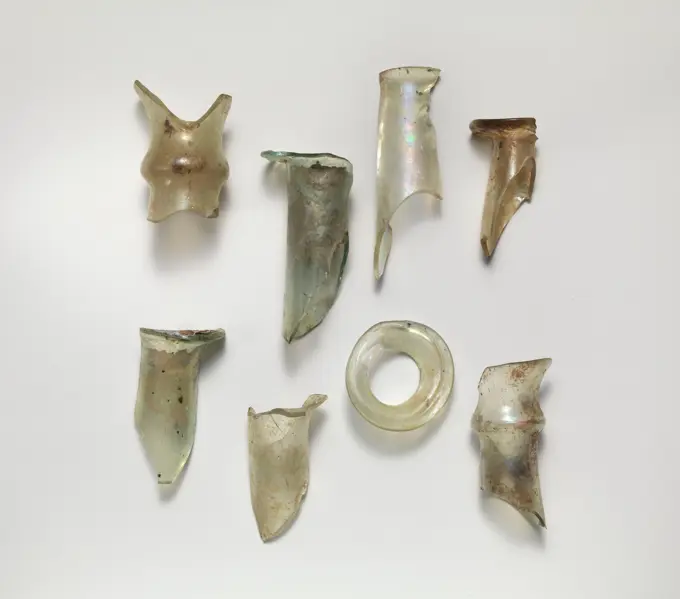
Collection of ancient glass and ceramic fragments from Europe and the Middle East, showcasing historical craftsmanship and varied textures.
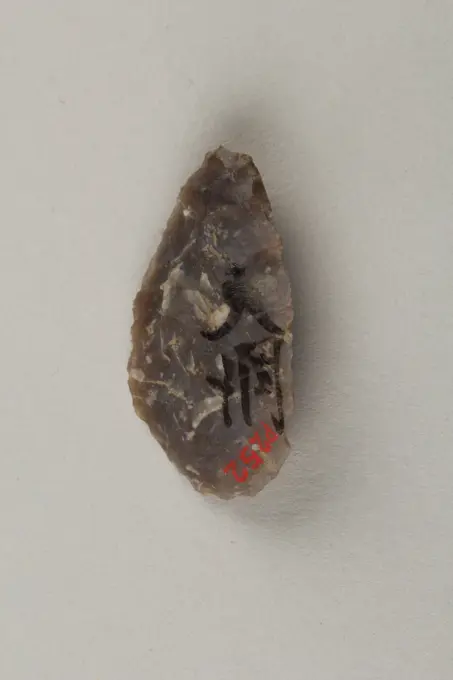
Arrowhead Japan. Arrowhead 62438
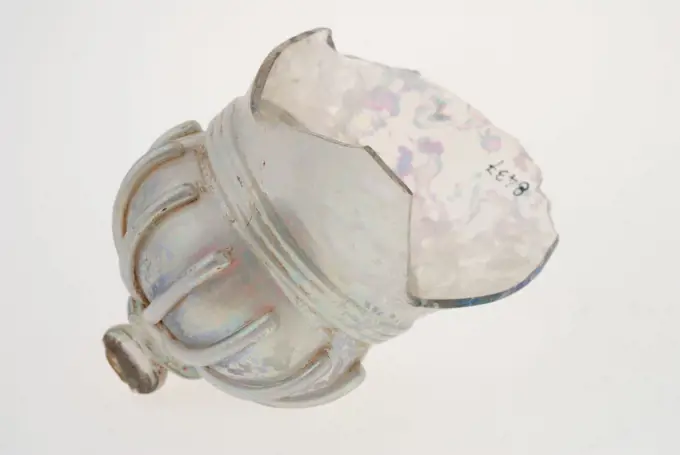
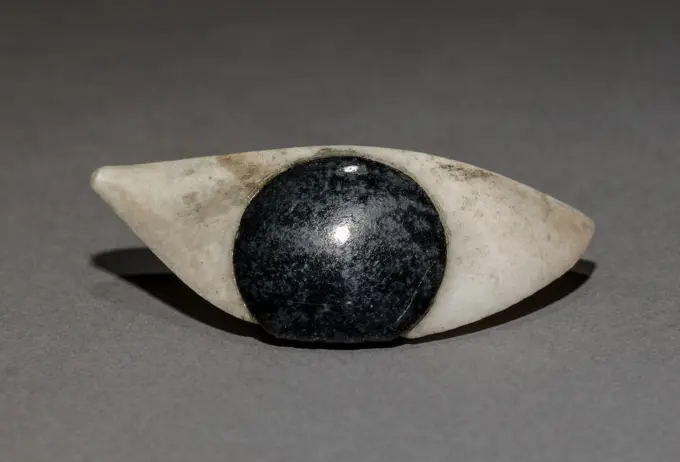
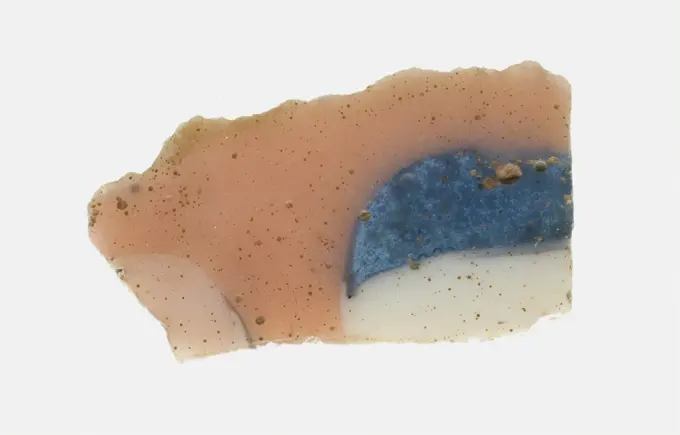
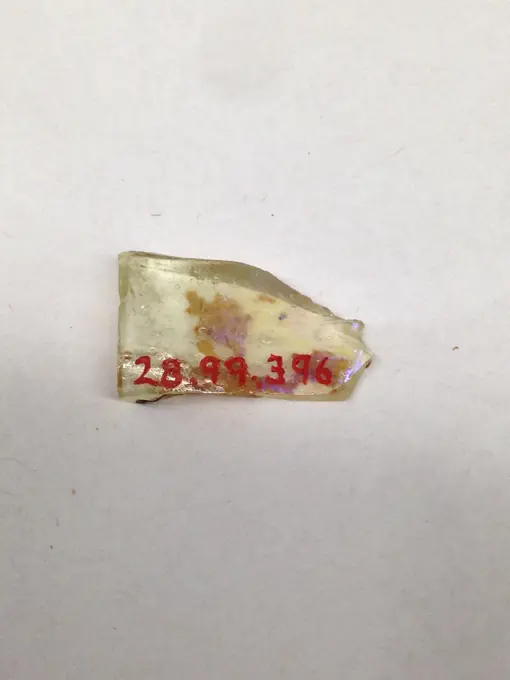
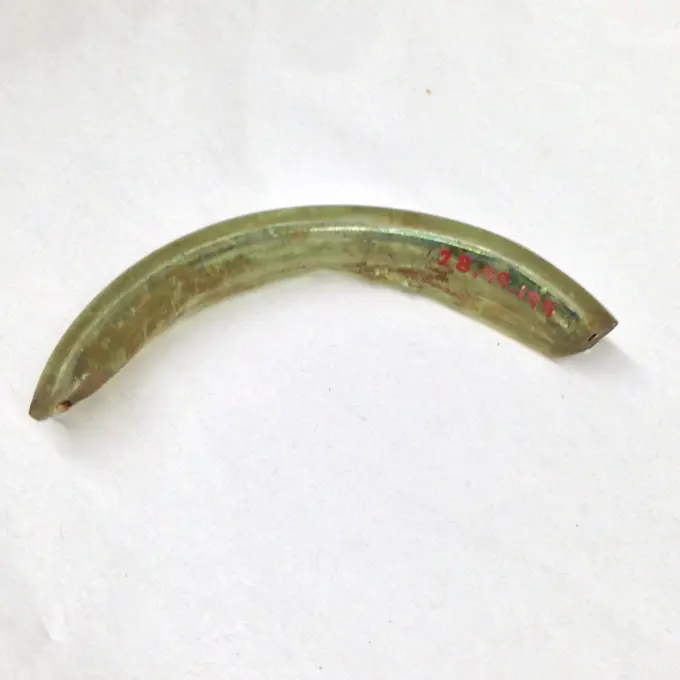
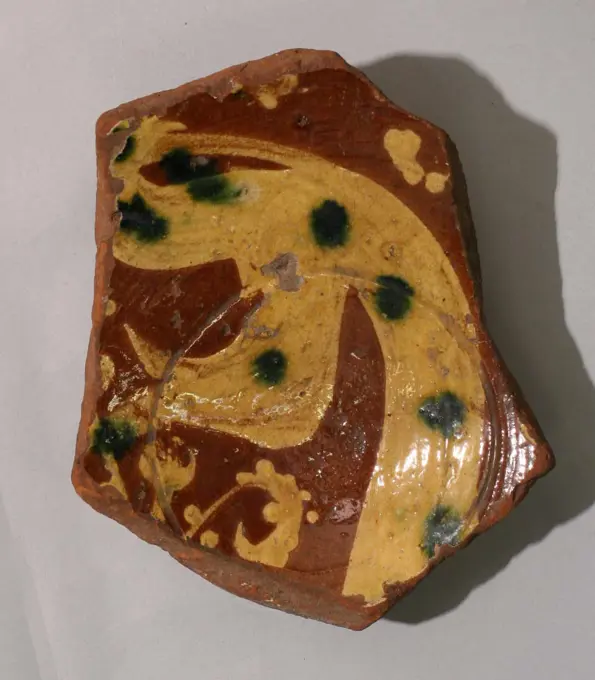
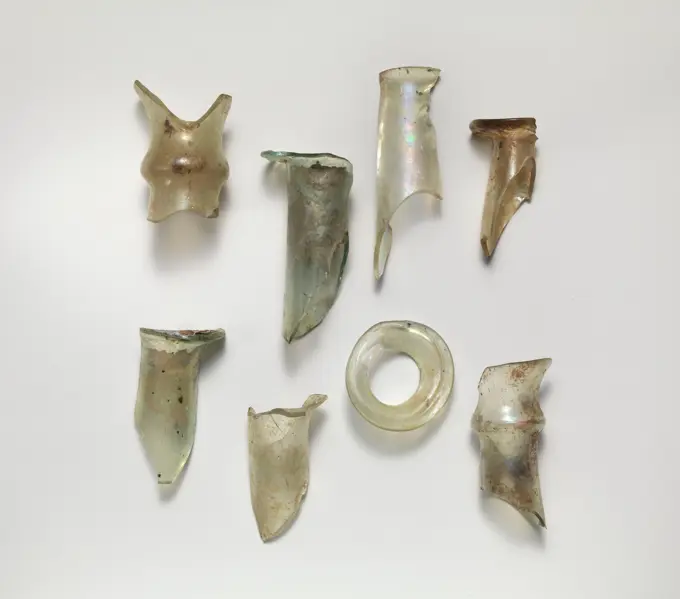
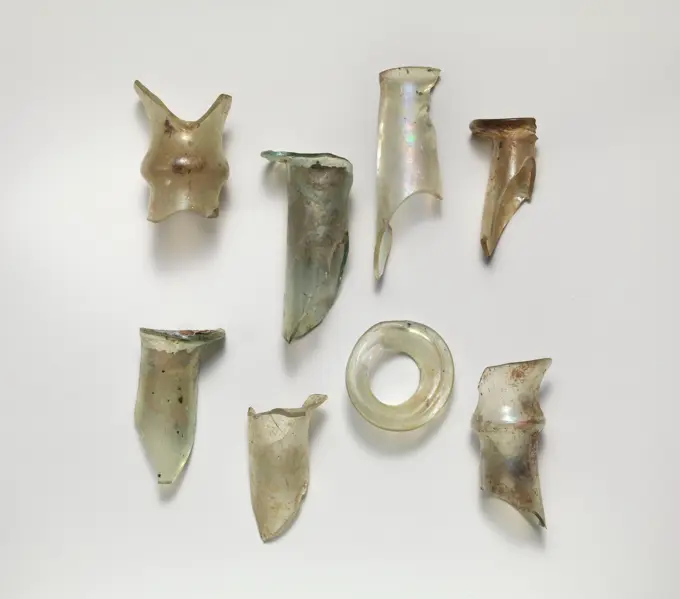
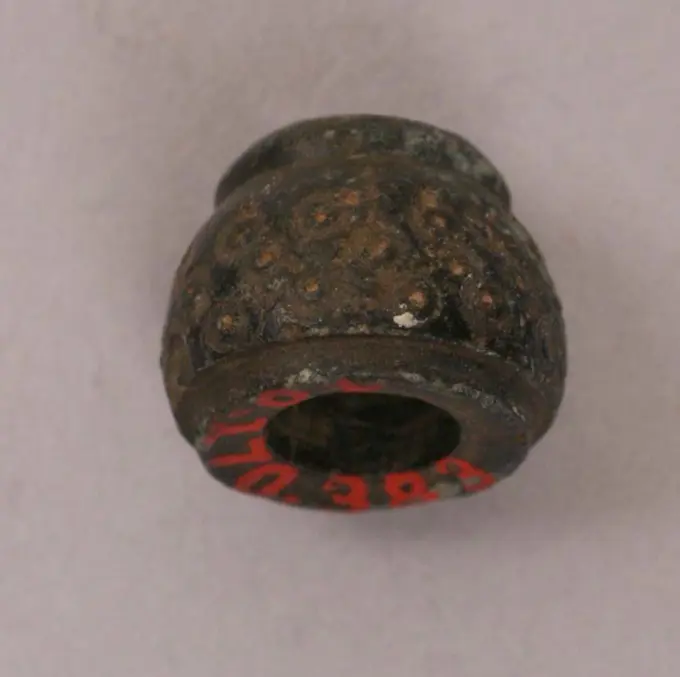
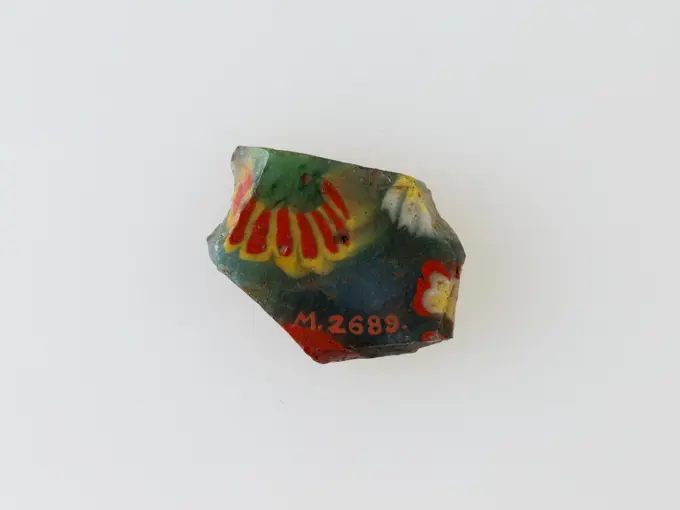
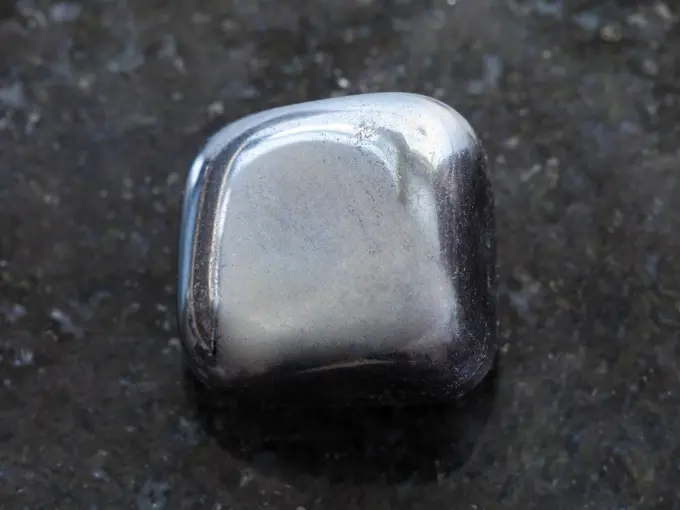
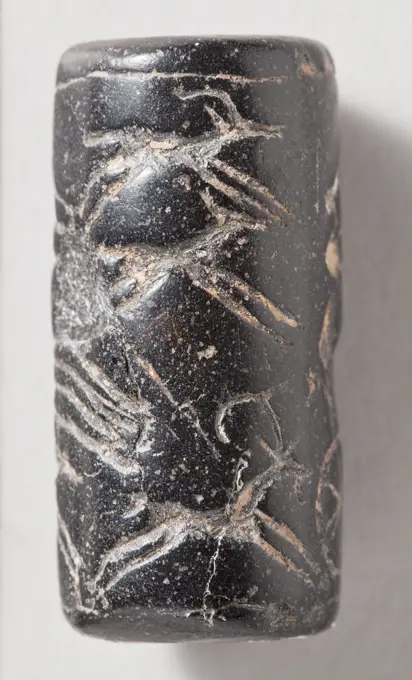
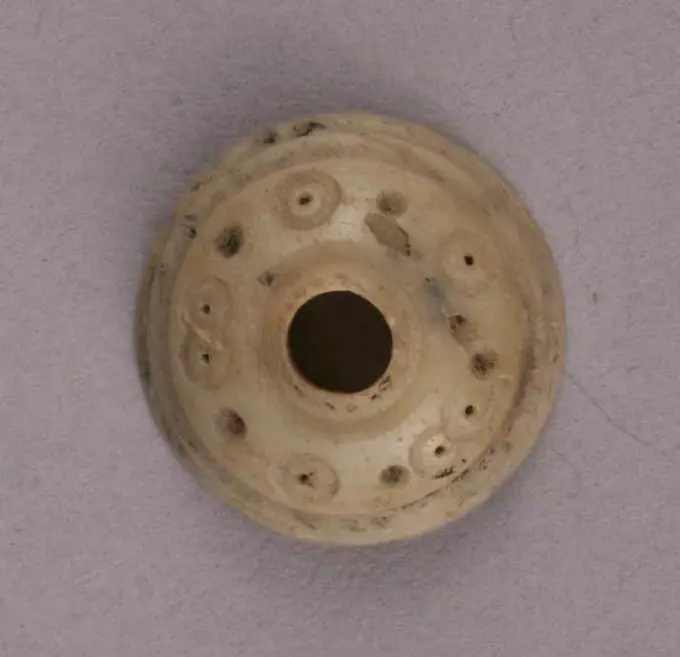
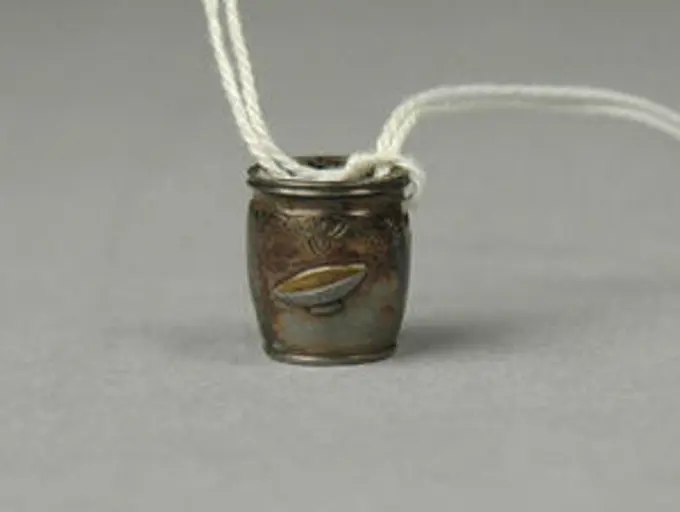
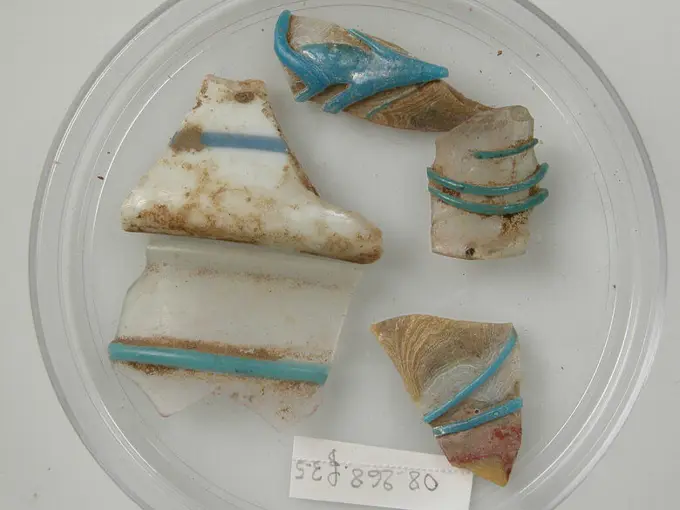
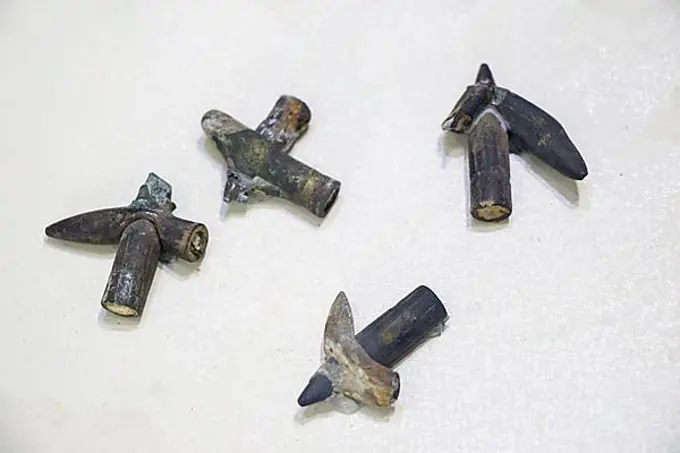
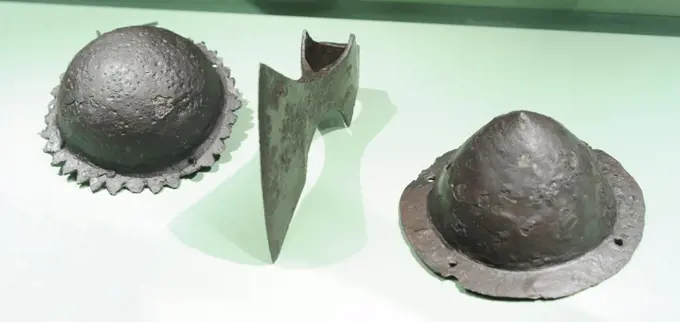
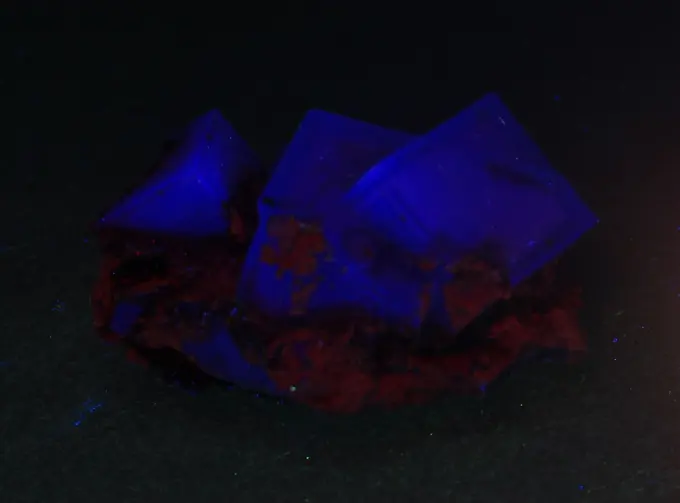
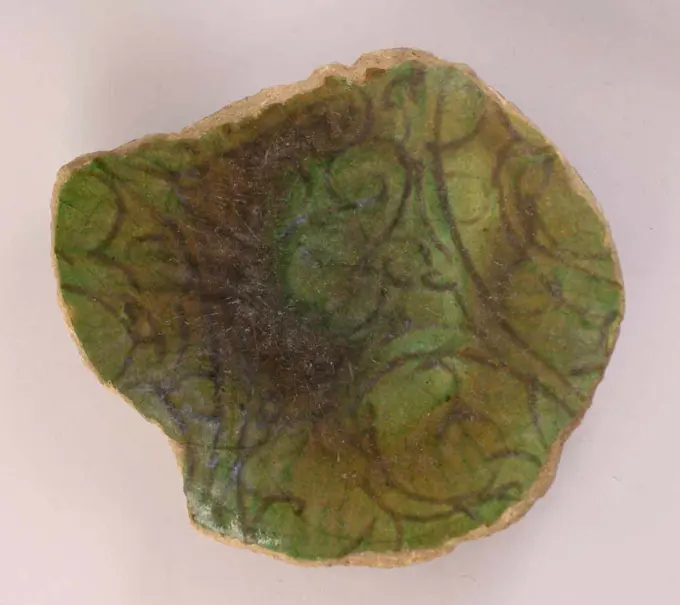
Fragment of a Dish 13th-14th century. Fragment of a Dish 446339Fragment of stem and calyx of goblet in façon de Venise style, drinking glass drinking utensils tableware holder fragment soil find glass, free blown and formed glass application Fragment of part of stem and goblet of chalice in clear colorless and opaque white glass in façon de Venise style Remains of narrow massive trunk and flat knot. Semicircular base of the chalice (about 2.2 cm) decorated with vertically imposed ribs of opaque white glass wire and tied with three opaque white glass wires. Chalice runs clockwise from archeology Rotterdam IJsselmonde drinking wine serve beer Soil discovery: Castle IJsselmonde pit 1 and 2 Rotterdam 1972.Inlay Eye (one of a pair), 1980-1801 BC. Egypt, El-Haraga, cemetery E, tomb 614, excavated in 1914, Middle Kingdom, Dynasty 12, 1980-1801 BC. Travertine and obsidian; overall: 2 cm (13/16 in.).Fragment ca. 1150-ca. 1250 European or Middle Eastern. Fragment. European or Middle Eastern. ca. 1150-ca. 1250. Glass, ceramic. Glass-VesselsFragment of a Figure 10th century. Fragment of a Figure 452221Topknot Pin, 918-1392. Korea, Goryeo period (918-1392). Bronze; overall: 5.5 cm (2 3/16 in.).Oyster shellFragment of an Inlay 100 BCE-100 CE Italy. In ancient Rome, there was a high demand for colorful glass that could dazzle banquet guests alongside the expensive silver and gold serving wares meant to impress. Fragments like this one would have once been a part of larger mosaic dishes. The mosaic pattern was made by sagging molten glass into bowl-shaped molds, a technique used on many of these fragments is similar to millefiori, ìthousand flowersî in Italian, a modern glass-making method in which tiny rods of colored glass are bundled together, wrapped in a sheet of glass, fused, and then thinly sliced to reveal swirls of a flower-like patterns. They were arranged side by side, sometimes together with bits of colored glass, and fused together with heat.. Glass, mosaic glass technique . Ancient RomanFragment 9th century. Fragment 452688Ring Oval 1350 BCE Egypt. Faience . Ancient EgyptianFragment. Culture: European or Middle Eastern. Dimensions: L. 2 11/16 in. (6.8 cm). Date: ca. 1150-ca. 1250. Museum: Metropolitan Museum of Art, New York, USA.Fragment. Culture: European or Middle Eastern. Dimensions: L. 2 5/8 in. (6.7 cm). Date: ca. 1150-ca. 1250. Museum: Metropolitan Museum of Art, New York, USA.Axe New Zealand. Axe 43693Fragment ca. 1150-ca. 1250 European or Middle Eastern. Fragment 695338Fragment ca. 1150-ca. 1250 European or Middle Eastern. Fragment 694354Fragment 14th-15th century. Fragment 453641Fragment European or Middle Eastern ca. 1150-ca. 1250 View more. Fragment. European or Middle Eastern. ca. 1150-ca. 1250. Glass, ceramic. Glass-VesselsFragment European or Middle Eastern ca. 1150-ca. 1250 View more. Fragment. European or Middle Eastern. ca. 1150-ca. 1250. Glass, ceramic. Glass-VesselsFragment European or Middle Eastern ca. 1150-ca. 1250 View more. Fragment. European or Middle Eastern. ca. 1150-ca. 1250. Glass, ceramic. Glass-VesselsFragment European or Middle Eastern ca. 1150-ca. 1250 View more. Fragment. European or Middle Eastern. ca. 1150-ca. 1250. Glass, ceramic. Glass-VesselsFragment European or Middle Eastern ca. 1150-ca. 1250 View more. Fragment. European or Middle Eastern. ca. 1150-ca. 1250. Glass, ceramic. Glass-VesselsFragment European or Middle Eastern ca. 1150-ca. 1250 View more. Fragment. European or Middle Eastern. ca. 1150-ca. 1250. Glass, ceramic. Glass-VesselsFragment European or Middle Eastern ca. 1150-ca. 1250 View more. Fragment. European or Middle Eastern. ca. 1150-ca. 1250. Glass, ceramic. Glass-VesselsFragment European or Middle Eastern ca. 1150-ca. 1250 View more. Fragment. European or Middle Eastern. ca. 1150-ca. 1250. Glass, ceramic. Glass-VesselsFragment probably 13th-14th century. Fragment 451587Corundum. minerals. Asia; Sri Lanka; Sabaragamuwa Province; Ratnapura; Ratnapura; near RatnapuraFragment. Culture: European or Middle Eastern. Dimensions: L. 1 1/8 in. (2.9 cm). Date: ca. 1150-ca. 1250. Museum: Metropolitan Museum of Art, New York, USA.Fragment 9th century. Fragment 451563Button or Bead or Spindle Whorl 8th-10th century The dot-in-circle motif recalls designs presumed to be of magical significance, most likely an abstract eye to ward off the evil-eye, which serves an apotropaic function. Easily reproduced with a tool and visible in many cultures and times, this symbol may have lost its meaning, and become simply a decorative pattern, or may have one that we have not yet discovered.. Button or Bead or Spindle Whorl 450060Megalosaurus teeth, Jurassic period, Paleontological Interpretation Center of La Rioja, Igea, La Rioja, Spain, Europe.Floral plaque 100 BC-100 AD Ptolemaic Period-Roman Period This fragment was part of a glass floral plaque for wall or furniture inlay like 26.7.1249.. Floral plaque. 100 BC-100 AD. Glass. Ptolemaic Period-Roman Period. From EgyptStone Pulidor before 16th century Mexican. Stone Pulidor 317063Mosaic glass fragment. The small glass fragment shows several flowers on green reason. Around a white point with red border there are several yellow points with black frame. This particular glass technique is called millefiori. In Roman times, it used colored, ornamented glass for vessels, mosaics, wall decorations and furniture ornaments. For the production, different colored glasses were molded into tubes and rods. These were compressed and heated, causing a long bar. The glass sliced now had a wide variety of amorphous or floral patterns.polished hematite stone on dark background macro shooting of natural mineral rock specimen - polished hematite stone on dark granite background Copyright: xZoonar.com/ValeryxVoennyyx 11383889Copper Animal Plaque 3rd century B.C.-A.D. 2nd century Vicús. Copper Animal Plaque 318647Goldweight Beetle, 19th-20th century, 1 11/16 x 1/2 in. (4.29 x 1.27 cm), Brass, Ghana, 19th-20th centurySickle Blade, 1980-1801 BC. Egypt, Middle Kingdom, Dynasty 12. Flint; overall: 5 cm (1 15/16 in.).Cylinder Seal. Iran, Mesopotamia or Syria, Elamite period, circa 13th-12th century B.C.. Tools and Equipment; seals. Black serpentineFragment of a Jar 9th-10th century. Fragment of a Jar. 9th-10th century. Earthenware; reddish body, white slip and yellow-black decoration under glaze. Excavated in Iran, Nishapur. CeramicsStone Pulidor before 16th century Mexican. Stone Pulidor 317156Button or Bead 9th-10th century The dot-in-circle motif recalls designs presumed to be of magical significance, most likely an abstract eye to ward off the evil-eye, which serves an apotropaic function. Easily reproduced with a tool and visible in many cultures and times, this symbol may have lost its meaning, and become simply a decorative pattern, or may have one that we have not yet discovered.. Button or Bead 450004Amulet 30 B.C.-A.D. 364. Amulet 446081Impression Of Seal Cylinder; 1902-20-31Ojime 19th century Japan. Ojime. Japan. 19th century. Edo period (1615-1868). OjimeFragment, Medium: linen lace and fabric Technique: continuous braid like bobbin lace, plain weave fabric, Continuous braid like bobbin lace, dyed green and sewn to plain weave fabric., Italy, 16th century, lace, FragmentBeads and Pendants 8th-13th century. Beads and Pendants 855898String of Beads 9th-12th century. String of Beads. 9th-12th century. Glass. From Egypt. JewelryGlass Fragments. Culture: Coptic. Dimensions: Storage (petri dish diam.): 3 1/2 in. (8.9 cm). Date: 4th-early 5th century. Museum: Metropolitan Museum of Art, New York, USA.Bowl of Jujubes ca. 1479-1458 B.C. New Kingdom. Bowl of Jujubes. ca. 1479-1458 B.C.. Pottery, jujube berries. New Kingdom. From Egypt, Upper Egypt, Thebes, Deir el-Bahri, Temple of Hatshepsut, Foundation Deposit 7-9 (G-I), MMA excavations, 1926-27. Dynasty 18Two Bullets Collide Midair from the dardanelles warSnuff Bottle. Culture: China. Dimensions: H. 1 5/8 in. (4.1 cm). Date: 18th century. Museum: Metropolitan Museum of Art, New York, USA.Glass Fragments 4th century Coptic. Glass Fragments 479152Sidewall  (France); block-printed; 22 x 5.5 cm (8 11/16 x 2 3/16 in.)Scandinavia. Hield boss, Kolkjon, Tokke k., Telemark. 10th century. Axe, Skarvangen, Vaga, K., Oppland, 10th century. Shield boss, Norderhov, Loten k., Hedmark. 11th century. Historical Museum. Oslo. Norway.A butterfly on fabricArtefact from the Staffordshire Hoard of Anglo-Saxon gold and silver metalwork. Discovered in a field near the village of Hammerwich, near Lichfield, in Staffordshire, England, on 5 July 2009, it consists of over 3,500 items from the Anglo-Saxon kingdom of Mercia.Fluorite. minerals. China; Hunan Province; Xianghualing MineFragment 11th century. Fragment 445582Shadow Puppet (Wayang Kulit) of a Prop (Ricikan), from the set KyaiDrajattailor measure tape and half buttoned button on green jacket close up